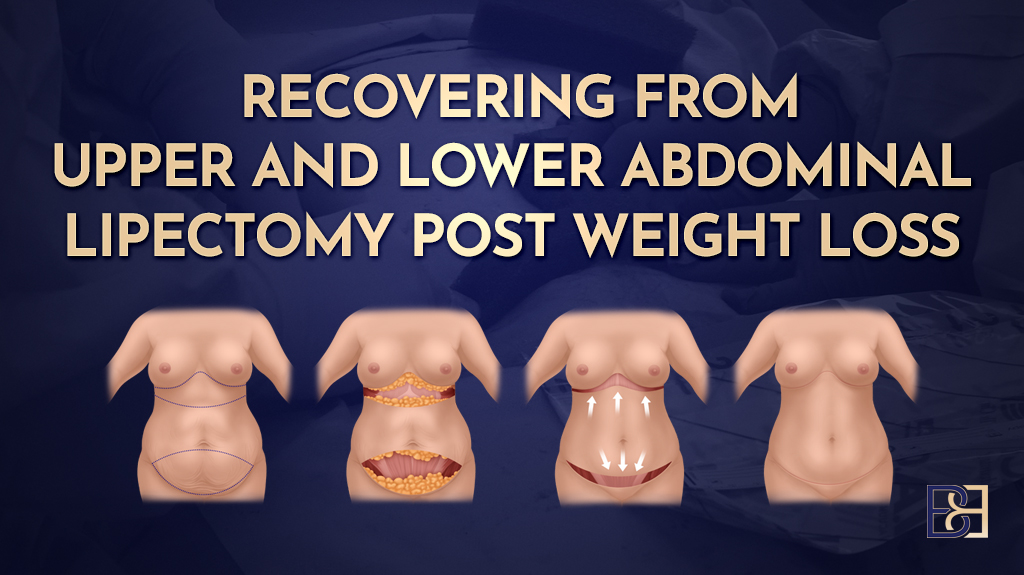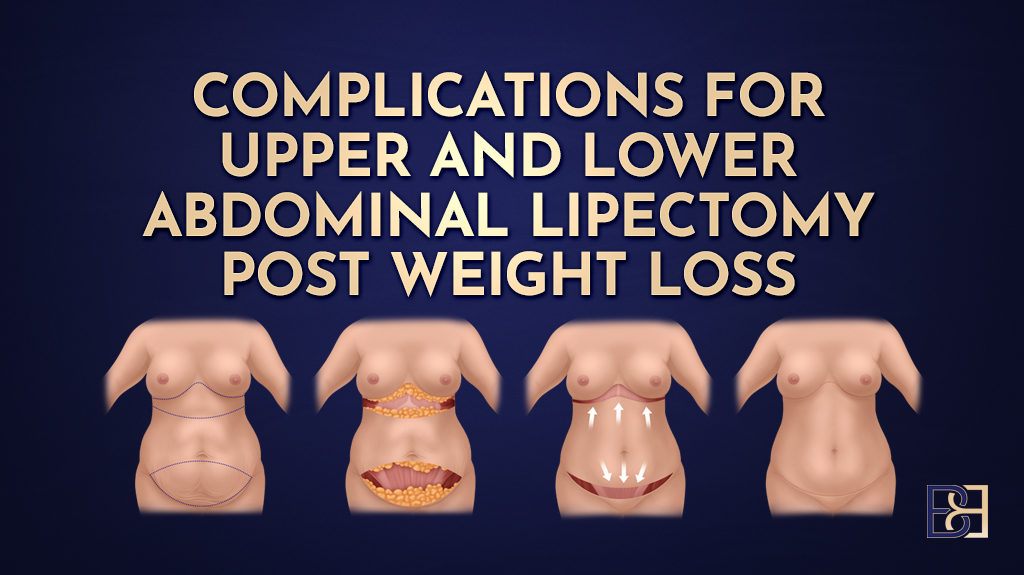
After major weight loss, loose skin tends to settle right around the middle of the body. Not just the front of the abdomen, but the hips, the flanks, the lower back, the mons, and the upper buttocks as well. A body lift (belt lipectomy) is the operation I use to remove that excess skin in a single band that runs the whole way around the waist. It treats the front and the back at the same time, which is why it suits patients whose looseness runs circumferentially around the waist rather than sitting in one spot.
The trade-off is a long scar. Because the skin is removed circumferentially, right around the waist, the incision runs the whole way around as well. The join where the two edges are stitched back together is what becomes the scar.
Most of my patients, who have undergone significant weight loss and lived with a heavy apron of loose skin, with the rashes and the rubbing and the trouble finding clothes that fit, decide the scar is a fair exchange for getting that skin removed. But it is a personal decision, and one you should make knowing exactly what the scar involves.
This article walks through what the scar is, where it sits, how it changes over the first year or two, what affects the way it settles, and what I recommend to look after it. Results vary from one person to the next, and a good deal of how a scar matures comes down to your own biology rather than anything done in theatre. What follows is meant to set realistic expectations and give you a practical sense of how to care for body lift scars once they are yours.
What a Body Lift (Belt Lipectomy) Is, and Where the Scar Sits
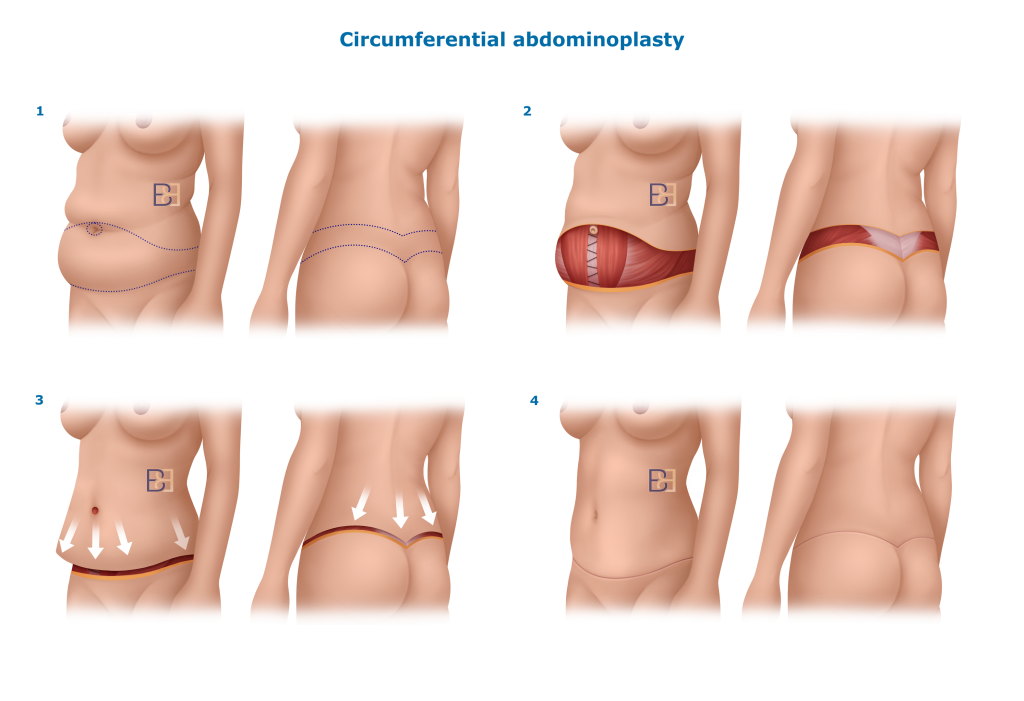
A body lift (belt lipectomy), sometimes called body lift surgery, removes a continuous band of excess skin and fat from right around the waist. At the front it works much like an abdominoplasty (tummy tuck), tightening the lower abdomen and lifting the mons. It then carries on around the hips and flanks to the lower back, so the front and the back are treated in the one operation. This is why it is sometimes described as a circumferential lipectomy or a circumferential body lift. The aim of this surgical procedure is excess skin removal around the full waistline, which is also what creates the scar.
The incision runs around the waist
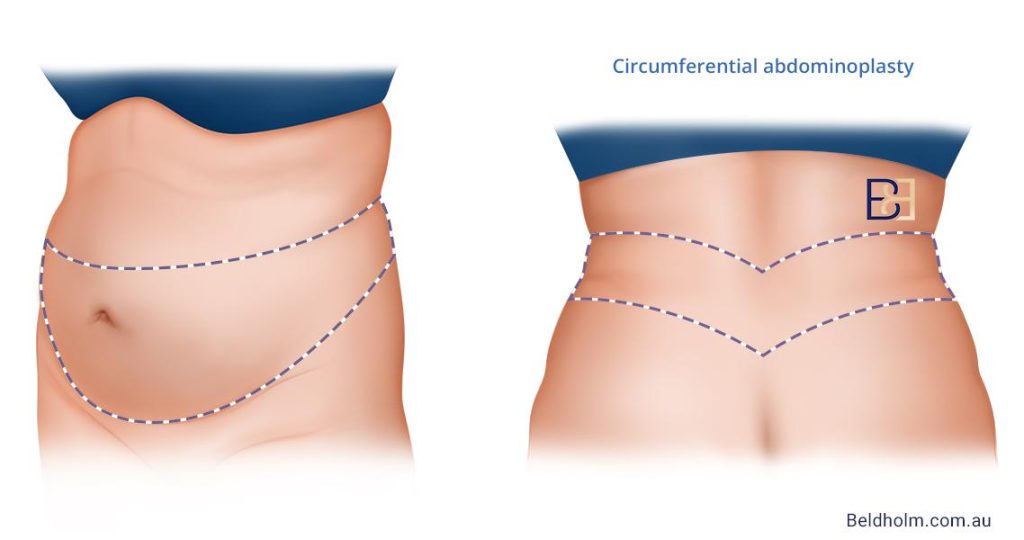
The scar follows the line where the band of skin is taken out. In most patients that sits roughly where the waistband of your underwear or swimwear would sit, give or take. It is a single line that travels all the way around the body, joining at the front, the sides and the back.
A few things about its position matter before surgery:
- It is long. There is no way to shorten a circumferential scar without leaving excess tissue behind that the operation is meant to remove.
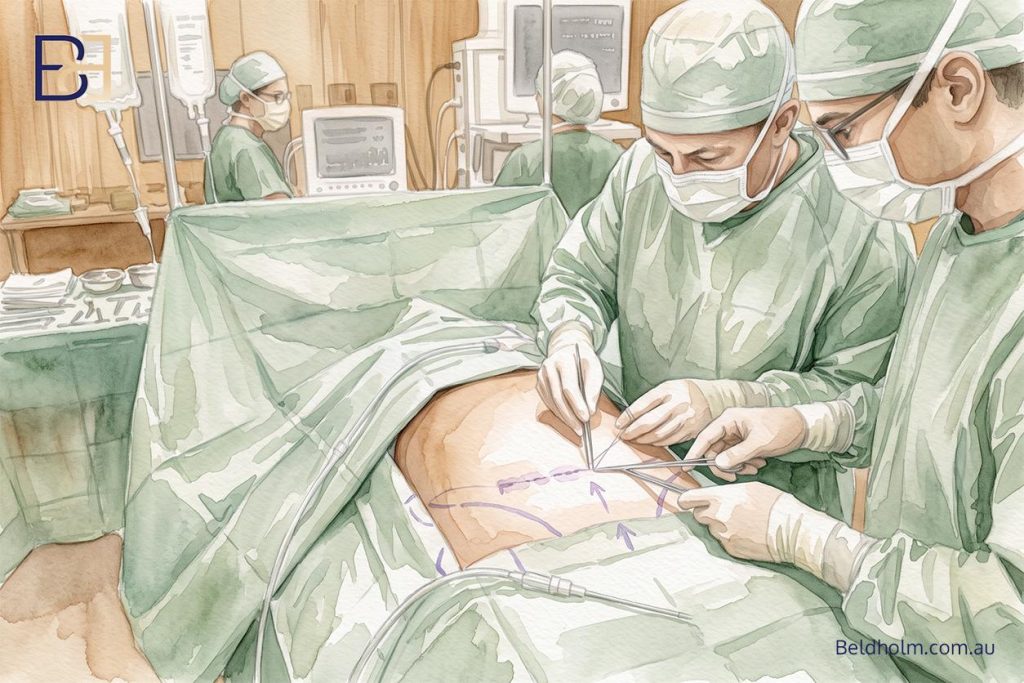
- The height is planned with you. I mark the proposed line together with you in the anaesthetic bay before surgery, usually where clothing or underwear sits. That mark is the line I initially incise. The final scar can shift a little from that line as everything settles over the following months.
- It is not always even. Skin laxity is rarely identical on both sides after weight loss, so the line may sit slightly higher or lower in places once everything settles.
The belt line is not the only scar

The long waistline scar is the main one, but it is usually not the only mark left behind.
Around the belly button. Because the front of the operation works like an abdominoplasty, the belly button (umbilicus) is brought out through a new opening in the tightened skin. This leaves a small scar around the rim of the navel.
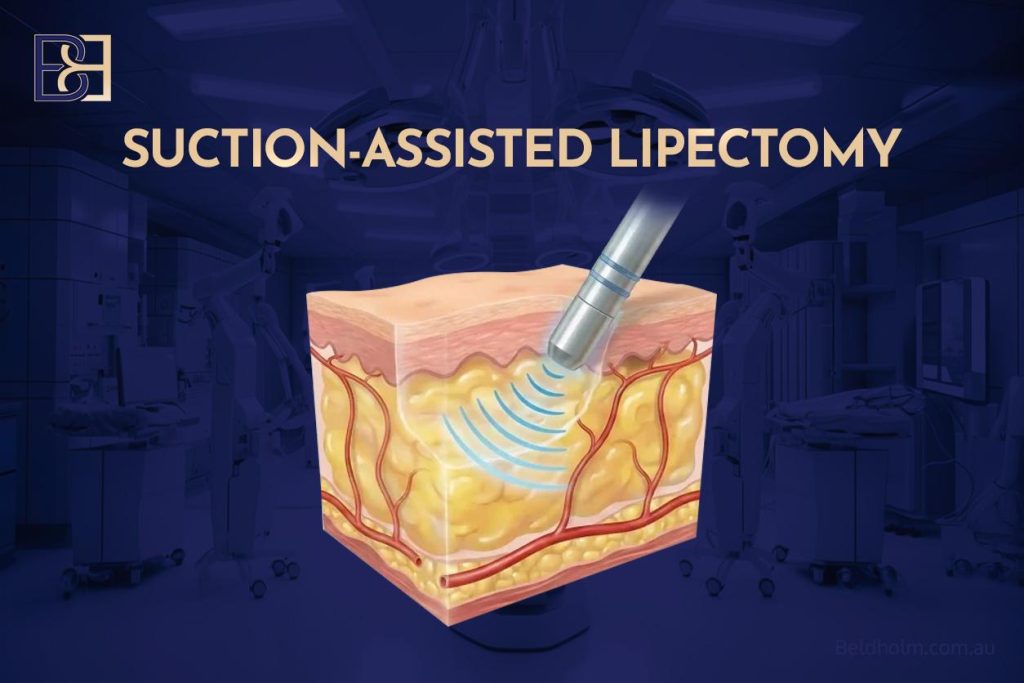
Liposuction sites. If I use liposuction (suction assisted lipectomy) to remove a pocket of excess fat or refine an area during the operation, the access points leave small scars, each only a few millimetres across.
Drain sites. Post weight loss patients usually have two closed suction drains, one on each side, brought out low near the hip. These leave a small scar at each exit point once the drains are removed.
What the scar does for the surrounding areas
The same incision that creates the scar is what allows me to tighten loose skin across several areas at once:
- Abdomen. The front portion flattens the lower abdomen and removes the overhang of loose skin.
- Mons. The downward pull of heavy skin is released and the mons is lifted as the lower edge is brought up to close.
- Hips and flanks. Skin is drawn in around the sides, which reduces rolls across the lower back.
- Buttocks and outer thighs. These are not cut directly, but the back part of the operation lifts the upper buttock and the outer thigh as the skin above is tightened and closed.
A note on muscle repair
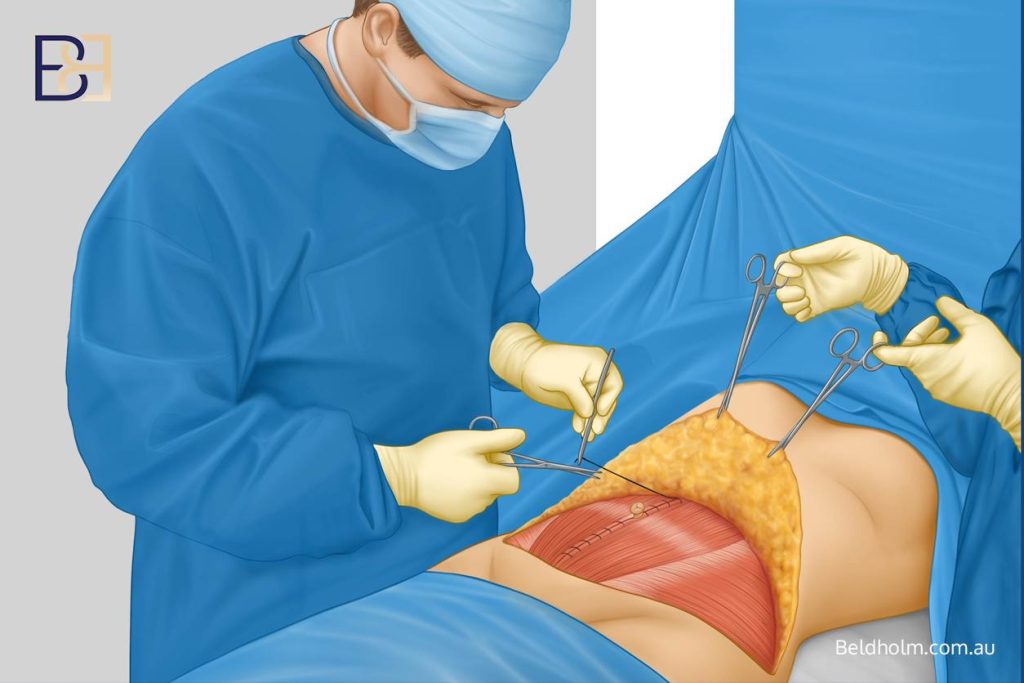
Some patients also have abdominal muscle separation, called diastasis recti. This is more typical after pregnancy than after weight loss, so it is not something I assume is present. I assess for it individually, and where it is found I can repair the underlying muscles through the front part of the incision at the same time. Muscle repair does not add a separate scar.
Why Post Weight Loss Patients Consider This Operation

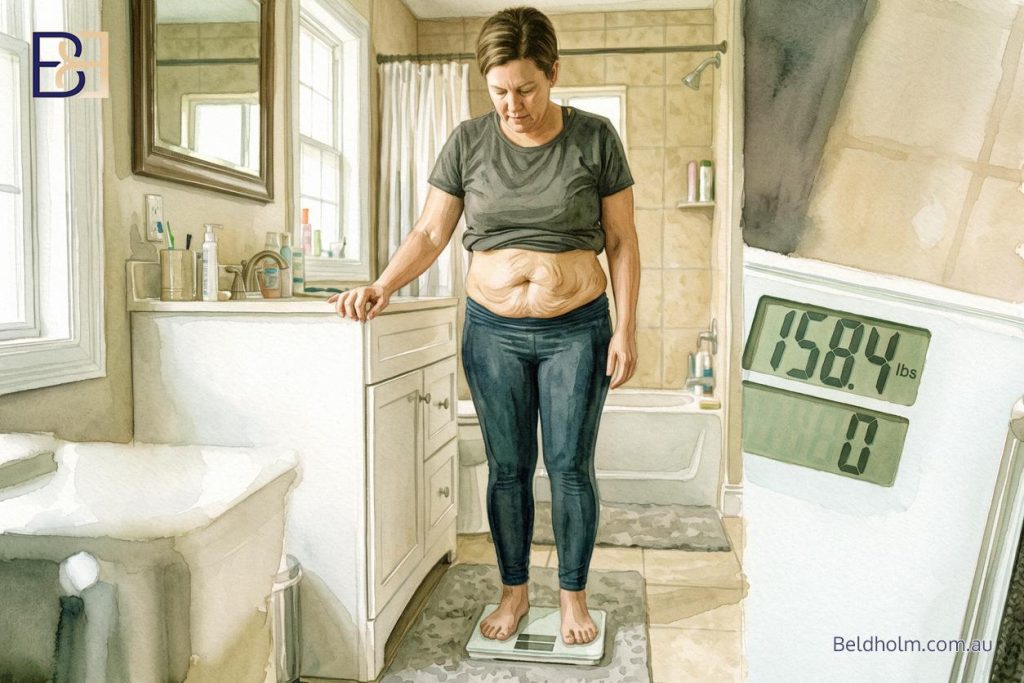
It helps to understand why someone would accept a long scar in the first place. For most of my body lift (belt lipectomy) patients, the loose skin left after major weight loss is not only a matter of appearance. It causes day to day problems that the scar, once healed, does not.
The functional reasons
- Skin irritation and rashes. Loose skin folds trap moisture and rub against itself. This commonly leads to intertrigo, a red, sometimes raw or weeping rash in the creases, which can become infected and recur despite careful washing and barrier creams.
- Hygiene. Keeping the skin under a hanging fold clean and dry is difficult. Some patients describe an ongoing battle with odour and chafing no matter how much effort they put in.
- Movement and clothing. A heavy circumferential apron of skin can interfere with walking, exercise and finding clothes that fit, particularly when the looseness sits both front and back.
- Skin that does not retract. Once skin has been stretched over a long period and then emptied of fat, it does not shrink back on its own. Diet and exercise will not remove it. Surgery is the only way to remove excess skin. After substantial weight loss it does not tighten on its own, no matter how much you exercise or lose weight, so I generally recommend waiting until you are at a stable weight before surgery so further weight change does not undo the result.
Keeping expectations realistic
A body lift (belt lipectomy) removes skin and tightens the contour around the waist. What it does not do is return your body to how it looked before weight gain, and it does not remove the scar that comes with it. The aim is to take away the redundant skin and the problems it causes, in exchange for a long scar.
Whether the trade is worth it is a personal judgement. Patients who are mainly troubled by the loose skin tend to accept the scar more readily than those whose main concern is the scar itself. If you are not prepared to live with a permanent scar, even one that sits under clothing, this is probably not the right operation for you.
How a Scar Forms and Matures
A scar is the body’s repair tissue, and scar formation is a normal part of how skin heals. When skin is cut and brought back together, the body lays down new collagen to bridge the gap. That collagen is not arranged in the neat basketweave pattern of uninjured skin, which is why a scar always looks and feels different from the skin around it. Understanding how this plays out over time helps you judge what you are seeing at each stage rather than worrying that something is wrong.
The stages of healing
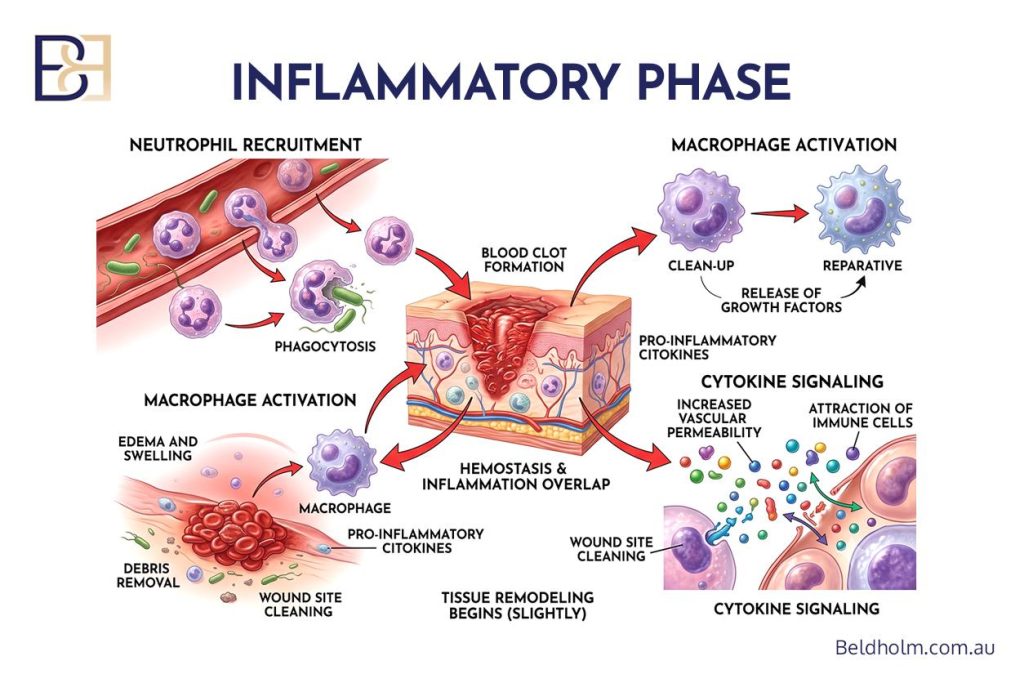
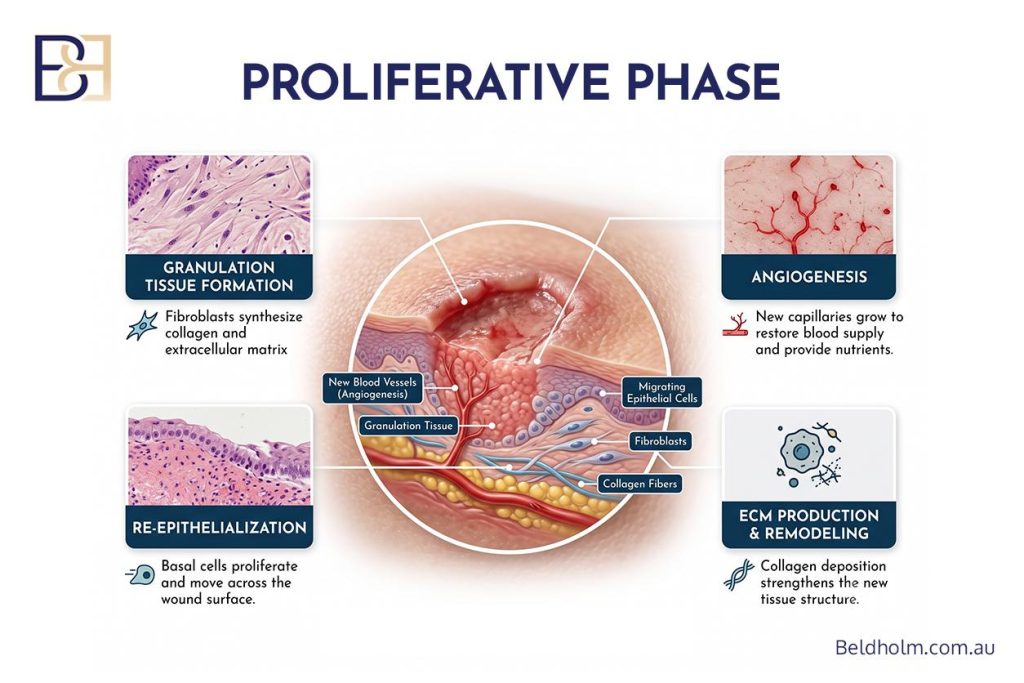
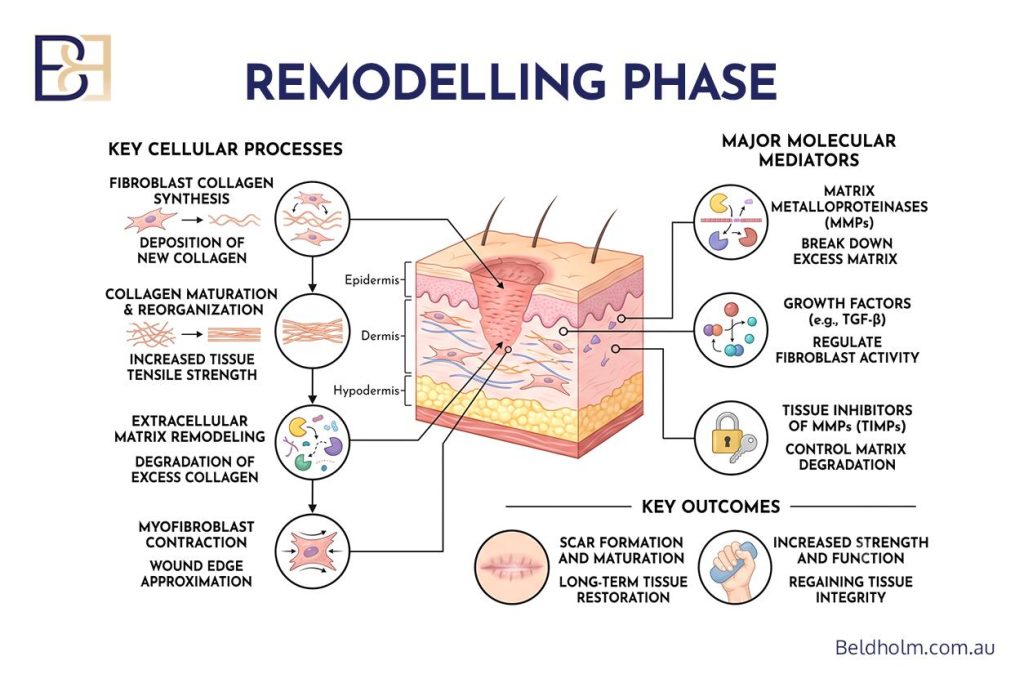
Healing runs through overlapping phases rather than neat steps (1).
Early inflammation (first days to weeks). The wound is sealed and the body clears the area. The scar is typically red or pink, firm, and slightly raised. This is normal and not a sign of a problem.
Proliferation (weeks to a few months). New collagen is laid down to give the scar strength. During this phase a scar can look its worst: raised, firm, pink to red or purple, and sometimes itchy.
Remodelling and maturation (months to around two years). The body slowly reorganises and breaks down the excess collagen. The scar gradually flattens, softens, and fades towards a paler line closer to your own skin tone (1).
What changes, and what does not
Over the first year to two years you can expect the scar to change in:
- Colour. Red, pink or purple early on, fading towards pale or skin tone as it matures. In some skin types it can settle darker than the surrounding skin rather than lighter.
- Height. Often slightly raised at first, then flattening as collagen remodels.
- Texture. Firm and ropey early, usually softening over time.
What does not change is that the scar is permanent. Maturation makes a scar less noticeable; it does not make it disappear. A mature body lift (belt lipectomy) scar is a flatter, paler, settled line, not an absent one.
Why patience matters
The single most common mistake I see is judging a scar too early. A scar at six weeks tells you very little about how it will look at eighteen months. I ask patients not to make any decisions about the appearance of a scar, including whether they want it revised, until it has had time to mature.
What to Expect Month by Month
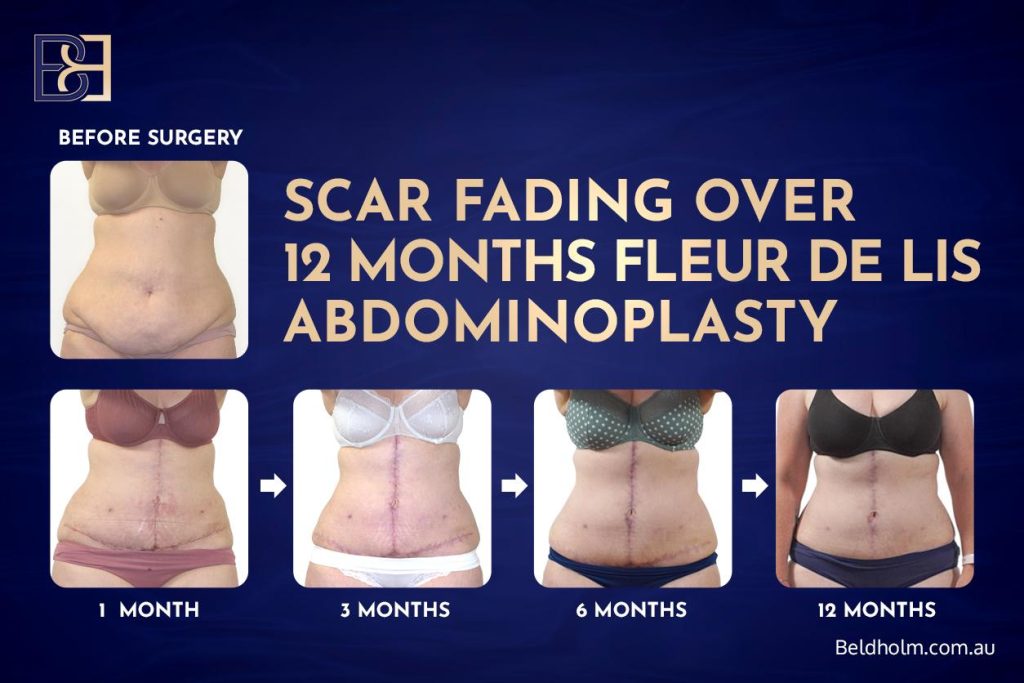
The biology in the previous part explains why a scar changes. This part is the practical version: what the scar tends to look like at each stage, and when I see you to check on it. My follow up schedule is set up around this timeline, with reviews at four weeks, then three, six and twelve months.
The first few weeks
This is when a fresh scar looks its rawest, and it can be confronting if you are not expecting it.
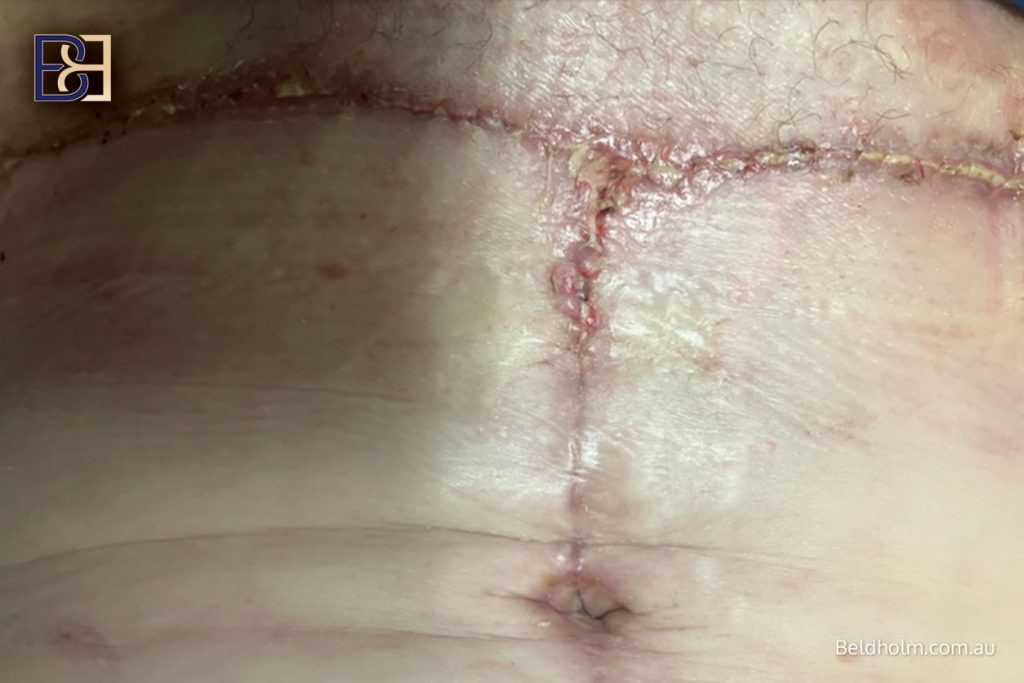
- The line is closed but red and firm, and the skin along it may look puckered or bunched in places.
- Small areas can be slow to seal, with some ooze or a patch that opens slightly. This is more likely where tension is highest, such as the lower back and the front midline.
You will be in dressings and a compression garment during this period. I will go through wound care with you before you leave hospital and at your early reviews.
Around six weeks
- The wound is generally sealed by now, and the worst of the early swelling is starting to come down.
- The scar is often still pink to red and firm. This is expected and does not mean it will stay that way.
- This is usually when I clear most patients to begin scar management techniques such as silicone and massage, once the skin is fully closed. I will confirm timing at your review rather than you starting on a fixed date.
Three to six months
- Swelling continues to settle, and the true line of the scar becomes clearer.
- The colour usually starts to fade and the scars begin to soften, though this varies a lot between people.
- Any uneven or puckered spots that are going to settle are usually well on their way by now. Ones that remain are noted, but not acted on this early.
Twelve months and beyond
- By twelve months most scars fade and flatten considerably, but they are still maturing.
- Final scar maturation can take up to around two years. The scar you have at one year is usually close to, but not quite, the scar you will keep.
- This is the point at which I will discuss scar revision surgery if any part of the scar has not settled well and is worth revising.
A realistic note
Timelines are a guide, not a promise. Some patients heal faster and some slower, and the same patient can have one part of the scar settle beautifully while another part takes longer. The healing process also depends on factors I will come to, including skin type, smoking and nutrition. Results vary.
Book your appointment online now
What Influences How a Scar Turns Out
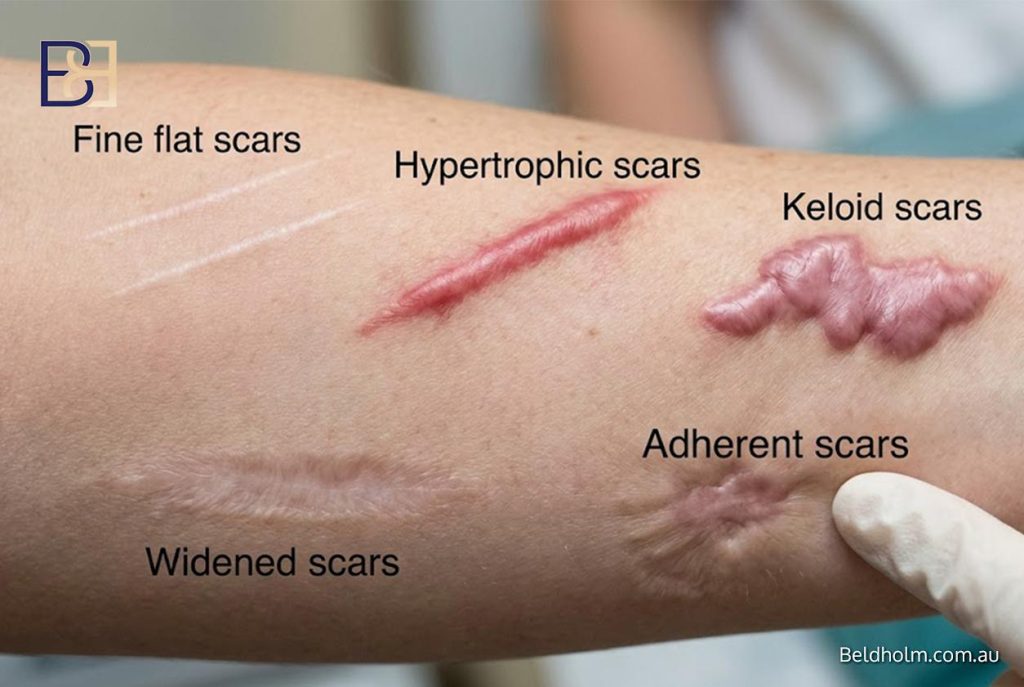
Patients often assume the way a scar heals comes down entirely to the surgeon. Surgical technique matters, but a large part of how a scar matures is decided by your own biology and by factors neither of us fully controls. It helps to be clear about which is which.
Things outside anyone’s control
- Genetics and family history. How you scar tends to run in families. If close relatives form thick, raised or prominent scars, you are more likely to as well.
- Skin type and tone. Darker skin tones and more pigmented skin types carry a higher chance of raised scars and of pigment changes along the scar line (2). Lighter skin tones tend to carry less of this risk.
- A tendency to hypertrophic or keloid scars. Some people lay down excess collagen and form scars that are raised, thickened, and sometimes itchy or tender. A keloid grows beyond the original wound edges; a hypertrophic scar stays within them but is raised (2). If you know you have formed these before, tell me at consultation.
- Age and skin quality. Skin that has been heavily stretched and then deflated by weight loss has lost some of its elasticity, which affects how the closure sits.
Things that can be influenced
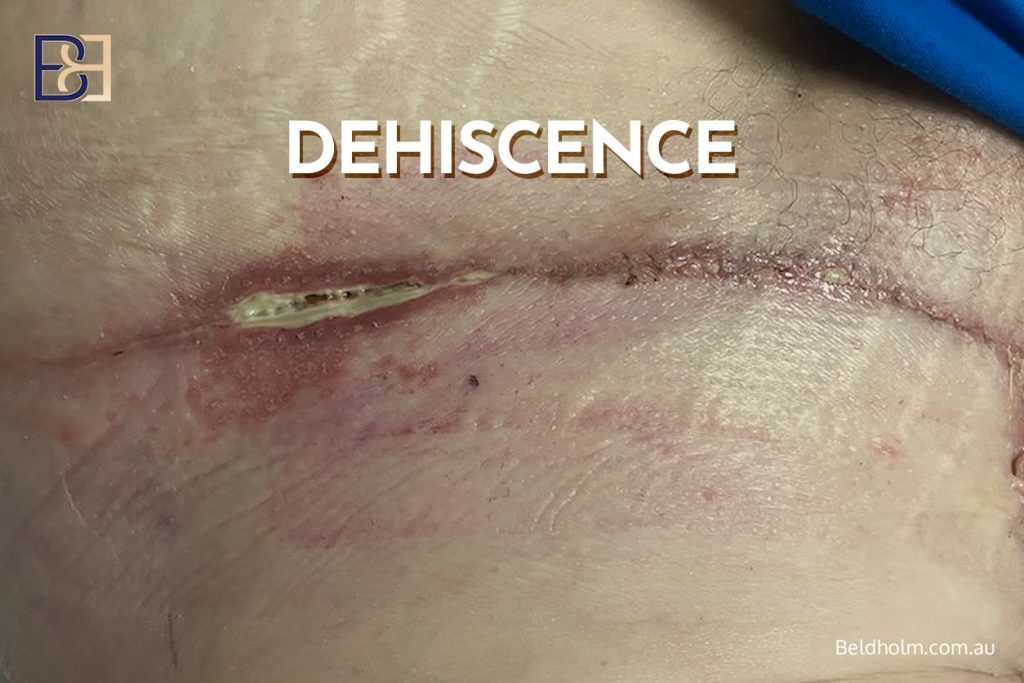
Tension on the wound. Scars stretch and widen when the skin is under tension. A body lift (belt lipectomy) closes areas that are pulled on by movement, especially the lower back and the front midline, so some widening in those zones is common. How I plan and close the incision affects this, and so does how carefully you follow activity limits and wear your compression garment during healing.
Smoking and vaping. Nicotine narrows the small blood vessels that feed healing skin. This raises the risk of wound breakdown, delayed healing, and worse scarring, and in a circumferential operation it can contribute to areas of skin loss (3). I ask patients to stop well before surgery and to stay off it through healing.

Nutrition. Healing skin needs protein and several specific nutrients. Most post weight loss patients have gaps that built up during weight loss, and correcting these before surgery supports healing. I cover this in the next part.

Wound complications. Infection, a wound that opens, or a collection of fluid under the skin all tend to leave a worse scar than a wound that heals without incident. Following your wound care and attending reviews lowers these risks.
What this means for you
You cannot change your genetics or your skin type, and I cannot promise a fine scar regardless of them. What we can both influence is tension, smoking, nutrition and wound care. Getting those right gives the scar the best chance to settle well, within the limits your biology sets. Results vary, and two patients having the same operation can heal quite differently.
What I Plan For at Consultation
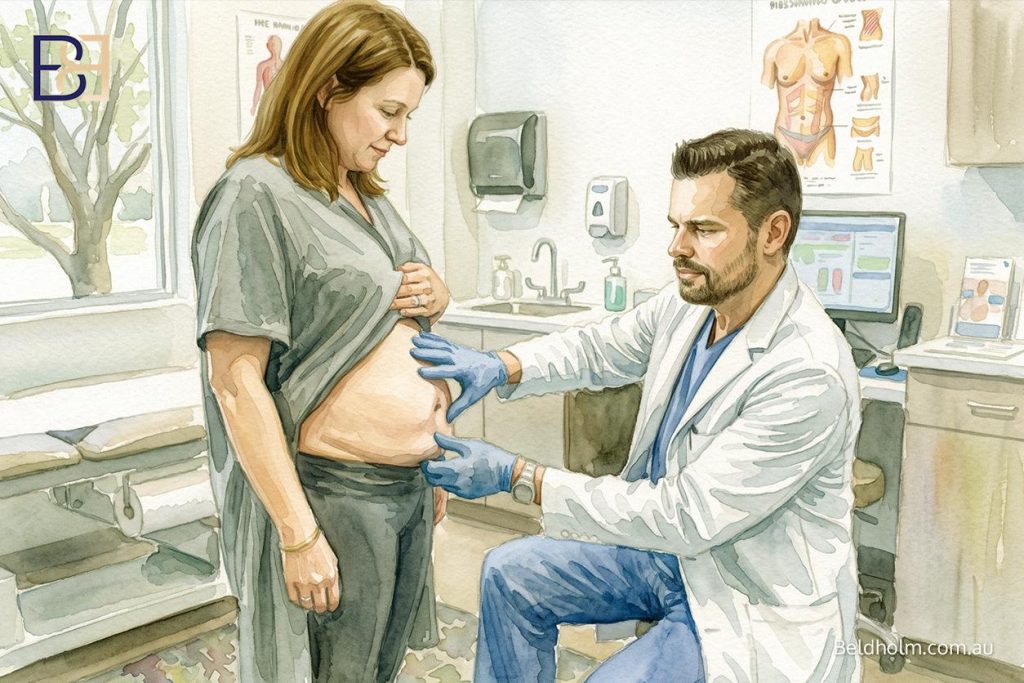
A good deal of how a scar ends up is decided before the operation, in the planning. At consultation I assess your skin, your laxity pattern and any previous surgery, and I plan the incision around them. Here is what I am thinking about.
Keeping the scar in a good position
My aim is to place the main scar where ordinary clothing and swimwear will sit over it. I plan the whole circumferential line, front and back, and I can control the front incision quite closely. The back incision is planned just as carefully, but because the lower back and hips move a great deal, the scar there can vary a little more than the front once everything settles.
Lifting the mons
After significant weight loss the mons is often dragged downward by the weight of loose skin above it. Lifting it is part of the operation. As I tighten and close the lower edge of the abdominoplasty (tummy tuck) and body lift (belt lipectomy), the mons is brought back up to a more usual position, and its scar stays within the cloth line.
A continuous incision avoids the flank dog ear
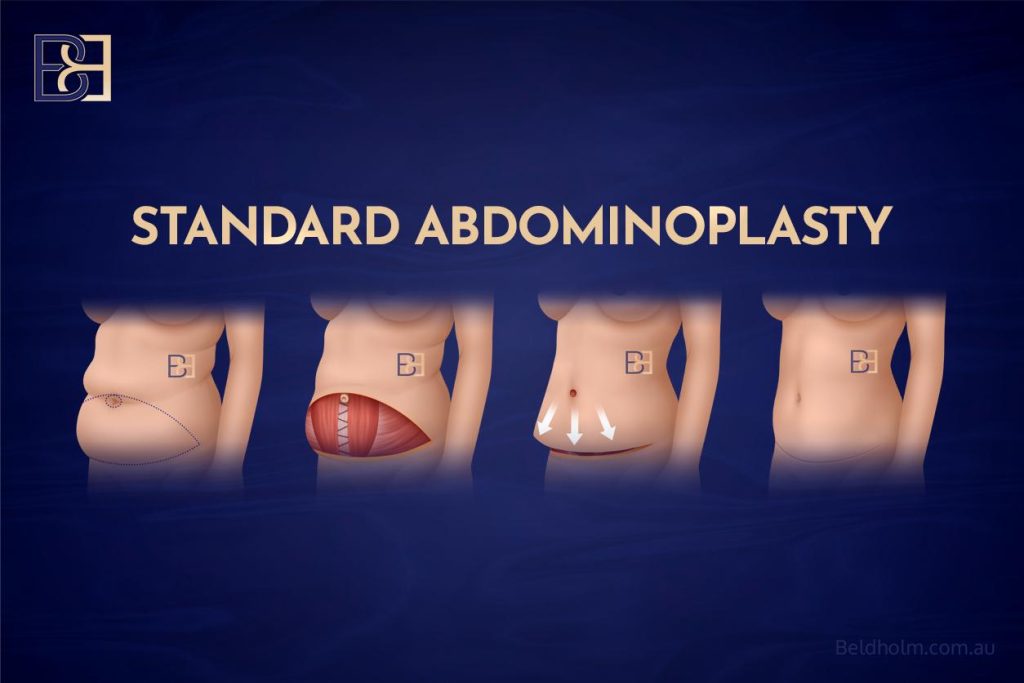
An extended abdominoplasty (tummy tuck) ends at the flanks, and the end of that incision can leave a bunched fold of skin known as a dog ear. One of the reasons I use a body lift (belt lipectomy) is that the incision is planned to run continuously around the lower flank and back. Carrying the line all the way around removes the skin that would otherwise bunch at the ends, so this operation avoids the flank dog ear that a shorter incision can leave behind.
Working with surgical scars you already have
Most post weight loss patients come to me with previous surgical scars, often from an appendix removal, a caesarean, or gallbladder or other abdominal surgery. Where these sit within the area I am removing, they usually come out with the excised skin rather than being left behind. Where a scar sits outside that area, I take it into account when planning, because old scars can affect the blood supply to the surrounding skin. If you have had previous abdominal surgery, bring the details to your consultation.
Some variability is unavoidable
I can plan and control the lower incision line closely. The position of the belly button (umbilicus) scar and the exact final level of the circumferential line carry some inherent variability, because they depend on how your tissues settle after closure. I will talk you through what I can and cannot control for your particular anatomy.
How I Recommend You Care for the Scar
No product or routine will erase a scar, and you should be wary of anything that claims to. What good scar care can do is give the scar a better chance of settling flat, pale and soft rather than raised, red and stretched. The measures below are the ones with reasonable evidence behind them, and the ones I recommend to my body lift (belt lipectomy) patients.
While the wound is still healing
The early weeks are about letting the wound seal cleanly, because a wound that heals without incident scars better than one that breaks down or becomes infected.
- Keep the dressings and follow the wound care plan I give you. I will tell you when each dressing can come off.
- Keep the area clean and dry as directed, and watch the incision site for signs of infection such as spreading redness, increasing pain, or discharge. Tell my rooms if you see them.
- Wear your compression garments as instructed. As well as helping with swelling, wearing compression garments applies even pressure that supports the healing skin and helps settle the scar.
- Stick to your activity limits. Pulling and stretching across a fresh closure widens the scar, especially across the back and the front midline.
Once the wound has fully closed
I usually start patients on active scar measures around six weeks, but only once the skin is completely sealed. I will confirm the timing at your review rather than you working to a fixed date.
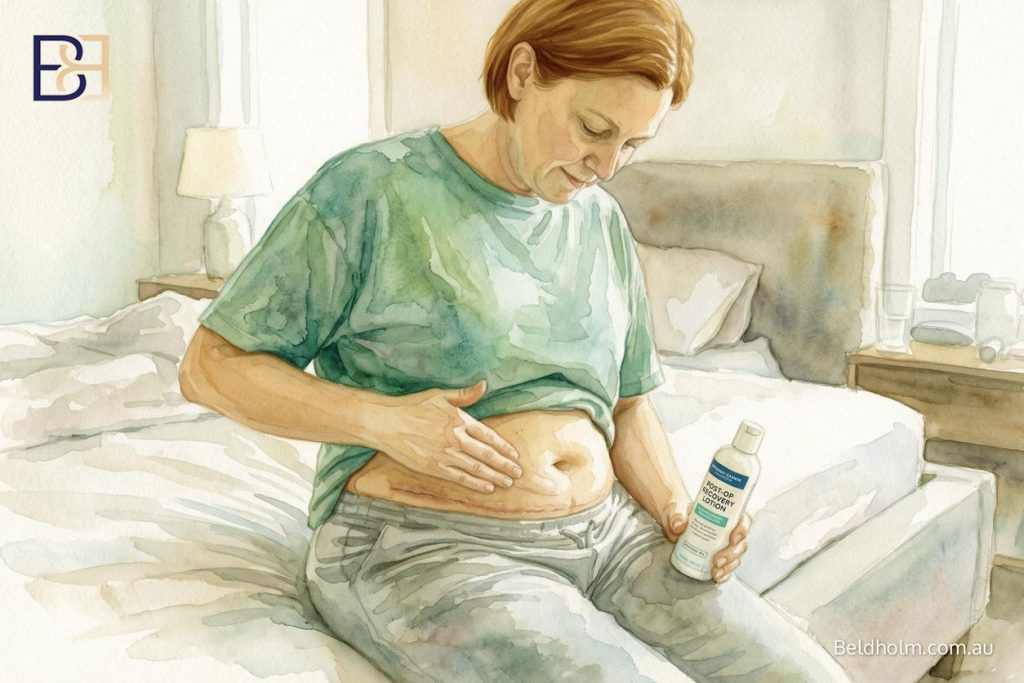
- Silicone. Silicone gel or silicone sheets are the scar treatment with the most consistent evidence. Used daily over months, they can help a scar settle flatter and paler (4).
- Scar massage. Once the scar is closed and settled enough, gently massaging along it for a few minutes a day can help soften it and ease tightness. I will show you when and how to start.
- Sun protection. Sun exposure can darken scars and permanently. To protect scars, keep them covered and use a high SPF on any part that might be exposed, for at least the first year.
- Moisturising. Keeping the scar and surrounding skin supple with a plain moisturiser is reasonable and does no harm, though it is the silicone and sun protection that do the heavier lifting.
If a scar is not settling well
Some scars stay raised, thickened or itchy despite good care, particularly in patients prone to hypertrophic or keloid scarring. There are further options for these, such as steroid injections to reduce scar thickness and flatten a raised scar, and laser therapy for colour and texture. I do not offer laser at my clinic, so I would refer you on for that if it were appropriate. None of these is a cure, and I would only suggest them after the scar has had time to mature.
What I would not spend your money on
Many over the counter scar creams and vitamin E preparations are marketed heavily but have little good evidence behind them. They are unlikely to harm the scar, but they are not a substitute for silicone, sun protection and patience. No treatment can eliminate scars entirely. Results vary, and even with everything done well, the scar that you are left with is permanent.
Nutrition Before Surgery, and Why It Helps Your Scar

Healing skin is built from protein and a handful of specific nutrients, so your nutritional state going into surgery has a direct bearing on how your wounds close and how your scars settle. This matters more after weight loss than most patients expect. Massive weight loss, and the dietary changes or bariatric surgery that drove it, commonly leave people short on protein, iron, vitamin D, vitamin C, zinc and others, often without any obvious symptoms. A body lift (belt lipectomy) is a large operation with a long wound, so going in with those gaps already corrected supports skin health and gives the scar a better starting point.
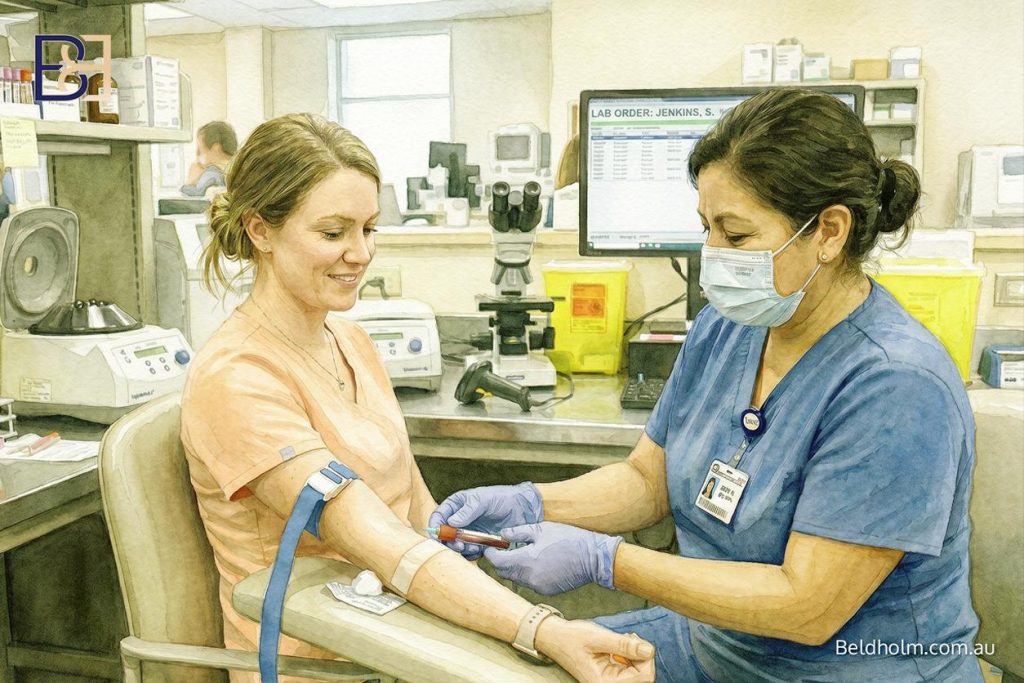
For this reason I check a full pre-operative blood panel on every post weight loss patient well before surgery, and I correct what it shows over the weeks leading up to your operation. This is not something done at the last minute. It is a planned process, usually shared between me, your GP and, where needed, a dietitian. The aim is to walk into theatre with your protein intake adequate and any deficiencies treated, rather than asking your body to both heal a major wound and make up a shortfall at the same time.
I have written separately about the nutritional side of preparing for body contouring surgery, and rather than repeat it here I would point you to those articles. They cover the detail of protein needs before and after surgery, the common nutritional deficiencies after weight loss, and the specific roles of vitamin C, zinc, iron and vitamin D in wound healing. The vitamins and supplements guide brings these together, and I would rather you read the right approach there than follow a supplement list from a scar article. What suits you is guided by your own blood results, not a generic regimen.
Scar Revision: When It Helps, and What It Cannot Do
Sometimes a part of the scar does not settle as well as the rest. It may widen, stay raised or thickened, or heal unevenly in one spot. Where that happens, a scar revision can sometimes improve that section. Revision is often misunderstood, so it helps to be clear about what it is realistically for.
When I would consider it
- Only after the scar has matured. I do not revise a scar early. A line that looks poor at three or six months will often improve a great deal on its own by eighteen months to two years. Revising too soon risks operating on a scar that would have settled anyway.
- For a defined problem, not the whole scar. Revision works best on a specific issue, such as a widened segment, a raised or thickened patch, or an area that healed poorly. It is not a way to remove the scar as a whole.
- When the scar itself, not the swelling or early redness, is the issue. I will help you tell the difference at review.
What it can and cannot do
A surgical scar revision removes the old scar tissue from a problem area and closes it again more carefully, sometimes with the area under less tension than the first time. At its best it can turn a wide or raised segment into a finer, flatter one.
What it cannot do is make a scar disappear. Every revision is another incision, so it trades the old scar for a new one and relies on the new one healing better. In a patient who forms thick or raised scars by nature, a revision can heal the same way, which is why I am cautious about revising in that situation. There is no guarantee that a revised scar will be better, only a reasonable chance in the right circumstances.
How the decision is made
Whether a revision is worthwhile is judged for the individual, once the scar has matured, weighing the likely gain against the fact that you are accepting another wound to get it. I will give you my frank view at your later reviews. Many patients, once a scar has fully settled, decide they are content to leave it alone. Results vary, and a revision is a considered decision rather than a routine next step.
One Operation or Staged Surgery, and What It Means for Scars
After significant weight loss, loose skin often sits in more than one area. Alongside the waist, patients may also have loose skin on the arms, suited to a brachioplasty (arm lift), the thighs, including the inner thighs, suited to a thighplasty (thigh lift), or the breasts, suited to a mastopexy (breast lift). A common question is whether to combine some of this work in a single operation or to stage it across separate operations. That decision affects your recovery, and it affects how your scars are managed.
My approach
Where a patient is suited to it, I prefer to deal with loose skin in a single comprehensive operation rather than dividing it across several procedures. The reason is practical: one operation means one anaesthetic and one recovery to work through, rather than repeating those steps two or three times.
This is a preference, not a rule. For some patients, doing everything at once places more demand on the body than is sensible, and staging the work across separate operations is the safer and more appropriate path. Staging is a legitimate clinical choice, not a fallback. Which approach suits you is decided for you as an individual, at consultation, after assessment of your medical history, your nutritional state, and the extent and pattern of your loose skin.
What it means for your scars
Combining procedures does not reduce the number of scars. Each procedure leaves its own scar wherever skin is removed, whether the work is done together or separately. A body lift (belt lipectomy) leaves its circumferential line whether or not an arm lift (brachioplasty) or thigh lift (thighplasty) is done at the same sitting, and those add their own scars in turn.
What combining can do, for a suitable patient, is consolidate the healing into one period rather than several. You manage one set of wounds through one recovery process. Staging spreads the same scars across separate recoveries instead. Neither approach gives you fewer scars overall; the difference is in how the recovery is structured.
The trade-off
A larger single operation is a bigger physiological event than a smaller one, and the recovery period from it should not be underestimated. That is precisely why pre-operative preparation, including the nutrition I described earlier, matters more when a single comprehensive operation is planned, not less. The benefit of consolidating the work is balanced against the greater demand a longer operation places on your body and your healing.
I will never recommend adding to the scope of your surgery for the sake of doing more in one sitting. The question I am answering with you is only how best to do the work you actually need.
Realistic Expectations

If you take one thing from this article, let it be this: the scar from a body lift procedure (belt lipectomy) is permanent. Good planning, good healing and good scar care can help it settle into a flatter, paler, less obvious line, but they cannot make it go away. You are exchanging loose skin and the problems it causes for a long scar that you will keep for life.
A few points to be clear on:
- The scar is long, and it goes all the way around. That is inherent to the operation, not a reflection of how it was done.
- It will look worse before it looks better. Redness, firmness and some unevenness in the early months are part of normal healing, not a sign of a poor result.
- Final maturation takes time. Expect up to around two years before the scar is fully settled.
- How well it settles is partly out of anyone’s hands. Your genetics, skin type and healing all play a role, which is why results vary from one patient to the next, even with the same operation done the same way.
Do not go into this expecting a scar that is barely there. Patients who understand the trade in advance, and who are mainly troubled by the loose skin rather than by the prospect of a scar, are usually the ones most at peace with the outcome. If a permanent scar is not something you are willing to accept, that is important to know before surgery, not after.
Common Questions About Body Lift (Belt Lipectomy) Scars
Where will the scars be?
The main scar runs around the waist, roughly where the waistband of underwear or swimwear sits. I plan the line with you before surgery and aim to keep it where clothing will cover it. The front can be controlled closely; the back can vary a little more because it is such a mobile area. It is usually not the only scar. There is also a small scar around the belly button (umbilicus), a small scar at each of the two drain sites low on the hips, and, if liposuction (suction assisted lipectomy) is used to refine an area, a few millimetre-sized marks at the access points.
How long is the scar?
It goes all the way around. A circumferential scar is the trade-off for removing excess skin from both the front and the back in one belt lipectomy surgery. There is no shorter version that still removes that much skin.
Will the scar fade?
It fades and flattens over time, but it does not disappear. A mature scar is a paler, flatter, settled line rather than an absent one. How much it fades depends partly on your skin type and on how scar healing goes for you.
How long does it take to settle?
The scar looks its rawest in the first weeks and improves steadily from there. Most of the fading happens over the first year, with final maturation taking up to around two years.
When can I start scar treatments?
I usually start patients on silicone and massage around six weeks, but only once the skin is fully closed. I confirm the timing at your review rather than working to a fixed date.
What helps a scar settle well?
Silicone gel or sheets and sun protection have the best evidence. Keeping off cigarettes and vaping, good nutrition before surgery, wearing your compression garment, and following your activity limits all help too. Many heavily marketed scar creams have little evidence behind them.
Can the scar be removed later?
It cannot be removed, only revised. If a section heals poorly, a revision can sometimes improve that part once the scar has matured, but it trades the old scar for a new one and offers no guarantee of a better result. I would only suggest it after waiting for the scar to settle.
Is the scar a sign something went wrong?
No. The scar is the expected result of the operation, not a complication. Removing skin from around the waist always leaves a line where the skin is closed.
References
- Almadani YH, Vorstenbosch J, Davison PG, Murphy AM. Wound healing: a comprehensive review. Semin Plast Surg. 2021;35(3):141-144.
- Wolfram D, Tzankov A, Pulzl P, Piza-Katzer H. Hypertrophic scars and keloids: a review of their pathophysiology, risk factors, and therapeutic management. Dermatol Surg. 2009;35(2):171-181.
- Sorensen LT. Wound healing and infection in surgery. The clinical impact of smoking and smoking cessation: a systematic review and meta-analysis. Arch Surg. 2012;147(4):373-383.
- O’Brien L, Jones DJ. Silicone gel sheeting for preventing and treating hypertrophic and keloid scars. Cochrane Database Syst Rev. 2013;(9):CD003826.