


Breast Lift with Implants (Mastopexy with Breast Augmentation) in Newcastle NSW
A breast lift (mastopexy) with implants raises one important question early on: do you need a lift, an implant, or both, and is it better done in a single operation or staged across two? It is one of the more considered decisions in breast surgery, and the right answer is different for every patient.
This page explains what the operation involves, how I approach the one-versus-two decision, and how I work out what suits you.
Book your appointment online now
What this operation involves
A breast lift (mastopexy) with implants combines two procedures that do different jobs.
- The lift (mastopexy) repositions the breast tissue, moves the nipple and areola higher on the chest, and removes excess skin. It changes the position and shape of the breast.
- The implant (augmentation) adds volume, particularly to the upper part of the breast.
Breast volume, shape and position change over the course of life. This can follow pregnancy, breastfeeding, weight change, or the ordinary effects of time and gravity. The lift repositions and reshapes the breast; the implant adds volume. Some patients need both, some need only one. What suits you depends on your anatomy, and that is worked out at consultation.
One operation or two: how I approach it
Combining a lift and an implant in one operation is a more involved undertaking than either procedure on its own. It can be done as a single operation, or staged across two.
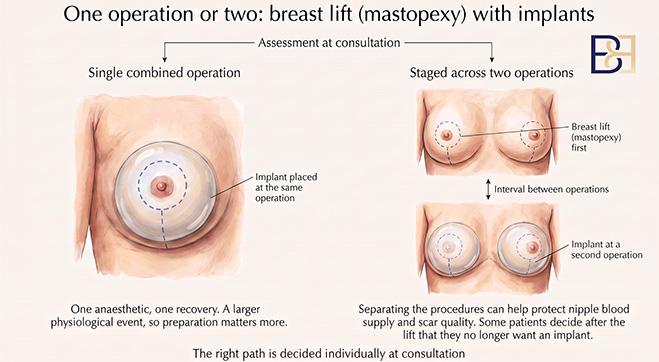
Where a patient is suited to it, my preferred approach is to do the lift and the implant in a single operation. For a suitable candidate that means one anaesthetic and one recovery to work through, rather than going through each of those twice.
Staging the two procedures across separate operations is also a sound choice, and the right one for some patients. Some prefer to do it that way. In other cases the anatomy points to it: when a lift and an implant are done together, the demands on nipple blood supply, skin tension, implant position and scar quality are greater, and separating the two can help protect nipple blood supply and scar quality. Where the lift is done first, some patients find that once it has settled they no longer want an implant at all.
A combined operation, done in a single sitting, is still a larger physiological event than either procedure alone. It asks more of your body, which makes preparing well beforehand more important, not less.
I do not decide between these before I have met and assessed you, and it is not something to settle from anything you read online. We work it out together at consultation, based on your medical history, your breast tissue quality, the pattern and extent of skin laxity, and what can be done well in a single operating time.
Is this operation right for me?
This operation tends to come up when someone wants to change both the position of the breast, which a lift works on, and its volume, which an implant adds. If only one of those matters to you, you may need only one of the two procedures. It is not right for everyone, and surgery is not the only way to approach concerns about breast size or position.
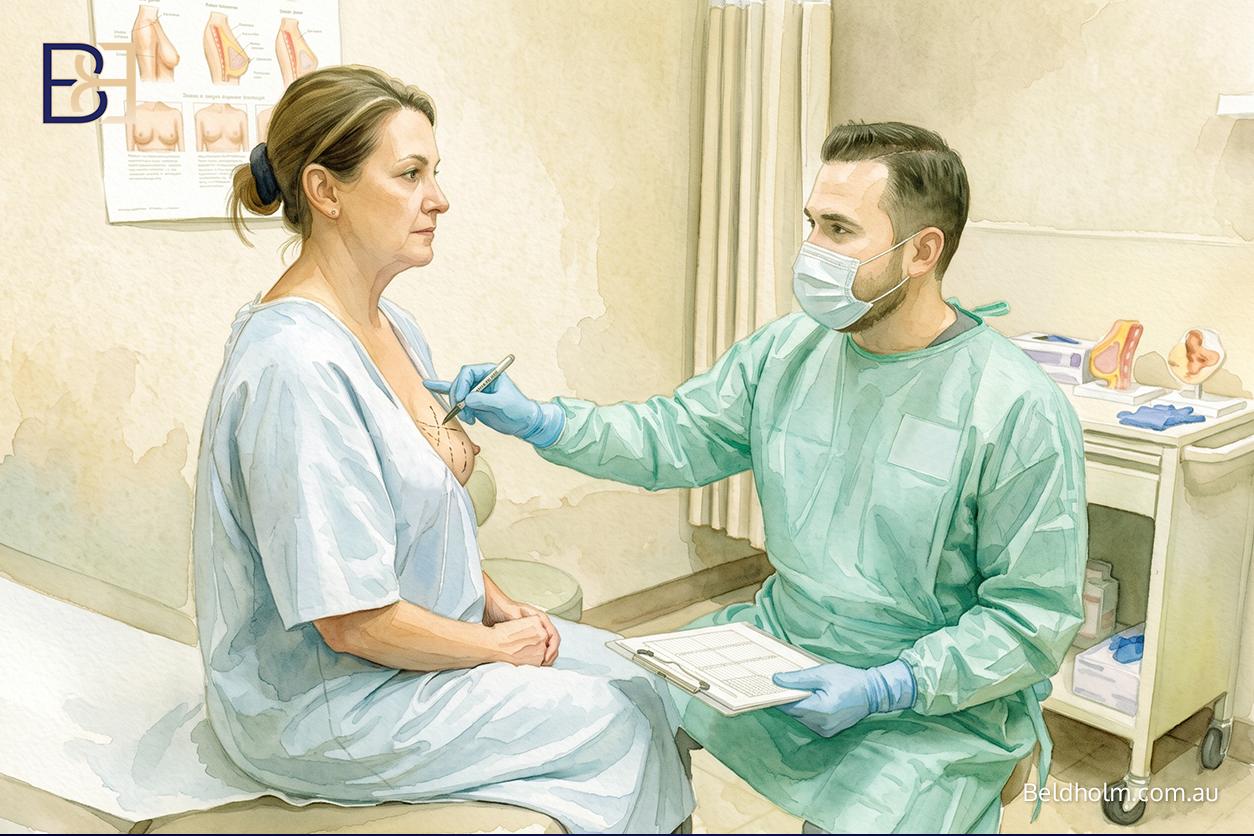
At your consultation I assess whether it is appropriate for you, taking account of your health, your breast tissue and skin, and what you would like to change. I will tell you if I do not think surgery is the right step, and my aim is to give you enough information to make your own decision.
If you are planning a future pregnancy, tell me at consultation. Pregnancy and breastfeeding can change the breast again and can affect your result, and both a lift and an implant can affect your ability to breastfeed later. Where relevant, surgery is generally planned once your family is complete and breastfeeding has finished. Timing is assessed individually, not by a fixed rule.
Choosing implant size and type
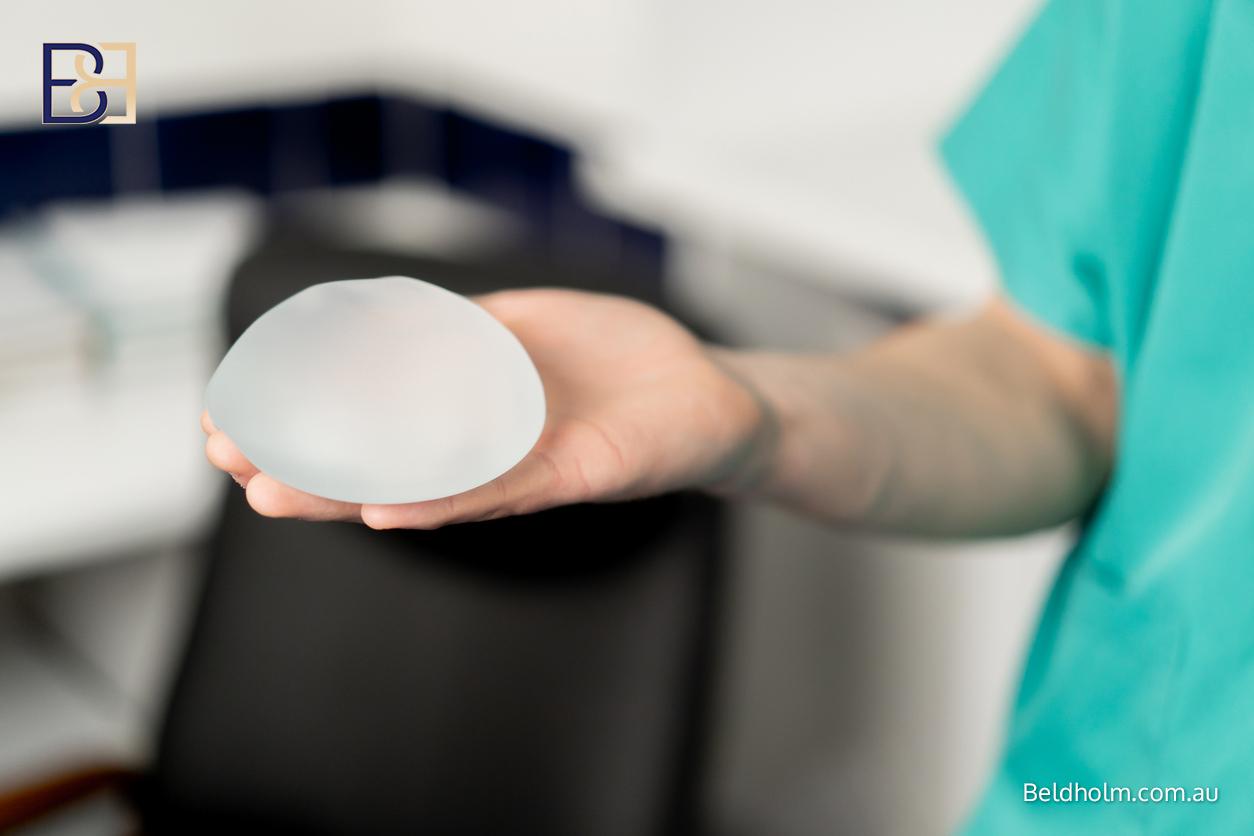
Breast implants are medical devices regulated by the TGA. I use a range of implants and will talk you through the options, including fill, shape, profile and size, and what each one means for you. Choosing a size is something most patients find difficult, so I use several methods across your consultations to help you decide, including trying sizers in a bra and reviewing the options over more than one visit. You can change your mind about size right up to the day of your operation.
As part of your consultation I may also use Crisalix 3D imaging, alongside my in-person assessment, as a visual aid to help us talk through size and shape. It is a simulation used to support that discussion. It is not a prediction or a guarantee, and it cannot show your actual result.
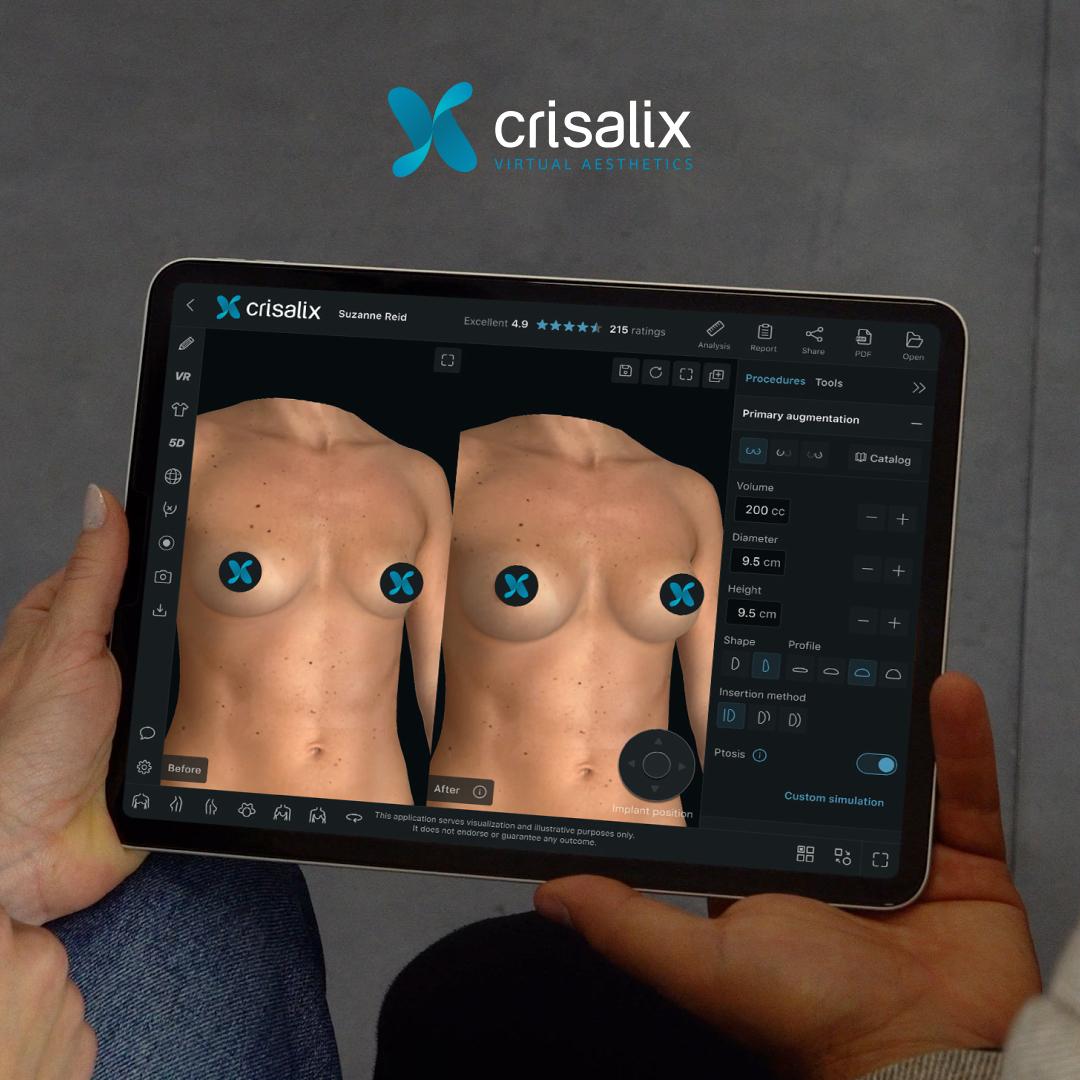
3D imaging is a visualisation aid used to support discussion during your consultation. It is a general guide only. It does not predict or guarantee your actual surgical result, and results vary between patients. All surgery has complications, get a 2nd opinion
Book your appointment online now
Your pathway with me
1. GP referral
A referral from your general practitioner is required before your first consultation.
2. First consultation
This runs about an hour. We go through your health and medical history, I examine you, we take standardised clinical photographs in a private changing facility, and we talk through your options and the risks. It can be in person, or by video if you are travelling from a distance. At least one of your consultations must be in person before surgery.
3. Written information and a second consultation
You have at least two pre-operative consultations. I give you written information to take home, and the second consultation is included at no cost. You will not be asked to sign consent at your first consultation.
4. Cooling-off period
After your two consultations and informed consent, there is a cooling-off period of at least seven days before surgery is booked or a deposit is paid.
5. Surgery
Your operation is at Maitland Private Hospital, an accredited facility with 24-hour medical cover.
6. Follow-up
The first two weeks involve close follow-up, with nurse and doctor reviews several times a week, LED light therapy and dressing changes. After that I review you at 1, 3, 6 and 12 months. All of these appointments are included in your surgical fee.
Why patients choose me
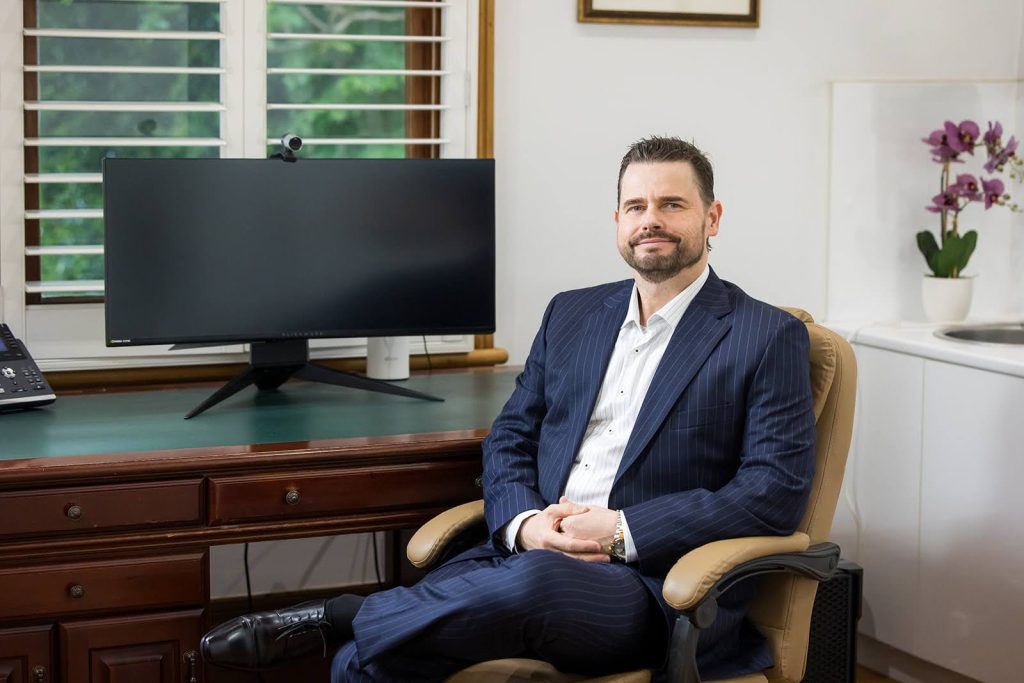
I am a Specialist Surgeon (FRACS) with more than 15 years of surgical experience, and breast surgery is a core part of my practice. Combining a breast lift (mastopexy) with an implant is one of the more technically demanding operations in aesthetic breast surgery, because the lift and the implant place competing demands on nipple blood supply, skin tension and implant position. Planning both in the same operation, and judging when they should be staged instead, is work I do regularly, and that judgement is built at consultation, not from a template.
I operate at Maitland Private Hospital, an accredited private hospital with an on-site intensive care unit.
You deal with me directly throughout. I carry out your assessment, I plan your operation, and I perform your surgery. While you are in hospital I round on you each day. After discharge, my nurse and I share your follow-up, with reviews two to three times a week for the first two weeks, then milestone reviews at four weeks, three months, six months and twelve weeks. Your GP receives a formal handover at the four-week visit and is kept informed throughout. The surgeon who plans your operation is the one who follows your recovery, through to the twelve-month review.