Reference Summary
What vitamin C does
Vitamin C (ascorbic acid) is a water-soluble vitamin that the body cannot make or store. It supports four functions that matter directly to body contouring surgery recovery.
- Collagen synthesis. Vitamin C is an essential cofactor for two enzymes that build collagen. Without it, collagen cross-links are weak and wound strength is reduced.
- Non-heme iron absorption. Vitamin C converts iron from the form found in plant foods into the form the gut can absorb. This matters for patients with concurrent iron deficiency.
- Immune function. Vitamin C supports neutrophil function, phagocytosis, and the body’s response to surgical stress.
- Antioxidant activity. Vitamin C scavenges reactive oxygen species, which are generated in large amounts during and after surgery.
Who is at risk in my practice
Almost every post-weight-loss patient I see has some degree of vitamin C insufficiency, often without symptoms. The common patterns are:
- Previous bariatric surgery (sleeve gastrectomy or gastric bypass)
- Current use of weight-loss medications in the GLP-1 class
- Restrictive or low-volume diets sustained over months or years
- Smoking or recent smoking history
- Low fresh fruit and vegetable intake
Blood test details
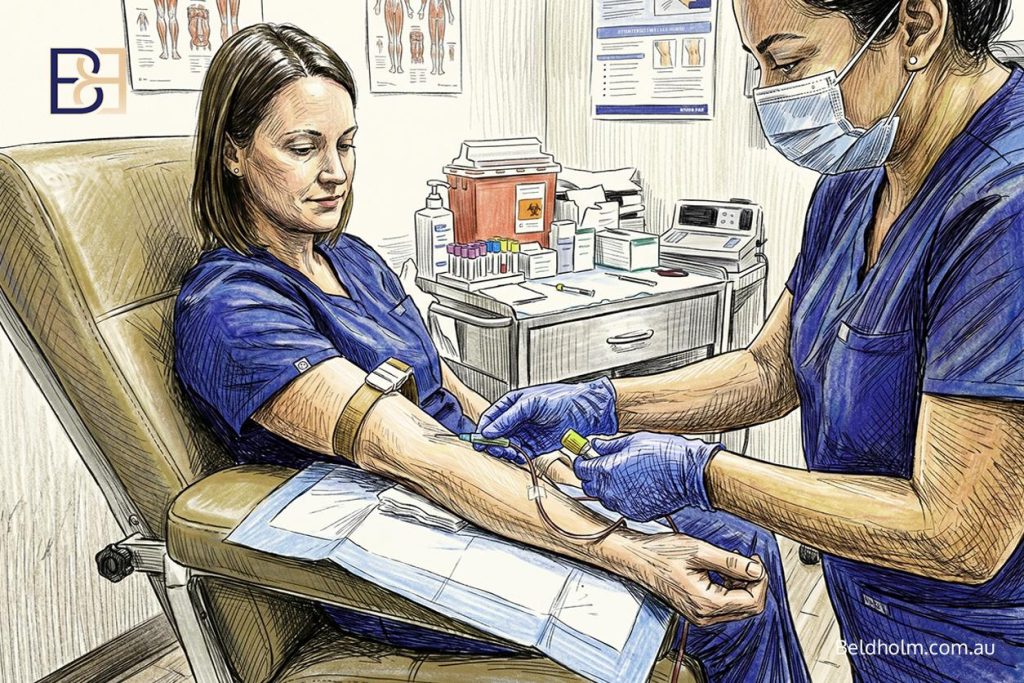
I do not order a serum vitamin C test routinely for every patient. I order it when it is clinically indicated, for example, when a patient has signs of deficiency, unusual bruising or gum bleeding, or a history that suggests severe intake restriction.
- Test: serum vitamin C (ascorbate)
- Australian reference range: 25 to 85 µmol/L
- MBS item number: 66605 (covers multiple vitamins, including vitamin C)
- Units note: Australian laboratories report in µmol/L. International sources may report in mg/dL. Conversion: mg/dL × 56.8 = µmol/L.
The pre-operative target
My goal before surgery is adequate tissue saturation so that wound healing is not limited by vitamin C supply. I do this through the Tier 1 supplement framework that every post-weight-loss patient in my practice follows, rather than waiting for a blood test to confirm a specific gap.
Perioperative dose
- From surgical planning (minimum 4 weeks before surgery) through to 1 week before surgery: 1 to 2 g per day of vitamin C
- 1 week before surgery: reduce to 1000 mg per day to minimise a small bleeding risk from higher doses of vitamin C
- Day of surgery through early post-operative period: resume 1 to 2 g per day as soon as bleeding risk has passed, which in practice is within the first day or two post-operatively
- Continue 1 to 2 g per day until wound healing is complete, usually about 4 to 6 weeks post-operatively
- Long-term maintenance: 60 mg per day, which is met by a standard multivitamin containing vitamin supplements or an adequate diet
Australian brand options
These are the products I most commonly see working well for my patients.
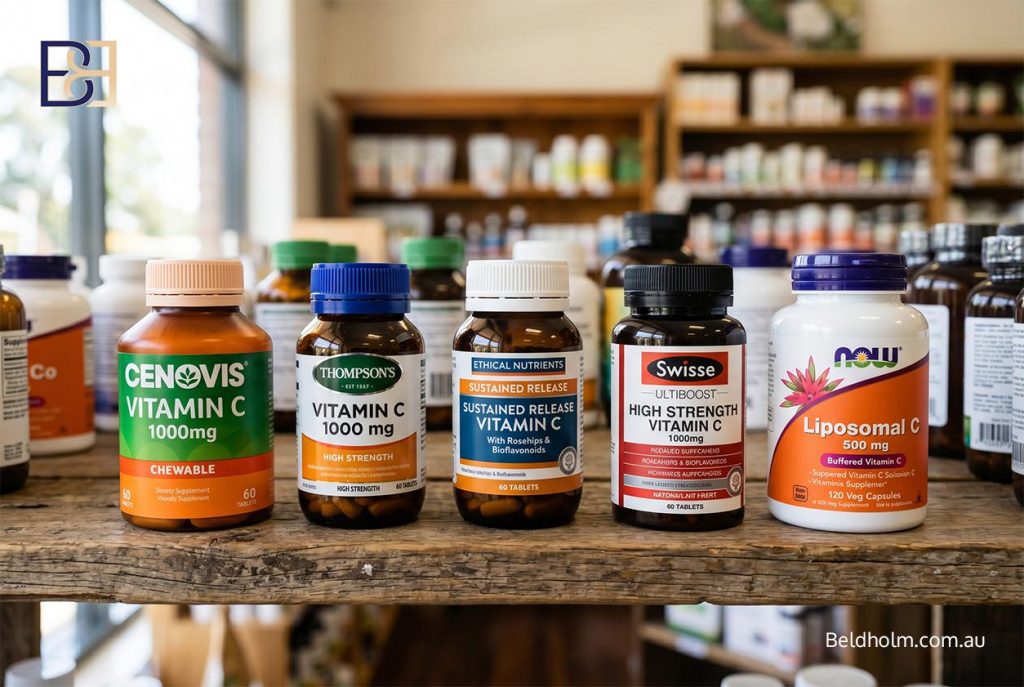
- Blackmores Bio C vitamin C supplements 1000 mg: Chemist Warehouse, Priceline
- Cenovis Vitamin C 1000 mg: Chemist Warehouse
- Thompson’s Vitamin C 1000 mg: Chemist Warehouse, Amazon AU
- Ethical Nutrients Sustained Release vitamin C supplements: Chemist Warehouse, Pharmacy Direct (useful for patients with GI sensitivity)
- Swisse Ultiboost High Strength Vitamin C supplements: Chemist Warehouse, Priceline
- NOW Foods Liposomal C vitamin C supplements: iHerb (for patients who prefer a liposomal formulation)
Any quality product meeting the dose target is acceptable. Tablet, capsule, powder, and effervescent forms all work.
Key cautions
- Kidney stones. Sustained doses above 1 g per day can increase urinary oxalate excretion. Patients with a prior history of calcium oxalate kidney stones, hyperoxaluria, or impaired renal function should not take high-dose vitamin C without discussing it with me or their GP first.
- Take with iron. If you are on an oral iron supplement, take your vitamin C at the same time to help absorption. Do not take it with high-dose calcium or magnesium, these can blunt iron uptake.
- Separate from high-dose vitamin E. If you are on high-dose vitamin E supplementation, take vitamin C at a different time of day.
- Pregnancy. Standard doses of a multivitamin are safe in pregnancy. High-dose vitamin C supplements should be discussed with your obstetrician.
- GI tolerance. High-dose L-ascorbic acid on an empty stomach can cause reflux, nausea, or loose stools in some patients. Buffered forms (sodium or calcium ascorbate) are better tolerated.
This is clinical guidance specific to post-weight-loss body contouring patients in my practice. Blood results, individual health conditions, and procedure-specific factors determine the plan for each patient during consultation. Results from surgery vary between patients.
Table of Contents
Introduction
When post-weight-loss patients come to me considering body contouring surgery, vitamin C is rarely what they want to talk about. They want to talk about:
- The excess skin
- The incisions
- The recovery
- Removing excess skin
- What the result will look like
All fair questions, and all conversations I have with every patient.
But somewhere in that first or second consultation, we move on to a different conversation. One about what the body actually needs to heal well after a large operation, and whether yours is in a position to do that.
Vitamin C sits near the top of that second conversation.
Why this vitamin matters for post-weight-loss surgery
Body contouring surgery after significant weight loss is not small surgery. A full abdominoplasty (tummy tuck) involves a long incision that spans hip to hip. A body lift (belt lipectomy) wraps the whole circumference of the torso. A thighplasty (thigh lift) creates a long incision down the inner thigh. A brachioplasty does the same along the inner aspect of the upper arms. A mastopexy reshapes the breast and leaves incisions through the breast skin.
These are large-surface-area operations, and the wounds they leave must heal. Strong wound closure depends on collagen. Collagen synthesis depends on vitamin C.
Three roles vitamin C plays in surgical recovery
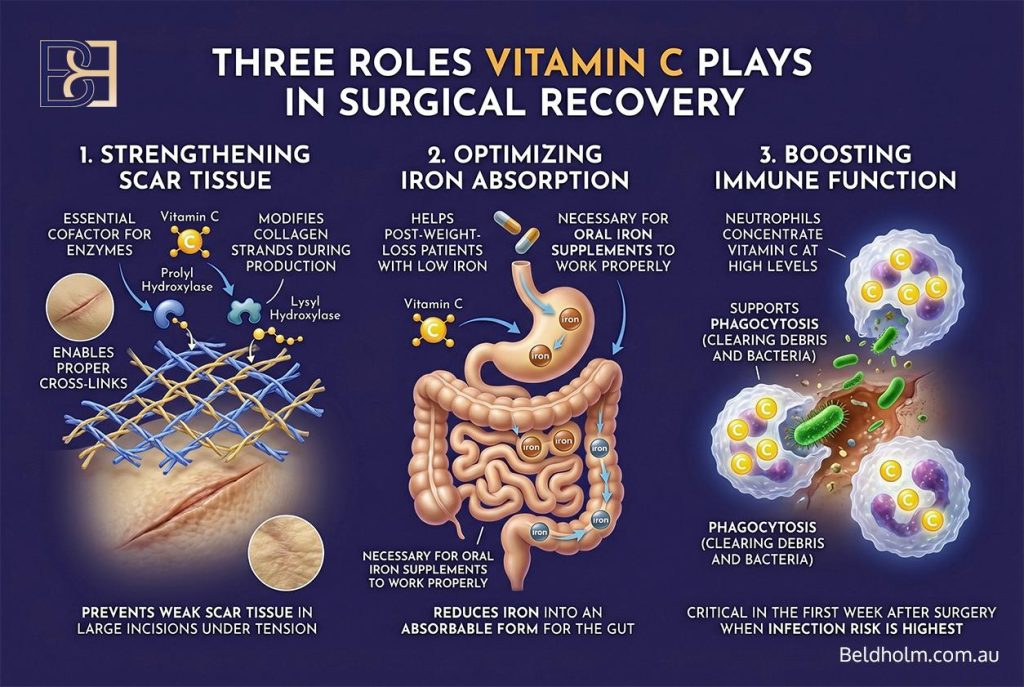
There are three reasons I focus on vitamin C specifically in this patient group.
The first is collagen. Vitamin C is an essential cofactor for two enzymes, prolyl hydroxylase and lysyl hydroxylase, that modify collagen strands during production. Without those modifications, collagen cannot form proper cross-links. Weak cross-linking means weak scar tissue. In a large incision under tension, weak scar tissue is a problem.
The second is iron absorption. Many of my post-weight-loss patients also have low iron or frank iron deficiency. Oral iron supplementation in this group only works properly when vitamin C is present to reduce iron into a form the gut can absorb. So vitamin C has a practical job to do outside of wound healing as well.
The third is immune function. Neutrophils, the white blood cells that handle early wound defence, concentrate vitamin C at levels much higher than plasma. Adequate vitamin C may support phagocytosis, the process by which these cells clear debris and bacteria from the wound. This matters in the first week after surgery when infection risk is highest.
Why post-weight-loss patients are the group I focus on
Post-weight-loss patients are different from the general body contouring population. Most have come through a period of significant dietary restriction, bariatric surgery, or weight loss medication use. All three of those routes reduce food volume and variety in ways that have predictable nutritional consequences.
Post-bariatric patients are known to have elevated rates of vitamin C insufficiency, with increased risk of clinical consequences (1). Patients on weight-loss medications in the GLP-1 class are also at risk, with published research showing substantial reductions in daily vitamin C intake (2). Neither group meets the daily vitamin C requirement solely from dietary sources. Limited dietary vitamin C intake is common in this patient group.
How this article is organised
The rest of this article covers what vitamin C does in more detail, why post-weight-loss patients are at increased risk, how I assess status, how I use the Tier 1 supplement framework to get everyone to an adequate level before surgery, my perioperative dosing protocol, food sources relevant to Australian patients, which brands I commonly see working well, and the considerations that matter.
What Vitamin C Is and What It Does
Vitamin C is a water-soluble vitamin. That single fact carries more weight than most patients realise.
Unlike vitamin A or vitamin D, which are fat-soluble and can be stored in body fat for months, vitamin C cannot be stored in any meaningful way. Whatever the body does not use or cannot retain is excreted in the urine. This means you need a steady daily intake to keep tissue vitamin C concentrations where they should be. Miss a week of vitamin C intake, and plasma concentrations start to fall. Plasma concentrations rise again once the vitamin C intake resumes.
Humans are also among the few species that cannot synthesise vitamin C internally. Most mammals synthesise vitamin C themselves. Humans cannot synthesise vitamin C. Most mammals synthesise vitamin C on their own. We lost that ability somewhere in our evolutionary past and have been dependent on dietary sources ever since (3).
The chemistry
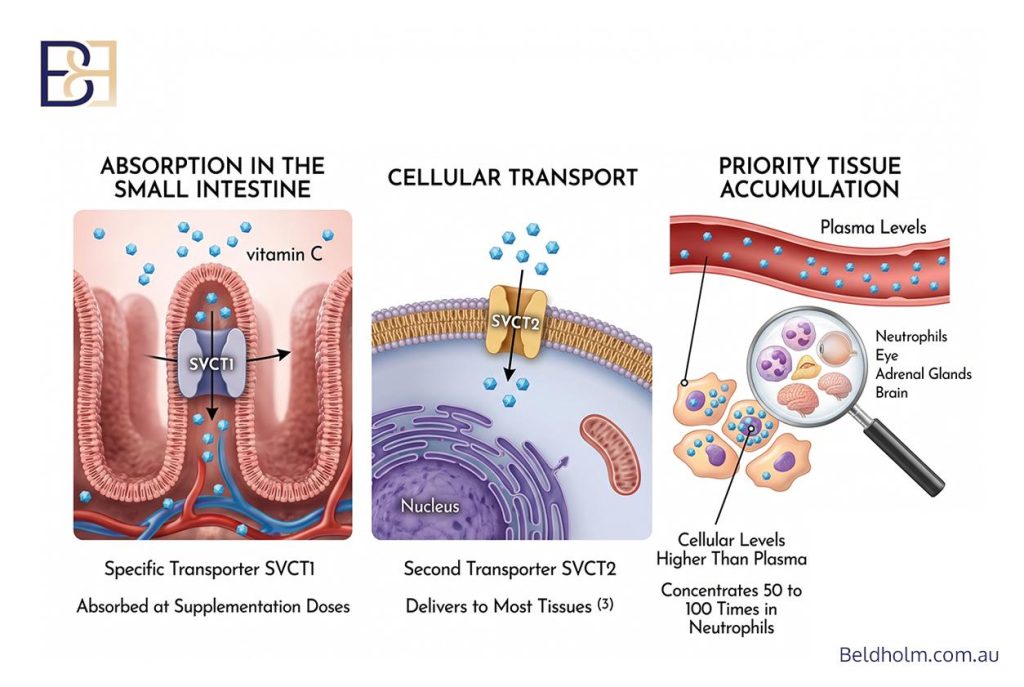
The active form in the body is L-ascorbic acid (or ascorbate) at physiological pH. At the doses used for supplementation, vitamin C is absorbed in the small intestine via a specific transporter, SVCT1. Once absorbed, a second transporter, SVCT2, delivers it into cells across most tissues of the body (3).
Cellular levels of vitamin C are much higher than plasma levels. Neutrophils, the first-responder white cells in a wound, concentrate vitamin C to levels 50 to 100 times higher than plasma. The eye, adrenal glands, and brain also maintain high internal concentrations. This tells you something important about how the body treats this vitamin: it is not a background nutrient; it is a priority nutrient for specific tissues.
Where vitamin C actually works in the body
For body contouring surgery patients, 4 functions are directly relevant.
Collagen synthesis
This is the role that most patients have heard of, and the most important one for surgical recovery.
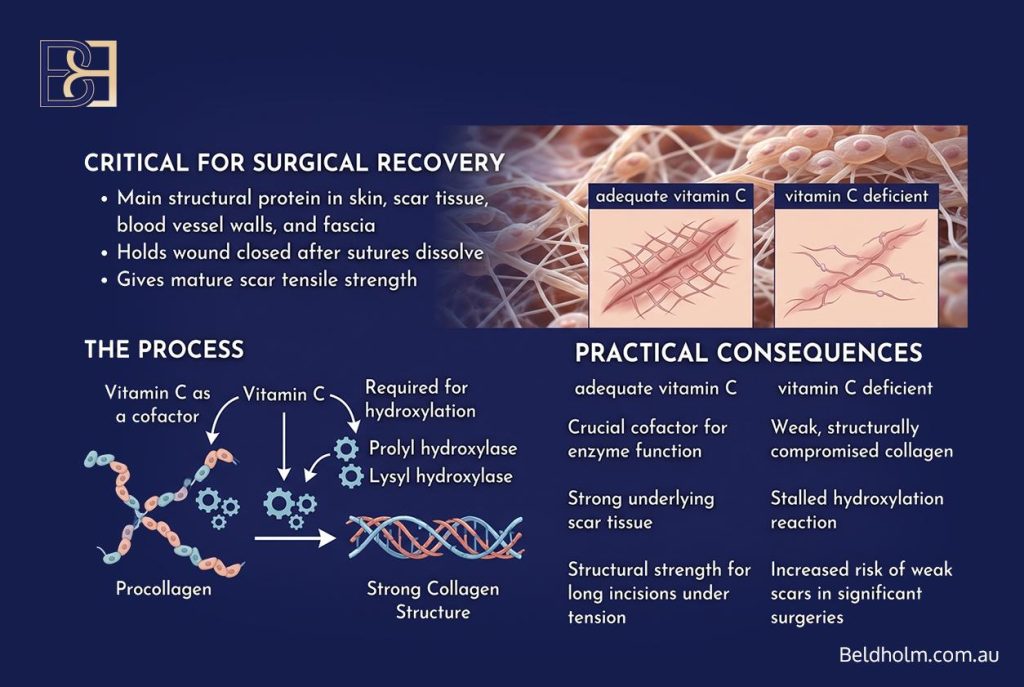
Collagen is the main structural protein in skin, scar tissue, blood vessel walls, and fascia. It is what holds a wound closed once the sutures are removed. It is also what gives a mature scar its tensile strength. A wound closed with sutures alone but with inadequate underlying collagen will open or stretch under tension.
Collagen starts life as a long, straight chain of amino acids called procollagen. Before it can function as structural tissue, two specific amino acids in that chain, proline and lysine, must be chemically modified through a process called hydroxylation. Two enzymes do this work: prolyl hydroxylase and lysyl hydroxylase.
Both enzymes require vitamin C as a cofactor. Without enough vitamin C, the hydroxylation reaction stalls. The collagen chains that come out the other end are structurally weak. They cannot form the cross-links that give scar tissue its strength (3, 4).
That is the mechanism. In practical terms, if vitamin C is low in the weeks around your surgery, the wound closes, but the underlying scar is weaker than it should be. In a small surgical cut, this might not matter much. In a long incision under tension across the abdomen or around the torso, it matters a lot.
Non-heme iron absorption
The second major role is in iron absorption, which matters more for my patient group than for the general population.
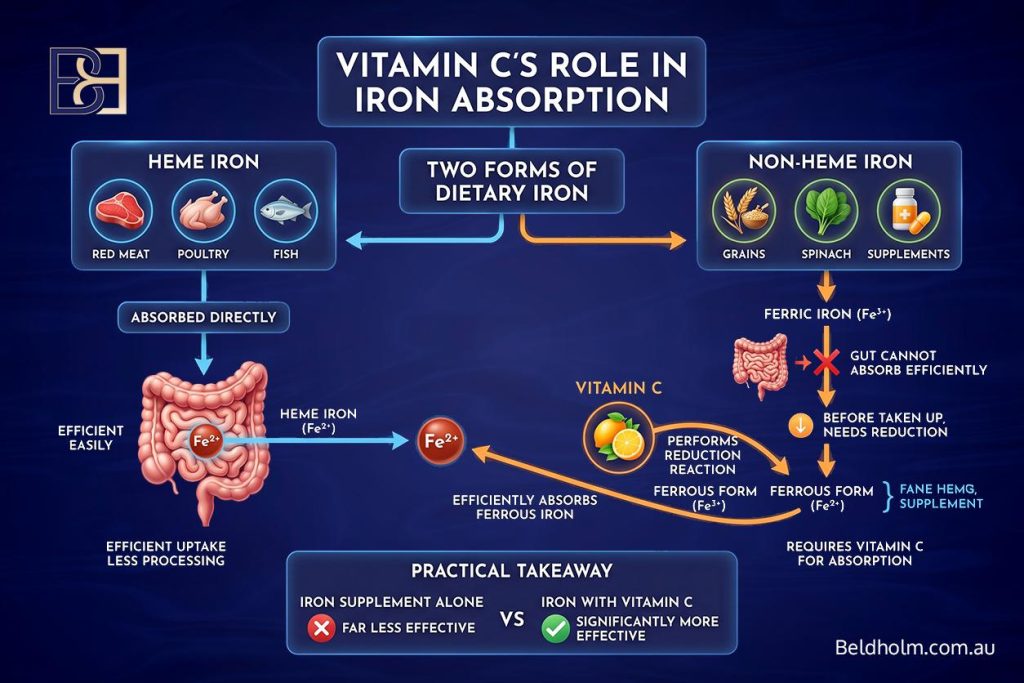
Dietary iron comes in two forms. Heme iron is found in animal foods, red meat, poultry, fish. It is absorbed directly by the gut without much processing. Non-heme iron is found in plant foods, grains, and most fortified supplements. It arrives in the gut in a form called ferric iron, which the duodenum cannot absorb efficiently. Before it can be taken up, it needs to be reduced to the ferrous form.
Vitamin C performs this reduction reaction. In practical terms, taking iron supplements without vitamin C supplements is far less effective than taking it with vitamin C. Research has shown that the combination can significantly improve iron uptake in patients with deficiency (5).
This matters because a substantial proportion of my post-weight-loss patients also have iron deficiency. Post-bariatric surgery patients have iron deficiency rates between 30 and 50 percent depending on the procedure (6). Women of reproductive age are at particular risk. If I am going to treat a patient’s iron deficiency before surgery, the vitamin C cover is part of the strategy, not an optional add-on.
Immune function
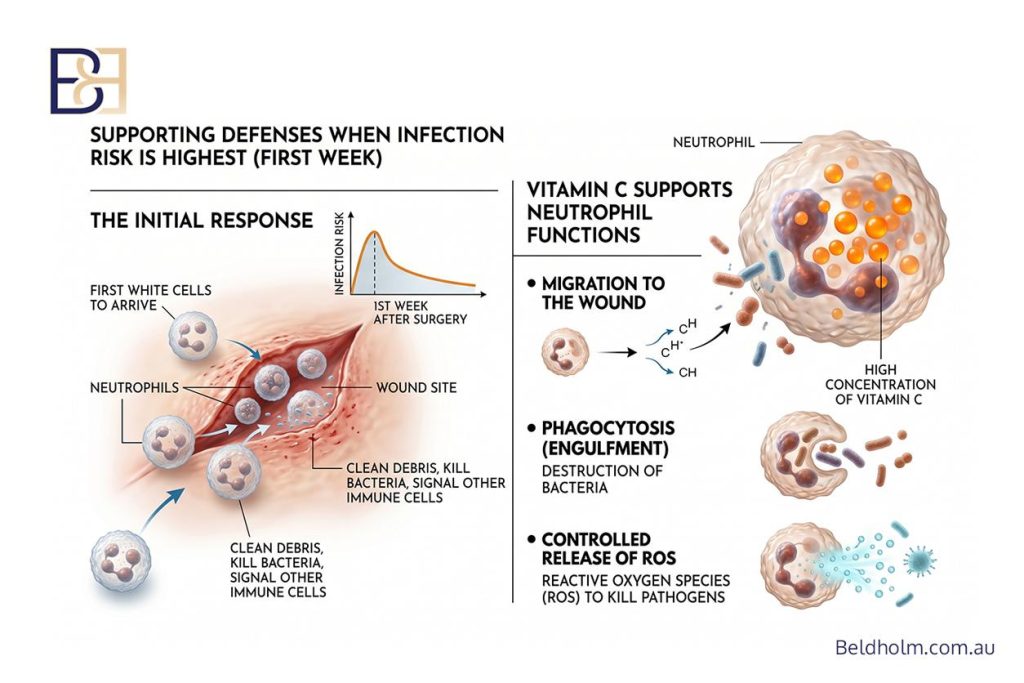
The third role is supporting the immune response, particularly in the first week after surgery when infection risk is highest.
Neutrophils are the first white cells to arrive at a wound. They clean up debris, kill bacteria, and signal other immune cells to follow. As mentioned earlier, neutrophils concentrate vitamin C to levels far above plasma. Adequate vitamin C supports several specific neutrophil functions, including migration to the wound, phagocytosis (the engulfment and destruction of bacteria), and the controlled release of reactive oxygen species used to kill pathogens (3, 7).
Published research has shown that vitamin C deficiency impairs phagocytosis and reduces complement activity, both of which contribute to increased infection risk in surgical wounds (7). In a patient population where wound complications can turn a straightforward recovery into a drawn-out one, I do not want this part of the system running below capacity.
Antioxidant activity
Surgery generates oxidative stress. Tissue handling, changes in blood flow, the inflammatory response, and general anaesthesia all generate reactive oxygen species. At moderate levels, these are part of normal wound healing signalling. At excessive levels, they damage cells that are trying to repair.
Vitamin C acts as an antioxidant vitamin and a direct free-radical scavenger. This antioxidant vitamin donates electrons to reactive oxygen species, neutralising them before they can damage tissue. It also regenerates other antioxidants in the body, including vitamin E in cell membranes.
The practical effect in surgery is that adequate vitamin C helps keep the oxidative stress of the operation within the range the body can handle. Animal studies and smaller human studies have shown faster wound closure and wound tensile strength when vitamin C levels are optimised before surgery (4).
Other roles worth knowing about
Vitamin C has additional functions that are less central to body contouring recovery but are worth a brief mention. It is a cofactor for the synthesis of noradrenaline, carnitine, and several peptide hormones. It is involved in epigenetic regulation through its role in certain enzyme reactions. And it plays a role in cholesterol metabolism to bile acids (3).
None of these changes how I use vitamin C clinically in the perioperative window. They do explain why deficiency, when it occurs, produces a scattered pattern of symptoms that can be difficult to pin down, including fatigue, mood changes, bruising, poor wound healing, and gum bleeding in more advanced cases.
What the body tolerates
Adult plasma levels of vitamin C in well-nourished people sit between 40 and 65 µM (3). Tissue levels are much higher. The body has an upper limit; plasma levels cannot rise much above 70-85 µM, no matter how much oral vitamin C is taken. At higher oral doses, a greater proportion of the dose is excreted in urine (3).
The exception is intravenous vitamin C, which can achieve much higher blood concentrations. IV vitamin C has a role in some clinical contexts, but not in routine preparation for body contouring surgery. My perioperative protocol uses oral dosing for this reason.
The next section explains why post-weight-loss patients are at high risk of inadequate vitamin C levels when they arrive for surgery.
Why Post-Weight-Loss Patients Are at Higher Risk
The evidence on deficiency rates
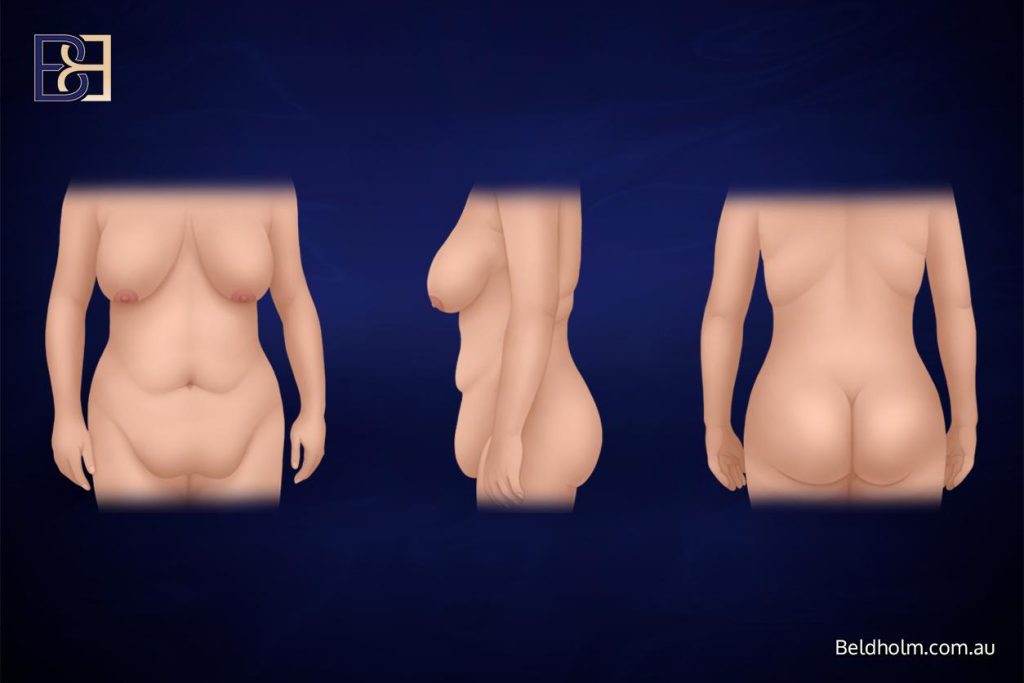
Post-bariatric patients have vitamin C deficiency rates ranging from 5 to 40%, with the highest rates following Roux-en-Y gastric bypass (1, 6). That is a wide range because different studies measure at different time points and use different cut-offs. The consistent finding across studies is that this population is at risk, and many patients are deficient without realising it.
The situation is similar in patients who have reached weight loss through these medications in the GLP-1 class. Research has shown these patients consume approximately 43% less vitamin C than the average daily intake (2). That is a direct consequence of reduced vitamin C intake and food volume. When appetite is suppressed, variety and volume drop together, and vitamin C is one of the nutrients that falls off first.
What makes this worse is that vitamin C deficiency is often silent until it becomes severe. A patient can run at 30-50% of optimal tissue saturation for months without obvious symptoms. They do not feel deficient. Their bloods, if not specifically tested for vitamin C, do not show it. The first sign can be unexpectedly slow wound healing after surgery, which is exactly what I am trying to avoid.
Why is the risk elevated in this group
Several factors stack up to create the risk profile I see in my consulting rooms.
Reduced food volume
The most obvious driver is reduced total food intake. Bariatric surgery, particularly sleeve gastrectomy and gastric bypass, physically restricts what patients can eat in a single sitting. GLP-1 medications produce the same effect through appetite suppression. The mechanism differs, but the outcome for vitamin C intake is similar. Patients eating 1000 to 1500 kcal (4,184 to 6,276 kJ) per day struggle to hit micronutrient targets that assume 2000 or more.
This is not a willpower problem. It is a mathematical problem. You cannot consume a normal-population amount of vitamin C from a post-bariatric volume of food. Even a very clean, vegetable-heavy diet often falls short without supplementation.
Reduced fruit and vegetable tolerance
Beyond total volume, many of my post-bariatric patients find that raw fruits and vegetables are the hardest foods to tolerate. Fibrous textures can sit uncomfortably in a smaller stomach. Citrus fruits can aggravate reflux. Patients often default to softer, more digestible foods that are also lower in vitamin C per serving.
Research has confirmed this pattern. Low intake of fruits and vegetables is one of the strongest predictors of vitamin C deficiency in post-bariatric patients (8).
Altered gastric environment
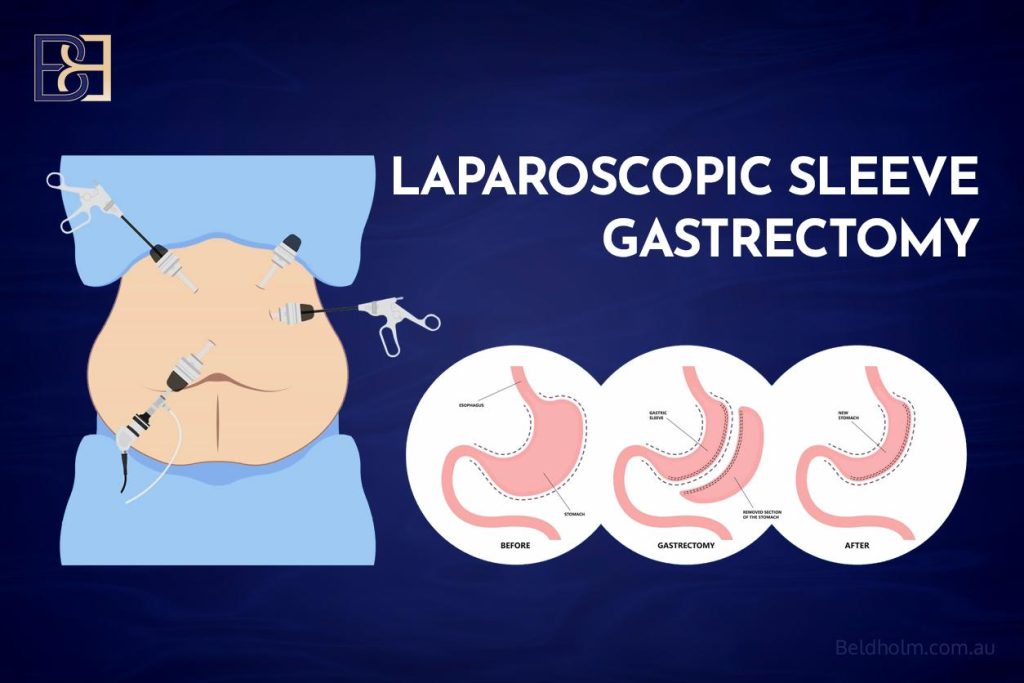
Sleeve gastrectomy and gastric bypass change more than just stomach size. They change gastric pH, gastric emptying, and the biochemistry of the upper gut. Vitamin C absorption is generally preserved because it happens in the small intestine, not the stomach. But the reduced food volume and altered meal patterns that follow these operations still affect total daily intake.
Weight loss medications
The GLP-1 class of weight-loss medications produces profound appetite suppression, which reduces total food volume and variety. Published research has shown these patients consume approximately 43% less vitamin C than the average daily intake (2). The full picture of how these medications affect nutritional status and what that means for perioperative planning is covered later in this article.
Smoking

Smoking is worth a specific mention because it is common in my post-weight-loss patient group, and its effect on vitamin C is larger than most patients realise. Smoking reduces plasma vitamin C concentrations by 25 to 50% compared with non-smokers, and ex-smokers continue to have slightly lower levels for some time after quitting (3). The mechanism is oxidative stress: the free radicals in cigarette smoke deplete vitamin C faster than it can be replenished.
If you smoke, you need more vitamin C per day than a non-smoker to maintain equivalent tissue levels. Patients in my practice who still smoke get additional time on the supplementation schedule and, more importantly, a discussion about smoking cessation well before their surgery date. Continued smoking at the time they are undergoing surgery is associated with an increased risk for wound complications, independent of vitamin C level.
Prolonged restrictive dieting
Some patients in my practice have not had bariatric surgery but have sustained very low-calorie or highly restricted diets for years. Extended periods of calorie restriction produce micronutrient gaps similar to those observed after bariatric surgery. Low-carb, low-fat, or elimination-style diets can all lead to vitamin C gaps if fruit and vegetable variety is limited.
This is another situation where I do not want to make it a debate about diet philosophy. What I want to know is the real-world intake pattern and whether it is meeting needs. If it is not, we supplement.
Comorbidities and medications
A smaller subset of patients has additional drivers of vitamin C turnover. Chronic kidney disease increases renal losses. Certain medications, including high-dose aspirin, oestrogens, and some antibiotics, can modestly lower plasma vitamin C levels. Diabetes is associated with increased vitamin C turnover due to oxidative stress. None of these on their own requires special management, but they add to the cumulative picture.
Why this matters for the supplement framework
Vitamin supplements play an essential role in this patient group, and the cumulative risk explains why I do not rely on blood testing to decide who gets vitamin C supplementation. Vitamin C sits in Tier 1 of my two-tier framework, which means every post-weight-loss patient receives it regardless of blood results. The rationale for this approach is covered later in the article.
The silent deficiency problem
One reason I spend time on this topic in consultations is that patients often assume they would know if they were vitamin C-deficient. They would not.
The classical deficiency syndrome, scurvy, requires a near-total absence of vitamin C for several months. Modern scurvy is rare in Australia but not extinct; case reports still appear in the medical literature, often in patients with very restrictive eating patterns (3). What I see more commonly is subclinical deficiency, where plasma levels are low but not zero, and the patient has no overt symptoms. Subclinical deficiency still impairs collagen synthesis and iron absorption. It just does not announce itself.
This is why the question I ask is not “Do you feel fine?” The question is, “Has your vitamin C intake pattern been adequate, and given what I know about your history, what is the likelihood you are running below optimal?” For most of my post-weight-loss patients, the answer to that second question is high.
The next section delves into the biology of how vitamin C supports wound healing and why optimising status before a major operation matters.
The Collagen Connection: Why Vitamin C Is Central to Wound Healing
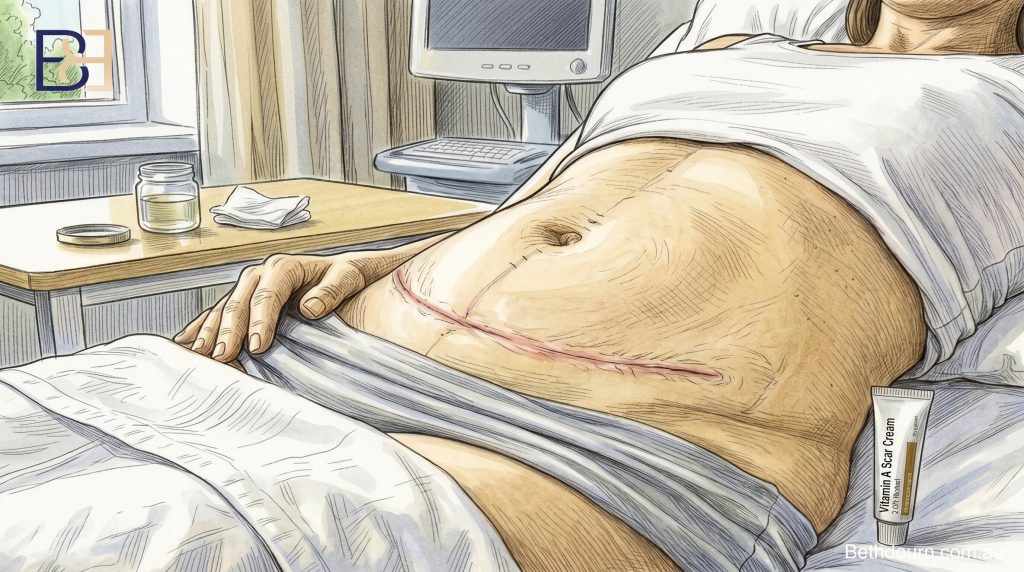
Collagen is the reason body contouring wounds close, and the reason they stay closed. If I had to pick one nutrient to focus on in the weeks leading up to a long-incision operation, this is the one. Vitamin C is to collagen what cement is to a brick wall. You can stack the bricks without it, but nothing will hold together under load.
This section gets into the details of how that works, because understanding the mechanism is what makes the supplementation protocol make sense.
A short tour of wound healing
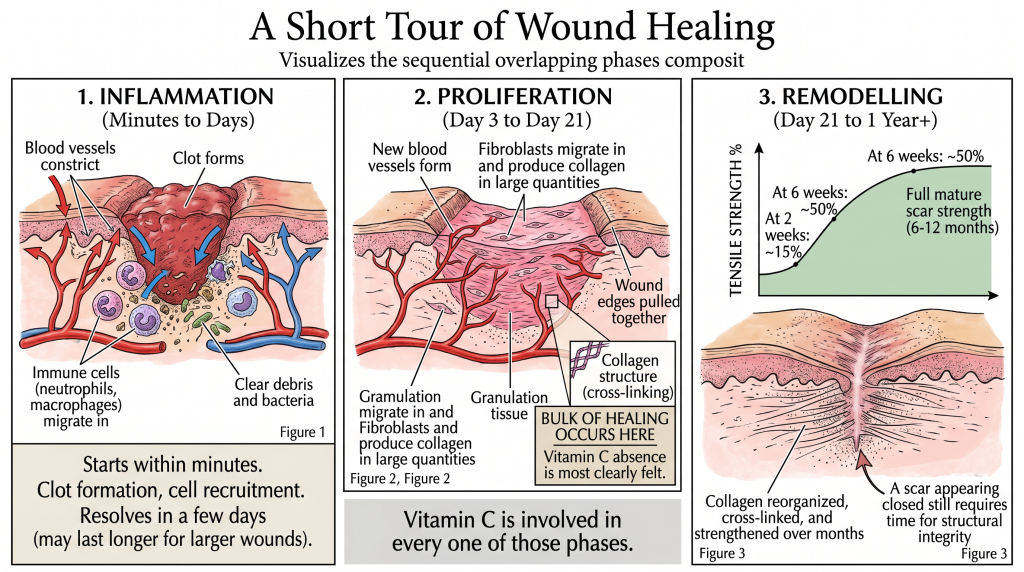
Wound healing is not a single event. It is a series of overlapping phases, each with its own biology and nutritional requirements.
Inflammation starts within minutes of the incision. Blood vessels constrict, a clot forms, and immune cells move in to clear debris and bacteria. This phase usually resolves within a few days, though in a large incision, the wound edges may remain actively inflamed for a week or more.
Proliferation is where collagen starts being laid down. Fibroblasts, the cells responsible for building connective tissue, migrate into the wound bed and begin producing collagen in large quantities. New blood vessels form to supply the healing tissue. The wound edges are pulled together by contractile fibres. This phase runs from about day 3 to day 21 after surgery, when the bulk of the healing occurs.
Remodelling is the long tail. The collagen laid down quickly during the proliferation phase is reorganised, cross-linked, and strengthened over months. A scar that appears closed at 2 weeks still has only about 15% of its final tensile strength at that point. By 6 weeks, it is up to around 50%. Full mature scar strength is not reached until 6 to 12 months after surgery (4).
Vitamin C is involved in every one of those phases, but it is in the proliferation phase where its absence is most clearly felt.
The biochemistry of collagen synthesis
Collagen is made inside fibroblasts as a long precursor molecule called procollagen. The procollagen chain has a repeating structure composed primarily of three amino acids: glycine, proline, and lysine.
Before procollagen can become functional collagen, specific proline and lysine residues along the chain need to be chemically modified. The modifications are called hydroxylation reactions, and they are catalysed by two enzymes:
- Prolyl hydroxylase modifies proline residues to hydroxyproline.
- Lysyl hydroxylase modifies lysine residues to hydroxylysine.
Both enzymes are vitamin C-dependent. Vitamin C keeps the iron at the active site of each enzyme in the reduced ferrous state, which is the only state in which the enzyme can function. When vitamin C is not available in sufficient quantity, the reaction stalls. The iron oxidises, the enzyme becomes inactive, and the hydroxylation reaction does not proceed (3, 4).
Why hydroxylation matters so much
Collagen is the main structural protein in skin, connective tissue, and blood vessels. When blood vessels have inadequate collagen, small blood vessels become fragile and can bleed under minor stress. The blood vessels around a surgical wound are under particular strain during the healing process. Strong blood vessels at the wound bed mean better oxygen and nutrient delivery to the healing tissue.
Hydroxyproline and hydroxylysine are what allow collagen to form a triple helix, the stable, rope-like structure that gives collagen its mechanical strength. Without hydroxylation:
- The triple helix does not form stably. The three procollagen chains that normally twist together fall apart at body temperature.
- Cross-linking between collagen fibres does not occur. Hydroxylysine residues are the anchor points for cross-links between adjacent collagen molecules. Without those cross-links, collagen fibres slide past each other under tension rather than holding together.
- The collagen that is produced is degraded. Malformed collagen is recognised as defective and broken down, rather than incorporated into tissue.
The clinical translation of this is straightforward. A patient with an inadequate vitamin C level can still close a wound. The skin edges come together, the sutures hold, and the superficial wound looks reasonable at the first dressing change. But the deeper collagen network that provides long-term wound strength is compromised. This is where problems show up later, wound dehiscence under stress, widened scars, and in severe cases, wound breakdown.
Wound tensile strength in practice
The practical measure of how well a wound is healing is tensile strength, how much force the wound can withstand before it pulls apart. Published research on surgical wounds has consistently shown a relationship between vitamin C level and tensile strength (4).
Several findings from the research are worth knowing:
- Animal models of vitamin C deficiency show reduced wound tensile strength at every time point measured from 3 days through to 3 weeks post-wounding.
- Surgical patients with low pre-operative vitamin C levels are more likely to experience delayed wound healing, infection, and wound dehiscence.
- Supplementation at pre-operative and post-operative time points has been associated with better wound outcomes in several clinical series, particularly in patients known to be at risk of deficiency.
- Diabetic wound models show that vitamin C supplementation may partially overcome the poor wound healing observed with hyperglycaemia, likely by improving collagen synthesis and reducing oxidative damage (4).
It means that vitamin C is one of the factors that has to be in place for normal wound healing to proceed. Take it away and the whole process runs slower and weaker. Put it in place and you remove one variable from the list of things that can go wrong.
Why does this matter more in body contouring surgery?
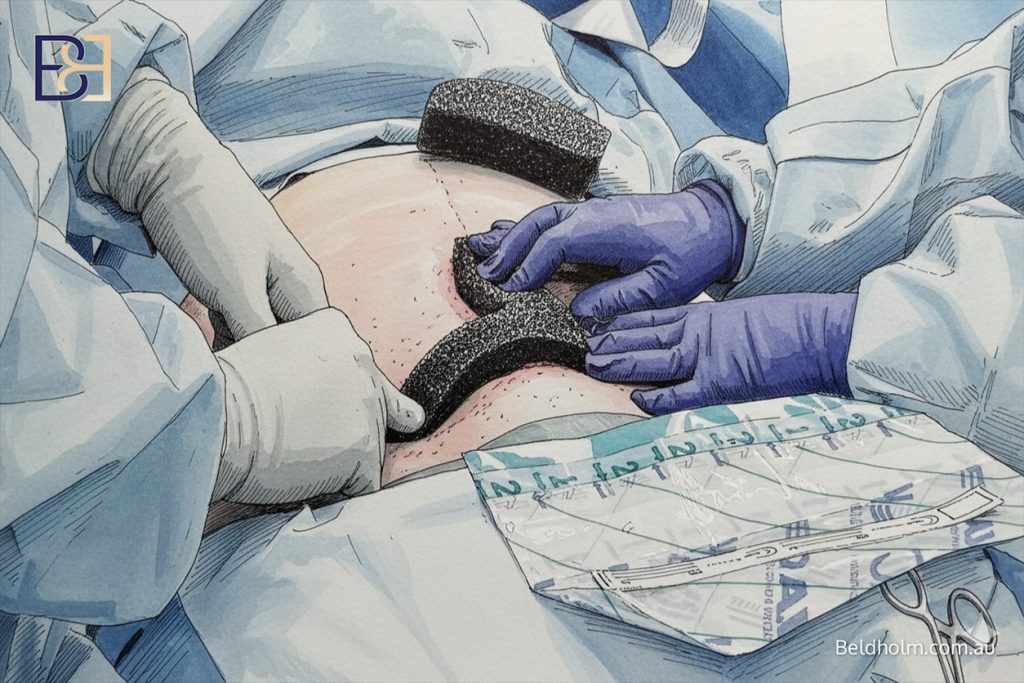
Body contouring after significant weight loss creates wounds that are qualitatively different from most other surgeries.
The incisions are long. An abdominoplasty (tummy tuck) incision runs from hip to hip. A body lift (belt lipectomy) incision goes the full circumference of the torso. A thighplasty (thigh lift) incision runs down the inner thigh from the groin to the knee. These are large-surface-area wounds that need to withstand the mechanical loads of standing, walking, sitting, coughing, and eventually returning to normal activity.
The tissue quality is often compromised. Patients who have lost significant weight often have skin that is thinner, less elastic, and less collagen-dense than pre-weight-loss skin. The collagen that is present is already older and less metabolically active. This is one of the reasons the skin does not retract on its own after weight loss: it has been stretched beyond the point at which it can recover.
The tension across the wound is high. When I close a tummy tuck (abdominoplasty), I am pulling skin from above the umbilicus down to meet the incision line near the pubis. That closure remains under constant tension during the early healing period. Every cough and every movement loads the repair. A wound that is healing with weak collagen cannot tolerate that load as well as one healing with full-strength collagen.
Long operative times add a further layer. These are not 30-minute operations. A dual vector abdominoplasty, or a circumferential hybrid abdominoplasty, takes hours, with tissue handling, electrocautery, and inflammatory activation throughout. All of that increases the oxidative demand on the healing tissue and the vitamin C demand that goes with it.
What happens when vitamin C is low and a patient is undergoing surgery
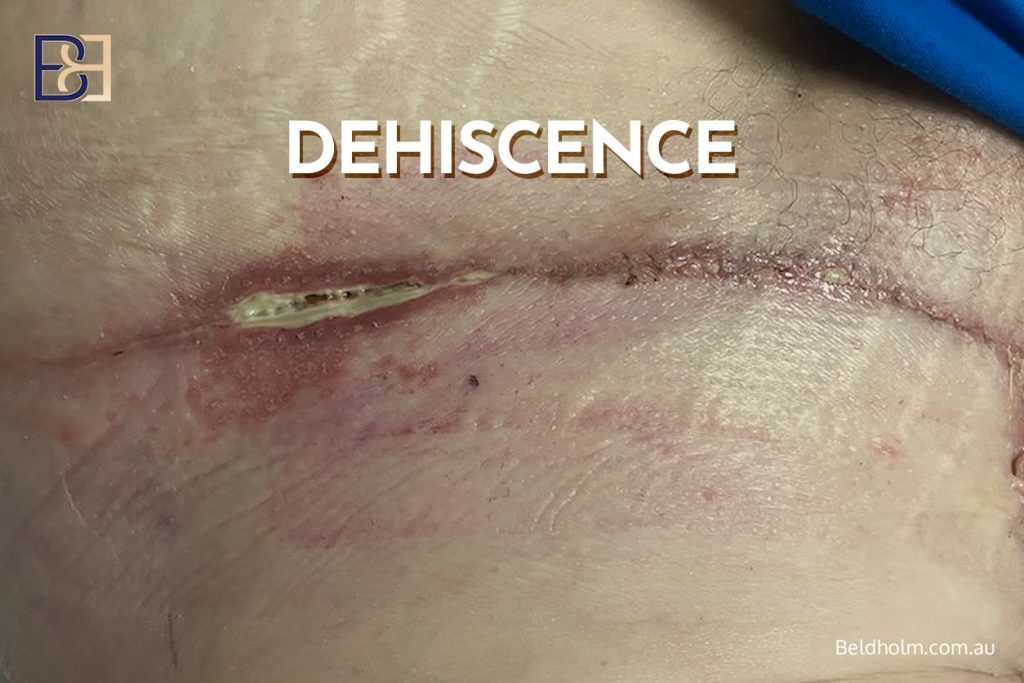
Slower healing at the incision line is the most common finding in vitamin C insufficiency. The wound takes longer to seal, dressings need to stay in place longer, and the patient sees visible wound fluid for longer than expected.
Widened scars can develop when the remodelling phase runs on weak collagen. The scar spreads sideways as tension distributes across a poorly organised collagen network, rather than forming a narrow line.
Wound dehiscence (the partial opening of a wound that had previously closed) is a recognised complication of significant vitamin C deficiency. It can occur days or weeks after what appeared to be normal wound closure, typically at points of highest mechanical stress.
Delayed strength gain means the patient has to be more cautious for longer before returning to activity. A wound that would normally tolerate light activity at 4 weeks may not be ready until 6 or 8.
Increased infection risk combines the collagen effect with the immune effects I covered in the previous section. Poor wound healing with slower closure means a wound remains open to colonisation for longer, and weaker immune activity at the wound bed means less effective bacterial clearance.
None of these is guaranteed to be an outcome of low vitamin C. The point is that they are more likely, and that the probability scales with the patient’s degree of deficiency and the demands of the surgery. The post-weight-loss body contouring combination sits at the high-demand end of the spectrum.
Why I treat vitamin C as non-negotiable in this patient group
When I stack the factors together, long incisions, compromised tissue quality, high closure tension, prolonged operative time, and a patient population with known risk of deficiency, the conclusion is: Vitamin C optimisation is something I am not willing to leave to chance.
This is the clinical reasoning behind placing vitamin C in the Tier 1 universal supplement category. Every post-weight-loss patient in my practice receives vitamin C supplementation before surgery, regardless of whether a blood test has confirmed a specific deficiency. The weight of evidence for risk in this population, combined with the low cost and high safety margin of supplementation, makes the decision straightforward.
From here, the article turns to the second major role of vitamin C in my perioperative plan: iron absorption. This matters specifically for the large number of my patients who also have iron deficiency.
The Iron Absorption Connection
The other reason I focus on vitamin C specifically in post-weight-loss patients is iron. A substantial proportion of the patients I see for body contouring also have iron deficiency, either identified on my pre-operative bloods or already being managed by their GP. Vitamin C is not a bystander in that picture. It is a direct determinant of whether the iron they take actually gets into the body.
Iron and the body contouring patient

Iron deficiency is common in post-weight-loss patients, and the rates are higher than most patients expect.
Post-bariatric surgery patients have iron-deficiency rates of 18-53% after Roux-en-Y gastric bypass and 1-54% after sleeve gastrectomy. Women of reproductive age sit at the higher end of those ranges. Patients on weight-loss medications in the GLP-1 class consume approximately 32% less iron than the daily reference intakes and have approximately a 3% incidence of iron-deficiency anaemia after 1 year (2, 6).
Iron matters for surgery for several reasons beyond its obvious role in haemoglobin. Iron is required for collagen production as a cofactor for the same hydroxylase enzymes that need vitamin C. Iron deficiency impairs oxygen transport to the wound bed. It increases infection risk and delays healing, independent of its effect on anaemia. And low haemoglobin going into surgery increases the likelihood that a patient will need a transfusion if blood loss is higher than expected.
These are all reasons I take iron status seriously in the pre-operative period. Many of my patients arrive already taking an iron supplement, either on GP advice or self-initiated. What they do not always know is whether it is working.
Heme iron and non-heme iron
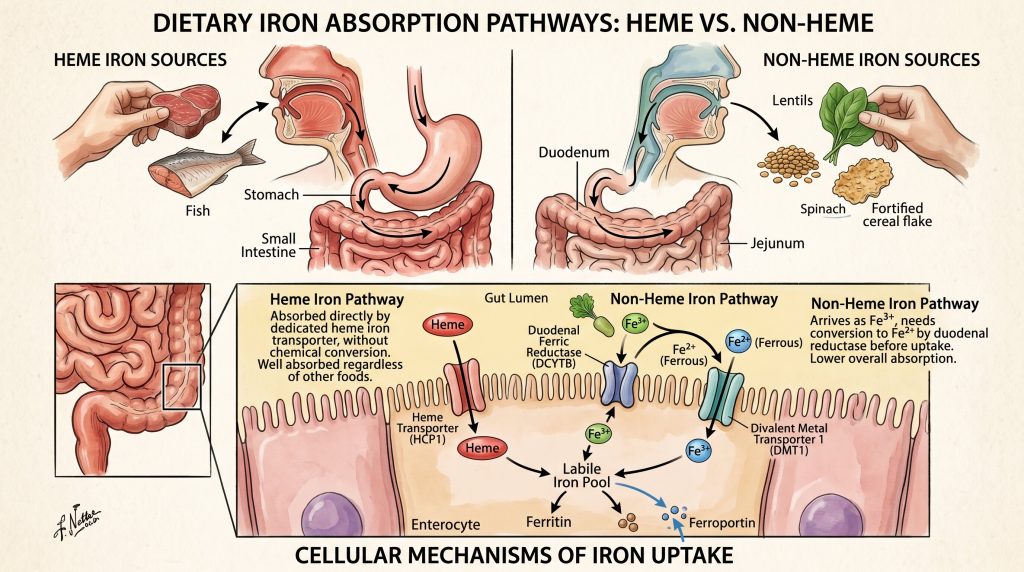
Dietary and supplemental iron come in two forms, and the distinction matters.
Heme iron is the form found in animal foods, red meat, poultry, fish, and seafood. It is absorbed directly across the gut wall by a dedicated heme iron transporter, without needing any chemical conversion. Heme iron is well absorbed regardless of what else is in the meal.
Non-heme iron is the form found in plant foods, grains, legumes, fortified cereals, and most iron supplements. It reaches the gut in the ferric form, with iron in a higher oxidation state. The duodenum cannot efficiently absorb ferric iron. Before uptake, it needs to be converted to the ferrous form.
This is where vitamin C earns its keep.
How vitamin C drives iron absorption
Vitamin C is a reducing agent. In the gut, it donates electrons to ferric iron, reducing it to ferrous iron. The ferrous form is soluble at duodenal pH and is the form the gut can absorb through its iron transporter (9).
The practical effect is substantial. Published research has shown that taking vitamin C with a non-heme iron source can significantly increase iron absorption, with the magnitude of the effect depending on the iron dose, meal composition, and vitamin C dose (5, 9). Ascorbic acid also helps counteract the absorption inhibitors found in some foods, including tannins in tea and coffee, phytates in whole grains, and calcium in dairy products.
The post-bariatric picture adds another layer. These patients have reduced gastric acid production after sleeve gastrectomy, and gastric acid itself is part of the ferric-to-ferrous conversion. So post-bariatric patients have less food going in and a less acidic environment that helps absorb the iron they do consume. Vitamin C partially compensates for that loss of acid-mediated reduction.
What this means for your pre-operative iron supplementation
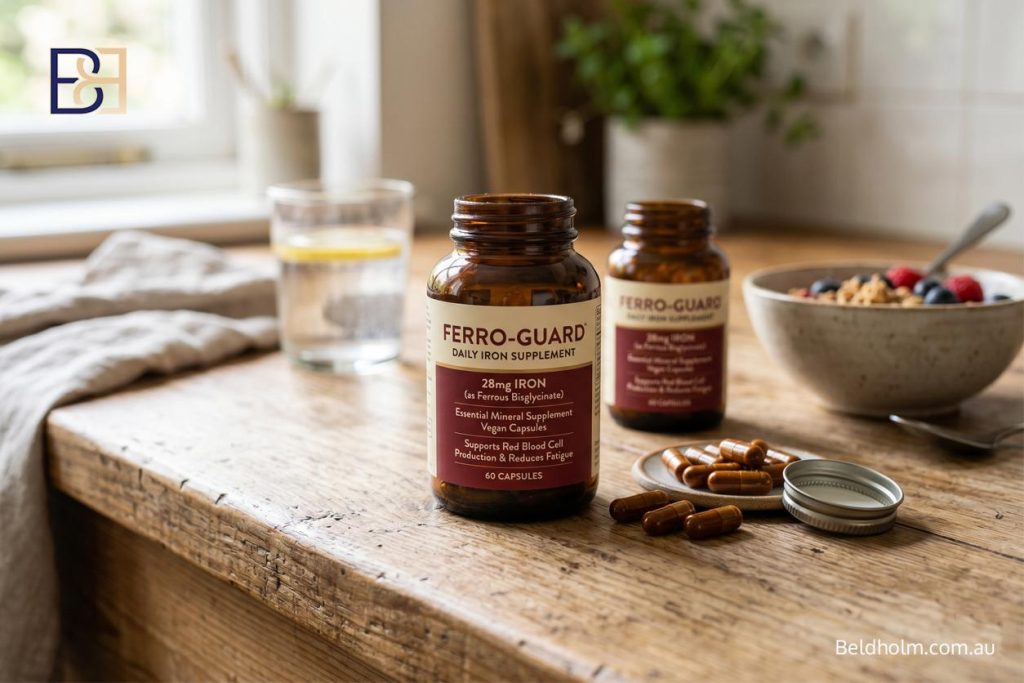
If I have a patient with low iron or frank iron deficiency, the treatment plan is not just “take an iron tablet.” It is “take an iron tablet with vitamin C, at the right time of day, away from inhibitors.”
The specific pattern I recommend to patients with iron deficiency:
- Take oral iron with 500-1000 mg of vitamin C at the same time. This gives the reducing environment in which the iron needs to be absorbed.
- Take iron on a moderately empty stomach if GI tolerance allows. Iron absorbs better without a full meal. A small amount of food with the dose is acceptable if it prevents nausea.
- Separate iron from calcium, dairy, tea, and coffee for at least two hours. All of these inhibit non-heme iron absorption.
- Alternate-day dosing is increasingly favoured in research to avoid a rebound increase in hepcidin, the iron-regulating hormone that blocks iron absorption after a dose. A published approach is 100-200 mg elemental iron every second day rather than every day (6).
For patients who are GP-managed on iron, I reinforce this pattern rather than changing the prescription. The surgical context does not change the treatment of iron deficiency itself. What it changes is the urgency; we want tissue iron stores moving in the right direction before we go to theatre.
The overlap with the Tier 1 vitamin C dose
One of the reasons I find the Tier 1 universal vitamin C supplementation strategy so clinically useful is that it handles the iron absorption job automatically. A patient taking 1 to 2 g of vitamin C per day as part of their perioperative supplement regimen already has their iron supplement covered. They do not need to think about it as a separate issue. The iron absorption benefit is a bonus alongside the wound healing role.
For patients who are not on iron and have normal pre-operative iron studies, vitamin C still plays a major role in collagen synthesis and immune function. Nothing is wasted. The dose covers multiple jobs.
When vitamin C is not enough
I do want to flag that in severe iron deficiency, oral iron with vitamin C is not always sufficient to correct stores within the pre-operative window.
Some patients present with very low ferritin and significant anaemia, particularly post-Roux-en-Y gastric bypass patients and women with heavy menstrual losses on top of restricted intake. In those patients, I work with their GP or an iron clinic to arrange an intravenous iron infusion as a more reliable and faster route to correction. Iron infusion bypasses the gut entirely, which solves the absorption problem at the source.
This is a conversation I will have with you during the consultation if your blood suggests it. It is not a routine step for every patient; it is a targeted intervention for patients with a deficiency severe enough that oral replacement is unlikely to get them to the target in time.
Pulling it together
For post-weight-loss body-contouring patients, vitamin C and iron are connected in a way most people do not realise until they are walked through it. The patient walks out of the consultation knowing:
- Why are they on vitamin C (collagen, iron absorption, immune function, antioxidant)
- Why are they taking it with iron if they have an iron deficiency
- What to avoid taking at the same time as iron
- Why we check iron studies before surgery, and what we do if the results are not where they need to be
This is the kind of detail that doesn’t fit on a supplement label, but that changes how well the supplements actually work. Coming up next is the third leg of vitamin C’s surgical role: immune function and antioxidant activity.
The Immune and Antioxidant Functions
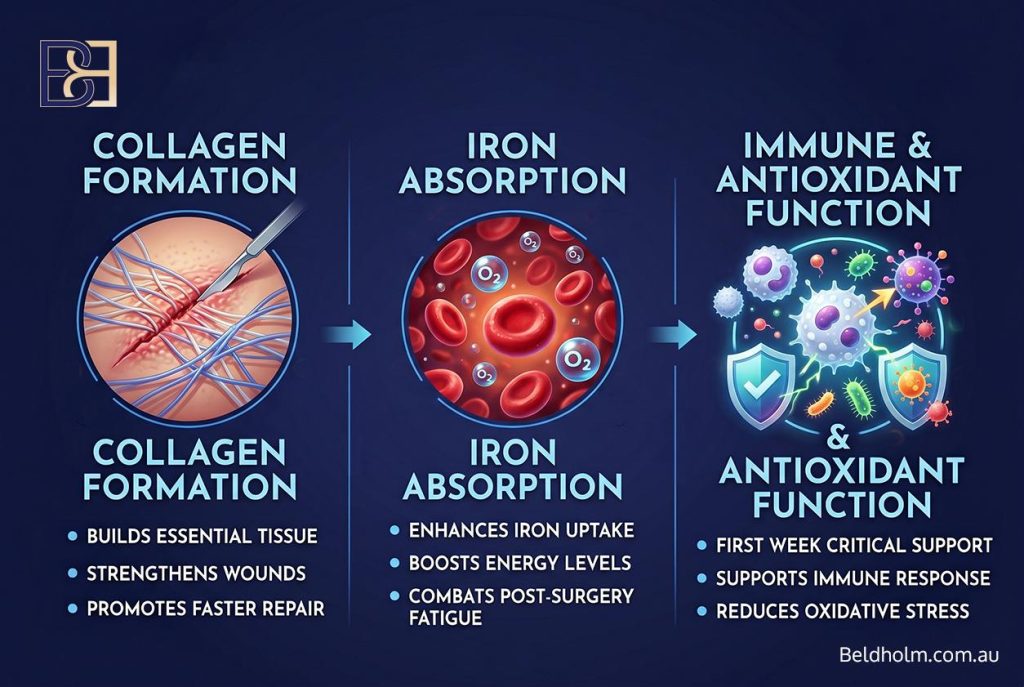
Collagen and iron absorption are the two headline roles of vitamin C in surgical recovery. The third role gets less airtime in patient conversations but matters in its own right: the immune and antioxidant functions that come into play in the first week after surgery.
These functions are important in the early postoperative period, and I take them into account when planning the perioperative dose.
Vitamin C and the immune response
Vitamin C is concentrated in white blood cells at levels much higher than in plasma. Neutrophils, which are the first responders at any wound site, maintain internal vitamin C levels 50 to 100 times above plasma. Macrophages, which arrive later in the wound-healing timeline, also concentrate it. This is the body telling you something; these cells need vitamin C to do their job (3).
The specific immune functions that depend on vitamin C include:
- Neutrophil migration into the wound bed. Vitamin C supports the chemotactic response that pulls neutrophils from the bloodstream into injured tissue.
- Phagocytosis. The engulfment and destruction of bacteria and cellular debris by neutrophils and macrophages. Vitamin C supports the intracellular machinery that handles this job.
- Oxidative burst. The controlled generation of reactive oxygen species that neutrophils use to kill pathogens. Vitamin C helps regulate this process, ensuring it targets bacteria without causing collateral tissue damage.
- Complement activity. The complement system is a cascade of plasma proteins that helps opsonise bacteria (mark them for destruction) and directly kill some organisms. Vitamin C supports several steps in that cascade.
- Lymphocyte function and antibody production. B and T cells also rely on adequate vitamin C for their roles in adaptive immunity (3, 7).
Published research has shown that vitamin C deficiency impairs phagocytosis and complement activity, both of which increase the risk of infection in surgical wounds (7). In a patient population where a wound complication can turn a six-week recovery into a six-month one, this is not a marginal concern.
Why the first post-operative week matters
The first seven days after a major body-contouring surgery are the window when infection risk is highest.
The wound is fresh. Skin edges have been sutured, but the biological seal is not yet complete. The tissue is inflamed, swollen, and drawing fluid. Drain tubes are often still in place. Skin flora, particularly from the axilla, groin, and skin folds, can colonise the wound line if the immune defence at the wound edge is not working efficiently.
For a small incision, the immune system usually has the capacity to handle this background colonisation without trouble. For a long incision across the abdomen or around the torso, the surface area of vulnerability is much larger, and the immune system has a bigger job to do. This is why my perioperative antibiotic regimen is more aggressive in post-weight-loss body contouring than it would be for a smaller operation.
But antibiotics are only one layer of the infection prevention strategy. The patient’s own immune response is the other layer, and it is the one I want running at capacity. Vitamin C status is one of the factors that determines whether the response is running at capacity or below capacity.
The antioxidant picture
Vitamin C is one of the most studied antioxidant vitamins in human biology. Along with vitamin E and other antioxidant vitamins, it forms part of the body’s antioxidant vitamin defence system against reactive oxygen species. The antioxidant vitamin profile matters for surgical recovery because the operation itself generates oxidative stress, and the wound healing process depends on keeping that stress within a manageable range. Vitamin C, as an antioxidant vitamin, works alongside vitamin E, selenium, and other antioxidant vitamins to stabilise the redox environment at the wound bed.
Surgery generates oxidative stress. This is unavoidable and, to some extent, part of normal healing. The issue is that excessive oxidative stress damages cells that are trying to repair, and the demand for antioxidant protection in the early post-operative period is much higher than baseline.
Several factors drive oxidative stress after a large operation:
- Tissue handling and retraction. Physical manipulation of tissues triggers the release of reactive oxygen species.
- Electrocautery. Electrical dissection during surgery generates heat and oxidative damage at the edges of the cut tissue.
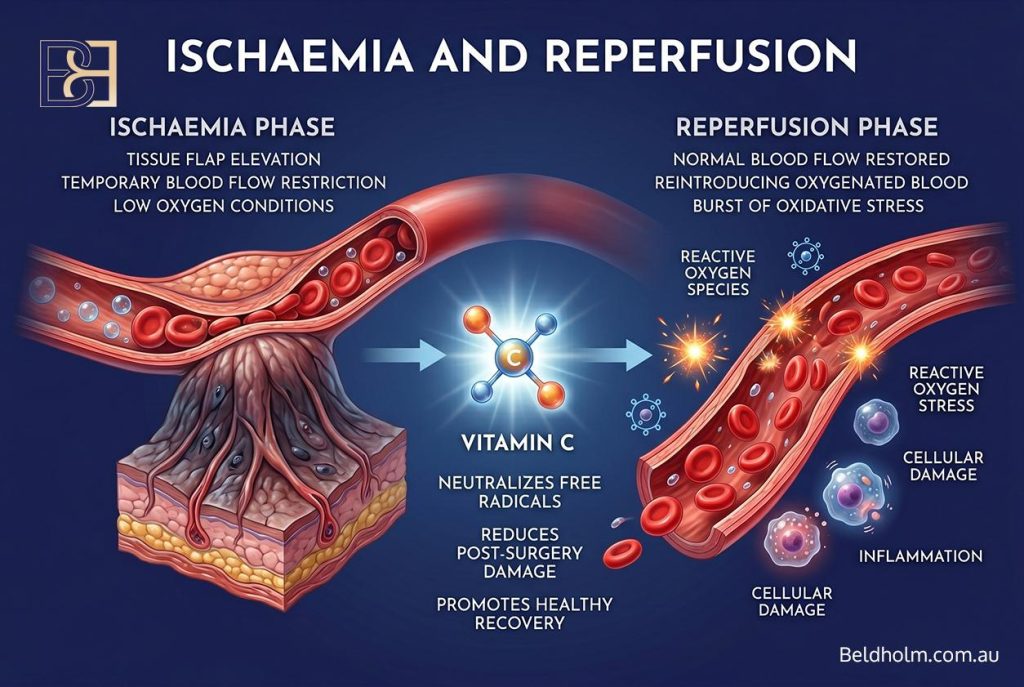
- Ischaemia and reperfusion. When tissue flaps are elevated during surgery and then reperfused, a burst of oxidative stress accompanies the reperfusion.
- The inflammatory response. The immune cells that migrate into the wound produce reactive oxygen species as part of their bacterial killing function. Some of this inevitably spills over and damages the surrounding tissue.
- General anaesthesia. Longer anaesthetic times are associated with higher systemic oxidative stress.
Vitamin C is one of the main water-soluble antioxidants in the body. It scavenges reactive oxygen species directly by donating electrons, neutralising them before they can damage cell membranes, proteins, or DNA. It also regenerates other antioxidants, including vitamin E in cell membranes and glutathione inside cells. This means that even beyond its own antioxidant action, vitamin C maintains the function of the broader antioxidant network (3).
Post-operative plasma vitamin C levels have been shown to drop significantly after major surgery, often by 30 to 50% within the first 24 to 48 hours, and they stay depressed for days. This is not because the patient stopped eating. It is because the demand for vitamin C has surged, and stores are being consumed faster than the body can replace them. Research has shown that patients with the lowest post-operative vitamin C levels tend to have higher markers of oxidative damage and tend to recover more slowly (3).
What this tells us about perioperative dosing
If post-operative vitamin C demand rises sharply and vitamin C concentrations fall, the practical response is to supplement during that window. This is part of the reason my perioperative protocol continues the 1 to 2 g per day dose through the early post-operative period, rather than stopping supplementation once the operation is done. The wound is still vulnerable, immune activity is still high, and oxidative stress is still elevated well past the day of surgery.
Continuing the dose for the first 4 to 6 weeks post-operatively, or until wound closure is fully established, aligns with the biology. Stopping earlier leaves the patient short at the worst possible time.
The diabetic patient consideration
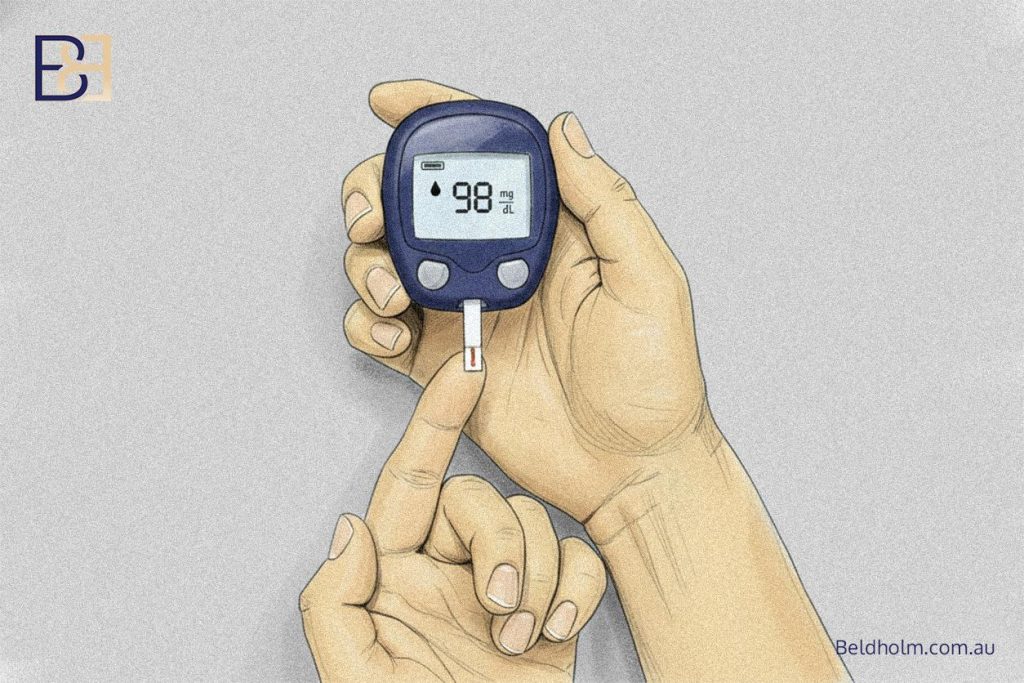
A subset of my patients have type 2 diabetes, often as a consequence of long-standing obesity before their weight loss. Some have diabetes that has resolved after bariatric surgery. Others continue to need medication.
Diabetic patients are an important subgroup for the immune and antioxidant role of vitamin C. Hyperglycaemia is associated with higher baseline oxidative stress, reduced neutrophil function, and poor wound healing, independent of nutritional status. Research has shown that vitamin C supplementation can partially offset these effects, not enough to cancel out the impact of poorly controlled diabetes on wound healing, but enough to be clinically meaningful in patients with well-managed diabetes (4).
In diabetic patients, I pay close attention to vitamin C levels during the perioperative period. The dose is the same as for other patients, but the clinical stakes of getting it right are higher.
Bringing it back to the patient
The immune and antioxidant roles of vitamin C do not feel as tangible to patients as the collagen role. Patients can picture a wound healing. They can picture a scar forming. They are less able to picture a neutrophil engulfing a bacterium or a reactive oxygen species neutralising in tissue.
What they can picture is the downstream consequence. A wound that does not get infected. A recovery that does not get derailed. A post-operative period in which the body does its job without hindrance.
That is the role vitamin C plays in the first week after surgery. It does not show up in the scar photos. It shows up in the absence of the complications that would have set the recovery back.
With the three clinical roles of vitamin C now covered, the article moves to how I actually assess vitamin C levels before surgery.
How I Assess Vitamin C Status Before Surgery
The first thing to clear up is a common assumption. Patients often expect me to order a vitamin C blood test as part of their pre-operative workup, the way I routinely order a vitamin D level or a B12. I do not.
This is deliberate. The way I approach vitamin C levels differs from how I approach other vitamins, and there is a clinical reason for that difference.
Why I do not test vitamin C routinely
Serum vitamin C is technically available as a blood test in Australia, reported in µmol/L with a reference range of 25 to 85 µmol/L. The MBS item number is 66605, which covers multiple vitamins, including vitamin C, and it is rebatable under clinical criteria.
The test has significant limitations as a routine screening tool.
Plasma levels fluctuate. Vitamin C has a short half-life in plasma and responds to recent intake. A patient who ate an orange the morning of their blood test may have a completely different result from the same patient on a day they skipped breakfast. A normal plasma level does not rule out tissue depletion, and a low plasma level can sometimes reflect a short-term dietary fluctuation rather than a meaningful clinical deficiency.
The reference range is wide. The 25 to 85 µmol/L range captures a broad range of population values without telling me much about the level at which clinical consequences begin to appear. The research suggests wound healing benefits emerge at plasma levels above approximately 50 µmol/L, but the reference range does not distinguish between “just above the lower limit” and “clinically optimal.”
The test adds cost and time without changing management. If my plan is already to supplement every post-weight-loss patient with Tier 1 vitamin C regardless of blood result, a routine pre-operative test does not change what I do. It delays the start of supplementation by the time it takes to run the blood, and it burns an item number that could be better used elsewhere on the pre-operative panel.
For these reasons, I place vitamin C in Tier 1, the universal supplements every post-weight-loss patient receives, rather than as a blood-gated Tier 2 decision.
When I do order a vitamin C blood test
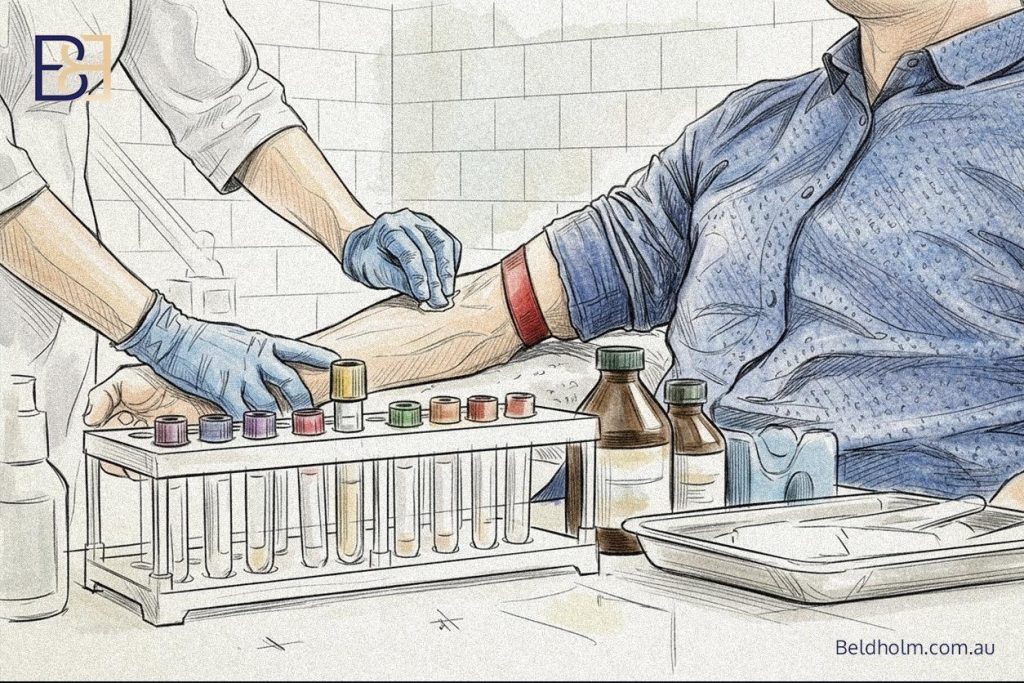
There are specific clinical scenarios in which ordering a serum vitamin C test makes sense. These are the patients whose results will change what I do.
Patients with visible signs of severe deficiency. Gum bleeding, petechiae, spontaneous bruising, perifollicular haemorrhage, and poorly healing minor wounds can all point to vitamin C depletion severe enough to warrant confirmation. In these cases, I want to know the baseline, partly to confirm the suspected diagnosis and partly to document response to supplementation.
Patients with very restrictive eating patterns. A patient who describes essentially no fruit or vegetable intake for a year or more is in a different risk category from a patient with a moderate post-bariatric diet. The serum test provides a marker to monitor when clinical uncertainty arises.
Patients with suspected scurvy. Frank scurvy is rare but not extinct. The clinical picture of bleeding gums, joint pains, bruising, and non-healing wounds in a patient with a severely restrictive diet pattern needs confirmation before attributing it to vitamin C specifically.
Patients where the result might delay surgery. If a severe deficiency is confirmed, I will sometimes extend the nutritional optimisation window before booking surgery. The blood test supports that decision.
Outside these scenarios, I am comfortable proceeding on the Tier 1 universal supplementation model and reserving the test for where it genuinely informs the plan.
What the result tells me when I order it
If I do order a serum vitamin C test, the interpretation is straightforward, subject to the caveats above.
- A level below 11 µmol/L is considered severe deficiency and is consistent with clinical scurvy.
- 11 to 25 µmol/L is insufficient, falls below the normal reference range, and is likely to have clinical consequences if sustained.
- 25 to 50 µmol/L is within the reference range but towards the lower end. Not frankly deficient, but probably below optimal for surgical recovery demands.
- 50 to 85 µmol/L is within the reference range and more likely to be adequate for wound healing.
- Above 85 µmol/L typically reflects recent supplementation or high intake and is not a concern in itself.
For a patient I am planning to supplement anyway with 1 to 2 g per day through the perioperative window, a starting value in the lower end of the reference range is not alarming. The supplementation dose will move them well into the adequate range within days to weeks. A starting value in the frank deficiency range is a flag that triggers closer monitoring and sometimes a longer pre-operative window to confirm correction.
The bigger blood picture in the pre-operative workup
For context, vitamin C testing sits within a much broader pre-operative blood panel that I order for every post-weight-loss patient. This is covered in detail in the dedicated pre-operative blood tests article, but briefly, the routine panel includes:
- Full blood count with differential
- Coagulation screen
- Liver function tests
- Electrolytes, urea, and creatinine
- Random glucose and HbA1c
- Iron studies, including ferritin and transferrin saturation
- Hepatitis B, hepatitis C, and HIV serology
- Thyroid function tests
- Pregnancy test for women of reproductive age
- Vitamins A, B1, B6 (pyridoxal-5-phosphate), B12
- Folate and red cell folate
- 25-hydroxy vitamin D
- Vitamin E
- Minerals, zinc and selenium
Vitamin C is not in the routine order. It is selectively added when the clinical indications above are present.
The two-tier supplement framework
The reason I can manage vitamin C without routine testing is that it is covered by the Tier 1 universal supplementation framework that every post-weight-loss patient in my practice follows. This framework has two layers.
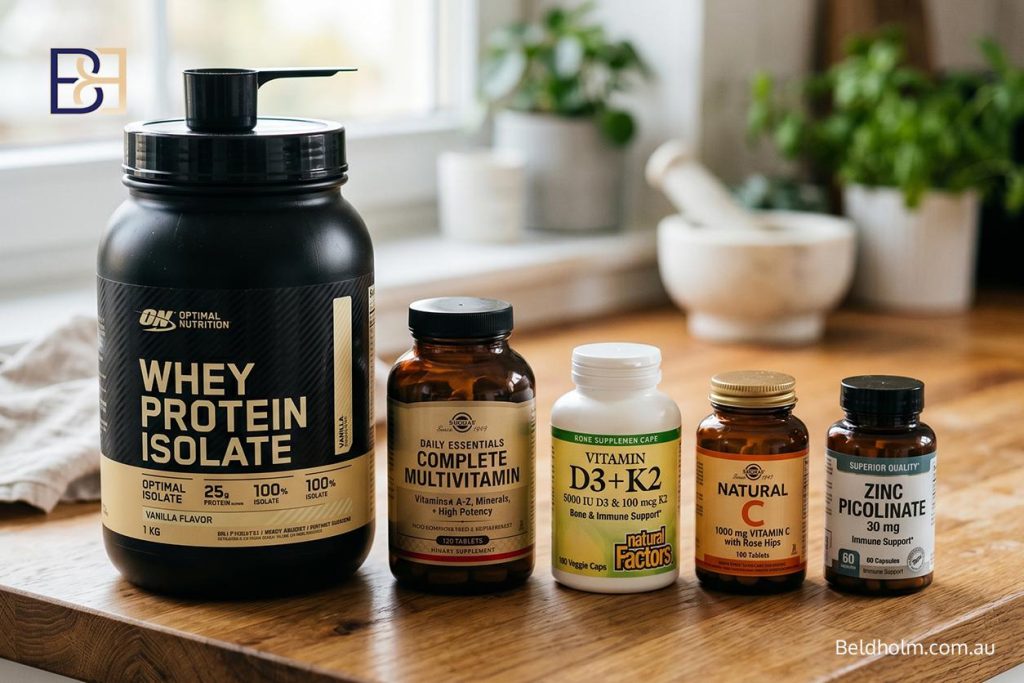
Tier 1, Universal supplements. Everyone gets these, regardless of blood results. They are started as soon as surgical planning begins, typically at least 4 weeks before the operation. Tier 1 includes whey protein isolate for protein support, a complete multivitamin, vitamin D3 with K2, vitamin C, zinc, and, in most cases, magnesium.
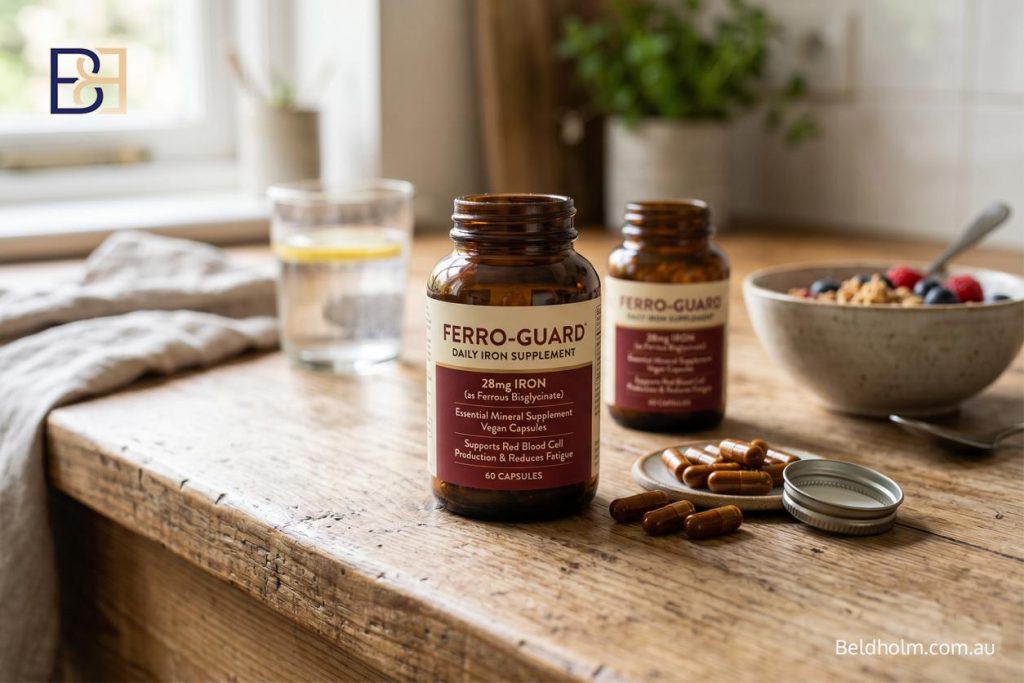
Tier 2, Blood-guided supplements. These are added based on specific deficiencies identified on the pre-operative blood panel. For example, a patient with low B12 will receive additional B12 repletion. A patient with low iron will receive oral or IV iron. A patient with low albumin will be referred for a dietitian review to work on protein intake.
Vitamin C sits firmly in Tier 1. The clinical rationale is that the prevalence of vitamin C insufficiency in the post-weight-loss population is high, the cost of supplementation is low, and the safety margin is wide. Waiting for a blood test to confirm what we already know about the population is an unnecessary step.
What the assessment actually looks like in consultation
To put this into practical terms, here is how vitamin C assessment plays out in my consulting room.
First consultation. I take a history that covers recent weight loss, bariatric surgery if relevant, current or recent weight-loss medications, current diet pattern, and any symptoms suggestive of deficiency. I issue a pathology request for the standard pre-operative blood panel. I explain the Tier 1 supplement framework, and the patient leaves with a specific list including vitamin C dose, timing, and Australian brand suggestions.
Between consultations. The patient starts Tier 1 supplementation, including vitamin C at 1-2 g/day. Blood samples are collected, and results come back.
Second consultation. I review the blood results in detail. Tier 2 supplements are added for any confirmed deficiencies. If the vitamin C picture is clinically concerning, severe intake restriction, signs of deficiency, or a specifically ordered low serum vitamin C result, we discuss extending the nutritional optimisation window or adjusting the dose. For the majority of patients, Tier 1 vitamin C is already doing its job, and no adjustment is needed.
Pre-operative phase. Supplementation continues through to 1 week before surgery. At that point, the vitamin C dose drops to 1000 mg per day, along with cessation of fish oil, high-dose vitamin E, and any herbal supplements, all to minimise bleeding risk at the time of surgery. The perioperative medications, including any GLP-1 management, are a separate conversation and are handled by the anaesthetist at your pre-operative anaesthetic consultation.
Post-operative phase. The 1 to 2 g per day vitamin C dose resumes within the first day or two post-operatively once bleeding risk has passed, and continues for 4 to 6 weeks or until wound closure is well established. Long-term maintenance drops to 60 mg per day, typically met by a standard multivitamin or an adequate diet.
With assessment covered, the article moves to how vitamin C fits within the Tier 1 supplement framework I use for every post-weight-loss patient.
Where Vitamin C Sits in the Tier 1 Supplement Framework
The full Tier 1 supplement framework, the timing protocol, and the role-split between my team, your anaesthetist, and your GP are covered in the hub article: Vitamins and Supplements Before and After Abdominoplasty (Tummy Tuck): A Guide for Post-Weight-Loss Patients.
This section focuses only on where vitamin C fits within that framework and the timing specific to this nutrient.
Vitamin C is a Tier 1 universal supplement
Every post-weight-loss patient in my practice receives vitamin C as part of Tier 1, regardless of blood results. The clinical reasoning:
- Prevalence of insufficiency is high. 5 to 40% of post-bariatric patients are deficient (1, 6), and patients on weight-loss medications in the GLP-1 class consume approximately 43% less vitamin C than the average daily intake (2).
- The cost of getting it wrong is high. Inadequate vitamin C impairs collagen synthesis, iron absorption, and immune function at the exact time the body needs all three.
- Supplementation is low risk and well-tolerated at the doses I use.
- Routine testing does not change management. Covered earlier in this article.
The vitamin C timing schedule
Within the broader Tier 1 timeline, the specific vitamin C dose points are:
- At surgical planning (at least 4 weeks before surgery): 1 to 2 g per day, split into two or three doses across the day for better tolerance.
- One week before surgery: step down to 1000 mg per day. This is the point at which the wound-healing benefit still outweighs the minor bleeding risk from higher doses, and it keeps a useful dose on board going into surgery.
- Day of surgery: withheld with other oral supplements under standard fasting protocol.
- Day 1 or 2 post-operatively: resume 1 to 2 g per day once bleeding risk has passed. Plasma vitamin C falls after major surgery, this is the worst possible time to be under-supplemented.
- Through 4 to 6 weeks post-operatively: continue 1 to 2 g per day while active wound healing is happening.
- From 6 to 8 weeks post-operatively: step down to 60 mg per day for long-term maintenance. This is met by a standard multivitamin or an adequate diet.
Why start 4 weeks before surgery as a minimum

Four weeks is the shortest lead time I work with. Earlier is better. The reasoning is that vitamin C deficiency, when present, takes time to correct at the tissue level, even though plasma levels respond within days. A patient with a frank deficiency may need several weeks of supplementation before tissue concentrations are adequate for the wound healing demand of surgery.
For most patients on the Tier 1 dose, 4 weeks is enough. For patients with more significant deficiencies identified at the first consultation, I may extend the pre-operative window before booking surgery.
Who manages the continuation plan?
After the 6 to 8-week post-operative blood panel arranged through your GP, the vitamin C plan transitions from my perioperative protocol to long-term management under your GP’s care. For most patients, this means dropping to a maintenance dose of a multivitamin. For post-bariatric patients, your GP continues lifelong oversight of nutritional supplementation as part of standard post-bariatric care.
Where does vitamin C come from in an Australian diet, and why does diet alone often fall short in this patient group? The food sources section comes next.
Food Sources: Getting Vitamin C From Your Diet
Supplements cover the perioperative gap, but they are not a replacement for food. I want my patients to eat vitamin C-rich foods every day, both for the vitamin C itself and for the other compounds that come with it, antioxidant phytochemicals, fibre, water content, and the general nutritional density that a fruit-and-vegetable-heavy diet provides.
Food alone rarely meets the perioperative demand in post-weight-loss patients, but good dietary habits remain important for long-term health.
The headline fact: Kakadu plum
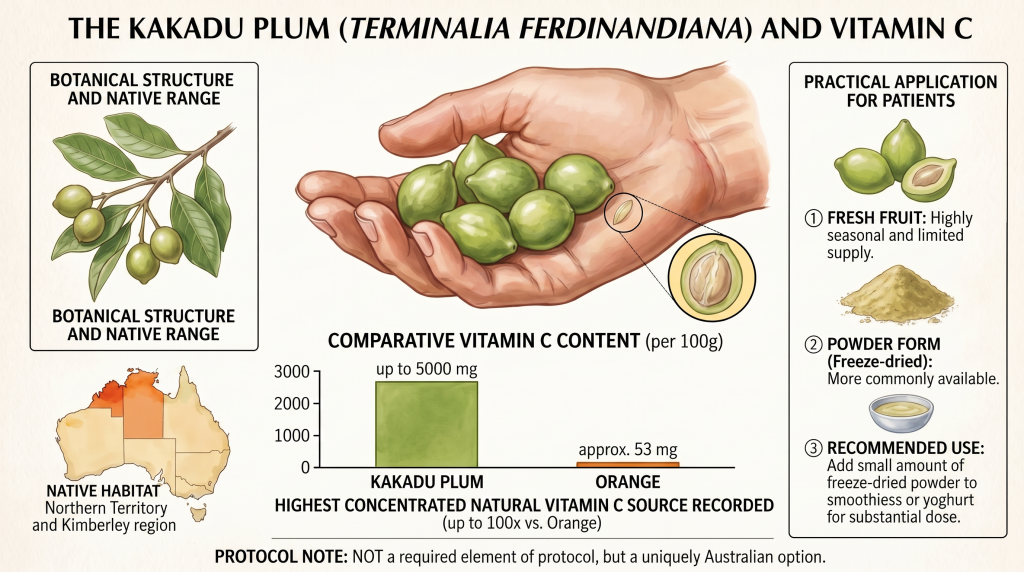
Australia is home to the world’s highest source of vitamin C.
The Kakadu plum (Terminalia ferdinandiana), native to the Northern Territory and Kimberley region, contains vitamin C levels up to 100 times higher than oranges by weight. A fresh Kakadu plum can contain up to 5000 mg of vitamin C per 100 g, compared with approximately 53 mg per 100 g for an orange (3). This makes it the most concentrated source of vitamin C recorded.
For practical purposes, most patients will not be eating fresh Kakadu plums. The fruit is seasonal and in limited supply. It is available more commonly as a freeze-dried powder through Indigenous-owned businesses and specialty food retailers. A small amount added to smoothies or yoghurt provides a substantial vitamin C dose. It is not a requirement of my protocol, but it is a uniquely Australian option worth knowing about.
Everyday Australian vitamin C sources
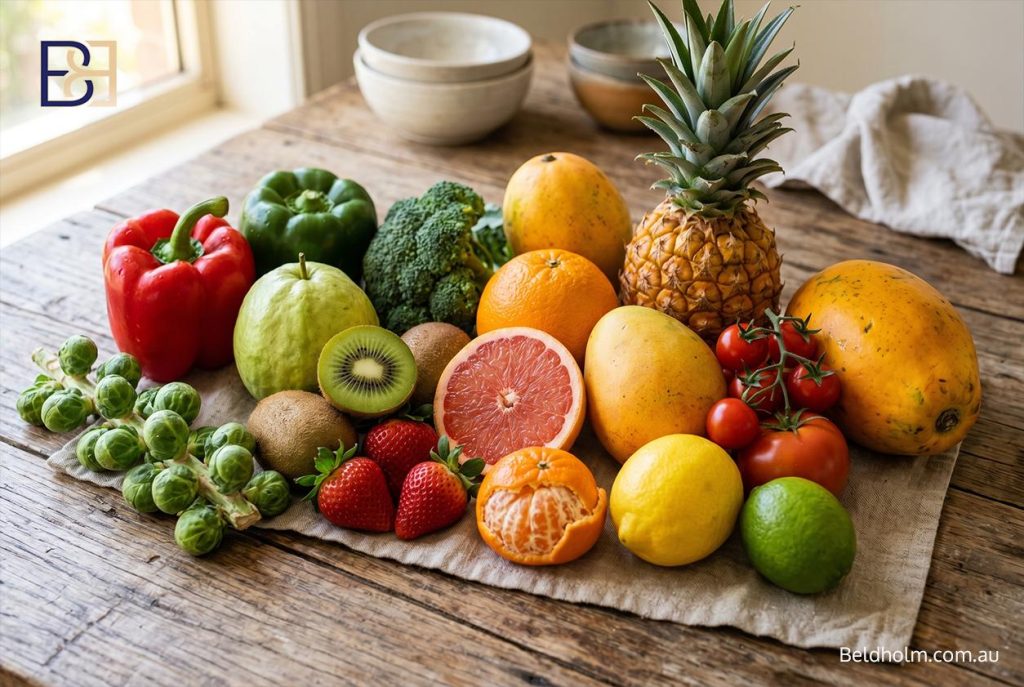
The vast majority of dietary vitamin C comes from everyday fruits and vegetables, including citrus fruits, that are found at any Australian supermarket. Approximate vitamin C amount per 100 g edible portion:
- Capsicum (red): 130 mg
- Capsicum (green): 80 mg
- Guava: 230 mg
- Kiwifruit: 90 mg
- Strawberries: 60 mg
- Broccoli (raw): 90 mg
- Brussels sprouts (raw): 85 mg
- Orange (citrus fruits): 53 mg
- Grapefruit (citrus fruits): 40 mg
- Mandarin (citrus fruits): 30 mg
- Mango: 35 mg
- Pineapple: 45 mg
- Tomato: 15 mg
- Lemon (citrus fruits): 50 mg
- Papaya: 60 mg
One medium red capsicum eaten raw provides approximately 150 mg of vitamin C. One orange provides about 70 mg. One kiwifruit provides about 65 mg. Two cups of fresh strawberries provide around 150 mg.
The adult recommended dietary intake in Australia is 45 mg per day for adults, rising to 60 mg per day for smokers. For practical purposes, any patient eating two to three servings of fruit and vegetables per day is comfortably meeting baseline requirements from food alone.
Why baseline requirements are not the same as surgical requirements
The Australian RDI of 45 mg per day is calibrated to prevent scurvy and maintain normal function in the general population. It is not calibrated for the demands of wound healing after a major operation.
Research in surgical patients has shown that vitamin C requirements rise significantly during periods of physiological stress, injury, and tissue repair (3). Plasma vitamin C concentrations drop after major surgery, sometimes by 30 to 50% within the first 24 to 48 hours, and remain depressed for days. The body is consuming vitamin C faster than it can be replenished through baseline food intake.
This is why the perioperative dose I recommend is much higher than the RDI. One to two grams per day during active wound healing is approximately 20 to 40 times the RDI. You cannot reach that dose from food alone without an extraordinarily high intake of fruit and vegetables, more than most post-weight-loss patients can comfortably eat in a day.
This is the core clinical reason why supplementation is part of the plan. Food alone does the job for general health. Supplements do the surgical recovery job.
What happens to vitamin C when you cook

Vitamin C is one of the most fragile vitamins in food preparation. It is sensitive to heat, light, and oxygen, and can leach into cooking water.
Specific factors that reduce vitamin C content in food:
- Heat. Cooking temperatures above 70 degrees Celsius break down vitamin C progressively. Boiling is particularly destructive.
- Water contact. Vitamin C is water-soluble. Boiled vegetables can lose 30 to 50% of their vitamin C into the cooking water. Steaming loses less. Microwaving with minimal water results in the least loss.
- Storage time. Fresh produce loses vitamin C gradually from the moment it is picked. A week in the fridge can cause fresh greens to lose a substantial proportion of their original content.
- Chopping and exposure to air. Cut surfaces oxidise. A sliced capsicum left out for a few hours loses more vitamin C than an intact one.
- Dehydration. Drying fruit reduces the vitamin C amount significantly compared with fresh fruit. Dried fruits are not reliable sources of vitamin C.
- Light exposure. Fluorescent supermarket lighting on open produce trolleys slowly degrades vitamin C content.
Practical implications:
- Eat some fruit and vegetables raw every day. Salads with fresh capsicum, tomato, or berry additions retain more vitamin C than fully cooked meals.
- Steam or microwave vegetables rather than boiling them. If you boil, keep the cooking water for stock or a sauce rather than pouring it down the drain.
- Buy fresh produce frequently, in smaller quantities, rather than stocking up for a week.
- Store produce in the fridge in its original packaging or a sealed container to slow oxidation.
- Frozen fruit and vegetables are often a better vitamin C source than fresh produce that has been sitting in a fridge for several days. They are snap-frozen soon after picking, which preserves most of the vitamin content.
The post-weight-loss diet reality
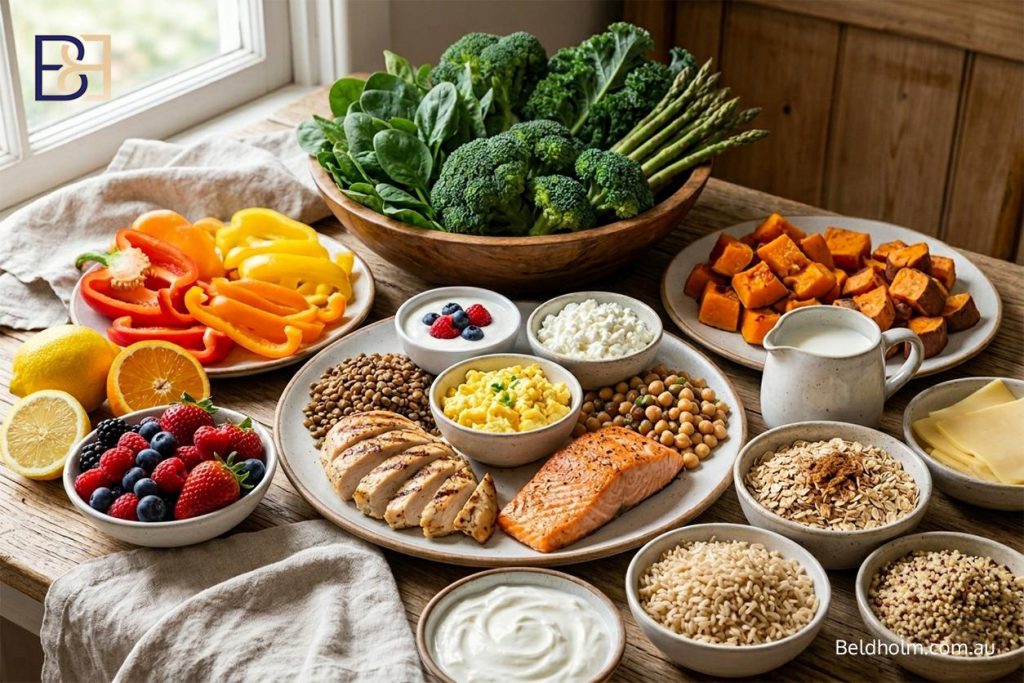
Many of my patients find that the volumes and textures of vitamin C-rich foods are harder to tolerate than they were before bariatric surgery or weight-loss medications.
Raw vegetables can sit heavily in a smaller stomach. Patients who have had a sleeve gastrectomy or gastric bypass often report early satiety with fibrous, raw foods. A full capsicum, a side salad, or a bowl of broccoli can feel like a meal in its own right.
Citrus can aggravate reflux. Gastro-oesophageal reflux is common after sleeve gastrectomy. Orange juice, lemon, and other citrus fruits can trigger symptoms that make patients avoid these foods altogether.
Appetite suppression on weight-loss medications changes food variety. When appetite is blunted, patients often default to more reliable foods. Fruit and vegetable variety drops. Vitamin C intake drops with it.
Fruit juice is not a substitute. Many patients switch to orange juice or other commercial juices to meet vitamin C targets, but these are high-sugar, low-fibre versions of whole fruit. I discourage relying on juice as a primary strategy. A whole orange provides vitamin C with fibre, slower sugar absorption, and greater satiety. Juice provides vitamin C with a sugar load and minimal other benefits.
All of this adds to the rationale for Tier 1 supplementation. Food intake is not failing patients because they are not trying. It is failing because the mechanical realities of post-weight-loss eating do not support the required volumes.
What I ask patients to do with their diet
This is the short version of what I say to every post-weight-loss patient in consultation.
- Eat two to three serves of vitamin C-rich food every day. A capsicum, a kiwifruit, a small serve of berries, or a cup of broccoli all count.
- Keep it mostly raw or lightly cooked. Include citrus fruits where tolerated. Raw salad once a day.
- Do not rely on juice. Whole fruit is always the better choice.
- Supplement on top of diet, not instead of it. The Tier 1 dose is designed to top up nutrients that food cannot deliver during the perioperative window.
- Continue the habit long-term. Food-based vitamin C intake is part of general health, well beyond surgery. The supplements stop at 6 to 8 weeks post-op. The diet does not.
A vitamin C-rich diet is part of the support for long-term health after weight-loss and body-contouring surgery. The habit matters beyond the perioperative period. The reason I spend time on it in consultation is that the habits patients build around their surgery often stick, and this is one worth building.
What about vitamin C supplement forms, though? Ascorbic acid, buffered forms, liposomal preparations: the practical differences between them are covered next.
Supplement Forms: What to Look For
Book your appointment online now
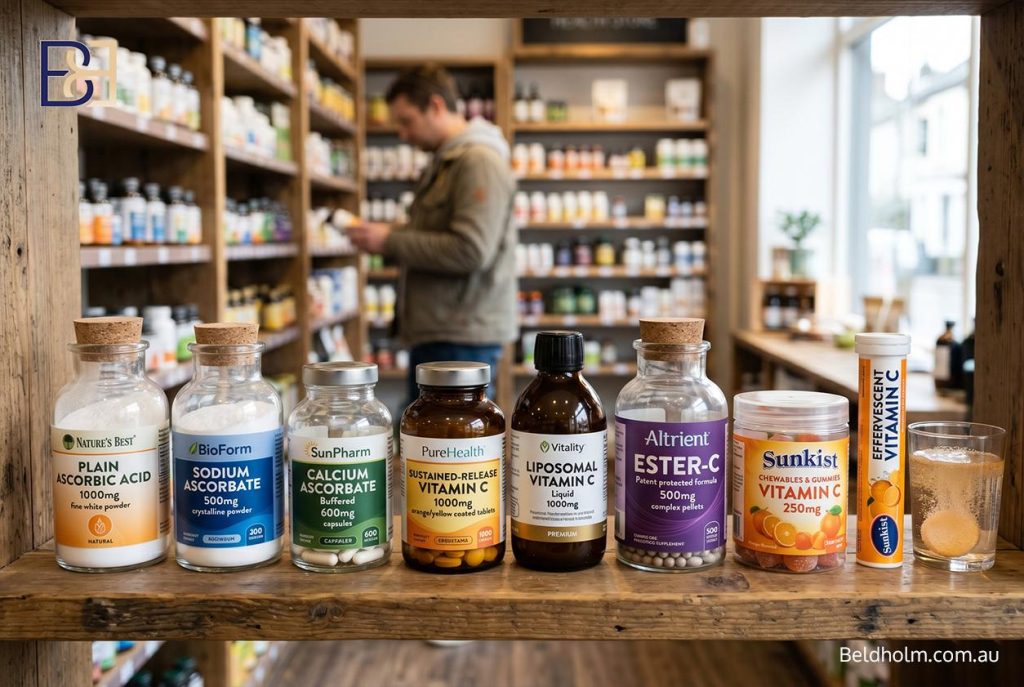
Walk into a Chemist Warehouse or a pharmacy, and the vitamin C supplements shelf is larger than most patients expect. Australian pharmacies carry a wide variety of vitamin C supplements and related dietary supplements, and choosing between them is one of the questions patients ask most often. Tablets, capsules, powders, effervescent sachets, liposomal liquids, sustained-release formulations, chewables, and gummies. Each one claims some advantage over the others. Most of the differences are minor. A few of them matter.
Below are the practical differences between the main vitamin C forms, and what I look for when recommending a product to a patient.
Plain ascorbic acid
L-ascorbic acid is vitamin C in its simplest form. It is what you find in most standard vitamin C supplements and in the active ingredient panel of the products I recommend most often.
L-Ascorbic acid is well absorbed at moderate doses, inexpensive, and has decades of research behind it. At doses up to about 200 to 400 mg per dose, absorption is efficient. Above that, the proportion of the dose absorbed starts to decline, which is why I recommend splitting a 1-2 g daily total into two or three doses throughout the day rather than taking it as a single large dose.
The main limitation of plain L-ascorbic acid is GI tolerance. It is acidic, and at high doses of L-ascorbic acid on an empty stomach, it can cause reflux, nausea, or loose stools in some patients. Patients with pre-existing reflux, particularly after sleeve gastrectomy, are more likely to find standard ascorbic acid less tolerable. In that situation, a buffered form often works better.
Buffered forms, sodium ascorbate and calcium ascorbate
Buffered vitamin C is ascorbic acid that has been neutralised with a mineral salt, typically a buffered ascorbate. The end result is a vitamin C dose with a pH closer to neutral, which is much gentler on the stomach.
Sodium ascorbate is vitamin C bonded with sodium. It provides vitamin C with minimal GI irritation. The sodium content is typically low enough to be clinically insignificant, but patients on strict sodium restriction should check the label.
Calcium ascorbate is vitamin C bonded with calcium. Each 1000 mg of buffered vitamin C provides approximately 110 mg of calcium. This is not enough to replace a calcium supplement if one is needed, but it can be a small bonus for patients already at risk of low calcium intake.
I will often suggest a buffered form for patients who report reflux symptoms with plain ascorbic acid, or who have a history of significant reflux post-sleeve gastrectomy. The dose and clinical effect are equivalent to plain ascorbic acid. The difference is tolerance.
Sustained-release formulations
Sustained-release vitamin C is formulated to release the dose gradually over several hours rather than all at once. The theoretical advantage is that it maintains higher plasma vitamin C concentrations over the day than an immediate-release dose would, and reduces the peak above which excess vitamin C is excreted.
In practice, splitting an immediate-release dose into two or three portions across the day achieves a similar result at lower cost. I do not insist on sustained-release formulations, but I am comfortable with patients choosing them if they prefer vitamin C supplements in a single daily dose.
Ethical Nutrients Sustained Release C is a commonly available Australian product in this category, stocked at Chemist Warehouse and Pharmacy Direct.
Liposomal vitamin C
Liposomal vitamin C is a liquid formulation in which the vitamin C is encapsulated inside small lipid vesicles called liposomes. The claimed advantage is higher absorption; some studies suggest that liposomal vitamin C can achieve higher plasma levels at the same oral dose compared with standard ascorbic acid, particularly at doses above 1 g.
The evidence for liposomal vitamin C is still developing. Some studies support the absorption claims, others find no significant difference compared with standard ascorbic acid at the same oral dose. Generally, it is agreed that liposomal vitamin C is not harmful; it is a valid way to take vitamin C, though at a higher cost per dose.
I am comfortable with patients using liposomal vitamin C supplements if they prefer the format. NOW Foods Liposomal C, available through iHerb, is a commonly used option. I do not require it. Plain ascorbic acid at the right dose does the same clinical job for the vast majority of patients.
Ester-C
Ester-C is a branded formulation of buffered vitamin C combined with small amounts of vitamin C metabolites. It is marketed as a “gentler” form of vitamin C with better absorption. The research supporting specific advantages over standard buffered vitamin C is limited.
Ester-C is an acceptable format if a patient prefers it. It is not superior enough to standard buffered vitamin C to warrant paying a premium. If the patient finds it easier to take, that is a legitimate reason to use it.
Effervescent tablets and sachets
Effervescent vitamin C dissolves in water to form a fizzy drink. Berocca and many supermarket-brand vitamin C effervescents fall into this category. The format is popular because it is easy to take and tastes like a flavoured drink.
A few things to watch with effervescent formats:
- Sugar content. Some effervescent vitamin C products contain added sugar or sweeteners. For a diabetic or post-bariatric patient, sugar-free versions are the sensible choice.
- Sodium content. Most effervescents contain sodium bicarbonate as part of the fizz mechanism. For patients on sodium restriction, this is a consideration.
- Dose accuracy. Effervescent doses are typically 1000 mg per tablet or sachet, which fits the 1000 to 2000 mg per day target cleanly.
Effervescent is a reasonable format for patients who prefer not to swallow tablets. It is not superior to tablet forms in absorption, but it is not inferior either.
Chewables and gummies
Chewable vitamin C tablets and vitamin C gummies are primarily intended for patients who dislike swallowing tablets. They are functionally equivalent to regular tablets in terms of vitamin C content and absorption.
The main caution with chewables and gummies is dental. Vitamin C is acidic, and repeated contact with tooth enamel over weeks or months can contribute to dental erosion. If you use chewable or gummy forms, rinse your mouth with water after taking them. Avoid taking them immediately before brushing, as acid-softened enamel is more vulnerable to mechanical damage from a toothbrush.
Gummies in particular often contain added sugar. For post-weight-loss patients, sugar-free versions are a better choice if you can find them. Otherwise, use a different format.
What I look for in a supplement

When I recommend vitamin C supplements to a patient, the criteria are:
- Dose accuracy. The label states the vitamin C amount clearly, and the product delivers that dose reliably. This is standard for reputable Australian brands, but not always the case with unregulated vitamin C supplements.
- Minimal unnecessary additives. I prefer products with short ingredient lists. Vitamin C plus a binder and a bulking agent is fine. Vitamin C plus half a dozen other ingredients I cannot pronounce is usually not needed.
- Australian TGA regulation or equivalent. Products sold through Australian pharmacies are subject to TGA oversight, which gives a baseline of quality assurance. International products via iHerb and similar platforms are often fine, but not always, so I tend to stick with Australian-available vitamin C supplements unless there is a specific reason not to.
- Reasonable cost per dose. Not the cheapest, not the most expensive. Good-quality Australian vitamin C supplements should not command a premium-brand price.
- A format that the patient will actually take. The best supplement is the one the patient takes consistently. If tablets are a problem, effervescent or powder works. If cost matters, a bulk tablet product is a good option. If the patient has reflux, buffered works.
What I do not recommend
A few products and formats warrant specific mention because they come up in consultations.
- Vitamin C is combined with multiple other active ingredients. “Immune support” and “anti-ageing” formulations often combine vitamin C with zinc, elderberry, echinacea, and other ingredients. These are fine for general health but not ideal when you are trying to hit a specific vitamin C dose, the vitamin C amount is often lower than a dedicated vitamin C supplements product, and the other ingredients may interact with pre-operative bleeding risk.
- Very high-dose single-tablet formats. Single tablets of 3000 mg and 5000 mg exist. These are unnecessary for the dose target I recommend, and the peak plasma spike does not translate to better clinical outcomes. Splitting the dose into smaller amounts across the day works better.
- Vitamin C is combined with iron in the same tablet. These combinations exist but the iron dose is usually too low to treat actual iron deficiency. If you have an iron deficiency, you are better served by a separate iron supplement taken with a separate vitamin C dose, because you can titrate each independently.
- Unregulated imports with unclear sourcing. Products from non-regulated markets can have issues with dose accuracy and contamination. Stick with reputable brands through reputable retailers.
The practical summary
For most of my patients, a plain L-ascorbic acid or buffered ascorbate product at 1000 mg per tablet, taken twice or three times daily, is the straightforward answer. The specific brand of L-ascorbic acid supplements matters less than taking the dose consistently and on schedule.
The specific Australian brands I most commonly see working well, along with stockist information, are covered in the next section.
Australian Brand Guide: Vitamin C Supplements I Commonly See Working Well
This section lists the specific Australian brands I most commonly see working well for my patients, based on what is widely available, reliably dosed, and well tolerated. None of these is an exclusive recommendation. Any quality vitamin supplements meeting the same dose criteria and TGA listing standards are acceptable.
Plain ascorbic acid options
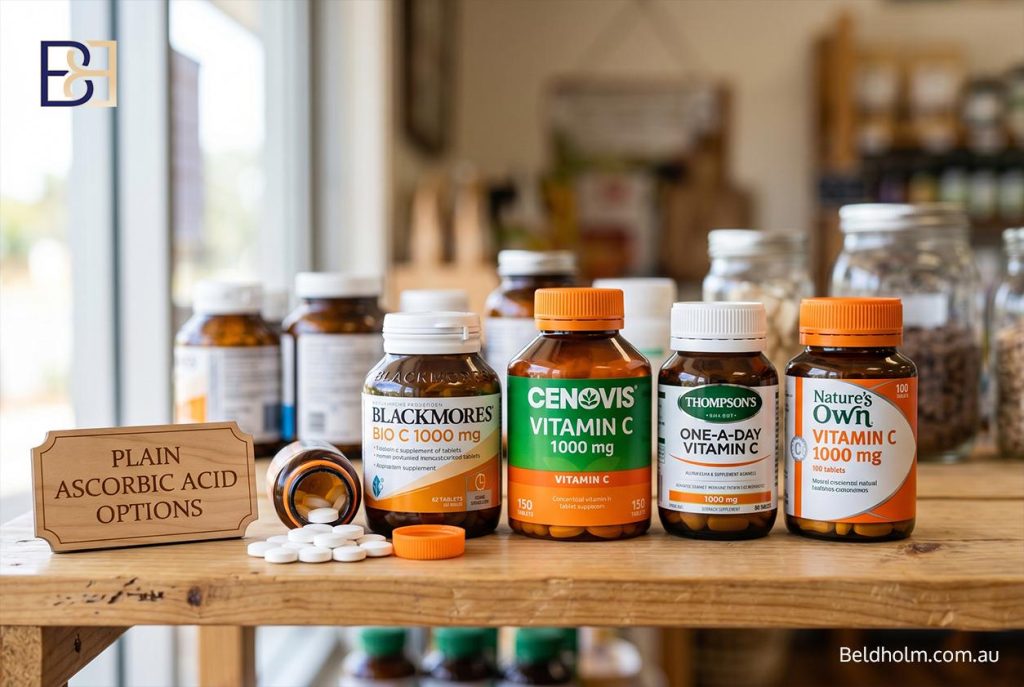
These are the straightforward, widely available ascorbic acid products that cover the 1000 mg target per dose.
Blackmores Bio C 1000 mg
- Dose: 1000 mg per tablet
- Format: tablet
- Where to buy: Chemist Warehouse, Priceline, most Australian pharmacies
- Why I include it: long-established Australian brand, reliable dose accuracy, widely stocked.
Cenovis Vitamin C 1000 mg
- Dose: 1000 mg per tablet
- Format: tablet
- Where to buy: Chemist Warehouse, most Australian pharmacies
- Why I include it: reliable standard option, widely stocked, TGA listed.
Thompson’s One-A-Day Vitamin C 1000 mg
- Dose: 1000 mg per tablet
- Format: tablet
- Where to buy: Chemist Warehouse, Amazon AU
- Why I include it: practitioner-brand quality, good option for patients who prefer practitioner-range products.
Nature’s Own Vitamin C 1000 mg
- Dose: 1000 mg per tablet
- Format: tablet or chewable
- Where to buy: Chemist Warehouse, Priceline, Woolworths, Coles
- Why I include it: supermarket availability makes it easy for patients to pick up during regular shopping.
Buffered options for patients with GI sensitivity or reflux
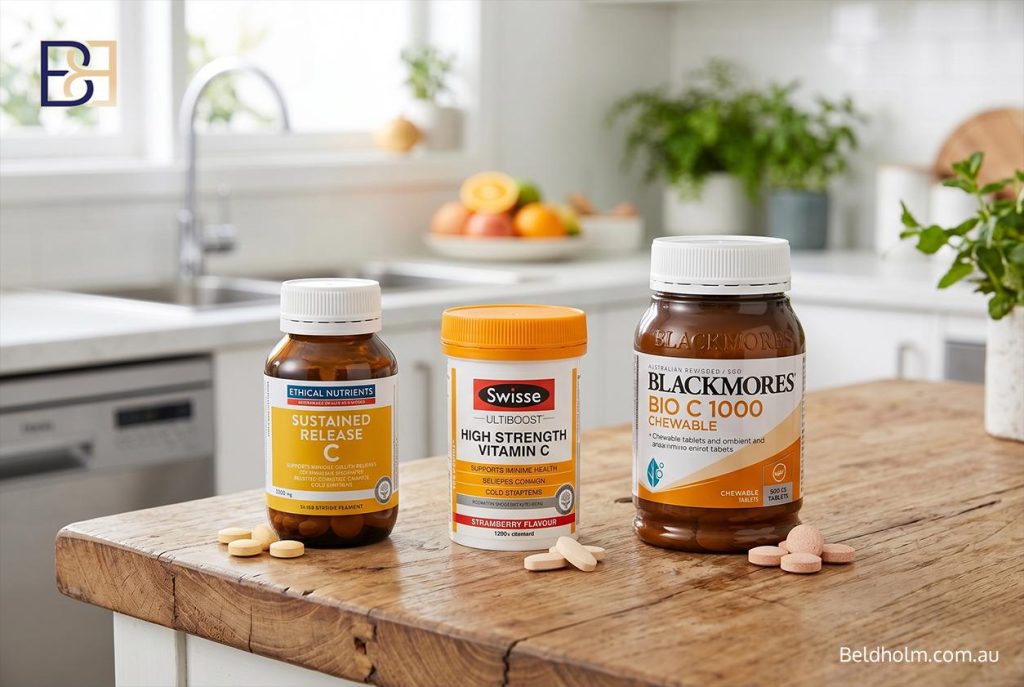
These are my go-to recommendations for patients who find plain ascorbic acid uncomfortable, particularly those with reflux after sleeve gastrectomy.
Ethical Nutrients Sustained Release C
- Dose: 500 mg per tablet (take two for 1000 mg dose)
- Format: sustained-release tablet
- Where to buy: Chemist Warehouse, Pharmacy Direct, practitioner ranges
- Why I include it: gentle on the stomach, steady release across the day, reliable Australian practitioner brand.
Swisse Ultiboost High Strength Vitamin C
- Dose: 1000 mg per tablet (buffered with calcium)
- Format: tablet
- Where to buy: Chemist Warehouse, Priceline, most Australian pharmacies
- Why I include it: well-tolerated buffered format, widely available, TGA listed.
Blackmores Bio C 1000 Chewable
- Dose: 1000 mg per tablet (often formulated as a buffered vitamin C supplement for gentleness)
- Format: chewable tablet
- Where to buy: Chemist Warehouse, Priceline
- Why I include it: useful for patients who dislike swallowing tablets. Rinse mouth with water after taking, given vitamin C’s acidity and enamel impact.
Powder and effervescent formats
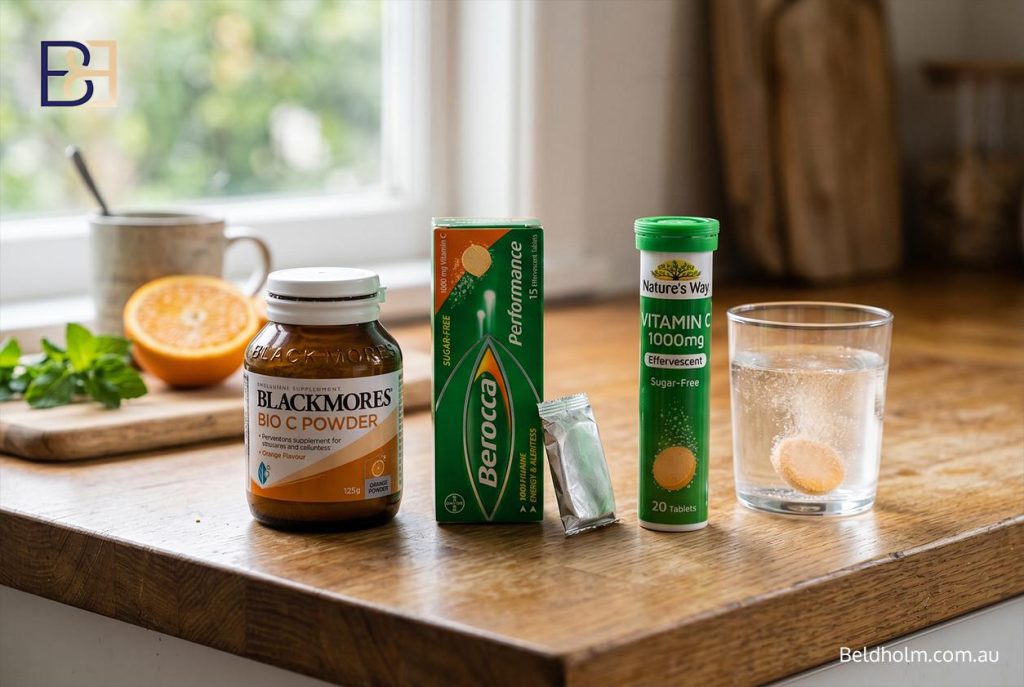
For patients who prefer to drink their vitamin C rather than take a tablet.
Blackmores Bio C Powder
- Dose: 1000 mg per 2 g serve
- Format: powder to mix with water or juice
- Where to buy: Chemist Warehouse, Priceline
- Why I include it: dose is flexible, half a scoop is 500 mg, full scoop is 1000 mg. Useful if you want to titrate up or down.
Berocca vitamin C supplements 1000 mg (sugar-free)
- Dose: 1000 mg per tablet
- Format: effervescent tablet
- Where to buy: Chemist Warehouse, supermarket, most pharmacies
- Why I include it: palatable, easy to take, sugar-free versions available. Check the label, the standard Berocca range combines multiple B vitamins with vitamin C, which is fine for general use. For targeted vitamin C, plain vitamin C effervescents are also available.
Nature’s Way vitamin C supplements 1000 mg effervescent
- Dose: 1000 mg per tablet
- Format: effervescent tablet
- Where to buy: Chemist Warehouse, supermarket
- Why I include it: simple vitamin C, only effervescent, sugar-free options available.
Higher-absorption option for patients who prefer liposomal
NOW Foods Liposomal Vitamin C
- Dose: 1000 mg per tablespoon (liquid)
- Format: liposomal liquid
- Where to buy: iHerb (international) and some Australian specialty retailers
- Why I include it: the most commonly used liposomal format in my practice. Patients who prefer the liposomal approach find this option reliable. Not required, but acceptable.
What about a multivitamin-based vitamin C?
Some patients ask whether the vitamin C in their Tier 1 complete multivitamin is enough.
The short answer is no, not during the perioperative window. A standard multivitamin contains 60 to 250 mg of vitamin C, which meets the maintenance RDI but falls well short of the 1 to 2 g per day perioperative target.
The multivitamin vitamin C content contributes to the daily total but is not a replacement for the dedicated vitamin C supplements during the pre-op and post-op window. After the 6 to 8 week mark, when the dose drops to maintenance, a standard multivitamin with vitamin C content is sufficient for most patients.
What to avoid
I covered this in more detail in the previous section, but as a reminder:
- Combination “immune support” vitamin C supplements, where vitamin C is mixed with other active ingredients. Dose accuracy is often poor.
- Very high single-dose tablets (3000 mg and above). Unnecessary and no clinical benefit over split dosing.
- Vitamin C and iron combination tablets. Iron doses are typically too low to treat an actual deficiency.
- Unregulated imports without clear sourcing.
The short version for patients
If you want a single recommendation without reading further, pick any of these three:
- Blackmores Bio C 1000 mg. Tablet format, reliable, widely available
- Swisse Ultiboost High Strength Vitamin C. Buffered, easier on the stomach
- Ethical Nutrients Sustained Release C. Steady release, practitioner quality
Any of the three taken at 1 to 2 tablets daily covers the perioperative dose. Pick based on what suits your stomach and where you usually shop.
Patients on weight-loss medications are a group where vitamin C intake patterns are particularly affected. That group gets dedicated coverage next.
Weight Loss Medications: Special Considerations
A growing proportion of my patients come to body contouring surgery having reached their goal weight with the help of weight-loss medications, either alone or in combination with prior bariatric surgery. The medications in the GLP-1 class have changed how weight loss is approached over the last few years, with specific implications for vitamin C status and surgical planning.
A note on terminology before I start. I will not use specific drug names in this article, which is a TGA and AHPRA matter, and will refer to these medications as a class only.
What these medications do to food intake
The GLP-1 class produces profound appetite suppression. Patients often describe a loss of interest in food rather than hunger with willpower. Meals become smaller. Snacks often disappear entirely. The overall food volume drops substantially.
Published data show the typical effects on intake:
- Energy intake reduces by approximately 1200 kcal (5,021 kJ) per day compared with baseline (2).
- Protein intake is reduced by approximately 17% (2).
- Vitamin C intake is reduced by approximately 43% (2).
- Iron intake is reduced by approximately 32% (2).
The pattern is consistent. When appetite is suppressed, variety and volume drop together, and the nutrients most concentrated in fruit, vegetables, and animal protein are the ones that take the biggest hit. Vitamin C is one of the largest drops measured.
Why this matters for surgical planning
A patient who has lost significant weight on these medications sits in the same nutritional position as a post-bariatric patient for vitamin C. The mechanism is different, appetite suppression rather than stomach anatomy change, but the outcome for daily intake is similar.
This is the clinical reason I place every post-weight-loss patient on Tier 1 vitamin C supplementation regardless of whether they arrived through bariatric surgery, weight-loss medications, or both. The Tier 1 dose is designed to account for the intake reduction that is a predictable consequence of this treatment route.
Perioperative management of the medication itself

This is the part that changed in my practice recently, and that matters most for patients on these medications at the time of surgery.
Perioperative management of weight-loss medications, including whether to continue, reduce, or temporarily cease them around your surgery, is determined by your anaesthetist at your pre-operative anaesthetic consultation. This is not something I manage directly, and you should not adjust it on your own.
All of my post-weight-loss patients have a routine pre-operative anaesthetic consultation. For most patients, this happens by phone. Your anaesthetist reviews your full medical history, your anaesthetic history, your medication list, your planned surgery, and your anaesthetic history. They make the perioperative medication decisions that fall within the anaesthetic domain, including the plan for your weight loss medication around the operation.
The current Australian and New Zealand College of Anaesthetists (ANZCA) guidance does not recommend routine discontinuation of GLP-1 medications before surgery. This reflects an evolving evidence base. Earlier guidance from some overseas bodies had recommended cessation several days before surgery because of concerns about delayed gastric emptying and aspiration risk during anaesthesia. More recent data and guidance have walked that back for routine cases, though individual patient factors may still warrant a case-by-case decision.
The key point for patients is: do not stop, restart, or change the dose of these medications on your own. Your anaesthetist will make the call based on your specific circumstances. If you have concerns about the medication and your surgery, raise them at your anaesthetic consultation.
What I still manage for patients on these medications

While the perioperative management of the medication is the anaesthetist’s domain, several aspects of the plan for these patients fall firmly within my remit.
Nutritional assessment. I pay particular attention to protein intake, vitamin C status, iron studies, and overall nutritional optimisation in patients on weight-loss medications. The intake reductions described above mean these patients often need a more active Tier 1 vitamin supplements program and may need Tier 2 vitamin supplements additions for specific deficiencies identified on bloods.
Protein adequacy. The 17% reduction in protein intake is clinically significant in a patient heading into a long-incision operation. If a patient cannot meet protein targets despite best efforts, this should be discussed with your prescribing team. I may suggest a conversation with your doctor about whether a temporary dose adjustment is appropriate to allow adequate protein intake in the pre-operative window, but that conversation is between you and your prescribing team, not a unilateral decision from my end.
DVT risk. DVT risk stratification and perioperative thromboprophylaxis decisions for this patient group are covered in the dedicated DVT article.
Aspirin and anticoagulant management. Management of aspirin and prescription anticoagulants before surgery is a separate conversation, handled by me in partnership with your GP, and is not affected by your weight loss medication.
Weight stability and timing considerations
Weight stability requirements before body contouring surgery, including the 6 to 12 month guideline for patients currently on these medications, are covered in the hub article and the pre-operative preparation checklist.
The practical summary for patients on weight-loss medications
If you are on a weight loss medication in the GLP-1 class and considering body contouring surgery:
- Tier 1 vitamin C at 1 to 2 g per day. Same as any other post-weight-loss patient, with extra attention to adherence given variable food intake.
- Protein intake monitoring. Because this is where the biggest gap can open up. If you cannot hit targets, this is a conversation with your prescribing team.
- Weight stability. Covered in the hub article and the pre-operative preparation checklist.
- Perioperative medication management. Not your call and not my call. Your anaesthetist decides at the pre-operative anaesthetic consultation.
- Do not self-adjust the medication. Unsupervised cessation can affect food quality and overall nutritional status in ways that may worsen.
How does this all relate to the specific body contouring operations I perform? That is where the article goes next.
Procedure-Specific Considerations
The Tier 1 vitamin C plan is the same across every post-weight-loss body contouring operation I perform: abdominoplasty (tummy tuck), body lift (belt lipectomy), thighplasty (thigh lift), brachioplasty of the upper arms, and mastopexy. The dose, the pre-op step-down, the post-op resumption, and the 4 to 6 week continuation all apply regardless of the planned operation.
What changes by procedure are the wound-healing demands and the margin for error.
Wound surface area and tension vary by procedure
The spectrum runs roughly in this order:
- Body lift (belt lipectomy), also known as a lower body lift. Largest wound surface area, circumferential incision, longest operative time. The highest demand is on the wound healing system.
- Circumferential hybrid abdominoplasty. An extended incision addressing the front and back. Wound area is substantially larger than a standard abdominoplasty (tummy tuck).
- Abdominoplasty (tummy tuck), including dual vector abdominoplasty. Long horizontal incision under continuous closure tension.
- Thighplasty (thigh lift). Long inner-thigh incision, thinner skin, and lymphatic considerations.
- Brachioplasty. Long visible incision on the upper arms, where scar quality matters to most patients.
- Mastopexy. Smaller total surface area, but a visible scar in the long term.
The nutritional work I do before surgery is the same regardless. The difference is how much it matters if something is sub-optimal. A longer wound under more tension leaves less room for a nutritional variable to affect the result.
Combined and staged procedures or further surgery
For combined procedures, including lower body lift combinations, the wound surface area is additive. An abdominoplasty (tummy tuck) plus brachioplasty of the upper arms in the same operation means two long wounds healing simultaneously. Patients undergoing an abdominoplasty with a lower body lift or other procedures require special nutritional attention because both the abdomen and the upper arms are healing simultaneously.
For staged procedures, Tier 1 supplementation continues through the staging window. If further surgery such as a body lift (belt lipectomy) follows an abdominoplasty (tummy tuck) 4 to 6 months later, you remain on the vitamin supplements plan throughout, with the pre-op reduction and post-op resumption pattern repeated at each operation.
Upper Limits & Toxicity
Vitamin C has a wide safety margin. At the doses I use for perioperative supplementation, 1 to 2 g per day, it is well tolerated by the vast majority of patients. Severe adverse effects are rare.
There are, however, specific cautions worth covering. Patients in certain groups need to be more careful than others, and there are situations where contacting me or your GP is the right call rather than pushing through on your own.
The kidney stone question
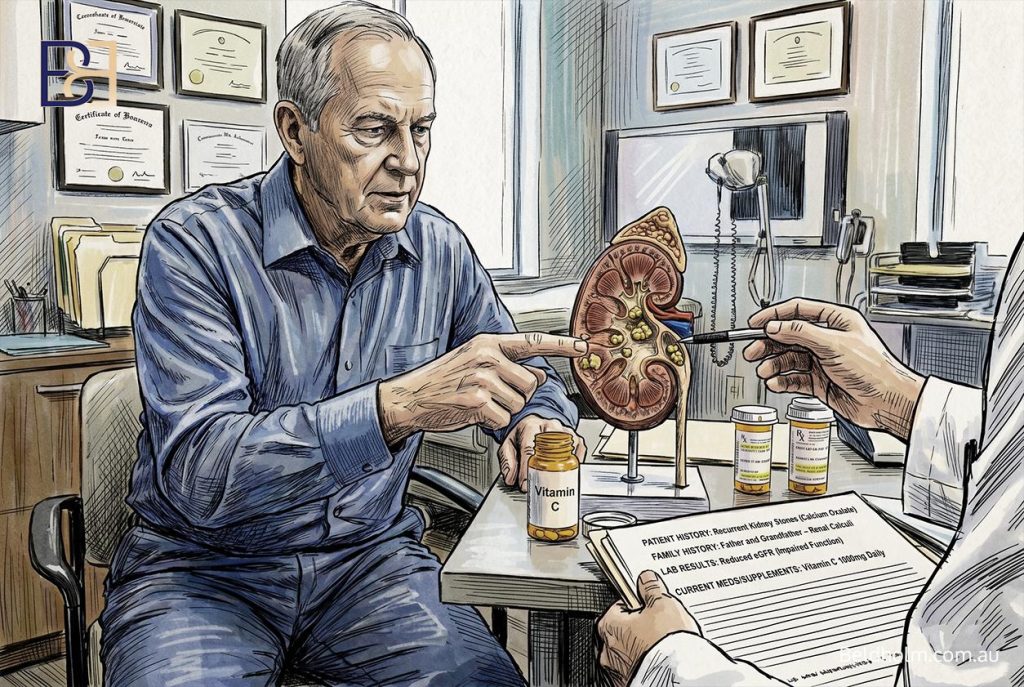
The most common concern raised about high-dose vitamin C is the risk of kidney stones, and this concern is legitimate in some patients.
Vitamin C is metabolised in part to oxalate, which is excreted in the urine. At sustained doses above 1 g/day, urinary oxalate excretion increases. For most patients, this does not translate to any clinical problem. For patients with a prior history of calcium oxalate kidney stones, a family medical history of stones, primary hyperoxaluria, or impaired renal function, the higher oxalate load can increase the risk of developing new kidney stone formation (9, 10).
What this means practically:
- If you have a history of calcium oxalate kidney stones. Discuss the vitamin C plan with me or your GP before starting. In most cases, we can still supplement, but at a lower dose (e.g., 500 to 1000 mg per day rather than 1 to 2 g), with attention to hydration. In some cases, the risk outweighs the benefit, and we adjust the plan.
- If you have impaired kidney function (reduced eGFR), the vitamin C dose needs to be scaled down. Sustained high doses in kidney disease can contribute to oxalate accumulation.
- If you have a family medical history of stones but no personal history, the standard 1 to 2 g per day is usually fine. Good hydration is the main precaution.
- If you have no stone history. The risk at 1-2 g per day is low. The absolute increase in kidney stone formation in the general population from moderate vitamin C supplementation is small.
The key clinical move is being upfront about stone history at your first consultation. Do not assume a history of kidney stones is irrelevant to a body contouring consultation; it is highly relevant to your supplement plan.
Hydration is part of the answer

Adequate fluid intake is an effective way to reduce stone risk across all vitamin C doses. Compression garments worn after surgery are a separate recovery tool unrelated to vitamin C dosing.
I recommend a baseline of 2 to 3 litres of fluid per day for all post-weight-loss patients during the perioperative window, regardless of vitamin C dose. This supports wound healing, reduces infection risk, and helps flush urinary oxalate. In hot weather or during exercise, the requirement is higher.
Hydration is not a substitute for dose restriction in high-risk patients. It is a complement to it.
GI tolerance

The second most common issue patients report is gastrointestinal upset.
High-dose ascorbic acid on an empty stomach can cause reflux, nausea, abdominal cramping, or loose stools. The mechanism is partly the acidity of ascorbic acid and partly an osmotic effect when the dose exceeds the gut’s capacity to absorb in a single sitting.
Strategies that usually solve this:
- Take the dose with food. Not a full meal, a small amount of food is enough to buffer the acid.
- Split the dose. 1 g in the morning and 1 g in the evening is much better tolerated than 2 g at once.
- Switch to a buffered form. Sodium ascorbate or buffered vitamin C is markedly easier on the stomach than plain ascorbic acid.
- Consider sustained-release or liposomal. Both reduce peak acidity exposure in the gut.
- Reduce the dose temporarily. If 2 g per day is causing problems, drop to 1 g per day. A lower dose reliably taken is better than a higher dose the patient stops taking because of side effects.
If none of these work and the patient cannot tolerate oral vitamin C at the recommended dose, I will work with that and adjust the plan accordingly. The goal is adequate tissue vitamin C, not a specific number on the label.
Interactions with medications and supplements
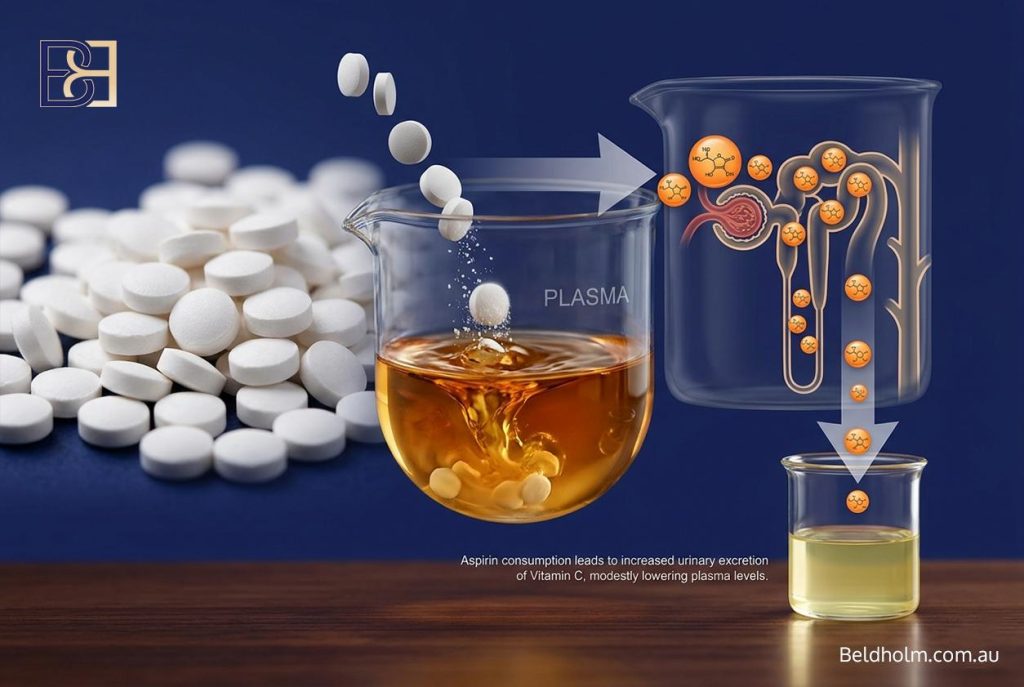
A few interactions are worth knowing about.
Iron supplements. Vitamin C improves non-heme iron absorption, as covered earlier in this article. This is an intentional interaction; take them together if you are on iron.
High-dose vitamin E. At high doses of both vitamins (vitamin E above 400 IU per day alongside vitamin C above 1 g per day), there may be competing effects on the overall antioxidant balance. This is a theoretical concern rather than a clear clinical problem. Separating the two supplements by several hours.
Aspirin. Aspirin can modestly lower plasma vitamin C through increased excretion. This is a minor effect and does not change how I dose vitamin C in patients on aspirin.
Oestrogens and oral contraceptives. Hormonal contraceptives and hormone replacement therapy can slightly reduce plasma vitamin C levels. Again, a minor effect that does not change dosing.
Chemotherapy. Patients on certain chemotherapy regimens should discuss vitamin C supplementation with their oncologist before starting or continuing high-dose supplementation. Vitamin C can interact with some chemotherapy mechanisms, and these interactions are still being studied. This is not a routine consideration in my body contouring practice, but it is worth flagging for any patient with a history of cancer treatment.
Kidney disease medications. As noted above, impaired kidney function changes the vitamin C calculus. Patients on active treatment for kidney disease should have their supplementation plan managed in partnership with their treating specialist.
Pregnancy and breastfeeding

Standard doses of vitamin C in a multivitamin are safe in pregnancy. The 1 to 2 g per day perioperative dose is not routinely recommended during pregnancy without obstetric input.
Body contouring surgery is not routinely performed during pregnancy, regardless of the vitamin C question; patients are advised to complete their family planning before proceeding with major body contouring. But the supplement question occasionally comes up in women planning surgery in the post-partum period. A brief discussion with your obstetrician or GP covers this.
Rebound scurvy
A rare concern is rebound scurvy, a deficiency state that can develop when very high-dose vitamin C is stopped abruptly after prolonged supplementation. The theoretical mechanism is that high-dose intake upregulates vitamin C metabolism, and once the dose stops, metabolism continues at the upregulated rate, leading to deficiency faster than a normal intake can replace.
In clinical practice, this is uncommon, and it is not a concern in my perioperative protocol because the dose is reduced from 1 to 2 g per day to 60 mg per day in a single step rather than being stopped entirely. The maintenance dose is enough to prevent any rebound effect.
When to contact me or your GP

There are specific situations where you should get in touch rather than trying to push through on your own.
Contact me or the clinic if you are in the perioperative window (4 weeks pre-op to 6 weeks post-op) and:
- You are unable to tolerate the vitamin C dose and cannot find a solution using the strategies above.
- You develop symptoms of a kidney stone (flank pain, blood in urine, painful urination).
- If you develop any symptom you are unsure about in the context of your supplement plan.
Contact your GP for anything outside the perioperative window, including:
- Concerns about long-term supplementation.
- New medical conditions that might change the supplement plan.
- Medications started by another treating doctor that you are unsure about.
- Long-term maintenance dose decisions.
For after-hours concerns during the early post-operative period, please call Maitland Private Hospital. An experienced nurse will answer and either provide advice for less urgent questions or contact me directly for anything that needs my input. For matters requiring physical examination, please attend your local emergency department. For life-threatening issues, call 000.
The overall picture
Oral vitamin C administration at the doses I use is one of the safer supplements in my pre-operative toolkit. The upper tolerable intake level set by international bodies is 2000 mg per day for routine use, and short-term higher doses have been used safely in clinical research without significant adverse effects (3). The clinical concerns, kidney stones, GI tolerance, and theoretical interactions are real but manageable with a straightforward clinical approach.
The greater risk, in my view, is under-supplementation in a patient group with a high prevalence of baseline insufficiency. Getting the dose right and taking it consistently are what deliver the wound-healing benefit. The safety profile is broad enough that we can supplement and manage any issues that arise.
The frequently asked questions that patients most commonly bring to consultation are answered in the next section.
Additional safety considerations at higher doses

A few additional safety points at higher doses of vitamin C are worth covering, even though they are not routine concerns at the 1 to 2 g per day perioperative doses.
Iron overload in hereditary haemochromatosis. Vitamin C enhances non-heme iron absorption. For the vast majority of patients, this is beneficial, particularly in the large proportion of my post-weight-loss patients who have iron deficiency. In patients with hereditary haemochromatosis, however, the enhanced iron absorption is a problem. This is associated with an increased risk of developing iron overload. Iron accumulates in tissues and organs over time and can lead to liver, heart, and endocrine damage if not managed. If you have hereditary haemochromatosis or a family history of the condition, raise it at consultation so we can adjust the vitamin C plan accordingly and coordinate with your treating doctor.
Pro-oxidant activity at very high doses. Vitamin C is primarily an antioxidant but may act as a pro-oxidant under certain conditions, particularly in the presence of free transition metals like iron and copper. The clinical relevance of this in healthy people at standard oral doses is limited, but high-dose vitamin C supplements at sustained levels above the tolerable upper limit may have effects that standard dosing does not.
Uric acid considerations. High-dose vitamin C can raise urinary oxalate and, at very high doses, also influence uric acid handling. Patients with a history of gout or elevated uric acid should factor this into their dose decisions alongside the kidney stone formation considerations covered above.
High-dose vitamin C treatment in non-surgical contexts. Some patients ask about intravenous vitamin C and other dietary supplements at doses well above the 1 to 2 g/day range. Intravenous vitamin C administration has a place in specific clinical contexts managed by other treating doctors, but is not part of my standard perioperative plan for body contouring surgery. Oral doses up to the tolerable upper intake level of 2000 mg per day are well established for perioperative use. At these doses, plasma concentrations reach saturation and further oral intake is excreted rather than stored. Higher plasma vitamin C concentrations achieved via intravenous routes bypass this absorption ceiling, but the clinical value of those higher concentrations in routine body contouring is not established.
Dietary supplements versus food sources. The role of dietary supplements shifts with context. For general health outside the perioperative window, dietary vitamin C from food sources, including citrus fruits, berries, and vegetables, is the preferred approach. Supplemental vitamin C earns its place during the perioperative window when the target dose is 20 to 40 times the dietary reference intakes for the general population, a gap that dietary intake cannot fill in this patient group.
Frequently Asked Questions
These are the questions patients most commonly ask me about vitamin C in the lead-up to body contouring surgery. The answers here are short and direct. The detailed clinical reasoning for each is covered in the relevant section above.
Do I really need to take vitamin C if I eat a healthy diet?
Probably yes, for the perioperative window.
The daily requirement to prevent deficiency is 45 mg, which most diets provide. The perioperative wound-healing dose is 1 to 2 g per day, about 20 to 40 times the baseline dose. You cannot reach that dose from food alone, regardless of how healthy your diet is. This is why I recommend supplementation even for patients with excellent or healthy diets.
Once the 4 to 6-week post-operative period is complete and the dose drops to maintenance, a healthy diet is usually sufficient.
Is 1 to 2 grams per day safe in the long term?
For most patients, yes, but long-term use at that dose is not what I am recommending. The Tier 1 perioperative protocol uses 1 to 2 g per day for a limited window, typically the 4 weeks before surgery and 4 to 6 weeks after. After that, the dose drops to 60 mg per day for maintenance.
If you are thinking about sustained high-dose vitamin C outside the perioperative context, that is a conversation to have with your GP rather than something I manage.
Can I just take a multivitamin instead?
Not during the perioperative window. A standard multivitamin contains 60 to 250 mg of vitamin C, which is well short of the 1 to 2 g per day target I recommend for surgery preparation.
For long-term maintenance after the 6 to 8 week post-op point, a standard multivitamin is usually sufficient.
What if I can’t tolerate vitamin C on an empty stomach?
Several options work for patients with GI sensitivity. Take the dose with food, split it into smaller doses of vitamin C throughout the day, or switch to a buffered form of vitamin C, such as sodium ascorbate or buffered vitamin C. Sustained-release and liposomal formulations are also easier on the stomach. The full list of solutions is covered in the safety section above.
Should I take vitamin C with my iron supplement?
Yes, if you are on an oral iron supplement. Vitamin C improves non-heme iron absorption significantly, and taking them together is standard practice.
Separate iron from calcium, dairy products, tea, and coffee by at least two hours. These all inhibit iron absorption.
Can I get enough vitamin C from Kakadu plum powder?
You can get a substantial dose from a small amount of Kakadu plum powder; the fruit has the highest concentration of vitamin C recorded in any natural food. One to two teaspoons of freeze-dried Kakadu plum powder can provide several hundred milligrams of vitamin C.
This can be part of the plan, but it does not replace the Tier 1 supplement protocol for surgery preparation. The supplement provides dose accuracy and reliability that a natural food product cannot match.
What about IV vitamin C before surgery?
Intravenous vitamin C achieves plasma levels much higher than those with oral dosing, and it has a role in certain clinical contexts, it is not necessary for the vast majority of patients.
Vitamin C administration at 1 to 2 g per day, taken consistently for several weeks before surgery, achieves adequate tissue saturation without the cost and logistics of IV infusions. I do not routinely recommend IV vitamin C as part of body contouring surgery preparation.
I am on weight-loss medications. Do I stop them before surgery?
Perioperative management of weight-loss medications is a decision for your anaesthetist at your pre-operative anaesthetic consultation, not something you should adjust on your own. Current ANZCA guidance does not recommend routine cessation of these medications before surgery, but individual circumstances can change the decision.
Do not stop, reduce, or change the dose on your own. Your anaesthetist will review your specific situation.
I had bariatric surgery years ago. Am I still at risk?
Yes. Nutritional deficiencies after bariatric surgery are often lifelong rather than a first-year concern. Many of my patients come to body contouring surgery 5 to 10 years after their bariatric operation and still have significant nutritional gaps that need correcting.
This is one of the reasons I run a full pre-operative blood panel on every post-weight-loss patient, regardless of how long ago the bariatric surgery was.
I smoke. Does that change my vitamin C requirement?
Yes. Smoking reduces plasma vitamin C levels by 25 to 50% compared with non-smokers. The RDI for smokers is 60 mg per day rather than 45 mg per day.
More importantly, if you smoke, I will have a separate conversation with you about smoking cessation well before surgery. Continued smoking at the time of surgery is a risk factor for wound complications independent of vitamin C levels, and it is one of the most important things you can change.
I have a history of kidney stones. Can I still take vitamin C?
Often yes, but the plan needs to be adjusted. Sustained doses above 1 g per day can increase urinary oxalate excretion, which is important for patients with prior calcium oxalate stones.
Most patients with a stone history can still use a lower dose (500 to 1000 mg per day), provided hydration is maintained. In some cases, the risk outweighs the benefit, and we adjust further. Be upfront about your stone history at your first consultation so we can plan around it.
What happens if I forget a dose?
Nothing significant. Vitamin C has a relatively short half-life, and a missed dose is not a clinical problem. Take the next scheduled dose at the normal time. Do not double up.
If you are consistently forgetting doses, the issue is usually a timing cue problem rather than a lack of motivation. Link the supplement to something you do at the same time every day, morning coffee, brushing teeth, a specific meal, and adherence tends to increase.
Do I need to take vitamin C every day until my surgery date?
Yes, daily consistency matters. Vitamin C is water-soluble and cannot be stored meaningfully, so the body needs a steady input to maintain tissue levels. A pattern of occasional high doses with gaps in between does not build tissue saturation the way daily dosing does.
How long after surgery can I stop taking vitamin C?
The Tier 1 dose of 1 to 2 g per day continues for 4 to 6 weeks post-operatively, or until wound closure is well established. After that, you drop to 60 mg per day for maintenance, which is covered by a standard multivitamin or an adequate diet.
Your GP manages the long-term plan from the 6 to 8 week post-op blood panel onwards. For post-bariatric patients, some form of ongoing vitamin C intake is usually part of lifelong supplementation.
Will vitamin C make my scar look better?
Vitamin C may support the underlying collagen biology that determines scar quality, but it is one variable among many. Genetics, skin type, wound tension, surgical technique, scar management, sun exposure, and individual healing response all play a role.
Adequate vitamin C gives the underlying biology its best chance. It does not guarantee a specific scar outcome, and results vary between patients.
Can I take vitamin C if I’m pregnant or breastfeeding?
Standard doses of multivitamins are safe. The 1 to 2 g per day perioperative dose is not routinely recommended in pregnancy without obstetric input.
Body contouring surgery is not performed during pregnancy. For post-partum patients planning surgery, discuss the supplement plan with your obstetrician or GP before starting.
The final section summarises the key points and wraps up the discussion.
Conclusion

Vitamin C is not a glamorous topic. It does not show up in before-and-after photos. It does not feature in marketing. But it is one of the handful of nutritional variables that make a measurable difference in how well a body-contouring wound heals, and I am not willing to leave it to chance in my post-weight-loss patient group.
The clinical picture in summary
Post-weight-loss patients are at increased risk of vitamin C insufficiency, as documented in the literature and evident every day in my consulting rooms. Bariatric surgery, weight-loss medications, restrictive diets, and smoking all reduce vitamin C intake or increase its turnover. The result is a patient population where subclinical deficiency is common and where the wound healing demands of a long-incision operation push the system harder than in the average surgical patient.
Vitamin C may play three roles that matter for body contouring recovery:
- Collagen synthesis through hydroxylation of proline and lysine. This is the reaction that gives scar tissue its strength.
- Non-heme iron absorption. Critical for the large proportion of post-weight-loss patients with concurrent iron deficiency.
- Immune function and antioxidant activity. Supporting neutrophil function at the wound bed and buffering oxidative stress during and after surgery.
The clinical response is straightforward. Tier 1 universal supplementation at 1 to 2 g per day from surgical planning through to 4 to 6 weeks post-operatively, with a step-down to 1000 mg per day in the final week before surgery and resumption of the full dose within the first day or two post-operatively. Long-term maintenance at 60 mg per day, managed through your GP from the 6 to 8 week post-operative blood panel onwards.
What sits in whose hands
A reminder on the roles:
- Dr Beldholm and team. Pre-operative nutritional assessment, bloods, Tier 1 and Tier 2 supplement initiation, DVT risk stratification and thromboprophylaxis, aspirin and anticoagulant management in partnership with your GP, and early post-operative care.
- Your anaesthetist. Pre-operative anaesthetic consultation (usually by phone for post-weight-loss patients), perioperative management of weight-loss medications, and day-of-surgery physical and airway examination.
- Maitland Private Hospital dietitian. Onward nutritional support during admission, protein and diet optimisation in the immediate post-operative period.
- Your GP. Long-term nutritional oversight from approximately 4 weeks post-op, 6- to 8-week follow-up blood panel, ongoing supplementation management, and lifelong post-bariatric care, where relevant.
This structure keeps the right decisions in the right clinical hands at the right time.
What results depend on
I want to be direct about the limits of vitamin C.
Vitamin C may correct a deficiency and support wound healing. It does not guarantee a specific result. Vitamin C may make the difference in borderline cases where the underlying collagen biology is marginal, but it may not fully offset problems caused by other factors. Surgical outcomes depend on many variables, including surgical technique, patient-specific anatomy, tissue quality after weight loss, genetics, scar type, post-operative care adherence, smoking status, and individual healing response. Nutrition is one contributor among many.
Results vary between patients. Two patients with identical supplementation and identical operations can have different recovery experiences and different long-term scar appearances. What supplementation offers is the best chance for your underlying biology to do its job properly. Vitamin C may support faster healing. Vitamin C may reduce the impact of specific risk factors. None of these is a guarantee. The rest is the combination of surgical work and your own healing.
The practical takeaway
If you are a post-weight-loss patient considering body contouring surgery, the vitamin C part of the plan:
- Start 1 to 2 g per day at your first consultation. Any quality Australian brand covering that dose is acceptable.
- Split the dose across the day for better tolerance, typically 1 g in the morning and 1 g in the evening.
- Take it with iron if you are on iron supplementation. The combination is intentional.
- Step down to 1000 mg per day one week before surgery.
- Resume 1-2 g per day within the first day or two post-operatively. Once the bleeding risk has passed.
- Continue for 4 to 6 weeks post-operatively or until wound closure is well established.
- Drop to 60 mg per day for long-term maintenance from the 6 to 8 week point, managed by your GP.
If you have a history of kidney stones, impaired kidney function, or any other condition that might affect the plan, raise it at your first consultation. We work around individual circumstances.
Where to go from here
This article is part of a broader content series on perioperative nutrition for post-weight-loss body contouring patients. The hub article, Vitamins and Supplements Before and After Abdominoplasty (Tummy Tuck): A Guide for Post-Weight-Loss Patients, covers the full Tier 1 and Tier 2 framework and links through to the other nutrient-specific articles, including vitamin A, vitamin D, vitamin B12, folate and homocysteine, and protein. Each article focuses on one nutrient in depth, as this one has covered for vitamin C.
If you are considering surgery in my practice, your first consultation is where we map out the specific nutritional plan for your situation. The Tier 1 vitamin supplement framework provides everyone with the same solid starting point. The Tier 2 vitamin supplements additions are where individual blood results shape the plan to your particular needs.
Body contouring after significant weight loss is not a small surgery. Getting the preparation right, including nutrition, is part of what sets you up for the best possible recovery. Vitamin C is one of the pieces of that preparation I take seriously, and this article explains why.
References
- Agha-Mohammadi S, Hurwitz DJ. Nutritional deficiency of post-bariatric surgery body contouring patients: what every plastic surgeon should know. Plast Reconstr Surg. 2008;122(2):604–13.
- Mehta A, Dellon ES, Patel K, Ferrero M, Huang RJ. Nutritional challenges in post-massive weight loss body contouring: guidance for plastic surgeons on GLP-1 agonists and sleeve gastrectomy. Plast Reconstr Surg Glob Open. 2025;13(2):e6189.
- Doseděl M, Jirkovský E, Macáková K, Krčmová LK, Javorská L, Pourová J, et al. Vitamin C: sources, physiological role, kinetics, deficiency, use, toxicity, and determination. Nutrients. 2021;13(2):615.
- Mohammed BM, Fisher BJ, Kraskauskas D, Ward S, Wayne JS, Brophy DF, et al. Vitamin C promotes wound healing through novel pleiotropic mechanisms. Int Wound J. 2016;13(4):572–84.
- Vitagliano T, Garieri P, Lascala L, Ferro Y, Doldo P, Pujia R, et al. Preparing patients for cosmetic surgery and aesthetic procedures: ensuring an optimal nutritional status for successful results. Nutrients. 2023;15(2):352.
- Agha-Mohammadi S, Hurwitz DJ. Enhanced recovery after body-contouring surgery: reducing surgical complication rates by optimizing nutrition. Aesthetic Plast Surg. 2010;34(5):617–25.
- Carr AC, Maggini S. Vitamin C and immune function. Nutrients. 2017;9(11):1211.
- Makarawung DJS, Mink van der Molen AB, de Vries CEE, Poelman MM, van Dongen JA, Monpellier VM. Dietary intake and nutritional deficiencies after bariatric surgery: a narrative review. Obes Surg. 2022;32(5):1707–21.
- Lynch SR, Cook JD. Interaction of vitamin C and iron. Ann N Y Acad Sci. 1980;355:32–44.
- Traxer O, Huet B, Poindexter J, Pak CYC, Pearle MS. Effect of ascorbic acid consumption on urinary stone risk factors. J Urol. 2003;170(2):397–401.