


Platysmaplasty in Newcastle NSW
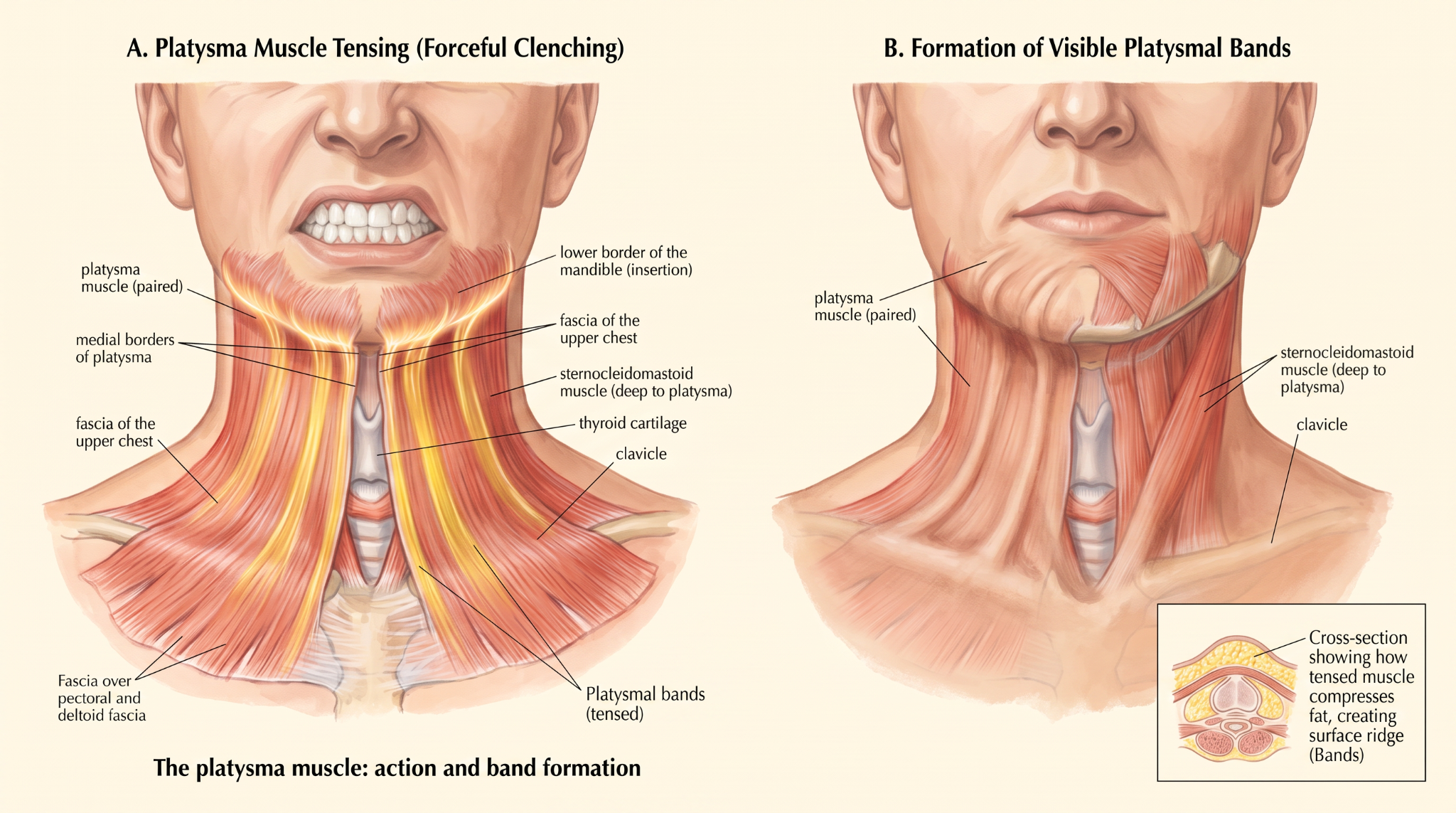
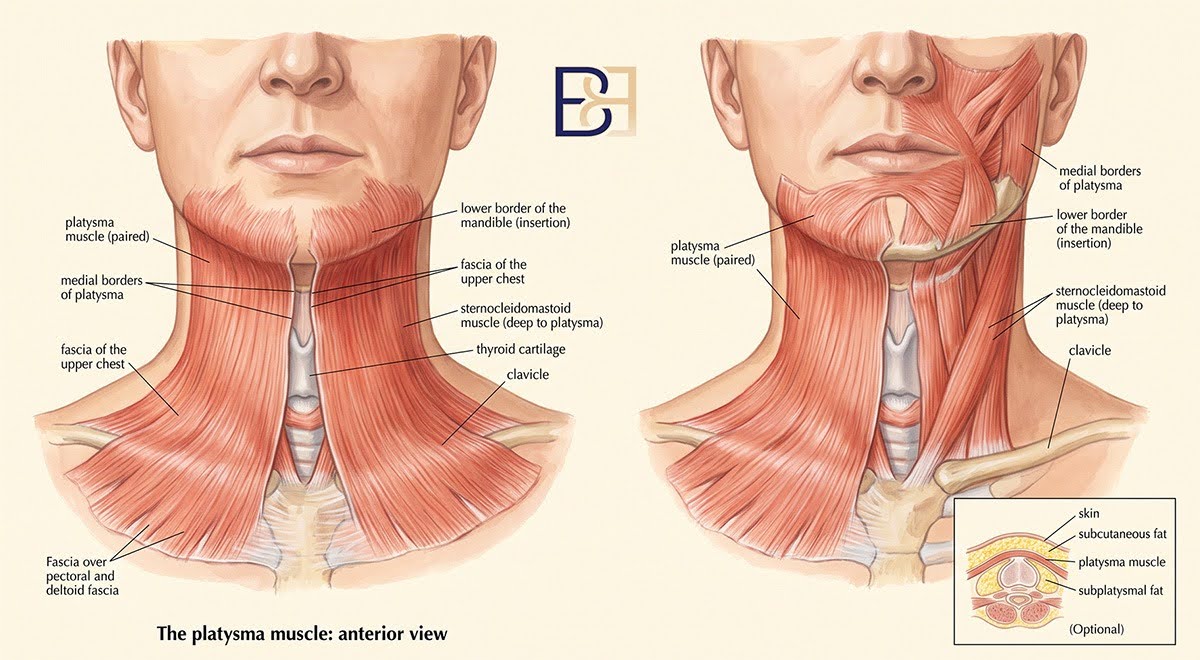
Platysmaplasty is tightening or repair of the platysma muscle of the neck. The platysma is a thin, broad sheet of muscle that sits just under the skin of the front of the neck. With age, the inner edges of this muscle can separate and become visible as vertical bands. Platysmaplasty brings those edges back together and tightens the muscle, usually through a small incision hidden in the crease under the chin.
It helps to be clear about what platysmaplasty works on and what it does not. It is muscle surgery. It does not remove excess neck skin. It does not work on fullness that sits beneath the muscle. It does not change skin texture or fine lines. Those are separate matters, managed with different procedures where they are present at all.
Facial and neck ageing is a normal process, and platysmaplasty does not stop it. The neck continues to age after surgery, and the muscle can loosen again over time, so results are not permanent in that sense.
In my practice, platysmaplasty is most often performed as one component of a neck lift (cervicoplasty), rather than on its own. Standalone platysmaplasty has a fairly narrow place: visible muscle banding in a neck where the skin still has good tone. Whether that describes your neck is something I can only determine at assessment.
If you want more detail on how the platysma behaves with age and where platysmaplasty fits, I cover it fully in my article on neck lift (cervicoplasty) and platysmaplasty: the complete guide.
Book your appointment online now
What platysmaplasty is suited to
Platysmaplasty is suited to visible banding of the platysma muscle. These bands run vertically down the front of the neck and tend to become more noticeable with age, as the muscle edges separate and the overlying tissue thins. Where banding is the main finding, tightening and repairing the muscle is the logical operation.
Muscle banding is only one component of the ageing neck. Others include loose skin, fullness above or beneath the muscle, and blunting of the angle between the chin and the neck. Platysmaplasty on its own does not correct these. Where excess skin is present, a neck lift (cervicoplasty) is usually the better operation, and I explain that on my neck lift (cervicoplasty) page. Where the fullness sits beneath the muscle, the deeper structures need attention, which I cover on my deep neck lift (cervicoplasty) page.
Some early neck changes are minor and may be better suited to non-surgical measures. Whether a non-surgical option or surgery is more appropriate for you is something I discuss at consultation.
Because the lower face and neck age together, platysmaplasty is often performed in the one operation with a neck lift (cervicoplasty) or a facelift (rhytidectomy) where both areas are involved. Whether a combined operation is genuinely indicated for you is decided at assessment, not before it.
How I perform platysmaplasty
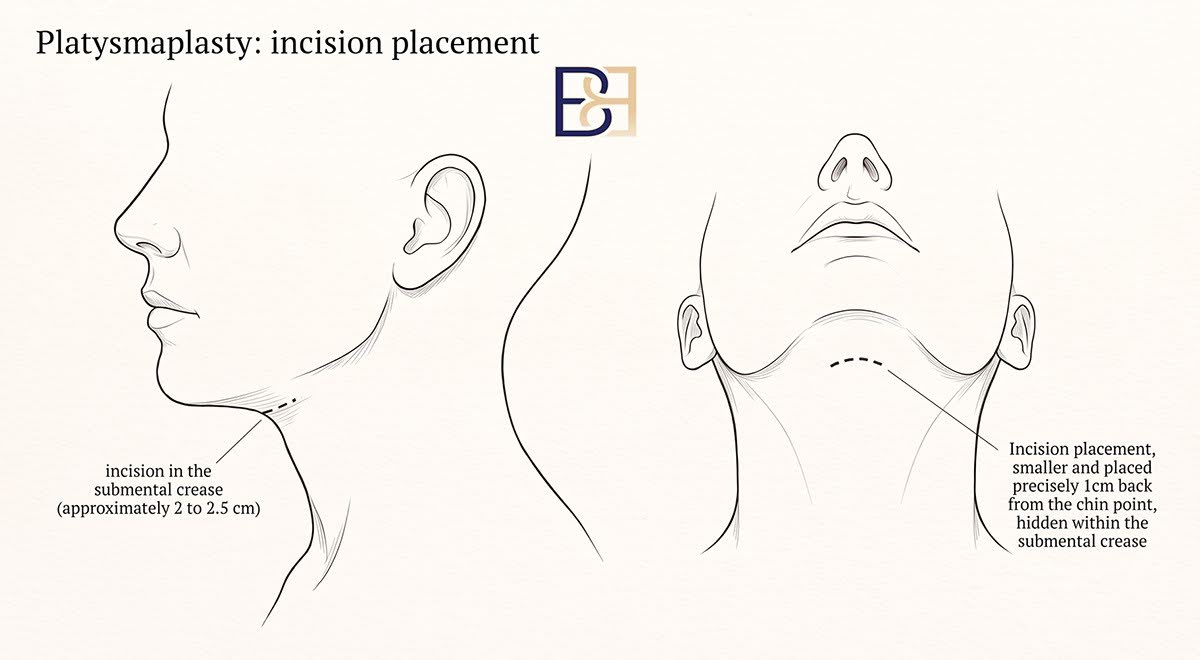
Platysmaplasty is performed under general anaesthesia at Maitland Private Hospital.
The incision is small and sits in the crease under the chin. Through this incision I reach the front edges of the platysma muscle.
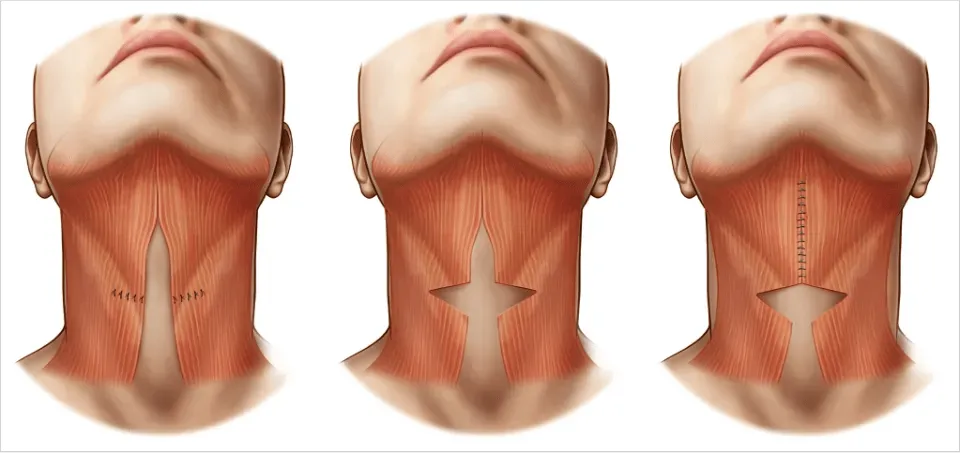
The separated muscle edges are brought together and tightened in the midline, and any bands are managed as indicated. The exact handling of the muscle depends on what I find at assessment and in theatre, because no two necks separate in quite the same way.
Where platysmaplasty is part of a larger neck operation, the other components happen through the same incision or through incisions behind the ears, depending on what is being done. I go through the planned incisions with you before surgery so there are no surprises.
The operation finishes with fine sutures and a supportive dressing.
My approach
Assessment comes first. Before recommending platysmaplasty, or any neck surgery, I work out which components of the ageing neck are actually present: muscle banding, loose skin, fullness above or beneath the muscle, or a combination. That assessment decides whether platysmaplasty alone is enough, whether it should be part of a broader neck lift (cervicoplasty), or whether surgery is the right step at all.
Preparation matters as much as the operation. Blood pressure is reviewed and optimised before neck surgery, because raised blood pressure contributes to the risk of bleeding and haematoma after this type of operation. If you smoke, cessation before surgery is required, because smoking affects blood supply to the skin and how the neck heals.
Book your appointment online now
About Dr Beldholm

I have performed face and neck surgery for more than 15 years. My name is Dr Bernard Beldholm, and I am a Specialist Surgeon and Fellow of the Royal Australasian College of Surgeons (FRACS). My practice covers facial aesthetic surgery, including facelift (rhytidectomy) and neck lift (cervicoplasty) surgery, alongside post-pregnancy and post-weight-loss body contouring and breast surgery.
I take a conservative, assessment-first approach. Not every neck needs surgery, and not every neck that would benefit from surgery needs the same operation. Where non-surgical measures are more appropriate for your situation, that is something we can discuss at consultation.
I operate at Maitland Private Hospital in the Hunter Valley, a fully accredited private hospital with 24-hour medical cover.
Your pathway

GP referral
A referral from your GP is required before any consultation.
Consultation
Your initial consultation with me runs for about an hour. It includes a full health review, examination of your neck and lower face, and standardised clinical photography. We go through which components of neck ageing are present, what surgery can and cannot do for them, the risks, and the recovery. A second consultation is required before surgery and is free of charge.
Quote
After your consultation you receive a written quote for my surgical fee. The hospital and the anaesthetist provide their own separate quotes, and my patient coordinator organises these for you.
Surgery
Platysmaplasty is performed under general anaesthesia at Maitland Private Hospital. Your anaesthetist consultation is usually by phone, with a physical examination on the day of surgery. A supportive garment is provided by my practice.
Follow-up
I review you intensively during the first two weeks after surgery, with two to three visits per week for nurse or doctor review and dressing care. After that, routine follow-up is at four weeks, three months, six months and twelve months. All follow-up is included at no additional cost.
Recovery in brief
Recovery after platysmaplasty varies between patients, and it varies with what else is done in the same operation. As a general guide:
- Swelling and bruising in the neck and under the chin are expected in the first one to two weeks
- A supportive garment is worn as directed in the early weeks
- The neck can feel tight, and numbness under the chin is common early on and usually settles over weeks to months
- Most patients take one to two weeks off work, longer for physical work
- Return to exercise is staged, and I guide you through this at your follow-up visits
- Scar maturation continues for many months
I cover the full week-by-week detail in my article on neck lift (cervicoplasty) recovery, which applies to platysmaplasty as part of the same family of operations.
Risks
Platysmaplasty is a significant operation, and I want you to understand the risks before deciding on surgery. They include:
- Haematoma (a collection of blood under the skin), the most notable early risk in neck surgery, with raised blood pressure a contributing factor. It may need a return to theatre
- Injury to the marginal mandibular nerve, which can cause temporary or, rarely, permanent weakness of the lower lip
- Recurrence of muscle banding over time
- Contour irregularity or asymmetry of the neck
- Numbness or altered sensation under the chin and in the neck, usually temporary
- Wound healing problems and infection
- Scarring under the chin, including the possibility of thickened or hypertrophic scarring
- Deep vein thrombosis (blood clots), assessed and managed individually
- Anaesthetic risks
- The possibility of revision surgery
Results vary between patients. I go through your individual risk profile in detail at consultation. For a fuller discussion, see my article on the risks of neck lift (cervicoplasty) surgery.
Is platysmaplasty right for you
Platysmaplasty may be worth considering if visible muscle banding is your main concern and your neck skin still has reasonable tone. If loose skin or deeper fullness is part of the picture, a different or broader operation may suit you better, and that is a normal finding rather than a setback.
Neck ageing is normal, and surgery is one option among several. Whether platysmaplasty is appropriate for you, on its own or as part of a larger operation, can only be decided at consultation after a proper assessment.
If you have weighed this up and want an individual opinion, a consultation is the next step.