


Lower Torso Surgery After Significant Weight Loss in Newcastle NSW
After significant weight loss, whether through bariatric surgery, medication or lifestyle change, the skin does not always retract to match your new body size. Surgery is the only way to remove that redundant skin, and the right operation depends on where the laxity sits and in which direction it runs. This page is an overview of the lower torso options I offer, with links to a detailed page on each procedure.
Who is a candidate
You may be a candidate for lower torso surgery if:
- Your weight has been stable for at least 6 months. I prefer 12 months, as this is when skin retraction has largely settled
- Your BMI is roughly in the range of 18 to 30. This is a guide, not a hard cut-off, and I assess each patient individually
- Redundant skin is causing problems such as rashes, chafing, hygiene difficulty or interference with exercise and daily activity
- You are in reasonable general health and any nutritional deficiencies from your weight loss have been identified and corrected before surgery
Disclaimer: General information only. This is not medical advice. Discuss your result and any health questions with your GP. The calculation happens in your browser. Nothing you enter is stored or sent anywhere.
BMI is a screening measure, not a diagnosis. It does not distinguish muscle from fat. It can be less accurate for people with a very muscular build, some ethnic groups and older adults. The classification shown is the World Health Organization (WHO) classification for adults aged 18 and over. It does not apply during pregnancy.
Which operation fits your skin pattern
The direction and extent of your skin excess determines the operation. Each procedure below has its own detailed page.
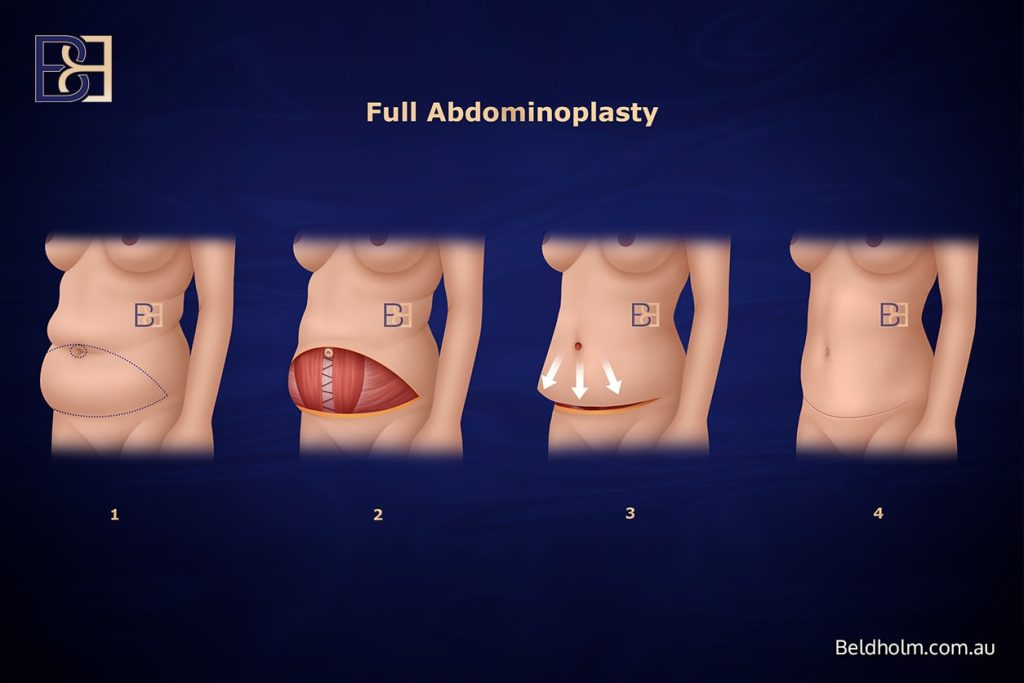
Abdominoplasty (tummy tuck)
for loose skin on the front of the abdomen with top to bottom laxity, with muscle repair where there is muscle separation (diastasis recti)
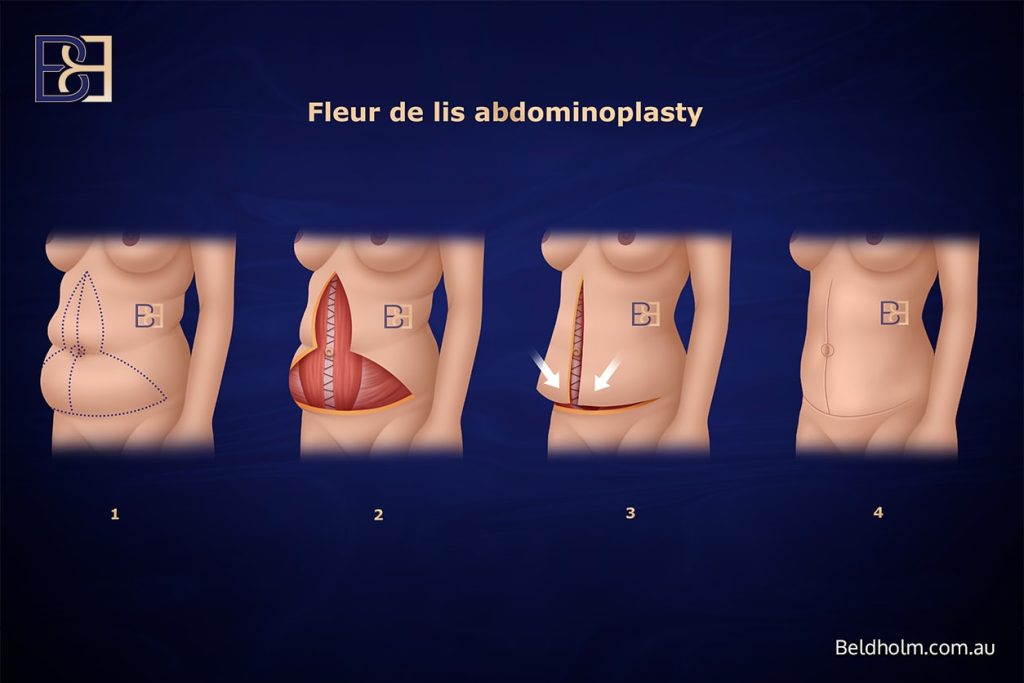
Fleur de Lis abdominoplasty
for patients with both top to bottom and side to side laxity, adding a vertical midline excision to treat the horizontal excess
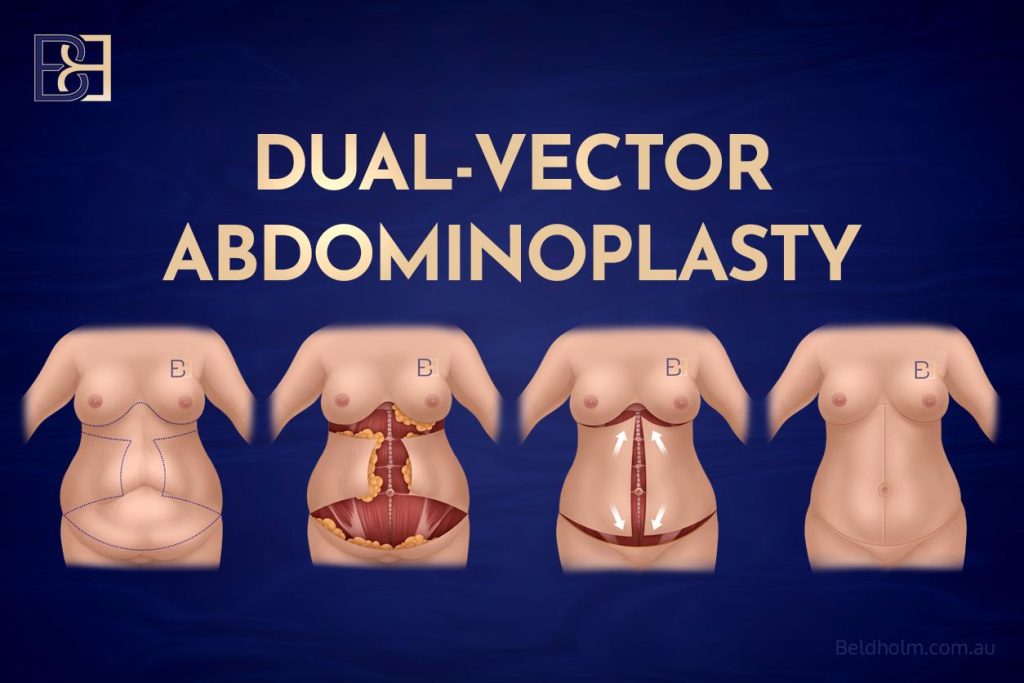
Dual vector abdominoplasty
my own technique for laxity running in more than one direction, treated through a combined excision pattern

Body lift (belt lipectomy)
for laxity extending beyond the front of the abdomen around the flanks and lower back, removed as a circumferential band
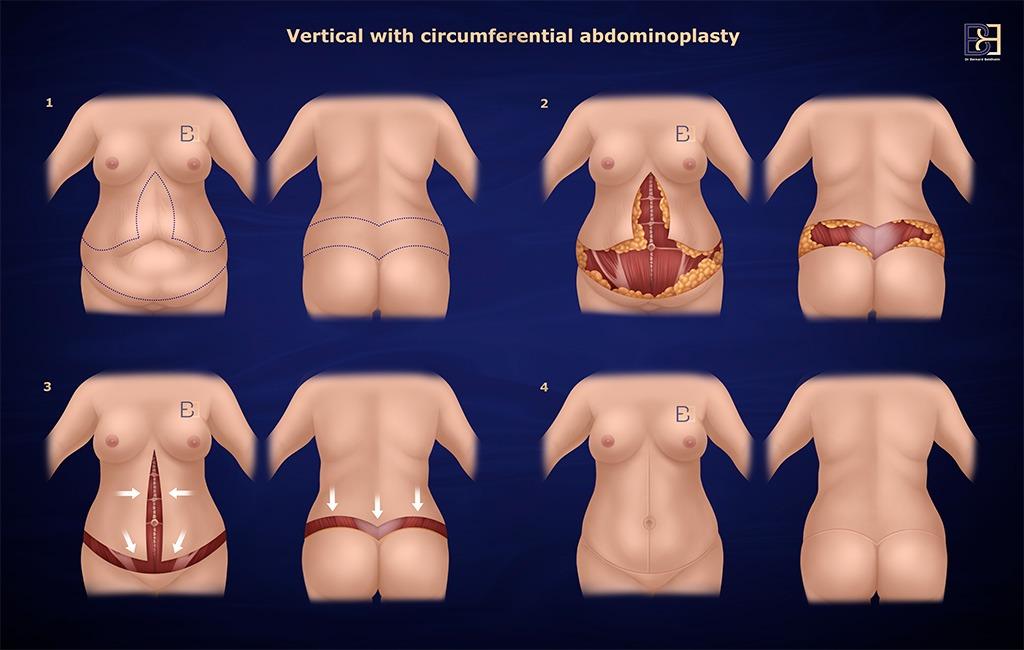
Circumferential hybrid abdominoplasty
my own technique combining a circumferential excision with a vertical anterior component, for patients with skin excess around the full lower torso and across the width of the abdomen
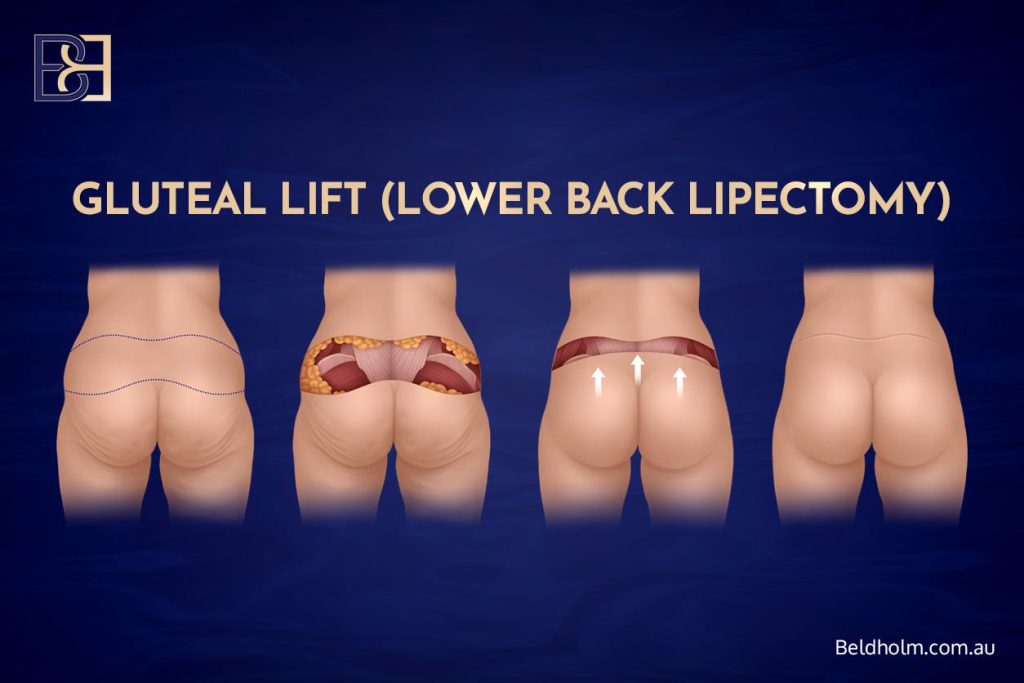
Gluteal lipectomy (buttock lift)
for redundant skin over the buttocks, often performed with a body lift (belt lipectomy)
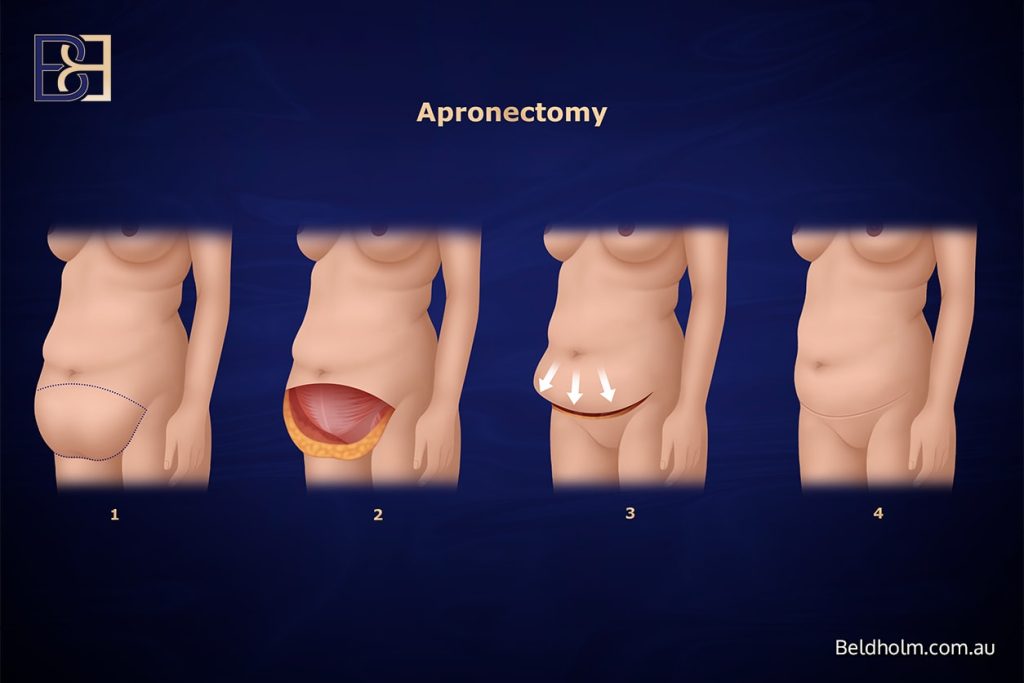
Apronectomy
removal of the overhanging lower abdominal apron only, without muscle repair or reshaping of the belly button (umbilicus)
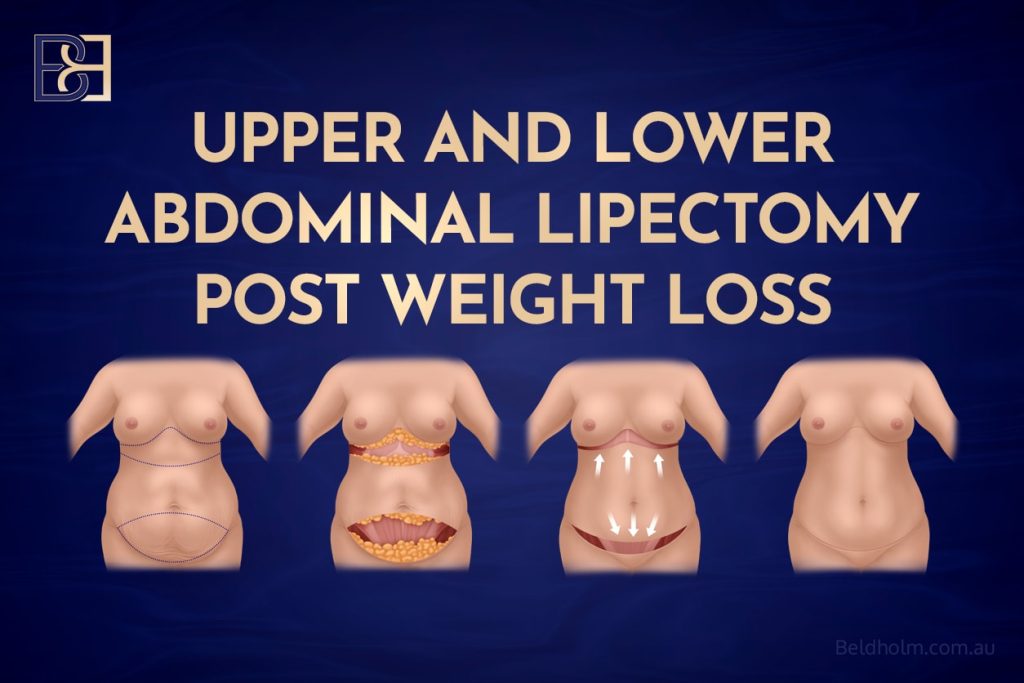
Lower abdominal lipectomy and upper abdominal lipectomy
limited skin only procedures for excess confined to one part of the abdomen
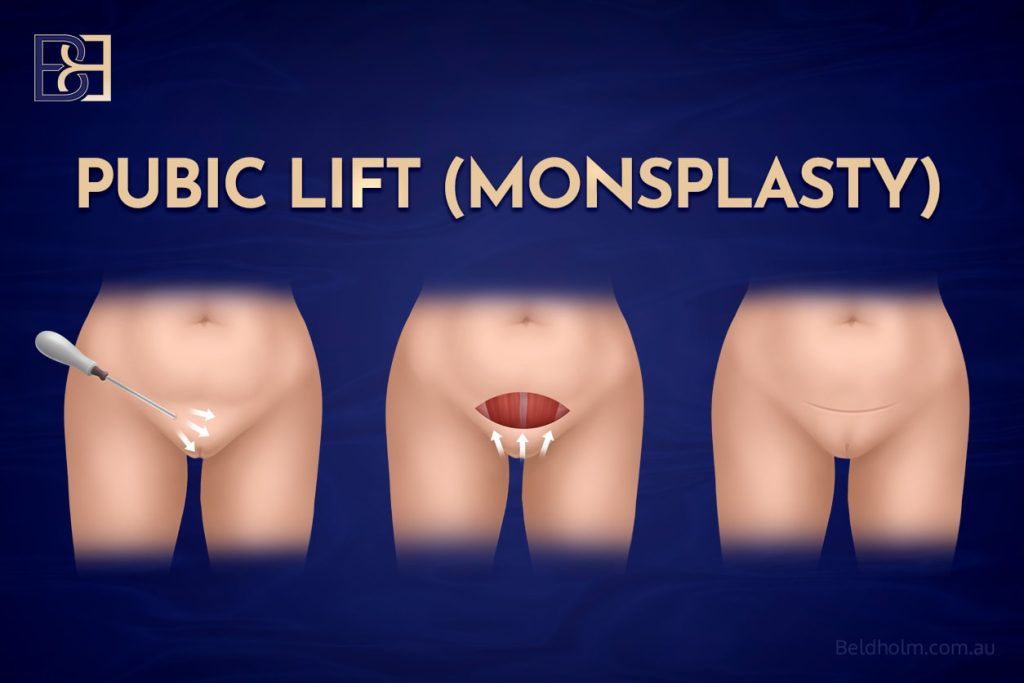
Monsplasty (pubic lift)
for redundant skin and fullness of the pubic area, often combined with abdominal procedures
One operation or staged surgery
Where a patient is suited to it, my preference is to remove the loose skin in a single comprehensive operation. One operation means one anaesthetic, one hospital admission and one recovery, rather than repeating each of those steps across several procedures. A larger single operation is also a bigger physiological event, which is why pre-operative preparation carries more weight when one is planned. For some patients, staging the work across separate operations is the more appropriate path, and that is a legitimate clinical choice, not a compromise. Whether one operation or staged surgery suits you depends on your medical history, nutritional status and the pattern of your skin laxity, and is determined at consultation.
Why come and see me
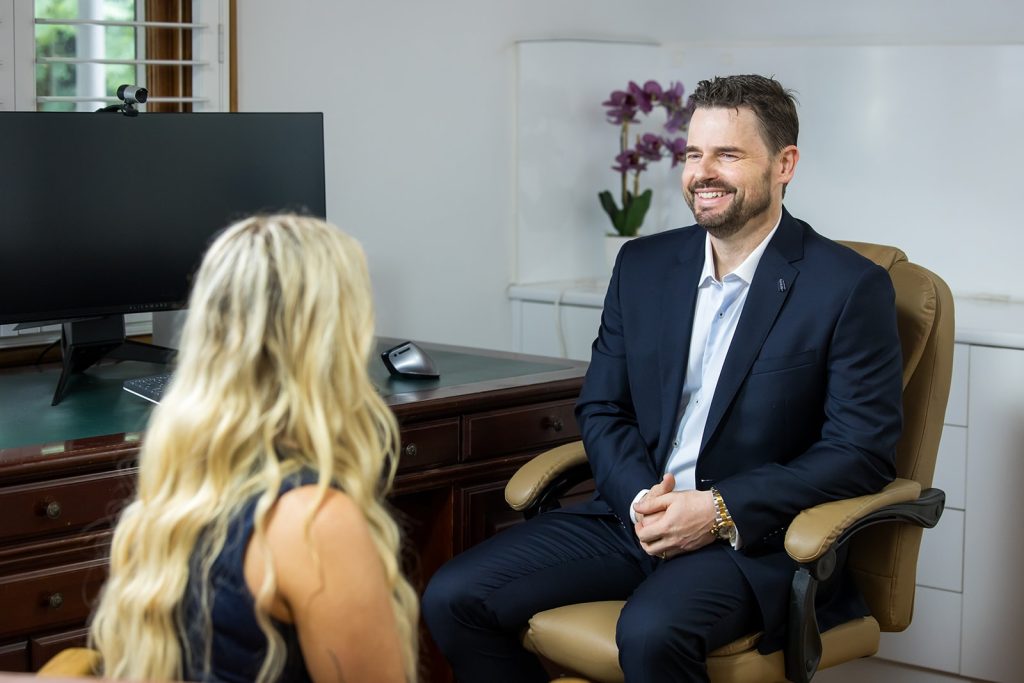
I am a Specialist Surgeon (FRACS) with more than 15 years of experience, and body contouring surgery after significant weight loss and pregnancy is one of the areas that I focus on. The operations on this page are procedures I perform regularly.
I operate at Maitland Private Hospital in the Hunter Valley. The hospital has 24 hour medical cover and an on-site ICU, which matters for longer operations of this kind. While you are admitted, I do my own ward rounds every day. A dietitian is available on the ward if input on your protein intake or nutrition is needed while you recover, and if a concern comes up after you go home, there is a nurse-led phone line at the hospital around the clock.
Your first consultation with me runs for about 1 hour. I take a full history, examine your skin laxity pattern, assess for muscle separation (diastasis recti) and hernias, and go through which operation, or combination, fits your situation. I include a second consultation at no cost so you can go away, think it over and come back with questions before making any decision. Telehealth is available for the first part of this process if you are travelling from regional NSW or interstate.
Preparation is a large part of how I work. Every post weight loss patient has a comprehensive pre-operative blood panel, because nutritional deficiencies are common after significant weight loss and correcting them before surgery supports healing. Your GP is copied into these results and remains part of your care throughout.
After surgery, I follow you intensively for the first 2 weeks, then review you at 4 weeks, 3 months, 6 months and 12 months. All of this follow-up is included in the surgical fee.
I have also developed my own techniques for complex skin excess patterns, including the dual vector abdominoplasty and circumferential hybrid abdominoplasty, both covered on their own pages. I present these techniques at surgical conferences and teach them to other surgeons.
Risks and recovery
These are major operations and the recovery should not be underestimated. Risks include bleeding, infection, wound healing problems, seroma, deep vein thrombosis, changes in skin sensation and scarring, and the likelihood of some of these rises with larger procedures. Most patients stay in hospital for several nights, wear a compression garment for weeks afterwards and need time off work that varies with the operation and the type of work you do. Results vary between patients. I cover both topics in detail in my lower torso complications article and lower torso recovery article.
Cost and Medicare

Several of these procedures attract a Medicare item number after significant weight loss, provided you meet the criteria, which include a loss of at least 5 BMI units and a stable weight for at least 6 months. Medicare eligibility affects your hospital and health fund cover, and I provide a written quote after your consultation. I break down the costs, item numbers and health fund considerations in my lower torso cost article.
Your steps to surgery
GP referral
Ask your GP for a referral. This is required before your consultation and preserves any Medicare eligibility
Consultation
About 1 hour with me to assess your skin laxity pattern and general health, and work out which operation, or combination, fits. A second consultation is included at no cost
Written quote
You receive a written quote covering surgical, anaesthetic and hospital fees
Prepare for surgery
Pre-operative blood panel, correction of any nutritional deficiencies, and instructions on medications and fasting
Surgery
Performed at Maitland Private Hospital with an admission of several nights depending on the procedure
Recover with structured follow-up
Intensive follow-up for the first 2 weeks, then reviews at 4 weeks, 3 months, 6 months and 12 months, all included in the fee