


Fat Grafting (Autologous Fat Transfer) in Newcastle NSW
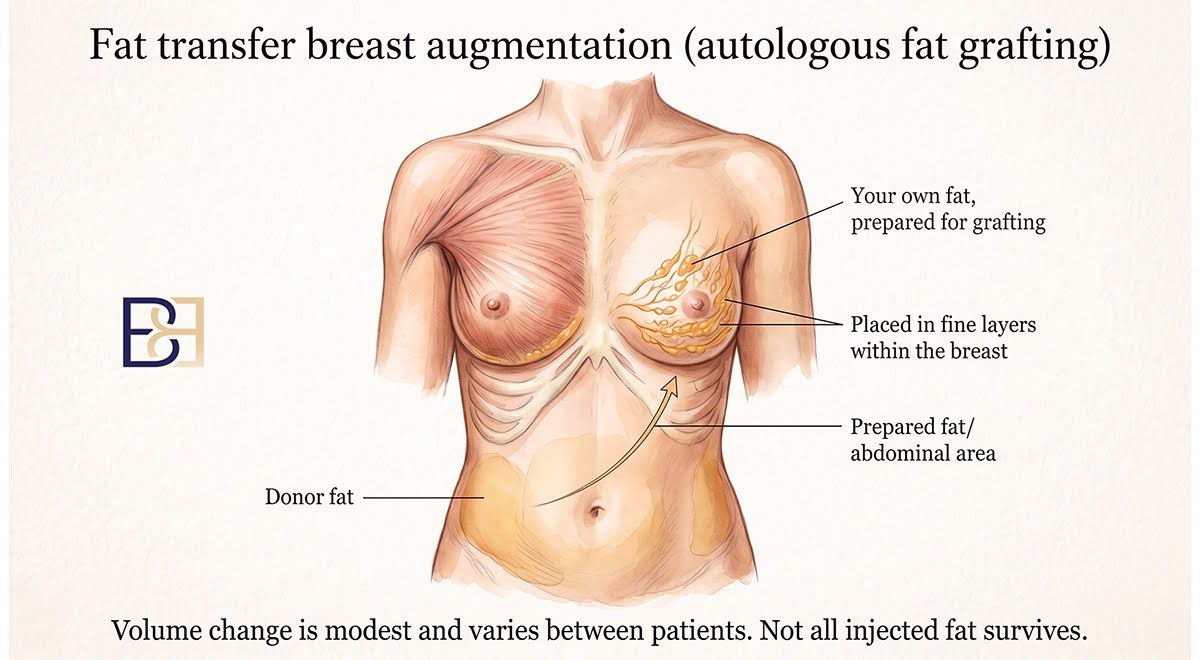
Fat grafting, also called autologous fat transfer, uses your own fat to correct a volume deficit. I harvest the fat by liposuction (suction assisted lipectomy), process it, then inject it into the area that needs volume. I use this technique most commonly for fat grafting to the breast, which has its own detailed section on this site, and to treat contour irregularities, for example after previous surgery or liposuction (suction assisted lipectomy). I explain the harvest procedure in detail in my complete guide to liposuction.
Book your appointment online now
Is Fat Grafting (autologous fat transfer) Right for Your Presentation?
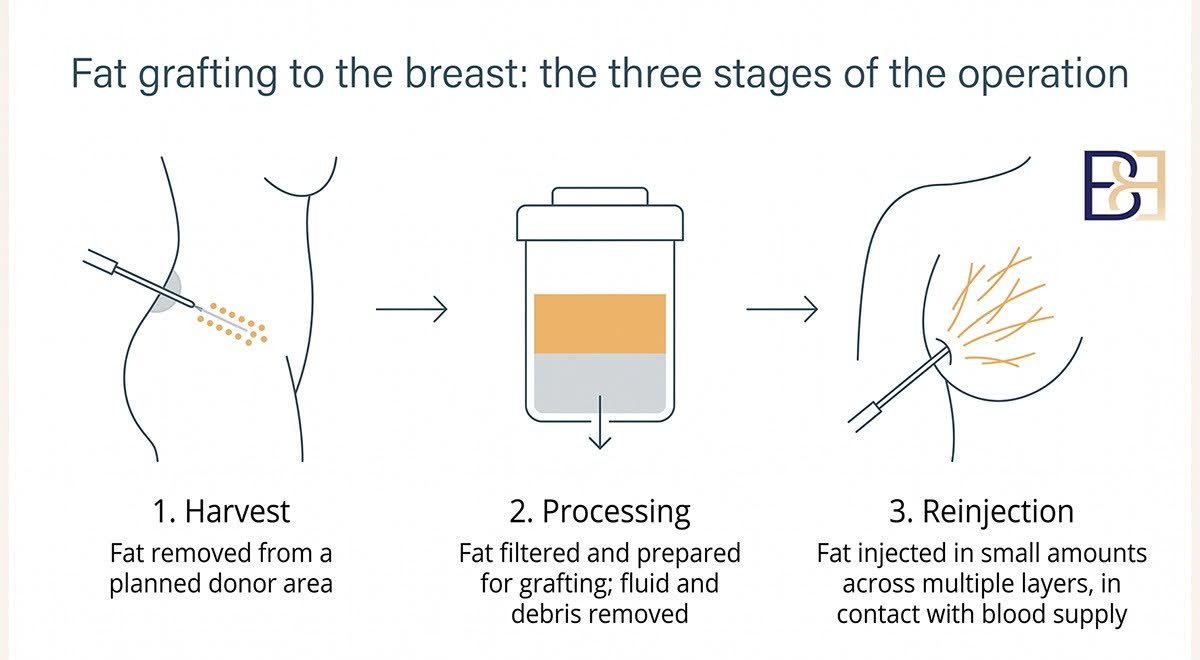
Fat grafting (autologous fat transfer) suits a specific type of problem: a localised volume deficit in a patient who has enough donor fat elsewhere and is at a stable weight. In my practice the most common indication is fat grafting (autologous fat transfer) to the breast, and I cover candidacy, technique and outcomes for the breast separately in my section on fat grafting (autologous fat transfer) to the breast. Beyond the breast, I use fat grafting (autologous fat transfer) to treat contour irregularities, for example a depression left after previous liposuction (suction assisted lipectomy), an indented scar, and volume loss after injury. During consultation, I assess the recipient area and potential donor areas, because the quality and amount of available fat determines what I can achieve.
You should understand 2 limitations before considering this procedure. First, not all grafted fat survives; a portion is resorbed by the body in the months after surgery, which is why I may plan more than 1 session from the outset for larger deficits. Second, fat grafting (autologous fat transfer) adds volume; it does not tighten skin and it is not a weight loss method. If your concern is loose skin, particularly after significant weight loss, the appropriate operation is usually excisional, and I explain those options in my post weight loss surgery library.
What Fat Grafting (autologous fat transfer) Involves
- A consultation where I assess the recipient area, examine your donor areas and plan the volume required
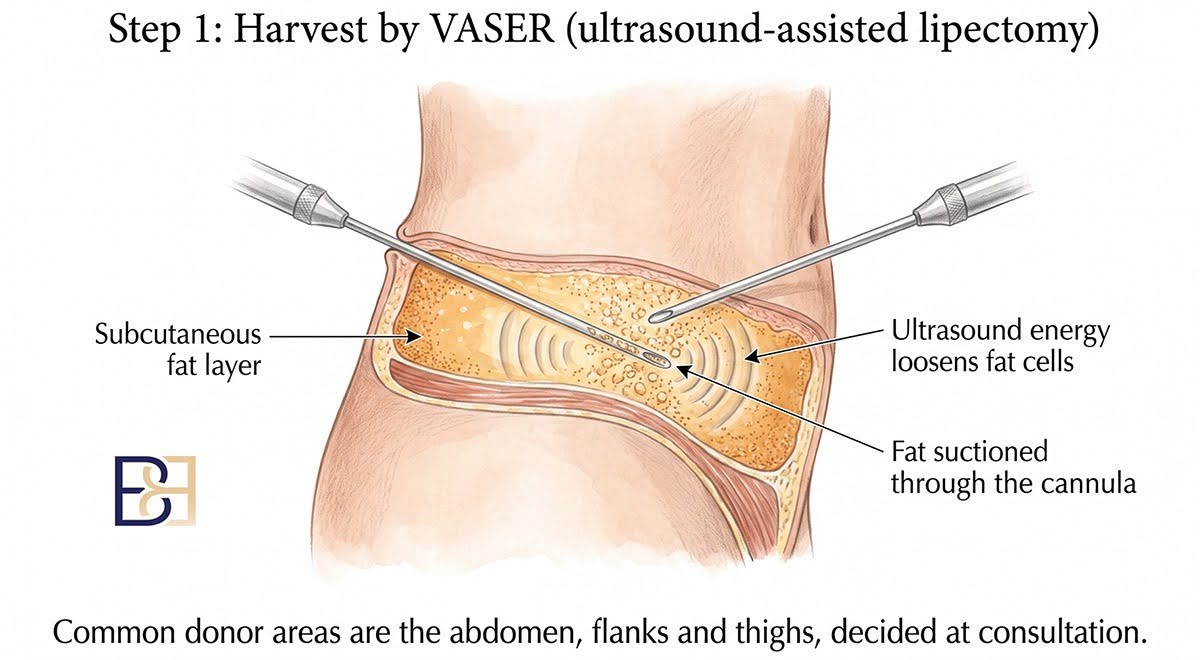
- Harvest of fat by liposuction (suction assisted lipectomy) or VASER (ultrasound assisted lipectomy) from an area with excess, most often the abdomen, flanks or thighs
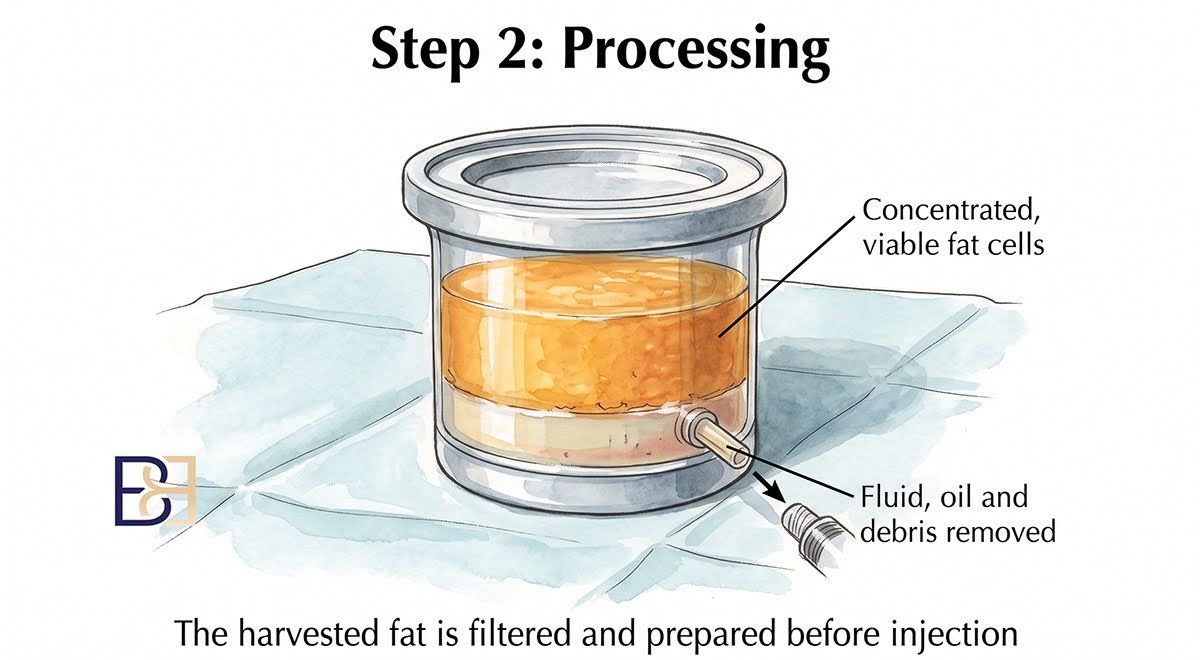
- Processing of the harvested fat to separate viable fat cells from fluid, blood and oil
- Injection of the processed fat in small amounts, in layers, into the recipient area to give the graft the greatest chance of surviving
- Surgery at Maitland Private Hospital, as a day procedure or with an overnight stay depending on the extent of the grafting
- A compression garment over the donor area and dressings over the recipient area, with instructions specific to the areas treated
- A planned review of graft take over the following months
Why Come and See Me for Fat Grafting (autologous fat transfer)
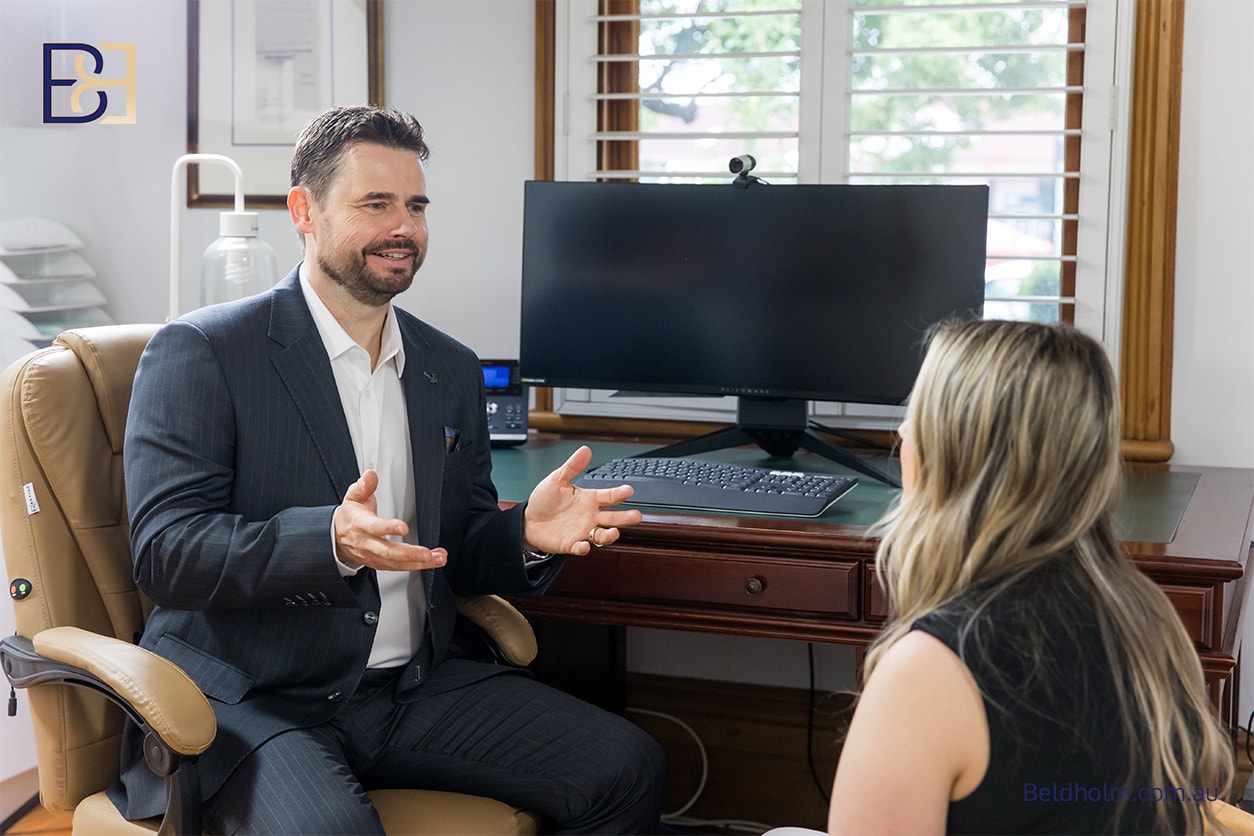
- I am a FRACS Specialist Surgeon and my practice focuses on body contouring surgery
- I have used VASER (ultrasound assisted lipectomy) for more than 10 years and liposuction (suction assisted lipectomy) for more than 15 years, both standalone and within larger body contouring operations, and fat harvest technique directly affects how well a graft survives
- I operate at Maitland Private Hospital, which has 24-hour medical cover and an on-site ICU
- I do my own rounds daily while you are admitted
- Your first consultation runs for approximately 1 hour, and a second consultation is included at no cost
- Telehealth consultations are available for regional patients
- Your follow-up schedule is included in the surgical fee: intensive reviews through the first 2 weeks after surgery, then reviews at 4 weeks, 3 months, 6 months and 12 months
Book your appointment online now
Risks and recovery
Fat grafting (autologous fat transfer) is surgery at 2 sites, so you recover at both. Expect swelling and bruising at both areas for 2 to 4 weeks, and a compression garment over the donor area. The specific risks include partial resorption of the grafted fat, which is expected and is the reason volumes can look different at 3 months than they did at 3 weeks; fat necrosis, where some grafted fat does not survive and can form firm lumps or oil cysts; contour irregularity at the donor site; infection; bleeding; and the possible need for a further grafting session to reach the planned volume. I discuss these with you at consultation, along with the risks of any operation under anaesthesia. The donor-site side follows the same principles I describe in recovery after liposuction and complications of liposuction.
Cost and Medicare
Fat grafting (autologous fat transfer) performed for cosmetic reasons has no Medicare item number, so no rebate or private health fund hospital contribution applies and GST is added; whether correction of a deformity after surgery or trauma qualifies for an item number depends on your individual presentation and is assessed at consultation. You will receive a written quote before you decide to proceed, and I explain how the fees are structured in my liposuction cost guide.
Your steps to surgery
1. GP referral
A referral from your GP is required before your consultation. This is a standard requirement for cosmetic surgery in Australia.
2. Consultation
We meet for approximately 1 hour, and I assess the recipient area and your donor areas, explain what fat grafting (autologous fat transfer) can and cannot achieve for your presentation, and go through the risks.
3. Written quote
You receive a written quote covering the surgical, anaesthetic and hospital fees, so you can consider your decision with the full costs in front of you.
4. Prepare for surgery
You complete any pre-operative tests I have ordered, and we confirm your weight is stable. Your anaesthetic consultation is usually done by phone before the day.
5. Surgery at Maitland Private Hospital
I perform your procedure at Maitland Private Hospital.
6. Recover with structured follow-up
Your included follow-up runs from intensive reviews in the first 2 weeks through to the 12-month review, where I assess graft take and whether a further session is needed.