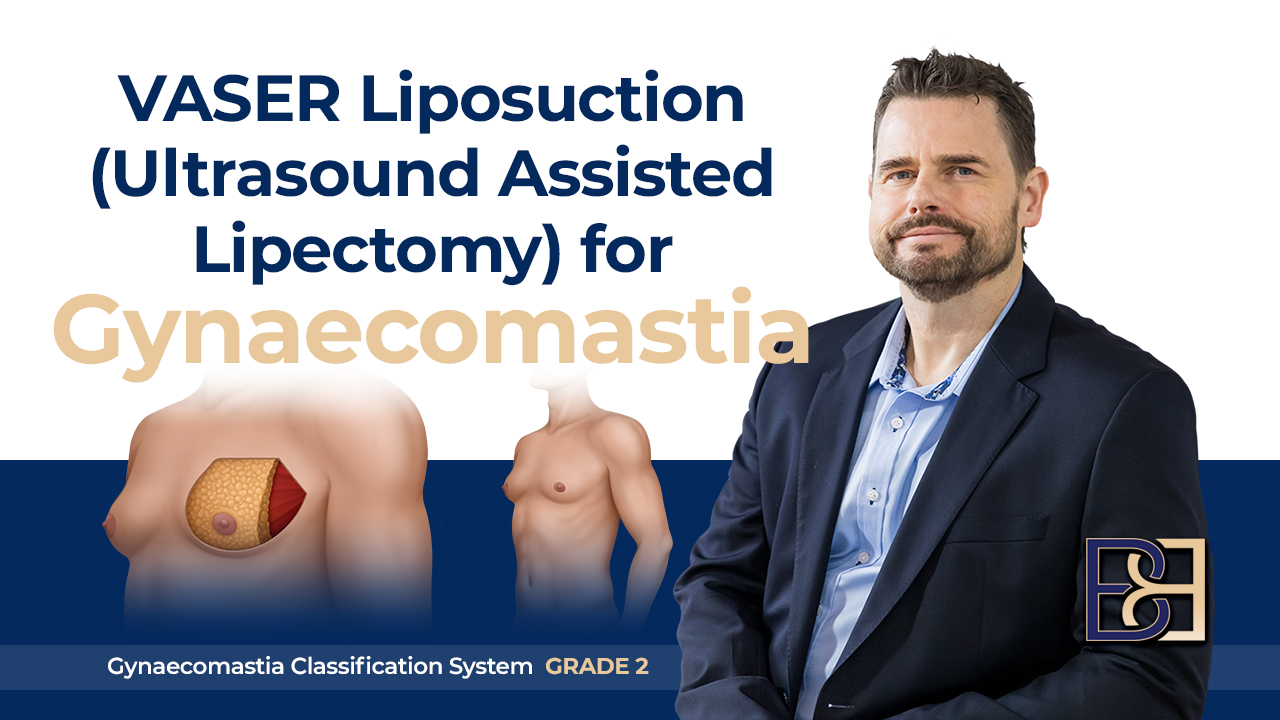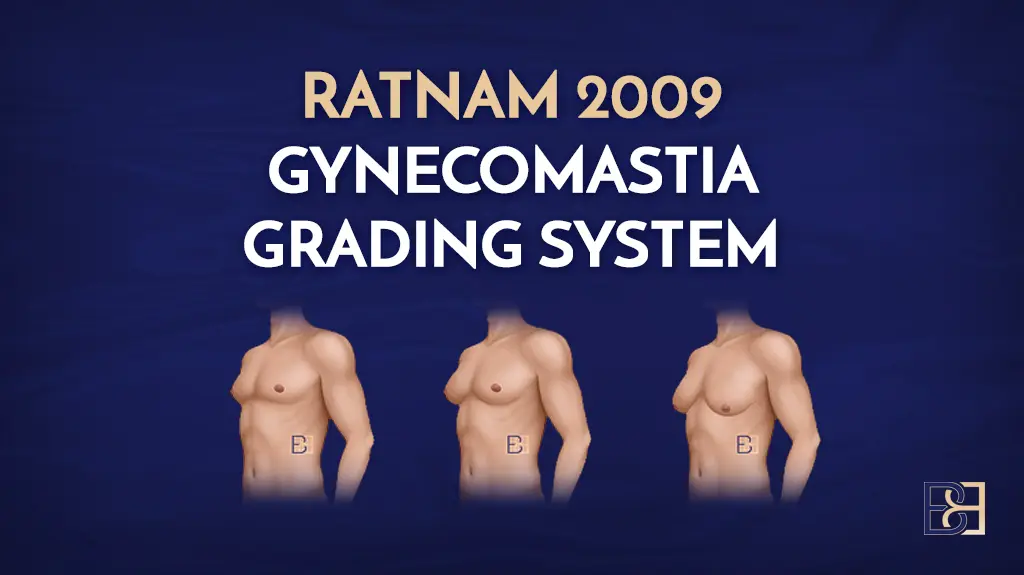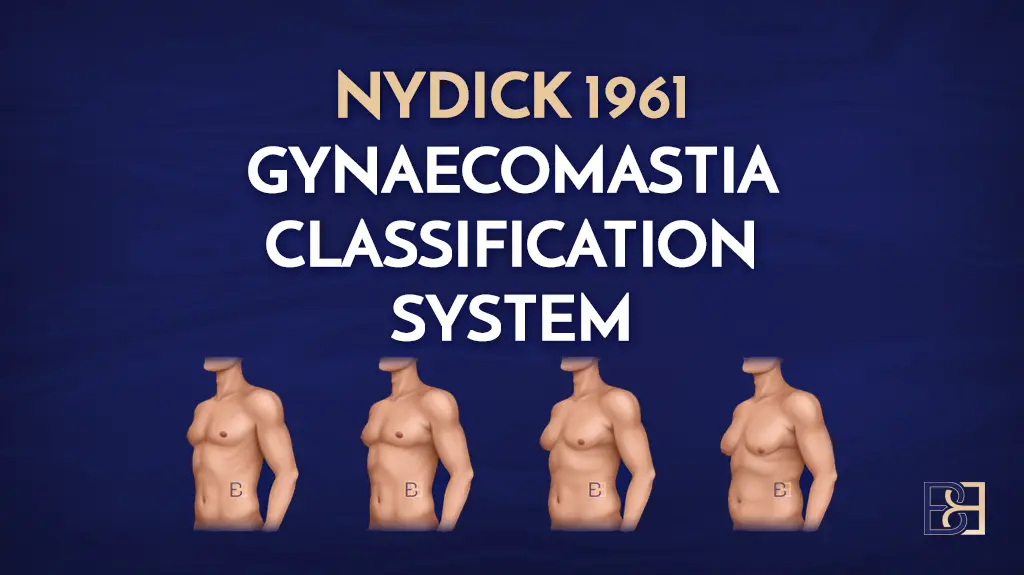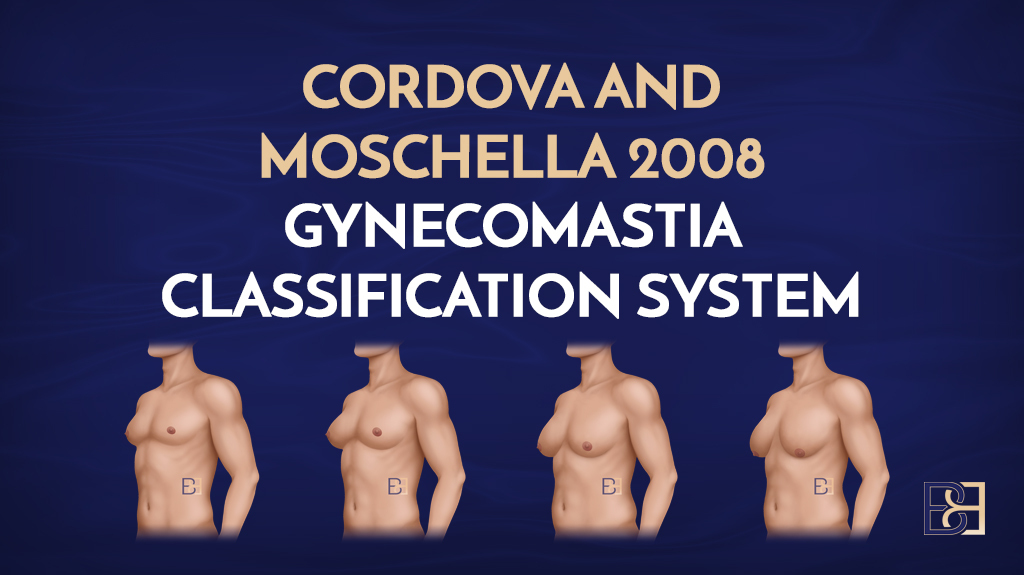
Gynaecomastia is enlarged male breast tissue. When the enlargement is a firm disc of glandular tissue sitting behind the nipple, with no significant fatty component and no excess skin, I classify it as Grade 1 in my grading system. The operation for this pattern is glandular excision on its own, also called subcutaneous mastectomy. It removes the breast disc through a small incision at the edge of the areola. No liposuction (suction assisted lipectomy) and no skin removal are part of the Grade 1 operation.
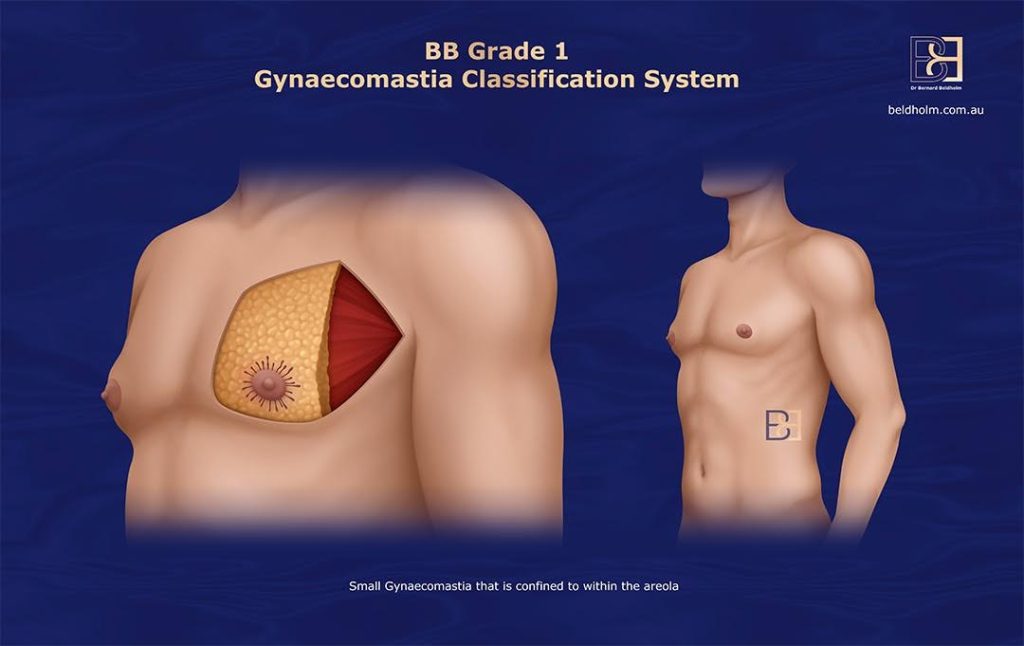

This article is about recovering from that specific operation. It is written for men who are planning glandular excision for Grade 1 gynaecomastia, or who have just had it, and want to know what the days, weeks and months afterwards involve.
A few things to keep in mind as you read:
- Recovery from a Grade 1 gland excision is more contained than recovery from the higher grades, where liposuction (suction assisted lipectomy), larger dissection or skin removal are involved. The incision is smaller and the operated area is limited. That does not make it a minor event. It is still surgery on the chest and it carries real risks, which I set out plainly below.
- Everyone heals at a different rate. The timeframes here are a general guide, not a promise. Your own recovery depends on your body, the amount of tissue removed, and how closely aftercare is followed.
- Whether surgery is appropriate for you, and which operation suits your chest, is decided at consultation after assessment. A GP referral is required before that consultation.
If you want the detail on how Grade 1 fits alongside the other grades, or on the operation itself, see the linked pages on the grading system and the gland excision operation.
What the Grade 1 operation involves, in brief
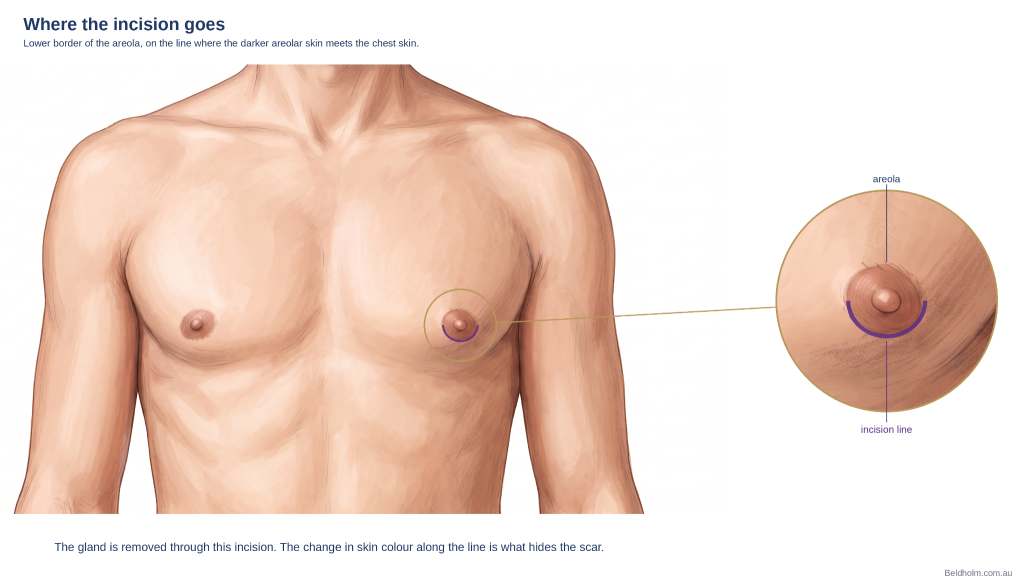
To understand the recovery, it helps to know what has actually been done to the chest. I keep this short here, because the full detail sits on the gland excision operation page.
For Grade 1, the glandular disc is removed through a small incision placed at the lower edge of the areola, where the colour change helps hide the scar (1,2). The firm breast tissue behind the nipple is taken out, usually in one piece, and sent to pathology for examination. Enough tissue is left directly under the nipple to keep its shape and blood supply. Because the pattern is purely glandular, liposuction (suction assisted lipectomy) is not part of the operation (1).
Two features of this operation shape the recovery that follows:
- The operated area is small and superficial. There is no large flap, no fatty layer suctioned, and no skin removed. This is why the recovery is more contained than the higher grades.
- Glandular tissue bleeds. The breast disc has a good blood supply, and the raw surface left after it is removed is the main reason bleeding into the pocket, called a haematoma, is the risk I watch most closely in the early days (1). I cover this in the risks section.
In my practice the Grade 1 operation is done under general anaesthetic as a day procedure at Maitland Private Hospital. Most men go home the same day. I do not routinely use a drain for a Grade 1 gland excision. The wound is closed with dissolving sutures and dressed with a Comfeel hydrocolloid dressing, with a compression bandage over the top for the first night.
The first 24 hours
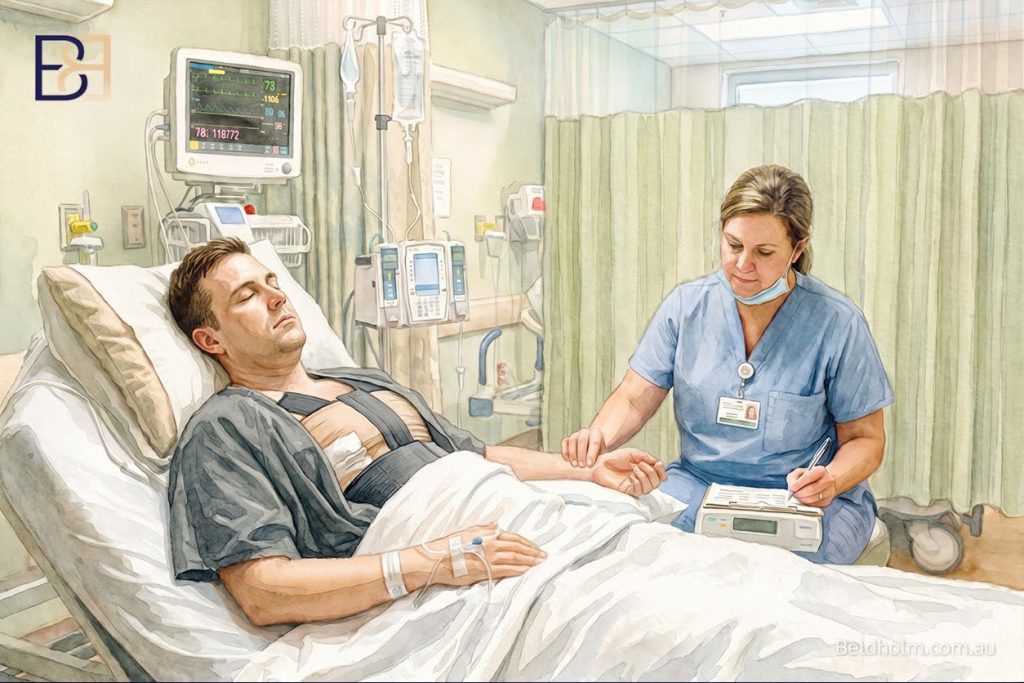
You will wake from the anaesthetic in the recovery area with a compression bandage already on over the dressings. Once you are alert, eating and drinking, and comfortable, you are ready to go home.
What to arrange and expect:
- Someone to drive you home and stay overnight. You cannot drive yourself after a general anaesthetic, and you should not be alone for the first night.
- Chest tightness and pressure. The bandage feels firm and the chest feels tight. This is expected and is part of controlling swelling and bleeding.
- Some discomfort, not severe pain. For a Grade 1 excision the discomfort is usually manageable with the pain relief I prescribe. Take it as directed rather than waiting for pain to build.
- A little ooze on the dressing. A small amount of blood-stained fluid on the dressing in the first day is normal. A rapidly enlarging, tense, painful swelling on one side is not, and is the sign of bleeding I want to hear about straight away. See the section on when to seek help.
Rest for the remainder of the day. Keep the bandage on overnight. You do not need to do anything active with the arms beyond light movement of the hands and elbows.
The first week
The first week is about protecting the operated area and letting the bleeding risk settle.
Compression. For a Grade 1 gland excision the compression need is minimal. A compression bandage goes over the dressings and is worn for the first night, then it comes off. You do not need an ongoing compression garment for this grade, which is different from the higher grades where longer compression is used. Protecting the area in the first week is mainly about limiting arm and chest movement, covered below.
The dressing and showering. The Comfeel hydrocolloid dressing stays in place and can usually tolerate a brief shower. Pat it dry. I will tell you at your review when the dressing is changed or removed. Do not soak the area in a bath, pool or spa.
Moving your arms. Keep the shoulders and arms to light, everyday movement for the first week. Avoid reaching overhead, lifting, and anything that works the chest muscle. The chest muscle attaches up at the shoulder, so big arm movements pull on the operated area and can restart bleeding (3). A practical tip is to wear button-up or zip tops for the first week so you are not raising your arms to dress.
Work. Many men with desk-based work feel up to returning within a few days to a week, depending on how they feel and whether they still need regular pain relief. Work that involves lifting, physical effort or reaching is left until later, as covered in the next section.

Bruising and swelling. Both are expected across the first week and are not a cause for concern on their own. Bruising can track down the chest with gravity. Swelling makes the area feel firm and can make the chest look fuller than the final result. This settles over the following weeks.
Your first review. I see you in the early part of your recovery to check the wound, review the dressing, and make sure things are settling as they should.
Weeks two to six
This is the stage where day-to-day life comes back, in steps.
Swelling and bruising. Bruising has usually faded by around the two to three week mark. Swelling takes longer and comes down gradually. The chest will still feel firm in places, and this firmness can take weeks to soften.
Returning to activity, in order. The right approach is to build back up rather than jump straight back in:
- Light activity and walking are fine and are encouraged early, as they help circulation.
- Everyday tasks and non-physical work resume first.
- Exercise that involves the chest, shoulders and arms, including gym work, pushing, pulling and lifting, is left until later. A regular chest exercise routine is generally not resumed until around four to six weeks, once the area has healed enough to tolerate it (3). Going back to chest and upper-body loading too early is a common way to cause bleeding, swelling or a contour problem.
- Running and lower-body cardio can usually restart before upper-body weights, provided the chest is not bouncing or straining. I will guide you on timing.
Driving. You can drive again once you are off strong pain relief and can move your arms freely enough to steer and respond to an emergency. For most men this is usually around 3 to 5 days, but it depends on how you are healing.

What the chest looks like now. The nipple area may still be swollen and the result is not yet settled. It is normal to feel a firm ridge or lumpiness under the scar as it heals. Judging the final shape at this stage is premature.
Months two to twelve
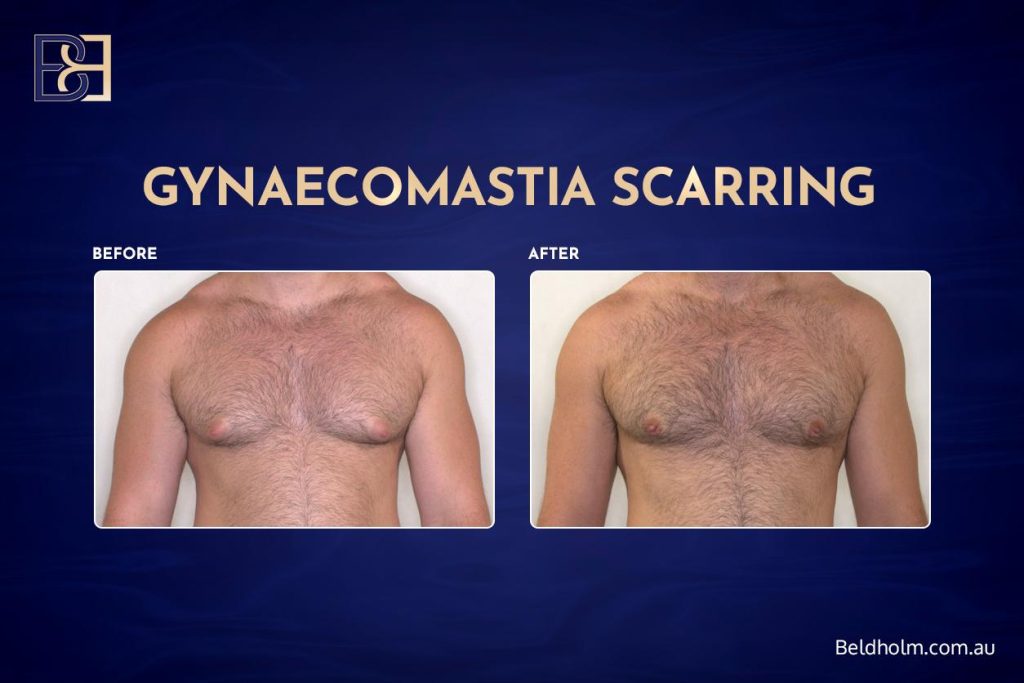
Disclaimer: Results Vary, Surgery has risks, Seek 2nd opinion. Operation performed by Dr Beldholm
The longer phase of recovery is about swelling fully resolving, the scar maturing, and the final contour showing itself.
Swelling settling. Deep swelling continues to come down over the first few months. Most of the visible swelling has gone by around 3 months, though small changes can continue beyond that.
The scar. The periareolar scar sits at the edge of the areola. Early on it can look pink, firm or slightly raised. Scars mature over roughly 12 months, gradually flattening and fading, though how a scar settles varies from person to person and cannot be guaranteed. I give you scar care guidance at your reviews.
The final contour. The settled result is usually clear by three to six months, with the scar continuing to mature beyond that. A firm area under the nipple can persist for a while as healing tissue, and this softens over time.
Follow-up in my practice. I review Grade 1 patients at 4 weeks, 3 months, 6 months and 12 months after surgery. At the 4-week visit I complete a formal handover to your GP, who takes on your longer-term care. Your GP is copied in on your pre-operative blood results from the outset, so they have the full picture.

Book your appointment online now
A note on the result lasting. Removing the glandular disc deals with the tissue that is there. It does not change an ongoing cause. If a driver such as a continued medication, an anabolic agent, or a hormonal cause is still active, or if there is significant weight gain, breast tissue changes can occur again over time. This is why I work through the cause before operating, and it is covered in more detail on the causes and recurrence pages.
Risks and complications
Every operation carries risk. Because this is a recovery article, I keep this short and cover the full list, and how likely each risk is, on the separate complications page. Two things matter most while you are actually recovering.
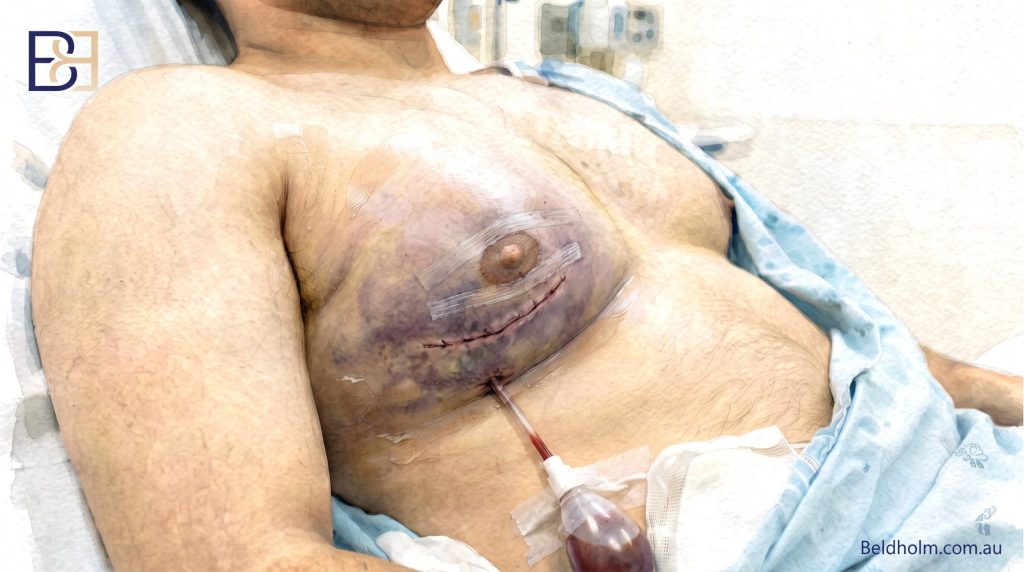
Haematoma is the early risk to know about. A haematoma is a collection of blood in the space where the gland was removed. Glandular tissue bleeds, so this is the risk I watch most closely after a Grade 1 excision (1,4). It usually shows up in the first day or two as a firm, tense, painful swelling on one side, often with more bruising. A significant one may need a return to theatre to drain it. This is why I am strict about limiting chest and arm effort early on, and it is the main thing to watch for in the section on when to seek help.
The other risks still apply. Seroma, changes in nipple sensation, contour irregularity or asymmetry, scarring, infection, the possibility of a revision, and recurrence where an underlying cause is still active are all part of the picture. I set these out in full on the complications page, and I go through the ones that apply to you at consultation.
Scar care and looking after yourself
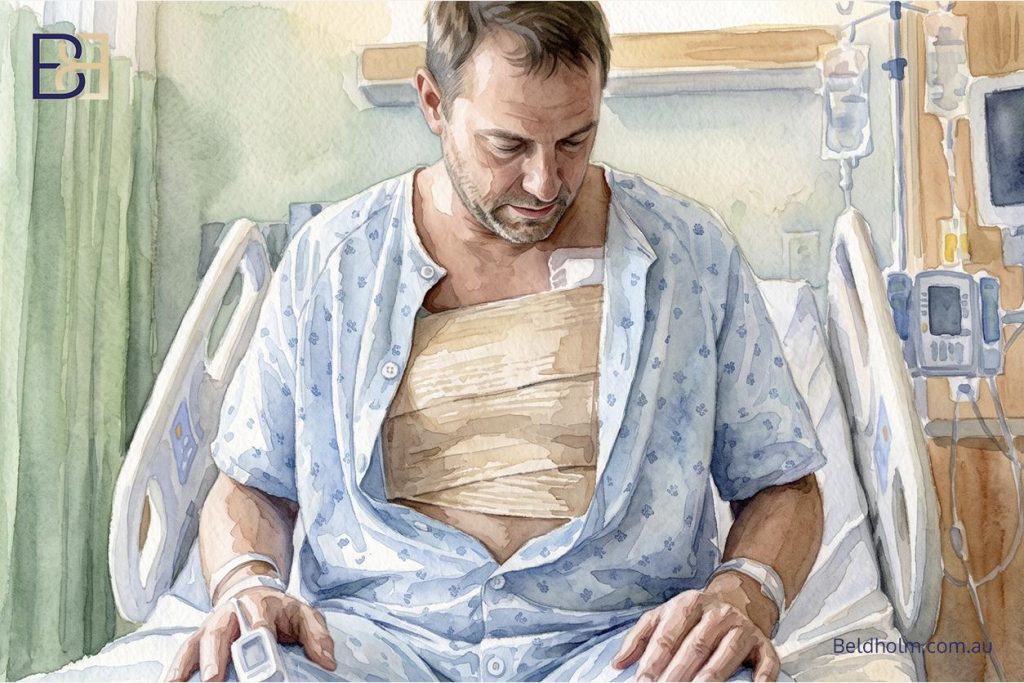
Compression. For this grade compression is minimal. A compression bandage is worn over the first night and then removed. You do not need an ongoing compression garment, which is different from the higher grades.
Scar care. Once the wound has healed and I have cleared you, keeping the scar out of the sun and following the scar care I recommend gives it the best chance to settle well. Scars take about a year to mature.
Sleep and positioning. Sleeping on your back with the chest supported is more comfortable in the early weeks than rolling onto the chest.
Not smoking. If you smoke, stopping well before and after surgery helps wound healing. Smoking narrows the small blood vessels the healing tissue relies on.
When to seek help during recovery
Most recoveries run smoothly. Contact us if you notice any of the following:
- A firm, tense, rapidly enlarging or increasingly painful swelling on one side, especially in the first day or two. This is the pattern of a haematoma and I want to know early.
- Increasing redness, warmth, spreading pain, wound discharge, or a fever, which can point to infection.
- Pain that is getting worse rather than better, or that your prescribed pain relief is not controlling.
- Anything that worries you and does not seem right.
How to reach us after hours. Call Maitland Private Hospital. The call is triaged by the nursing staff, who will advise you and contact me if needed.
If you need a physical assessment and it cannot wait, go to your local emergency department. Maitland Private is not an emergency department.
If it is a life-threatening emergency, for example severe breathing difficulty, chest pain, or heavy uncontrolled bleeding, call 000.
If you are travelling from outside the area for surgery, I recommend staying locally for about 7 to 10 days after your operation so you are close by for your early reviews and in case anything needs attention.
A note on younger men and pubertal gynaecomastia
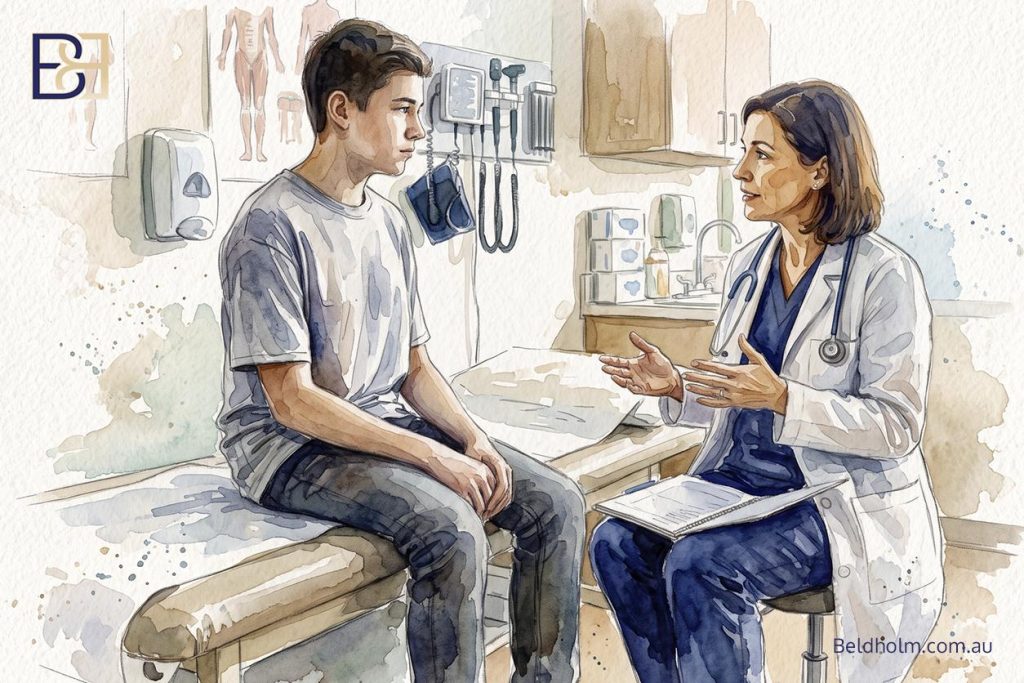
Recovery only becomes relevant once surgery is the right step, and in younger men it often is not the first step. Gynaecomastia during puberty is common and frequently settles on its own without any surgery. For that reason surgery is not the first consideration in an adolescent, and observation over time is usually the appropriate path while things are still changing.
Where gynaecomastia is established and stable, assessment is reasonable, and any decision about surgery is made individually after a proper workup. This content is intended for adults and is not directed at people under 18.
Recovery questions men often ask
How long until I can go back to work?
For desk-based work, many men return within a few days to a week, depending on how they feel and whether they still need regular pain relief. Physical or lifting work takes longer and is guided by your review.
When can I go back to the gym?
Light lower-body activity and walking come back early. Chest, shoulder and arm training, including pushing, pulling and lifting, is generally left until around four to six weeks, once the area has healed enough to tolerate it. Going back too early risks bleeding and contour problems.
Will I have drains?
No. I do not routinely use a drain for a Grade 1 gland excision.
Do I need a compression garment?
Not for this grade. A compression bandage is worn over the first night, and after that you do not need ongoing compression. The higher grades are different.
When can I drive?
Once you are off strong pain relief and can move your arms freely enough to steer and respond to an emergency. For most men that is usually around 3 to 5 days.
Is the swelling and firmness normal?
Yes. Swelling and a firm feel under the nipple are expected and settle over weeks to months. A firm, tense, painful, rapidly growing swelling on one side in the first days is different and should be checked.
When will I see the final result?
The settled contour is usually clear by three to six months, with the scar continuing to mature over about twelve months. Results vary between people.
Will the scar be obvious?
The incision sits at the edge of the areola, where the colour change helps hide it. All surgery leaves a scar, and how it matures varies from person to person.
Can I fly home after surgery?
If you are from out of the area, I recommend staying locally for about 7 to 10 days for your early reviews. Talk to me about timing before you book travel.
Will it come back?
Removing the gland takes out the tissue that is there. If an underlying cause is still active, or with significant weight gain, changes can occur again. This is why the cause is worked through before surgery.
References
- Cordova A, Moschella F. Algorithm for clinical evaluation and surgical treatment of gynaecomastia. J Plast Reconstr Aesthet Surg. 2008;61(1):41-49.
- Webster JP. Mastectomy for gynecomastia through a semicircular intra-areolar incision. Ann Surg. 1946;124(3):557-575.
- Blau M, Hazani R. Correction of gynecomastia in body builders and patients with good physique. Plast Reconstr Surg. 2015;135(2):425-432.
- Li CC, Fu JP, Chang SC, Chen TM, Chen SG. Surgical treatment of gynecomastia: complications and outcomes. Ann Plast Surg. 2012;69(5):510-515.