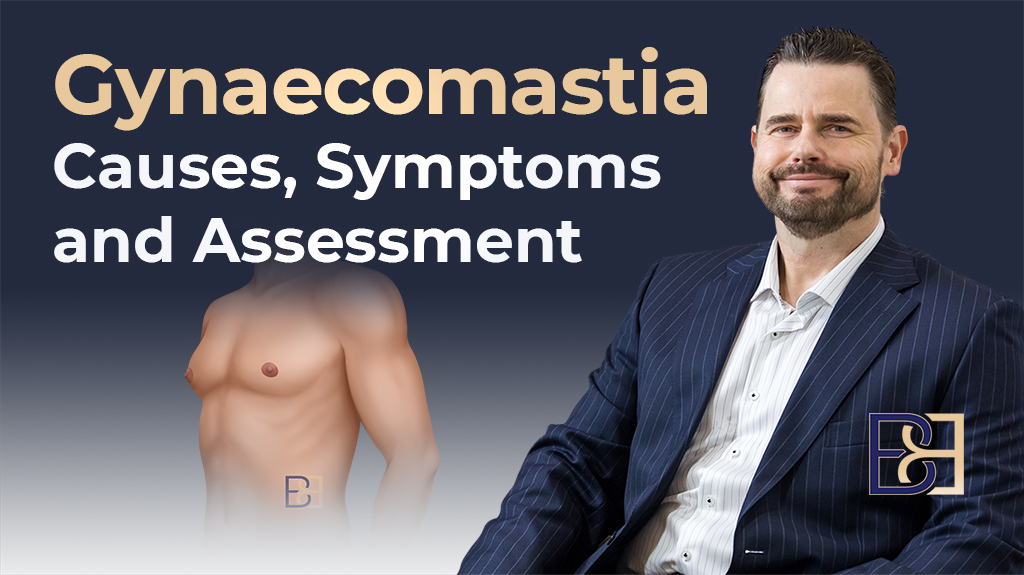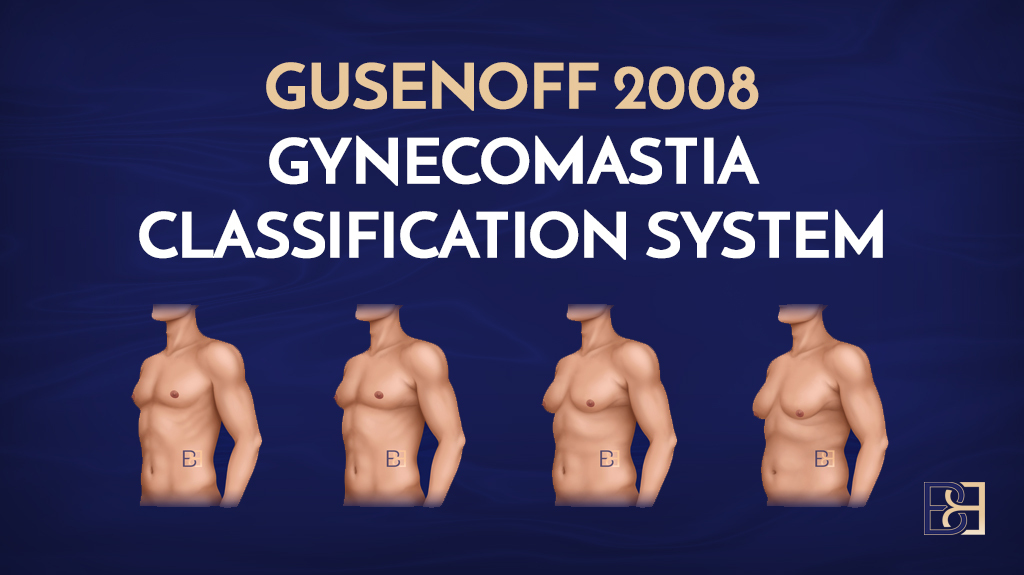
Gynaecomastia is enlarged male breast tissue, and surgery to reduce it is also known as male breast reduction surgery. Where the condition is established and surgery is appropriate, an operation can reduce the tissue. Like any operation, it carries risks. This page sets out the potential complications of the surgical procedure, how often they occur in the published literature, how they are managed, and how I work to reduce them in my practice. Part of preparing for any operation is having realistic expectations about what can go wrong.
One point matters before the detail. There is no single “gynaecomastia operation”. I use five different operations, matched to the BB grade and to what is found in the individual chest, and the complication profile is not the same across them. The risk that leads the list after gland excision is not the risk that leads the list after VASER liposuction (ultrasound assisted lipectomy) alone. I have flagged those differences throughout and linked to a dedicated complications page for each operation.

Whether surgery is appropriate, and which operation, is decided at consultation after assessment and the appropriate workup. A GP referral is required before a consultation. Results vary between patients.
How common are complications after gynaecomastia surgery?
Most men undergoing surgery for gynaecomastia recover without a significant complication, but the reported rates vary a good deal between studies, and it helps to understand why.
A large multi-centre database of 1583 adult and 204 younger patients recorded surgical complications within 30 days in 1.9% of adults and 3.9% of the younger group, with medical complications such as clots or chest problems in under 0.3% (1). Smaller single-surgeon series that count minor and temporary problems, and that follow patients for longer, report higher figures. A 10-year series put the overall complication rate at 12.1%, with a revision rate of 4.8% (2). A review of the field noted that up to 30% of patients can have a postoperative problem such as bleeding, haematoma or seroma, with larger wound areas and higher body weight raising the risk (3). Those figures cover both the general complications of any surgical treatment and the ones specific to this operation.
The spread in those numbers is not a contradiction. It reflects three things: what each study counts as a complication, how long patients are followed, and the mix of BB grades treated. A brief numbness that settles is counted in one study and not recorded in another. Higher BB grades that need more extensive surgery carry more risk than a more limited gland excision. When you read a single percentage anywhere online, ask which of these it reflects.
The complication profile depends on the operation
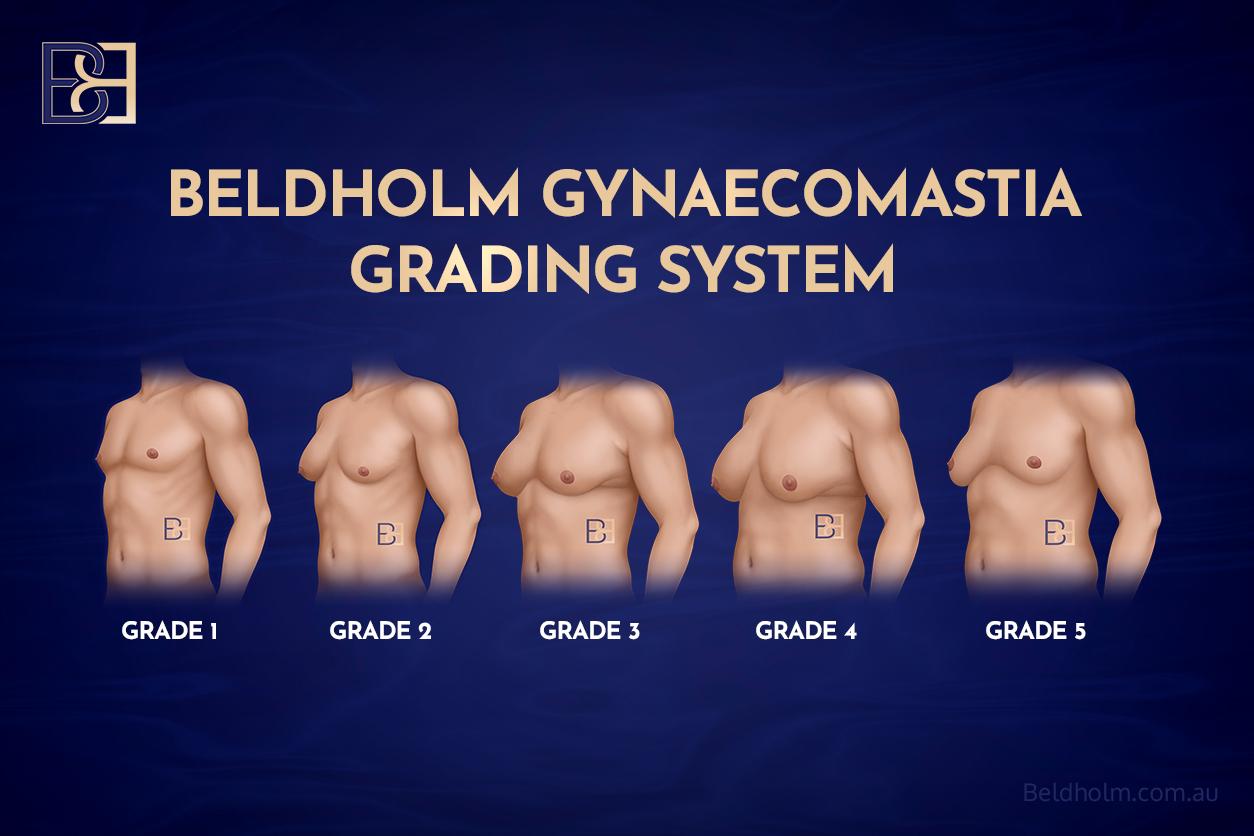
The operation is matched to the BB grade and to what is actually present in the chest, and each one carries its own leading risks. In brief:
- BB grade 1, gland excision only. Removing the firm breast disc leaves a cavity, and the concern I watch most closely is bleeding into that space, a haematoma. See the gland excision complications page.
- BB grade 2, VASER liposuction (ultrasound assisted lipectomy) only. This is the mildest recovery of the five. Bleeding into a cavity is not the leading issue here. The concerns that lead the list are contour irregularity and asymmetry. See the VASER liposuction (ultrasound assisted lipectomy) complications page.
- BB grade 3, VASER liposuction (ultrasound assisted lipectomy) with gland excision. This combines both, so it carries the VASER liposuction (ultrasound assisted lipectomy) contour considerations plus the cavity left by excision, and haematoma again leads the list. See the VASER liposuction (ultrasound assisted lipectomy) with gland excision complications page.
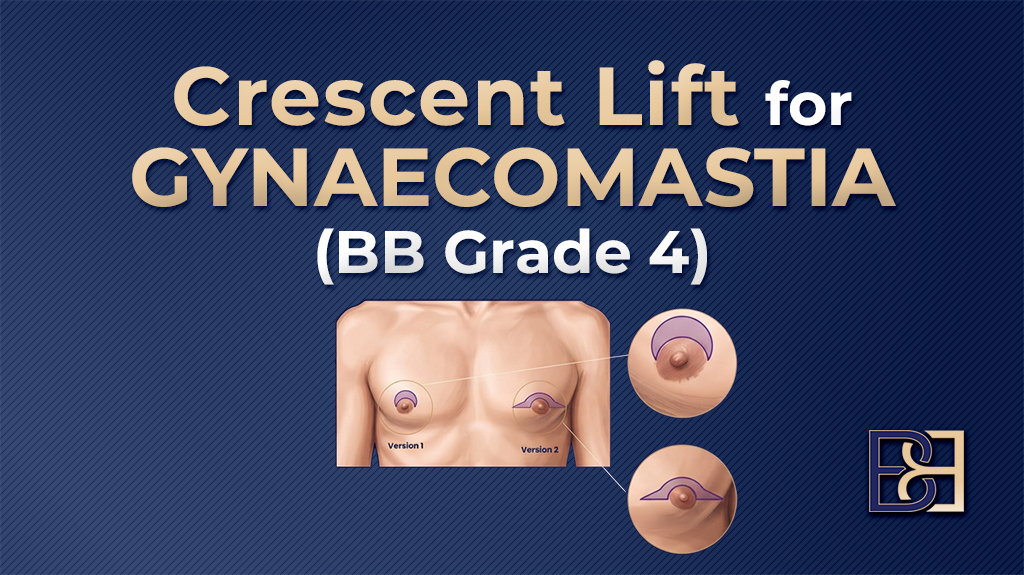
- BB grade 4, crescent lift. Adding nipple elevation introduces a scar above the areola and the specific risk of areolar distortion. This is also where skin retraction and the possibility of a planned second stage are discussed. See the crescent lift complications page.
- BB grade 5, mastectomy with free nipple graft (also called torsoplasty with free nipple graft). This is the major operation for the highest grades. It has the longest recovery and its own distinct risks: partial or complete loss of the nipple graft, changes in nipple colour, and altered nipple sensation. See the mastectomy with free nipple graft complications page.
The rest of this page works through each complication in turn, with the operation-specific detail noted where it matters.
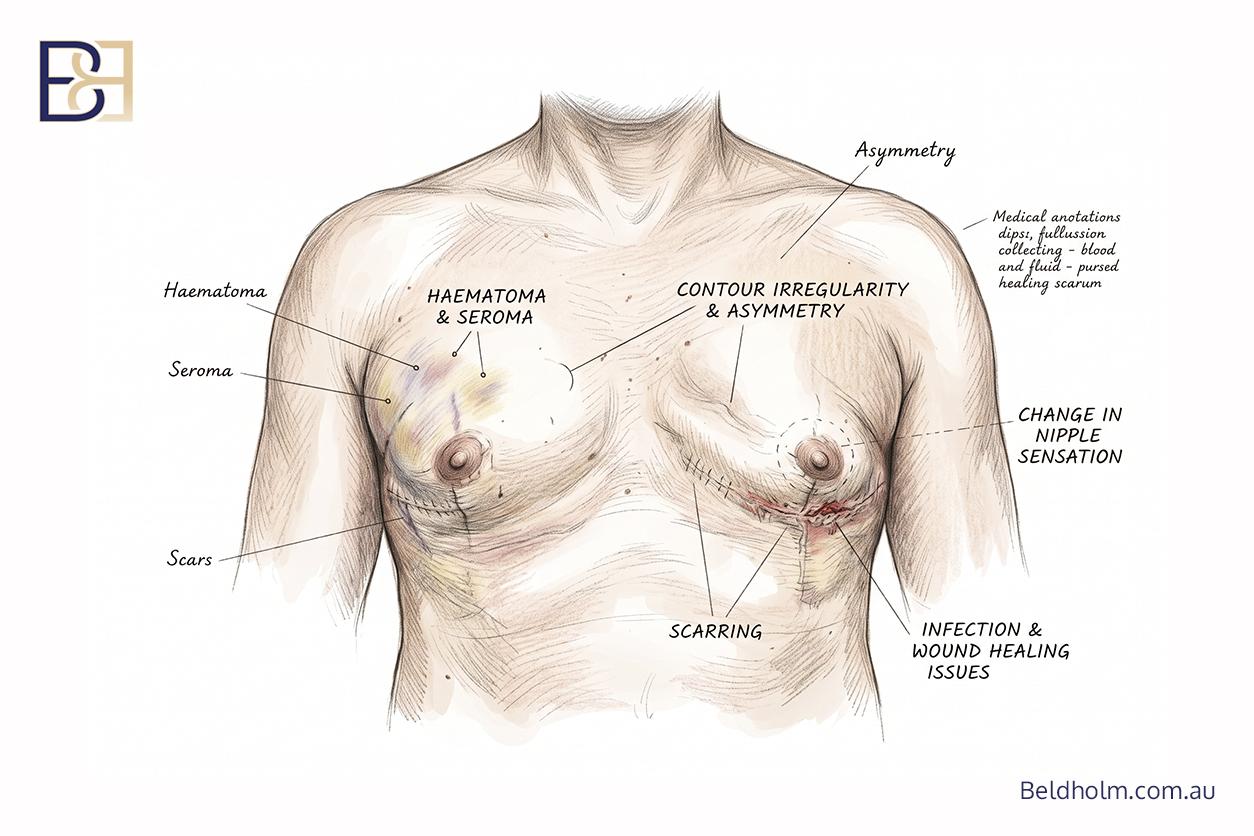
Haematoma
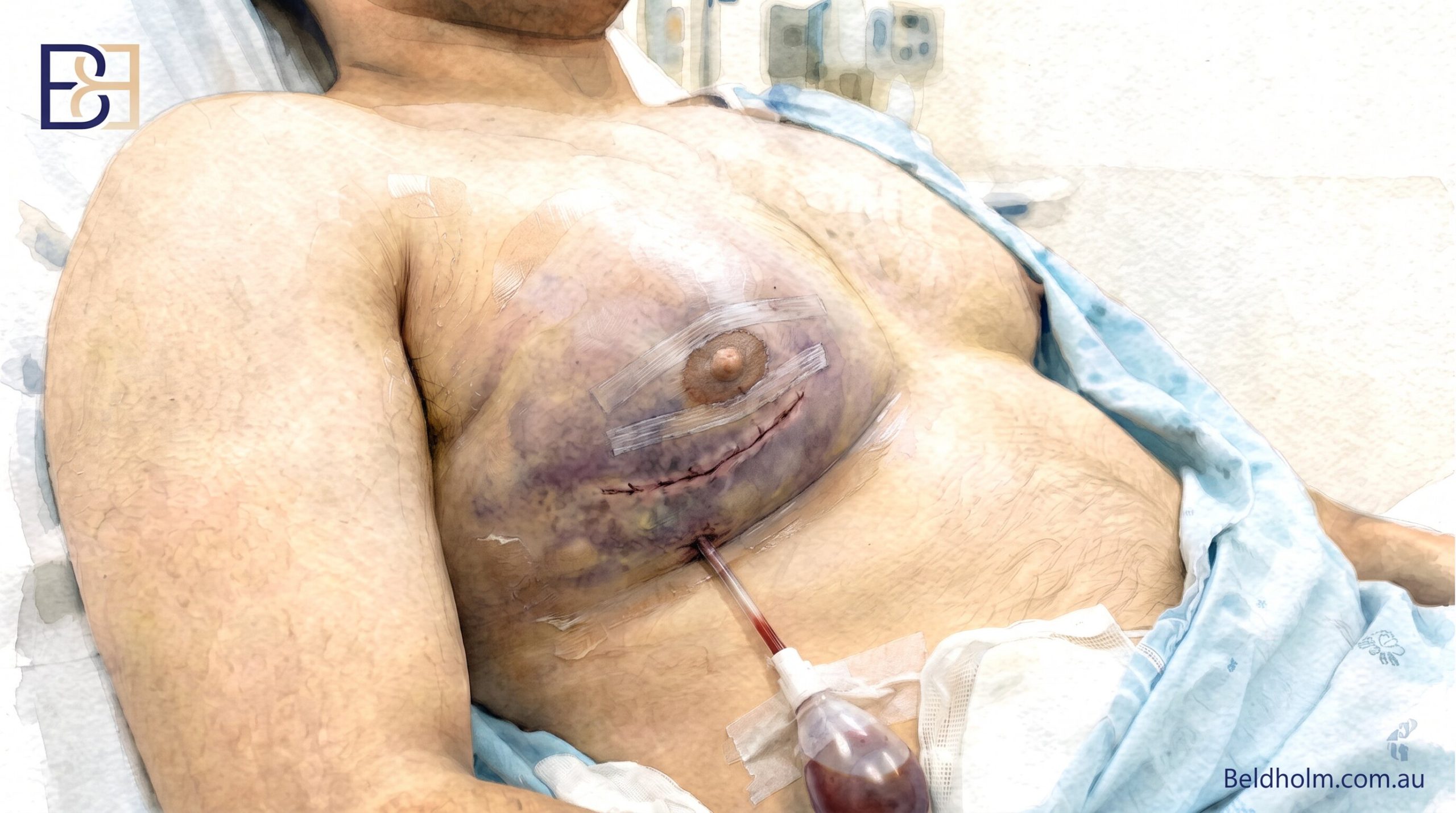
A haematoma is a collection of blood that builds up in the operated area. Removing the firm breast disc leaves a cavity, and the small blood vessels around it can bleed into that space after surgery.
The reported rates sit in a fairly consistent range. A large series recorded haematoma in about 5% of cases, and every haematoma in that series occurred where the glandular tissue outweighed the fatty component (4). A national cohort reported an overall haematoma rate of 2.3% (5). The pattern across the literature is that gland-heavy chests operated through small incisions bleed more readily than fatty chests, because a small incision limits how directly I can reach the blood vessels and control any bleeding at the time of the operation (4). Excessive bleeding during or after the operation is what leads to a haematoma.
Medical history matters here, and I ask specifically about anabolic steroids. Anabolic androgenic steroid use is associated with firmer tissue carrying more blood vessels, and studies of bodybuilders and men who use anabolic steroids report higher bleeding rates, in the range of 6 to 13%, than the general gynaecomastia population (5). This is one of the reasons I ask about anabolic agents during assessment.
A smaller haematoma may settle on its own. A larger one usually needs to be drained, usually with a return to theatre. I lower the risk with careful control of bleeding during the operation, by planning any blood-thinning medication well in advance, and with a compression garment afterwards. Certain medications that thin the blood, such as aspirin, are typically stopped about a week before surgery, though some patients need to continue them, which is planned ahead of time. Patients must never stop prescribed medication on their own. I work this out with you and your GP.
Seroma
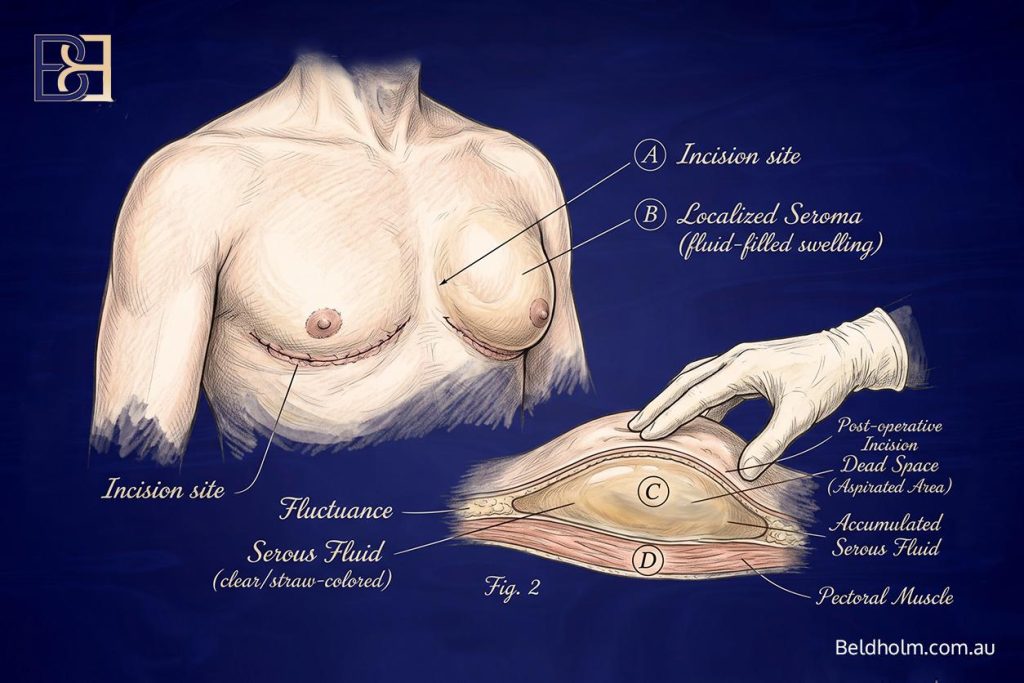
A seroma is a collection of clear fluid rather than blood. It tends to form where the surgical site covers a wider area and the skin has been lifted, so it features more after VASER liposuction (ultrasound assisted lipectomy) and the higher-grade operations than after a gland excision on its own. In the published series, seroma sits alongside haematoma as one of the more common problems, and larger wound areas raise the chance of it forming (2,3).
Most seromas are managed by drawing the fluid off with a needle in the clinic, sometimes more than once. A compression garment worn as directed helps reduce swelling, supports the healing process, and lowers the chance of fluid collecting. In some operations I place a drain to lower the risk, and I remove it once the output has dropped.
Contour irregularities and asymmetry
This is the pair of concerns that leads the list after VASER liposuction (ultrasound assisted lipectomy), the BB grade 2 operation, and it is the reason that operation has a different risk profile from the others, not a milder version of the same one.
Contour irregularities mean the chest shape is not even. They can happen if I remove too much or too little fat or tissue in one area, or if the tissue settles unevenly during healing. Asymmetry means the two sides do not match in size or shape. Some baseline asymmetry is normal and present before surgery, and small differences afterwards are common. In one series, asymmetry was recorded in about 8% of operations (6).
A specific point applies where the gland is removed from behind the nipple. If I remove excess tissue directly under the areola, the nipple can sit in a shallow dip. I leave an adequate cushion of tissue under the nipple for this reason. Where an irregularity or asymmetry is significant, additional surgery can sometimes improve it, usually a smaller revision to remove fat or release a tethered area.
Changes in nipple and skin sensation
Altered sensation across the nipple and the skin of the chest is one of the more common things men notice after surgery, and it is usually temporary. Numbness, tingling or heightened sensitivity can last weeks to months while the small nerves running through the deeper structures of the chest recover.
In the published series the rates reflect how commonly this is reported. One subcutaneous mastectomy series recorded numbness or changed nipple sensation in about 20% of operations (6). Others describe nipple numbness as common but reversible in most cases (2,3). For most men, sensation returns over time. In a smaller number it does not fully recover, and permanently reduced nipple sensation can occur, more so in the higher-grade operations where the nipple is moved (BB grade 4) or grafted (BB grade 5).
Scarring
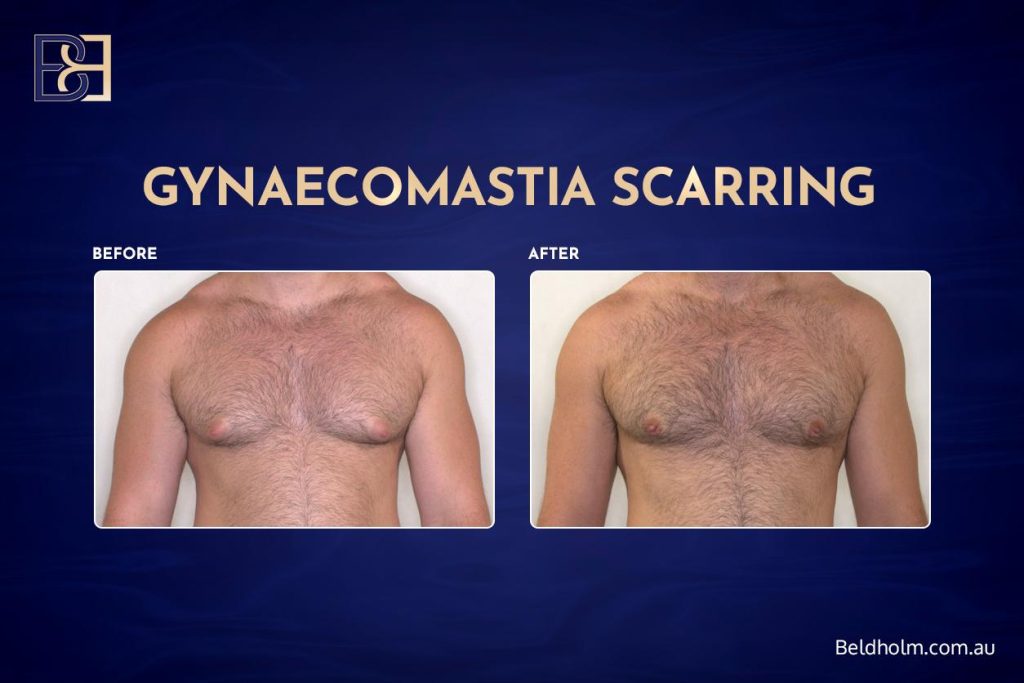
Disclaimer: Results Vary, surgery has risks, seek second opinion. Operation performed by Dr Bernard Beldholm
Every one of these operations leaves a permanent scar. The location and length depend on the operation, which is one more reason the operation-specific pages matter.
- Gland excision (BB grade 1) and the combined VASER liposuction (ultrasound assisted lipectomy) and gland excision operation (BB grade 3) are done through a small incision at the lower edge of the areola, so the scar sits at the border between the areola and the surrounding skin.
- VASER liposuction (ultrasound assisted lipectomy) alone (BB grade 2) uses very small access points for the cannula.
- The crescent lift (BB grade 4) adds a scar above the areola to allow the nipple to be raised.
- The mastectomy with free nipple graft (BB grade 5) involves skin excision on a larger scale, so it needs larger incisions and leaves the longest scars, across the chest, and these can cross the breastbone. It is the operation used where there is significant excess skin.
Scars fade over the first year or so but never disappear completely. A small number of men lay down thickened or raised scar tissue, and keloid or hypertrophic scarring was recorded in around 8% of cases in one series (6). Raised and keloid scar tissue is more common in men with dark skin. How a scar matures depends partly on the individual and their skin, which I cannot control. Where a scar heals poorly, topical preparations such as silicone gel or tape may help, and a scar revision can be considered, though the result cannot be guaranteed.
Fat necrosis
Fat necrosis is where an area of fat does not survive the surgery and hardens instead of healing normally. It shows up as a firm lump under the skin, usually a few weeks after the operation, and it can be tender. It is more likely after the operations that remove excess fat, and where a larger volume has been taken.
A firm lump after surgery is understandably worrying, but fat necrosis is a benign part of the healing process going wrong in one spot, not a return of the gynaecomastia. Most areas soften over months without any further treatment. Anti-inflammatory measures can reduce discomfort in the meantime. Where a hardened area persists and affects the chest shape, it can sometimes be removed, though a small scar is the trade-off. Any new lump should be assessed rather than assumed to be fat necrosis.
Infection
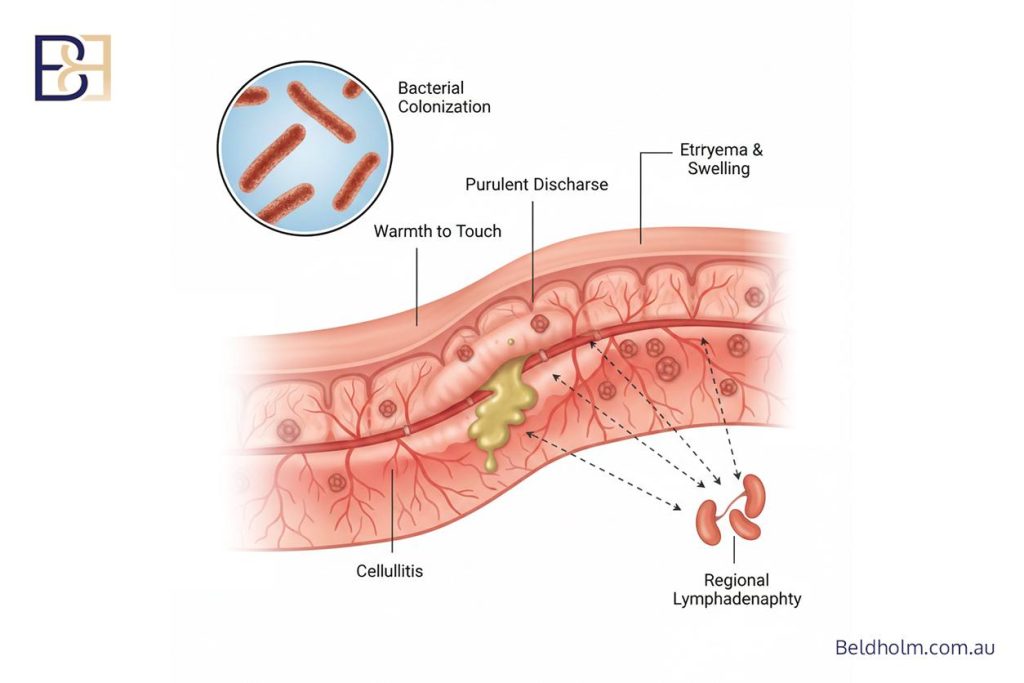
Infection is uncommon after gynaecomastia surgery. In the large multi-centre database, superficial wound infection occurred in about 1.3% of cases and deeper infection in about 0.2% (1). It usually shows up in the first week or two as increasing redness, warmth, swelling, pain or discharge from a wound.
I give prophylactic antibiotics at the time of surgery to lower the risk. Most wound infections that do occur settle with antibiotics when caught early, and a collection under the skin may need to be drained. I go through the warning signs with every patient before they go home, because early treatment matters.
Blood clots in the legs and lungs
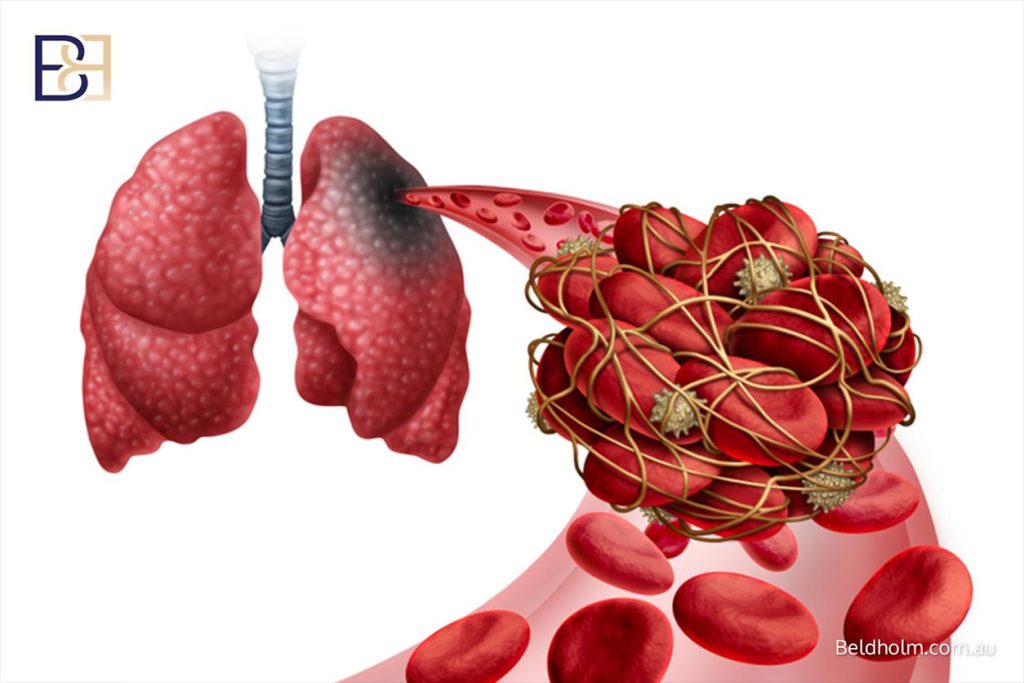
Deep vein thrombosis (a blood clot in a leg vein), and its more serious form, a pulmonary embolus (a blood clot that travels to the lungs), are risks of any operation. For chest surgery they sit at lower prominence than for a large abdominal operation. In the large cohort, medical complications of this kind occurred in well under 1% of patients (1).
Getting up and moving early after surgery is one of the most effective things that lowers the risk. The timing of any blood-thinning medication is decided for each patient and planned in advance.
Anaesthetic and allergic reactions

These operations are carried out under general anaesthesia. Serious reactions to anaesthesia are uncommon, and the large cohort recorded low rates of medical adverse events overall (1). An allergic reaction to dressings, tapes, suture materials or other materials used during surgery can occur and is usually minor.
Most of my patients have their anaesthetic consultation by phone. The physical examination, including the airway assessment, happens on the day of surgery. An in-person anaesthetic review before the day is rare. If you have had a problem with an anaesthetic in the past, or you have significant medical conditions, tell me at consultation so it can be planned for.
Areolar distortion and the possibility of a second stage
The crescent lift (BB grade 4) raises the nipple by removing a crescent of skin above the areola. The specific risk it adds is areolar distortion, where the areola is pulled out of a round shape or stretches over time. Careful planning and closure reduce this, but the areola sits under some tension while it heals, and the shape can change.
This is also the operation where skin retraction and staging are discussed properly. When a larger volume of tissue is removed, the skin needs time to shrink down over the new contour. It is not always possible to know at the first operation exactly how the skin will retract. For this reason, higher-grade results are reassessed at around six to twelve months, and a planned second stage is sometimes part of the approach rather than a sign that something went wrong. In the literature, further procedures to refine scars or contour in higher grades are treated as a planned part of the programme, discussed beforehand, not as a complication (4). The crescent lift recovery page covers the reassessment and second-stage conversation in more detail.
Free nipple graft complications
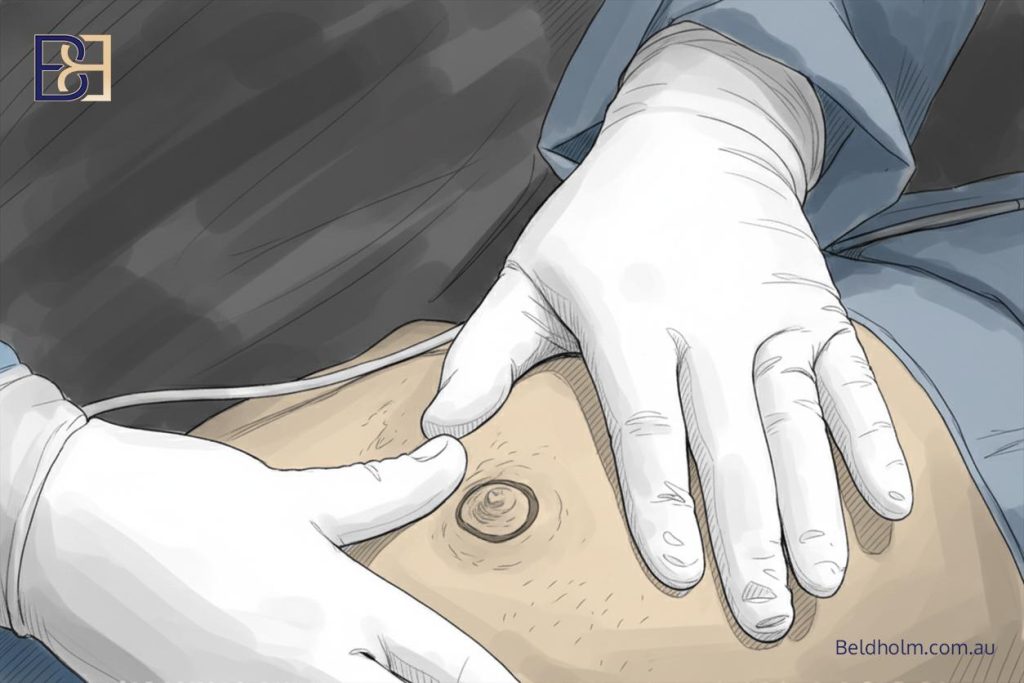
The mastectomy with free nipple graft (BB grade 5) is the major operation, used for the highest grades with significant skin excess. It removes a large amount of skin and tissue, and the nipple is taken off completely and replaced as a graft on the reshaped chest. This carries the most distinct set of risks of any of the five operations.
- Graft loss. Because the nipple is replaced as a graft rather than left attached, it relies on the underlying tissue to take. Part or all of the graft can fail to heal, which is partial or complete graft loss. This can leave a patchy, thin or absent nipple that may need further treatment.
- Changes in colour. The grafted nipple and areola can heal lighter or patchier than before, a depigmentation, which can be permanent.
- Altered nipple sensation. A free graft usually means reduced or absent sensation in the nipple, and this is often permanent rather than temporary.
- Graft care. The graft is held in place with a small dressing, a bolster, that stays on for several days to protect it while it takes. Looking after the graft is a specific part of the recovery.
Recurrence and why the underlying cause matters
Where an ongoing driver is still active, the changes can come back. If hormonal changes have not been investigated and treated, or certain medications or agents are still in use, or anabolic steroids are still being taken, the breast tissue can regrow. Enlarged breasts in men are a symptom, and the operation to remove breast tissue treats the symptom rather than the cause. This is why I work to identify and manage the cause before operating, alongside your GP where investigation is needed. In the published series, revision rates sit at around 4.8 to 5.5%, and revision is reported more often in men with a heavier glandular component and in anabolic steroid users (2,5).
Weight is the other factor. Where there is a significant fatty component and weight is not yet stable, later weight gain can change the result.
Pubertal gynaecomastia and younger patients

This page is written for adults and is not directed at people under 18.
Gynaecomastia during puberty is common, and in most cases it settles on its own without any surgery as hormone levels balance out (3). For that reason, surgery is not the first consideration in an adolescent. The appropriate approach in a young person is assessment and observation for stability, not early surgery. Where a young man has gynaecomastia that is established, stable and not settling, assessment is reasonable, and any decision is made carefully with the family and the GP involved.
How the risks are reduced
Good preparation and follow-up do not remove risk, but they lower it. In my practice that means:
- A medical history, examination, a preoperative blood panel to check surgical fitness, and other tests where the history points to a cause, with your GP copied in.
- Identifying and managing an underlying cause before surgery where one is found, and going through the treatment options, including the ones that do not involve an operation.
- Careful control of bleeding during the operation, and planning any blood-thinning medication in advance.
- A compression garment worn as directed, and a drain where the operation calls for one.
- A staged return to activity and the gym rather than straight back to full training. Recovery time varies with the operation, and I ask patients to avoid lifting for a defined period and to wear loose fitting clothing over the garment while the chest settles.
- Review at 4 weeks, 3 months, 6 months and 12 months, with a formal handover to your GP for long-term care.
Not every gynaecomastia patient needs a nutritional workup. Many are otherwise well and do not have a weight-loss history. Where a patient has lost a significant amount of weight, I check for and correct nutritional gaps from that history before surgery, because they can affect healing, and protein adequacy in particular supports wound healing. I cover this in the pre-operative nutrition guidance. For patients without a weight-loss history, it is not a routine part of the workup.
When to seek help after surgery
Book your appointment online now
Most recoveries are uneventful, but you should know what is not routine. Contact us if you notice:
- Rapidly increasing swelling, tightness or pain on one side, which can indicate a haematoma.
- Spreading redness, warmth, or discharge from a wound, which can indicate infection.
- Calf pain or swelling, or shortness of breath and chest pain, which can indicate a clot and needs urgent attention.
After hours, patients call Maitland Private Hospital, where nurse-led phone triage will guide you. Anything that needs a physical assessment goes to your local emergency department. For anything life-threatening, call 000. Maitland Private is not an emergency department.
Common questions about gynaecomastia surgery complications
What is the most common complication?
It depends on the operation. Surgical correction of gynaecomastia, referred to in some of the literature as reduction mammaplasty, is not one procedure but several. After gland excision, bleeding into the cavity, a haematoma, leads the list. After VASER liposuction (ultrasound assisted lipectomy) alone, contour irregularity and asymmetry lead instead. Altered nipple sensation is common across the operations and usually settles.
How likely is a haematoma?
Reported rates sit at roughly 2 to 5% in general gynaecomastia series, and higher, in the range of 6 to 13%, in bodybuilders and anabolic steroid users (4,5). It is more likely where the gland is the main component.
Do the risks differ by procedure?
Yes, and that is why I use five different surgical techniques and a separate complications page for each. The leading risk after VASER liposuction (ultrasound assisted lipectomy) is not the leading risk after an excision procedure or grafting. In severe cases needing skin excision, the risk profile changes again.
Can gynaecomastia come back after surgery?
It can, if the underlying cause is still active, for example an ongoing medication, an anabolic agent, or a hormonal cause that has not been treated, or if weight changes significantly. Surgical removal takes away the tissue that is there on the day, but it does not change the cause. Revision rates in the literature are around 4.8 to 5.5% (2,5).
Is the numbness permanent?
Usually not. Altered nipple and skin sensation is common early on and settles over weeks to months for most men. A smaller number have a lasting change, which is more likely in the higher-grade operations.
What anaesthetic is used?
These operations are done under general anaesthetic. Most patients have their anaesthetic consultation by phone, with the physical and airway assessment on the day of surgery.
Dr Beldholm’s position

Two things guide how I work.
First, I match the operation to the individual chest, because the risks follow the operation. A man having VASER liposuction (ultrasound assisted lipectomy) alone faces a different set of concerns from a man needing gland excision or a graft.
Second, I look for the cause before I operate. Surgery removes tissue, but it does not change an ongoing driver, and if I ignore an active cause I am setting a patient up for the changes to return. Managing the cause first, working with your GP, is part of doing this properly.
References
- Zavlin D, Jubbal KT, Friedman JD, Echo A. Complications and outcomes after gynecomastia surgery: analysis of 204 pediatric and 1583 adult cases from a national multi-center database. Aesthetic Plast Surg. 2017;41(4):761-767.
- Li CC, Fu JP, Chang SC, Chen TM, Chen SG. Surgical treatment of gynecomastia: complications and outcomes. Ann Plast Surg. 2012;69(5):510-515.
- Barros AC, Sampaio MC. Gynecomastia: physiopathology, evaluation and treatment. Sao Paulo Med J. 2012;130(3):187-197.
- Cordova A, Moschella F. Algorithm for clinical evaluation and surgical treatment of gynaecomastia. J Plast Reconstr Aesthet Surg. 2008;61(1):41-49.
- Vojvodic M, Xu FZ, Anastasopoulos AJ, Chankowsky J, Petropolis C, Karunanayake M, et al. Anabolic-androgenic steroid use among gynecomastia patients: prevalence and relevance to surgical management. Ann Plast Surg. 2019;83(3):258-263.
- Steele SR, Martin MJ, Place RJ. Gynecomastia: complications of the subcutaneous mastectomy. Am Surg. 2002;68(2):210-213.
- Gusenoff JA, Coon D, Rubin JP. Pseudogynecomastia after massive weight loss: detectability of technique, patient satisfaction, and classification. Plast Reconstr Surg. 2008;122(5):1301-1311.