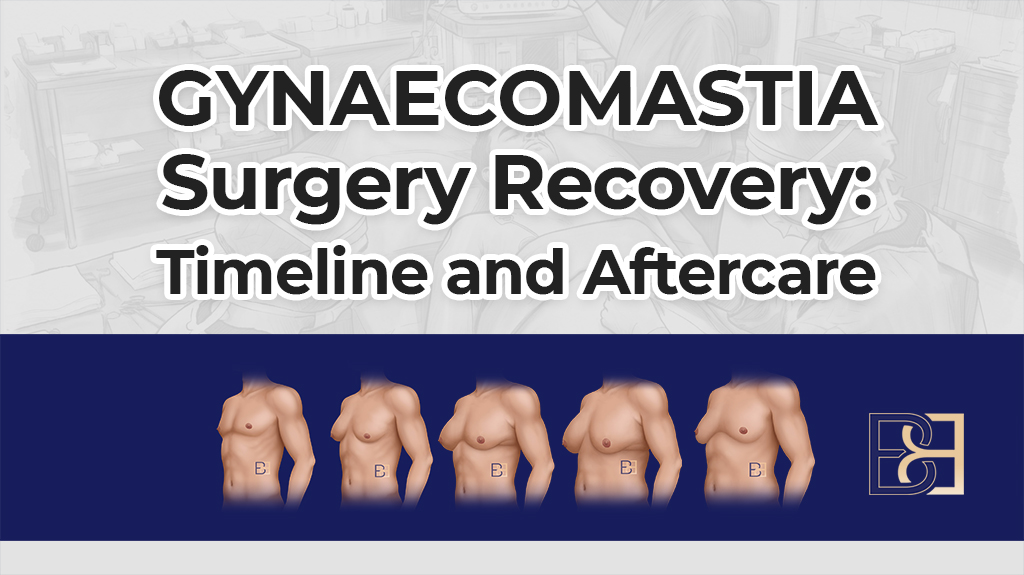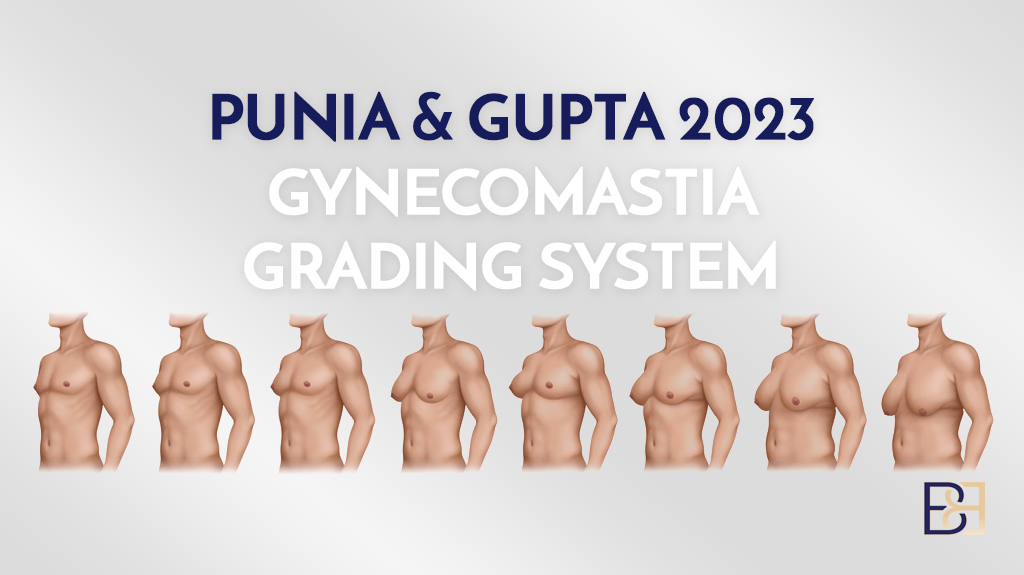
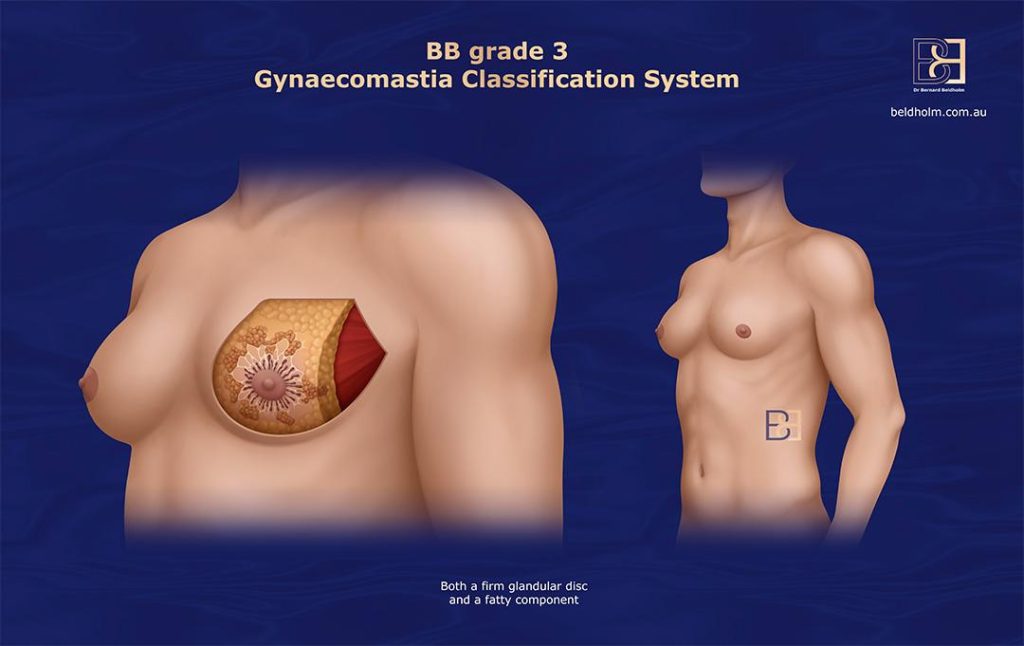
This article is about recovery after one specific operation: combined VASER liposuction (ultrasound-assisted lipectomy) with glandular excision, sometimes called male breast reduction surgery. In my grading system this is the BB grade 3 operation. I use it where there is both a fatty component and a firm glandular disc that liposuction (Suction assisted lipectomy) alone cannot remove. To see where BB grade 3 sits among the grades, my grading system for gynaecomastia page sets it out.

What follows is a general guide to what I tell my own patients. It does not replace the specific instructions my team gives you for your operation. If you want the broader picture across all grades, see my general gynaecomastia surgery recovery timeline.
What the BB grade 3 operation involves, and why recovery looks the way it does
BB grade 3 gynaecomastia has two components: fat and gland. I treat it with two techniques in the one operation.
- VASER liposuction (Suction assisted lipectomy) uses ultrasound energy to loosen and remove the fatty component. Ultrasound-assisted liposuction (Ultrasound assisted lipectomy) removes dense fat within the fibrous framework of the male chest and can help the skin contract afterwards (1,2).
- Glandular excision removes the firm breast disc that sits behind the nipple. Liposuction (Suction assisted lipectomy) treats fat, not the gland, so where a firm disc is present I remove it directly, usually through a small incision at the lower edge of the areola (2).
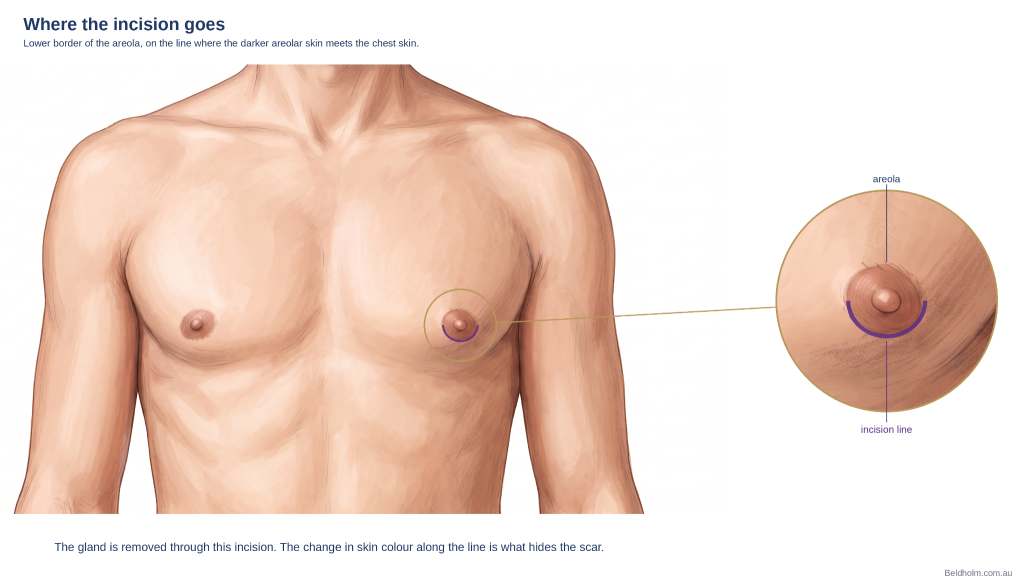
Why this matters for your recovery. The excision leaves a raw surface under the nipple where the gland used to sit, and the chest has a rich blood supply. That is the main reason bleeding under the skin, called a haematoma, is the complication I watch for most closely in this operation (3,4). It also explains the bruising and swelling in the first weeks, the compression garment, and the drains I usually place. Each of those is covered below.
The first 24 to 48 hours
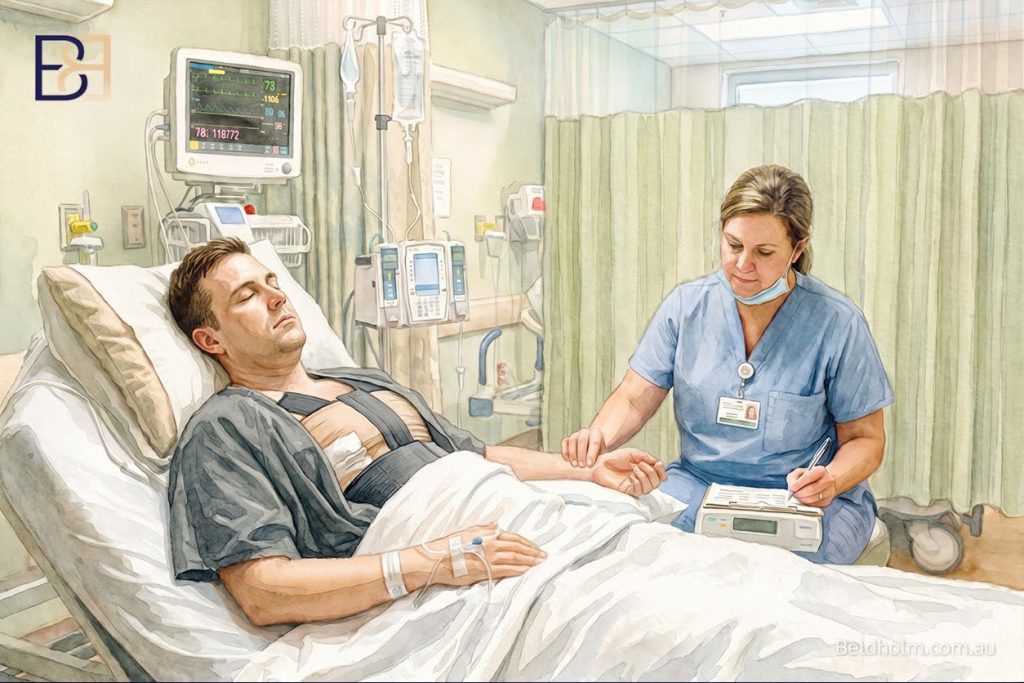
I perform this as day surgery under a general anaesthetic. You go home the same day.
- You wake in the recovery area with a compression garment already on and dressings over the incisions. The chest feels tight, tender and sore. That is expected.
- Pain relief is organised before you leave, and most men manage well with the medication provided.
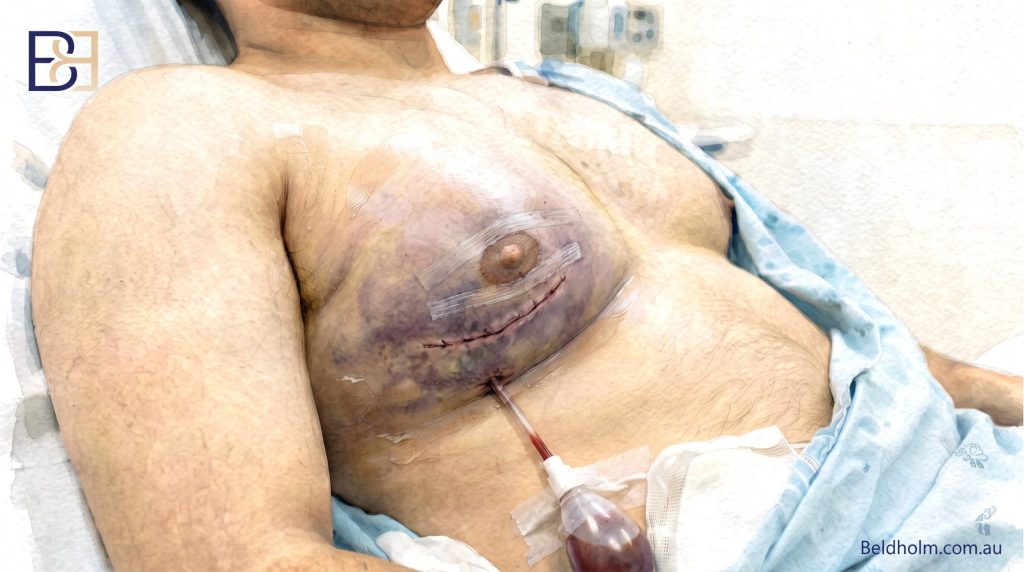
- I usually place a drain on each side. A drain is a thin tube that lets fluid and a small amount of blood escape rather than collecting under the skin. You go home with it in place, and my team shows you how to manage and record it.
- You need someone to drive you home and, ideally, stay with you the first night. The anaesthetic takes time to clear, so do not drive or make important decisions that day.
- Rest with your upper body raised on a couple of pillows. This helps with swelling and comfort. Try not to lie completely flat in the first day or two.
- Light movement around the house from that evening is good. It keeps the circulation moving and lowers the risk of clots.
The first week
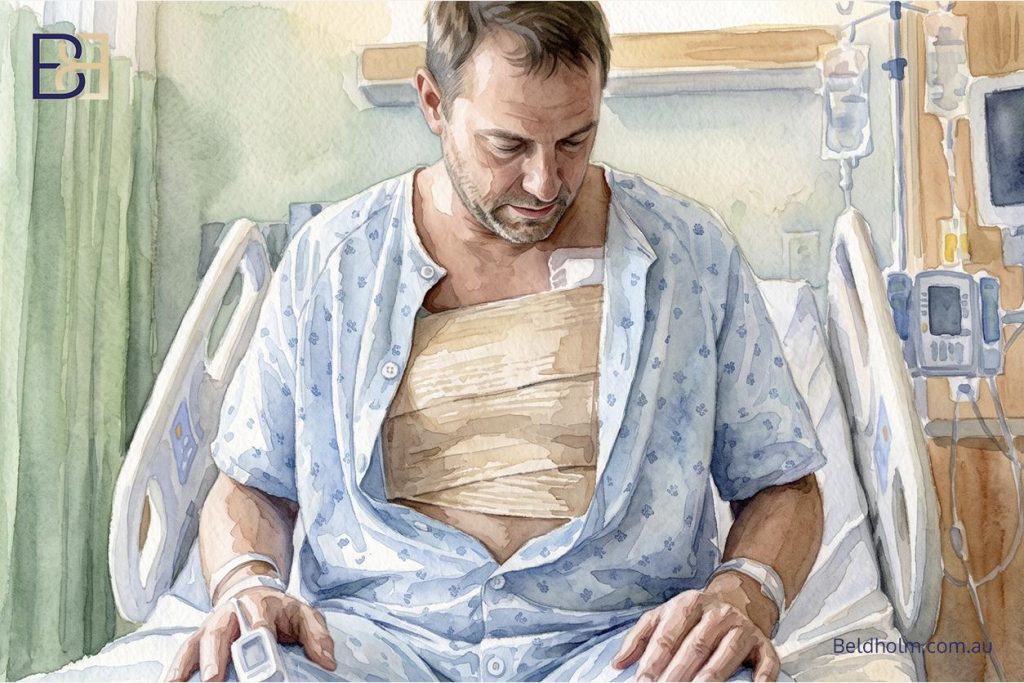
This is the most restricted week. For most men the more uncomfortable part settles within the first few days.
Compression garment
- Wear it continuously, day and night, except when showering. It supports the tissue, limits swelling and helps the skin settle onto the new contour.
Drains and dressings
- I remove the drain once the fluid coming out over 24 hours has dropped to a low level, which is often within the first several days (6).
- My team reviews your wounds closely over the first fortnight. In practice that means a couple of nurse or doctor visits each week for dressing changes and a check that healing is on track. The early dressings are changed to lighter tape once the wounds are settling.
Movement, work and driving
- Keep your shoulders and arms fairly still this week. The gland sits over the pectoralis muscle, and moving that muscle strongly can increase bleeding early on (2). Elbow and wrist movement is fine.
- A practical tip my patients find useful: wear button-up shirts for the first week so you are not lifting your arms over your head to dress (2).
- Desk-based work is often possible within a few days, depending on how you feel and how far you travel. Physically demanding work waits longer. This is individual.
- Most men drive again around day seven to ten, once off prescription pain medication and able to move the arms freely without discomfort. Do not drive while taking strong pain medication.
Swelling and bruising
- Both are normal now. They build over the first 48 hours before starting to ease.
Weeks two to four
- Swelling and bruising steadily settle over these weeks, though the chest still looks fuller than it will in the final result.
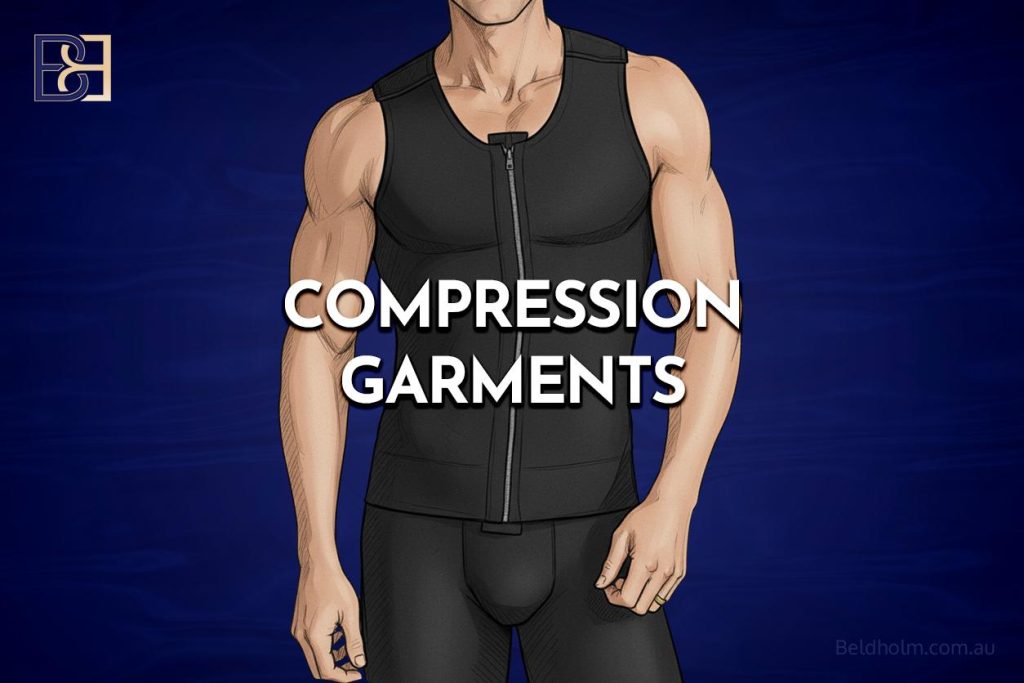
- Keep wearing the garment as directed. How long I ask you to stay in it depends on your chest and how you are healing. Some men wear it continuously for a couple of weeks then part-time, others for longer. Reported durations in the literature range from several days to one or two months (2,6).
- Altered feeling in the nipple or the skin around it is common at this stage. It is usually temporary and settles over weeks to months, though occasionally a small area of reduced sensation persists (3,6).
- Light activity increases gradually. Walking is good. Avoid anything that loads or bounces the chest.
Weeks four to six, and returning to exercise

Return to exercise is staged, and the chest is the last thing to load.
- Lower body and light cardio, such as walking and stationary cycling, usually come first, often from around two to three weeks as comfort allows.
- Chest and upper-body resistance work, including pressing, push-ups, dips and heavy lifting, is reintroduced last. Generally this is not before about four to six weeks, and then it builds gradually (2). Loading the pectoralis muscle too early risks bleeding and swelling at the surgical site.
- I clear you for the next stage at your follow-up, based on how the chest is healing rather than a fixed date.
Two practical points patients ask about:
- Wearing your garment during early light activity is fine and often helps.
- Avoid saunas, steam rooms and prolonged heat on the chest in the early weeks, as they add to swelling.
Three to twelve months, and the final result
- The chest keeps refining for months after the swelling has gone. Skin retraction after VASER liposuction (Suction assisted lipectomy) continues over this period, which is part of why the final shape takes time to show (1,2).
- Scars mature gradually. The main scar sits at the lower edge of the areola, where it tends to settle well. Keep it out of the sun while it heals, as ultraviolet exposure can darken a healing scar.
- I follow my gynaecomastia patients at 4 weeks, 3 months, 6 months and 12 months. This lets me track the healing, the scar and the contour over the full course, and pick up anything that needs attention.
- Results vary between patients. I do not promise a set outcome.
Compression garments, drains and dressings explained
Compression garment
Its job is to limit swelling, support the healing tissue and help the skin sit down onto the new contour. It is one of the more important parts of your recovery, which is why I ask you to wear it as directed rather than stopping early because it feels tight.
Drains
I usually use drains for this operation. Because the excision leaves a space under the nipple and the chest bleeds readily, a drain lowers the chance of fluid or blood collecting there. It comes out once the output is low (6).
Dressings
Wounds are dressed at surgery and reviewed over the first fortnight. Keep them dry as instructed. Showering advice depends on the dressing used, so follow what my team tells you.
Risks and complications to be aware of during recovery
Every operation carries risk, and I would rather you know what to watch for. This is not the whole consent discussion, which we go through in person.
- Haematoma (bleeding under the skin) is the risk I watch most closely in this operation. It can cause sudden swelling, firmness and pain, usually in the first day or two, and sometimes needs a return to theatre (3,4). Keeping the chest still early and wearing the garment help reduce it.
- Seroma (a fluid collection) can develop as the swelling settles. Small ones settle on their own. Larger ones may need draining in the clinic (6,7).
- Contour irregularity or asymmetry. The two sides do not always heal identically, and a small dip or unevenness can occur (3).
- Altered nipple or skin sensation, usually temporary, occasionally longer lasting (3,6).
- Scarring. The periareolar scar usually settles well, but scars are permanent and vary between people.
- Infection. Uncommon, but spreading redness or warmth, fever, or increasing pain needs review.
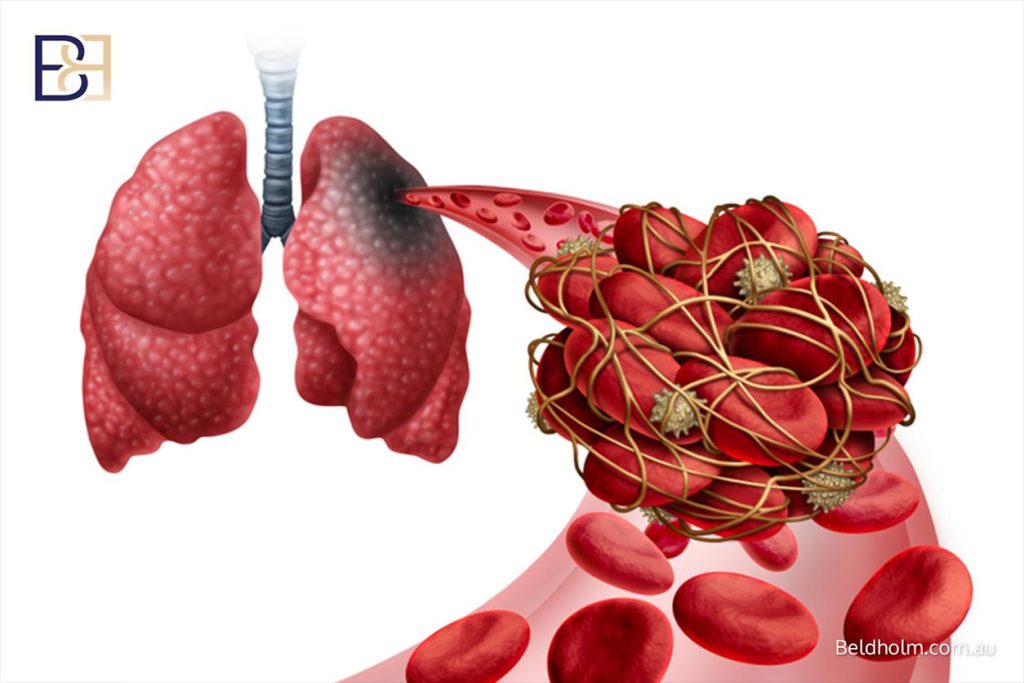
- Blood clots (DVT, and rarely a clot to the lung). The risk here is lower than in larger body-contouring operations, but it is not zero. I assess your clot risk and decide on any blood-thinning measures myself, and early walking helps. If you take aspirin or a blood thinner, we plan any changes together well before surgery. Never stop prescribed medication on your own.
- Recurrence. Surgery removes the tissue that is there. It does not change an underlying cause. Where a driver is still active, such as ongoing use of anabolic androgenic steroids or an un-treated hormonal cause, the changes can return (4,5). This is why I look into and treat the cause before operating.
When to get help

Book your appointment online now
Follow the specific advice my team gives you. As a general guide, contact us if you notice sudden or one-sided swelling, firmness or increasing pain, bleeding through the dressing, spreading redness or warmth, fever, or calf pain or breathlessness.
- During and after hours, call Maitland Private Hospital. A nurse will triage your call and advise.
- If you need a physical assessment and cannot reach us, go to your local emergency department. Maitland Private is not an emergency department.
- For anything life-threatening, such as chest pain or difficulty breathing, call 000.
Supporting your recovery: nutrition and healing

Good preparation supports healing, and it starts before the operation.
- Protein matters for wound healing. Meeting your protein needs before and after surgery gives the tissues what they use to repair. My protein and wound healing article covers how much and where to get it.
- Some men having this surgery have a history of significant weight loss, and some do not. Where there has been weight loss, nutritional gaps from that period should be checked and corrected before surgery. Where weight has been changing, I prefer it to be stable first.
- I run a standard pre-operative blood panel for body-contouring patients that checks surgical fitness and nutrition. You can read what is on it and why on my pre-operative blood tests page.
I do not set out supplement regimens here. The nutrition articles cover that, and your GP and my team tailor it to your bloods.
How recovery fits the bigger picture

Recovery is one part of a longer path. A few points to keep in mind.
- The cause comes first. Gynaecomastia has several possible causes. Understanding and treating the cause is the first step, rather than assuming surgery is the answer. Where a cause is still active, treating it lowers the chance the changes return (4,5).
- Pubertal gynaecomastia is common in adolescents and frequently settles on its own. It is not usually a reason for early surgery in a young person. Assessment is appropriate where it is established and stable. This article is written for adults and is not directed at people under 18.
- Suitability is individual. Whether this operation is right for you, and which techniques it involves, is decided at consultation after examination and the appropriate workup. A GP referral is required before a consultation.
Common questions about BB grade 3 recovery
When can I go back to work?
Desk-based work is often possible within a few days. Physically demanding work waits longer. It depends on your job and how you feel.
When can I lift or train chest again?
Lower-body and light cardio come first. Chest and heavy upper-body work generally waits until about four to six weeks, then builds gradually, once I have cleared you.
How long do I wear the compression garment?
As directed, and this is individual. Plan on wearing it consistently in the early weeks. I confirm your timeframe at follow-up.
Will I have drains?
Usually yes for this operation. They come out once the fluid draining off is low, often within the first several days.
When will I see the final result?
Swelling settles over weeks, but the chest keeps refining and the skin keeps retracting for months. Scars take longer again to mature. The final result is around 12 months post surgery
Is the numbness permanent?
Altered sensation around the nipple is common early and usually settles over weeks to months. Occasionally a small area stays numb.
References
- Rohrich RJ, Ha RY, Kenkel JM, Adams WP Jr. Classification and management of gynecomastia: defining the role of ultrasound-assisted liposuction. Plast Reconstr Surg. 2003;111(2):909-923.
- Blau M, Hazani R. Correction of gynecomastia in bodybuilders and patients with good physique. Plast Reconstr Surg. 2015;135(2):425-432.
- Cordova A, Moschella F. Algorithm for clinical evaluation and surgical treatment of gynaecomastia. J Plast Reconstr Aesthet Surg. 2008;61(1):41-49.
- Vojvodic M, Xu FZ, Cai R, Roy M, Fielding JC. Anabolic-androgenic steroid use among gynecomastia patients: prevalence and relevance to surgical management. Ann Plast Surg. 2019.
- Babigian A, Silverman RT. Management of gynecomastia due to use of anabolic steroids in bodybuilders. Aesthetic Plast Surg. 2001;25(4):240-242.
- Barros ACSD, Sampaio MDCM. Gynecomastia: physiopathology, evaluation and treatment. Sao Paulo Med J. 2012;130(3):187-197.
- Zavlin D, Jubbal KT, Friedman JD, Echo A. Complications and outcomes after gynecomastia surgery: analysis of 204 pediatric and 1583 adult cases from a national multi-center database. Aesthet Plast Surg. 2017;41(4):761-767.