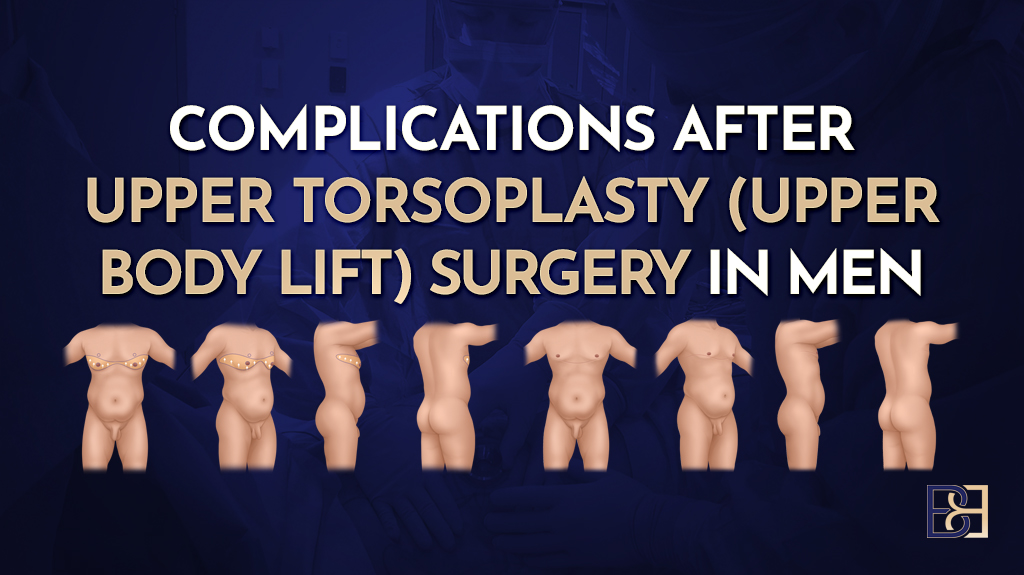
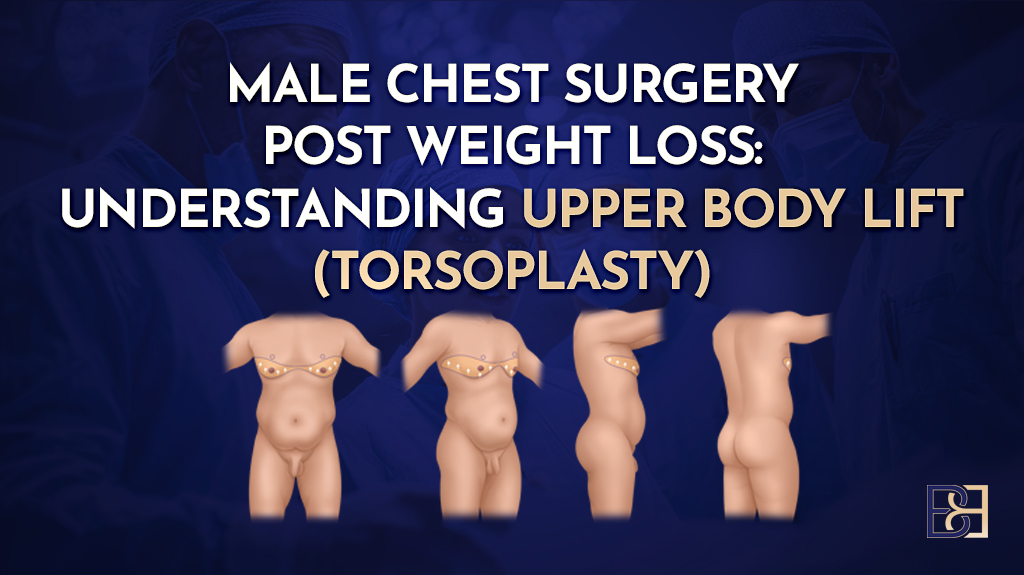
Complications After Upper Torsoplasty (upper body lift) Surgery in Men

Complications After Upper Torsoplasty (upper body lift) Surgery in Men: Anterior Torsoplasty, Circumferential Torsoplasty, and VASER-Assisted Upper Body Lift Surgery

Upper torsoplasty surgery in men is a specialised surgical procedure and a form of upper body lift performed after massive or significant weight loss, including after bariatric surgery. It is considered in men who have achieved long-term weight loss but are left with persistent excess skin, loose skin, and residual

Upper Body Lift (Torsoplasty) Recovery – Focused Guide by Dr Bernard Beldholm

Upper Body Lift (Torsoplasty) Recovery – Focused Guide by Dr Bernard Beldholm

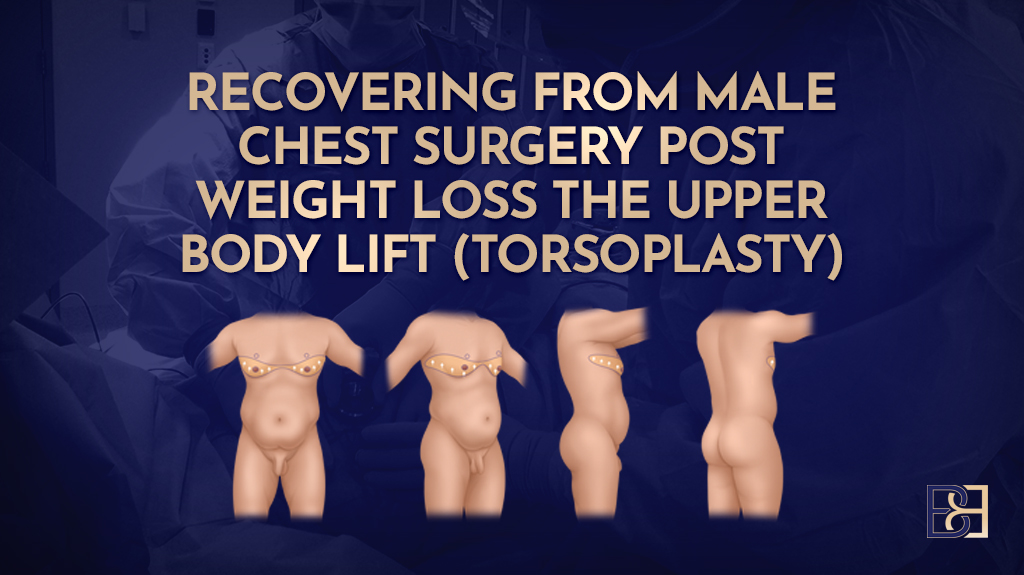
This article focuses exclusively on recovery after male chest surgery following significant weight loss, specifically recovering from male chest surgery post weight loss with the upper torsoplasty (upper body lift). The surgical reasons, indications, and decision-making are covered in a separate article. Here, the aim is to clearly explain how

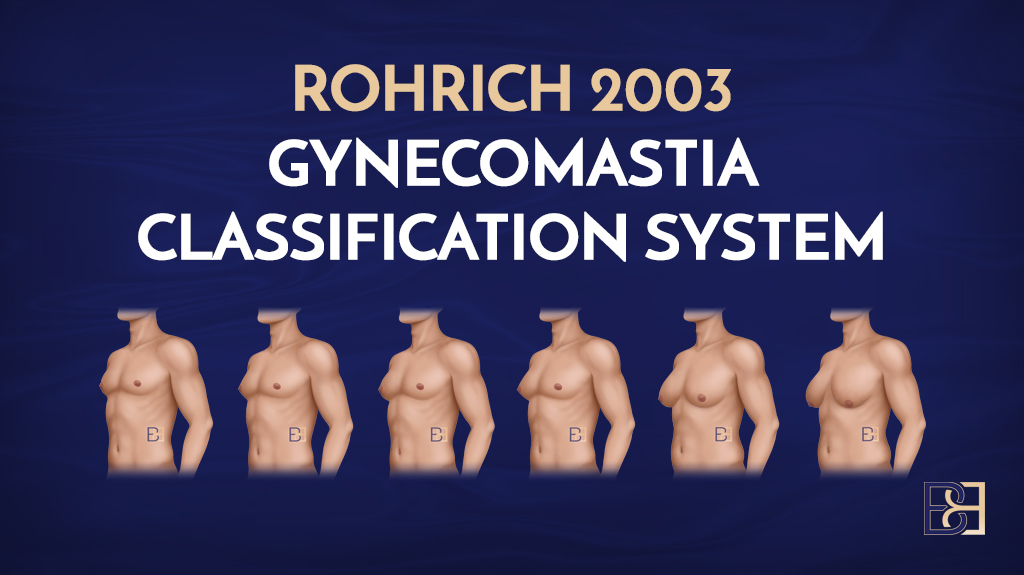
Rohrich Gynaecomastia Classification System (2003)

Rohrich Gynaecomastia Classification System (2003)

According to an article, Classification and Management of Gynecomastia: Defining the Role of Ultrasound-Assisted Liposuction, written by Rod J. Rohrich, M.D., et al., medical management has had limited success for the treatment of gynaecomastia, with excisional surgical techniques becoming the accepted standard. However, with such important physical and psychological impacts and an

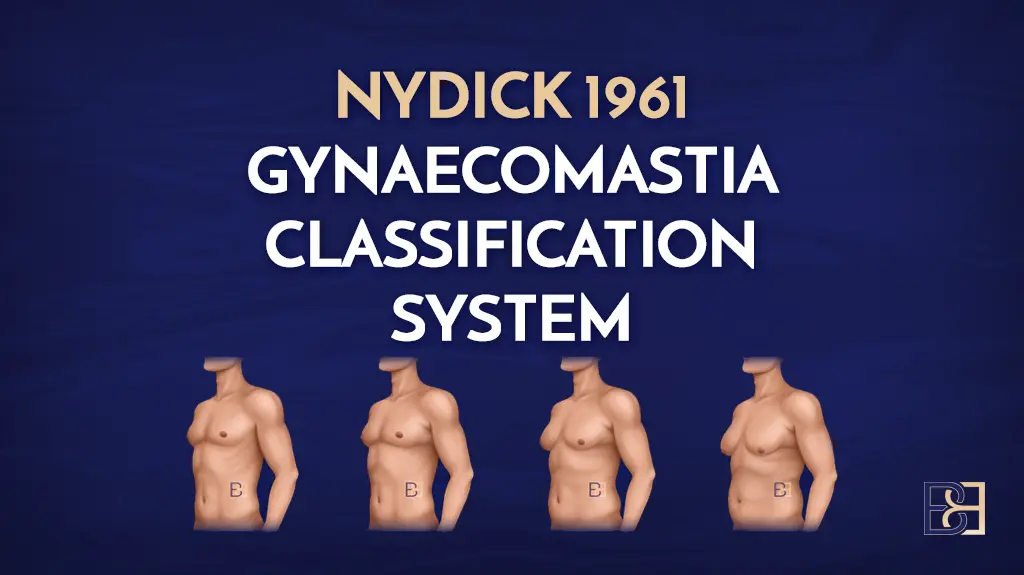
Nydick 1961 Gynaecomastia Classification System

Nydick 1961 Gynaecomastia Classification System

Introduced in 1961, the Nydick 1961 Gynaecomastia Classification System focuses on identifying gynecomastia in its early stages, particularly in adolescents. Unique in its simplicity and practical focus on clinical assessment, Nydick is unlike later systems that categorize gynaecomastia into various stages based on the extent of breast enlargement and skin

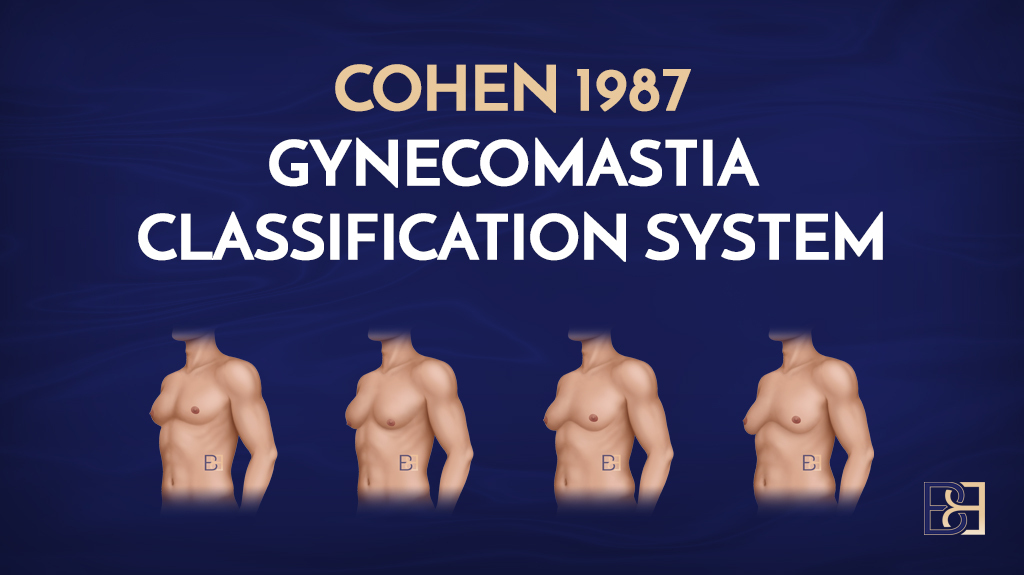
Cohen 1987 Gynaecomastia Classification System

Cohen 1987 Gynaecomastia Classification System

The Cohen classification system is a framework for categorising the severity and presentation of gynaecomastia, a condition characterised by the enlargement of male breast tissue. Developed by J.C. Cohen in 1987, this system built upon earlier models, offering recommendations for planning the most appropriate gynaecomastia treatment. By classifying gynaecomastia into four distinct

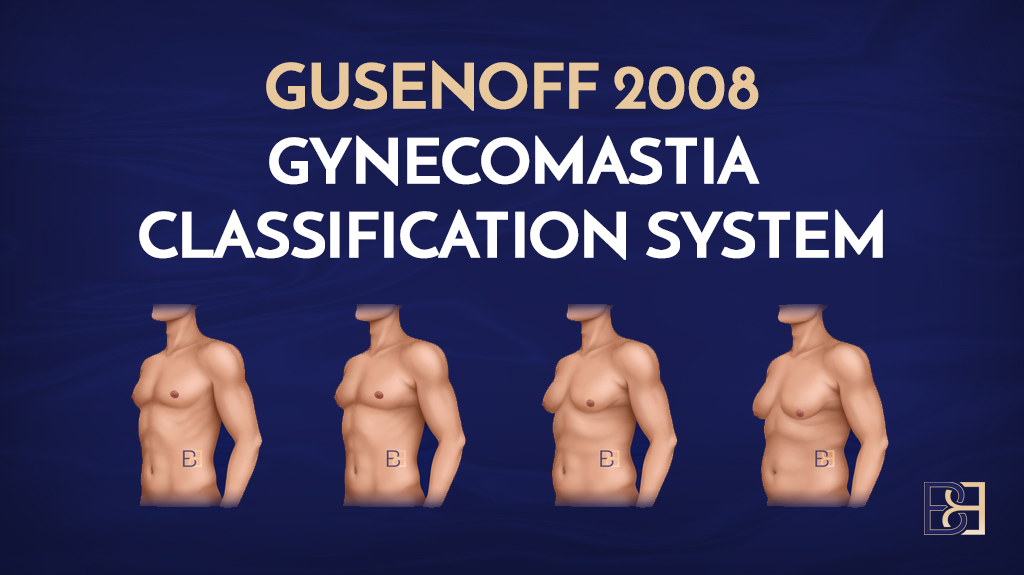
Gusenoff Gynecomastia Classification System (2008)

Gusenoff Gynaecomastia Classification System (2008)

Developed by Jeffrey A. Gusenoff to classify gynecomastia based on the severity of breast tissue enlargement, skin excess, and the degree of ptosis, the Gusenoff Gynaecomastia Classification System is particularly focused on guiding surgical treatment for patients, providing a clear framework for surgeons to choose the appropriate technique based on

The Barros 2012 Gynaecomastia Classification System: Approaches for Evaluation and Therapeutic Solutions

The Barros 2012 Gynaecomastia Classification System: Approaches for Evaluation and Therapeutic Solutions

Presented by Alfredo Carlos Simões Dornellas de Barros to classify gynaecomastia based on the shape, size, and degree of male breast enlargement, as well as skin laxity, the Barros 2012 Gynaecomastia System outlines the causes, varying levels of severity, and surgical planning for each grade. This text discusses one of

Location

30 Belmore Rd
Lorn NSW 2320

Connect

This website contains adult content. You must be 18 years or over to read. All surgery carries risks. You should seek a second opinion before proceeding. Results vary from patient to patient. See our disclaimer.
This is default text for notification bar