


Body Contouring Surgery After Significant Weight Loss
After significant weight loss, whether through bariatric surgery, medication or lifestyle change, the skin often does not shrink back to fit your new body size. Loose skin does not respond to exercise or creams; the only way to remove it is surgery, and which operation depends on where the skin sits and in which direction it runs. This page maps every post weight loss operation I offer by body area, so you can find the area you want treated and go directly to the detailed page on each procedure.
Find your area
Book your appointment online now
Disclaimer: General information only. This is not medical advice. Discuss your result and any health questions with your GP. The calculation happens in your browser. Nothing you enter is stored or sent anywhere.
BMI is a screening measure, not a diagnosis. It does not distinguish muscle from fat. It can be less accurate for people with a very muscular build, some ethnic groups and older adults. The classification shown is the World Health Organization (WHO) classification for adults aged 18 and over. It does not apply during pregnancy.
Who is a candidate
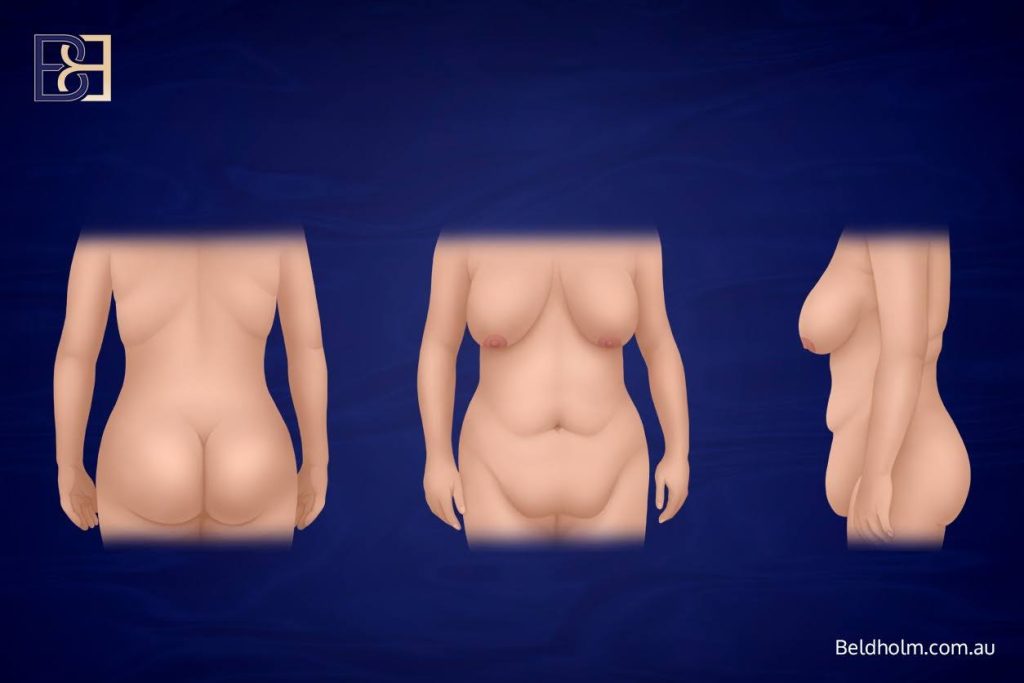
You may be a candidate for post weight loss surgery if:
- Your weight has been stable for at least 6 months. I prefer 12 months, because by then the skin has largely finished retracting and what is left is what needs to be removed. The same rule applies if your weight loss came through medication.
- Your BMI is roughly 18 to 30. This is a guide, not a cut-off. Above this range the risk of wound problems rises, and I may recommend further weight loss or a staged plan before a larger operation.
- The loose skin is causing physical problems: rashes or infections in the skin folds (intertrigo), difficulty keeping the folds clean, or skin that gets in the way of exercise, clothing or daily activities.
- You are in reasonable general health and able to set aside several weeks for recovery.
Nutritional preparation is part of candidacy. Most patients arrive with nutritional gaps that developed during weight loss, and correcting them before surgery supports wound healing. Every post weight loss patient has a comprehensive pre-operative blood panel, and I treat any deficiencies before surgery. The panel is covered in my pre-operative blood tests guide and the supplements I recommend in my vitamins and supplements guide.
Find the area you want treated
Several of the operations below are techniques I developed for skin patterns that the standard operations leave behind. The names are not widely known, so each one is described by the pattern it treats and where it sits next to the standard option. Most patients come to me about a single area. Where several areas are involved, whether the work is done as a single operation or in stages is covered further down.
Abdomen and lower torso
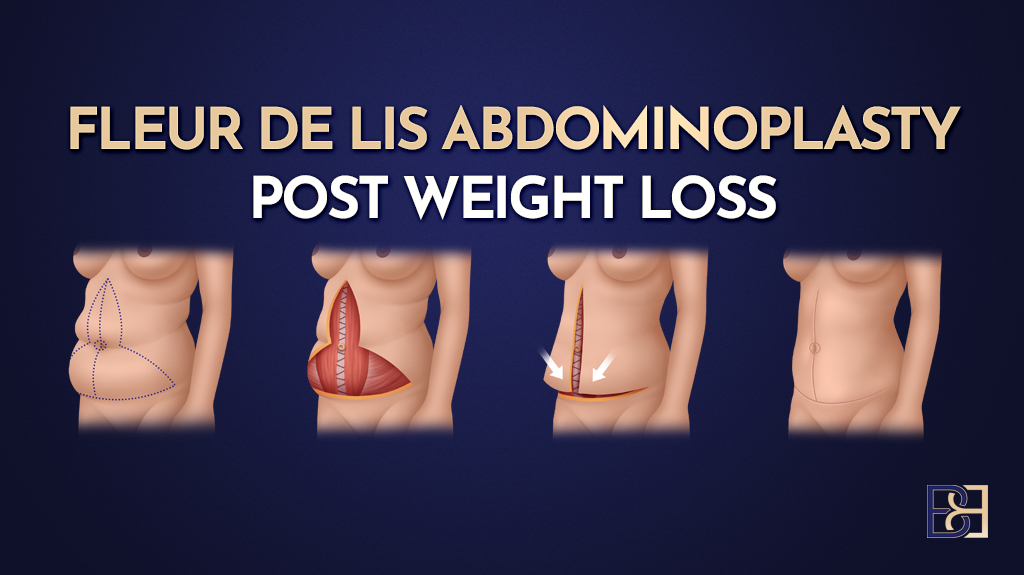
This group covers the front of the abdomen, the flanks and lower back, the buttocks and the pubic area. The lower torso overview compares these operations in more detail.
Loose skin on the front of the abdomen only
From the least extensive operation to the most:
- Apronectomy: an apron of skin hanging over the pubic area, with the skin above it reasonably firm. The apron is removed as a wedge, with no muscle repair and the belly button (umbilicus) left where it is.
- Upper and lower abdominal lipectomy: loose skin confined to the upper abdomen just below the breasts, or to the lower abdomen only. A skin-only wedge is removed from the affected part.
- Abdominoplasty (tummy tuck): loose skin across the whole front of the abdomen running top to bottom. After weight loss this is usually the extended form, because the excess runs into the flanks. The belly button (umbilicus) is repositioned, and the muscles are repaired where there is muscle separation (diastasis recti).
- Fleur de Lis abdominoplasty: loose skin that runs top to bottom and also gathers side to side, so a horizontal scar alone would leave a central fold. A vertical midline excision is added to take in the side to side excess.
- Dual vector abdominoplasty (my own technique): the Fleur de Lis pattern with extra loose skin in the upper abdomen that a Fleur de Lis alone would leave behind. The upper abdominal skin is removed as well.
Loose skin all the way around the lower torso
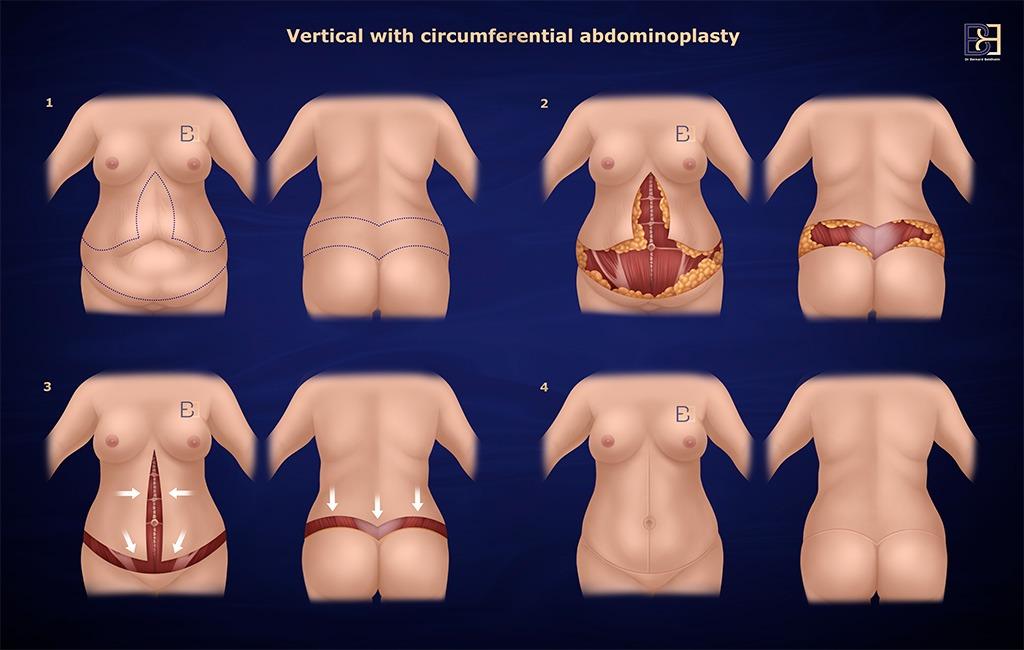
- Body lift (belt lipectomy): loose skin that continues from the front around the flanks into the lower back, with a dropped buttock and outer thigh. The skin is removed as a circumferential band around the waist, which lifts the buttock and outer thigh at the same time.
- Circumferential hybrid abdominoplasty (my own technique): loose skin all the way around, as above, that also gathers side to side across the front. A body lift (belt lipectomy) is combined with a vertical excision on the front.
Buttocks
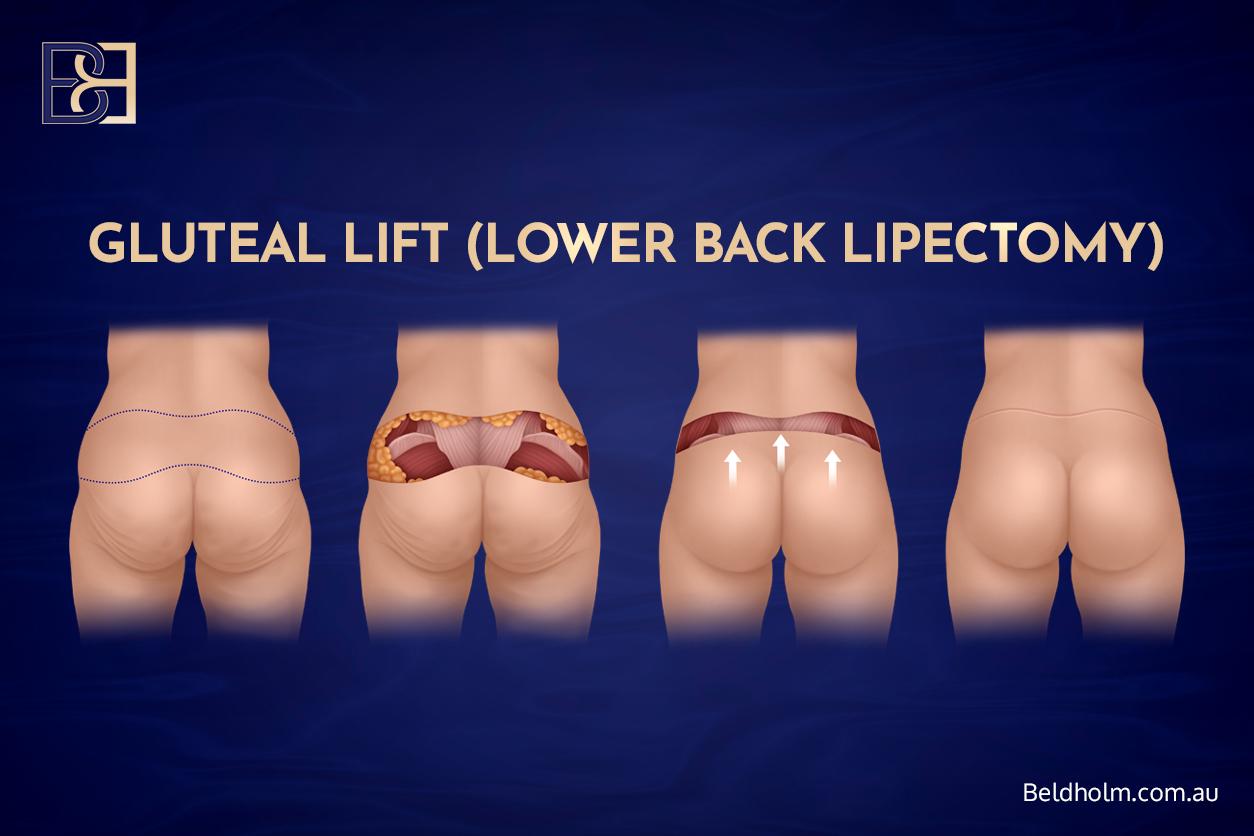
- Gluteal lipectomy (buttock lift): loose, hanging skin over the buttock itself. The excess is removed directly, often in the same operation as a body lift (belt lipectomy).
Pubic area
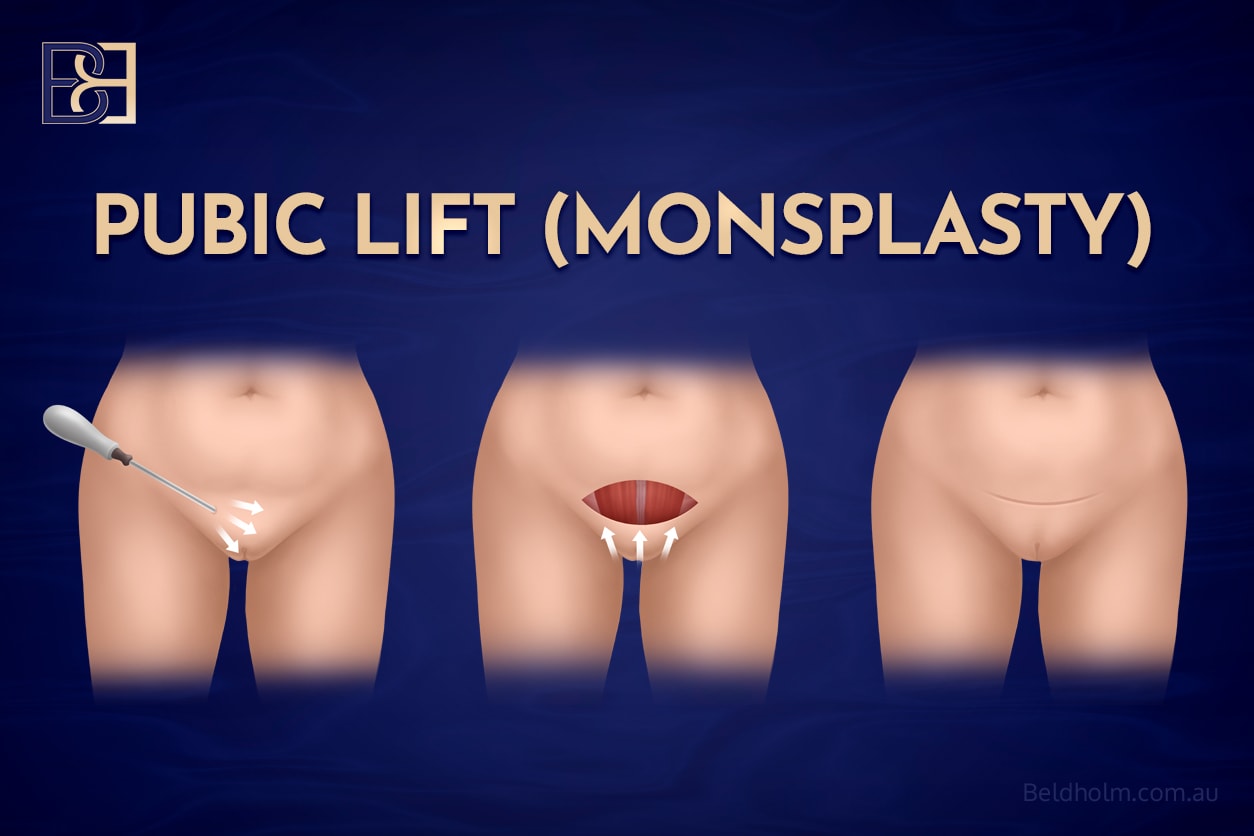
- Pubic lift (monsplasty): loose skin or fullness over the pubic mound. Usually combined with the abdominal operation, and can be done on its own.
Chest, breast and upper back
This group covers the chest in men, the breast in women, and rolls of skin across the upper back. The 2 breast operations are not specific to weight loss, so their pages cover them in general terms.
- Male chest surgery (torsoplasty) (men): loose chest skin and a dropped nipple position after weight loss, treated by removing the excess skin.
- Mastopexy (breast lift) (women): breasts that have lost volume and dropped, with loose skin. The loose skin is removed and the breast lifted and reshaped.
- Breast reduction (reduction mammoplasty) (women): breasts that remain large and heavy after weight loss, with loose skin and a dropped position. Breast tissue and skin are removed and the breast lifted.
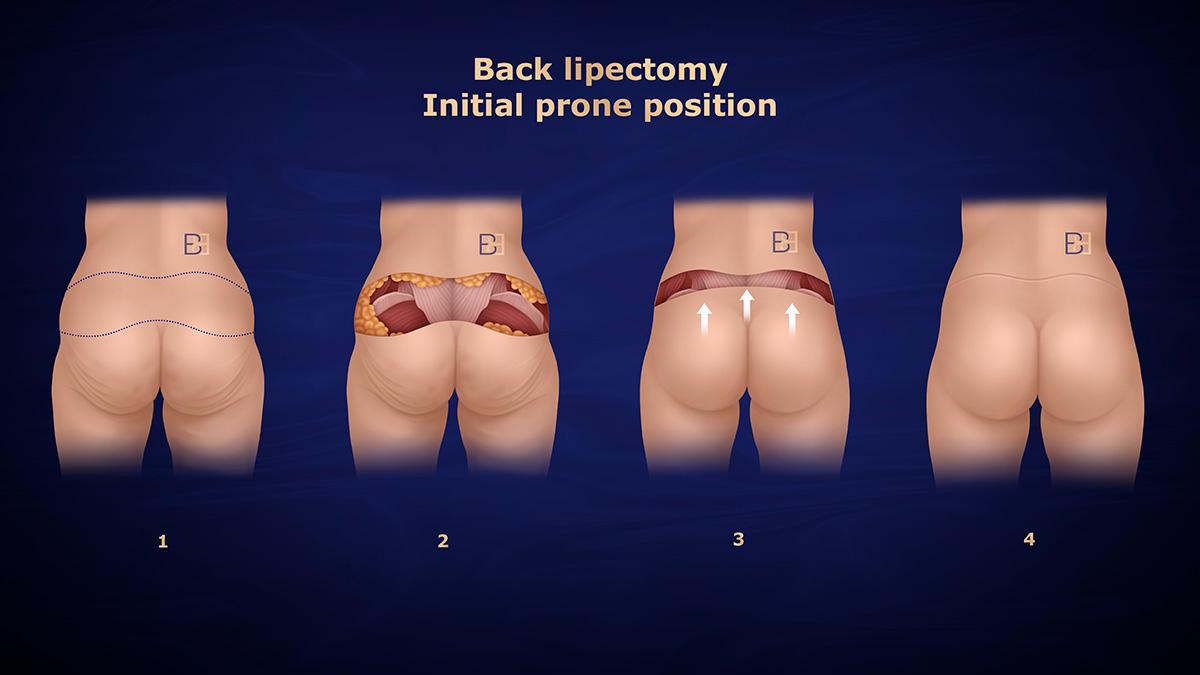
- Bra line lipectomy (upper back lipectomy) (men and women): rolls of loose skin across the upper back at bra level, extending around the sides of the chest. The roll is removed along the bra line.
Arms
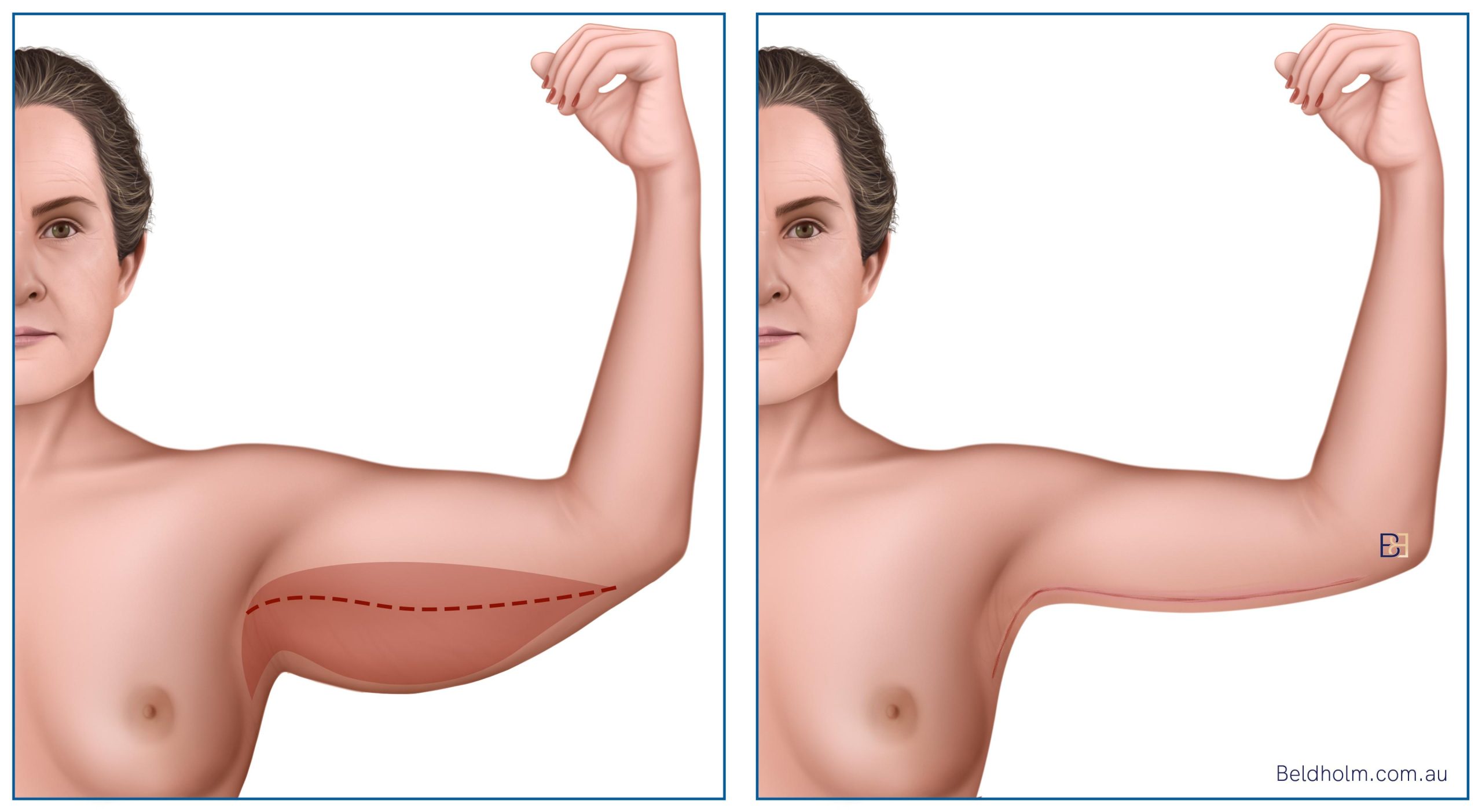
- Brachioplasty (arm lift): loose skin hanging from the underside of the upper arm between the elbow and the armpit. The scar runs along the inner arm, and its length depends on how far the excess extends. Where the loose skin continues past the armpit onto the side of the chest, the excision is extended down the side of the chest, or a bra line lipectomy (upper back lipectomy) is added.
Thighs
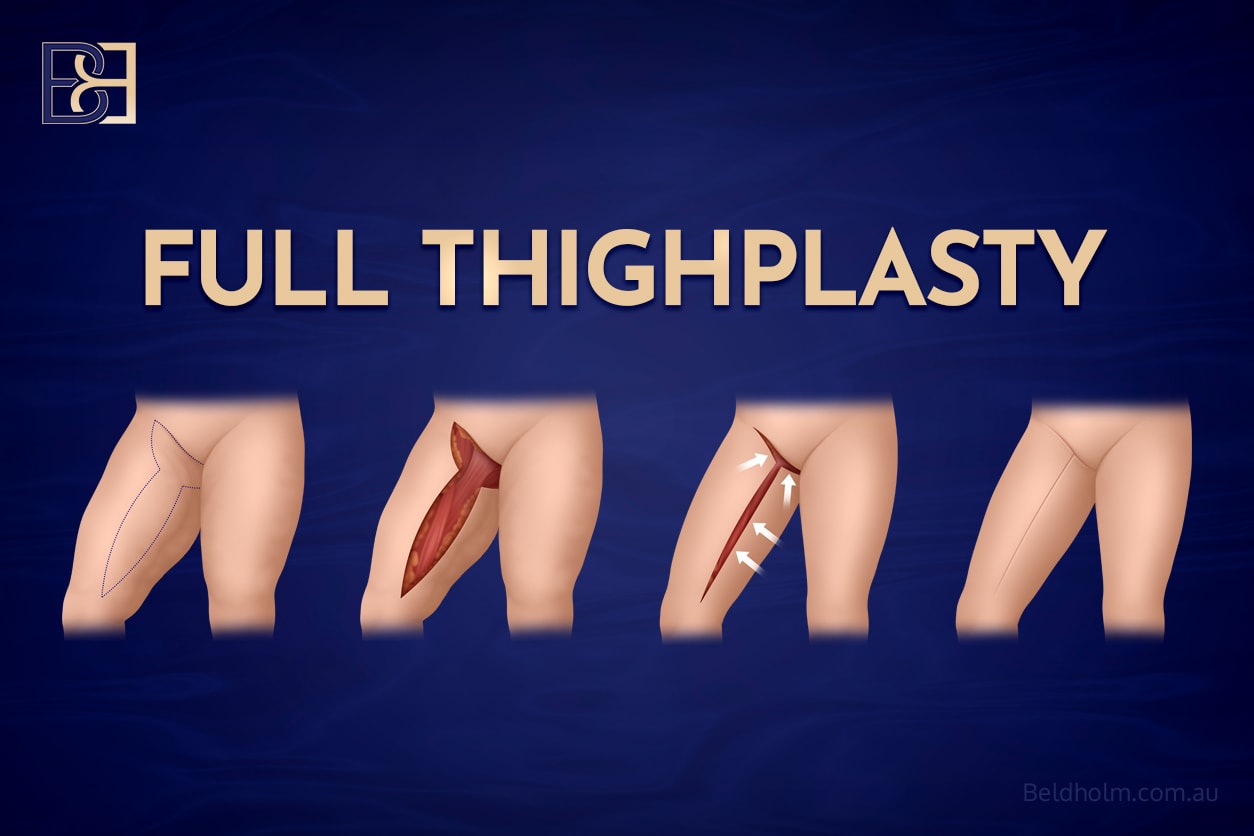
- Thighplasty (thigh lift): loose inner thigh skin that rubs and chafes. The scar sits in the groin crease, runs along the inner thigh, or both, depending on the direction of the excess.
Loose skin on the outer thigh is a different problem. It is usually treated as part of a body lift (belt lipectomy), not a thighplasty.
Face and neck
- Face and neck lift (rhytidectomy): loose skin of the lower face, jawline and neck after weight loss, lifted through incisions placed around the ear. Where the neck is the main concern, the neck lift page covers that on its own.
- Direct neck skin excision: a large amount of loose neck skin that a face and neck lift (rhytidectomy) cannot fully take up. The skin is removed directly through a scar on the front of the neck, which trades a visible scar for a much larger skin removal.
One operation or staged surgery
Many patients arrive with loose skin in several areas. Where a patient is suited to it, my preference is to treat those areas in a single comprehensive operation rather than dividing the work across several. That means a single anaesthetic, a single hospital admission and a single recovery to work through, instead of repeating each of those steps 2 or 3 times.
A larger operation is a bigger physiological event than a smaller operation, and I do not minimise that. It places more demand on the body, takes longer under anaesthetic and needs a more disciplined recovery, which is why nutritional preparation carries more weight when a single comprehensive operation is planned. For some patients, doing everything at once is more than is sensible, and staging the work across separate operations is the more appropriate path. Staging is a legitimate choice, not a fallback.
Which path suits you depends on your medical history, your nutritional status, the extent and pattern of your loose skin, and what can be done well in a single operating session. I make that decision with you at consultation, after examining you, not before.
Why come and see me
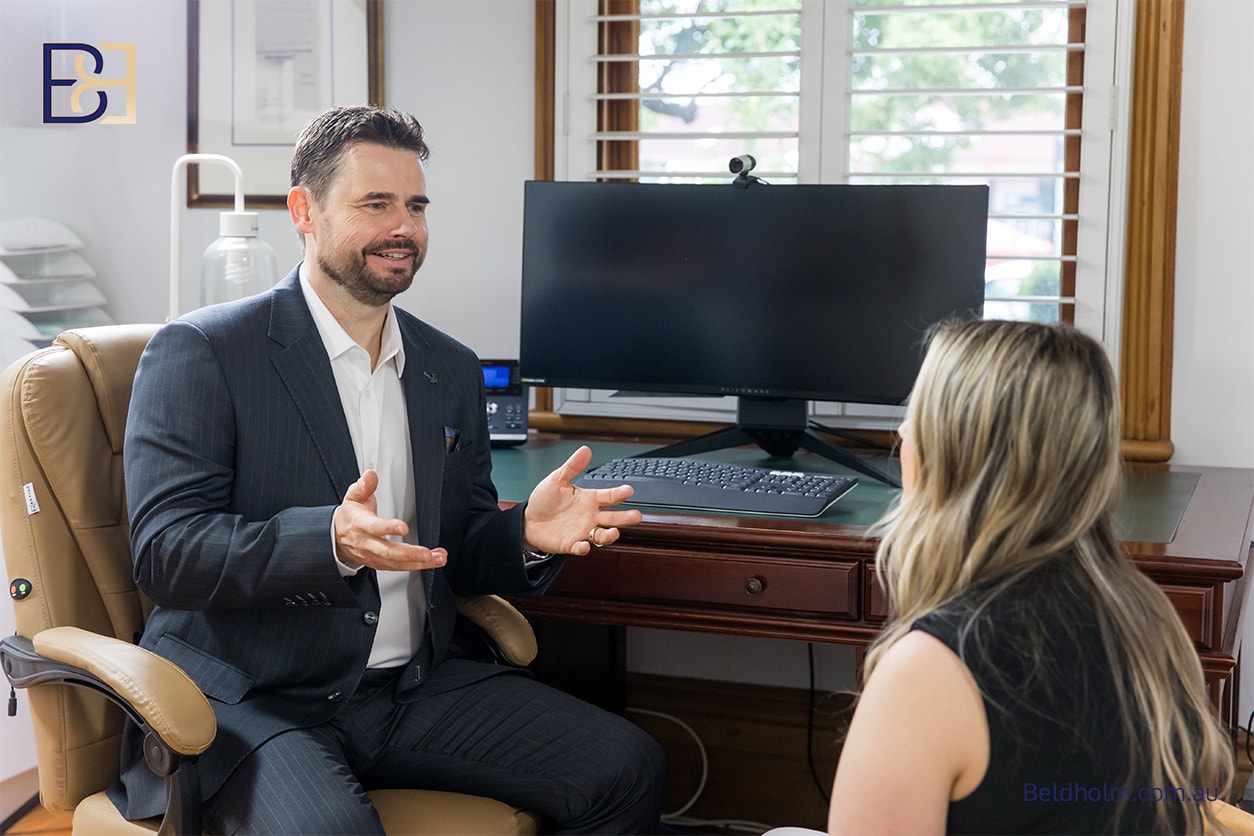
I am a Specialist Surgeon (FRACS) with more than 15 years of experience, and body contouring surgery after significant weight loss and pregnancy is one of the areas I focus on. I perform every operation on this page regularly, from apronectomy through to circumferential hybrid abdominoplasty.
I operate at Maitland Private Hospital in the Hunter Valley. The hospital has 24 hour medical cover and an on-site ICU, which matters for the longer operations described above. While you are in hospital I see you on my own ward round every day. A dietitian is available on the ward on request to help with protein intake while you recover, and once you are home there is a nurse-led phone line at the hospital around the clock if a concern comes up.
Your first consultation runs for about 1 hour. I take a full history, examine each area you want treated, map the direction of the skin excess, and check for muscle separation (diastasis recti) and hernias where the abdomen is involved. From that I set out which operation, or which combination, fits your pattern and whether it should be done as a single operation or in stages. A second consultation is included at no cost, so you can go away, think it over and come back with questions before you decide anything. Telehealth is available for the early part of this process if you are travelling from regional NSW or interstate.
The pre-operative blood panel described above is part of every post weight loss work-up, and your GP is copied into the results and stays involved throughout.
After surgery, I follow you intensively for the first 2 weeks, then review you at 4 weeks, 3 months, 6 months and 12 months. All of this follow-up is included in the surgical fee.
The dual vector abdominoplasty and the circumferential hybrid abdominoplasty are my own techniques. I present them at surgical conferences and teach them to other surgeons.
Read more about Dr Bernard Beldholm, including his qualifications and areas of surgical practice.
Book your appointment online now
Risks and recovery
Every operation on this page is major surgery under general anaesthetic, and the larger ones run for several hours. The scars are long and permanent; they fade over 12 to 18 months but do not disappear. Wound healing problems are the most common complication, particularly where incision lines meet and in patients with a higher BMI or uncorrected nutritional deficiencies, and some patients need dressings for longer than planned. Fluid collections (seroma), bleeding, infection, numbness around the scars and some asymmetry can also occur, and a small number of patients need a revision. Blood clots in the legs or lungs are the most serious risk in this group of operations, which is why I assess your clot risk myself and set your prevention plan before surgery. Recovery means between 1 and 4 nights in hospital depending on the operation, a compression garment for 4 weeks full time and then 2 weeks in the daytime, and 2 to 6 weeks away from work depending on the operation and what your job involves. Swelling takes months to settle. Each procedure page links to its own recovery and complications guide; the general guides for the lower torso are recovering from lower torso surgery and complications of lower torso operations.
Cost and Medicare
Medicare item numbers exist for removing redundant skin after significant weight loss, and where you meet the criteria your health fund may cover the hospital stay, which changes your out of pocket cost substantially; whether you qualify is assessed at consultation, not self-assessed. Every procedure page links to a cost page for that operation with a from-price and what my fee includes, and the Medicare coverage guide explains the criteria in detail.
Your steps to surgery

GP referral
A referral from your GP is required before any consultation. It helps if the referral records your weight history and any skin problems, because these matter for Medicare assessment.
Consultation
About 1 hour with me, in person or by telehealth for the early part, covering which operation or combination fits your pattern.
Written quote
After the consultation my patient coordinators prepare a written quote setting out my fee, the surgical assistant, anaesthetist and hospital estimates, your garment and all follow-up. Your second consultation is for questions about the quote and the plan before you decide.
Prepare
Your pre-operative blood panel is done and any deficiencies corrected, your protein intake is set up, and your anaesthetist speaks with you by phone.
Surgery
Admission to Maitland Private Hospital for between 1 and 4 nights depending on the operation.
Structured follow-up
Intensive follow-up for the first 2 weeks, then reviews at 4 weeks, 3 months, 6 months and 12 months, all included in the fee. Your GP receives a formal handover at the 4 week visit.