


Direct Excision of Neck Skin in Newcastle NSW
Direct excision of neck skin is an operation that removes excess skin from the front of the neck through an incision placed directly on the neck itself. The loose skin is cut away and the edges are brought together. This leaves a visible scar on the front of the neck. That scar is permanent, and accepting it is central to the decision to have this operation.
It is a different operation from a neck lift (cervicoplasty). A neck lift (cervicoplasty) works through incisions around the ears and under the chin, and repositions skin and deeper tissue back and upward. Direct excision removes the skin excess where it sits, at the front of the neck, in exchange for a shorter operation and a scar in a visible location.
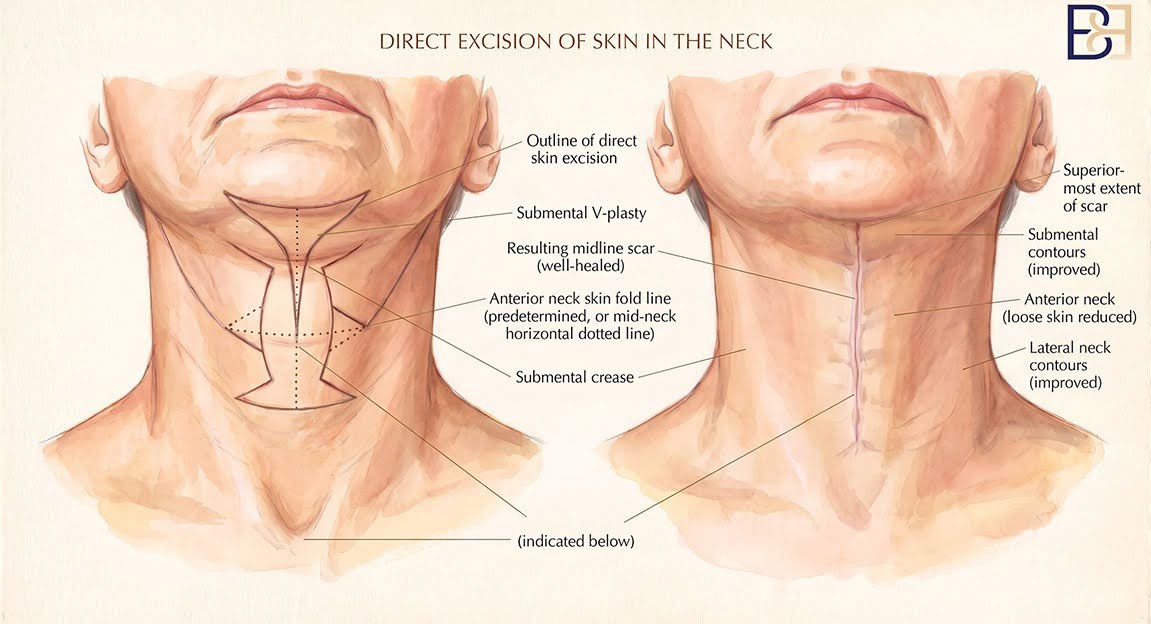
It is also a focused operation. It works on skin excess of the front of the neck, with tightening of the platysma muscle where indicated. It does not lift the jawline or the lower face, it does not change skin texture, and it does not stop the ageing process. The neck continues to age after surgery, so results are not permanent in that sense.
Loose neck skin develops with normal ageing, and it is common after significant weight loss. Both are normal changes in the body, not medical problems, and surgery is one option rather than the expected response.
If you want more detail on this operation, I cover it fully in my article on direct excision of neck skin.
Book your appointment online now
What direct excision of neck skin is suited to
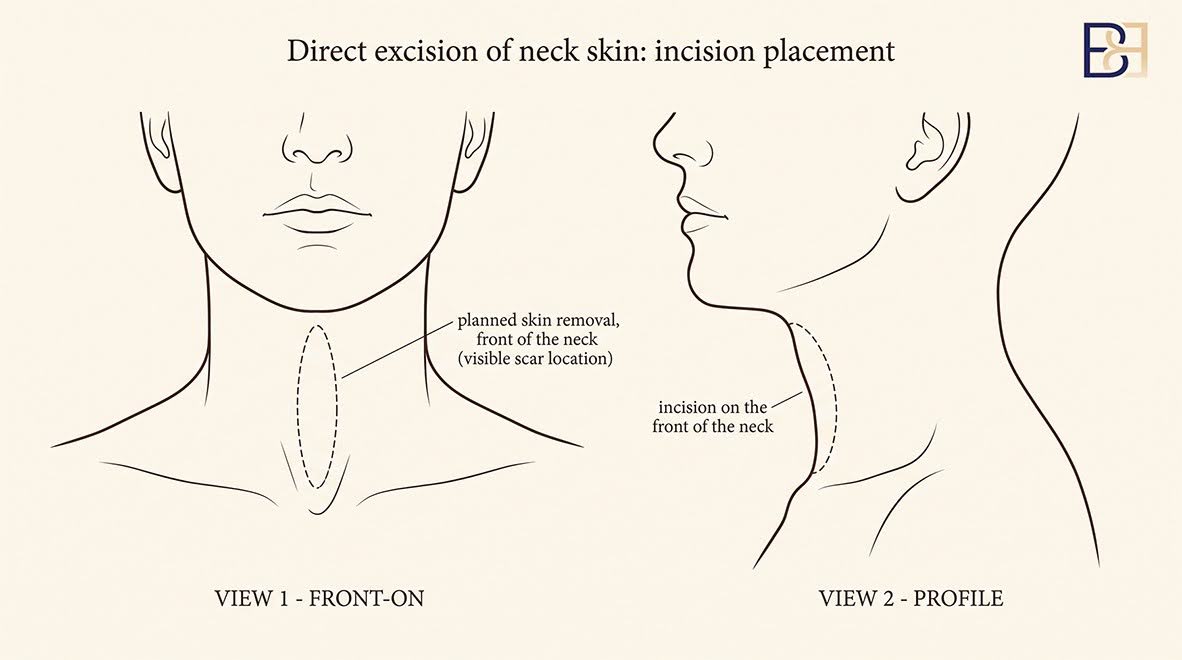
This operation is suited to one specific situation: a large amount of loose skin on the front of the neck, where the skin itself is the main issue rather than the deeper structures.
In my practice, that situation most often follows massive weight loss. After significant weight loss, the skin of the neck can be left loose and folded, and there can be more excess than incisions around the ears can take up. Direct excision removes that skin where it sits. It suits patients who want a shorter, more focused operation and who accept a visible front-of-neck scar as part of that choice.
It is not the usual first option for the ageing neck. Where the changes involve deeper structures as well as skin, a neck lift (cervicoplasty), a deep neck lift (cervicoplasty), or platysmaplasty may be more appropriate, and I cover each of these on their own pages. Which operation suits a particular neck is decided at consultation, after examination.
Some necks are better suited to non-surgical measures, or to no treatment at all. If that applies to you, I will say so at consultation.
How I perform direct excision of neck skin
The operation is performed under general anaesthesia at Maitland Private Hospital.
Before surgery, I mark the excess skin on the front of the neck with you upright, since the skin sits differently when you lie down. The incision is placed vertically on the front of the neck, within the marked area.
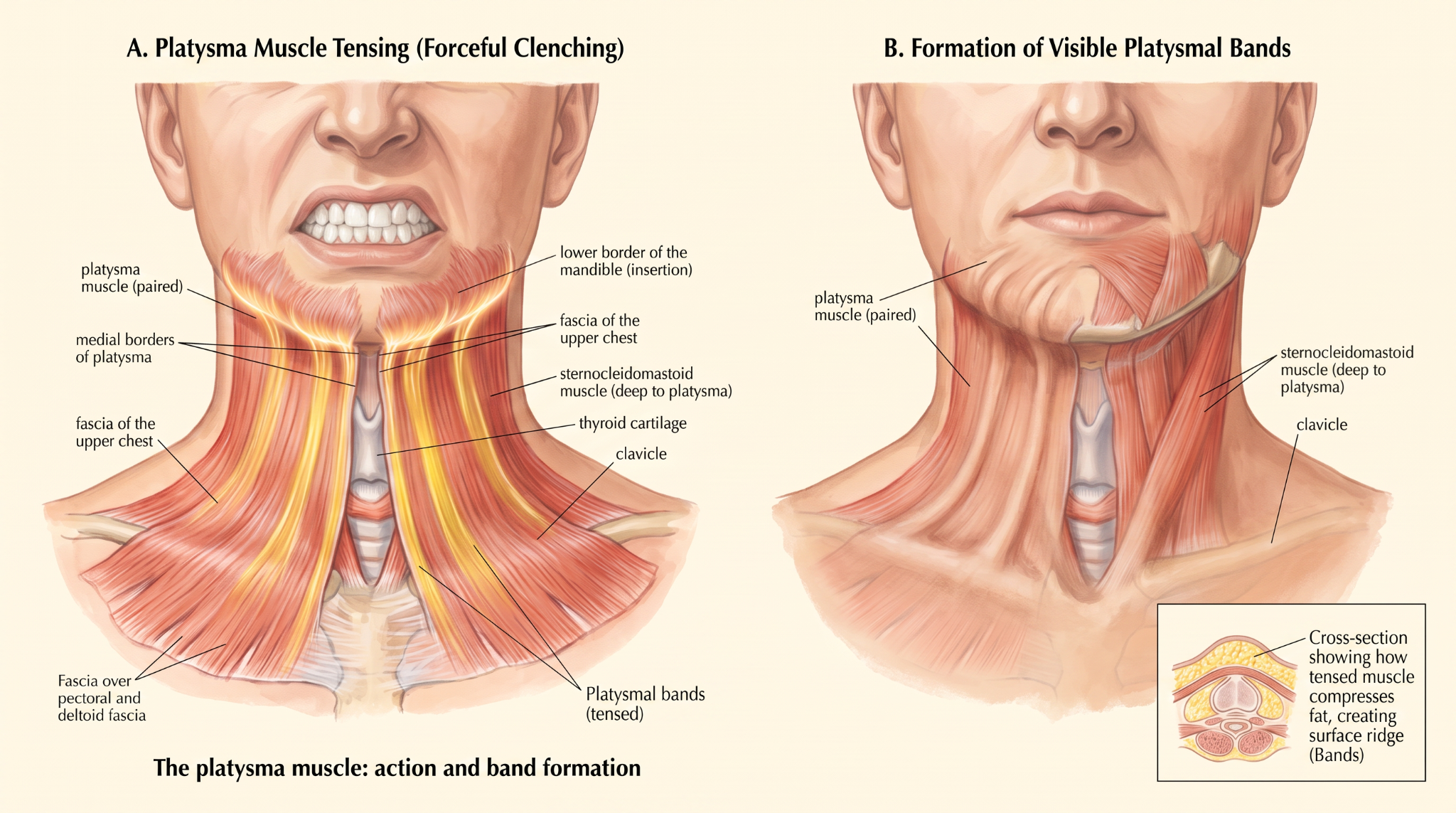
The loose skin is then removed. With the skin out of the way, the platysma muscle is directly visible, and where indicated I tighten or repair it at the same time. Exactly what is done under the skin is decided at assessment and confirmed during surgery.
The closure matters as much as the excision. A straight vertical scar on the neck can tighten as it heals and pull across your neckl creases. To reduce this, I close the wound in a broken-line pattern, using a Z-plasty or a stepped design, so the scar does not run as a single straight line. This aims to reduce tightness and help the scar settle into the neck, but it does not make the scar invisible. It remains a visible scar on the front of the neck, and it matures over 12 months or more.
My approach

Assessment comes first. Before recommending direct excision, I examine the neck to work out what is actually contributing: how much is loose skin, how much is fat above or below the platysma muscle, and how much involves the muscle itself. That examination determines whether direct excision is the right operation for you, or whether a different neck procedure suits your anatomy better.
Because this operation is most often performed after massive weight loss, weight stability matters. Ongoing weight change affects the skin of the neck, so I prefer weight to be stable before surgery. Timing is assessed individually at consultation.
Preparation also includes blood pressure and smoking. Blood pressure is reviewed and optimised before surgery, as raised blood pressure contributes to bleeding risk. Smoking affects skin healing, which matters in an operation built around a skin closure on the front of the neck, so smoking needs to be ceased for an appropriate period before surgery.
Book your appointment online now
About Dr Beldholm

I have spent more than 15 years performing surgery of the face and neck. I am a Fellow of the Royal Australasian College of Surgeons (FRACS) and I work as a Specialist Surgeon in the Hunter Valley, NSW.
A large part of my practice is surgery after massive weight loss, including body contouring and skin excess procedures. That background is relevant here, because direct excision of neck skin is most often an operation for patients who have lost a significant amount of weight, and assessing skin quality and excess after weight loss is something I do every week.
Alongside surgery, non-surgical options exist for some neck concerns, and I can discuss whether any of these suit you at consultation.
I operate at Maitland Private Hospital, a fully accredited private hospital with 24-hour medical cover.
Your pathway
GP referral
A referral from your GP is required before any consultation.
Consultation
Your first consultation runs for about an hour. It covers your health history, examination of the neck, standardised clinical photography, and a frank discussion of what direct excision involves, including the scar. A second consultation is provided at no cost.
Quote
After consultation, you receive a written quote for my surgical fee. Hospital and anaesthetist quotes are separate, and my patient coordinator organises these for you.
Surgery
The operation is performed under general anaesthesia at Maitland Private Hospital. A supportive garment is provided by the practice.
Follow-up
Follow-up is intensive for the first two weeks, with regular nurse and doctor reviews. After that, I see you at 4 weeks, 3 months, 6 months, and 12 months. All follow-up is included at no additional cost.
Recovery in brief
Expect swelling and bruising of the neck in the first one to two weeks. A supportive garment is worn as directed. Most patients feel tightness across the front of the neck early on, which settles as healing progresses.
Most people take one to two weeks off work, depending on the type of work. Return to exercise is staged, with strenuous activity held back until I clear it at review. Recovery varies between patients.
Scar care matters more with this operation than most, because the scar sits in a visible location. Taping, sun protection, and time all play a part. The scar is usually at its most noticeable in the first few months and continues to fade well beyond that.
For the full week-by-week detail, see my neck surgery recovery guide.
Risks
Direct excision of neck skin is a significant operation, and it carries risks. The ones I discuss with every patient include:
- The scar itself. This is the defining trade-off of the operation. The scar is permanent and sits in a visible location. It can become thickened, raised, or tight despite the broken-line closure, and some scars benefit from revision later
- Haematoma. A collection of blood under the skin that may need a return to theatre. Raised blood pressure contributes to this risk, which is why blood pressure is optimised before surgery
- Wound healing problems. Delayed healing or breakdown of the wound edges, with the risk higher in smokers
- Infection
- Numbness or altered sensation of the skin of the front of the neck, which usually resolves over months but can persist
- Nerve injury affecting muscle movement in the neck or lower face, which is uncommon
- Asymmetry, contour irregularity, or residual loose skin, which may need further surgery
- Anaesthetic risks, discussed with your anaesthetist
Results vary between patients. For a fuller discussion, see my article on the risks of neck surgery.
Is direct excision of neck skin right for you?
This operation suits a specific patient: someone with a large amount of loose skin on the front of the neck, most often after massive weight loss, who is medically fit, whose weight is stable, and who has weighed up a visible front-of-neck scar against a shorter, more focused operation and accepts that trade-off.
It is not the right operation for every neck, and for many patients a different neck procedure, a non-surgical measure, or no treatment at all is the better path. Loose neck skin is a normal change, and surgery is one option rather than something a neck needs.
Whether it is right for you can only be decided at consultation, after examination and an honest conversation about the scar, the risks, and what the operation can and cannot do.