


Removal and Replacement of Breast Implants (Implant Exchange) in Newcastle NSW
Breast implants are medical devices, and there are a few different reasons a patient comes to see me about an exchange. The implants may have been in place for many years. One may have ruptured. The tissue around an implant may have tightened. Or you may want a different size, shape or profile from what you have now.
In my practice, removal and replacement is planned around the implants you have today, your breast tissue as it is now, and what you want to be different. During consultation I examine your breasts, review any imaging, and talk through what a new implant would involve, and whether any change to the pocket or to the capsule around the implant is needed.
Some patients also find that their breast position has changed since their original surgery, and a breast lift (mastopexy) comes into the discussion alongside the exchange. I cover how that decision is made further down this page.
This page sets out what the operation involves, the reasons patients consider it, when a lift may be part of it, and how I plan, assess and cost it.
Book your appointment online now
Why patients consider removal and replacement

Patients come to see me about an implant exchange for a range of reasons. Some are medical, some are personal, and often it is a mix of the two. There is no fixed date at which an implant has to be swapped. The decision is made for you as an individual, based on how your implants and your breasts are now. These are the reasons I see most often.
The implants have been in place for many years
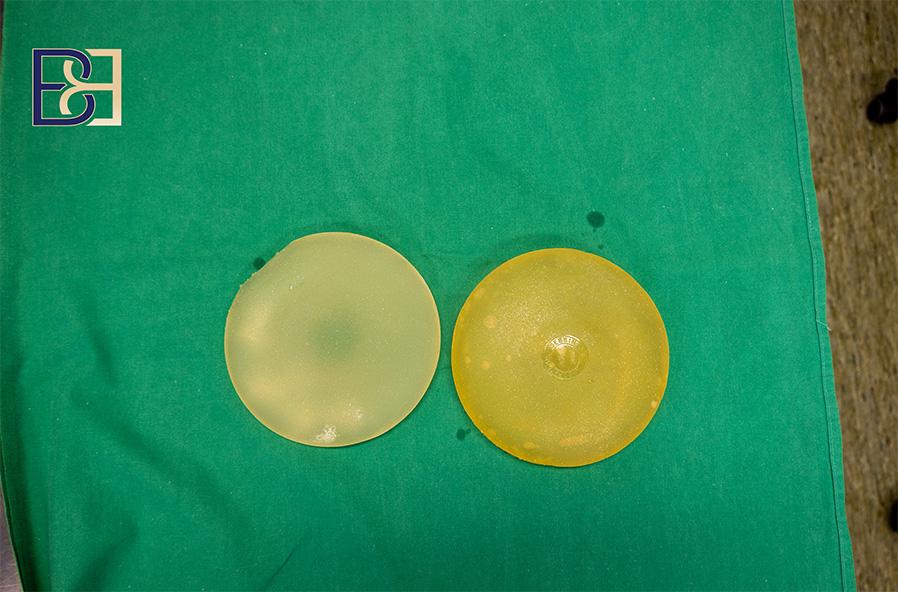
Breast implants are not lifetime devices. The longer an implant has been in place, the higher the chance that something changes over time, whether that is the implant itself or the tissue around it. Many patients with older implants come in for assessment even when nothing is obviously wrong, to talk through where they stand and what their options are.
A wish for a different size, shape or profile
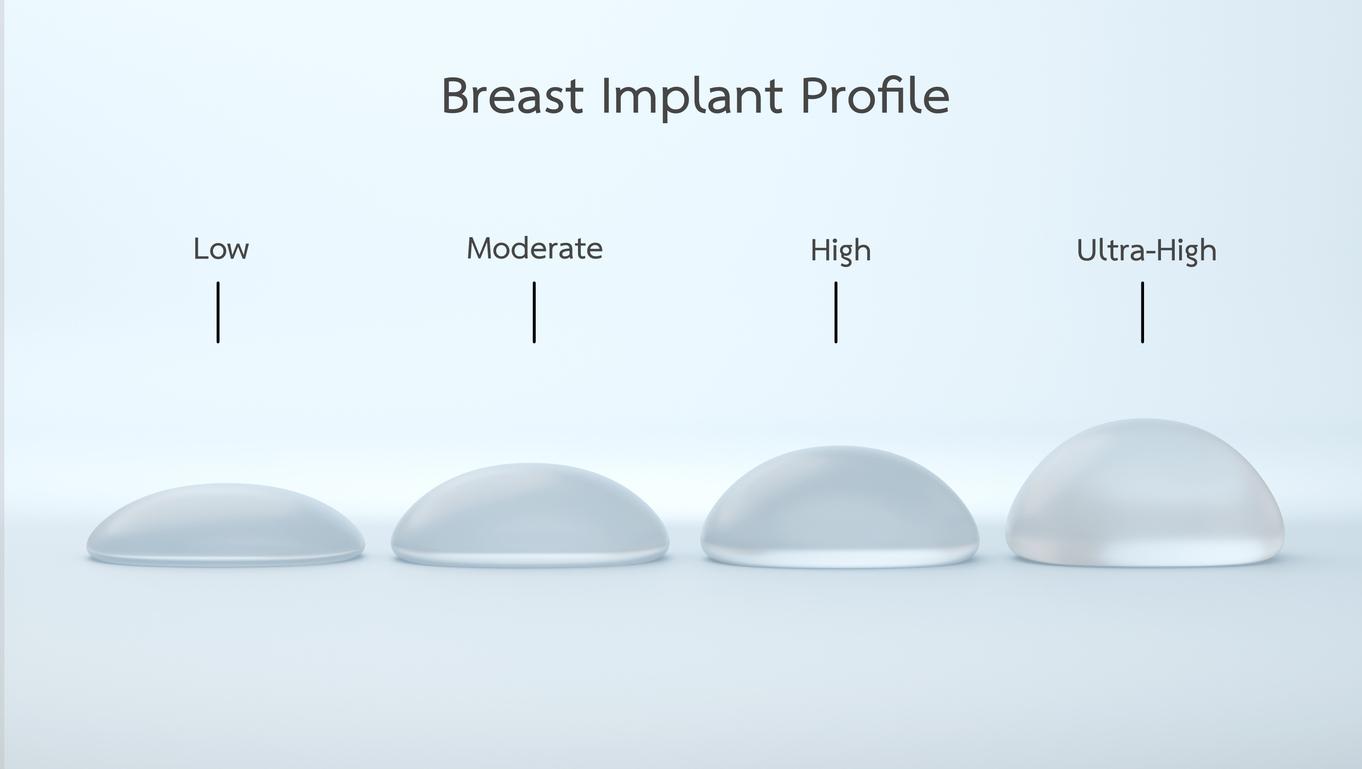
For some patients, the decision is to keep implants but change the implant itself: a different size, shape or profile. An exchange is the operation that allows the implant to be changed for one that suits what you are after, within the limits of your own tissue.
Implant rupture
An implant shell can develop a tear or leak, known as rupture. A saline implant usually deflates in a way you can see, because the salt water is absorbed by the body. A silicone implant can rupture without any outward sign, which is why imaging matters. I use ultrasound or MRI to check an implant when rupture is suspected. Where an implant has ruptured, removal is recommended, and many patients choose to have a new implant placed at the same time.
Capsular contracture
Your body forms a layer of scar tissue, called a capsule, around any implant. This is a normal response. In some patients the capsule tightens and thickens, which can make the breast feel firm, alter its shape, or become uncomfortable. This is capsular contracture. When it is significant, the operation involves removing or releasing the capsule as well as the implant, and a new implant may be placed depending on your circumstances.
BIA-ALCL
Breast implant associated anaplastic large cell lymphoma (BIA-ALCL) is a rare cancer of the immune system that can develop in the capsule around an implant. It is not breast cancer. Current evidence links it with textured surface implants rather than smooth ones. It is uncommon and, particularly when found early, it is treatable. Some patients with textured implants ask to discuss removal or exchange in light of this association. I assess and advise on this individually.
Breast implant illness
Some patients report a range of symptoms, such as fatigue, joint pain or difficulty concentrating, that they attribute to their implants. This is often referred to as breast implant illness. It is not a formal medical diagnosis, and research into it is ongoing. What I can tell you is that some patients choose to have their implants removed, with or without replacement, because of these symptoms. I take these concerns seriously and talk through what is known and what your options are at consultation.
If you are thinking about having your implants removed without new ones placed, that is a separate operation, called explant. I cover it on its own page.
What the operation involves
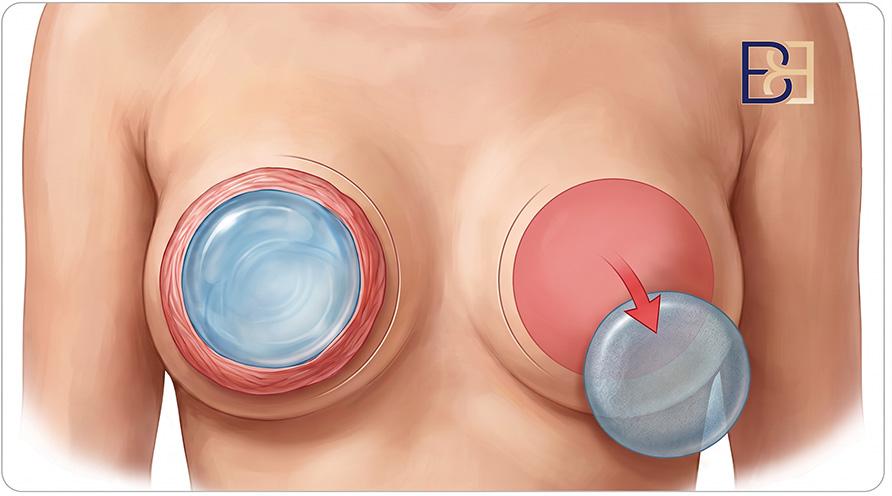
Removal and replacement is carried out under general anaesthetic at Maitland Private Hospital. The exact steps depend on what I find with your current implants and the capsule around them, but the operation generally follows the same pattern.
Reaching the implant
Wherever possible I work through your existing scar to reach the implant, so you are not left with an extra scar. Once the pocket is open, I take out the current implant.
Managing the capsule
Your body forms a capsule of scar tissue around any implant. What I do with it depends on its condition. If the capsule is thin and healthy, it may be left in place or partly trimmed. If it is thickened, calcified or contracted, I remove part or all of it. Removing the whole capsule is called a capsulectomy. Where an implant has ruptured, particularly a silicone one, taking out the capsule and the implant together helps clear any silicone that has collected in the pocket. Capsule work adds time and complexity to the operation, and I talk you through what is likely in your case beforehand.
Placing the new implant
Once the pocket is prepared, I place the new implant. This is the point at which a change in size, profile or shape is made, within what your tissue can support. In some patients I also change the plane the implant sits in, for example moving it from in front of the muscle to a position partly beneath it, where that suits your tissue and the result we are working towards. I talk through implant options and placement with you when we plan your surgery.
Closing and drains
I close in layers. Depending on how much capsule work was done, I may place a drain to stop fluid collecting. Not every patient needs one. You are fitted with a support garment to wear afterwards.
The operation can range from an implant swap on its own to a longer procedure when significant capsule work is involved. Which of those applies to you depends on your current implants and your tissue, and I set that out for you at consultation.
When a lift is considered alongside replacement
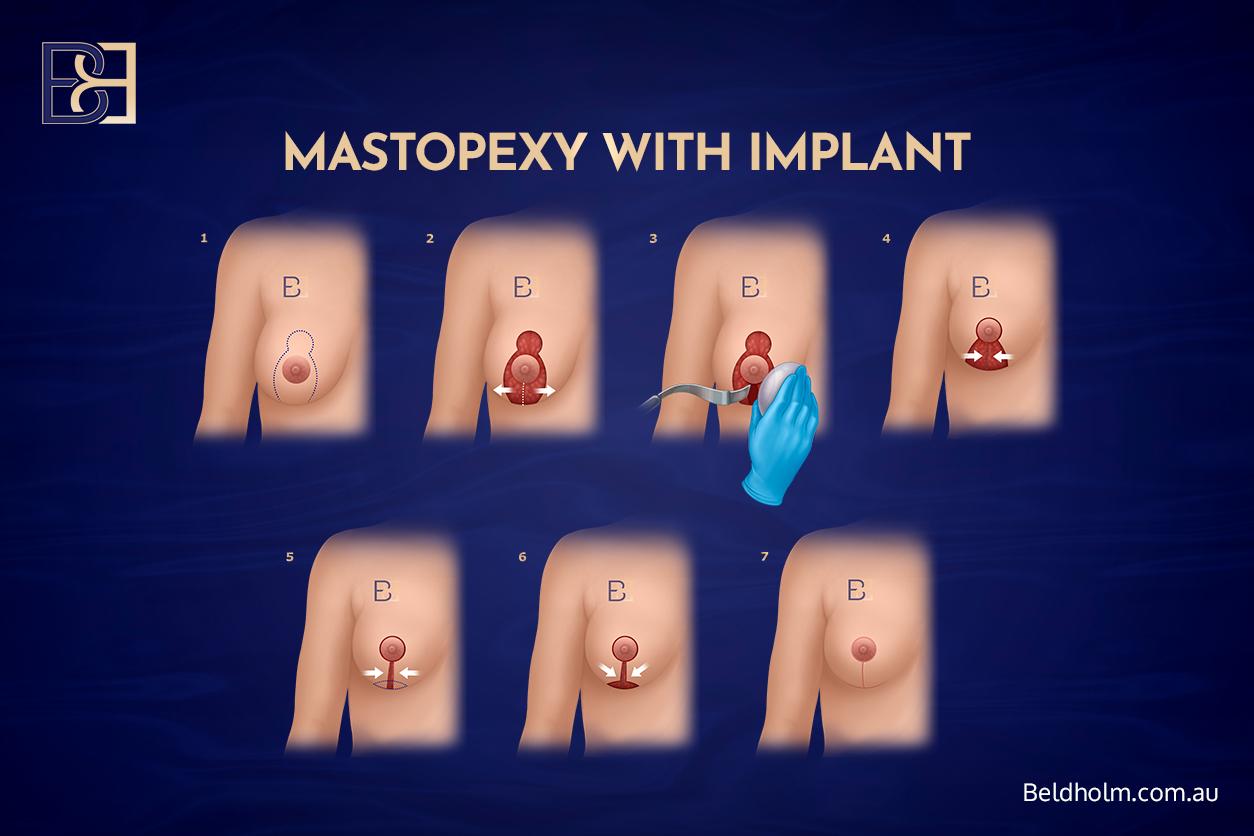
For some patients, the breast has changed position since their original surgery. Skin can stretch over the years, and the breast may sit lower on the chest than it once did. If that has happened, replacing the implant on its own may not change where the breast sits. In that situation I may talk with you about a breast lift (mastopexy) at the same time as the exchange.
A mastopexy repositions the nipple, tightens the skin and lifts the breast tissue higher on the chest. It also leaves additional scars on the breast, which I go through with you. An implant adds volume and fullness. The two do different jobs, which is why they are sometimes considered together when both position and volume are part of what you want to change.
One operation or two
Combining an implant exchange with a mastopexy in one operation is a more involved undertaking than either on its own. It carries a different risk and revision profile, and it is not the right approach for everyone.
Where a patient is suited to it, doing both in a single operation means one anaesthetic and one recovery period, rather than going through those steps twice. For other patients, staging the exchange and the lift across two separate operations is the more appropriate path. With an implant and a lift together, spreading the work out can protect the blood supply to the nipple, manage skin tension, and support scar quality. Staging is a sound clinical choice, not a lesser one.
How the decision is made
Whether one operation or two suits you is a clinical judgement made for you as an individual. It depends on your medical history, your tissue quality, the extent and pattern of skin laxity, where your breasts sit now, and what can be done well in a single operating time. I make that assessment with you at consultation. A GP referral is required before we meet, and results vary from patient to patient.
A combined operation is a larger physiological event than an exchange alone, so it places more demand on your body. That is the trade-off, and it is part of why good preparation before surgery matters. I talk through recovery and risks with you before any decision is made.
Book your appointment online now
Is removal and replacement right for me?
Removal and replacement is worth considering if you already have breast implants and you have a clear reason to change them. That might be a medical finding such as rupture or capsular contracture, a wish for a different size or shape, or the fact that your implants have been in place for many years. On top of that, you need to be in good enough general health to have an operation under general anaesthetic.
It is not the right step for everyone, and surgery is not the only option. If your implants are intact and not causing you any symptoms, monitoring and regular imaging may be the more sensible path rather than an operation. Part of my job at consultation is to tell you when that is the case.
What I assess
When you come in, I work through:
- Your reason for wanting a change, and what you want to be different
- Your general health, medical history and any medications
- Your current implants, including their age and type where that is known
- Your breast tissue, skin quality and where your breasts sit now
- Any existing imaging, and whether further imaging is needed before a decision
From there I can tell you what an exchange can realistically do for you, what it cannot, and whether a lift or any capsule work is likely to be part of it.
Realistic expectations
An exchange works within what your own tissue can support. A new implant can change your size, projection or fullness, but it does not undo every change your breasts have been through, and the skin and tissue you have now set some of the limits. I go through those limits with you at consultation, so you know what an exchange can and cannot do for you.
Planning and sizing
Planning an exchange starts with your current implants and your breast tissue, and works towards the change you want, as far as your tissue allows. This is what goes into it.
Choosing the implant
Breast implants differ in a few ways, and I go through each with you:
- Fill. Silicone cohesive gel or saline. The two feel different and behave differently if the shell is damaged.
- Shell surface. Smooth or textured. This matters in your decision, because textured surfaces carry the BIA-ALCL association I described earlier.
- Shape. Round or anatomical (teardrop).
- Profile and projection. How far the implant projects from the chest, which together with its width changes how it sits.
- Size. Chosen from your chest and breast measurements and what your tissue can carry, not from a cup number on its own.
I choose the implant with you, guided by your measurements and what you want from the result.
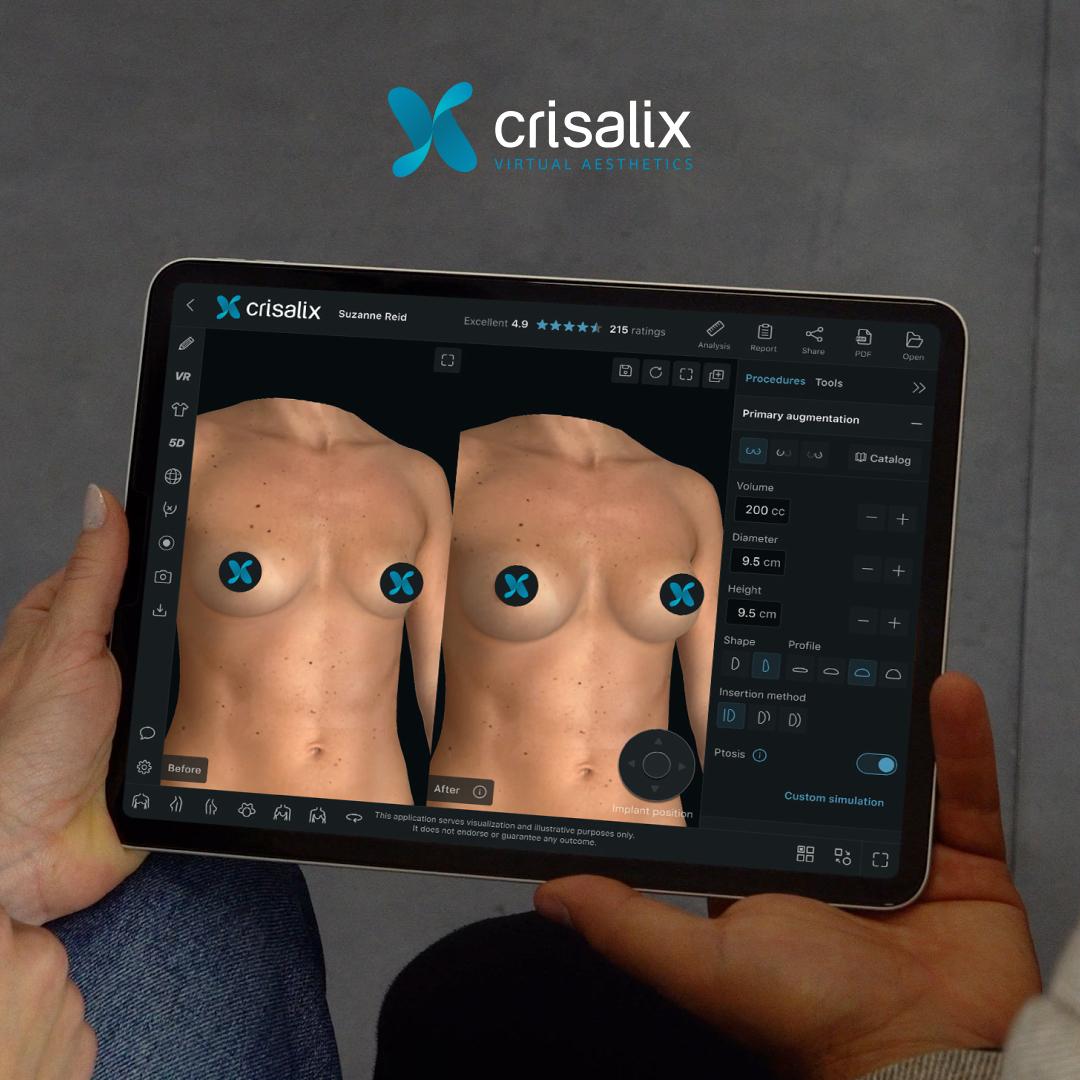
Disclaimer: 3D imaging is a visualisation aid used to support discussion during your consultation. It is a general guide only. It does not predict or guarantee your actual surgical result, and results vary between patients. All surgery has complications, get a 2nd opinion
Implants are regulated medical devices
Breast implants are regulated by the Therapeutic Goods Administration (TGA). Before surgery you are given the manufacturer’s patient information for the implant being used, so you can read about the device that will be placed. After surgery you are given a patient implant card that records the exact implant you received, including its make, model and serial number. Keep that card, as it is useful for your future care and for any ongoing surveillance.
Imaging before surgery
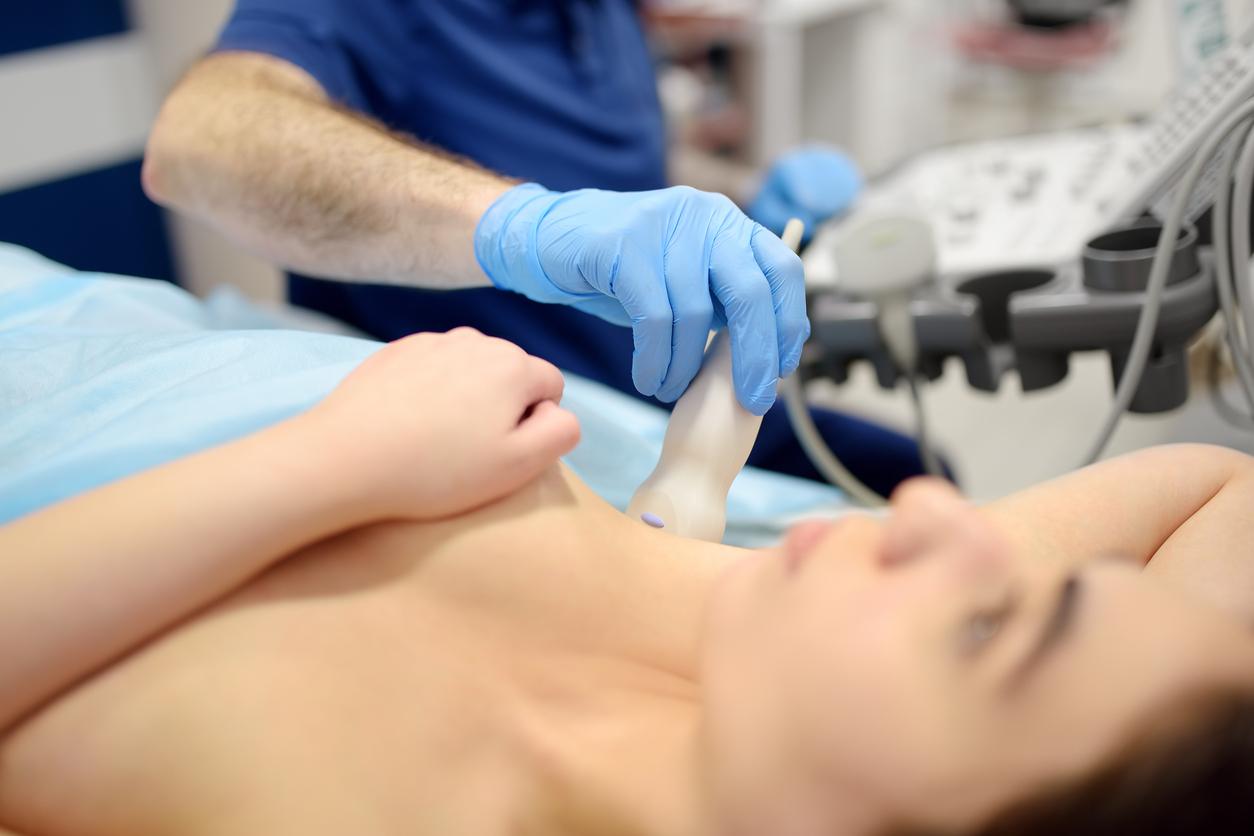
Imaging is not always needed before an exchange. If you have already decided to have your implants removed and replaced, the implant is coming out regardless of what a scan shows, so imaging does not usually change the plan.
Where imaging is useful is when you are not certain whether to proceed, or you suspect something may be wrong but are not sure. Ultrasound or MRI can show whether an implant is intact or ruptured, which is not always obvious from the outside, particularly with silicone. In that situation I may arrange further imaging to help you work out what to do.
If you are due for routine breast screening, I factor it into your planning. Mammograms still work with implants in place, but they need extra views to see the breast tissue around the implant, and I go through what that means for you.
Choosing the plane
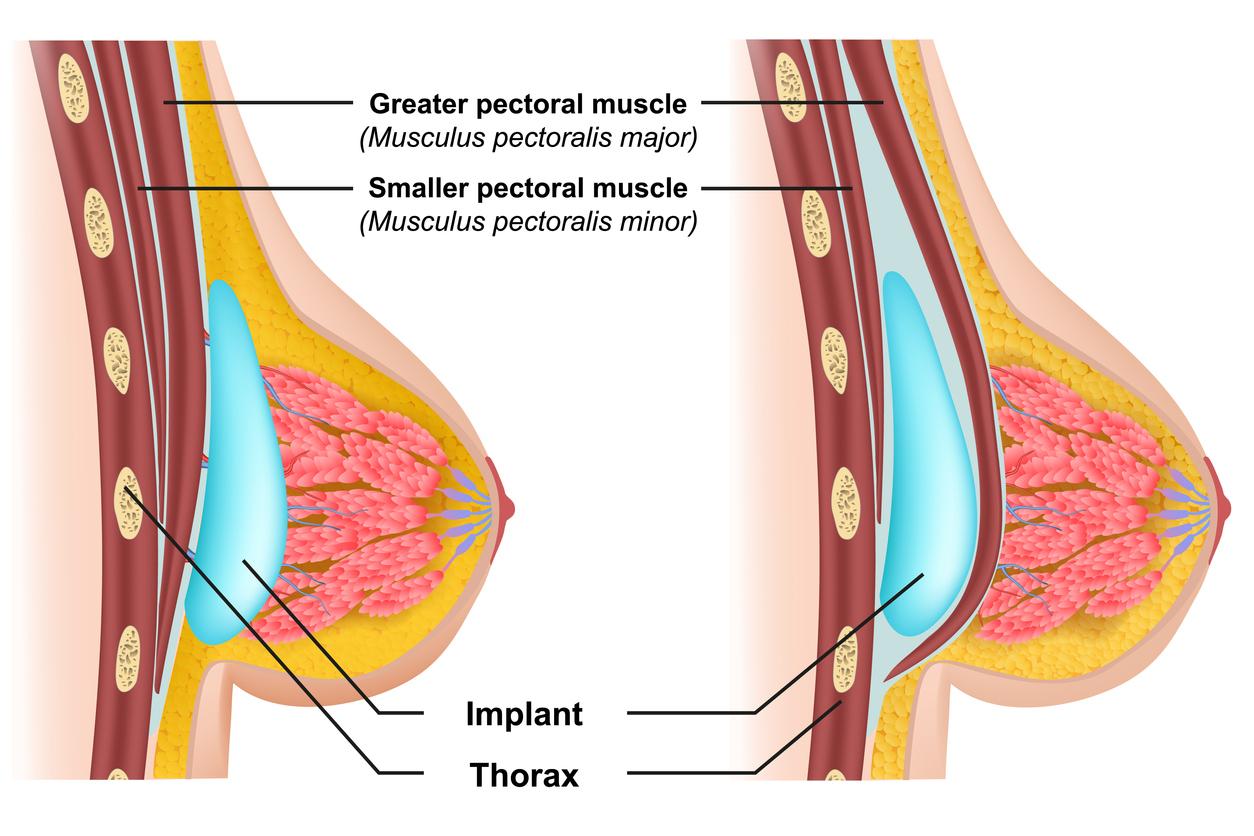
The new implant can sit in front of the muscle (subglandular), partly under it (dual plane), or fully under it (submuscular). Where your current implant sits, the condition of the pocket and capsule, and your own tissue all influence which plane suits the new implant. Sometimes I change the plane at the same time as the exchange, where that gives a better result for your tissue.
Your pathway from first enquiry to surgery
Removal and replacement follows a set process. Each step is there so the decision is well considered and the surgery is planned properly for you.
1. GP referral
A GP referral is required before your first consultation with me. Your GP is part of your care the whole way through, and I keep them informed at each stage. Seeing your GP first also gives you a chance to talk through whether surgery is the right step before you come in.
2. First consultation
At your first consultation I examine your breasts, go through your medical history, and talk about why you are considering an exchange and what you want to be different. We go over your current implants, the options for the new implant, the plane, and whether a lift or any capsule work is likely to be part of it. If imaging would help you decide, I arrange it at this point.
3. Time to consider
Where the surgery is cosmetic, a cooling-off period applies before it can be booked. This is time for you to think things over without pressure, read the information you have been given, including the manufacturer’s implant information, and write down any questions. Many patients have a second consultation during this time to go over anything that has come up.
4. Pre-operative blood tests
Before surgery you have a set of blood tests, the same pre-operative screen I use for all my breast surgery patients:
- Full blood count (FBC)
- Urea, electrolytes and creatinine (UEC), which check kidney function
- Liver function tests (LFTs)
- A coagulation screen, which checks how your blood clots
- Hepatitis B, hepatitis C and HIV
- A pregnancy test where relevant
Your GP is copied in on the results.
5. Your quote
Once I have assessed you and we have agreed on the plan, you are given a written quote setting out the costs. I cover what goes into that cost further down this page.
6. Anaesthetic assessment
Your anaesthetist reviews your health before surgery, usually by phone. The physical check, including your airway, is done on the day of surgery. An in-person anaesthetic appointment beforehand is rare.
7. Surgery and recovery
Your operation is carried out at Maitland Private Hospital. The first two weeks afterwards are a close follow-up period, with nurse and surgeon reviews to check your healing and pick up anything early. After that I see you at four weeks, three months, six months and twelve months. At the four-week visit I hand your ongoing care back to your GP. Recovery and risks are covered on their own pages, linked below.
My experience with breast surgery
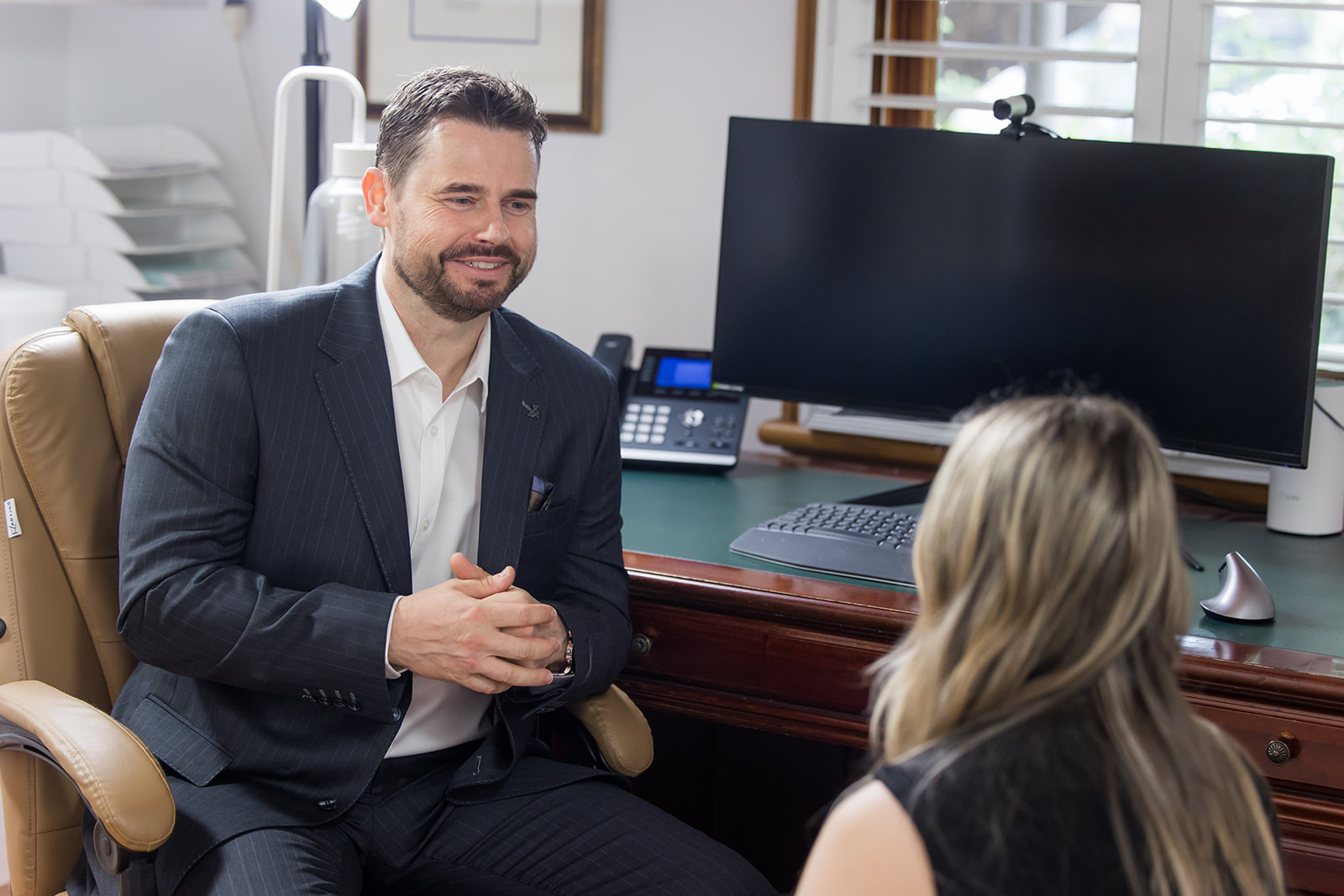
I am a Specialist Surgeon (FRACS) with more than 15 years of surgical experience, and breast surgery is a core part of my practice. Removal and replacement of implants is a regular part of that work, and it is its own kind of operation. An exchange means working with implants and tissue that have been in place for years, sometimes decades: a capsule that has formed around the implant, tissue that has stretched or thinned over the implant, and scars from the original surgery. None of that exists in a first augmentation, and all of it shapes how an exchange is assessed and planned.
I operate at Maitland Private Hospital, an accredited private hospital in the Hunter Valley with an intensive care unit on site. A few things shape how I work:
- Every patient is seen on GP referral and assessed individually. I do not work to a template. Your plan is built from your assessment: the state of your current implants, your capsule, your tissue, and what you want to change.
- I set out what the operation can and cannot do before you commit. That includes the trade-offs, the risks, and whether staging any additional work, such as a lift, is the better path for you.
- I perform your surgery myself, and follow-up is part of the operation, not an afterthought. My nurse and I review you two to three times a week for the first two weeks, then at four weeks, three months, six months and twelve months.
- Your GP is part of your care throughout, receives a formal handover at the four-week review, and takes over your ongoing care after the twelve-month visit.
If you are weighing up an exchange, my job at consultation is to give you the information to make the decision that is right for you, not to talk you into surgery.
Costs and Medicare

My patient coordinator will give you a written quote after your assessment, once we know what your operation involves, because the cost depends on the details of your case.
What makes up the cost
Several separate fees go into the total:
- Surgeon’s fee, for the operation and your follow-up care
- Anaesthetist’s fee, billed by your anaesthetist
- Hospital and theatre fees, for your admission at Maitland Private Hospital
- The implants themselves
- Any imaging or tests needed before surgery
Capsule work, a plane change or a lift add time and complexity, so an exchange that involves those will usually cost more than a straight implant swap. Your written quote sets out what applies to you.
Medicare and private health cover
Whether Medicare and your private health fund contribute depends on why you are having the surgery.
- Surgery done to change the size or appearance of your breasts is considered cosmetic. Cosmetic surgery does not have a Medicare item number, so neither Medicare nor your private health fund contributes to it. Health funds contribute to hospital costs only where a Medicare item number applies.
- Where there is a medical reason, such as a ruptured implant or significant capsular contracture, part of the operation may attract a Medicare item number. If it does, your health fund may also contribute to the hospital costs. This is assessed for your individual situation, and having an item number does not mean the whole cost is covered.
I let you know at consultation whether a Medicare item number is likely to apply in your case, and your written quote reflects that. It is worth checking the detail directly with your health fund as well, since cover varies between funds and policies.
Recovery and risks
Removal and replacement is surgery, and it carries risks. I go through these with you in detail at consultation, and there are separate pages on this site covering recovery and risks more fully. This is the short version.
Recovery
Most patients take time off work and limit activity for the first few weeks. You wear a support garment, and you avoid heavy lifting and strenuous exercise while you heal. The first two weeks are a close follow-up period with my nurse and me. How long recovery takes depends on how much was done, and a combined exchange and lift asks more of you than a straight implant swap.
Risks
Every operation carries risk. Alongside the general risks of surgery and anaesthesia, such as bleeding, infection and scarring, removal and replacement has risks of its own. These include changes in nipple or breast sensation, asymmetry, capsular contracture forming again around a new implant, and the possibility of further surgery down the track. Implants themselves carry longer-term considerations, including rupture, the BIA-ALCL association with textured surfaces, and the symptoms some patients report as breast implant illness. Results vary from patient to patient.
You should go into surgery understanding the trade-offs, and I set them out before you decide.