


Upper Blepharoplasty (Upper Eyelid Surgery) in Newcastle NSW
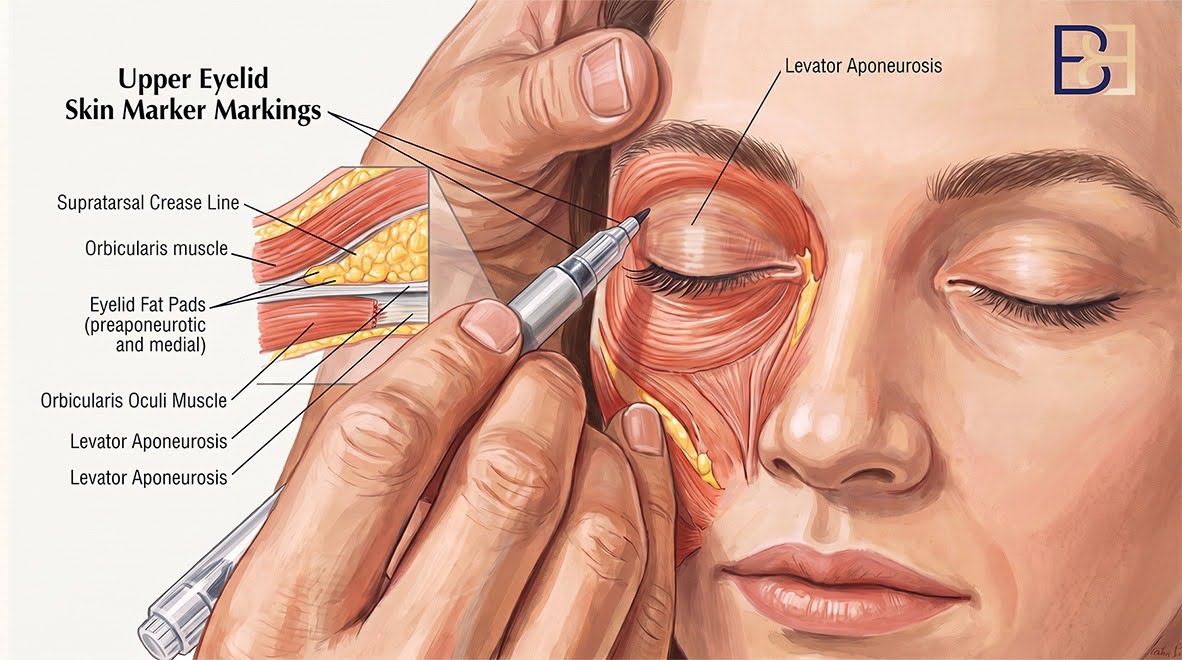
Upper blepharoplasty (upper eyelid surgery) removes redundant skin from the upper eyelids. The medical term for this excess skin is dermatochalasis. Where it is needed, I also remove a small strip of the underlying orbicularis muscle and any fat that has herniated.
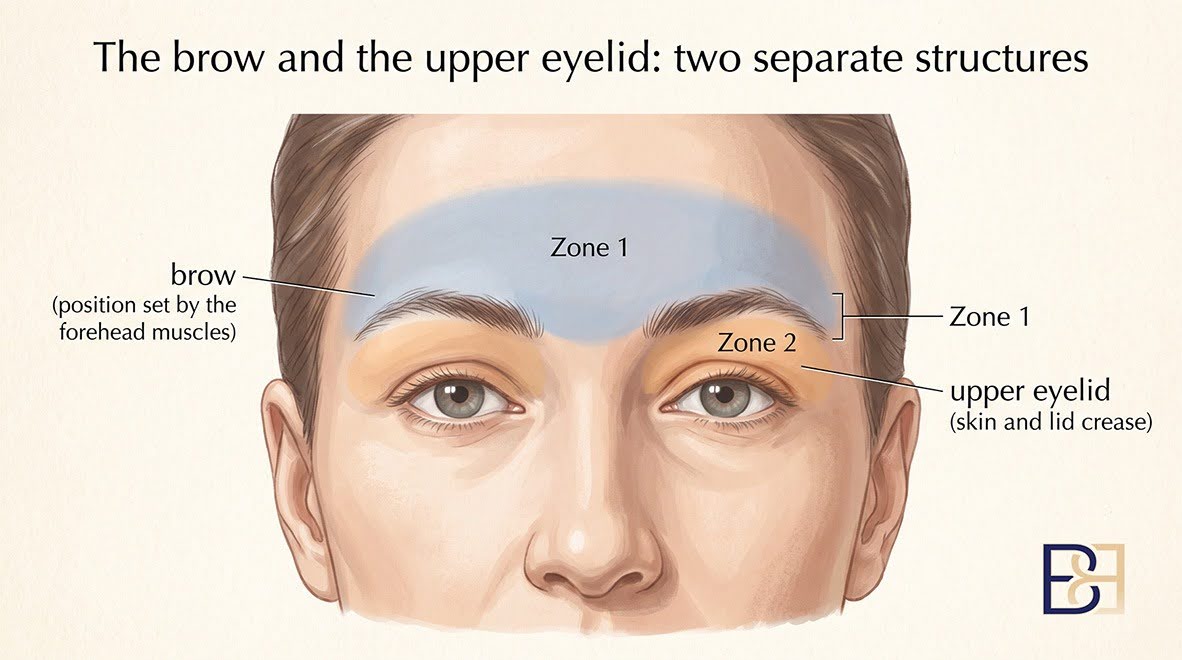
Blepharoplasty does not lift the brow, which sits above the lid and is a separate structure with its own function. It does not change the lower eyelids. I perform upper lid blepharoplasty only, and I do not perform lower lid blepharoplasty. It does not change skin texture or fine lines around the eyes either.
Changes in the upper eyelids are a normal part of ageing, and in some people they appear earlier because of a family tendency. Surgery does not stop that process. The eyelids continue to age afterwards, so results are not permanent in that sense.
If you want more detail on this operation, I cover it fully in my article on upper blepharoplasty, dermatochalasis and the brow.
Book your appointment online now
What upper blepharoplasty is suited to
Upper blepharoplasty is suited to established redundant skin of the upper eyelids. This is one component of how the area around the eyes changes with age. Other components, such as changes in skin quality and fine lines, are separate matters that this operation does not change.
The brow matters here. The brow and the upper lid work as a unit, and a heavy feeling or appearance in the upper lids can come from redundant lid skin, from a brow that has descended, or from both. That distinction changes the operation. Where the brow is the main driver, a brow lift may be the more suitable option. Where both structures contribute, I go through the options for each at consultation. I cover this in more detail on my brow lift page.
In some people, redundant upper lid skin is significant enough to obstruct the upper part of the visual field.
Where the changes are minor, a non-surgical measure may be a more suitable starting point. Which options apply in your case is something I can only determine at consultation, after examining you.
How I perform an upper blepharoplasty
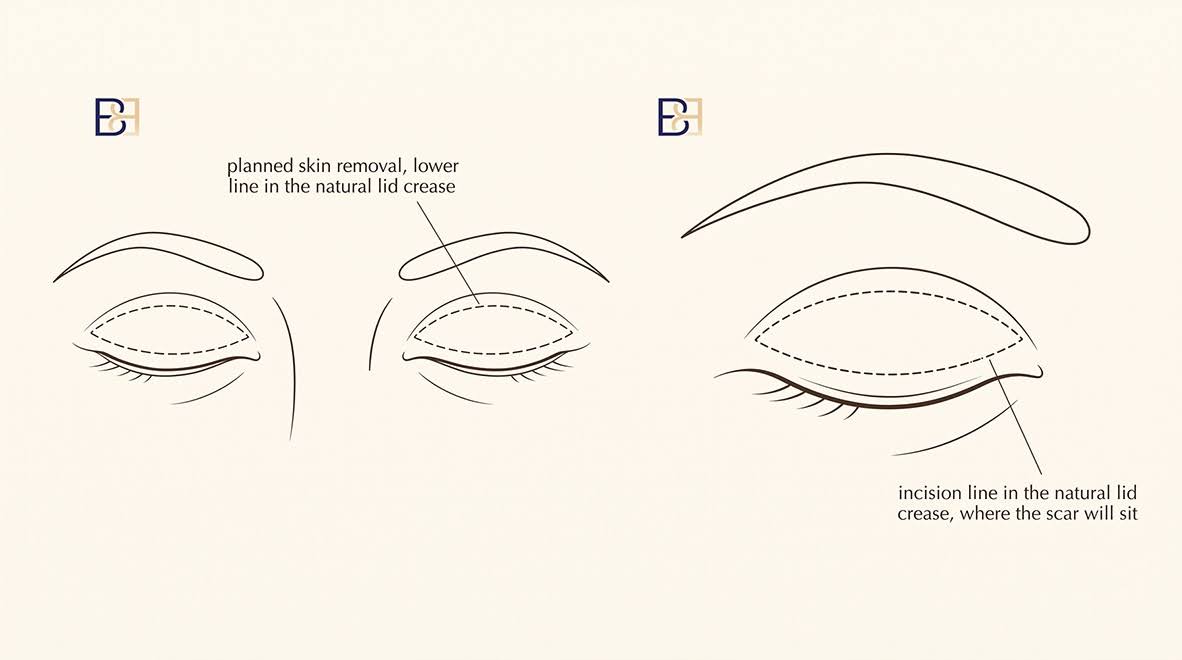
The operation starts before the anaesthetic, with marking. I mark the skin to be removed with you awake and sitting upright, because lid position changes when you lie down. The lower line of the marking sits in the lid crease, which is where the scar will sit.
The incision follows those markings. I remove the marked skin and, where it is needed, a small strip of the orbicularis muscle and any fat that has herniated, most often towards the inner part of the lid. How much of each is removed is planned at assessment and confirmed during the operation.
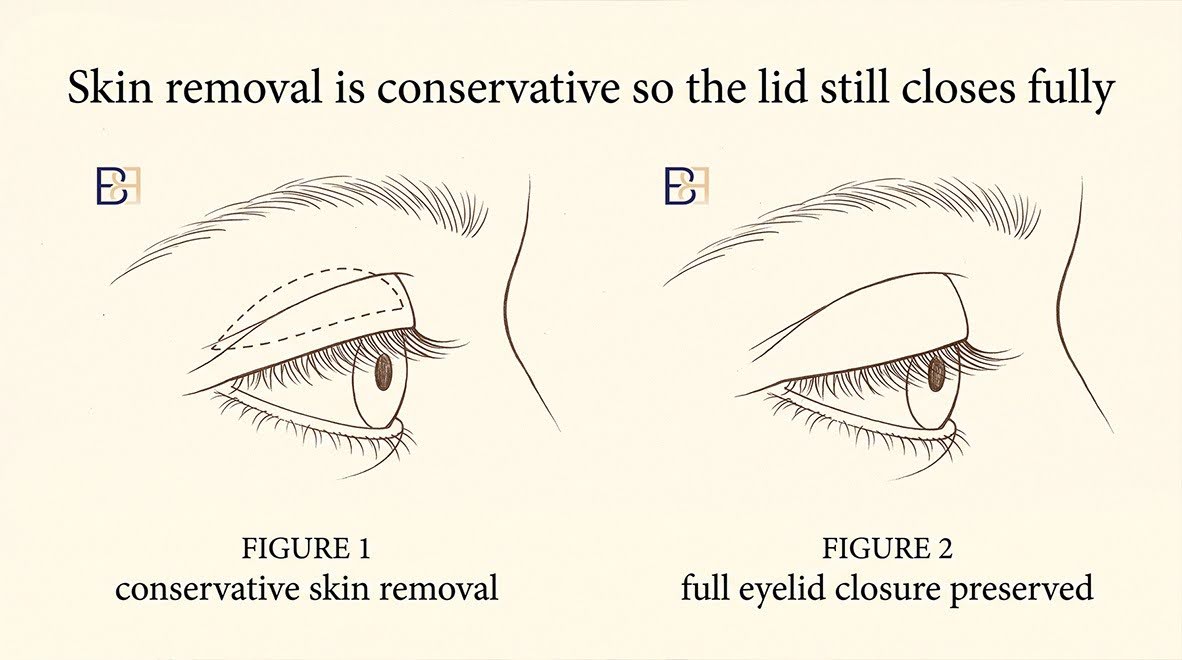
Skin removal is deliberately conservative. The upper lid has to keep closing fully over the eye, so removing too much skin creates a significant problem.
The incision is closed with fine sutures, and the scar sits in the lid crease. Scars vary between patients.
I perform upper blepharoplasty under general anaesthesia at Maitland Private Hospital.
My approach
Assessment comes first. Before any decision about surgery, I take a full history and examine the upper lids, the brow position, and how the two relate in your face. Eye health matters in this operation, so I ask specifically about dry eyes, watering, contact lens use, and any previous eye surgery or eye conditions. Standardised clinical photography is part of every assessment.
Where the examination raises anything that needs specialist eye input, I arrange ophthalmology review before planning surgery.
Preparation matters as much as the operation itself. Blood pressure is reviewed and optimised before surgery. If you smoke, this affects healing, and stopping for an appropriate period before and after surgery is part of the plan. Both are worked through before a date is set.
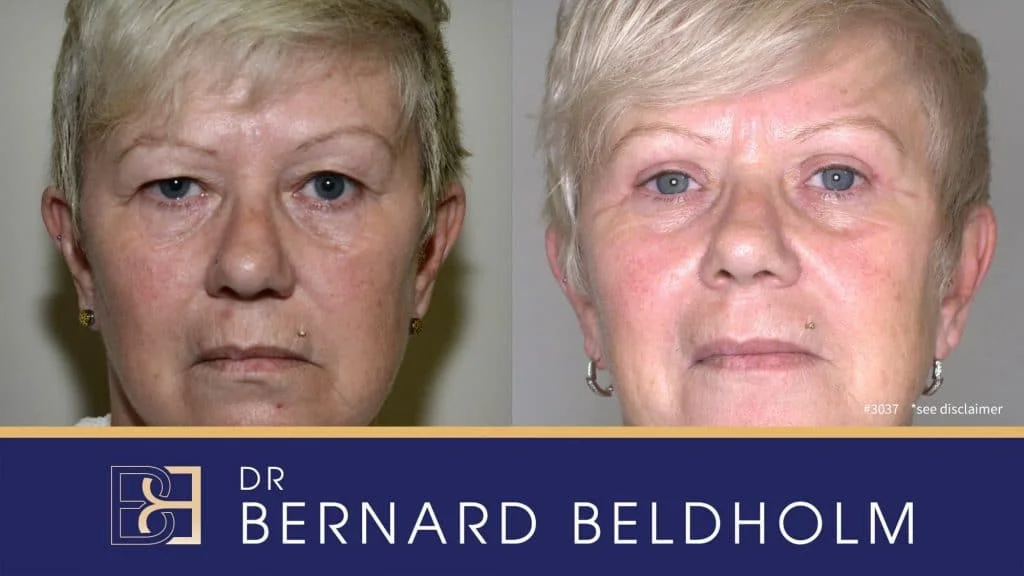
Disclaimer: Operation performed by Dr Bernard Beldholm. Adult content: Surgery has risks; individual results vary. Seek a second opinion. Please see the full disclaimer.
Book your appointment online now
About Dr Beldholm
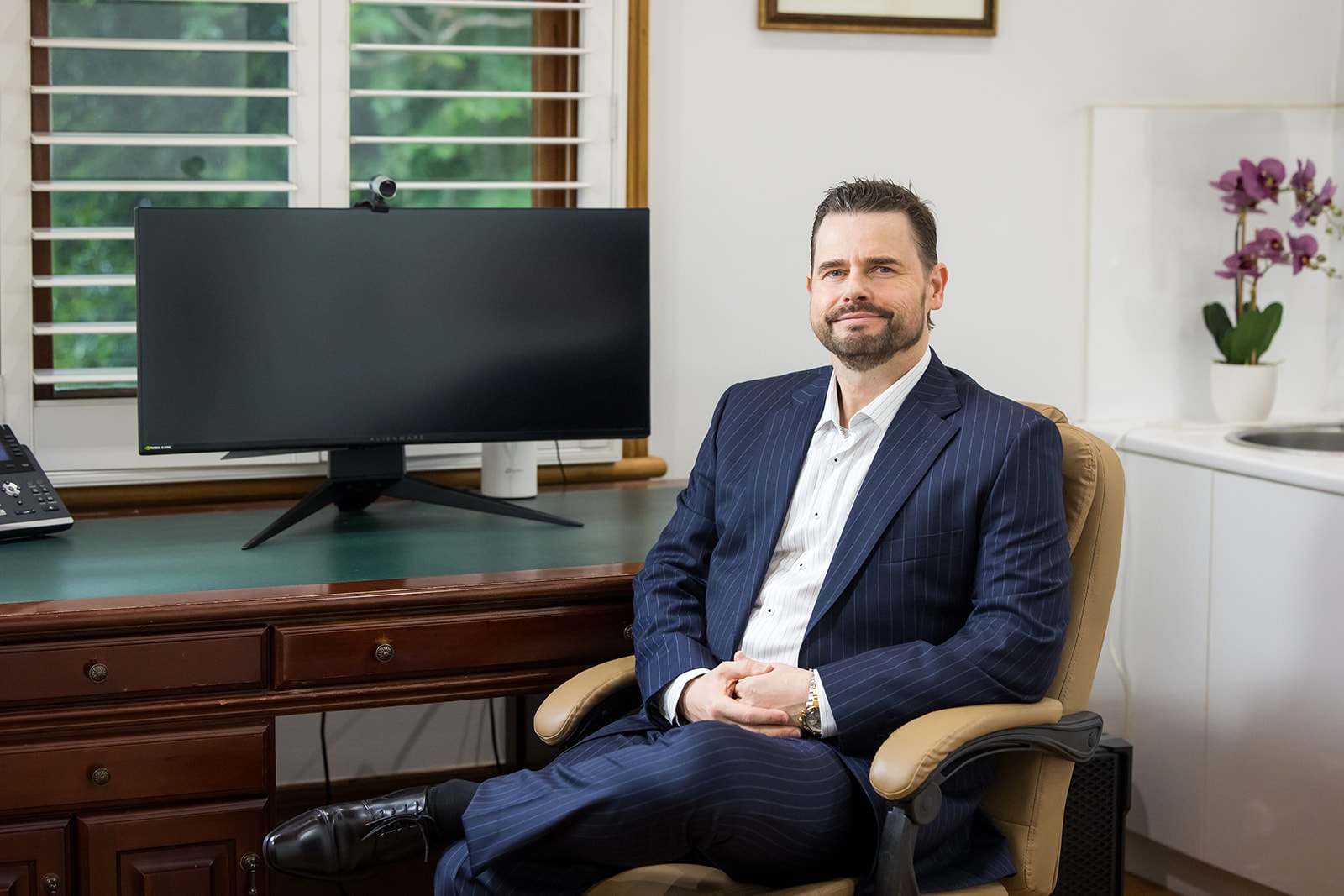
I have performed face and neck surgery for more than 15 years. Eyelid surgery sits within a broader facial practice that includes facelift (rhytidectomy) and neck lift (cervicoplasty) surgery, which matters because the upper lid is never assessed in isolation from the rest of the face.
I am a Fellow of the Royal Australasian College of Surgeons and a Specialist Surgeon. My practice also covers non-surgical options, which I discuss at consultation where they are relevant to your situation.
I consult in the Hunter Valley and operate at Maitland Private Hospital, where I look after you personally from the first consultation through surgery and follow-up.
Your pathway
Referral
A GP referral is required before any consultation. This is a standard requirement for surgery in Australia.
Consultation
Your first consultation runs for about an hour. It covers your health and medical history, examination of your eyelids and brow, a discussion of risks and options, and standardised clinical photography.
Quote
After consultation you receive a written quote for my surgical fee. The hospital and the anaesthetist provide their own separate quotes, and my patient coordinator organises these for you.
Surgery
Your operation is performed under general anaesthesia at Maitland Private Hospital.
Follow-up
The first two weeks after surgery involve intensive follow-up, with reviews two to three times a week for wound checks and dressing care. After that, I review you at 4 weeks, 3 months, 6 months, and 12 months. All follow-up is included at no additional cost.
Recovery in brief
Expect swelling and bruising around the eyes, most noticeable in the first several days. Keeping your head elevated and using cold compresses in the early days helps with both. Sutures are removed at about one week.
The eyes can feel dry, gritty, or watery in the early weeks while the lids settle. Contact lenses stay out until the lids have healed enough to tolerate them. Most people are back at desk-based work within one to two weeks, depending on how they feel about visible bruising. Return to exercise is staged, and sun protection matters while the scar matures.
Recovery varies between patients. I cover the full timeline in my article on upper blepharoplasty recovery.
Risks
Upper blepharoplasty is a significant operation, and you should understand its risks before deciding to proceed. They include:
- Bleeding, bruising, and swelling
- Infection
- Dry, gritty, or watery eyes, which are usually temporary but can persist in some patients
- Incomplete eyelid closure (lagophthalmos), particularly in the early weeks
- Asymmetry between the two lids
- Visible, thickened, or slow-maturing scars
- Altered sensation or numbness of the eyelid skin
- The possibility of revision surgery
- Retrobulbar haematoma, a rare bleed behind the eye that can threaten sight and needs emergency treatment
Results vary between patients. I go through each of these risks in detail at consultation, and I cover them fully in my article on upper blepharoplasty risks and complications.
Is upper blepharoplasty right for you?
Changes in the upper eyelids are a normal part of ageing, and surgery is one of several options. Upper blepharoplasty may be worth considering when redundant upper lid skin is established rather than minor, when the brow is not the main driver of the change, and when you are medically fit and understand the risks, the recovery, and the fact that results vary and the eyelids continue to age.
Whether it is the right operation for you, or whether a different approach suits you better, is something I can only determine at consultation, after examining you.