In my practice, one of the questions I hear most often from women considering an abdominoplasty (tummy tuck) after having children is whether liposuction is a separate operation added on top. It is not. In the majority of post pregnancy cases, ultrasound-assisted suction lipectomy (VASER liposuction) is part of the abdominoplasty itself, carried out during the same operation as a single planned procedure.
That distinction matters. This is not 2 operations combined. It is 1 operation in which suction-assisted lipectomy is used as a technique alongside skin removal and repair of the separated abdominal muscles (diastasis recti). Used this way, it lets me contour the abdomen while limiting how much tissue I need to lift, which helps protect the blood supply to the skin.
Pregnancy changes the abdomen in ways that are entirely normal. The skin stretches, fat can settle in different places, and the muscles down the midline often separate. This article explains how I approach the operation for post pregnancy patients, why suction-assisted lipectomy forms part of it, what the surgery and recovery involve, and the risks you should weigh up. Whether any of this is appropriate for you is something I assess individually at consultation.
Why suction-assisted lipectomy is part of the operation
The 3 changes after pregnancy
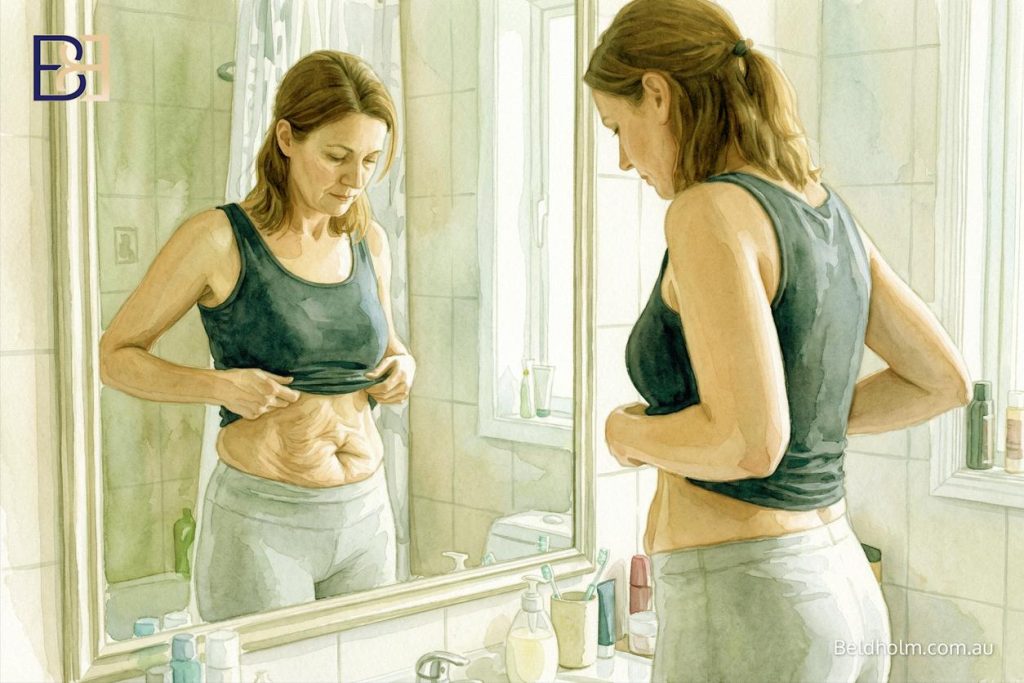
After pregnancy, 3 changes in the abdomen commonly bring women to see me:
- Loose skin that has stretched and does not tighten back on its own
- Muscle separation (diastasis recti), where the abdominal muscles part down the midline
- Excess fat over the abdomen and flanks
An abdominoplasty on its own treats 2 of these. It removes the loose skin and repairs the muscle separation (diastasis recti), but it does not remove fat from the areas the skin excision does not cover.
Treating all 3 in the one operation
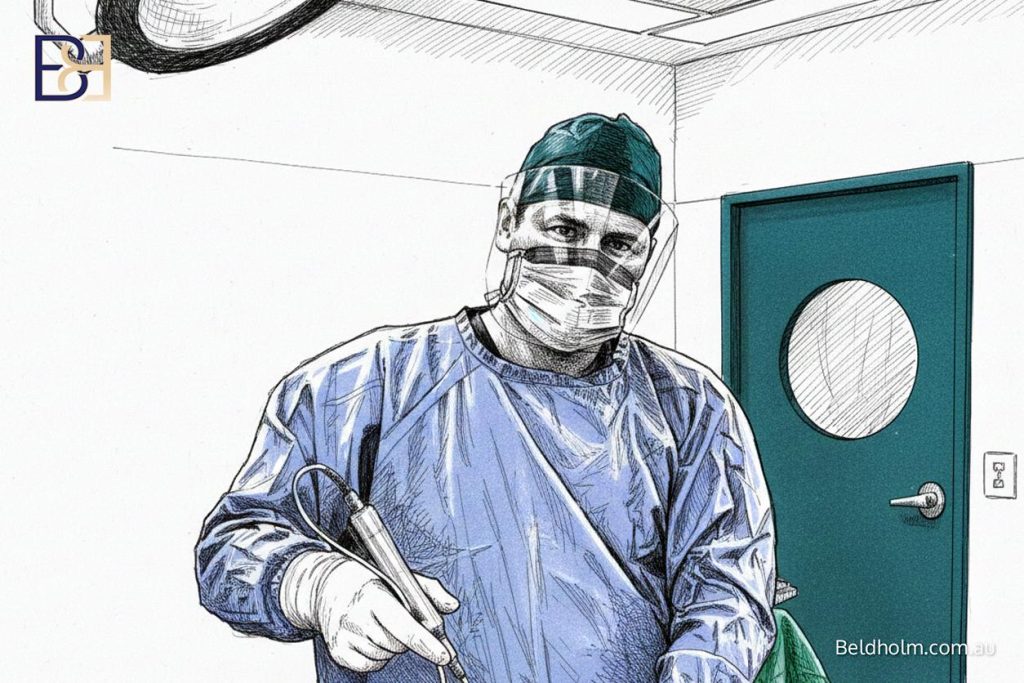
Not every surgeon includes liposuction (suction assisted lipectomy) as part of an abdominoplasty. In my practice I do, in the majority of post pregnancy cases, using ultrasound-assisted suction lipectomy (VASER liposuction). Including it means all 3 changes can be treated in a single operation:
- The liposuction (suction assisted lipectomy) removes the excess fat over the abdomen and flanks
- The abdominoplasty removes the loose abdominal skin and repairs the separated abdominal muscles
Why combining the 2 techniques works well
Beyond treating the fat, there is a technical reason the 2 work well together. A traditional abdominoplasty relies on lifting the skin and fat of the abdomen off the muscle wall so the tissue can be drawn down, the excess removed, and the remaining skin redraped. The blood supply to that lifted layer, called the flap, runs through small perforating blood vessels, and the more I lift and separate the tissue, the more of those vessels are divided.
By thinning and loosening the fat layer first with suction-assisted lipectomy, I can advance the skin with less sharp separation from the muscle wall. That preserves more of the perforating vessels, and blood supply to the wound edge is what healing at the incision depends on.
Why I use VASER in most post pregnancy cases
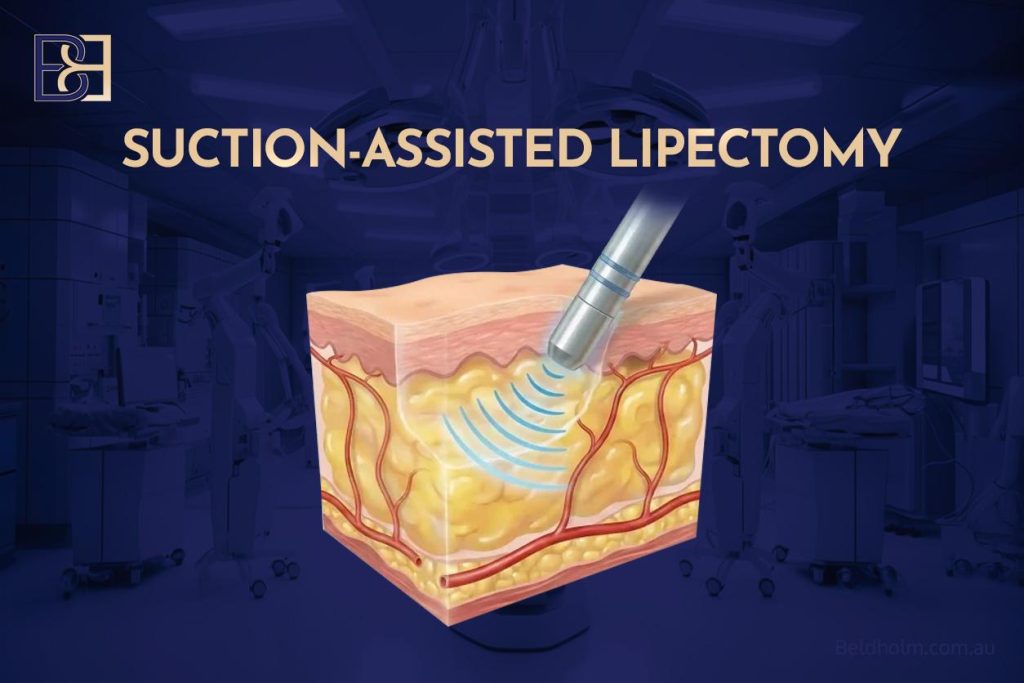
VASER stands for Vibration Amplification of Sound Energy at Resonance, a form of ultrasound assisted liposuction sometimes called ultrasonic liposuction. Where traditional liposuction relies on the cannula alone to break up and remove fat, VASER technology, a form of ultrasound technology, uses ultrasound waves to emulsify fat first. After tumescent fluid is placed in the area, the ultrasound energy is used to selectively target fat cells, loosening them from the surrounding tissues and blood vessels before they are suctioned out. This selective fat removal treats both the deep and the more superficial fat layers, and the fat removal process allows precise fat removal while leaving more of the surrounding tissue intact. I use this liposuction technique in the majority of my post pregnancy abdominoplasty cases.
What pregnancy changes in the abdomen
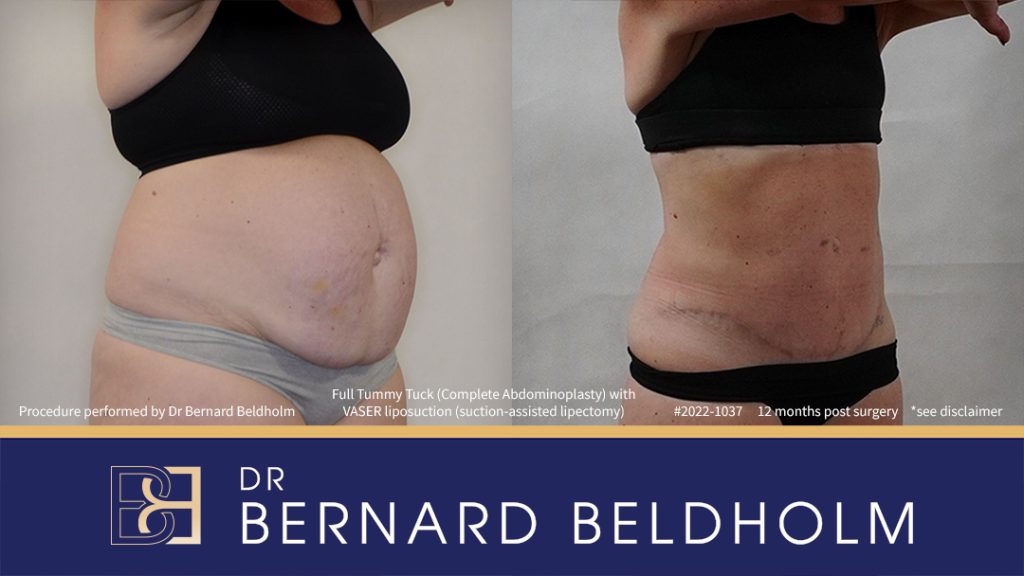
Pregnancy changes the abdomen, and those changes are normal and very common. Understanding what has actually changed helps explain what an operation can and cannot do. Broadly, pregnancy affects the abdomen in 3 ways: the skin, the fat layer, and the abdominal muscles.
The skin
During pregnancy the abdominal skin stretches to make room for the growing uterus, and skin elasticity is tested. After delivery, some of that stretch recovers over the following months as the skin retracts, but skin retraction is not always complete, and the skin does not always return to how it was before. Stretch marks are a sign that the dermis, the deeper layer of the skin, was stretched beyond the point it could fully recover. In many post pregnancy patients the skin quality stays reasonable, and the amount of loose skin is modest, sitting mainly in the lower abdomen.
The fat layer
Pregnancy can also change where fat sits. Localised fat deposits can settle over the lower abdomen and the flanks, and how much and where varies from person to person. This is the fatty tissue that suction-assisted lipectomy treats during the operation.
The abdominal muscles (diastasis recti)
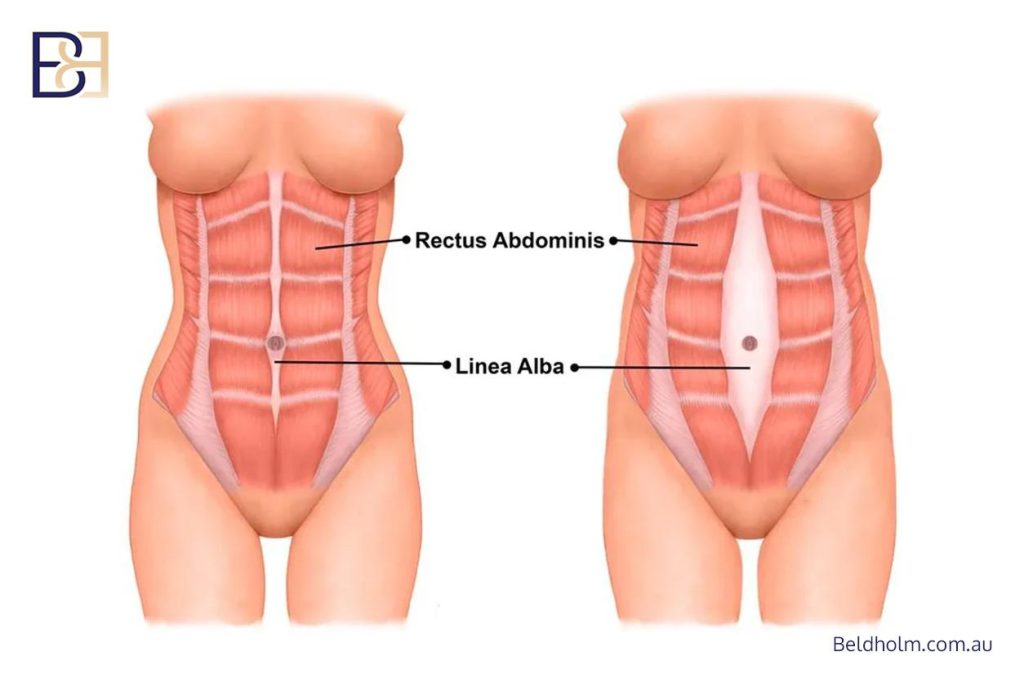
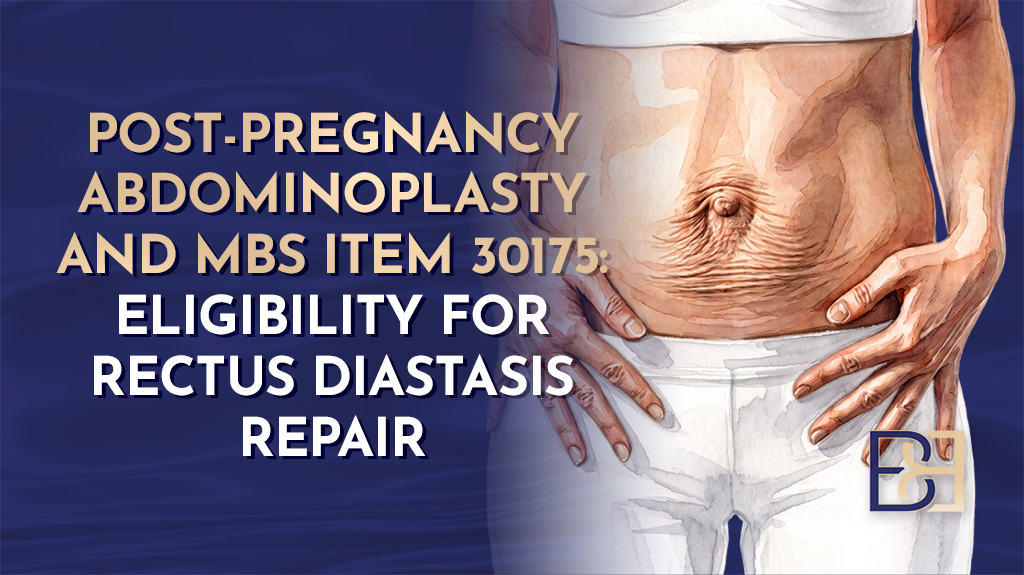
Down the midline of the abdomen run the 2 rectus abdominis muscles, the ones often called the “six-pack”. They are joined in the middle by a band of connective tissue called the linea alba. During pregnancy this band stretches and widens to make room for the baby, which lets the 2 muscles move apart. This separation is diastasis recti (muscle separation).
The separation is a stretching and widening of that connective tissue, not a tear in the muscle. In many post pregnancy patients the muscle separation (diastasis recti) is more pronounced than the amount of loose skin, and it can remain after delivery even once weight and skin have settled.
Some of these changes settle in the months after birth. Others, in particular the muscle separation (diastasis recti) and stretched skin, often remain.
Full, extended and limited abdominoplasty
An abdominoplasty involves removing loose skin and repairing the muscle separation (diastasis recti), and the type that suits you depends on:
- How much loose skin there is
- Where it sits, mainly below the belly button, or both below and above it
- How far it extends toward the flanks
- The extent of the muscle separation (diastasis recti)
In post pregnancy patients I use 3 main types, and the surgical technique is matched to the pattern of loose skin and muscle separation (diastasis recti).
Limited abdominoplasty
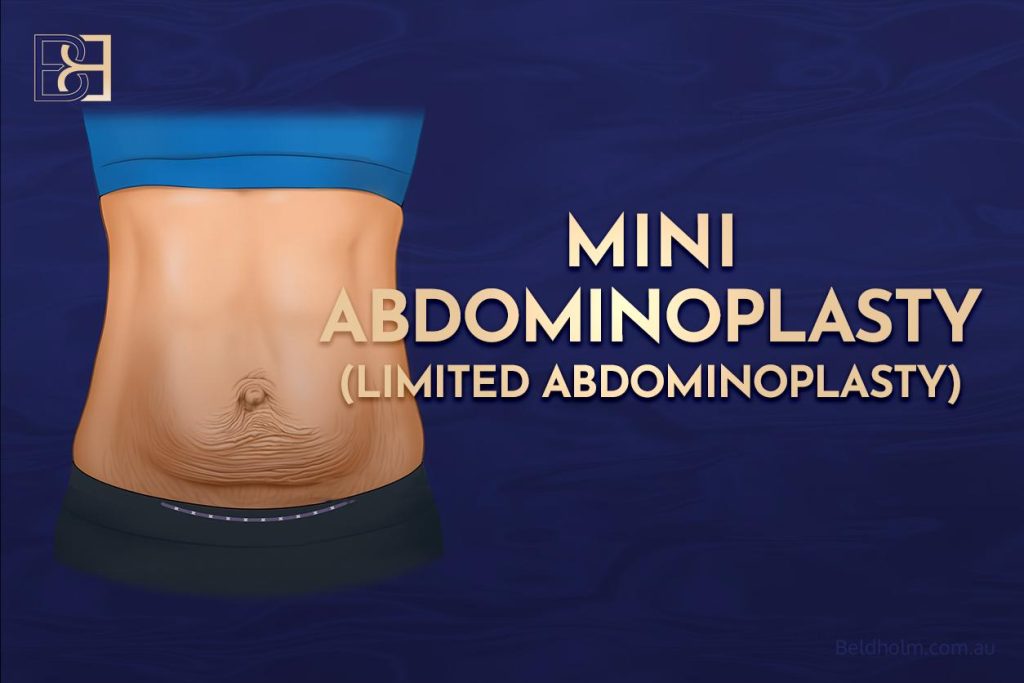
A limited abdominoplasty (sometimes called a mini tummy tuck) suits patients whose loose skin is confined to the lower abdomen, below the belly button, with little or no involvement above it. The incision is shorter and sits low across the lower abdomen. The belly button is usually left where it is rather than repositioned, and any muscle repair is limited to the lower abdomen.
Full abdominoplasty
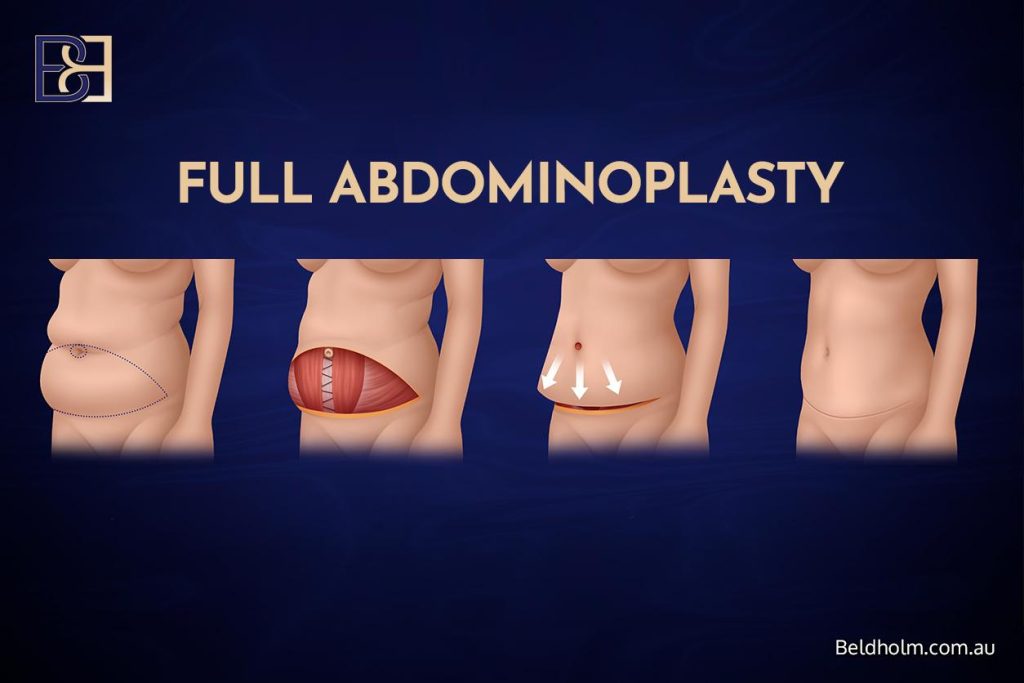
A full abdominoplasty treats loose skin both below and above the belly button. Because the skin above the belly button is drawn down, the belly button stays attached to the muscle wall and the skin is brought down around it through a new opening. The muscle repair runs the full length of the separation, from the lower breastbone down to the pubic area. The incision runs low across the abdomen, from one hip to the other.
Extended abdominoplasty
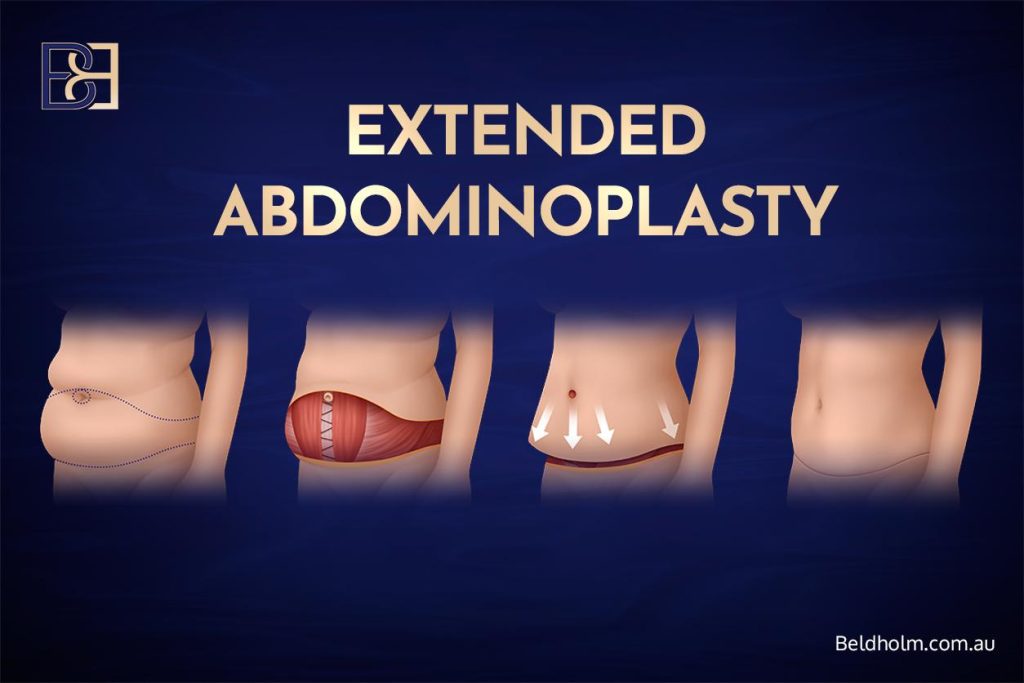
An extended abdominoplasty uses the same approach as a full abdominoplasty, but the incision continues a little further past each hip to remove loose skin that carries around toward the flanks.
Most post pregnancy patients technically fall into this extended group, because a small amount of loose skin usually extends toward the flanks. In post pregnancy patients that lateral extension is generally minor, so in practice I often describe the operation as a full abdominoplasty.
Repairing the muscle separation (diastasis recti)
For many post pregnancy patients, repairing the muscle separation (diastasis recti) is the central part of the operation.
How the repair is done
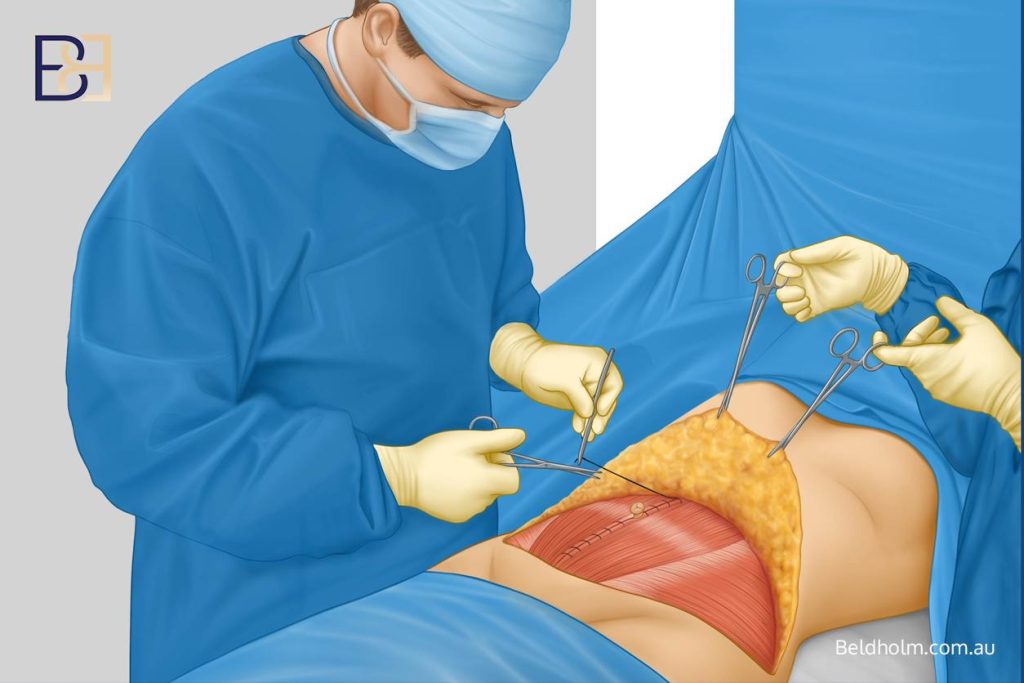
- The 2 rectus muscles are brought back toward the midline
- The stretched connective tissue is reinforced with strong sutures, running the length of the separation
- The sutures sit on the inside, so they are not visible, and they hold the repair long term
This re-establishes support across the front of the abdominal wall. It is done during the same operation, before the skin is redraped and the incision is closed.
Can exercise do the same thing?
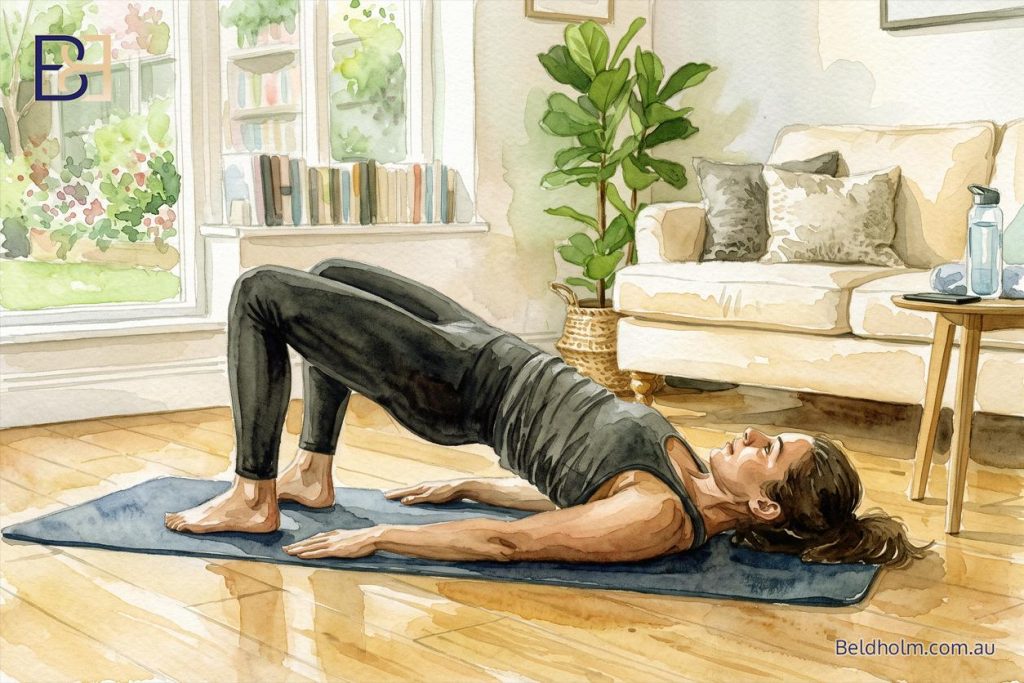
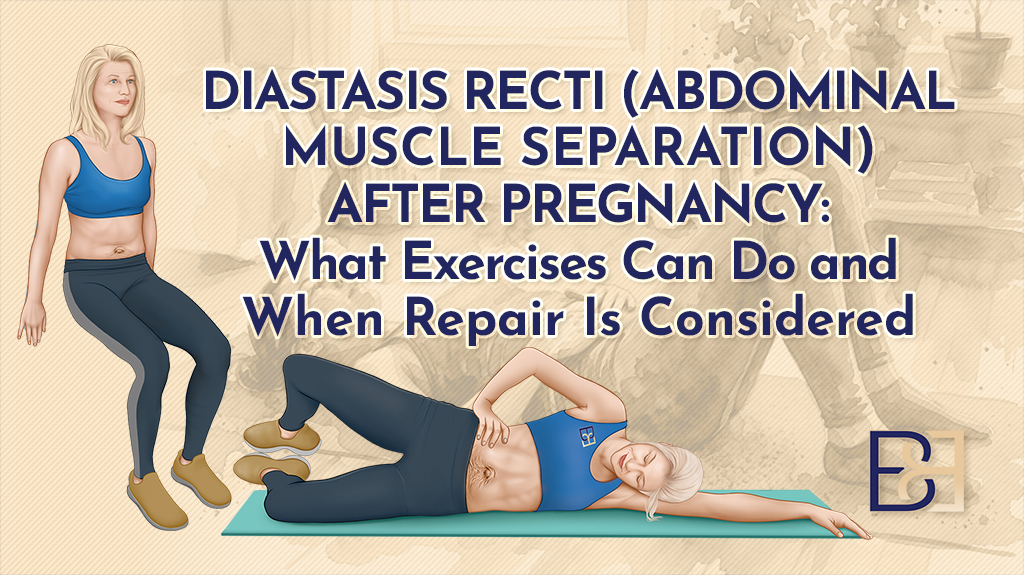
Targeted exercise can help tone the surrounding muscles and may reduce a mild separation, but it does not bring a significantly stretched linea alba back together (1,2). That is why the repair is done surgically when the separation is more pronounced.
The functional side
A wider muscle separation (diastasis recti) can be associated with symptoms in some women, such as lower back discomfort or a sense of core weakness (3). Research has looked at whether repairing the separation helps. Some studies report improvement in areas such as lower back pain and urinary symptoms after repair (4,5), while others have found less consistent benefit (6). The functional response varies between patients, and the evidence is mixed rather than uniform.
Caesarean scars and where the incision sits
Many of the post pregnancy patients I see have had a caesarean (caesarean section, or C-section), and a common question is what happens to that scar.
What happens to an existing caesarean scar
A caesarean scar sits low across the lower abdomen. An abdominoplasty removes the loose skin of the lower abdomen, and the old caesarean scar usually sits within that skin. In most cases it is removed along with the excess skin, so you are not left with the caesarean scar as well as the new one.
Where the new scar sits
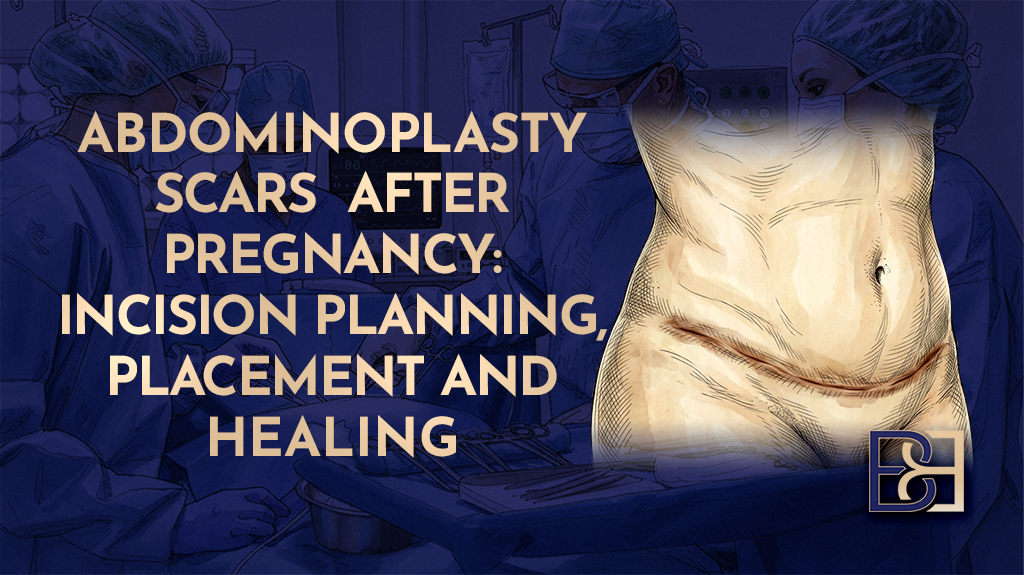
The abdominoplasty incision is a single horizontal line low across the lower abdomen. It is longer than a caesarean scar, because it runs from hip to hip, but it is placed low so it can sit below the underwear line. The exact position is part of the surgical planning, decided during the markings before surgery.
Every operation that cuts the skin leaves a scar, and an abdominoplasty is no exception. What I can plan is where the scar sits and how it is closed. How a scar matures afterwards varies from person to person and takes time, often 18 months to 2 years to settle.
Abdominoplasty and caesarean are separate operations
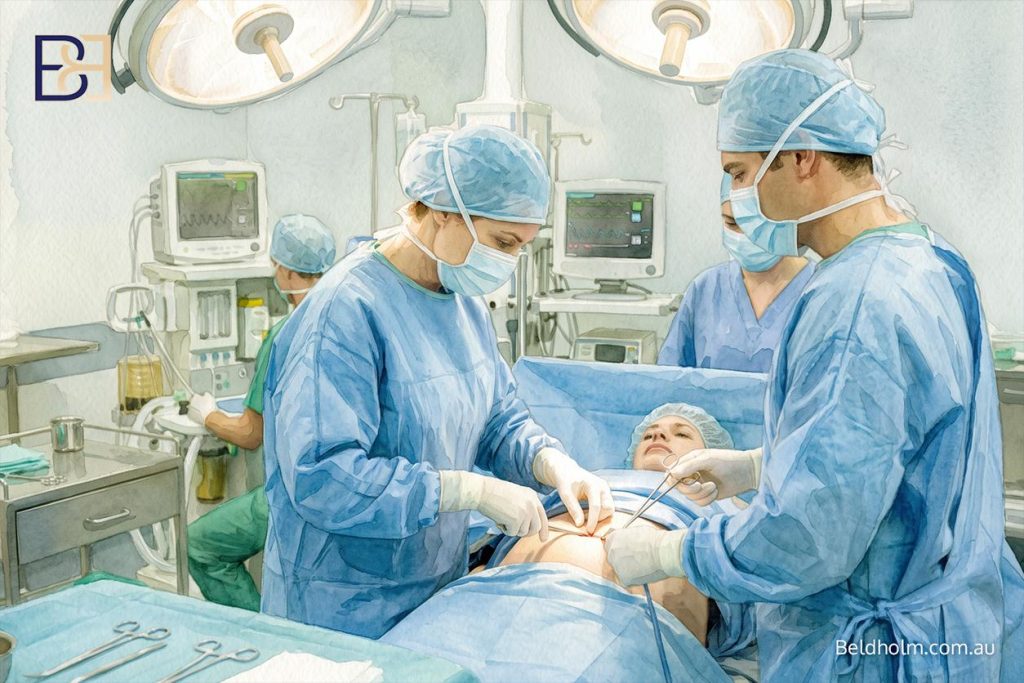
An abdominoplasty is not done at the same time as a caesarean. They are planned as separate operations. A caesarean is childbirth surgery on the uterus, and the abdominal wall is not in a suitable state for contouring at that time. The abdominoplasty is planned later, once the abdomen has recovered from pregnancy and delivery.
The operation, step by step
This is a major body contouring operation, planned as a single surgical procedure and done under general anaesthetic. How long it takes depends on which type of abdominoplasty you have:
- A limited abdominoplasty generally takes 1 to 2 hours
- A full abdominoplasty generally takes 3 to 4 hours
- An extended abdominoplasty generally takes around 4 hours
Here is what happens on the day.
1. Markings
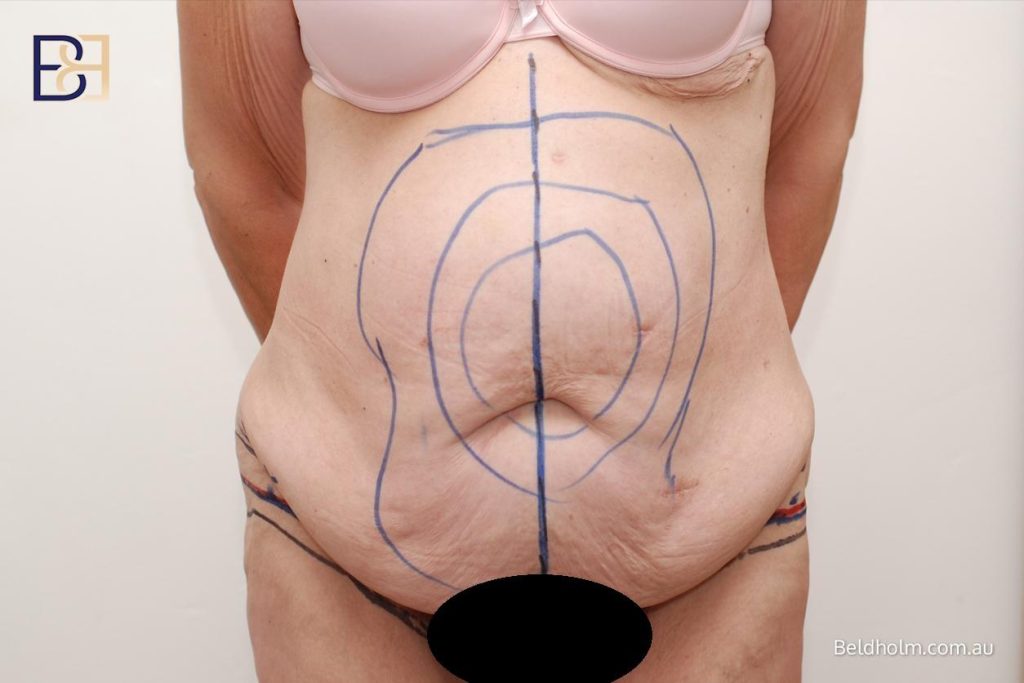
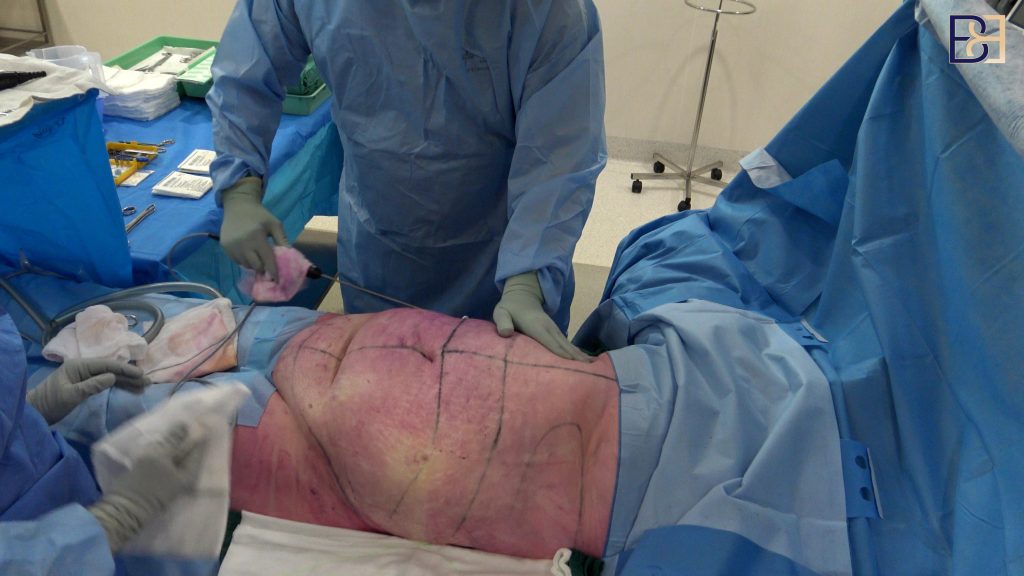
Before you go to sleep, I mark the abdominal area while you are standing. These marks guide where the skin is removed and where the liposuction is done, and they cannot be planned accurately once you are lying down.
2. Anaesthetic
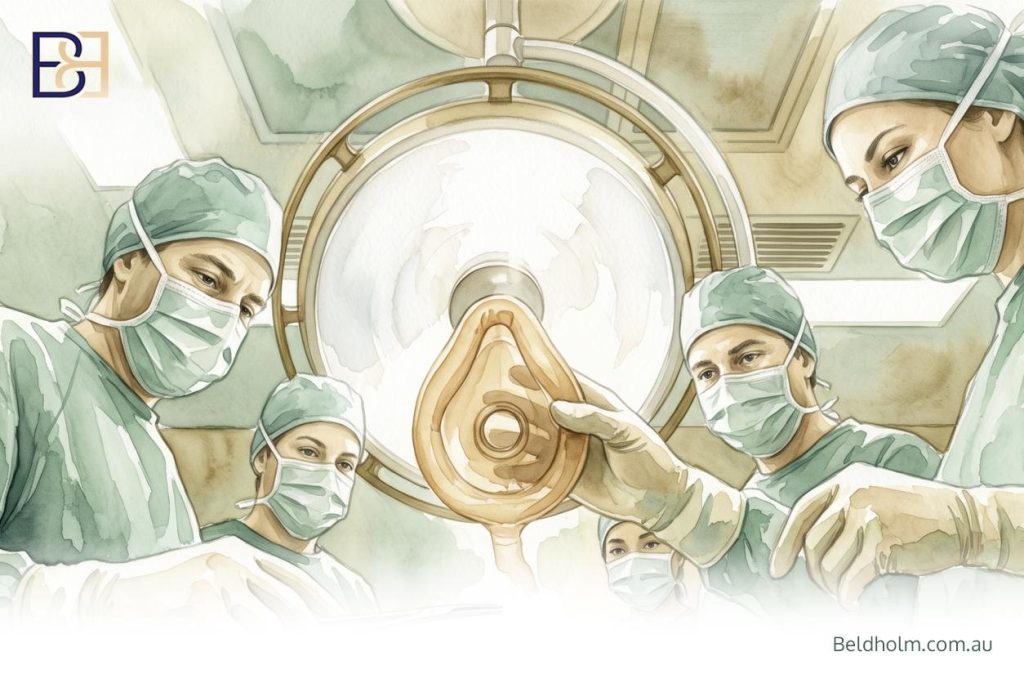
You are given a general anaesthetic, so you are asleep for the whole operation.
3. Liposuction first
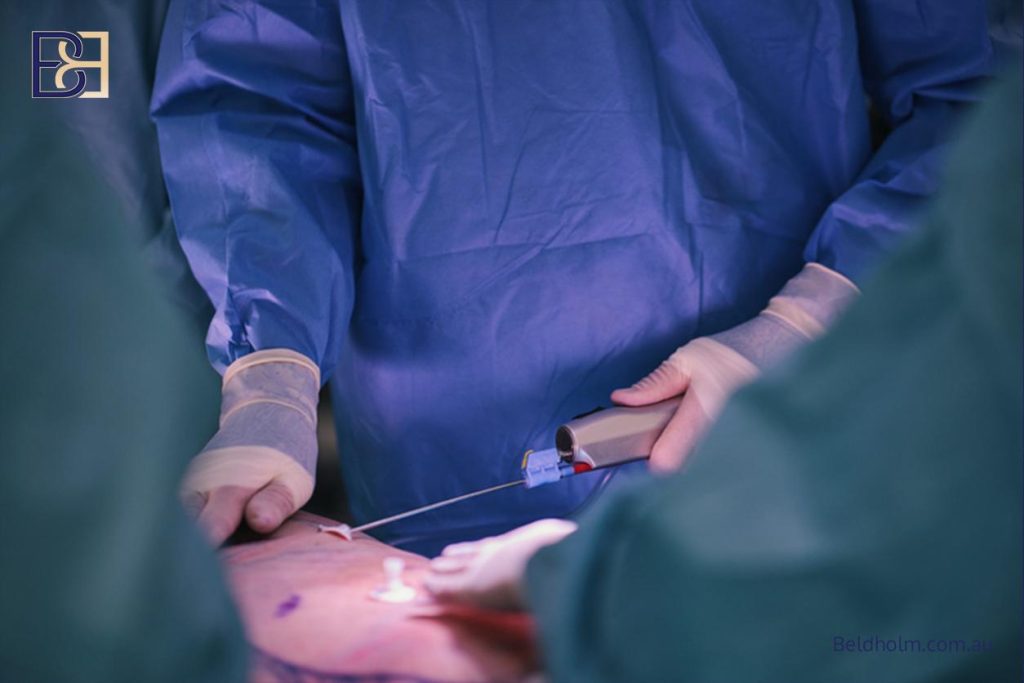
I begin with ultrasound-assisted suction lipectomy (VASER liposuction) to treat the fat over the abdomen and flanks and to loosen the fat layer. Doing this first means I can then lift the skin with less separation from the muscle wall.
4. Skin removal and muscle repair
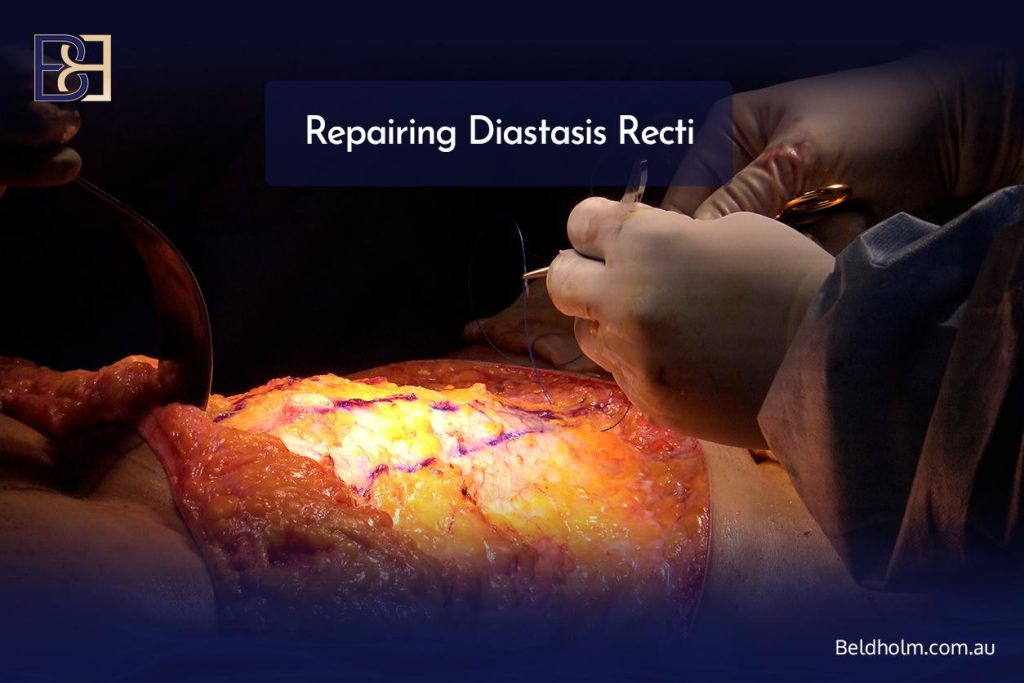
I remove the loose lower abdominal skin by surgical excision, then bring the separated muscles back together and reinforce the connective tissue down the midline to repair the muscle separation (diastasis recti). If the operation is a full abdominoplasty, the belly button is brought out through a new opening as the skin is drawn down.
5. Drains and closure
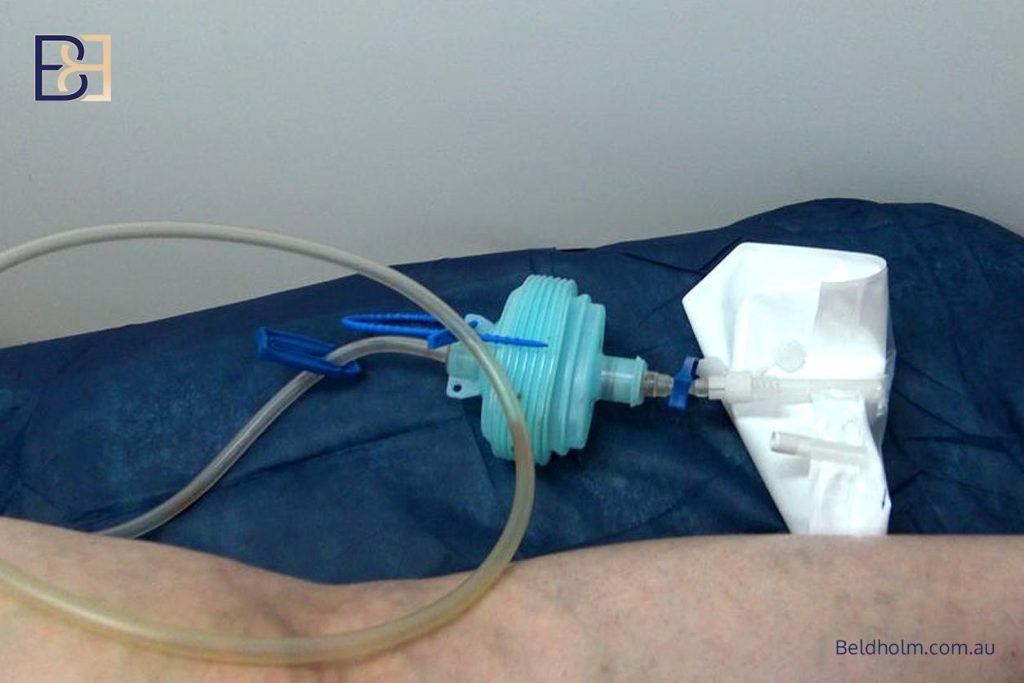
Most post pregnancy abdominoplasties I perform are done without drains. Where there is more extensive loose skin, a drain is sometimes used. The incision is then closed in layers.
6. Dressings and garment
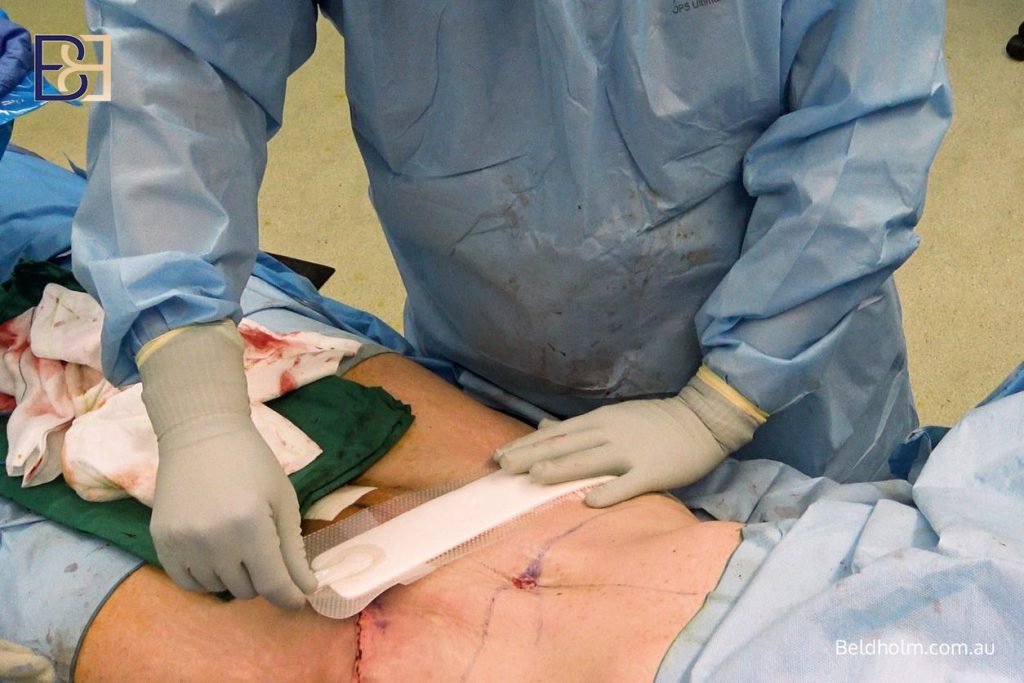
I dress the wound, often with a PICO dressing that applies negative pressure to support healing, and fit a compression garment. You then wake up in recovery.
Recovery
An abdominoplasty with suction-assisted lipectomy is a major operation, and recovery takes time. The muscle repair makes the first couple of weeks the most restricted. Recovery varies from person to person.
In hospital
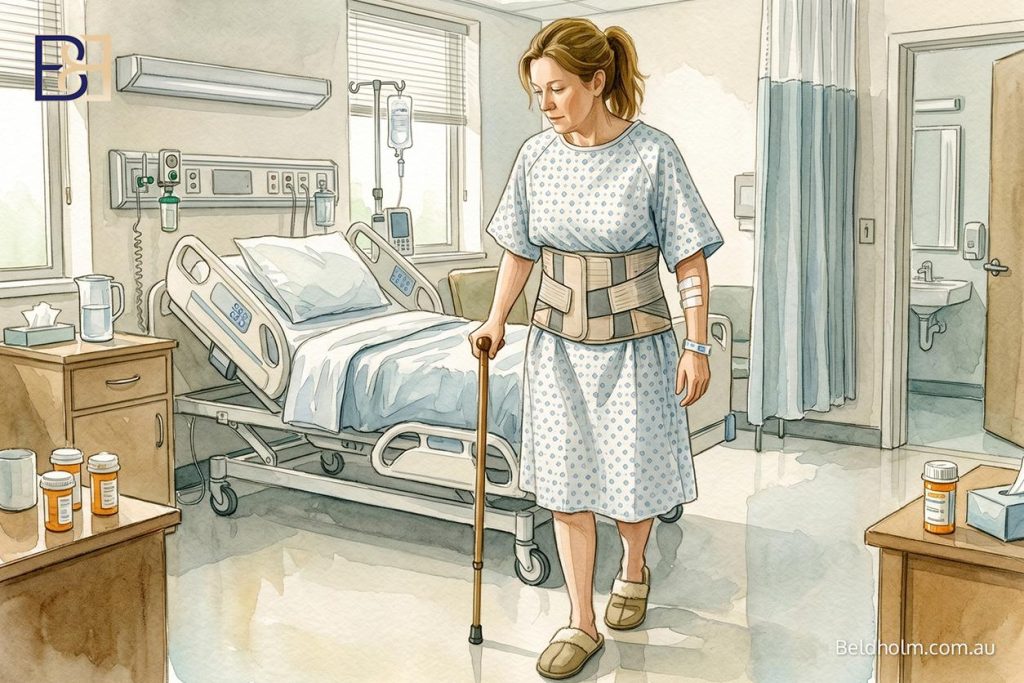
You stay in hospital for 1 to 2 nights. I encourage you to get up and walk from early on, which helps reduce the risk of blood clots. Pain is managed with medication while you are on the ward.
The first few weeks
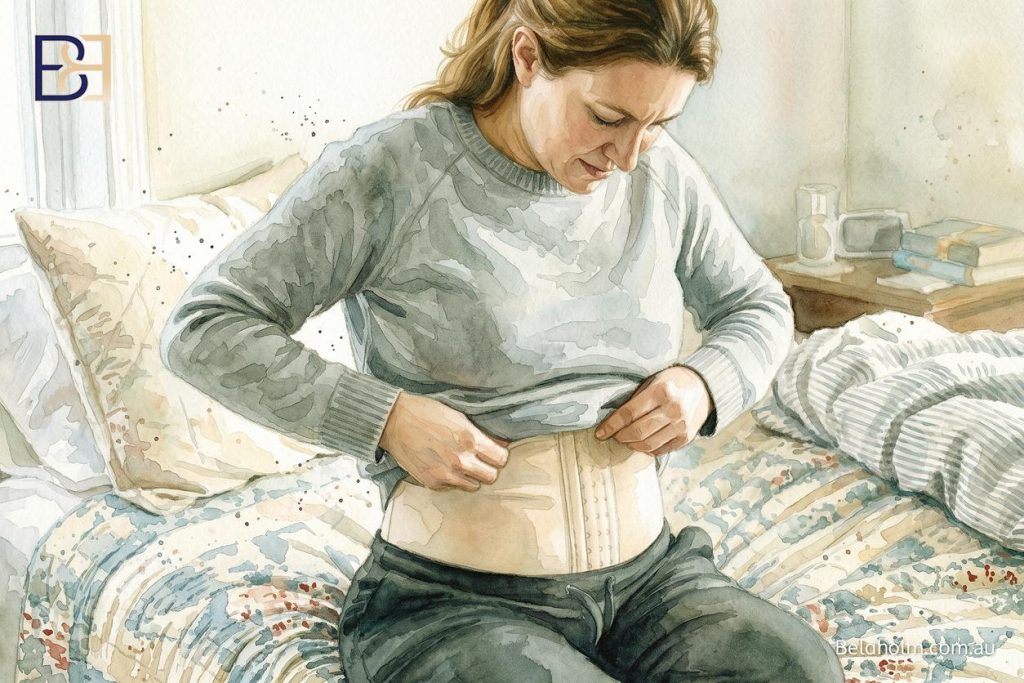
- You wear compression garments to support the area and help manage swelling
- Swelling, bruising and a feeling of tightness across the abdominal region are normal in the early weeks, particularly after the muscle repair
- You will stand and move a little bent forward at first, and straighten up over the following days to weeks
- Most patients take time off work, from around 2 weeks for a limited abdominoplasty up to 4 to 6 weeks for a full or extended abdominoplasty, depending on the job
Lifting and caring for young children

Many of my post pregnancy patients are caring for young children while they recover. When you can lift them again depends on how heavy they are and whether your operation included a muscle repair, ranging from a couple of weeks for a light newborn to longer for a heavier toddler. Arranging help at home before surgery makes the early weeks easier, so you are not lifting more than you should while things heal.
Getting back to activity
- Walking is encouraged early and built up gradually
- Strenuous exercise and core work are held off until I clear you, usually from around 6 weeks
- Driving is possible once you can brake safely and are off strong pain medication, often after a couple of weeks
Follow-up and results
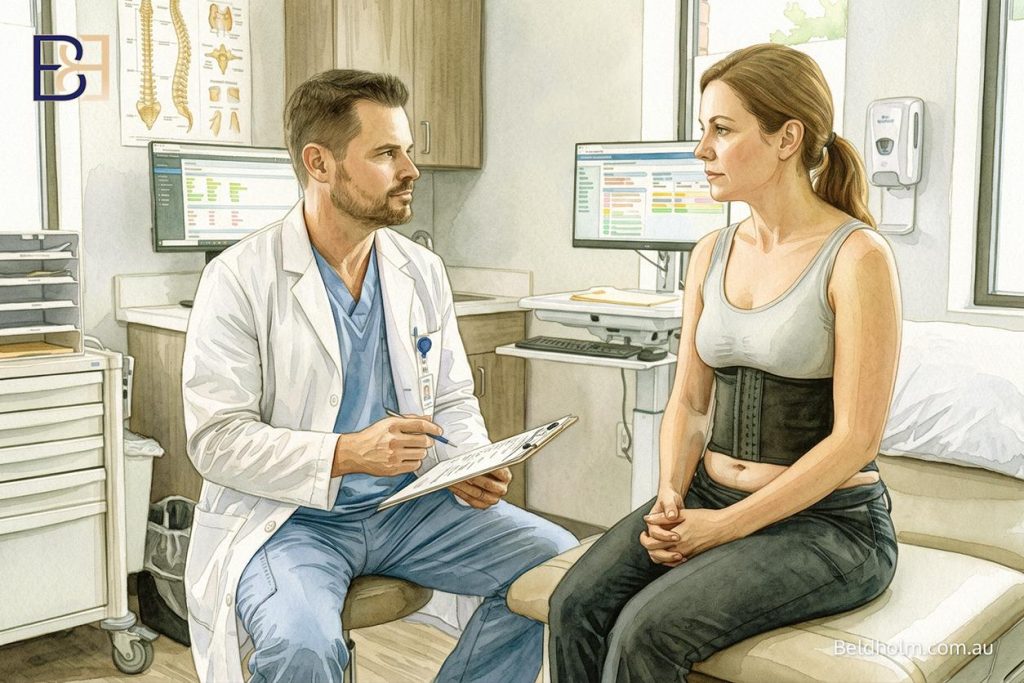
In the first 2 weeks after surgery I review you closely, several times a week, so I can assess healing during the most important period for wound healing. After that, I see you at 4 weeks, 3 months, 6 months and 12 months. Swelling subsides over the following months, helped by movement and, in some cases, lymphatic drainage, and the final shape takes time to show as the tissues heal and the scar matures.
Risks and complications
Every operation carries risks, and an abdominoplasty with suction-assisted lipectomy is major surgery. I go through these with you in detail before you decide, and again before the operation. The main ones to be aware of are below.
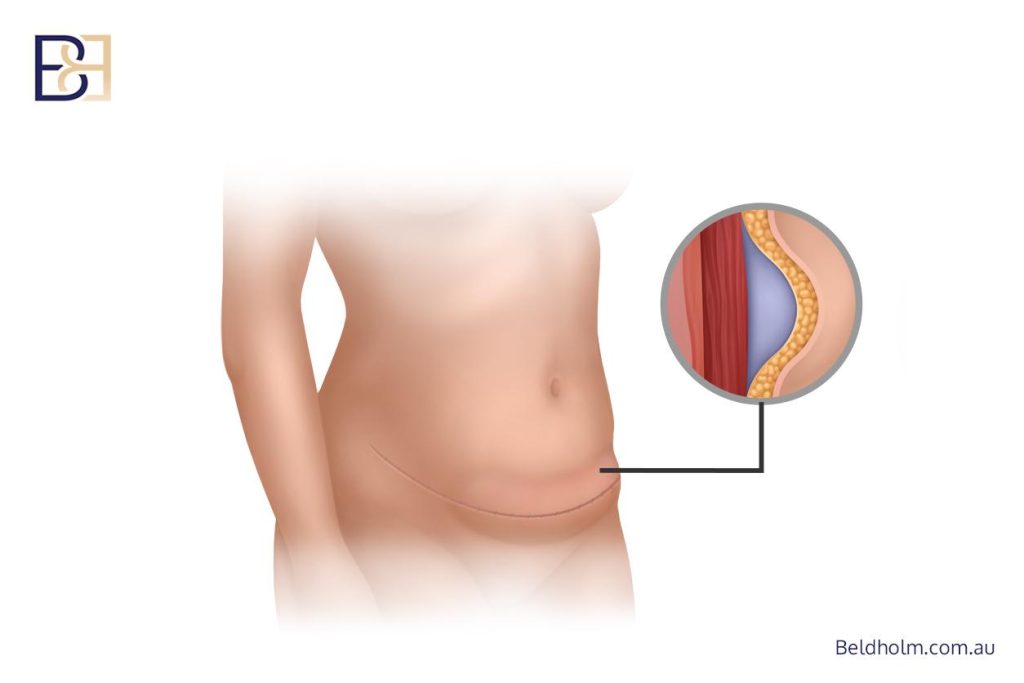
- Bleeding and haematoma. A collection of blood can form under the skin and sometimes needs to be drained or, occasionally, a return to theatre.
- Infection. A wound infection can occur and may need antibiotics or, less often, further treatment.
- Seroma. Fluid accumulation can occur under the skin after surgery. Small collections settle on their own; larger ones may need to be drained.
- Wound healing problems. The wound can be slow to heal or partly separate, particularly along the incision. This is more likely in smokers and in people with diabetes.
- Skin or fat trouble at the wound edge. Because the operation lifts the skin, the blood supply to the edge can be reduced, and in some cases a small area of skin or fat does not heal well. Using suction-assisted lipectomy as part of the operation is done partly to lower this risk, but it does not remove it.
- Scarring. The scar is permanent. In some people scar tissue becomes thickened or raised, and this is not fully predictable.
- Altered sensation. Numbness across the lower abdomen is normal early on and usually improves over months, but some change in sensation can be permanent.
- Blood clots. Clots can form in the legs (deep vein thrombosis) and travel to the lungs (pulmonary embolism), which is serious. Early walking and other measures are used to reduce this risk.
- Contour irregularity or asymmetry. The result may not be perfectly even, and minor irregularities can occur.
- Need for revision. Some patients need revision surgery, a further and smaller procedure, to adjust the result.
- Anaesthetic risks. A general anaesthetic carries its own risks, which the anaesthetist discusses with you.
- Recurrence with future pregnancy. A further pregnancy can stretch the repaired muscles and skin again, which is why the operation is planned once your family is complete.
This is not a complete list. How these risks apply to you depends on your individual health and history, and I go through your specific risks with you before surgery.
Book your appointment online now
When to have surgery after pregnancy
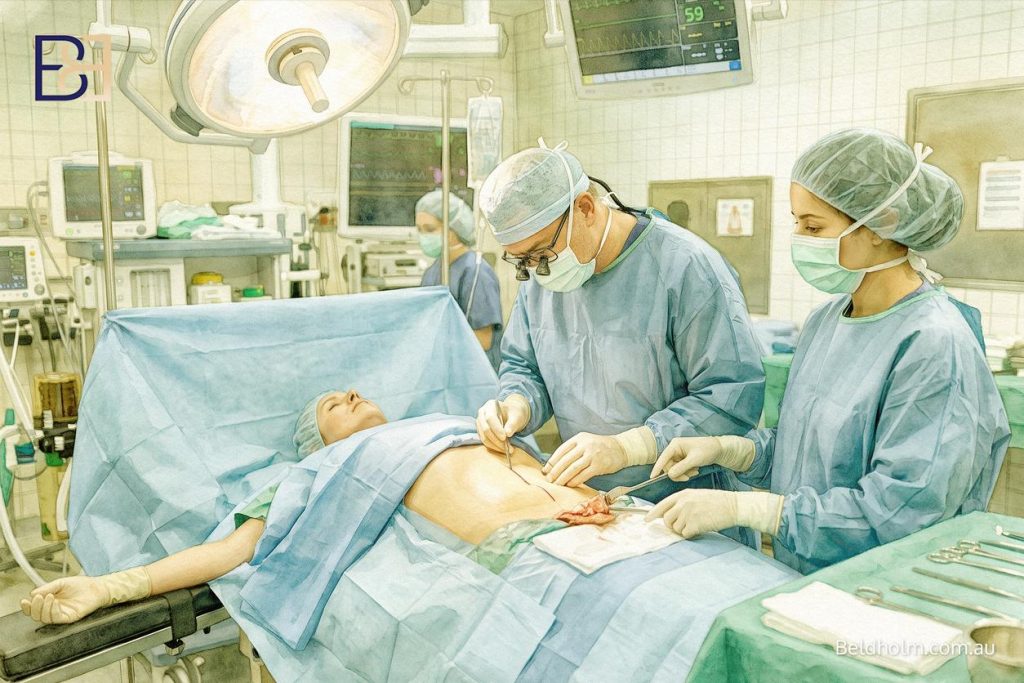
Timing matters after pregnancy, and I plan it around a few things rather than a fixed date.
Once your family is complete

I plan this operation once you have finished having children. A later pregnancy can stretch the repaired muscles and the skin again, which can undo part of the result. Waiting until your family is complete avoids that.
Once breastfeeding has finished and things have settled

I plan surgery once breastfeeding has finished and the body has settled after your most recent pregnancy. The abdomen keeps changing in the months after birth, and weight often takes time to stabilise, so operating too early makes the starting point less reliable. Breastfeeding itself mainly affects the breasts rather than the abdominal wall, but waiting until it has finished gives a clearer picture.
Timing is individual
There is no single right interval that applies to everyone. When you are ready depends on your recovery from pregnancy, whether your weight has settled, and your general health. I assess this with you at consultation.
Referral and a second consultation

A GP referral is needed before your consultation. Before we proceed to surgery, I see you for a second consultation, so you have time to consider the information and decide without pressure.
Preparing for surgery
Good preparation is part of the operation, and I start it well before the day.
Assessment and blood tests
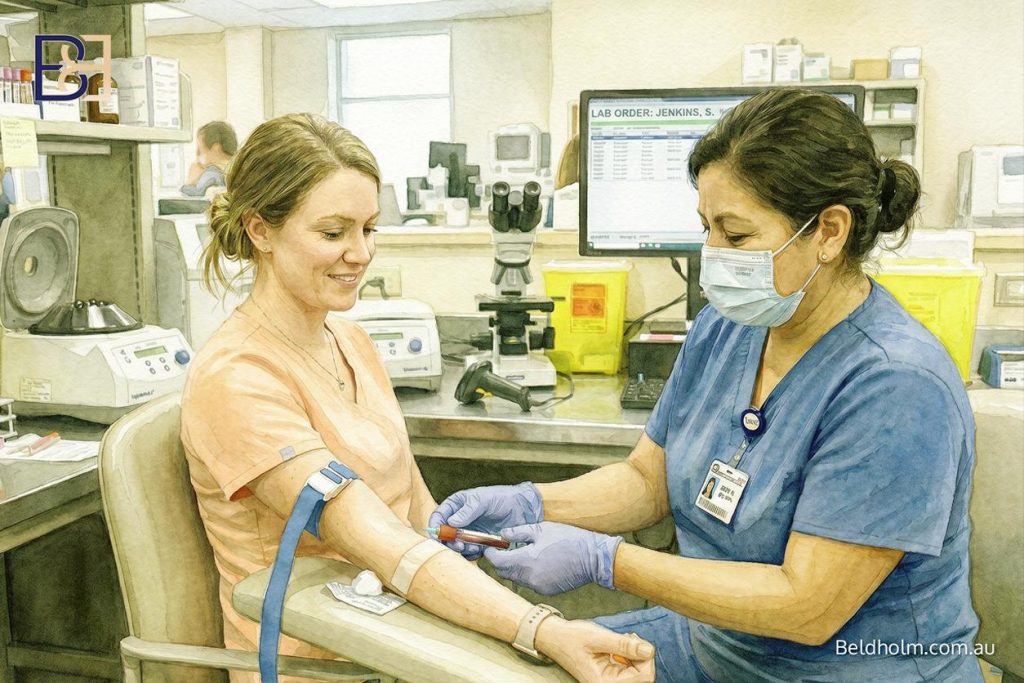
At your initial consultation I take a full medical history and examine your abdomen. Before surgery you have a set of routine blood tests, which check things like your blood count, clotting, and kidney and liver function. For women of childbearing age this includes a pregnancy test close to the date of surgery.
Your general health
- If you smoke, stopping well before surgery, at least 6 weeks, lowers the risk of wound healing problems
- A balanced diet with enough protein supports healing, and we talk through this at consultation
- Keeping to a stable weight before surgery gives a more stable starting point
Medications and blood thinners
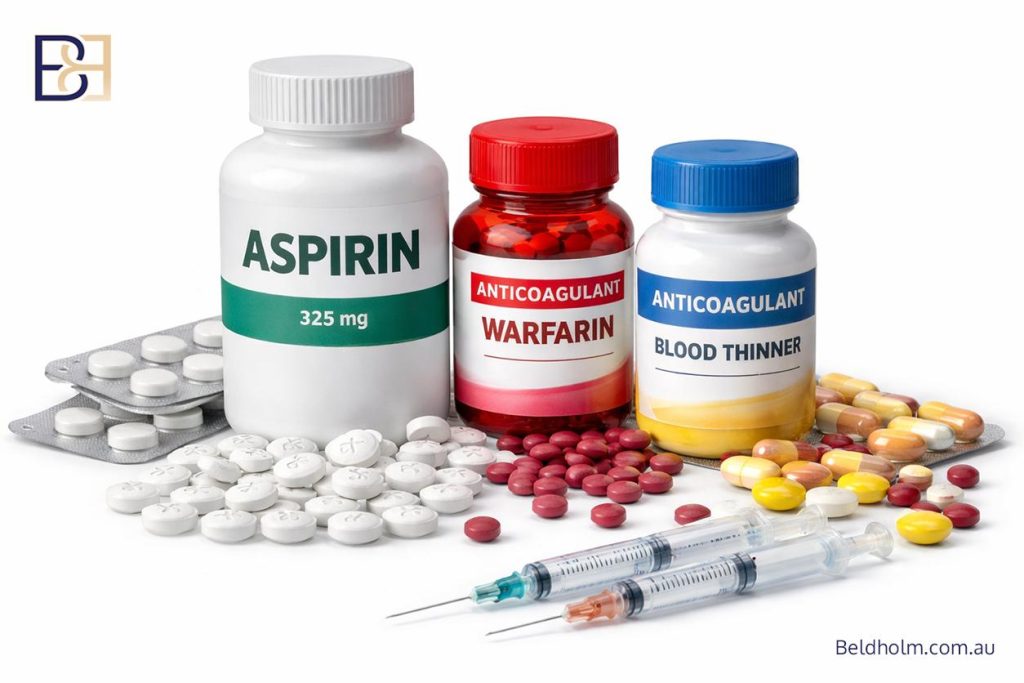
If you take aspirin or a blood-thinning medication, I decide with you whether it needs to be stopped and when, usually about 1 week before surgery. Some patients stay on their medication through surgery, planned in advance. Do not stop any medication on your own; we plan this together.
The anaesthetic

Most patients have their anaesthetic consultation by phone before surgery. The anaesthetist examines you, including your airway, on the day of the operation.
Common questions
Is the liposuction (suction assisted lipectomy) a separate operation?
No. The liposuction (suction assisted lipectomy) is done as part of the abdominoplasty, in the same operation under the same anaesthetic. It is a technique used within the operation, not a second procedure added on.
Will I be left with my caesarean scar as well as a new one?
Usually not. A caesarean scar sits low in the skin that is removed during an abdominoplasty, so in most cases it comes away with that skin. You are generally left with the single low abdominoplasty scar rather than both.
Can I have this operation if I might want more children?
I recommend waiting until your family is complete. A later pregnancy can stretch the repaired muscles and the skin again, which can undo part of the result.
How soon can I lift my children?
This depends on how heavy your children are and whether your operation included repair of the muscle separation (diastasis recti). As a general guide:
- A light newborn can usually be lifted from around 2 weeks
- If your operation did not include a muscle repair, heavier lifting is usually held off until around 4 weeks
- If it did include a muscle repair, lifting a heavier toddler is held off until around 6 weeks
I set your limits based on your operation and how your recovery is going, and arranging help at home for the early weeks makes this easier.
What happens to my stretch marks?
Stretch marks on the lower abdominal skin that is removed will go with that skin. Stretch marks above the belly button, on skin that stays, generally remain. What happens to yours depends on where they sit.
Will the result last?
The muscle repair and the skin that is removed are lasting. A significant weight change or a future pregnancy can affect the result, which is why I plan surgery once your weight has settled and your family is complete. Results vary between patients.
References
- Theodorsen NM, Moe-Nilssen R, Bo K, Haukenes I. Effect of exercise on the inter-rectus distance in pregnant women with diastasis recti abdominis: an experimental longitudinal study. Physiotherapy. 2023;121:13-20.
- Soto-Gonzalez M, Da Cuna-Carrera I, Lantaron-Caeiro EM, Pascoal AG. Effect of hypopressive and conventional abdominal exercises on postpartum diastasis recti: a randomized controlled trial. PLoS One. 2024;19(12):e0314274.
- Olsson A, Kiwanuka O, Wilhelmsson S, Sandblom G, Stackelberg O. Cohort study of the effect of surgical repair of symptomatic diastasis recti abdominis on abdominal trunk function and quality of life. BJS Open. 2019;3(6):750-758.
- Taylor DA, Merten SL, Sandercoe GD, Gahankari D, Ingram SB, Moncrieff NJ, et al. Abdominoplasty improves low back pain and urinary incontinence. Plast Reconstr Surg. 2018;141(3):637-645.
- Toto V, Faiola A, Pazzaglia M, de Donato F, Persichetti P. Could abdominoplasty with diastasis recti abdominis correction improve stress urinary symptoms? A 1-year follow-up prospective study. Aesthetic Plast Surg. 2024;48:3929-3935.
- Fuentes Aparicio L, Rejano-Campo M, Donnelly GM, Vicente-Campos V. Self-reported symptoms in women with diastasis rectus abdominis: a systematic review. J Gynecol Obstet Hum Reprod. 2021;50(7):101995.