


Recovery is where a good breast reduction (reduction mammoplasty) result is protected. The operation itself takes a few hours, but the healing process takes months. How you manage the first six weeks affects your comfort, your wound healing, and how your scars settle over the year that follows. Recovery varies from patient to patient.
This guide walks through what to expect after breast reduction (reduction mammoplasty) surgery with me, and takes you step by step through the recovery process, from the first night in hospital to your twelve-month review. It covers your dressings, your surgical bra, when you can drive and return to work, how to look after your wounds, and the warning signs to watch for.
A few things to keep in mind before we start.
- Every recovery is different. The timelines here are a general guide, not a schedule you have to hit. Your tissue, your general health, and the extent of your surgery all shape how you heal.
- This is a significant operation. It involves incisions, it carries risks, and recovery takes time and effort. I go through the specific risks of this operation on my breast reduction risks and complications page, and we discuss them fully at your consultation before you decide on surgery.
The first 24 to 48 hours
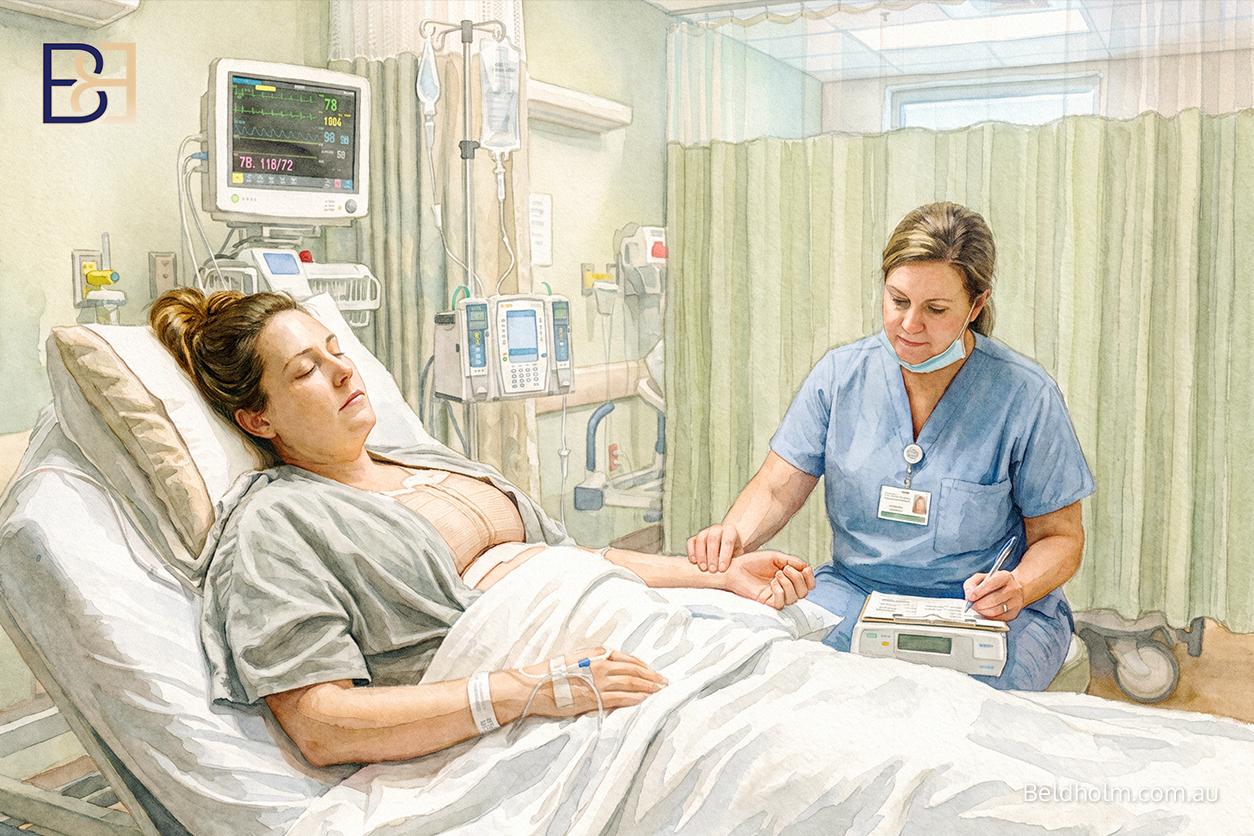
Breast reduction (reduction mammoplasty) is done under a general anaesthetic, so you are asleep for the whole operation. The first day or two is about pain control, rest, and letting your body settle after surgery.
Waking up
You wake in the recovery area with nursing staff close by. It is normal to feel groggy, a little cold, or slightly nauseated as the anaesthetic wears off. Some patients have a dry or scratchy throat for a day from the breathing tube used during surgery. Once you are stable and comfortable, you are taken to the ward.
Your hospital stay
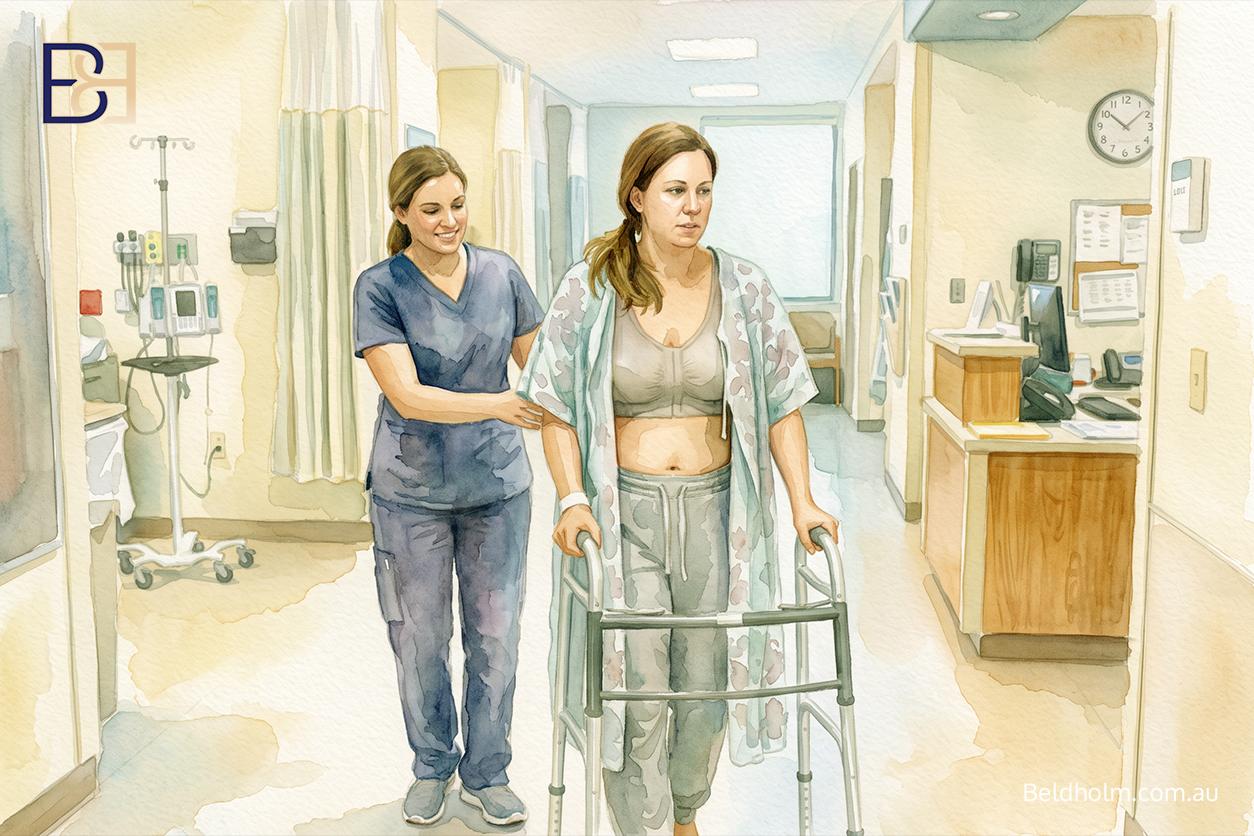
Most patients go home on the day of surgery. Whether you stay overnight depends on how large your reduction is and on your own preference. If you have private health insurance, staying one night is often the more comfortable choice, and if you have a drain it can usually come out the next morning.
While you are on the ward:
- The nursing team checks your observations, your wounds, and your pain relief.
- We get you up and walking that day or the next morning. Moving early is good for your circulation and your lungs.
Drains
Whether I use a drain depends on your surgery. If I place one, it is a thin tube that lets fluid drain away from the wound in the first day or so. If you stay overnight, the drain can usually come out the next morning. You can also go home with a drain in place, and we arrange for it to be removed at your dressing check. Not everyone needs one.
Pain relief
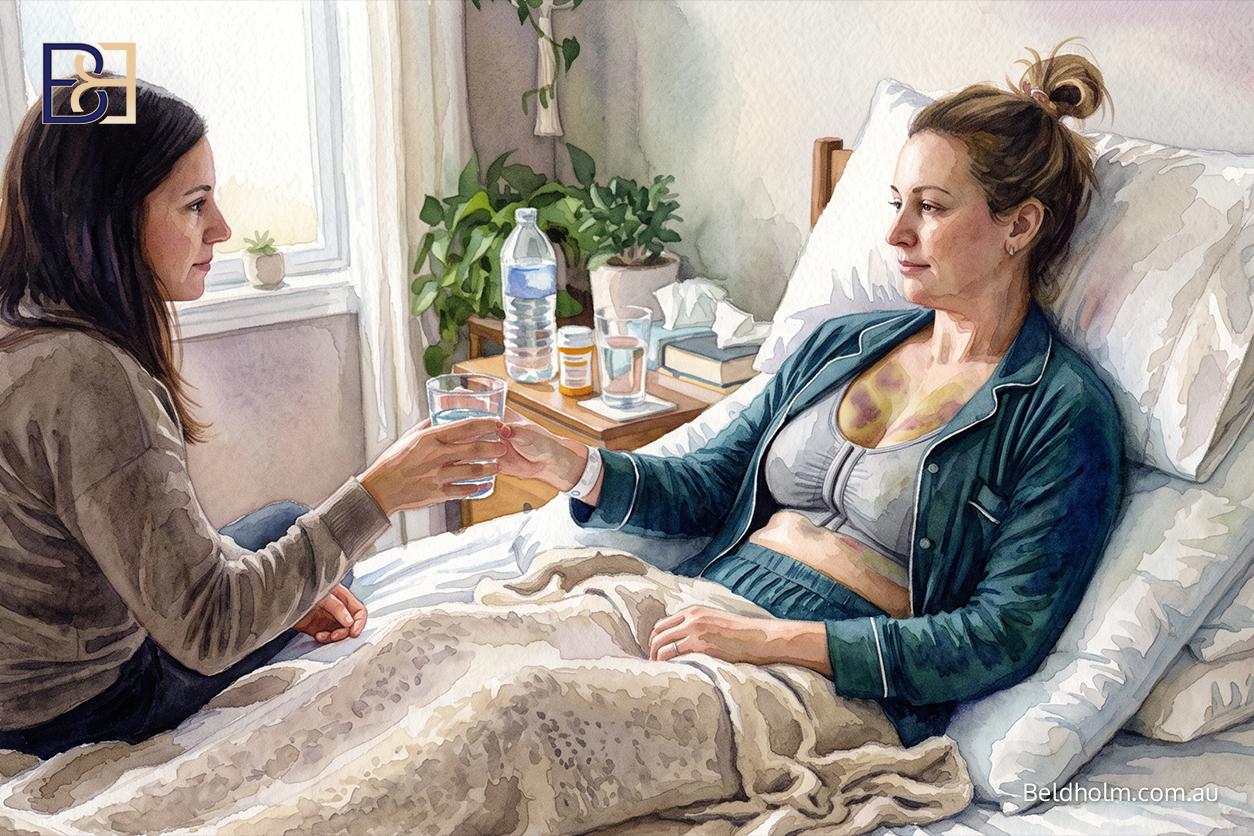
Expect soreness, tightness, and a heavy feeling across your chest and upper body. Most patients have moderate pain that is at its worst in the first two to three days and then eases. Severe pain is less common and should settle with your medication. Managing pain well in these early days is part of a smoother recovery. I use more than one type of pain medication together, which controls pain better than relying on a single prescribed medication:
- Regular paracetamol as the base.
- An anti-inflammatory if it suits you.
- A short course of stronger pain relief for the first few days.
- Anti-nausea medication if you need it.
Take your pain relief on a regular schedule in the early days rather than waiting for pain to build. You go home with a clear plan for what to take and when.
Going home

You are discharged once the nursing team and I are happy with how you are doing, usually on the day of surgery or the next morning. Before you leave, arrange for an adult to drive you home and stay with you for the first night. Do not drive yourself. Your dressings and surgical bra stay on, and you go home with written post-operative care instructions and the details of your follow up appointments.
Your dressings and wounds
After breast reduction (reduction mammoplasty), your surgical incisions are closed in layers and covered with dressings, then supported by your surgical bra. Looking after your incision sites well in the early weeks helps the healing process along and gives your scars the best chance to settle.
Your incisions
In most reduction mammoplasty, the incisions run around the areola, straight down to the crease beneath the breast, and often along the crease itself. The exact pattern depends on your breast and the technique we have planned, and I go through this with you before your surgery.
Stitches
I close the wounds with dissolving (absorbable) sutures placed under the skin, so in most cases there are no stitches for a nurse to remove later.
Your dressings
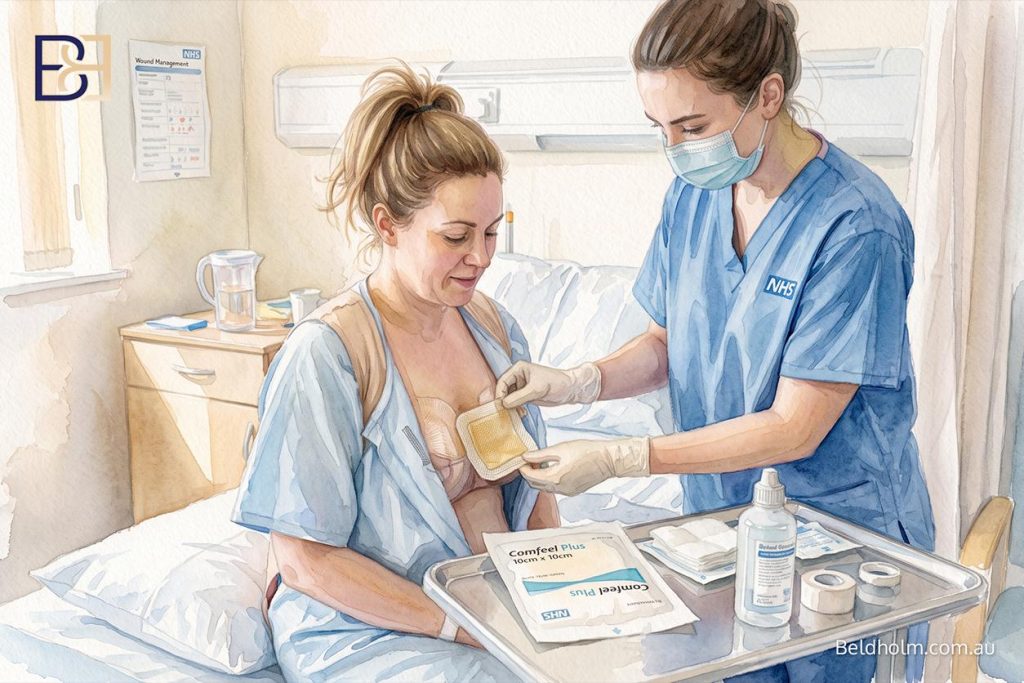
Over the wounds I use Comfeel dressings. Comfeel is a thin, flexible, waterproof dressing that sits over the incision sites, keeps them covered, and helps promote healing by holding a moist environment against the wound. If a dressing causes any skin irritation, let the nursing team know at your dressing check.
Your Comfeel dressings:
- Can stay in place for several days at a time.
- Are showerproof, so you can shower with them on, but do not soak or submerge them.
- Are checked and changed by the nursing team at your dressing check.
Keeping your wounds clean and dry
In the initial stages, keep your dressings dry and intact. Do not pick at the tapes or peel them off early. Your first dressing check with the nurse is arranged before you leave hospital, and the team will tell you exactly when to come in.
Showering and bathing

If your dressing is showerproof, you can usually shower and pat the area dry afterwards. Avoid soaking the wounds. That means no baths, spas, swimming pools, or ocean swimming until your wounds have fully healed and I have cleared you, which is usually around six weeks.
Your scars
Your incision sites heal into permanent scars. They are often red and firm to begin with, then soften and fade through scar maturation over the following twelve to eighteen months. Once your wounds have healed, I guide you on scar management, including silicone gel or tape and keeping the scars out of the sun to protect scars while they are still settling. There is more detail on my breast reduction scars page.
Your support bra
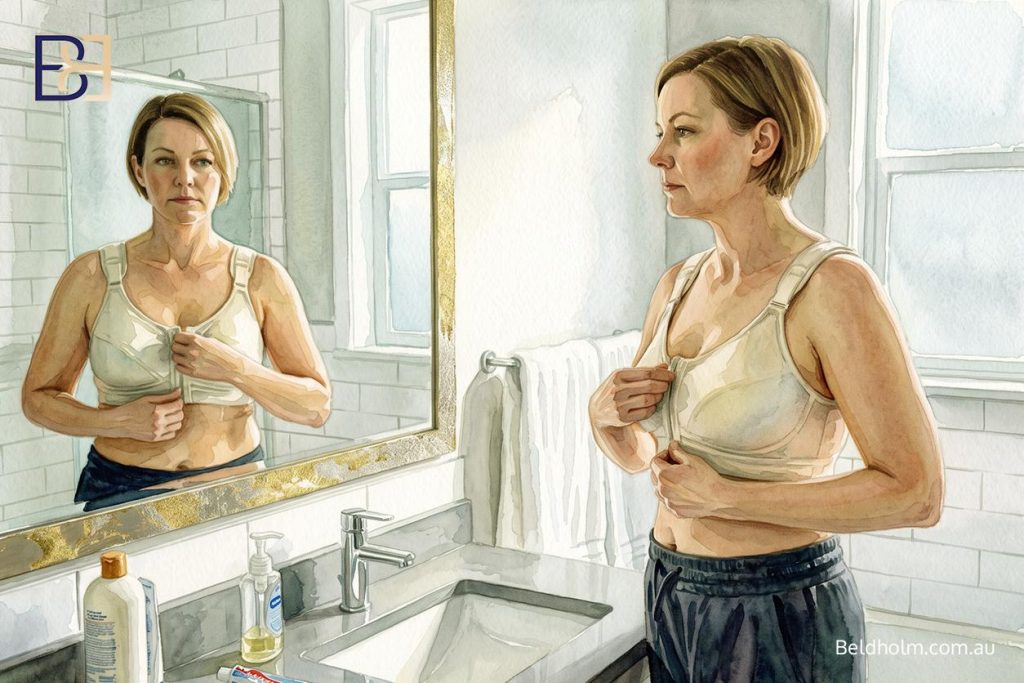
You are fitted with a surgical bra straight after your breast reduction (reduction mammoplasty). Wearing this surgical bra as directed is one of the more important things you can do in the first few weeks, because it supports your breasts while the tissues heal.
Why it matters
The support bra:
- Takes the weight of your breasts off the healing wounds.
- Works as your compression garment, giving firm support that helps to reduce swelling.
- Holds your dressings in place.
- Supports your breast shape while everything settles.
How to wear it
- Wear it day and night for the first four weeks.
- After that, wear it through the day for a further two weeks.
- Take it off only to shower, once I have cleared you to, and to wash it.
- It is soft and front-fastening, with no underwire.
It helps to have a second one, so you can wear one while the other is washed.
Moving back to a normal bra
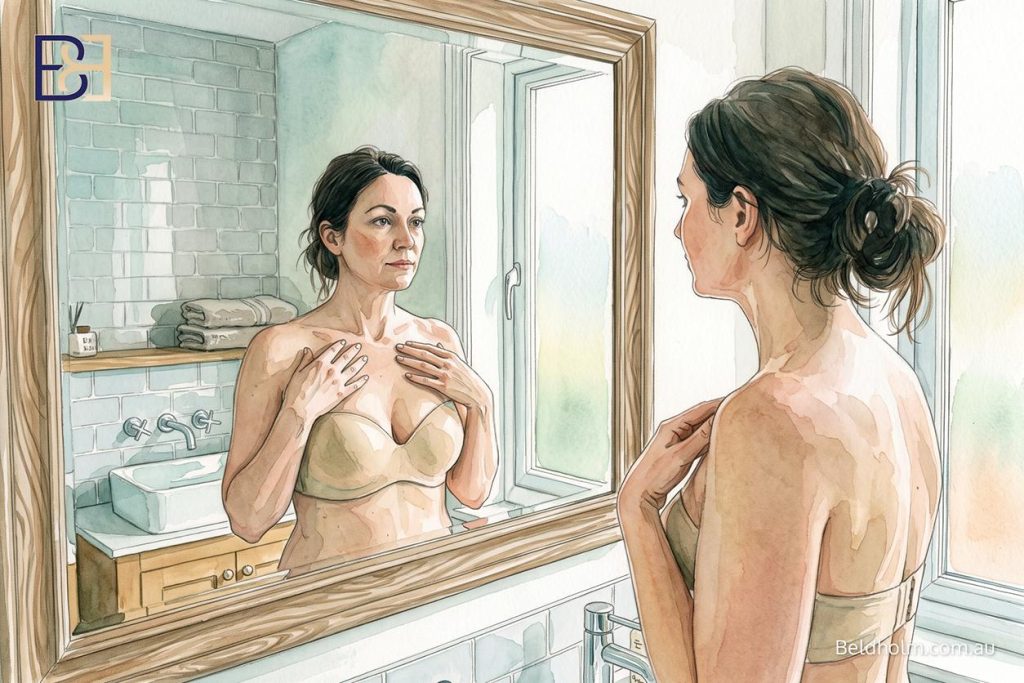
At around six weeks, and on my advice, you can move into a normal bra. Underwire bras are usually fine once you have finished with the surgical bra.
Your size will change
Your breast size and shape keep settling as residual swelling goes down over the first few months. Your final breast shape and size tend to settle at around three months. It is worth waiting until then before buying new bras you want to last.
The first two weeks at home
The first fortnight at home is about rest, protecting your wounds, and slowly building up your movement. Most patients feel tired and sore through this early phase and need help around the house, so it is worth arranging support before your surgery.
Keep moving, in small amounts

Rest matters, but do not spend all day in bed. From your first day home, get up and take short walks around the house regularly, a few minutes at a time. This light walking keeps your circulation going and helps prevent complications like blood clots forming in your legs (deep vein thrombosis) or travelling to your lungs.
Before your surgery I assess your individual clot risk and tell you what you need. Depending on that assessment, this can include compression stockings or blood-thinning injections for a period after surgery.
At the same time, stick to light activities and avoid strenuous exercise or any unnecessary strain. Building up slowly is the goal, not pushing through.
Driving

Do not drive while you are taking strong pain relief, or while you cannot move freely enough to steer, brake hard, and wear a seatbelt across your chest without difficulty. For most patients this means around one week off driving. Check with your car insurer as well, as some require you to be fit to drive.
Sleeping
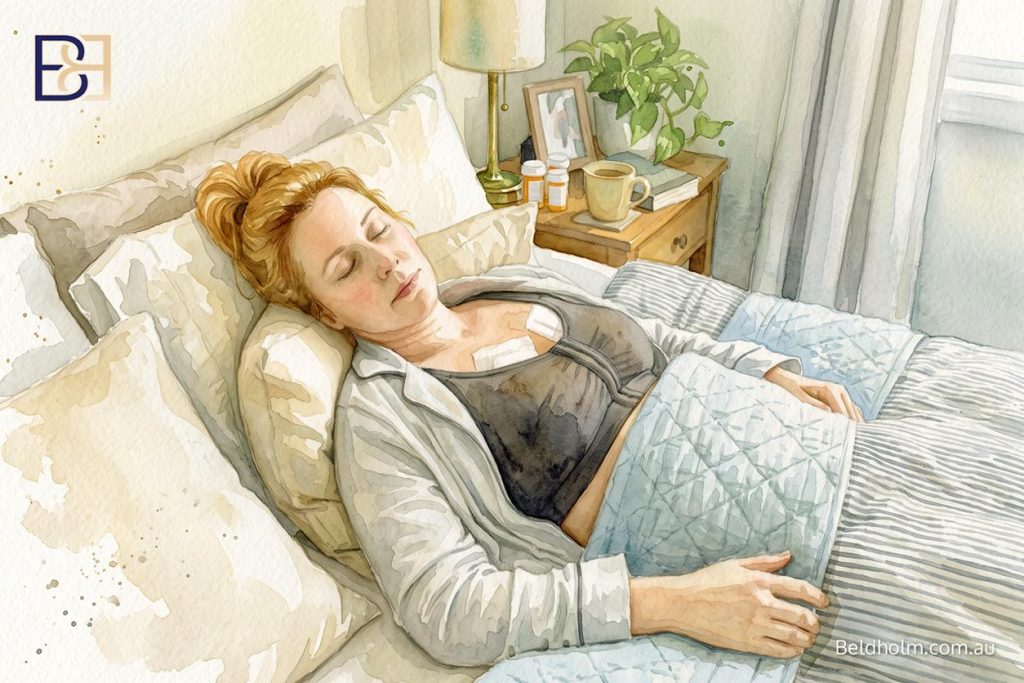
Sleep on your back for the first few weeks, propped up on a couple of pillows to keep your upper body slightly elevated, which is more comfortable and helps with swelling. Avoid sleeping on your front, and hold off side sleeping until it feels comfortable and I have said it is fine.
Lifting and reaching

- Avoid heavy lifting. As a guide, keep to nothing heavier than a full kettle for the first few weeks, and protect your upper body while the wounds heal.
- Avoid repeated reaching overhead, and avoid pushing and pulling.
- Arrange help with young children, shopping, and housework.
Your body will tell you when something is too much. Sharp pulling at the wounds is a sign to stop.
Intimacy
You can return to intimacy when you feel comfortable, usually building up slowly. In the early weeks, avoid anything strenuous, and avoid pressure on or direct contact with your breasts for around six weeks while they heal.
Weeks two to six
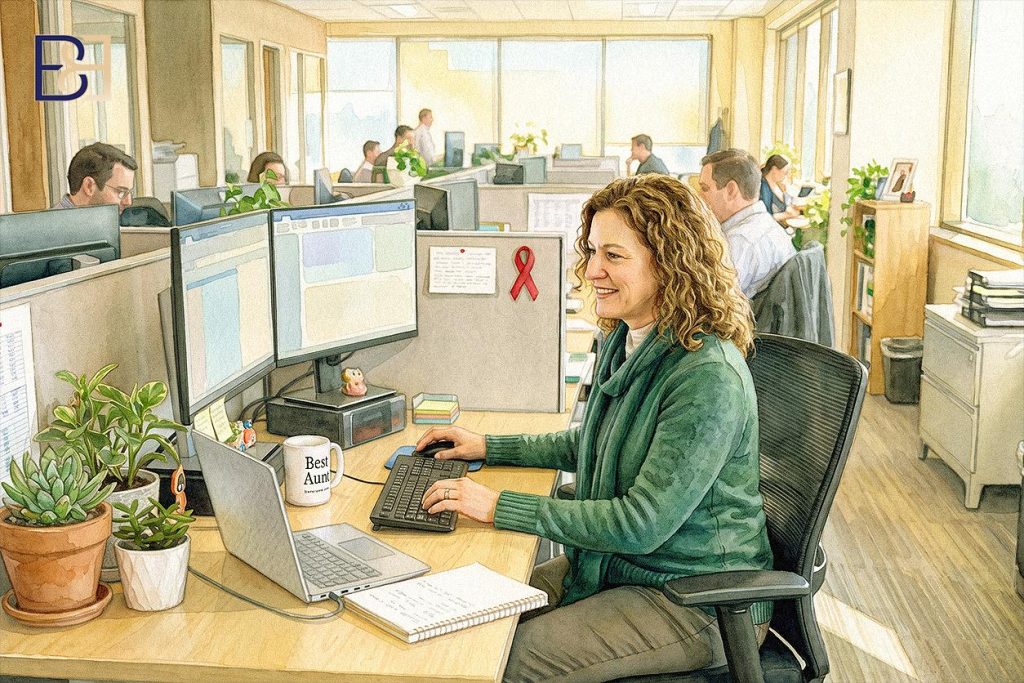
By this stage most patients are moving about more freely and getting back to everyday life, and most feel noticeably better within one to two weeks. During this recovery period, swelling and firmness are starting to settle, though your breasts keep changing shape for some months yet. With the excess breast tissue now removed, many patients find the operation helps alleviate physical discomfort, including the shoulder pain, neck and back strain that the weight of larger breasts can cause.
If liposuction (suction-assisted lipectomy) was used alongside your reduction to refine the shape, your recovery usually takes a little longer, with more bruising and discomfort in the treated areas.
Returning to work
- You are back to most day-to-day activities within a few days.
- Most patients doing desk-based work return within the first week.
- If you have a physical job, or work that involves lifting, reaching, or being on your feet all day, you need longer, often two to three weeks. Physical jobs with heavy lifting can need more time again, and I guide you at your review.
Reintroducing exercise

Start with light walking and build up as you feel able. Hold off on strenuous exercise, anything that jolts or bounces your breasts, and chest and upper-body work, until later. When you do start resistance work, begin with very light weights. Most patients build back to full exercise at around four weeks, on my advice. A supportive sports bra helps once you are moving more.
Swelling and changing sensation
Residual swelling and firmness settle over the first weeks and months, and your breasts gradually soften and settle into their final breast shape. Wearing your surgical bra and keeping active in small ways helps to reduce swelling. Managing swelling is mostly about support and time. Some day-to-day swelling is normal, but contact me if you notice excessive swelling in one breast. Changes in nipple and breast sensation are common early on. You may have areas of numbness, or patches that feel more sensitive. For most patients this settles over the following months, though occasionally some change in sensation is lasting.
If you menstruate
If you menstruate, you may notice your breasts feel more swollen or tender around your period while you are healing. This is normal and eases as your recovery goes on.
Supporting your healing
There are a few things you can do to support the healing process and give your body the best chance to heal well.
Stop smoking and vaping

Smoking and vaping reduce blood flow to your skin and to the healing tissue, which can impair healing and lead to delayed healing of your wounds. In breast reduction (reduction mammoplasty) this matters, because the operation relies on a good blood supply to the skin and nipple. Research in patients having reduction mammoplasty shows that smokers have a higher rate of wound-healing complications, including wound breakdown and skin loss (1,2).
Nicotine has this effect in any form, so stopping completely makes a significant difference to your healing. It is worth stopping well before your surgery and staying off it right through your recovery. Your GP can help with a quit plan and cessation support.
Eat well to support healing

Good nutrition supports wound healing and helps promote healing, and protein is the main building block your body uses to repair tissue. Aim to include a protein source at each meal in the weeks around your surgery.
Before surgery you have a set of standard pre-operative blood tests, arranged as part of getting you ready for your operation and anaesthetic.
LED light therapy
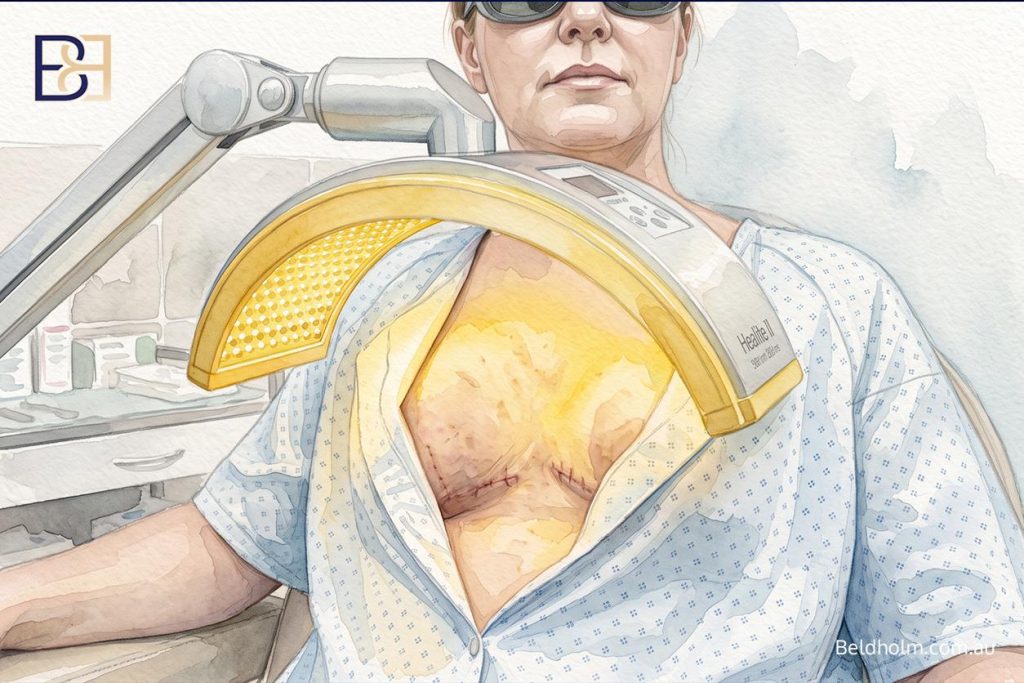
I offer LED light therapy (Healite II) at some of your early review visits in the first couple of weeks. It is a low-level light treatment applied to the skin, used as part of your after-care while your wounds heal. It does not hurt and takes only a few minutes.
Breastfeeding after breast reduction (reduction mammoplasty)
If you might want to breastfeed in the future, it is worth understanding how a breast reduction (reduction mammoplasty) can affect this, and raising it with me at your consultation.
How reduction mammoplasty can affect breastfeeding

The operation removes breast tissue, and some of that tissue is involved in producing and carrying milk. Published research shows that women who have had reduction mammoplasty are more likely to have difficulty breastfeeding than women who have not (3). It does not mean breastfeeding is ruled out, but it is a real consideration.
Whether you can breastfeed afterwards depends partly on the surgical technique, and in particular on whether the nipple stays connected to the breast tissue beneath it:
- In most cases I keep the nipple attached to a column of underlying tissue, which preserves some of its blood supply and milk ducts. Breastfeeding is often still possible this way, though your milk supply may be lower than it would have been.
- When a large amount of tissue is removed, the nipple is sometimes taken off and replaced as a graft (a free nipple graft). This divides the milk ducts, so breastfeeding is not possible afterwards. If this applies to you, I discuss it with you beforehand.
What this means for you
Breastfeeding afterwards is not guaranteed, either way. Some women breastfeed without difficulty, some manage with supplementary feeding, and some are not able to. If breastfeeding is important to you, tell me at your consultation so we can take it into account when we plan your surgery.
Pregnancy after your surgery
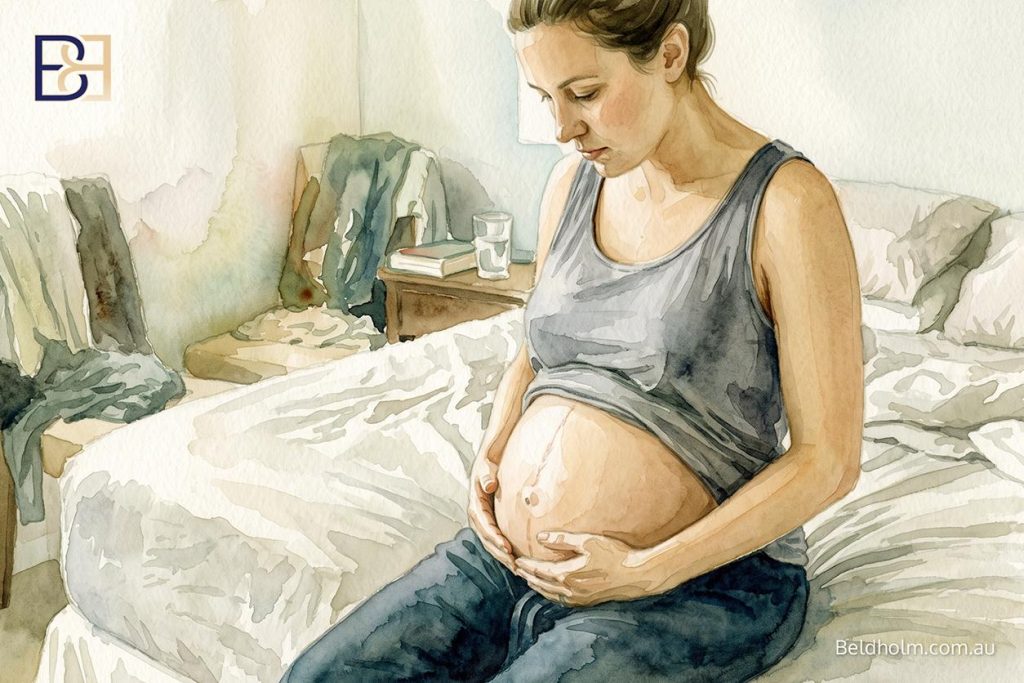
A pregnancy after your surgery can change the size and shape of your breasts, and this can affect your result. If you are planning to have children, it is worth talking through timing with me. Where it is relevant, surgery is generally planned once your family is complete and breastfeeding has finished, because a later pregnancy can alter the outcome. Timing is assessed individually.
When to call us
Most people heal without problems. Still, it helps to know the warning signs that need attention, so you can act early rather than wait and worry. Spotting unusual symptoms early allows early intervention, which can prevent complications from getting worse.
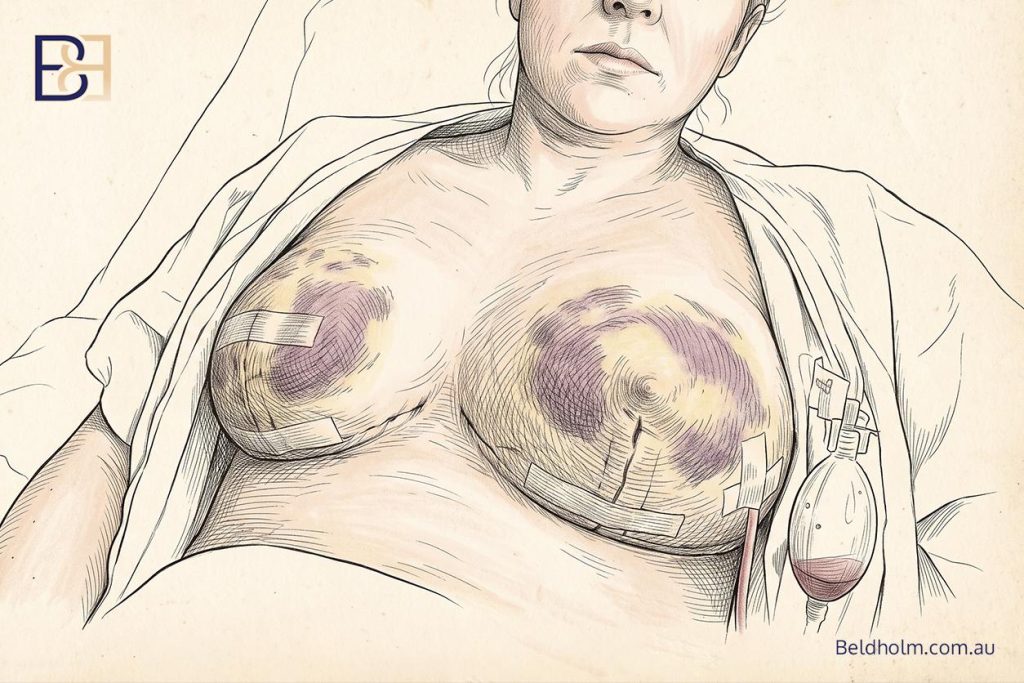
Contact us if you notice any of the following:
- A fever, or feeling generally unwell.
- Redness that is spreading, or a wound that feels increasingly warm.
- A wound opening up, or discharge, pus, or a bad smell from a wound.
- One breast becoming rapidly more swollen, hard, or painful than the other. This can be a sign of bleeding.
- The nipple or the skin around a wound turning dark, dusky, or pale. This needs to be checked urgently.
- Severe pain, or pain that is getting worse or that your pain relief is not controlling.
- Being unable to keep fluids down.
If something does not feel right, it is better to call and ask than to wait.
Signs of a blood clot
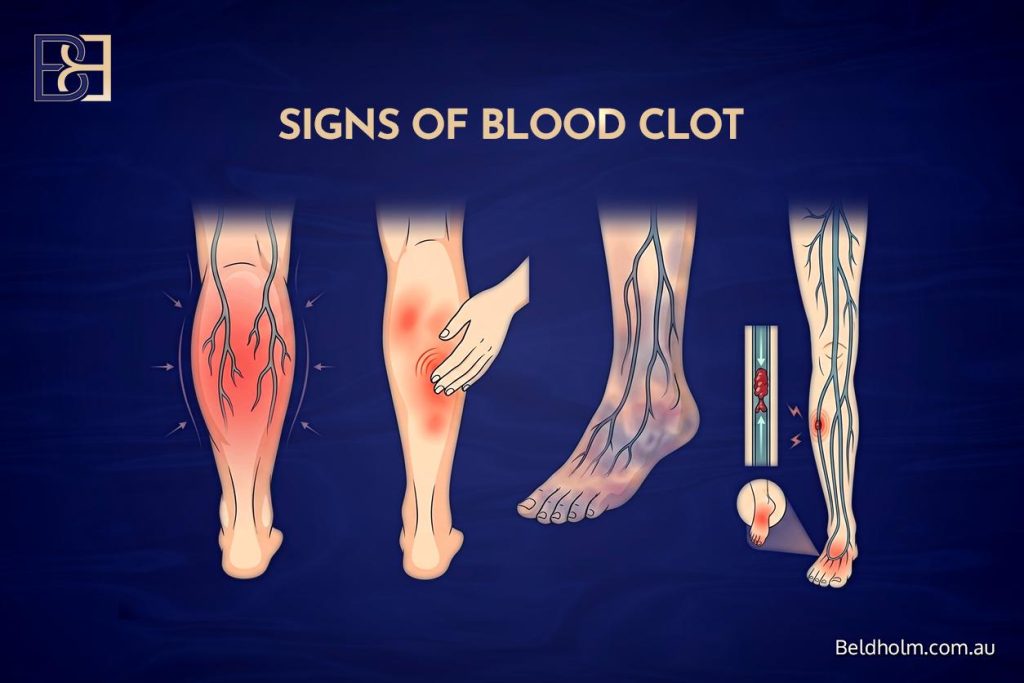
A clot in the leg or lung is uncommon, but it is serious and needs immediate attention.
- Pain, swelling, warmth, or redness in one calf or leg: contact us straight away.
- Chest pain, shortness of breath, or coughing up blood: call 000 immediately. This is an emergency.
How to reach us
During clinic hours, call the clinic on the number in your discharge paperwork.
After hours, call Maitland Private Hospital, using the number in your discharge paperwork. Your call is triaged by a nurse over the phone. If you need to be physically examined, go to your nearest emergency department. For anything life-threatening, call 000. Maitland Private Hospital is not an emergency department.
Follow-up with me
Book your appointment online now
Once you are home, you are seen regularly at follow up appointments so I can check on the healing process and pick up any problems early.
The first couple of weeks
In the first two weeks your follow-up is more frequent. The nursing team checks and changes your Comfeel dressings and reviews your wounds, and this is when I offer LED light therapy (Healite II) as part of your after-care.
Your reviews with me
I review you at around four weeks, then again at three months, six months, and twelve months.
- In the early healing phase, I check how your wounds are healing and answer any questions.
- At the later visits, I look at how your breasts are settling, how your scars are maturing, and how your sensation is returning.
Handover to your GP
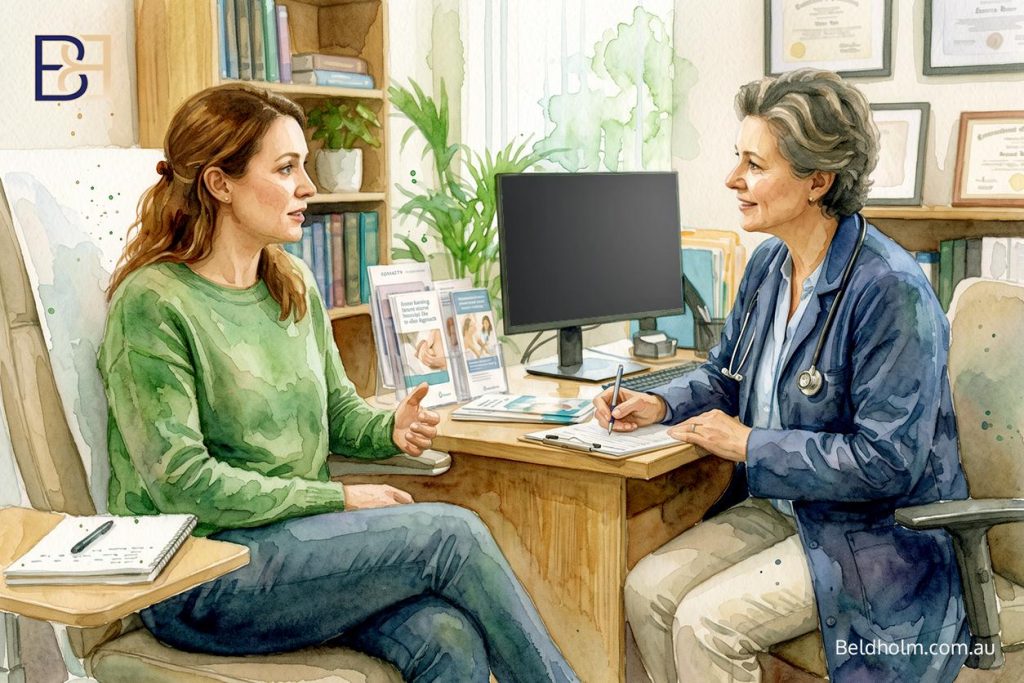
Your GP is kept informed throughout, and I formally hand your ongoing care back to them at your four-week review. From there, your GP looks after your longer-term care. You are still welcome to contact the clinic if something comes up.
Looking after your breasts long term
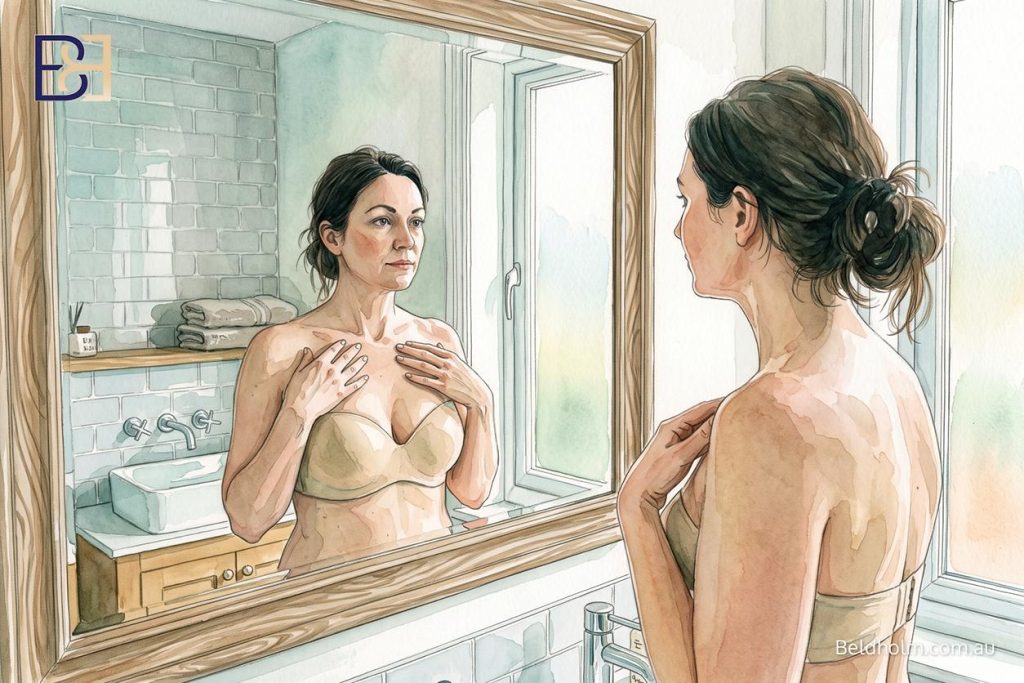
Keep up routine breast awareness and screening as advised for your age. Reduction mammoplasty changes how your breast tissue looks on a mammogram, so let your imaging provider know you have had this surgery when you attend. Your GP can guide you on the right screening for you.
A note on your recovery

No two recoveries are exactly the same, and recovery varies from patient to patient. The timelines in this guide are a general guide, and your recovery process may run faster or slower depending on your surgery, your tissue, and your general health. As with all surgical procedures, everyone’s recovery timeline is different, and your final outcome settles over the first year. Results vary from patient to patient.
What helps most is following the plan I give you, looking after your wounds, and letting me know early if something does not seem right. I review you through your whole recovery journey, from your first days at home to your twelve-month check.
The specific risks of surgery, and whether it suits you, are worked through at your consultation.
References
- Theocharidis V, Katsaros I, Sgouromallis E, Serifis N, Boikou V, Tasigiorgos S, Kokosis G, Economopoulos KP. Current evidence on the role of smoking in plastic surgery elective procedures: a systematic review and meta-analysis. J Plast Reconstr Aesthet Surg. 2018;71(5):624-636.
- Hillam JS, Borsting EA, Chim JH, Thaller SR. Smoking as a risk factor for breast reduction: an analysis of 13,503 cases. J Plast Reconstr Aesthet Surg. 2017;70(6):734-740.
- Koussayer B, Taylor J, Warner J, Alkaelani MT, Blount T, Wainwright D, Threet A, Le NK, Whalen K, Coughlin E, Mhaskar R, Kuykendall L. Breastfeeding ability after breast reductions: what does the literature tell us in 2023? Aesthet Plast Surg. 2024;48(6):1142-1155.