In Australia, a post pregnancy abdominoplasty (tummy tuck) usually costs somewhere between about $6,000 and $30,000 or more. That is a wide range, and it is wide for good reasons. The final figure depends on the operation you actually need, whether a Medicare item number applies to your muscle repair, the level of private health cover you hold, and whether GST is added. The only accurate figure is a written quote prepared for you after a consultation.
I know that cost is one of the first things on your mind when you start thinking about surgery after having children. It is a fair question, and you deserve a straight answer about how the pricing works, even though I cannot put a single number on it from a distance.
No 2 patients need the same operation. One woman may need a limited procedure over an old caesarean scar. Another may need a full abdominoplasty with muscle repair and ultrasound-assisted suction lipectomy (VASER liposuction). Those are different operations, of different lengths, with different hospital stays, so they carry different costs. On top of that, Medicare and private health insurance change the picture significantly for some patients and not at all for others.

For those reasons, I cannot give you an accurate price over the phone. What I can do here is show you exactly how the cost is built up, what each part of the fee covers, when Medicare item 30175 comes into play, and how much difference your health cover makes. I have included worked dollar examples so the numbers feel real rather than abstract.
A few things to keep in mind as you read:
- The dollar figures below are examples only. They are kept close to what I actually charge so they are useful, but they are not a quote.
- Every patient is assessed individually. Your operation, your operating time, and your eligibility for a Medicare rebate are worked out at consultation.
- A GP referral is required before any consultation, and your suitability for surgery is determined only at that consultation.
- Costs and rebates vary between patients and between health funds, and my fees are reviewed from time to time.
What Drives the Cost of a Post Pregnancy Abdominoplasty
The total cost you pay is shaped by a handful of variables. Understanding them makes the range above less mysterious, and it explains why 2 women can be quoted very different figures for what sounds like the same surgery.
The operation you actually need

This is the single biggest factor. After pregnancy, I see a spread of presentations, and each calls for a different operation:
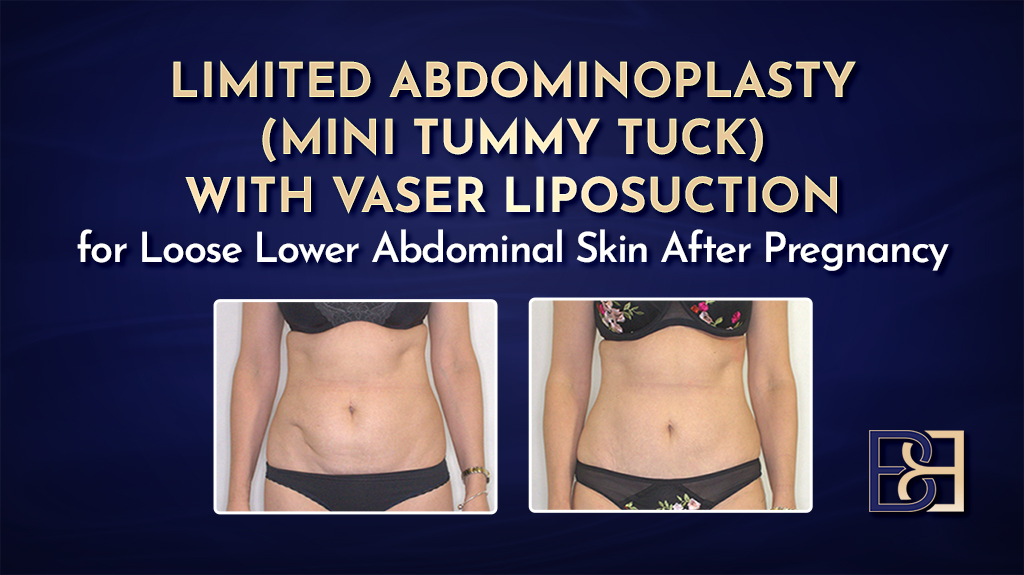
- Limited abdominoplasty (mini tummy tuck), skin only. Suited to a small amount of loose skin low on the abdomen, often over an old caesarean scar. It is the shortest operation, around 1 hour, so it sits at the lower end of the range.
- Limited abdominoplasty with ultrasound-assisted suction lipectomy (VASER liposuction). The majority of limited cases include this. It adds operating time, usually taking around 2 hours.
- Full abdominoplasty with ultrasound-assisted suction lipectomy (VASER liposuction). This removes excess skin above and below the belly button, repairs the separated abdominal muscles, and reshapes the navel. It is the longest of the 3, around 4 hours, and sits at the upper end.
Which of these suits you is decided at consultation, after a physical examination. It is not something I can judge from a phone call or a photo.
Because loose skin after pregnancy often reaches the lateral hip, your operation may technically be an extended abdominoplasty. In practice the amount is usually small, so I often simply call it a full abdominoplasty. Either way, it does not change how the cost is worked out.
Whether the muscle separation is repaired, and whether it qualifies for Medicare
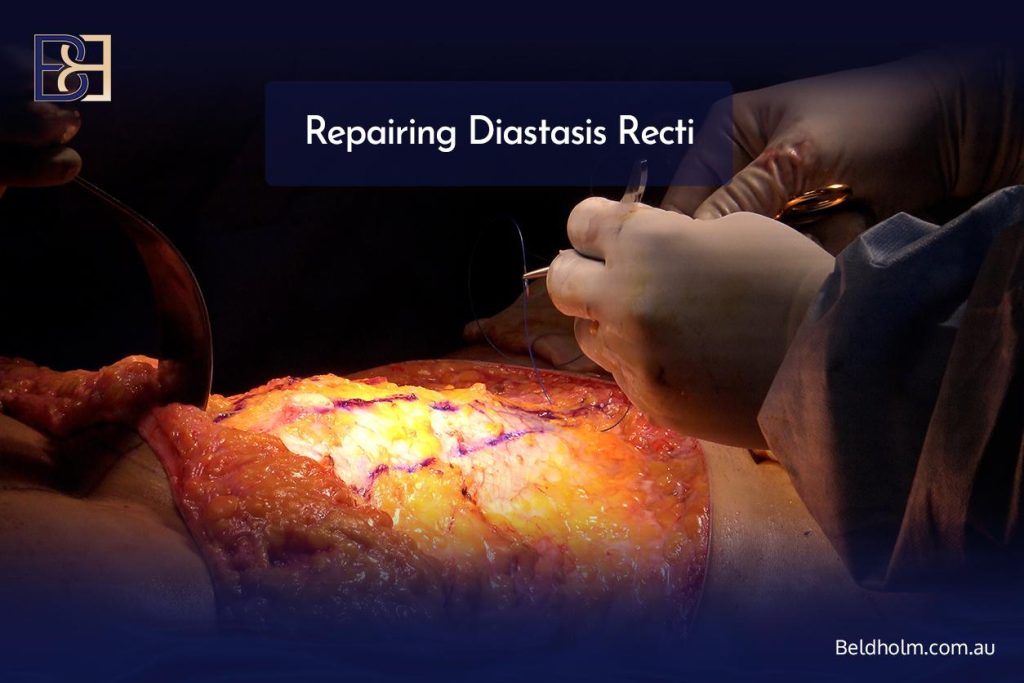
Most, though not all, women having an abdominoplasty after pregnancy have some degree of diastasis recti (muscle separation). Repairing it adds to the operating time. It can also change the cost in the other direction, because a repair that meets the criteria may attract Medicare item 30175, which brings a Medicare rebate and removes GST. I cover this in detail further down.
Operating time
Nearly every fee in the quote is linked to how long the operation takes. The surgeon, the surgical assistant, the anaesthetist, and the hospital all bill in a way that scales with time. A longer operation lifts the surgeon’s fee, the anaesthetist fees and the hospital fees alike, so it raises the total cost across every line of the quote. This is why the choice of procedure above matters so much.
Your private health cover
Whether you hold hospital cover, and at what level, changes your out of pocket costs considerably. For an operation with a Medicare item number, appropriate hospital cover can remove most of the hospital fee. Without cover, that fee is paid in full. I cover this in its own section too.
GST
Cosmetic surgery attracts 10% GST. An operation performed for a recognised medical reason under a Medicare item number is GST-free. On a bill of this size, that 10% is a meaningful difference on its own.
Costs billed separately
The quote I give you covers the surgery, your compression garment, and your post-operative follow-up appointments. Some things are billed separately by other providers, including:
- Histology and pathology
- Medications, including pain relief
- Any additional garments
- Your GP visits
These additional costs are billed directly by the other providers involved, so they sit outside my quote. I let you know about them upfront so your budget accounts for them.
The Parts of the Quote: Who Charges What
A quote for abdominoplasty surgery is not a single fee. It is made up of several separate charges, some from my practice and some from other providers. Here is what each one covers.
My surgeon’s fee

My fee reflects the operation you need and how long it takes. As a guide, my current surgeon’s fees for the 3 procedures I perform after pregnancy start from:
- Limited abdominoplasty (mini tummy tuck), skin only, roughly a 1 hour operation: from $4,500
- Limited abdominoplasty with ultrasound-assisted suction lipectomy (VASER liposuction), roughly a 2 hour operation: from $6,990
- Full abdominoplasty with ultrasound-assisted suction lipectomy (VASER liposuction), roughly a 4 hour operation: from $11,990
These are indicative figures, reviewed from time to time. Your exact fee is confirmed in the written quote you receive after consultation.
Surgical assistant
I operate with a surgical assistant. Their fee is separate from mine and works out at about 20% of my surgeon’s fee.
Anaesthetist

A specialist anaesthetist keeps you asleep and monitors you throughout. They bill by time, at around $660 per hour, and they usually add about an hour to the surgical time because they stay with you before the operation starts and until you have woken up safely afterwards. So if the surgery itself is booked for 2 hours, the anaesthetist typically bills for about 3.
The anaesthetist is an independent provider. My patient coordinators obtain their quote for you so you have the figure in advance.

Hospital and facility fee
These hospital and facility fees cover the operating theatre, theatre nursing, and your bed and stay. It is billed by the hospital, not by me. I do not set these fees and I do not see the hospital’s quotes, so any hospital figure I give you is an estimate. Your coordinator obtains the hospital’s own written quote as part of your costing.
As a rough guide, theatre time runs at around $1,400 per hour, a same-day discharge adds around $600, and an overnight stay adds around $1,200. Hospital fees also differ depending on whether your operation is booked under a Medicare item number or as a cosmetic procedure.
For an operation with a Medicare item number, appropriate hospital cover generally takes care of most of this fee. Without hospital cover, it is paid in full.
What my quote includes
The quote I prepare covers the surgery itself, your compression garment, and your post-operative care and follow-up appointments with me at 4 weeks, then 3, 6 and 12 months. The separately billed items I listed earlier, such as pathology and medications, sit outside this.
Diastasis Recti (Muscle Separation) Repair and Medicare Item 30175
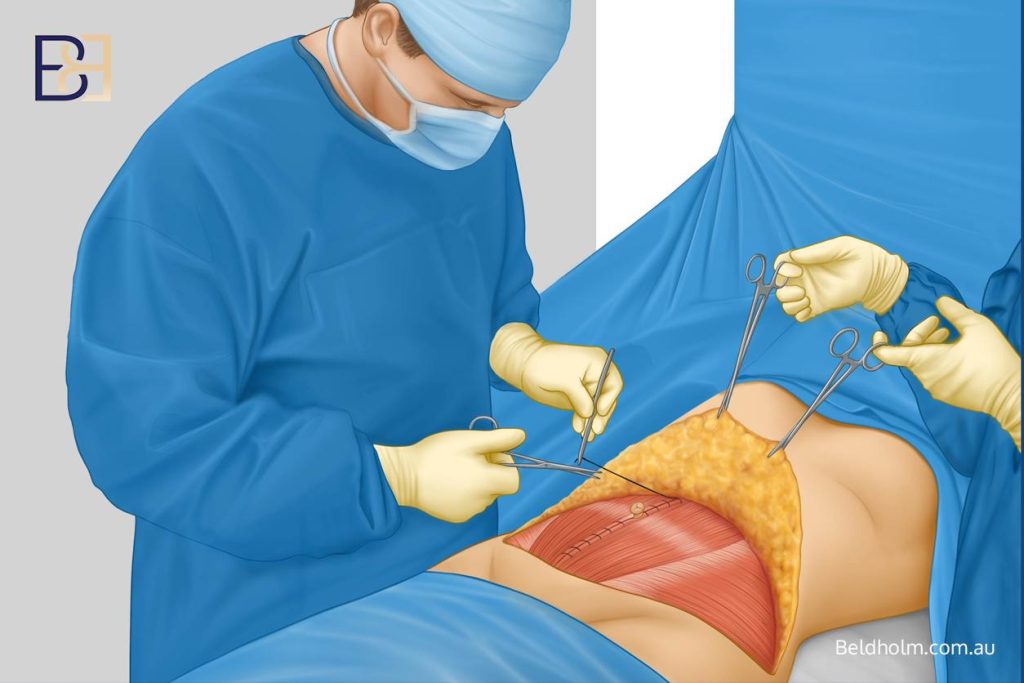
For many women, the Medicare question is the one that changes the cost the most, so it helps to understand how it works.
What diastasis recti is
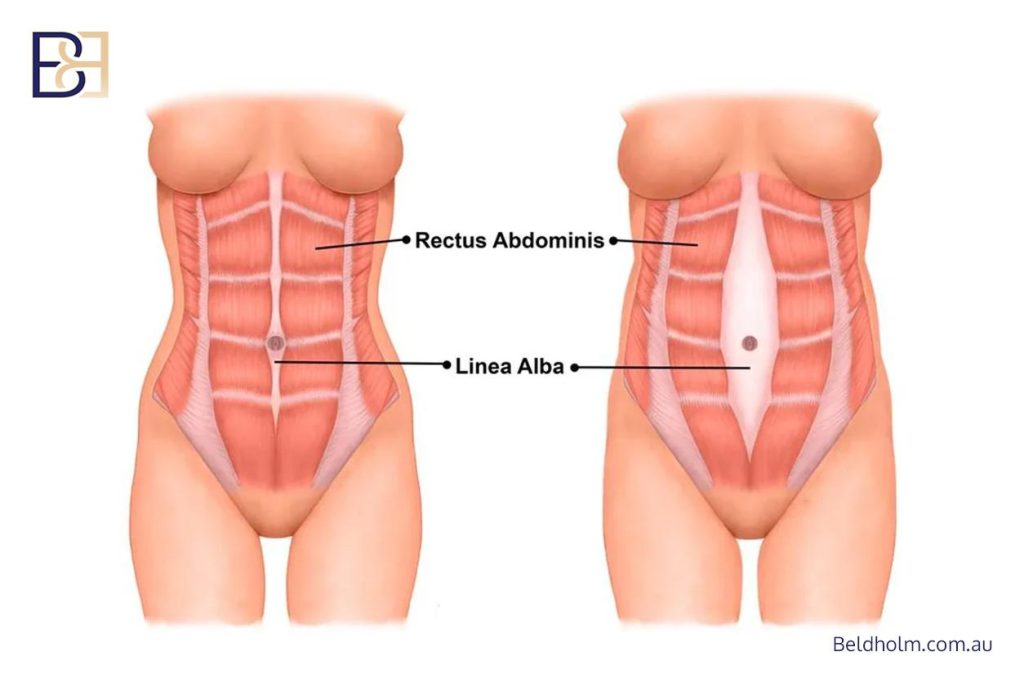
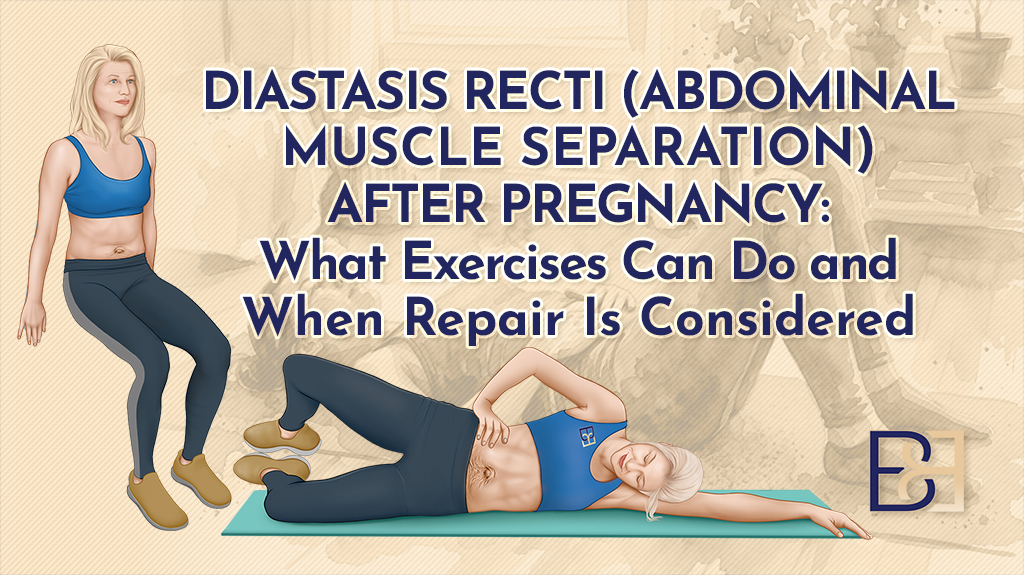
During pregnancy, the 2 abdominal muscles that run down the front of the abdomen can separate to make room for the growing baby. This separation is called diastasis recti (muscle separation). It is a common and normal change after pregnancy. For some women, the muscles draw back together on their own, and for others a gap remains. Where a gap remains and is repaired as part of an abdominoplasty, that repair is the part of the operation that may attract a Medicare rebate.
Medicare item 30175

Item 30175 is the Medicare item number that can apply to abdominoplasty where diastasis recti is repaired (2). Where an operation is booked under this item, 2 things change:
- A Medicare rebate applies. Medicare pays a benefit of 75% of the Medicare schedule fee for the item. If you hold private hospital cover, your fund is required by law to cover the remaining 25%, bringing you up to 100% of the schedule fee. In practice, most funds pay more than that minimum, commonly around 150% to 200% of the schedule fee, which reduces your out-of-pocket gap further.
- The operation is GST-free. An operation performed for a recognised medical reason under a Medicare item number does not attract the 10% GST that applies to cosmetic surgery.

There is an important detail here. The Medicare schedule fee is not the same as my surgeon’s fee. My fee is usually higher than the schedule fee, so even with a rebate there is still a gap that you pay. What the rebate does is reduce your out-of-pocket cost and remove the GST, which together make a real difference to the total.
The figures change each year
The Medicare schedule fee and the benefit payable are reviewed and indexed every year, on 1 July. Rather than print a figure here that will soon be out of date, I would point you to MBS Online, the Australian Government’s official schedule, for the current benefit for item 30175.
Not everyone qualifies
Specific criteria must be met for item 30175 to apply, and whether you meet them is a clinical determination made at your consultation, not something that can be decided beforehand. Some women qualify and some do not. If your operation does not meet the criteria, it is considered cosmetic, and Medicare coverage does not apply. In that case there is no Medicare rebate, no private health fund contribution toward the surgery, and 10% GST is added. Cosmetic surgery is not covered by Medicare.
I go through the eligibility criteria in detail in my separate article on Medicare item 30175, and I explain when an abdominoplasty is considered medically indicated rather than cosmetic in my article on that question. Both are worth reading if the Medicare pathway is relevant to you.
Where Private Health Insurance Fits In

Private health insurance (hospital cover) can make a large difference to your out of pocket costs, but only in specific circumstances. It helps to be clear about when it applies and what it does.
Cover only helps when there is a Medicare item number
This is the key point. Private hospital insurance contributes to your surgery only when your operation is booked under a Medicare item number, such as item 30175 for diastasis recti (muscle separation) repair. If your operation is cosmetic and has no item number, your private health fund does not contribute, regardless of how good your policy is. Cosmetic surgery sits outside both Medicare and private cover.
The level of cover matters
Not every policy includes this type of surgery. The relevant items generally sit in the top tier of hospital cover, so you usually need gold-level private health insurance cover for a policy to include them. 2 things are worth checking directly with your fund before you rely on your cover:
- That your policy specifically includes the Medicare item number your operation would be booked under.
- That you have served any waiting periods. A 12-month waiting period commonly applies to this kind of surgery, particularly where it relates to a pre-existing condition.
What your fund does and does not cover
When your operation qualifies and your cover is in order, your fund generally:
- Covers most or all of the hospital and theatre fee.
- Contributes toward the surgeon’s and anaesthetist’s fees, based on the Medicare schedule fee, as set out in the previous section.
What it does not do is cover the full gap between the schedule fee and my actual surgeon’s fee. That gap remains your out-of-pocket cost. You may also have a policy excess to pay on your hospital admission.
Check the detail with your fund
Health fund rebates and inclusions vary from one fund to another and one policy to another. My patient coordinators can tell you the item number your operation would use so you can confirm your cover with your fund directly. Do this early, so there are no surprises close to your surgery date.
Two Worked Examples
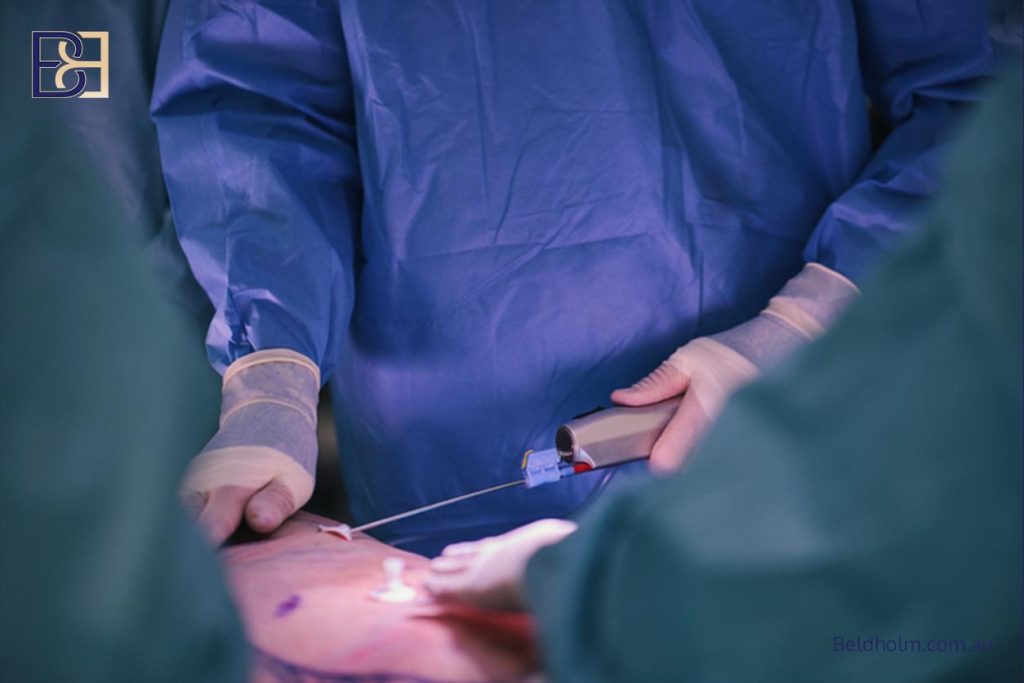
To make this concrete, here are 2 worked examples. They use the same operation so you can see exactly how much difference Medicare and private health cover make to the total.
Please read these as illustrations, not quotes. A few caveats first:
- Both examples are for 1 specific operation: a full abdominoplasty with ultrasound-assisted suction lipectomy (VASER liposuction), around 4 hours in theatre, with 1 night in hospital. Your operation may be shorter and less costly, or different again.
- My surgeon’s fees are current and close to what I actually charge. The hospital and anaesthetist figures are estimates, and rebates depend on the current Medicare figures and your particular fund.
- Your real figure comes from a written quote after consultation. No 2 patients are the same.
The shared operation
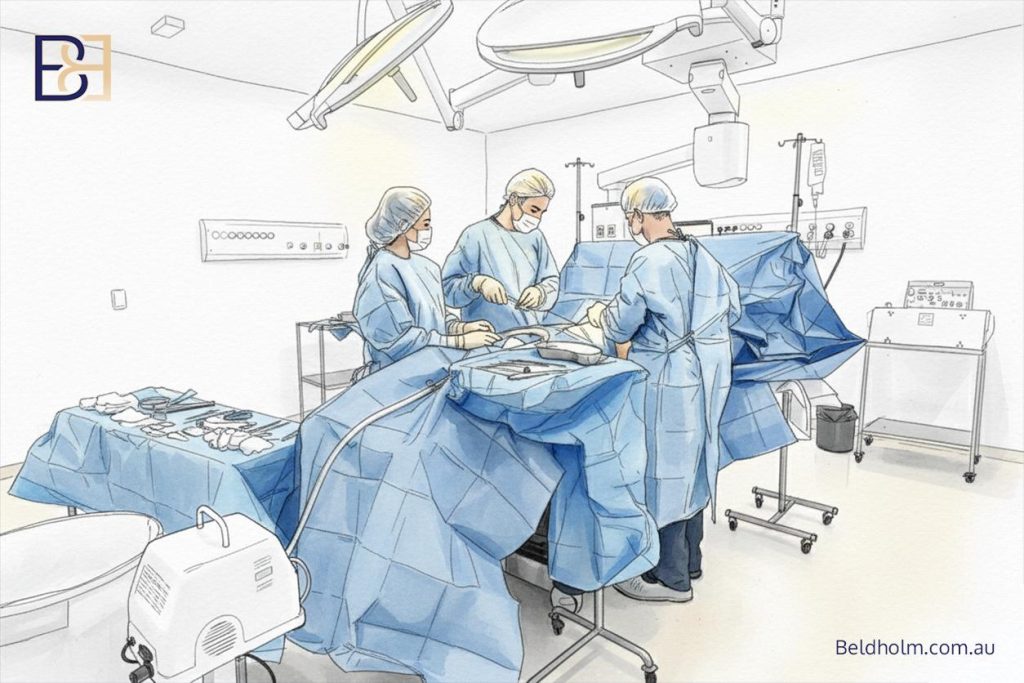
For both examples, the provider fees are:
- Surgeon: $11,990
- Surgical assistant (about 20% of the surgeon’s fee): $2,398
- Anaesthetist (5 hours billed at $660, being the 4 hour operation plus 1 hour): $3,300
- Hospital and theatre (estimated, 4 hours of theatre plus 1 overnight): around $6,800
What changes between the 2 examples is not the operation. It is whether Medicare item 30175 applies, whether the patient holds hospital cover, and whether GST is added.
Example 1: Qualifies for Medicare item 30175, holds gold hospital cover
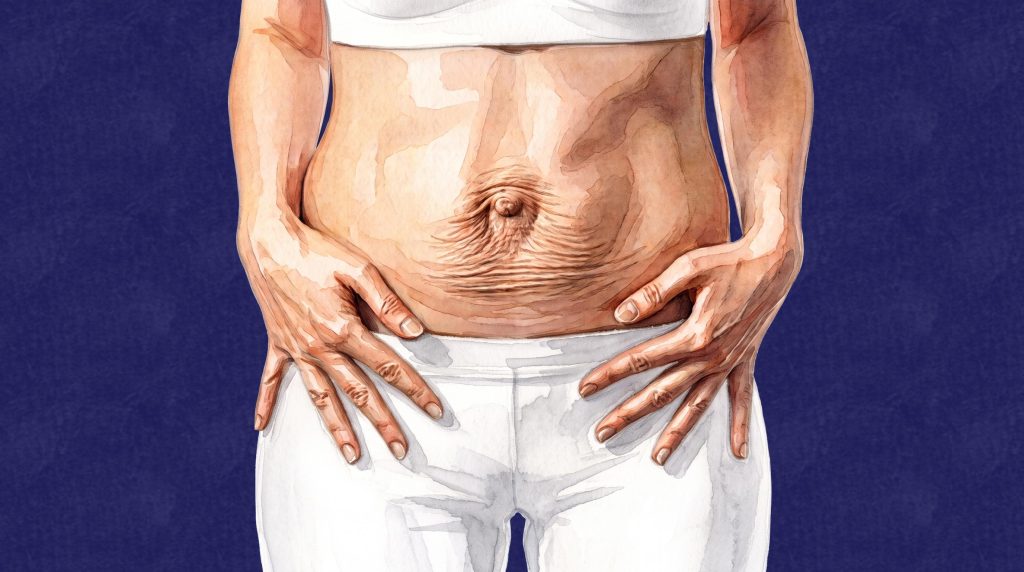
This patient has diastasis recti (muscle separation) repaired as part of her abdominoplasty and meets the criteria for item 30175. She holds gold-level hospital cover and has served her waiting periods.
The Medicare schedule fee for item 30175 is $1,131.65, with a Medicare benefit of 75%, which is $848.75. These are the figures published on MBS Online, with the schedule fee effective 1 July 2025 (1). The schedule fee is indexed each year, so for the current figure please check MBS Online or Medicare directly.
On top of the Medicare benefit, her private health fund pays a rebate against the schedule fee. Funds vary, but for this example I have assumed a total rebate of 150% of the schedule fee, which is $1,697.48 against the surgeon’s fee. Medicare pays 75% of the schedule fee and the fund makes up the balance to 150%.
- Hospital: Covered by her health fund. She pays only her policy excess, for example around $500.
- Surgeon: $11,990, less a combined rebate of about $1,697 (150% of the schedule fee), leaving about $10,293.
- Surgical assistant: $2,398, less an estimated rebate of around $200, leaving about $2,198.
- Anaesthetist: $3,300, less an estimated rebate of around $500, leaving about $2,800.
- GST: None. The operation is GST-free under the Medicare item.
Indicative out-of-pocket cost: around $15,790.
Please treat the fund rebate, assistant rebate, and anaesthetic rebate here as estimates for illustration. Fund rebates in particular vary a great deal between funds and policies, so confirm your own figures with your fund.
Example 2: Cosmetic operation, no hospital cover
This is the identical operation, but it does not meet the criteria for a Medicare item number, so it is cosmetic. This patient does not hold hospital cover. There is no rebate, and 10% GST applies to every part of the bill.
- Hospital and theatre: $6,800, plus 10% GST, so about $7,480.
- Surgeon: $11,990, plus 10% GST, so $13,189.
- Surgical assistant: $2,398, plus 10% GST, so about $2,638.
- Anaesthetist: $3,300, plus 10% GST, so $3,630.
- Medicare or fund rebate: None.
Indicative out-of-pocket cost: around $26,940.
What the 2 examples show
The operation is the same in both cases. The surgeon, the assistant, the anaesthetist, and the number of nights in hospital do not change. Yet the out-of-pocket cost differs by around $11,000, driven entirely by whether Medicare item 30175 applies, whether the patient holds hospital cover, and whether GST is added.
This is why I cannot give you a meaningful price without seeing you. The same surgery can land at very different totals depending on your circumstances, and working out which situation applies to you is part of what happens at consultation.
If You Are Also Considering Breast Surgery
Book your appointment online now
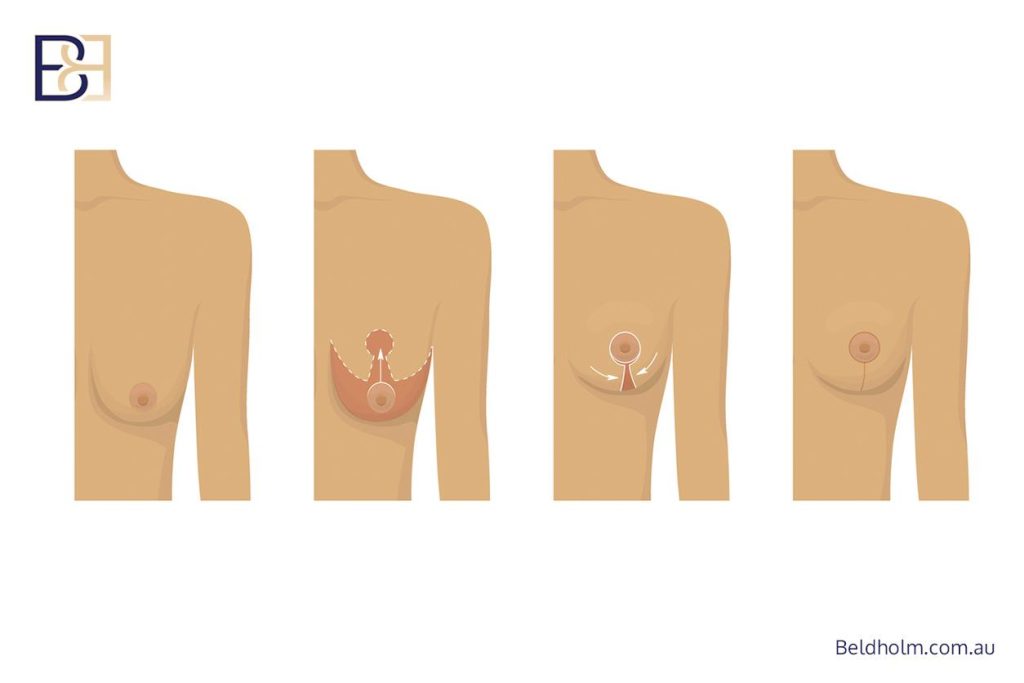
Some women who see me after pregnancy are thinking about breast surgery as well as abdominoplasty, such as a mastopexy (breast lift) or a breast reduction. If that applies to you, it changes the overall cost, so it helps to understand how the decision is made.
The clinical decision comes first
Whether 2 procedures are done in 1 operation or staged as separate operations is a clinical decision. I make it with you at consultation, based on your medical history, the extent of the surgery involved, and what can be carried out well in a single operating time. It is not a decision to make in advance, and it is not driven by cost.
For some women, a single operation is appropriate. For others, staging the work across separate operations is the more appropriate path. Staging is a legitimate choice, not a lesser one. Which applies to you depends on your individual circumstances.
How each option affects the cost
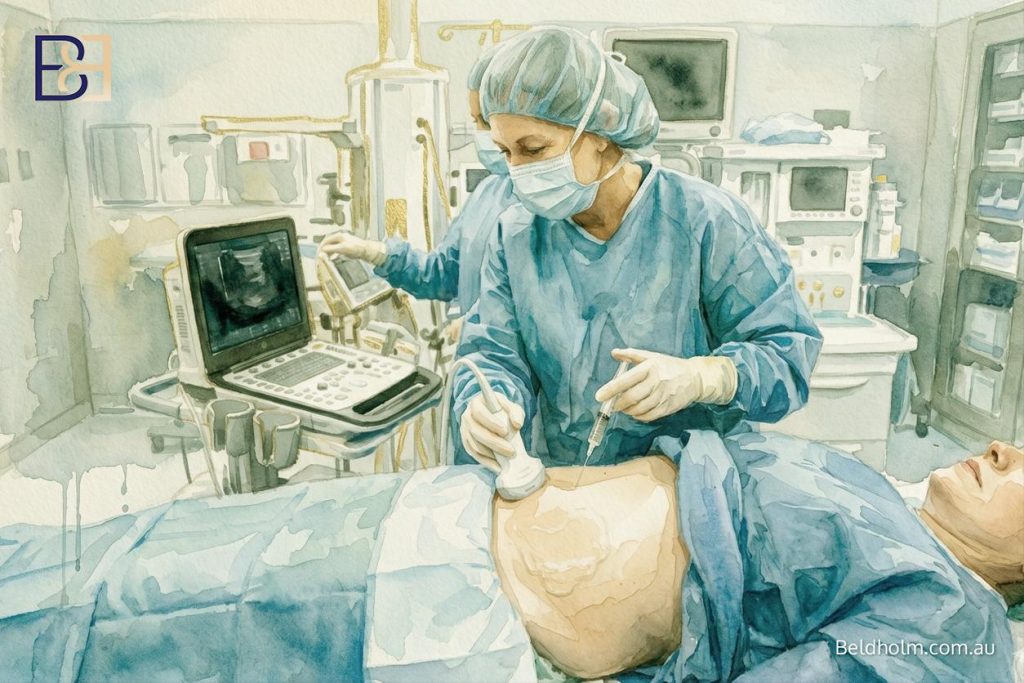
The 2 approaches carry their costs differently:
- A single combined operation involves 1 hospital admission and 1 anaesthetic, but a longer operating time, so the surgeon and anaesthetist fees for that 1 operation are higher.
- Staged operations involve 2 separate admissions and 2 anaesthetics, each for a shorter operation.
Because of this, the totals for a combined procedure and for staged surgery are not the same, and neither is automatically cheaper for every patient. I work the actual figures out with you at consultation, once we have agreed what is clinically appropriate. The clinical decision leads, and the costing follows from it. Breast surgery also carries its own separate fees, which I quote separately.
A combined operation is a bigger event
If a single operation is appropriate for you, it is a larger physiological event than either procedure on its own. Recovery should not be underestimated, particularly while caring for young children, and preparation and support at home are things to plan for. I go through all of this with you before any decision is made.
As with any abdominoplasty after pregnancy, I plan surgery once your family is complete and breastfeeding has finished, because a later pregnancy can affect your result.
Risks and Recovery

Cost is only one part of this decision. Abdominoplasty after pregnancy is a major surgical procedure, and the risks and the recovery deserve as much weight as the price.
Risks
All surgery carries risk, and I go through these with you in detail at consultation. They include:
- Bleeding and collection of blood under the skin (haematoma)
- Infection
- Fluid collection under the skin (seroma)
- Delayed wound healing or wound breakdown, which is more likely in smokers and in people with diabetes
- Thickened, raised or wide scars
- Altered or reduced skin sensation, which can be long lasting
- Asymmetry or contour irregularities
- Blood clots in the legs or lungs (deep vein thrombosis and pulmonary embolism)
- Risks related to the general anaesthetic
- The possibility that further or revision surgery is needed
This is not a complete list. Some complications can extend your hospital stay or require further treatment, and that carries additional cost. It is one reason I do not treat any quoted figure as fixed.
Recovery realities

Recovery after abdominoplasty takes time and planning, and it looks different when you are also caring for young children.
- Most post pregnancy patients stay in hospital for 1 to 2 days.
- You will wear a compression garment, and I will see you for follow-up over the months that follow.
- You will need to limit lifting and strenuous activity for several weeks. With young children at home, arranging help for lifting and day-to-day care matters more here than it does for many patients.
- Time off work and paid help at home are real costs to plan for, separate from the surgical fees.
- Scars mature over about 18 months to 2 years, settling and fading gradually over that time.
I will not understate this recovery. It takes real time and support, and it helps to go in knowing that.
Results vary
Every woman’s anatomy, healing and starting point are different, so surgical results vary from one person to the next. At consultation I give you a realistic picture of what surgery can and cannot do for your particular situation, rather than a general promise.
My Final Take

The cost of a post pregnancy abdominoplasty (tummy tuck) in Australia is not a single number, and no one can give you an accurate figure over the phone. What you pay depends on the operation you actually need, whether Medicare item 30175 applies, the hospital cover you hold, and whether GST is added. Those variables are why the same surgery can sit anywhere from around $6,000 to $30,000 or more.
Once I have seen you and worked out what is clinically appropriate, my patient coordinators prepare a written quote. It sets out my surgeon’s fee, the surgical assistant, estimates for the anaesthetist and hospital, your compression garment, and your follow-up appointments, along with any Medicare benefits and health fund rebates that apply to your situation. That written quote, not a figure from an article, is the one to rely on.
A GP referral is required before any consultation. That consultation is where the guesswork ends, because it is the only point at which I can give you figures based on your body and your circumstances rather than an average.
References
- Australian Government Department of Health and Aged Care. Medicare Benefits Schedule, item 30175. MBS Online. Available from: https://www9.health.gov.au/mbs/fullDisplay.cfm?type=item&q=30175&qt=item
- Australian Government Department of Health and Aged Care. Factsheet: new MBS item 30175 for abdominoplasty. MBS Online; 2022. Available from: https://www.mbsonline.gov.au/internet/mbsonline/publishing.nsf/Content/Factsheet-30175