One of the more common questions I am asked by women after pregnancy is whether exercise can help diastasis recti, the separation of the abdominal muscles that often develops while carrying a baby. The short answer is that exercise can help in many cases, and for a lot of women it is the right place to start.
In this article I explain what diastasis recti is, how you can check for it at home, what the research says about exercise, which movements tend to help, and which ones are better approached with caution. I also cover how I think about timing after pregnancy, and when it is worth having the separation assessed in person.
This is general information, not personal medical advice, and every woman recovers differently.
What diastasis recti is
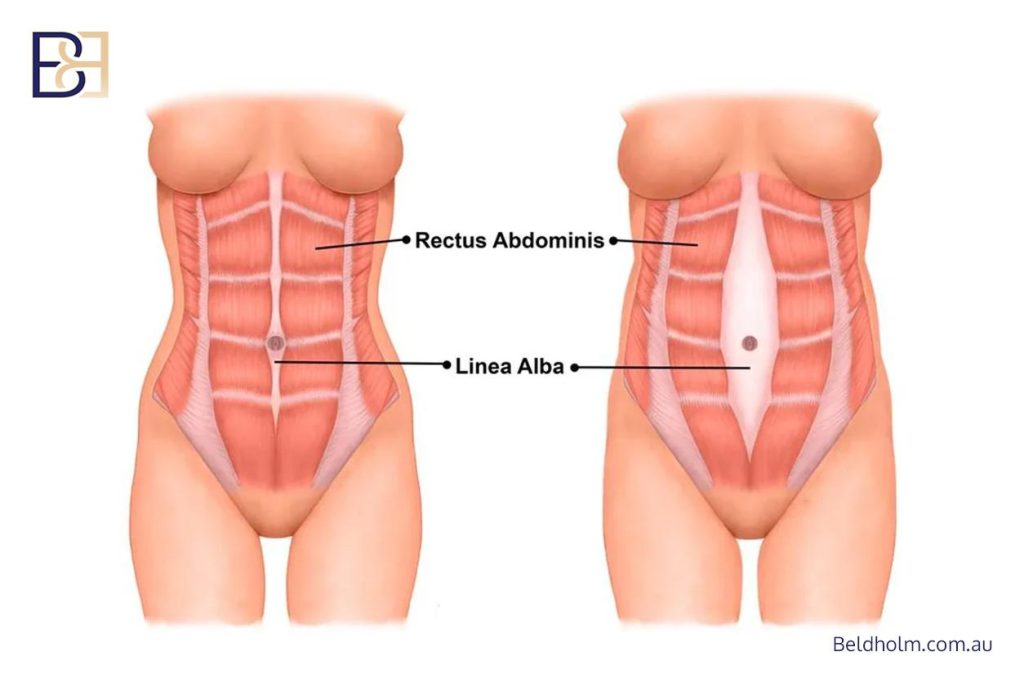
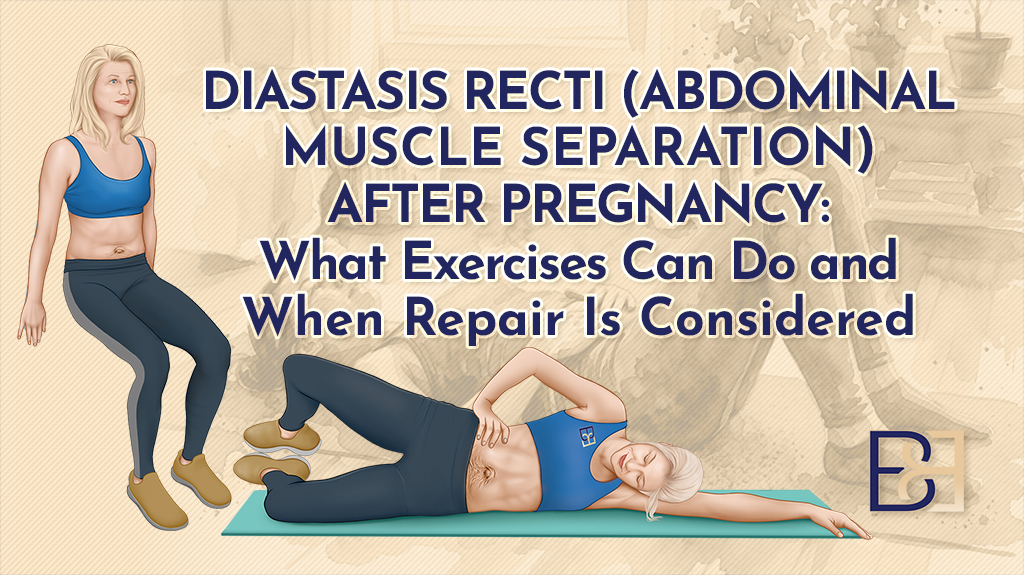
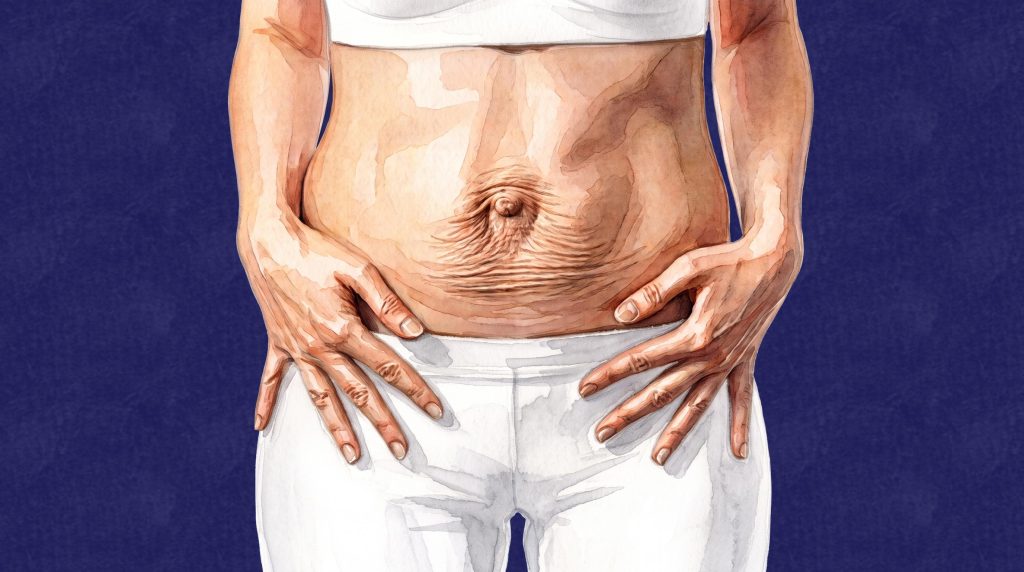
Diastasis recti, also called abdominal separation or abdominal muscle separation, is a widening of the gap between the left and right sides of the rectus abdominis muscles, the long muscle that runs down the front of your stomach. The two halves are joined by a band of connective tissue called the linea alba. When that band stretches and the muscles sit further apart, the result is what is called diastasis recti.
It is a normal change for many women during and after pregnancy. As the uterus grows, particularly through the third trimester, it stretches the abdominal wall and raises the pressure inside the abdomen, known as intra-abdominal pressure, and this can separate the muscles. Other risk factors include repeated heavy lifting and certain forms of intense abdominal exercise, but in the women I see it is almost always linked to pregnancy.
Some women notice no symptoms at all. Others notice diastasis recti symptoms such as:
- Lower back pain
- A feeling of weakness through the core and pelvic floor
- Urinary incontinence, meaning leaking urine
- A sense of downward pressure or vaginal heaviness, which can come with pelvic floor problems
- A visible ridge or doming down the midline when sitting up
Whether or not symptoms are present, the degree of separation varies a lot from one woman to the next, which is why what helps also varies.
How to check for diastasis recti at home
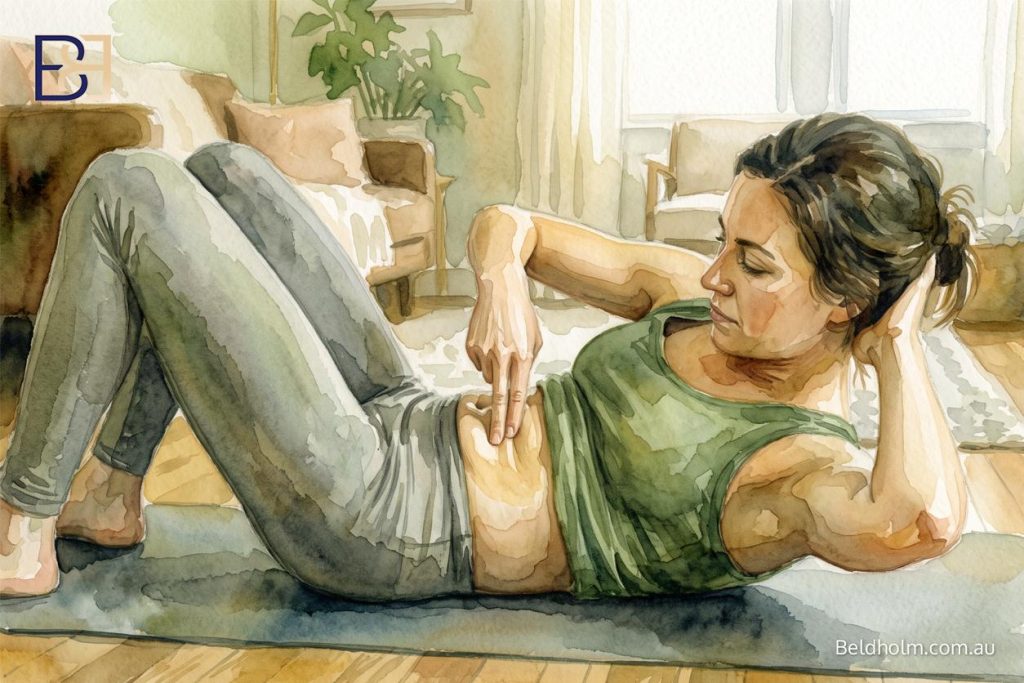
You can get a rough sense of whether you have a separation with a simple self-check. It is not a substitute for a proper assessment, but it is a reasonable starting point.
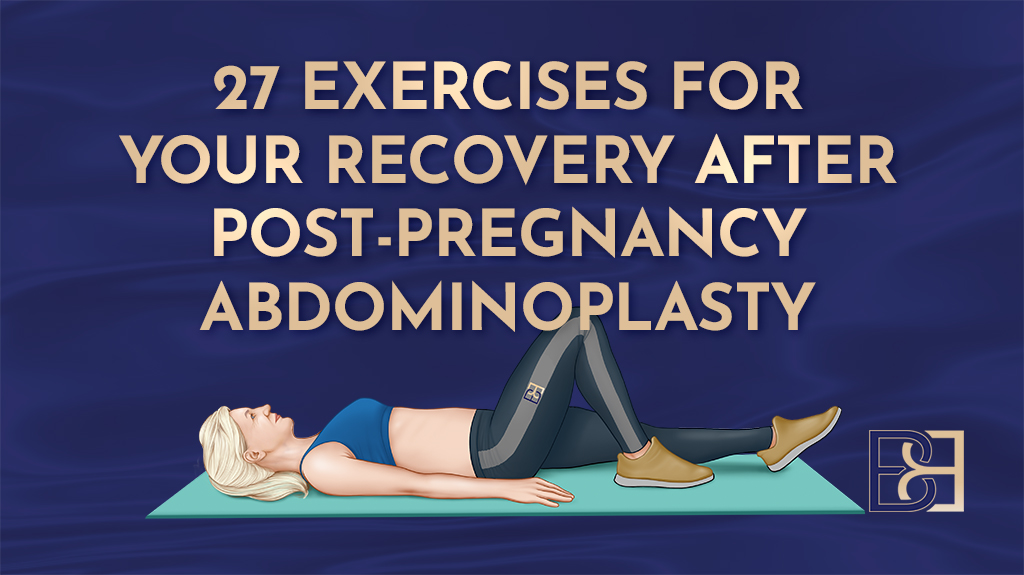
- Lie on your back with your knees bent and your feet flat on the floor.
- Place your fingertips along the midline of your stomach, just above your belly button, pointing down towards your toes.
- Gently lift your head and shoulders off the floor, as if starting a small curl-up.
- Feel for the abdominal gap between the two bands of muscle, and note how many finger-widths wide it is.
- Repeat the check at your belly button and a few centimetres below it, as the separation can differ along its length.
A gap of one to two finger-widths is common after pregnancy and often improves on its own in the early months. A wider or persistent gap, or one that comes with symptoms such as back pain or pelvic floor problems, is worth having looked at properly.
The most reliable people to assess this are a women’s health physiotherapist or your treating doctor. A physiotherapist can measure the separation, check how well the core and pelvic floor are working, and set you up with a program suited to where you are at. If imaging is needed, ultrasound can measure the gap accurately.
Can exercise help? What the research shows
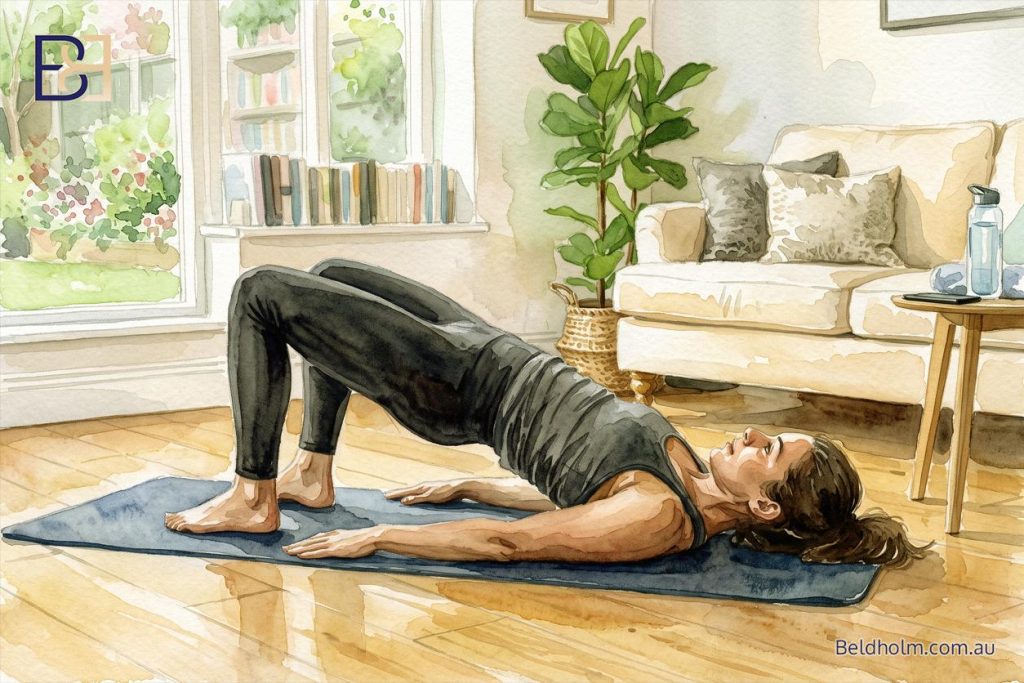
The honest position is that the research on exercise for diastasis recti is still developing, and the studies we have are mostly small. With that caveat, the overall picture is reasonably encouraging.
A 2024 randomised controlled trial followed postpartum women through a six-week abdominal exercise program and measured the gap between the muscles with ultrasound before and after. Both of the programs tested produced a measurable reduction in the separation, with a moderate effect overall, and women who had been through more than one pregnancy tended to benefit the most (1). This fits the general direction of the research, though the evidence base is still small.
A few things are worth keeping in mind when reading results like these:
- The aim is not only to narrow the gap. Rebuilding core strength and control so the abdominal wall works well, and improving core function, is just as important, and sometimes more so. Core stability matters as much as the size of the gap.
- Exercise tends to help most when the separation is mild to moderate. A very wide separation, or one where the connective tissue has stretched a long way, may not close with exercise alone.
- The way an exercise is done matters more than which exercise it is. Engaging the deep core properly is what counts.
So a realistic expectation is that a well-designed program, kept up consistently over a number of weeks, can reduce the separation for many women and improve core strength and symptoms. It will not produce the same result for everyone, and some women will be left with a gap that exercise does not resolve. That is not a failure on your part, and it is useful information when deciding what to do next.
Exercises that can help
The exercises that tend to help diastasis recti are core strengthening exercises that wake up and strengthen the deep core muscles, particularly the transverse abdominis. This is the deep muscle that wraps around your middle like a corset and helps draw the abdominal wall in. These gentle exercises are low-pressure and a sensible place to start. Ideally a women’s health physiotherapist checks your technique, because doing them well matters more than doing a lot of them.
Deep core activation (the drawing-in technique)
This underpins everything else. Lie on your back with your knees bent. Using proper breathing techniques, consciously exhale and draw your lower stomach in towards your spine, as if doing up a tight pair of jeans, without holding your breath or squeezing your buttocks. Hold for a few seconds, then release. This is the contraction you want to feel during the other exercises.
Pelvic tilts
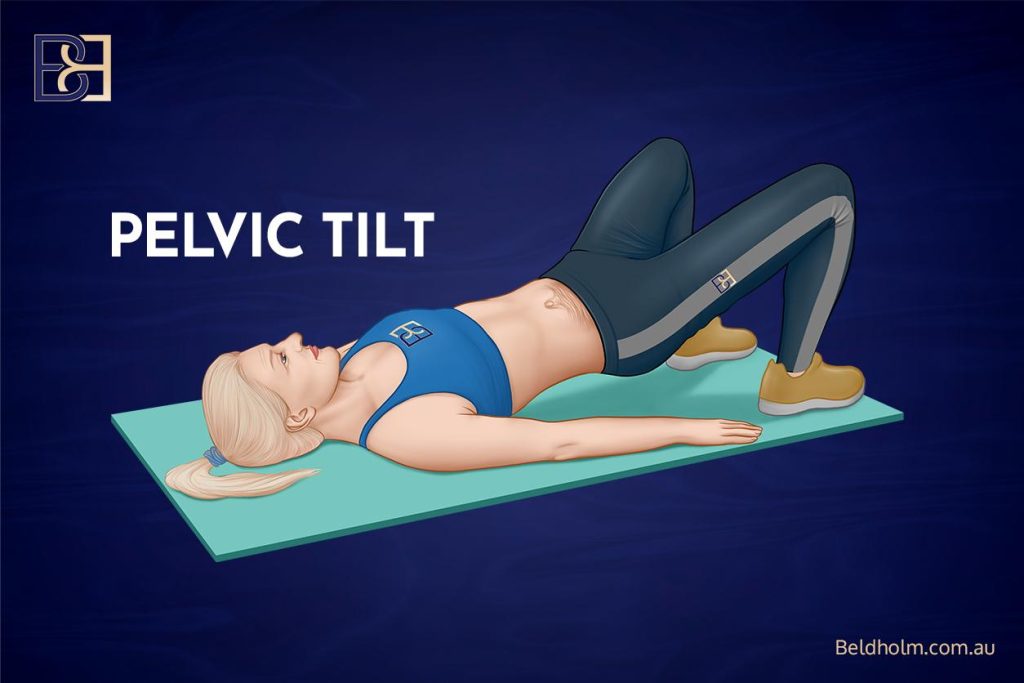
Lie on your back, knees bent, feet flat. Draw the lower stomach in as above, then gently flatten your lower back into the floor by tilting your pelvis. Hold briefly, then release back to a neutral position. Slow and controlled is the goal.
Heel slides
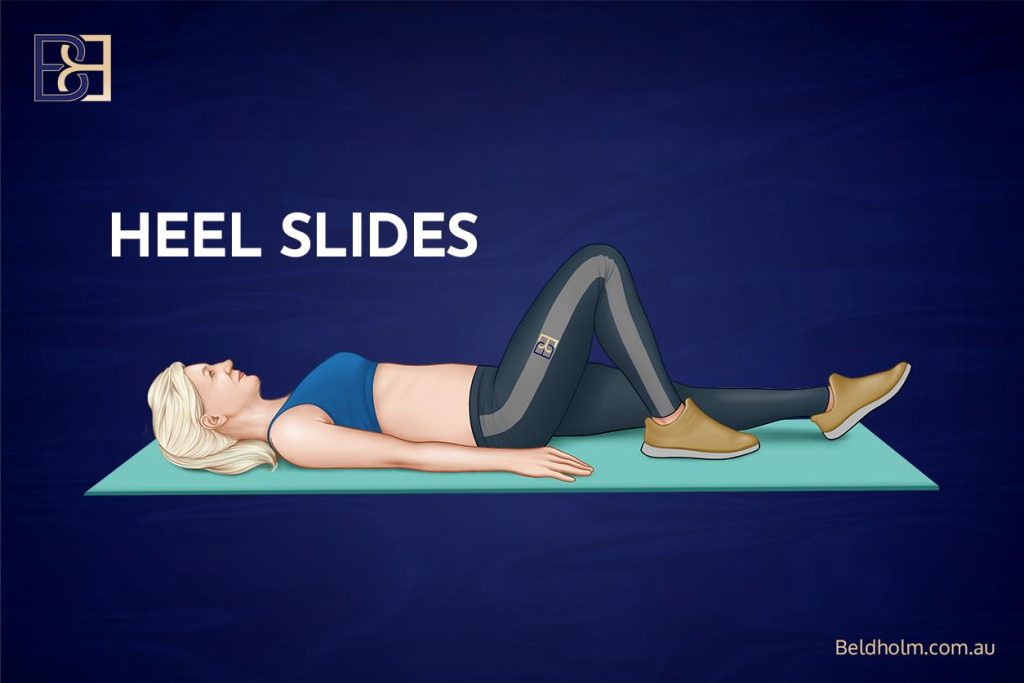
Lie on your back with knees bent. Hold a gentle deep core contraction, then slowly slide one heel along the floor until the leg is straight, keeping your back still. Slide it back and swap sides. Stop if you see the midline dome upwards.
Toe taps
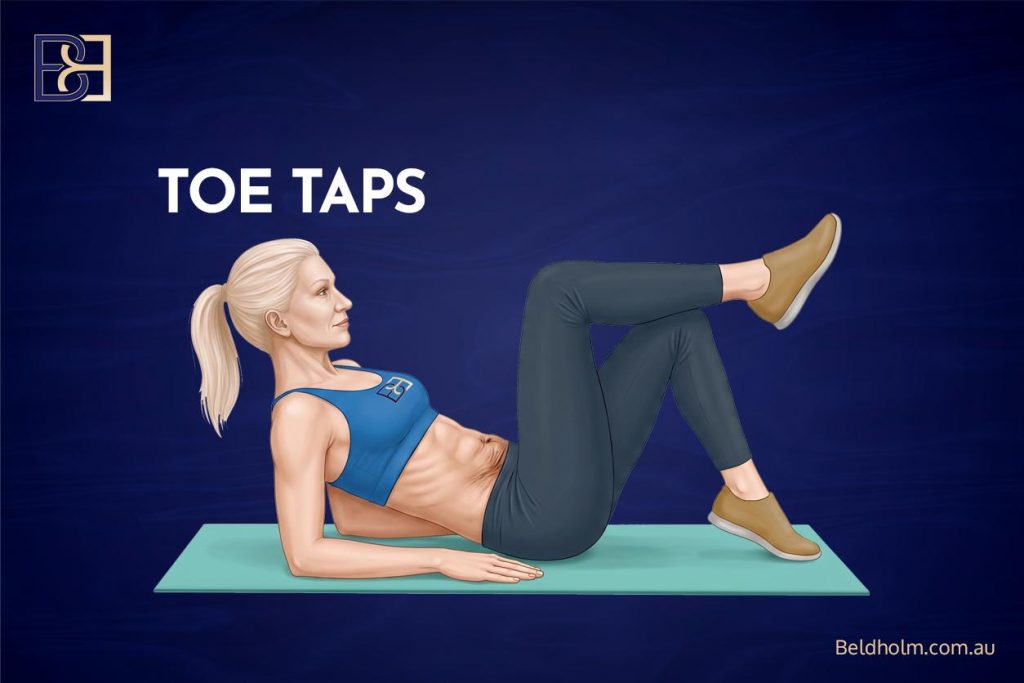
Lie on your back with your hips and knees bent at a 90-degree angle, keeping your shins parallel to the floor. Holding the deep core engaged, slowly lower one foot to tap the floor, then bring it back. Alternate legs. Keep the movement small enough that your stomach stays flat, not domed.
Standing core engagement
You can practise the same drawing-in contraction through the day, while standing, walking, or lifting your baby. Bracing the deep core before you lift, and breathing out as you lift, protects the abdominal wall during the everyday tasks that come with a young family. Practising good posture through the day helps too, while poor posture puts more load on the abdominal wall. Rolling onto your side rather than sitting straight up when getting out of bed protects the abdominal wall as well.
Build these up slowly as part of your exercise routine, over weeks rather than days. Quality and consistency do more than intensity.
Book your appointment online now
Exercises to approach with caution
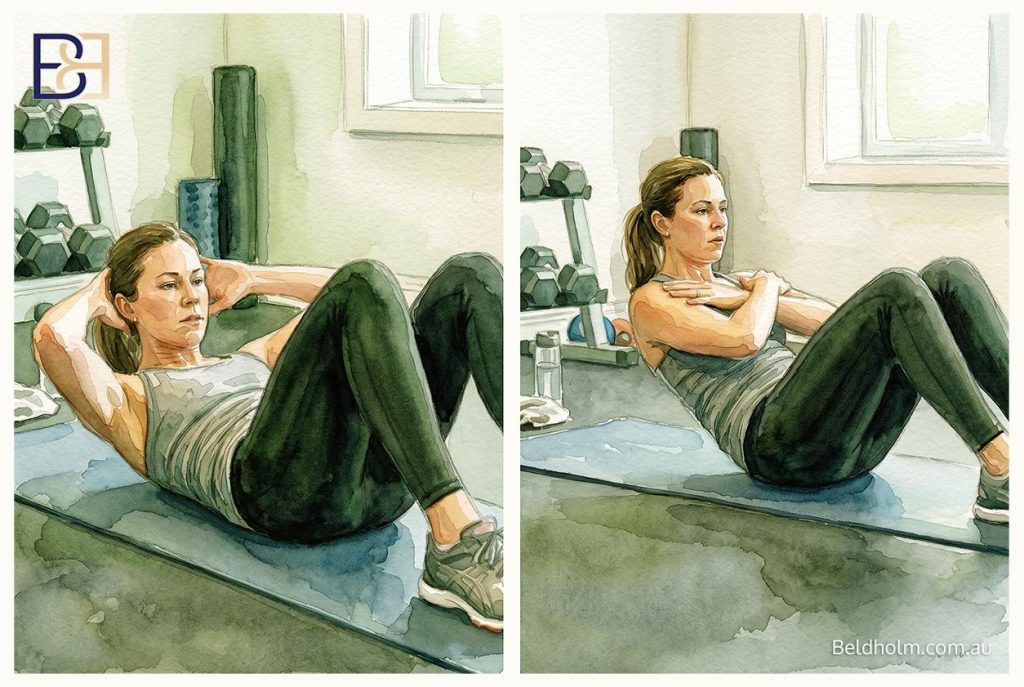
Some exercises have traditionally been discouraged with diastasis recti because they load the midline and can push the abdominal wall outwards. The usual list includes:
- Sit ups and full crunches
- Planks and push-ups (bodyweight exercises), especially early on
- Heavy lifting that makes you strain or hold your breath
- Intense twisting movements
The reasoning is that these can raise intra-abdominal pressure and cause the midline to dome, which is the opposite of what you are working towards. Done too early, before the deep core is ready, they can place excessive pressure on the stretched midline and make diastasis recti worse, or at least make the abdominal separation worse rather than better. If you see that doming during a movement, it is a sign the exercise is too much for now.
It is worth being clear that the evidence here is mixed rather than settled. Some recent studies have found that curl-ups, done with good control, can strengthen the abdominal muscles without widening the separation, and a few have even measured a small narrowing of the gap during the movement (2). So the picture is more nuanced than a simple list of banned exercises.
The practical approach I suggest is this. Build deep core strength and control first, using the gentler exercises. Once that base is there and you can keep the midline flat, more demanding exercises can often be reintroduced gradually, ideally with a physiotherapist guiding the progression. The thing to avoid is loading the abdomen hard before the deep core is ready, not movement itself. It also helps to avoid lifting anything heavy enough to make you strain while you build that base.
My approach after pregnancy

For most women, postpartum recovery starts with conservative care, and I am a strong supporter of that. In the early weeks postpartum the focus is gentle: reconnecting with the deep core and the pelvic floor muscles, and letting the body settle. Many separations narrow on their own during this time, particularly in the first few months.
When a woman comes to me with diastasis recti, the first thing I usually suggest, if she has not already done it, is a structured program with a women’s health physiotherapist. A physiotherapist can confirm the separation, check the pelvic floor, correct technique, and progress the exercises sensibly. That guided approach gives the abdominal wall the best chance to recover without surgery.
Time matters too. The connective tissue and the wider healing process continue for many months after pregnancy, and breastfeeding influences this as well, so it is reasonable to give a committed exercise program a genuine run before drawing any conclusions. I am cautious about putting a fixed number on this. How long to persist, and when to reassess, depends on the individual, the size of the separation, the symptoms, and how things are progressing. It is something I work through with each woman rather than applying a single rule to everyone.
The point of all this is to give conservative care a fair and properly supported trial. For a good number of women, that is all that is needed.
When exercise is not enough
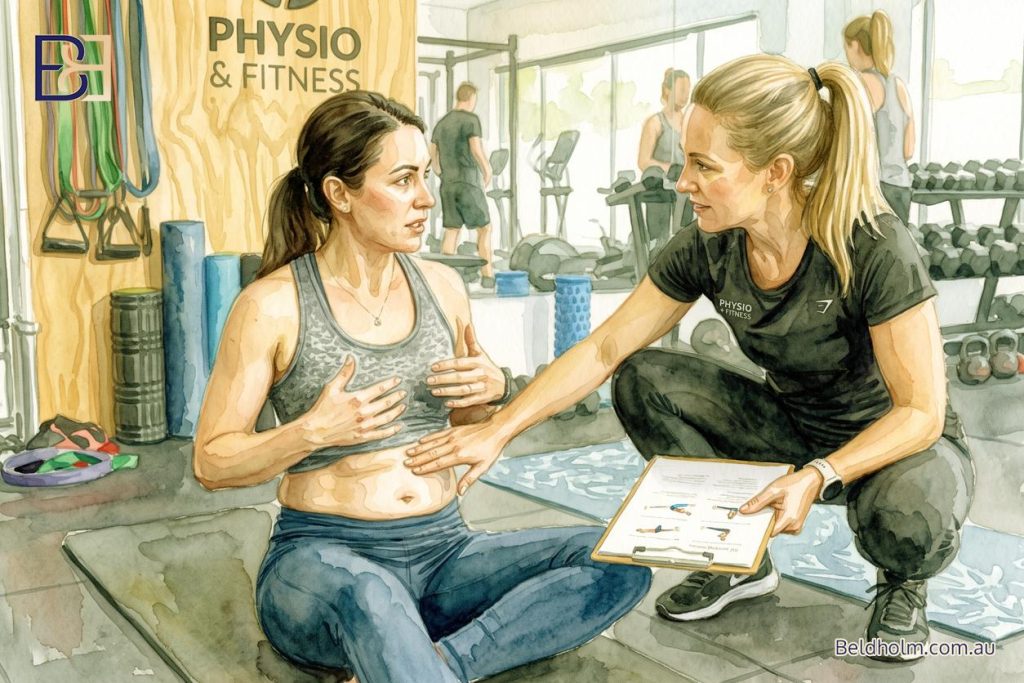
For some women, the separation does not close with exercise, even after a committed program guided by a physiotherapist. This is more likely in severe cases, where the gap is wide or there is overstretched tissue along the midline, and it is not a reflection of effort. When symptoms persist alongside the separation, or the gap stays wide, it is reasonable to have it assessed in person to talk through the options.
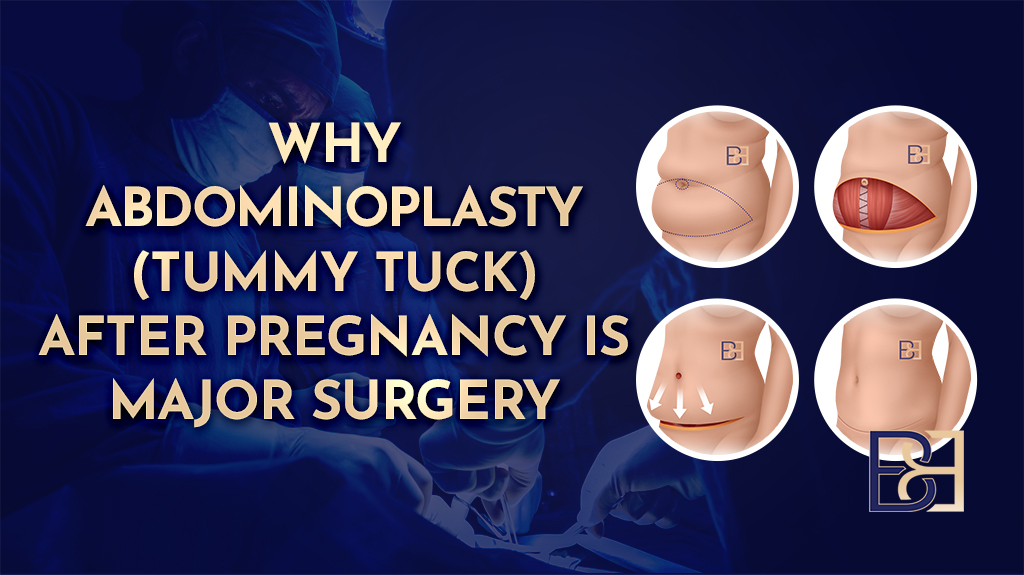
Where a separation does not respond to conservative care, the muscles can be brought back together surgically. This repair, sometimes called a plication, is carried out as part of an abdominoplasty (tummy tuck), which also removes excess skin and tightens the abdominal wall. Whether this is appropriate is a clinical decision, made for the individual at consultation, not something that can be decided from an article.
A few things I want to be plain about:
- An abdominoplasty is surgery, performed under general anaesthetic. It involves a recovery period, and it carries risks and possible complications, which I go through in detail at consultation.
- Recovery takes time and effort, and that is worth planning for when you have young children at home and support to organise.
- A GP referral is needed before a consultation, and results vary from one woman to the next.
Timing matters as well. I generally plan this kind of surgery once your family is complete and breastfeeding has finished, because a further pregnancy can stretch the repair again and change the result. When the right time is, like everything else here, is assessed individually.
If you have worked through a proper exercise program and the separation is still affecting you, that is the point at which an in-person assessment is worthwhile, so the conservative and surgical options can be weighed up properly for your situation.
Frequently asked questions
Can diastasis recti heal on its own?
Often, yes, particularly when the separation is mild. Many women see the gap narrow in the first few months after birth as the body recovers. A wider separation, or one that is still causing symptoms after that, usually benefits from a guided exercise program and, in some cases, assessment in person.
Which exercises should I avoid?
Early on, it is sensible to be cautious with sit ups, full crunches, planks, and any heavy lifting that makes you strain or hold your breath. The signal to watch for is the midline doming during a movement. If that happens, the exercise is too much for now. As your deep core strengthens, more demanding exercises can usually be reintroduced with guidance.
How long does it take to see a change from exercise?
This varies between women. A consistent program is generally measured in weeks to months rather than days. The size of the separation, your symptoms, and how regularly you train all play a part, which is why I avoid quoting a single timeframe.
Can exercise close the gap completely?
Sometimes, especially with a mild to moderate separation. A very wide separation, or one where the connective tissue has stretched a long way, may not close with exercise alone. Even then, building deep core strength is worthwhile for function and symptoms.
When should I think about surgery?
When a separation persists and is still affecting you after a proper, guided exercise program, it is reasonable to have it assessed in person.
References
- Soto-González M, Da Cuña-Carrera I, Lantarón-Caeiro EM, Pascoal AG. Effect of hypopressive and conventional abdominal exercises on postpartum diastasis recti: a randomized controlled trial. PLoS One. 2024;19(12):e0314274.
- Theodorsen NM, Moe-Nilssen R, Bø K, Haukenes I. Effect of exercise on the inter-rectus distance in pregnant women with diastasis recti abdominis: an experimental longitudinal study. Physiotherapy. 2023;121:13-20