


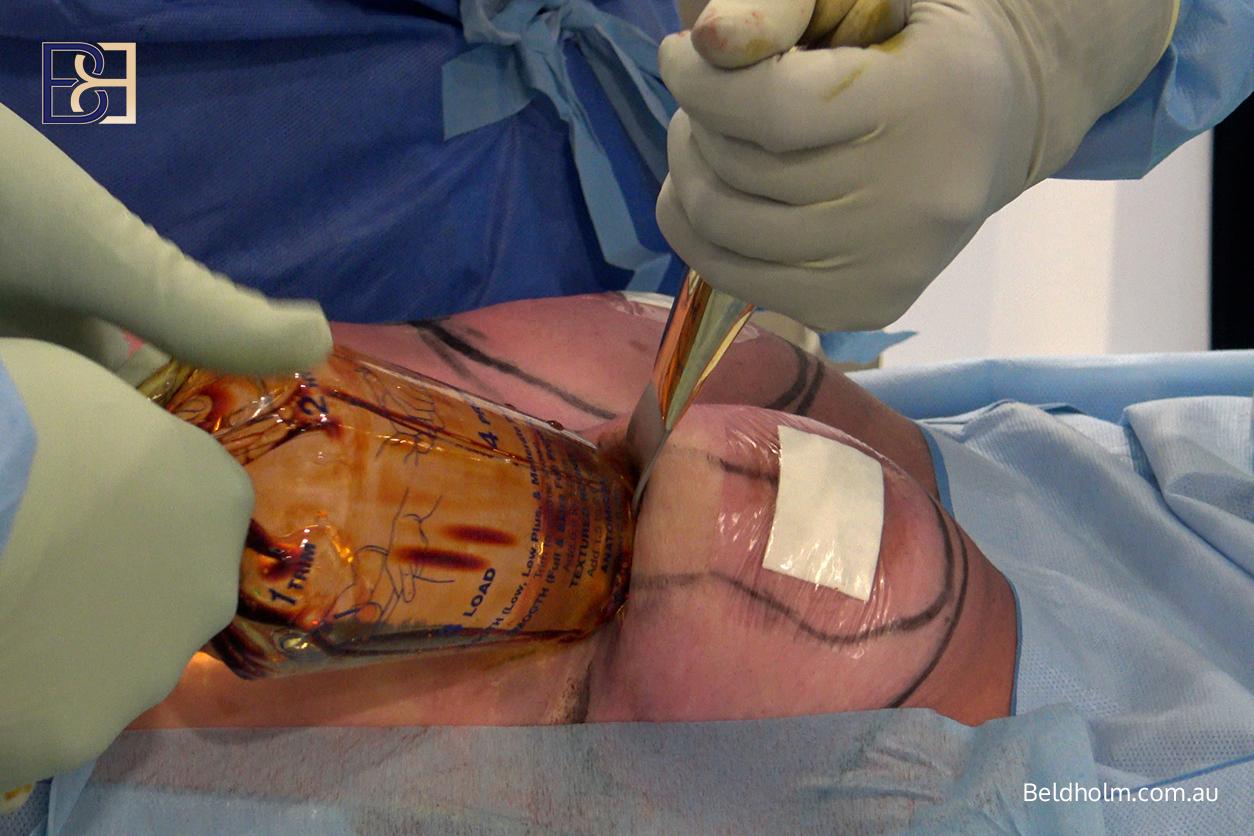
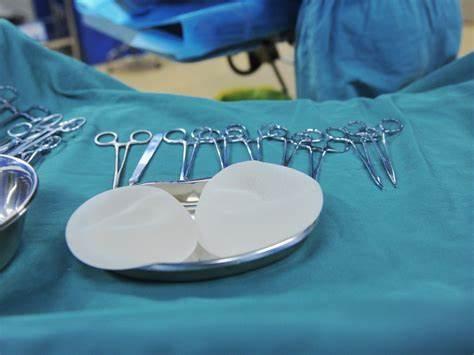
Breast implant removal and replacement, also called implant exchange, is a surgical procedure to take out existing breast implants and place new ones in the same setting. In my practice, patients come to this for a range of reasons. An implant has reached the end of its working life. A capsule has hardened. An implant has changed position or ruptured. Or a patient wants a different size, shape or implant type. Some come because they are concerned about their implants and want them removed.
What the operation can include
Depending on the findings and the plan, implant exchange can involve:
- Removing the current implants
- Removing or partly removing the capsule, which is the scar-tissue layer the body forms around every implant, where this is indicated
- Placing new implants, sometimes in a different plane, size, shape or surface
- Adjusting the pocket the implant sits in
- A breast lift (mastopexy) in the same operation or as a separate stage, where breast position and skin laxity call for it
Not every patient needs every step. The extent of the operation depends on the anatomy and on what the imaging and examination show.
Why the risk profile is different from a first breast augmentation (augmentation mammoplasty)
Book your appointment online now
Implant exchange is a second operation on a breast that has already been operated on. The tissue has an existing capsule. The blood supply and soft-tissue thickness may have altered over the years the first implants were in place.
The published data reflect this. In the largest long-term study of breast implant outcomes, reoperation and complication rates were consistently higher after revision surgery than after a first breast augmentation (augmentation mammoplasty) (1). Capsular contracture and rupture, in particular, occur more often in revision cases than in primary ones (1).
Why a second breast operation carries higher complication and reoperation rates
If you have had breast implants before, the most important thing to understand about implant exchange is that a second operation on the breast is statistically more likely to run into a complication than the first one was. This is consistent across the large studies, and it holds true whether you are having implants replaced, exchanged for a different type, or removed and not replaced.
What the data shows
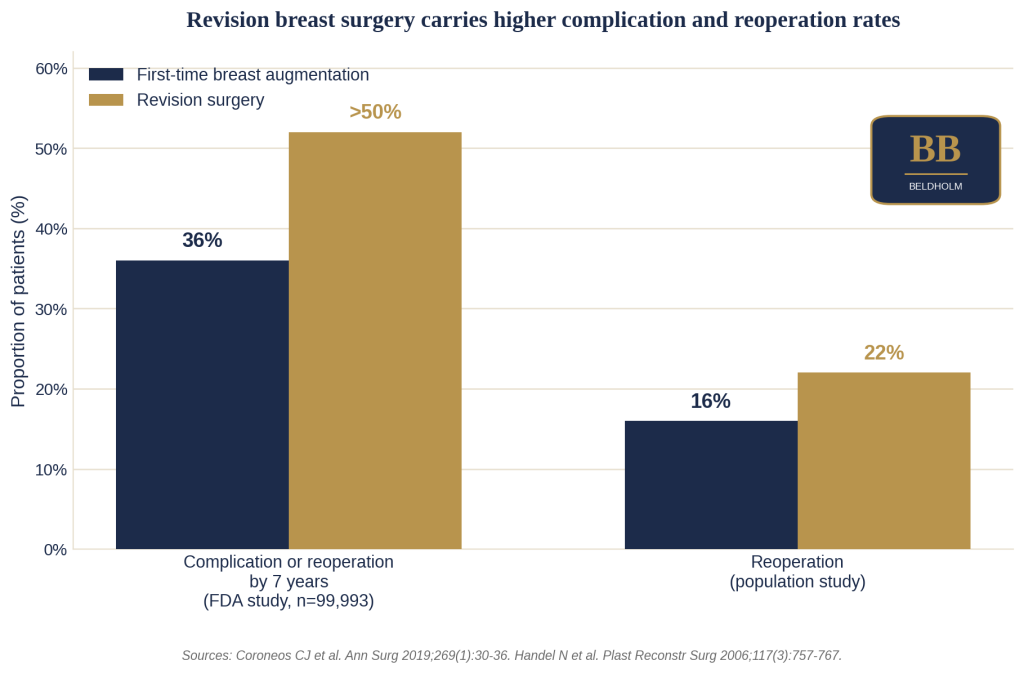
The largest long-term study of breast implant outcomes, drawn from manufacturer follow-up data on almost 100,000 patients, found that complication and reoperation rates were consistently higher after revision surgery than after a first breast augmentation (augmentation mammoplasty) (1). By seven years, more than half of revision augmentations had experienced a complication or a reoperation, compared with about 36% of first-time augmentations (1). Capsular contracture and implant rupture were both more common in the revision group (1).
A separate population-based study of implant recipients found the same pattern. Reoperation occurred in about 16% of first breast augmentations (augmentation mammoplasty) but close to 22% of revision procedures (2). The most common reasons for going back to surgery were capsular contracture, a request to change size, and implant malposition (2).
Capsular contracture follows the clearest gradient of all. It is least frequent after a first augmentation, more frequent after revision surgery, and most frequent after reconstruction (2). The scar tissue response tends to build on itself with each operation.
Why the numbers are higher
Implant exchange is not the same operation as a first augmentation done on untouched tissue. Several things about a previously operated breast raise the risk:
- There is an existing capsule around the old implant, and how it is managed adds surgical steps and dissection
- The soft-tissue coverage over the implant may have thinned over the years, leaving less tissue to cover a new implant
- The surgical pocket already exists and is not sterile, so a new implant can be colonised by bacteria already present in the surrounding breast tissue (3)
- Scar tissue from the first operation changes the tissue planes the surgeon works through
What this means for planning
A higher baseline risk is a reason to prepare well. In my practice that means proper pre-operative assessment and preparation, a clear discussion of the specific risks that apply to your anatomy, and a realistic conversation about the likelihood of needing further surgery over your lifetime.
Early surgical complications: the first hours to weeks
Some complications appear early, in the hours to weeks after surgery. Some settle with monitoring, others need a return to theatre, and a few are serious. These are the ones that matter most in the period around implant exchange.
Bleeding and haematoma
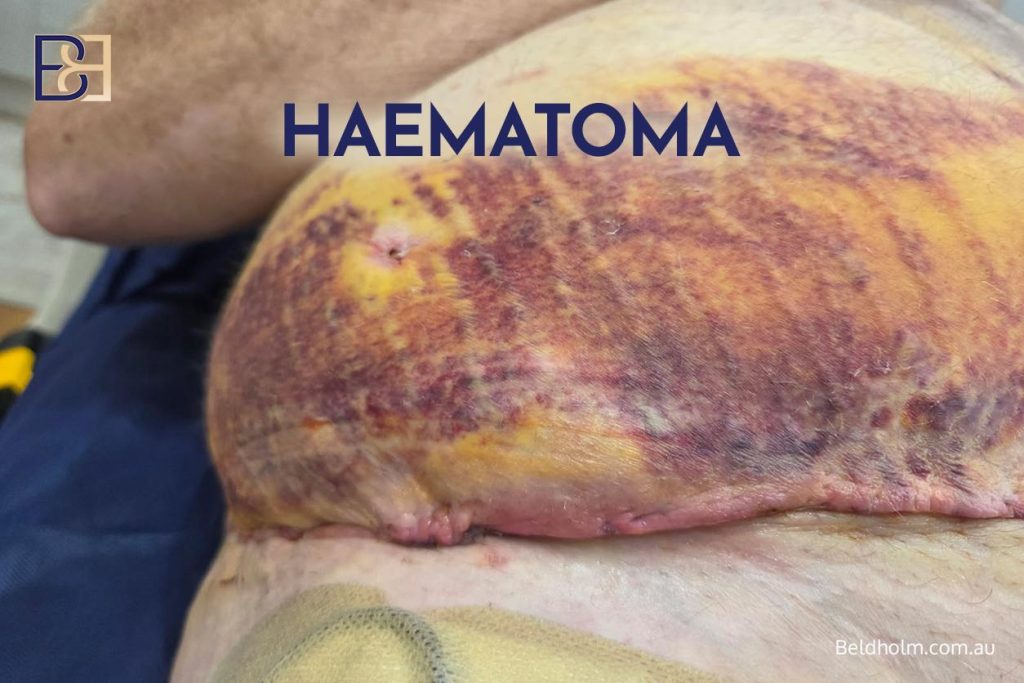
A haematoma is a collection of blood inside the implant pocket. It usually develops in the first hours or days, and the signs are sudden swelling, increasing firmness, pain, heavy bruising, or one breast becoming noticeably larger than the other. A significant haematoma normally needs a return to theatre to drain the blood and stop the bleeding.
This risk is relevant in revision surgery because the operation involves dissecting through an existing capsule and scarred tissue where small blood vessels have formed over the years. If you take blood-thinning medications, these are managed on an individual plan before surgery, which I set out later in this article.
Seroma
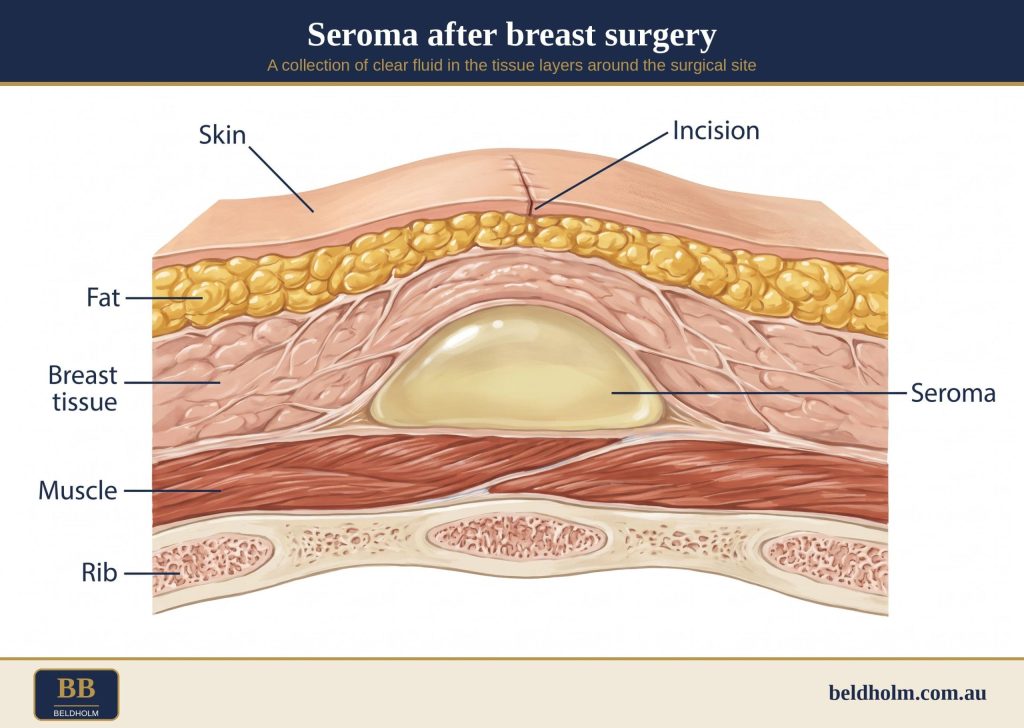
A seroma is a collection of clear fluid around the implant. Smaller ones often settle on their own. Larger or persistent ones may need to be drained with a needle, and a drain is sometimes left in at the time of surgery to draw off the excess fluid. A late seroma, one that appears months or years after surgery, is investigated rather than drained, because it can be a sign of a capsule problem or, rarely, BIA-ALCL, which I cover later in this article.
Infection
Any operation that places an implant carries a risk of infection. With a breast implant this matters because an established infection around a device is difficult to clear with antibiotics alone. In some cases the implant has to be removed, the infection treated, and a new implant placed at a later date. Rarely, an implant can push through the skin, which is called extrusion, and this also means the implant must be removed.
The pocket from your first surgery is not sterile, and bacteria already present in the surrounding breast tissue can colonise a new implant (3). I lower this risk with antibiotic prophylaxis and careful, minimal-touch handling of the implant during insertion, but the risk is not zero.
Wound healing problems
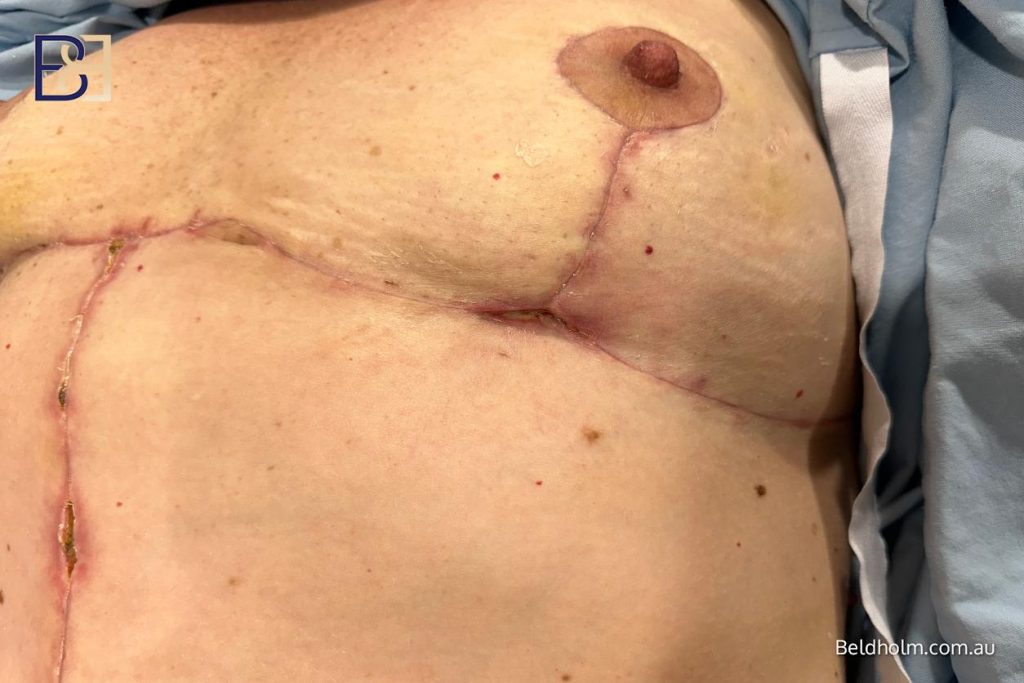
Wounds can be slow to heal, and occasionally the wound edges separate or a small area of skin does not heal as it should. This is more likely where the soft tissue over the implant has thinned, and where implant exchange is combined with a breast lift (mastopexy), because a lift adds incisions and places more tension on the skin. Smoking and poorly controlled diabetes raise this risk substantially.
Injury to deeper structures
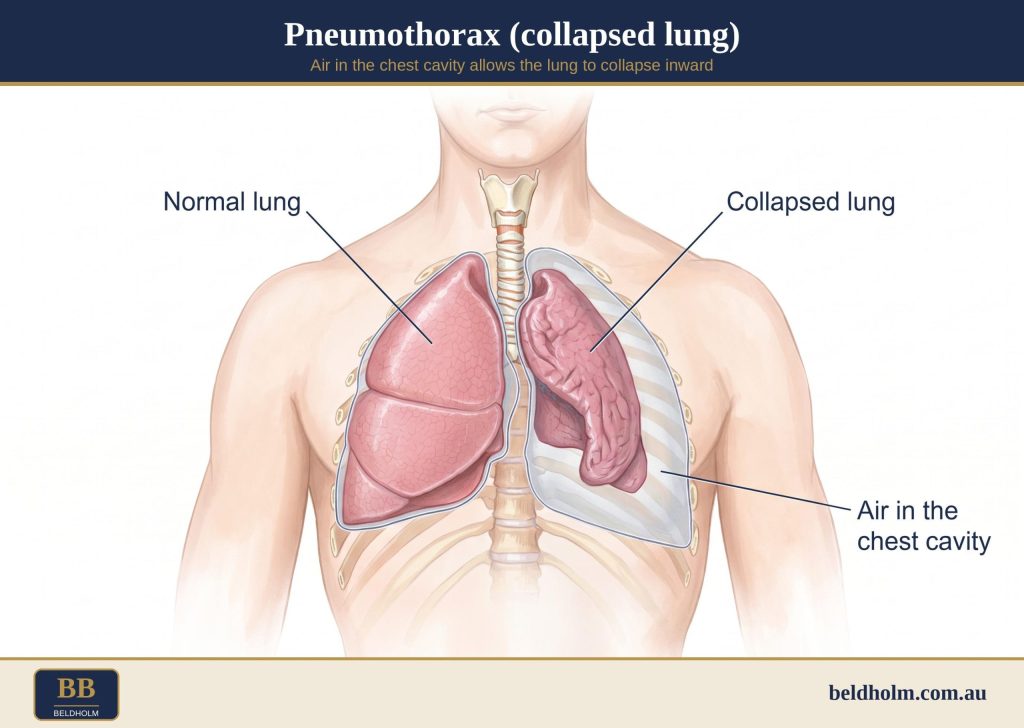
Very rarely, dissection near the chest wall can injure the lung and cause a collapsed lung, known as a pneumothorax, which needs immediate treatment. This is uncommon, but it is one of the serious risks of any operation that works close to the chest wall.
Anaesthetic risk
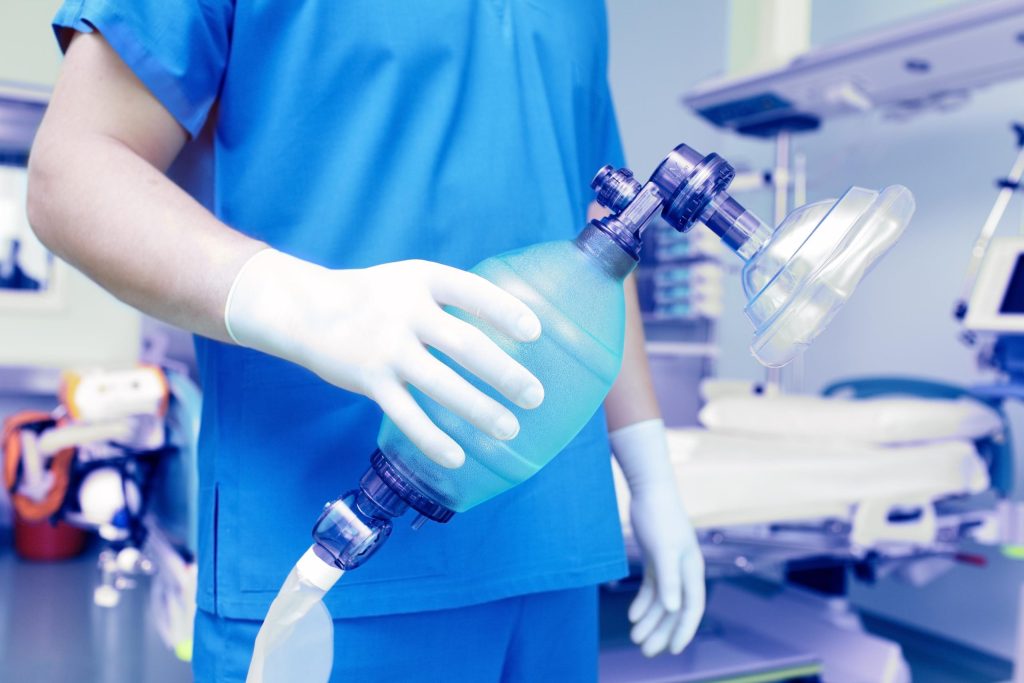
Implant exchange is done under general anaesthetic, which carries its own risks. Serious anaesthetic complications are uncommon in otherwise healthy patients, but they are not zero, and they rise with age and with medical conditions such as heart and lung disease. Your fitness for anaesthesia is assessed before surgery. In my practice most anaesthetic consultations are done by phone, with the airway examination carried out on the day of surgery.
Capsular contracture: why it is more likely the second time
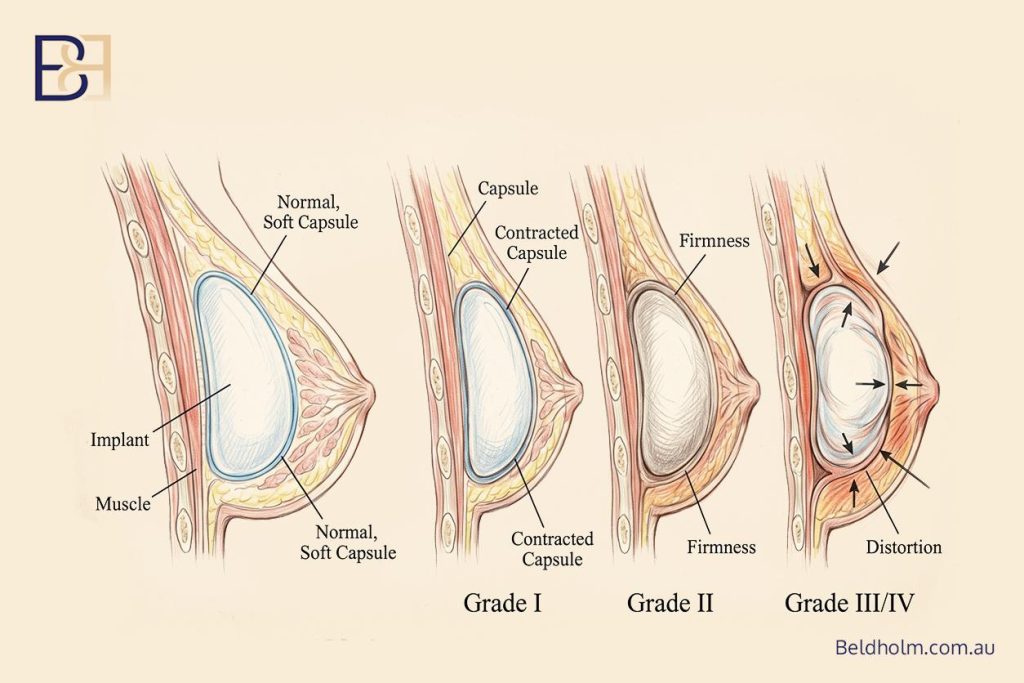
Every breast implant forms a capsule. The body responds to any implant by building a thin layer of scar tissue around it, and in most cases that capsule stays soft and causes no trouble. Capsular contracture is when the capsule thickens and tightens and squeezes the implant. It is one of the most common reasons patients come to me for revision surgery in the first place, and it is also one of the complications most likely to return after that surgery.
What it feels like and how it is graded
As the capsule tightens, the breast can feel firm, sit higher or look rounder than it should, change position, and in more advanced cases become painful. Surgeons grade it on the Baker scale from one to four (4):
- Grade I: the breast is soft and looks normal
- Grade II: mildly firm, but looks normal
- Grade III: firm, with a visible change in shape or position
- Grade IV: firm, distorted and painful
Grades III and IV are the ones that usually lead to surgery.
Why revision raises the risk
Capsular contracture follows a clear gradient. It is least common after a first breast augmentation (augmentation mammoplasty), more common after revision surgery, and most common after reconstruction (2). Two things drive the higher rate at revision:
- If you are having an implant replaced because of contracture, the tendency to form a tight capsule is already established, and it can recur around the new implant
- Replacing a leaking or ruptured silicone gel implant raises the risk of the new implant developing contracture, because silicone that has escaped into the pocket provokes an inflammatory response (3)
The leading explanation for capsular contracture is a low-grade layer of bacteria, called a biofilm, on the surface of the implant (4). The pocket from your first surgery is not sterile, which is part of why a second operation carries a higher contracture risk (3).
How it is managed
Management depends on the grade. Mild contracture may only be monitored. When surgery is needed, it can involve releasing the capsule (capsulotomy) or removing it (capsulectomy), usually with a new implant and sometimes a change of plane or implant type. Removing a capsule is more work than the original operation and adds dissection close to the chest wall, which is one reason revision surgery carries the risks set out across this article.
What I do to lower the risk
There is no way to remove this risk completely, but several measures lower it. In my practice that includes careful control of bleeding, antibiotic prophylaxis, minimal-touch handling of the implant, and insertion using a sterile delivery sleeve that reduces contact between the implant and the skin during placement, an approach that has been associated with lower contracture rates (5). Where contracture has already occurred, the plan usually involves removing the old capsule and reconsidering the implant and its position, rather than swapping the device.
Implant rupture and why a leaking implant is harder to remove
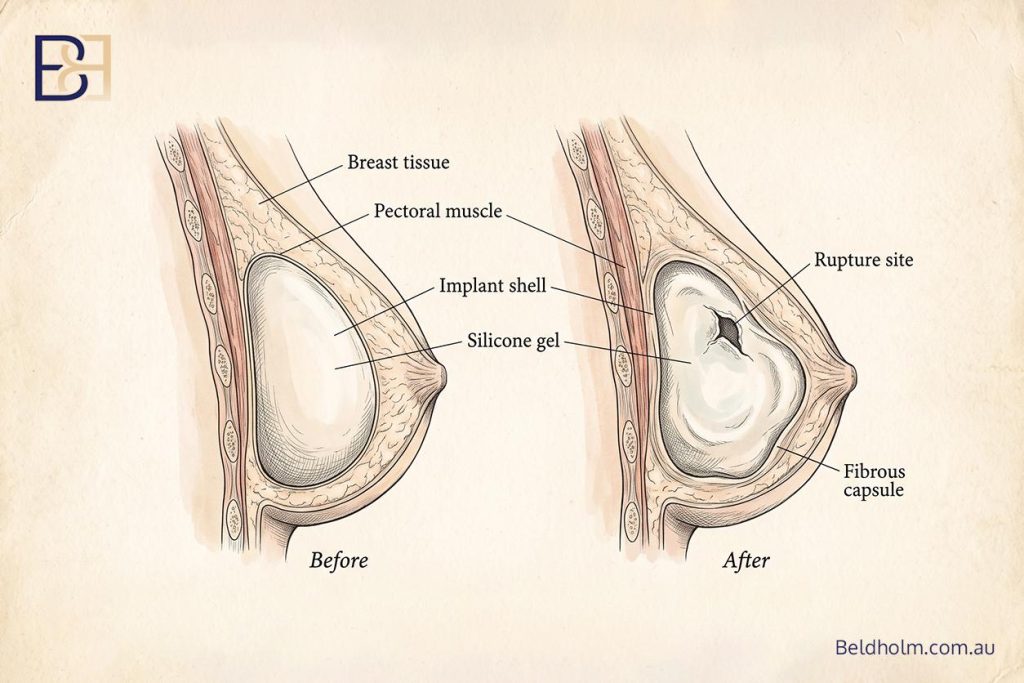
Breast implants are not lifelong devices. They wear over time, and the longer an implant has been in place, the higher the chance it will rupture. Rupture is one of the most common reasons for implant exchange, and it is also the situation that can make the operation more involved than the first one.
Saline and silicone rupture behave differently
What happens when an implant ruptures depends on whether you have silicone or saline implants.
- A saline implant deflates when it ruptures. The salt water is absorbed by the body, and the breast becomes visibly smaller over hours to days. It is usually obvious.
- A silicone gel implant often ruptures with no obvious sign. Modern cohesive gel tends to hold together and stay inside the capsule, so the breast can look and feel unchanged. This is called a silent rupture, and it is frequently found only on imaging (6).
Intracapsular and extracapsular rupture
When a silicone breast implant ruptures, the gel may stay contained within the capsule, which is an intracapsular rupture. Less often, silicone moves beyond the capsule into the surrounding breast tissue or nearby lymph nodes, which is an extracapsular rupture (6). Silicone that has migrated into tissue can form small lumps called granulomas, and it is not always possible to remove all of it.
Why a ruptured silicone implant is harder to remove
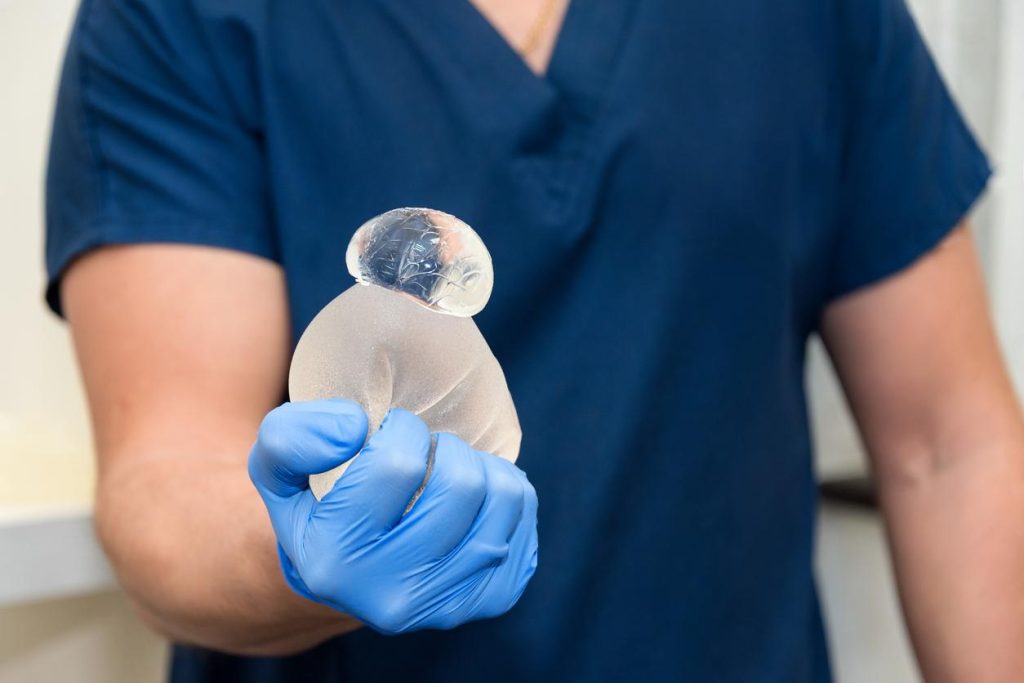
Removing a ruptured silicone gel implant is more complex than the operation that placed it (3). Leaked gel can be sticky and can spread through the capsule and into the surrounding tissues. Removing it properly often means taking out the whole capsule (capsulectomy) rather than just the implant, which means more dissection, closer to the chest wall, with the added risks that come with it. Replacing a leaking gel implant also raises the risk of the new implant developing capsular contracture, for the reasons set out earlier.
Finding rupture before surgery
Because silicone rupture is often silent, imaging matters. Ultrasound and MRI are the tests used to look for it, and MRI is the most accurate (7). Health regulators recommend periodic imaging to check silicone implants for silent rupture over the years they are in place. In my practice, when a patient is uncertain about their implants or suspects a problem, imaging is part of the investigation before we decide how to proceed. Where the decision to exchange implants has already been made on other grounds, imaging is arranged only when it will change the plan.
Changes to breast shape, position and skin after implant removal

An implant changes the shape and position of the breast while it is in place. When implants are removed or exchanged, the breast can look different afterwards, and it helps to understand why before surgery.
What happens to the breast when an implant comes out
An implant sits under the breast tissue and skin and supports them from behind. Over the years an implant is in place, the tissue and skin stretch to accommodate it. When the implant is removed, or replaced with a smaller one, that support changes. The breast may sit lower, there can be loose skin where the implant was, and the breast can look emptier than it did with the implant in (8). How much of this happens depends on the size of the implant, how long it was in place, your skin quality, and your own breast tissue.
This is a normal consequence of removing something the tissue had adapted to. It is not a fault in the breast.
If you are replacing an implant with one of similar size, these changes are usually minor. They matter most when an implant is removed and not replaced, or when you move to a noticeably smaller implant.
If skin laxity follows removal
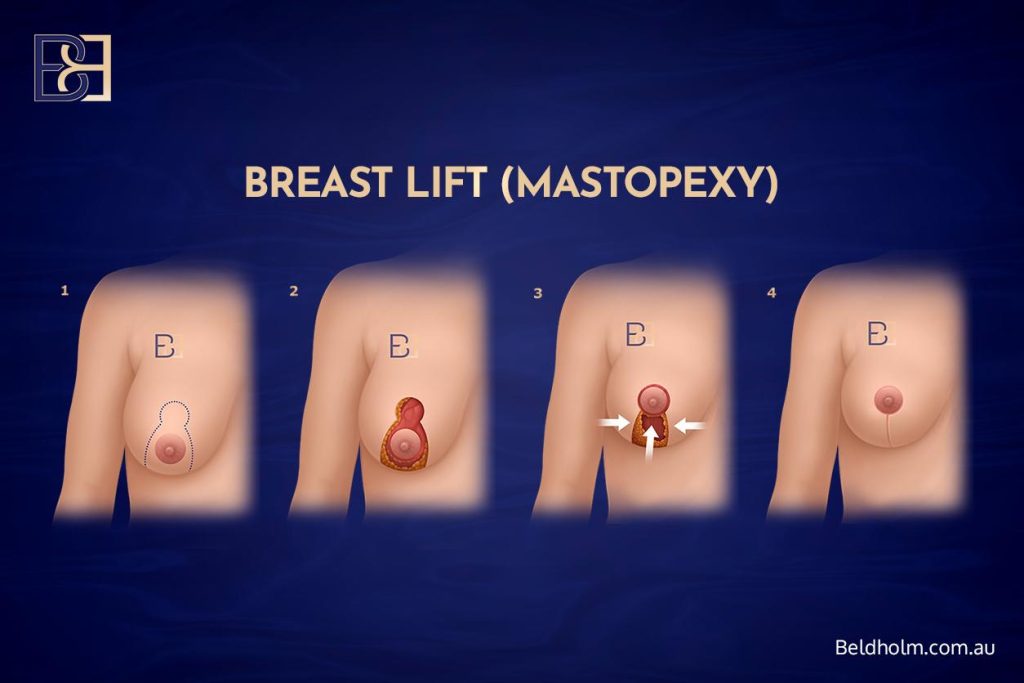
Where there is significant skin laxity, or the nipple sits low after an implant is removed or downsized, a breast lift (mastopexy) is sometimes discussed. A lift removes excess skin and repositions the nipple and breast tissue. Whether a lift is appropriate for you, whether you want one at all, and whether it would be done in the same operation or staged separately, are decisions made at consultation. I cover the breast lift (mastopexy) and implant decision, including single-stage versus staged surgery, in a separate article: breast lift with implants single-stage versus staged.
Nipple and breast sensation changes
Surgery on the breast can change sensation in the nipple, the areola, and the skin of the breast. This can mean numbness, patchy feeling, heightened sensitivity, or a lasting loss of sensation. It is one of the more common changes after breast surgery, and one that patients do not always expect.
Why it happens
Feeling in the nipple and breast comes from nerves that run through the breast tissue to reach the skin and the nipple. During surgery these nerves can be stretched, bruised, or cut. The main nerve to the nipple runs in from the side of the chest, and it is not always possible to avoid affecting it, particularly where the dissection is extensive.
Why implant exchange adds to the risk

Your breast has already been operated on once. The nerves may already have been affected by the first surgery, and a second operation works through scar tissue and adds further dissection. Removing a capsule (capsulectomy), changing the implant pocket, or moving to a larger implant all involve more dissection and carry more risk to sensation (3).
If a breast lift (mastopexy) is done at the same time, the nipple is repositioned, which means dissection around the nipple itself. This raises the risk of sensation change, and in uncommon cases the blood supply to the nipple can be compromised, which is a serious complication that can affect the nipple’s survival.
Temporary or permanent
Some sensation changes recover over weeks to months as bruised nerves settle. Others are permanent. There is no reliable way to predict beforehand who will be affected, or whether a change will recover. A change in nipple sensation can also affect sexual sensation, and where the nerves involved in milk let-down are affected, it can affect the ability to breastfeed in future. Whether future breastfeeding is possible is assessed individually.
Scarring
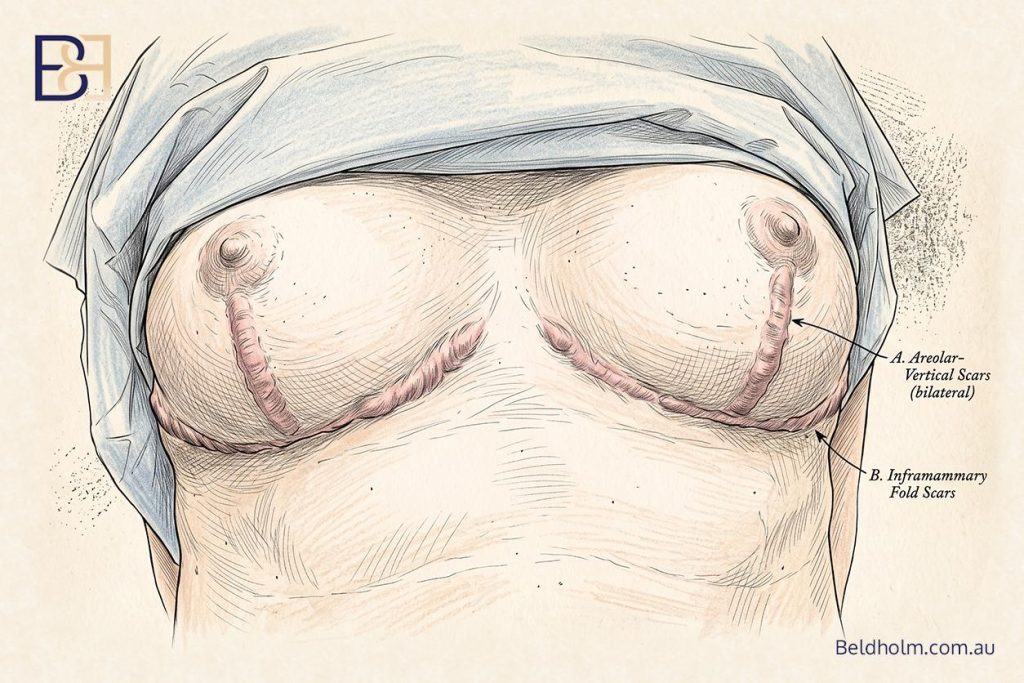
Every operation on the breast leaves a scar. Implant exchange is no exception, and it helps to know where the scars sit, how they behave over time, and what raises the risk of a poor scar.
Where the scars are
In most implant exchanges, I work through the existing scar from your first surgery rather than creating a new one. The two most common locations are:
- In the crease under the breast, called the inframammary fold, where the scar sits hidden in the fold
- Around the lower edge of the areola, called periareolar, where the scar follows the border between the darker and lighter skin
Sometimes the original incision needs to be extended, particularly if a capsule is being removed or a ruptured silicone implant needs careful extraction.
If a breast lift (mastopexy) is done at the same time, the scars are more extensive. A lift usually involves a scar around the areola and a vertical scar down to the fold, and in some cases a further scar along the fold itself. These are the trade-off for removing skin and repositioning the breast, and they are permanent.
How scars change over time
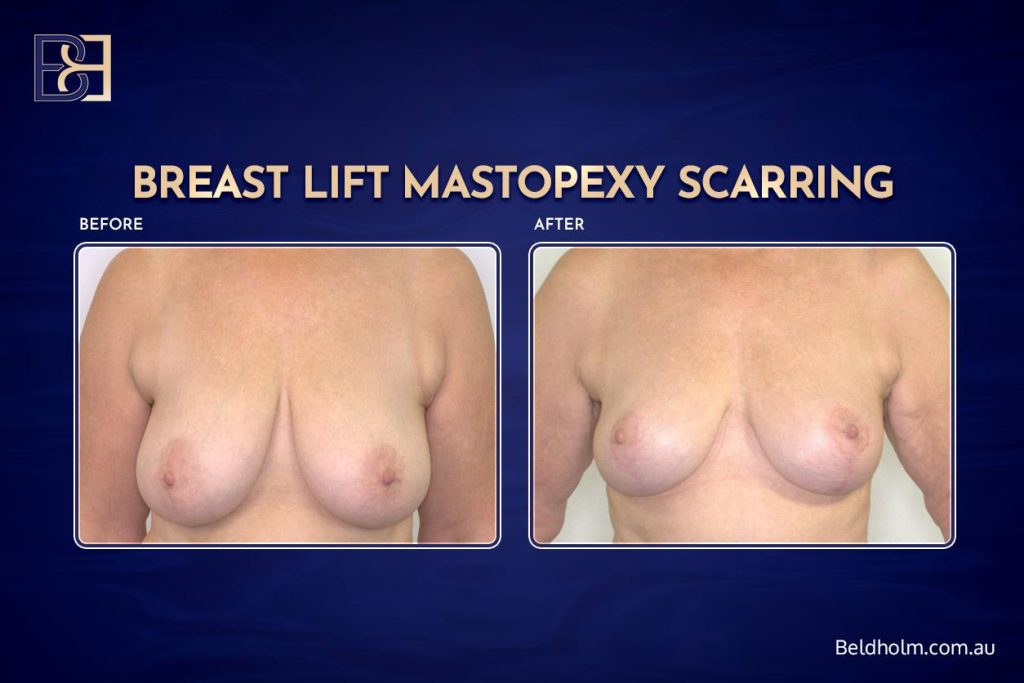
Disclaimer: Results vary, surgery has risks, seek second opinion. Operation performed by Dr Beldholm.
A new scar is usually red or pink and slightly raised. Over the following 12 to 18 months it typically flattens and fades, though it never disappears completely. How a scar matures varies a great deal between people, and it is not fully within anyone’s control.
Some people are prone to thickened scars, called hypertrophic scars, or to raised, spreading scars, called keloid scars. This tends to run in families and is more common in some skin types. If you have had a keloid or a poor scar before, tell me at consultation, because it changes how we plan and manage the wound.
Where a breast lift (mastopexy) is combined with an implant, tension on the skin is higher, and higher tension can lead to wider scars.
How I close and manage the wound
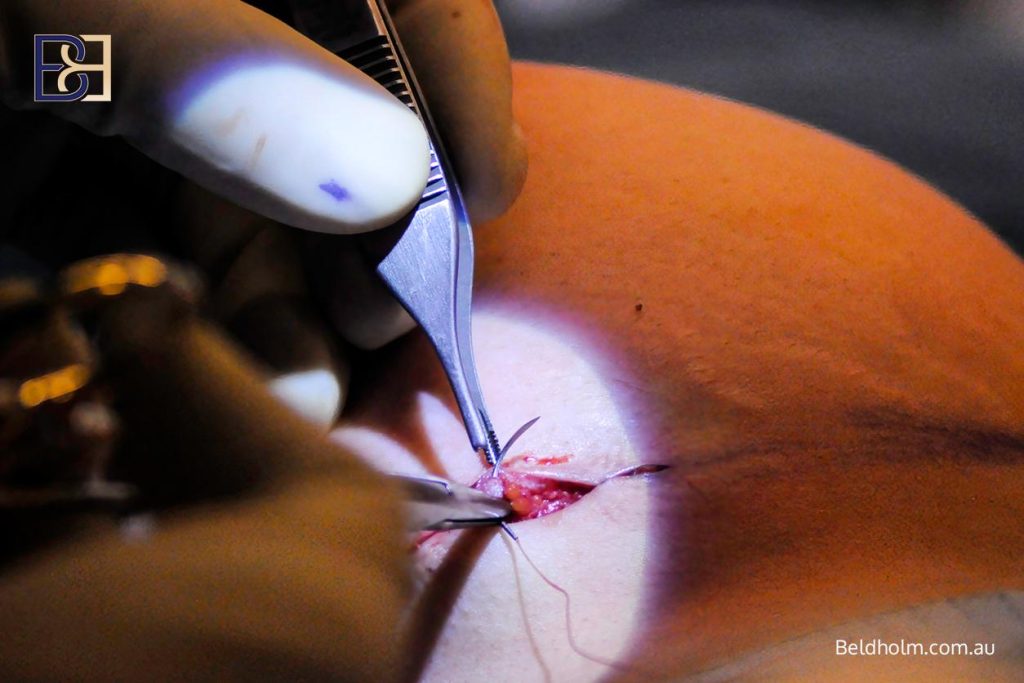
I close the skin with absorbable sutures placed under the surface, with nothing sitting on top of the skin, and a water-resistant dressing over the wound. In the first weeks after surgery, the nurse-led follow-up in my practice includes LED light therapy, which is used to support wound healing. Scar care after that, such as silicone treatments, is discussed as your wound heals. None of this removes a scar. The aim is to give the scar good conditions to settle, while being clear that the scar itself is permanent.
Implant malposition, rippling, asymmetry, and the chance of more surgery later
Not every complication is an early one or a medical one. Some of the most common implant complications that lead to further breast surgery are to do with how the implant sits and how the breast looks over time. These matter in implant exchange because a previously operated breast, with an existing pocket and often thinner tissue, is more prone to some of them.
Malposition: the implant sitting in the wrong place
An implant can settle into a position it should not be in:
- Too high, sitting above where the breast should be
- Too low, where the implant drops below the breast crease, sometimes called bottoming out
- Too far to the side, so the implant falls towards the armpit when you lie down
- Too close to the middle, where the two pockets meet in the centre of the chest
Malposition is one of the more common reasons for revision surgery (2). Correcting malposition usually means reshaping the pocket with internal sutures, changing the plane, or using the capsule for support.
Bottoming out and lower pole stretch
Over time an implant can gradually stretch the lower part of the breast, so the implant sits low and the nipple points upward. This is more likely with larger, heavier implants, and where the tissue is thin. That includes many revision patients whose coverage has thinned since the first surgery (9).
Rippling and palpable implant edges
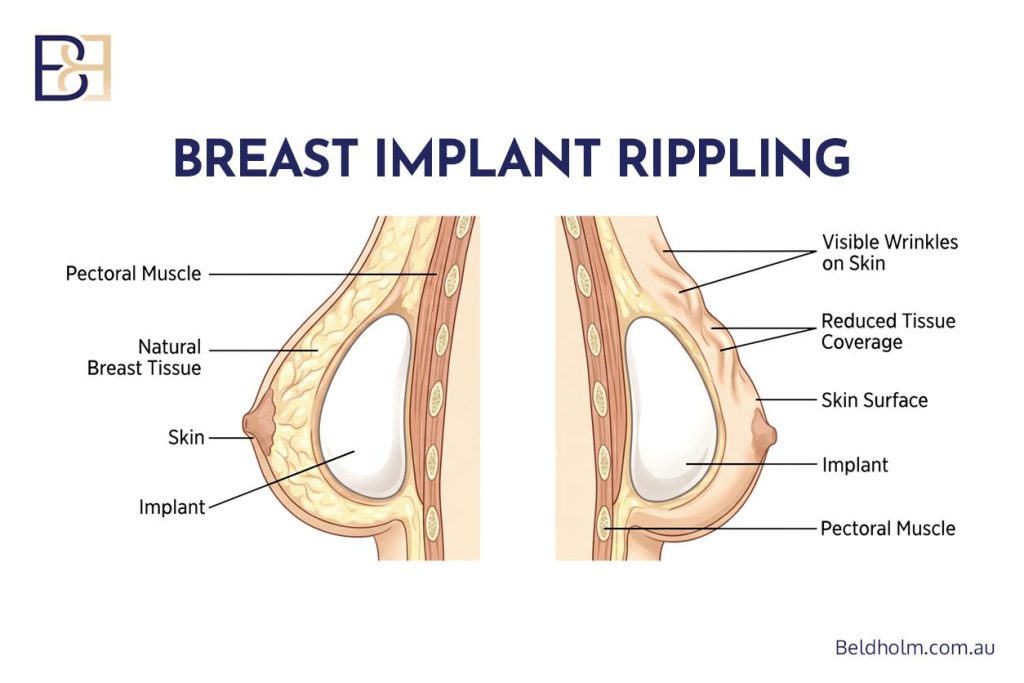
Rippling is when folds in the implant show through the skin or can be felt through it. It is more likely where there is little soft tissue over the implant, which again is common after previous surgery has thinned the coverage. Thinner-shelled and saline implants are more prone to it.
Double bubble
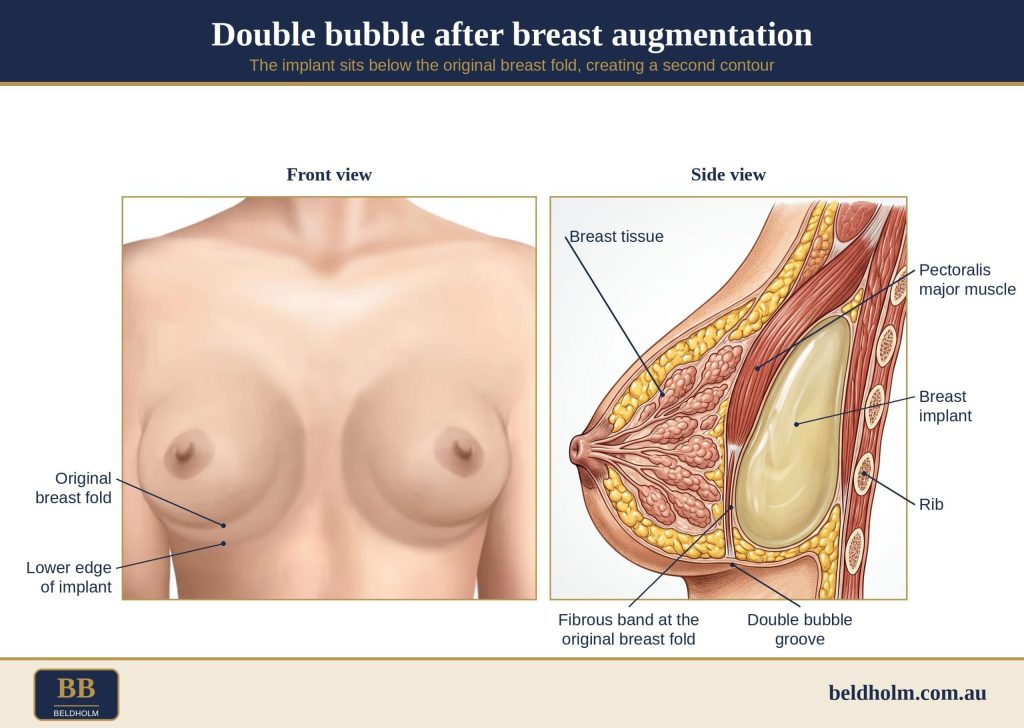
A double bubble is when a groove forms across the breast because the implant sits below the original breast crease, creating two contours instead of one (10). It can occur when the fold is altered during surgery, and it is one of the shape problems that can need further correction.
Animation deformity
Where an implant is placed under the chest muscle, the muscle can pull on the implant when it tightens, so the breast moves or distorts with certain movements. This is called animation deformity, and it is one of the reasons an implant may be moved to a different plane at revision surgery.
Asymmetry
No two breasts are ever perfectly matched, before or after surgery. Some difference in size, shape, or position between the two sides is normal. Surgery works to reduce noticeable asymmetry where that is the goal, but it can also leave some, or occasionally create it, and this is one reason some patients seek revision. This is a normal feature of the body, not a flaw.
The chance of needing more surgery later
This is the long-term picture to keep in mind. Breast implants are not lifelong devices, and having implants means accepting that further surgery is likely at some point in your life. Implants can rupture, capsules can tighten, position can change, and personal preference changes over time. The large studies show that a meaningful proportion of patients have further surgery within a decade, and the rate is higher after revision than after a first operation (1). Going into implant exchange with that expectation is part of making an informed decision.
Blood clots (deep vein thrombosis) and other whole-body risks
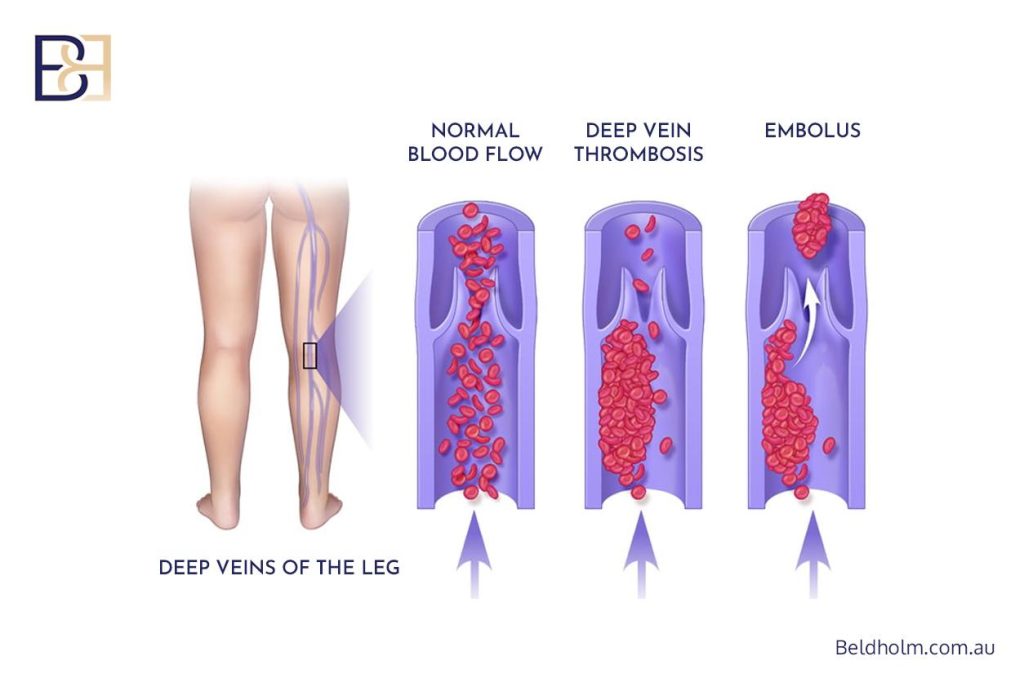
Most of this article deals with the breast itself. This section covers the risks that affect the whole body, and the most important of these is a blood clot.
Deep vein thrombosis and pulmonary embolism
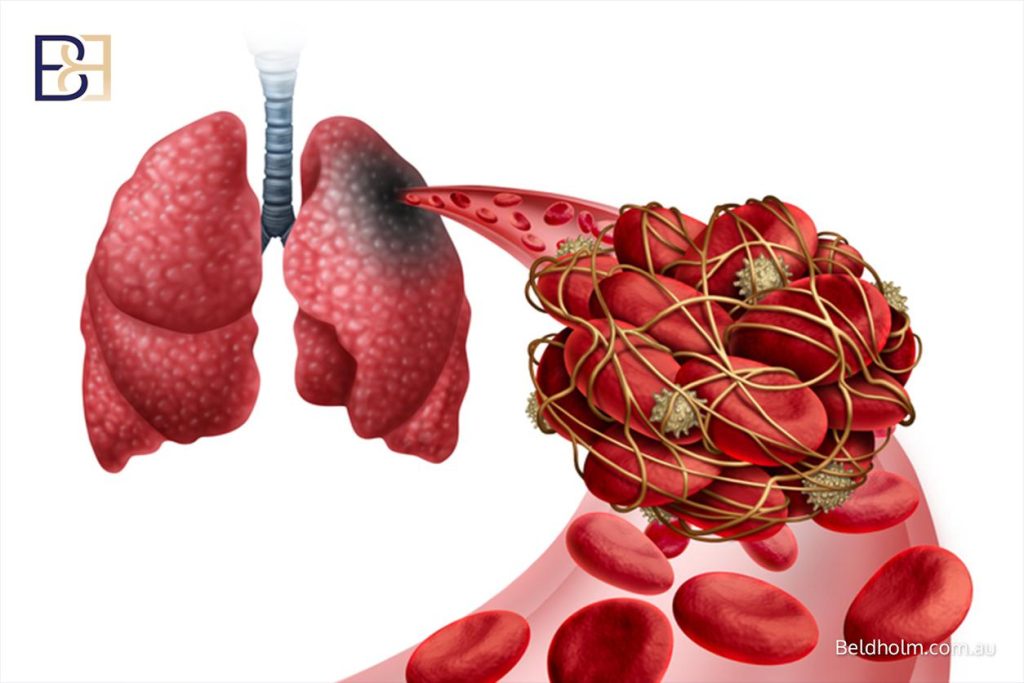
A deep vein thrombosis (DVT) is a blood clot that forms in a deep vein, usually in the leg. The serious danger is that part of the clot can break off and travel to the lungs, which is called a pulmonary embolism (PE). A pulmonary embolism is a medical emergency and can be life-threatening.
Any operation under general anaesthetic carries some clot risk, because you are immobile during surgery and less mobile during recovery. The longer the operation, the higher the risk. This is one reason a combined breast lift (mastopexy) and implant, which takes longer than either part alone, sits higher on the risk scale than a shorter procedure.
Breast surgery generally carries a lower clot risk than major abdominal surgery, but the risk is real, and I stratify it for every patient.
What raises your risk
Some things raise clot risk, including:
- A previous DVT or PE, or a family history of clots
- A known clotting disorder
- Smoking
- Higher body weight
- The oral contraceptive pill and hormone replacement therapy
- Long-haul travel close to the time of surgery
- Reduced mobility
How I lower the clot risk
The clot-prevention plan is matched to your level of risk. It can include compression of the calves during surgery, getting you up and moving early after the operation, and clot-prevention injections after surgery where your risk calls for them. For a higher-risk patient, staging a longer operation into shorter ones is one way to lower the risk.
Blood-thinning medications you already take
Managing blood thinners before surgery is a separate matter from preventing clots afterwards. If you take aspirin or an anticoagulant, these are managed on an individual plan. They are usually stopped about a week before surgery to reduce bleeding during and after the operation, though some patients are kept on them through surgery where stopping would carry more risk than continuing. This is planned well in advance, balancing your bleeding risk against your clot risk. You must never start or stop these medications yourself. If you take blood thinners, or you have had a clot before, tell me at consultation.
Warning signs after surgery

After you go home, get urgent medical help if you develop pain, swelling, redness or warmth in a calf, or if you become short of breath or develop chest pain. Breathlessness or chest pain can signal a clot on the lung and needs emergency care. Call 000 if it is severe.
Device-related reasons some patients have implants removed
Some patients come to me not because of a surgical complication, but because of concerns about the implants themselves. This section covers the main device-related conditions, described factually. These are reasons some people choose implant removal surgery or exchange, and they are worth understanding accurately.
BIA-ALCL
Breast implant-associated anaplastic large cell lymphoma (BIA-ALCL) is a cancer of the immune system. It is not breast cancer. It is a type of lymphoma that can develop in the capsule around a breast implant. It is rare, and the risk is linked to textured-surface implants, particularly those with heavier texturing, rather than smooth implants (11).
It usually appears years after the implant was placed, most often as a collection of fluid around the implant, called a late seroma, and sometimes as a lump or swelling (12). This is why clinicians investigate a seroma that develops long after surgery rather than drain it.
When BIA-ALCL is found early and is confined to the capsule, removing the implant and the capsule is usually the main treatment, and the outlook is generally favourable (12). Because this is a cancer, it is managed by a breast cancer specialist. If BIA-ALCL is suspected or diagnosed, I refer you, through your GP, to a breast cancer surgeon for that care. It is not something I manage myself.
Some patients with textured implants ask about removal as a precaution. Whether that is reasonable for you is an individual discussion. Current guidance does not recommend removing textured implants that are causing no problems purely as a precaution, but concerns are taken seriously and assessed.
Breast implant illness
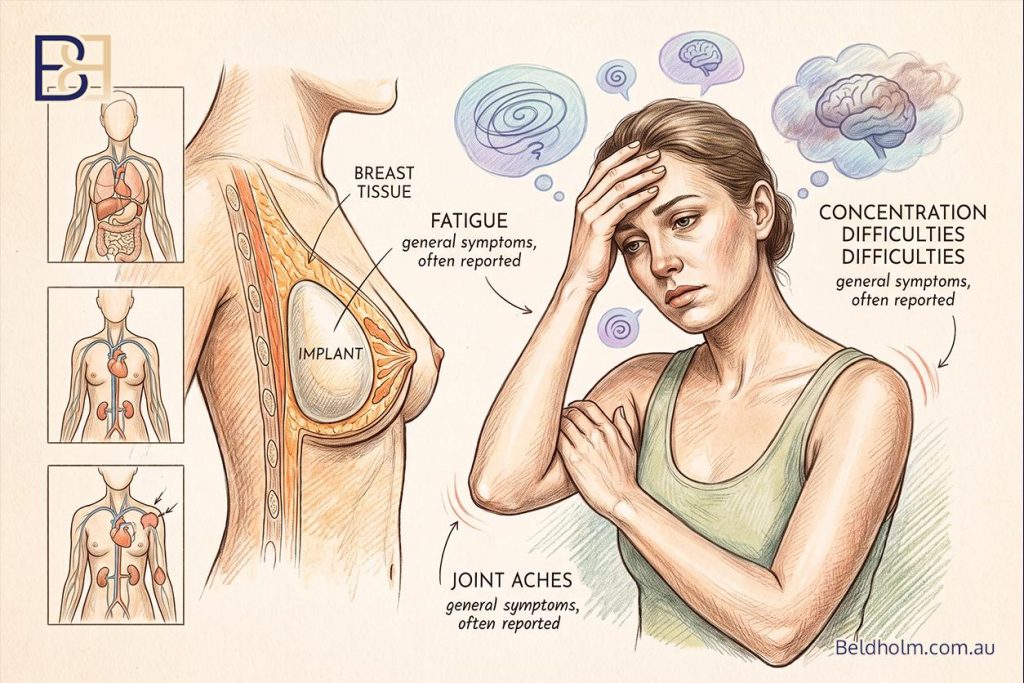
Breast implant illness (BII) is the term used for a range of symptoms that some people with breast implants report and attribute to their implants. The symptoms described include fatigue, joint pain and muscle aches, difficulty concentrating, sometimes called brain fog, hair loss, and others.
BII is not a formal medical diagnosis, and there is no test that confirms it. The research is still developing. Large reviews of the published evidence have not established that breast implants cause connective tissue diseases such as rheumatoid arthritis (15). What the studies do show is that a proportion of patients who have their implants removed report an improvement in these symptoms afterwards, though this is not guaranteed and is not fully understood (13). I take these symptoms seriously. Part of the assessment is looking for other treatable medical causes, rather than assuming the implants are the explanation. Removal is one option that is discussed individually.
Rare implant-associated cancers other than BIA-ALCL
More recently, regulators have reported rare cases of other cancers, including squamous cell carcinoma, in the capsule around breast implants (14). These are very rare, and what they mean for individual patients is still being studied. The practical point is the same as elsewhere in this article. A new lump, swelling, pain, or change around an implant should be checked rather than ignored.
Where implants are a regulated device
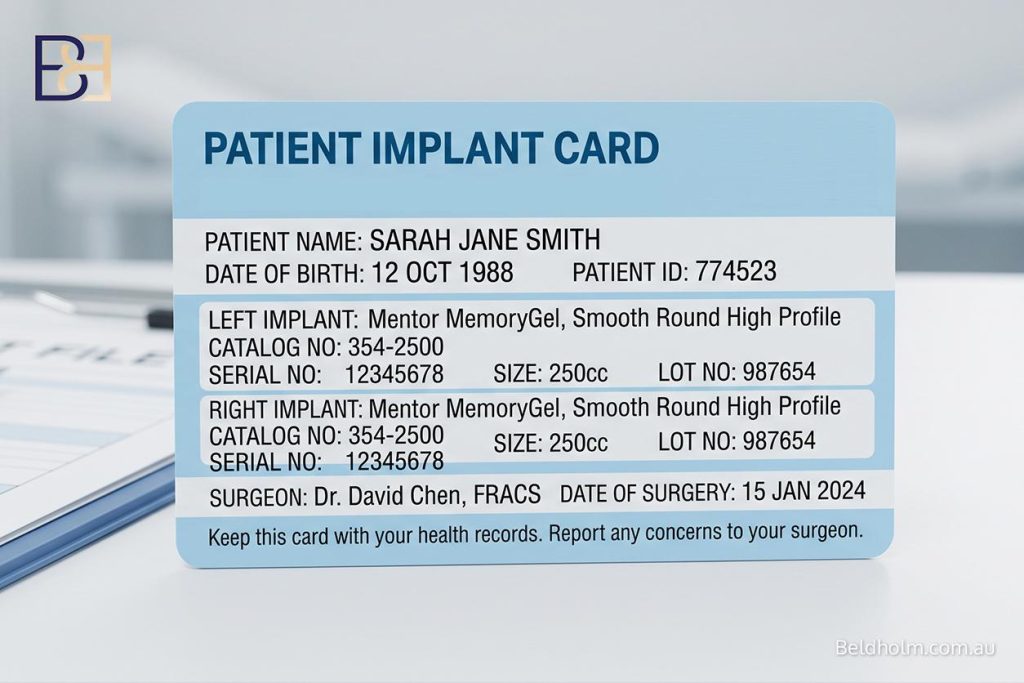
Breast implants are medical devices regulated by the Therapeutic Goods Administration (TGA) in Australia. You should have been given an implant card identifying your specific implants. If you still have it, bring it to consultation, because knowing the exact implants you have helps plan a removal or exchange. If you do not have it, that information can often be traced.
Book your appointment online now
How I lower the risks: assessment, preparation, technique and follow-up
The complications in this article are the reasons implant exchange has to be planned carefully. This section sets out what I do to lower the risk, from the first consultation through to long-term follow-up.
Assessment before surgery
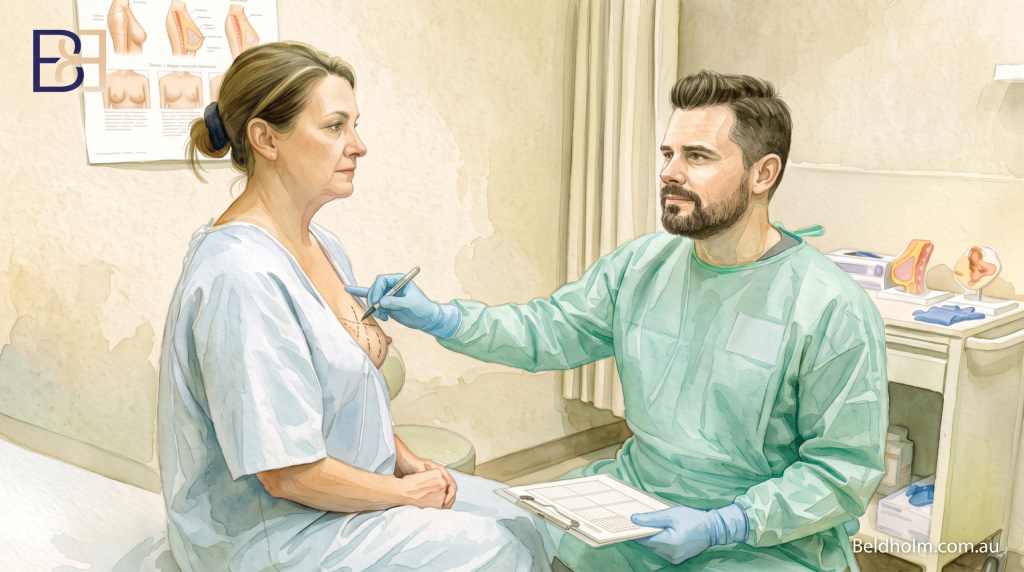
Good planning starts with a thorough assessment. At consultation I take a full history, examine your breasts, and review what is known about your current implants. If you have your implant card, it tells us the exact implants in place, which helps plan the operation.
Where you are uncertain about your implants, or there is a suspicion of a problem such as rupture, imaging is arranged as part of the investigation. For breast cancer screening, I follow the usual approach, with mammography for older patients and ultrasound for younger patients, arranged where appropriate.
Preparing for surgery
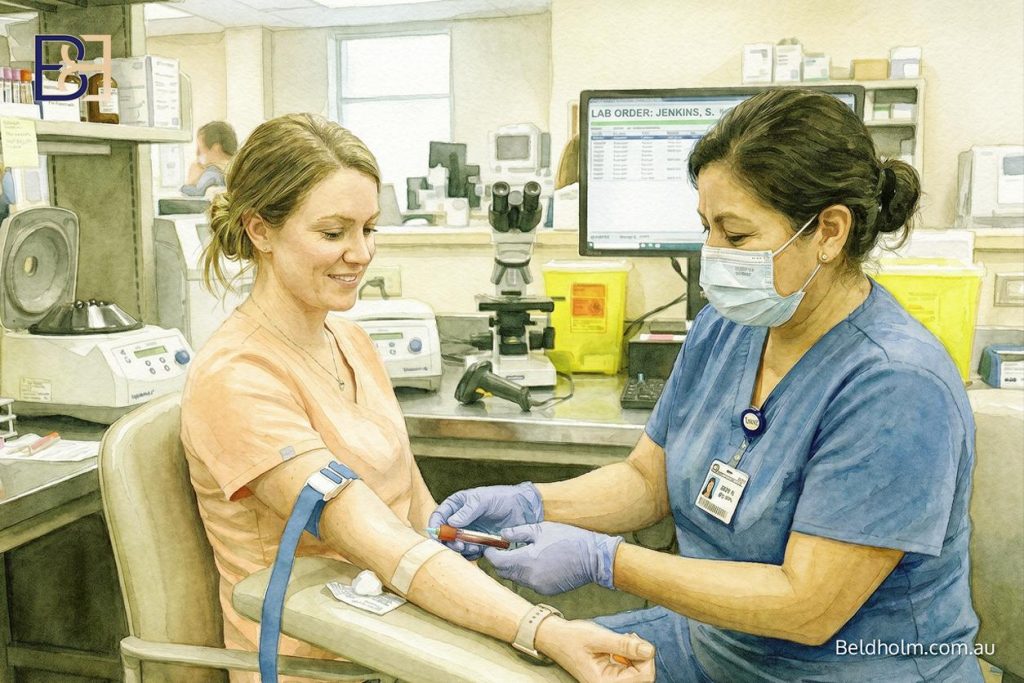
Some risks are lower when the groundwork is done before the day of surgery. Before implant removal and replacement surgery I arrange a set of blood tests, including a full blood count, kidney and liver function, a clotting screen, and hepatitis B, hepatitis C and HIV testing, with a pregnancy test where relevant.
The modifiable risks matter most here. Stopping smoking well before surgery lowers the risk of wound-healing problems and clots. Well-controlled diabetes heals better than poorly controlled diabetes. Blood-thinning medications are managed on an individual plan, as described earlier. Getting these right before the day of surgery is part of lowering the risk.
Implant and technique choices that lower risk
The implant is chosen to suit your tissue and your goals, considering fill, surface, shape, profile and size. I primarily use smooth-surface implants. The choice of implant surface is one of the factors relevant to the BIA-ALCL risk discussed earlier.
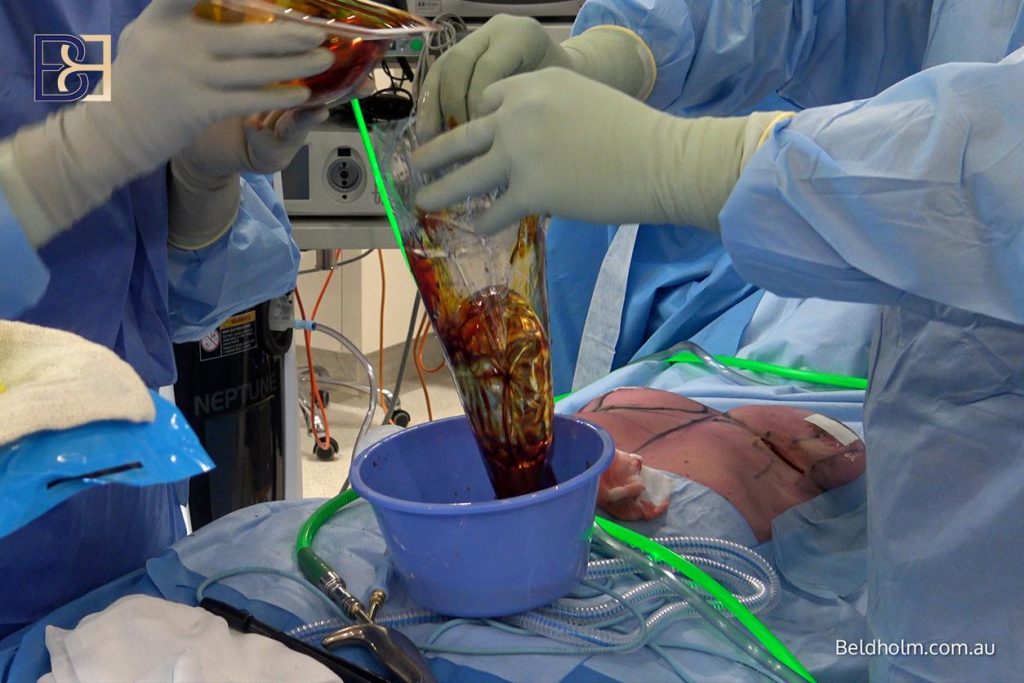
During surgery, several measures lower the risk of infection and capsular contracture: antibiotic prophylaxis, careful control of bleeding, minimal-touch handling of the implant, and insertion using a sterile delivery sleeve that limits contact between the implant and the skin.
Follow-up after surgery
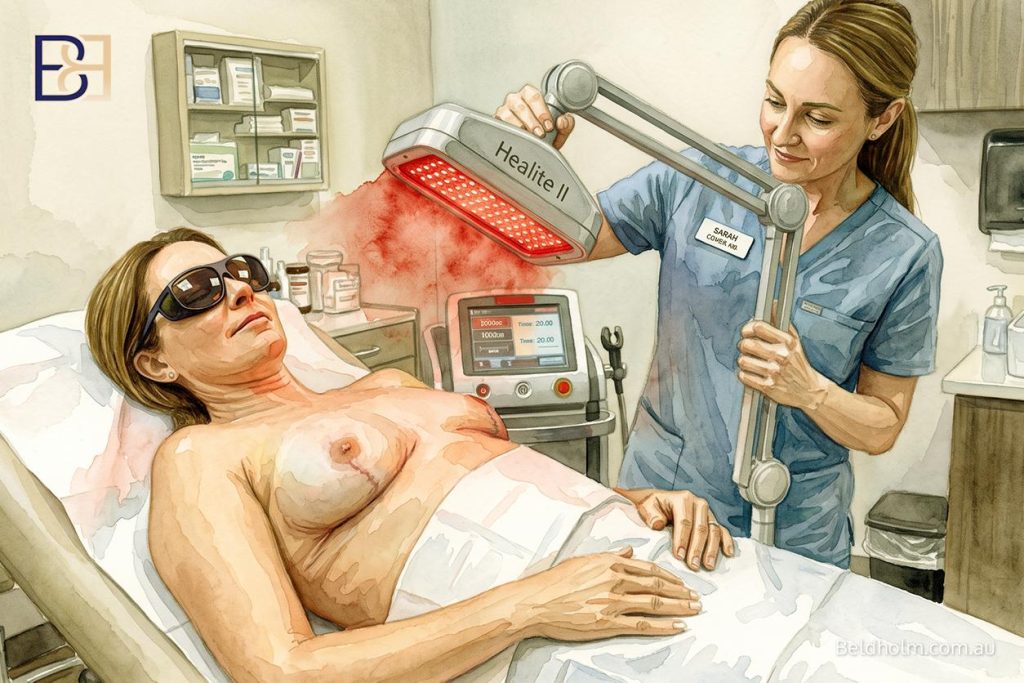
Follow-up in my practice is close in the early weeks, when problems are most likely to show. In the first two weeks you are seen by the nurse and by me, and this includes LED light therapy to support wound healing. After that, I review you at four weeks, three months, six months, and twelve months, and your GP is kept informed for your longer-term care.
If something is not right between visits, you call Maitland Private Hospital, where nurse-led phone triage will guide you. Where a physical assessment is needed, your local emergency department is the place to go. For anything life-threatening, call 000. Maitland Private is not an emergency department.
Recovery, and how the decision is made
What recovery is like
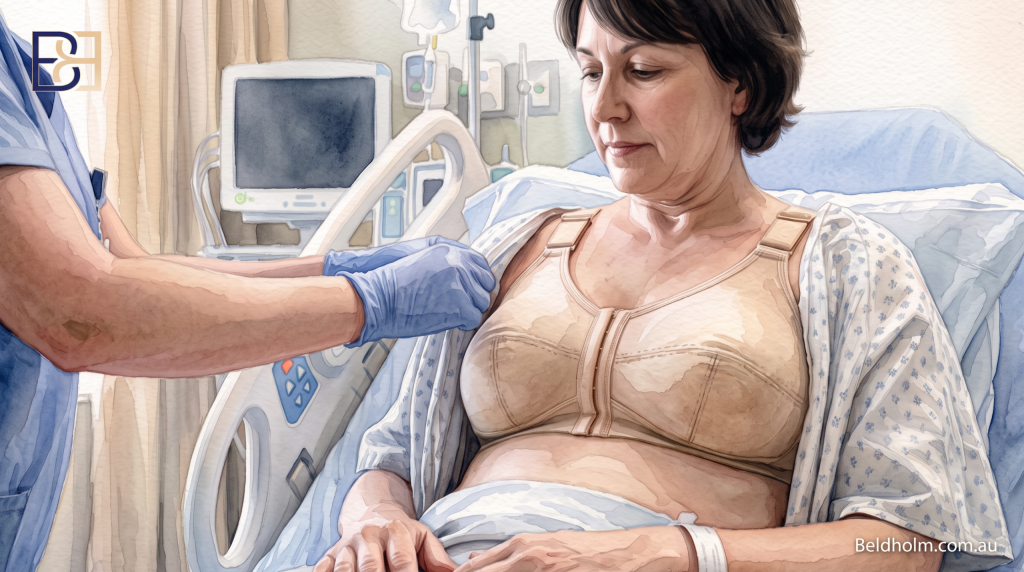
Implant exchange is usually a day-stay operation, which means you go home the same day. Recovery is broadly similar to a first breast augmentation (augmentation mammoplasty), but it can be more involved when a capsule is removed or a breast lift (mastopexy) is done at the same time. A combined operation is a larger physiological event, and the recovery reflects that. It should not be underestimated.
A rough guide to the early weeks, keeping in mind that your own timeline is individual:
- You go home with a water-resistant dressing and can usually shower the day after surgery
- A supportive bra, a surgical support garment, is worn full-time for the first four weeks, then during the day for a further two weeks, after which an underwire bra is usually fine
- Most people are ready to drive again at around one week, once they are comfortable and off strong pain medication
- Desk-based work is often manageable at around one week, again once off strong pain medication
- Lighter exercise usually resumes from around two weeks, with a longer wait where a lift has been done, and full activity is guided at your review appointments
These are typical ranges, not fixed rules. A bigger operation, or a combined lift and implant, means a longer recovery, and I would rather you plan for support at home than underestimate what recovery involves.
How the decision is made
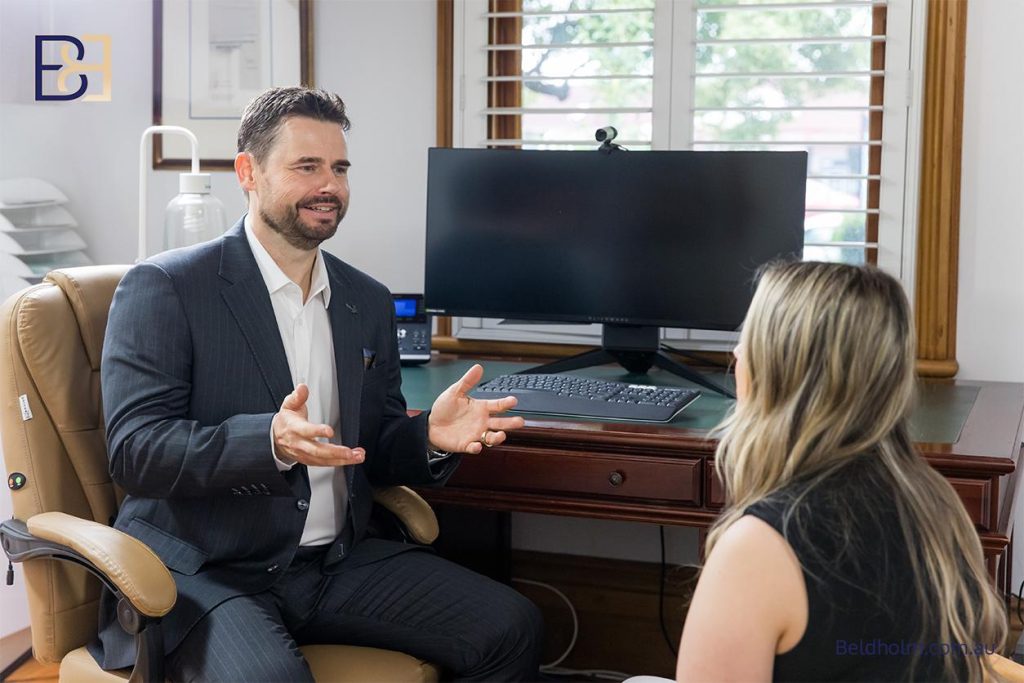
Whether to have implant exchange, and in what form, is a decision for you, made with the full picture in front of you. Surgery is one option, not the only response to concerns about implants, and part of my job at consultation is to set out the alternatives as well as the operation.
If you decide to proceed, whether the work is done in one operation or staged, which implants are used, and whether a breast lift (mastopexy) is part of the plan, are all worked out at consultation after assessment of your history, your tissue, and your imaging.
Where it is relevant to you, surgery is generally planned once your family is complete and breastfeeding has finished, because a future pregnancy can change the breast and affect the result. Timing is assessed individually.
No two breasts, and no two recoveries, are exactly the same. What I offer is a careful assessment, a clear explanation of the risks set out in this article, and an operation planned around what is appropriate for you.
References
- Coroneos CJ, Selber JC, Offodile AC 2nd, Butler CE, Clemens MW. US FDA breast implant postapproval studies: long-term outcomes in 99,993 patients. Ann Surg. 2019;269(1):30-36.
- Handel N, Cordray T, Gutierrez J, Jensen JA. A long-term study of outcomes, complications, and patient satisfaction with breast implants. Plast Reconstr Surg. 2006;117(3):757-767.
- Swanson E. Evidence-based cosmetic breast surgery. Cham: Springer International Publishing; 2017.
- Headon H, Kasem A, Mokbel K. Capsular contracture after breast augmentation: an update for clinical practice. Arch Plast Surg. 2015;42(5):532-543.
- Newman AN, Davison SP. Effect of Keller funnel on the rate of capsular contracture in periareolar breast augmentation. Plast Reconstr Surg Glob Open. 2018;6(6):e1834.
- Handel N, Garcia ME, Wixtrom R. Breast implant rupture: causes, incidence, clinical impact, and management. Plast Reconstr Surg. 2013;132(5):1128-1137.
- Norena-Rengifo BD, Sanin-Ramirez MP, Adrada BE, Luengas AB, Martinez de Vega V, Guirguis MS, et al. MRI for evaluation of complications of breast augmentation. RadioGraphics. 2022;42(4):929-946.
- Zuckerman DM. Reasonably safe? Breast implants and informed consent. Reprod Health Matters. 2010;18(35):94-102.
- Weniger FG, et al. Factors affecting lower-pole stretch after breast augmentation. Plast Reconstr Surg Glob Open. 2021;9(11):e3865.
- Ouyang Y, Du X, Ma X, Fu A, Liu C. Prevention and management of double-bubble deformity in augmentation mammoplasty. Aesthetic Plast Surg. 2021. [Letter].
- Swanson E. BIA-ALCL: comparing the risk profiles of smooth and textured breast implants. Aesthetic Plast Surg. 2023. [Letter].
- Longo B, Di Napoli A, Curigliano G, Veronesi P, Pileri S, Martelli M, et al. Clinical recommendations for diagnosis and treatment according to current updated knowledge on BIA-ALCL. Breast. 2022;66:332-341.
- Rohrich RJ, Bellamy JL, Alleyne B. Assessing long-term outcomes in breast implant illness: the missing link? A systematic review. Plast Reconstr Surg. 2022;149(4):638e-645e.
- US Food and Drug Administration. Breast implants: reports of squamous cell carcinoma and various lymphomas in capsule around implants. FDA Safety Communication; 8 September 2022 (updated 8 March 2023).
- McLaughlin JK, Lipworth L, Murphy DK, Walker PS. The safety of silicone gel-filled breast implants: a review of the epidemiologic evidence. Ann Plast Surg. 2007;59(5):569-580.