A question I am asked often in my practice is whether an abdominoplasty (tummy tuck) can be done at the same time as a caesarean, commonly called a C-section. Some patients have heard of an abdominoplasty performed during a caesarean delivery, sometimes called a “C-tuck” or “C-abdominoplasty,” and they want to know whether having both done in one operation makes sense for them.
My answer is that I do not combine the two. In my practice, a caesarean and an abdominoplasty are separate operations, done at separate times. Below I explain the clinical reasoning behind that position, what changes in the abdomen after pregnancy and a caesarean, when I would consider an abdominoplasty afterwards, and what the surgery and recovery involve.
Whether an abdominoplasty is appropriate for you, and when, is assessed individually at consultation. A GP referral is required, and results vary from patient to patient.
Why I do not perform abdominoplasty at the time of a caesarean
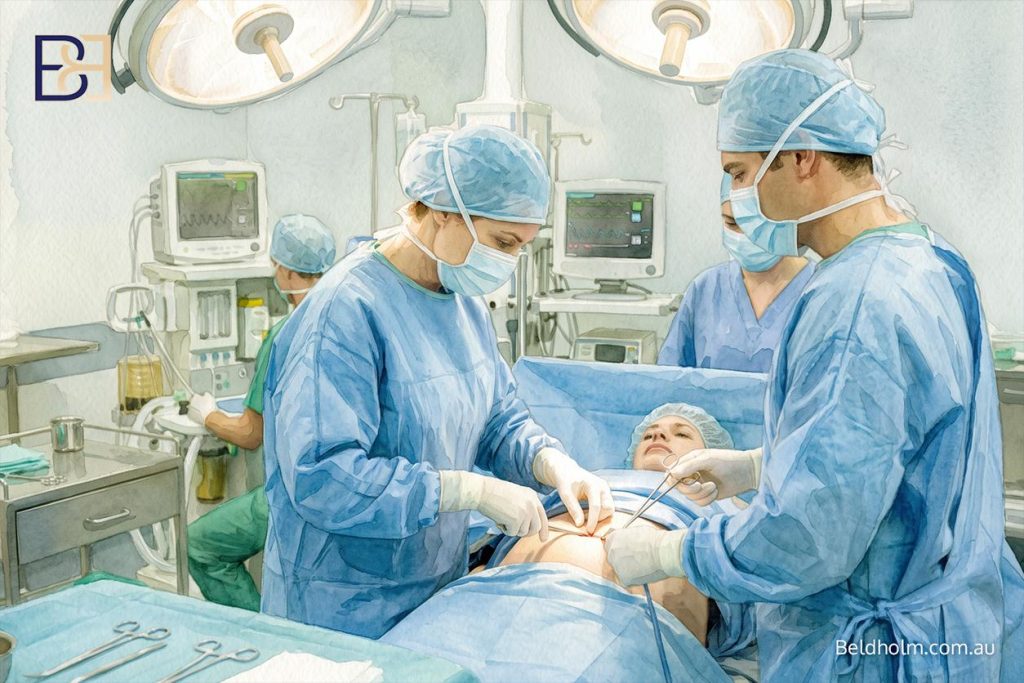
A caesarean is major abdominal surgery in its own right. Adding an abdominoplasty to the same operation means a longer time under anaesthesia and a larger physiological event layered on top of childbirth. A C-section is itself a significant operation, and in my assessment, combining the two carries more risk than it is worth for most patients, so I do not offer it.
There are several reasons behind this position.
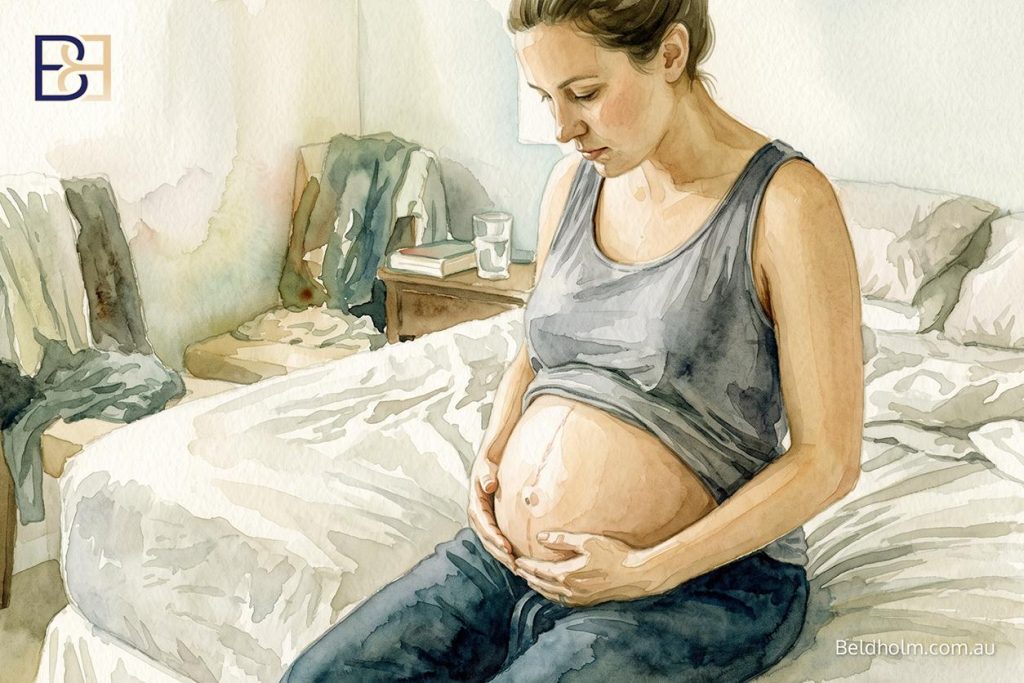
The body has not yet settled after pregnancy. At the time of delivery, the abdominal skin is stretched, the abdominal muscles are separated, and the tissues are swollen and well supplied with blood. Removing skin and repairing the muscle separation at that point means operating on tissue that is still changing. Over the months after birth, the skin and abdominal wall recover and settle. Operating before that has happened makes it harder to judge how much skin to remove and how the result will look once everything has recovered.
Higher complication risk. Combining the two operations increases the demand on the body at a time when it is already recovering from pregnancy and delivery. Published research on performing abdominoplasty at the same time as a caesarean reports higher rates of wound infection, wound breakdown, and problems with skin healing, along with poorer aesthetic outcomes, compared with abdominoplasty done as a separate, planned operation (1, 2). I cover these risks in more detail further down.
Bleeding and blood supply. During pregnancy the blood flow to the abdominal wall increases substantially. Operating on the abdominal wall at the time of delivery, when this blood supply is at its peak, raises the risk of bleeding and of problems with wound healing.
It is planned surgery, not emergency surgery. An abdominoplasty is an elective operation. It should be planned properly, with full pre-operative assessment, the right preparation, and timing chosen to give the best chance of a good result. A caesarean, whether planned or not, is centred on the safe delivery of your baby. Those two goals do not sit well together in one operation.
For these reasons, I treat the caesarean and the abdominoplasty as two separate operations, done at separate times. This is the safer and more appropriate path, and it is the standard approach for good reason.
What changes in the abdomen after pregnancy and a caesarean
To understand what an abdominoplasty does, it helps to understand what happens to the abdomen during pregnancy and after a caesarean. These are normal changes. Pregnancy makes considerable demands on the abdominal wall, and the body adapts to accommodate a growing baby.
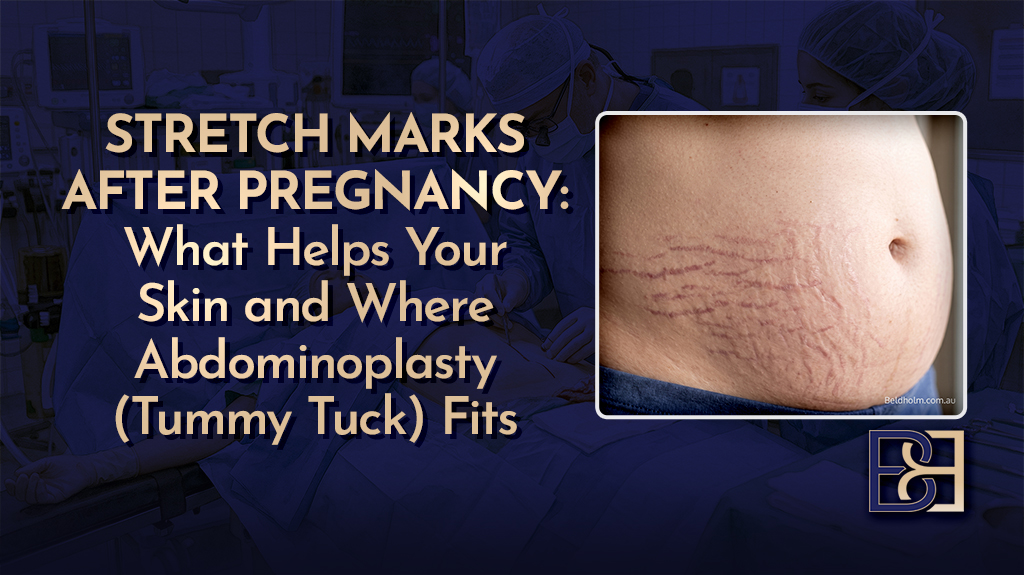
The skin. As the abdomen expands during pregnancy, the skin stretches. After delivery, the skin contracts again, but for many women it does not return fully to how it was before. Some women are left with loose skin in the lower abdomen, and some notice stretch marks, where the deeper layers of skin have been stretched during pregnancy. The degree of change varies a great deal from person to person and depends on factors such as genetics, the number of pregnancies, and the size of the baby.
The deeper tissue. Along with skin changes, there can be a layer of excess fat across the lower abdomen. This is normal, and the amount of fatty tissue varies between individuals. Where appropriate, an abdominoplasty can remove some of this together with the excess skin.
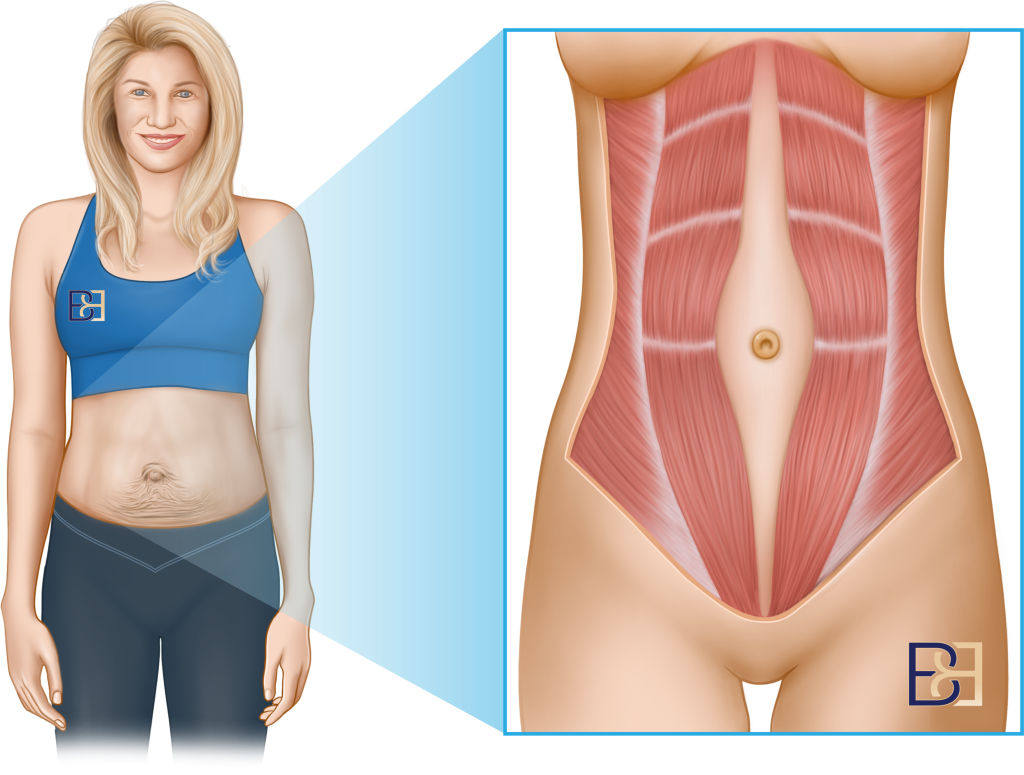
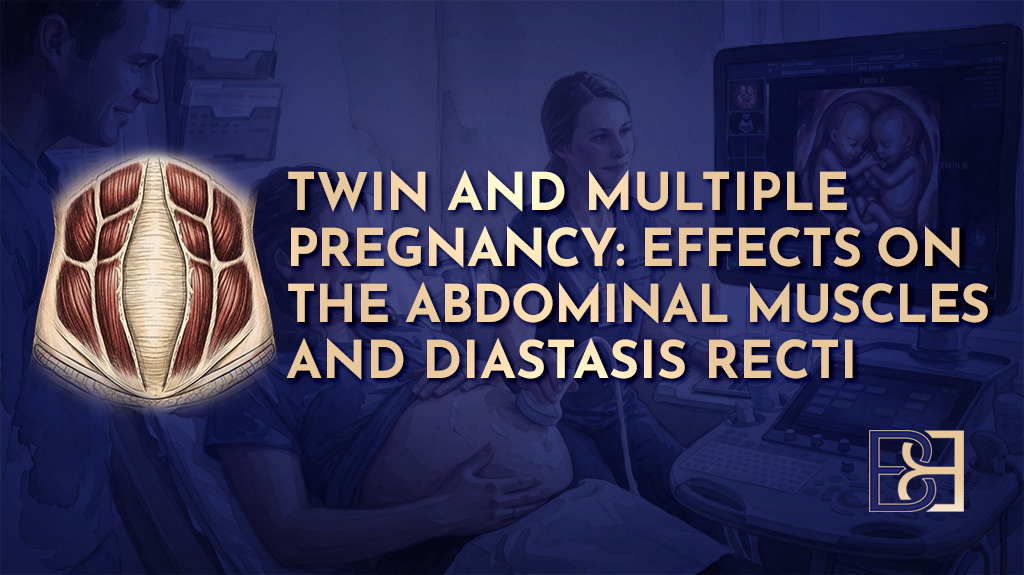
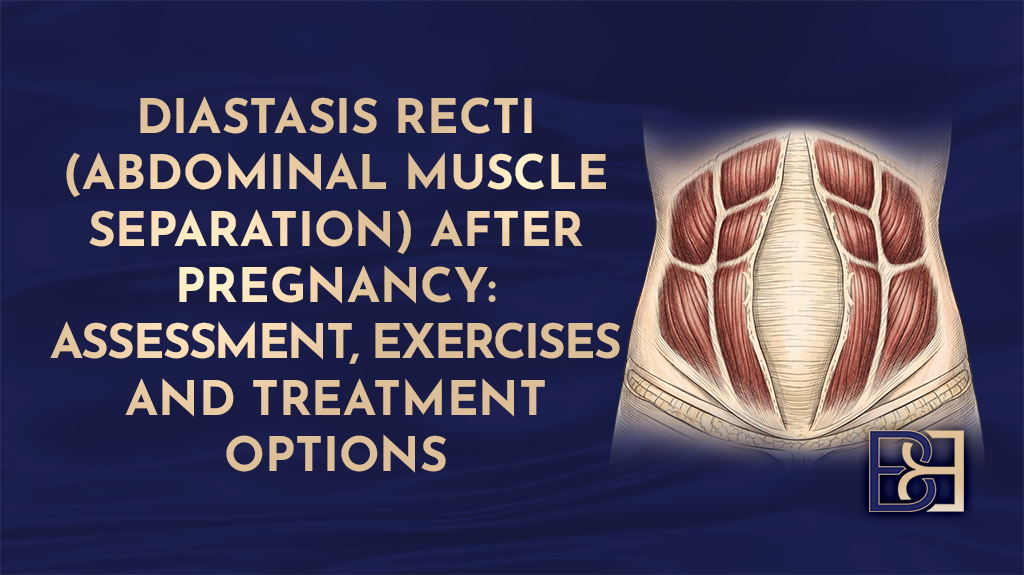
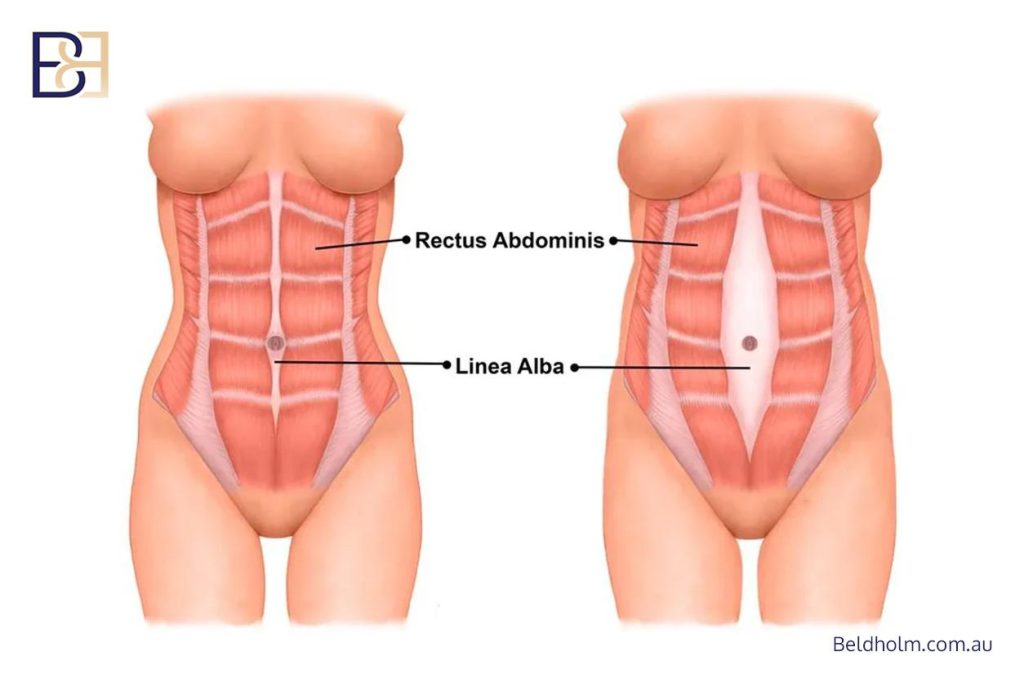
The abdominal muscles. The two bands of muscle that run down the front of the abdomen, the rectus abdominis, are joined in the midline by a band of connective tissue called the linea alba. During pregnancy, as the abdomen grows, these muscles are pushed apart and the connective tissue between them stretches. When this separation persists after pregnancy, it is called diastasis recti (muscle separation). It is common after pregnancy, particularly after more than one pregnancy or a larger baby.
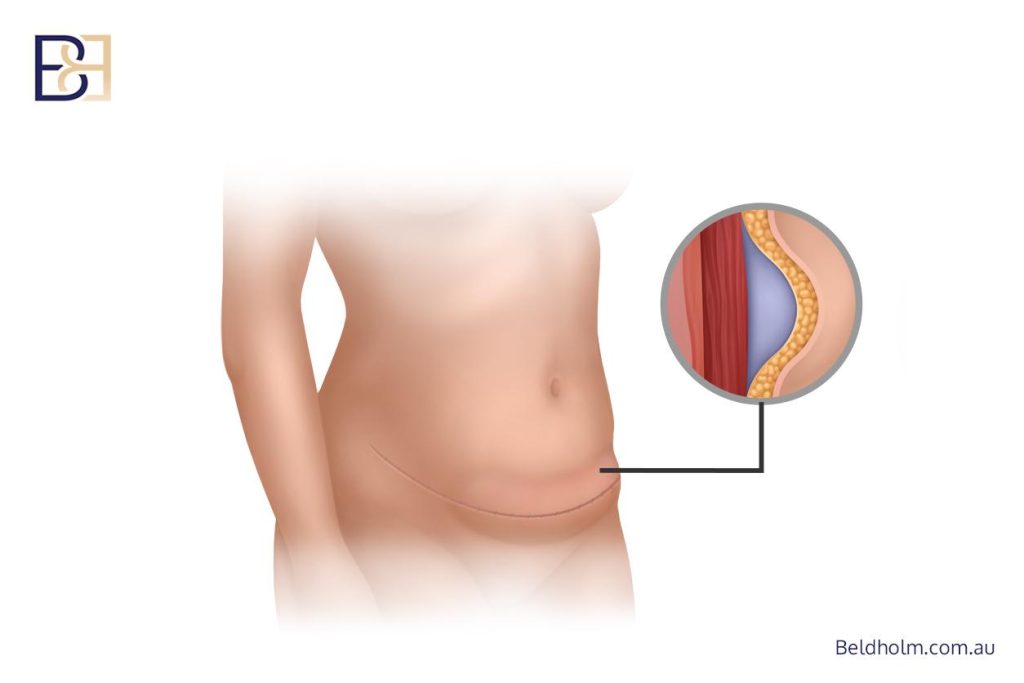
The caesarean scar. A caesarean is performed through an incision low on the abdomen, usually horizontal and sitting just above the pubic area. This leaves a scar in the lower abdomen. The position and quality of this scar are relevant when planning an abdominoplasty later, which I cover below.
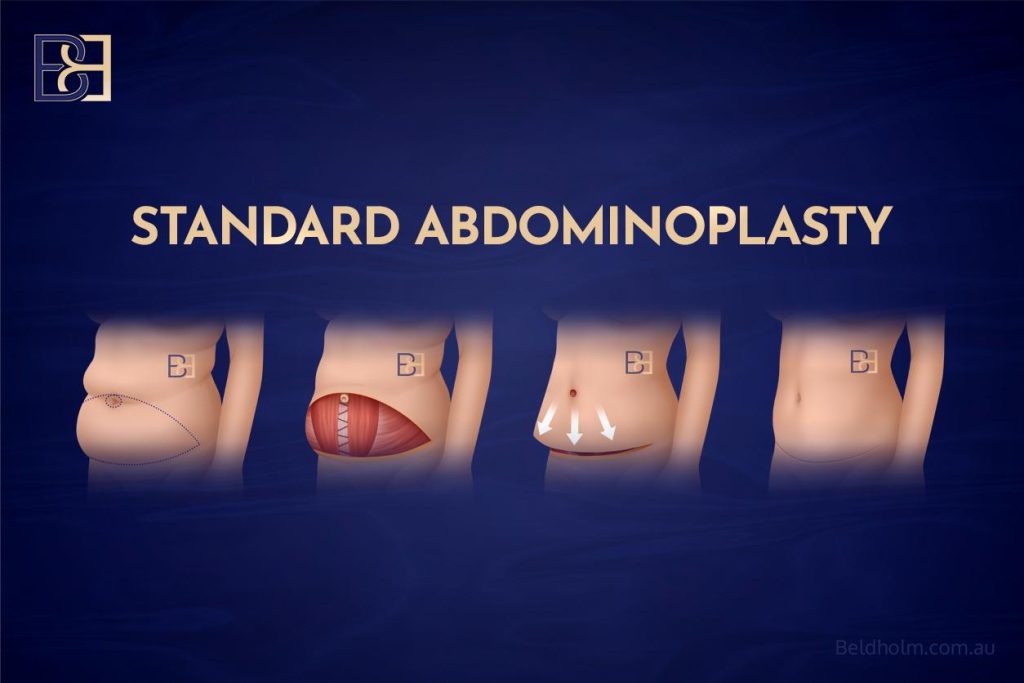
When an abdominoplasty is appropriate, it can treat these changes together. The operation works by removing excess skin from the lower abdomen, repairing the diastasis recti by bringing the abdominal muscles back together in the midline, and the existing caesarean scar is usually removed with the skin that is taken away. Whether an abdominoplasty is the right choice, and what it would involve for you, is assessed individually at consultation.
Timing: when I would consider abdominoplasty after a caesarean
There is no single right time that suits everyone. When I would consider an abdominoplasty after a caesarean depends on the individual, and timing is something I assess at consultation. That said, there are some general principles I work to.
Give the body time to recover. As a general guide, I suggest waiting around 12 months after a caesarean before considering an abdominoplasty. This is a guide, not a fixed rule. The point is to allow the abdominal skin and muscles to settle after pregnancy and delivery, so that what we are working with at surgery reflects your settled state rather than a body still in the middle of recovery. For some patients the right time is sooner, for others later. It is assessed individually.
Finish breastfeeding first. I plan abdominoplasty for once breastfeeding has finished. Breastfeeding involves hormonal changes that affect the body, and it is sensible to let things settle before planning surgery.

Complete your family. This is an important one. A future pregnancy can stretch the skin and separate the abdominal muscles again, which can undo the result of an abdominoplasty. For that reason I generally recommend planning surgery once you have completed your family. If you are thinking about more children, it is usually better to wait.
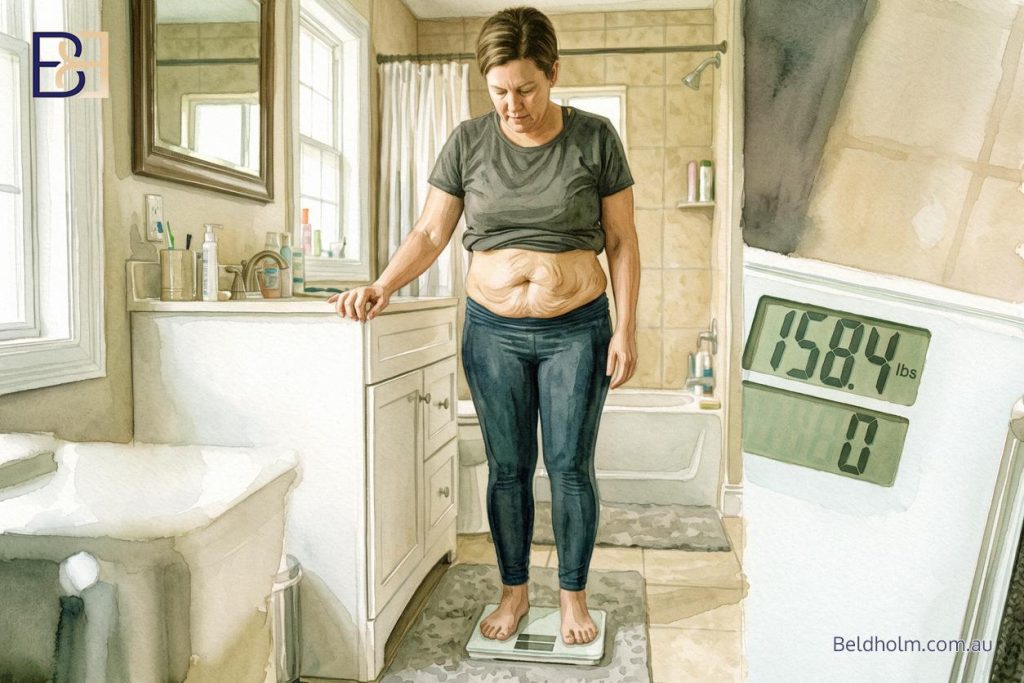
Stable weight. Significant weight change after surgery can affect the result. I prefer patients to be at a weight they can maintain before planning an abdominoplasty. This is about a settled, stable starting point, not about reaching a particular number.
A GP referral is required. Before any consultation with me, you will need a referral from your GP. The consultation is where we assess whether an abdominoplasty is appropriate for you and, if so, when.
These principles work together. The aim is to plan surgery at a point where your body has recovered from pregnancy, your weight is stable, and your family is complete, so that the result has the best chance of lasting. When that point arrives is different for everyone, and we work it out together at consultation.
How the caesarean scar affects incision planning

A caesarean leaves a scar low on the abdomen. When planning an abdominoplasty afterwards, that existing C-section scar is always something I take into account, and in most cases it works in your favour.
The C-section scar is usually removed. A caesarean incision is typically a horizontal line low on the abdomen, sitting just above the pubic area. The abdominoplasty incision is also placed low and horizontally, in a similar position. Because the lower abdominal skin is removed during an abdominoplasty, the old C-section scar usually sits within the skin that is taken away, and is removed with it. Where this is the case, you are left with the abdominoplasty scar rather than both.
Incision planning is individual. Exactly where I place the incision depends on your anatomy, the position of your existing caesarean scar, the amount of skin to be removed, and where the scar can be sited so that it sits low. I plan the incision so that it sits as low as possible and within an area that is typically covered by underwear, though the final position varies from patient to patient.
Scarring is part of surgery. An abdominoplasty leaves a permanent scar. It is long, running across the lower abdomen, and although it is placed low and fades over time, it does not disappear. How a scar matures depends on the individual, including factors such as skin type and how you heal. I talk through scar position and what to expect at consultation, so you have a clear picture before making a decision.
The relationship between the caesarean scar and the abdominoplasty incision is one of the practical reasons an abdominoplasty after a caesarean can be planned well, provided it is done as a separate, considered operation.
The limited abdominoplasty option for minimal lower abdominal skin
Not everyone needs a full abdominoplasty. For some patients, a smaller operation called a limited abdominoplasty (mini tummy tuck) is more appropriate. Which operation suits you is assessed individually at consultation.
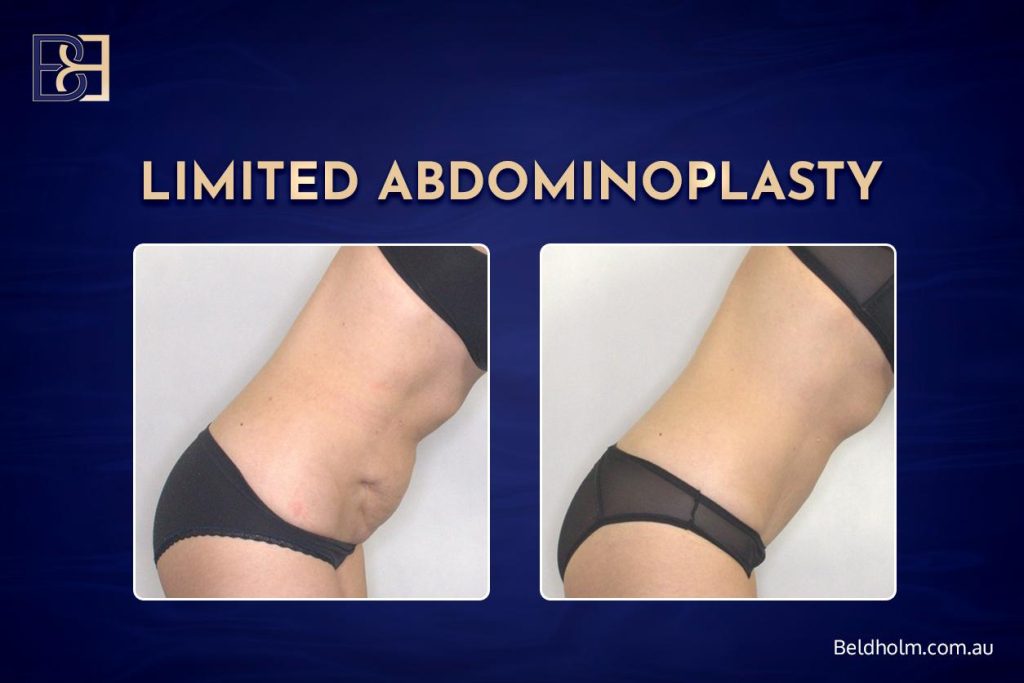
What a limited abdominoplasty involves. A limited abdominoplasty (mini tummy tuck) is a surgical procedure that treats the area below the umbilicus (belly button) only. It removes a smaller amount of loose skin from the lower abdomen, often the skin around an existing caesarean scar, through a shorter incision. The belly button is not repositioned, and the operation does not extend to the upper abdomen.
Who it may suit. A limited abdominoplasty may suit patients who have a small amount of loose lower abdominal skin and little or no muscle separation (diastasis recti), with the changes confined to below the umbilicus. Patients who have more extensive loose skin, skin above the umbilicus, or significant diastasis recti usually need a full abdominoplasty to treat those changes properly. I assess which is appropriate based on examination at consultation.
A note on terminology. You may come across the term “mini C-tuck” or similar online. This is not a separate operation, and it is not a procedure I perform at the time of a caesarean. A limited abdominoplasty is a planned operation, done separately and after recovery from pregnancy, the same as a full abdominoplasty. The principles around timing, finishing breastfeeding, and completing your family apply equally.
A limited abdominoplasty is a smaller operation than a full abdominoplasty, but it is still surgery, with its own risks and recovery. It is not a shortcut, and it is only appropriate for a particular pattern of change. For many patients after pregnancy, a full abdominoplasty is the operation that treats their concerns properly. Which is right for you is determined at consultation.
Recovery realities
An abdominoplasty is a major operation, and recovery should not be underestimated. This matters all the more after pregnancy, when you are likely to be caring for young children at the same time. I would rather you have a clear and realistic picture before surgery than be caught out afterwards.
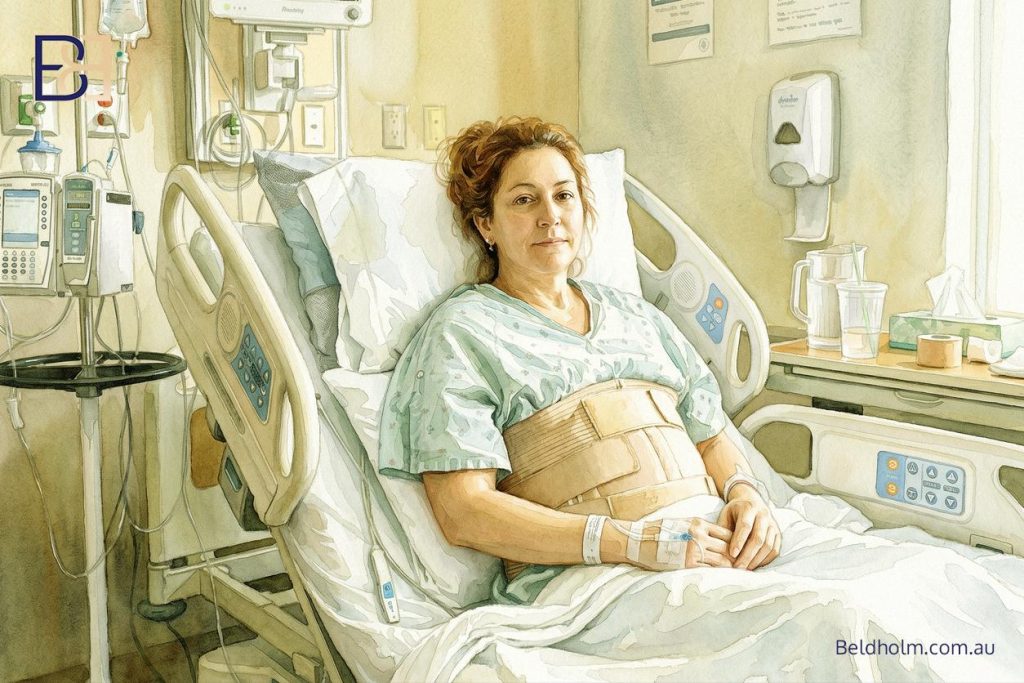
Hospital stay. Most patients stay in hospital for one to two nights after a full abdominoplasty. You will have dressings, and in some cases a drain, depending on the extent of surgery.
The early weeks. The first couple of weeks are the most demanding. You will be sore, swollen, and moving slowly. You will not be able to stand fully upright at first, as the abdomen is tight after the muscle repair. Most patients take around two weeks off work, though this depends on the individual and the type of work you do.
Lifting and activity. This is the part that matters most for parents of young children. After an abdominoplasty, I ask patients to avoid heavy lifting for around six weeks, and that includes lifting small children. This is not a small ask when you have a toddler at home, and it is one of the main reasons planning matters. You will need help at home during this period. I talk through this at consultation, because support at home is something to arrange in advance, not work out afterwards.
Returning to exercise. Light walking is encouraged early, as it helps recovery and lowers the risk of blood clots. More strenuous exercise, including anything that loads the abdominal muscles, is introduced gradually and usually not before around six weeks, sometimes longer. I guide this based on how you are healing.
Swelling and the final result. Swelling is normal after an abdominoplasty and settles gradually over months, not weeks. The result you see at six weeks is not the final result. It can take several months for swelling to resolve and for the result to settle. Patience matters here.
Follow-up. I review my patients at set points after surgery, at four weeks, three months, six months, and twelve months. This lets me monitor healing and pick up any concerns early.
Recovery is different for everyone, and how you recover depends on your health, the extent of surgery, and your circumstances at home. Planning surgery for a time when you have support, and when your family is settled, makes a real difference to how you experience it. Results vary between patients.
Risks and complications
Every operation carries risks, and an abdominoplasty is no exception. Part of my job at consultation is to make sure you understand them before you decide. The list below is not exhaustive, and I go through the risks relevant to your situation in detail in person.
General risks of abdominoplasty. As with any major surgery, an abdominoplasty carries risks including bleeding, infection, and reactions to anaesthesia. Risks more specific to abdominoplasty include:
- Seroma, a collection of fluid under the skin, which may need draining
- Wound healing problems, including areas of the wound separating or healing slowly
- Changes in skin sensation around the lower abdomen, which may be temporary or lasting
- Scarring, which is permanent and varies from person to person
- Skin or fat necrosis, where a small area of tissue does not survive
- The need for further surgery to revise the result
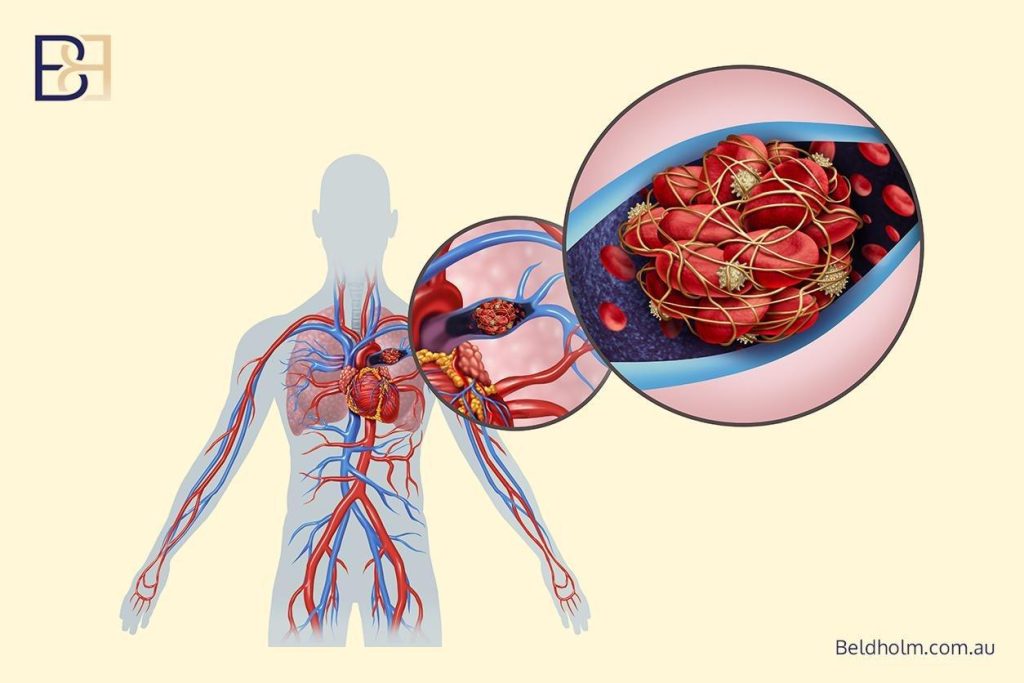
- Blood clots in the legs (deep vein thrombosis) or lungs (pulmonary embolism)
Blood clots and how I lower the risk. Deep vein thrombosis is an important risk to take seriously with abdominoplasty. I assess each patient’s risk of clots before surgery and put measures in place to lower it. These can include blood-thinning injections given around the time of surgery to prevent clots, along with early walking and other measures during your recovery.
If you already take blood-thinning medication. Some patients already take medication such as aspirin, warfarin, or another anticoagulant for a pre-existing medical condition. If this applies to you, I plan how that medication is managed around your surgery, often pausing it for a period beforehand, though some patients continue it through surgery where that is the safer course. This is decided individually and planned well in advance. You must never stop or start any blood-thinning medication on your own. Any change is planned with me as part of your surgical preparation.

Why combining with a caesarean raises the risk further. The risks above apply to a planned abdominoplasty done on its own. Performing an abdominoplasty at the same time as a caesarean raises several of them. Published research on combining the two operations in one procedure reports notably higher rates of complications. In one study of 50 women who had an abdominoplasty at the time of a caesarean, 18% developed a wound infection, 9% had wound breakdown, and 12% developed an area of skin necrosis in the lower abdomen (1). The authors of that work did not recommend the combined approach. This is consistent with the wider literature, which does not support combining abdominoplasty with a caesarean (1, 2).
There are clear reasons for this. At the time of delivery the abdominal wall has a greatly increased blood supply, the tissues are stretched and swollen, and the body is already managing the demands of childbirth. Operating in those conditions makes complications more likely and makes it harder to achieve a good result.
This is the clinical basis for my position. By operating separately, once the body has recovered from pregnancy, the abdominoplasty is done under far more favourable and controlled conditions, which lowers these risks. No operation is without risk, but a planned, separate abdominoplasty is a more considered procedure than one combined with delivery.
How I assess suitability

Book your appointment online now
Whether an abdominoplasty is right for you, and when, is something I work out with you at consultation. No two patients are the same, and the assessment is individual. Here is what that involves.
A GP referral comes first. Before I can see you, you will need a referral from your GP. Your GP is also part of your care after surgery, and I keep them informed throughout.
Medical history and examination. At consultation I take a full medical history and examine your abdomen. I look at the amount and quality of loose skin, whether there is muscle separation (diastasis recti), the position of your caesarean scar, and your general health. This is what tells me whether an abdominoplasty is appropriate, and if so, which type.
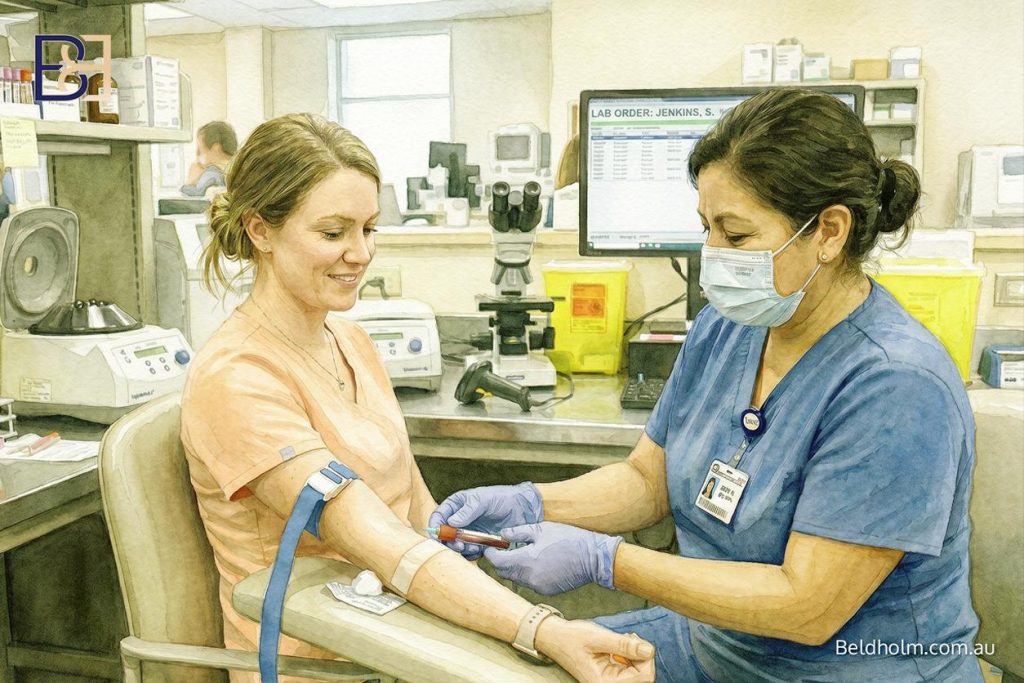
Pre-operative blood tests. All my body contouring patients have a set of pre-operative blood tests before surgery. These check your general health and help me pick up anything that needs attention before you have an operation. For patients who have been pregnant and breastfeeding, I pay particular attention to iron, folate, vitamin B12, and vitamin D, as the demands of pregnancy and breastfeeding can leave these lower than ideal. Correcting any gaps before surgery supports healing.
Nutrition before surgery. Good nutrition supports recovery from any operation. Rather than repeat the detail here, I cover the principles of preparing nutritionally for surgery in a separate article, and I assess your individual needs based on your blood results. The aim is to come into surgery well prepared, which gives you the best chance of healing well.

A considered decision. I do not rush patients towards surgery. An abdominoplasty is a significant operation and the decision deserves time. At consultation we talk through whether it suits you, what it would involve, the risks, the recovery, and the timing. If it is not the right choice for you, or not the right time, I will tell you. Results vary between patients, and my aim is to give you a clear and realistic picture so you can decide what is right for you.
Frequently asked questions
Can I have an abdominoplasty at the same time as my caesarean (C-section)?
In my practice, no. I do not combine the two operations. A caesarean is centred on the safe delivery of your baby, and an abdominoplasty is a planned elective operation best done once your body has recovered from pregnancy. Combining them raises the risk of complications and makes a good result harder to achieve. I perform the abdominoplasty separately, at a later date.
What is a “C-tuck” or “C-abdominoplasty”?
These are informal names for an abdominoplasty performed at the same time as a caesarean. They are not separate operations, and they are not terms I use. As explained above, I do not perform an abdominoplasty at the time of a caesarean. I plan it as a separate operation once you have recovered from pregnancy.
Is a “mini C-tuck” different?
No. A “mini C-tuck” is an informal term for a limited abdominoplasty (mini tummy tuck) done at the time of a caesarean, and it is not something I perform either. When a limited abdominoplasty is appropriate, I plan it for once you have recovered from pregnancy, the same as a full abdominoplasty.
How common is it to have an abdominoplasty during a caesarean?
It is uncommon. The published medical literature does not support combining the two, and reports of the combined procedure come from small studies that found higher complication rates. Combining a tummy tuck with a C-section is not standard practice, and it is not something I offer.
How long after a caesarean can I have an abdominoplasty?
As a general guide, I suggest waiting around 12 months after your C-section, to allow your body to recover from pregnancy and delivery. This is a guide, not a fixed rule, and the right timing is assessed individually. I also plan surgery for once breastfeeding has finished and your family is complete, as a future pregnancy can affect the result.
Why operate separately rather than combine the two?
Operating separately means the abdominoplasty is done under controlled, planned conditions, on an abdomen that has recovered from pregnancy. This lowers the risk of complications and gives a better chance of a good, lasting result. It also means each operation can be focused on its own purpose: the caesarean on delivering your baby safely, and the abdominoplasty on the surgery itself, properly planned.
Will my caesarean scar be removed?
In most cases, yes. The abdominoplasty incision is placed low on the abdomen, in a similar position to a C-section scar, and the lower abdominal skin that is removed usually includes the old caesarean scar. I assess this when planning your surgery.
References
- Ali A, Essam A. Abdominoplasty combined with caesarean delivery: evaluation of the practice. Aesthetic Plast Surg. 2011;35(1):80-6.
- Prakash V, Garg N. Feasibility of abdominoplasty with caesarean section. Indian J Plast Surg. 2012;45(1):37-41.