Pregnancy stretches the skin of the abdomen and separates the abdominal muscles (diastasis recti) down the midline. For many women these changes settle in part over time, and for some they do not. When a patient decides on an abdominoplasty (tummy tuck) after pregnancy, one of the practical questions that comes up early is where the scar will sit, and whether it will show above underwear or swimwear.
An abdominoplasty removes excess, loose skin from the lower abdomen and leaves a scar. My job is to place that scar as low as the surgery allows and to close it well, so it sits below the line of the garments you usually wear. Where exactly that line falls is different for every patient, because underwear and swimwear are cut to different heights.
In this article I explain how I plan the position of the abdominoplasty scar, what that means for the underwear and swimwear you wear afterwards, how the scar changes as it heals, and when it is reasonable to return to the water after surgery. Whether an abdominoplasty is appropriate for you at all, and where your scar can realistically sit, is assessed individually at consultation.
Where the abdominoplasty (tummy tuck) scar sits, and why
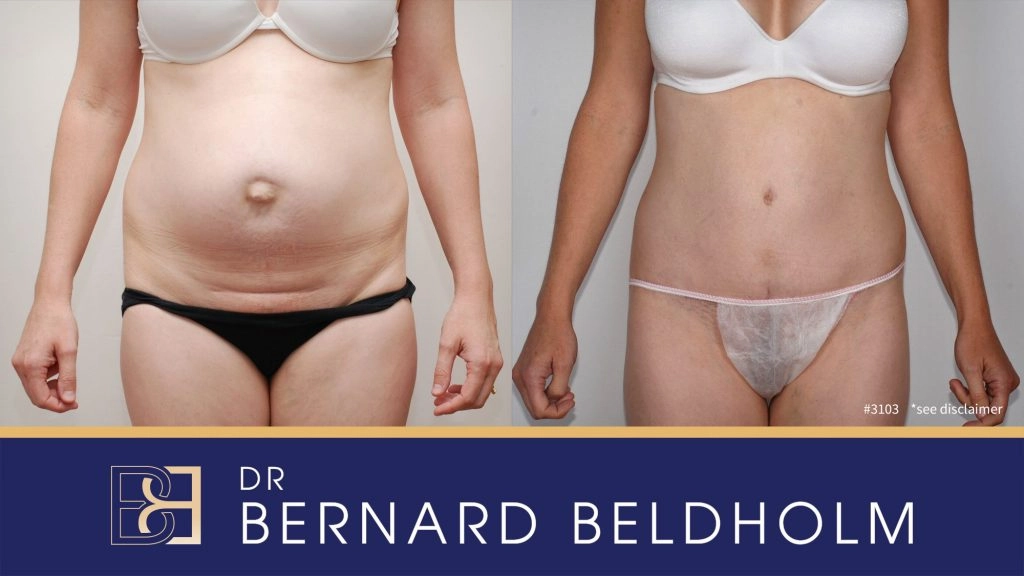
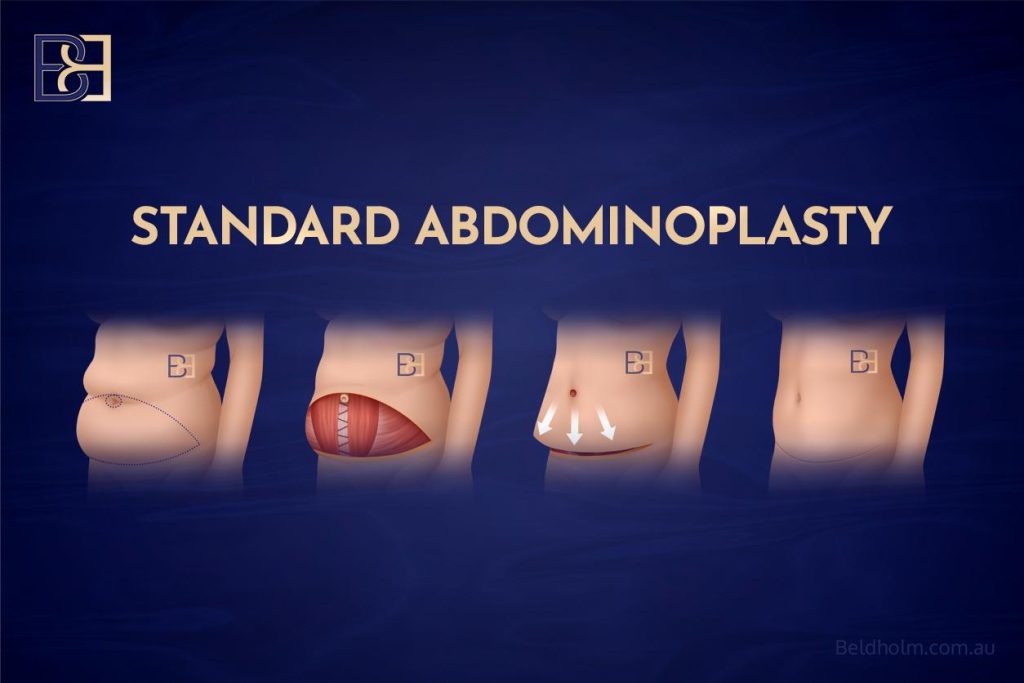
The main scar from an abdominoplasty is a single, low, horizontal, straight line across the lower abdomen. I place it as low as the surgery allows, running from hip to hip near the hip bones, so it sits below the bikini line, the panty line, and the waistline of most underwear and swimwear. Abdominoplasty is major surgery, and the scar it leaves is permanent, so where it sits matters.
Why the scar is low and horizontal
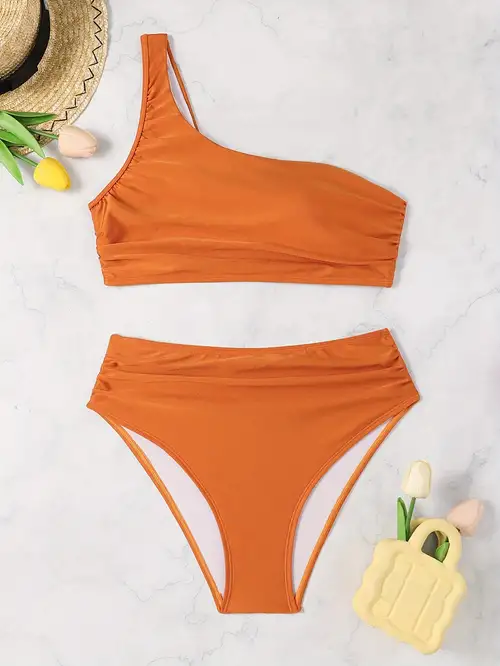
An abdominoplasty removes the excess, loose skin between the belly button and the pubic area, brings the upper skin down, and closes it along a low incision line. Careful incision placement, keeping the abdominoplasty incision low, keeps it within the area that underwear and swimwear normally cover, and I aim to keep the line level and even on both sides.
How long the scar is
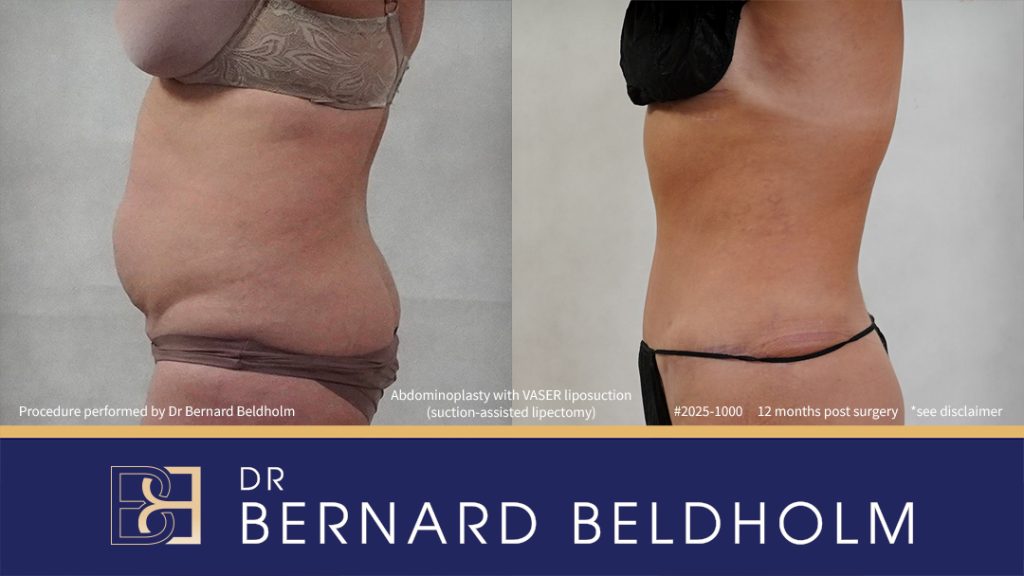
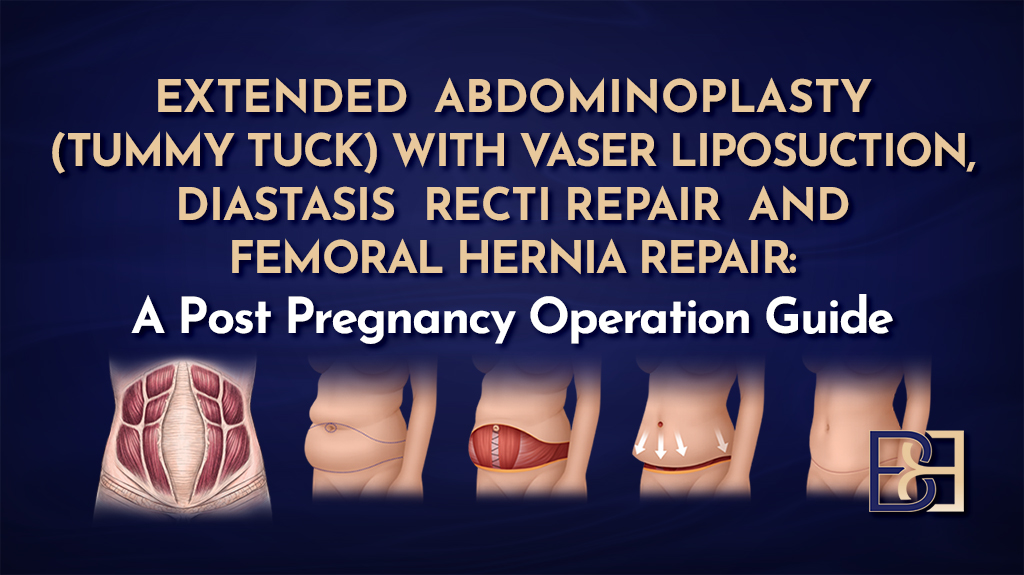
The length of the scar, the incision length, depends on how much loose, redundant skin needs to be removed. After pregnancy, skin laxity often extends out towards the hips, so the incision usually needs to reach that far to remove the excess skin and avoid leaving folds at the ends. This is sometimes called an extended abdominoplasty, though for most post pregnancy patients the extra length is modest, and I often refer to it as a full abdominoplasty.
A full abdominoplasty also leaves a small scar around the belly button (umbilicus), where it is brought back through the skin once the upper skin has been repositioned. In some cases, there is also a short vertical scar low down, where the original belly button opening is closed. Where ultrasound-assisted suction lipectomy (VASER liposuction) is used to remove excess fat and fatty tissue as part of the operation, there are also a few small scars at the access points where the fine cannula is inserted.
Underwear and swimwear sit at different heights
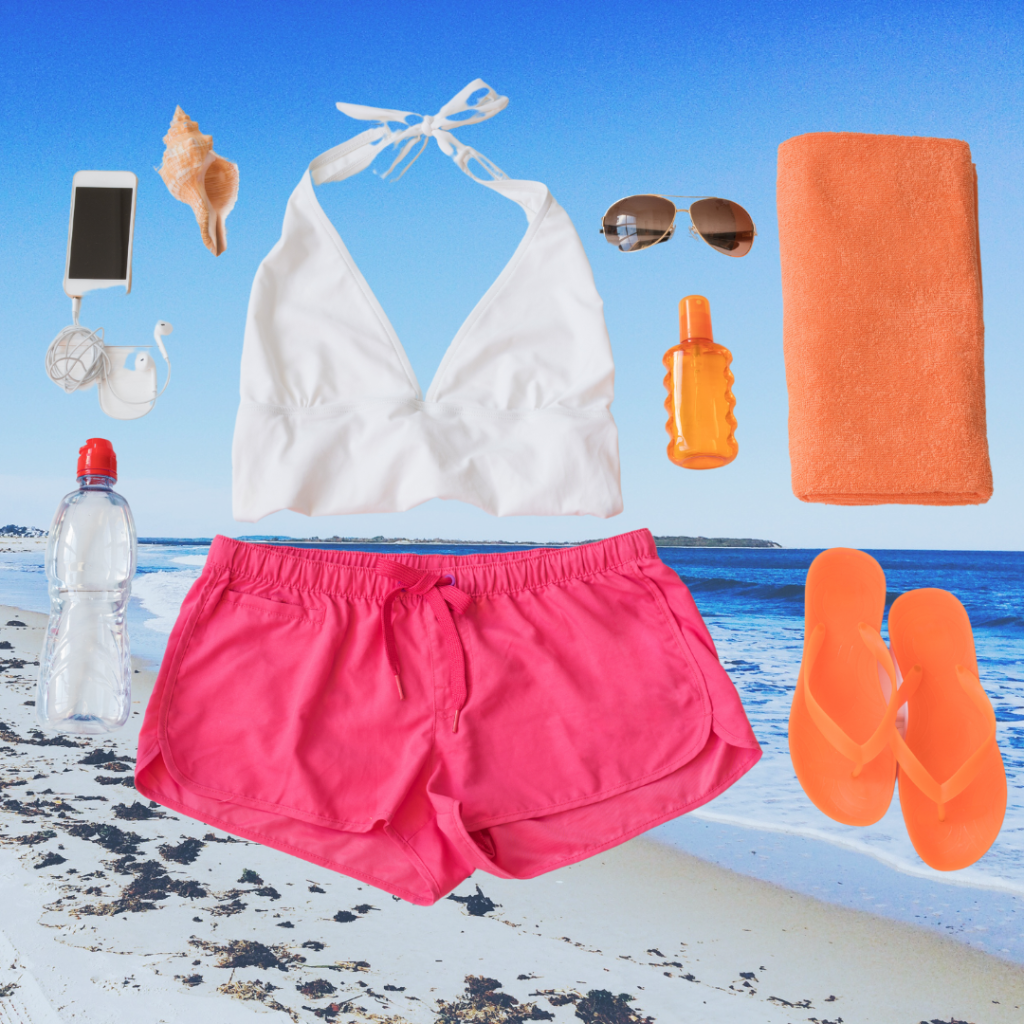
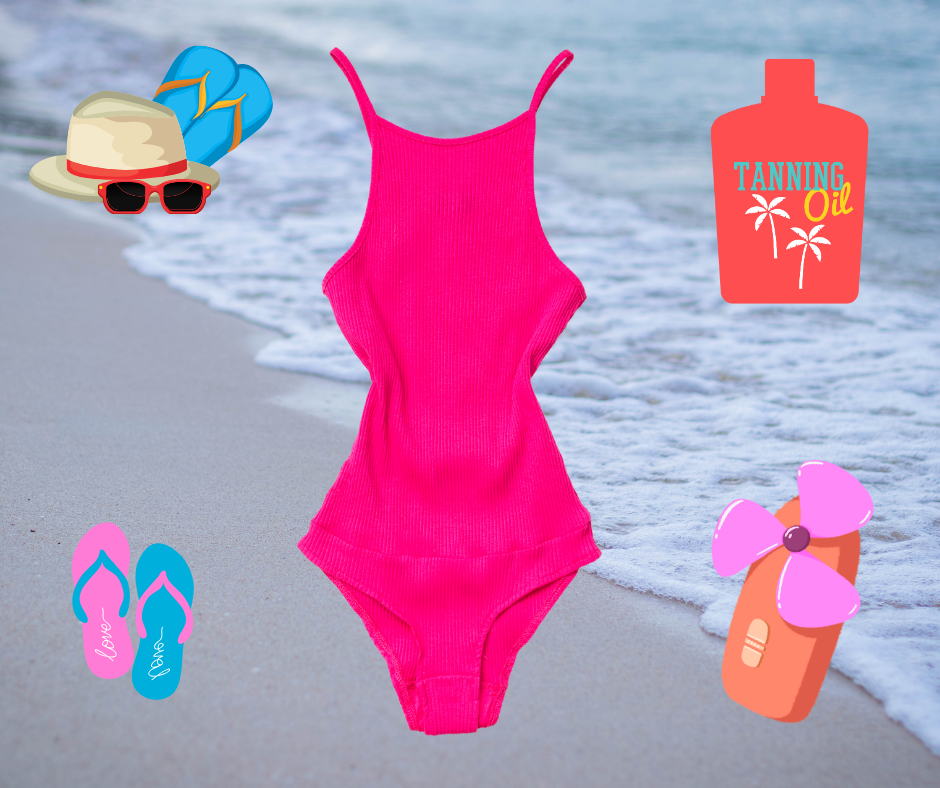
Underwear and swimwear are cut to different heights, so the way a scar sits relative to one garment is not the same as another. A higher-cut brief or one-piece sits higher on the abdomen than a low-cut style. Because of this, I plan the incision line to suit the style you prefer. If you want the scar to sit under higher-cut garments, such as French cut bikinis, I can plan the line a little higher. If you prefer a low-cut bikini or brief, I can plan it lower. I plan the lower incision line first, and I have considerable freedom in where I place it, so I set it to sit under the style you wear. How much skin is removed then follows from where that line sits. We go through this together at consultation, and the position is planned for you individually. It helps to bring the underwear or swimwear you usually wear to your consultation, so we can plan the line against the garments you have in mind.
What happens to your caesarean scar
Most women who have an abdominoplasty after pregnancy have had a caesarean, and they often ask what happens to that scar.
A caesarean scar sits low on the abdomen, within the band of excess skin that an abdominoplasty removes. The old caesarean scar comes away with the skin that is taken out, rather than being left alongside the new scar. You are left with a single low abdominoplasty line rather than 2 separate scars.
Sometimes a caesarean scar is tethered to the deeper tissue and leaves a small overhang or a dip in the skin above it. Removing that band of skin during an abdominoplasty takes the tethered scar with it.
Because the caesarean scar sits within the skin that is removed, it is taken out as part of the operation. I go over this at consultation so you know what to expect for your own scar.
How the scar changes as it heals
The scar you have in the first few weeks is not the scar you are left with. The healing process runs over many months, and it helps to know what to expect.
The healing timeline
- In the early weeks the scar is usually raised, firm, and pink or red. This is a normal part of healing.
- Over the following months it gradually softens, flattens, and fades to a paler line.
- Scar maturation takes time, commonly 12 to 18 months and sometimes up to 2 years, before you see the settled result (1).
What affects how a scar heals
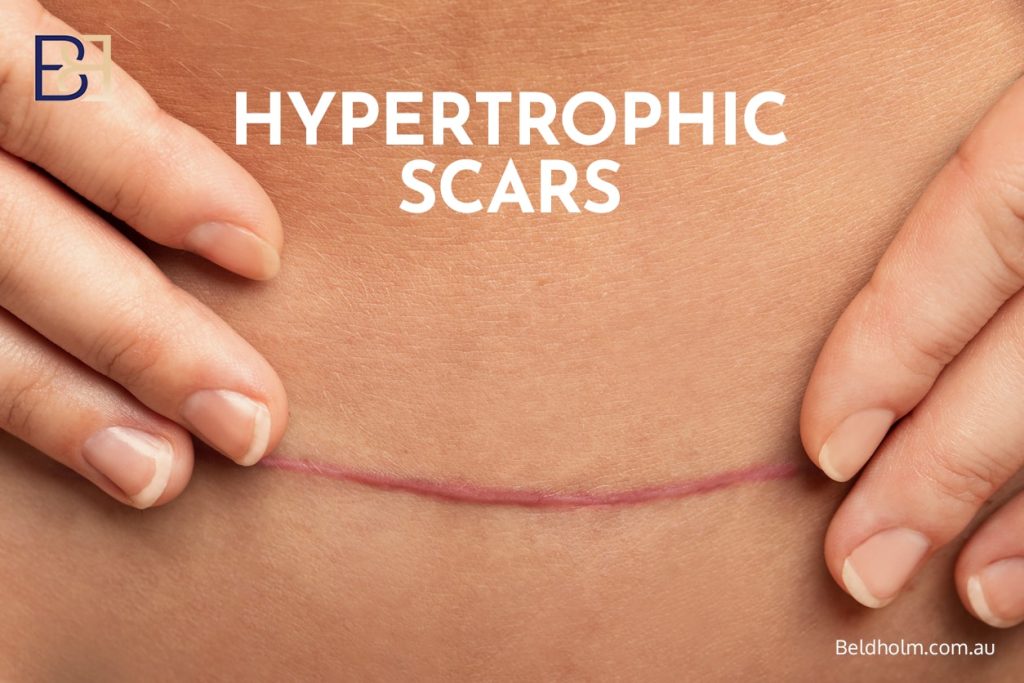
How abdominoplasty scars finally look varies from person to person. It depends on your skin type and genetics, the tension across the closure, the blood supply to the skin edges, how the wound heals, and whether you have any healing problems along the way. Some people are prone to thicker, raised scars (hypertrophic or keloid scarring), and I ask about your scar-healing history at consultation so we can plan for it.
Protecting the scar from the sun
This is where swimwear and time at the beach or pool matter. While a scar is still maturing, in roughly the first 12 to 18 months, ultraviolet light can darken it permanently (1). Once the wound has healed, keep the scar covered or use sunscreen on it when you are out in the sun. A scar that sits under your swimwear is protected for much of the time, but any part that is exposed still needs sun protection.
Supporting scar maturation
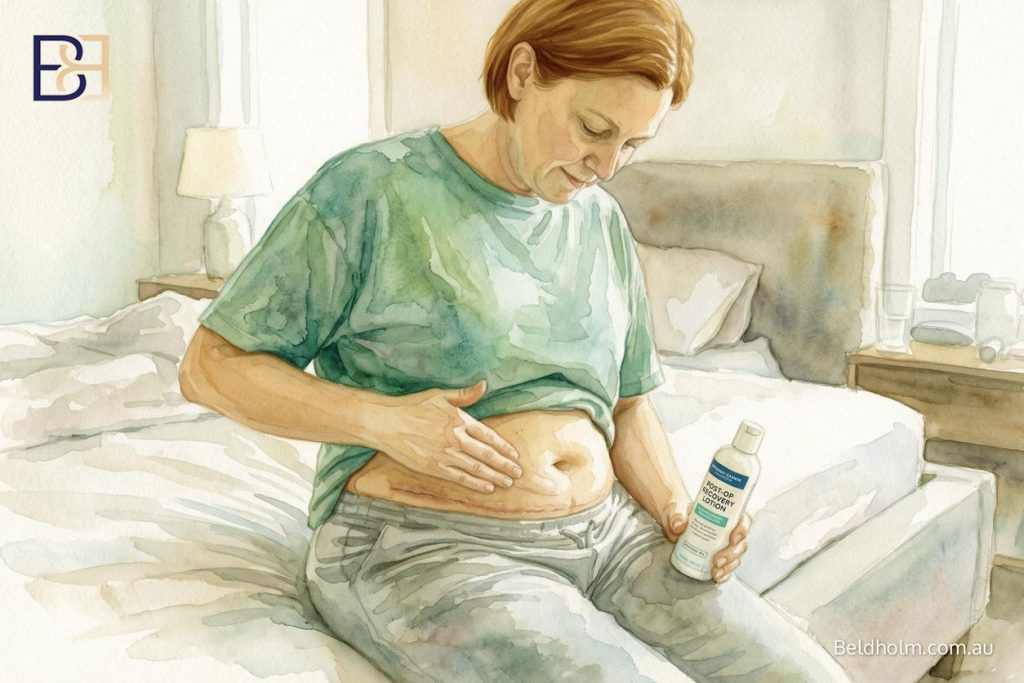
Silicone gel or sheets, scar tape, and scar massage are commonly used once the wound has fully healed. The evidence for them is modest rather than strong, but many patients use them (2). I give you specific wound and scar care advice after your surgery.
The trade-off
My priority is a sound operation and a scar that heals well and sits low, rather than pushing the line to its lowest possible point at the expense of the result. Planning the scar to your swimwear is a genuine part of what I do, and I take it into account when I mark the incision. I also talk you through realistic expectations for how the scar will look. Where a scar finally settles, and how it looks, varies between patients.
Book your appointment online now
Returning to swimming after surgery
Swimming is not something you do straight after an abdominoplasty. The wounds have to heal and settle first, and returning to the water too early risks problems.
When you can swim again
I ask patients not to swim until the wounds have fully healed and I have reviewed the result. In practice that is usually around 4 to 6 weeks, but it depends on how your healing goes, and I confirm it at your follow-up rather than working to a fixed date. Pools, spas, and the ocean all wait until then.
The reason is infection. Until the skin has sealed and settled, putting a healing wound into pool water, a spa, or the sea raises the risk of infection and wound-healing problems. Once the incision has healed and I have checked it, swimming becomes reasonable again.
The compression garment is not swimwear
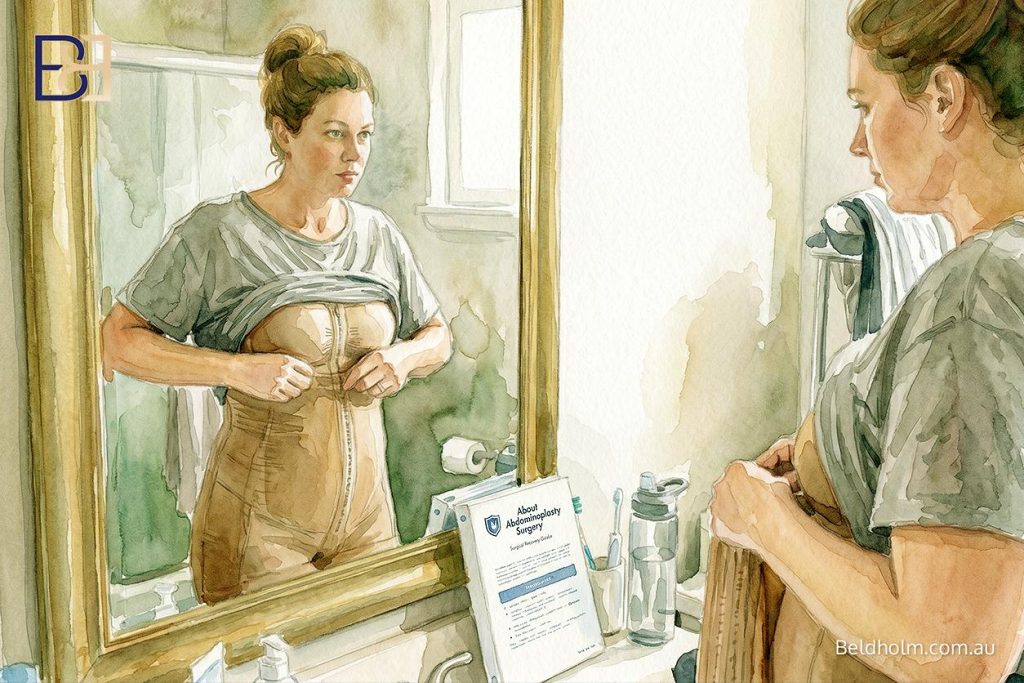
After surgery you wear a compression garment. It supports the tissues while they heal and is worn under your clothes for several weeks, on my advice. It is not swimwear and is not worn in the water. I let you know how long to wear it, as part of the post operative instructions I give you.
Returning to activity in stages
Activity comes back in steps, not all at once:
- Short, regular walks start early, because moving about lowers the risk of blood clots.
- Heavier activity, lifting, and core exercise are held back for several weeks.
- Swimming as exercise involves the trunk and shoulders, so it returns later than walking, once the wounds have healed and I have cleared you.
Recovering while caring for children

Most of my post-pregnancy patients are looking after young children. You will have lifting and activity restrictions for several weeks after surgery, so it is worth arranging help at home before your operation. Recovery from an abdominoplasty is a real recovery and should not be underestimated, particularly with small children to care for. When and how you return to swimming and other normal activities is assessed for you at your follow-up visits.
Timing and individual assessment
The scar and swimwear questions in this article sit within a larger decision that is made individually.
Timing after pregnancy

I plan abdominoplasty once your family is complete and breastfeeding has finished, and once the abdominal wall has settled after your most recent pregnancy. A future pregnancy can stretch the skin and separate the muscles again and change the result, which is why I plan surgery once your family is complete and you are not planning future pregnancies. In practice this is commonly around 12 months after your most recent pregnancy, though there is no fixed interval, and I assess timing for you individually at consultation.
How the decision is made

Whether an abdominoplasty is appropriate for you, what it would involve, and where your scar can sit are all assessed at consultation, which needs a GP referral and takes account of your medical history. Results vary between patients.
Frequently asked questions
When can I swim after an abdominoplasty?
Not straight away. I ask patients to keep out of pools, spas, and the ocean until the wounds have fully healed and I have reviewed them, commonly around 4 to 6 weeks. Going in the water earlier raises the risk of infection while the skin is still healing. I confirm the timing at your follow-up rather than working to a fixed date.
Can you plan the scar to sit under my swimwear?
Yes, within the limits of the surgery. I plan the lower incision line first and set its height to sit under the style of underwear or swimwear you wear, whether that is a higher-cut or a lower-cut garment. It helps to bring the swimwear you have in mind to your consultation so we can plan the line together.
Can I tan or sunbake once I have my scar?
While the scar is still maturing, in roughly the first 12 to 18 months, ultraviolet light can darken it permanently. Once the wound has healed, keep the scar covered or use sunscreen on it when you are in the sun. A scar that sits under your swimwear is covered much of the time, but any exposed part needs protection.
References
- Commander SJ, Chamata E, Cox J, Dickey RM, Lee EI. Update on postsurgical scar management. Semin Plast Surg. 2016;30(3):122-8.
- Jiang Q, Chen J, Tian F, Liu Z. Silicone gel sheeting for treating hypertrophic scars. Cochrane Database Syst Rev. 2021;(9):CD013357.