One of the most common questions I am asked at consultation is where the scar will sit, and whether it will be visible. It is a fair question. An abdominoplasty (tummy tuck) leaves a permanent scar, and where that scar sits matters to the people I operate on.
In my practice, post-pregnancy abdominoplasty is planned around the individual in front of me. The position and length of the scar depend on your anatomy, the amount of loose skin you have, whether your abdominal muscles have separated during pregnancy, and the clothing you normally wear.
This article explains what the scar is, what determines where it sits, how I plan the incision, and how the scar is cared for as it heals. I have written it for women considering abdominoplasty after pregnancy, so it also covers caesarean scars and the timing of surgery relative to your family being complete and breastfeeding finishing.
A scar is part of this operation. There is no version of an abdominoplasty without one. What I can do is plan where it sits, keep it as well placed as possible, and support it through healing.
What an abdominoplasty scar is and what determines where it sits
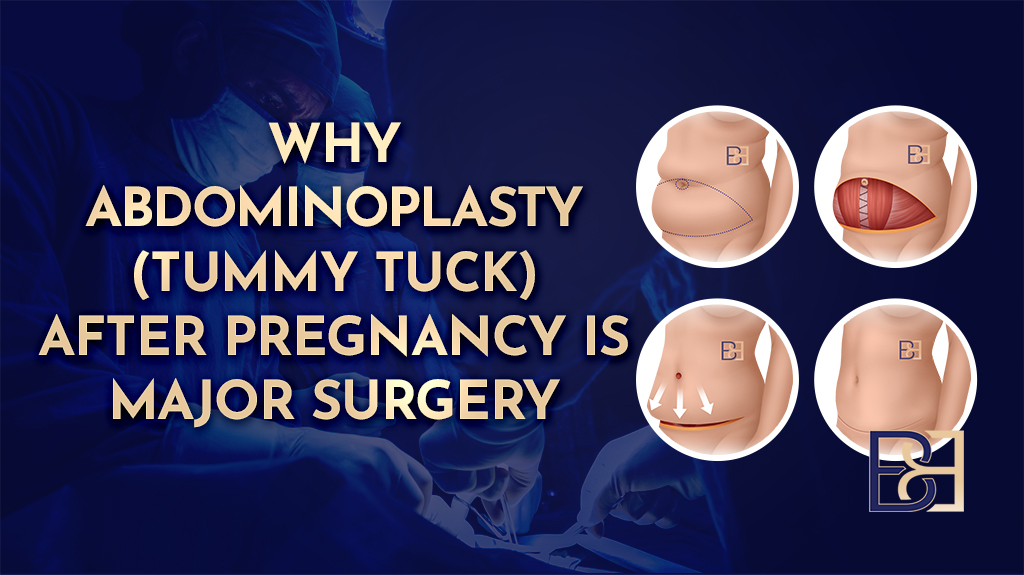
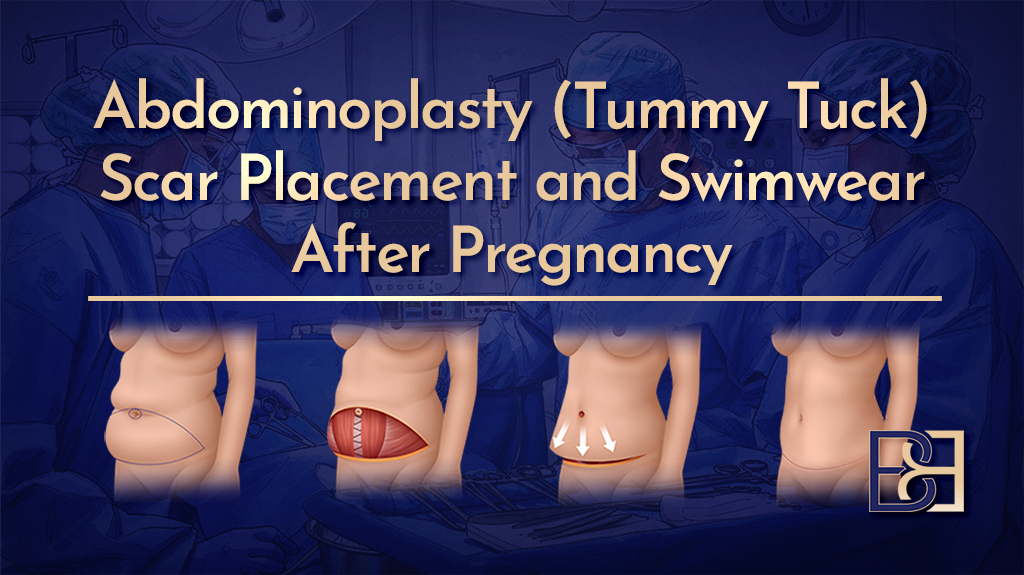
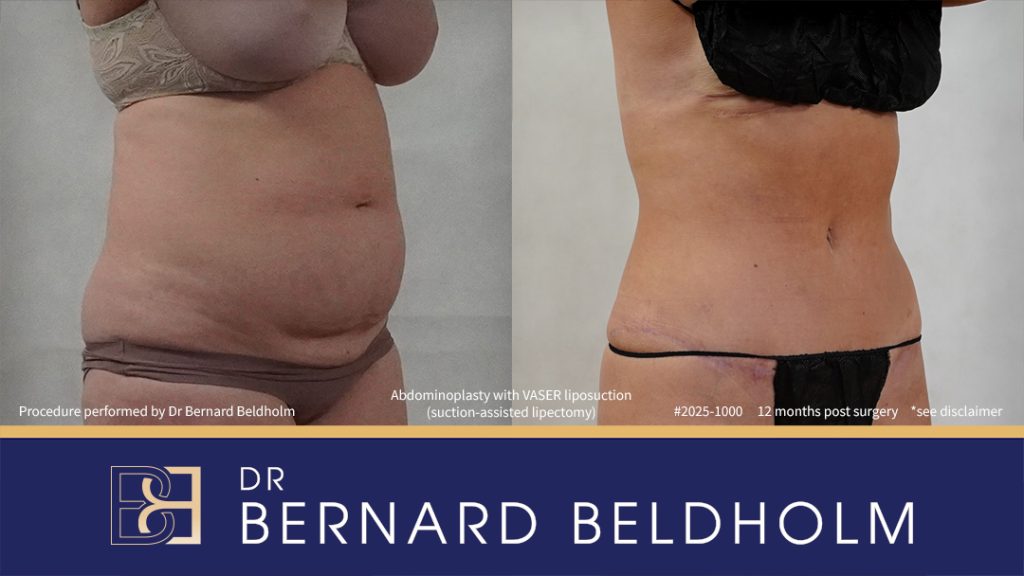
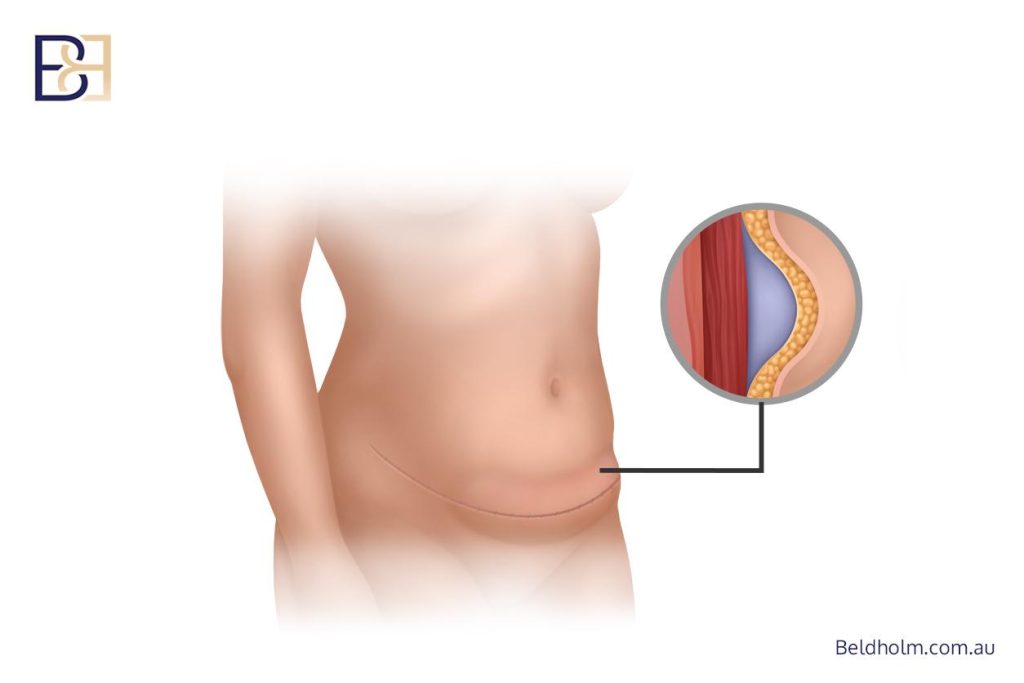
An abdominoplasty (tummy tuck) removes excess skin from the lower abdomen and, where muscle separation (diastasis recti) is present, repairs the abdominal wall. To do this I make a low, horizontal incision across the abdomen, running from one hip towards the other, sitting just above the pubic hairline. In a full abdominoplasty there is also a second, smaller scar around the belly button, because the skin is lifted past it and the belly button is brought back through.
The scar that results sits where the incision was made. So the question of where your scar will sit is really a question about where the incision is planned, and that is something I work out with you before surgery.
Several things determine the position and length of the scar:
- The amount of loose skin. The more skin that needs to be removed, the longer the incision tends to be. This is the single biggest factor in how long the scar is.
- Your body shape. The natural creases and contours of your lower abdomen and hips influence where an incision can be placed so that it follows, rather than cuts across, your anatomy.
- Existing scars. A previous caesarean scar, in particular, is assessed and often used as part of the planning. I cover this in more detail further on.
- The surgical technique used. A full abdominoplasty, a limited abdominoplasty (mini tummy tuck) and an extended abdominoplasty each produce a different scar pattern, which I set out in the next section.
- The clothing you wear. Where you want the scar to sit so that it stays concealed in your everyday underwear and swimwear is part of the plan, and I deal with this in its own section.
There is a limit to what placement can achieve. The incision has to go where the loose skin is, and it has to be long enough to remove that skin and close without undue tension. Within those limits, there is room to plan the position thoughtfully, and that is the part we decide together.
How I approach post-pregnancy abdominoplasty, and why the scar differs
I approach abdominoplasty after pregnancy differently from abdominoplasty in other situations, and that approach affects the scar.
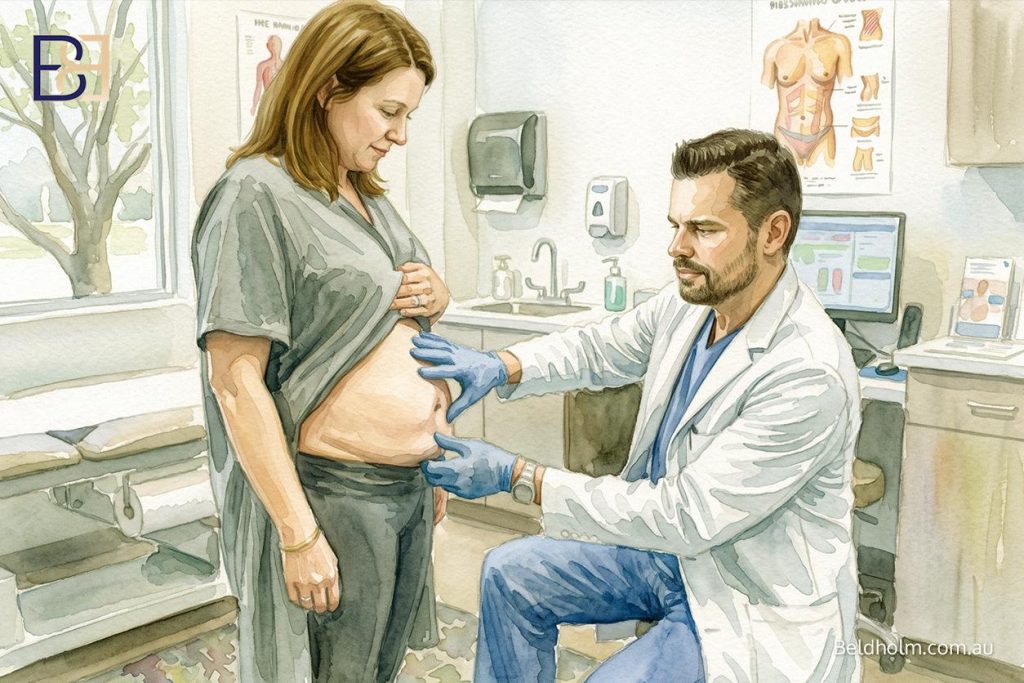
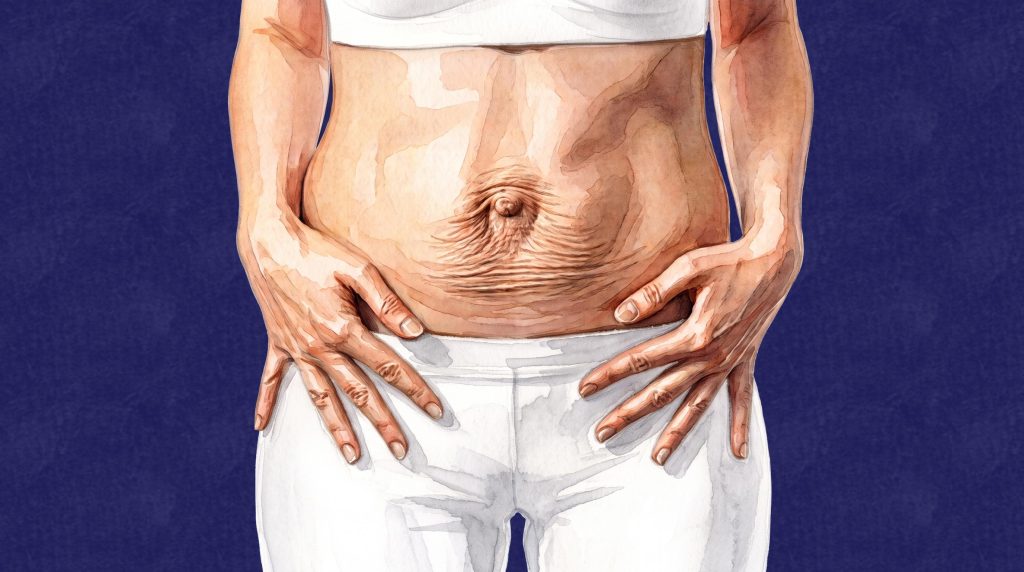
Two things are true for most of the post-pregnancy patients I see. First, there is usually some degree of muscle separation (diastasis recti). During pregnancy, the abdominal muscles stretch apart down the midline to make room for the growing baby, and in many women they do not come fully back together afterwards. Where this is present, I repair it during the abdominoplasty by bringing the muscles back to the midline and stitching them. You can read more about how I assess and repair this in my article on diastasis recti (abdominal muscle separation) [INTERNAL LINK: diastasis recti repair].
Second, I generally use ultrasound-assisted suction lipectomy (VASER liposuction) as part of the operation, whether I am performing a full or an extended abdominoplasty. This removes excess fat across the abdomen and flanks at the same time as the skin and muscle work. Doing this in a way that preserves the blood supply to the skin is part of how I look after the wound, and the wound is what becomes the scar.
Most of the abdominoplasties I perform after pregnancy are drainless, meaning no drainage tubes are left in after surgery. The exception is an extended abdominoplasty where there is a significant amount of loose skin, and in those cases I may use drains.
The reason this matters for your scar is that the technique, the muscle repair and the ultrasound-assisted suction lipectomy all influence how the wound is closed and how it heals. The scar is not just a line drawn on the skin. It is the end result of how the whole operation is planned and carried out.
Incision types and where each scar sits
The type of abdominoplasty you have determines the pattern of scarring. The right type for you depends on how much loose skin you have and whether the muscle separation (diastasis recti) sits above or below the belly button. Here is how the scar differs between the three approaches I use most after pregnancy.
Full abdominoplasty
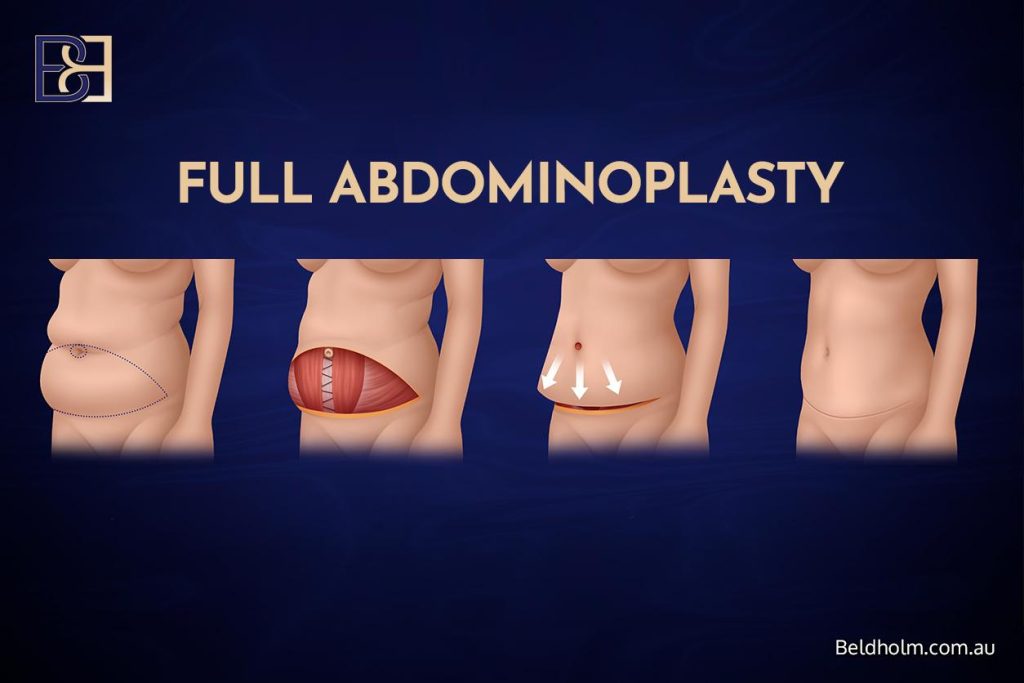
This is the most common approach for post-pregnancy patients, because pregnancy tends to affect the skin and muscle both above and below the belly button.
- A low transverse scar runs across the lower abdomen, from one hip towards the other, sitting just above the pubic area.
- There is a second, small scar around the belly button.
The transverse scar is the longer of the two, and its length depends on how much loose skin needs to be removed.
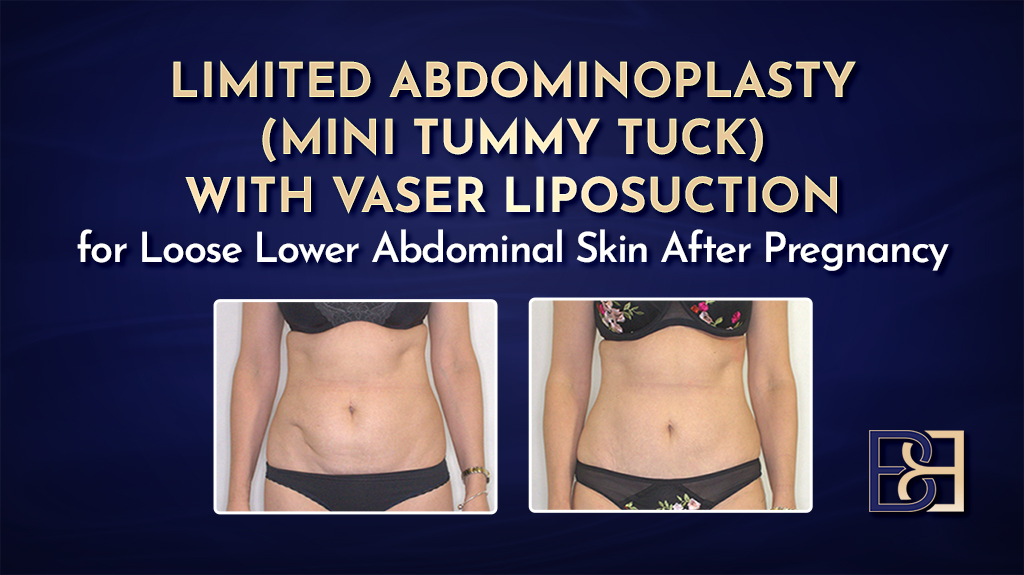
Limited abdominoplasty (mini tummy tuck)
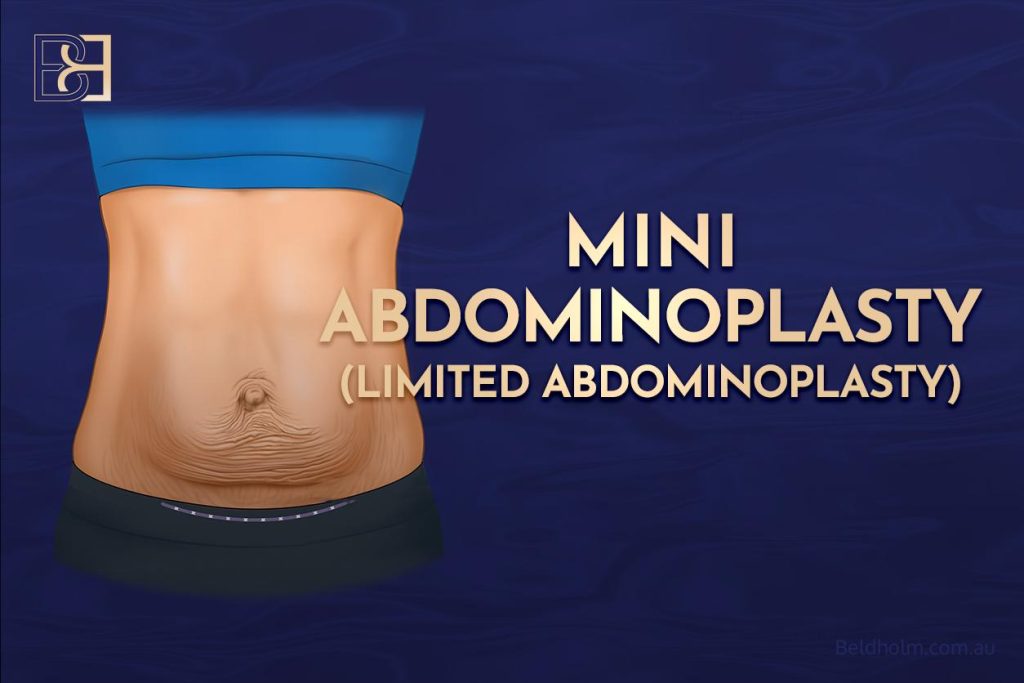
A limited abdominoplasty suits a smaller group of patients who have a modest amount of loose skin confined to below the belly button, and whose muscle separation (diastasis recti), if present, is also limited to the lower abdomen.
- The scar is a single low transverse line across the lower abdomen.
- It is usually shorter than the scar from a full abdominoplasty.
- There is no scar around the belly button, because the belly button is not repositioned.
Most women after pregnancy have changes above the belly button as well, so a limited abdominoplasty is suitable for fewer patients than a full one. Whether you are a suitable candidate is assessed at consultation.
Extended abdominoplasty
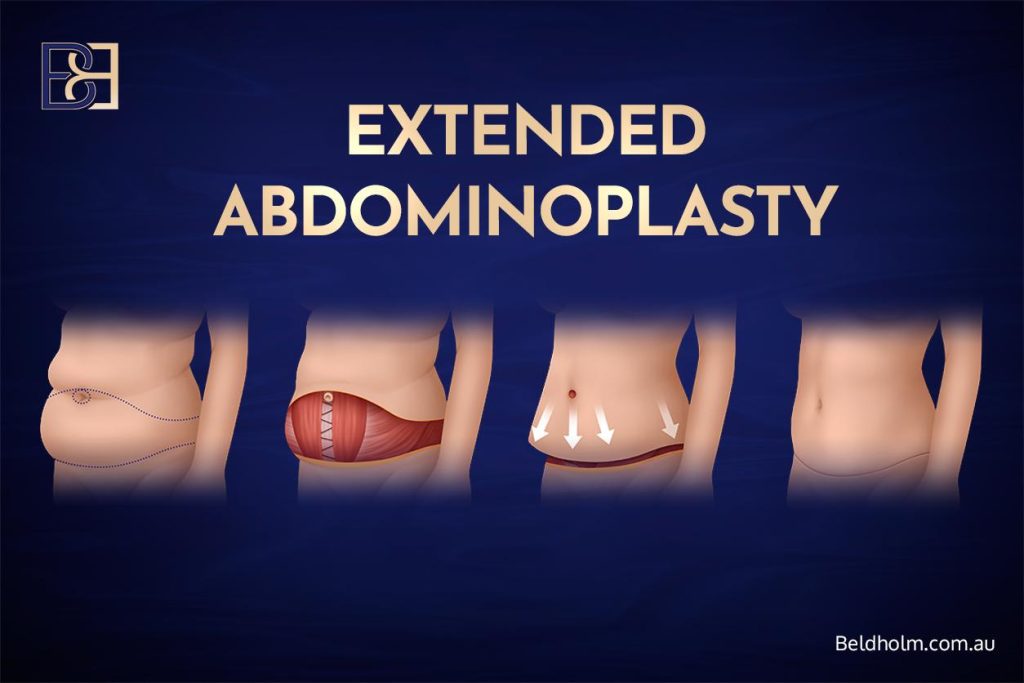
An extended abdominoplasty is used when there is loose skin that continues around towards the back and flanks, beyond what a full abdominoplasty removes.
- The transverse scar is longer and extends further around towards the hips or lower back.
- As with a full abdominoplasty, there is also a scar around the belly button.
This is the situation where I may use drains, because of the larger area involved and the greater amount of loose skin.
Which of these is right for you is a clinical decision made at consultation, based on your anatomy rather than on a preference for a shorter scar. A scar that is too short to remove the skin properly is not a good outcome, and I would not plan one.
Caesarean scars and incision planning
Many of the women I see for post-pregnancy abdominoplasty have had one or more caesarean deliveries, so they already have a scar low on the abdomen. This is an important part of incision planning.
A caesarean scar sits low across the lower abdomen, in a similar area to where an abdominoplasty incision is made. Because of this, the existing caesarean scar is usually removed along with the loose skin taken away during the operation, and a new abdominoplasty scar is created along the same low line where possible. You are not left with the old caesarean scar plus a separate abdominoplasty scar nearby.
A few points are worth understanding here:
- The abdominoplasty scar is longer than a caesarean scar. A caesarean scar is short and central. An abdominoplasty incision runs much further across, from hip towards hip, because it has to remove loose skin across the whole lower abdomen. So while the old caesarean scar is removed, the new abdominoplasty scar will be considerably longer.
- A caesarean can leave a shelf or overhang. Some women notice the skin sits over their caesarean scar in a way they find uncomfortable or difficult to keep clean. Removing this skin is part of what an abdominoplasty does, and the caesarean scar usually comes away with it.
- Caesarean history is assessed individually. How many caesareans you have had, how the scars have healed, and how the tissue has settled all feed into the plan. I assess this at consultation.
Removing the caesarean scar and placing the new scar along the same low line is not always possible in exactly the way I have described, and the final plan depends on your anatomy. I go through this with you and explain what is realistic in your case.
Planning where your scar sits
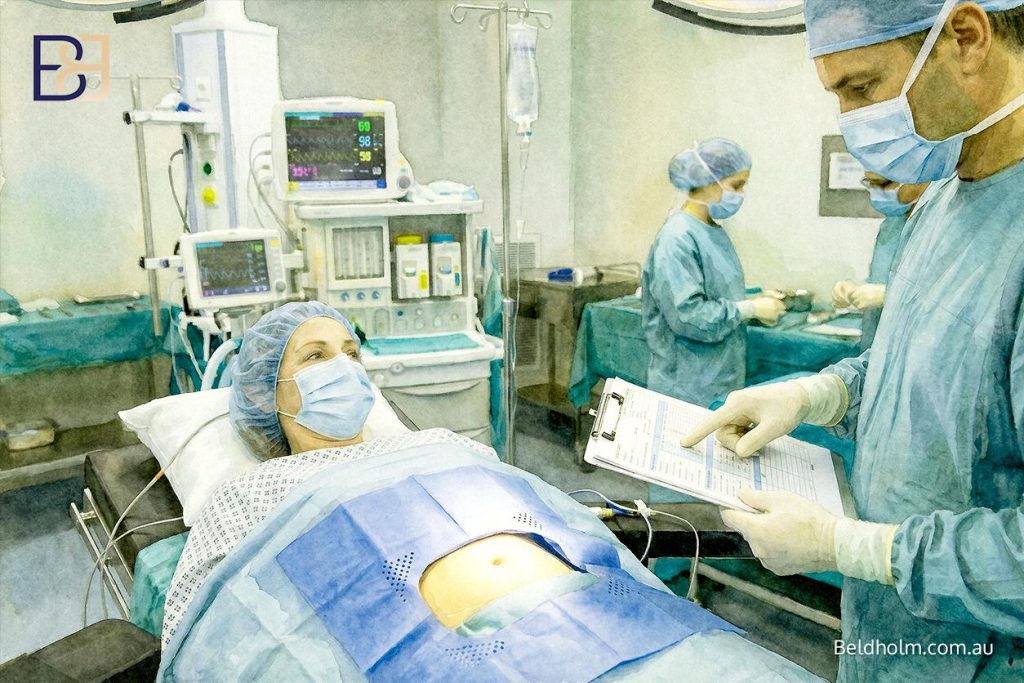
The scar can be placed in different positions, and the right position depends on the clothing you wear. This is one of the most useful things you can think about before your consultation.
Underwear and swimwear are cut to different heights on the hip. Some styles sit high. French-cut briefs and high-cut bikini bottoms, for example, rise up over the hip bone. Other styles, such as full briefs, boy-leg shorts and many board shorts and one-piece swimsuits, sit low and flat across the lower abdomen. A scar planned to stay hidden under a low-sitting garment can become visible at the hip under a high-cut one, and a scar placed to stay under a high-cut style may sit lower than you would like under other clothing.
There is no single position that stays concealed under everything. That is why what you actually wear, and what you prefer to wear, matters to the plan.

A few practical points:
- Think about your everyday clothing, not just one occasion. The garments you wear most of the time are the ones the scar should be planned around.
- There is a trade-off between a lower scar and a longer scar. Placing the scar very low can mean a slightly longer incision to remove the same amount of skin. I explain how this applies in your case at consultation.
- A scar placed too high tends to become more visible over time, not less. As the tissue settles after surgery, a scar that started too high can end up sitting higher still. Planning the incision low to begin with helps avoid this.
- Bring a garment to your consultation. If there is a particular pair of underwear or swimwear you wear often, bring it with you or wear it on the day. I can then plan the incision against the garment itself, which is more reliable than describing it.
I plan the incision with all of this in mind, within the limits set by your anatomy and the amount of skin that needs to be removed. In most cases this means placing the scar low, along what is often called the bikini line, so it sits below the underwear and swimwear you wear. The aim is a scar that sits where it is least likely to show in the clothing you wear, planned with you rather than decided for you.
Surgical technique and the scar
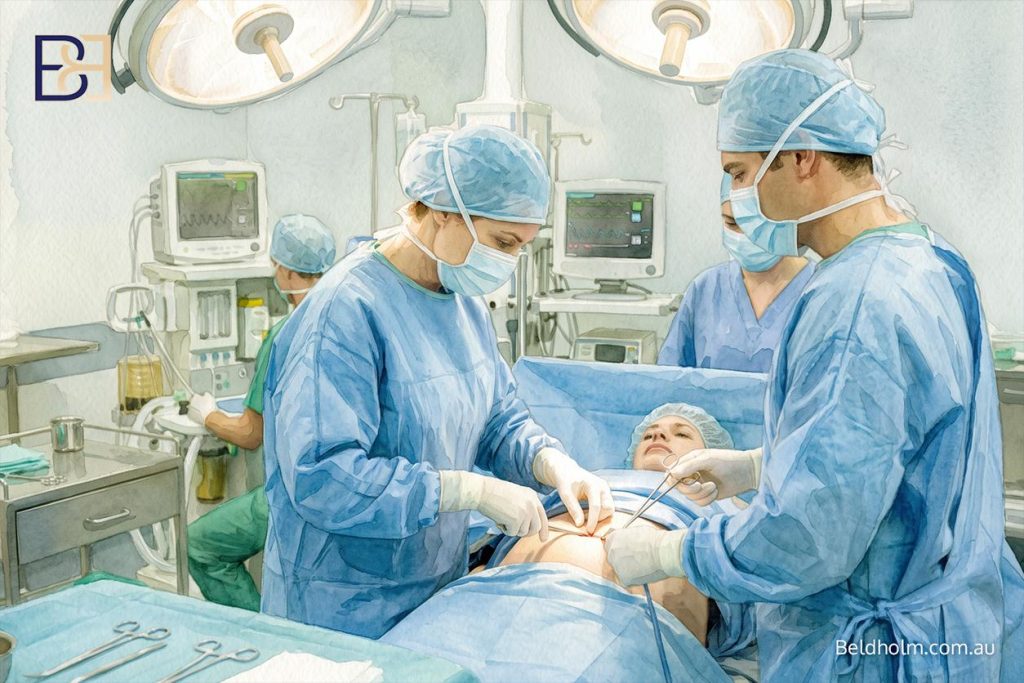
How the operation is carried out has a direct effect on the scar. A well-planned incision can still heal into a poor scar if the closure is not handled carefully, so technique matters as much as placement.
These are the main technical factors I pay attention to.
Closing without excessive tension
When the skin is closed, there is tension across the wound as the two edges are brought together. A degree of tension is unavoidable, because the point of the operation is to remove loose skin and tighten what remains. But too much tension pulls on the healing wound and tends to widen and thicken the scar over time. I plan how much skin to remove, and how to close the wound in layers, so that the final skin closure is under as little tension as possible.
Preserving the blood supply
A healing wound needs a good blood supply and healthy blood circulation. When I use ultrasound-assisted suction lipectomy (VASER liposuction) as part of a post-pregnancy abdominoplasty, I do so in a way that preserves the blood supply to the skin that remains. Skin with a healthy blood supply heals more reliably, which supports a better scar.
Not placing the scar too high
As I mentioned in the previous section, a scar placed too high tends to migrate higher as the tissue settles. Planning the incision low, and closing it so that the tension does not drag it upward, helps keep the scar where it was intended to sit.
Layered closure and suture choice
I close the wound in layers, supporting the deeper tissues so that the skin edges are not carrying the load on their own. The deeper sutures take the tension, which again helps keep the surface scar fine.
None of this guarantees a particular scar. How a scar heals, and how much scar tissue your body lays down, also depends on your skin, your genetics and your healing, which are outside my control. What technique does is give the scar the best starting point I can provide.
Scar healing and aftercare
A scar is not finished when the wound closes. It continues to change for many months, and how it is cared for during that time makes a difference to the final result. Here is what I use and recommend for scar minimisation, and what the evidence supports.
How a scar matures
In the first weeks after surgery, as your body lays down new scar tissue, the scar is usually firm, raised and pink or red. Over the following months it gradually softens, flattens and fades. This process is slow. It can take 18 months to 2 years for a scar to settle to its final appearance. The early appearance of a scar is not a reliable guide to how it will look once it has matured. How your scar matures depends in part on your skin type, and some people are more prone to thick, raised scars, known as hypertrophic or keloid scarring.
Dressings after surgery

I use modern wound dressings after surgery to support healing in the early phase. Negative pressure wound dressings applied over a closed incision, such as single-use systems, can help manage the wound and reduce certain wound healing complications in the early period (1). I decide which dressing is appropriate for your wound at the time of surgery, and explain the wound care you will follow at home.
Compression garments
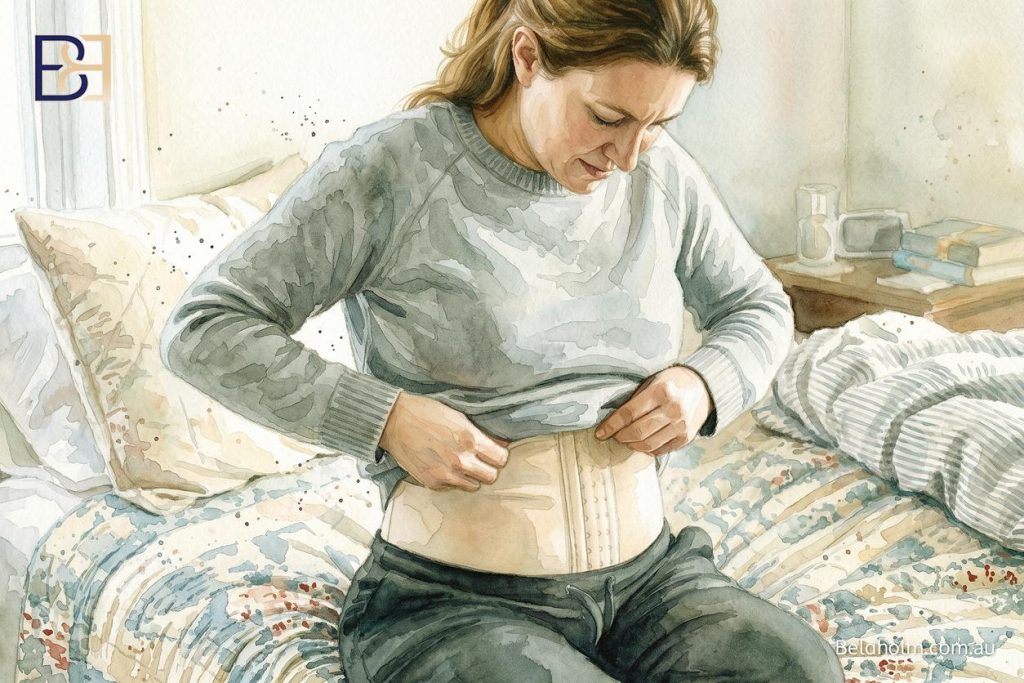
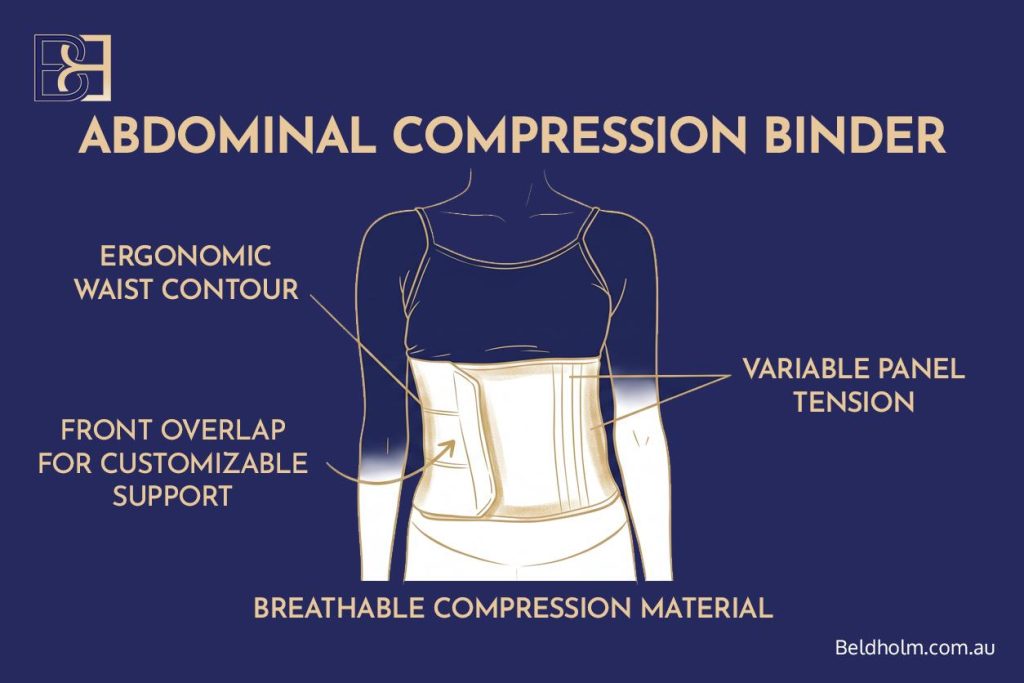
I ask post-pregnancy abdominoplasty patients to wear a compression garment after surgery. The garment supports the abdomen, helps reduce swelling and supports the healing tissues while they settle. I explain how long to wear it and how to manage it as part of your aftercare instructions.
Silicone
Silicone, in the form of sheets or gel, is the most established non-surgical scar treatment and is supported by the evidence as a first-line option for improving the appearance of scars (2). It is typically applied to the scar for a number of hours each day over several months, once the wound has fully healed. I advise you on when to start and how to use it.
Laser and light-based treatments
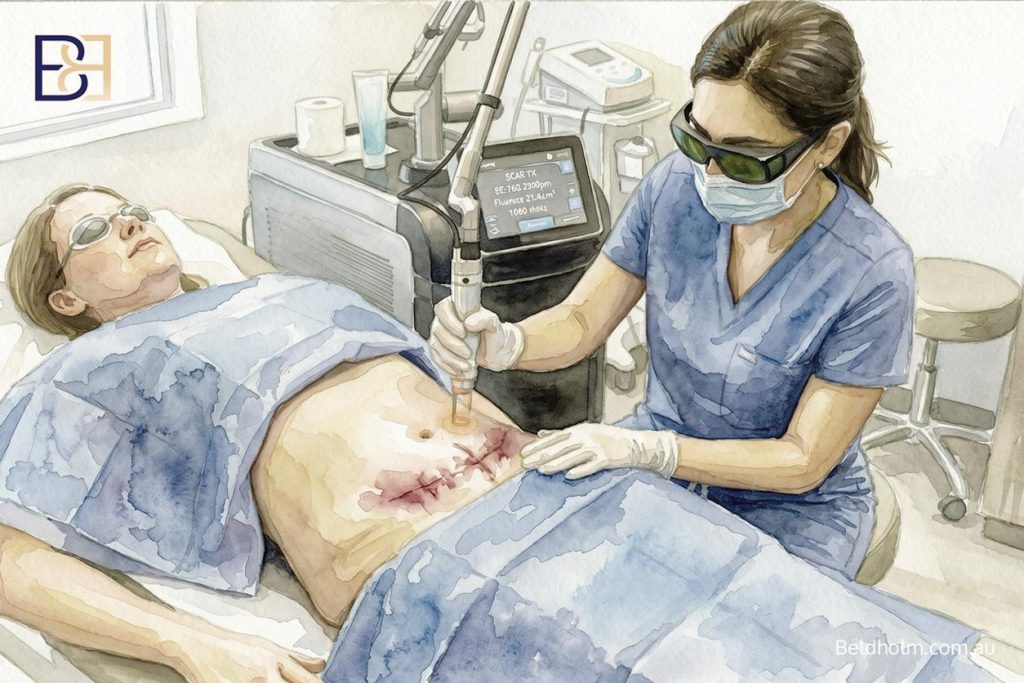
Laser and light-based treatments can help with the redness and texture of some scars as they mature (3). These are not something everyone needs. Whether they would help in your case is assessed once the scar has had time to settle.
Microneedling
Microneedling, also called skin needling, is another option that can improve the appearance of some scars over a course of treatments (4). As with laser, it is considered later in the healing process rather than early on, and only where it is likely to add benefit.
Sun protection
A new scar is vulnerable to the sun, and sun exposure can cause a scar to darken and stay darker. I recommend keeping the scar covered or protected from the sun while it is maturing.
The right combination of these depends on your scar and how it heals. I review your scar at your follow-up appointments and advise on what, if anything, is worth adding. Not every patient needs active scar treatment beyond the basics, and results vary.
Scar revision
Sometimes a scar does not heal the way either of us would have hoped, even when the surgery and the aftercare have been done well. Some people are more prone to wider or thicker scars, and this is not always predictable beforehand.
Where a scar has healed poorly, there are options. A scar revision is a smaller procedure to improve the appearance or position of an existing scar. It might involve removing the old scar and closing the wound again more favourably, or treating the scar with the non-surgical methods covered in the previous section.
A few things are worth being clear about:
- Revision is considered only once the scar has matured. Because a scar keeps changing for up to 18 months to 2 years, I do not rush into revising it. A scar that looks raised and red at three months may settle considerably on its own over the following year or more. I wait and assess before deciding whether revision is worthwhile.
- Revision may improve a scar, it does not erase it. Any revision leaves its own scar. The aim is a better scar, not no scar. I am careful not to overstate what revision can achieve.
- Not every scar benefits from revision. Sometimes the better course is to continue with non-surgical scar care and give the scar more time. Whether revision is likely to help is a judgement I make with you once the scar has settled.
I review your scar at your follow-up appointments through the first year. If revision is something to consider, that is a conversation we have at that point, based on how the scar has actually healed rather than on how it looked early on.
Timing after pregnancy

Book your appointment online now
The timing of your surgery after pregnancy affects your scar and your result, so it is part of the planning.
Once your family is complete
I generally plan abdominoplasty once you have finished having children. The reason is straightforward. A future pregnancy can stretch the skin and separate the abdominal muscles again, including the muscle separation (diastasis recti) repair done during surgery. If you go on to have another pregnancy after an abdominoplasty, it can undo part of the result and affect the scar. Planning surgery once your family is complete avoids this.
Once breastfeeding has finished
I also plan surgery once breastfeeding has finished and the body has had time to settle after the most recent pregnancy. The abdominal wall and tissues continue to change in the months after a pregnancy and after breastfeeding ends, and operating before things have settled is not ideal.
Timing is assessed individually
There is no single fixed interval that applies to everyone. How long to wait depends on your recovery from pregnancy, whether you are still breastfeeding, how your body has settled, your medical history and your general health. I assess this at consultation rather than applying a set rule.
The point of getting the timing right is not delay for its own sake. It is to plan surgery at a point where the result is more likely to last and the scar is more likely to heal well.
Risks, recovery and results vary
An abdominoplasty is major surgery. It carries real risks, and the recovery is significant. I go through all of this with you in detail at your initial consultation, but you should understand the main points before you start considering surgery at all.
Risks and complications
Every surgical procedure carries risks. For abdominoplasty these include:
- Bleeding, including excessive bleeding, and infection at the surgical site
- Collection of fluid under the skin, known as a seroma, which can need draining
- Problems with wound healing, including the wound edges separating, which can happen along the scar
- Areas of altered or reduced sensation in the abdominal skin, which may be long lasting
- Blood clots in the legs or lungs (deep vein thrombosis and pulmonary embolism). I assess your individual risk and plan how to reduce it as part of your care
- Risks related to the anaesthetic
- Scarring that heals wider, thicker or differently from what we hoped, as covered earlier
This is not a complete list, and the relevance of each risk depends on your health and circumstances. I explain the risks that apply to you, and how I work to reduce them, at consultation.
Recovery realities

Recovery from an abdominoplasty takes time and should not be underestimated.
- You will need time off work and away from your normal activities. How long depends on the extent of your surgery and the kind of work you do.
- There are restrictions on lifting, physical strain and strenuous activity for several weeks while the muscle repair and the wound heal.
- You will have appropriate pain relief in hospital and for the early part of the post-operative period at home.
- For post-pregnancy patients this is worth thinking through carefully, because you cannot lift small children for a period after surgery. If you have young children at home, you will need to plan support and help in advance. This is one of the most important practical parts of recovering well, and it is often underestimated.
- Swelling, bruising, tightness and discomfort are expected in the early weeks and settle gradually.
I see you at follow-up appointments through the first year to check on your healing and your scar. The recovery timelines I give are a general guide, and your own recovery is confirmed at these appointments rather than set by a fixed timetable.

Frequently asked questions
Where will my abdominoplasty scar sit?
The main scar sits low across the lower abdomen, running from one hip towards the other, just above the pubic area. In a full abdominoplasty there is also a small scar around the belly button. The exact position is planned with you before surgery, taking into account your anatomy and the clothing you normally wear.
Will the scar be visible in underwear and swimwear?
I plan the incision to sit low, where it is least likely to show in the garments you wear. Because different styles of underwear and swimwear are cut to different heights on the hip, no single position stays hidden under everything. This is why I ask what you normally wear and prefer to wear, and why bringing a garment to your consultation is useful.
Will my caesarean scar be removed?
Yes, your existing caesarean scar is removed along with the loose skin taken away during the operation, and a new abdominoplasty scar is created along a similar low line. The abdominoplasty scar is longer than a caesarean scar, because it removes loose skin across the whole lower abdomen. How this applies to you is assessed at consultation.
How long until the scar fades?
A scar continues to change for many months. It is usually firm, raised and red in the early weeks, then gradually softens, flattens and fades. It can take 18 months to 2 years to settle to its final appearance. The early appearance is not a reliable guide to the final result.
Can a poor scar be improved?
Yes, in some cases. Non-surgical scar treatments can help, and a scar revision is an option where a scar has healed poorly. Revision is considered only once the scar has matured, usually after 18 months to 2 years, and it improves a scar rather than removing it. Whether it is worthwhile is assessed once the scar has settled.
When should I have surgery after pregnancy?
I generally plan surgery once your family is complete and breastfeeding has finished, because a future pregnancy can affect the result and the scar. There is no single fixed interval. The right timing for you is assessed individually at consultation. But 12 months post-pregnancy is a common timeframe.
References
- AbdelDayem AM, Nashed GA, Balamoun HA, Mostafa MS. Effectiveness of 3-day prophylactic negative pressure wound therapy on closed abdominal incisions in the prevention of wound complications: a randomized controlled trial. J Gastrointest Surg. 2023;27(8):1702-1709.
- De Decker I, Hoeksema H, Verbelen J, Vanlerberghe E, De Coninck P, Speeckaert MM, et al. The use of fluid silicone gels in the prevention and treatment of hypertrophic scars: a systematic review and meta-analysis. Burns. 2022;48(3):491-509.
- Ghassemi M, Mireshghollah P, Jafarzadeh A, Seirafianpour F, Behrangi E, Montazeri Namin S, et al. Evaluating the combination and comparison of ablative fractional lasers (CO2, Erbium-YAG) with pulsed dye laser (PDL) for treating hypertrophic scars: a systematic review. Lasers Med Sci. 2025;40(1):129.
- Lucocq J. Microneedling for anterior neck surgical scars: a systematic review of effectiveness and evidence gaps. Cureus. 2025;17(5):e84772.