A gluteal lipectomy (buttock lift) is an operation that removes excess skin and soft tissue from the lower back and upper buttocks. I perform it most often for patients who have lost a significant amount of weight and are left with loose skin over the back of the lower body that does not retract, even at a stable goal weight.
The gluteal lipectomy is the posterior component of a body lift (belt lipectomy). In some patients I perform it as a standalone operation. In others it forms part of a circumferential body lift (belt lipectomy) that treats the front, sides and back of the lower torso in a single operation.
This article is my complete guide to a gluteal lipectomy buttock lift after weight loss. It covers the operation as I perform it in my practice: what it does and does not do, why loose skin develops over the buttocks after weight loss, how the operation fits into a body lift (belt lipectomy), gluteal auto-augmentation, patient suitability, the consultation process, the operation itself at Maitland Private Hospital, and how Medicare applies. Recovery and complications are covered briefly here, with dedicated articles on each linked at the end.
What Is a Gluteal Lipectomy (Buttock Lift)?
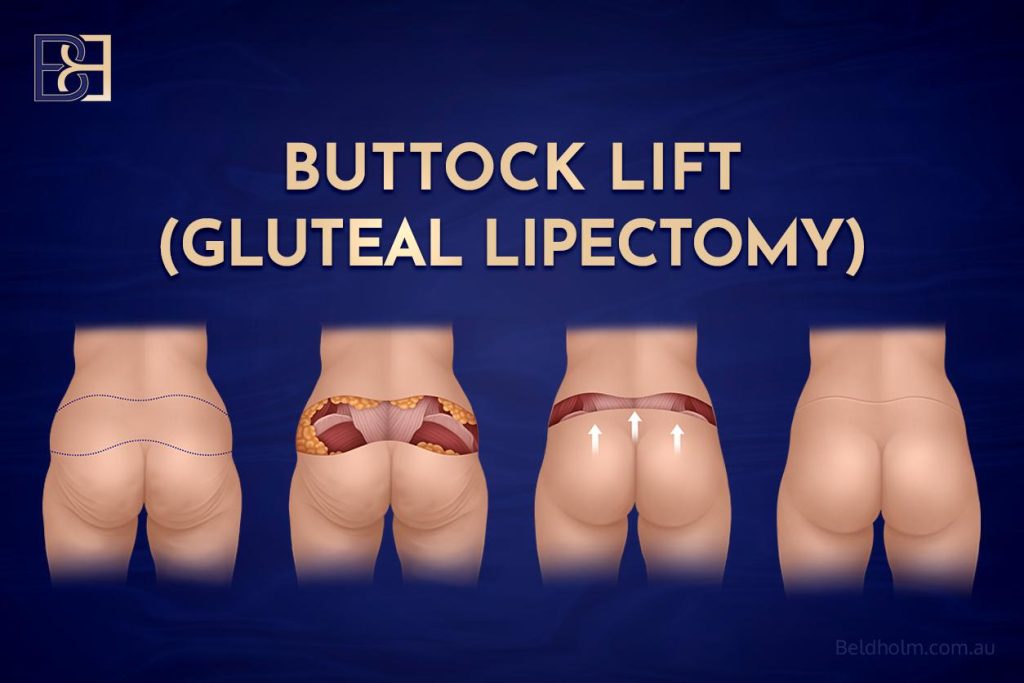
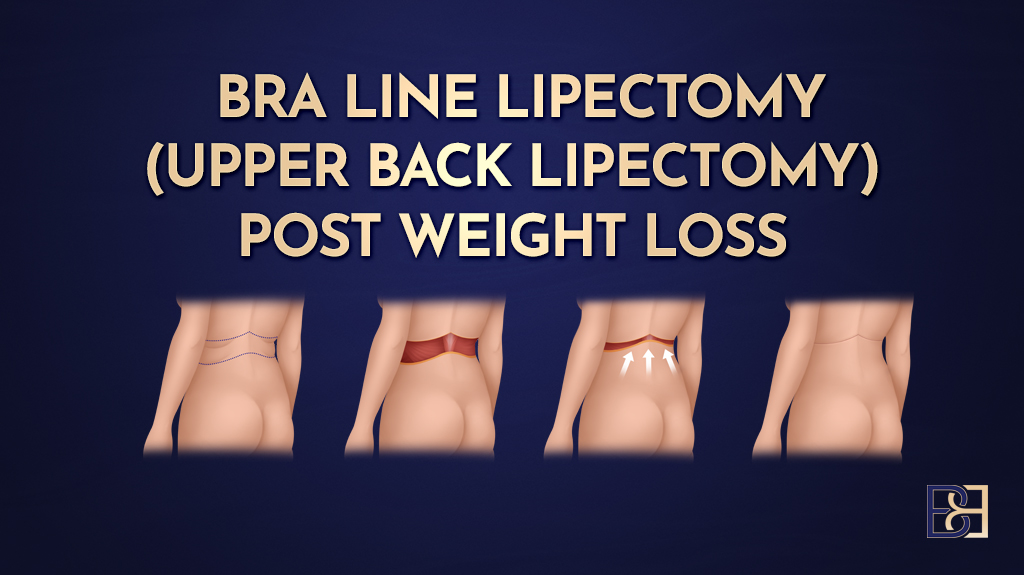
A gluteal lipectomy (buttock lift) is an excisional operation, commonly performed after significant weight loss. It removes excess fat and redundant skin from the lower back and upper buttock region through an incision positioned along the belt line. As the incision is closed, the remaining buttock tissue is lifted to a higher position and the skin envelope is tightened.
The operation treats the problems that loose posterior skin creates after significant weight loss:
- Skin folds over the lower back that sit above or below the waistband
- Descent of the buttock tissue (gluteal ptosis)
- Skin irritation and moisture rash (intertrigo) within the folds
- Difficulty fitting clothing over the lower body
- Discomfort with exercise and daily activity
The gluteal muscles are not cut or altered during this operation. The work happens in the skin and fat layers above the muscle.
What This Operation Does and Does Not Do
A gluteal lipectomy lifts and tightens. It does not add volume.
Some patients who have lost significant weight are troubled less by excess skin and more by lost volume, where the buttock looks deflated or flat. Fat grafting to the buttock (fat transfer) is a different procedure designed to add volume, and it is not an operation I perform. Where retained tissue can be used to add projection during a gluteal lipectomy, this is done through auto-augmentation, which I cover later in this article.
Working out which problem is the dominant one, excess skin, descent, lost volume, or a combination, is part of the physical examination when I see you. It determines whether this operation suits you, and whether auto-augmentation should be part of the plan.
Why Loose Skin Develops Over the Buttocks After Weight Loss
Understanding what has happened to the tissue explains why surgery is the only way to remove it.
The Layers Involved
The buttock area is built in layers:
- Skin
- Superficial fat, divided by a fibrous layer called the superficial fascial system
- Deep fat
- Gluteal muscles
The superficial fascial system is the internal support structure of the lower body soft tissue. It anchors the skin and fat to the deeper layers and holds the buttock in position against gravity. Published research first described this fascial framework and its role in supporting the lower trunk tissue during body lift surgery (1).
What Weight Gain and Weight Loss Do to These Layers
When a large amount of weight is gained, the skin and its supporting fascial framework are stretched over years. Collagen and elastin fibres in the skin are damaged by this sustained stretch. When the weight then comes off, whether through bariatric surgery, medication assisted weight loss, or lifestyle changes to diet and exercise, the fat volume reduces but the stretched skin and fascia do not reliably contract with it.
The result over the buttocks is a combination of problems:
- An empty, stretched skin envelope that folds over the lower back
- Descent of the buttock tissue as the fascial support gives way (gluteal ptosis)
- Loss of projection, because the deflated tissue drapes downward rather than projecting outward
- A blurred transition between the lower back, buttock and outer thigh
Why Exercise Cannot Fix It
Exercise builds the gluteal muscles, and I encourage it. But muscle sits beneath the deflated skin envelope. Building the muscle does not remove the excess skin above it, and no amount of training tightens skin that has lost its elastic structure. Once the skin envelope has failed, removing the redundant tissue surgically is the only way to treat it.
This is the same reason weight loss alone, however complete, leaves the loose skin behind. The problem is no longer fat. It is skin and fascia that have been stretched beyond recovery.
How a Gluteal Lipectomy Fits Into a Body Lift (Belt Lipectomy)
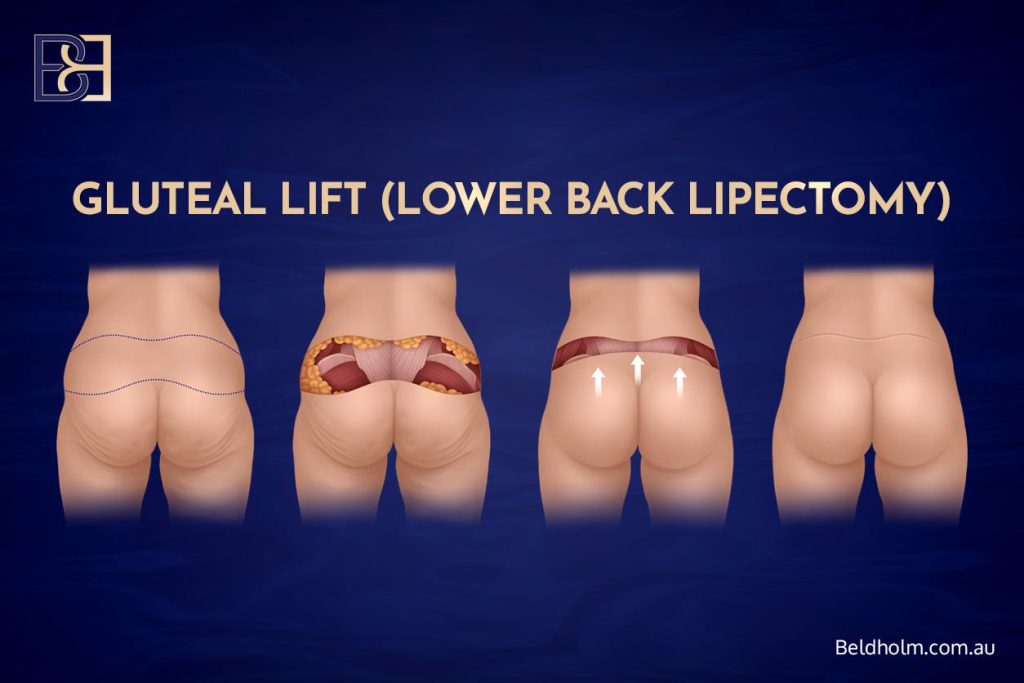
A body lift (belt lipectomy), also called a lower body lift, is a circumferential operation that removes the ring of excess skin around the entire lower torso. It has three components:
- A front component treating the lower abdomen, which is the abdominoplasty part of the operation
- A side component treating the flanks and lifting the outer thighs
- A back component treating the lower back and buttocks, which is the gluteal lipectomy
The gluteal lipectomy described in this article is that back component. Whether it is performed alone or as part of the full circumferential operation depends on where your excess skin actually sits.
When I Perform It as a Standalone Operation
A standalone gluteal lipectomy suits patients whose skin excess is concentrated over the lower back and buttocks. This includes:
- Patients whose abdomen has already been treated with an abdominoplasty (tummy tuck) and who now want the posterior skin dealt with
- Patients whose weight loss pattern has left the back as the dominant problem, with an abdomen that does not need major skin excision
- Patients having staged surgery, where the front and back are deliberately treated in separate operations
When the Full Circumferential Operation Is the Better Fit
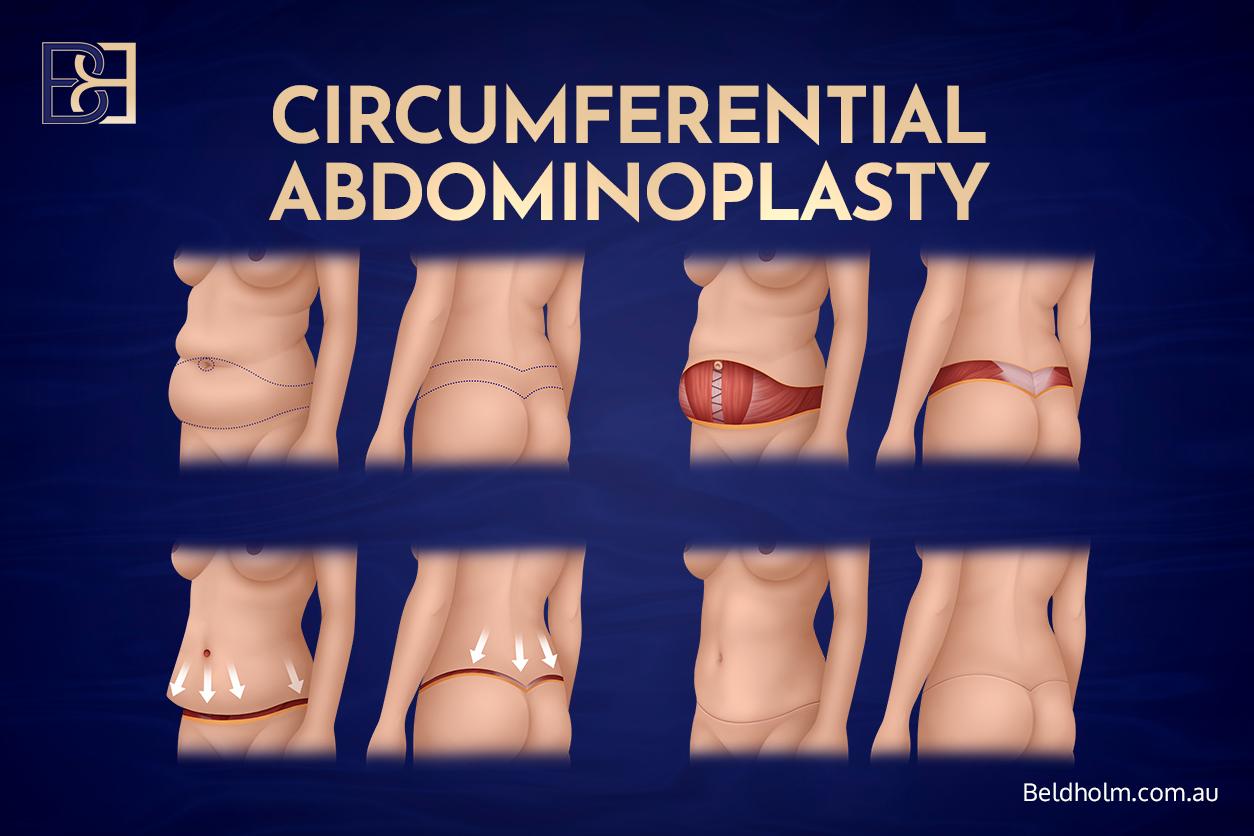
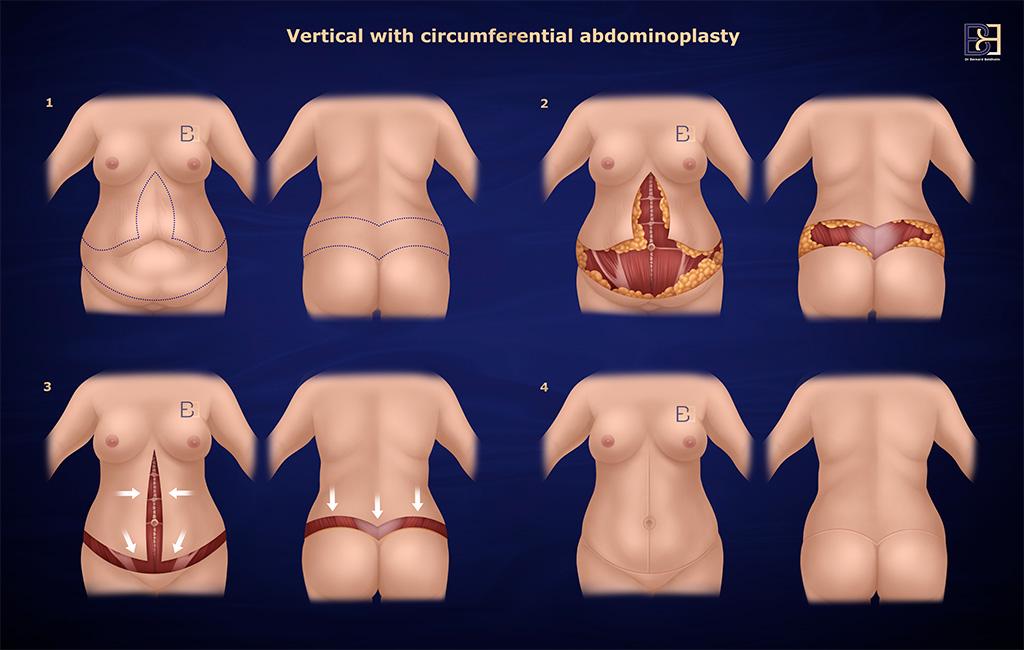
Where loose skin runs the full circle of the lower torso, treating only one segment leaves the remaining excess behind and the transition between treated and untreated areas can be unsatisfactory. In these patients a body lift belt lipectomy treats the front, sides and back in one operation, and the posterior lift of the buttocks and outer thighs is part of that single procedure.
I cover the circumferential operation in detail in my body lift (belt lipectomy) article. For patients with vertical excess in the upper abdomen as well, I have developed the circumferential hybrid abdominoplasty, which combines the belt excision with a vertical component. Links to both are at the end of this article.
The examination at consultation, looking at where the skin excess sits, how far it extends around the torso, and how the tissues drape, is what determines which operation fits your pattern. It is a personalised approach rather than a fixed template.
One Operation or Staged Surgery
Where a patient is medically suited to it, my preference is to treat their loose skin in a single comprehensive operation rather than dividing the work across several surgical procedures. The reasoning is practical. One operation means one anaesthetic, one hospital admission, and one recovery period to work through, rather than repeating each of those steps two or three times.
This is a preference, not a rule.
A larger single operation is a bigger physiological event than a smaller one. That is the trade-off, and it is why pre-operative preparation carries more weight when a comprehensive operation is planned, not less. For some patients, doing everything at once places more demand on the body than is appropriate, and staging the work across separate operations is the better path.
When Staging Is the Right Approach
Staging may suit patients where:
- Medical factors mean a longer combined operation is not appropriate
- The extent of the work cannot be completed well in a single operating time
- The anterior abdomen has already been treated, and the posterior skin is being dealt with as a planned second stage
A common staged sequence in my practice is an abdominoplasty (tummy tuck) or Fleur de Lis abdominoplasty first, with the gluteal lipectomy performed as a separate posterior operation at a later date. Other operations, such as a mastopexy (breast lift) or brachioplasty (arm lift), can also be sequenced into a staged plan. Staging is a legitimate clinical choice, not a fallback, and for some patients it is clearly the more appropriate plan.
How the Decision Is Made
Whether one operation or staged surgery suits you depends on your medical history, your nutritional status, the pattern and extent of your skin laxity, and what can be done well in a single operating time. I assess all of this at consultation and we make the decision together. It is not something that can be decided in advance of examining you.
Gluteal Auto-Augmentation
Some patients who have experienced massive weight loss lose so much volume that the buttock is not just loose, it is deflated. Lifting and tightening a deflated buttock treats the excess skin but can leave a flat contour. For selected patients, I treat both problems in the same operation using gluteal auto-augmentation.
How It Works
In a standard gluteal lipectomy, the excess skin and fat between the incision lines is removed entirely. In auto-augmentation, part of that tissue is kept.
The surface layer of skin is removed from a measured section of the tissue that would otherwise be discarded, a step called de-epithelialisation. The underlying block of living fat and fascia is preserved on its blood supply, shaped, and turned under the buttock skin as a buried flap. The lift is then closed over it. The retained tissue adds projection where the buttock was flat, a form of gluteal augmentation that uses the patient’s own tissue rather than an implant or injected fat.
Who It Suits
Auto-augmentation is considered where:
- There is enough healthy tissue in the planned excision to be worth preserving
- The buttock is deflated as well as loose, and projection matters to the patient
- The tissue quality supports a reliable buried flap
It adds operating time and requires additional dissection, so the decision sits inside the wider assessment of what your operation should include and how much surgery is appropriate for you in one sitting. Not every patient needs it, and not every patient is suited to it. I assess this during the physical examination and we discuss it as part of your surgical plan.
Published research describes a range of auto-augmentation flap techniques in post weight loss body lift surgery, with the common principle that tissue otherwise discarded can be repurposed treat buttock contour (2,3).
Who May Be Suitable for a Gluteal Lipectomy

I consider a gluteal lipectomy for patients who:
- Have experienced significant weight loss, whether through bariatric surgery, medication, or diet and exercise
- Have held a stable weight for at least 6 months
- Have loose skin over the lower back and buttocks causing problems: skin folds, irritation or moisture rash within the folds, difficulty with clothing, or interference with exercise and daily activity
- Are medically suited to an operation under a general anaesthetic
- Do not smoke, or are prepared to stop well before surgery
Weight Stability Matters
Operating before weight has stabilised risks a poor result. Further weight loss after surgery can create new skin excess, and weight gain stretches the repair. I want to see a stable, healthy weight held over months, not a number briefly touched on the way down.
For patients whose weight loss came through medication, the same principle applies. What matters for surgical planning is that the weight has stabilised and that nutrition, particularly protein intake, is adequate to heal a long incision. I cover this in detail during consultation.
Medical Assessment
Suitability is never decided from photographs or a phone call. It follows a full review of your medical history, current medications, previous operations and general health, including health conditions such as diabetes and heart disease that influence surgical risk, together with a physical examination. Pre-operative blood tests are arranged for every post weight loss patient in my practice, screening for the nutritional deficiencies that commonly follow major weight loss. Where a deficiency shows up, it is corrected before surgery, because these deficiencies directly affect wound healing.
This operation removes skin and lifts tissue. It does not build muscle, and like all surgery it cannot promise a specific appearance. What it can do, for the right patient, is remove the redundant tissue that weight loss left behind and the problems that tissue causes. Results vary between patients, and part of the consultation is working through what is achievable for your tissue and your pattern of skin excess.
The Consultation Process

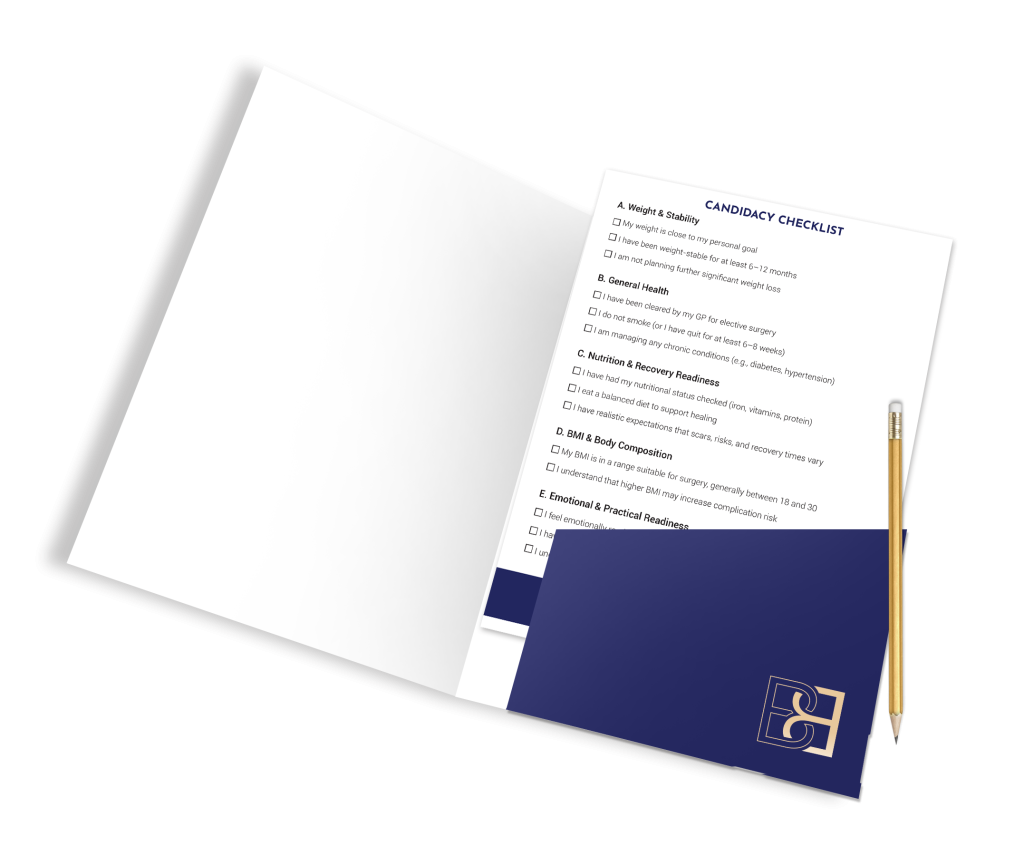
All patients need a GP referral before consultation.
First Consultation
The first consultation runs for about an hour. It is an assessment appointment, and its purpose is to work out whether a gluteal lipectomy, a body lift (belt lipectomy), or a staged approach fits your situation, or whether surgery is not the right step for you at all.
During this consultation I:
- Review your full medical history, weight loss history, previous operations and current medications
- Discuss your weight stability and general health
- Examine the lower body: abdomen, flanks, lower back and buttocks
- Map where your excess skin sits and how far it extends around the torso
- Assess whether deflation is part of the picture and whether auto-augmentation should be considered
- Explain incision placement and the scar this operation leaves
- Go through the risks, the limitations, and the alternatives, including not operating
Standardised clinical photographs are taken to support planning and documentation.
Second Consultation
A second consultation is always done, at no additional cost. This is where I review your pre-operative blood results with you and we take the discussion further. It is time to reflect, ask the questions that surfaced after the first visit, and settle the surgical plan. For patients weighing up a standalone gluteal lipectomy against a full body lift (belt lipectomy), or a single operation against staged surgery, this is usually where that decision firms up.
Telehealth and Travelling Patients
For patients outside the Hunter region, the initial consultation can be done by telehealth. An in-person consultation and examination is always required before surgery. Under the current cosmetic surgery guidelines, you will have at least two consultations before any operation, at least one of them in person with me, and there is a cooling-off period of at least 7 days after informed consent before surgery can be booked.
Patients travel to me from regional NSW and interstate. If that is you, plan to stay locally for 7 to 10 days after surgery, because follow-up is intensive over the first 2 weeks and the early reviews need to happen in person. Ongoing follow-up is then coordinated with your GP and supported by telehealth where the distance makes visits impractical. Long term follow up is included in the surgical fee, with review at 4 weeks, 3 months, 6 months and 12 months.
Preparing for Surgery

A gluteal lipectomy involves a long incision and a large area of tissue healing. How well you heal depends in part on the state your body is in when you arrive in theatre, and that is something we can influence in the months before surgery.
Nutritional Preparation

Most patients who have lost significant weight carry nutritional gaps that developed during the weight loss itself, whatever the method. Protein intake is commonly below what wound healing demands, and deficiencies in iron, vitamin B12, vitamin D, zinc and other micronutrients are frequent in this group. These deficiencies matter because they directly affect wound healing, energy levels and recovery.
Every post weight loss patient in my practice has a comprehensive pre-operative blood panel. Where the results show a deficiency, it is corrected before surgery, with supplementation guided by the blood results rather than guesswork. Your GP is copied into the results and stays involved in your longer term management.
I have written about this in detail elsewhere, including a guide to nutritional deficiencies after weight loss and a protein intake guide for surgical patients, you will find both in the links at the end.
Other Preparation
- Smoking and nicotine in any form must stop well before surgery. Nicotine constricts the small blood vessels the healing skin depends on, and this operation relies on good blood supply across a wide area
- Medications are reviewed at consultation. Blood thinning medication is managed on an individual plan that I set before surgery. Do not stop any medication on your own
- Weight should be stable. Surgery is planned around the weight you can hold, not a target you are still working toward
- Plan your support at home: help for the first week, time off work, and someone to drive you
Preparation is not a formality. When a comprehensive operation is planned, arriving at theatre with nutrition corrected and health optimised is part of what makes the larger operation an appropriate choice in the first place.
The Operation at Maitland Private Hospital
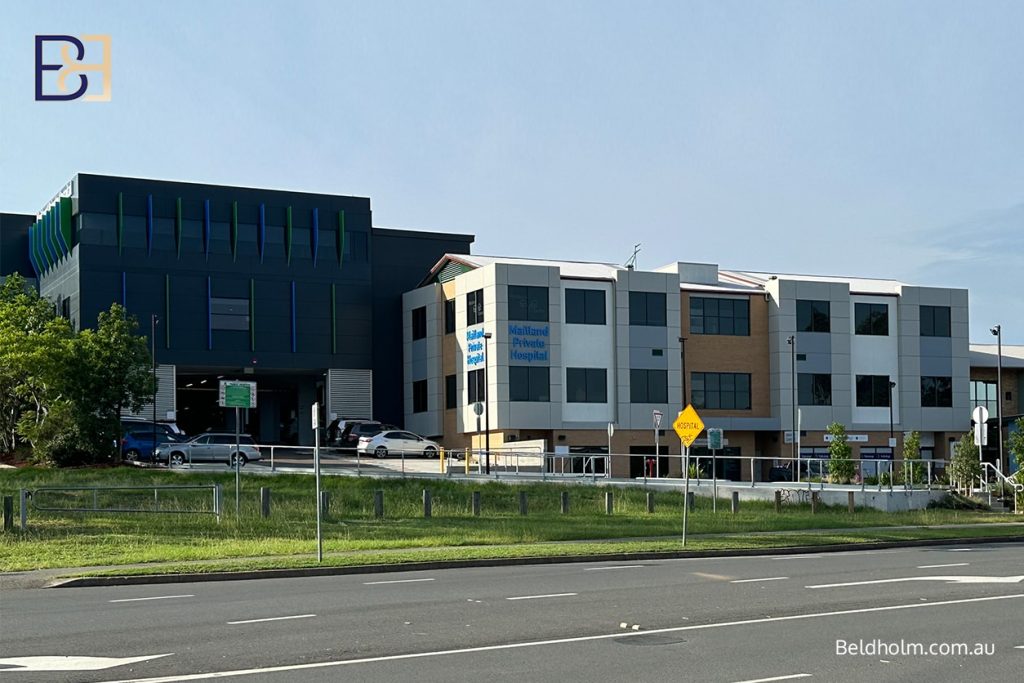
I perform gluteal lipectomy, like all my body contouring surgery, at Maitland Private Hospital in the Hunter Valley.
Before Theatre
Your anaesthetist consults with you before the day of surgery, usually by phone, and completes the physical assessment including your airway on the day. On the morning of surgery I confirm the surgical markings with you standing, since the tissue drapes differently lying down and the excision pattern must match how your body sits upright.
During the Operation

The operation is performed under general anaesthesia. Key steps:
- You are positioned prone (face down), with pressure points carefully padded
- The planned ellipse of excess skin and fat across the lower back and upper buttocks is excised
- Where auto-augmentation is part of your plan, the preserved tissue flap is de-epithelialised, shaped and secured beneath the buttock skin before closure
- Where liposuction is an appropriate adjunct for contouring, I use VASER liposuction (ultrasound assisted lipectomy), decided case by case
- The wound is closed in layers over the deeper supporting tissue, with the closure designed to hold the lift against gravity and keep tension off the skin edge
- Drains are placed where required, dressings applied and a supportive garment fitted
Operating time for a standalone gluteal lipectomy is typically 2 to 3 hours, longer where auto-augmentation or adjunct procedures are included. As part of a full body lift (belt lipectomy), the posterior component is one stage of a longer circumferential operation.
Your Hospital Stay

For a standalone gluteal lipectomy, most patients stay overnight. Where the operation is part of a full body lift (belt lipectomy), the stay is longer. Maitland Private Hospital has 24-hour nursing cover and an on-site intensive care unit. I do my own ward rounds daily while you are in hospital.
The ward dietitian service is available during your stay, with a range of protein supplements on hand to support your intake while appetite recovers. Early mobilisation matters: you walk with assistance from the first day, because early movement is central to reducing clot risk after lower body surgery.
Scars and Incision Placement
This operation trades loose skin for a scar. Where that scar sits, and how it matures, deserves a clear explanation before you decide anything.
Where the Incision Sits
For a standalone gluteal lipectomy, the incision runs horizontally across the lower back, above the gluteal cleft, extending toward each side of the waist. I plan it to sit within the line of underwear or swimwear, and I confirm the markings with you standing on the morning of surgery so the final scar position matches how your body sits upright.
When the gluteal lipectomy is part of a body lift (belt lipectomy), the posterior incision continues around the flanks and joins the front incision, forming a single line around the circumference of the lower torso.
How the Scar Matures
The scar is a permanent trade-off, and it changes over time:
- In the first weeks it is raised, firm and red or dark, depending on your skin tone
- Over 3 to 6 months it begins to flatten and the colour starts to settle
- Full maturation takes 12 to 18 months, by which point most scars have faded to a pale line
How a scar matures varies with an individual’s genetics, skin quality and healing. Some patients form thicker or more pigmented scars, and many factors influence the final result: tension across the closure, weight change and smoking among them. Protecting the new scar from sun damage during the first 12 months helps the colour settle. Scar care after this operation, including taping and silicone therapy, is covered in my recovery article.
My approach is to place the scar where clothing are and to close the wound in layers so tension is carried by the deeper tissue, not the skin edge. What I cannot do is remove the scar from the equation. Patients who do well with this operation are the ones who have weighed the scar against the loose skin and made a considered decision that the exchange is worth it.
Recovery: The Short Version
Recovery from a gluteal lipectomy is measured in weeks, not days. The incision crosses an area you sit on, lie on and bend through, which shapes the early recovery process more than most patients expect.
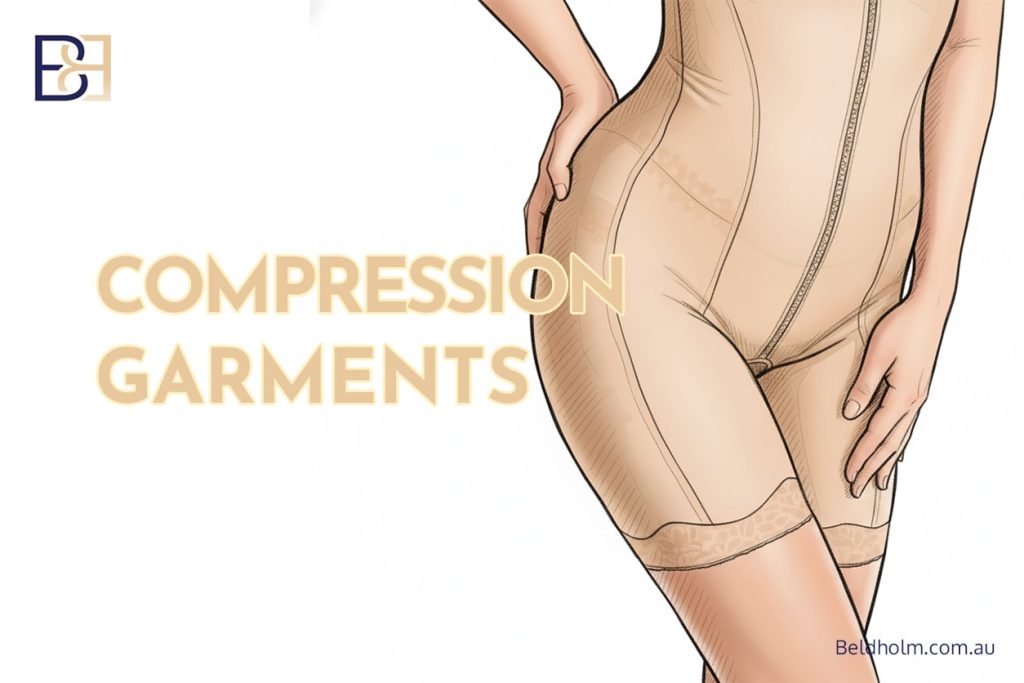
The short version: an overnight stay in hospital, positioning restrictions to keep pressure and tension off the closure in the early weeks, and compression garments worn continuously at first. Drains, where used, are managed until output settles. Driving waits until you can move without restriction and are off strong pain relief. Return to work is graduated from around 2 to 4 weeks depending on what your work involves, and full exercise resumes from around 6 to 8 weeks, guided by review. Avoid heavy lifting until I clear you at review.
I have written a dedicated, week-by-week guide covering sitting and sleeping positions, garments, drains, showering, driving, work and exercise: Recovery from a Buttock Lift (Gluteal Lipectomy): A Detailed Patient Guide.
Risks and Complications: The Short Version

This is major surgery, and the potential complications need to be understood before you consent. The ones most relevant to this operation are wound healing problems along an incision placed under constant tension from sitting and movement, sometimes related to reduced blood flow at the skin edge, collections of excess fluid (seroma), collections of excess blood (haematoma), infection, changes in skin sensation across the lower back and buttocks, scarring problems, asymmetry, and blood clots (deep vein thrombosis and pulmonary embolism), which in rare cases can lead to serious illness or even death. Post weight loss patients are individually risk assessed and managed for clot risk.
Some of these are managed with dressings and time. Some need a procedure to fix. Published research across circumferential lower trunk surgery, with pooled outcomes shown in a meta-analysis, confirms that wound complications are the most frequent problem in this group of operations (4). The point of knowing them before surgery is to make an informed decision, not a hopeful one.
The full guide, including how often each complication occurs, warning signs, and when to seek help, is here: Complications After a Buttock Lift (Gluteal Lipectomy): A Detailed Guide.
Costs, Medicare and Health Fund Cover
Whether Medicare contributes to this operation depends on whether your situation meets the criteria set out in the Medicare Benefits Schedule (MBS). This is one of the most common questions I am asked, so here is how it works.
The Relevant MBS Item Numbers
- Item 30169 covers excision of redundant skin and fat from areas outside the abdomen following significant weight loss. This is the item most relevant to a standalone gluteal lipectomy (buttock lift)
- Item 30179 covers circumferential lipectomy of the trunk, and applies where the operation is a full body lift (belt lipectomy) treating the excess around the entire lower torso
- Item 30177 covers lipectomy of redundant abdominal skin and fat performed in conjunction with a radical abdominoplasty, and becomes relevant where a full anterior abdominal component is part of your overall plan
- Item 30166 covers a wedge excision of the redundant abdominal apron alone, without the full abdominoplasty component
What the Eligibility Criteria Mean
The MBS criteria for these items require, in broad terms:
- Significant weight loss, defined as a reduction of at least 5 BMI units, with weight stable for at least 6 months before surgery
- The redundant skin causing a problem, such as skin irritation or rash within the folds (intertrigo) that has not resolved despite at least 3 months of non-surgical treatment, or the skin interfering with the activities of daily living
Whether your circumstances meet the criteria is assessed at consultation. The applicable item numbers for your operation are confirmed in your written quote.
How the Funding Works When You Qualify
When your operation meets the MBS criteria and is performed in hospital:
- Medicare rebates 75% of the MBS schedule fee for the surgery, and your private health fund covers the remaining 25%, provided your policy includes these item numbers
- Your health fund also contributes to hospital accommodation and theatre fees, subject to your level of cover and any excess on your policy
- The MBS schedule fee is lower than the actual fee for the surgery. The difference is the gap, and it is set out in the itemised written quote before you decide anything
- Anaesthetist and surgical assistant fees are separate and are also itemised
If the Criteria Are Not Met
Where the MBS criteria are not met, the operation is classified as cosmetic. That means no Medicare rebate, no health fund contribution, hospital and theatre charges payable in full, and GST applies to the surgical, anaesthetic and hospital fees.
I do not publish dollar figures here because the fee depends on the extent of surgery, hospital time and what is combined. A detailed breakdown of how the costs are structured is in my dedicated cost article. After your consultation you receive an itemised written quote covering every component, and the second consultation is the place to work through it.

Frequently Asked Questions
Will a gluteal lipectomy make my buttocks bigger or smaller?
Neither is the goal. The operation removes extra skin above the buttock and lifts the tissue that remains, so the shape changes from draped and folded to lifted and supported. Where volume is also lacking, auto-augmentation using your own retained tissue can add projection, and I assess this when I examine you.
Is this the same as fat transfer to the buttock?
No. Fat transfer is a buttock augmentation technique that adds volume using injected fat, and it does not remove loose skin. A gluteal lipectomy removes excess skin and lifts. They treat different problems. Fat transfer to the buttock is not a procedure I perform.
Can a gluteal lipectomy be combined with an abdominoplasty (tummy tuck)?
Yes. When the front, sides and back are treated in the same operation, the procedure is a body lift (belt lipectomy). Whether a combined operation or staged surgery suits you depends on your health, your tissue and the extent of the work, and is decided at consultation.
How painful is the recovery?
Discomfort is most noticeable in the first week, particularly with the positioning changes needed to protect the closure, and it is managed with a structured pain relief plan. Most patients describe tightness across the lower back rather than sharp pain, and swelling and bruising settle over the first weeks. The full week-by-week picture is in my recovery article.
Will Medicare contribute to the cost?
It can, where the MBS criteria are met: significant weight loss of at least 5 BMI units, weight stable for at least 6 months, and skin problems such as intertrigo that have failed 3 months of non-surgical treatment or interference with daily activities. The details are in the costs section above.
What happens to the result if my weight changes?
The tissue removed does not come back, but the remaining tissue responds to weight change like any other. Significant weight gain stretches the repair and significant further loss can create new laxity. This is why I operate once weight is stable, and why weight stability afterwards protects the result.
References
- Lockwood T. Lower body lift with superficial fascial system suspension. Plast Reconstr Surg. 1993;92(6):1112-22.
- Colwell AS, Borud LJ. Autologous gluteal augmentation after massive weight loss: aesthetic analysis and role of the superior gluteal artery perforator flap. Plast Reconstr Surg. 2007;119(1):345-356.
- Schmitt T, Jabbour S, Makhoul R, Nasr M, Baratte A, Bruant-Rodier C, et al. Lower body lift in the massive weight loss patient: a new classification and algorithm for gluteal augmentation. Plast Reconstr Surg. 2018;141(3):625-636.
- Carloni R, Naudet F, Chaput B, de Runz A, Herlin C, Girard P, et al. Are there factors predictive of postoperative complications in circumferential contouring of the lower trunk? A meta-analysis. Aesthet Surg J. 2016;36(10):1143-1154.