After significant weight loss, the skin across the lower abdomen often does not shrink back. Many of the patients I see in my clinic have worked hard to lose the weight, sometimes through bariatric surgery, sometimes with the help of weight loss medications, and they are now left with loose skin that no amount of healthy diet or regular exercise will tighten. An abdominoplasty (tummy tuck) removes that excess skin and rebuilds the contour of the lower trunk.
In my practice, the operation itself is only part of the story. How well you prepare in the weeks beforehand has a real effect on how you heal. This matters more for post-weight-loss patients than for almost any other group I treat. Weight loss, particularly rapid weight loss or weight loss after bariatric surgery, frequently leaves people with nutritional gaps. Those gaps are not always obvious, and they can slow wound healing if they are not picked up and corrected before you reach the operating theatre.
So this guide is written for the post-weight-loss patient. It walks through what I ask my patients to do before surgery, why each step matters, and what recovery realistically involves. Some of it is medical, like blood tests and nutrition. Some of it is practical, like sorting out your home and your transport. All of it is worth getting right.
One last thing before we start. Everything here is general information. Whether an abdominoplasty (tummy tuck) is appropriate for you, and what form it should take, is something I work out with you at consultation after a GP referral. Results vary from one person to the next.
Understanding your abdominoplasty (tummy tuck) after weight loss
Before you prepare for an operation, it helps to know what it actually involves. Abdominoplasty after weight loss is not quite the same operation as a post-pregnancy tummy tuck (abdominoplasty), and the difference shapes how I plan it.
What the operation does for post-weight-loss patients
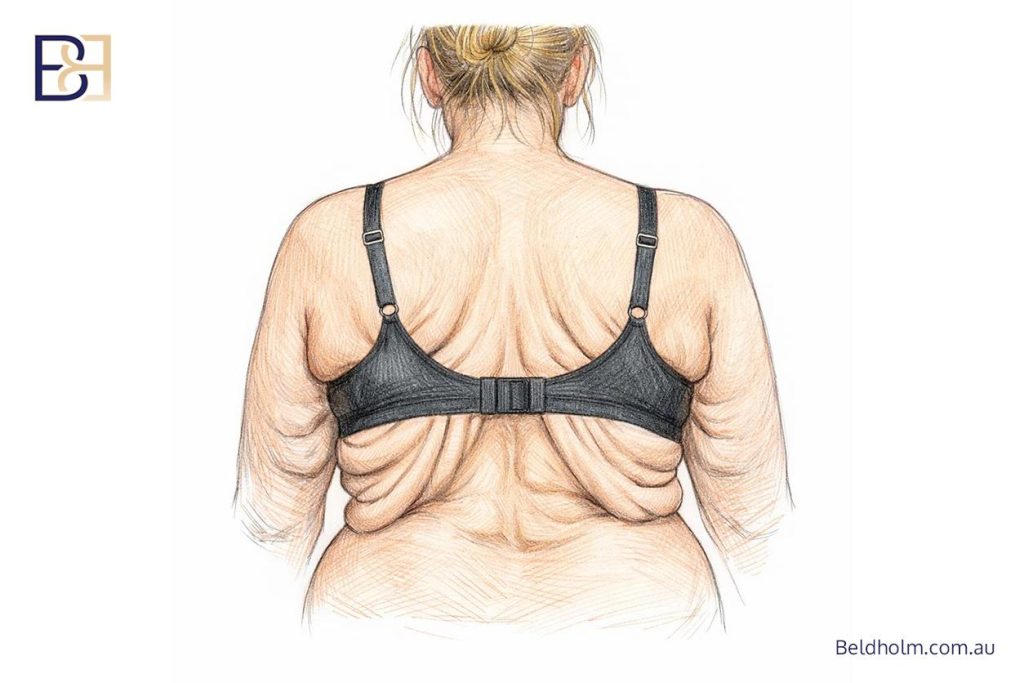
For most post-weight-loss patients, the main job is removing loose, excess skin. Major weight loss reduces the skin elasticity that would normally let skin shrink back, so the loose skin hangs across the lower abdomen and often pulls the belly button (umbilicus) down with it. I remove excess skin, reposition the belly button (umbilicus), and close the remaining skin to rebuild the contour of the lower trunk. The scar usually sits low, within the line of your underwear.
This is different from the post-pregnancy patient, where the focus is often on the muscle. After pregnancy, the abdominal muscles can separate down the midline, a condition called muscle separation (diastasis recti). In post-weight-loss patients this is not a given. Some have separated abdominal muscles, many do not. So muscle repair is not a routine part of every abdominoplasty procedure I do. I assess for it individually, and I only repair the muscle if there is genuine separation to treat.
You may have come across the term mini abdominoplasty (limited abdominoplasty), which treats only the skin below the belly button (umbilicus). After major weight loss, this is rarely the right option, because the loose skin usually extends well above the belly button (umbilicus).
Where liposuction (suction-assisted lipectomy) fits
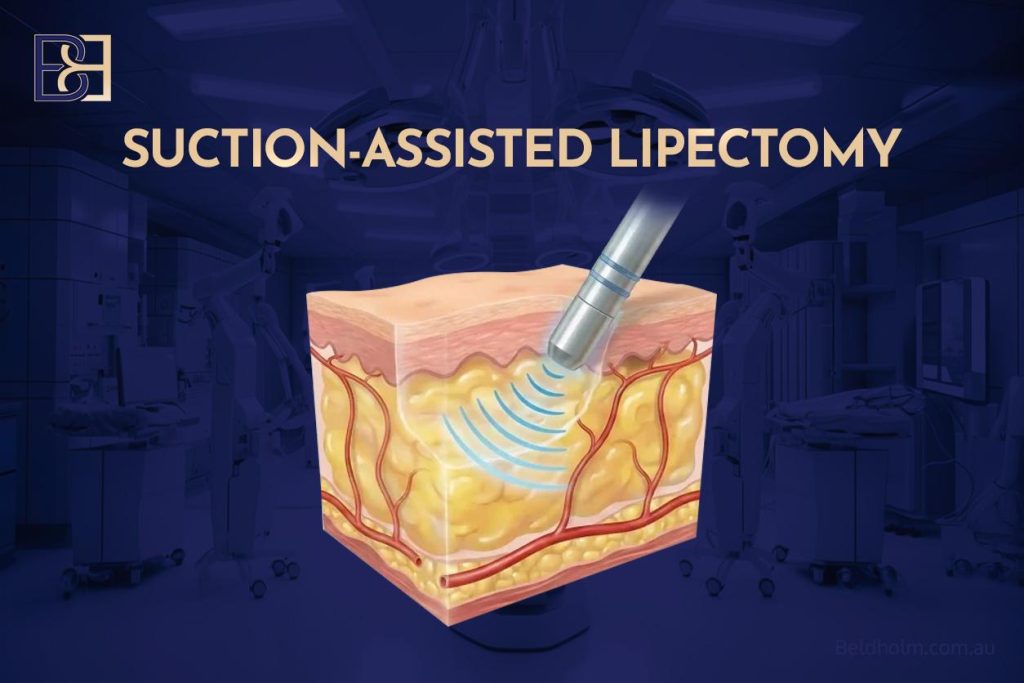
Liposuction (suction-assisted lipectomy) is sometimes used alongside the skin excision to remove excess fat and refine the abdominal contour. Whether it has a role in your operation depends on your tissue and what we are trying to achieve, and that is a decision made at consultation.
How much is done in one operation
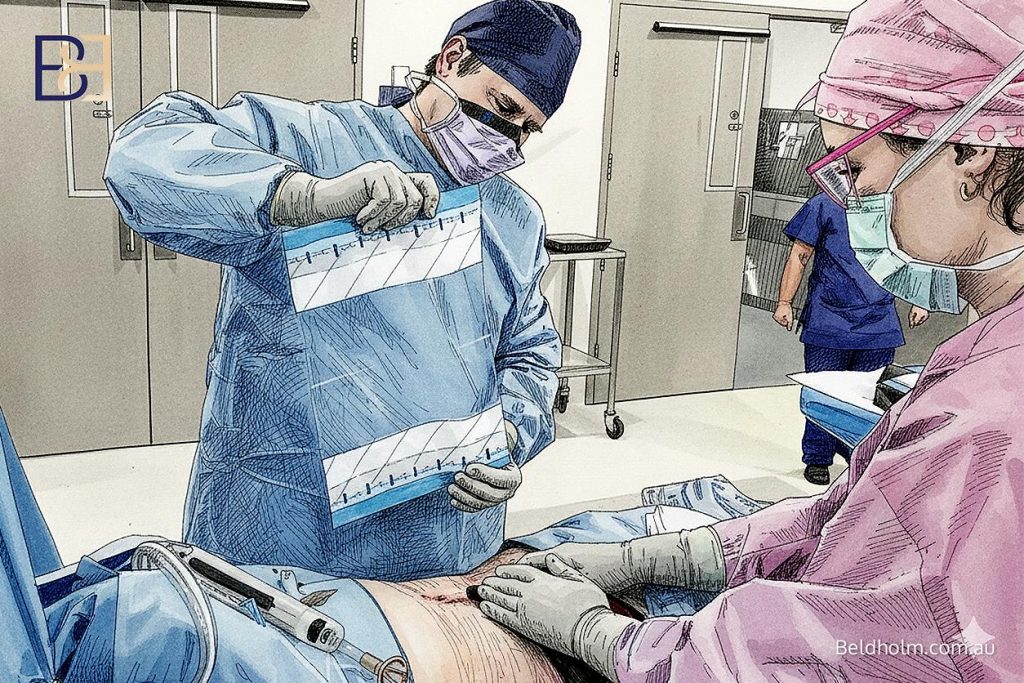
Some patients have loose skin in more than one area after weight loss, not just the abdomen. Where a patient is suited to it, treating these areas in a single comprehensive operation can mean one anaesthetic and one recovery rather than repeating those steps. For others, staging the work across separate operations is the more appropriate and safer path. Whether one operation or staged surgery suits you is worked out with you at consultation, based on your medical history, your nutritional status, and the pattern of your loose skin. It is never decided in advance.
Why preparation matters more after weight loss
Every patient preparing for surgery benefits from being in good shape going in. For post-weight-loss patients, there is an extra layer to think about, and it is worth understanding why.
Weight loss can leave you depleted
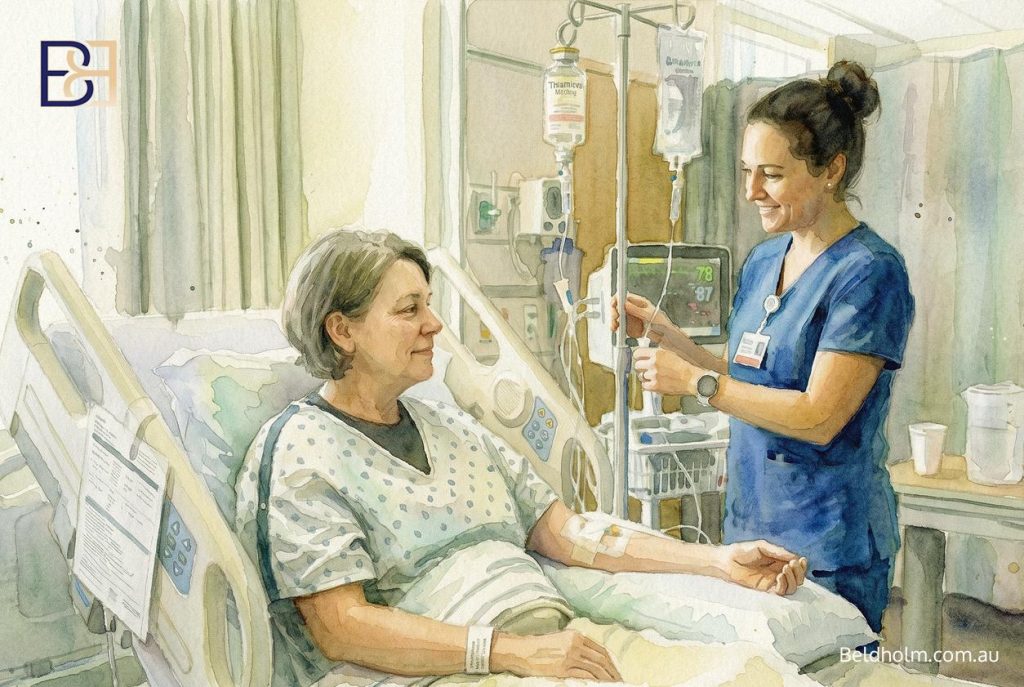
Losing a large amount of weight, especially when it happens rapidly or after bariatric surgery, changes how your body absorbs and stores nutrients. Many post-weight-loss patients carry deficiencies in protein, iron, and several vitamins without feeling unwell. Your body draws on these same nutrients to heal a surgical wound. If the tank is low when you come in for surgery, healing has less to work with.
This is why I take preparation seriously for this group. It is not about being cautious for its own sake. It is about giving your wound the building blocks it needs to close well.
Weight stability, not a number on the scales
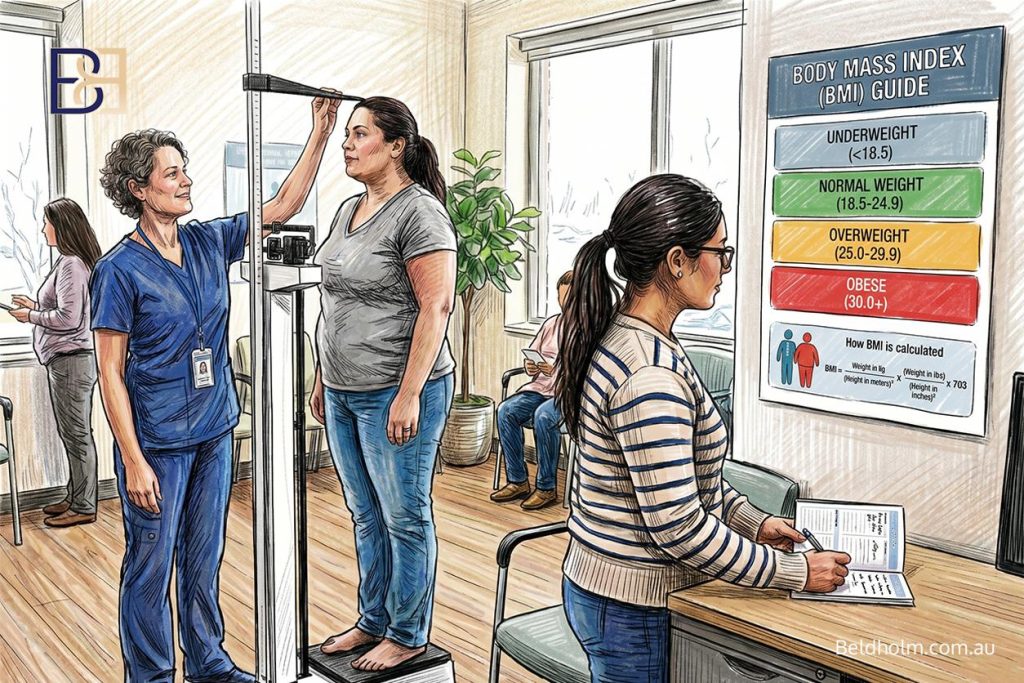
A common misunderstanding is that you need to reach an ideal weight before surgery. That is not how I look at it. What I am interested in is a stable weight. Your weight should be settled rather than still actively dropping.
The reason is clinical, not cosmetic. If you are still losing weight when you come to surgery, that usually signals your body is in a deficit, and a deficit is exactly what slows healing. A settled weight tells me your nutrition has had a chance to catch up.
In the few weeks either side of surgery, I focus on nutrition rather than the scales. Small weight fluctuations are expected, and a small amount of weight gain during this window is normal and acceptable. It is not something to fight. Significant weight gain is a different matter, and maintaining a stable weight in the lead-up gives me the clearest picture to plan from.
A note on BMI. I use it as a rough guide only, not a hard cut-off. Your candidacy depends on the wider clinical picture, which we go through at consultation.
A bigger operation asks more of your body
If your loose skin is being treated in a single comprehensive operation, that is a larger physiological event than a smaller, single-area procedure. The longer the operation, the more your body has to recover from. That is precisely why preparation matters more, not less, when more is being done in one sitting. Getting your nutrition and general health right beforehand is part of making a larger operation a sensible choice in the first place.
Nutritional optimisation before surgery

For post-weight-loss patients, nutrition is the single most useful thing we work on before an operation. A healthy diet that supplies enough protein, iron, and vitamins gives your body what it needs to support recovery. The aim is straightforward. We find any gaps, correct them, and have your body well supplied before you reach surgery. This is something I manage directly with you in the lead-up, and your GP carries it on afterwards.
The pre-operative blood panel
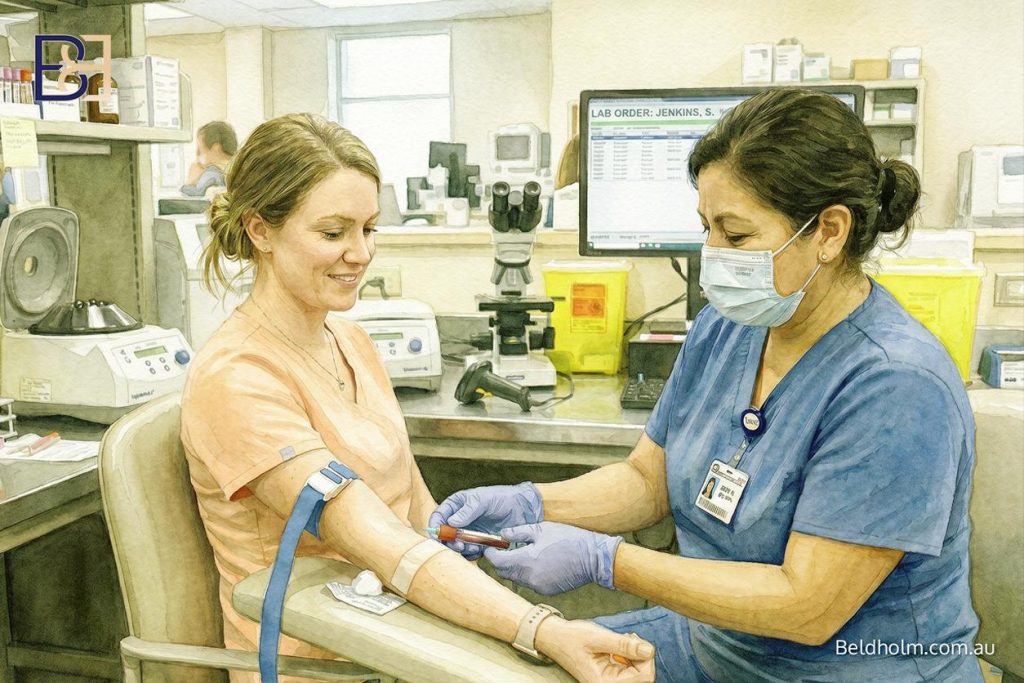
Every post-weight-loss patient I operate on has a comprehensive pre-operative blood panel before surgery. This is more than a routine pre-op check. Alongside the standard tests of your blood count, clotting, liver and kidney function, and blood sugar, it screens the nutrients most often low after weight loss: protein (measured through albumin), iron studies, vitamin B12, folate, vitamin D, zinc, and others. It picks up problems we can fix in advance rather than discover later. Your GP is copied in on the results. You can read more about what the panel covers in the pre-operative blood tests guide.
Protein comes first
Protein is the nutrient your wound leans on most heavily to support healing and tissue repair. Most of my post-weight-loss patients need to lift their protein intake in the weeks before surgery. I prefer you reach your target through food where you can, as part of a balanced diet. Where diet alone does not get you there, a whey protein isolate supplement helps bridge the gap. I do not put everyone on a protein powder by default. It is there for those who need it. There is a fuller explanation in the article on protein before and after your abdominoplasty.
Vitamins, minerals, and supplements

If your bloods show a deficiency, I treat it before surgery rather than waiting. Iron, vitamin D, vitamin B12, and zinc are the ones that most often need attention in this group. Rather than repeat the detail here, the nutrition series covers each one properly:
- Iron and how it is managed after bariatric surgery
- Vitamin D, vitamin B12, vitamin C, vitamin K, vitamin A, and folate
- An overview of nutritional deficiencies after weight loss
- The vitamins and supplements hub, which explains how supplements fit together
Which supplements you actually need is guided by your blood results, not a one-size-fits-all list. We sort that out together once your panel comes back.
Who manages what
To keep it clear: I handle the pre-operative optimisation, ordering the bloods and correcting deficiencies before surgery. The dietitian at the hospital supports you around the time of your admission. Your GP takes over the longer-term management once you have recovered, which is why the formal handover happens at your four-week visit.
Medications, weight loss medications, and blood thinners
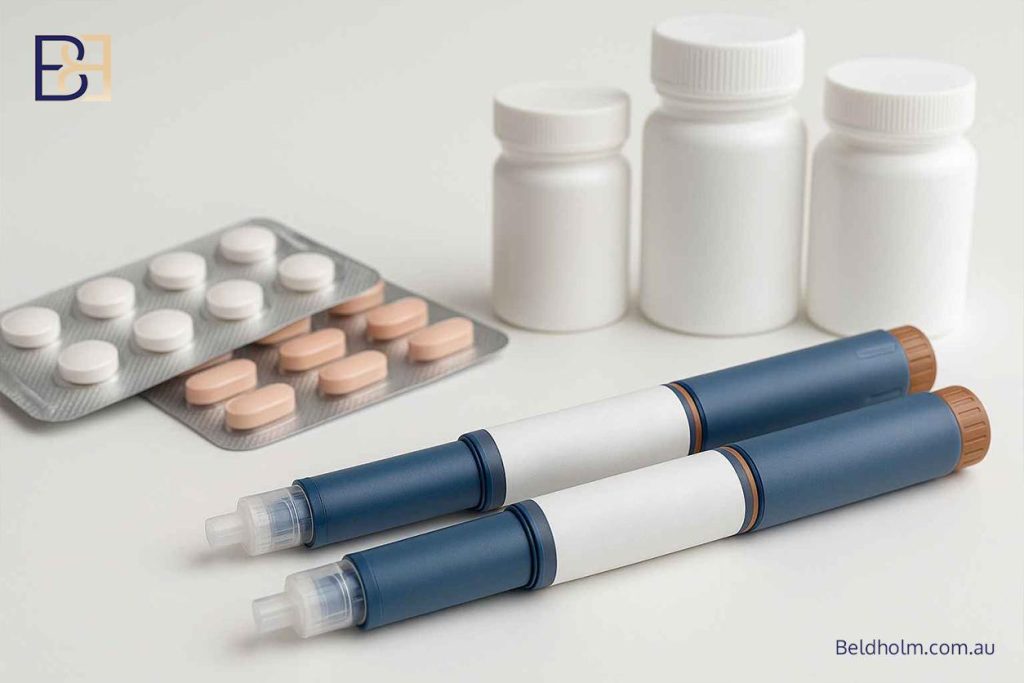
Your regular medications need a clear plan before surgery. The most important rule sits above all the detail below.
Never stop or change anything on your own
Do not stop, start, or adjust any medication by yourself in the lead-up to surgery. Some medications need to be paused, some are fine to continue, and a few need to be continued deliberately even though you might assume otherwise. These are decisions I make with you, and where relevant with your GP and anaesthetist, well in advance. Tell us everything you take, including prescribed medications, anti-inflammatory drugs, and over-the-counter products.
Blood thinners and aspirin
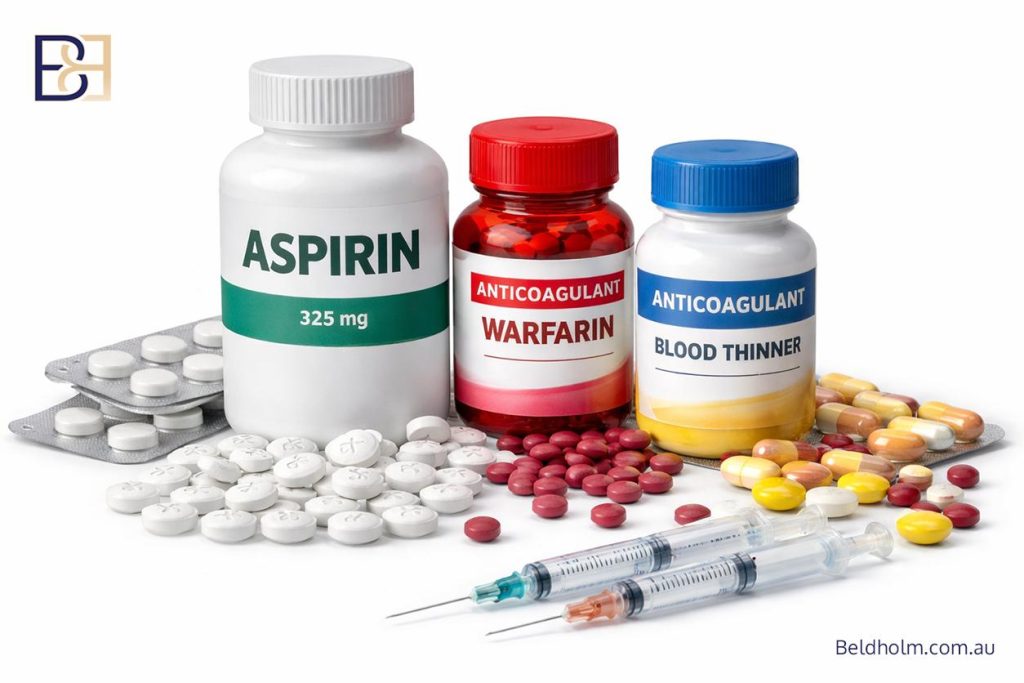
Aspirin and anticoagulants (blood thinners) are usually stopped about a week before surgery to reduce the risk of bleeding. That is the common pathway, but it is not universal. Some patients need to stay on their blood thinner through surgery for their own safety, and when that is the case we plan it carefully ahead of time. Either way, this is not something to manage yourself.
Part of this planning is your risk of a blood clot in the legs or lungs, known as deep vein thrombosis (DVT). I assess that risk for you individually and decide on any clot-prevention measures myself. You can read more in the guide to DVT risk and prevention after body contouring surgery.
Weight loss medications
Many of my patients come to surgery while taking weight loss medications. Current Australian guidance does not recommend routinely stopping these before an operation, and I follow that position. In some cases, if you are struggling to meet your protein target, a temporary dose adjustment might be discussed. That is a perioperative judgement made with you and your anaesthetist, not a blanket rule, and not something to do on your own. As with everything else, the plan is made in advance.
Smoking and nicotine

If you smoke, stopping before surgery is one of the most valuable things you can do. Nicotine narrows the small blood vessels that feed a healing wound, and published research links smoking to poor wound healing and a higher rate of wound complications (1). For abdominoplasty, where a large area of skin needs a good blood supply to heal, this matters a great deal. I ask patients to stop well before surgery and to stay off it through recovery. If you need help quitting, we can talk through the options. Healthy habits like this make a real difference to how you heal.
Supplements and herbal products
Some supplements and herbal products increase bleeding risk or interact with anaesthesia, and research has documented this for a number of common herbal preparations (2). This is not a reason to hide them. It is a reason to tell me about them. Bring a full list of everything you take to your consultation so we can decide together what continues and what pauses before surgery.
Your anaesthetic and pre-operative assessment

Abdominoplasty is done under a general anaesthetic, so you will be looked after by an anaesthetist as well as by me. Patients often expect to meet the anaesthetist in person at a separate appointment before the day. In practice it usually works differently, and it helps to know what to expect.
How the anaesthetic review usually happens
For most patients, the anaesthetic consultation happens by phone. The anaesthetist will go through your medical history, your medications, any previous anaesthetics, and any concerns you have. An in-person review before the day of surgery is uncommon.
The physical examination, including the assessment of your airway, is done on the day of surgery before you go to the theatre. This is standard and nothing to be concerned about.
What to have ready for the assessment
A few things make this easier:
- Have your current medication list ready, including doses
- Know your history of any previous surgery or anaesthetics, and whether there were any problems
- Mention any loose teeth, dental work, reflux, or breathing issues such as sleep apnoea
- Be honest about alcohol and smoking, as both affect anaesthesia and healing
All of this helps the anaesthetist plan the anaesthetic for you.
Pain relief
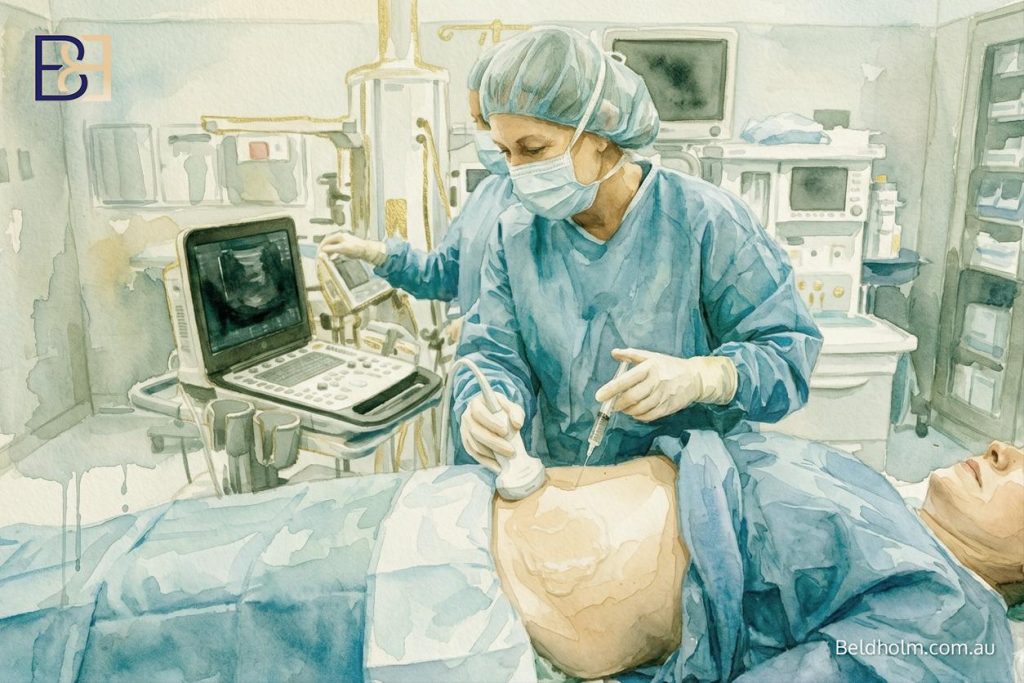
Part of the plan is how your pain is managed during and after surgery, and this depends on what your operation involves. If liposuction (suction assisted lipectomy) is part of your procedure, a significant amount of local anaesthetic goes in with it, and that carries through into the early recovery period. If liposuction (suction assisted lipectomy) is not part of your operation, my anaesthetist usually performs a transversus abdominis plane (TAP) block, which is an injection of local anaesthetic into the abdominal wall to numb the area. Either way, the goal is to keep you comfortable in the first hours after surgery, alongside the regular pain relief you will have on the ward.
Preparing your home and support
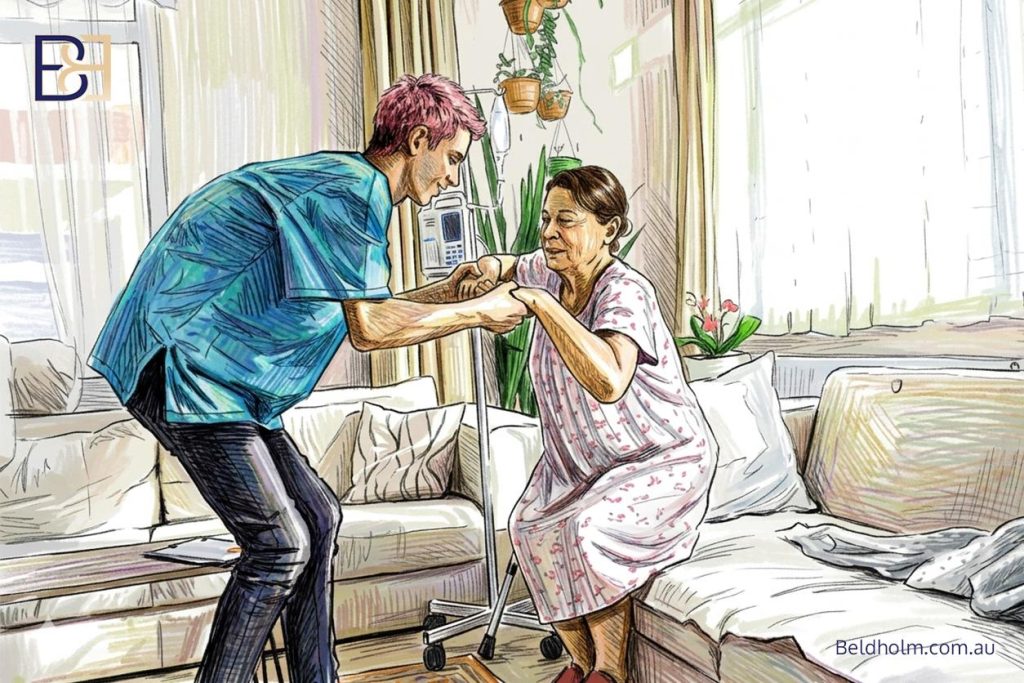
The work you do at home before surgery pays off in the first week or two afterwards, when you will be moving slowly and tiring easily. A little setup beforehand means you are not problem-solving while sore and recovering.
Arrange your help in advance
You cannot drive yourself home after a general anaesthetic, and you will need a hand at home in the early days.
- Organise a friend or family member to drive you home and, ideally, stay with you for the first night or two
- If you have children or pets, arrange help with them, particularly anything that involves lifting
- Sort out who can do the shopping and heavier chores for the first couple of weeks
Having a family member or close friend on hand in the first few days makes a real difference.
Set up a recovery area

In the early days you will be resting with your hips slightly bent to take tension off the wound. A comfortable recovery area set up in advance makes this much easier.
- A recliner, or a bed with plenty of pillows to prop yourself up, works well
- Keep what you need close at hand: water, medications, phone and charger, tissues, a book or tablet
- Loose, comfortable clothing that does not press on your abdomen is ideal. Slip-on shoes save you bending down
Stock up on high-protein food

Your appetite may be modest in the first week, but your healing still needs protein. Prepare or buy meals ahead of time so you are not cooking from scratch when you are tired. Protein-rich options that take little effort are best. This carries on the nutrition work from before surgery rather than starting something new.
Plan your time away from work
Time off work is something to arrange before surgery, not after. How long you need depends on your job. Sorting it out in advance takes one worry off your plate.
Surgery day
By the time the day arrives, most of the hard preparation is done. The day itself runs to a clear routine, and knowing how it flows tends to settle the nerves.
Fasting

You will be given specific fasting instructions by the hospital, telling you when to stop eating and drinking before your operation. Follow those instructions exactly, as they are set for your particular surgery and theatre time. If anything is unclear, ring and check rather than guess.
What to bring
Pack your hospital bag the night before:
- Your current medications in their boxes, with your medication list
- Loose, comfortable clothing to go home in, and slip-on shoes
- Toiletries and anything you need for an overnight stay
- Phone and charger
- If you use a particular whey protein isolate, you are welcome to bring your own. The hospital also has protein supplements available and a dietitian on the ward
Leave jewellery, valuables, and large amounts of cash at home.
When you arrive

You will be admitted and changed into a gown. I will see you to go over the plan and mark the surgical sites while you are standing. The anaesthetist completes the physical and airway assessment at this point. This is your last chance to ask any questions, so do not hold back if something is on your mind.
Your hospital stay
Abdominoplasty after weight loss usually means staying in the hospital for a night or a few nights, depending on the extent of your surgery. While you are on the ward, the dietitian can help you keep your protein up, and the nursing staff will manage your pain relief, your drains, and get you moving.
What recovery actually involves
Preparing well includes knowing what you are preparing for. The recovery process after abdominoplasty after weight loss is real recovery. It takes time, and it helps to have a clear picture of the recovery timeline going in. Here is what to expect.
The first day or two
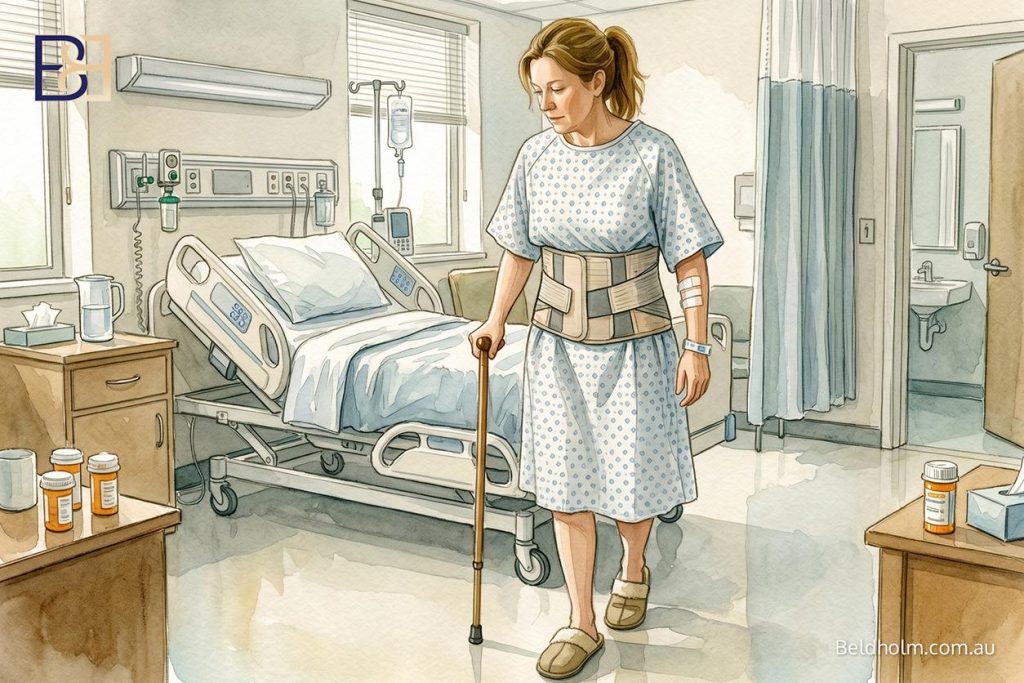
I want you up and moving early. On the first day after your operation, the aim is to get you walking, even if only a few steps to begin with. If walking is too much at first, sitting out of bed is the fallback. Early movement lowers your risk of blood clots and helps your recovery along. You will be moving carefully and slightly bent at the hips, which is normal in the first week of the recovery period.
Drains
You will usually have two drains, one on each side, sitting just under the skin to collect fluid. They come out when the fluid draining from them drops below a set level, which is typically somewhere between two and seven days. Some patients go home with a drain still in and have it removed at a follow-up visit. The nurses will show you how to manage them.
Your compression garment
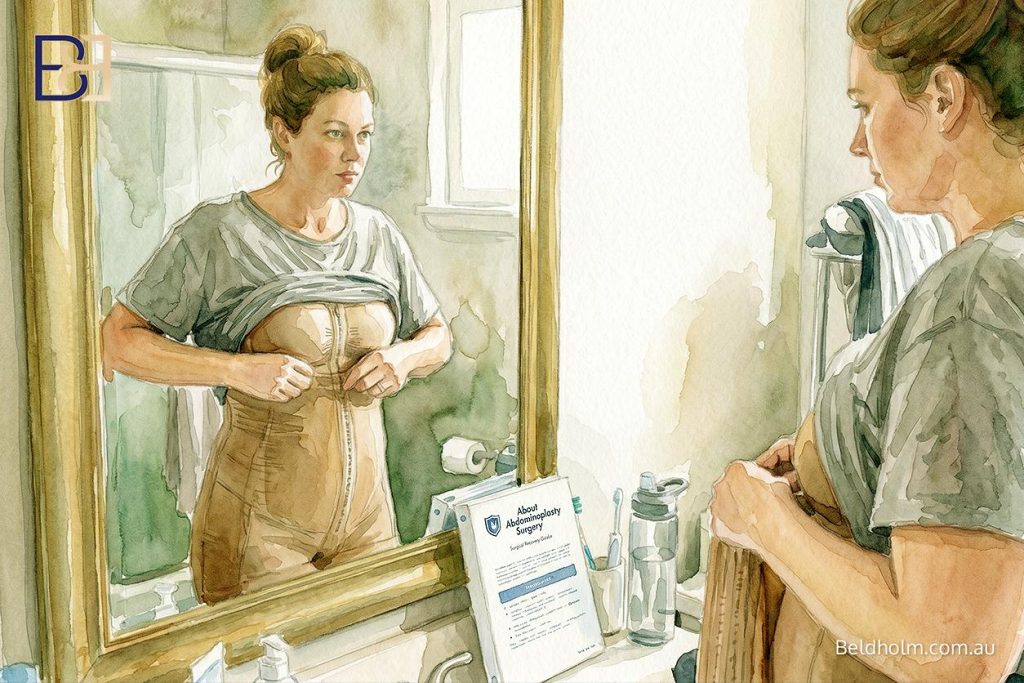
You will be fitted with a compression garment. Most patients wear compression garments full-time for about four weeks, then part-time for a further two weeks. Daytime wear is usually preferred for the part-time period, though there is some flexibility in hot weather or by preference. The garment supports the tissues and helps reduce swelling while you heal.
Pain and swelling
There will be discomfort, particularly in the first week, and it is managed with pain medication that starts in hospital and continues at home. Swelling in the abdominal area is expected and settles gradually over weeks to months. Your abdomen will not look like the final result straight away. That takes time, and patience is part of the healing process.
Scars

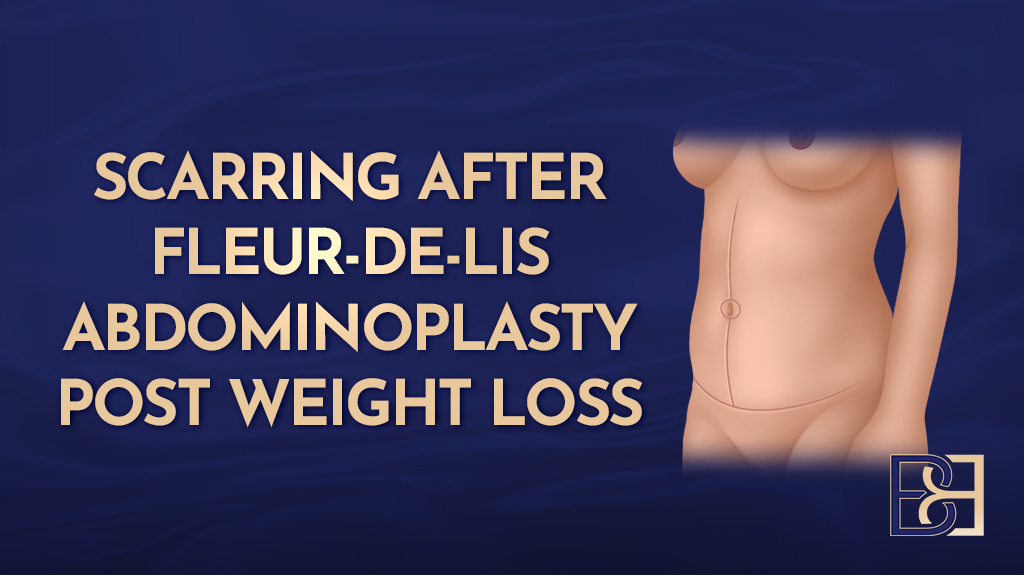
Abdominoplasty leaves a permanent scar, usually low across the lower abdomen, along with a scar around the repositioned belly button (umbilicus). Keep the incision site clean and dry as it heals, following the instructions you go home with. Scars look their worst in the first few weeks, then fade and flatten over a long period. Full maturation can take up to two years. How a scar settles varies from person to person. I cover scar care and what to expect in more detail in the guide to abdominoplasty scarring after weight loss.
Getting back to work and activity

How soon you return to work depends on what you do:
- A desk-based or sedentary job is usually around four weeks
- Physically demanding or manual work is usually six to eight weeks
- A single lifting limit of about 10 kg applies in the early weeks, which means no heavy lifting
I give clearance to return to work and normal activities at your follow-up visits, and it can happen at any of them once you are ready. Returning to exercise is staged, and I cover that separately in the article on exercise after abdominoplasty after weight loss.
Your follow-up schedule

I review my patients at four weeks, three months, six months, and twelve months after surgery. At each visit I check your healing progress. At the four-week visit I hand your longer-term care back to your GP. If anything concerns you between visits, do not wait for the next appointment. There is a clear pathway for reaching help after hours, which I set out below.
Risks and realistic expectations
Abdominoplasty is a major surgical procedure, and like any abdominal surgery it carries risks. Part of preparing properly is understanding them with clear eyes. I go through all of this with you in detail at consultation, but here is an honest overview.
Risks to understand
No operation is without risk, and abdominoplasty after weight loss has some potential complications that deserve particular attention in this group:
- Bleeding and collection of blood under the skin (haematoma)
- Infection
- Fluid collection under the skin (seroma) is one reason for the drains
- Wound healing problems, including delayed healing or the wound edges separating. This risk is higher in smokers, in people with diabetes, and where nutrition has not been optimised, which is exactly why the preparation matters
- Blood clots in the legs or lungs (deep vein thrombosis and pulmonary embolism)
- Altered or reduced sensation in the skin of the abdomen, which may be long-lasting
- Asymmetry, contour irregularities, or a need for further surgery to refine the result
- Problems with the repositioned belly button (umbilicus)
- Risks related to the general anaesthetic
This is not the complete list, and the relevance of each risk depends on your own health and history. We review your individual risk profile during the consultation.
Realistic expectations
Abdominoplasty removes loose skin and rebuilds the contour of the abdomen. It does not produce an identical outcome for everyone, and results vary from one person to the next. Setting realistic expectations is part of preparing well. You will have a permanent scar. Swelling takes months to fully settle. The aim is a genuine improvement that suits your body, not a flawless or identical result.
Whether the operation is appropriate for you, and what form it should take, is decided at consultation after a GP referral, based on your individual assessment. It is not something I can determine in advance.
When to get help after surgery

Once you are home, you need to know how to reach someone if you are worried. The pathway is straightforward:
- For any concern after hours, call Maitland Private Hospital. The nursing staff provide phone triage and will advise you
- If you need to be physically examined, go to your local emergency department
- For anything life-threatening, such as chest pain or significant breathing difficulty, call 000
Maitland Private Hospital is not an emergency department, so genuine emergencies go to 000 or your nearest ED. If in doubt, make the call rather than wait it out.
Final thoughts

Good preparation does not change the operation, but it changes how well you come through it. For post-weight-loss patients, that is truer than for almost anyone. You have already done the hard work of losing the weight. Putting the same effort into the weeks before surgery, getting your nutrition right, sorting your bloods, planning your home and your time off, gives your body the best chance to heal well.
None of this needs to be done alone. I work through it with you step by step, from the first consultation to your final review at twelve months, and your GP and the wider team are part of that too. If you are considering an abdominoplasty (tummy tuck) after weight loss, a GP referral is the first step, and we take it from there together.
Frequently asked questions
How far in advance should I start preparing?
The earlier the better, particularly for nutrition. I like to have enough time to run your blood panel, correct any deficiencies, and get your protein where it needs to be before your tummy tuck surgery. Several weeks at a minimum is sensible, and longer is often better if your bloods show something that needs treating.
Do I need to reach a goal weight before surgery?
No. What matters is that your weight is stable rather than still actively dropping. Active weight loss usually means your body is in a deficit, which works against healing. A small amount of weight gain in the weeks around surgery is normal and acceptable.
Can I keep taking my weight loss medication?
In most cases, yes. Current Australian guidance does not recommend routinely stopping these medications before surgery, and I follow that. If there is a reason to adjust your dose around the operation, we plan it together in advance. Do not change it yourself.
Will I have to stop my blood thinners?
Often, but not always. Aspirin and anticoagulants are usually paused about a week before surgery, though some patients need to stay on them through the operation. This is planned carefully and is never something to decide on your own.
How long will I need off work?
It depends on your job. A desk-based role is usually around four weeks. Physically demanding or manual work is usually six to eight weeks. There is a lifting limit of about 10 kg in the early weeks, and I clear you to return to work and normal activities at your follow-up visits once your tummy tuck recovery is on track.
How long do I wear the compression garment?
I ask patients to wear it full-time for about four weeks, then part-time for a further two weeks. It supports the tissues and helps manage swelling as you heal.
Can I have more than one area treated at the same time?
Sometimes. Where a patient is suited to it, treating more than one area in a single operation can mean one anaesthetic and one recovery. For others, staging the work is the safer path. Which applies to you is assessed individually at consultation, never decided in advance.
What happens at a tummy tuck (abdominoplasty) consultation?
I take a full medical history, carry out a physical examination, and look at the pattern of your loose skin. We then talk through whether a tummy tuck procedure suits you and what form it would take. Nothing is decided in advance of that assessment, and the plan is made together under my guidance.
When will I see my tummy tuck (abdominoplasty) results?
Not straight away. Swelling settles gradually over weeks to months, so your tummy tuck (abdominoplasty) results develop over time rather than appearing the moment you leave hospital. Your final contour takes a while to show, and results vary from one person to the next.
References
- Sørensen LT. Wound healing and infection in surgery: the clinical impact of smoking and smoking cessation: a systematic review and meta-analysis. Arch Surg. 2012;147(4):373-83.
- Ang-Lee MK, Moss J, Yuan CS. Herbal medicines and perioperative care. JAMA. 2001;286(2):208-16.