Apronectomy carries one of the higher wound complication rates of any body contouring operation I perform. Published series report overall complication rates ranging from 13.8% in large database reviews to 56% in post bariatric cohorts, with wound healing problems, seroma and infection making up most of that figure rather than life threatening events (1,2). Those numbers need context, and that is what this article provides: what actually goes wrong after apronectomy, how often, why the rates run higher than for abdominoplasty (tummy tuck surgery), and how each problem is recognised and managed in my practice.
The key point to understand up front is that the risk sits with the patient profile more than the operation. Apronectomy is a smaller surgical procedure than a full abdominoplasty procedure, yet it is still major surgery and its complication rates are higher. That is because the patients selected for it are usually heavier, still above their goal weight, and often carrying medical conditions that rule out a longer operation. I cover this in detail below, because it shapes both what to expect and how to prepare.
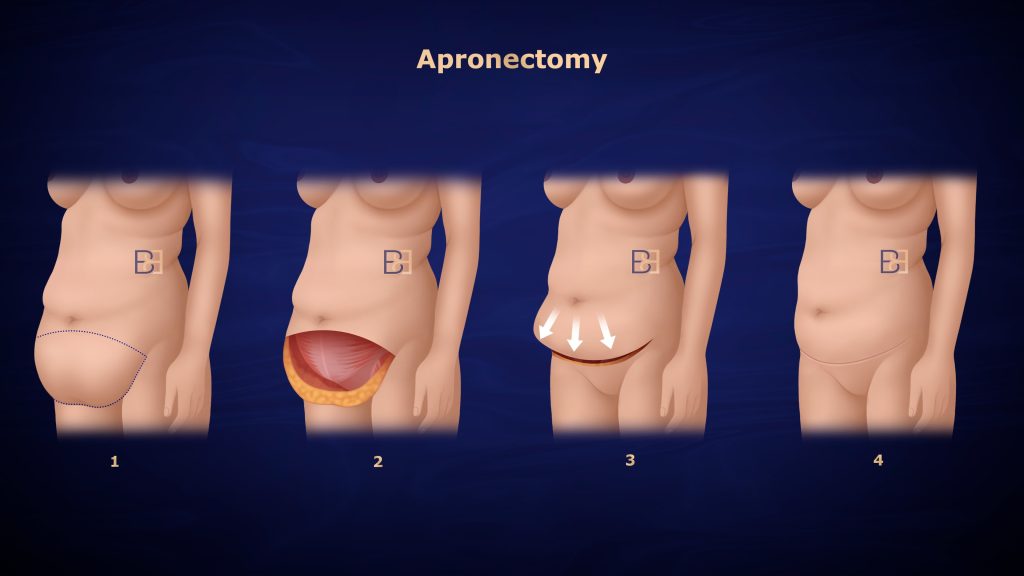
I perform apronectomy at Maitland Private Hospital, mostly as a functional or staging operation for patients with a large overhanging apron of excess skin and fat tissue. If you are still working out whether this operation suits your situation, start with my apronectomy service page. If you are comparing it against the larger operation, my article on complications from abdominoplasty after weight loss covers that procedure separately.
Why apronectomy has a different risk profile
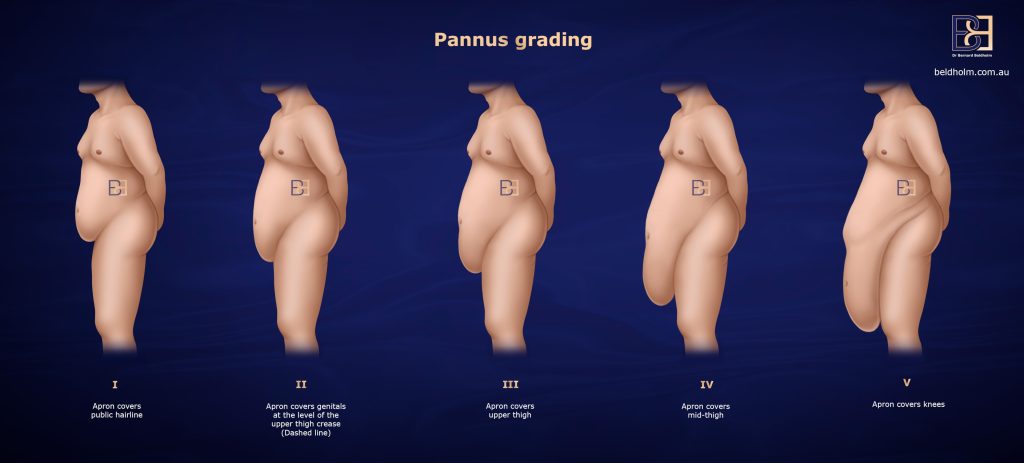
On paper, apronectomy should be the lower risk option. It removes the overhanging apron of skin and fat through a lower abdominal incision with minimal undermining, no repositioning of the belly button (umbilicus), and no repair of separated abdominal muscles. The operation is shorter than an abdominoplasty (tummy tuck) and disturbs less tissue. Yet published complication rates for apron removal run well above those reported for abdominoplasty performed at a stable, lower weight. The reason sits with the patient, not the procedure: in a review of 18,891 abdominal contouring cases, patients with obesity had a complication rate of 15.2% compared with 7.3% in patients without obesity (3).
I offer apronectomy in 2 main situations: as a staging procedure after significant weight loss for patients who have not yet reached their goal weight but have significant functional problems from the apron, and for patients whose medical conditions make a longer operation inappropriate. Both groups carry more risk into the operating theatre than a typical abdominoplasty patient who has reached a stable weight and been medically optimised.
The literature reflects this clearly:
- In a series of post bariatric patients undergoing apron removal, the overall complication rate was 56%. Superficial wound separation was the most common problem at 24%, followed by surgical site infection at 22% and seroma at 18%. 12% of patients needed a return to theatre (2).
- An analysis of 12,732 apron removal cases found that each step up in BMI class independently increased the odds of a post operative complication, with wound problems rising fastest (1).
- In a separate series of 126 post bariatric apron removals, 40% of patients experienced a complication, and a higher BMI at the time of surgery was the only independent predictor, roughly tripling the odds of a problem (4).
None of this makes apronectomy the wrong choice. For the right patient, a shorter operation with a higher wound complication rate is a better trade than a longer operation their body is not ready for. Staging the work is a legitimate clinical decision, and the wound problems that follow apronectomy are mostly minor and managed in the rooms. But you should go into it with accurate expectations: if you are having this operation because your weight is still above goal or your health is complex, your individual risk is higher than the headline figures for abdominal surgery generally. Whether this operation suits you is assessed at consultation.
Wound healing problems
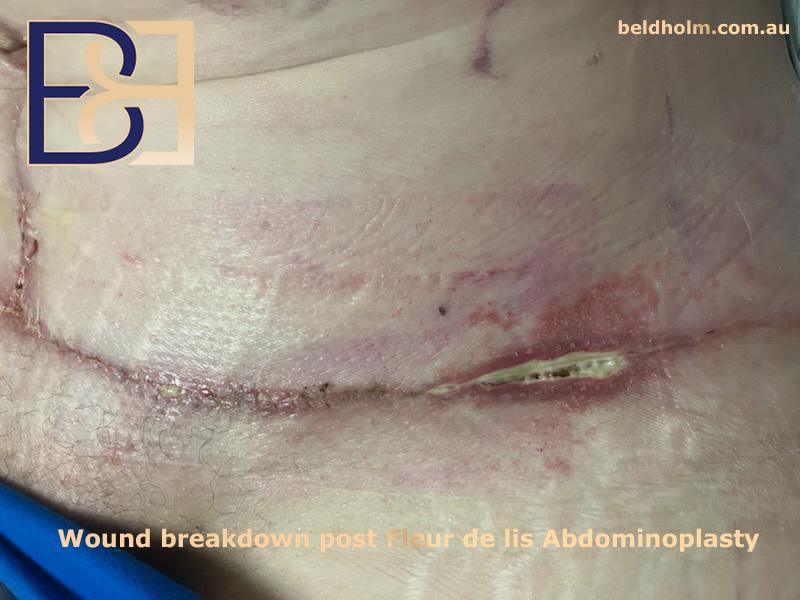
Poor wound healing is the most common complication after apronectomy. In post bariatric series, superficial wound separation (dehiscence) affected around 24% of patients, making it the single most frequent problem after this operation (2). Delayed healing and small areas of skin edge breakdown sit in the same category.
Why the apronectomy wound is vulnerable
Several factors work against this wound:
- Tension. The apron is removed and the remaining skin closed under a degree of tension across a long lower abdominal incision. Tension is the main mechanical driver of wound separation.
- Blood supply. In heavier patients, the fat tissue at the wound edge has a comparatively poor blood supply. Areas of fat and skin edge can break down (fat necrosis and skin edge necrosis) when circulation cannot keep up with the healing process.
- Moisture and skin condition. Many patients coming to apronectomy have longstanding intertrigo under the apron. Skin that has been chronically inflamed or broken does not start from a strong baseline.
- Nutrition. Most post weight loss patients have nutritional gaps, and protein or micronutrient deficiency directly impairs wound healing. This is why I run a full pre operative blood panel on every post weight loss patient.
- Previous abdominal surgery. Scar tissue from earlier operations can interfere with blood supply to the skin between the old scar and the new incision.
- Smoking and diabetes. Both restrict small vessel blood flow and are strongly associated with wound breakdown in the published literature (2).
What wound separation actually looks like
Most dehiscence after apronectomy is superficial. A section of the incision, often near the middle where tension is highest, opens at skin level and produces ooze on the dressing. This is managed with dressings and time, not a return to theatre. Full thickness separation is much less common but needs prompt review.
How I manage it
A PICO negative pressure dressing is applied at the end of the operation and changed at day 7. Negative pressure dressings reduce fluid accumulation at the incision site and support the skin edges during the highest risk period. LED light therapy is part of my post operative follow up and is used to support healing. During the first 2 weeks, when most wound problems appear, you are reviewed frequently in my rooms, so most separations are found early and treated with dressing changes. Larger areas of breakdown or necrotic tissue occasionally need surgical trimming and, rarely, formal revision once everything has settled. Healing speed varies with the factors listed above.
Seroma
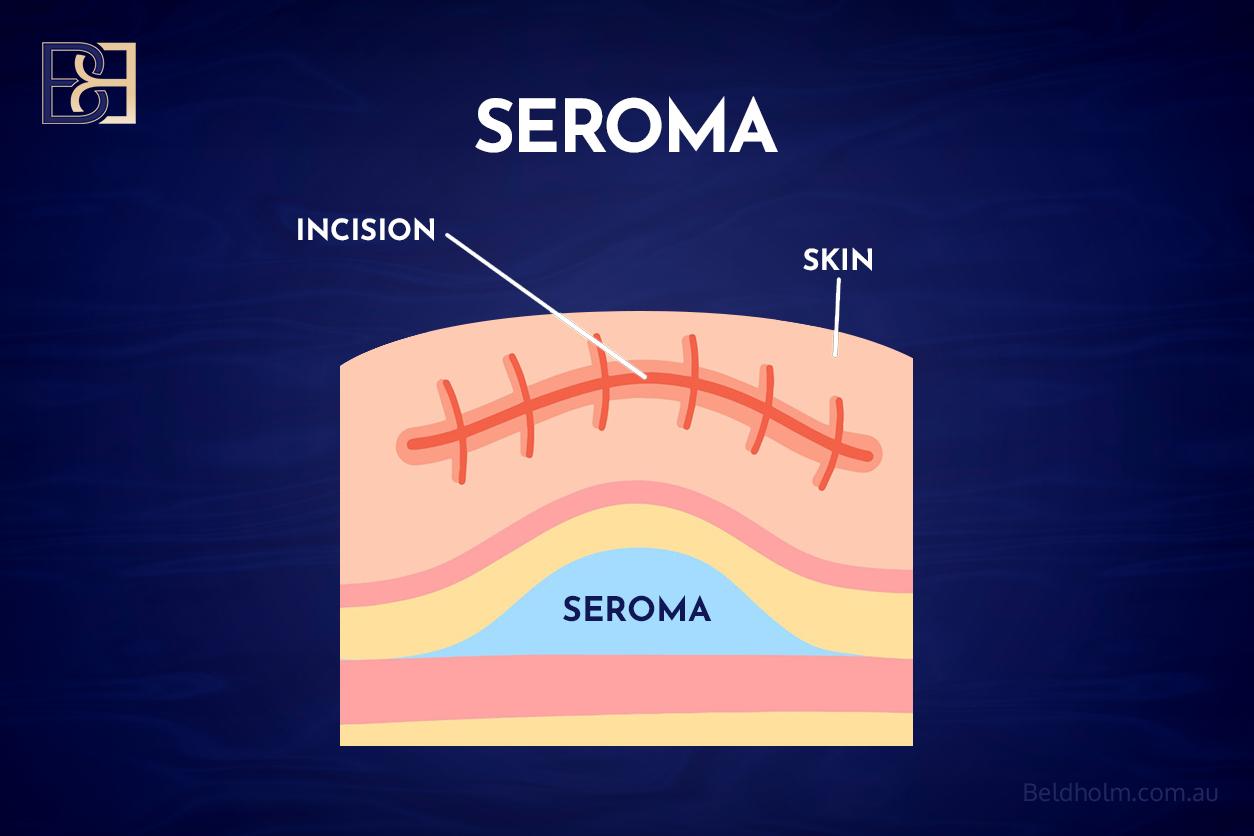
A seroma is a collection of straw coloured fluid that forms in the space where the apron was removed. It is one of the signature complications of this operation, reported in around 17 to 18% of patients in published series (2,4).
Why this operation produces fluid
Removing the apron leaves a large raw surface under the skin. That surface leaks tissue fluid while it heals, and the lymphatic channels that normally drain the lower abdomen and groin are divided along the incision line. Until new channels form, fluid can pool faster than the body clears it. Movement between the skin and the abdominal wall keeps the space open, which is one reason the first 2 weeks of restricted activity matter.
How I reduce the risk
I place closed suction drains (drainage tubes) at the end of the operation. The drains remove fluid while the tissue layers stick back down, and they come out once the daily volume drops to an acceptable level. The PICO negative pressure dressing also reduces fluid accumulation at the wound itself. A compression garment (pressure garment) supports the area once dressings allow.
What to look for and how it is treated
A seroma usually appears in the days to weeks after the drains come out: a soft swelling low in the stomach area, sometimes with a fluid wave you can feel when pressing one side. Small collections are watched and the body absorbs them. Larger or symptomatic collections are drained with a needle in the rooms, often more than once, since seromas tend to re accumulate before they settle. Persistent seromas that keep refilling despite serial drainage are uncommon and occasionally need a drain reinserted or, rarely, surgical management. A seroma that becomes hot, red or painful may be infected and needs prompt review.
Infection

Surgical site infection affects around 17 to 22% of patients after apron removal in post weight loss series (2,4). That is a high figure by general surgical standards, and again the patient profile explains most of it.
Why the infection rate is higher here
The skin fold under an apron is a difficult environment. It is warm, moist and frequently colonised by bacteria and fungal organisms, and many patients come to surgery with active or recently treated skin irritation (intertrigo) in exactly the area the incision will sit. Add higher BMI, diabetes in a proportion of patients, and the wound tension issues covered above, and the conditions favour bacterial growth more than in most elective surgery. Chronic rashes under the apron are actually part of the Medicare criteria for this operation, so by definition many patients arrive with compromised skin.
Superficial versus deeper infection
Most infections after apronectomy are superficial: redness, warmth and tenderness along a section of the incision, sometimes with discharge. These are treated with oral antibiotics and dressing care, and they settle without long term consequence, although they can slow healing and worsen the final scar. Deeper infections, including an infected seroma or an abscess in the wound, are less common. They cause increasingly severe pain, spreading redness, fever or feeling generally unwell, and they may need intravenous antibiotics or drainage.
Warning signs
Contact my rooms promptly if you notice spreading redness, increasing rather than decreasing pain, thick or offensive discharge, fever, or a wound that was settling and then deteriorates. Early treatment keeps most infections in the minor category. The after hours contact pathway is set out at the end of this article.
Bleeding and haematoma
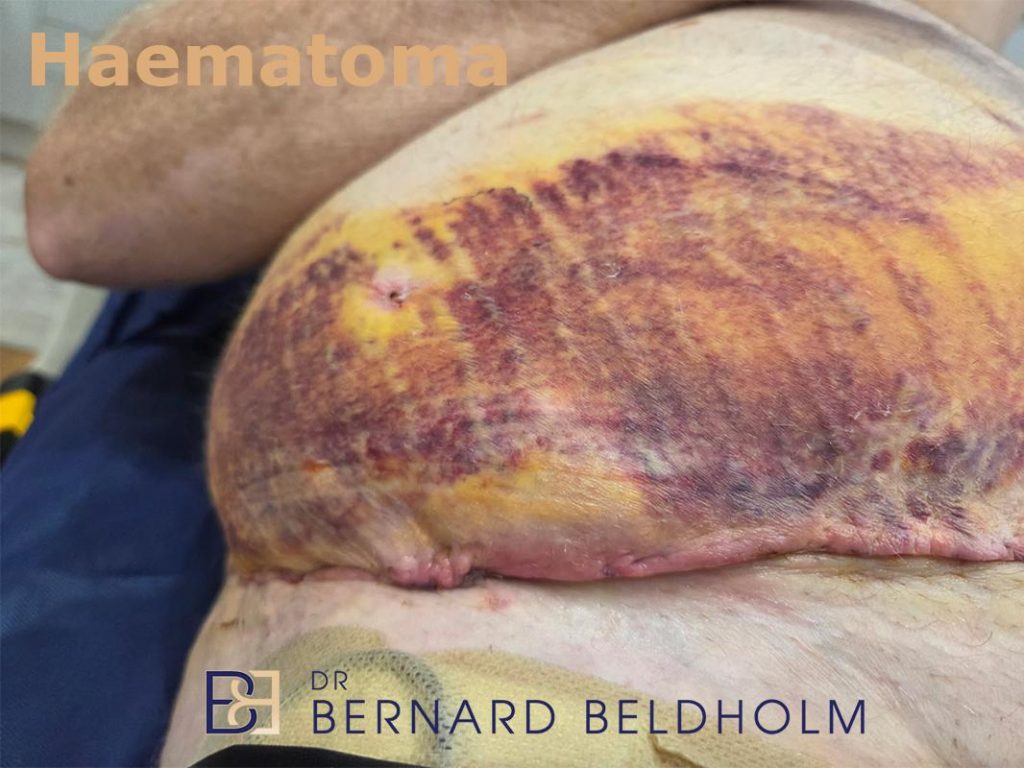
A haematoma is a collection of blood under the skin flaps. After apron removal, published rates sit between 5 and 13% (2,4). The apron has a rich blood supply, particularly in heavier patients, and a large raw surface is left behind when it is removed, so there are many small vessels that can ooze after the operation ends.
When it happens
Most significant bleeding declares itself in the first 24 to 48 hours, while you are still admitted and being monitored. A developing haematoma shows as increasing swelling in the abdominal area that is often one sided, tightness, bruising that spreads, disproportionate pain, or a sudden increase in drain output that is frankly bloody.
How it is managed
Small haematomas are absorbed by the body over weeks and need observation only, although they can increase the risk of infection and wound problems while they resolve. A large or expanding haematoma is treated with a return to theatre to wash out the collection and control the bleeding point. In the post bariatric series discussed earlier, return to theatre for all causes was needed in around 12% of patients, with bleeding one of the contributors (2). Blood transfusion after apronectomy is uncommon, although the likelihood rises in higher BMI patients, and your pre operative blood count is part of the standard panel for exactly this reason.
Certain medicines, blood thinners above all, are a major factor in bleeding risk. How aspirin and anticoagulants are handled before surgery is covered in the risk reduction section below, and the rule that matters is that no medication is stopped or continued without a plan made with me in advance.
Blood clots: DVT and pulmonary embolism
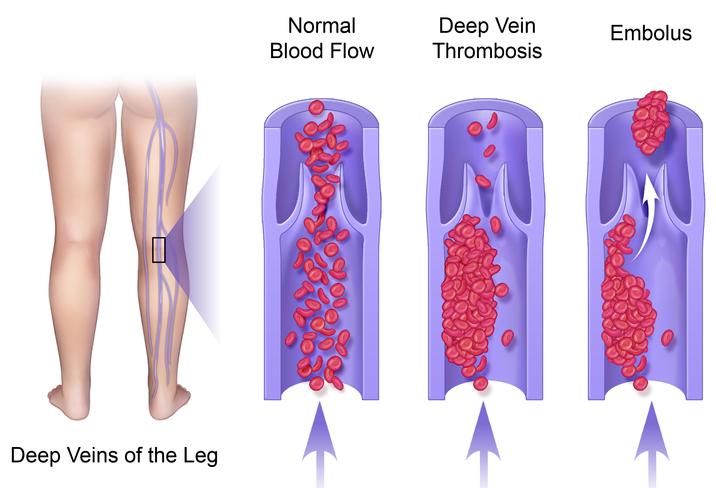
Deep vein thrombosis (DVT) is a clot in the deep veins of the leg or pelvis. If part of that clot breaks off and travels to the lungs it becomes a pulmonary embolism (PE), which is the most serious complication that can follow any body contouring operation. The absolute risk after apronectomy is low, but the consequences are severe enough that clot prevention is built into every stage of how I run this operation.
Why apronectomy patients need particular attention
The risk factors for DVT read like a description of the typical apronectomy candidate: higher BMI, reduced mobility before surgery, and a lower abdominal operation that makes movement uncomfortable in the first days afterwards. Some patients also have a personal or family history of clotting problems, which changes the plan significantly.
What I do about it
I stratify every patient’s clot risk before surgery and decide the thromboprophylaxis plan myself, rather than leaving it to be sorted out on the day. Depending on your risk level this includes compression stockings, calf compression devices on the operating table and afterwards on the ward, blood thinning injections while in hospital, and in higher risk patients continued injections at home. Early mobilisation matters as much as any of it: you will be walking, bent forward, on the day of or the day after surgery. A full explanation of how I assess and manage clot risk across all my procedures is in my article on [DVT prevention in body contouring surgery].
Warning signs
A painful, swollen or tight calf, particularly one sided, needs review the same day. Sudden shortness of breath, chest pain or coughing blood is treated as an emergency: call 000, do not wait to contact my rooms.
Scarring and contour issues
Not everything on this list is a complication in the strict sense. Some of it is the expected result of what apronectomy is and is not designed to do, and the distinction matters when you are weighing up the operation.
The scar
Apronectomy leaves a long scar across the lower abdomen, sitting just above the pubic hair line and running hip to hip or wider depending on the size of the apron. It sits in a similar position to a tummy tuck scar, although it is often longer. This is not a small incision procedure; every patient gets this scar. What varies is its quality. Most scars fade from red and raised to a pale flat line over 12 to 18 months. A proportion remain thickened (hypertrophic) or stretch wider than expected, and this is more likely where there were wound healing problems, infection, or tension on the closure. Genetics play a large part, and patients with darker skin have a higher rate of raised or pigmented scarring. My article on scarring after body contouring surgery covers scar care and revision in detail.
Residual laxity above the scar is expected
This is the point I spend the most time on at consultation. Apronectomy is designed to remove excess skin, the hanging apron below the belly button (umbilicus). It does not tighten the upper abdomen, does not treat muscle separation (diastasis recti, also called rectus diastasis) where present, and does not reposition the belly button (umbilicus). Loose abdominal skin above the scar line after surgery is not a failed operation; extra skin in that area is the expected result of an operation that treats the apron only. Stretch marks on the apron are removed with it, while stretch marks above the scar line remain.
Apronectomy is also not a limited abdominoplasty, sometimes called a mini abdominoplasty or partial abdominoplasty. Those procedures tighten skin and sometimes the abdominal muscles through a shorter incision in patients close to their goal weight, while apronectomy removes a larger volume of skin and fat without any muscle work. Patients planning apronectomy as a first stage often go on to further surgery once their weight and health allow, commonly a full tummy tuck procedure or a Fleur de Lis abdominoplasty where side to side laxity needs a vertical excision, and that is discussed before the first operation, not after it.
Dog ears and contour irregularity
Where the scar ends at each side, a small fold of raised tissue can form, known as a dog ear. Higher BMI and larger resections make these more likely. Many settle over 6 to 12 months. Persistent dog ears can be revised under local anaesthetic in the rooms in most cases. Other contour issues include fullness from excess fat above the scar and asymmetry between sides. Minor asymmetry is normal; significant irregularity is uncommon and assessed once swelling has fully resolved, which takes months rather than weeks.
Numbness
An area of reduced skin sensation between the scar and the belly button (umbilicus) is near universal after this operation, because the small nerves supplying that skin are divided with the apron. Sensation resolves over 12 to 24 months but a patch of permanent numbness or altered sensation is common and you should expect some. Nerve pain that is burning or electric in quality is less common and usually settles, and is worth reporting at follow up if it persists.
Anaesthetic and medical risks
Apronectomy is performed under general anaesthetic, and the anaesthetic carries its own risk profile separate from the surgery. For most patients these risks are low, but the same factors that raise surgical risk after apronectomy, higher BMI, diabetes, sleep apnoea, heart and lung conditions, also raise anaesthetic risk. This is one of the reasons the operation is done at Maitland Private Hospital with an overnight stay rather than as day surgery.
How the anaesthetic assessment works in my practice
Your anaesthetist reviews your history and speaks with you by phone before surgery in the majority of cases. The physical examination, including airway assessment, happens on the day of surgery. An in person anaesthetic review before the day is uncommon and reserved for patients whose medical history needs it. If you have significant heart, lung or airway concerns, tell my rooms early so this can be arranged rather than discovered on the day.
Specific risks
- Airway and breathing. Higher BMI and obstructive sleep apnoea make airway management and post operative breathing more demanding. If you use a CPAP machine, bring it to hospital.
- Heart and circulation. Anaesthesia stresses the cardiovascular system. Pre existing conditions are assessed and managed in advance, which is part of why the pre operative blood panel and a complete medical history matter.
- Nausea and vomiting. Common in the first 24 hours and actively managed with medication.
- Rare events. Serious anaesthetic complications, including allergic reactions and awareness under anaesthesia, are rare. Your anaesthetist discusses these with you directly, and questions about anaesthetic risk are best put to them.
Medical complications after surgery
Beyond the abdominal region itself, the days after any general anaesthetic carry a small risk of chest infection, urinary retention or urinary tract infection, and flare ups of existing medical conditions. Early mobilisation and breathing exercises reduce the chest risks, and the nursing team at Maitland Private monitors for all of these while you are admitted. I round on my patients daily while they are in hospital, so problems are picked up and treated early.
Reducing your risk before surgery
Most of the complications above share the same short list of drivers: nutritional state, weight, smoking, blood sugar control, skin condition and medication management. These are the things you and I can influence before the operation, and with apronectomy’s risk profile, preparation carries more weight than it does for smaller procedures.
Nutrition
Most patients who have been through significant weight loss have nutritional gaps, whether their weight loss came through surgery, medication or lifestyle change. Protein and micronutrient deficiencies directly impair wound healing, and wound problems are the most common complication of this operation, so this is the single highest yield area to get right. Every post weight loss patient in my practice has a full pre operative blood panel, and supplementation is guided by the results rather than guesswork. The details are covered in my [pre operative blood tests article] and my nutritional deficiencies after weight loss article, and correction starts weeks before surgery, not the week of.
Weight stability
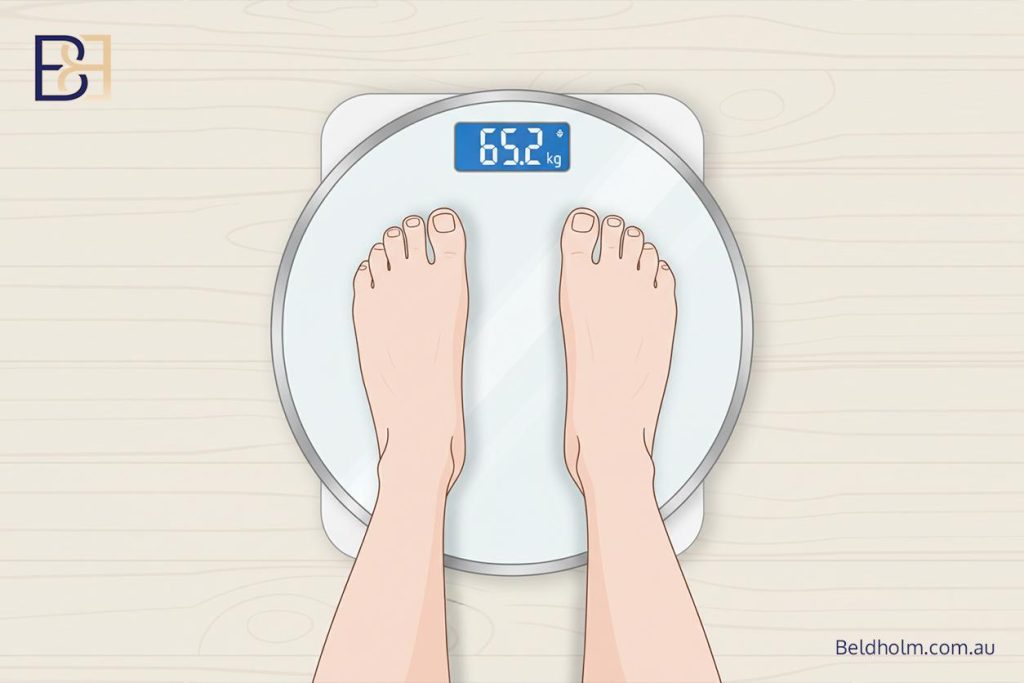
Apronectomy is often performed after extensive weight loss in patients still above their goal weight, and that is a legitimate use of the operation. Even so, your weight should be stable rather than still falling. Operating while you are actively losing weight means healing in a catabolic state, and significant weight gain afterwards can undo the result. Medicare also treats this operation as reconstructive surgery rather than cosmetic surgery, with eligibility criteria that include a stable weight. If you are on weight loss medication, current Australian guidelines do not require GLP-1 receptor agonists to be routinely stopped before surgery, and I follow those guidelines. If protein intake is falling short of target in the lead up, a temporary dose adjustment is sometimes discussed as part of your perioperative plan. That is a decision made with me, not one to make yourself.
Smoking, diabetes and skin
Smoking, including vaping nicotine, restricts blood flow to the wound edge and multiplies the risk of skin necrosis and wound breakdown. I require smoking to stop well before surgery, and this is non negotiable for an operation with this wound profile. Diabetes should be as well controlled as it can be, with your GP involved early; your HbA1c is part of the standard panel. Active intertrigo or broken skin under the apron is treated before surgery rather than operated through, so flag rashes to my rooms ahead of your admission date.
Medication
Aspirin and anticoagulants are typically stopped 1 week before surgery, but some patients need to continue through the operation, and that is planned well in advance with the doctor who prescribed them. Never stop a blood thinner on your own. Bring a complete medication list, including supplements, to consultation.
My follow-up structure and when to contact us
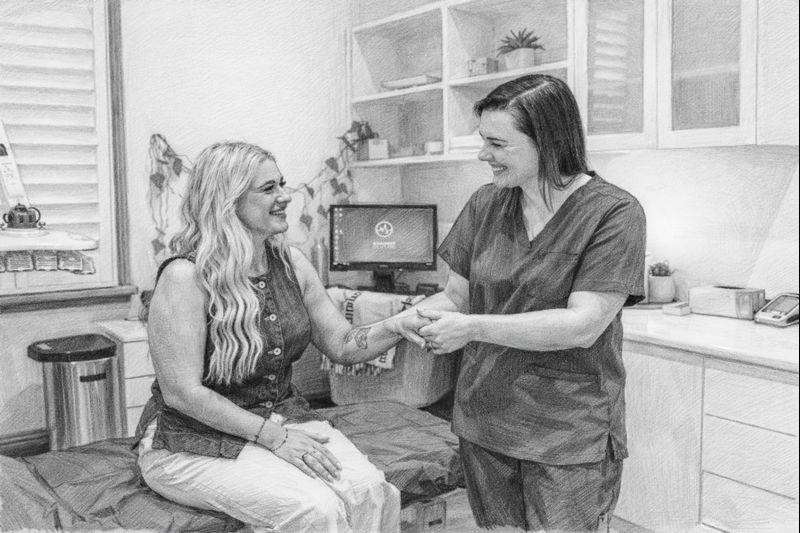
Most complications after apronectomy are manageable when found early, and my follow up schedule is built around the periods when each problem tends to appear.
The schedule
The first 2 weeks involve intense follow up, with frequent reviews by me and my nurse. This is when wound separation, infection, haematoma and early seroma declare themselves, and when your PICO dressing comes down at day 7. After that, I review you at 4 weeks, then at 3, 6 and 12 months. All follow up is included in your surgical fee. The later reviews track scar maturation, late seroma, contour settling and, where relevant, planning for any further stage of surgery. LED light therapy is part of the post operative program to support healing. You go home with written post operative instructions covering wound care, garments and activity, including when strenuous exercise can resume.
While you are in hospital I round daily, and the ward nursing team at Maitland Private monitors your wound, drains and general recovery around the clock.
Between appointments
If something changes between scheduled reviews, contact my rooms during business hours. Send a photo if asked; wound concerns are often sorted with a photo and a phone call, and I would rather see 10 non problems than miss 1 real one.
After hours
After hours, call Maitland Private Hospital, where nurse led phone triage will assess the concern and escalate to me where needed. Maitland Private is not an emergency department. Anything needing physical assessment after hours, such as heavy bleeding, spreading infection or an opening wound, should go to your local emergency department. For anything life threatening, including sudden shortness of breath, chest pain or collapse, call 000 immediately.
The bottom line on risk

Apronectomy has a higher complication rate than its size suggests, because it is offered to patients with higher baseline risk. Most complications are wound related, most are minor, and most are treated in the rooms without another operation. The serious events are uncommon, and the systems above exist to catch them early. Whether this operation is appropriate for you, and what your individual risk looks like, is assessed at consultation. Results and recovery vary between patients.
References
- Cadwell JB, Ahsanuddin S, Ayyala HS, Ignatiuk A. Panniculectomy outcomes by body mass index: an analysis of 12,732 cases. Obes Surg. 2021;31(8):3660-6.
- Derickson M, Phillips C, Barron M, Kuckelman J, Martin M, DeBarros M. Panniculectomy after bariatric surgical weight loss: analysis of complications and modifiable risk factors. Am J Surg. 2018;215(5):887-90.
- Wang HP, Gaddis C, Bayless M, Hollman N, Williams J, Alamiri N, et al. Impact of obesity on the outcomes of panniculectomy and abdominoplasty: an ACS-NSQIP analysis. J Plast Reconstr Aesthet Surg. 2025;106:286-93.
- Arthurs ZM, Cuadrado D, Sohn V, Wolcott K, Lesperance K, Carter P, et al. Post-bariatric panniculectomy: pre-panniculectomy body mass index impacts the complication profile. Am J Surg. 2007;193(5):567-70.