Significant weight loss can result in excess abdominal skin, changes to the abdominal wall, and ongoing skin conditions that may interfere with daily activities and work.
For some patients, a tummy tuck (abdominoplasty) performed after major weight loss may be assessed as medically necessary rather than a cosmetic procedure.
Many patients ask whether Medicare will cover their tummy tuck (abdominoplasty) after weight loss. The answer depends on whether strict criteria are met under the Medicare Benefits Schedule (MBS).
Medicare coverage is not automatic. Eligibility is assessed based on:
- Documented medical or functional problems
- Failure of appropriate non-surgical conservative treatment
- Evidence that symptoms are a direct consequence of significant weight loss
This article explains how Medicare coverage works for post-weight-loss abdominoplasty, who may qualify for a Medicare rebate, and how private health insurance can help reduce overall costs.
Table of Contents
What Is Post-Weight-Loss Abdominoplasty?
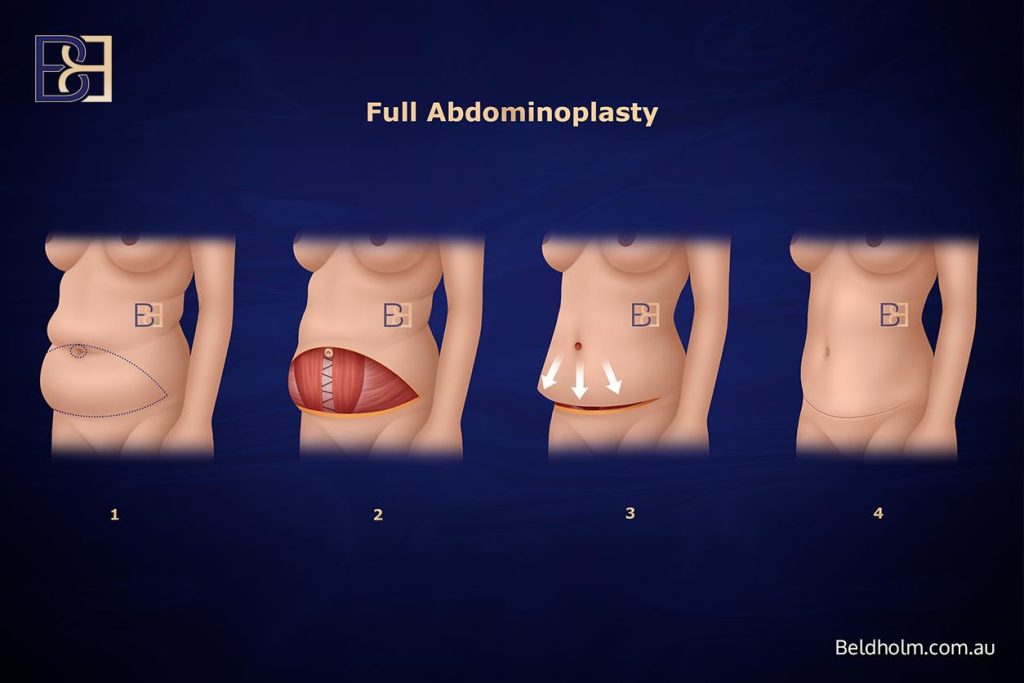
In the context of Medicare, post-weight-loss abdominoplasty refers to a tummy tuck (abdominoplasty) performed following significant weight loss where excess abdominal skin and related conditions cause ongoing medical or functional problems. The distinction is important because Medicare eligibility is based on medical necessity rather than appearance.
This article focuses on when abdominoplasty after weight loss may meet Medicare criteria, including the presence of documented symptoms, failure of appropriate non-surgical conservative treatment, and confirmation that the condition is a direct consequence of significant weight loss, as assessed under the Medicare Benefits Schedule.
Does Medicare Cover Abdominoplasty After Weight Loss?
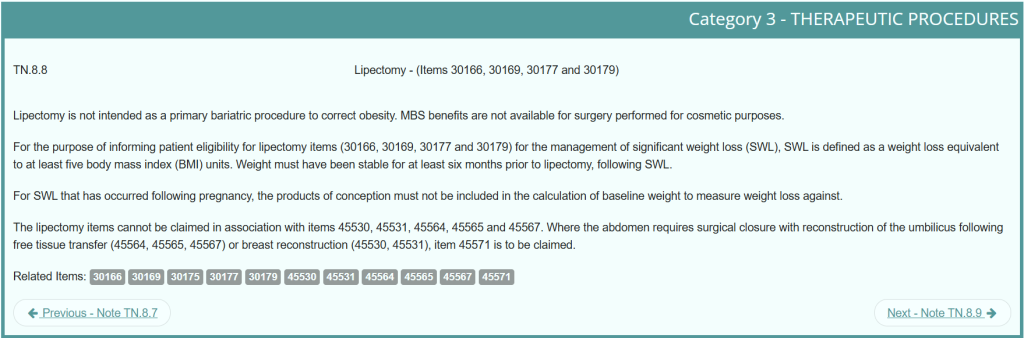
Medicare may provide a rebate for abdominoplasty after weight loss only when the procedure is considered medically necessary. This assessment is based on specific eligibility criteria set out in the Medicare Benefits Schedule (MBS).
Medicare does not cover abdominoplasty performed solely as a cosmetic procedure. The presence of excess skin alone is not sufficient. There must be documented medical or functional problems that are a direct consequence of significant weight loss.
In practical terms, Medicare cover may be considered when:
- Excess abdominal skin causes recurrent skin conditions such as intertrigo or skin infections
- Redundant skin and fat interfere with normal daily activities or work
- Skin integrity issues persist despite appropriate non-surgical conservative treatment
- The condition has developed following significant weight loss and weight has remained stable
Even when these factors are present, Medicare coverage is not guaranteed. Eligibility must be assessed on an individual basis, and the procedure must meet the descriptor and requirements of a relevant MBS item number.
Private health insurance is closely linked to Medicare and only applies when a valid Medicare Benefits Schedule (MBS) item number is assigned. If an abdominoplasty does not meet the criteria for an MBS item number, private health insurance will not provide cover, regardless of the level of insurance held. Where an eligible MBS item number applies, private health insurance may assist with hospital costs and part of the medical fees, depending on the individual policy.
What Medicare Means by “Significant Weight Loss”
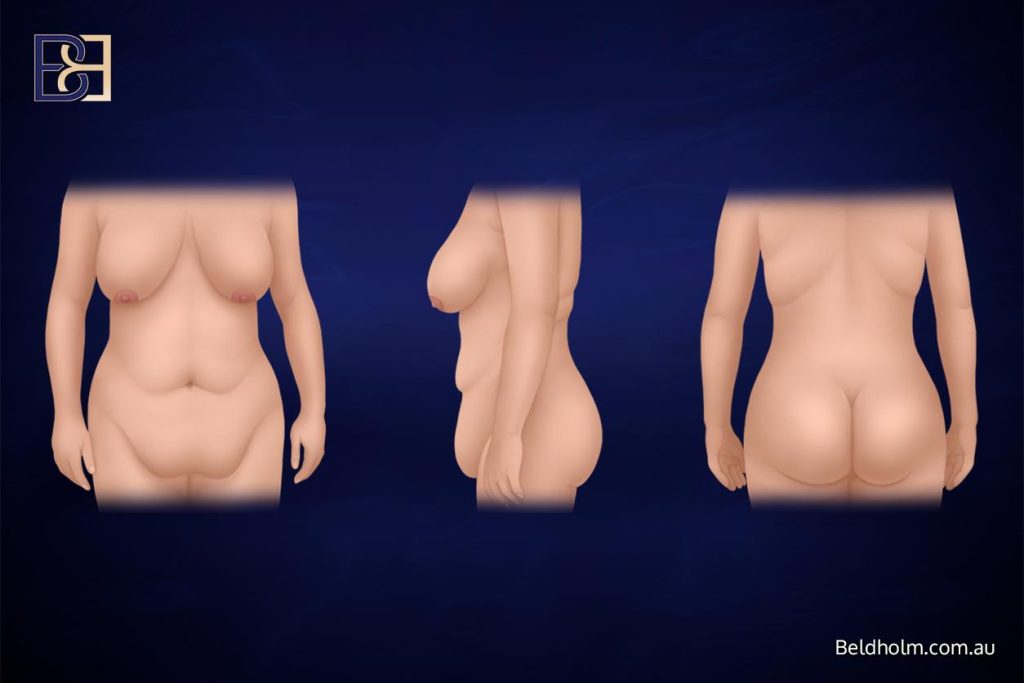
For Medicare purposes, the term significant weight loss has a specific clinical meaning and is not based on a patient’s perception of weight change. Medicare generally defines significant weight loss as a reduction of at least five body mass index (BMI) points.
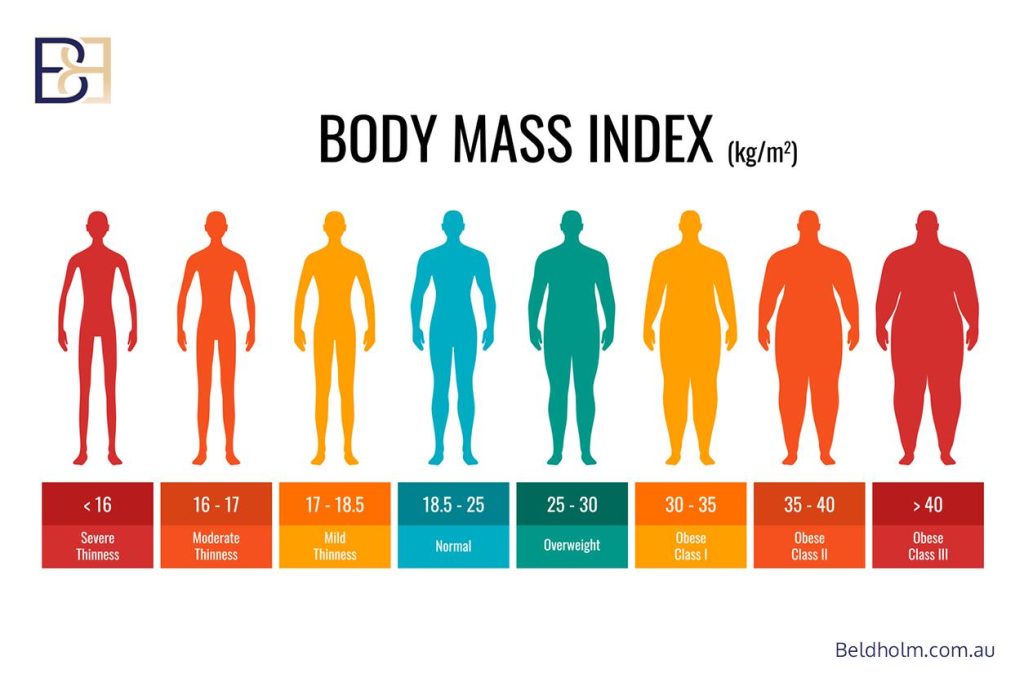
In practical terms, a reduction of five BMI points does not correspond to a fixed amount of weight. The number of kilograms lost will vary depending on a person’s height and starting body mass index. For Medicare assessment, the key consideration is the documented change in BMI over time, rather than total kilograms lost alone.
In addition to the amount of weight lost, Medicare requires evidence that:
- The weight loss occurred prior to the development of excess abdominal skin and related symptoms
- Weight loss was a direct consequence of lifestyle changes or bariatric surgery
- Body weight has remained stable for a minimum of six months before considering abdominoplasty
Weight loss related to pregnancy is assessed differently and is not included when determining eligibility for post-weight-loss abdominoplasty under Medicare criteria.
Both lifestyle-related weight loss and weight loss following bariatric surgery may be considered, provided the required BMI reduction and period of weight stability are met.
Examples of a five-point BMI reduction:
- A person who is 170 cm tall with a starting BMI of 35 would need to reduce their BMI to 30. This typically represents a weight loss of approximately 14–15 kg.
- A person who is 180 cm tall with a starting BMI of 38 would need to reduce their BMI to 33. This commonly equates to a weight loss of approximately 16–18 kg.
These figures are examples only. Medicare assessments rely on documented BMI change over time rather than estimated weight loss alone. These factors are assessed alongside documented medical issues and failure of non-surgical conservative treatment when determining whether an MBS item number may apply.
What Should I Do to Access to Medicare?

Patients cannot self-assign a Medicare Benefits Schedule (MBS) item number. The process begins in primary care and relies heavily on appropriate documentation.
Key steps include:
- See your General Practitioner (GP) early. Your GP should document your weight before weight loss, including recorded body mass index (BMI), to establish objective evidence of significant weight loss.
- Ensure that weight loss is documented over time, including the method of weight loss (e.g., lifestyle changes or bariatric surgery) and confirmation of a stable weight period.
- Ask your GP to document skin-related and functional issues, such as recurrent skin infections, intertrigo, difficulties with skin hygiene, or interference with daily activities and work.
- Ensure these findings are included in your referral letter. The referral to Dr Bernard Beldholm should clearly state the history of weight loss, documented BMI change, and the associated medical or functional problems.
Accurate GP documentation forms the foundation of Medicare assessment and allows a specialist surgeon to determine whether an abdominoplasty after weight loss may meet the criteria for an eligible MBS item number.
Medical Conditions That May Support Medicare Coverage
For Medicare purposes, abdominoplasty after weight loss is assessed based on medical necessity, not appearance. This means there must be documented medical conditions or functional problems that are directly related to excess abdominal skin, redundant skin, and fat following significant weight loss.
The most commonly assessed conditions are outlined below.
Excess Abdominal Skin and Skin Conditions
After significant weight loss, redundant abdominal skin may lead to ongoing skin problems that affect health and daily functioning. Medicare may consider these issues when they are persistent, documented, and have not responded to conservative management.
Examples include:
- Recurrent intertrigo or other inflammatory skin conditions within skin folds
- Repeated skin infections requiring medical treatment
- Breakdown of skin integrity despite appropriate hygiene measures
- Difficulty maintaining skin hygiene due to redundant skin and fat
These conditions should be documented in the patient’s medical records and linked to excess abdominal skin as a direct consequence of weight loss.
Functional Impact on Daily Activities
In addition to skin conditions, Medicare considers whether redundant abdominal skin causes functional problems. This refers to interference with normal activities rather than cosmetic concerns.
Functional issues may include:
- Difficulty performing work-related tasks
- Restriction of physical activity due to excess skin
- Discomfort or irritation during movement or exercise
- Ongoing symptoms that affect day-to-day living
The impact on function should be clearly documented and supported by the clinical history.
Failure of Non-Surgical Conservative Treatment
Medicare requires evidence that appropriate non-surgical conservative treatment has been attempted before surgery is considered. This is an essential component of eligibility assessment.
Examples of conservative management may include:
- Medical treatment for skin conditions
- Topical therapies and hygiene measures
- Lifestyle modifications aimed at symptom control
If these measures have failed to resolve symptoms of at least moderate severity, this should be documented in the patient’s records and reflected in the referral to the specialist surgeon.
These medical and functional factors are assessed together when determining whether abdominoplasty after weight loss may meet the criteria for a relevant Medicare Benefits Schedule (MBS) item number.
The Medicare Benefits Schedule (MBS) and Abdominoplasty After Weight Loss
Rather than creating eligibility, the Medicare Benefits Schedule (MBS) acts as the mechanism through which Medicare assesses and applies rebates once medical necessity has already been established.
In practical terms, this means:
- Medical necessity, functional impact, and failed conservative treatment must be demonstrated before an MBS item number is considered
- An MBS item number formalises eligibility but does not override clinical criteria
- If no appropriate MBS item number applies, no Medicare rebate is payable and private health insurance cannot be used
The role of the MBS is therefore administrative and regulatory, not discretionary. Once eligibility is established, the specific item number applied depends on the pattern of excess skin, associated skin conditions, and whether the surgery treats abdominal skin alone or circumferential excess following massive weight loss.
MBS Item Numbers Commonly Used for Post-Weight-Loss Abdominoplasty
Several Medicare Benefits Schedule (MBS) item numbers may be relevant for patients seeking abdominoplasty after significant weight loss. These item numbers are highly specific and apply only when all descriptor requirements are met.
The item number used depends on the location and extent of excess skin, the presence of skin conditions, and whether the procedure treats the abdominal skin alone or circumferential excess.
MBS Item 30177 – Radical Abdominoplasty After Significant Weight Loss
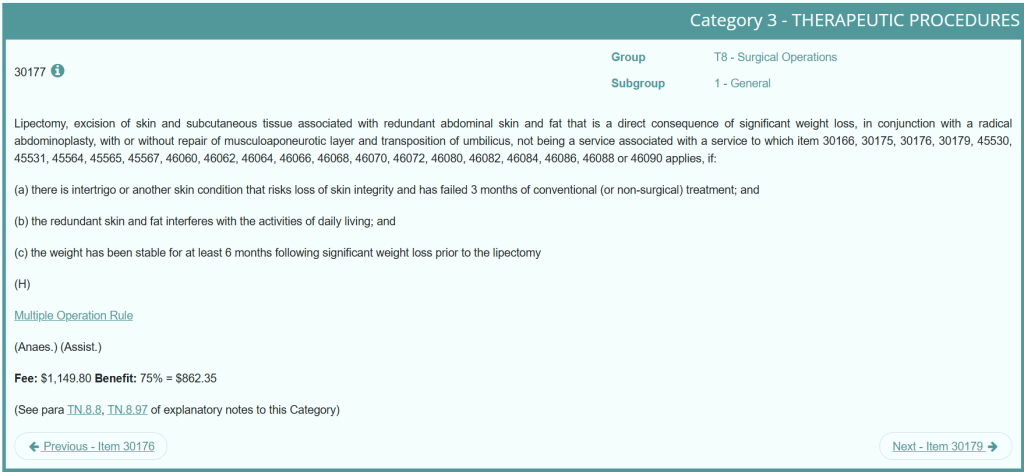
MBS item number 30177 is the most commonly used item for post-weight-loss abdominoplasty. It applies where there is removal of excess abdominal skin and subcutaneous tissue following significant weight loss, and where associated medical conditions are present.
Key eligibility requirements typically include:
- Documented significant weight loss of at least five BMI points
- Stable weight for a minimum of six months
- Ongoing skin conditions (such as intertrigo or recurrent infections) or functional problems related to redundant abdominal skin
- Evidence that appropriate non-surgical conservative treatment has failed
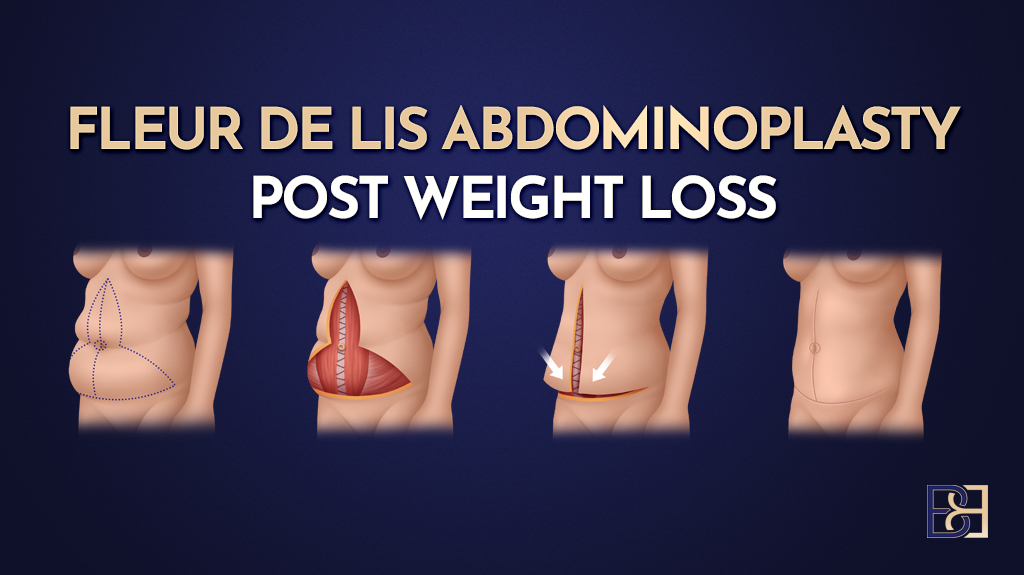
This item number may include radical abdominoplasty with or without repair of the musculoaponeurotic layer, depending on clinical findings.
MBS Item 30179 – Circumferential Lipectomy
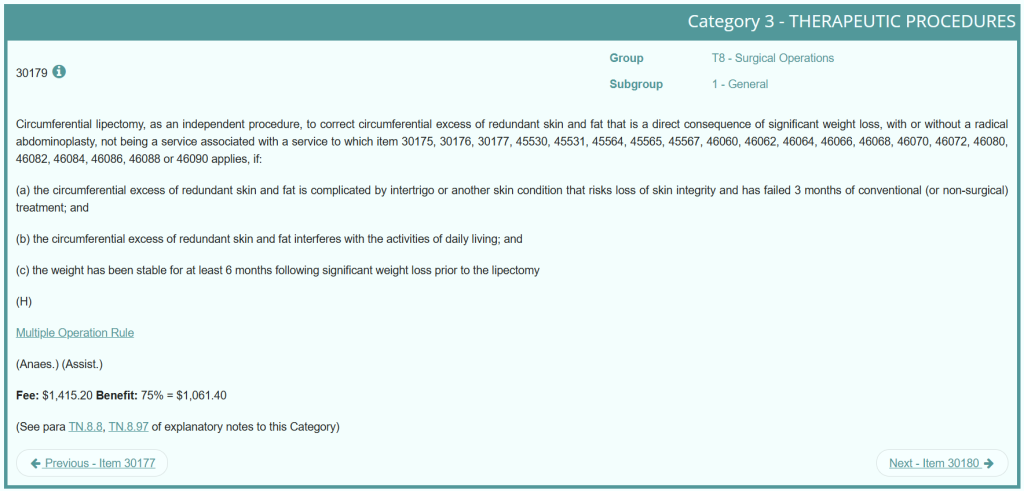
MBS item number 30179 may apply in patients who have circumferential excess skin and fat following massive weight loss. This item is generally considered when excess tissue extends beyond the abdomen and affects the waist or trunk.
Eligibility considerations commonly include:
- Significant weight loss with maintained weight stability
- Circumferential excess skin and fat causing skin conditions or functional impairment
- Failure of appropriate non-surgical conservative management
This item does not include radical abdominoplasty and is assessed separately based on the distribution of excess tissue.
MBS Item 30166 – Wedge Excision of Redundant Abdominal Skin
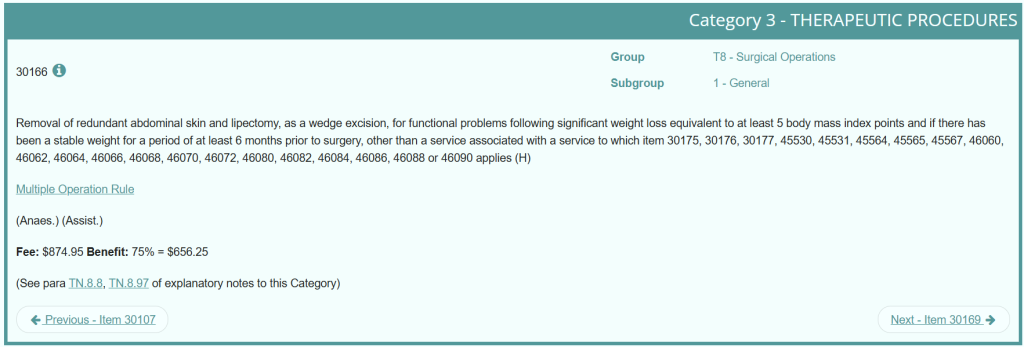
MBS item number 30166 is most commonly used for an apronectomy, where there is removal of a limited apron of redundant lower abdominal skin and subcutaneous tissue as a wedge excision, rather than a full abdominoplasty.
This item applies when redundant abdominal skin causes documented functional problems following significant weight loss, and where the procedure does not meet the criteria for a radical abdominoplasty item.
Key eligibility requirements include:
- Significant weight loss equivalent to at least five BMI points
- A stable weight for a minimum of six months prior to surgery
- Documented functional problems related to redundant lower abdominal skin (such as skin irritation, hygiene difficulties, or interference with daily activities)
Item 30166 is typically limited to skin and subcutaneous tissue excision and does not include repair of the abdominal wall or musculoaponeurotic layer.
Book your appointment online now
What Medicare and Private Health Insurance May Cover

When an abdominoplasty after weight loss meets the criteria for an eligible Medicare Benefits Schedule (MBS) item number, Medicare and private health insurance may contribute to different parts of the overall cost. It is important to understand what is — and is not — covered.
Medicare Rebates
Medicare provides a rebate on medical fees only when a valid MBS item number applies. This rebate is calculated as a percentage of the MBS schedule fee and does not reflect the total cost of surgery.
Medicare does not cover:
- Private hospital accommodation
- Theatre fees
- Surgical consumables
- Most out-of-hospital costs
As a result, Medicare rebates usually represent only a partial contribution toward the overall cost of surgery.
Private Health Insurance

Private health insurance can only be used in conjunction with Medicare and only when an eligible MBS item number applies.
Where applicable, private health insurance may assist with:
- Private hospital costs (subject to excesses and policy restrictions)
- Part of the medical fees, based on the MBS schedule fee
Private health insurance will not provide cover if:
- No MBS item number applies
- The procedure is classified as cosmetic
- The relevant MBS item is excluded from the patient’s level of cover
Patients should confirm their level of cover directly with their health fund, including any waiting periods, exclusions, excesses, and potential out-of-pocket expenses.
Out-of-Pocket Costs and the Quoting Process at Our Practice
Once you have been assessed by Dr Bernard Beldholm, our patient coordinator will provide you with a detailed written quote. This quote will include the appropriate MBS item number (if applicable), the total surgical fees, and an estimate of anaesthetic fees.
Your anaesthetist will provide a separate anaesthetic quote, which our team will coordinate. If you have private health insurance, the hospital will also perform a health fund eligibility check to confirm whether the relevant MBS item number is included in your level of cover.
The quotes you receive will clearly outline:
- Total surgical fees
- Anaesthetic fees
- Assistant surgeon fees (where applicable)
- The applicable MBS item number
- Expected out-of-pocket expenses
You can then provide these details to your private health fund to confirm how much may be rebated under your policy.
To secure a surgery date, a $500 deposit is required. Surgical fees are payable prior to your surgery date, in accordance with standard practice and hospital requirements.
Even when Medicare and private health insurance apply, out-of-pocket costs are common due to gaps between provider fees and the MBS schedule, as well as costs not covered by Medicare or private health insurance.
Common Reasons Medicare Coverage Is Declined
Medicare coverage for post-weight-loss abdominoplasty is tightly regulated. Even when patients have experienced significant weight loss, it is common for Medicare rebates to be declined if specific criteria are not met.
Common reasons include:
The Procedure Is Considered Cosmetic
If abdominoplasty is being performed primarily for appearance-related reasons and there is no clear documentation of medical or functional problems, Medicare will not apply. Excess skin alone, without associated symptoms, is insufficient.
Insufficient Documentation of Weight Loss
Medicare relies on objective evidence. Claims may be declined if:
- Pre–weight loss body mass index (BMI) is not documented
- The reduction of at least five BMI points cannot be demonstrated
- Weight stability for a minimum of six months is not clearly recorded
Lack of Documented Medical or Functional Problems
If skin conditions, functional impairment, or interference with daily activities are not clearly documented in GP or specialist records, Medicare eligibility is unlikely.
Conservative Treatment Has Not Been Demonstrated
Medicare requires evidence that appropriate non-surgical conservative treatment has been attempted and failed. Claims may be declined if conservative measures are not documented or were not trialled for a sufficient period.
No Applicable MBS Item Number
If the procedure does not meet the descriptor of a relevant Medicare Benefits Schedule (MBS) item number, no Medicare rebate is payable. In these cases, private health insurance also cannot be used.
Understanding these common reasons can help patients and referring practitioners ensure appropriate documentation and realistic expectations before proceeding with specialist assessment.
Frequently Asked Questions (FAQ)

Does Medicare cover a tummy tuck (abdominoplasty) after weight loss?
Medicare may provide a rebate for a tummy tuck (abdominoplasty) after weight loss only if the procedure meets strict medical criteria. This requires documented significant weight loss, associated medical or functional problems, failure of appropriate non-surgical conservative treatment, and eligibility under a relevant Medicare Benefits Schedule (MBS) item number. Medicare does not cover abdominoplasty performed for cosmetic reasons.
What is the BMI requirement for Medicare-covered abdominoplasty?
Medicare generally requires evidence of significant weight loss of at least 5 body mass index (BMI) points. This reduction must be clearly documented, along with evidence that the weight has remained stable for at least 6 months prior to surgery.
Does excess skin alone qualify for Medicare coverage?
No. Excess skin alone is not sufficient. Medicare requires evidence that redundant abdominal skin causes medical issues or functional problems, such as recurrent skin infections, intertrigo, hygiene difficulties, or interference with daily activities and work.
Do I need to try non-surgical treatments first?
Yes. Medicare requires documentation that appropriate non-surgical conservative treatment has been attempted and has failed to resolve symptoms of at least moderate severity. This may include medical treatment for skin conditions, topical therapies, or other conservative measures.
Can private health insurance cover my surgery if Medicare does not?
No. Private health insurance is directly linked to Medicare. If no eligible MBS item number applies, private health insurance cannot be used, regardless of the level of cover held.
When will I know if an MBS item number applies to me?
An MBS item number can only be determined after specialist assessment. Following consultation with Dr Bernard Beldholm, your eligibility will be assessed and, if appropriate, the relevant MBS item number will be included in your written quote.
Will Medicare or private health insurance cover all of my costs?
No. Even when Medicare and private health insurance apply, patients should expect out-of-pocket expenses. Medicare rebates are based on the MBS schedule fee and do not reflect the total cost of surgery. Private health insurance may assist with hospital costs and part of the medical fees, depending on the policy.
What should I do before my specialist consultation?
Seeing your GP early is important. Your GP should document your weight history, BMI before and after weight loss, weight stability, and any skin or functional issues. This information should be included in the referral letter to support Medicare assessment.
Key Takeaways for Post-Weight-Loss Patients

Medicare coverage for abdominoplasty after weight loss is possible, but it is strictly regulated and depends on clear medical criteria rather than personal circumstances or expectations.
Key points to remember include:
- Medicare eligibility is based on medical necessity, not appearance
- Significant weight loss is generally defined as a reduction of at least five BMI points, with stable weight for six months
- Excess skin must be associated with documented medical or functional problems
- Appropriate non-surgical conservative treatment must be attempted and documented
- A valid MBS item number is required for both Medicare rebates and private health insurance to apply
- Eligibility can only be confirmed after specialist assessment
Seeing your GP early, ensuring accurate documentation, and obtaining a specialist opinion are essential steps in determining whether post-weight-loss abdominoplasty may qualify for Medicare support.