Abdominoplasty (tummy tuck) is major surgery. I want that clear from the start, because the way an operation is described tends to shape how seriously it is weighed up, and this is one that deserves careful thought.
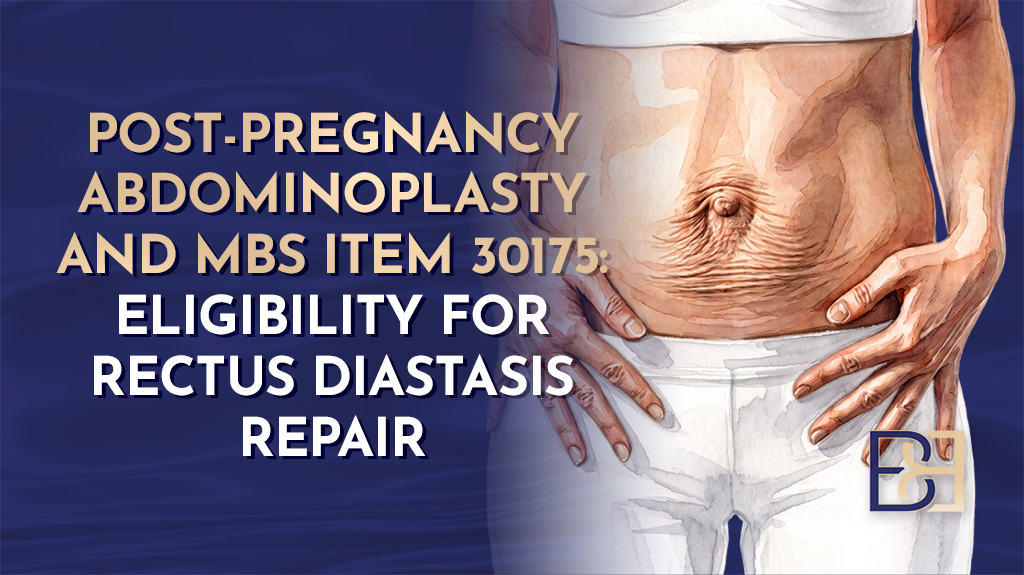
Pregnancy changes the abdominal wall. The skin stretches, and in most women the muscles separate down the midline, a change called abdominal muscle separation (diastasis recti). These are normal changes after carrying a baby. An abdominoplasty removes stretched lower abdominal skin and, where the muscles have separated, repairs them. For women who have finished having children, it can be a reasonable option, but it is a considered operation, not a small one.
In my practice, a good part of the first consultation goes into making sure each patient understands what the operation actually involves before we take it any further. That means being direct about the anaesthetic, the operating time, the hospital stay, the recovery, and the risks. None of that is meant to put you off. It is what genuine informed consent requires.
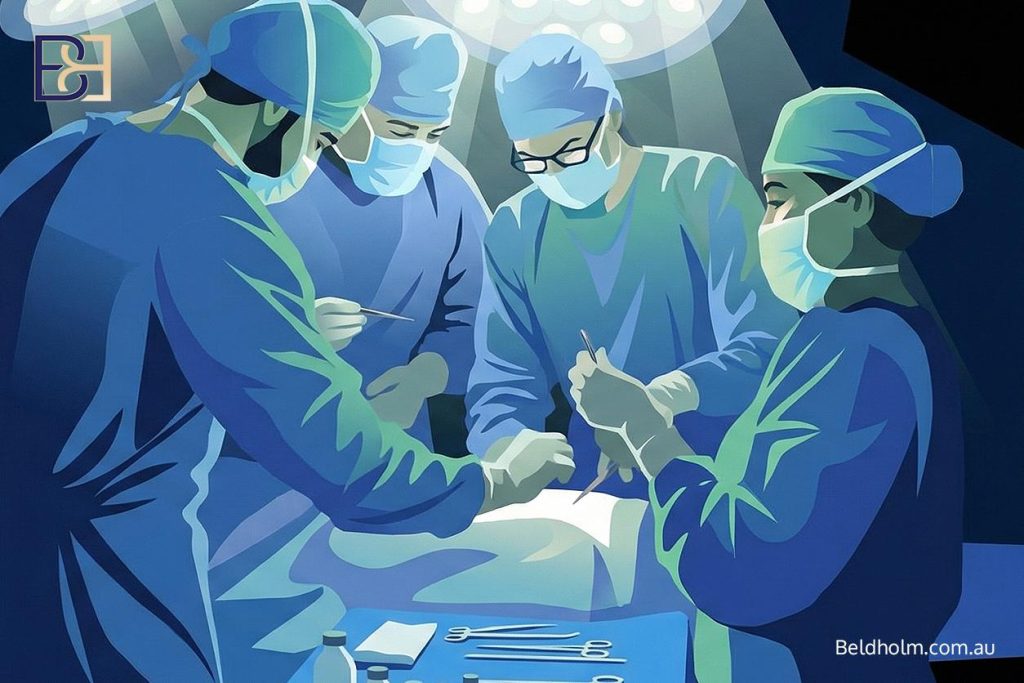
This article sets out why I classify abdominoplasty after pregnancy as major surgery, what that means for you, and why the preparation and timing around it matter as much as they do.
What makes an operation major surgery

There is no single line in a textbook that divides major from minor surgery, but surgeons broadly agree on what puts an operation in the major category. A group of European surgical associations worked through this by formal consensus and settled on a practical definition based on the features of the operation rather than any one rule (1).
An operation is generally considered major when it involves several of the following:
- General anaesthesia, rather than local anaesthetic alone
- Opening or working within a body cavity, or lifting and repositioning a significant amount of tissue
- A meaningful physiological stress response from the body
- The potential for significant blood loss or fluid shifts
- Admission to hospital rather than same-day discharge
- A recovery measured in weeks
Major surgery sets off a systemic response. The body reacts to a larger operation with hormonal, inflammatory and metabolic changes as it heals, and that response is part of why recovery takes time and why general health going into surgery matters (2). Published research describes major surgery as a significant physiological event that the body has to recover from (3).
Minor surgery sits at the other end. These are smaller procedures, often under local anaesthetic, usually involving tissue close to the surface, commonly done as day cases with a short recovery. A skin lesion removed under local anaesthetic is minor surgery. An operation that lifts a large area of tissue, repairs the abdominal wall and requires a general anaesthetic and a hospital stay is not.
That distinction is not about how the operation looks from the outside. It is about what the body goes through, and on that measure abdominoplasty falls clearly on the major side.
Why abdominoplasty (tummy tuck) is major surgery
An abdominoplasty is a substantial surgical procedure, and it meets the definition of major surgery on several counts at once. It is done under general anaesthetic, it involves a long incision and the lifting of a large area of tissue, it often includes repair of the separated abdominal muscles, it takes a number of hours in theatre, and it needs a hospital stay and a recovery measured in weeks. Here is what each of those means in practice.
General anaesthetic
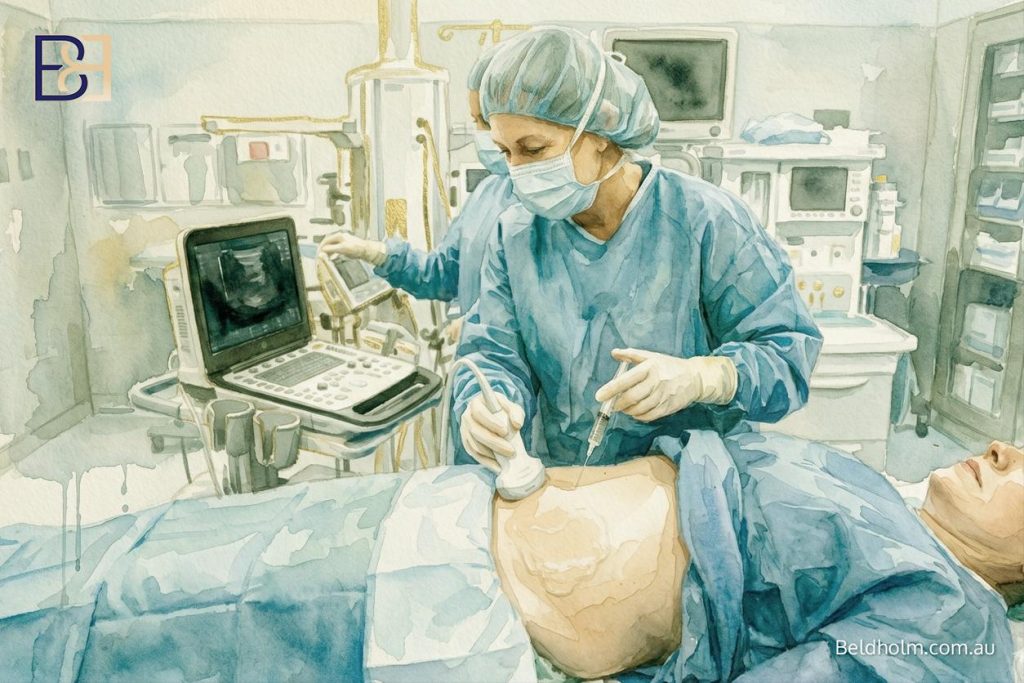
The operation is performed under a general anaesthetic. You are fully asleep, your breathing is supported, and an anaesthetist manages you throughout. A general anaesthetic is itself a significant undertaking with its own risks, which is why there is a separate anaesthetic assessment before surgery. That is one of the clearest markers separating major surgery from minor procedures done under local anaesthetic.
A long incision and lifting the tissue
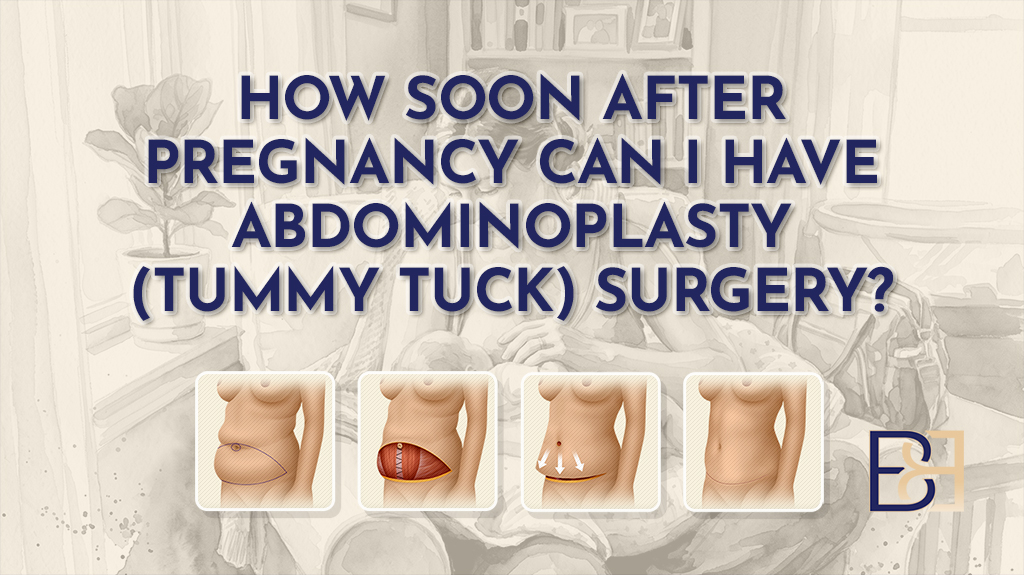
Abdominoplasty involves a horizontal incision low on the abdomen, at or near the pubic hairline, generally running between the hip bones, with the length depending on how much loose skin is present. Through that incision I lift the skin and fatty tissue off the abdominal wall up towards the ribs, remove excess skin from the lower abdomen, and reposition the umbilicus (belly button). Lifting tissue across this much of the abdominal area is a large part of why the operation is classed as major, and it is why the healing process, bruising and swelling take real time to settle.
Repairing the separated abdominal muscles
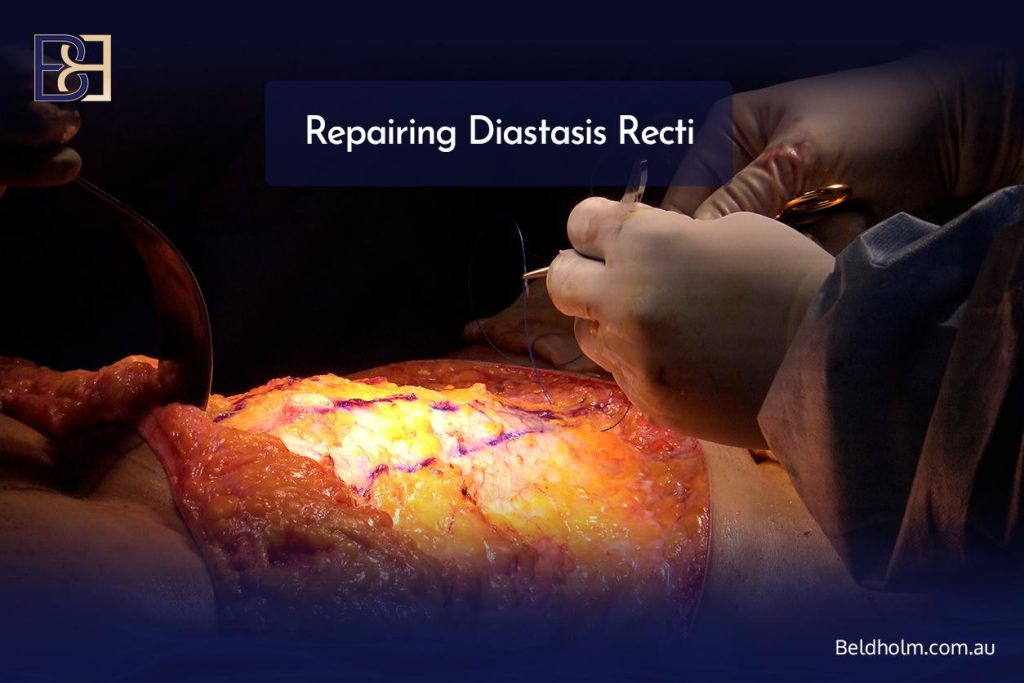
In most women who have been pregnant, the paired vertical abdominal muscles have separated down the midline. This is abdominal muscle separation (diastasis recti), and it is a stretching and widening of the connective tissue between them, the linea alba, rather than a tear. Where it is present, I repair it by bringing the muscles back towards the midline with internal sutures. This abdominal wall repair works at a deeper layer than the skin, and it is a significant contributor to the early recovery, because those repaired tissues need time to hold.
Often combined with ultrasound-assisted suction lipectomy
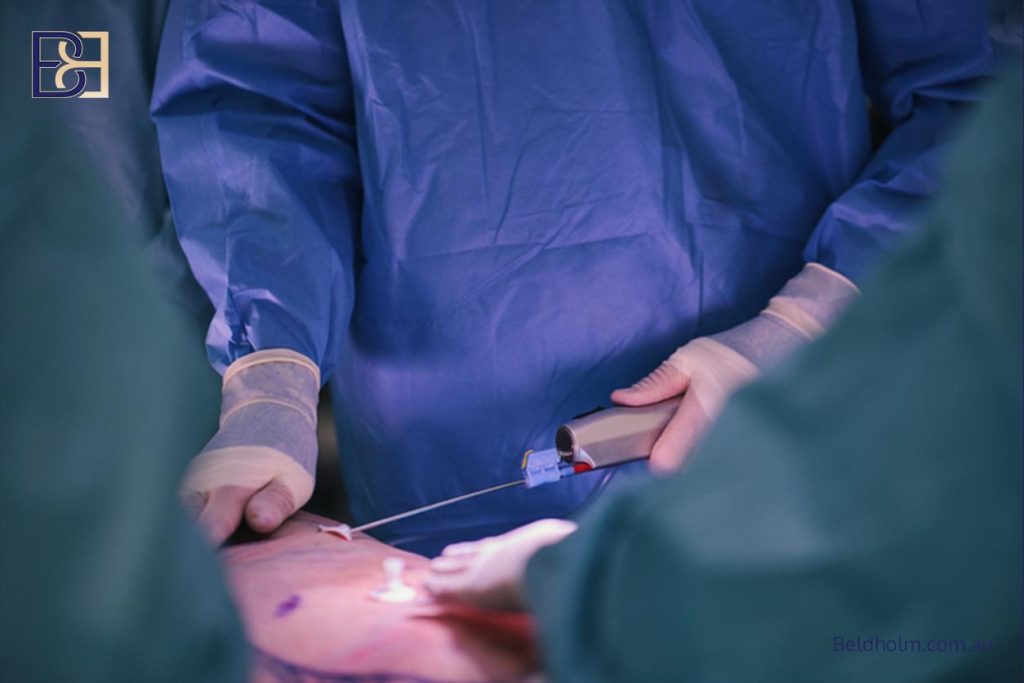
Many abdominoplasties after pregnancy include ultrasound-assisted suction lipectomy (VASER liposuction) to remove excess fat and refine the contour of the upper abdomen and flanks at the same time (4). When it is included, it adds to the operating time, usually by around an hour, and adds its own component to the recovery. Whether it is part of your operation is decided at consultation based on your anatomy.
Hospital admission and a recovery measured in weeks
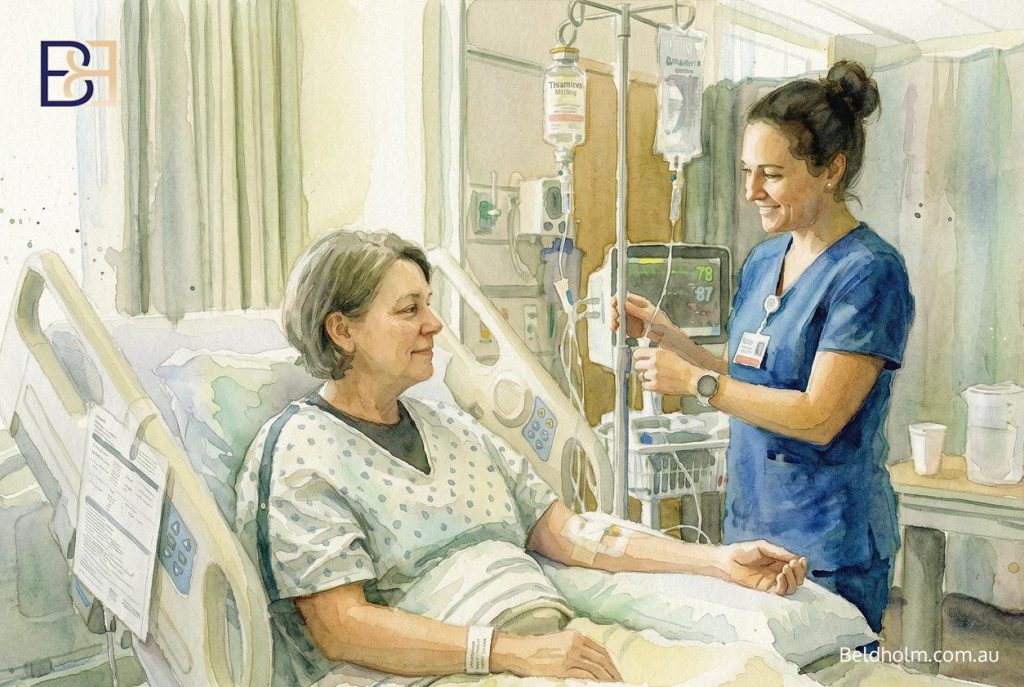
Abdominoplasty is not a day procedure. Most patients stay in hospital for 1 to 2 nights so that pain, mobility and wound drainage can be managed and monitored. After discharge, the early recovery runs over several weeks, with restrictions on lifting and activity while the deeper repair heals. Returning to normal activity is gradual, and full settling of the scar and contour takes months. None of that is unusual for an operation of this size, but it is a long way from the recovery expected after a minor procedure.
The operation also makes a permanent change to your anatomy. The skin is tightened, the muscle repair is internal and lasting, and the abdominoplasty scar, while it fades, does not disappear. That permanence is another reason I treat the decision to proceed as a serious one, made only after proper assessment.
The risks are real
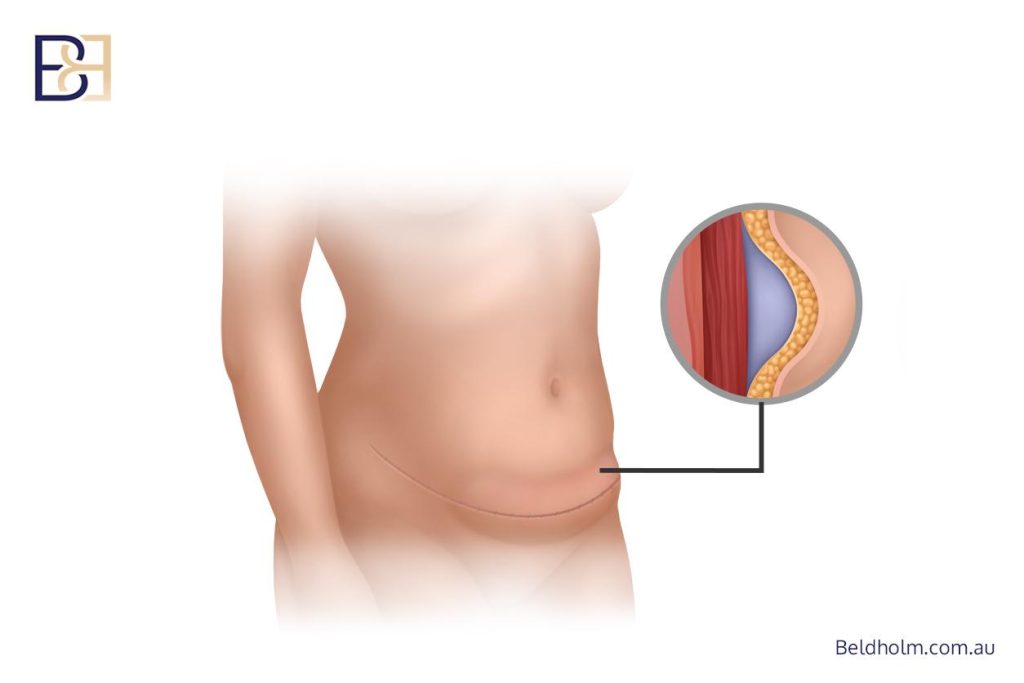
Like any major operation, abdominoplasty surgery carries risks. These include excessive bleeding and collection of blood under the skin (haematoma), wound infection, poor wound healing and wound breakdown, fluid collection under the skin (seroma), and blood clots in the legs, along with the risks of general anaesthesia. Less common complications also exist. I go through the risks that are relevant to you in detail at consultation, as part of your informed consent. The fact that the operation carries this range of risks is part of why it is classed as major surgery.
What is specific to abdominoplasty after pregnancy
Pregnancy affects the abdominal wall in its own particular way, and that shapes what the operation involves for women who have had children.
The pattern after pregnancy

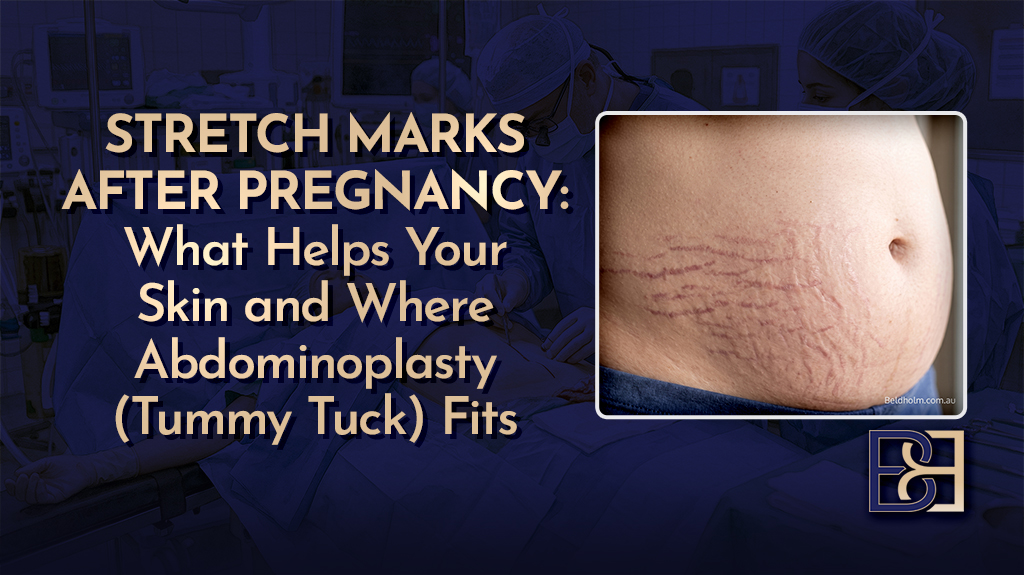
Two things tend to stand out after pregnancy. The first is the skin. Pregnancy stretches the lower abdominal skin and can leave stretch marks, both normal changes. Once the body has settled, many women are left with a modest amount of loose skin, usually concentrated in the lower abdomen, below the belly button. Skin elasticity after pregnancy is often reasonably good.
The second, and frequently the more significant, is the muscle separation (diastasis recti). During pregnancy the linea alba, the connective tissue running down the midline between the abdominal muscles, stretches and widens to make room. In many women it does not fully come back together afterwards. This is a normal change after carrying a baby (5). Where it is present and causing a functional concern, the muscle repair is often the larger part of the operation, working at a deeper layer than the skin.
Repairing the muscle separation (diastasis recti) can have a functional benefit for some women. Where the separation is linked to symptoms such as lower back and abdominal discomfort or urinary incontinence, published research in an Australian group of women after childbirth found that repair as part of an abdominoplasty improved these symptoms for many of those studied (6). This does not apply to everyone, results vary, and whether it is relevant to you is assessed individually.
The caesarean scar
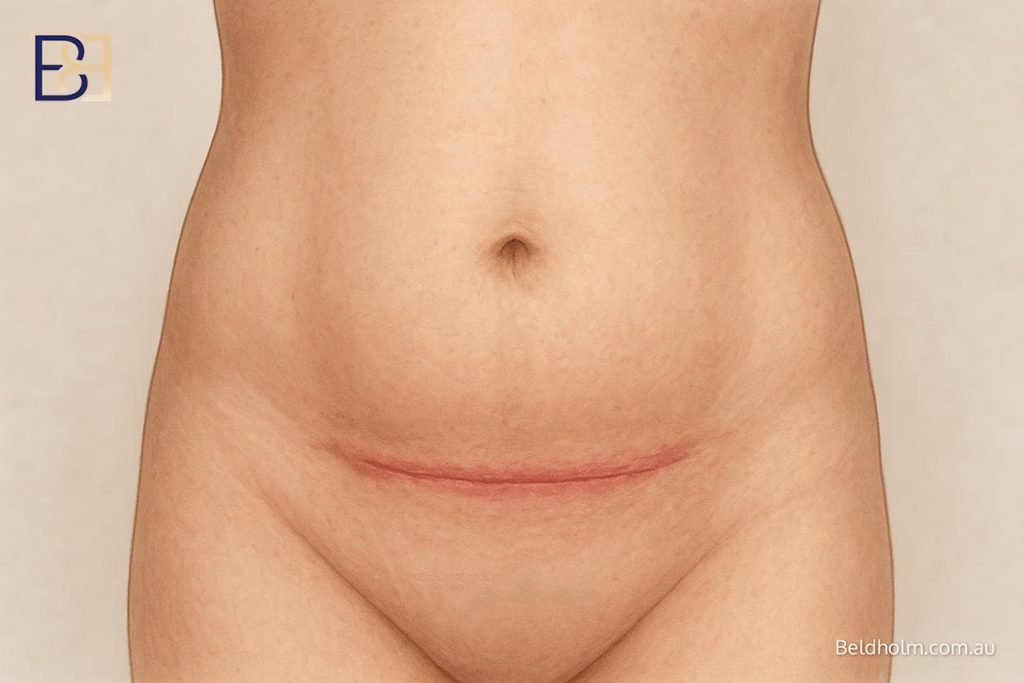
Many patients have had a caesarean, sometimes more than one. The existing caesarean scar usually sits within the lower abdominal skin that is removed during an abdominoplasty, so in most cases it is excised rather than left behind. The new incision line is planned low on the abdomen, generally below where the caesarean scar sat, and any previous abdominal surgery is taken into account when planning it. The abdominoplasty is planned as its own operation, at its own time, not combined with a delivery.
A modest amount of loose skin does not make it a minor operation
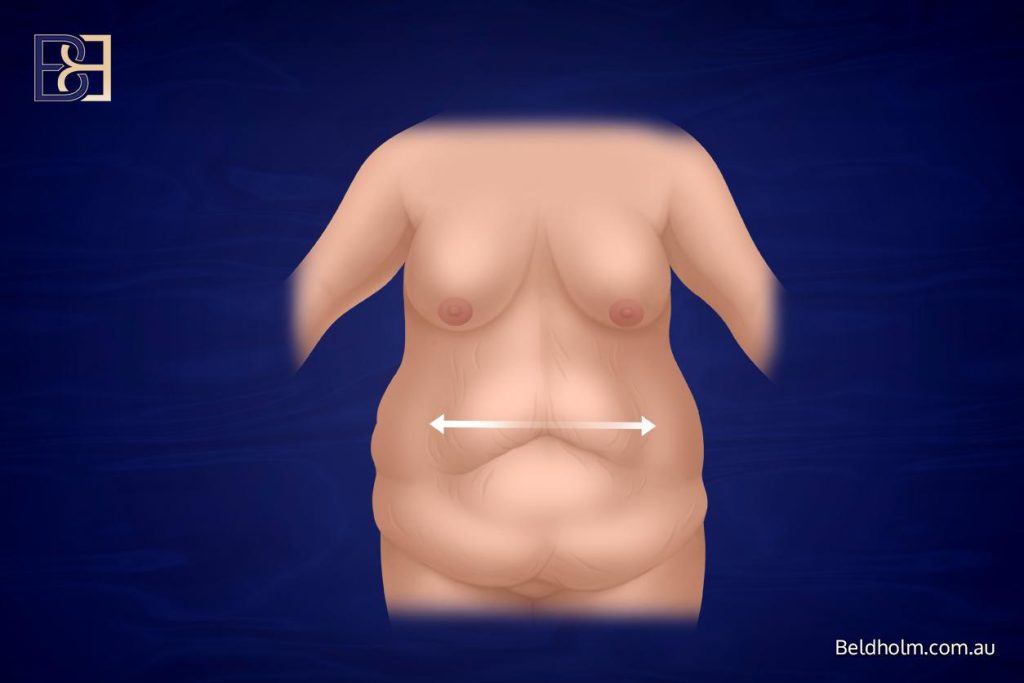
Because the loose skin after pregnancy is often less than people expect, some women assume the procedure must be a small one. That is not the case. The general anaesthetic, the muscle repair, the lifting of tissue and the recovery over weeks are all still part of it. A neater-looking starting point does not reduce the physiological demand of the operation. This is why I assess each patient carefully rather than treating a post-pregnancy abdominoplasty as automatically a lesser operation than any other.
The recovery reality, including caring for young children
Recovery from an abdominoplasty takes real time, and it helps to understand what it involves before you commit, particularly if you have young children at home.
The first few weeks

In the first 1 to 2 weeks after surgery, movement is limited. Many patients stand and walk slightly bent forward at first, and this eases over the following weeks. Everyday tasks take longer, and you will need help at home. Lifting is restricted while the muscle repair heals.
Lifting and young children

This is the part that catches many mothers off guard. After the muscle repair, I ask patients to avoid lifting for a period, and that includes lifting small children. Lifting is reintroduced gradually by weight rather than all at once. As a general guide, many patients can lift up to around 10 kg from 2 weeks, up to around 15 kg from 4 weeks, and return to unrestricted lifting somewhere between 6 and 8 weeks. I set this for each patient based on how the repair is healing. For a mother of a baby or toddler, that has real practical consequences, and it needs planning before surgery rather than after. Arranging help with lifting, carrying and the day care or school run makes a genuine difference to how the early recovery goes. Support at home is worth planning for.
Getting back to normal activity

Return to driving, desk work and light activity is staged over the weeks that follow, guided by how you are healing. More strenuous exercise, and anything that strains the abdominal wall, waits longer. I review each patient at set points after surgery to guide this, rather than working to a fixed calendar.
Garments, drains and swelling
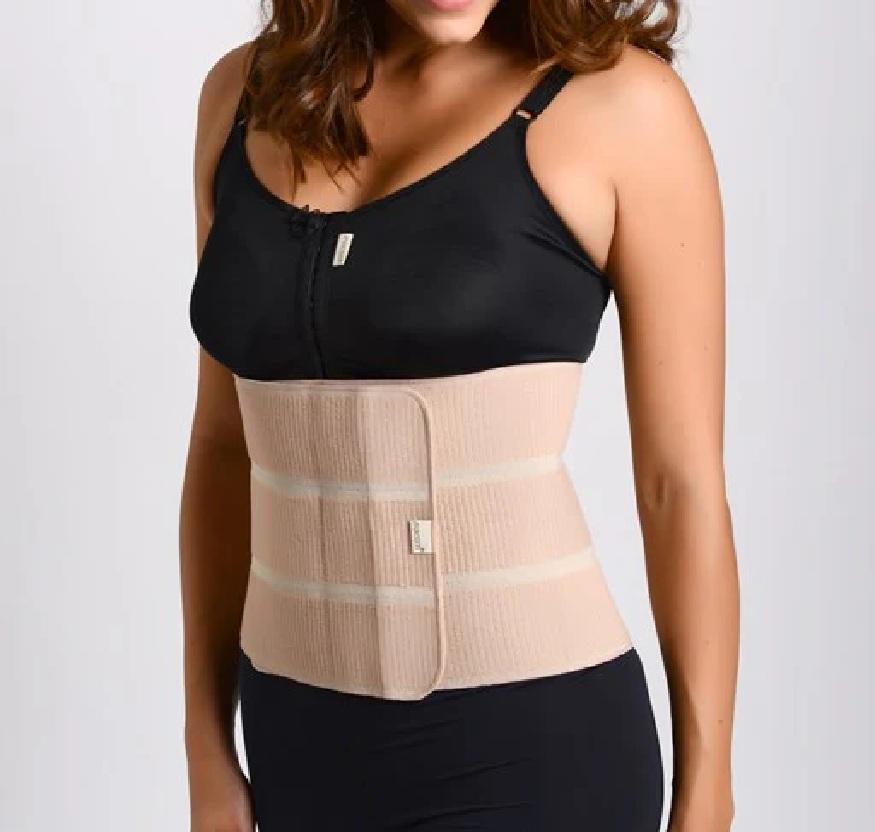
Most patients wear a compression garment for a period after surgery to support the tissues as they settle. Many post-pregnancy abdominoplasties can be performed without drains, though not all, and this is discussed with you beforehand. Swelling is expected and settles gradually, with the final contour and the scar continuing to mature over months.
Recovery varies from person to person. The timelines above are a general guide, and your own recovery is guided by how you heal and reviewed at each follow-up.
Why preparation matters more, not less
Because an abdominoplasty after pregnancy is a bigger physiological event, the preparation beforehand matters more, not less. Good general health going into surgery supports healing and lowers the chance of complications. This is what that preparation involves in my practice.
Pre-operative blood tests
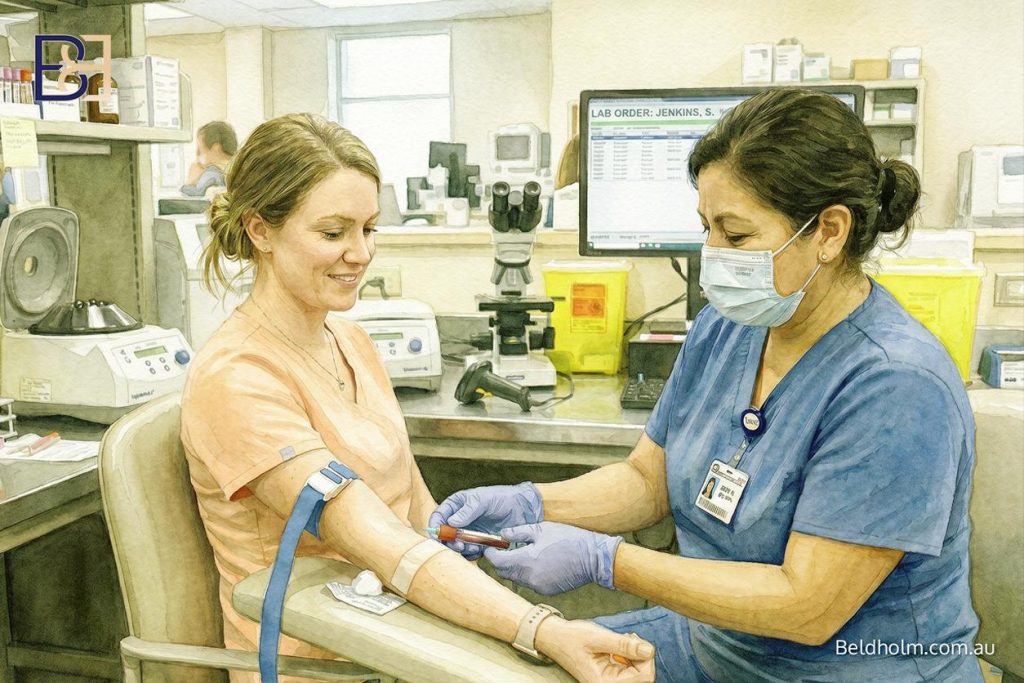
Every patient has a set of blood tests before surgery. These check the things that affect how well you tolerate an anaesthetic and how well you heal. The panel includes a full blood count, a coagulation screen, liver and kidney function, electrolytes, blood glucose and HbA1c, thyroid function, iron studies, and screening for hepatitis B, hepatitis C and HIV. For women of childbearing age, a pregnancy test is included.
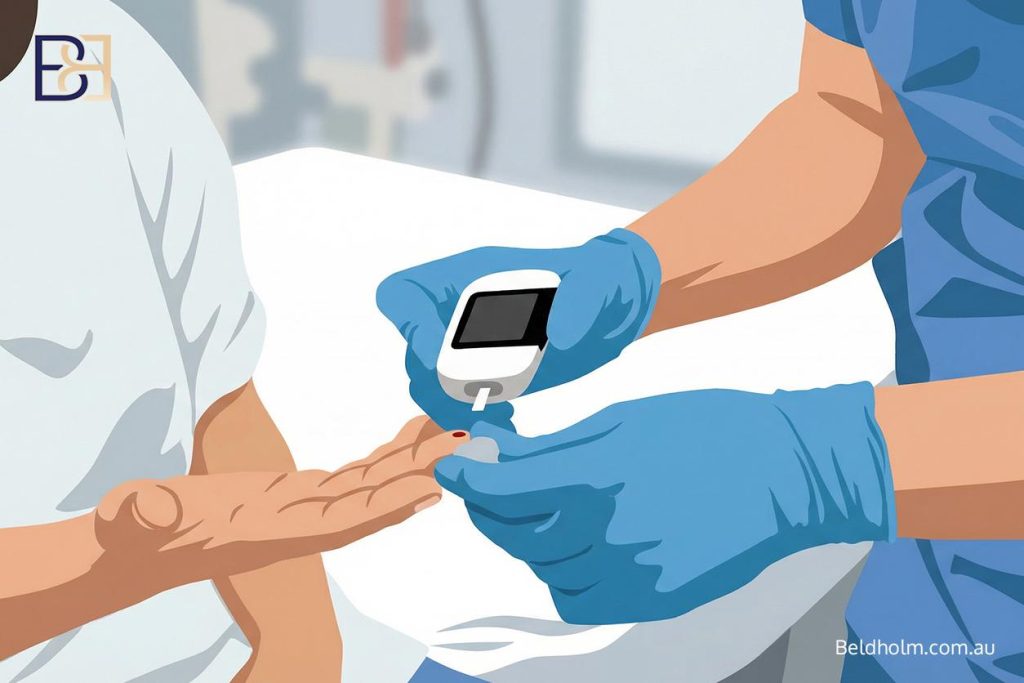
Pregnancy and breastfeeding draw on the body’s reserves, so I pay particular attention to iron, folate, vitamin B12 and vitamin D, which are the ones most commonly low after having children. Where a result comes back low, we correct it before surgery rather than proceeding around it. The results are copied to your GP, who stays involved in your longer-term care.
Nutrition in the lead-up and recovery

Good nutrition supports wound healing. In the lead-up to surgery and through recovery, that means eating well across the board, with enough protein to support tissue repair, and staying well hydrated. I keep this practical and tailor it to you at consultation rather than setting rigid rules. Where blood tests show a specific gap, we deal with that specifically.
Stopping smoking

If you smoke, stopping before surgery is one of the most important things you can do to lower your risk. Smoking narrows the small blood vessels that supply the skin, and after an abdominoplasty the healing of the wound depends on that blood supply. Published research links smoking to slower wound healing and a higher rate of healing complications (7). I ask patients to stop for several weeks before and after surgery, and we discuss a realistic plan for that at consultation.
Clot prevention
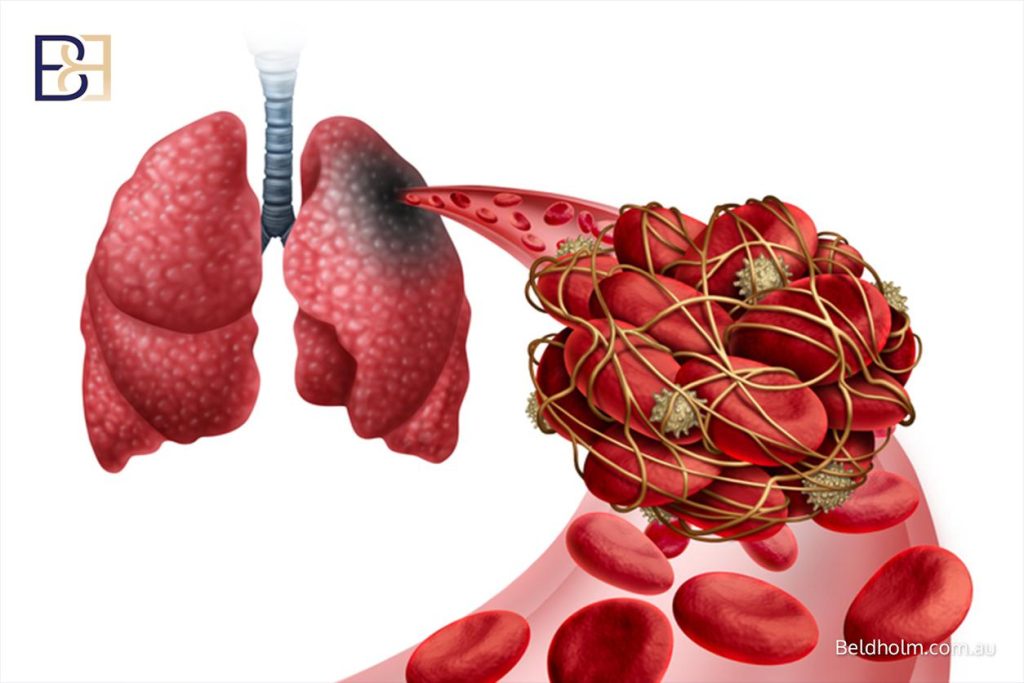
Major surgery carries a risk of blood clots forming in the deep veins of the legs (deep vein thrombosis). Lowering that risk is a routine part of the plan for every patient. I assess each patient’s clot risk myself and decide on the measures used, which can include getting you up and walking early, calf compression during and after surgery, and blood-thinning injections where they are indicated. This is planned in advance rather than left to the day of surgery.
Managing blood thinners before surgery

This is a separate issue, and it applies if you already take a blood-thinning medication, such as aspirin or an anticoagulant, for another health condition. Where you do, it usually needs to be paused for a period before surgery, commonly about 1 week, though some patients need to stay on it through the operation. That is worked out well ahead of time, together with the doctor who prescribed it. Do not stop any prescribed medication on your own. We will give you clear instructions.
Timing after pregnancy

Two things guide when I would consider an abdominoplasty after pregnancy: whether your family is complete, and whether the body has settled after your most recent pregnancy.
Waiting until your family is complete
A subsequent pregnancy after an abdominoplasty can stretch the skin and separate the abdominal muscles again, which can undo part of what the operation achieved. For that reason I generally recommend waiting until your family is complete before proceeding. This is not about ruling anyone out. It is about not undertaking a major operation that a later pregnancy could undo.
Letting the body settle

The abdominal wall changes through pregnancy and keeps changing in the months afterwards as the tissues recover. I prefer to let that settle before assessing what, if anything, an operation would involve.
Breastfeeding is a separate consideration, and it relates to the breasts rather than the abdominal wall. Where breast surgery is being considered, whether alongside abdominal surgery or on its own, I plan it once breastfeeding has finished and the breasts have settled. For the abdomen by itself, breastfeeding is less of a factor, though I still prefer the body to have settled after the most recent pregnancy.
There is no single right interval

I am often asked how many months after birth is the right time. There is no single number that fits everyone. The right timing depends on your recovery from pregnancy, whether you are still breastfeeding, your general health, and your own circumstances at home with young children.
Frequently asked questions
How long does the operation take?
Operative time depends on what the operation involves. A straightforward abdominoplasty commonly takes a few hours. Where ultrasound-assisted suction lipectomy (VASER liposuction) is included, or the muscle repair is more extensive, it takes longer, usually by around an hour for the added liposuction. I give you a realistic estimate for your own operation at consultation. The length of time under anaesthetic is one of the reasons this is classed as major surgery.
Is a limited abdominoplasty still major surgery?
Yes. A limited abdominoplasty (mini tummy tuck) treats a smaller amount of loose skin low on the abdomen through a shorter incision, and recovery is often shorter than a full abdominoplasty. It is still performed under general anaesthetic, still involves lifting tissue and, in some cases, repair of the lower abdominal muscles, and still carries risks and a recovery period. A shorter operation is not a minor one. Whether a limited or full abdominoplasty suits you depends on your anatomy and the extent of the muscle separation (diastasis recti), and is decided at consultation.
Why should I stop smoking before surgery?
Smoking narrows the small blood vessels that supply the skin, and wound healing after an abdominoplasty depends on that blood supply. Published research links smoking to slower healing and a higher rate of wound complications (7). Stopping for several weeks before and after surgery lowers that risk. I talk through a realistic plan for stopping at consultation.
Will I need to stay in hospital?
Yes. An abdominoplasty is not a day procedure. Most patients stay in hospital for 1 to 2 nights so that pain relief, movement and wound care can be managed and monitored before you go home. The length of stay depends on your operation and how your early recovery goes.
References
- Martin D, Mantziari S, Demartines N, Hübner M; ESA Study Group. Defining Major Surgery: A Delphi Consensus Among European Surgical Association (ESA) Members. World J Surg. 2020 Jul;44(7):2211-2219.
- Scott MJ, Miller TE. Pathophysiology of major surgery and the role of enhanced recovery pathways and the anesthesiologist to improve outcomes. Anesthesiol Clin. 2015 Mar;33(1):79-91.
- Dobson GP. Trauma of major surgery: A global problem that is not going away. Int J Surg. 2020 Sep;81:47-54.
- de Souza Pinto EB, Abdala PC, Maciel CM, dos Santos Fde P, de Souza RP. Liposuction and VASER. Clin Plast Surg. 2006 Jan;33(1):107-15, vii.
- Soto-Gonzalez M, Da Cuna-Carrera I, Lantaron-Caeiro EM, Pascoal AG. Effect of hypopressive and conventional abdominal exercises on postpartum diastasis recti: A randomized controlled trial. PLoS ONE. 2024;19(12):e0314274.
- Taylor DA, Merten SL, Sandercoe GD, Gahankari D, Ingram SB, Moncrieff NJ, Ho K, Sellars GD, Magnusson MR. Abdominoplasty Improves Low Back Pain and Urinary Incontinence. Plast Reconstr Surg. 2018 Mar;141(3):637-645.
- Liu D, Zhu L, Yang C. The effect of preoperative smoking and smoke cessation on wound healing and infection in post-surgery subjects: A meta-analysis. Int Wound J. 2022 Dec;19(8):2101-2106.