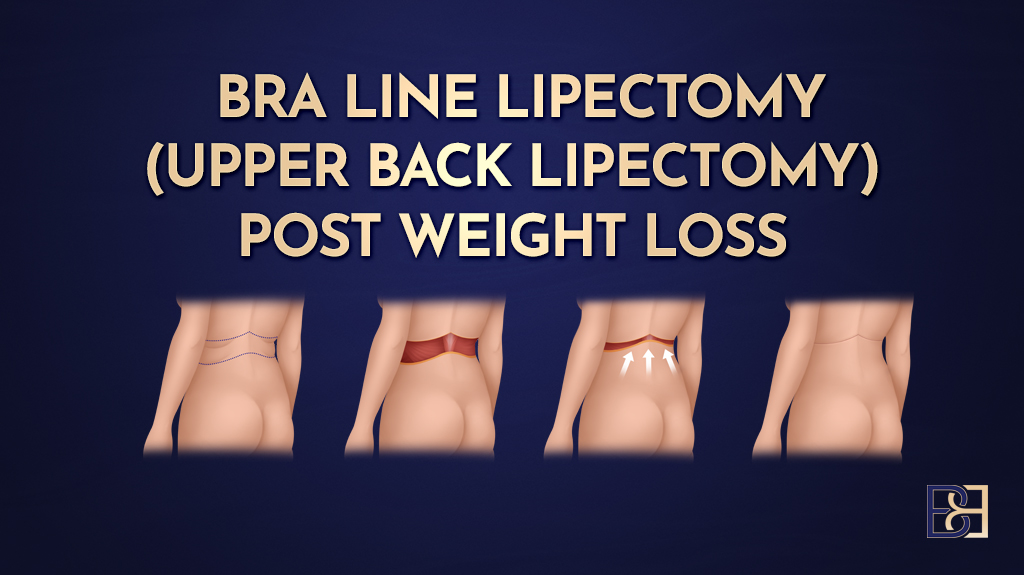
A bra line lipectomy, also called an upper back lipectomy or bra line back lift, removes loose skin and excess fatty tissue from the upper back after significant weight loss. The incision runs across the back at the level of the bra line, so the resulting scar can sit beneath a bra strap or swimwear. I perform this operation at Maitland Private Hospital under general anaesthesia, either on its own or combined with other body contouring procedures in suitable patients.
The upper back is one of the areas that lower body surgery cannot reach. Patients who have had an abdominoplasty (tummy tuck) or belt lipectomy (body lift) are often surprised that folds of skin remain along the bra line. That is not a failure of the earlier surgery. It reflects how firmly the skin of the upper back is anchored to the structures beneath it, which is where this article begins.
In this guide I cover why upper back skin behaves the way it does, what the operation involves, who it suits, how it combines with other procedures, and what recovery, risks and costs look like, with links to my detailed articles on each.
Why Loose Skin Persists on the Upper Back After Significant Weight Loss
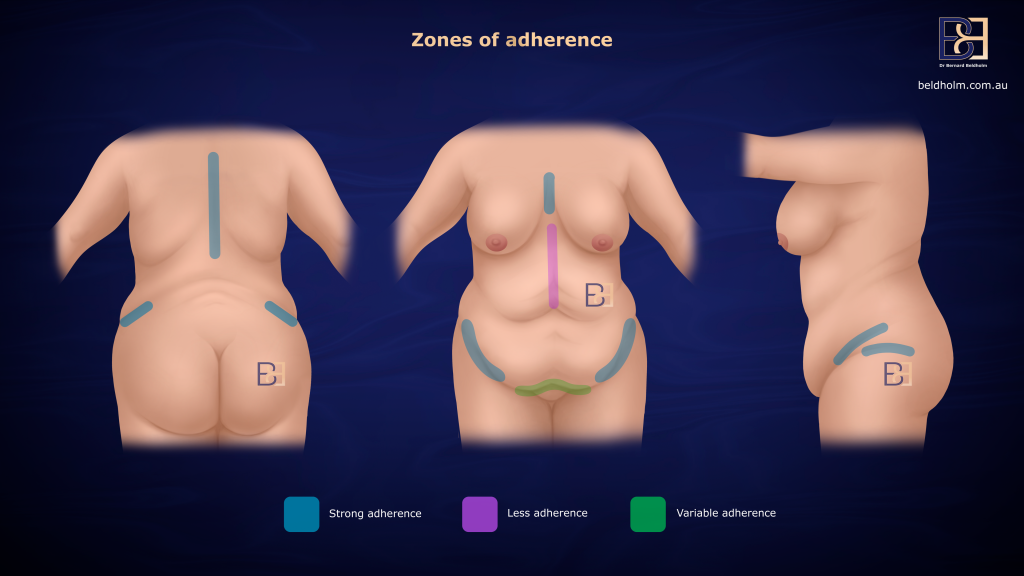
The skin of the upper back is not free to move the way abdominal skin is. It is tethered to the underlying fascia and muscle by strong zones of adherence that run along the midline of the spine and through the paraspinal region (1,2). These anchor points hold the skin in place. When significant weight loss removes the fatty tissue that once filled this area, the skin between the anchor points folds on itself rather than shrinking back. The result is the familiar pattern of rolls across the upper and middle back, above and below the bra line.
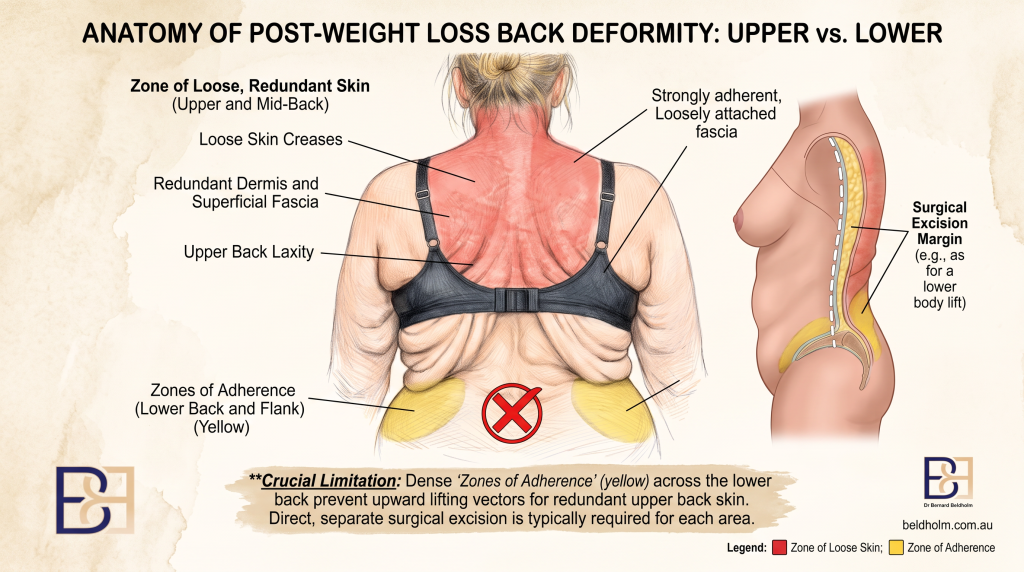
These same anchor points are the reason lower body surgery does not fix the upper back. Tension from an abdominoplasty (tummy tuck) or a belt lipectomy (body lift) cannot travel upward past the zones of adherence. The pull stops well below the bra line (1,4). I see this regularly in patients who have had extensive lower body surgery with a good result, yet still have prominent upper back folds. The two regions behave as separate territories, and each needs its own operation.
Three features make the upper back a difficult area for anything short of direct excision:
- The skin here is thick and comparatively stiff, and after massive weight loss it shows reduced skin elasticity
- The fatty tissue is fibrous, which limits what liposuction alone can achieve (1,3)
- The zones of adherence fix the skin in place, so there is no way to redrape it from a distant incision
This is why the reliable treatment for established upper back rolls after major weight loss is to remove excess skin directly through an incision placed at the bra line (1,2,3). I cover what that operation involves in the sections that follow.
What Is a Bra Line Lipectomy?
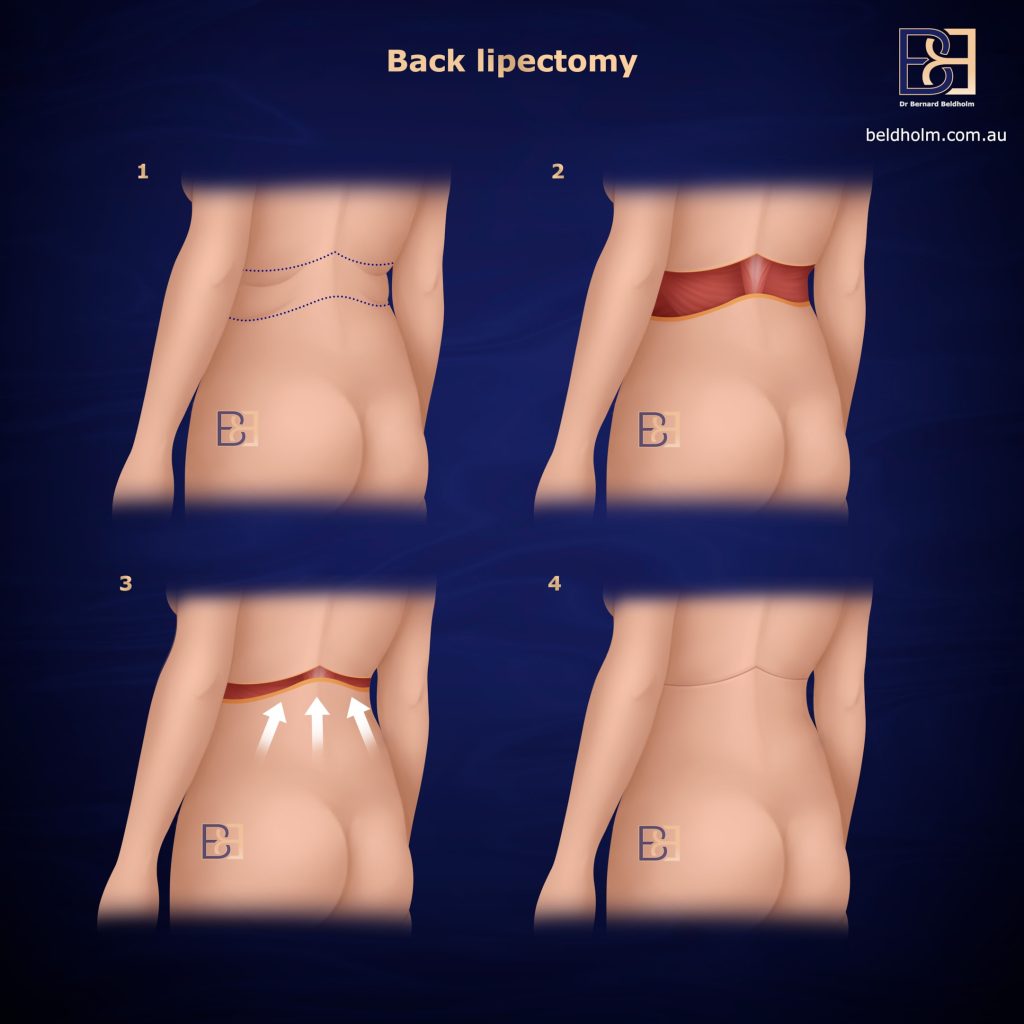
A bra line lipectomy is a surgical body contouring procedure that removes redundant skin, with or without associated fatty tissue, from the upper and middle part of the back. The strip of tissue removed sits across the back at the level of the bra strap, and the wound is closed so that the final scar lies along the bra line (1,2,3).
One operation, several names
You will see this procedure described under different names, and they all refer to the same core operation:
- Bra line lipectomy and upper back lipectomy are the surgical terms I use
- Bra line back lift, upper back lift and back bra lift describe the same excision from the patient’s point of view
- Bra lipectomy is a common shortened form
The term upper body lift is broader. Upper body lift surgery, sometimes called upper body lipectomy, describes a group of procedures that treat the region above the waist, which can include the upper back, the chest, the breasts and the arms. A bra line lipectomy is one component of upper body surgery, not a synonym for all of it. When I plan surgery for the upper back alone, bra line lipectomy is the accurate name for what is being done.
Where it sits alongside other procedures
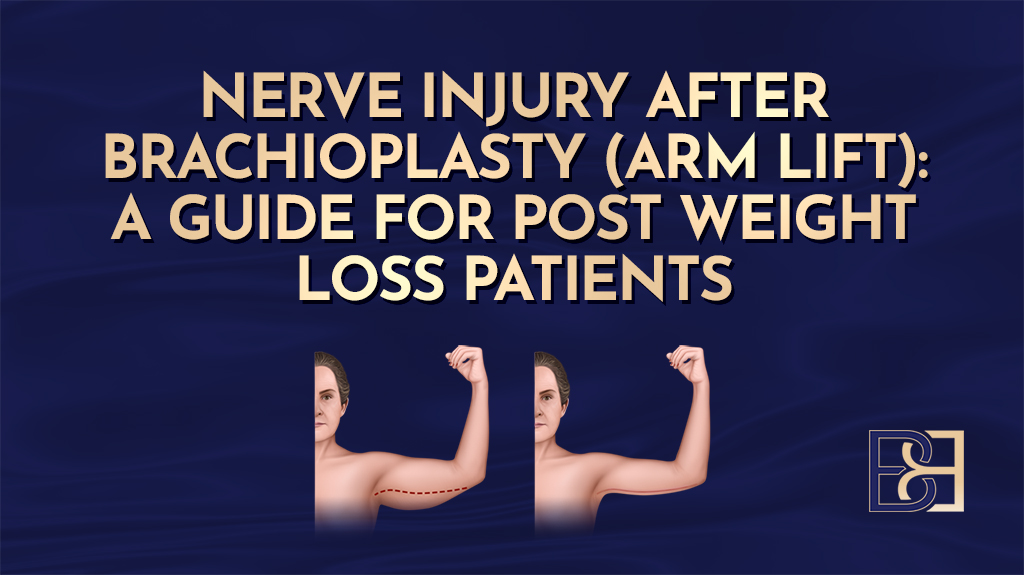
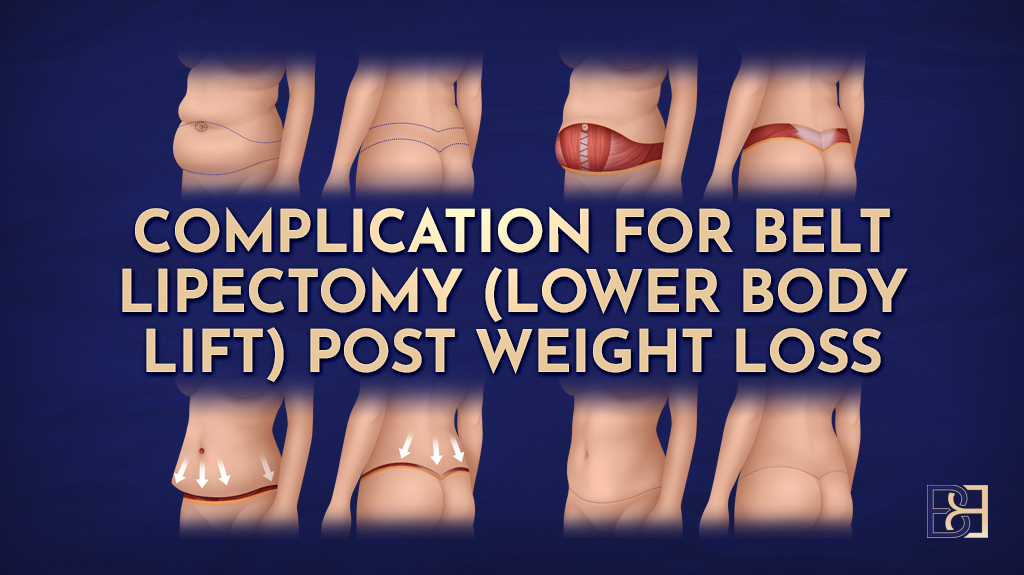
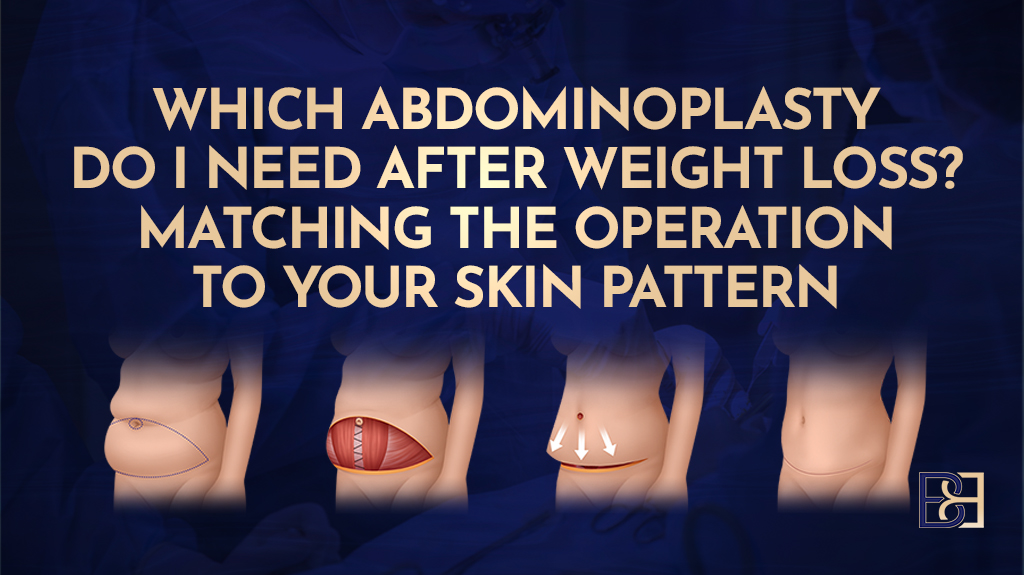
The counterpart operations below the waist are the abdominoplasty (tummy tuck) family and the belt lipectomy (body lift), which treat the abdomen, flanks, lower back and buttocks. Above the waist, the bra line lipectomy sits alongside brachioplasty (arm lift) and mastopexy (breast lift) as one of the operations that deal with excess skin after significant weight loss (1,4,5). In men, a related approach with different incision placement forms part of upper body torsoplasty, which I cover on my male chest surgery page.
Which Direction of Skin Excess This Operation Treats
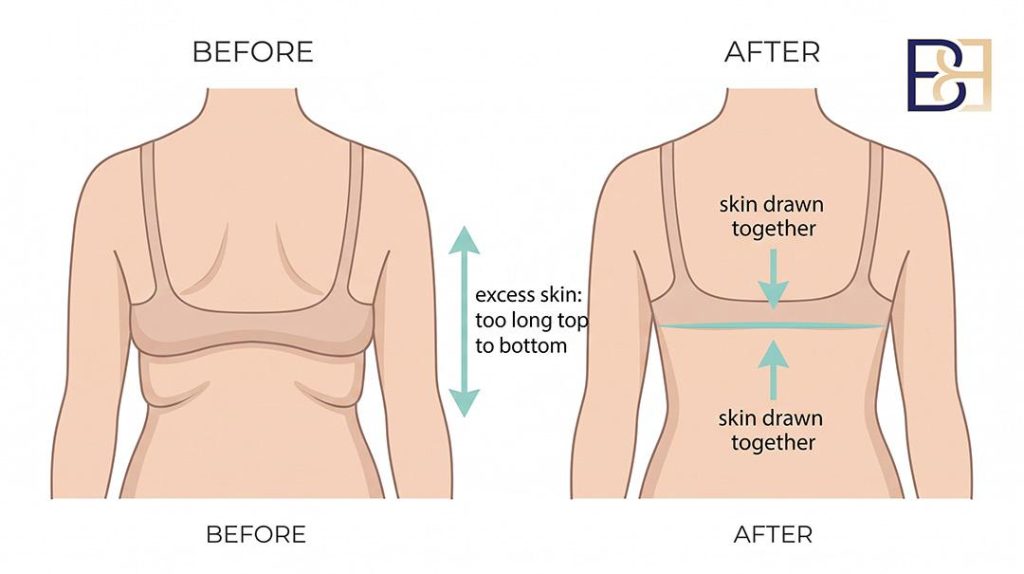
Understanding the direction of your skin excess makes sense of why the incision sits where it does. The rule in body contouring surgery is that an excision tightens skin at right angles to the line of the scar. A transverse scar tightens the skin above and below it. A vertical scar tightens the skin on either side of it.
Upper back rolls after significant weight loss are mainly a vertical excess. The skin is too long from top to bottom, so it stacks into horizontal folds between the zones of adherence. The treatment for vertical excess is a transverse excision. That is exactly what a bra line lipectomy is: a horizontal strip of redundant skin removed at the bra line, drawing the skin above and below together and flattening the folds from the bra strap level down toward the waist (1,2).
There is a second, smaller benefit. As the transverse excision is tapered out toward the sides of the chest, it also takes in some of the side to side excess in the lateral chest rolls. How far the incision extends laterally depends on how far the folds themselves extend, which I assess when I examine you.
What this operation does not do is tighten skin at a distance from the scar. It will not lift the breasts, treat the upper arms, or reach the lower back and flanks. Those areas have their own operations: mastopexy (breast lift), brachioplasty (arm lift) and lower body lift (belt lipectomy). If your excess skin crosses several of these territories, the planning question becomes which operations you need and in what order, which I cover later in this article.
Scar Pattern Variations
Not every bra line lipectomy leaves the same scar. The pattern is matched to how far the skin folds extend around the trunk, and I plan it with the patient standing, wearing the style of bra or clothing line they normally wear. The main variations are:
- Back only. The scar runs across the upper back between the lateral chest walls and stays behind the posterior axillary line. This suits folds confined to the central back.
- Lateral extension. The scar continues around the side of the chest to take in lateral chest rolls. The lateral portion is tapered carefully to avoid dog ear formation at the ends of the wound.
- Near circumferential. In patients with folds continuing onto the front of the chest below the breast, the excision can extend toward the inframammary fold. This longer pattern is uncommon and reserved for extensive skin excess (2,3).
In every variation, the goal is the same: the final scar line sits where a bra band or swimwear strap covers it. The scar is permanent. It usually settles into a fine line over 12 months, but it can widen or thicken, and scar quality varies between patients. I would rather you weigh up the scar against the folds it removes than be surprised by it afterwards.
The male upper back
Men after significant weight loss develop the same upper back folds, but there is no bra line to hide a scar behind. The incision is placed lower and planned around the patterns of male clothing, and the operation is usually done as part of an upper body torsoplasty that treats the chest and back together. I cover this in detail on my male chest surgery after weight loss page.
Who Is a Suitable Candidate?
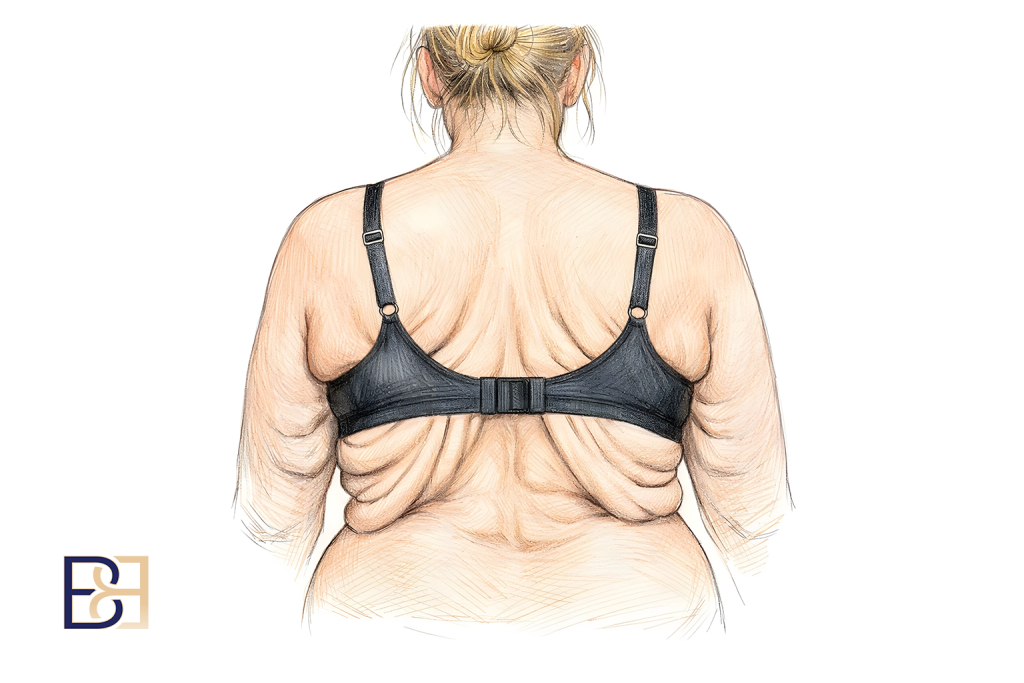
Suitability is assessed individually at consultation. As a general guide, the patients who do well with bra line lipectomy share most of the following:
- Substantial weight loss, whether through bariatric surgery, medication or lifestyle change, with established folds of redundant skin across the upper back
- A stable weight for at least 6 months. Ongoing weight loss changes the tissue and undermines the result, so I ask patients who are still losing to wait until their weight has settled
- Functional problems from the folds, such as skin rashes or intertrigo under the bra band, skin irritation from the bra strap, or hygiene difficulties between the folds, or trouble with clothing and bra fit
- Excess skin rather than mainly excess fat. Where the problem is predominantly fat with good skin tone, liposuction may be the better tool, which I cover in the next section
- Reasonable general health. Anaemia, poorly controlled diabetes and nutritional deficiencies each impair wound healing and need correction before surgery
- A clear understanding of the trade off. The operation exchanges skin folds for a permanent scar across the back, and results vary between patients
Smoking and nicotine use in any form reduce blood supply to the skin edges and raise the risk of wound breakdown. I ask patients to stop completely well before surgery.
Age by itself is not a barrier, and body mass index is a rough guide rather than a cut off. What matters more is the overall clinical picture: weight stability, nutrition, health status and the pattern of skin excess. All of this is worked through with you before any decision about surgery is made.
Why Liposuction Alone Is Usually Not Enough
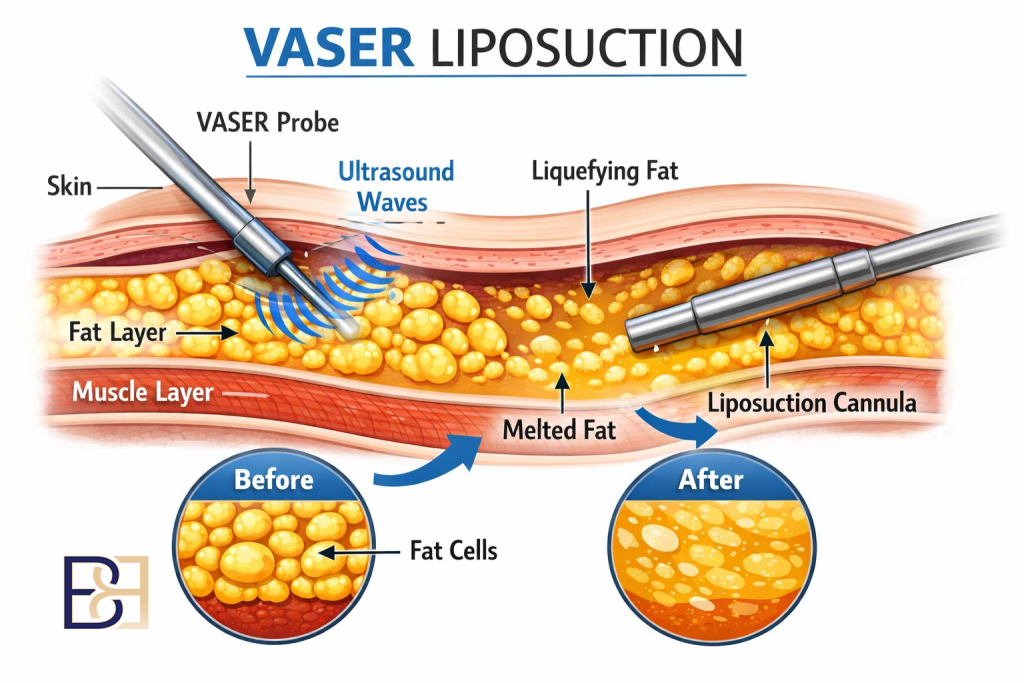
Patients often ask whether the upper back folds can be treated with liposuction (suction assisted lipectomy) alone, avoiding the scar. For most people after significant weight loss, the answer is no, and it helps to understand why.
Liposuction (suction assisted lipectomy) removes fat. It relies on the overlying skin then contracting down onto the smaller volume beneath. That works well in areas where the skin still has good elasticity. After significant weight loss, upper back skin has usually been stretched for years and its capacity to contract is poor. Removing fat from under skin that cannot shrink leaves the folds looser, not flatter (1,3).
The tissue itself adds a second problem. Upper back fat is dense and fibrous compared with the abdomen or thighs, which makes it harder to remove evenly with a cannula and limits how much can be taken (1).
Where liposuction (suction assisted lipectomy) does have a place:
- As an adjunct during a bra line lipectomy. I sometimes use VASER liposuction (ultrasound assisted lipectomy) selectively at the margins of the excision to blend the contour, particularly toward the lateral chest
- As a standalone procedure in a different patient group. Liposuction (suction assisted lipectomy) alone can reduce localised fat deposits in the bra line area for someone with good skin tone and no true skin folds, where residual loose skin is not the problem. This is typically a younger patient without a history of significant weight loss
The deciding factor is the pinch test during examination: whether the problem under my fingers is excess fat, excess skin, or both. Established skin folds after significant weight loss need excision. No amount of fat removal will correct redundant skin (1,2,3).
My Consultation Process

A GP referral is required before any consultation. From there, my consultation pathway is deliberately staged so that no one is making a decision about surgery in a single sitting.
Initial consultation
The first consultation runs for about 1 hour at my Lorn consulting rooms. I take a full history, with particular attention to how you lost the weight, your weight stability, medications, previous operations, smoking status and anything that could affect wound healing. I then examine the upper back with you standing: where the folds sit, how far they extend laterally, the skin quality, and whether the problem is skin, fat or both.
From that examination I can tell you whether a bra line lipectomy is the right operation, what scar pattern your skin excess needs, and what the operation can and cannot achieve for you. Standardised clinical photographs are taken for surgical planning. We also discuss the pre-operative blood panel and any nutritional correction needed before surgery.
Second consultation at no cost
Every patient has a second consultation, included at no additional cost, and it can be conducted remotely if travel is difficult. This appointment exists so you can go away, think, and come back with questions. We refine the surgical plan, review the consent documentation in detail, and settle practical matters such as admission length and time off work. Nothing is booked until you have had this time.
Telehealth for regional and interstate patients
If you live outside the Hunter region, the initial consultation can be conducted by telehealth, covering history, education and preliminary planning. An in-person examination is always required before surgery, and for most patients this folds into a single trip that combines examination, photography and final planning.
The Operation Step by Step
I perform bra line lipectomy at Maitland Private Hospital, a fully accredited private hospital with 24 hour nursing cover and an on-site intensive care unit. Depending on the extent of the excision and whether other procedures are combined, surgery takes roughly 1.5 to 3 hours, It is commonly performed as a day procedure, with an overnight stay for larger or combined operations.
Pre-operative marking
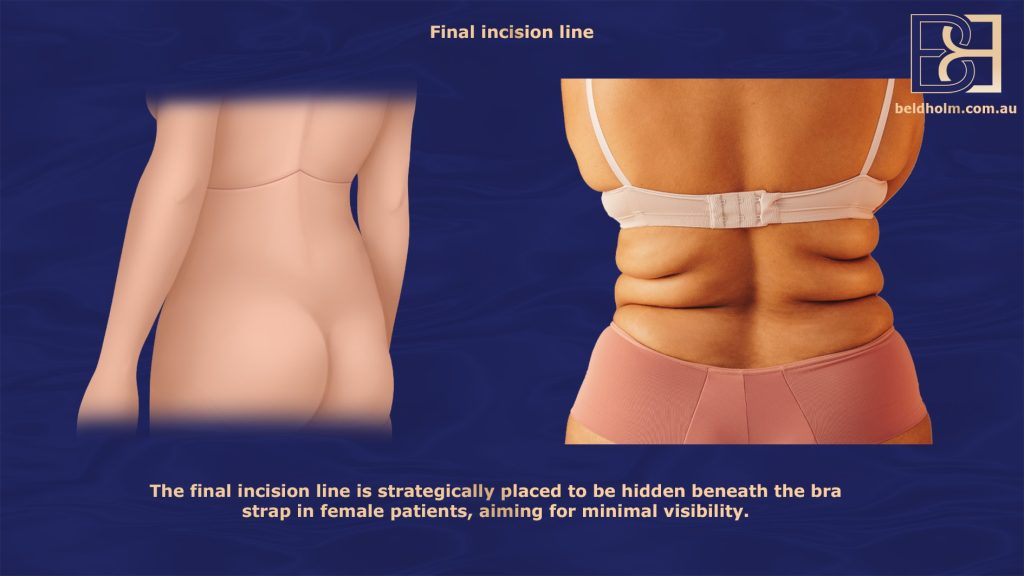
Markings are done with you standing, immediately before surgery. I mark the bra line or bra strap area as the target for the final scar, then map the upper and lower borders of the excision by pinching the redundant skin together. The pattern is tapered at both ends to prevent dog ears. This step determines where your scar will sit, so it is done unhurried and checked with you in front of a mirror.
Anaesthesia
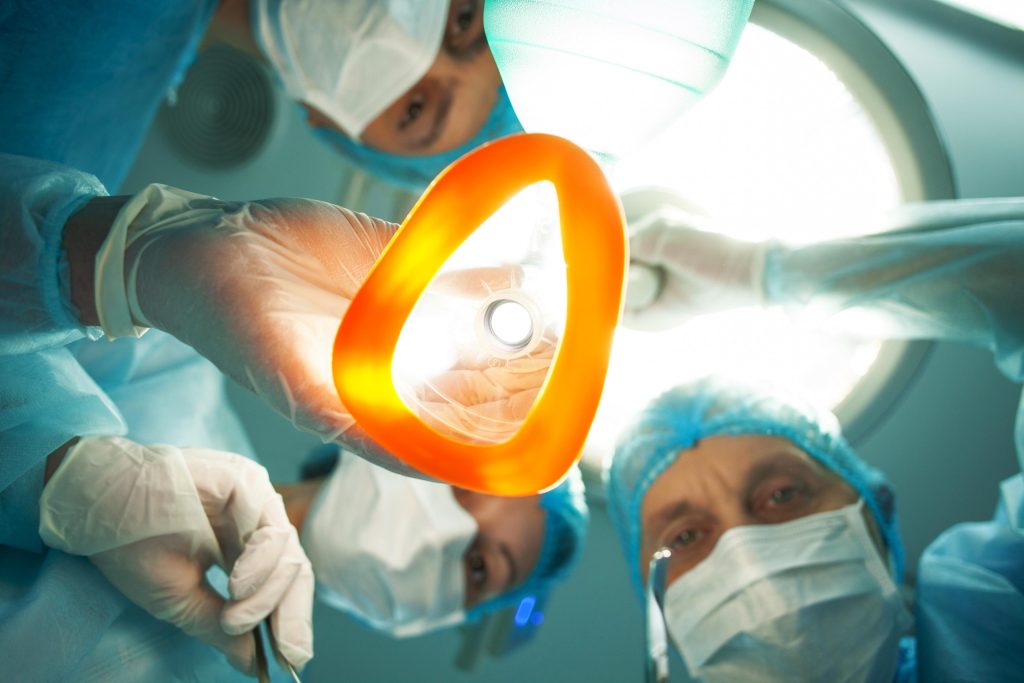
The surgical procedure is performed under general anaesthesia. Your anaesthetist consults with you by phone before the day of surgery to review your history and medications, and examines you, including your airway, on the day itself. In-person pre-operative anaesthetic review is rarely needed.
Fat removal where required
If there is fatty excess alongside the skin folds, I remove it first, usually with VASER liposuction (ultrasound assisted lipectomy) at the margins of the planned excision to blend the transition. Liposuction here is an adjunct only. It is never relied on to manage the skin itself.
Excision and closure
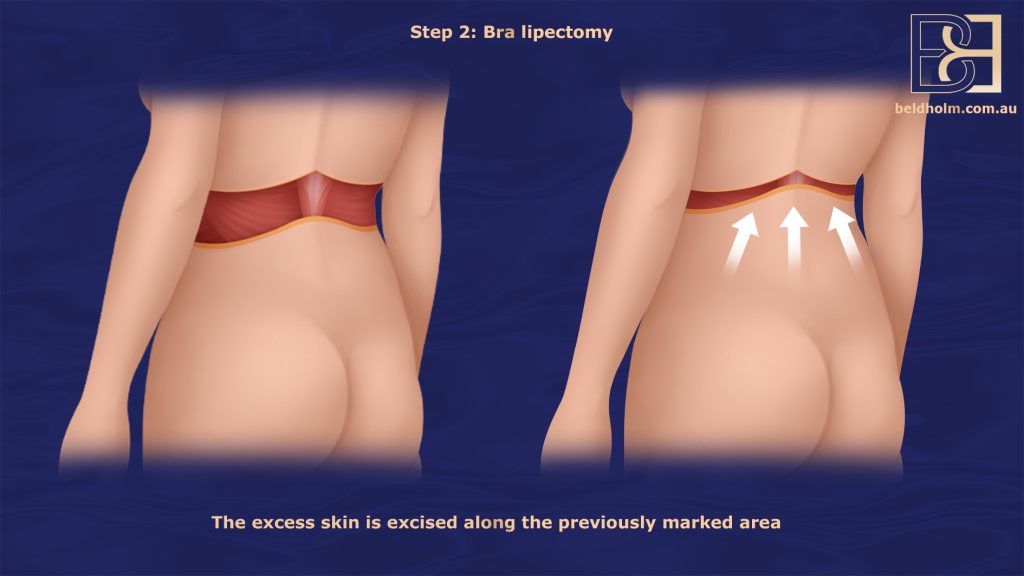
The excess skin and fat is removed as a single strip, with the dissection kept superficial to the muscle fascia. This plane preserves the blood supply to the skin edges and avoids the deeper structures of the back. Closure is done in layers, with deep sutures placed to close down the space left by the excision and reduce the risk of fluid collecting under the wound (1,2,3). The skin is closed with dissolving sutures and the wound dressed. Whether a drain is used depends on the extent of the excision, and I discuss this with you beforehand.
Combining Bra Line Lipectomy With Other Procedures
Skin excess after significant weight loss rarely respects a single territory. Many patients who need a bra line lipectomy also have laxity in the arms, breasts or lower body. In selected patients, a bra line lipectomy can be performed in the same operation as brachioplasty (arm lift), mastopexy (breast lift) or, less commonly, other body procedures below the waist.
Where a patient is suited to it, my preference is to treat the loose skin in a single comprehensive operation rather than dividing it across several procedures. One operation means one anaesthetic, one hospital admission and one recovery period, rather than repeating each of those steps two or three times. Whether this is appropriate is assessed at consultation, never in advance.
A larger single operation is a bigger physiological event than a smaller one. Operative time is longer, and the demand on the body is greater. That is precisely why pre-operative preparation matters more, not less, when a combined operation is planned.
For some patients, staging the work across separate operations is the more appropriate path. Medical factors, nutritional status, or the sheer extent of the skin excess can mean the combined operation would place more demand on the body than is sensible, or that the work cannot be completed well in a single operating time. Staging is a legitimate clinical choice in its own right, not a fallback, and I recommend it where it is the right call.
The decision rests on your medical history, your nutritional status, the pattern and extent of your excess skin, and what can be done well in one operating time. It is made with you at consultation, after examination.
Preparing for Surgery

Because a bra line lipectomy involves a long wound that must heal under some tension, preparation before surgery has a direct bearing on how the wound behaves afterwards. Most patients who have lost significant weight, whether through bariatric surgery, medication or lifestyle change, have nutritional gaps that developed during the weight loss itself. Low protein intake, iron deficiency and low vitamin D are the ones I see most often, and each of them impairs wound healing if left uncorrected.

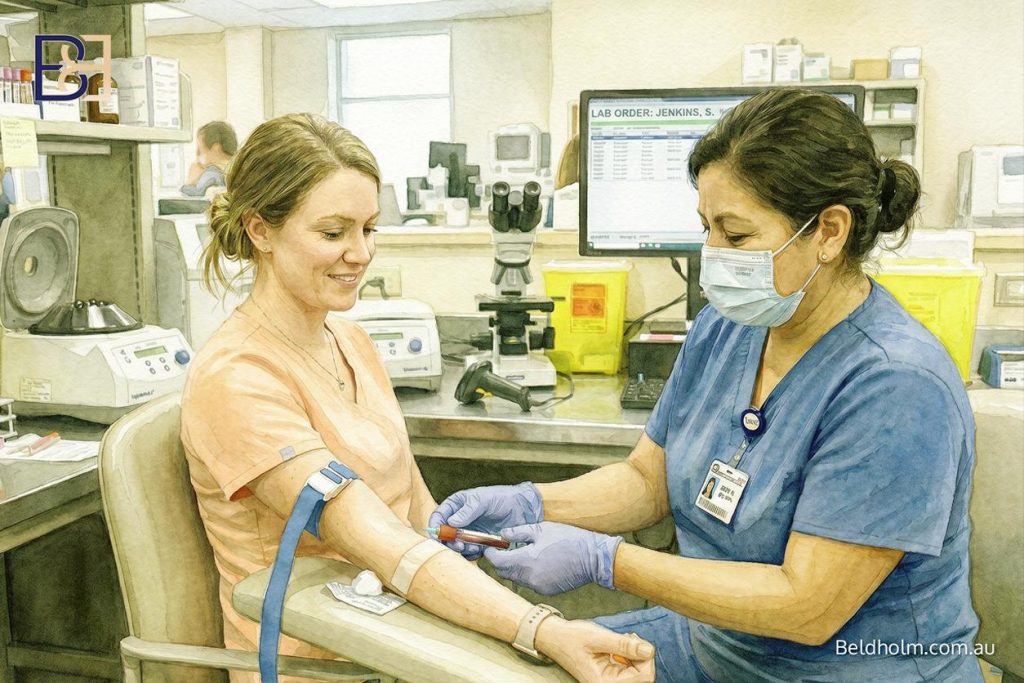
Every post weight loss patient in my practice has a comprehensive pre-operative blood panel before surgery, covering blood count, iron studies, protein status, glucose control, and a full vitamin and mineral screen. Where the results show a gap, we correct it before the operation, not after. Your GP is copied into the results and involved in any correction that needs medical management. I have written about this in detail in my nutrition series, including how to lift protein intake before surgery and which deficiencies matter most for healing.
Beyond nutrition, preparation covers stopping smoking and nicotine completely, reviewing every medication you take, and planning your recovery time at home. If you take aspirin, blood thinners or weight loss medication, do not stop or adjust anything yourself. I review these with you and give specific instructions well before the day of surgery.
Recovery After Bra Line Lipectomy

The recovery process deserves its own article, and I have written one. Here is the shape of it.
The first 2 weeks after surgery are a closely supervised phase. Most patients go home the same day or after 1 night at Maitland Private Hospital, with pain medication to take home. The early recovery period focuses on wound care, comfort and protecting the incision. In the first few weeks I ask you to limit shoulder and arm movement, particularly reaching overhead, and to avoid lifting, because both put tension across the wound. Most people are back to light activities within 1 to 2 weeks and desk-based work at around the 2 week mark. Strenuous exercise waits at least 6 weeks. Swelling settles gradually over several weeks, and scar care, including silicone gel or tape, begins once the wound has healed.
The first 2 weeks involve intense follow-up, then routine reviews at 4 weeks and at 3, 6 and 12 months, all included in the fee. Patients travelling from outside the Hunter region should plan to stay locally for 7 to 10 days after surgery so early reviews and any concerns can be managed in person. If anything worries you after hours, you call Maitland Private Hospital directly and speak with the nursing team.
For the full week by week timeline, wound care, garments, sleeping position, driving and return to exercise, read my detailed guide: recovering from a bra lipectomy (bra line back lift).
Risks and Potential Complications
This is major surgery, and all surgery carries risks. For bra line lipectomy, the complications I discuss with every patient include seroma (fluid collecting under the wound), haematoma, infection, delayed wound healing or wound breakdown, changes in skin sensation around the scar, scar widening or thickening, asymmetry, dog ears at the ends of the scar, blood clots (deep vein thrombosis), and the possibility of revision surgery (1,2,3). The back is a high tension, high movement area, and wounds here are worked by every reach and twist of the shoulders, which is why wound-related problems and scar stretch feature prominently on this list.
Individual risk is not the same for everyone. Smoking, diabetes, nutritional deficiencies, higher body mass index and larger or combined operations each raise it, and part of the pre-operative work described earlier exists specifically to bring these risks down before you reach the operating theatre. Results vary between patients, and a small proportion will need a further procedure to deal with a complication or revise a scar.
I have written a dedicated article covering each complication in detail, including how often they occur, how I manage them, and the warning signs that should prompt you to contact the practice or Maitland Private Hospital: complications from bra lipectomy (upper back lipectomy).
Cost and Medicare

The cost of a bra line lipectomy depends on the extent of the excision, hospital and anaesthetic fees, and whether other procedures are performed at the same time. A written, itemised quote is provided after your consultation, once the surgical plan is settled.
Medicare recognises excision of redundant skin after significant weight loss under specific MBS criteria. For non-abdominal skin excess, the relevant item requires that you have lost at least 5 BMI units, that your weight has been stable for at least 6 months, and that the redundant skin causes problems such as intertrigo that has not responded to 3 months of conservative treatment, or interferes with daily living. Where you meet the criteria, a Medicare rebate and private health insurance contribution may apply, which changes the out of pocket cost considerably. Eligibility is confirmed at consultation against the current MBS wording.
What This Operation Can and Cannot Do
A bra line lipectomy removes established folds of redundant skin from the upper back, reduces the irritation and hygiene problems that come with them, and makes bras and fitted clothing sit the way they should. It exchanges those folds for a permanent scar along the bra line. It is not a weight loss operation, it does not treat areas at a distance from the scar, and the long term result depends on your weight staying stable. Results vary between patients, and how your skin heals and how your scar matures are individual. What I can tell you at consultation, after examining you, is what the operation is likely to achieve for your particular pattern of excess skin, and that conversation is the right basis for a decision.
Frequently Asked Questions

Will Medicare cover my bra line lipectomy?
It can, if you meet the MBS criteria for excision of redundant skin after significant weight loss: at least 5 BMI units lost, weight stable for at least 6 months, and skin folds causing problems such as intertrigo unresponsive to 3 months of conservative treatment or interference with daily living. I confirm your eligibility when we meet, checked against the current MBS wording.
How long is recovery after a bra line back lift?
Most patients are back to light activities within 1 to 2 weeks and avoid strenuous exercise and heavy lifting for at least 6 weeks. The first 2 weeks involve intense follow-up, and shoulder movement is limited early on to protect the wound. My recovery article covers the full timeline week by week.
Will the scar show?
The scar is planned to sit along your bra line so a bra band or swimwear covers it. It is permanent, and it usually fades into a fine line over about 12 months, though scar quality varies between patients. Out of clothing, it is visible.
Can I have a bra line lipectomy at the same time as other surgery?
In suitable patients, yes. It is most often combined with brachioplasty (arm lift) or mastopexy (breast lift). Whether combining or staging is right for you depends on your health, nutrition and the extent of your excess skin, and is decided at consultation.
References
- Hunstad JP, Repta R. Bra-line back lift. Plast Reconstr Surg. 2008;122(4):1225-1228.
- Hunstad J, Chen C, Abbed T. Bra-Line Back Lift. Clin Plast Surg. 2019;46(1):77-84.
- Hunstad JP, Khan PD. The bra-line back lift: a simple approach to correcting severe back rolls. Clin Plast Surg. 2014;41(4):715-726.
- Strauch B, Rohde C, Patel MK, Patel S. Back contouring in weight loss patients. Plast Reconstr Surg. 2007;120(6):1692-1696.
- Aly AS. Upper body lift. In: Aly AS, editor. Body Contouring after Massive Weight Loss. St Louis: Quality Medical Publishing; 2006.