Brachioplasty (arm lift, or upper arm lift) is a surgical procedure that removes excess skin and fat from the upper arm, typically between the elbow and the armpit (axilla). After significant weight loss, it is one of the most commonly requested body contouring procedures I see in my practice, and for good reason. The arms are hard to hide. Loose skin that hangs from the upper arm affects clothing choices, causes skin irritation in the armpit fold, and interferes with exercise and daily activities.
Why the post weight loss arm is different
The arm I see after significant weight loss is not the same as the arm affected by ageing alone. When a large volume of fat leaves the upper arm, the skin envelope that stretched to accommodate it rarely retracts fully. What remains is a deflated skin sleeve with poor elasticity. In many patients the excess does not stop at the arm. It continues through the axilla and onto the side of the chest wall as one continuous fold of excess tissue.
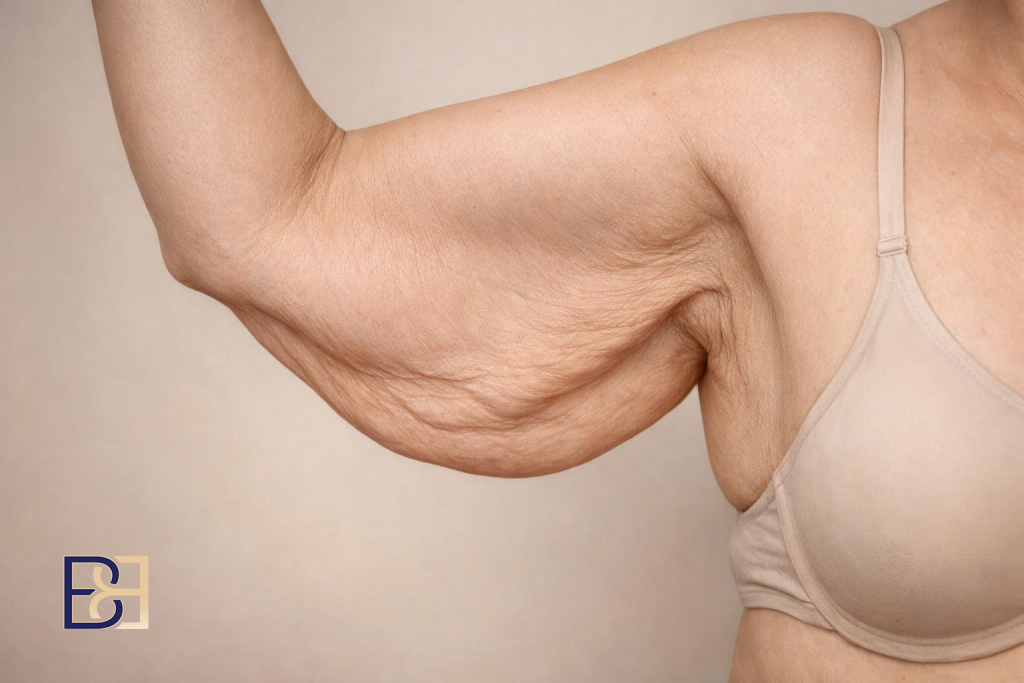
This matters because it changes the operation. A short scar tucked into the armpit will not deal with a full length skin sleeve, and an operation limited to the arm will not deal with excess that runs onto the chest. Research on arm contouring after weight loss consistently shows that the pattern and extent of the skin excess, not the amount of fat, should drive the choice of technique (1).
In this article I cover how I assess the arm, the types of brachioplasty (arm lift) I perform, the role of liposuction (suction assisted lipectomy), timing, preparation, and what to expect around surgery. Recovery and complications each have their own detailed articles, linked throughout, so here I keep those sections brief.
Why Arms Develop Loose Skin After Weight Loss
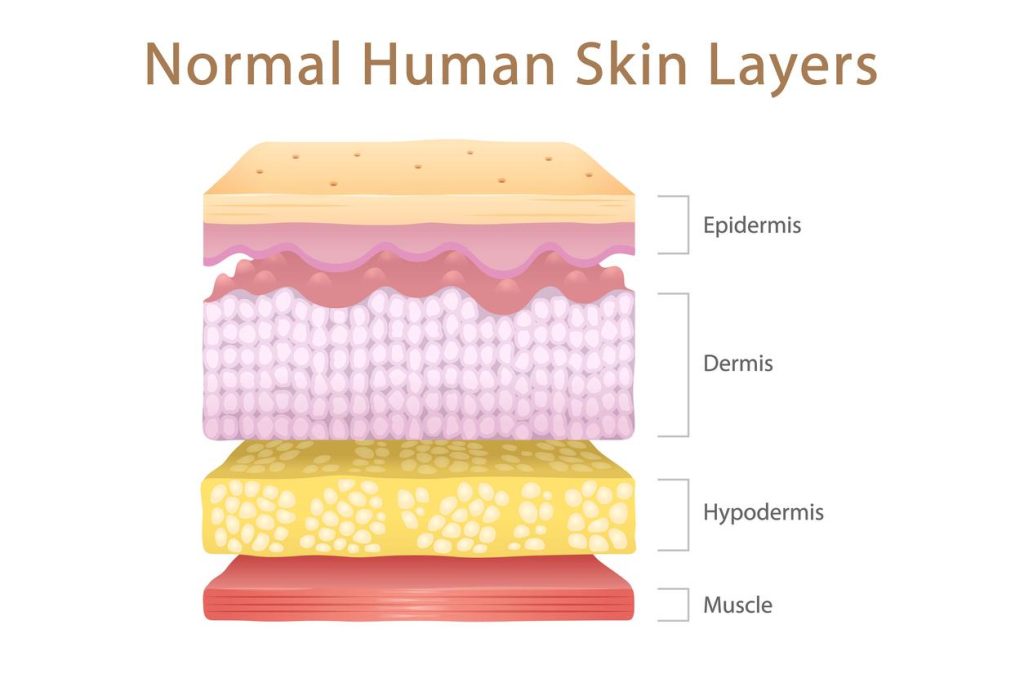
Skin is an elastic organ, but its elasticity has limits. When the arm carries a large volume of fat for years, the skin stretches, the collagen and elastin fibres within it are damaged, and the dermis thins. Lose the fat and the stretched envelope remains. The larger the weight loss and the longer the skin was stretched, the less it retracts.
In my practice, the patients presenting with upper arm skin excess have usually experienced significant weight loss through 1 of 3 pathways:
- Bariatric surgery. Sleeve gastrectomy and gastric bypass patients often lose 40 kg or more. The arms are one of the first areas where deflation becomes visible.
- Weight loss medications. Patients who have lost significant weight through medication now make up a growing share of my body contouring practice. The skin changes are the same as after bariatric surgery. What matters is the amount lost and the stability of the result, not the method.
- Diet and exercise. Sustained lifestyle change produces the same extra skin when the weight reduction is large.
Several other factors influence how much loose skin remains: age at the time of weight loss, a genetic tendency to reduced skin elasticity, sun exposure, smoking history, and the number of weight loss and regain cycles the skin has been through. Repeated cycles are particularly unkind to skin elasticity.
One point I make at every consultation: exercise cannot fix this. Building the biceps and triceps improves the underlying muscle tone, and I encourage it, but no amount of training removes a stretched skin envelope. Once the skin has lost its capacity to retract, surgery is the only way to remove excess skin that cannot retract.
Assessing the Arm: How I Classify Skin Excess
The consultation examination determines everything that follows. Published classification systems for arm deformity grade the arm by the location of the excess, the amount of skin laxity, and the amount of residual fat (1,2). I use the same principles in a practical 3 part assessment.
1. Where does the excess sit?
- Proximal only. A small amount of loose skin confined to the upper third of the arm, near the axilla. Uncommon after significant weight loss.
- Full arm. Loose skin running the length of the upper arm, from axilla to elbow. This is the classic hanging fold that patients describe.
- Arm extending onto the chest wall. The fold continues through the axilla and down the lateral chest. This pattern is common after significant weight loss and is frequently missed when the arm is assessed in isolation.
2. Skin, fat, or both?
I pinch the tissue and assess what fills the fold. In most post weight loss patients at or near a stable healthy weight, the fold is predominantly skin with little residual fat. Some patients retain a meaningful fat layer, and that changes whether liposuction (suction assisted lipectomy) has a role. Skin quality itself matters too. Thin, crepey, striae marked skin behaves differently under tension than thicker skin.
3. How does it move?
With the arm held out at 90 degrees, I assess how far the tissue hangs and how it drapes when the patient moves. This tells me where the final scar should sit so it stays on the inner arm rather than rotating into view.
This assessment maps directly onto technique selection, which is where we go next. The pattern of excess chooses the operation. The patient and I then decide whether that operation is right for them.
Types of Brachioplasty (Arm Lift)
There is no single brachioplasty (arm lift). All arm lift procedures (forms of brachioplasty) are matched to the pattern of excess found at assessment. Published reviews of arm contouring confirm there is no universally superior technique, and that matching the excision to the deformity is what drives good results (1).
Limited brachioplasty
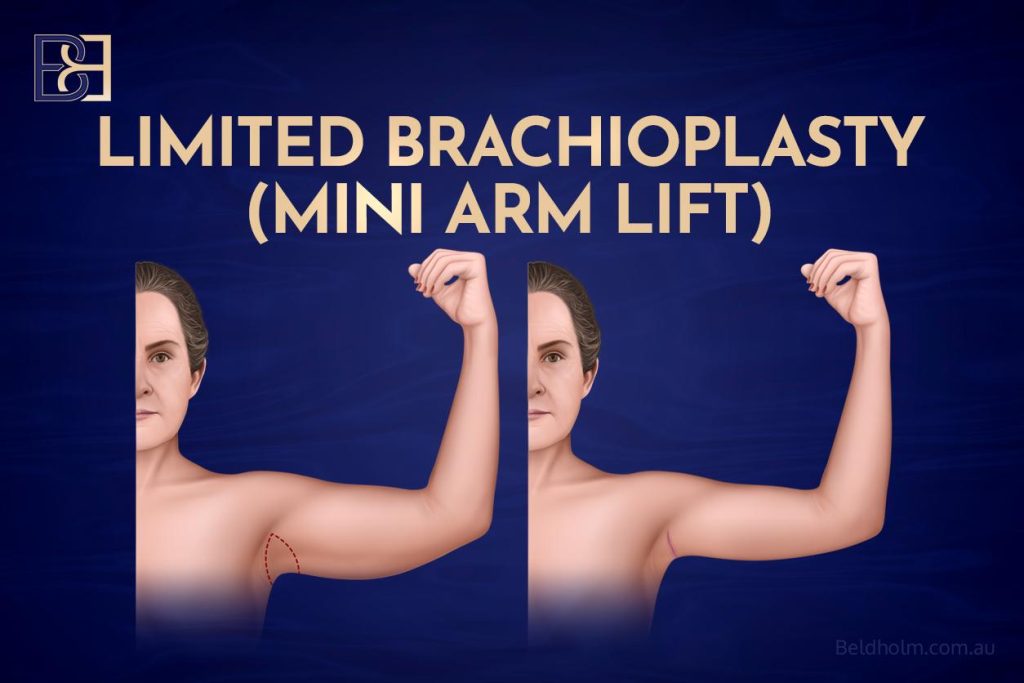
A limited brachioplasty (sometimes called a mini arm lift) uses a short incision within the axillary crease. It suits carefully selected patients with excess confined to the upper third of the arm.
Most patients who have lost significant weight are not suitable for a limited brachioplasty. It cannot treat a skin sleeve running the length of the arm, and using it in the wrong patient trades a shorter scar for a poor result. In my practice it is the least commonly performed variant for post weight loss patients.
Standard brachioplasty
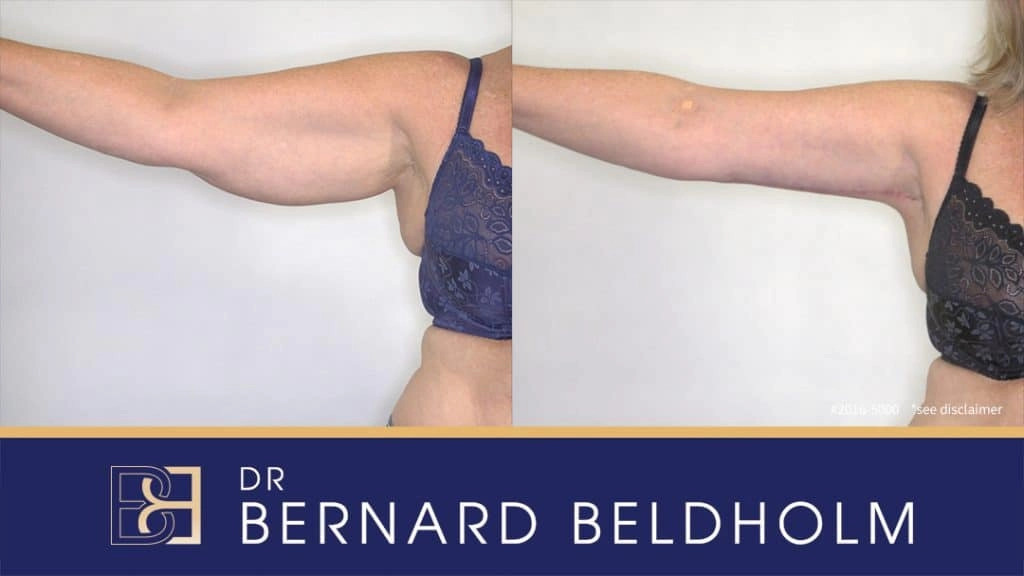
Disclaimer: Results vary, surgery has risks, seek 2nd opinion. Operation performed by Dr Beldholm
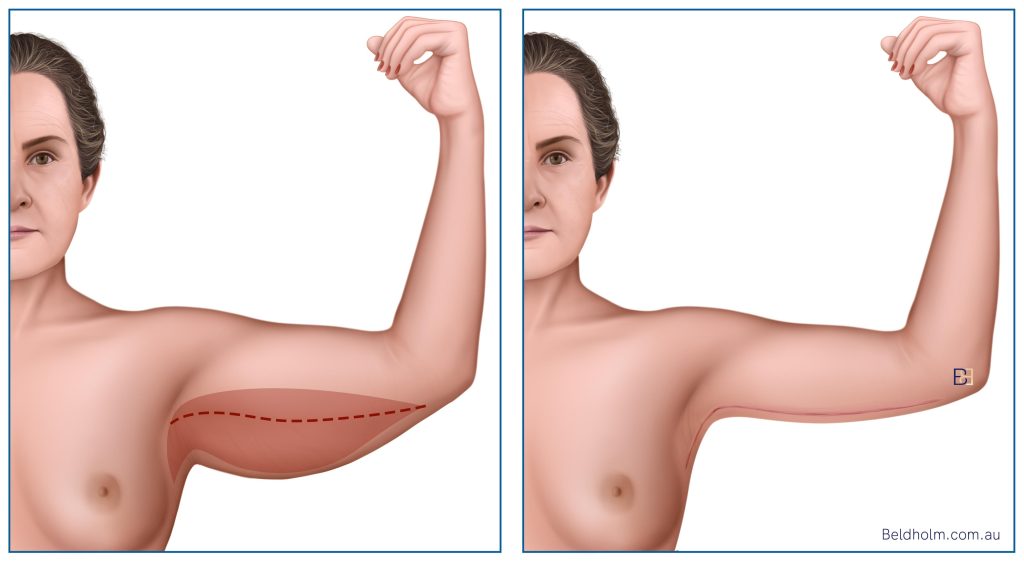
The standard brachioplasty treats excess running from the axilla to the elbow. The incision runs along the inner arm, and the skin and any excess fat between the incision lines are removed.
Incision placement is a deliberate part of the surgical plan. The 2 main options are the medial (inner) arm and a more posterior position. Research comparing incision placements has reported differences in scar satisfaction and visibility between approaches, with combined postero-medial placement performing well in recent series (3). My preference is to place the incision at the lower end of the arm. This keeps the scar out of sight from the front, although with the arm by the side the scar can be seen from behind. Placement in the bicipital groove along the inner arm is an option I offer only when patients specifically request it. Wherever the incision sits, the trade-off must be clearly stated: the scar is long, it is visible in some arm positions, and it takes 12 months or more to mature. Patients trading a hanging fold for a long scar need to understand that exchange before consenting.
Extended brachioplasty
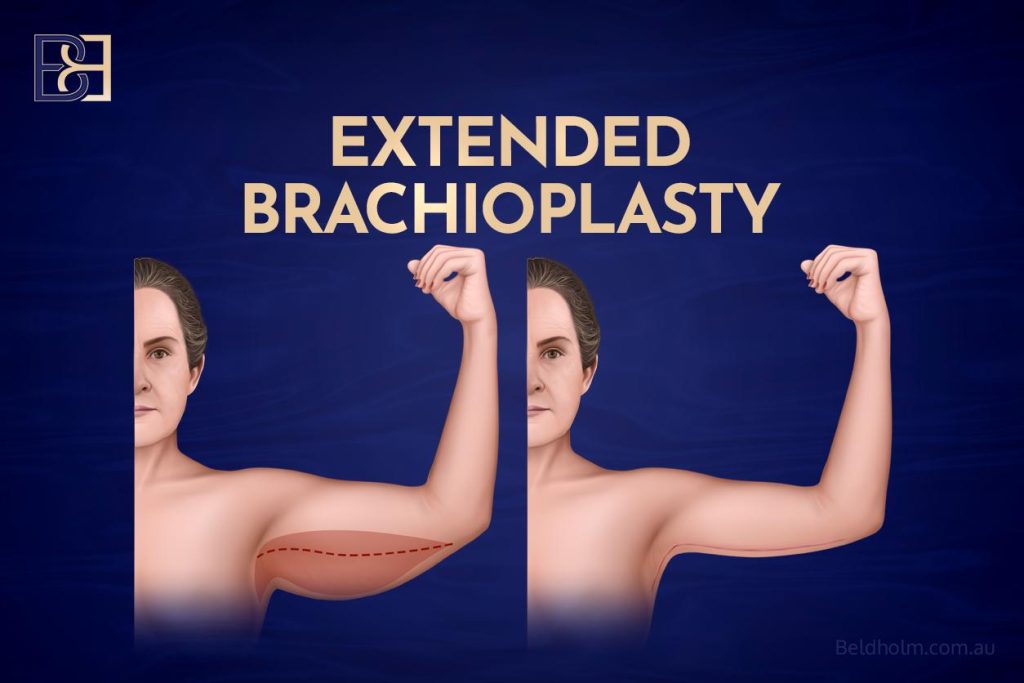
When the excess continues through the axilla onto the lateral chest wall, the incision must follow it. An extended brachioplasty carries the excision from the elbow, through the axilla, and down the side of the chest as far as the excess runs.
This is the operation most of my patients need after massive weight loss. Treating the arm but leaving the chest wall fold behind produces a mismatched result and a bunching of loose tissue at the axilla. Research on post weight loss arm deformity supports extending the excision when the excess involves the chest wall (1,2).
What about the elbow?
In some patients, laxity extends below the elbow onto the forearm. Extending the incision past the elbow crease is described in the literature and can improve the transition at the distal arm (4).
The Role of Liposuction (Suction Assisted Lipectomy)
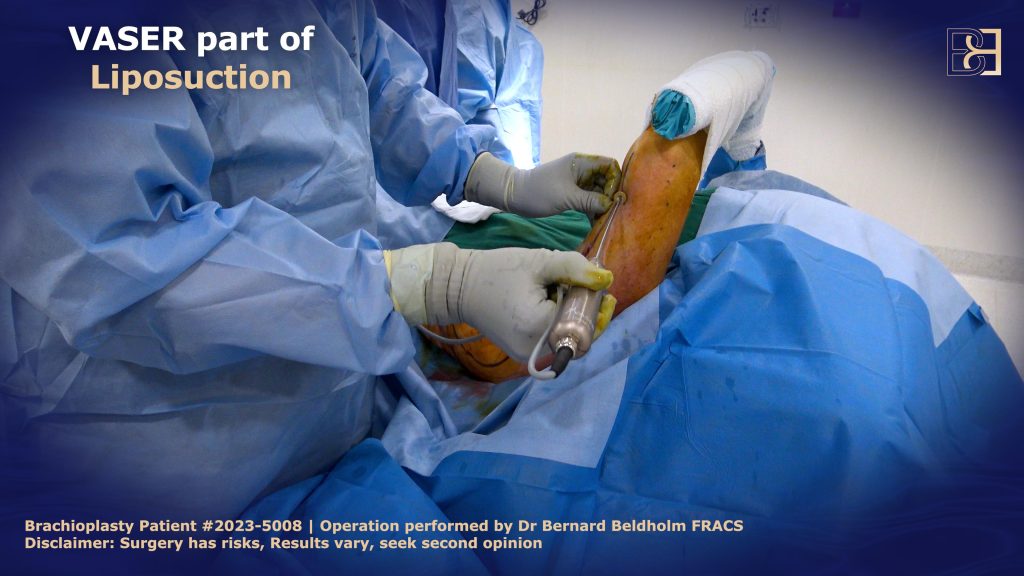
Brachioplasty removes skin. Liposuction (suction assisted lipectomy) removes fat. Whether the two are combined depends entirely on what the assessment finds in the fold.
Most post weight loss patients do not need it
Patients who have lost significant weight and stabilised at or near a healthy weight usually have little residual fat in the arms. The fold is skin. In these patients, skin removal alone treats the problem, and adding liposuction (suction assisted lipectomy) achieves nothing except additional operating time and swelling.
When I combine the two
Some patients retain a meaningful fat layer in the arm despite good weight loss. In these patients I combine brachioplasty with VASER liposuction (ultrasound assisted lipectomy) in the same operation. The liposuction (suction assisted lipectomy) thins the fat layer around the circumference of the arm and in the areas the excision does not reach, including the posterior arm and around the axilla. The excision then removes the loosened, deflated skin.
Where liposuction (suction assisted lipectomy) is indicated, my preference is VASER liposuction (ultrasound assisted lipectomy). The ultrasound energy targets the fat while causing less disruption to the underlying tissues, including the lymphatic channels that matter for arm swelling after surgery. Published technique series report that combining controlled liposuction (suction assisted lipectomy) with excision, while respecting the underlying lymphatic network, supports contour and recovery in arm lift surgery (brachioplasty) (5).
What liposuction (suction assisted lipectomy) alone cannot do
I am regularly asked whether liposuction (suction assisted lipectomy) by itself can avoid the brachioplasty scar. In post weight loss arms, the answer is almost always no. Liposuction (suction assisted lipectomy) removes volume from under skin that has already failed to retract. Removing more volume from beneath it makes the skin excess worse, not better. Reviews of arm contouring reserve liposuction (suction assisted lipectomy) alone for patients with good skin elasticity and fat excess without significant laxity, which is the opposite of the typical post weight loss presentation (1).
Who Is Suitable and When
Timing matters as much as suitability. Operating on the right patient at the wrong time produces avoidable problems, so I assess both.
Weight stability comes first

I want weight stable for at least 6 months before surgery, and after major weight loss I prefer closer to 12 months. There are 2 reasons. First, skin continues to retract for many months after weight loss finishes, and operating early means removing skin that might still have tightened on its own. Second, ongoing weight loss after surgery loosens the result, while regain stretches it. Neither is fixable without revision surgery.
For patients losing weight with weight loss medications, the same principle applies. The question is not the medication but whether the weight has genuinely plateaued and held. I look at the weight record with the patient and their GP referral rather than relying on a single number on the day.
Health and nutritional status

Brachioplasty is major surgery under general anaesthetic, and suitability rests on:
- General health, including conditions linked to delayed healing such as diabetes
- Smoking and nicotine status. Nicotine impairs skin healing, and long incisions under tension are exactly where that shows
- Nutritional status. Many patients arrive with nutritional gaps that developed during weight loss, whether after bariatric surgery or medication assisted weight loss. Correcting these before surgery supports healing. Every post weight loss patient in my practice completes a pre-operative blood panel, and deficiencies are corrected before an operation date is set
- The ability to commit to the recovery period, including time off work and restrictions on lifting
BMI as a rough guide
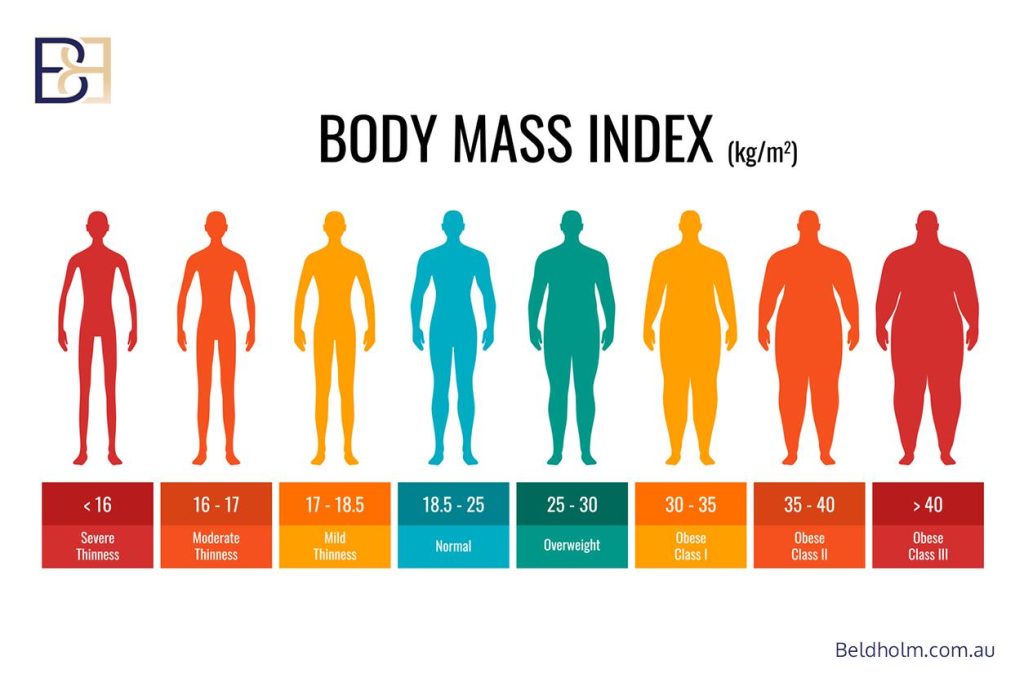
I use BMI as a rough guide only, not a hard cut-off. A patient with a BMI slightly above the usual range who is fit, weight stable, and well nourished may be a better candidate than a lighter patient who is still actively losing. Clinical context determines candidacy, and that judgement is made at consultation after a GP referral.
Who I advise to wait
Patients still losing weight, patients within 6 months of finishing a weight loss medication or bariatric program, current smokers, and patients with uncorrected nutritional deficiencies are advised to wait. Waiting is not a refusal. It is timing the surgery to give the best chance of good healing and a lasting result.
Combining Brachioplasty With Other Procedures, or Staging
Arm skin excess after significant weight loss rarely travels alone. Many of my brachioplasty (arm lift) patients also have loose skin elsewhere on the upper body, including the upper back, chest, or breasts, and the question of what to do in one operation comes up at almost every consultation.
My general position
Where a patient is medically suited to it, my preference is to treat their loose skin in a single comprehensive operation rather than dividing it across several procedures. One operation means one anaesthetic, one hospital admission, and one recovery period, rather than repeating each of those steps 2 or 3 times.
This is a preference, not a rule, and it is never a reason to expand the scope of anyone’s surgery. Suitability is decided patient by patient, at consultation, after assessment of medical history, nutritional status, the pattern of skin laxity, and what can be done well in a single operating time. A larger single operation is a bigger physiological event than a smaller one. That is the trade-off, and it is exactly why pre-operative preparation carries more weight when a combined operation is planned.
Combinations that pair with brachioplasty
The combined procedures I consider around the arm sit in the same anatomical region:
- Extended brachioplasty with bra line lipectomy (upper back lipectomy). When the chest wall excess continues around to the upper back, the 2 excisions can meet and treat the fold as one continuous unit
- Brachioplasty with mastopexy (breast lift). Arm and breast excess frequently coexist after significant weight loss, and the axillary region is shared territory between the 2 operations
Whether either combination is appropriate for a given patient depends on the total operative time, the physiological demand, and their individual health. These are assessed at consultation.
When staging is the better path
For some patients, staging the work across separate operations is the more appropriate choice. That includes patients where the combined operation would place more demand on the body than is sensible, where medical factors require the work to be spread out, or where the extent of the work cannot be completed well in a single operating time. Staging is a legitimate clinical choice, not a fallback, and for some patients it is the right approach.
Whether one operation or staged surgery suits you is determined at consultation.
My Operative Approach
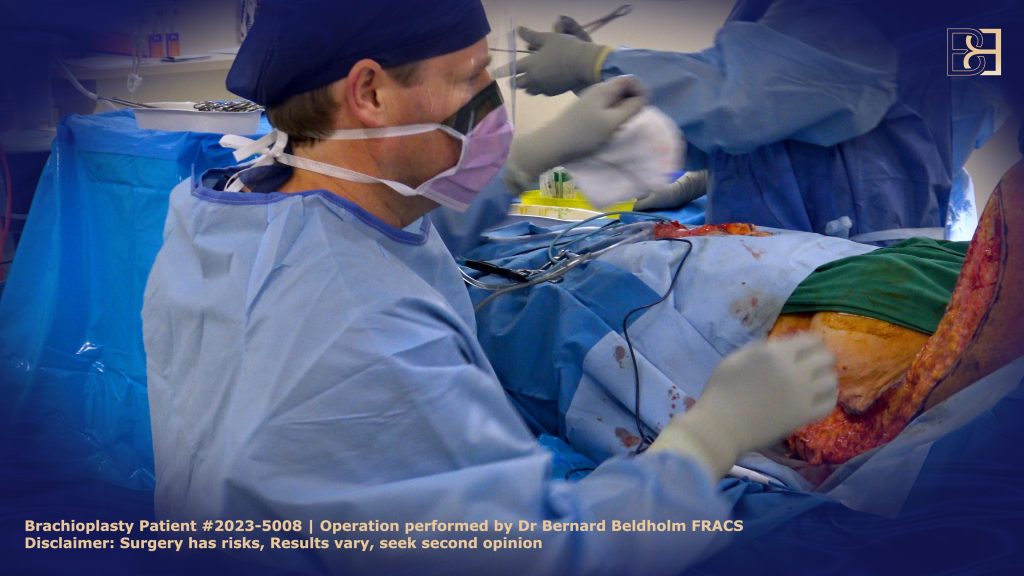
Before the operation
Surgical markings are done with the patient awake and standing, arms held out at 90 degrees. Skin excess cannot be judged accurately on a patient lying flat on an operating table, so the excision pattern, the planned scar placement at the lower end of the arm, and any extension through the axilla onto the chest wall are all mapped before we enter the operating theatre.
In theatre
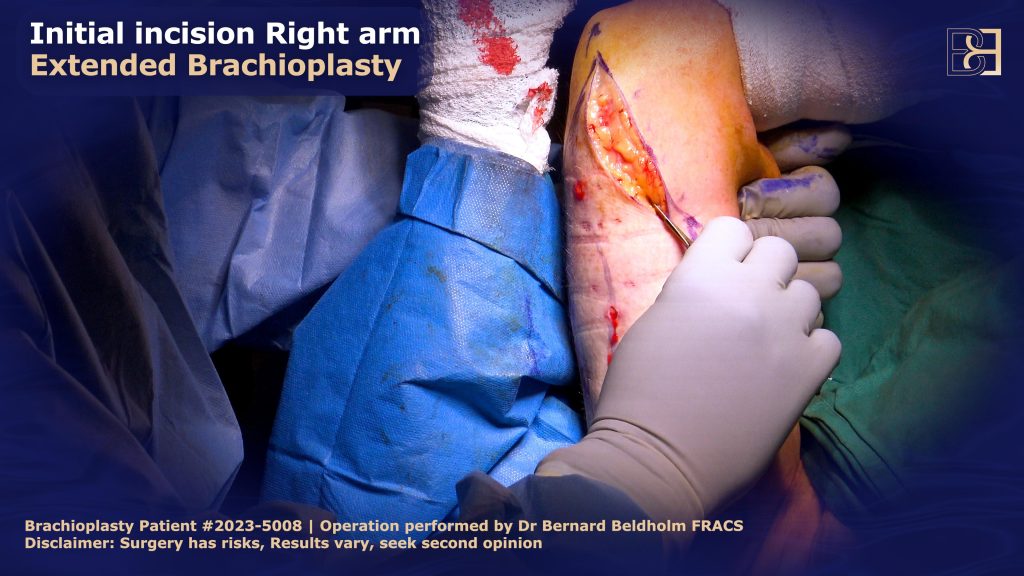
Brachioplasty (arm lift) is performed under general anaesthetic at Maitland Private Hospital. Operating time is typically 2 to 4 hours, depending on whether the operation is a standard or extended brachioplasty and whether VASER liposuction (ultrasound assisted lipectomy) is performed at the same time. Combined operations take longer, which is factored into the physiological planning discussed earlier.
Where liposuction (suction assisted lipectomy) is part of the plan, it is done first to thin the fat layer. The marked skin is then excised, the tissue layers are closed in stages to spread the tension, and the skin is closed with dissolving sutures.
Dressings, drains and garments
I use Comfeel dressings on brachioplasty wounds. These stay in place for around 2 weeks and allow showering. In the past I used negative pressure dressings on arms, but I moved away from them because of blistering at the dressing edges and because they interfered with getting compression garments on and off.
Drains are not routinely required for brachioplasty alone, although they may be used in extended operations or where liposuction volumes are larger. A compression garment is fitted in theatre and worn for several weeks after surgery to reduce swelling and support the new arm contour.
Hospital stay

Most brachioplasty patients stay 1 night at Maitland Private Hospital, with some suitable for day surgery and combined operations sometimes needing longer. Maitland Private has 24 hour medical cover and an on-site intensive care unit, and I do daily rounds on my inpatients. Discharge happens when pain is controlled, the patient is mobilising, and the wounds are dry.
Preparing for Surgery
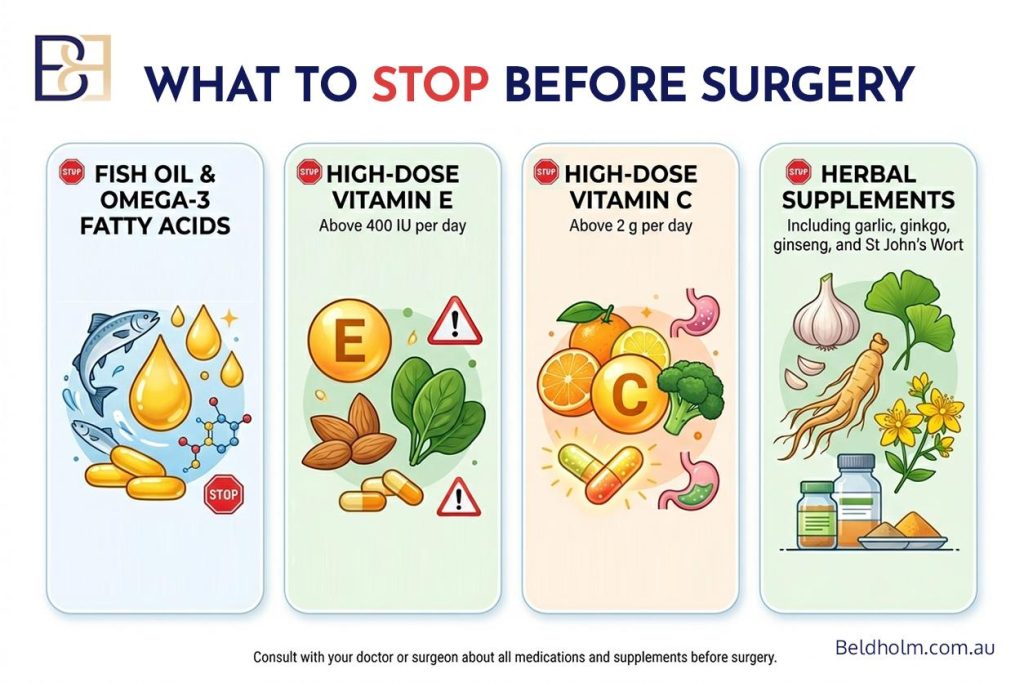
Preparation is where post weight loss surgery is won or lost. A long incision under tension heals well in a well prepared patient and poorly in an unprepared one.
The pre-operative blood panel
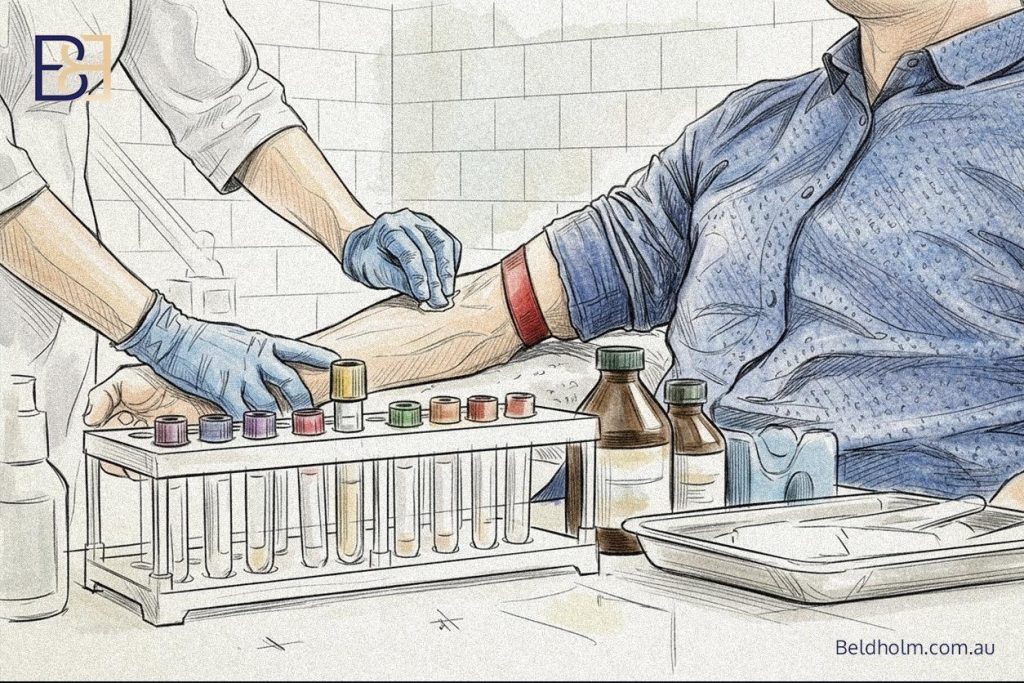
Every post weight loss patient in my practice completes a comprehensive pre-operative blood panel before surgery. Significant weight loss, whether through bariatric surgery or weight loss medications, commonly leaves nutritional gaps that are invisible on the outside but show up in the healing process. The panel covers blood count, coagulation, liver and kidney markers, glucose and HbA1c, iron studies, thyroid function, and a full micronutrient screen including vitamins A, B1, B6, B12, folate, vitamin D, vitamin E, zinc and selenium, with albumin as the protein marker. Results are copied to your GP.
Deficiencies found on the panel are corrected before an operation date is set. I cover the reasoning and the details in my article on nutritional deficiencies after weight loss, and the supporting protein and micronutrient articles linked from it, so I will not repeat the protocols here.
Medications and blood clot risk

Brachioplasty carries a risk of blood clots, including deep vein thrombosis and clots travelling to the lung, as all body contouring surgery does. I stratify each patient’s clot risk myself and decide the prevention plan, which may include calf compression during surgery, early mobilisation, and blood thinning injections where indicated.
Aspirin and anticoagulant medications are typically stopped 1 week before surgery, but this is planned individually and some patients continue through surgery. Do not stop any medication on your own. The plan is set well in advance with you and your GP.
For patients on weight loss medications, current Australian guidelines do not recommend routinely stopping them before surgery, and I follow that guidance. Where protein targets cannot be met in the lead-up, a temporary dose adjustment may be discussed. That is a decision made with me during pre-operative planning, not something to change yourself.
Anaesthetic assessment

Most patients have their anaesthetic consultation by phone before surgery, with the physical assessment, including the airway examination, completed on the day of surgery. Patients with complex medical histories may need an in-person review, which is arranged when required.
Practical preparation
- Stop smoking and all nicotine well before surgery. This is non-negotiable for a long skin incision
- Arrange 2 weeks away from most work, longer for manual roles
- Arrange help at home for the first week. Arm movement is restricted and everyday tasks like washing hair are harder than patients expect
- Fill prescriptions and organise loose fitting, front opening clothing before surgery day
Book your appointment online now
Recovery: A Brief Overview
I have written a full recovery guide for brachioplasty, so this is a snapshot only. Read the complete article on recovering from brachioplasty surgery for the week by week recovery timeline.
The short version:
- First 2 weeks. Swelling, bruising and tightness are expected. The compression garment is worn continuously, arm movement is kept below shoulder height, and heavy lifting is off the table. Most patients return to desk based work at around 2 weeks
- Weeks 2 to 6. The Comfeel dressings come off around 2 weeks, garment wear continues, and movement is gradually rebuilt. Manual work and strenuous exercise wait until I clear them
- Months 2 to 12. Swelling settles over months, not weeks. Scar management starts once wounds have fully healed, and scar maturation is a gradual process that continues for 12 months or more
Driving deserves its own mention because arms are exactly what driving uses. You must be off strong pain medication and able to perform an emergency stop and full steering movements before returning to the wheel. I cover the specifics, including insurance considerations, in my article on driving after surgery.
The recovery process is not a race, and patients who follow their post operative care instructions in the first 6 weeks generally do better than those who test the restrictions.
Risks and Complications: A Brief Overview
Brachioplasty (arm lift surgery) is major surgery and it is not risk free. I have written a detailed article on complications from brachioplasty surgery, covering causes, warning signs and management, so here I list the main potential complications only:
- Bleeding and haematoma
- Infection at the surgical site
- Fluid collection (seroma) that may need drainage
- Wound separation, particularly near the axilla where tension and movement are highest
- Poor scarring, including hypertrophic and widened scars
- Changes in sensation along the inner arm, which are common early and usually settle, though numbness can persist
- Nerve injury
- Swelling of the arm related to lymphatic disruption
- Blood clots (deep vein thrombosis and pulmonary embolism)
- Asymmetry or residual skin excess that may need further surgery
Published series consistently identify wound healing problems and scar concerns as the most frequent complications after brachioplasty, with the incision under tension across a mobile joint region being the underlying reason (1,5).
The complications article covers each of these in depth, along with the warning signs and unusual symptoms that need same day contact and the after hours contact pathway.
Cost, Medicare and Health Insurance

The cost of brachioplasty (arm lift) in Australia depends on the type of surgical procedure, whether liposuction (suction assisted lipectomy) is added, operating time, hospital and anaesthetic fees, and length of stay. I have written a separate article on brachioplasty cost that breaks these components down, so here I cover the Medicare position only.
When Medicare may contribute
Medicare rebates for skin excess surgery after significant weight loss are governed by strict criteria. In broad terms, a rebate may apply when:
- You have lost at least 5 BMI units of weight
- Your weight has been stable for at least 6 months
- The excess skin causes a skin problem such as intertrigo (a rash in the skin fold) that has not settled despite at least 3 months of conservative treatment, or the skin excess interferes significantly with daily living
- The weight loss is not related to pregnancy
If you meet the criteria, MBS item 30169 (excision of redundant non-abdominal skin and fat after significant weight loss) may apply to the surgery, which in turn opens the door to private health insurance contributing to hospital costs, depending on your level of cover. If you do not meet the criteria, the operation is self funded.
Whether you qualify is assessed individually at consultation, with your GP referral and weight history forming part of the documentation. My rooms confirm current item numbers and eligibility as part of your written quote, and we help with the paperwork where the criteria appear to be met.
You receive a full written quote after your consultation, before any decision is made, with no dollar figures quoted until your individual operation plan is known.
Follow-Up and Long-Term Results
The follow-up schedule
Surgery is not finished when you leave the operating theatre. My follow-up structure for brachioplasty (arm lift) patients is:
- First 2 weeks. Intense follow-up straight after surgery, with wound care and dressing management through my clinic
- 4 weeks. Review of wound healing and movement, and the formal handover point where your GP takes over long-term general care
- 3, 6 and 12 months. Scheduled follow up appointments tracking scar maturation, arm contour and any late issues
All of these reviews are included in the surgical fee. Telehealth reviews are available for patients travelling from regional areas, with in-person visits reserved for the points where hands-on assessment matters.
Keeping the result
The operation removes skin. It does not change the skin’s underlying health or quality or stop the ageing process, and it cannot protect the result from weight change. Long-term results depend on:
- Weight stability. Significant weight gain stretches the arm again, and significant further loss creates new laxity. The stable weight and healthy lifestyle you bring to surgery are what protect the result
- Scar care. Taping, silicone therapy and sun protection through the first 12 months influence scar healing and how the final scar looks. I cover this in the recovery article
- Activity. Once cleared, normal physical activity including resistance training is encouraged. Building the arm muscles supports the new contour rather than threatening it
Some degree of skin relaxation over the years is normal and is not a failed operation. Skin keeps ageing after surgery the same way it did before. What the operation removes stays removed, and for most patients the difference between the pre-operative arm and the long-term result remains substantial.
References
- Miotto G, Ortiz-Pomales Y. Arm Contouring: Review and Current Concepts. Aesthet Surg J. 2018;38(8):850-860.
- El Khatib HA. Classification of brachial ptosis: strategy for treatment. Plast Reconstr Surg. 2007;119(4):1337-1342.
- Bruno A, Calicchia A. A Comparative Analysis of Functional and Aesthetic Outcomes in Brachioplasty Techniques: Posterior, Medial, and Postero-Medial Approaches. Aesthetic Plast Surg. 2025;49(20):5794-5808.
- Margara A, Ponti V, Figus A, Gustar A, Boriani F. Brachioplasty with Extended Incision at the Elbow: A Comparison with the Traditional Short Technique. Aesthetic Plast Surg. 2023;47(6):2470-2478.
- Nisi G, Giardino FR, Giudice M, Fasano G, Cuomo R, Grimaldi L. The Jaws Brachioplasty: An Original Technique: Improving Aesthetic Outcomes in Arm Lift Procedures. J Clin Med. 2022;11(17):5038.