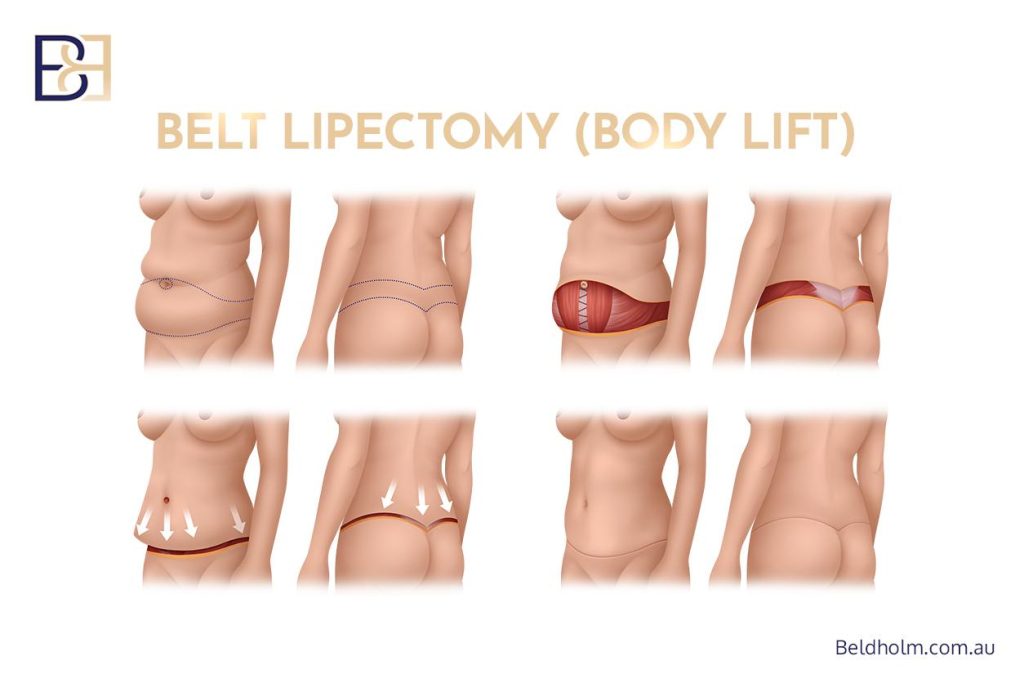
If you have been through substantial weight loss and are left with loose skin all the way around your midsection, a belt lipectomy (body lift) may be one of the body contouring procedures worth discussing. This surgical procedure removes excess skin and fat circumferentially around the lower torso, taking in the lower abdomen, the flanks, the lower back, the buttock area and the mons.
The only way to know whether this surgery suits you is a consultation. Before that can happen, you will need a referral from your GP. The consultation is where I assess your health, examine your loose skin, talk through what the operation can and cannot do, and work out whether a belt lipectomy (body lift) or a different approach fits your situation.
This article walks through how to prepare for that appointment and what we cover on the day, so your time in my clinic is well spent. No two patients are the same, and nothing here decides anything in advance. Suitability is worked out together, at the consultation.
Is a belt lipectomy (body lift) right for you after weight loss?
A belt lipectomy (body lift) is a major surgery, and it suits some patients far better than others. Part of what we do at the consultation is work out whether you sit in that group. A few things matter most.
Your weight has settled
I look for a weight that has held steady for at least six months. Operating while you are still actively losing means the skin envelope is still changing, and a nutritional deficit during active weight loss works against wound healing. Being at or close to a stable, healthy weight you can maintain through a healthy lifestyle gives the result the best chance of lasting.
Where your weight came from
Most of my belt lipectomy (body lift) patients have experienced significant weight loss after bariatric surgery, with weight loss medications, or through sustained changes to diet and activity. The path of your weight loss journey matters less than the result: significant skin laxity and extra skin that runs right around the lower torso, rather than one isolated area.
BMI is a guide, not a cut-off
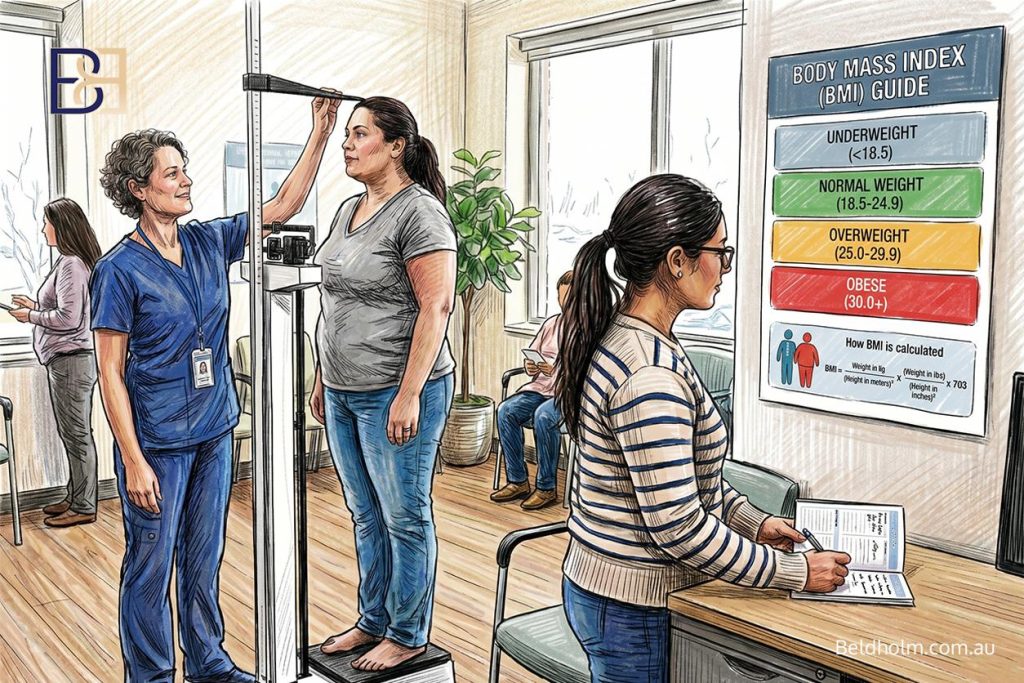
I use body mass index as a rough guide rather than a hard line. A number on its own does not decide candidacy. Published research links a higher body mass index to a higher rate of complications after this operation (3). Your overall health, your nutritional status, the pattern of your loose skin and what can be done well in a single operation all feed into the decision. I do not use routine DEXA scans.
What the operation treats
A belt lipectomy (body lift) removes the redundant skin and excess tissue left after weight loss, and it works on more than the tummy. Through a single incision that runs circumferentially, I can remove excess skin and fat across the:
- abdomen
- flanks (love handles area)
- lower back
- buttock area
- mons
It also lifts the outer thighs to a limited degree through the back and side component, which changes the body shape right around the lower trunk. It does not replace weight loss surgery or ongoing diet and activity, and it will not change weight you have yet to lose.
When loose skin is causing problems

For many post weight loss patients, the loose skin is not only a contour concern. Skin folds can trap moisture and lead to skin irritation and recurrent rashes (intertrigo), they can interfere with hygiene, and in some cases they limit movement or make clothing difficult. Where these problems are present and documented, they form part of the clinical picture I assess, and they can be relevant to Medicare eligibility, which I cover later on.
Before your consultation: the referral and what to bring
A bit of preparation makes the appointment far more useful. The more complete a picture you give me, the more accurately I can judge whether a belt lipectomy (body lift) is a sensible option for you.
Get a referral from your GP

A GP referral is required before any consultation with me. Your GP is also a useful first stop to talk through your general health and whether the timing is right. I keep your GP in the loop, including a copy of your pre-operative blood results, and I formally hand back to them for your longer-term care.
Bring a full medication list

Your GP referral letter will usually list your medications, but check it is complete and bring your own list as well. Write down everything you take, not just prescriptions. List your prescribed medications, any blood thinners, weight loss medications, supplements, vitamins and over-the-counter products. Some of these affect bleeding and healing and need planning around well before surgery. Do not stop or change any medication on your own. We work out together what continues and what pauses, and when.
Bring your weight loss history
Tell me how you lost the weight and when it settled. If you had bariatric surgery, the type and date are helpful. If you used weight loss medications, let me know what and for how long. This history shapes both your nutritional assessment and the surgical plan.
List your previous surgeries and medical devices
Note any past operations, including bariatric surgery, and any implanted medical devices. Tell me about any difficulty waking from a general anaesthetic in the past, any allergic reaction you have had to a medication or known allergies, and any tendency to form thick or raised scars.
Write down your questions
In the days before the appointment, jot down what you want to ask. A belt lipectomy (body lift) is a major decision and it is common to forget things on the day. A written list helps you leave the consultation with the answers you came for.
Your medical history: what I assess
A good part of the consultation is spent on your health, because a belt lipectomy (body lift) is a long operation and your body has to be ready for it. We go through your personal and family history together.
General health and past conditions
I ask about heart and lung conditions, diabetes and blood sugar control, thyroid function, clotting or bleeding disorders, and any past difficulty waking from a general anaesthetic. Conditions like diabetes do not automatically rule out surgery, but they do need to be well controlled, and your blood tests help me confirm that. I also ask you to raise any mental health concerns, as these matter to both the timing and the decision.
Weight loss medications

If you are taking weight loss medications, tell me. Current Australian guidance does not recommend stopping these routinely before surgery, and I follow that position. In some cases, where you are struggling to reach your protein targets in the lead-up to surgery, I may discuss a temporary dose adjustment. That is a judgement made for your specific situation around the time of surgery. It is not a blanket rule, and you should never adjust the dose yourself.
Blood thinners and other medications
Aspirin and anticoagulants are usually stopped about a week before surgery, but not always. Some patients need to continue them through the operation, and when that is the case we plan it well in advance. The key point is that these decisions are made together. Stopping a blood thinner on your own can be dangerous.
Smoking and nicotine

Smoking and nicotine interfere with wound healing and raise the risk of healing problems after a large skin operation (5). I ask patients to stop for at least six weeks before surgery and to stay off it afterwards. This includes vaping and nicotine replacement. A belt lipectomy (body lift) is not an operation I will proceed with while you are still smoking.
Alcohol and other drugs

Alcohol, recreational drugs and even some supplements can affect your anaesthetic, your bleeding risk and your healing. Be open about what you use so we can plan around it. Nothing here is about judgement. It is about keeping you as well as possible through a major operation.
Nutritional readiness after weight loss
Most post weight loss patients carry some nutritional gaps that developed during major weight loss, particularly after bariatric surgery. These gaps often sit below the surface with no obvious symptoms, yet they have a direct bearing on how well a wound heals. Because a belt lipectomy (body lift) is a large operation with a long incision, getting your nutrition right beforehand carries real weight. This is one of the reasons I prefer to operate once your weight has settled rather than while you are still losing weight.

At or before the consultation I arrange a pre-operative blood panel for every post weight loss patient. It checks a full blood count, iron studies, vitamin and mineral levels including vitamin D, B12, folate and zinc, and markers of your general health. Albumin is the protein marker I use. Where the results show a deficiency, we correct it before surgery rather than rushing ahead. The dietitian at the hospital is also available to help during your stay.
I will not reproduce the full nutrition detail here, because the companion articles cover it properly. If you want to understand the why behind the preparation, the articles on protein, iron, vitamin D and nutritional deficiencies after bariatric surgery are the place to start, and the blood tests hub explains each test in the panel.
Examining your loose skin and planning the operation
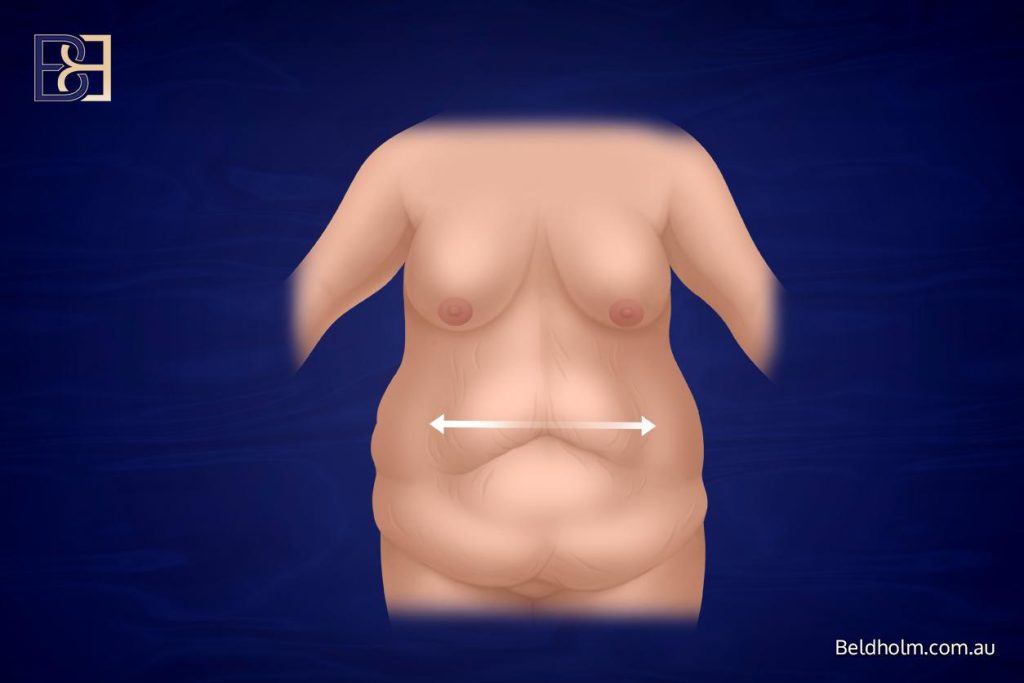
Once we have been through your history, I examine you. This is where the plan for your belt lipectomy (body lift) takes shape, and where I can give you a realistic sense of what the operation can do for your particular pattern of loose skin.
The examination
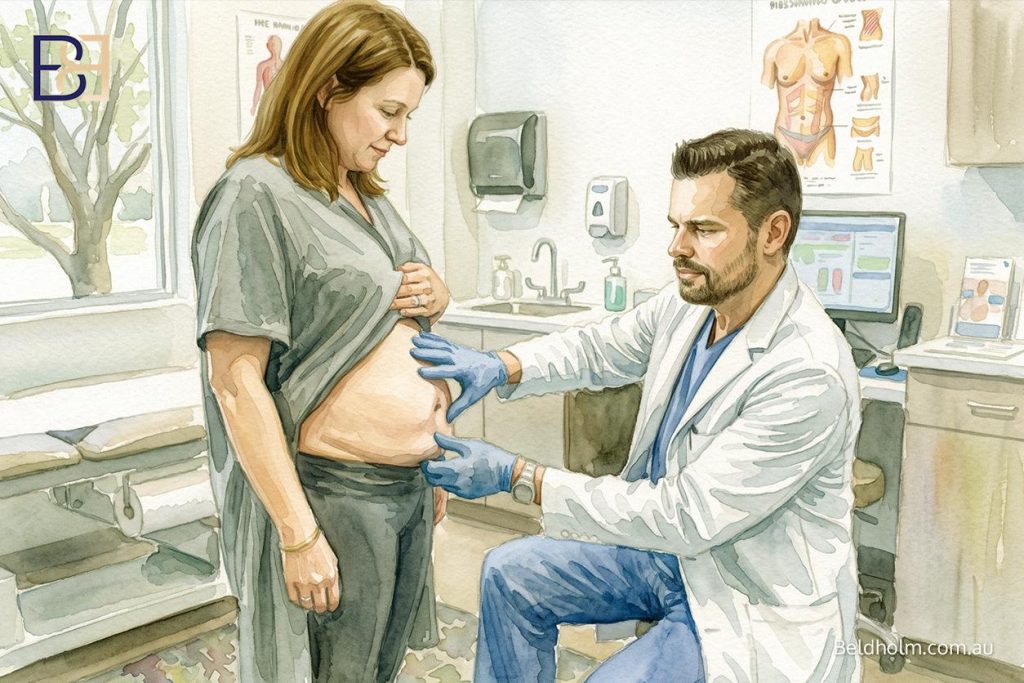
I look at the amount and distribution of excess skin, fat and tissue right around your lower torso, the quality and tone of the skin, and how it sits when you stand, sit and lie down. I check for any existing hernias and feel the abdominal wall, including the abdominal muscles and the underlying tissues. I also note any old scars from previous surgery, such as an appendix or caesarean scar, as many of these can be removed within the new incision rather than left behind.
Clinical photographs
With your consent, I take clinical photographs as part of your medical record. These help me plan the operation, mark you up on the day, and compare your result over the follow-up period. Consent for photographs in your record is separate from any other use, and you are free to decline.
Where the scar sits
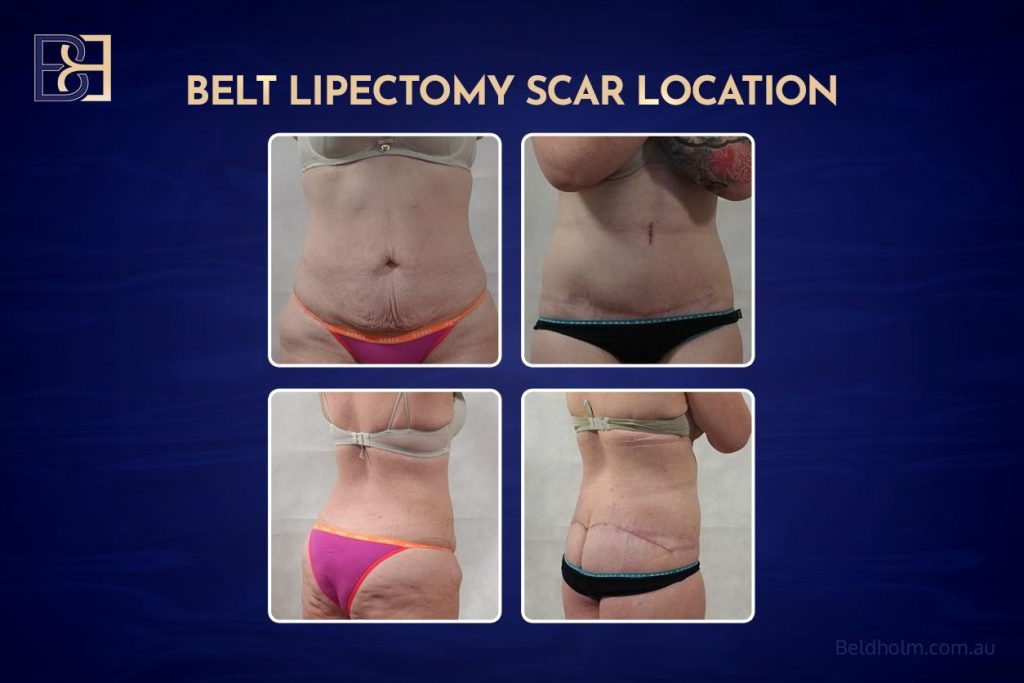
A belt lipectomy (body lift) leaves a scar that runs circumferentially around the lower torso, planned along the lines set out in the surgical literature (2). I plan its position so it sits where underwear or swimwear will generally cover it, though exactly where it falls depends on your anatomy and where the loose skin is. The lower incision placement is something I control closely. I will show you on the day where the lines are likely to sit.
Pre-existing asymmetry
Very few bodies are completely even, and weight loss can leave one side looser than the other. I point out any asymmetry I find at the examination so you can see it too, because some differences will still be present afterwards and it helps to know that in advance.
Adjuncts assessed on an individual basis
Depending on what I find, a few additional steps may form part of the plan. None of these are automatic. Each is judged for your situation:
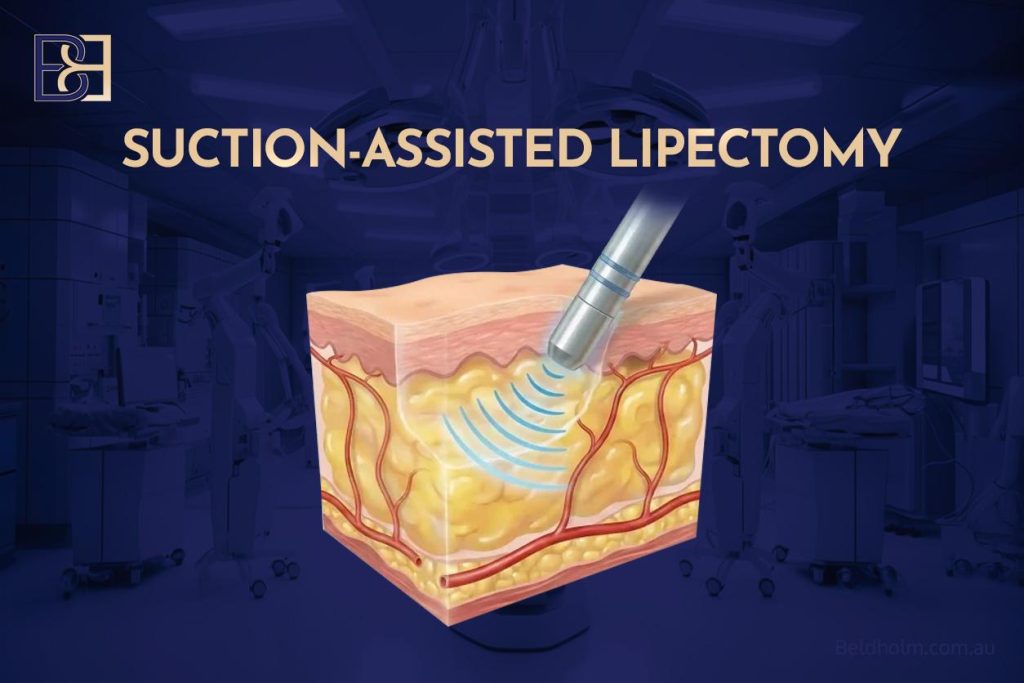
Liposuction (suction assisted lipectomy). This can remove excess fat and refine areas such as the flanks. For post weight loss patients I sometimes use standard liposuction, though my preference is VASER (ultrasound assisted suction lipectomy).
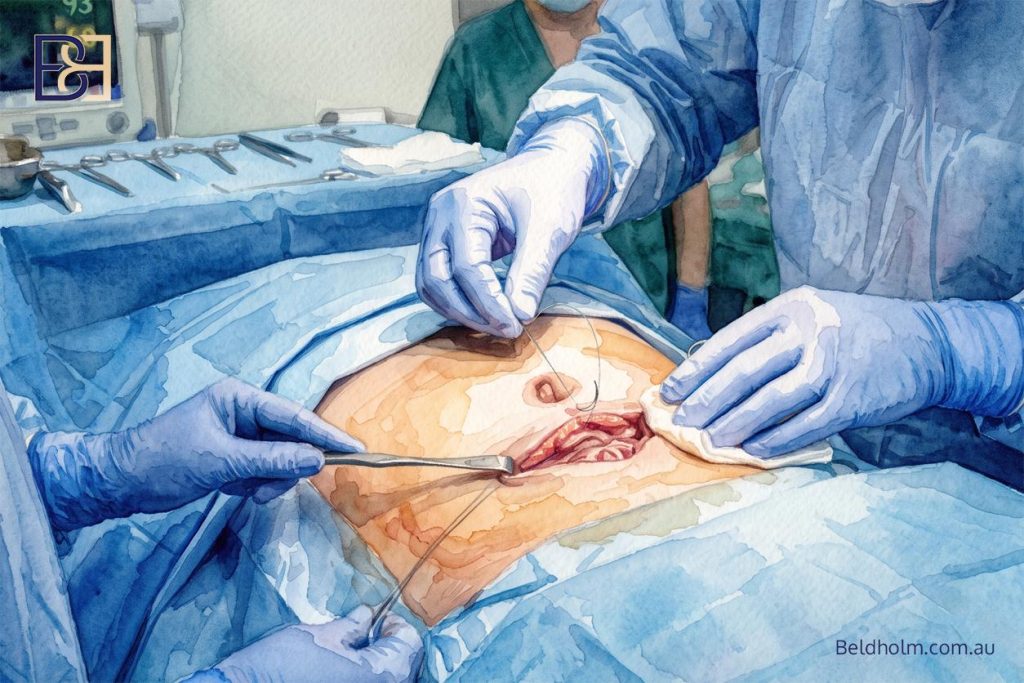
Umbilical hernia repair. If you have an umbilical hernia, it can often be repaired during the same operation through the same access.
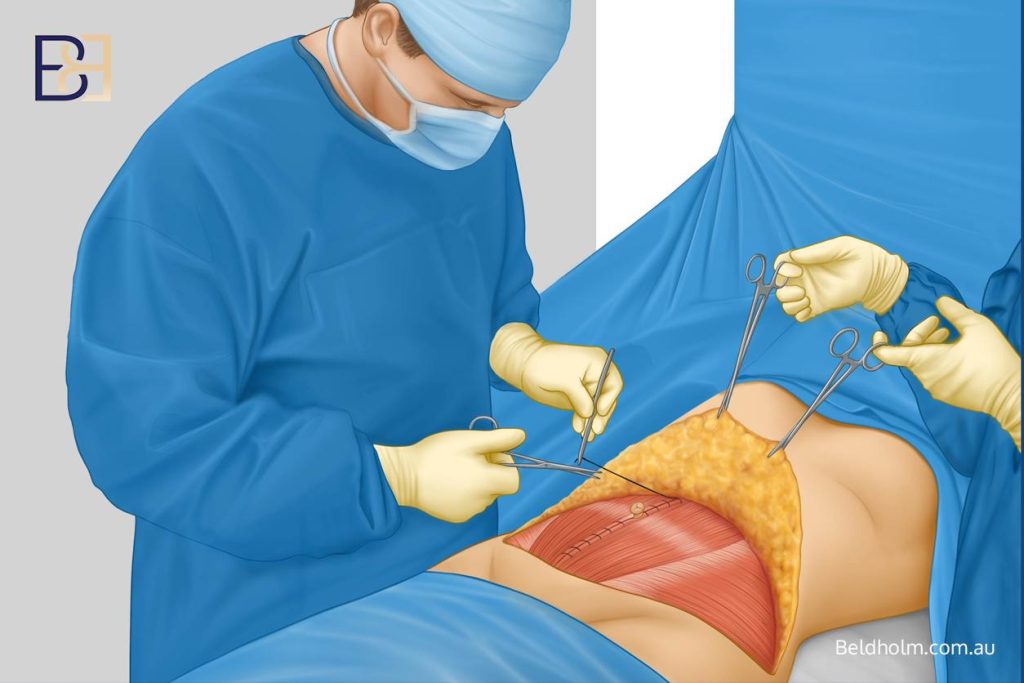
Muscle repair. Separation of the abdominal muscles (diastasis recti) is more a feature of pregnancy than of weight loss, so it is not a default step. Where I find it, abdominal muscle repair can be done at the same time. This is assessed individually.
The mons usually needs lifting as part of the operation in post weight loss patients, rather than only being protected from downward pull, and I plan for that where it applies.
One comprehensive operation or staged surgery
Book your appointment online now
Many post weight loss patients have loose skin in more than one area, often the arms, inner thighs, outer thighs or breasts as well as the trunk. A common question at consultation is whether all of it should be dealt with at once. There is no single answer, and it is decided patient by patient.
My general approach
Where a patient is suited to it, my preference is to deal with loose skin in a single comprehensive operation rather than dividing it across several. The reasoning is practical. One operation means one anaesthetic, one hospital admission and one recovery to work through, rather than repeating each of those steps. The belt lipectomy (body lift) itself is a good example, treating the full circumference of the lower torso in one go rather than as separate front and back procedures.
Why staging is often the right path

This is a preference, not a rule, and a belt lipectomy (body lift) is already a long operation that places real demand on the body. Adding an arm lift (brachioplasty), thigh lift (thighplasty) or breast lift (mastopexy) on top of it turns the surgery into a more extensive procedure, lengthening the time under anaesthetic and the physiological load further. For many patients, the more appropriate path is to stage the work across separate operations. Staging is a legitimate clinical decision.
How the decision is made
Whether one operation or staged surgery suits you depends on your medical history, your nutritional status, the extent and pattern of your loose skin, and what can be done well in a single operating session. A bigger single operation is a bigger physiological event, so the preparation matters more, not less. I assess all of this at the consultation, with you, after your GP referral. It is never decided in advance, and outcomes differ between patients.
DVT and anaesthetic considerations
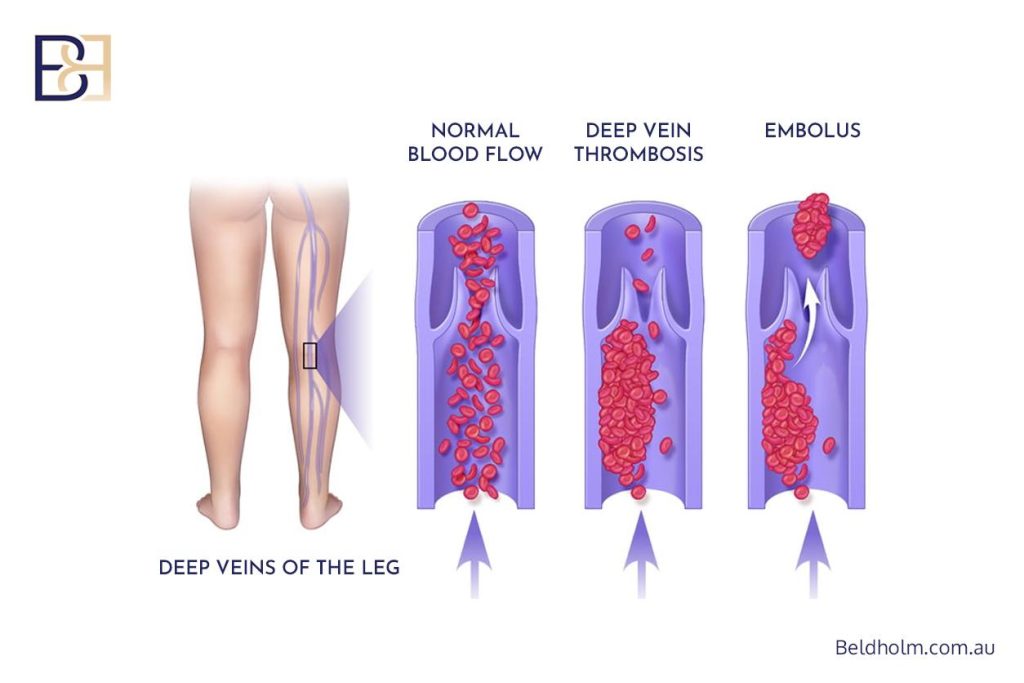
Two topics come up at every belt lipectomy (body lift) consultation: the risk of blood clots in the legs, and the anaesthetic.
Why clot risk needs attention
A belt lipectomy (body lift) is a long operation, and long operations carry a higher risk of a clot forming in the deep veins of the legs (deep vein thrombosis, or DVT). A clot that travels to the lungs is a serious event. Post weight loss patients can also carry other factors that add to this risk.
How I manage it

I assess your individual clot risk and decide on your blood-clot prevention plan myself, rather than leaving it to the anaesthetist. The plan usually involves a combination of measures: blood-thinning injections in hospital, which most patients continue for around two weeks after going home, mechanical measures during and after surgery, and getting you up and moving as early as is sensible. As covered earlier, any aspirin or anticoagulants you already take are usually paused about a week before surgery, but only on a plan we agree together. Never stop them on your own. There is a dedicated article on clot prevention that goes into more detail.
The anaesthetic consultation
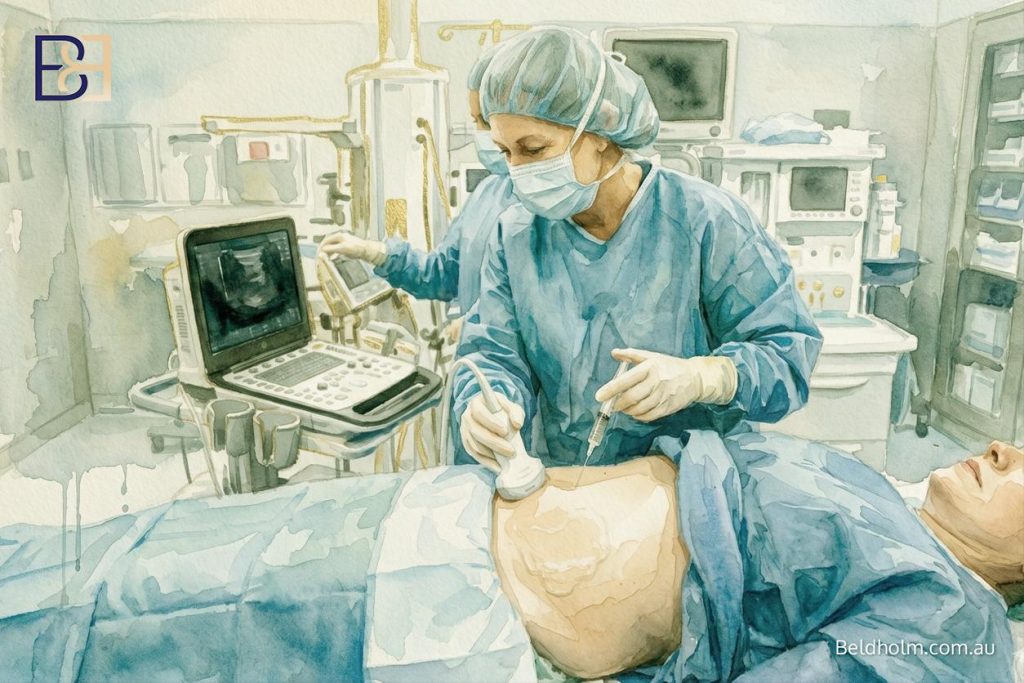
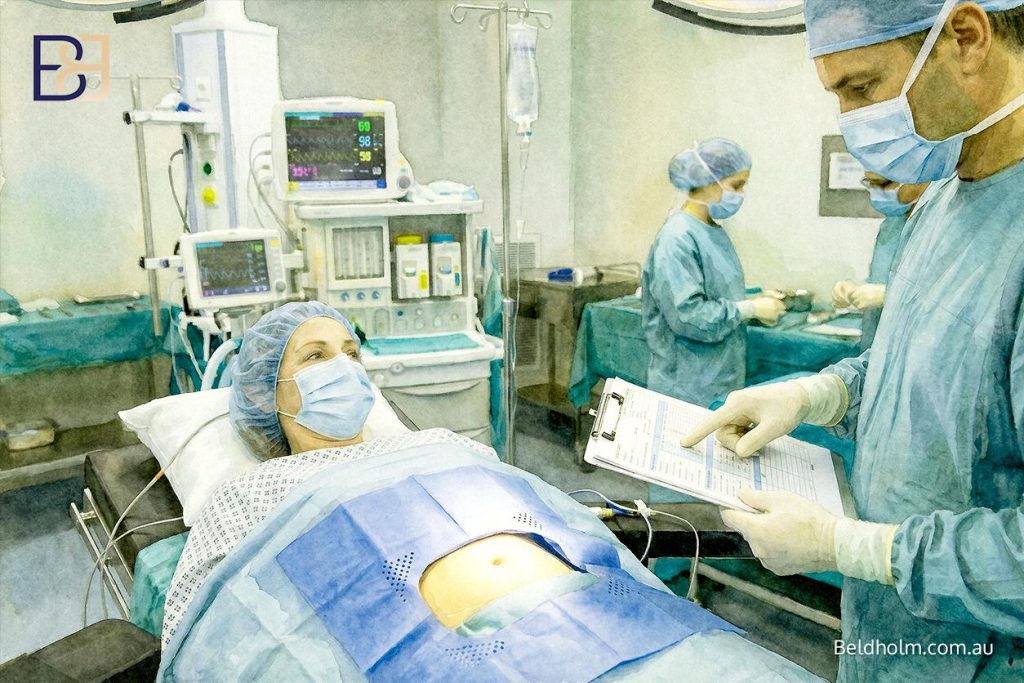
Your belt lipectomy (body lift) is done under general anaesthesia. In most cases the anaesthetist reviews you by phone before the day of surgery rather than in person. The physical examination, including your airway, is done on the day itself. An in-person anaesthetic appointment before the day is the exception rather than the rule. You will have the chance to ask the anaesthetist your questions either way.
Recovery realities we discuss at your consultation
A belt lipectomy (body lift) is a major operation, and the recovery process reflects that. We talk it through properly at the consultation, and a separate article covers the detail. Here is the shape of it.
In hospital
You will stay in hospital for a few nights after a belt lipectomy (body lift), longer than for a tummy tuck (abdominoplasty) alone, because it is a bigger operation. You will have drains in place to remove excess fluid, and you may go home with them still in. The team gets you up and moving early, which helps both your recovery and your clot prevention.
The first weeks at home

You will wear a compression garment for several weeks, and the initial recovery period calls for genuine rest. Most patients arrange a few weeks away from desk-based work and longer if their job is physical, often six to eight weeks. Driving waits until you are off pain medication and can move freely. You should avoid heavy lifting in the first few weeks, and I will give you a clear weight limit. You will need help at home in the first stretch, so plan for that before surgery rather than after.
Getting back to activity
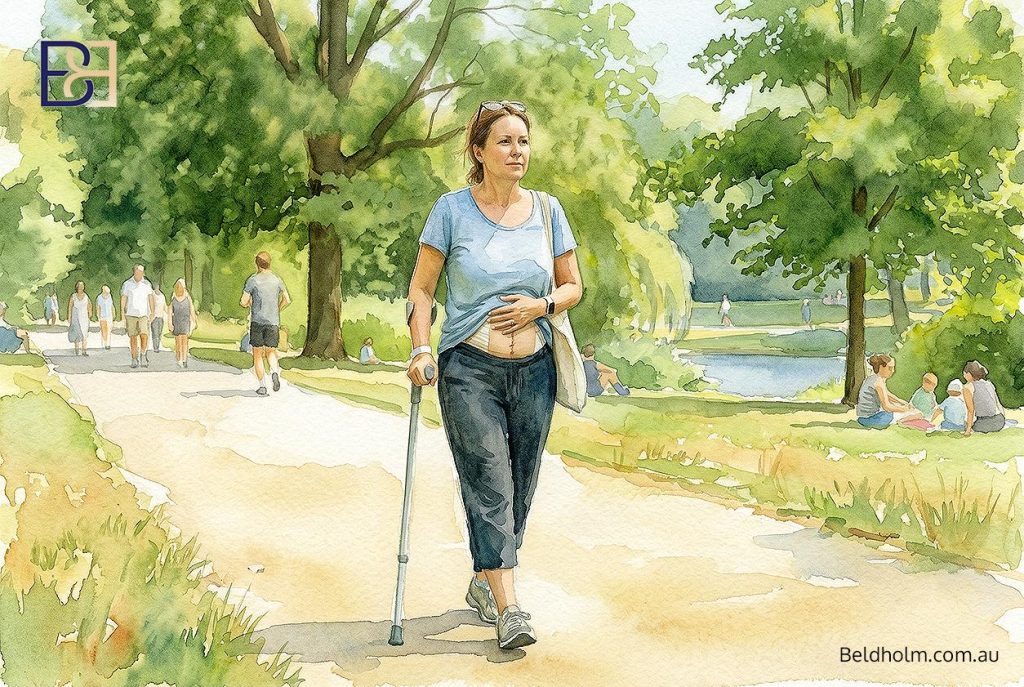
Returning to exercise is staged, and how soon depends on what was done during your operation. Light walking starts early. More demanding activity and core work come later, and if any abdominal muscle repair was part of your surgery, that timeline is longer again. We set realistic milestones for you rather than fixed dates that suit everyone.
Scars and the longer view
The scar from a belt lipectomy (body lift) is long and circumferential, and it takes time to settle. In the early weeks, as the remaining skin settles, it can look raised, red or uneven, and that is expected. Scars mature over many months, up to two years. It helps to keep realistic expectations here. Results vary from one patient to the next, and your skin quality, your healing and your genetics all play a part.
The risks I will discuss with you
Every operation carries risk, and a belt lipectomy (body lift) carries more than a smaller procedure because of its length and the size of the wound. I go through these with you in person so your consent is properly informed. The list below is not exhaustive, and we talk about how each one applies to you.
Healing and wound problems
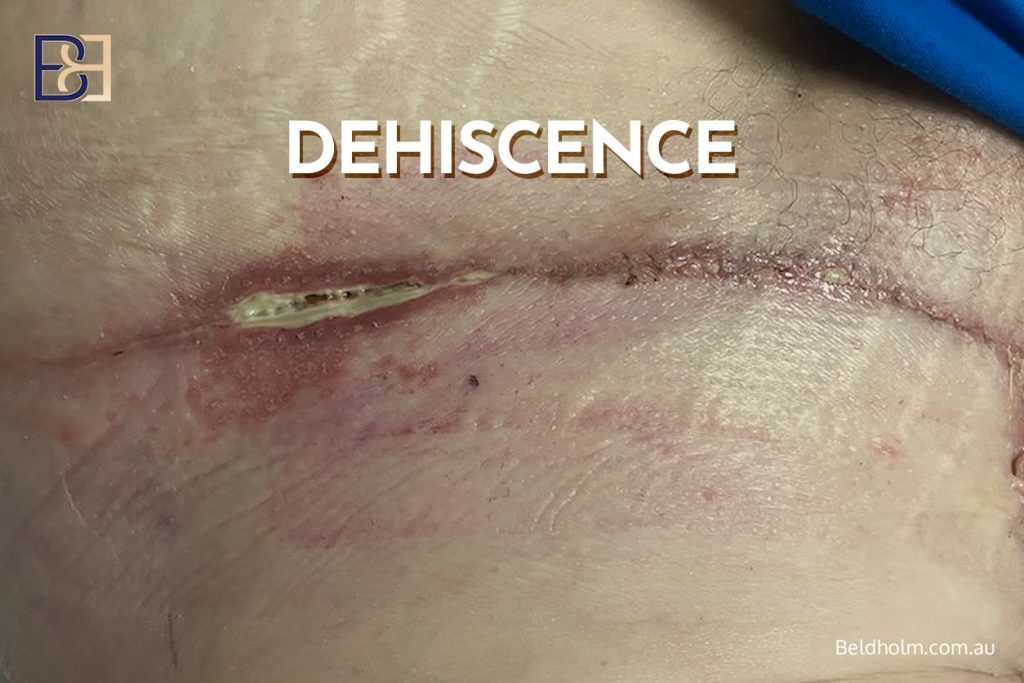
- Wound separation. The long incision is under tension, and parts of it can open as it heals, particularly where the front and back portions meet. This may need dressings over an extended period and, sometimes, a return to theatre.
- Infection. Any large wound can become infected and may need antibiotics or further treatment.
- Reduced blood supply to the skin edges. In some cases the skin at the wound edge does not survive and needs time and care to heal, occasionally with further surgery.
Fluid and bleeding
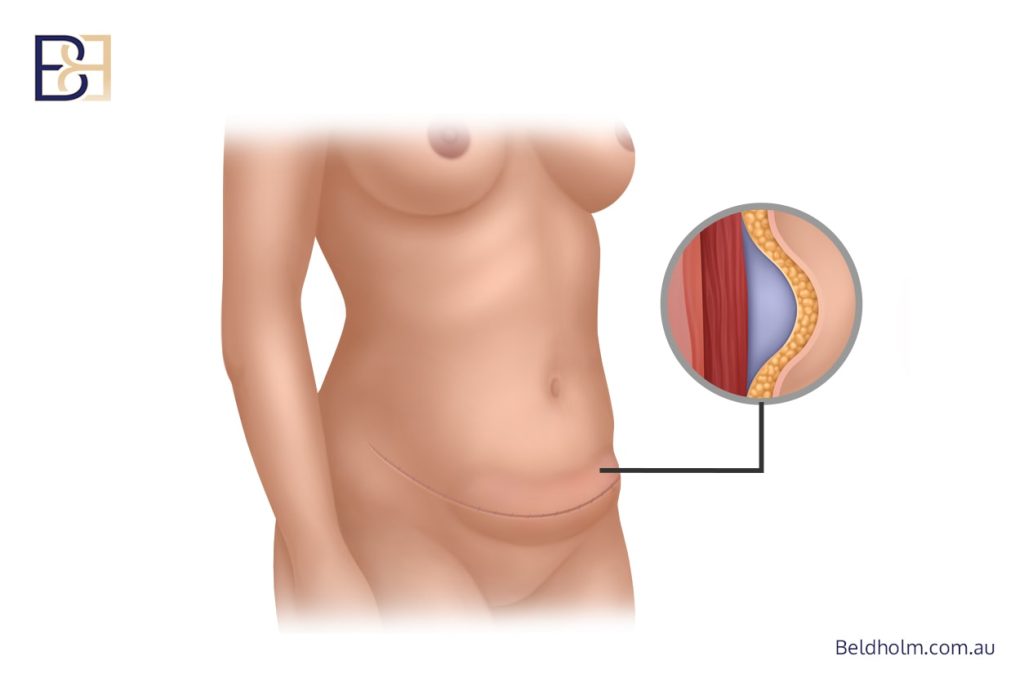
- Seroma. Fluid can collect under the skin after the drains come out and may need draining in clinic, sometimes more than once. Reported series of this operation find seroma to be among the most common complications (1,4).
- Bleeding and haematoma. A collection of blood can form and occasionally needs a return to theatre.
Clots
- Deep vein thrombosis and pulmonary embolism. As covered earlier, blood clots can form in the leg and travel to the lungs, which is a serious event. My prevention plan is built to lower this risk, not remove it.
Scars, sensation and contour

- Scarring. The scar is long and circumferential. It can heal raised, wide or uneven, and some patients form thick or keloid scars.
- Changes in skin sensation. Numbness around the wound is normal early on. Some altered skin sensation can be long lasting.
- Asymmetry and contour irregularity. The two sides may not match exactly, and the contour can be uneven in places.
Anaesthetic and general risks
- General anaesthetic risk. A general anaesthetic carries its own risks, which the anaesthetist discusses with you.
- The need for revision. Some patients need further surgery to revise a scar or contour. This is not unusual after a large skin operation, and it is something to factor in from the start.
It is meant to give you the full picture, so the decision you make is an informed one. Your own risk depends on your health, your history and the extent of your surgery.
Cost: what we cover at your consultation
Cost is a fair question and we go through it openly at the consultation. Rather than quote figures here, which can mislead, I will explain how the fees are structured and give you a written quote for your specific operation.
Fees are billed separately
A belt lipectomy (body lift) involves more than one provider, and you receive separate accounts for:
- the surgeon’s fee
- the anaesthetist’s fee
- the hospital fee
Your written quote sets these out so you can see what each part costs and plan accordingly. There are no hidden extras in that quote.
When Medicare may contribute

A belt lipectomy (body lift) after weight loss can attract a Medicare item number under the Medicare Benefits Schedule where it is done for a functional reason rather than appearance alone. Eligibility is not automatic and is assessed against specific criteria, which generally include:
- significant weight loss that has been stable for a period
- a measured reduction in body mass index
- a documented functional problem such as recurrent skin rashes (intertrigo) under the skin fold that has not settled with non-surgical treatment
I assess whether you are likely to meet these criteria individually and tell you clearly where you stand. Where a Medicare item applies, your private health cover may also contribute to the hospital fee, depending on your policy. Where it does not, the operation is a fully private cost.
Check your private health cover

If you have private health insurance, it is worth contacting your fund before surgery to ask what your policy covers and whether any waiting periods apply. I can tell you the relevant item numbers to quote them once we have a plan.
Getting the most from your consultation
My aim is for you to leave understanding the operation, the recovery and the risks well enough to make a decision that fits your body contouring goals and is right for you, even if that decision is to wait or not to proceed.
Take your time
An initial consultation in my clinic runs for about an hour. That is enough time to go through your history, examine you and talk through the plan without rushing. A belt lipectomy (body lift) is a significant decision, and I would rather you took the time you need than felt hurried.
More than one visit is normal
It is common to want a second conversation once the first has sunk in. I offer a second and, if needed, a third consultation at no extra cost, so you can come back with the questions that surface later. Many patients find the follow-up visits just as useful as the first.
Bring someone with you
You are welcome to bring a partner, family member or friend. A second set of ears helps, and having someone there who can support you through the recovery is valuable. They often think of questions you might not.
Speak openly

The more openly you talk with me about your health, your history, your expectations and your concerns, the better the advice I can give you. Nothing you raise is too small. A clear, frank conversation in both directions is what makes the consultation worthwhile.
Common questions
What is the difference between a belt lipectomy (body lift) and a tummy tuck (abdominoplasty)?
A tummy tuck (abdominoplasty) works on the front of the abdomen only. A belt lipectomy (body lift) extends the same idea right around the lower torso, treating the flanks, lower back and buttock area as well as the front. For many post weight loss patients, the loose skin sits all the way around, which is why the circumferential belt lipectomy procedure suits them.
What else is a belt lipectomy (body lift) called?
You may see it called a lower body lift, a circumferential body lift, a lower body lift belt lipectomy, 360 degree abdominoplasty or circumferential abdominoplasty. Some also use the terms belt lipectomy surgery, body lift surgery and lower body lift surgery. These names refer to much the same operation. I use the term belt lipectomy (body lift) for clarity.
Will a belt lipectomy (body lift) help me lose weight?
No. This is not a weight loss operation. It removes hanging skin and the fat attached to it, but it is not a way to reduce your weight, and it works best once your weight has already settled. Weight loss surgery and ongoing diet and activity do that job.
Can I have my arms, thighs and breasts done at the same time?
Sometimes, but often not. A belt lipectomy (body lift) is already a long operation, and adding an arm lift (brachioplasty), thigh lift (thighplasty) or breast lift (mastopexy) increases the demand on your body. For many patients, staging the work across separate operations is the more appropriate path for this kind of body contouring surgery. I assess this individually at the consultation, alongside any other body contouring procedures you are considering.
How much time will I need off work?
Most patients take a few weeks away from desk-based work and longer for physical jobs. The recovery period is staged and individual. The recovery article goes through the timeline in detail.
Will Medicare cover my belt lipectomy (body lift)?
It may, where the operation is done for a functional reason and you meet specific criteria, such as documented skin rashes under the fold and stable weight loss. Eligibility is assessed individually. I will tell you where you are likely to stand at your consultation.
References
- Nemerofsky RB, Oliak DA, Capella JF. Body lift: an account of 200 consecutive cases in the massive weight loss patient. Plast Reconstr Surg. 2006;117(2):414-30.
- Aly A, Mueller M. Circumferential truncal contouring: the belt lipectomy. Clin Plast Surg. 2014;41(4):765-74.
- Coon D, Gusenoff JA, Kannan N, El Khoudary SR, Naghshineh N, Rubin JP. Body mass and surgical complications in the postbariatric reconstructive patient: analysis of 511 cases. Ann Surg. 2009;249(3):397-401.
- Kitzinger HB, Cakl T, Wenger R, Hacker S, Aszmann OC, Karle B. Prospective study on complications following a lower body lift after massive weight loss. J Plast Reconstr Aesthet Surg. 2013;66(2):231-8.
- Sorensen LT. Wound healing and infection in surgery. The clinical impact of smoking and smoking cessation: a systematic review and meta-analysis. Arch Surg. 2012;147(4):373-83.