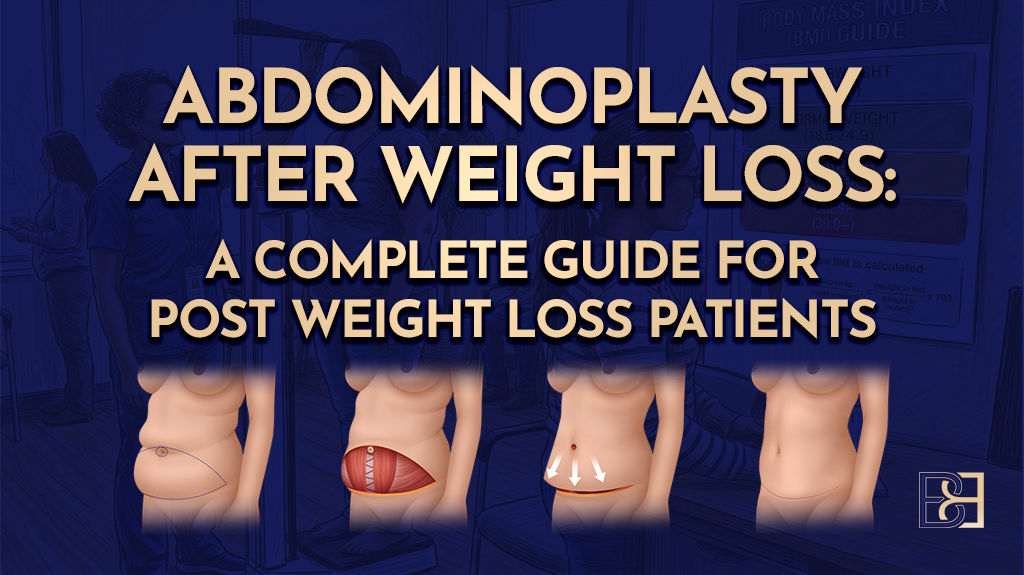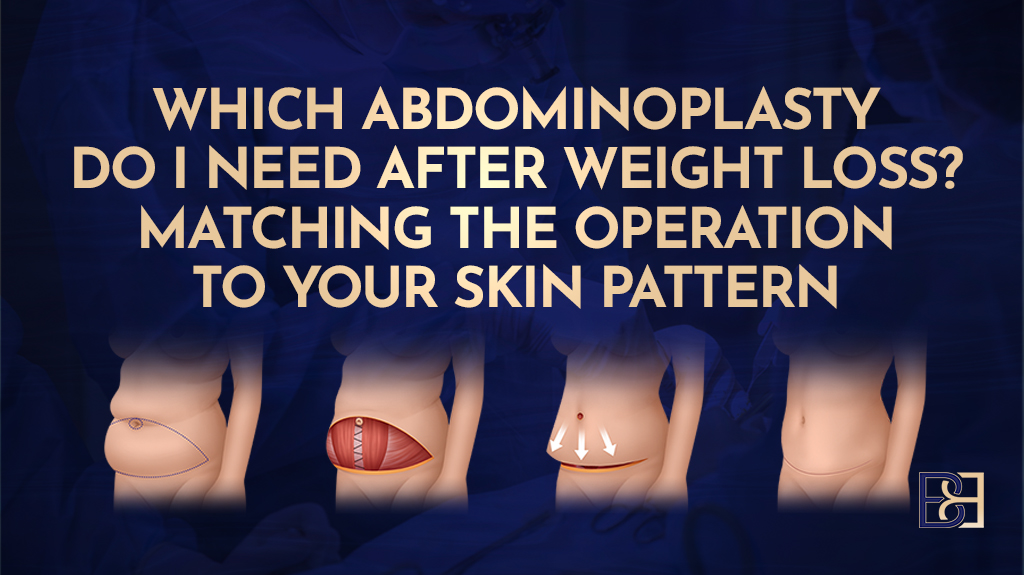
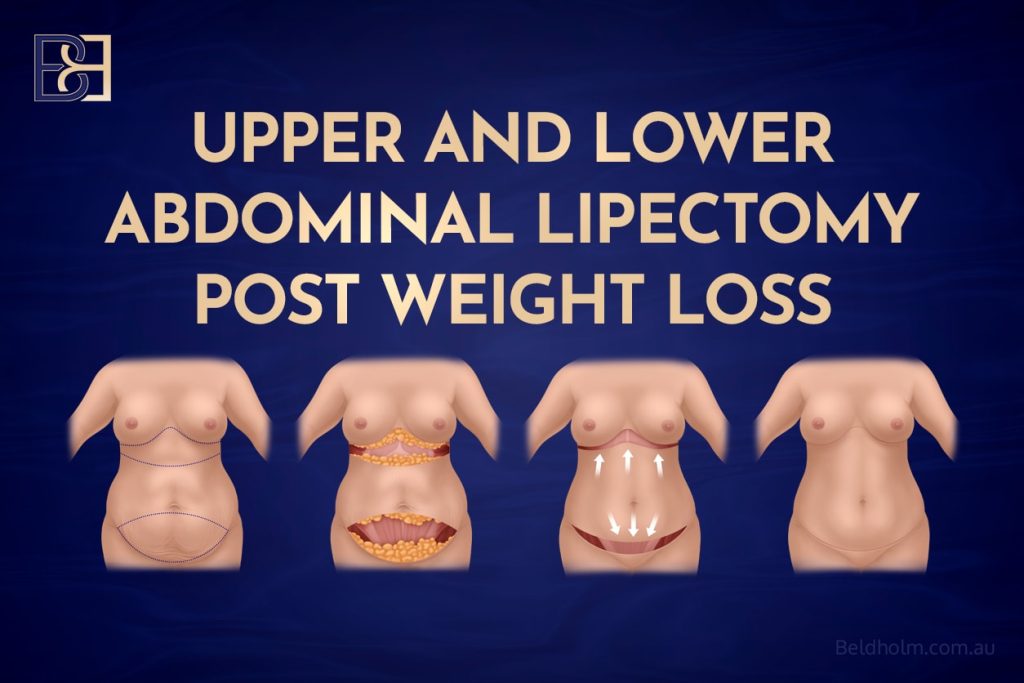
An upper and lower abdominal lipectomy removes loose skin from two separate areas of the abdomen in a single operation. One excision sits high, near the fold beneath the chest. The other sits low, above the pubic area. The skin in between, including the belly button (umbilicus), is left in its original position.
I perform this operation for a small group of post weight loss patients with a specific skin pattern: loose skin concentrated in the upper abdomen and lower abdomen, with reasonable skin tension through the middle. Most massive weight loss patients do not have this pattern. They have a central apron of excess skin, and an abdominoplasty (tummy tuck), Fleur de Lis abdominoplasty, or belt lipectomy (body lift) suits them better.
This article explains the skin pattern the procedure treats, how the two excisions work, why preserving the central skin matters, and how I decide between this operation and the alternatives. If you already know this is the operation being considered for you, the recovery article and complications article cover what happens after surgery in detail.
The Skin Pattern This Procedure Treats
Substantial weight loss leaves loose skin in patterns that differ from patient to patient. For many, losing the weight is only the beginning: where the skin gives way depends on how much weight was lost, where it was carried, skin quality, age, and genetics.
The typical pattern is central. Skin stretches through pregnancy or weight gain, then hangs as an apron over the lower abdomen after the weight comes off, often causing physical discomfort where skin rubs on skin. That pattern needs the skin lifted, redraped and removed from below, which is what an abdominoplasty (tummy tuck) does.
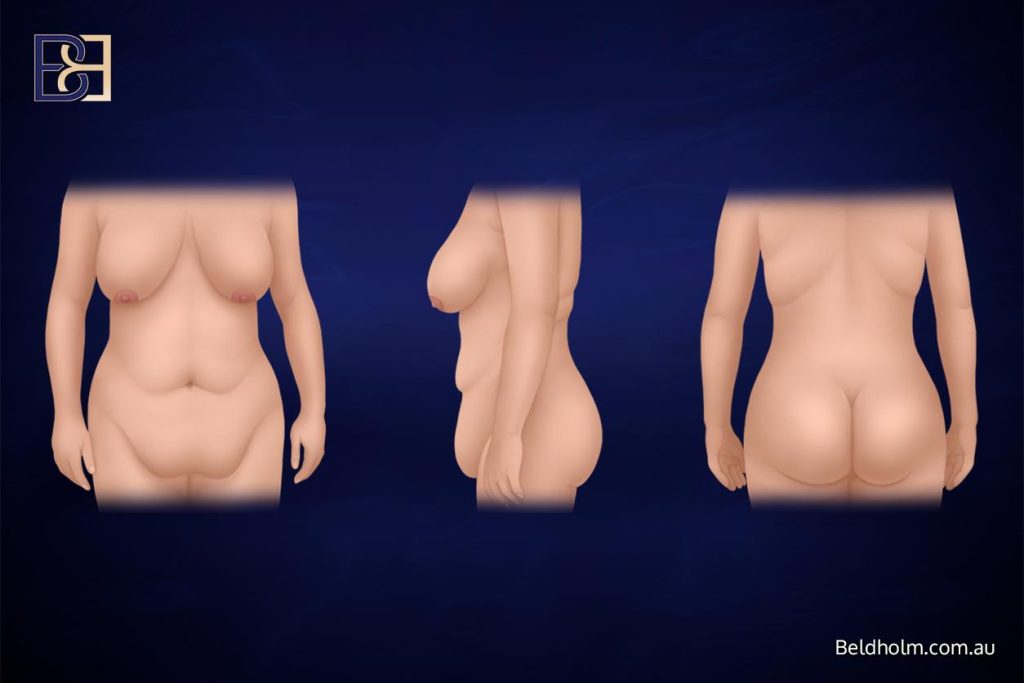
The pattern I treat with an upper and lower abdominal lipectomy is different. These patients have two discrete skin folds:
- A distinct roll or fold of loose skin in the upper abdomen, sitting below the chest
- A separate fold of loose skin in the lower abdomen, above the pubic area
- Reasonable skin tension and relatively preserved skin quality through the middle of the abdomen
- A belly button (umbilicus) that sits in an acceptable position and does not need to be moved
In this pattern, the middle of the abdomen does not need surgery. The problem sits at the top and the bottom. Removing a wedge of skin from each area treats the excess directly, without disturbing the healthy skin in between.
Why the pattern matters more than the amount
The decision is not driven by how much loose skin there is. It is driven by where the skin sits and how the abdomen behaves as a whole. A patient with a large central apron and an upper roll usually needs a Fleur de Lis abdominoplasty, not two separate wedge excisions. A patient with loose skin extending around the flanks and back usually needs a belt lipectomy (body lift). During consultation, I examine the abdomen standing, sitting and lying down to map exactly where the excess is and which operation matches it.
What an Abdominal Lipectomy Is
A lipectomy is a direct excision of excess skin and fat. The surgeon marks out a wedge of excess tissue, removes it, and closes the wound edge to edge. It is the most direct surgical procedure to remove excess skin where it forms a discrete fold.
This makes it a different operation from an abdominoplasty (tummy tuck). An abdominoplasty involves lifting the abdominal skin off the muscle layer over a wide area, repairing muscle separation (diastasis recti) where present, pulling the skin down, removing the excess, and creating a new opening for the belly button (umbilicus). It reshapes the whole abdomen.
A lipectomy does none of that. There is:
- No wide lifting of skin off the abdominal wall
- No muscle repair
- No repositioning of the belly button (umbilicus)
The trade-off is scope. A lipectomy treats the fold it removes and nothing else. That is exactly why it suits the pattern described above, and why it does not suit patients whose whole abdomen needs redraping.
Terminology you may come across
Several terms describe overlapping operations, which causes confusion:
- Panniculectomy or apronectomy: removal of a hanging apron (pannus) from the lower abdomen. A lower abdominal lipectomy performed on its own is essentially this operation.
- Reverse abdominoplasty: removal of upper abdominal skin through an incision at the fold beneath the breasts or chest, a technique described in published surgical literature (1). An upper abdominal lipectomy works on the same principle.
- Wedge excision: the surgical technique common to both, and the wording used in the Medicare Benefits Schedule.
When I refer to an upper and lower abdominal lipectomy, I mean both wedge excisions performed together in one operation.
The Two Excisions Explained
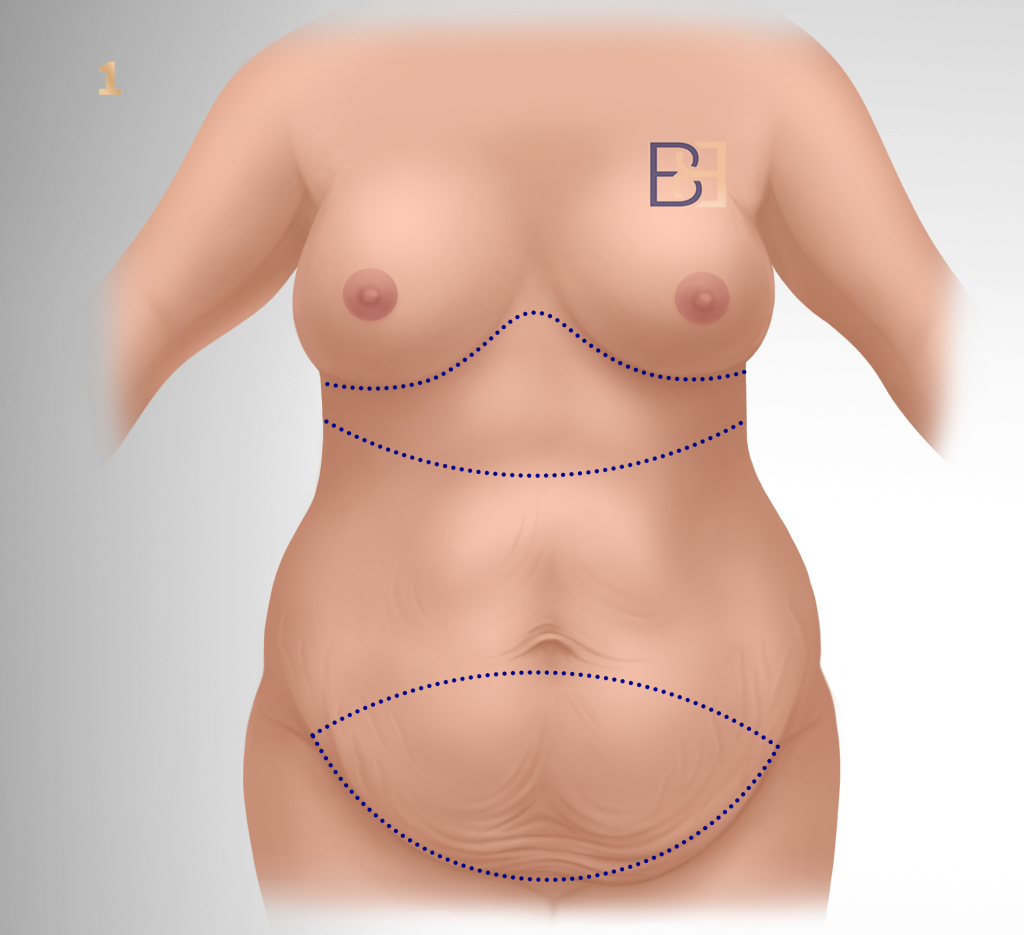
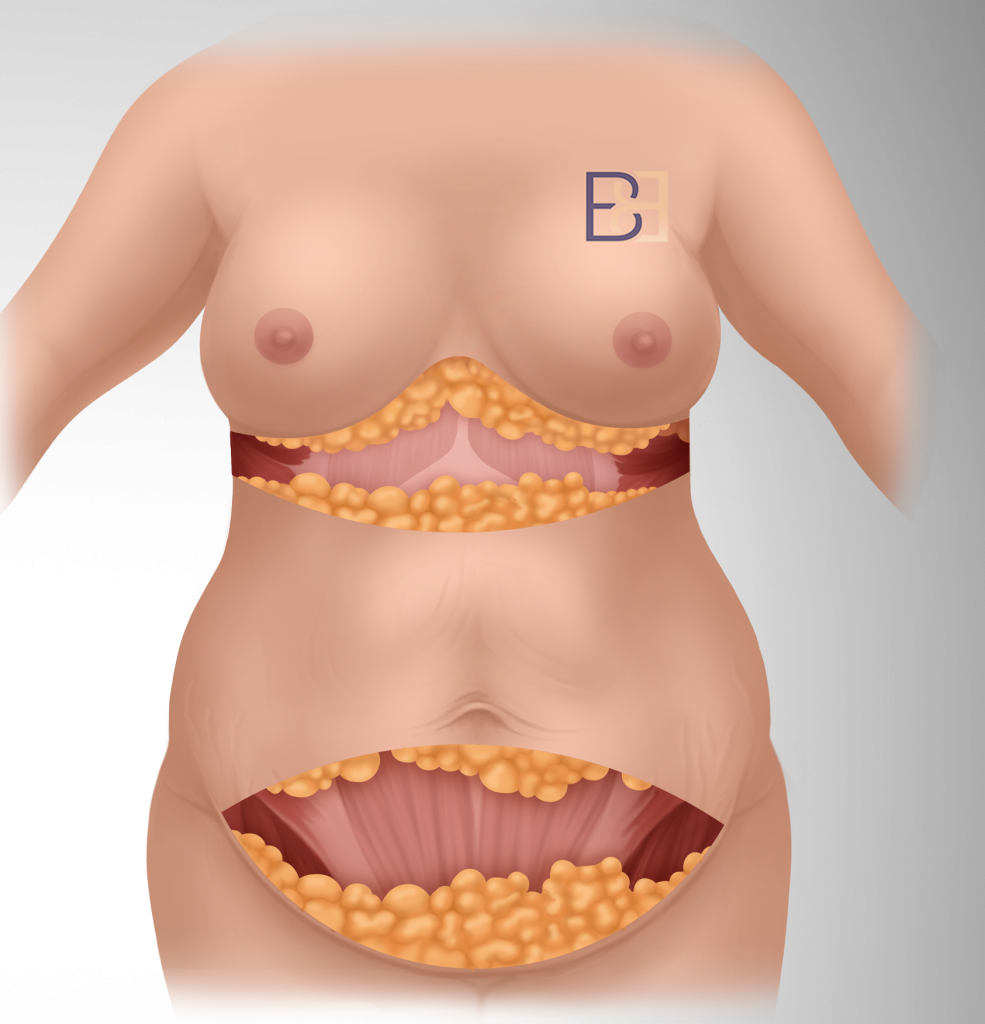
The operation involves two separate wedge excisions, planned and marked before surgery with you standing, so the folds sit where gravity places them.
The upper excision
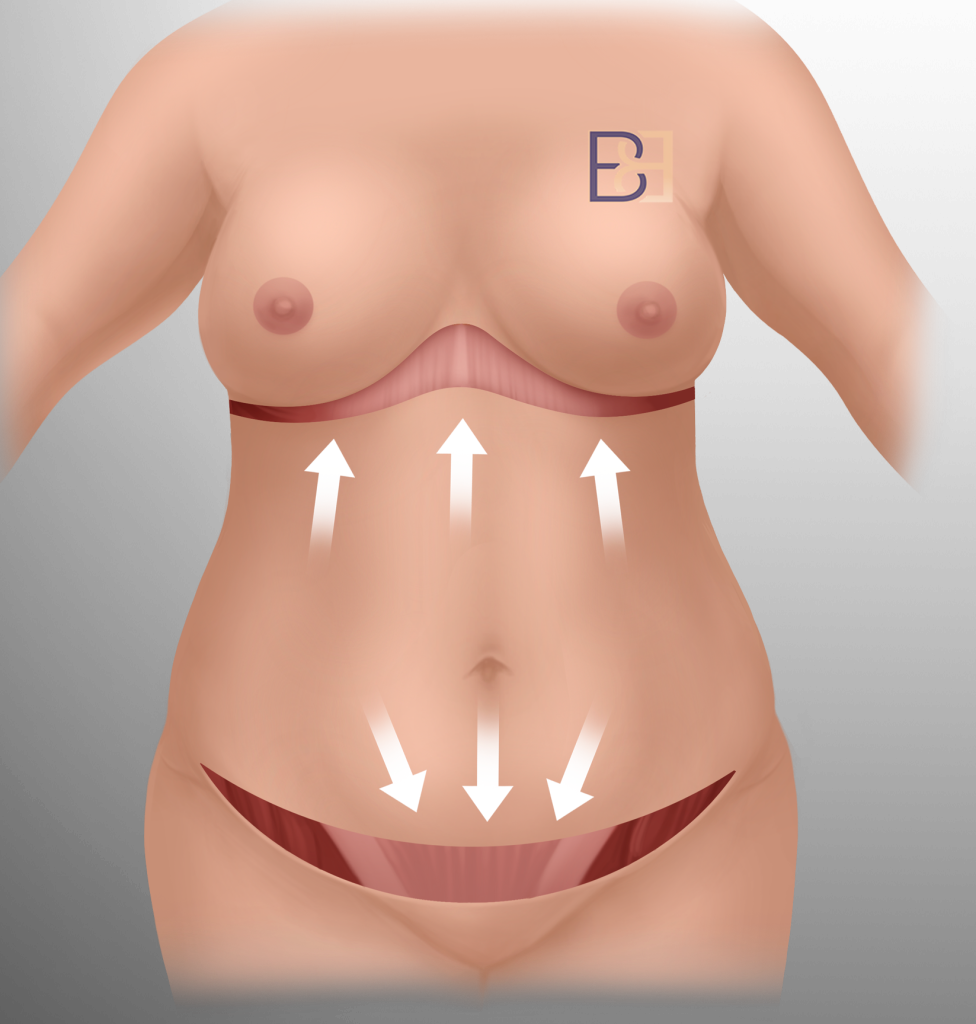
The upper wedge removes the roll of loose skin below the chest. I place the incision in or close to the fold beneath the breasts or chest wall (the inframammary fold), so the scar follows an existing skin crease. The excess skin below the incision line is drawn upward, the wedge is removed, and the wound is closed in layers. This is the same principle as a reverse abdominoplasty, which some surgeons perform as part of an upper body lift: the pull is upward, anchored at the chest fold, rather than downward toward the pubic area (1,2).
The lower excision
The lower wedge removes the fold above the pubic area. The incision runs transversely across the lower abdomen, positioned to sit below the underwear line where possible. The excess skin above the incision is drawn downward, the wedge is removed, and the wound is closed in layers, leaving the remaining skin at better tension.
What stays untouched
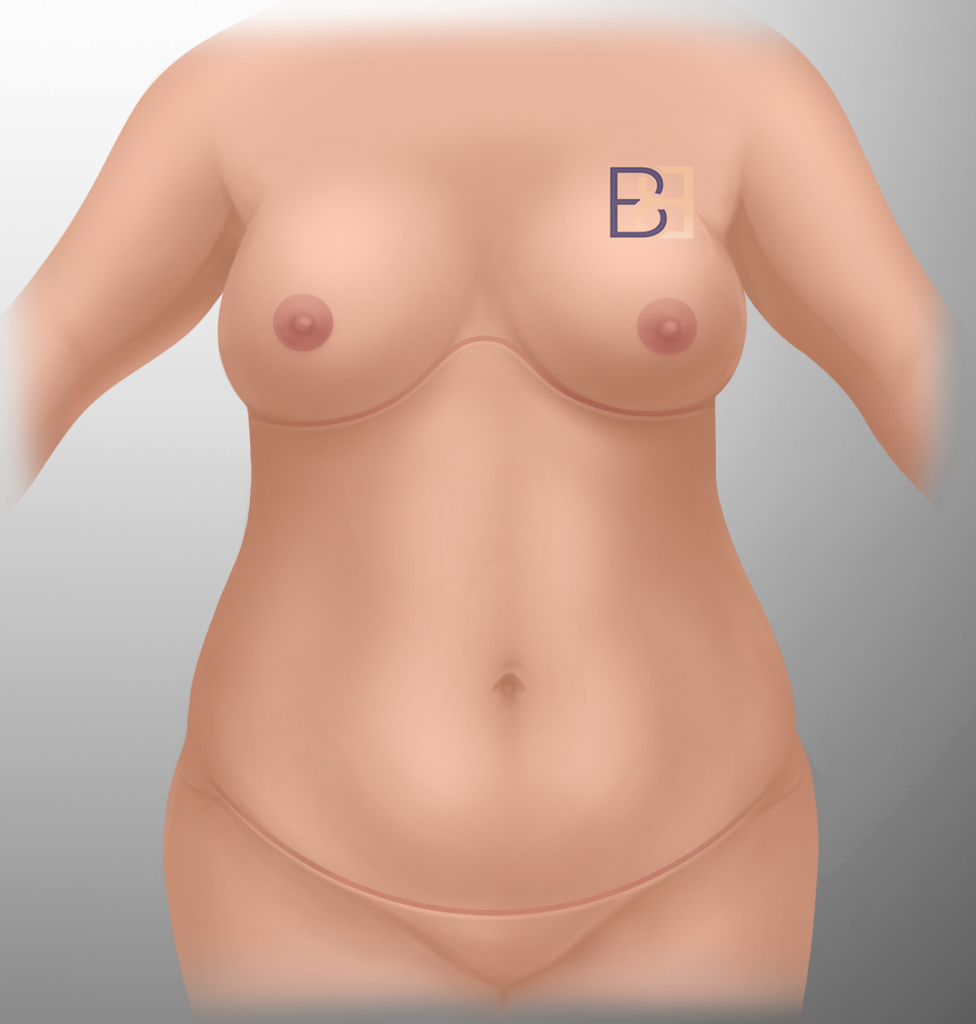
Between the two excisions, the central abdominal skin is left attached to the abdominal wall. There is no wide undermining connecting the two wounds. The belly button (umbilicus) stays on its own stalk in its original position. Nothing is done to the abdominal muscles.
Practical details
- Performed under general anaesthesia at Maitland Private Hospital
- Operating time depends on the size of both excisions, typically shorter than a full abdominoplasty because there is no undermining or muscle repair
- Drains may be placed depending on the extent of each excision
- A compression garment is fitted after surgery
- Most patients stay 1 to 2 nights
Liposuction or VASER liposuction (ultrasound assisted lipectomy) is occasionally used as an adjunct where a discrete deposit of excess fat sits near either excision. Whether this applies is decided at consultation.
Why the Central Skin Bridge Matters
Operating at the top and bottom of the abdomen at the same time raises an obvious question: can the skin in between cope with two wounds?
The answer comes down to blood supply. Abdominal skin is supplied by vessels that reach it from several directions: perforating vessels that come up through the abdominal wall, and vessels running in from the sides and from above and below. When skin is lifted off the muscle layer during an abdominoplasty, the perforating vessels in the lifted area are divided, and the skin then relies on blood flowing in from where it remains attached.
This is why the design of this operation matters. Because neither wedge excision involves wide undermining, the central skin between the two wounds keeps its perforating vessels. It stays attached to the underlying tissues of the abdominal wall and keeps its direct blood supply throughout.
Contrast that with what would happen if a full abdominoplasty were combined with an upper excision in the same operation. The abdominoplasty would divide the perforators across the lifted area, leaving the central skin dependent on blood flowing down from above. The upper excision would then cut across that supply. The skin between the two could be left poorly supplied, and that is a recipe for poor wound healing or skin breakdown.
The blood supply zones of the abdominal skin were mapped in anatomical research decades ago, and incision planning that respects them remains a core principle of abdominal contouring surgery (3). It is one of the reasons I assess the whole abdominal pattern before deciding on an operation, rather than treating each fold as an isolated problem.
Two practical consequences follow:
- This operation is designed as a pair of limited excisions. Extending it into something closer to an abdominoplasty at the same sitting is not an option I offer.
- If your pattern needs a full abdominoplasty and upper abdominal work, the answer is usually a different operation entirely, such as a Fleur de Lis or dual vector abdominoplasty, rather than stacking procedures.
How This Differs From Other Abdominal Procedures
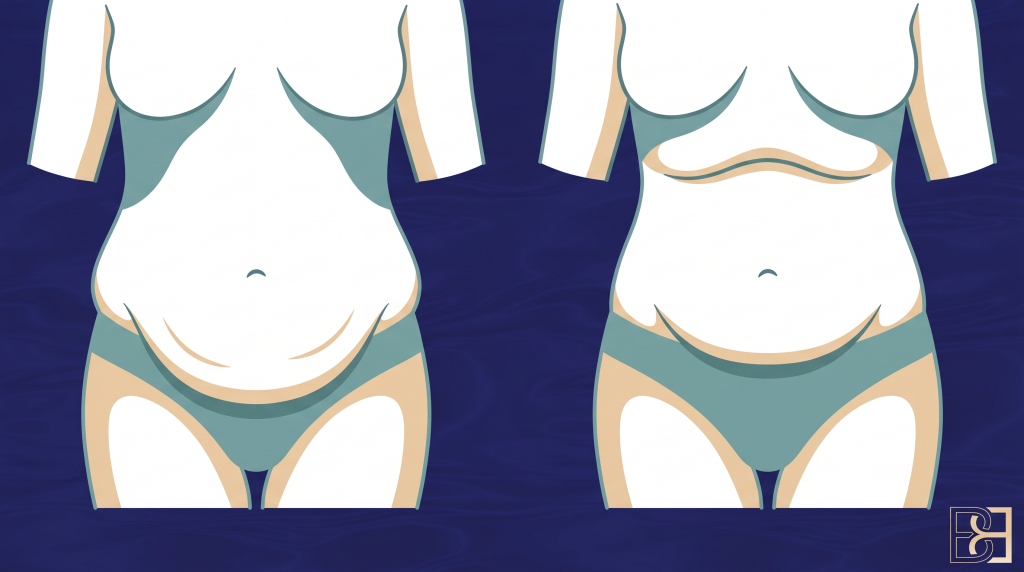
Post weight loss patients often arrive having researched one operation, when their pattern actually calls for another. This is how the upper and lower abdominal lipectomy sits alongside the alternatives.
Versus abdominoplasty (tummy tuck)
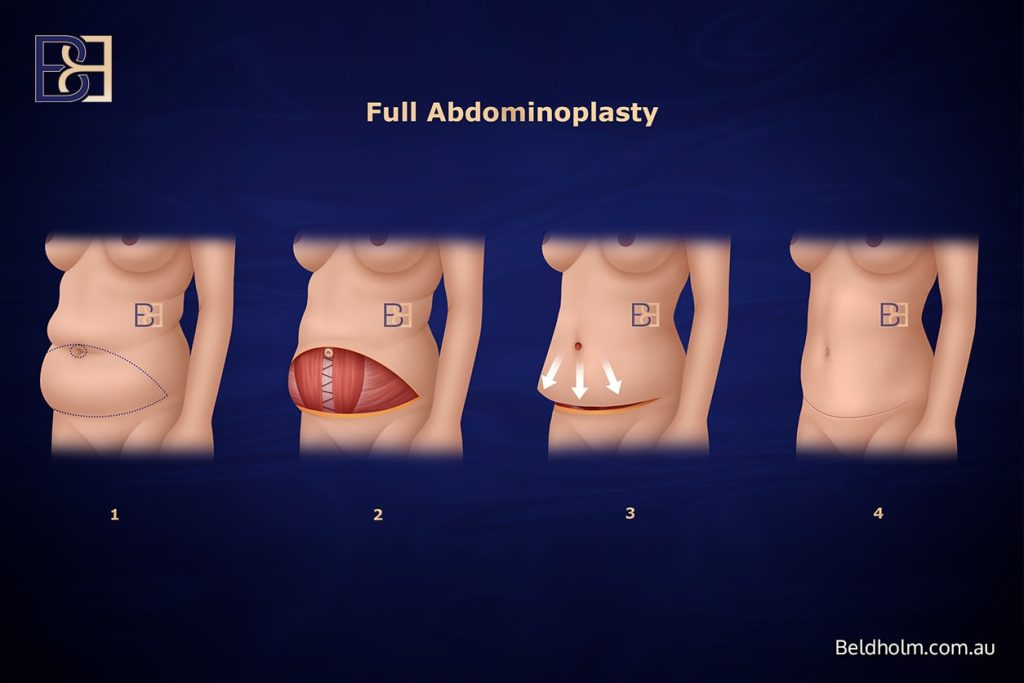
An abdominoplasty treats vertical excess skin through a single transverse excision in the lower abdomen, with wide undermining, repositioning of the belly button (umbilicus), and repair of muscle separation (diastasis recti) where present. It reshapes the whole abdomen. Choose it when the excess is central and the abdominal wall needs work. The lipectomy approach cannot repair muscle separation, so patients with diastasis recti are almost always better served by an abdominoplasty. For post weight loss patients, this is usually an extended abdominoplasty rather than the hip to hip version.
Versus Fleur de Lis abdominoplasty

A Fleur de Lis abdominoplasty adds a vertical midline excision to the transverse one, treating horizontal excess skin that a transverse excision alone cannot reach. It suits patients with laxity in both directions across the central abdomen. If your upper abdominal fold is part of continuous central abdominal skin laxity rather than a discrete roll, the Fleur de Lis is usually the right operation, not two separate wedges.
Versus belt lipectomy (body lift)

Belt lipectomy surgery, sometimes called a lower body lift, takes the excision circumferentially around the torso, treating the abdomen, flanks, lower back and buttocks in one operation. If you have widespread excess skin affecting the flanks and back as well as the abdomen, two anterior wedges will not deal with it.
Versus apronectomy
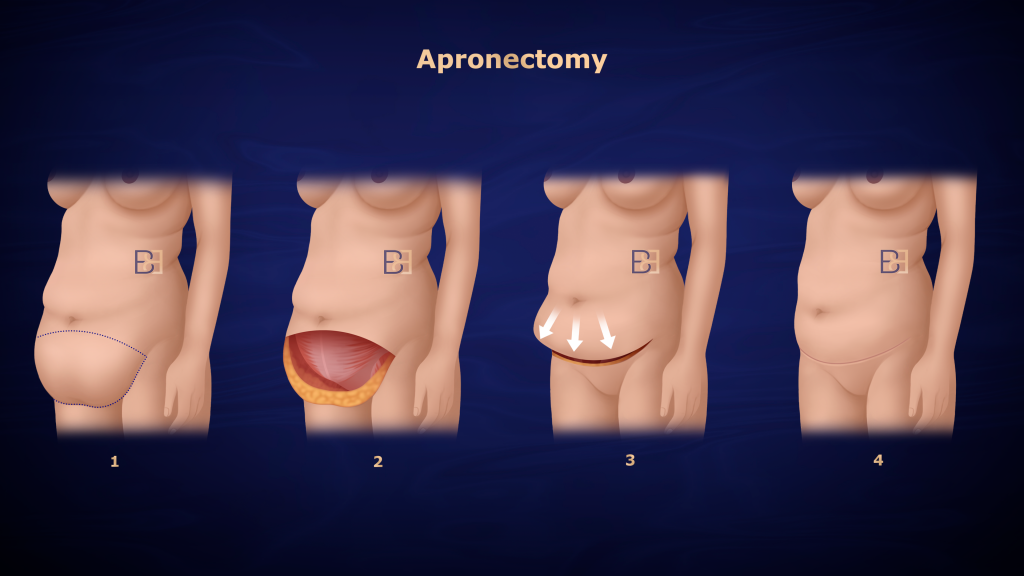
An apronectomy is a single lower wedge excision removing the hanging apron only. It is the lower half of the operation described in this article. If your upper abdomen has no significant fold, an apronectomy alone may be all that is needed.
The deciding factors at a glance
Factor | Upper and lower lipectomy | Abdominoplasty | Fleur de Lis | Belt lipectomy |
|---|---|---|---|---|
Excess location | Discrete upper and lower folds | Central, vertical excess | Central, vertical and horizontal excess | Circumferential |
Muscle repair | No | Where present | Where present | Where present |
Belly button (umbilicus) moved | No | Yes | Yes | Yes |
Undermining | Minimal | Wide | Wide | Wide |
Loose skin after major weight loss is rarely limited to the abdomen. Body contouring procedures such as brachioplasty (arm lift), thighplasty (thigh lift) including the inner thigh lift variant, and mastopexy (breast lift) treat other areas, and each is assessed on its own merits.
Which of these matches your abdomen is determined by examination at consultation, not by preference for a particular scar or operation name.
Why This Is an Uncommon Operation
Of the patients I see who have experienced significant weight loss, only a small proportion have the pattern this operation treats. There are three reasons it comes up rarely.
Most excess skin is central
When weight is lost from the abdomen, the skin usually fails as a whole. It loses tension across the entire abdominal region and settles into a central apron. The discrete two-fold pattern, with sound skin in between, is the exception. It tends to appear in patients whose fat was carried in distinct upper and lower deposits before weight loss, or in patients who have already had previous abdominal surgery that altered how the skin settled.
Muscle separation changes the operation
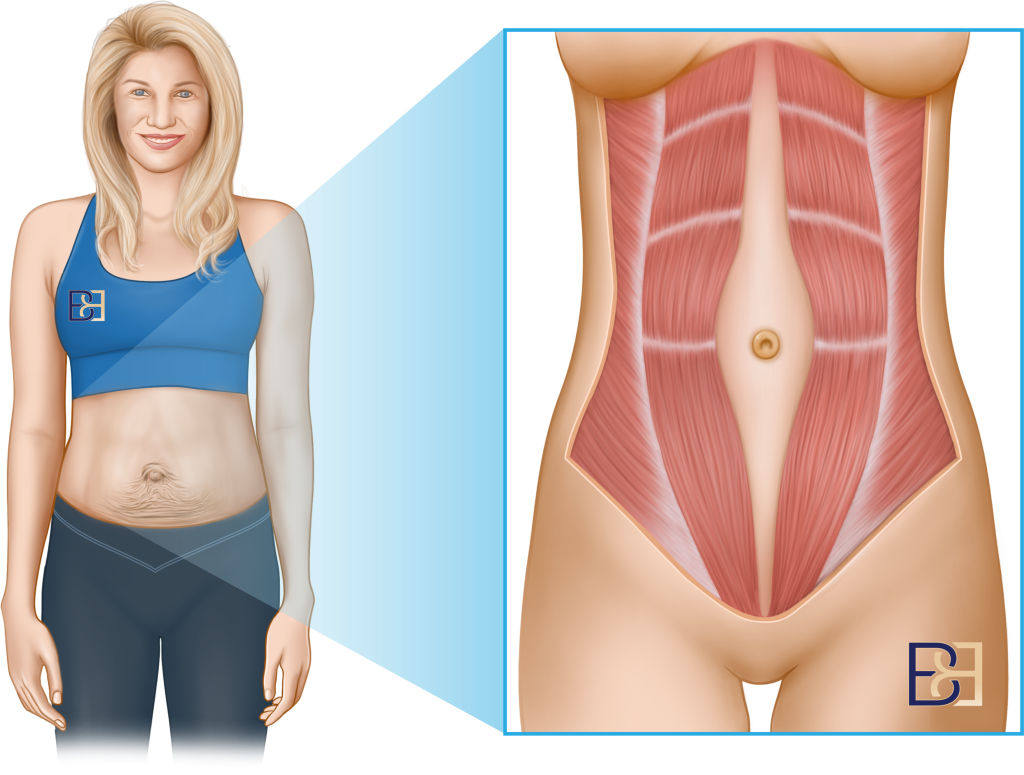
Many post pregnancy patients, and some post weight loss patients, have significant abdominal muscle separation (diastasis recti). A lipectomy leaves the muscle layer untouched, so any patient who needs muscle repair needs a different operation. During examination I assess the abdominal wall specifically for this. Finding a separation usually moves the plan to an abdominoplasty, whatever the skin pattern first suggested.
The pattern has to be genuinely discrete
The upper fold must be a true separate roll, not the top edge of a continuous sheet of laxity. When I pinch and lift the central abdominal skin during examination, it needs to hold reasonable tension. If it does not, removing wedges at the top and bottom would leave the loose middle behind, and the result would disappoint. Those patients need the central skin treated, which means an abdominoplasty, a Fleur de Lis, or in some cases a belt lipectomy.
None of this makes the operation a lesser choice. For the right abdomen it is the most direct option available: two scars placed in existing skin creases, no repositioning of the belly button (umbilicus), less undermining, and a shorter operation. The point is that the abdomen chooses the operation, not the other way around.
Who May Be Suited, and Who Is Not
As a general guide, the patients who do well with this operation share a set of features.
Factors that support suitability
- The right skin pattern. Discrete upper and lower folds with reasonable central skin tension, as described earlier. This is the non-negotiable starting point.
- Stable weight. Weight has been stable for at least 6 months, held by a healthy lifestyle you can maintain. If you lose weight again after surgery, new loose skin can form; weight gain stretches the result and changes body shape.
- No muscle separation needing repair. The abdominal wall is intact, or any separation is minor enough not to warrant repair.
- Acceptable belly button (umbilicus) position. The umbilicus sits where it can stay, because this operation does not move it.
- General health that supports surgery and healing. Well-managed medical conditions, and nutritional status corrected before surgery. Most patients who have lost significant weight, whether through surgery, medication or lifestyle change, have nutritional gaps that need finding and fixing first.
- Non-smoker, or willing to stop. Published research links smoking with higher complication rates after abdominal contouring surgery (4). This matters for every body contouring operation and I require patients to stop well before surgery.
Factors that point to a different operation
- Central abdominal laxity or a continuous apron: abdominoplasty (tummy tuck) or Fleur de Lis abdominoplasty
- Muscle separation (diastasis recti) needing repair: abdominoplasty
- Loose skin continuing into the flanks, back or buttocks: belt lipectomy (body lift)
- A lower apron only, with no upper fold: apronectomy
Factors that may delay or rule out surgery
- Weight still changing, including patients partway through a medication assisted weight loss journey
- Uncorrected nutritional deficiencies
- Active skin infection or unhealed wounds in the surgical field
- Medical conditions that make an elective operation inappropriate at that time
Preparing for Surgery

Most patients who have lost significant weight arrive with nutritional gaps, whether that came through weight loss surgery, medication or lifestyle change. Reduced food intake over months or years commonly leaves low iron, vitamin D, B12 and protein stores, among others. These deficiencies impair wound healing (5), and this operation asks the body to heal two wounds at once.
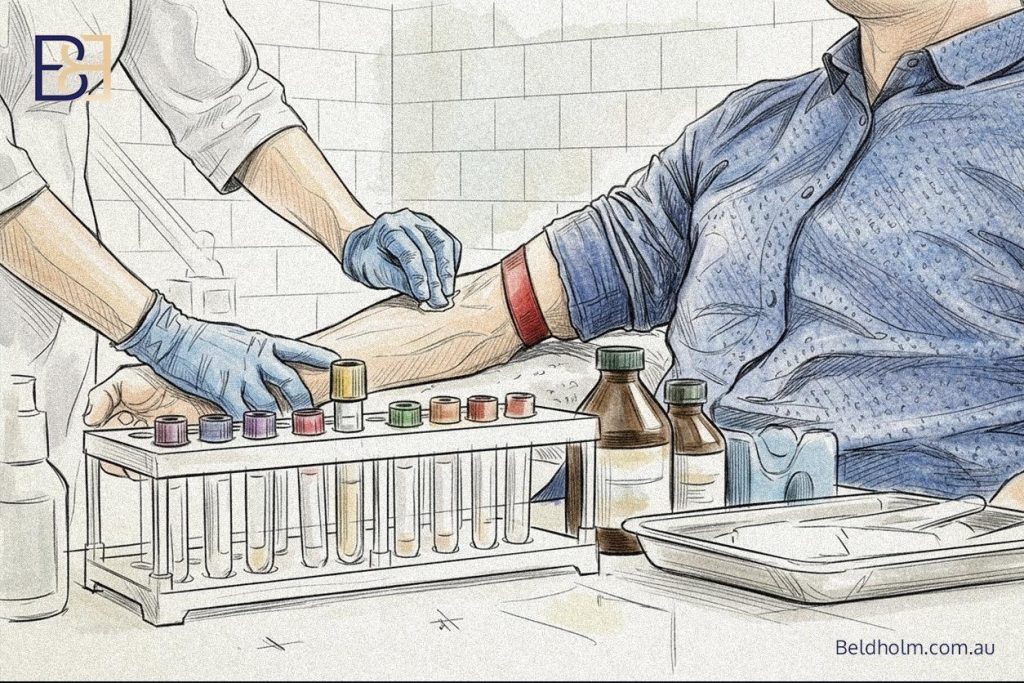
Every post weight loss patient in my practice has a comprehensive pre-operative blood panel before surgery. It covers blood count, iron studies, key vitamins and minerals, protein status and general organ function. Anything the panel finds is corrected before an operation date is confirmed, through diet and targeted supplementation guided by the results, supporting wound healing from the first day after surgery. Your GP is copied into the blood results and stays involved throughout.
Protein needs a specific mention. Wound healing consumes protein, and intake often falls short after significant weight loss, particularly for patients on appetite-suppressing medication. I set a daily protein target with patients before surgery and it continues through recovery.

I have covered pre-operative nutrition in detail separately, including the full blood panel and the supplement framework I use. See the nutritional deficiencies after weight loss article and the vitamins and supplements hub rather than relying on a summary here.
Beyond nutrition, preparation includes:
- Weight stability for at least 6 months before surgery
- Stopping smoking and all nicotine well before the operation
- Medication review, including blood thinners, which I manage on an individual plan. Do not stop any medication yourself
- A phone consultation with the anaesthetist before surgery, with physical assessment on the day
The Operation and Your Hospital Stay

Book your appointment online now
I perform this operation at Maitland Private Hospital in the Hunter Valley under general anaesthesia.
On the day, I confirm the markings with you standing before you go to theatre. The anaesthetist completes the physical assessment, including your airway, that morning. Operating time depends on the size of both excisions, but without undermining or muscle repair it is generally shorter than a full abdominoplasty.
After surgery you wake with dressings over both wounds and a compression garment fitted. Drains may be in place depending on the extent of each excision; where used, they usually come out before you go home.
Most patients stay 1 to 2 nights. During your stay:
- Maitland Private has 24-hour nursing cover and an on-site ICU
- I do rounds daily and see you each morning you are in hospital
- The on-ward dietitian service is available, with a range of protein supplements. You are welcome to bring your own whey protein isolate
- Pain control is reviewed daily; most patients manage with tablets by the time they go home
- Nursing staff get you up and walking early, which matters for circulation and clot prevention
Recovery and Follow-Up

Recovery is generally less demanding than after a full abdominoplasty, because there is no undermining and no muscle repair. The recovery period still involves two surgical wounds, and it should not be underestimated.
In early recovery, most patients take 1 to 2 weeks off work depending on how physical their job is. Compression garments are worn for around 6 weeks, and hold off on heavy lifting and strenuous exercise until I clear them. The upper scar sits near the fold beneath the chest and the lower scar low across the abdomen; both take 12 months or longer to mature, and individual healing responses vary.
Follow-up in my practice starts with 2 weeks of intense review straight after surgery, then appointments at 4 weeks, 3 months, 6 months and 12 months. All follow-up is included in the fee. Your GP receives a formal handover at the 4-week visit.
I have written a full week-by-week guide separately. See the recovery article for wound care, garment wear, driving, return to exercise and what each stage feels like.
Risks and Limitations
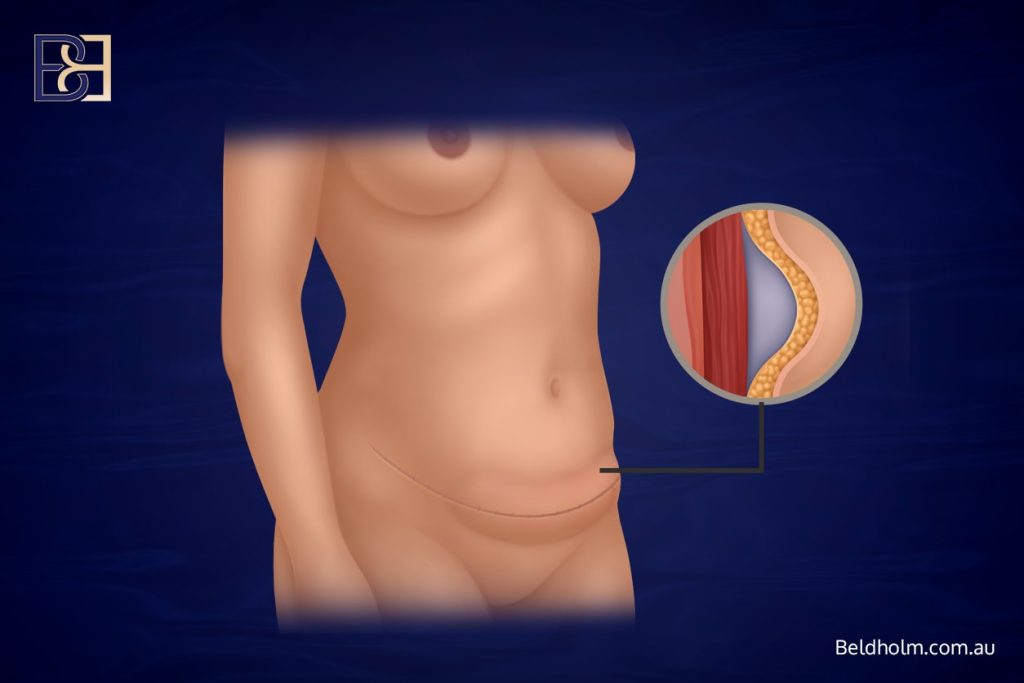
This is major surgery under general anaesthesia, and the surgical risk mirrors any body contouring surgery: bleeding, infection, fluid collection (seroma), delayed wound healing, wound separation, blood clots (deep vein thrombosis and pulmonary embolism), poor scarring, and changes in skin sensation around the scars (4,6). With two wounds healing at the same time, problems can occur at either site. I stratify every patient’s clot risk before surgery and set the prevention plan accordingly (7).
The procedure also has built-in limitations that matter as much as the risks:
- It does not treat central laxity. If the middle of the abdomen loosens over time, or was looser than examination suggested, the wedge excisions will not have dealt with it.
- It does not repair muscle separation (diastasis recti). The muscle layer is untouched.
- Two permanent scars. One near the fold beneath the chest, one across the lower abdomen. Scar quality varies between patients and cannot be predicted precisely.
- Results vary between patients and depend on skin quality, healing, and weight stability afterwards.
Serious complications are uncommon, but they happen. As with all major surgical procedures, deciding to proceed means weighing them against what the operation offers you. I have written a dedicated article covering each complication, warning signs and what I do when problems occur. See the complications article before making any decision about surgery.
Cost and Medicare

Where the criteria are met after significant weight loss, this operation may attract a Medicare rebate under MBS item 30166, which covers wedge excision of redundant abdominal skin.
The criteria include:
- Documented weight loss of at least 5 BMI units
- Weight stable for at least 6 months
- Skin problems such as intertrigo that have not responded to conservative treatment, or skin excess that interferes with daily living
Whether you meet them, and how the item applies to both excisions, is confirmed at consultation. You receive a written quote before booking anything.
I have broken down the full costs, rebates and private health insurance considerations in the cost article.
References
- Pacifico MD, Mahendru S, Teixeira RP, Southwick G, Ritz M. Refining trunk contouring with reverse abdominoplasty. Aesthet Surg J. 2010;30(2):225-34.
- Deos MF, Arnt RA, Gus EI. Tensioned reverse abdominoplasty. Plast Reconstr Surg. 2009;124(6):2134-2141.
- Huger WE Jr. The anatomic rationale for abdominal lipectomy. Am Surg. 1979;45(9):612-7.
- Marchica P, Costa AL, Brambullo T, et al. Retrospective Analysis of Predictive Factors for Complications in Abdominoplasty in Massive Weight Loss Patients. Aesthetic Plast Surg. 2023;47(4):1447-1458.
- Sousa Oliveira LA, Cabette Filho NN, Da Costa Sacksida Valladao V, et al. Perioperative Protein and Vitamin Supplementation in Plastic Surgery: An Evidence-Based Proposal for an Assessment and Replacement Protocol. Cureus. 2026;18(6):e111477.
- Luettschwager S, Mandal P, Kamolz LP, et al. Factors associated with resection weight and complications after massive-weight-loss abdominoplasty: A retrospective 10-year single-center study. JPRAS Open. 2026;51:190-203.
- Sousa Oliveira LA, Helena Mendes L, Cabette Filho NN, et al. Thromboprophylaxis in Intermediate and Major Plastic Surgery Procedures: A Narrative Review and Proposal of the TROMBO-PLAST Integrated Decision-Making Model. Cureus. 2026;18(6):e110817.