Like any major surgery, an abdominoplasty (tummy tuck) leaves a scar. After significant weight loss the scar tends to be longer than people expect, because the amount of loose skin I am removing is greater.
Most people I see after weight loss are not asking whether there will be a scar. They know there will be. What they want to understand is how long it will be, where it will sit, how it changes over time, and what can be done to settle it. This article walks through all of that.
A few things are worth being clear about up front.
- An abdominoplasty scar is permanent. It can be placed well and it usually fades and flattens over the first year, but it does not disappear.
- The length and pattern of the scar depend on the procedure, which in turn depends on how much loose skin you carry and where it sits.
- Healing varies from patient to patient. Two people having the same operation can end up with scars that look quite different.
In the post-weight-loss group, there is one factor that matters more than most patients realise: your nutritional status going into surgery. Skin that has been stretched and then deflated heals differently, and the body needs adequate protein and a few key nutrients to lay down good scar tissue. I cover that later in the article, because for this group it is part of the scar story, not a side note.
What I want you to take from this page is a realistic picture: what the scar looks like at each stage, how the type of abdominoplasty changes it, what affects healing, and the steps I take during and after surgery to keep the scar as discreet as the operation allows.
Why scars tend to be longer after weight loss
The single biggest thing that decides how long your scar will be is how much loose skin needs to come off. After significant weight loss there is usually a lot of it, and that is what sets post-weight-loss abdominoplasty apart from a standard abdominoplasty (tummy tuck) done for other reasons.
Stretched skin does not shrink back
When you carry extra weight for a long time, the skin stretches to cover it. Lose the weight, whether through bariatric surgery, modern weight loss medications, or sustained diet and exercise, and the fat underneath goes but the skin envelope does not spring back. It is left loose, often hanging as an overhang of skin and soft tissue across the lower abdomen.

To remove that skin and pull the remaining skin flat, I need an incision long enough to take it all out. More loose skin means a longer incision, and a longer incision means a longer scar. There is no way around that trade-off, and I would rather you hear it plainly before surgery than be surprised after it.
Laxity often runs right around
In the post-weight-loss group the looseness is rarely confined to the front of the abdomen. It commonly continues around the hips and across the back. When that is the case, a standard hip-to-hip incision will not remove all of it, and the scar may need to extend further around the sides, or a vertical incision may be added up the midline to take in skin that a horizontal incision alone cannot reach.
This is why patients in this group can end up with one of several scar patterns rather than a single standard one. Which pattern suits you depends on where your loose skin sits and how much there is, and that is assessed at consultation.
What this means for you
A few practical points follow from all this.
- A longer scar is the cost of removing more skin. The two go together.
- Where the laxity extends past the front, the scar extends with it.
- The exact length and pattern are matched to your skin. I decide on the scar pattern with you at consultation, once I have assessed where your loose skin sits and how much there is.
How the scar changes over the first year or two
A scar is not finished the day the wound closes. It goes through a long remodelling process, and it usually looks at its worst in the first few weeks before it starts to settle. Knowing the rough timeline helps, because the early stage that worries patients most is actually a normal part of healing.
Here is the general pattern I see. Timings are a guide, not a promise, and healing varies from one patient to the next.
The first few weeks
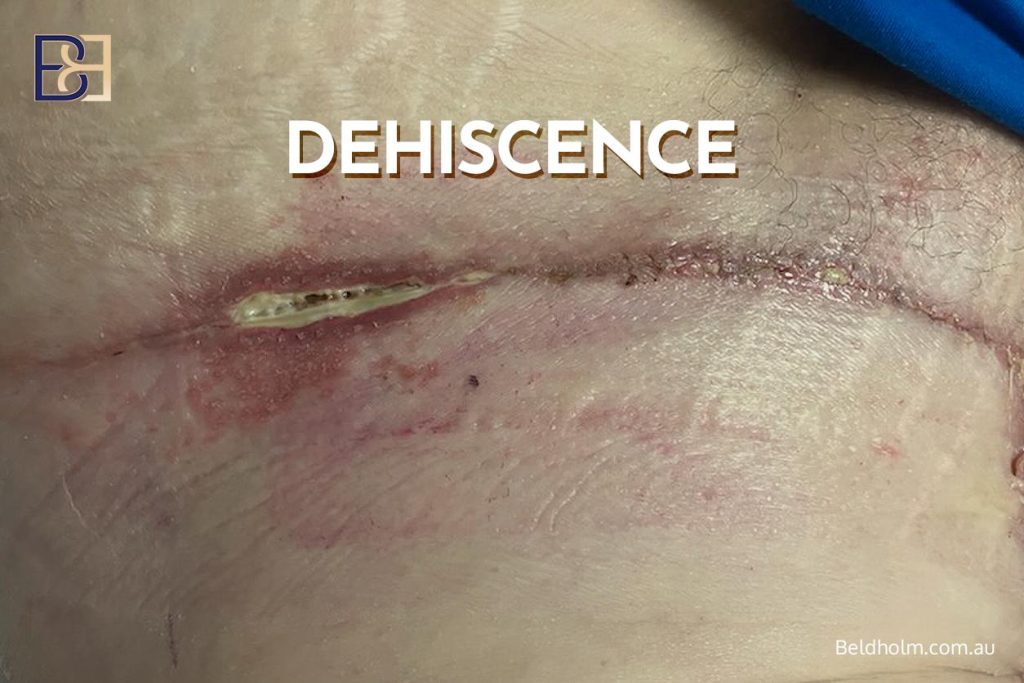
This is when the scar looks at its worst, and I want patients to expect that rather than be alarmed by it. In the early weeks the skin along the line can look bunched up as the tissue settles. Parts of the scar are very red and raised. There may be small areas where the wound has not fully closed, some moist areas, and at times a discharge from the line. In some cases, there are areas of wound separation, known as dehiscence, where a section of the wound closure opens.
None of this is unusual in the first few weeks, particularly after a longer post-weight-loss incision. The wound is sealed but still fragile, and the body is only beginning to lay down the collagen that holds the edges together. This is also why the surgical dressings and your activity restrictions matter most at this stage, because keeping tension off the line gives it the best chance to close cleanly. I review these areas at your follow-up visits and manage any open or moist spots as they heal.
Around one to two months
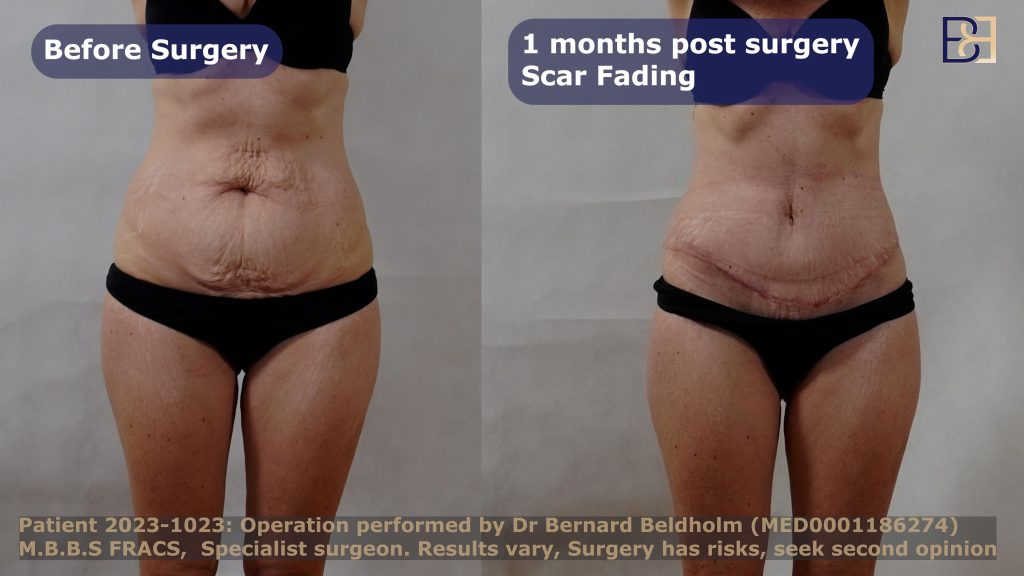
Disclaimer: Results vary, surgery has risk, seek second opinion, operation performed by Dr Beldholm
By this point, any open or moist areas have usually closed over, and the line is more stable. The scar often stays firm, raised, and darker or more red than the surrounding skin. This is normal. The redness and thickness reflect the blood supply and collagen the body is still sending to the area as it heals. It is a phase, not the finished result.
Around six months
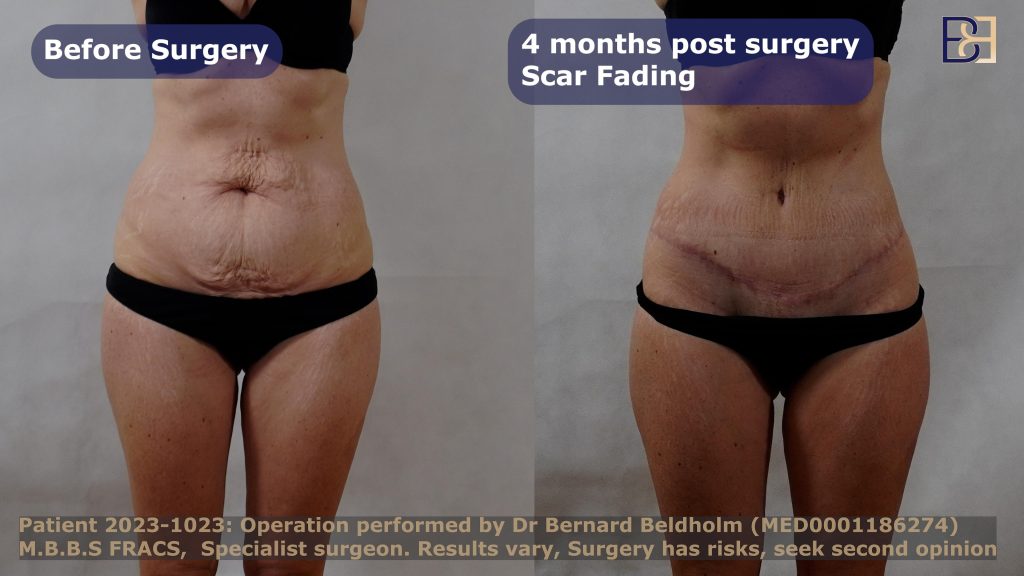
Disclaimer: Results vary, surgery has risk, seek second opinion, operation performed by Dr Beldholm
By about the six-month mark, the scar has usually started to flatten and fade. The deep red softens, the ridge settles down, and the line becomes less obvious than it was at its peak. It is still maturing at this point, so what you see at six months is not the endpoint.
Twelve months and beyond
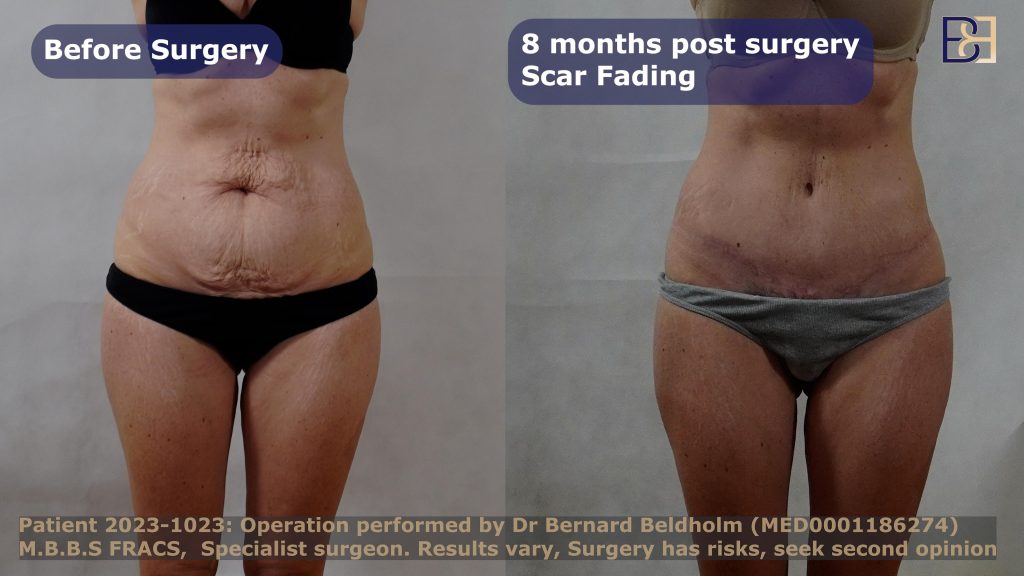
Disclaimer: Results vary, surgery has risk, seek second opinion, operation performed by Dr Beldholm
By around twelve months the scar has settled a great deal, but it is not fully mature at this point. A scar continues to remodel for up to two years after surgery (1), and the line keeps softening and fading over that time. In many patients it becomes flatter, paler, and less noticeable than it was earlier in the process. How close it gets to that depends on your skin, your healing, and whether you had any wound complications along the way.
Even fully matured, the scar is a permanent line. It becomes flatter and paler over time, but it does not disappear.
Scar patterns by procedure
There is no single abdominoplasty scar. The pattern depends on which operation suits your skin, and after significant weight loss that is usually one of the longer patterns. Below are the ones I use most often in this group, from the more contained through to the more extensive. Which one is appropriate is decided with you during the consultation, based on where your loose skin is and how much there is.
Full abdominoplasty (tummy tuck)
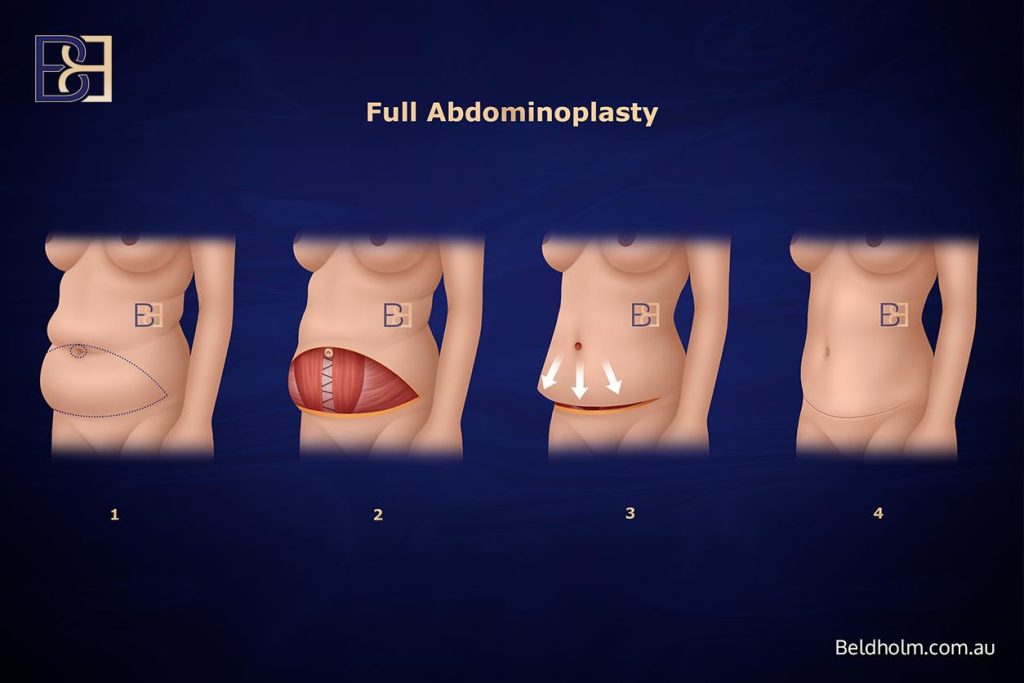
The standard pattern is a long horizontal incision low across the lower abdomen, running between the hip bones, placed so it sits below the underwear line. Because the skin above the belly button is pulled down, the belly button (umbilicus) is brought out through a new opening, which leaves a small separate scar around it. So for a full abdominoplasty (tummy tuck) you have two scars: the long low horizontal line and a small one around the belly button.
Extended abdominoplasty
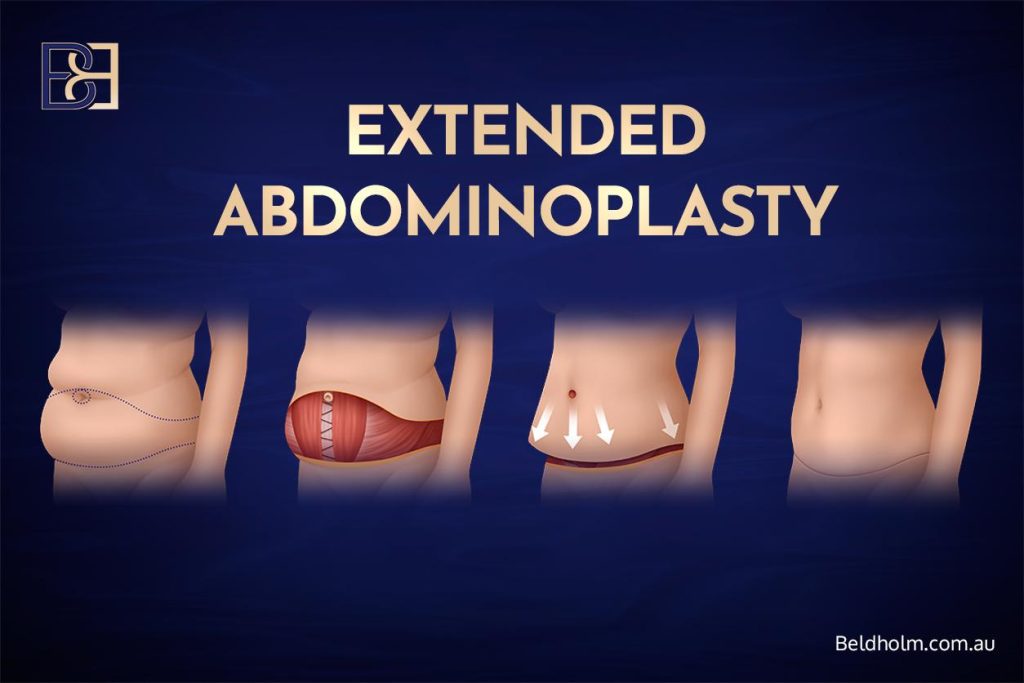
When the loose skin extends past the hips and around towards the back, the horizontal incision is extended further along each side to remove it. The scar is the same low line as a full abdominoplasty (tummy tuck), just longer, reaching around the flanks. This is common after major weight loss because the laxity rarely stops at the front.
Fleur-de-Lis abdominoplasty (FDL)

Some patients carry loose skin not just up and down but also from side to side, so a horizontal incision alone cannot tighten it. The Fleur-de-Lis approach adds a vertical incision up the midline of the abdomen to the usual horizontal one. Together they form an inverted-T, sometimes called an anchor scar. It removes skin in two directions, which is why the trade-off is a vertical scar on the front of the abdomen in addition to the low horizontal one.
Body lift (belt lipectomy)
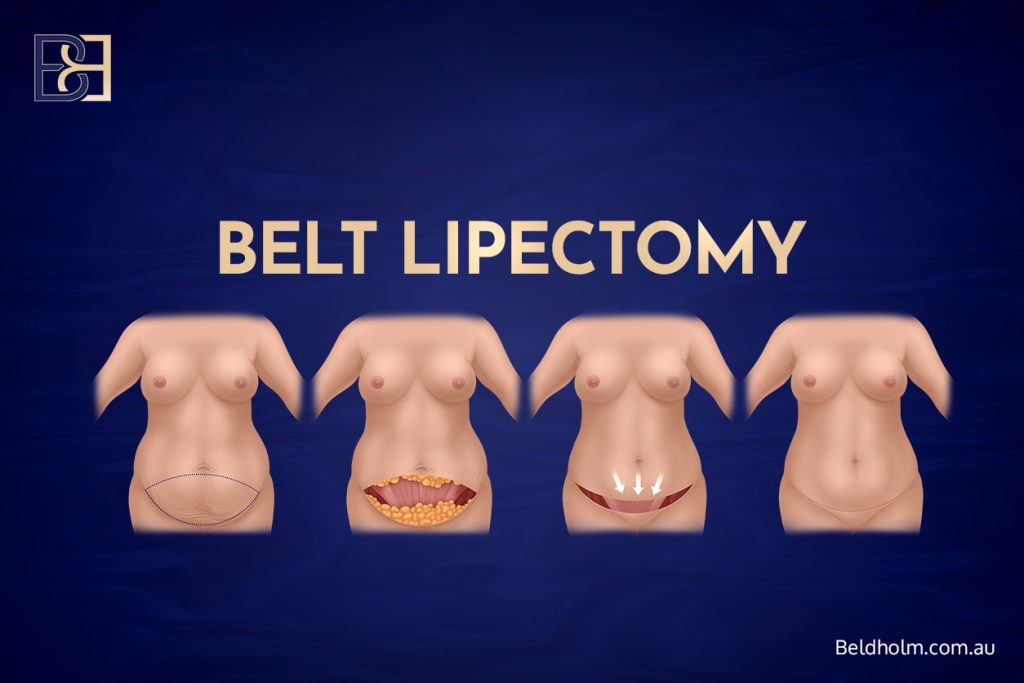
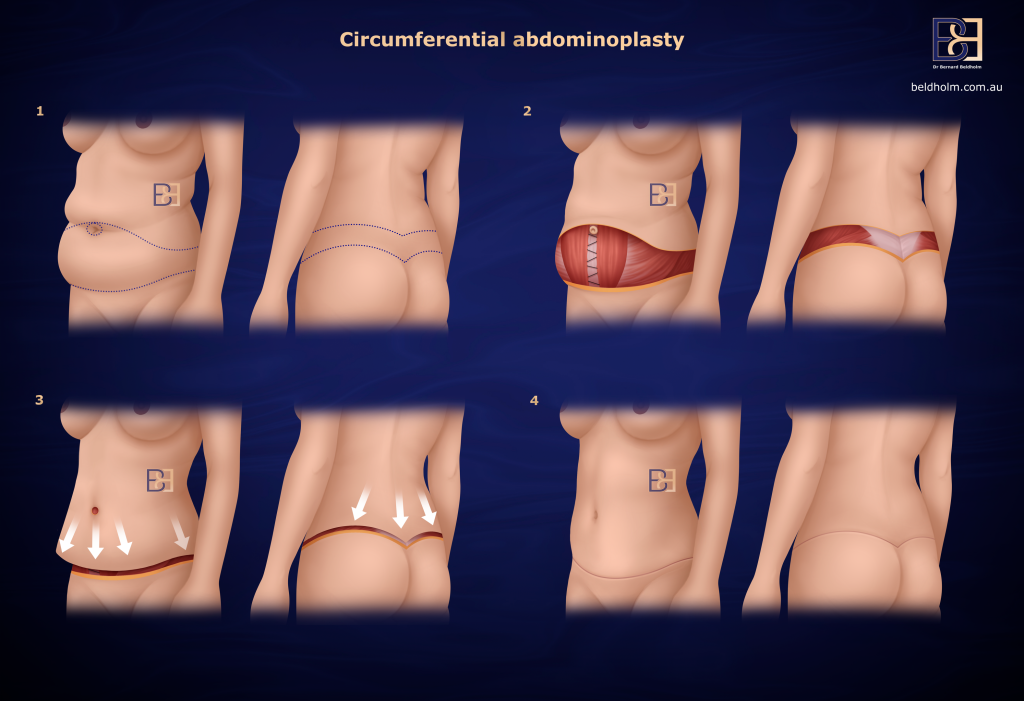
When the loose skin runs the whole way around the body, the incision does too. A body lift (belt lipectomy) uses a continuous incision that goes all the way around, like a belt, removing skin from the front, the sides, and the back in one operating time. The scar sits low around the circumference of the body. This removes the back and outer hip laxity that a front-only incision leaves behind.
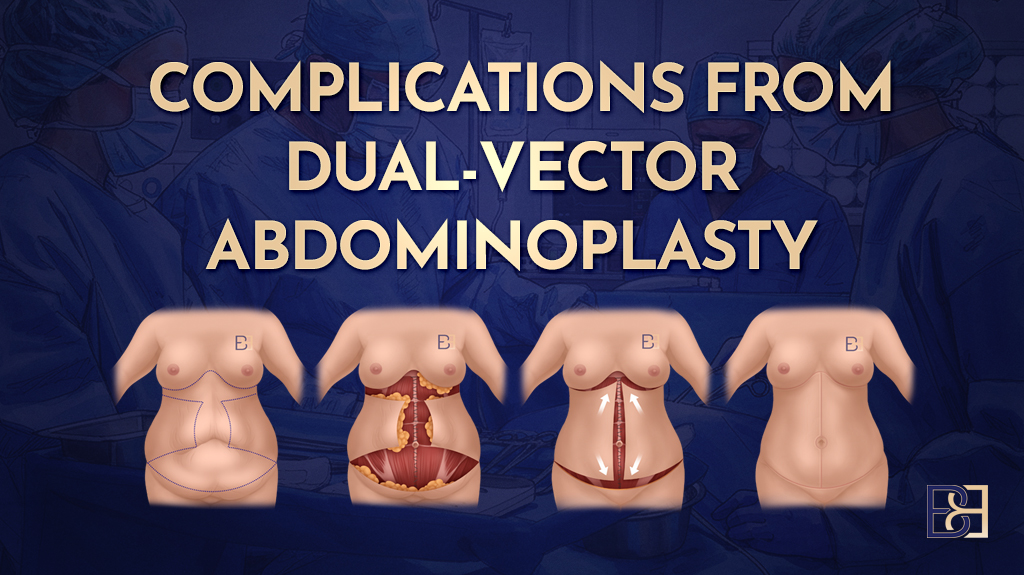
Dual vector abdominoplasty
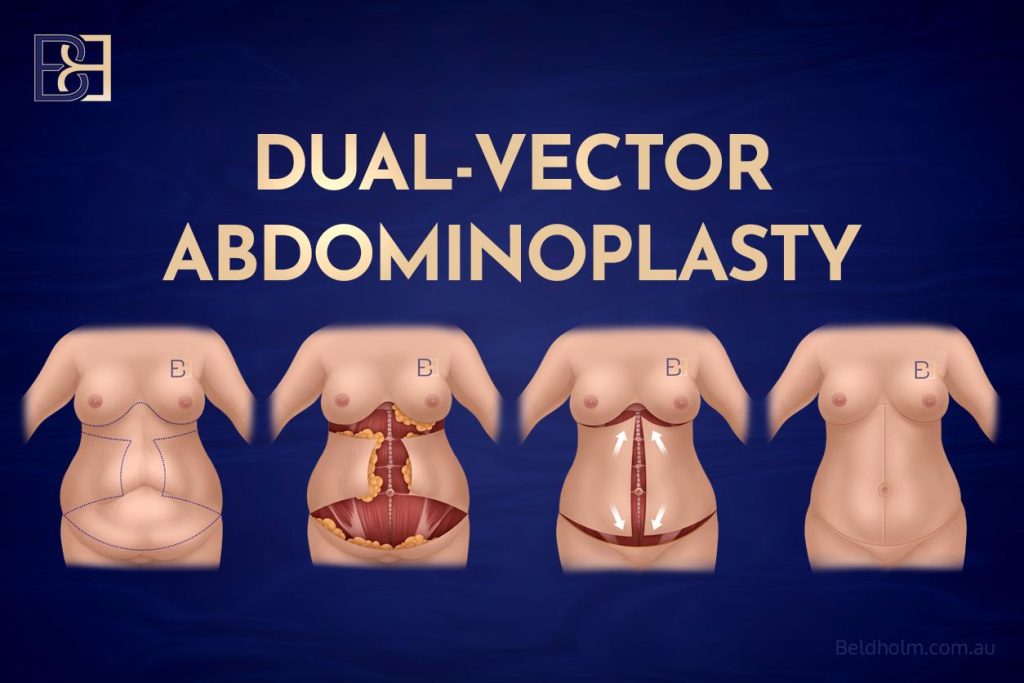
This is an approach I use when there is significant laxity in both the vertical and horizontal directions across the upper and lower abdomen. It combines the Fleur-de-Lis pattern with removal of loose skin from the upper abdomen, taking in the looseness along two axes. The scar includes the inverted-T described above. It is a more extensive operation, chosen when the skin pattern calls for it.
Circumferential hybrid abdominoplasty
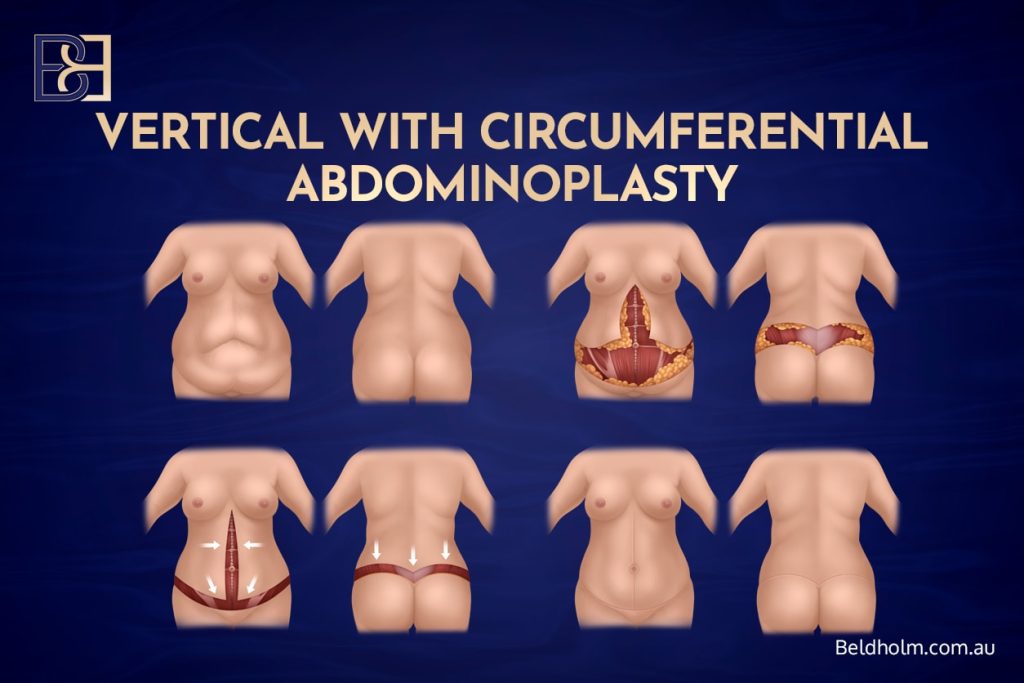
This is an approach I use for patients who need the circumferential reach of a body lift (belt lipectomy) together with correction of vertical midline laxity at the front. It is a body lift (belt lipectomy) with an added vertical incision on the front of the abdomen. The scar is the low circumferential belt line plus the anterior vertical line. It does not involve a separate buttock lift.
A note on the mini abdominoplasty (limited abdominoplasty)
A limited abdominoplasty uses a shorter horizontal incision and usually leaves the belly button alone, so the scar is smaller. It only suits people with a small amount of loose skin low down. After significant weight loss that is rarely the case, so it is the least common pattern I use in this group. I mention it mainly so you know why it is usually not the right fit here.
What affects how a scar heals
Two patients can have the same operation and the same closure and still end up with scars that look different. A lot of that comes down to factors I cannot control, and some of it comes down to things you can influence before and after surgery. Being clear about both helps set realistic expectations.
Things outside your control
- Genetics. Some people are more prone to thick, raised, or stubborn scars. If you or close family members have a history of hypertrophic or keloid scars, that tendency tends to follow you, and I want to know about it before surgery.
- Skin tone. Deeper skin tones can be more prone to raised scarring and to changes in pigmentation, where the scar heals darker or lighter than the surrounding skin. This does not mean a poor result, but it does shape what to expect.
- Age and general health. Younger skin and good general health usually heal more predictably. Conditions such as diabetes or anything that affects circulation can slow healing and influence how the scar settles.
Things you can influence
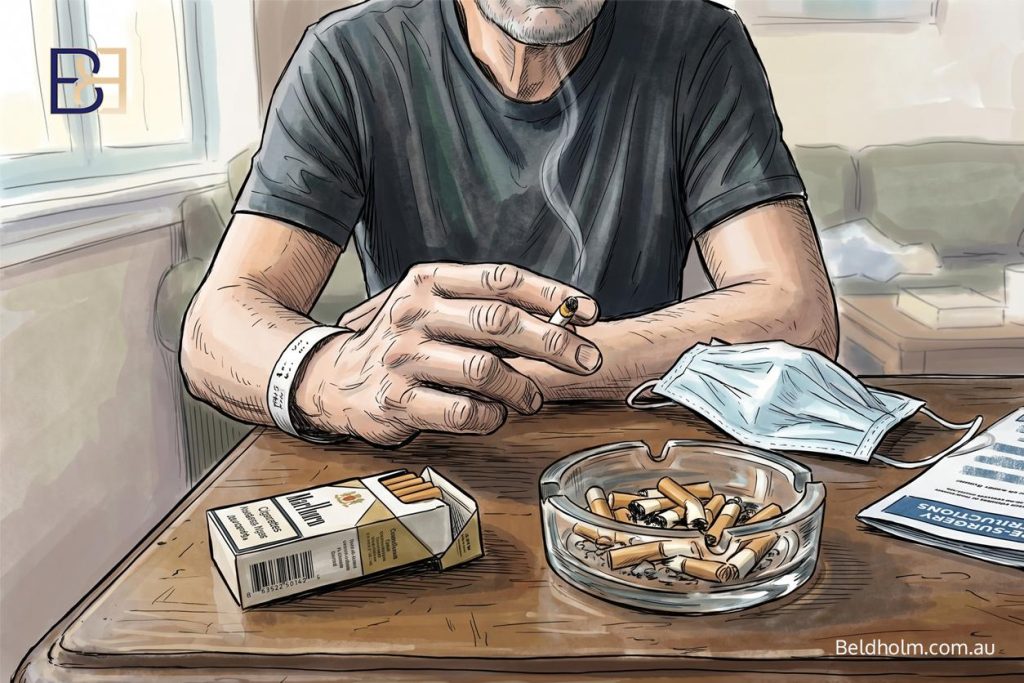
- Smoking. This is the big one. Nicotine narrows the small blood vessels that feed the healing wound, which reduces the oxygen reaching the tissue. After a long post-weight-loss incision that matters a great deal, because it raises the risk of wound breakdown, skin loss along the edges, and a worse final scar. Published research in abdominoplasty patients found wound healing problems far more often in smokers than in non-smokers (2). I ask patients to stop well before surgery, and the longer the better.
- Blood sugar control. If you live with diabetes, steady blood sugar going into surgery supports cleaner healing.
- Sun exposure. A fresh scar is vulnerable to UV. Direct sun in the first year can darken the line permanently (1), so keeping it covered or protected while it matures makes a real difference to how it ends up looking.
- Nutritional status. After significant weight loss, many patients have gaps in protein and certain vitamins that the body needs to build good scar tissue (3). Correcting these before surgery is one of the more useful things you can do for your scar, and I go into it in more detail later in this article.
Wound healing along the way
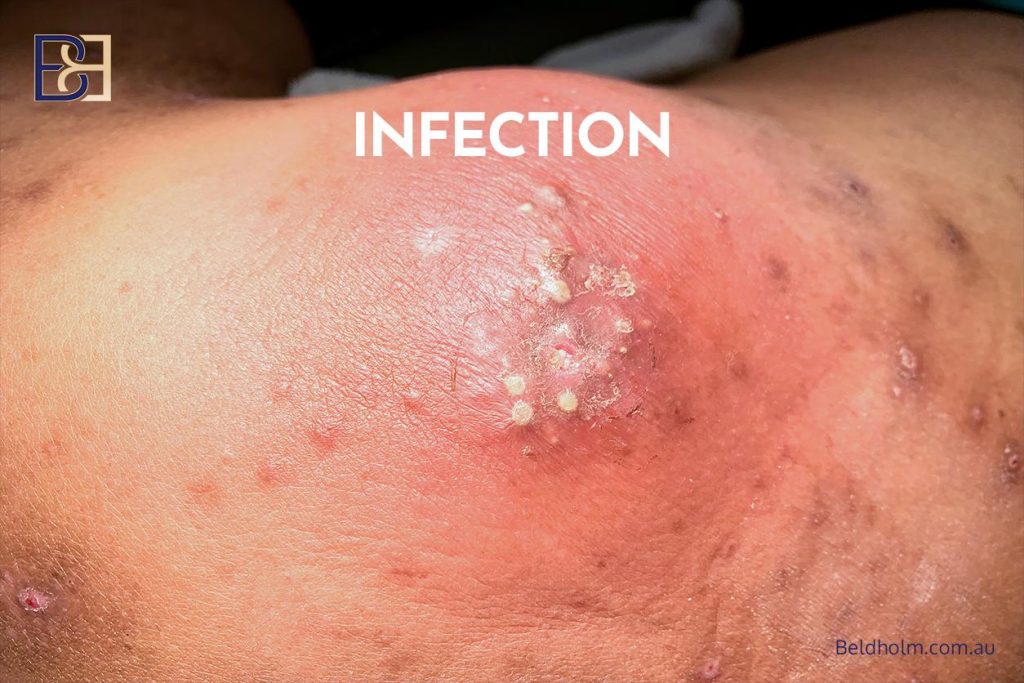
How the wound itself behaves also leaves its mark. A wound infection, a collection of fluid, or an area of separation in the early weeks can all leave a wider or less even scar in that spot once it heals. This is part of why the early aftercare and your follow-up visits matter, so any of these are picked up and managed early.
Types of scars
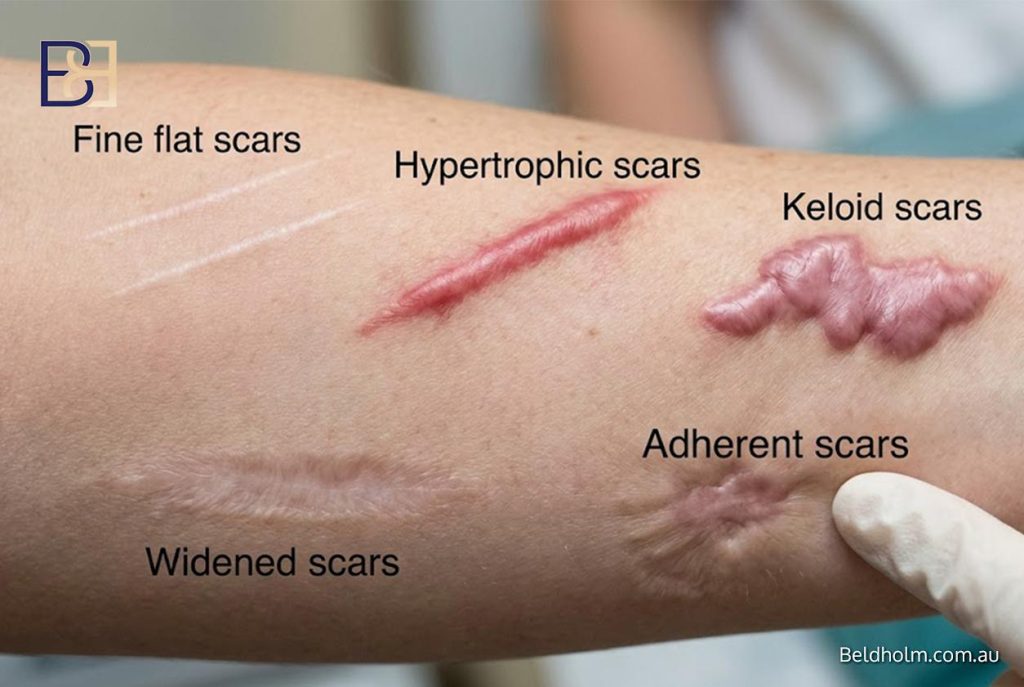
Most abdominoplasty scars settle into a flat, pale line over time. Some do not, and it helps to know the names for what can happen so you understand what I am looking at during your follow-ups. These are the patterns I see.
Fine, flat scars
This is the usual course. The line stays narrow, flattens, and fades to something close to the surrounding skin tone over the first year or two. Nothing extra is needed beyond standard aftercare.
Hypertrophic scars
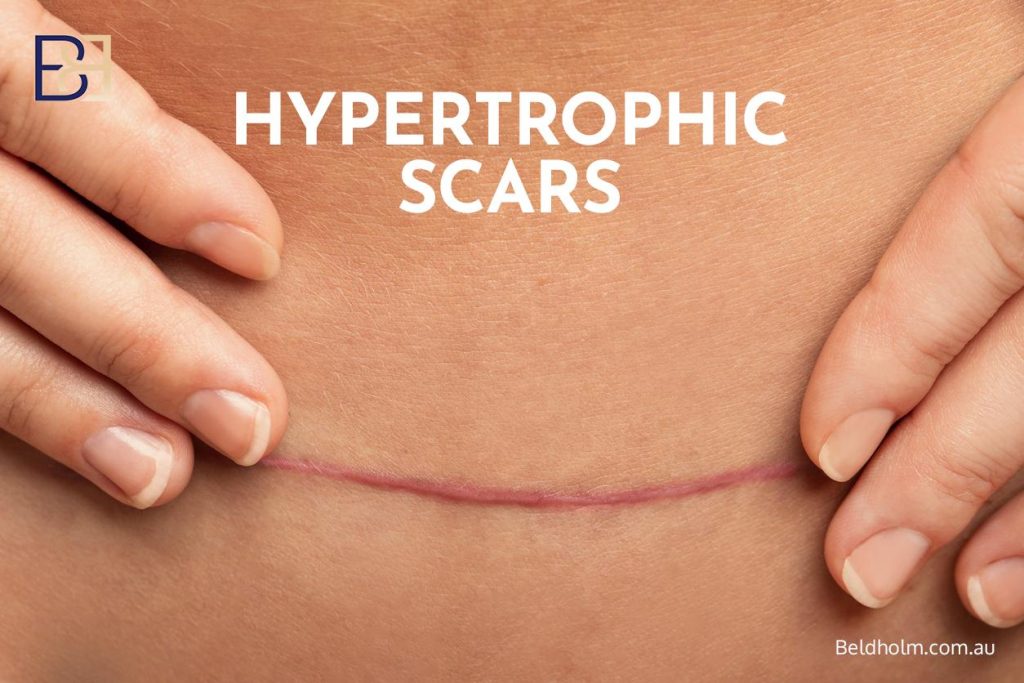
A hypertrophic scar is raised, firm, and often red, but it stays within the boundaries of the original incision. It tends to appear in the first few months and can settle on its own over time, sometimes with help from silicone, pressure, or other treatments. Areas under more tension, which is common along a long post-weight-loss incision, are more prone to this.
Keloid scars
A keloid is also raised and firm, but unlike a hypertrophic scar it grows beyond the edges of the original wound into the surrounding skin. Keloids are less common, are more likely in people with a family history or deeper skin tones, and can be more stubborn to treat. If you have formed keloids before, tell me before surgery so we can plan for it.
Widened scars
Sometimes a scar heals flat but stretches and becomes wider than the original line. This happens where the skin is under ongoing tension as it heals. The lower abdomen carries a fair amount of movement and load, so some widening is not unusual, particularly across a long incision.
Pigment changes
A scar can heal darker than the surrounding skin (hyperpigmentation) or lighter (hypopigmentation). Sun exposure on a fresh scar is a common cause of darkening, which is why I am firm about sun protection in the first year. Pigment changes are more noticeable in deeper skin tones.
Tethered or adherent scars
Occasionally, a scar binds down to the deeper tissue underneath rather than gliding freely over it. This can leave the line feeling tight or looking indented. Scar massage once the wound has fully healed can help with this, and I will tell you when you can start.
Where the scar sits
I plan the scar placement together with you to ensure that the majority of it is concealed by everyday clothing.
The low horizontal line
For a full or extended abdominoplasty (tummy tuck), I place the main horizontal incision low across the lower abdomen, below the underwear line. The aim is for everyday underwear and swimwear to sit over the scar. I mark this line with you before surgery, usually standing, so we can position it where you want it covered. Skin moves once you are lying down and asleep, so marking it beforehand while you are upright gives the most reliable placement.
The belly button scar
With a full abdominoplasty (tummy tuck), the belly button (umbilicus) is brought through a new opening, which leaves a small scar around it. This one sits within the contour of the navel, so it tends to be discreet once healed. In some patients there is not quite enough loose skin to bring the old belly button opening all the way down to be removed with the lower skin. When that is the case, the old opening is closed in the midline, which leaves a small vertical scar sitting above the low horizontal line.
The vertical scar
If your skin pattern calls for a Fleur-de-Lis approach, the vertical part of the scar runs up the midline of the abdomen. I am upfront that this line cannot be tucked under clothing the way the low horizontal one can. It is the trade-off for removing side-to-side laxity that a horizontal incision alone cannot reach, and it is only used where that laxity is present.
The circumferential line
For a body lift (belt lipectomy) or circumferential hybrid abdominoplasty, the scar continues low around the body. I plan it to sit at a level that underwear and waistbands cover as much as possible right around.
A note on placement
I plan placement carefully, but I cannot promise an exact final position to the millimetre. Skin settles and moves as it heals, and a small amount of shift can happen. What I aim for is a scar placed as low and placed as your anatomy and the procedure allow.
What I do during surgery to help the scar
I cannot change your genetics or how your skin heals, but the way the wound is closed and dressed does influence how the scar turns out. A few things are routine in how I work.
Closing in layers to take tension off the skin
Tension is the enemy of a good scar. When the skin edges are pulled tight, the scar is more likely to stretch and widen as it heals. To avoid that, I close the wound in several layers. The deeper, stronger layers underneath are stitched so they carry the tension, which leaves the skin layer on top under as little pull as possible. The skin can then heal as a fine line rather than being dragged apart.
Sutures under the skin
I use dissolving (absorbable) sutures placed beneath the surface, so there are usually no stitches to remove later and nothing crossing the scar line itself. These hold the edges together while the wound builds its own strength, then break down on their own over the following weeks and months.
Negative pressure dressings
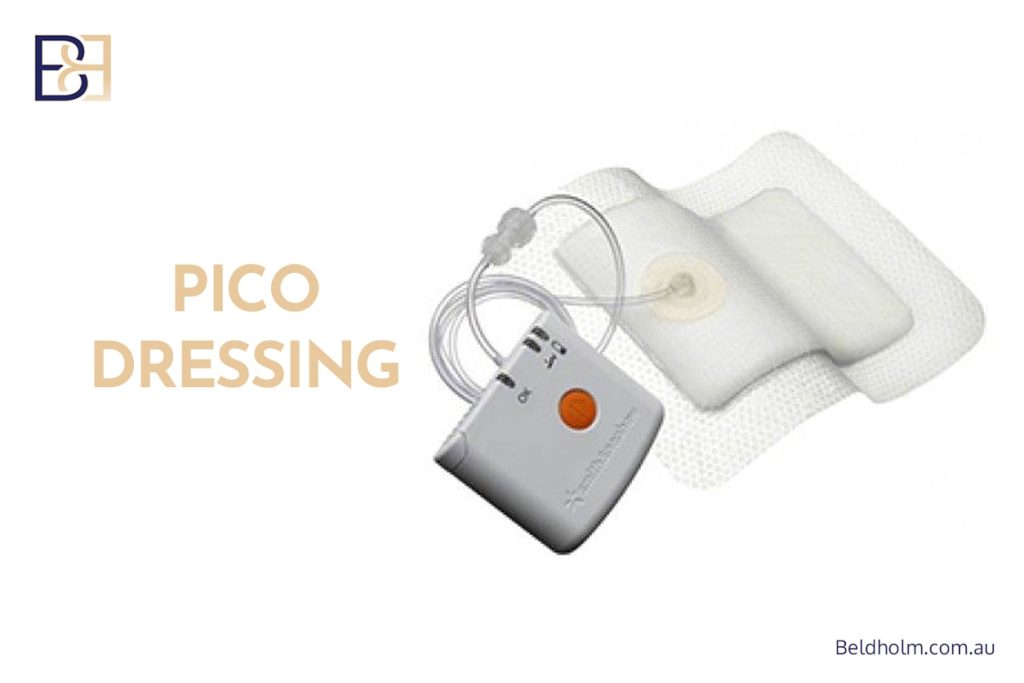
In many cases, I use a PICO dressing over the incision. This is a small single-use dressing that applies negative pressure across the wound. It helps hold the edges together, manages fluid, and supports the early healing of a long incision. I typically change this dressing around day 7 and switch to a supportive tape, such as Hypafix, after that.
Careful, even closure
Beyond the technique itself, taking time to achieve neat, even edges along the entire length of the incision gives the scar the best foundation to heal as a fine, level line.
What this can and cannot do
These steps stack the odds in favour of a flatter, narrower scar, but they do not override how your individual skin heals. Two people can have the same careful closure and heal differently. My job is to give the wound the best possible start. How it then matures depends on the factors covered earlier.
Pre-operative nutrition and your scar

For post-weight-loss patients, nutrition is part of the scar story, not a separate topic. The body builds scar tissue out of protein and a handful of key nutrients, and the way you lost weight often leaves gaps in exactly those. Whether the weight came off through bariatric surgery, modern weight loss medications, or sustained diet and exercise, reduced intake and altered absorption can leave you low in protein, iron, vitamin D, B12, zinc, and vitamin A, among others. Going into a long incision with those gaps unfilled gives the wound less to work with.
Two nutrients are worth singling out for scars. Protein is the raw material your body uses to lay down collagen and close a wound, so meeting your protein needs after weight loss is one of the more direct things you can do for your scar. Vitamin A plays a specific role in wound healing and collagen formation as well (3). I do not hand out a one-size-fits-all supplement plan. Instead, I check your status with a pre-operative blood panel, then correct what is actually low before surgery, which is a more sensible approach than guessing.
I have written separately about protein needs after weight loss, about vitamin A, and about the wider picture of nutritional deficiencies after weight loss, along with a general guide to vitamins and supplements. Rather than repeat all of that here, those articles go into the detail. The pre-operative blood tests I use to guide this are covered in their own right. The short version of this page is that the better prepared your body is before surgery, the better foundation your scar has for healing.
Looking after the scar and treatments that help
A good closure is the start. What happens over the following months also shapes how the scar settles, and most of it is straightforward. Here is what I ask of patients and what I can offer to help a scar along.
Early wound care
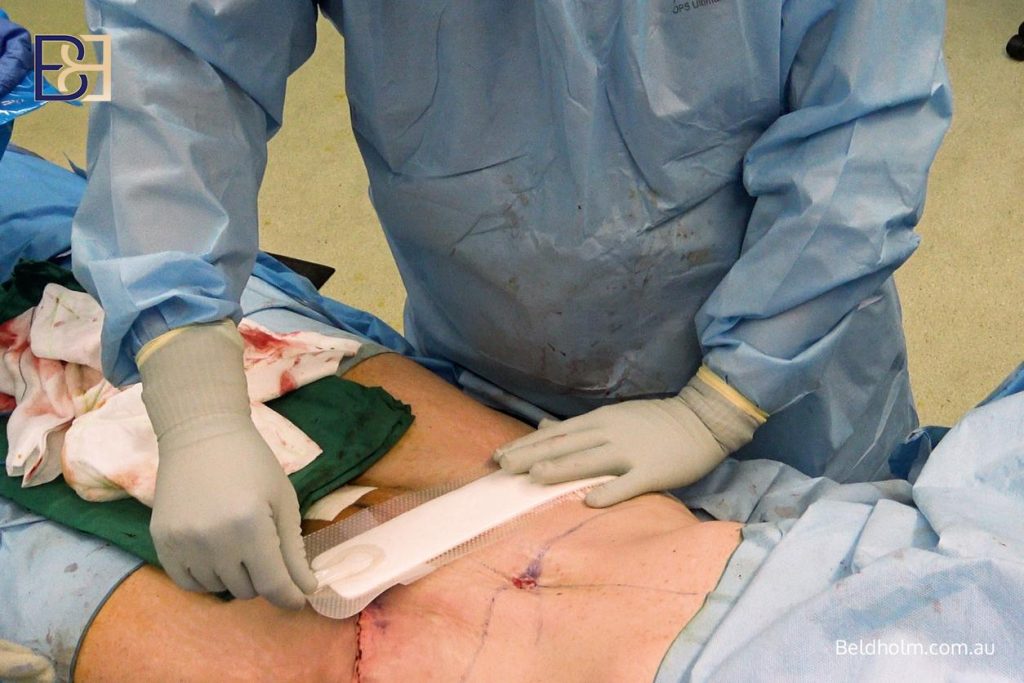
In the first weeks, the main job is to protect the healing line. That means keeping the dressing or tape on as instructed, keeping the area clean and dry, and sticking to your activity restrictions so the closure is not pulled on while it is still fragile. I also have patients wear a compression garment after surgery, which supports the tissues and helps manage swelling while everything settles.
Sun protection
This one can be overlooked, and it matters. A fresh scar that gets direct sun can darken permanently (1). For the first 12 months, I ask patients to keep the scar out of direct sun, either covered or protected with a high-SPF sunscreen once the wound has fully healed. UV is one of the few scar factors that is almost entirely in your hands.
Silicone
Silicone is the treatment with the strongest track record for scar treatment, available as a gel or as silicone sheets (4). Once the wound has fully healed, applying silicone over the scar for several months can help it stay flatter and paler, and it is particularly worth doing if you are prone to raised scarring. I will let you know when your wound is ready for it.
Scar massage
Once the scar has healed over, massaging it can help soften the tissue and reduce any tethering to the layers underneath. Timing matters here, so I will tell you when to start rather than have you begin too early on a wound that is still knitting together.
In-clinic treatments
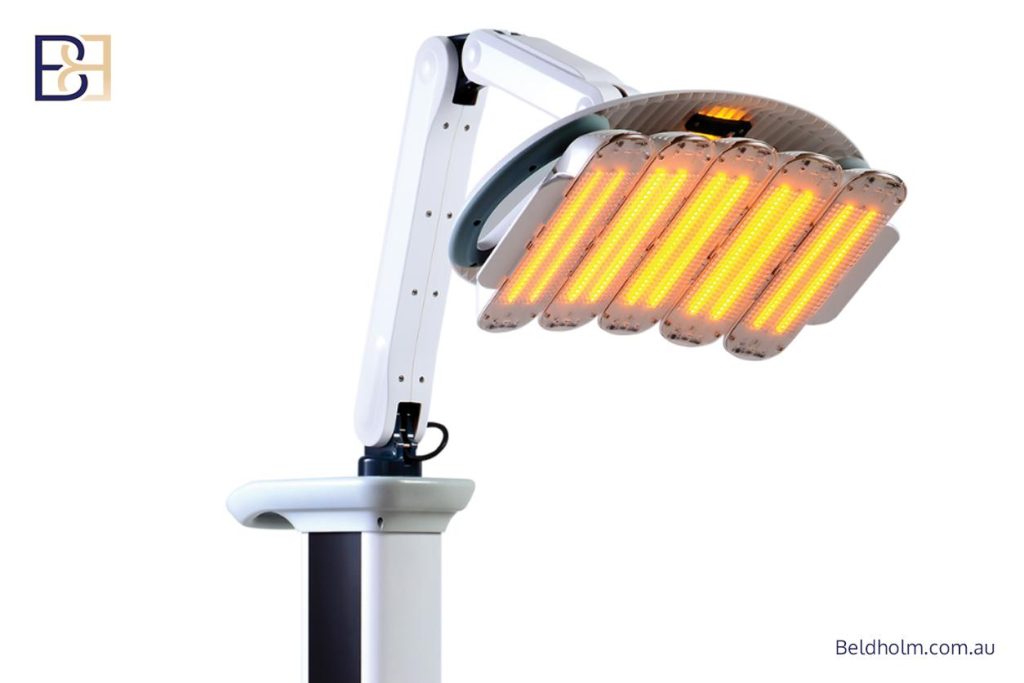
For scars that stay red, raised, or stubborn, there are treatments I can offer at the clinic. LED light therapy can help settle redness and the texture of a scar over a course of sessions. For thickened hypertrophic or keloid scars, steroid injections into the scar can help flatten them. Which of these is worth considering, if any, depends on how your scar behaves, and we work that out at your follow-up visits.
A realistic word on treatments
All of these can change how a scar looks and feels. None of them removes it. The honest aim is a flatter, paler, softer scar, and how much change you see varies from person to person.
Common questions about abdominoplasty scars
Will a tummy tuck (abdominoplasty) scar ever go away?
No. The scar is permanent. It usually fades and flattens over the first year or two, and it can be placed low so clothing covers it, but it does not disappear completely. Anyone who tells you a scar can be removed entirely is not being straight with you.
What does fibrosis after a tummy tuck (abdominoplasty) look like?
Fibrosis is firm scar tissue that forms under the skin as the deeper layers heal. You may feel it as a hard area, a ridge, or a firm patch around or above the scar line, and it can look slightly raised. It is common in the early months and usually softens over time. If an area stays firm or feels lumpy, bring it up at a follow-up so I can check it.
What happens if you lose weight after abdominoplasty?
The operation removes the loose skin you have at the time. It does not stop your body changing afterwards. If you lose a large amount of weight later, you can develop new loose skin, because the remaining skin can stretch and then deflate again. This is why I prefer patients to be at a stable weight before surgery. Small everyday fluctuations are not a problem.
Why is my tummy tuck (abdominoplasty) scar so high?
I plan and control where the lower incision sits, so the main horizontal scar is placed where we agreed before surgery. The part that is not always within my control is the old belly button site. In a full abdominoplasty (tummy tuck) the skin above the belly button is pulled down, and ideally the old belly button opening comes down far enough to be removed with the lower skin. Sometimes there is not quite enough loose skin to bring it all the way past the lower incision. When that happens, the old opening is closed at the midline, leaving a small vertical scar above the low horizontal line. That extra vertical scar is usually what people notice.
Can scarring be prevented?
No. Any abdominoplasty leaves a permanent scar, and after significant weight loss, it is a longer one. What can be influenced is how the scar looks. Careful closure, good aftercare, sun protection, and treatments like silicone all help it heal as a finer, paler line, but none of them prevents a scar from forming.
When should I think about scar revision?
Only once the scar has fully matured, which can take up to two years. If by then a section has healed wide, raised, or unevenly and it bothers you, scar revision is worth discussing. Revising too early, while the scar is still settling, tends to be counterproductive. Whether revision is appropriate is assessed individually.
Final conclusion
Scarring is the part of abdominoplasty I want patients to understand clearly before they decide anything. After significant weight loss, the scar is longer because more loose skin needs to be removed, and the pattern depends on where that skin sits. The scar is permanent. It fades, flattens, and can be placed low, but it does not disappear, and the way it heals differs from person to person.
What I can do is plan the incision carefully, close it to keep tension off the line, and support it through healing with sound aftercare and treatments where they help. What you can do is prepare well before surgery, protect the scar from the sun, and follow the aftercare. Which procedure suits your skin, and whether surgery is appropriate for you at all, are things I work through with you at consultation after a proper assessment.
References
- Monstrey S, Middelkoop E, Vranckx JJ, Bassetto F, Ziegler UE, Meaume S, et al. Updated scar management practical guidelines: non-invasive and invasive measures. J Plast Reconstr Aesthet Surg. 2014;67(8):1017-25.
- Manassa EH, Hertl CH, Olbrisch RR. Wound healing problems in smokers and nonsmokers after 132 abdominoplasties. Plast Reconstr Surg. 2003;111(6):2082-7.
- MacKay D, Miller AL. Nutritional support for wound healing. Altern Med Rev. 2003;8(4):359-77.
- O’Brien L, Jones DJ. Silicone gel sheeting for preventing and treating hypertrophic and keloid scars. Cochrane Database Syst Rev. 2013;(9):CD003826.