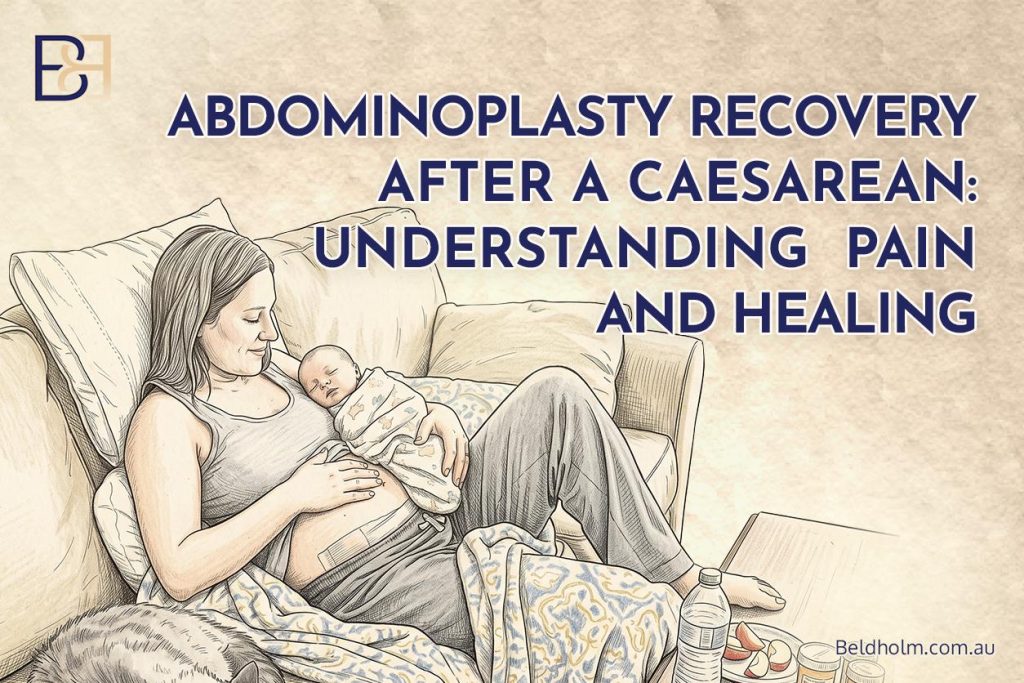
If you have had a caesarean, you already know what major abdominal surgery feels like. So when women come to see me about an abdominoplasty (tummy tuck), one of the first questions is usually how the recovery will compare. It is a fair thing to ask. For most women the caesarean is the only abdominal operation they have been through, so it is the natural yardstick.
In my practice I see a lot of women in the years after having children who are weighing up an abdominoplasty, and many have had one or more caesareans. The answer I give them is that the two operations are not really the same experience. They set out to do different things, the pain comes from different places, and recovery unfolds differently. Trying to rank one against the other as simply the worse of the two misses what actually matters, which is knowing what to expect and planning your recovery around it.
This article walks through where the discomfort comes from in each operation, why an abdominoplasty with muscle repair is often the more demanding recovery, and what you can do to prepare for it. It is general information meant to set realistic expectations. It is not a substitute for a consultation, and what is right for you can only be worked out after assessment.
Two different operations, not the same surgery
It helps to be clear about what each operation is for, because that is what shapes the recovery.
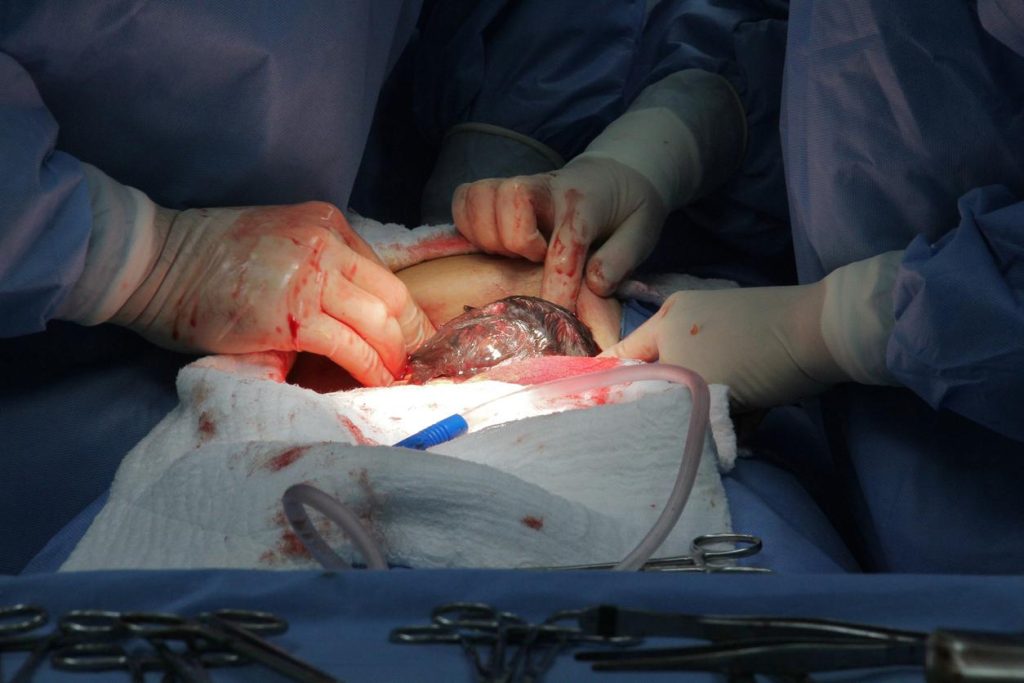
A caesarean is delivery surgery. The surgeon makes an incision low on the abdomen and works through the layers of the abdominal wall to reach the uterus and deliver your baby. It is a major operation, often done under time pressure, and your body is recovering from pregnancy and birth at the same time.
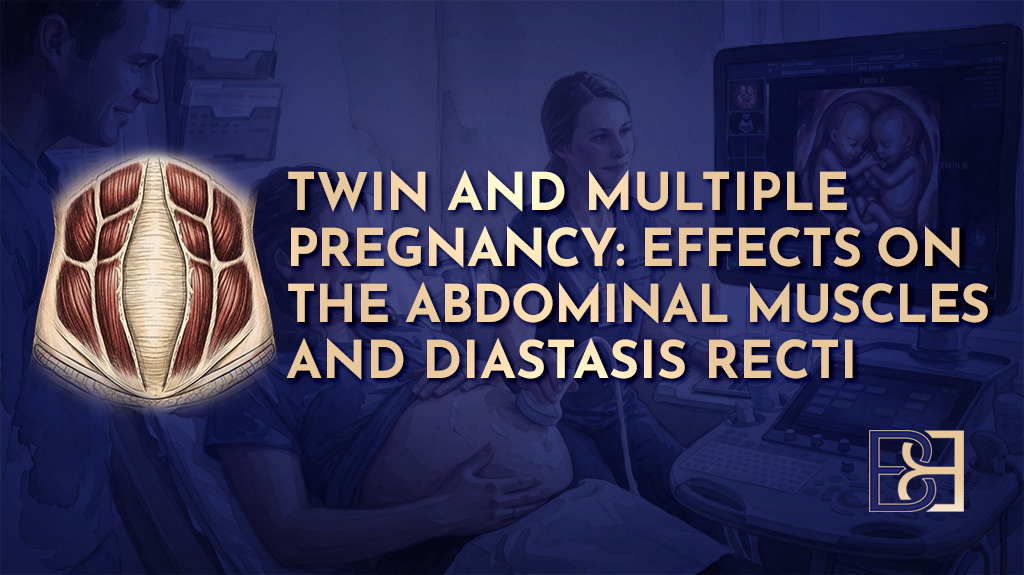
An abdominoplasty (tummy tuck) is a planned operation on the abdominal wall itself. It treats loose abdominal skin and, where it is present, diastasis recti (abdominal muscle separation), where the two halves of the abdominal muscle have stretched apart along the midline. This stretching during pregnancy is a normal change, and it does not always settle once the pregnancy is over. Research that followed women through pregnancy and the first year afterwards found that around one in three still had measurable muscle separation at 12 months postpartum (1). For some women it is associated with lower back discomfort and a sense that the core is not supporting them the way it used to.
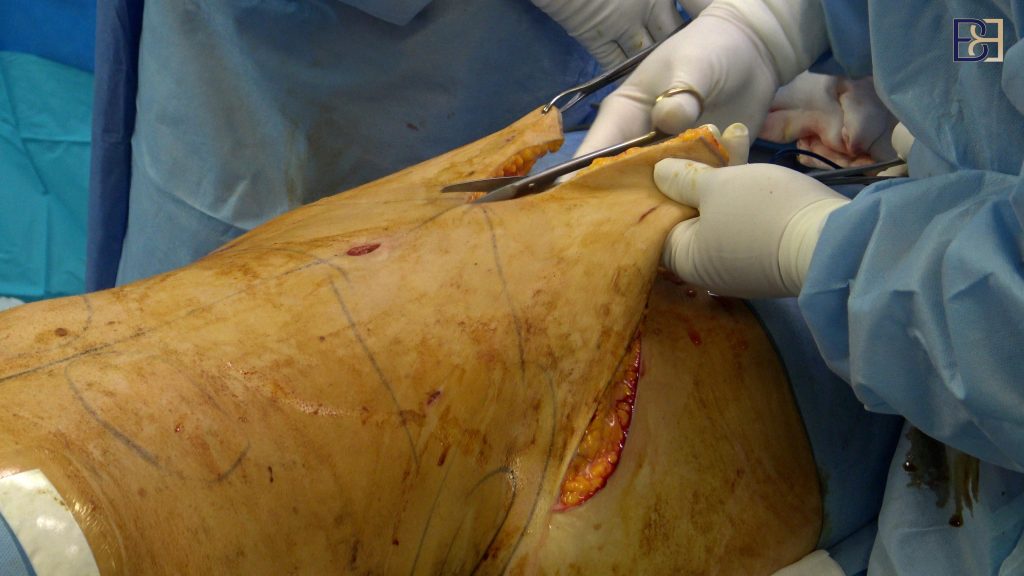
So the two operations happen in the same region, the lower abdomen, but they are doing different jobs. A caesarean opens the abdominal wall to deliver a baby. An abdominoplasty repairs and reshapes the abdominal wall and removes excess skin. That difference is the main reason the recoveries feel so different.
Where an abdominoplasty involves less work, the recovery tends to be shorter and the discomfort less pronounced. A limited abdominoplasty (mini tummy tuck), for example, treats only the skin below the navel and usually does not include muscle repair. Whether a smaller operation is enough for you, or whether muscle repair is needed, depends on your anatomy and is assessed at consultation.
Where the pain comes from in each operation
The pain after each operation has a different character, and understanding that is more useful than a single answer about which is worse.
Caesarean pain
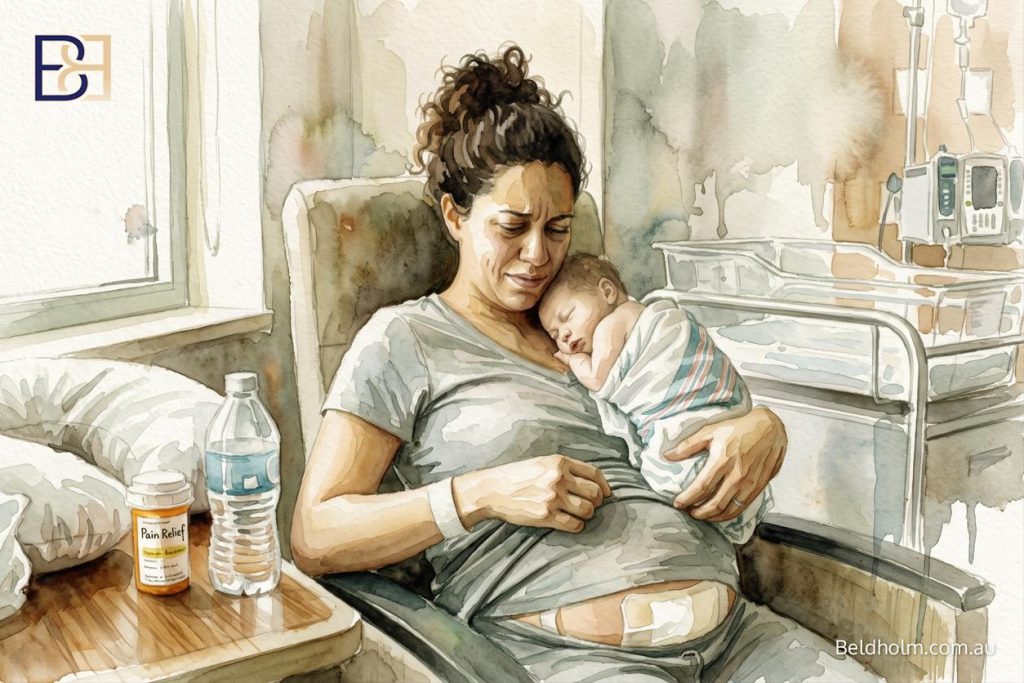
A caesarean is consistently reported as one of the more painful operations in the days straight afterwards, and the pain is often underestimated and undertreated (2). The discomfort comes from a few things at once:
- The incision through the layers of the abdominal wall.
- The uterus contracting back down to its normal size, which can cause cramping afterpains, particularly during breastfeeding.
- The demands of caring for a newborn around the clock while you are still healing.
Most of this settles over the first few weeks. A smaller number of women go on to have pain that lingers for months, which is one of the reasons good pain control in the early days matters (3).
Abdominoplasty pain
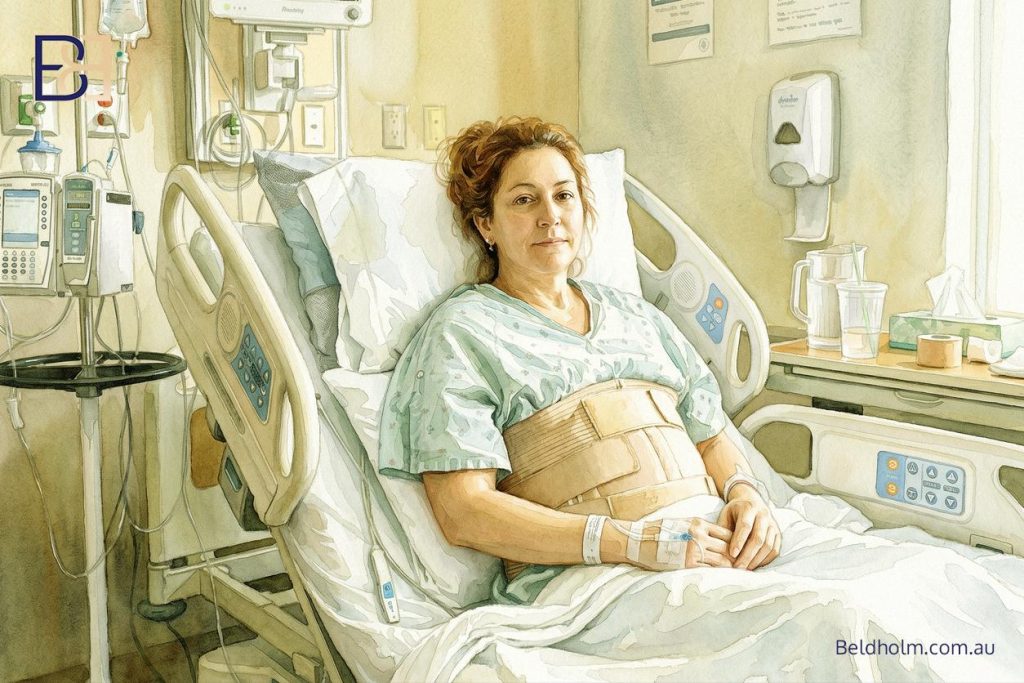
The pain after an abdominoplasty (tummy tuck) is described differently. When the abdominal muscles are repaired, many women describe a deep, tight, pulling sensation across the abdomen rather than a sharp incision pain. That tightness comes from bringing the separated muscles back together, and it is most noticeable in the first week or two when you try to stand upright or move from lying to sitting.
The skin work adds its own part to the recovery. Lifting and re-draping the abdominal skin affects the small nerves in the area, so numbness, tingling, or altered sensation across the lower abdomen is common early on and can take months to settle. Some change in sensation can be long lasting.
Where ultrasound-assisted suction lipectomy (VASER liposuction) is used alongside the abdominoplasty to contour areas such as the flanks and waist, it adds its own soreness. Women often describe a deep, bruised ache in the treated areas, with swelling and bruising that build over the first few days and then settle over a couple of weeks. This tends to be more of a tenderness than a sharp pain, but it adds to the overall load in the early recovery.
Pain after an abdominoplasty is managed with a combination of approaches rather than one drug. Regional nerve blocks placed at the time of surgery, such as transversus abdominis plane blocks, reduce pain and the amount of opioid pain medication needed afterwards (4). Combining these blocks with regular non-opioid pain relief and other measures is now standard practice, and it helps many women move earlier and rely less on opioids (5).
Why abdominoplasty recovery is often more demanding

Many women who have been through both tell me the abdominoplasty recovery asked more of them than their caesarean did, particularly when muscle repair was part of the operation. There are practical reasons for that, and I would rather you hear them before surgery than discover them afterwards.
- Muscle repair takes time to settle. Bringing the separated abdominal muscles back together creates a tightness that limits how upright you can stand for the first couple of weeks. Many women are hunched at first and straighten up gradually.
- Drains and a compression garment. Drains are often used to manage fluid that can collect under the skin, and a compression garment is worn to support the abdomen and reduce swelling. Neither is painful as such, but both add to how foreign the first weeks can feel.
- Swelling lasts a while. Visible swelling settles over weeks, while the deeper swelling and scar maturation continue over months.
- Recovery happens mostly at home. After a caesarean you are in hospital with midwifery support and pain relief on hand. After an abdominoplasty the hospital stay is shorter and most of the recovery happens at home, so the support you organise in advance makes a real difference.
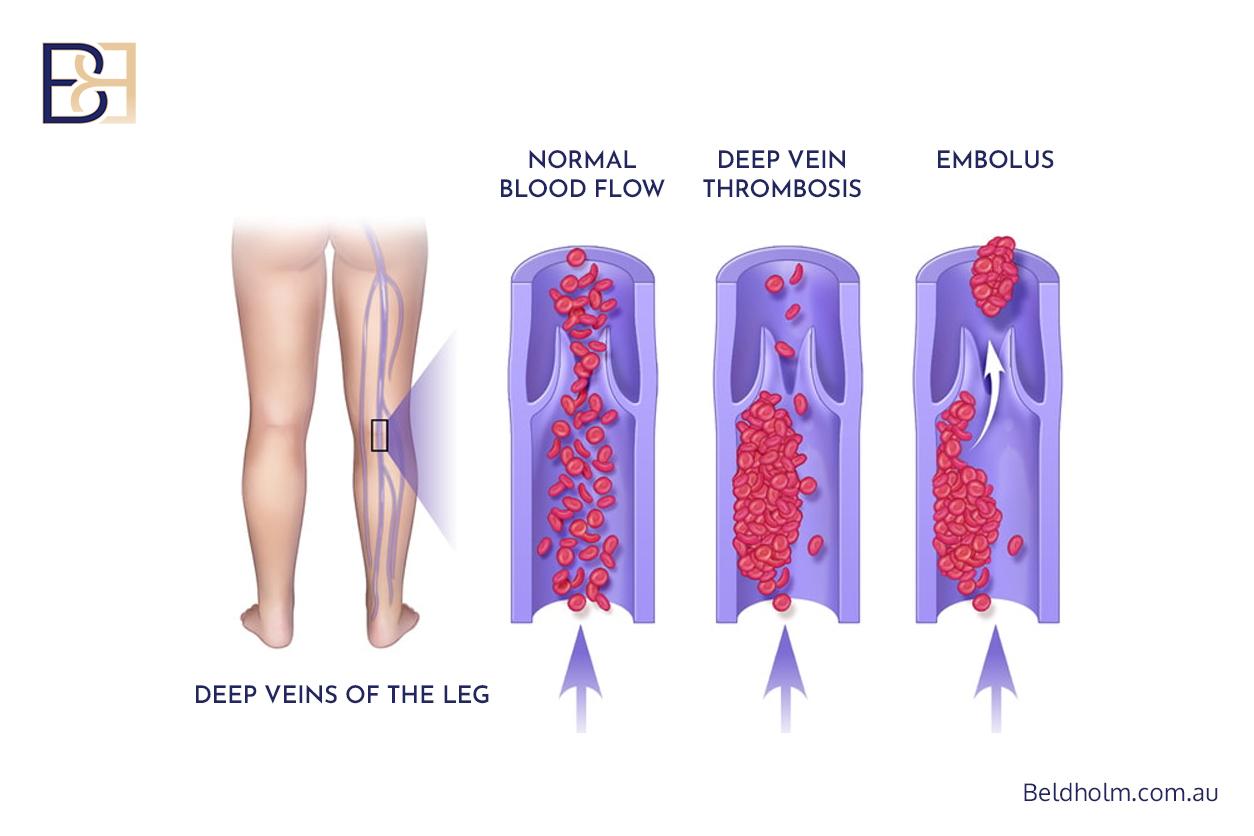
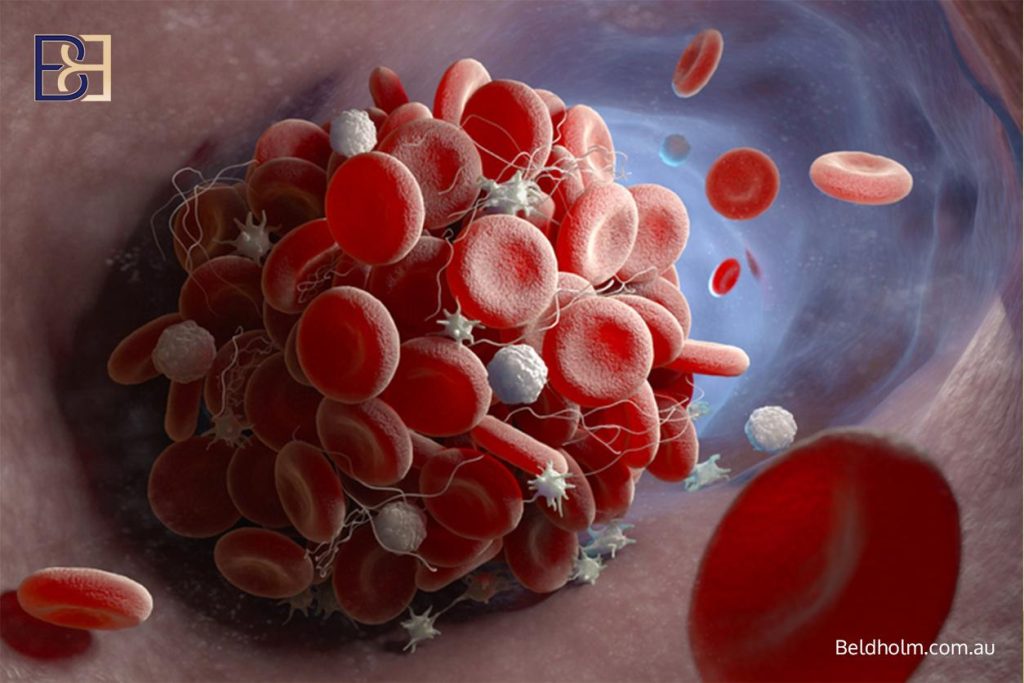
There is also an important safety consideration. An abdominoplasty, particularly with muscle repair and the period of reduced movement that follows, carries a recognised risk of blood clots forming in the legs, deep vein thrombosis (DVT), which can travel to the lungs (6). This is exactly why you are encouraged to start short walks soon after surgery, and why I assess each woman’s clot risk individually and plan her thromboprophylaxis myself. Moving early is not about rushing your recovery. It is a deliberate part of reducing that risk.
None of this is meant to put you off. A larger operation is a larger physiological event, and the recovery should not be underestimated.
Recovering while caring for young children

Most women considering an abdominoplasty after pregnancy still have young children at home, and this is a real planning issue rather than a small detail.
In the first weeks after surgery there are limits on lifting, bending, and twisting while the muscle repair settles. Picking up a toddler, lifting a car capsule, or carrying the shopping are the kinds of everyday movements that need to be handed off for a while. Pushing through these limits too early risks the repair and can set your recovery back.
Practical things that help:
- Arrange hands-on help at home for at least the first one to two weeks, and ideally longer.
- Plan in advance who will do the lifting, the school runs, and the night settling.
- Set up your recovery space so the things you use often are within close reach.
I would rather a woman delay her surgery until she has the right support in place than attempt it without help. Planning for this is part of preparing well, and it is something we talk through at consultation.
What affects how much pain you feel
Two women having the same operation can have quite different experiences, so it is worth understanding what drives that variation.
- Your own pain threshold. People genuinely feel and process pain differently, and that carries over to how recovery feels.
- The extent of the operation. A limited abdominoplasty (mini tummy tuck) without muscle repair is a smaller operation than a full abdominoplasty with muscle repair, and the recovery reflects that. Adding ultrasound-assisted suction lipectomy changes the picture again.
- Your general health. Overall fitness, weight, and any other medical conditions all play a part.
- Your pain management plan. A planned, multimodal approach to pain relief makes a measurable difference to comfort and to how early you can move (5).
- How well pain is controlled early. Poorly managed pain in the first days is itself a risk factor for pain that lingers longer, after caesarean and abdominal surgery generally (3).
This is also why I am cautious about any blanket promise that one operation will be easier than another for you specifically. Recovery varies, and the most useful thing we can do is plan yours around your own circumstances.
Your caesarean scar and incision planning
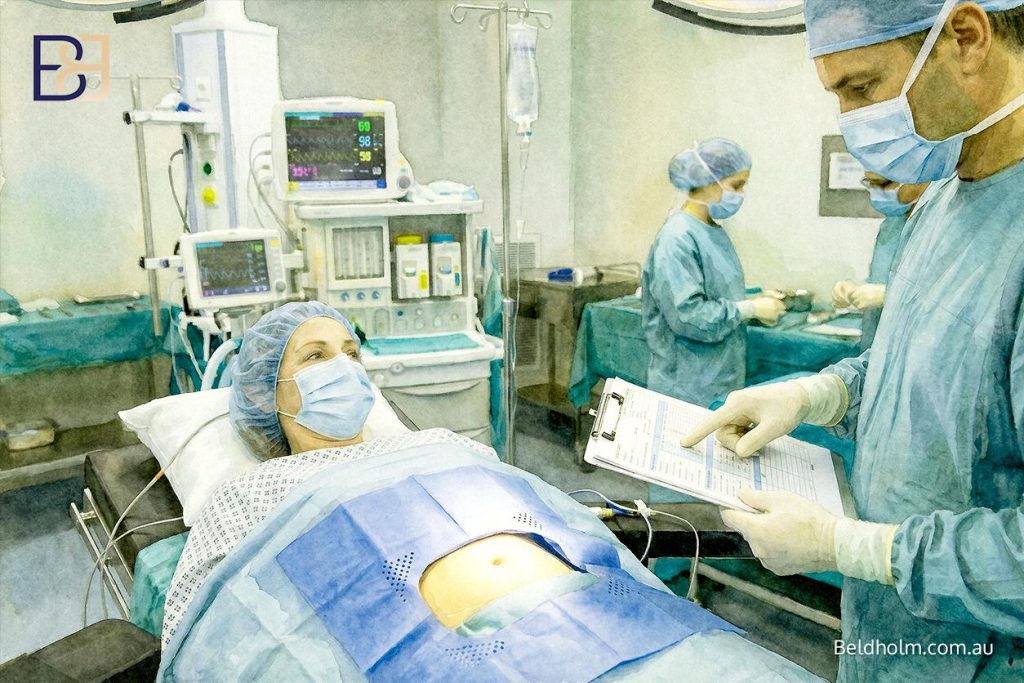
A common and sensible question is what happens to the existing caesarean scar.
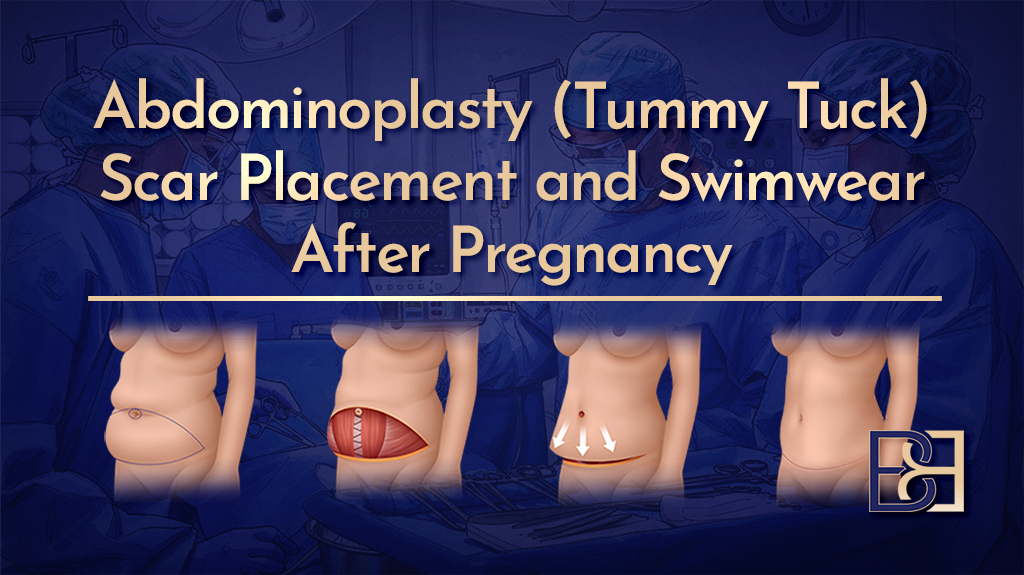
The abdominoplasty incision sits low across the lower abdomen, in a similar region to a caesarean scar, though it is usually longer and positioned to sit below the underwear line. In many cases the old caesarean scar can be removed or incorporated as part of the abdominoplasty, so you are not left with two separate scars in the same area.
A few things I assess for each woman:
- The position and quality of the existing caesarean scar, including whether it is raised, tethered, or creating a step in the skin.
- How the lower abdominal skin sits, including any fold of skin that rests over the caesarean scar.
- How the abdominoplasty scar is planned and positioned to sit low, within the limits of your anatomy.
Scars are permanent, and how a scar matures varies from one person to the next. I plan incisions carefully, but no surgeon can promise a particular scar result. Scar location, likely appearance, and scar management are part of what we discuss at consultation.
Timing: breastfeeding and future pregnancies
When to have an abdominoplasty after having children is a clinical timing question, and it is assessed for each woman individually rather than set as a fixed number of months.
In general I plan an abdominoplasty once breastfeeding has finished and the abdominal wall has had time to settle after the most recent pregnancy. The abdomen keeps changing in the months after birth and after breastfeeding ends, and operating before it has settled can affect the result.
I also generally recommend that surgery is planned once your family is complete. A future pregnancy stretches the abdominal skin and can separate the repaired muscles again, which can undo part of the result. That does not mean a later pregnancy is unsafe after an abdominoplasty, but it can change the outcome, and it is better to factor that in when planning the timing than to discover it afterwards.
There is no single right interval that applies to everyone. The right time for you depends on your recovery from pregnancy, whether you are still breastfeeding, your plans for more children, and your general health. We work this out together at consultation.
Preparing for a smoother recovery
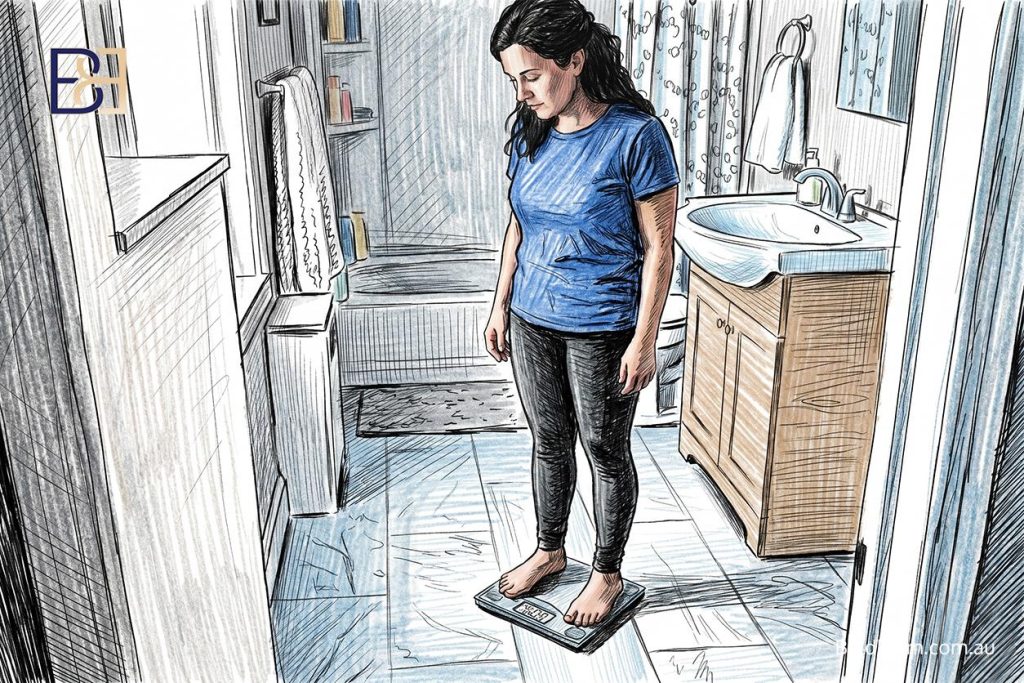
A larger operation places more demand on your body, so preparing well matters. Good preparation does not remove the discomfort of recovery, but it supports healing and helps you move through it.
A few things make a difference:
- Be in good general health going in. A stable weight, managing any ongoing medical conditions with your GP, and eating well all support healing.
- Stop smoking well before surgery. Smoking raises the risk of wound healing problems after an abdominoplasty, so stopping ahead of time matters.
- Sort out your support at home. As covered earlier, the lifting and movement limits in the first weeks are real, so having help lined up before surgery is part of preparing well.
- Follow the medication advice you are given. If you take aspirin or a blood thinner, do not stop it on your own. We plan any changes to these together and well in advance, because some women need to continue them through surgery.
Standard pre-operative checks and tests are arranged before your surgery, and what you need is worked out at consultation and in the lead-up to your operation.
Risks of abdominoplasty
All surgery carries risk, and an abdominoplasty (tummy tuck) is a major operation. The list below is not exhaustive, and the risks that matter most for you depend on your health and the extent of your operation. We go through these in detail at consultation as part of informed consent.
- Bleeding and haematoma, a collection of blood under the skin that sometimes needs further treatment.
- Seroma, a collection of fluid under the skin, which is part of why drains are used.
- Infection, which may need antibiotics or, less often, a return to theatre.
- Wound healing problems, including delayed healing or areas of skin that heal slowly. The risk is higher in smokers.
- Blood clots, deep vein thrombosis (DVT) and pulmonary embolism, as discussed earlier. This risk is taken seriously and managed with early movement and individualised thromboprophylaxis (6).
- Altered sensation, with numbness or changed feeling across the lower abdomen that is common early and can be long lasting.
- Scarring, which is permanent and varies in how it matures.
- Persistent pain in a small number of women.
- The need for revision surgery in some cases.
Where ultrasound-assisted suction lipectomy (VASER liposuction) is combined with the abdominoplasty, it adds its own risks, including bruising, contour irregularity, and changes in skin sensation in the treated areas.
Recovery and results vary from one woman to the next. No surgeon can guarantee a particular outcome, and whether surgery is appropriate for you is determined at consultation after assessment.
My perspective as a specialist surgeon
When women ask me how an abdominoplasty will compare to their caesarean, I set out what to expect. For many women the abdominoplasty recovery, particularly with muscle repair, asks more of them in the early weeks than their caesarean did. The deep tightness from the repair, the drains and garment, the swelling, and the fact that most of the recovery happens at home all add up.
That is not a reason to avoid it. It is a reason to go in with clear expectations and a plan. In my experience the women who manage their recovery best are the ones who understood what was coming, organised help at home, and gave their body the time it needed.
What is right for you, including whether a full abdominoplasty with muscle repair or a smaller limited abdominoplasty (mini tummy tuck) suits your anatomy, and when the timing is right relative to breastfeeding and any future pregnancy, can only be worked out after assessment.
References
- Sperstad JB, Tennfjord MK, Hilde G, Ellstrom-Engh M, Bo K. Diastasis recti abdominis during pregnancy and 12 months after childbirth: prevalence, risk factors and report of lumbopelvic pain. Br J Sports Med. 2016;50(17):1092-6.
- Assessing the experience and management of acute postoperative pain from caesarean delivery: a multi-centre cohort study. J Clin Med. 2025;14(13):4638.
- Martinez-Rodriguez D, et al. Acute postoperative pain after caesarean section, intensity and management: a cohort multicentre study. Eur J Pain. 2026;30(1):e70183.
- Analgesic efficacy of nerve blocks after abdominoplasty: a systematic review. Aesthet Surg J. 2020;40(10):1106-15.
- Innovations in pain management for abdominoplasty patients: a systematic review. 2024.
- Utility of the Caprini risk assessment model in guiding venous thromboembolism prophylaxis after abdominoplasty. J Plast Reconstr Aesthet Surg. 2025.