A fair number of the post weight loss patients I see for an abdominoplasty (tummy tuck) also turn out to have a hernia in the abdominal wall. Sometimes they already know about it. Often it is picked up when I examine them, or on a scan, while we are planning their surgery.
A hernia is a different problem from loose skin. It is a gap in the muscle or fascia of the abdominal wall that lets tissue from inside push through. Because the operation to remove loose skin already opens up the same area, a hernia that is present can often be repaired during the same procedure. Whether that is the right plan for you is a clinical decision, and one I make patient by patient.
In this article I explain why hernias are common after major weight loss, how I tell a hernia apart from muscle separation, how I assess and repair one, and what it means for your recovery. I have written it for post weight loss patients, so the focus stays on what matters for this group rather than general hernia or tummy tuck (abdominoplasty) advice.
Why abdominal wall hernias are common after significant weight loss
There are a few reasons hernias turn up so often in the patients I see after major weight loss.
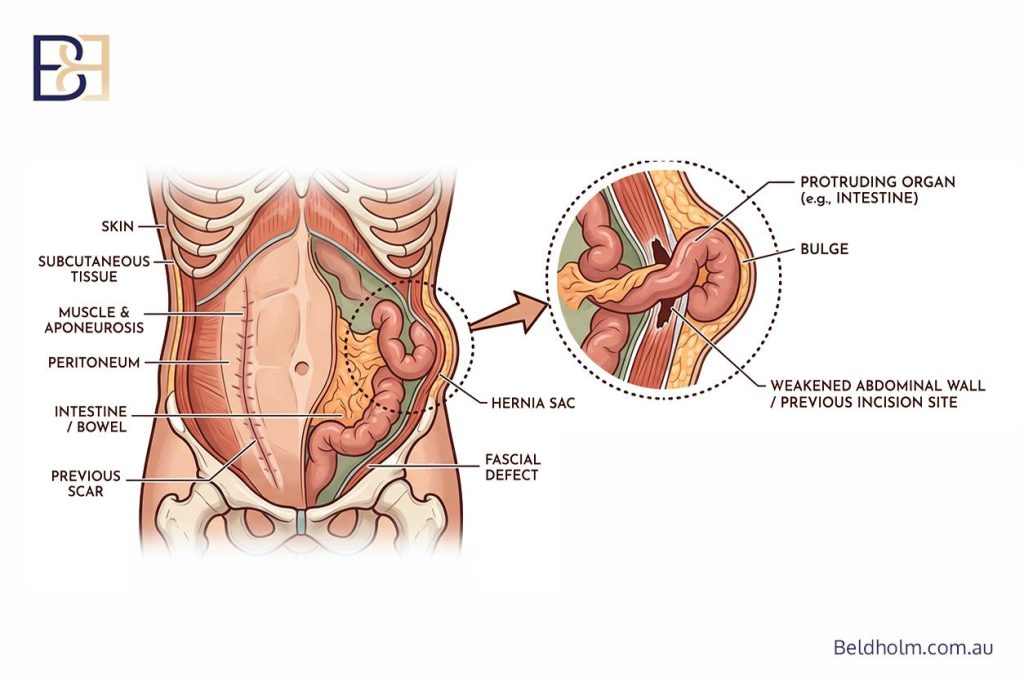
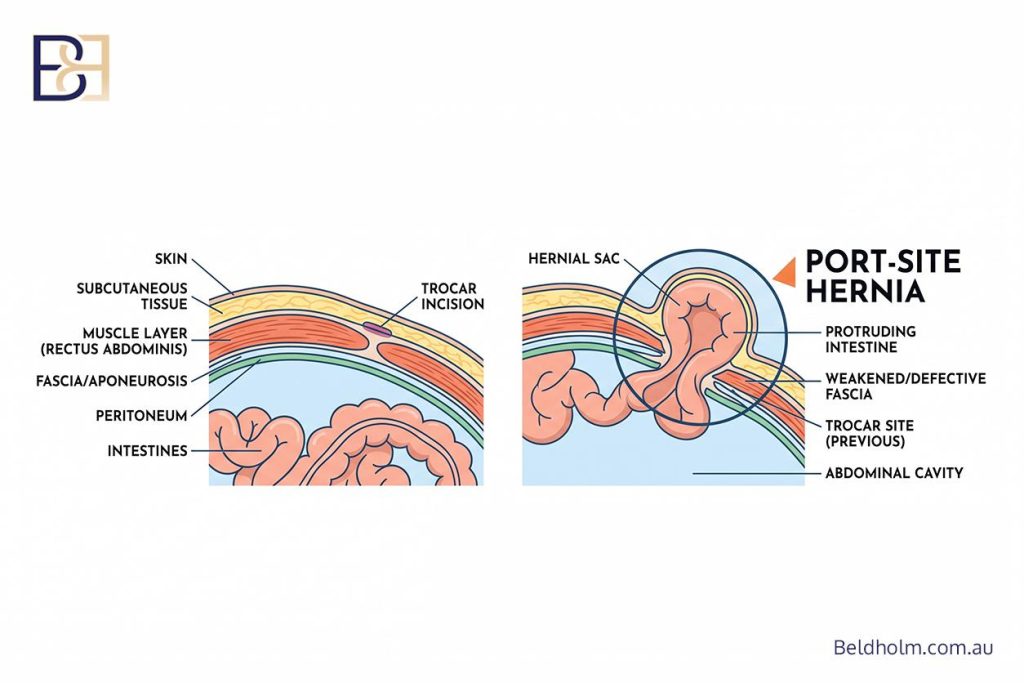
Previous abdominal surgery. Many post weight loss patients have had prior abdominal surgeries to get them there, most often weight loss surgery such as a gastric sleeve, bypass or band. Any operation on the abdomen leaves a weak point where the wall was opened. A hernia that later forms at one of those old surgical sites is called an incisional hernia, or a port-site hernia when it forms at one of the small keyhole openings used in laparoscopic surgery. These are different from an umbilical hernia, and they are common in this group (1).
A hernia that was always there, now uncovered. Small umbilical or upper abdominal hernias are common and often sit hidden under a layer of fat for years. As the weight comes off, the fat that was covering the hernia goes with it, and it becomes noticeable or is felt for the first time. The hernia did not appear with the weight loss.
Years of pressure on the abdominal wall. Carrying excess weight for a long time stretches the abdominal wall and raises the pressure inside the abdominal area. Over time that can weaken the wall and open up the weak points, the weakened areas where it is thinnest, the belly button (umbilicus) being the most common. Anything that repeatedly raises that pressure, such as chronic coughing or straining, adds to it.
Tissue quality, weight loss, and the nutritional gaps that often come with it, can affect how strong the body’s connective tissue is. Correcting those gaps before surgery is part of how I prepare patients.
What a hernia is, and how it differs from muscle separation
These two get mixed up a lot, including in a fair bit of what is written online, so it helps to be clear about the difference. They are not the same thing, and they are not treated the same way.
A hernia is a hole
A hernia occurs when there is an actual gap in the fascia, the strong fibrous layer that holds the abdominal wall together. Through that gap, tissue pushes out from inside the abdomen, usually fat and sometimes a loop of bowel. The defect has a defined edge you can often feel. Because it is a true hole, it does not close on its own, and it can slowly get bigger over time.
Muscle separation (diastasis recti) is a stretch, not a hole
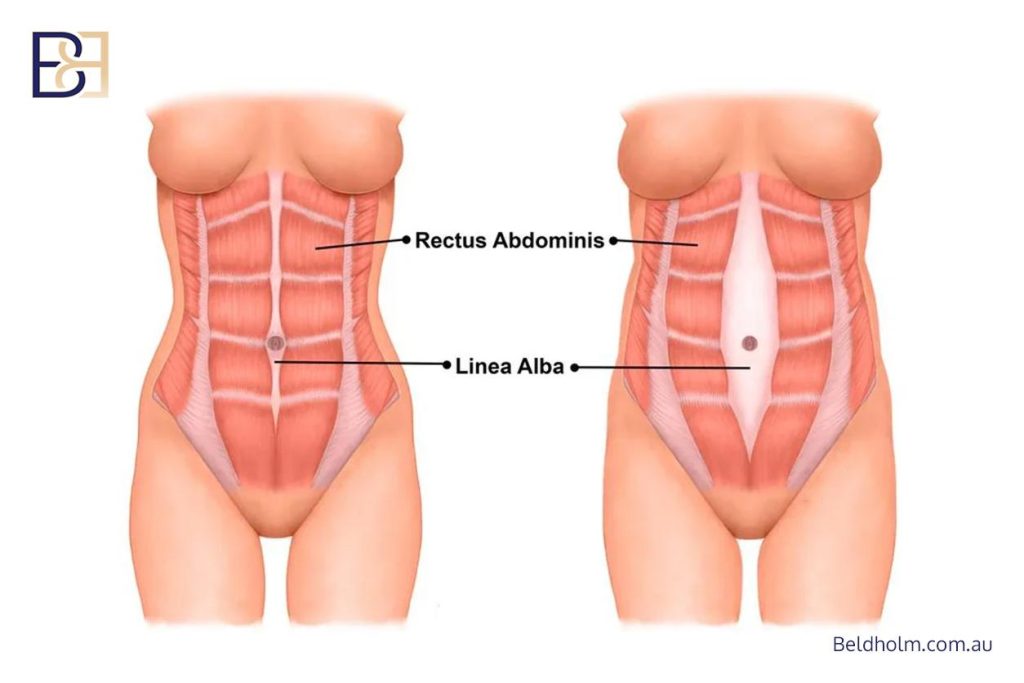
Muscle separation (diastasis recti) is different. Here the two columns of the long abdominal muscles, the ones that run down the front of your tummy, have drifted apart, and the band of tissue between them has stretched and thinned. This is what people mean by separated abdominal muscles, and the wall is weakened rather than broken open. The wall is still intact. There is no hole. What you see is a ridge or doming down the midline when you tense, rather than a discrete lump.
This is mostly something I see after pregnancy, where carrying a baby stretches that midline tissue. It is far less of a feature in post weight loss patients. Many of the people I see after major weight loss have no meaningful muscle separation at all, which is why I do not treat muscle repair as a routine part of every abdominoplasty (tummy tuck) in this group. I decide it on what I actually find.
Why the difference matters
You can have a hernia, muscle separation, both together, or neither. They are assessed separately and managed separately:
- A hernia is a defect that needs to be closed, with stitches or mesh.
- Muscle separation, where it is present and significant, may be tightened with internal sutures, what is called muscle repair.
Sometimes a hernia sits within an area of muscle separation (diastasis recti), and I deal with both during the same operation.
Types of abdominal wall hernia I see in post weight loss patients
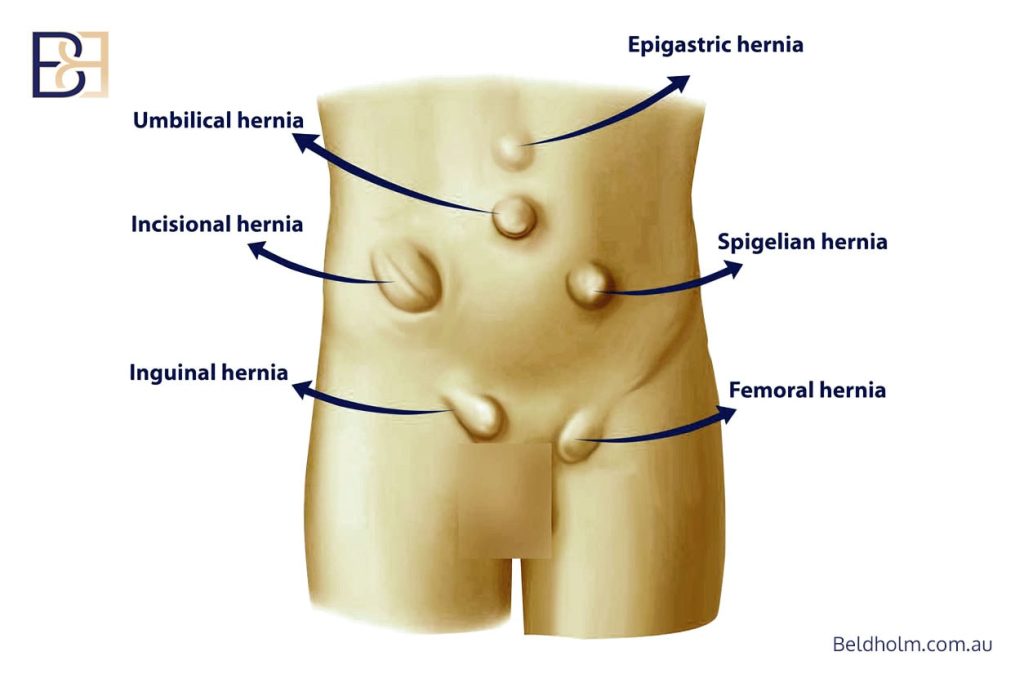
A hernia is named for where it sits. These are the ones that come up most often in my post weight loss patients.
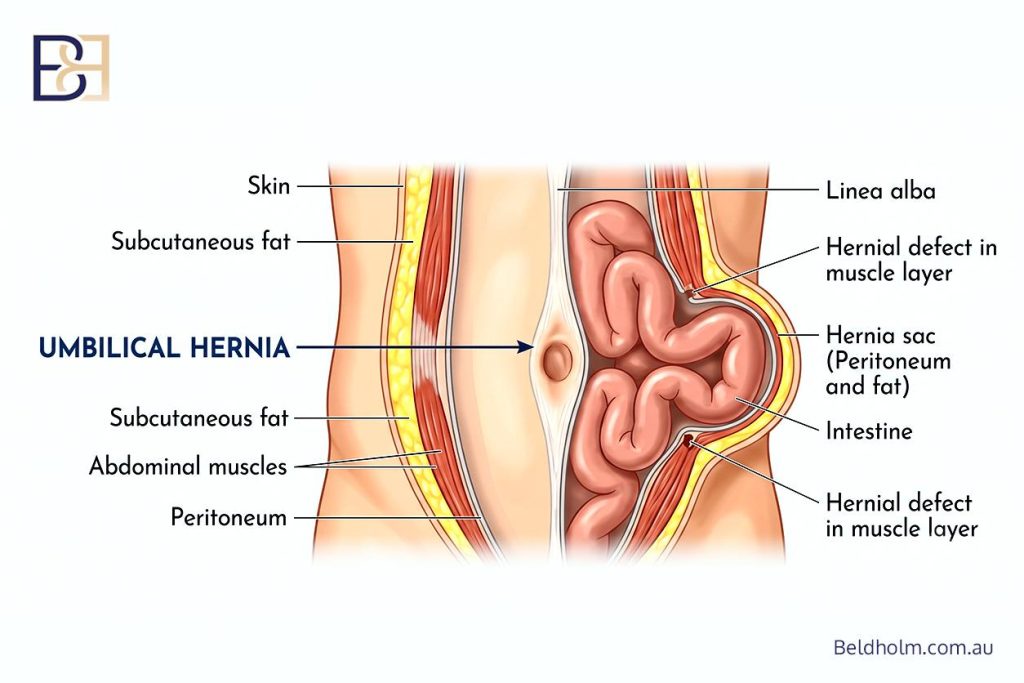
Umbilical hernia
A defect at or right beside the belly button (umbilicus). This is the most common one I see, because the umbilicus is a built-in weak spot in the abdominal wall.
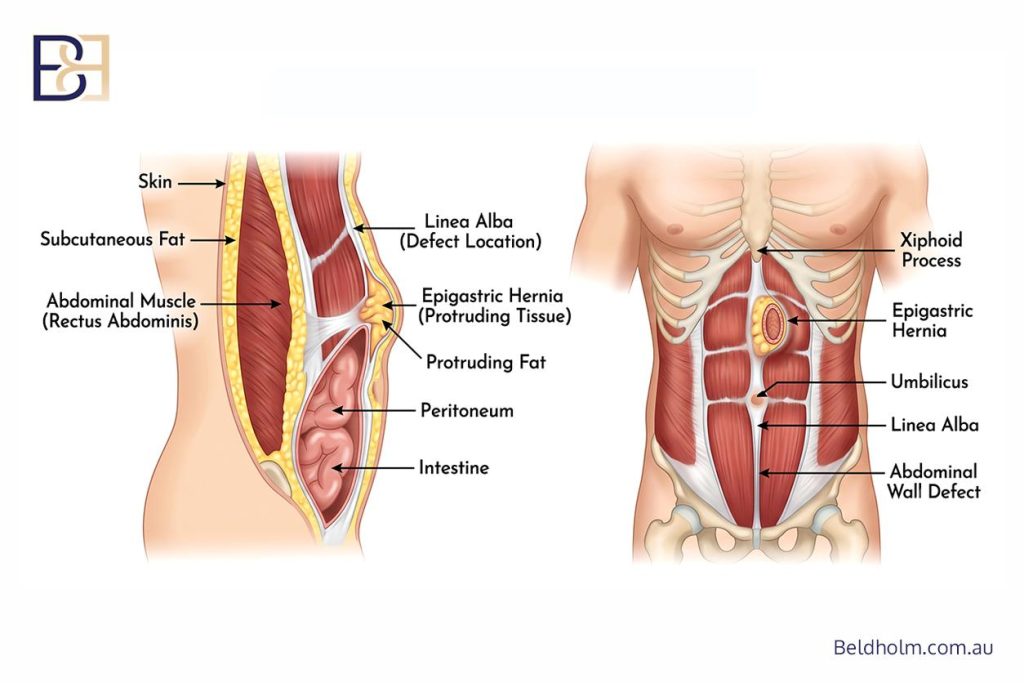
Epigastric hernia
A defect in the midline above the umbilicus, somewhere between it and the breastbone. These are often small, and there can be more than one.
Incisional hernia
A defect at the site of a previous abdominal operation, such as the scar from open weight loss surgery. The old repair has given way and left a gap.
Port-site hernia
A type of incisional hernia at one of the small keyhole openings used in laparoscopic surgery.
Most of these sit in the front and middle of the abdominal region, the same area I work through during an abdominoplasty (tummy tuck). That is why they can often be repaired at the same time.
Other hernias
A couple of others come up less often:
- Groin hernias (inguinal and femoral). These sit low in the groin. The large incision I make for an abdominoplasty (tummy tuck) gives me direct access to this area, so I can expose and repair a groin hernia during the same operation.
- Spigelian hernia. An uncommon defect along the side of the abdominal wall. These can be hard to see from the front, so they usually need a laparoscopic (keyhole) approach. When one is present, I can repair it laparoscopically as part of the same operation.
Whatever type is present, the principle is the same. I find it, work out its size and where it sits, and decide whether it is best repaired during your abdominoplasty (tummy tuck) or on its own.
Symptoms, and why a hernia should be assessed rather than ignored
What you might notice
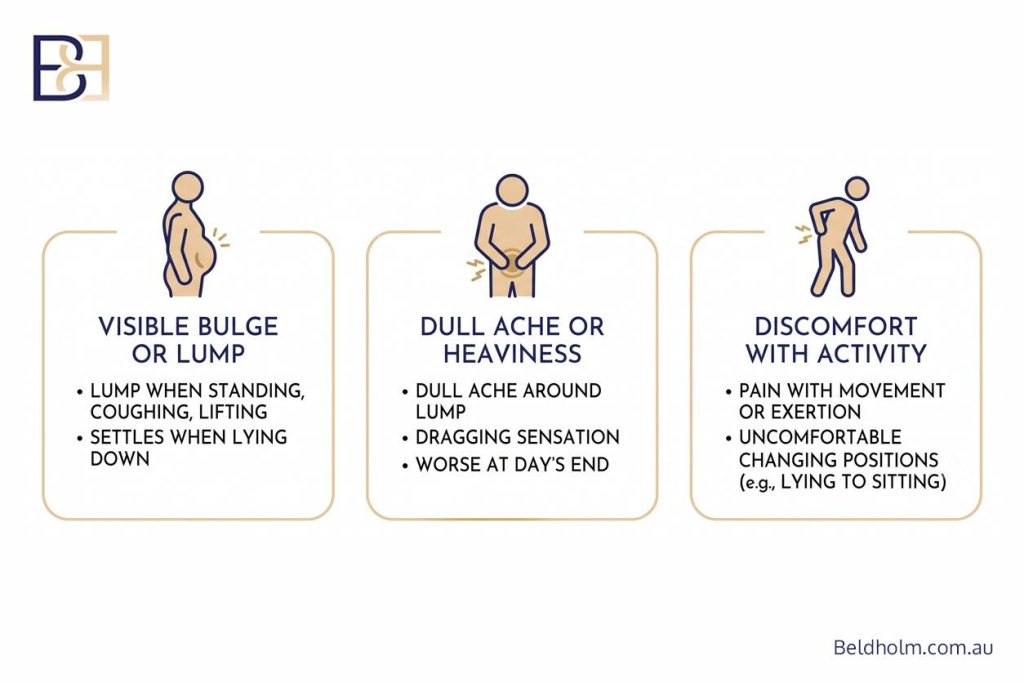
Hernias vary. Some cause obvious symptoms, others sit quietly for years. Common things patients describe are:
- A noticeable lump that comes up when you stand, cough, lift or strain, and settles when you lie down.
- A dull ache, dragging or heaviness around the lump, often worse at the end of the day.
- Discomfort with activity, or when you go from lying down to sitting up.
Plenty of hernias cause no symptoms at all. I often find a small one on examination that the patient had no idea was there.
Why I would rather not leave one
A hernia is a hole, and a hole does not heal itself. Left alone, the defect tends to stay the same or slowly widen, and more tissue can work its way through over time.
The reason this matters beyond the protrusion is the small risk of something getting stuck. If a piece of fat or bowel pushes through and cannot slide back, that is called incarceration. If its blood supply is then cut off, that is strangulation, and it becomes an emergency that needs a surgical procedure straight away. This is uncommon, but it is why a hernia is a medical problem to be assessed rather than something to wait on. Repairing it helps the function of the abdominal wall and removes that risk.
Why it matters before an abdominoplasty (tummy tuck)
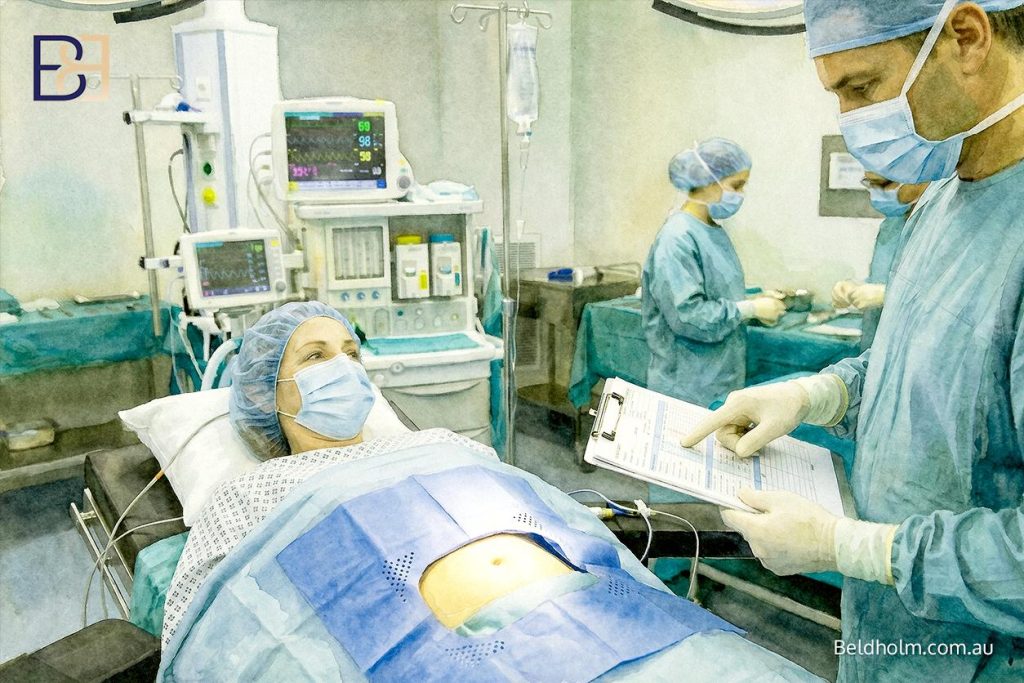
There is also a practical reason I want to know about a hernia before your surgery. The operation involves lifting the skin and working on the abdominal wall. Knowing exactly where a hernia is, and how big it is, lets me plan the repair properly and avoid surprises in theatre.
How I assess a hernia before an abdominoplasty (tummy tuck)
Working out whether a hernia is present, and what sort, starts at your consultation and sometimes involves a scan.
History and examination
I begin by asking about your medical history. Previous surgeries, including abdominal or weight loss surgery, any lumps you have noticed, and whether you get discomfort all point me towards a hernia and where to look.
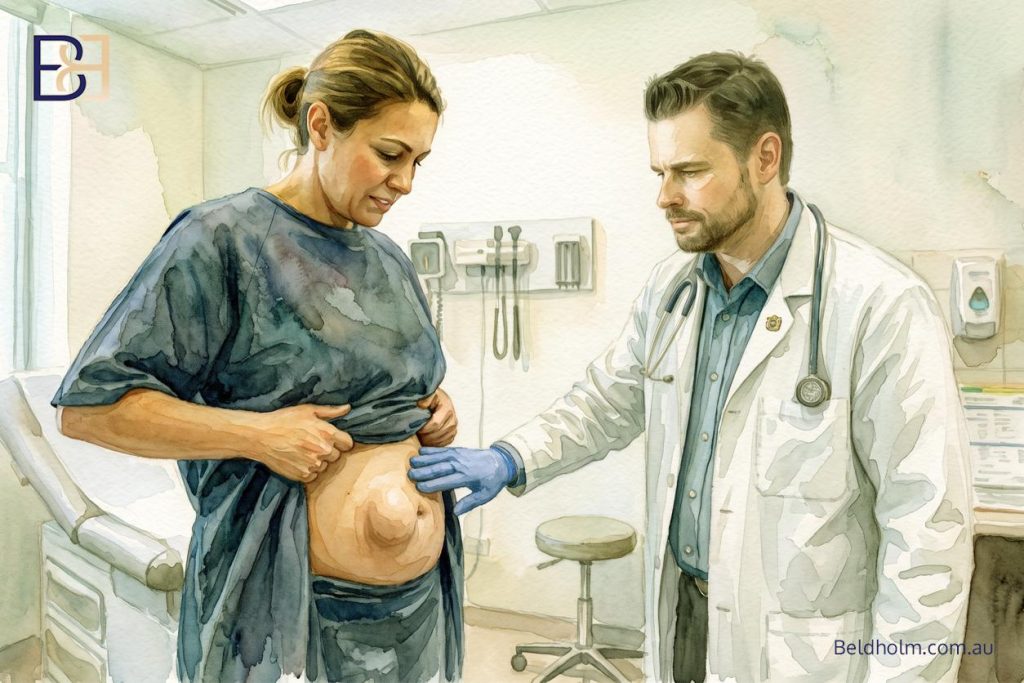
Then I examine you, both lying down and standing up. Standing often makes a hernia more obvious, and asking you to cough or tense your tummy lets me feel the edge of the defect, judge its size, and check whether the contents slide back in or stay out. A lot of umbilical and small midline hernias can be diagnosed on examination alone.
When I arrange a scan
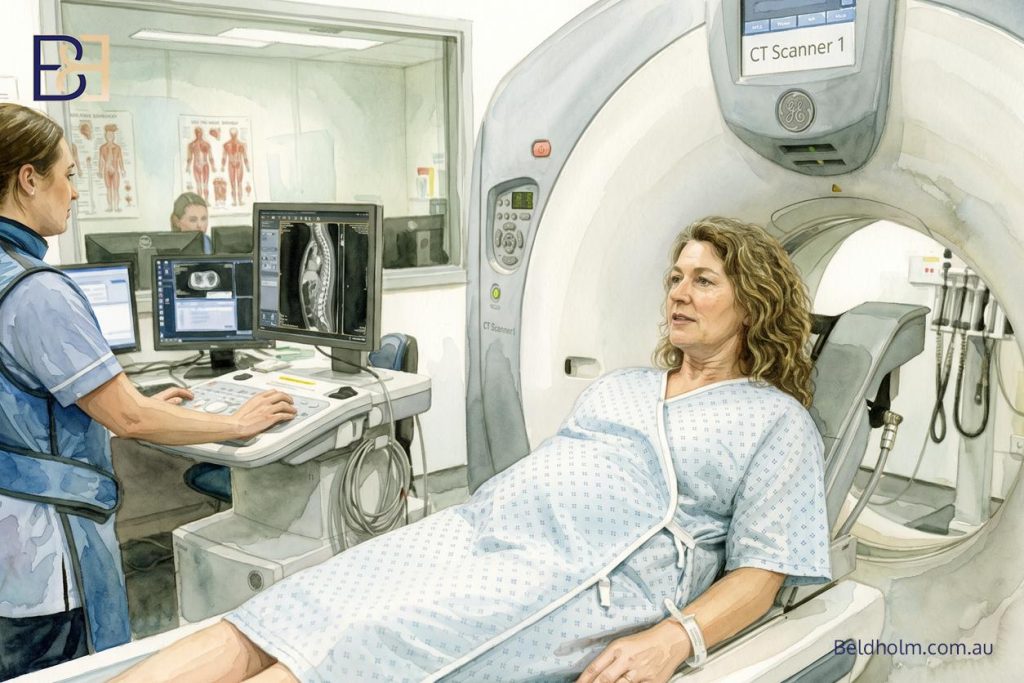
Not every hernia needs imaging, but I order it when it will change my plan. Usually that means:
- An ultrasound for a small hernia where I want to confirm the defect and watch it move when you strain.
- A CT scan for a larger or incisional hernia, when there is more than one defect, or when I need a clear map of the abdominal wall before planning the repair.
A scan also picks up hernias that are hard to feel, such as a Spigelian hernia along the side of the wall.

Putting it together for your operation
Once I know what is there, I can plan properly. The size and position of a hernia tell me what surgical repair suits it, whether stitches or mesh make sense, where any mesh should sit, and how to protect the belly button (umbilicus) and its blood supply during the operation. Whether to repair a large or complicated hernia alongside your abdominoplasty (tummy tuck), or handle it separately, is a decision I make for each patient.
Repairing a hernia during an abdominoplasty (tummy tuck): why the access helps
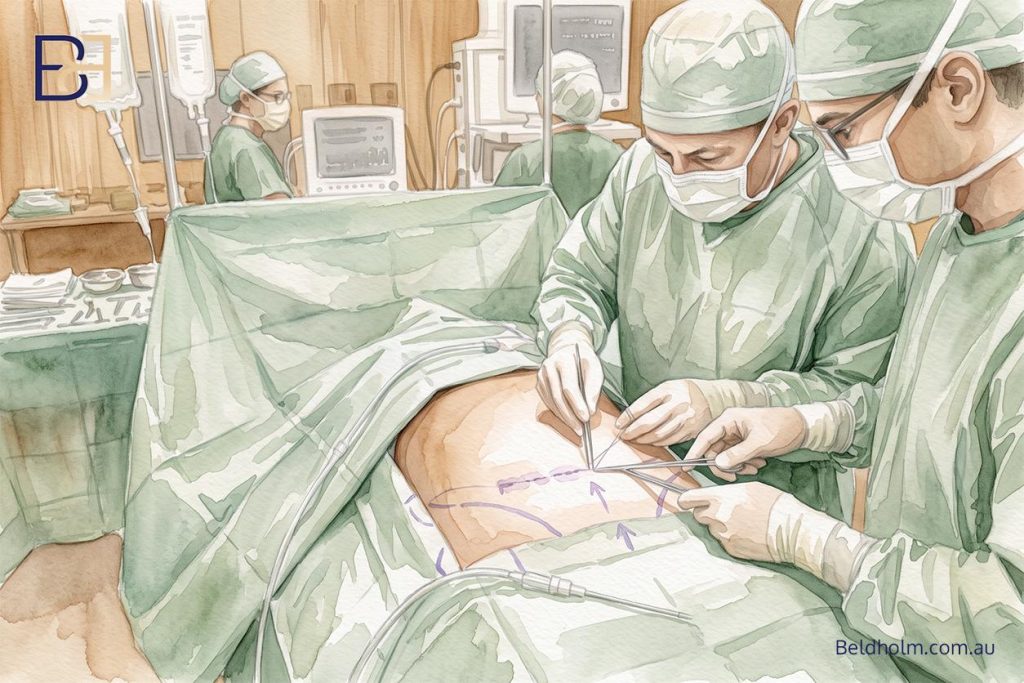
The exposure is already there
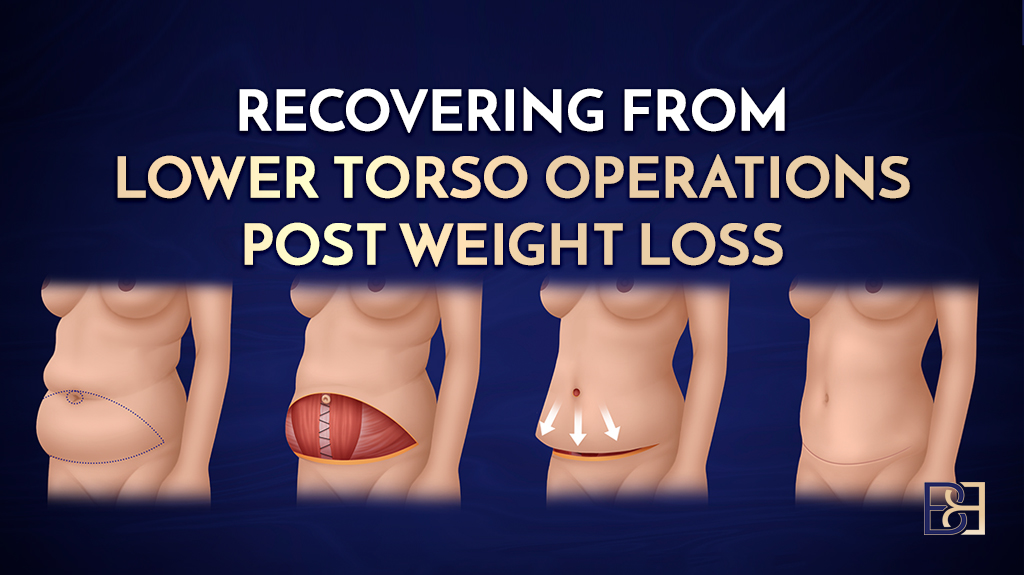
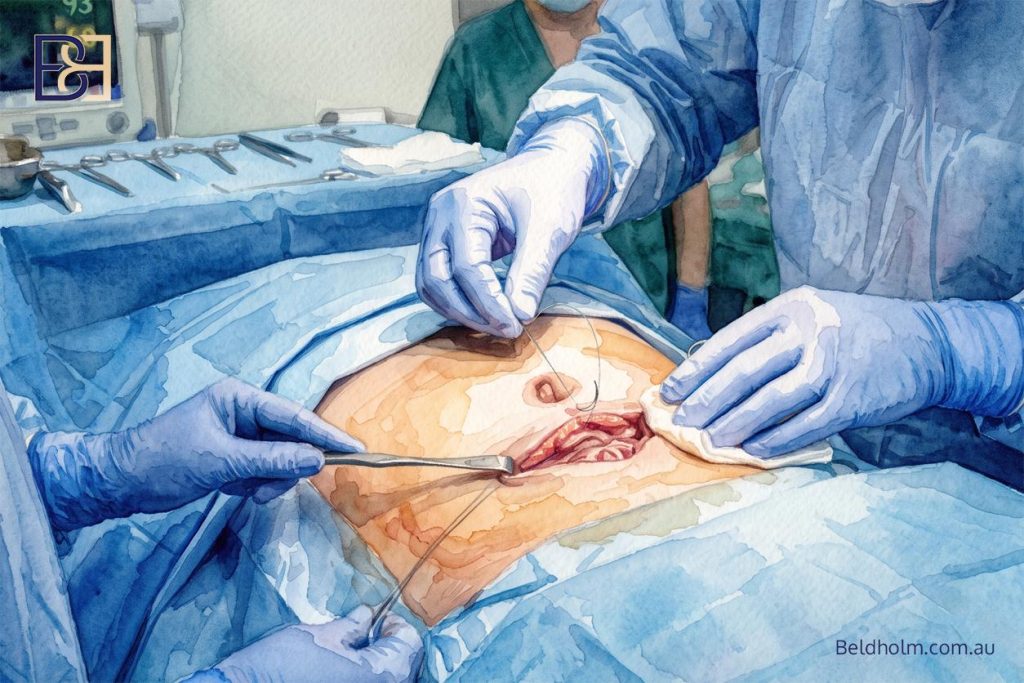
An abdominoplasty (tummy tuck) is done through a long incision low across the abdomen. I lift the skin and fat upward off the abdominal wall, usually as far as the lower ribs. By the time I have done that, the whole front of the abdominal wall is in front of me under direct vision, from the groin up to the rib margin, including the midline and the belly button (umbilicus).
That exposure is the same view a surgeon needs to repair most abdominal wall hernias. So when a hernia sits in that field, I can repair it through the access I have already made, rather than through a separate cut somewhere else (2).
What that means in practice
Working under direct vision has clear advantages for the repair itself:
- I can see the whole defect and its edges clearly, rather than working through a small keyhole or a short incision over the lump.
- I can check the rest of the abdominal wall at the same time and pick up a second, smaller hernia that might otherwise be missed.
- I can place the repair, and any mesh, exactly where I want it.
This is a clinical decision, not a default

I want to be clear about how I think about this. Combining abdominoplasty (tummy tuck) and hernia repair in one operation is possible because the access is already there and the hernia is a medical problem that needs treating, not because more surgery is somehow better. Whether it is the right plan for you depends on the hernia, your health and the size of the operation involved. For some patients I repair the hernia at the same time. For others it is more appropriate to handle it separately.
Repair methods: stitches, mesh and plication
The right repair depends mostly on the size of the defect and the quality of the tissue around it. I draw on a few approaches, sometimes more than one in the same operation.
Stitch (suture) repair
For a small hernia, often a small umbilical or epigastric one, I close the gap directly with strong, long-lasting stitches. The edges of the defect are brought together and held. For small defects with good tissue around them, a stitch repair holds well and lasts.
Mesh repair
For a larger defect, an incisional hernia, or any repair where stitching the edges together would pull them under tension, I reinforce the wall with surgical mesh. Mesh is a flat sheet of medical material that bridges and supports the defect, sharing the load so the repair is less likely to come apart. The bigger the hernia, the more likely mesh is the better choice, because closing a large gap with stitches alone tends to fail over time.
Where the mesh sits matters. I place it in the layer that gives the strongest, most reliable repair for that hernia, and I keep it clear of the belly button (umbilicus) so its blood supply is not put at risk.
How I choose
In short:
- Small defect, good tissue: stitch repair.
- Larger defect, incisional hernia, or a repair that would be under tension: mesh.
- Muscle separation present alongside a hernia: plication as well, to support the repair.
Every hernia is a little different, and I make the final call based on what I find at the time.
Protecting the belly button (umbilicus) and its blood supply
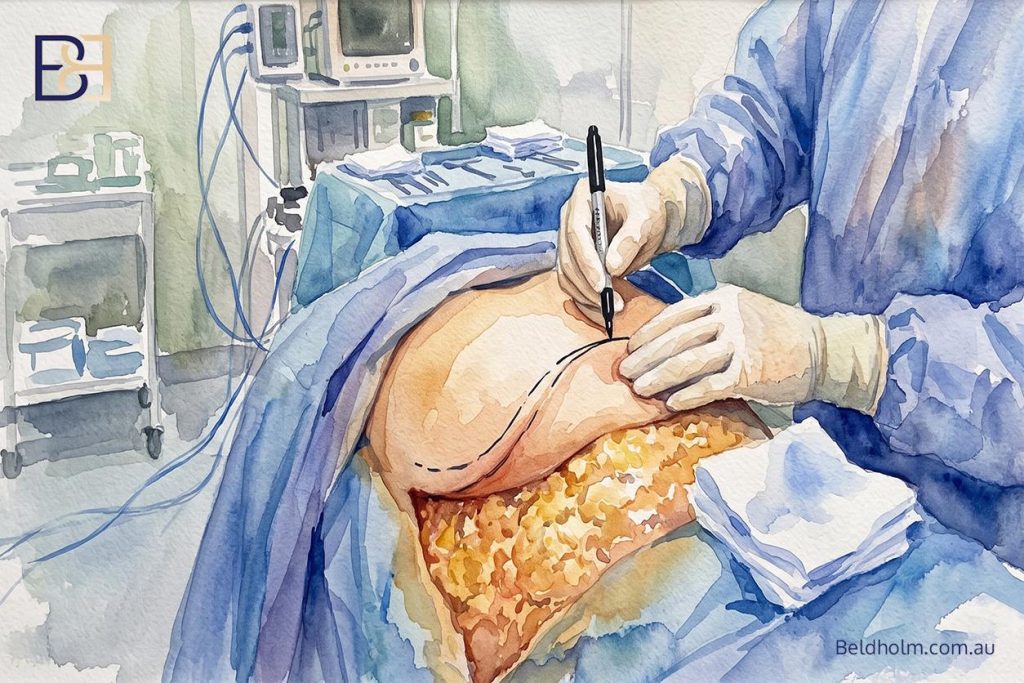
The belly button (umbilicus) needs special attention when there is a hernia right next to it, which is the case with an umbilical hernia.
How the umbilicus survives the operation
During an abdominoplasty (tummy tuck), I lift the skin of the abdomen off the wall, but the umbilicus is left attached to the abdominal wall underneath on a small stalk. That stalk is how it keeps its blood supply. As long as the stalk and its blood vessels are looked after, the umbilicus stays healthy.
Why an umbilical hernia repair needs extra care
An umbilical hernia sits at the base of that same stalk. So when I repair the defect, I am working right where the umbilicus gets its blood supply from. Two things can put it at risk:
- Closing the defect or tightening the tissue too tightly around the stalk.
- Placing mesh hard up against the stalk, where it can press on the small vessels.
If the blood supply to the umbilicus is lost, the umbilicus itself can be damaged or, uncommonly, lost. This is one of the specific risks of repairing an umbilical hernia at the same time as the skin surgery.
How I protect it
I plan the repair around keeping the stalk alive. In practice that means repairing the defect without choking the base of the stalk, and keeping any mesh clear of the stalk so it is not sitting on the blood vessels. In post weight loss patients the umbilicus is often stretched and pulled downward by the loose skin, so I am usually reshaping it as part of the operation anyway, and I do that in a way that protects the blood supply first (3).
Why I usually repair the hernia at the same time
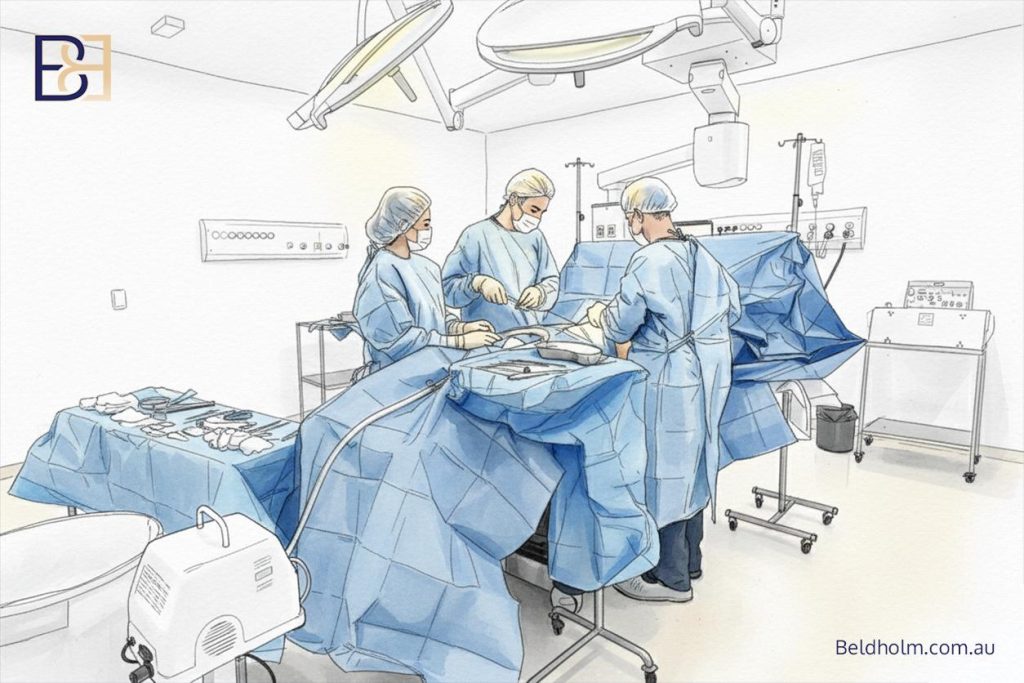
If you are already having an abdominoplasty (tummy tuck) and you have a hernia, I repair the hernia during that same operation in almost every case. Once the skin is lifted, the hernia is right there in the field I am already working in, so repairing it adds relatively little to an operation you are having anyway, which is why suitable patients benefit from the combined procedure. It makes little sense to put you through two separate surgeries, and two separate recovery periods, for something I can deal with then and there.
There is really only one situation where a hernia is repaired on its own, and that is when it cannot wait. If a hernia becomes an emergency, for example the contents become stuck and the blood supply is threatened (strangulation), it needs urgent surgery in its own right, well before any planned skin surgery. That is a medical emergency rather than an elective plan, and it is treated as one.
Preparing for surgery: nutrition for post weight loss patients

Getting you ready for surgery starts well before the operating theatre, and for post weight loss patients nutrition is a big part of that. Healing a hernia repair and a long incision depends on the body having what it needs to rebuild tissue. A healthy diet in the weeks beforehand supports proper healing. If those building blocks are short, the healing process suffers and a repair is more likely to give way.
Why post weight loss patients need this attention

Most people who have lost a large amount of weight, particularly after weight loss surgery, carry nutritional gaps that built up along the way. Protein, iron, vitamin D, vitamin B12 and others are commonly low (4). You can feel completely well and still be running low on the things that matter for healing. That is why I look into this properly rather than assume it is fine.
The pre-operative blood panel

Before surgery I run a thorough set of blood tests, the same pre-operative blood panel I use for all my post weight loss body contouring patients. It checks your blood count, iron studies, the key vitamins and minerals, and your general health markers. If something is low, we have time to correct it before your operation rather than finding a problem afterward.
Protein and supplements

Two things do most of the work in your preparation:
- Protein. Protein is the raw material your body uses to heal. Many post weight loss patients are not getting enough, and building your intake up before surgery is one of the most useful steps you can take (5). I go into the detail separately.
- Targeted supplements. Where your bloods show a specific gap, I correct it, and there are a few supplements I suggest across the board. Rather than repeat all of that here, I have set it out on its own.
Risks and complications
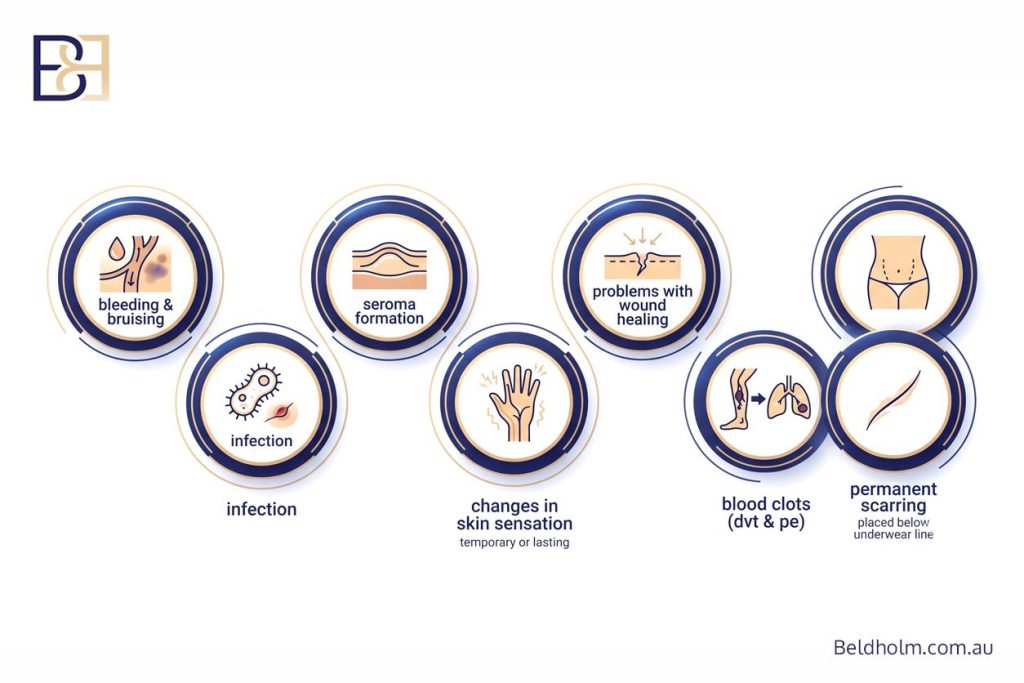
Every operation carries potential risks. I would rather you understand the potential complications clearly than gloss over them. Here is what I talk through with my patients.
Risks that come with any abdominoplasty (tummy tuck)
- Bleeding and bruising. Occasionally a collection of blood (a haematoma) forms and needs to be drained.
- Seroma. Fluid can gather under the skin after surgery. This is common, and the drains I use are there to reduce it.
- Infection. Any wound can become infected and need antibiotics, and rarely a return to theatre.
- Wound healing problems. Parts of the wound can be slow to heal or break down, particularly where the tension is greatest.
- Changes in sensation. Numbness across the lower abdomen is normal early on and usually resolves, though some areas can stay altered.
- Scarring. The scars are permanent. They fade over time but they do not disappear, and how they settle varies from person to person.
- Blood clots. A clot in the leg (DVT) or lung is an uncommon but serious risk, and a longer operation raises it (6,7). I assess this for every patient and put prevention in place.
- Anaesthetic risks. A general anaesthetic carries its own small risks, which the anaesthetist goes through with you.
Risks specific to the hernia and mesh repair
- Hernia recurrence. A hernia can come back, even after a sound repair. Larger hernias and repairs under tension carry a higher chance of hernia recurrence (2).
- Mesh complications. Where mesh is used, it can rarely become infected, cause ongoing discomfort, or need to be removed. I weigh this up when deciding whether mesh is the right choice.
- Problems with the belly button (umbilicus). A repair close to the umbilicus can affect its blood supply, and uncommonly the umbilicus can be lost.
Risks I pay particular attention to in post weight loss patients
Post weight loss patients tend to heal less predictably than the general population. Nutritional gaps, the quality of skin and tissue after major weight loss, and conditions like diabetes all make wound healing problems more likely. This is exactly why I put so much into your preparation beforehand. Stopping smoking, getting your nutrition right and controlling blood sugar all lower these risks.
Recovery: what to expect
Recovery from an abdominoplasty (tummy tuck) is a real recovery process, and adding a hernia repair means the repair also needs time to settle. The recovery period runs over weeks rather than days.
In hospital
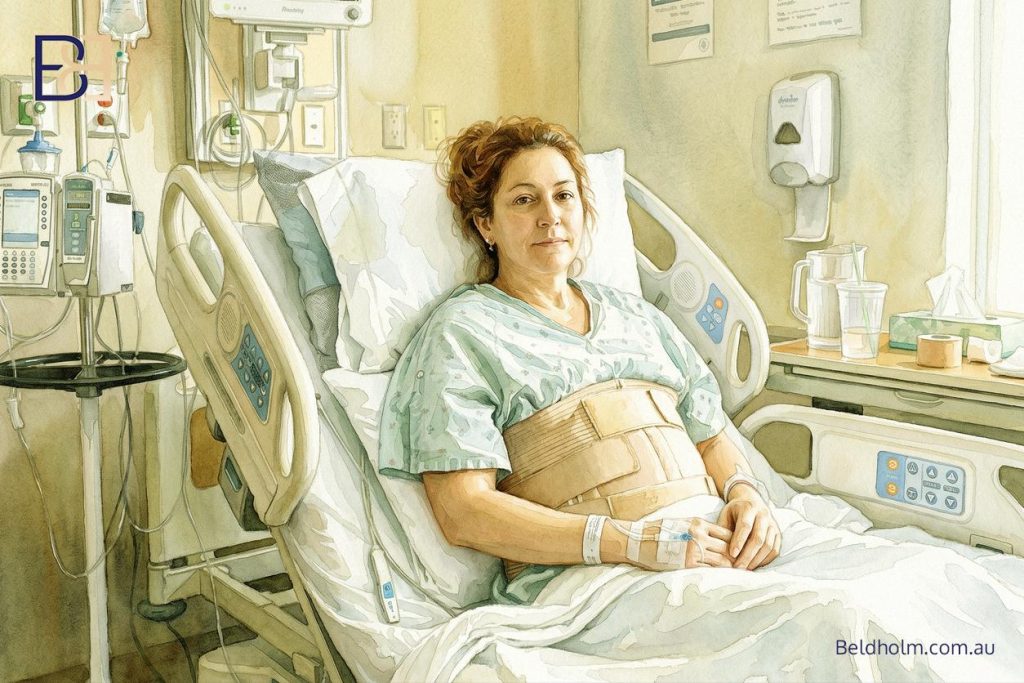
Most patients stay with us for two to four nights. You will have two drains, one on each side, sitting at the hip, which collect fluid while the tissues settle. They come out once the drainage drops to a set level, usually somewhere between two and seven days.
I want you up and moving early. On the first day after your operation I will have you out of bed and walking, even if only a few steps. Getting moving helps your lungs, your circulation and your recovery, and it lowers the risk of a clot.
The first few weeks
- Dressings. You will go home with dressings over the wound and the incision site. These are changed at about a week and swapped for a light tape.
- Compression garment. You will wear a compression garment full time for around four weeks, then part time for another couple of weeks. It supports the tissues and helps reduce swelling.
- Swelling. Swelling is part of the course and tends to be worse later in the day. It settles gradually over weeks to months.
- Pain. There will be discomfort, more so with a hernia repair, and you will go home with pain relief and a plan for it.
Getting back to normal

This is where the hernia repair changes things, because a fresh repair needs protecting.
- Lifting and straining. Avoid lifting heavy objects and anything that strains the abdomen for about six weeks. Straining too early puts the repair and the underlying muscles at risk, so this matters more than it would after a tummy tuck (abdominoplasty) on its own.
- Returning to work. If your job is desk based, most people are ready at around four weeks. If it involves manual work or heavy lifting, plan on six to eight weeks.
- Exercise. Short walks from the start, building up gradually. I will guide you on when to return to core work and heavier exercise, which I set out separately.
Follow-up
I see you at four weeks, three months, six months and twelve months. That lets me keep an eye on your healing, the repair and your scars, and pick up anything that needs attention early.
When to get medical advice
Most of recovery is uneventful, but a few symptoms need prompt attention. Seek medical advice quickly if your wound becomes increasingly red, hot or starts to discharge, or if a hernia bulge becomes painful, hard or will not push back in, particularly with nausea or vomiting. Some serious complications are emergencies. Pain or swelling in a calf can signal a clot (DVT), and chest pain or sudden breathlessness can mean a clot has reached the lungs. If that happens, call 000 or go straight to your nearest emergency department.

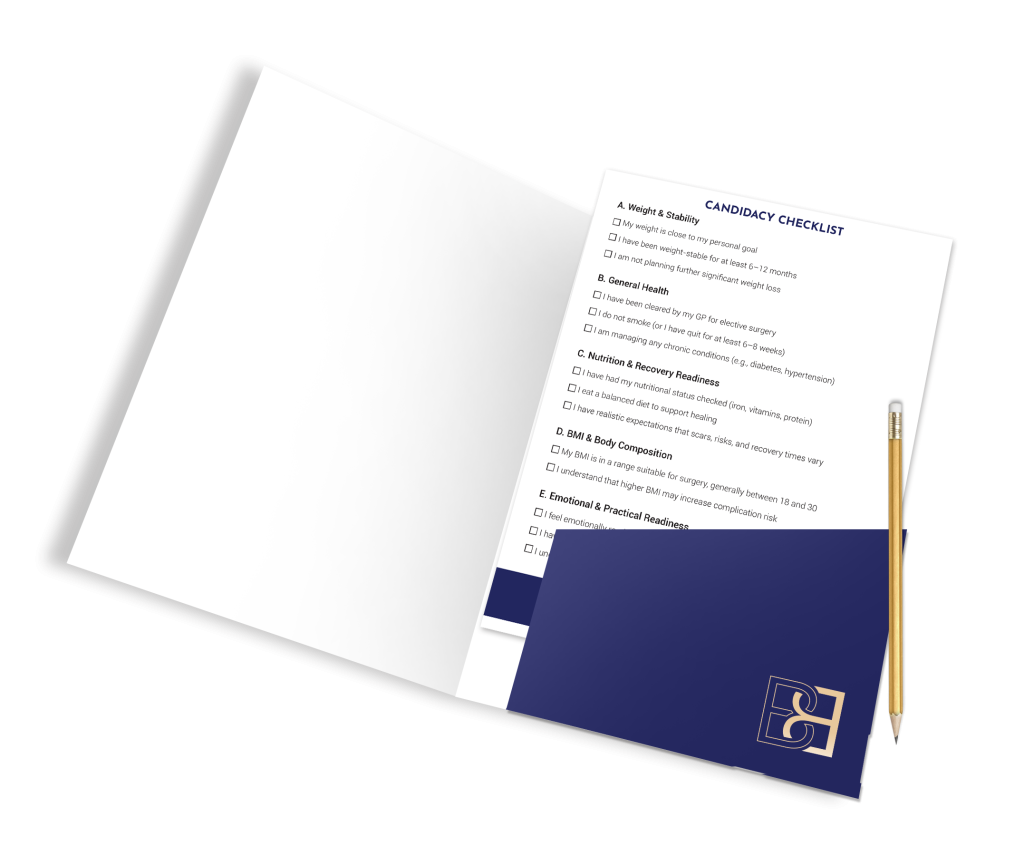
Who is, and is not, a good candidate
An abdominoplasty (tummy tuck) with hernia repair is a good fit for some post weight loss patients and not for others. These are the main things I look at when working that out with you.
When the timing tends to be right
You are more likely to be a good candidate when:
- You have reached a stable weight that has held for several months and is one you can hold.
- Your general health is sound, and any conditions like diabetes are well controlled.
- You do not smoke, or you have stopped, since smoking has a real effect on wound healing.
- Your nutrition is in good shape, or we have corrected any gaps beforehand.
- You have loose, excess abdominal skin, with or without a hernia, that bothers you and that surgery can help.
When I would suggest waiting, or not operating

I will recommend holding off, or advise against surgery, when:
- Your weight is still moving, whether you are still losing or your weight is unsettled.
- A medical condition is not yet well controlled.
- You are still smoking, in which case stopping well beforehand makes a meaningful difference.
- Significant nutritional gaps have not been corrected.
- You are planning a pregnancy, which can undo the result and is usually worth doing first.
None of this is about a single number on a chart. I use body mass index as a rough guide, but the decision rests on the whole picture, your medical history, your skin and what you want from surgery.
Realistic expectations

It helps to be clear about what this surgery does and does not do. It works by removing excess skin and repairing the hernia. It is not a weight loss operation, and it will not give you someone else’s body. Scars are permanent. Results vary from person to person, and how your tissues heal is part of that. I want you to go into surgery with a clear picture rather than an unrealistic one.
Frequently asked questions
Will my hernia be repaired during my abdominoplasty (tummy tuck)? In almost every case, yes. If you are already having the skin surgery and a hernia is there, I repair it during the same operation, because the access is already open. The exception is a hernia that turns into an emergency, which needs urgent treatment on its own.
Does repairing the hernia make the operation much bigger? Not by much. The hernia sits in the area I am already working in, so repairing it adds relatively little to an abdominoplasty (tummy tuck) you are already having. The bulk of your recovery comes from the skin surgery itself.
Is a tummy tuck (abdominoplasty) with hernia repair one operation or two? For most patients it is a single procedure. I carry out the tummy tuck (abdominoplasty) surgery and the hernia repair surgery in the one surgical session, under the same anaesthetic, because the hernia sits in the area I am already working in. It adds some operating room time, but not a separate operation.
Will I need mesh? It depends on the size of the defect. I close small hernias with stitches. For larger ones, or repairs that would otherwise be under tension, I reinforce the wall with mesh. I make that call based on what I find.
Can the hernia come back? It can. A repair can fail, and larger hernias carry a higher chance of coming back. Protecting the repair while it heals, and getting your nutrition right beforehand, both help it hold.
Is repairing an umbilical hernia risky for my belly button (umbilicus)? There is a small risk, because the repair is close to where the belly button (umbilicus) gets its blood supply. I plan the repair to protect that blood supply, and problems are uncommon.
I had weight loss surgery. Does that change things? It helps to tell me about it, because hernias can form at old surgical sites, including the small keyhole scars. I check for these, and I pay close attention to your nutrition, which is often more depleted after weight loss surgery.
Do I need a scan first? Not always. I can diagnose many small hernias by examining you. I arrange an ultrasound or CT scan when a hernia is larger, when there may be more than one, or when I need a clearer map before planning the repair.
Will it be covered by Medicare or my health fund? A hernia repair is a medical procedure, and the cost and any rebates depend on your individual situation. I provide an itemised quote so you can see exactly what is involved and check the details with your health fund.
References
- Karampinis I, Lion E, Hetjens S, Vassilev G, Galata C, Reissfelder C, Otto M. Trocar site hernias after bariatric laparoscopic surgery (HERBALS): a prospective cohort study. Obes Surg. 2020;30(5):1820-1826.
- Messa CA, Davis HD, Habarth-Morales TE, Amro C, Broach RB, Fischer JP. Abdominoplasty with umbilical hernia repair: a long-term comparative analysis of clinical outcomes. Aesthet Surg J. 2025;45(3):NP71-NP78.
- Phan R, Kaplan E, Porrett JK, Ho YH, Rozen WM. Incisional abdominal hernia repair with concomitant abdominoplasty: maintaining umbilical viability. JPRAS Open. 2018;16:100-104.
- Toninello P, Montanari A, Bassetto F, Vindigni V, Paoli A. Nutritional support for bariatric surgery patients: the skin beyond the fat. Nutrients. 2021;13(5):1565.
- Austin RE, Lista F, Khan A, Ahmad J. The impact of protein nutritional supplementation for massive weight loss patients undergoing abdominoplasty. Aesthet Surg J. 2016;36(2):204-210.
- Shermak MA, Chang DC, Heller J. Factors impacting thromboembolism after bariatric body contouring surgery. Plast Reconstr Surg. 2007;119(5). doi:10.1097/01.prs.0000256070.37066.7e.
- Yin C, McAuliffe PB, Marquez JE, Liao CD, Vasilakis V, Estrella J, Labropoulos N, Khan SU. Body contouring in massive weight loss patients receiving venous thromboembolism chemoprophylaxis: a systematic review. Plast Reconstr Surg Glob Open. 2021;9(8):e3746.