Loose skin on the upper arms is one of the more common reasons people come to see me as they get older. The skin on the inner arm is thin to begin with, and over the years it loses skin elasticity and starts to hang. For some people this is mild and only noticeable up close. For others it hangs as loose skin in a fold that catches under clothing and can cause skin irritation in warm weather.
In this article I explain what changes in the arm as we age, how an arm lift (brachioplasty) removes the loose skin, and what the operation involves in terms of suitability, risks and recovery. Ageing is the focus here. If your loose arm skin followed significant weight loss, that is a related but separate situation, and I cover it in my article on arm lift (brachioplasty) after weight loss.
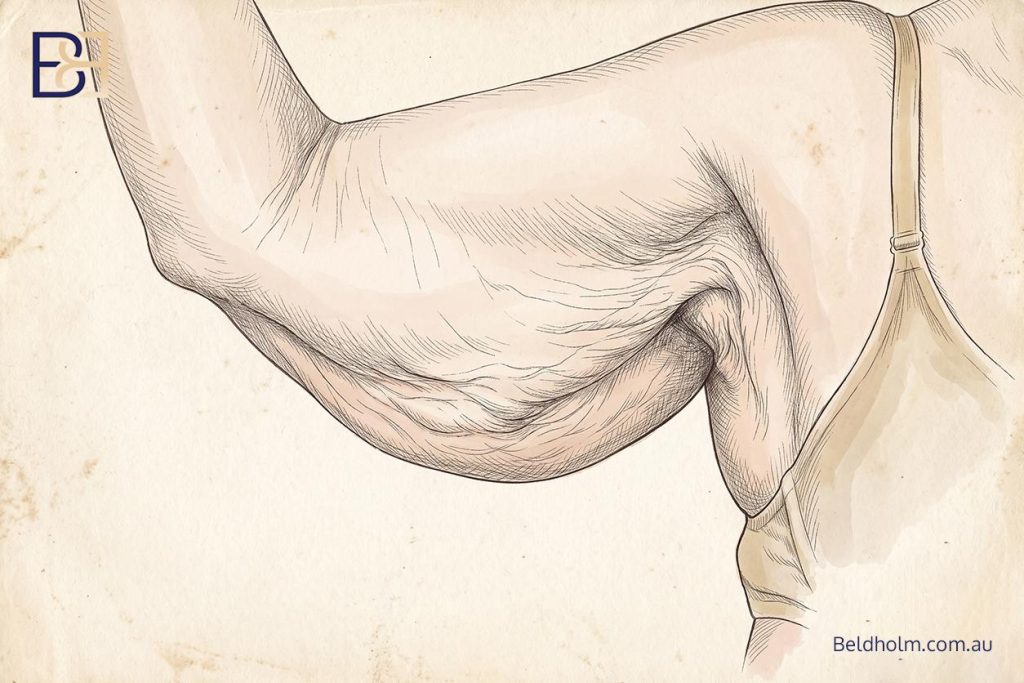
Brachioplasty is a significant operation with a permanent scar and a significant recovery period. Whether it suits you is something I work out with you at consultation, not something that can be decided from a website.
How ageing affects the upper arms

The loose skin you see on the upper arm is rarely down to one thing. Several changes happen at once as we age, and they add up. Here is what is going on underneath.
Skin atrophy and reduced elasticity
Skin becomes thinner and more fragile with age. The layer that anchors the surface of the skin to the tissue below flattens out, so the skin loses some of its grip and support. Ageing skin also holds less water and makes less collagen and elastin, the fibres that give skin its elasticity. This decreased skin elasticity means the skin sits looser and recoils less well than it did in younger years.
Muscular changes and sarcopenia
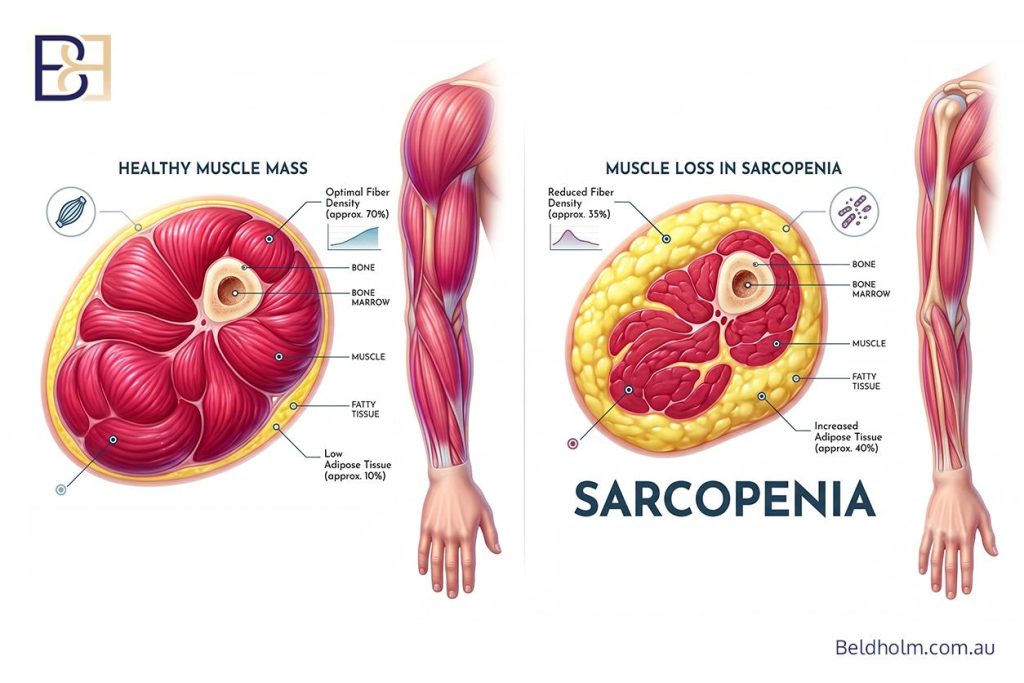
Muscle mass and strength decline steadily from middle age onward, a process called sarcopenia. Published research indicates that muscle strength and endurance fall with age as muscle mass and protein production drop, and the muscle fibres themselves shrink (1). When the muscle underneath the arm loses bulk, the overlying skin has less to fill it out and can look emptier and more lax.
Thinning of the subcutaneous layer
Just under the skin sits a layer of fat that gives the arm padding and a degree of firmness. This layer thins with age. As it does, the skin loses some of its underlying support and can take on a slack, draped appearance along the back of the upper arm.
Shifts in body fat distribution
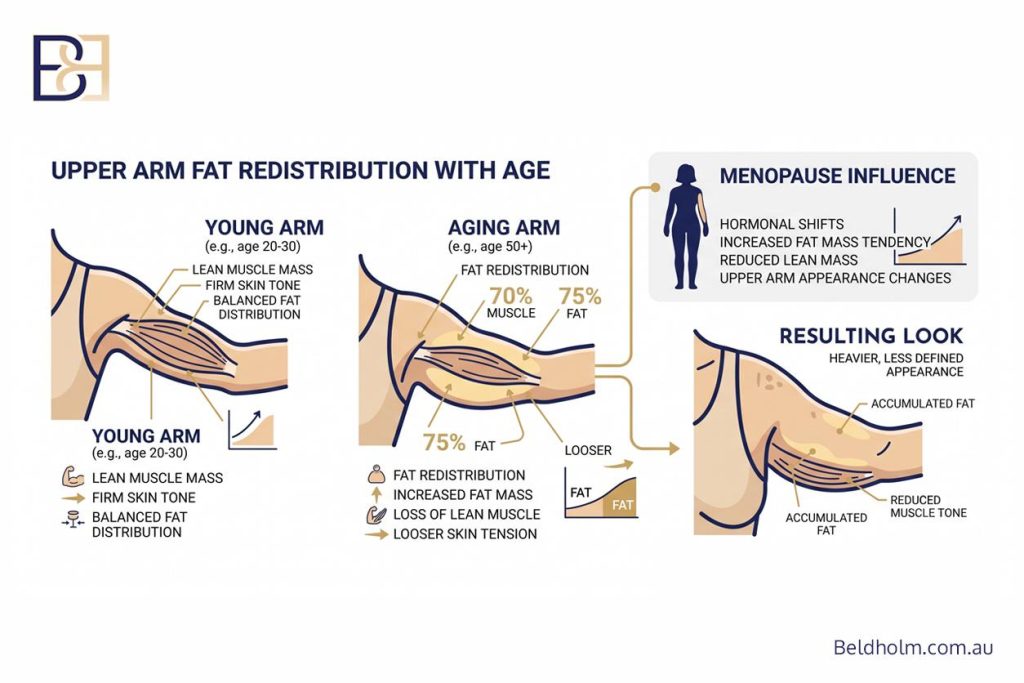
Where the body stores fat changes over time. Fat tends to redistribute with age, and in some people more of it settles around the upper arm area while lean muscle is lost. Body composition also shifts around menopause, with a tendency toward more fat mass and less lean mass. The combination of looser skin and altered fat distribution is what gives the upper arm its heavier, less defined look.
Slower metabolism
Metabolism tends to slow with age, even with steady eating and exercise habits. Published research indicates that fat mass rises and muscle mass falls as we get older, alongside changes in resting metabolic rate, though the direction of cause and effect is not fully settled (2). For the arm, the practical point is that gradual changes in fat and muscle over the years contribute to the laxity people notice.
Long-term sun exposure
Sun damage is cumulative. Years of ultraviolet exposure break down the collagen and elastin in the skin, which weakens it and reduces its elasticity. The upper arms are among the areas most often left uncovered, so they tend to carry a fair amount of this damage by later life.
A note on weight loss
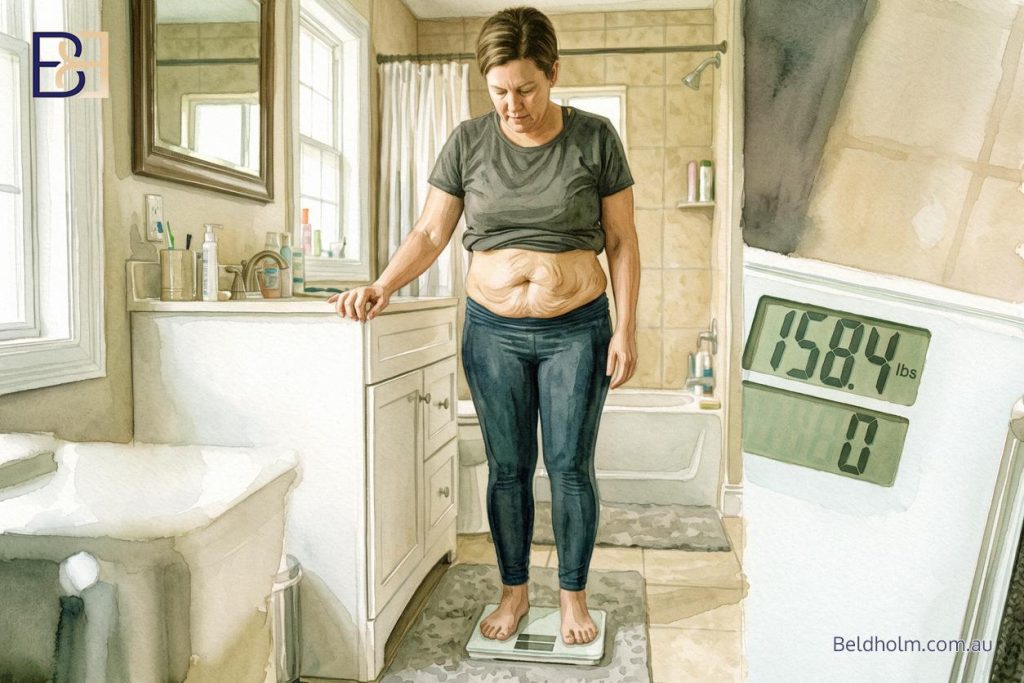
Significant weight loss is a separate and very common cause of loose upper arm skin, and it can affect people at any age. Younger skin contracts reasonably well after weight comes off. Older skin has less elasticity and contracts less, so the two situations can overlap. If your loose skin followed major weight loss rather than ageing alone, the assessment and planning differ, and I cover that in detail in my article on arm lift (brachioplasty) after weight loss.
How an arm lift (brachioplasty) treats ageing arms
An arm lift (brachioplasty) is a surgical procedure designed to remove excess skin along the upper arm and tighten what remains. Once skin has lost its elasticity, no cream, exercise or non-surgical treatment will take it back to where it was. Removing the loose skin surgically is the only way to deal with it.
The core of the operation is skin removal
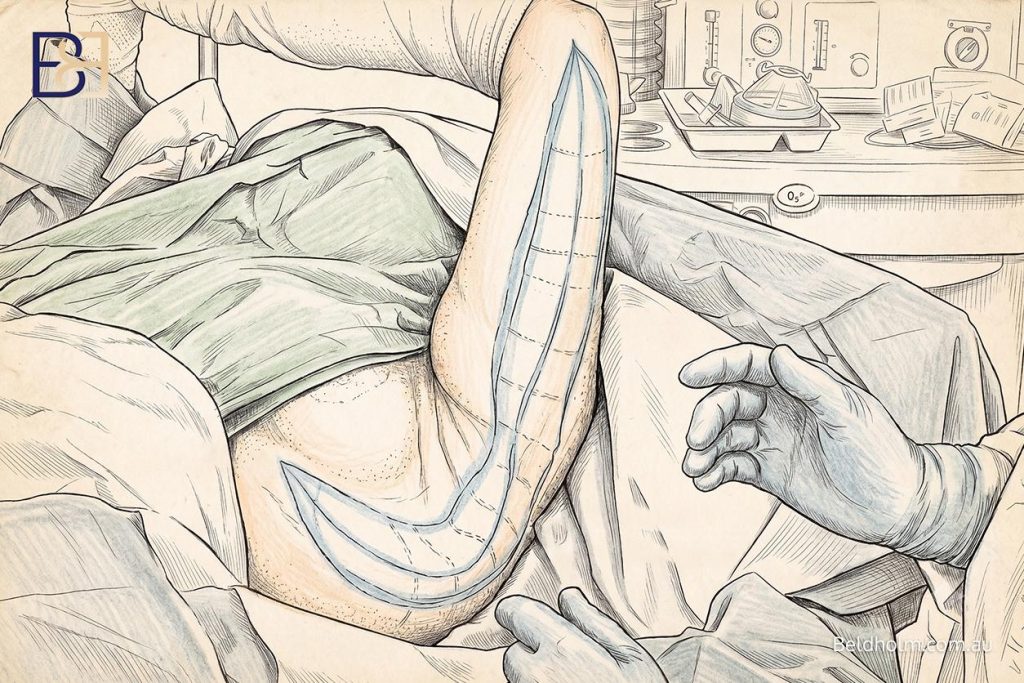
For most patients with ageing-related laxity, the main part of the operation is excision of the loose skin. I mark the arm with you standing, work out how much skin needs to come away, and place the incision along the inner arm where the scar sits in a less conspicuous line. I then remove the excess skin, tighten the underlying tissue, and close the wound in layers to take tension off the surface.
The length of the incision depends on how much loose skin there is. Limited laxity near the armpit can sometimes be treated with a shorter scar. More extensive laxity that runs the length of the arm needs a longer incision to remove it properly. This is one of the trade-offs of the operation, and I go through it with you before we plan anything.
When liposuction (suction assisted lipectomy) is added
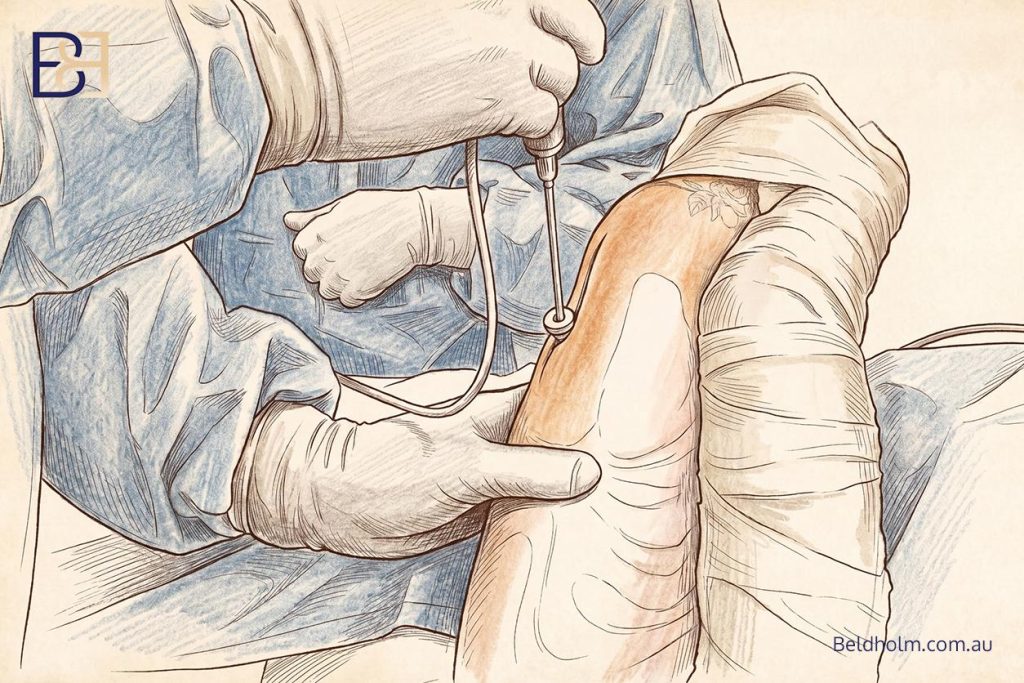
Some patients have fatty tissue in the upper arm as well as loose skin, a mix of excess skin and fat. Where that is the case, I may add VASER liposuction (ultrasound assisted lipectomy) to reduce the fat before or alongside the skin excision. VASER uses ultrasound energy to loosen fat so it can be removed more evenly.
Liposuction (suction assisted lipectomy) is an adjunct, not a routine part of every arm lift (brachioplasty). If the problem is mostly loose skin with little excess fat, skin excision on its own does the job, and adding liposuction (suction assisted lipectomy) would serve no purpose. Whether it has a role for you depends on what I find when I assess your arm.
What the operation does not do
An arm lift (brachioplasty) treats loose skin and, where relevant, excess fat. It does not build muscle, and it will not stop the ageing process from continuing. The skin that remains will keep ageing at its normal rate. What the operation removes is the existing excess arm skin, and that part of the result is lasting, though the appearance of the arm will still change gradually with age like the rest of the body.
Is an arm lift (brachioplasty) right for you?
Whether an arm lift (brachioplasty) suits you is something I work out at consultation, after looking at your arms, your skin quality and skin health, the degree of skin laxity, and your general health.
Realistic expectations
An arm lift (brachioplasty) removes loose skin and leaves a permanent scar in its place. For most patients with ageing-related laxity, that is a worthwhile trade, but it is a trade, and you should go in understanding it. The scar runs along the inner arm and, where laxity is extensive, it can be long.
A few points I make sure patients understand:
- The operation removes existing excess upper arm skin. It does not stop your skin from ageing further.
- The scar is permanent. It usually fades over many months, but it does not disappear.
- Results vary from one person to the next, depending on skin quality, healing and individual factors.
If your expectation is firmer, lighter arms without a scar, then surgery is not the right answer, because the scar is part of the deal.
Your general health and anaesthesia
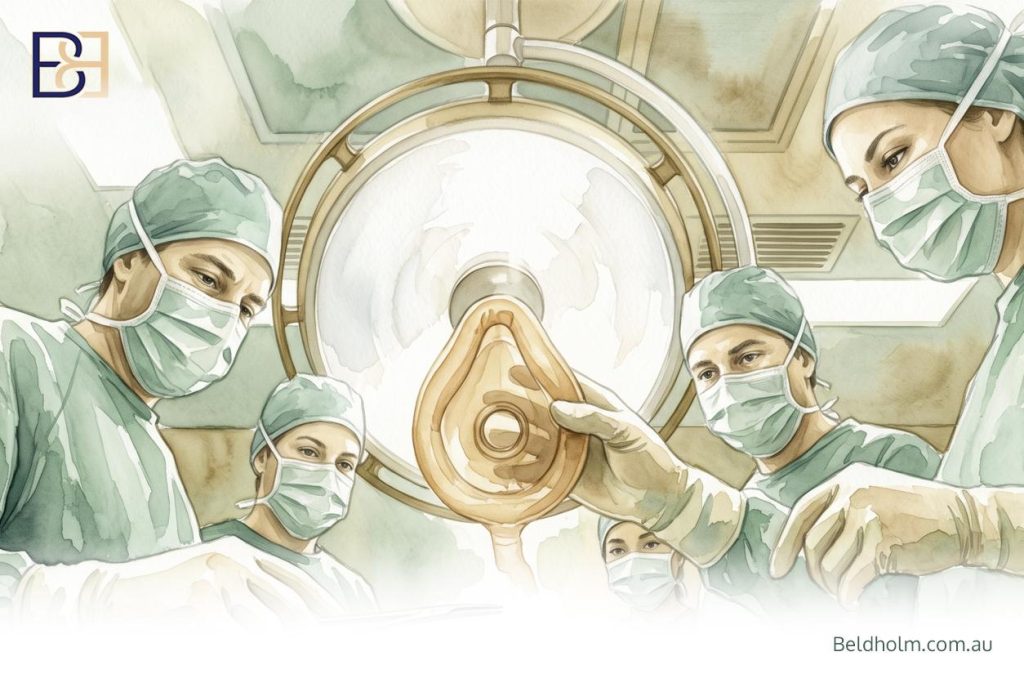
Brachioplasty surgery is carried out under general anaesthesia, so you need to be well enough for both the anaesthetic and the recovery. At consultation I go through your medical history, your medications and any conditions that affect healing or bleeding.
Older patients are more likely to be on medications or to have conditions that need managing around surgery. Stable weight is preferable before an arm lift (brachioplasty). Large weight fluctuations after surgery can stretch the skin again, so reaching a stable, healthy weight and holding it, supported by a healthy diet and a healthy lifestyle, gives the most durable result. While body mass index is a rough guide rather than a strict cut-off, your overall health and the clinical picture decide candidacy, not a single number.
Smoking
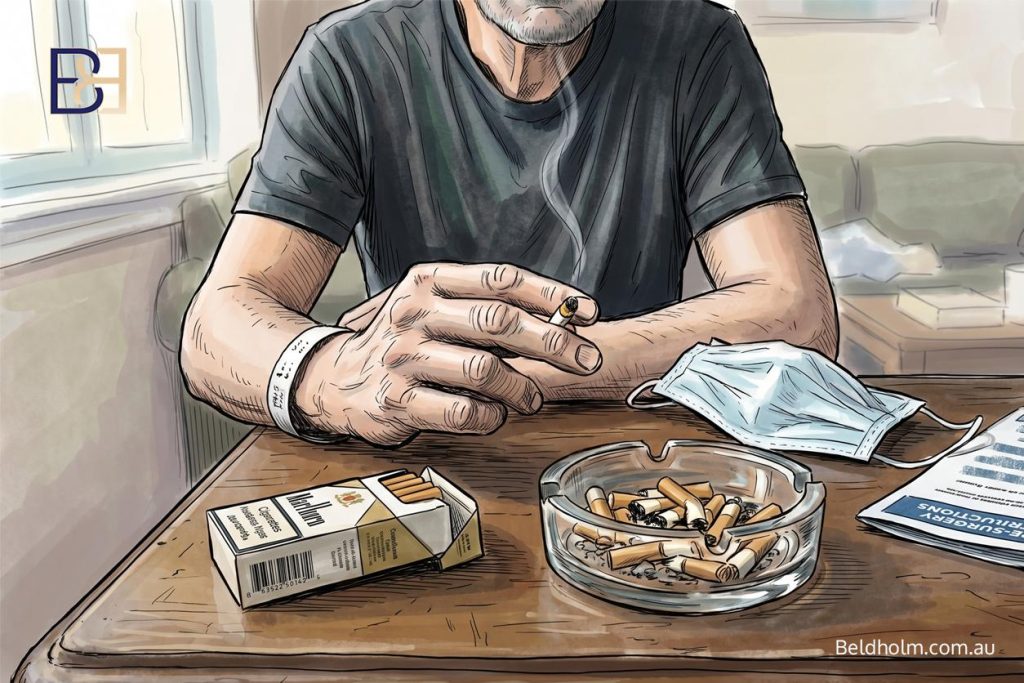
Smoking reduces the blood supply to the skin and leads to poor wound healing. For an operation that relies on a long incision healing well, that is a genuine problem and it raises the risk of the wound breaking down. I ask patients to stop smoking well before surgery. If you smoke, you will not be suitable for an arm lift (brachioplasty) until you have stopped.
Risks and complications
Every operation carries risk, and an arm lift (brachioplasty) is no exception. At consultation I go through your individual risk factors along with the risks below. Some are common and expected, others are uncommon, and a few are rare.
Scarring
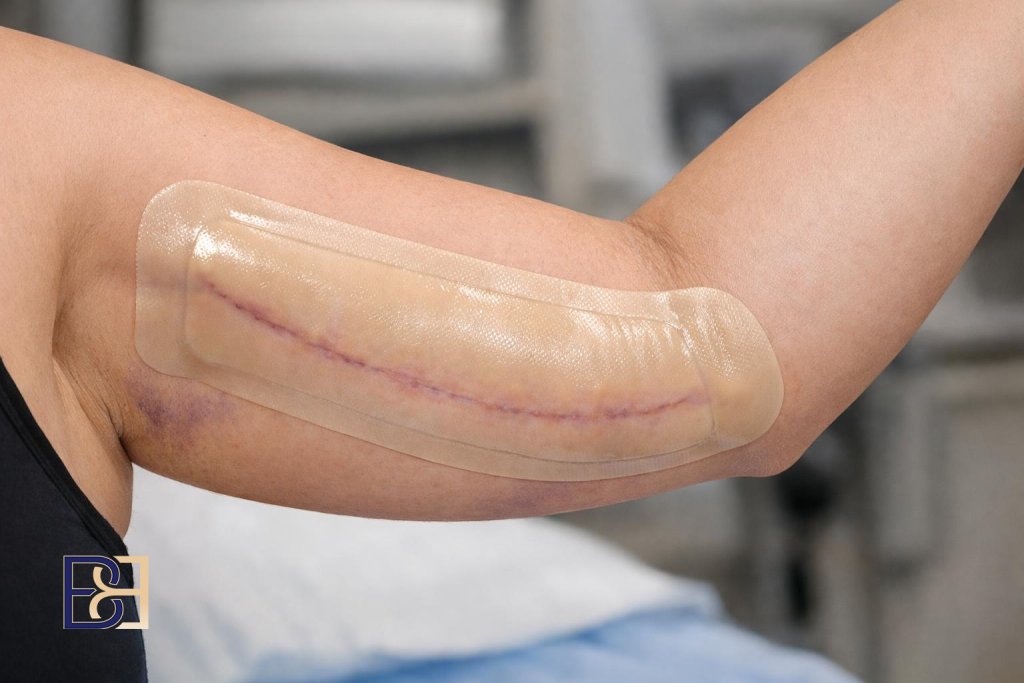
The scar is the most predictable part of the operation, not a complication as such, but it is the thing most patients ask about. It runs along the inner upper arm and is permanent. In most people the scar appearance fades over many months. In some it heals raised, thickened or wider than hoped, and certain people are more prone to this than others. Scar revision is sometimes done later to improve a scar that has healed poorly, though it cannot remove the scar altogether.
Wound healing and infection
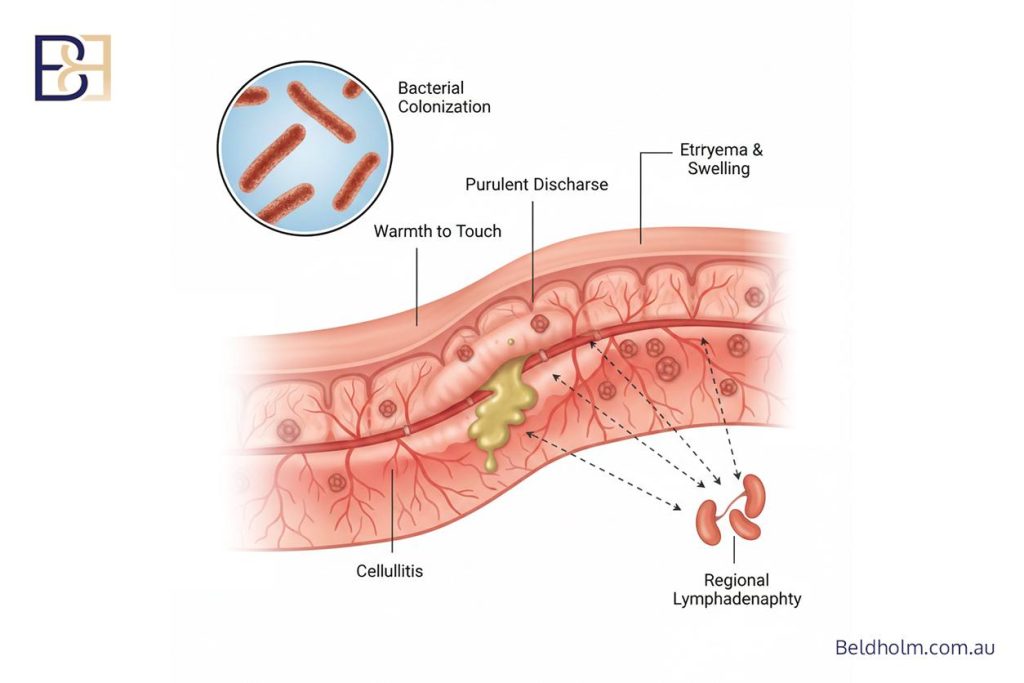
A long incision needs to heal under some tension, and parts of it can be slow to close. Small areas of wound separation can happen, more often near the armpit or the elbow. Infection is possible, as with any surgery, and is treated when it occurs. Good wound care, keeping the incision sites clean, following your dressing and garment instructions, and not smoking all reduce the risk.
Fluid collection and bleeding
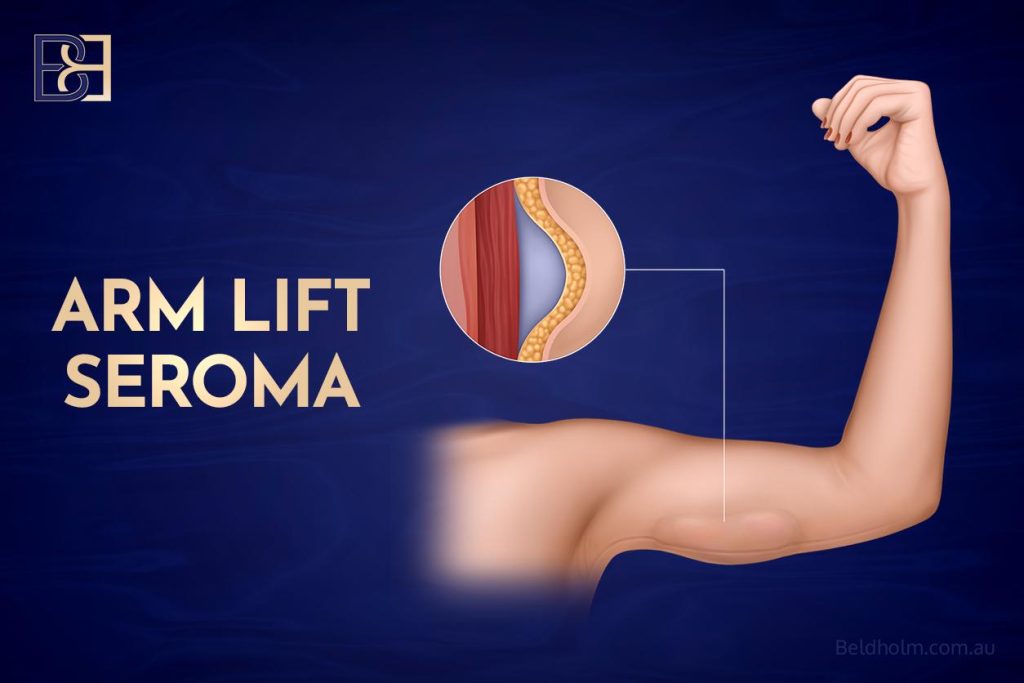
- Seroma: excess fluid can collect under the skin and sometimes needs draining.
- Haematoma: excessive bleeding under the skin can occur, occasionally needing a return to theatre.
- Bruising and swelling are expected early on and settle over several weeks.
Changes in sensation
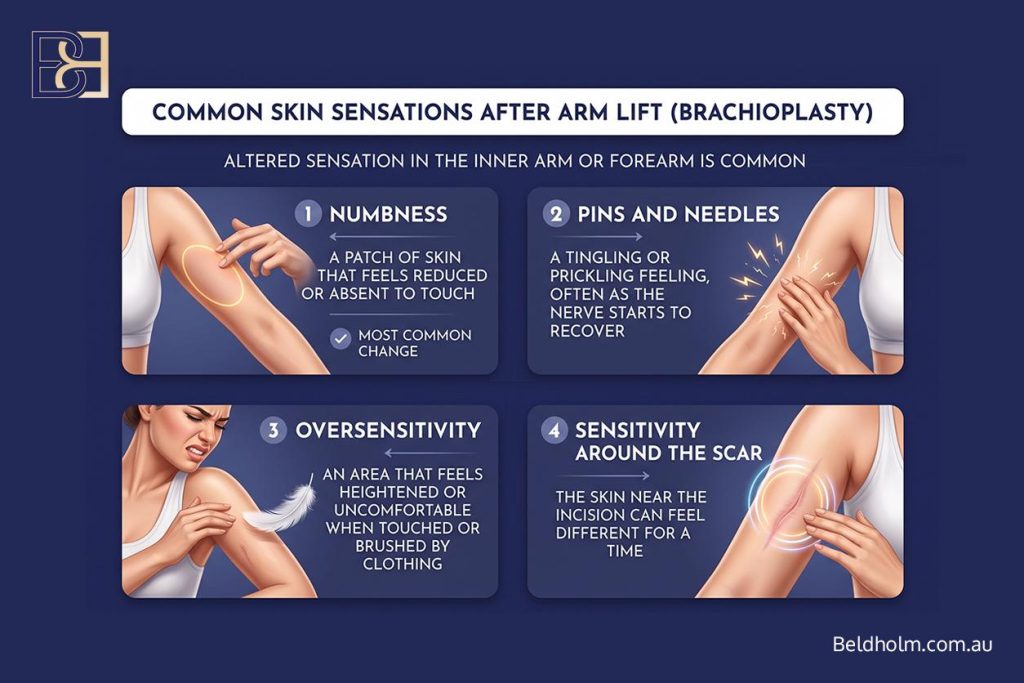
Numbness along and around the scar is common in the early months as small skin nerves are interrupted. This usually improves, but some altered sensation can be permanent. Less commonly, a larger nerve in the arm can be affected, which is why careful technique matters.
Swelling of the arm and hand
Some swelling of the forearm and hand can occur after surgery as the lymphatic drainage settles. It is usually temporary, and your compression garment helps reduce swelling.
Blood clots
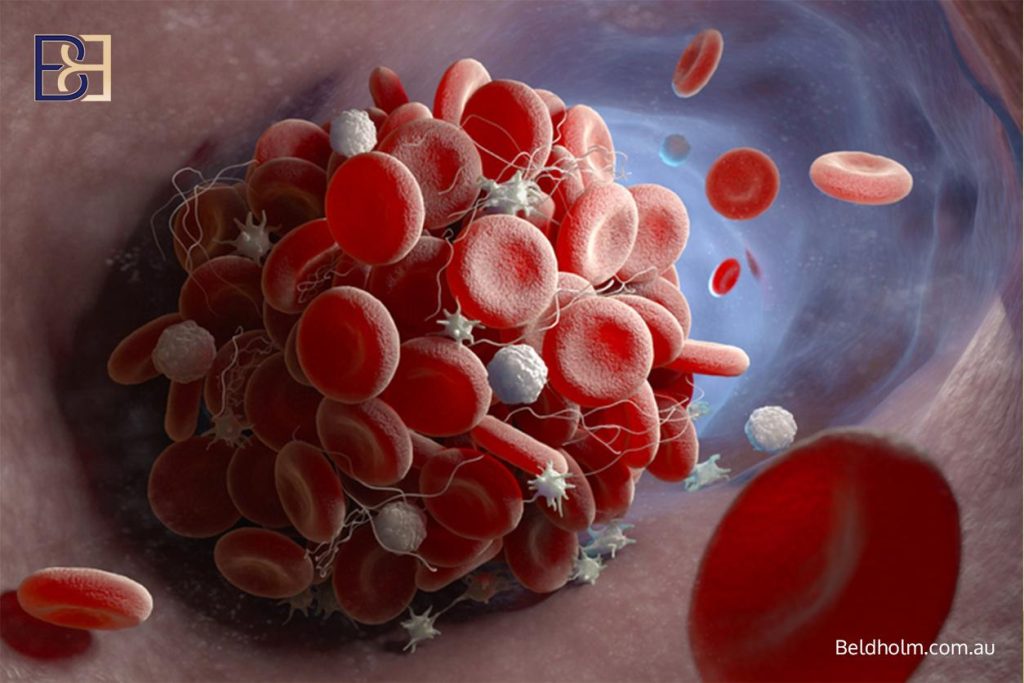
Clots in the legs or lungs are an uncommon risk of surgery generally. I assess your individual risk before the operation and put appropriate measures in place. Get urgent help for warning signs such as severe pain or swelling in a calf, or chest pain and breathlessness. I cover this in more detail in my article on blood clot prevention.
Healing in older skin
Skin that has aged is thinner and less elastic, and older patients are more likely to be taking medications or to have conditions that affect healing and bleeding. Published research on body contouring surgery has found that older age at operation is associated with a higher risk of surgical complications such as bleeding and fluid collection (3). This does not rule out surgery in older patients. It means the assessment beforehand and supporting the healing process afterwards carry more weight.
Revision
Not every result is a one-and-done. Some patients need a further smaller procedure later, for example to revise a scar or remove a little residual skin. Whether revision is needed, and when, is judged on how you heal.
Book your appointment online now
Recovery: what to expect
Recovery from an arm lift (brachioplasty) needs planning, because you use your arms for almost everything. This is not a procedure you bounce back from in a couple of days, and it helps to know that going in.
The first days
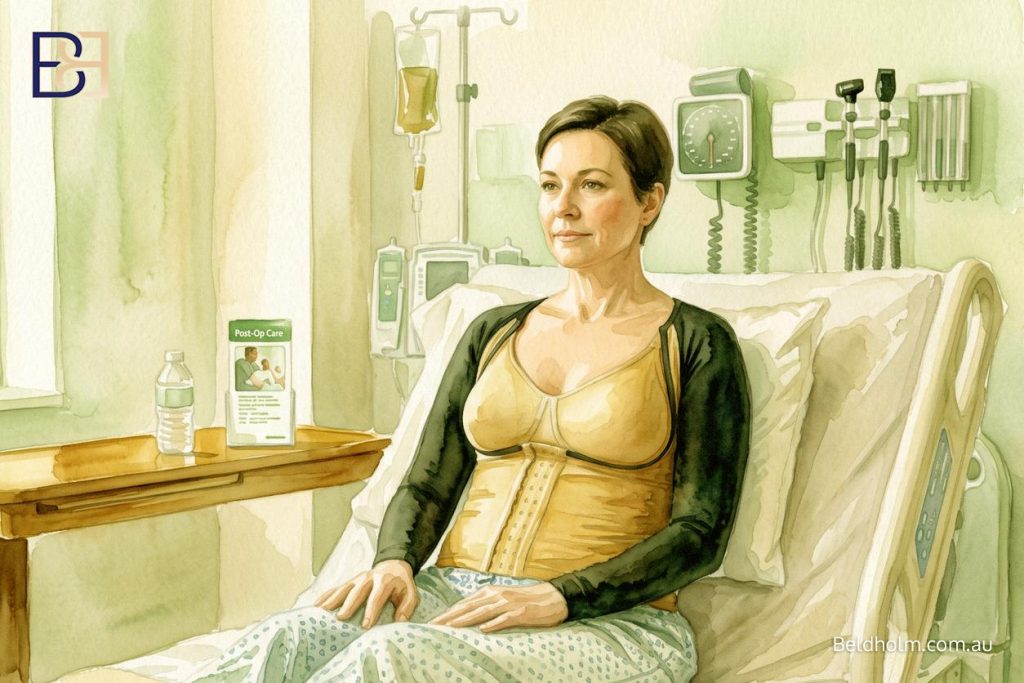
Most patients go home the same day or after one night, depending on how the operation goes and your general health. That is my decision on the day, based on how you are doing. You will have dressings along the incision sites and a compression garment on the arm.
In the first week:
- Your arms will be swollen and bruised, and movement will be limited and uncomfortable.
- I ask you to keep your arms elevated where you can, to help the swelling settle.
- Pain is managed with medication. It eases over the first week or so.
- You will have instructions for wound care and showering, which I go through before you leave.
Your compression garment
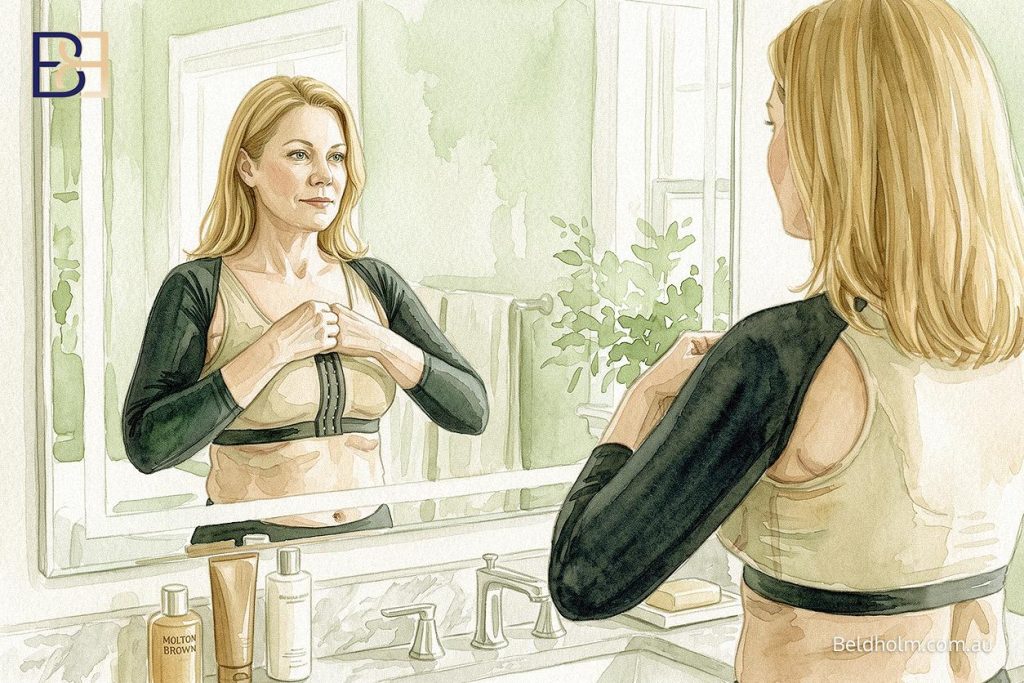
A compression garment on the upper arms helps control swelling and supports healing in the tissue underneath. You wear it full time for four weeks, then part time for a further two weeks, with the timing confirmed based on how you are healing.
Help at home
This is the part people underestimate. For the first several days you will struggle with ordinary tasks that need your arms: dressing, washing your hair, reaching for things, lifting anything. Arrange for someone to help you at home in that early period. If you live alone, sort this out before surgery, not after.
Getting back to activity
- Light walking is fine and encouraged early, as it helps your circulation.
- Avoid heavy lifting, reaching overhead and any strain on the arms until I clear you.
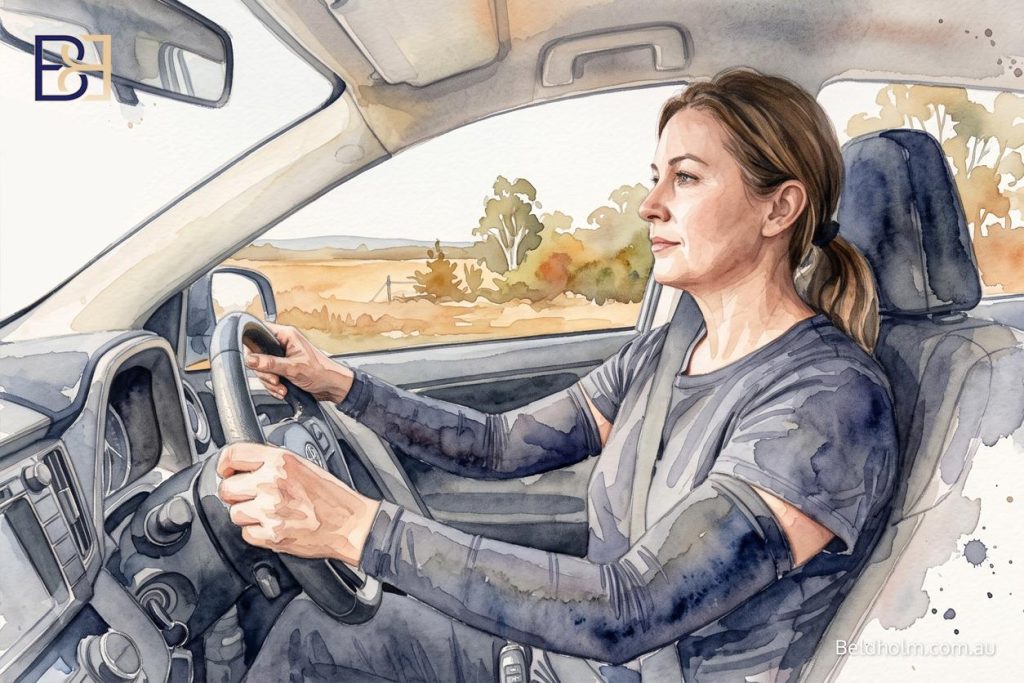
- Driving waits until you can control a vehicle safely and are off strong pain medication.
- Time off work depends on your job. Desk work is often manageable within one to two weeks. Work that uses your arms or involves lifting needs longer.
- Strenuous exercise and the gym come later, once the wounds have healed and I have reviewed you.
These are general guides. Your timeline depends on how you heal and what you do.
Follow-up
The first two weeks are an intensive period. You come in several times a week to see my nurse and me so we can check the wounds, manage the dressings and pick up any early problems quickly. After that, your follow up appointments are at four weeks, then at three, six and twelve months. Swelling and bruising settle over the first weeks. The scar takes much longer to mature, usually well over a year, during which it gradually fades and flattens. I keep an eye on it across those visits.
Common questions
How long do I wear the compression garment?
You wear it full time for four weeks, then part time for a further two weeks. The garment controls swelling and supports the healing tissue along the incision. I confirm the timing with you based on how you are healing.
Should I be at a stable weight before surgery?
Yes, a stable weight is preferable. If your body weight is still changing, the skin can stretch or loosen again after surgery, which works against the result. If you are actively losing weight, it is usually better to get close to your settled weight first. We talk this through at consultation.
What is an extended arm lift (brachioplasty)?
When the loose skin runs past the upper arm into the armpit and onto the chest wall and upper torso, the incision is extended to remove it. This is an extended arm lift (brachioplasty). Whether you need the standard or the extended version depends on how far the laxity reaches, which I assess in person.
Am I too old for an arm lift (brachioplasty)?
Age on its own does not rule you out. What matters is your general health, your medications and how well you are likely to heal, rather than a number. Older patients are more likely to have conditions that need managing around surgery, so the pre-operative assessment is where this is worked out.
Will the scar be very visible?
The scar sits along the inner arm, where it is less obvious than on the outer surface, but it is permanent and it is there. It is usually most noticeable in the early months and fades over a year or more. Scar appearance varies between people, and I cannot promise a particular result.
Can I use private health insurance or Medicare?
An arm lift (brachioplasty) for ageing-related loose skin is generally regarded as cosmetic, and cosmetic procedures are typically not covered by Medicare or private health insurance. Cover depends on your individual circumstances and on meeting specific clinical criteria, which not everyone does. I can talk you through where you stand at consultation.
Deciding whether to proceed
Loose upper arm skin from ageing is common, and once the skin has lost its elasticity, surgery is the only way to remove it. An arm lift (brachioplasty) is one of the body contouring procedures I use for this, and it suits some people and not others. Whether it is right for you comes down to your arms, your general health and what you are hoping for, and that is what we work through together at consultation.
References
- Siparsky PN, Kirkendall DT, Garrett WE Jr. Muscle changes in aging: understanding sarcopenia. Sports Health. 2014;6(1):36-40.
- St-Onge MP, Gallagher D. Body composition changes with aging: the cause or the result of alterations in metabolic rate and macronutrient oxidation? Nutrition. 2010;26(2):152-155.
- Pajula S, Jyranki J, Tukiainen E, Koljonen V. Complications after lower body contouring surgery due to massive weight loss unaffected by weight loss method. J Plast Reconstr Aesthet Surg. 2019;72(4):649-655.