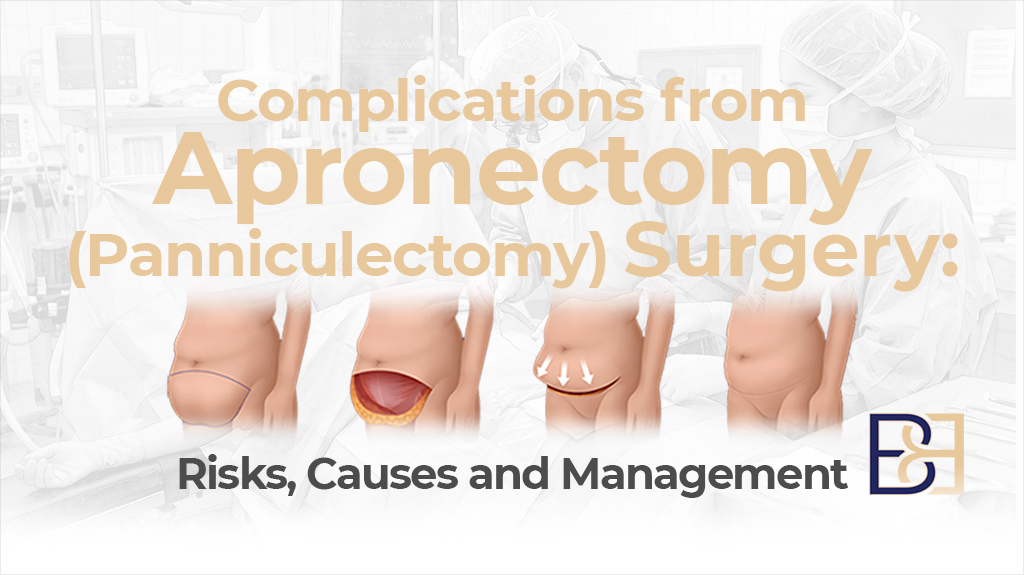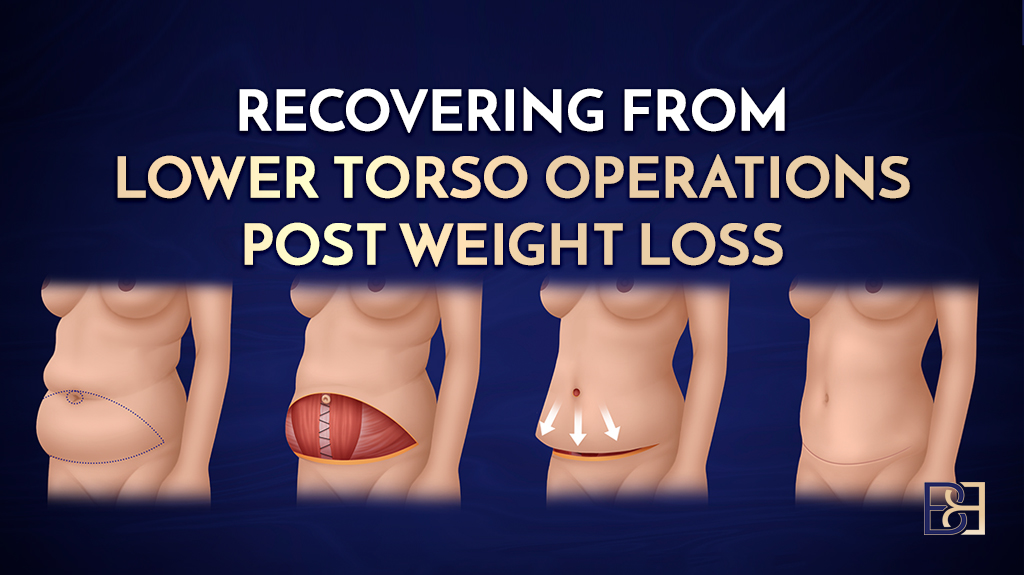
After significant weight loss, many people are left with loose skin across the abdomen that will not retract on its own. Fleur-de-Lis abdominoplasty (tummy tuck) is one approach I use to remove this excess skin and the fatty tissue that sits with it. It is not a substitute for weight loss. It is an operation for people who have already achieved significant weight loss and are left with skin laxity that diet and exercise will not resolve.
Fleur-de-Lis abdominoplasty uses two incisions. One runs horizontally, low on the abdomen. The other runs vertically, up the midline. Together, they let me remove loose skin in two directions, which is often what major weight loss leaves behind. The incisions meet to form an inverted-T, and that is the scar pattern this operation leaves.

Every operation leaves a scar, and Fleur-de-Lis is major surgery. The scar is permanent. In most patients, it settles and fades over time, though it never disappears completely. The concern is abnormal scarring, in which a scar becomes thick, raised, widened, or discoloured.
This article covers why Fleur-de-Lis scars form the way they do, the scar-related risks specific to this operation, and what both you and I can do to reduce the risk of abnormal scarring. For the general biology of how scars form and the full range of abnormal scar types, I have written a separate article on abdominoplasty scarring. Here I keep the focus on what is specific to Fleur-de-Lis after weight loss.
How a scar heals varies from patient to patient. It depends on your skin, your genetics, your nutritional status, and how your body responds to surgery, as well as the surgical technique used.
The Fleur-de-Lis Scar Pattern
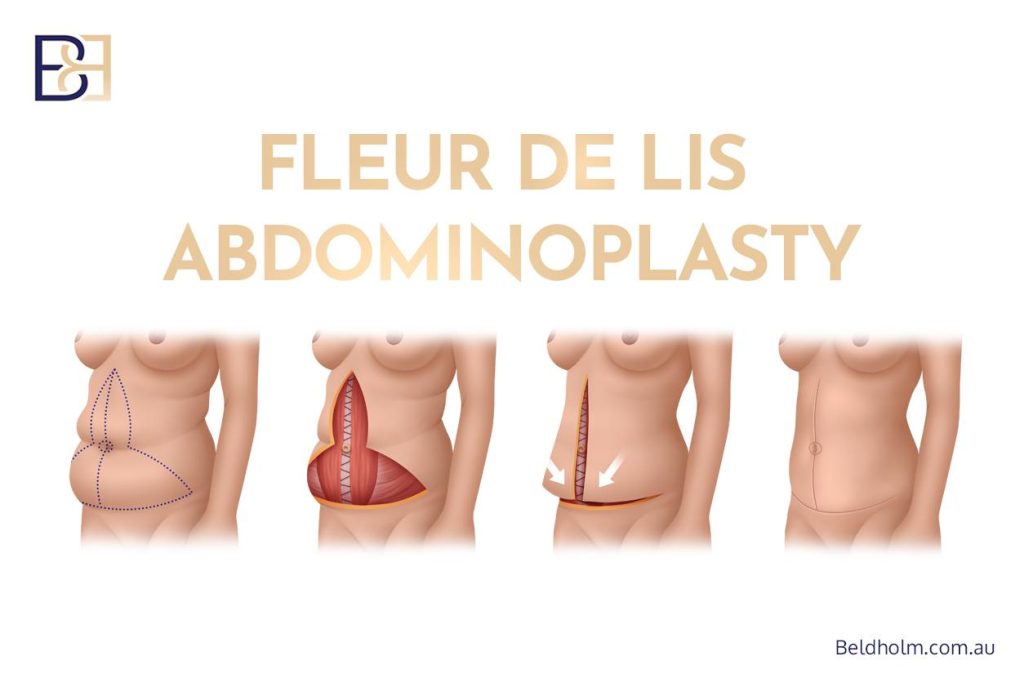
Fleur-de-Lis is named after the shape of its two incisions. On the abdomen, they produce an inverted-T scar: a horizontal line low across the lower abdomen, and a vertical line running up the midline.
The horizontal incision
The horizontal incision sits low on the abdomen, near the waistline and just above the pubic area. Its length depends on how much excess skin needs to come away, so it varies from patient to patient. I plan its position so the scar sits low and can be covered by underwear or swimwear in most patients.
To judge how much skin to remove, I use a pinch assessment during planning. I gather the loose skin between my fingers to gauge its laxity and how much can be taken without overtightening the closure. Removing too much leaves the wound under tension, and tension is one of the main drivers of poor scarring.
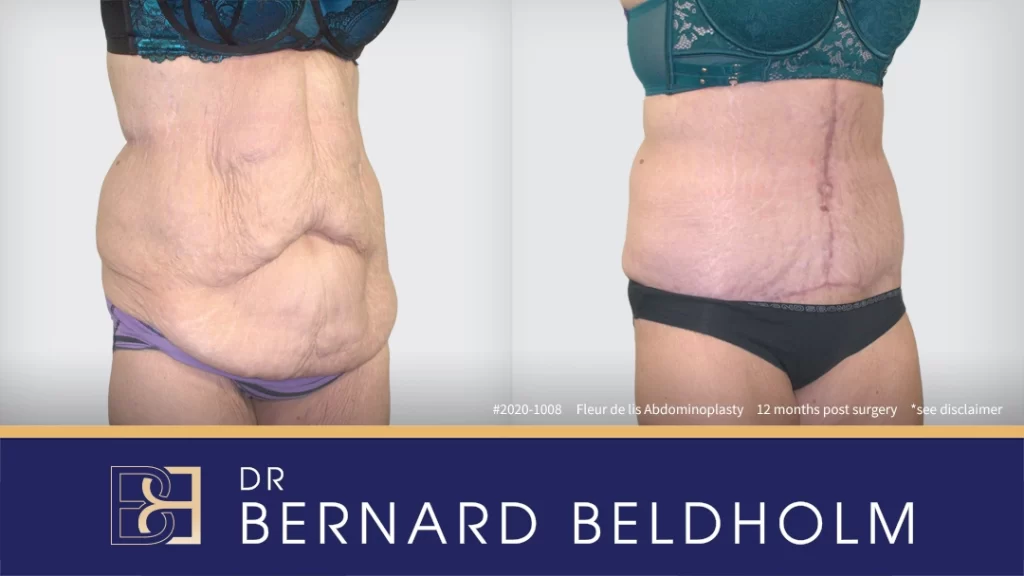
Disclaimer: Results vary, surgery has complications, seek second opinion, Operation performed by Dr Beldholm
The vertical incision
The vertical incision is what defines Fleur-de-Lis. It runs up the midline from the lower abdomen towards the umbilicus, and its length depends on how much vertical skin laxity sits in the upper abdomen. Some patients need a shorter vertical component, others a longer one.
This incision lets me remove loose skin across the width of the abdomen, not only its height. After significant weight loss, skin is often lax in both directions. The vertical incision is how I take in the horizontal excess that a single low incision cannot reach.
Where muscle repair (diastasis recti) is indicated, the vertical incision also gives midline access to do it. Muscle repair is not a routine part of every Fleur-de-Lis. It mainly applies to cases of true muscle separation (diastasis recti), which is more common after pregnancy than after weight loss alone. I assess this individually at consultation.
The inverted-T junction
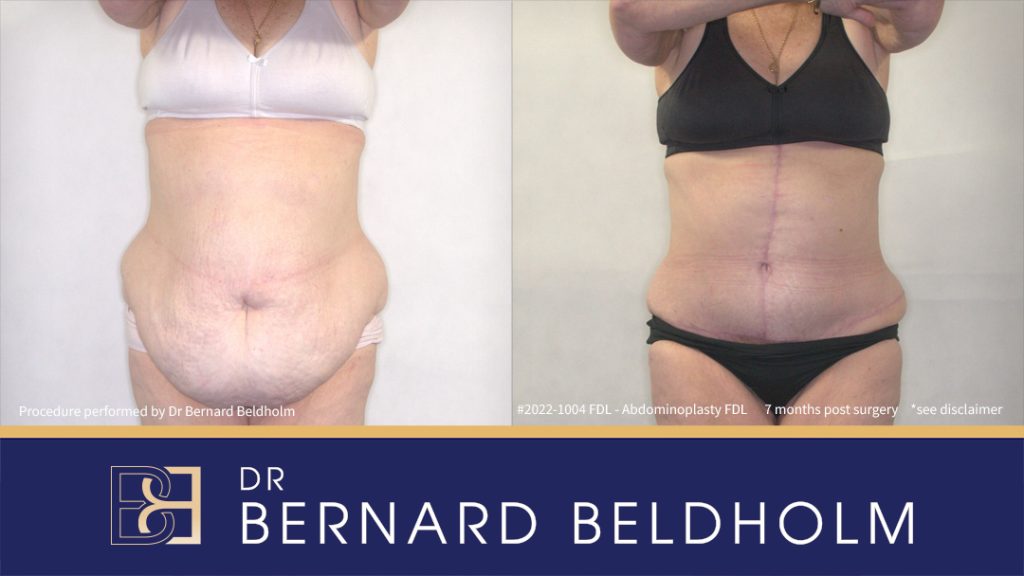
Disclaimer: Results vary, surgery has complications, seek second opinion, Operation performed by Dr Beldholm
The point where the horizontal and vertical incisions meet is the T-junction, low on the midline. This junction matters for scarring. It is the part of the closure under the most tension, and it has the least reliable blood supply, because the skin edges meeting there have been lifted from more than one direction (1).
For those reasons, the T-junction is the area I watch most closely as a wound heals. It is the part of a Fleur-de-Lis scar most likely to show delayed healing or a small area of wound breakdown. What I do to reduce that risk is covered further on.
Why the Vertical Scar Is Part of Fleur-de-Lis After Weight Loss
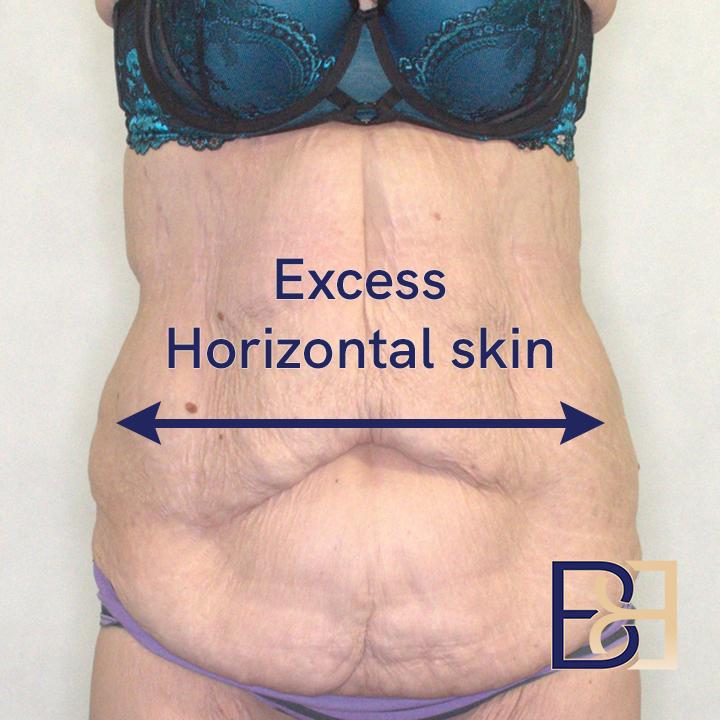
Significant weight loss changes the skin, not just the fat beneath it. When the body carries excess weight for a long time, the skin stretches to accommodate it. After major weight loss, that skin does not always shrink back. The elastic fibres within it have been stretched beyond their point of recovery, leaving loose skin that hangs and folds.
After substantial weight loss this laxity usually runs in two directions. There is horizontal looseness, where skin can be drawn in from the sides towards the midline, and vertical looseness, where skin can be drawn down from above.
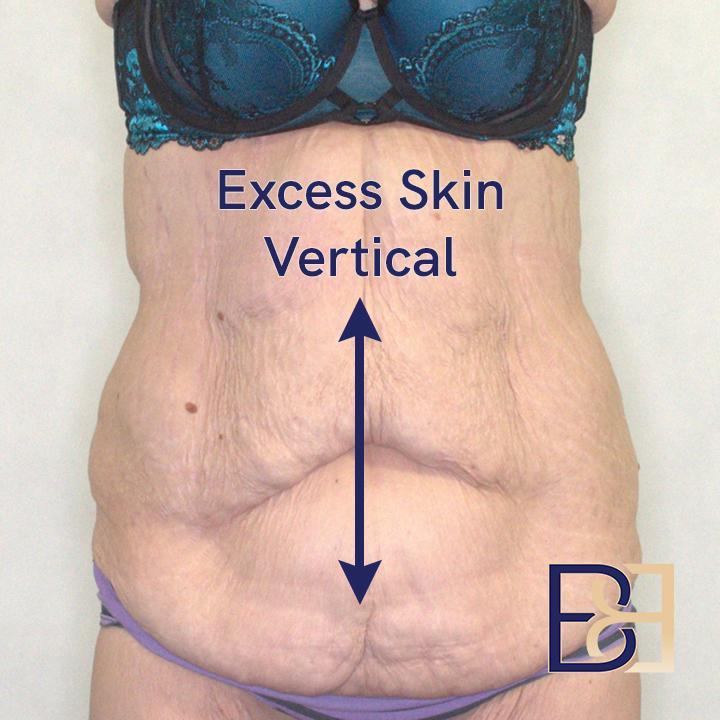
The horizontal incision takes up the vertical looseness well. On its own, it does little for the horizontal looseness across the width of the abdomen. That is what the vertical midline incision is for. By removing a wedge of skin up the midline and bringing the two sides together, I tighten the abdomen across its width as well as its height.
For a patient with laxity in both directions, that is why the vertical scar is part of the operation. It is a trade-off, and I discuss that with every patient in the consultation. The vertical scar buys two-direction tightening that cannot be achieved without it. Whether that trade-off is worth making depends on how much horizontal laxity you have and what matters to you. For some patients the horizontal looseness is minor and a vertical scar is not justified. I assess this individually.
Scar-Related Risks Specific to Fleur-de-Lis
Fleur-de-Lis adds a vertical incision and a T-junction, and that changes the risk picture. The general risks of abnormal scarring still apply, and I cover those in the main scarring article abdominoplasty scarring 101. Here I focus on the parts specific to this operation.
The T-junction is the highest-risk point
The inverted-T meeting point carries more risk than any other part of a Fleur-de-Lis scar. This comes down to tension and the blood supply at the corner:
- Tension. The skin edges are pulled together from more than one direction, so the closure at the junction sits under more load than the rest of the scar.
- Blood supply. The corner of skin at the junction has been lifted from multiple sides, which can leave its blood supply more marginal than elsewhere along the incision (1).
When part of a wound is under tension and has a more marginal blood supply, it is more likely to heal slowly or break down. That is why the T-junction is the area I plan around most carefully and watch most closely afterwards.
Wound healing complications that affect the scar

Several complications can occur after Fleur-de-Lis, and any of them can affect the final scar (2). The ones most relevant to the vertical incision and the T-junction are:
- Delayed wound healing. Healing at the junction can lag behind the rest of the incision, and a slower-healing wound tends to leave a wider or more noticeable scar.
- Wound dehiscence (wound separation). A small area of the wound, most often at the T-junction, can partially open. This is usually managed with dressings and time, but it can widen the scar at that point.
- Skin or fat necrosis. If the blood supply to the skin edge or the underlying fat is not adequate, a small area of tissue can break down. This is uncommon, but more likely at the junction than elsewhere.
- Seroma and haematoma. A collection of fluid (seroma) or blood (haematoma) under the skin can delay healing and affect how the scar settles.
Smoking, diabetes and poor nutritional status all raise the risk of these complications, which is why preparation before surgery matters. I cover that in the next section.
Abnormal scarring can still occur
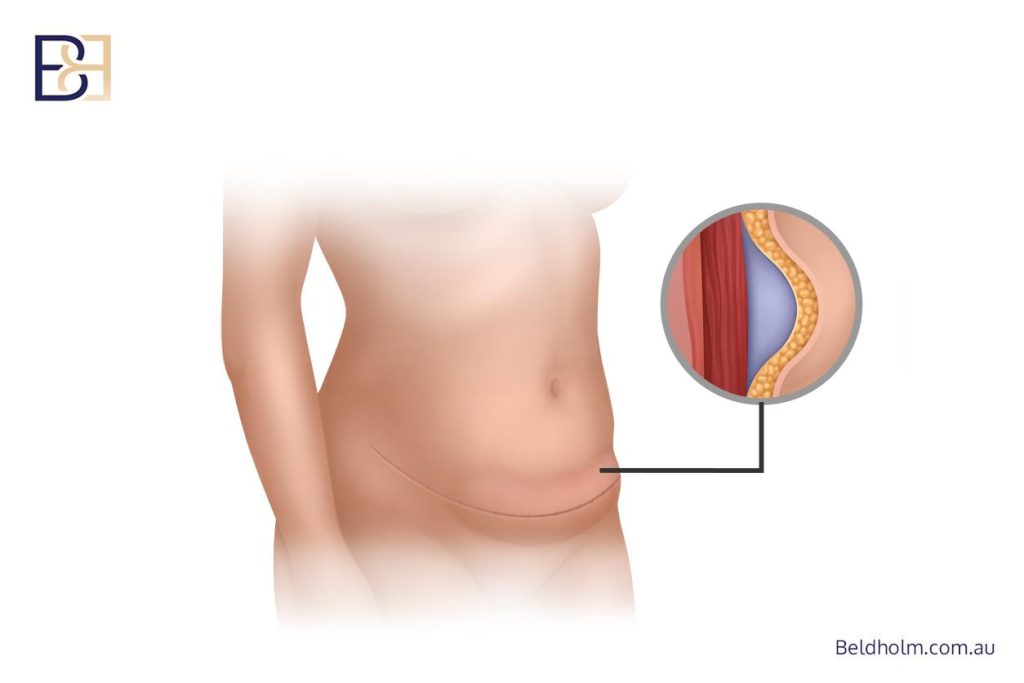
Even with a well-healed wound, the scar itself can turn abnormal. It can become thick and raised (hypertrophic scarring), spread beyond the original line (keloid scarring), or change in colour relative to the surrounding skin. Some people are more prone to this than others, often based on skin type and family history.
Published research reports that unfavourable scarring after abdominoplasty is not unusual, with reported rates as high as around 8% (3). The vertical incision and the T-junction give a Fleur-de-Lis scar more length and a higher-risk point than a horizontal scar alone, so the chance of some part of the scar healing imperfectly is real.
For the full detail on hypertrophic scars, keloids and pigmentation changes, and how each is treated, see the main abdominoplasty scarring article abdominoplasty scarring 101.
Reducing the Risk of Abnormal Scarring
A good scar comes from work on both sides. I plan and carry out the operation to give the wound the best chance of healing well, and you prepare for surgery and follow the aftercare. Neither part alone is enough.
Surgical technique
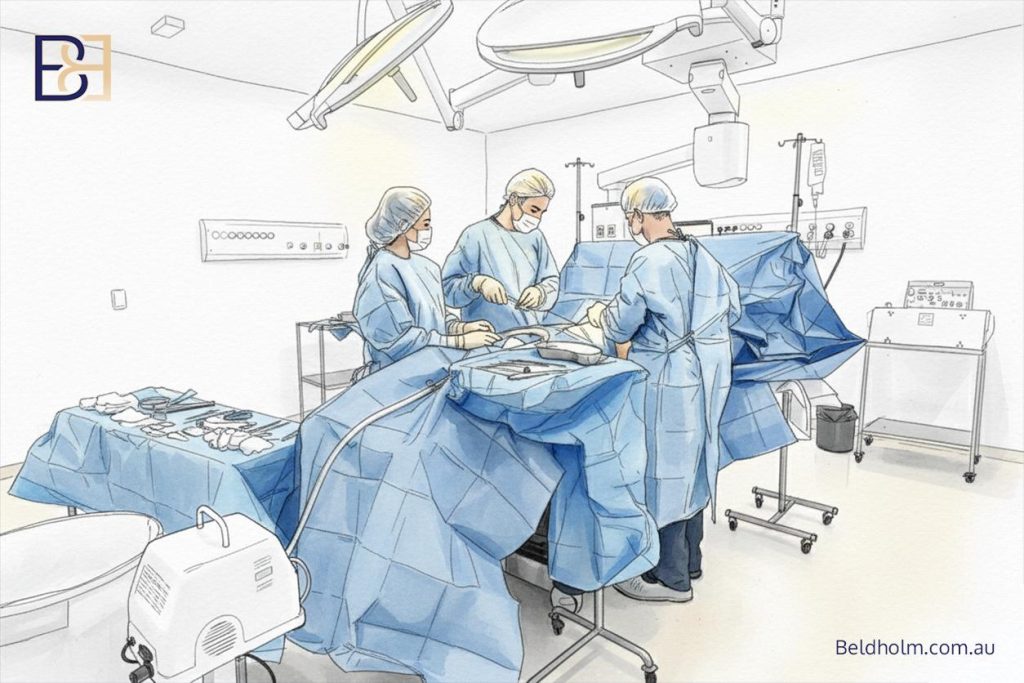
Most of what determines a scar is set in the operating theatre. With Fleur-de-Lis I focus on:
- Tension. A wound closed under tension scars more. I plan the skin removal so the edges meet without being stretched, and I close in layers so the deeper tissues carry the load rather than the skin.
- Scarpa fascia. I keep the fascia of Scarpa within the flap and dissect deep to it. Preserving this layer supports a strong, layered closure and helps protect the blood supply and lymphatics (4).
- The T-junction. Because this point carries the most risk, I take particular care with how the corner is trimmed and closed, so the skin edges meet with as little tension and as good a blood supply as possible.
- Drains. I use two closed suction drains, one on each side, brought out low near the hip. They clear fluid that would otherwise collect under the flap and delay healing. They usually stay in for two to seven days, depending on output.
Nutrition and wound healing after weight loss

Healing a wound means building tissue, and your body needs the raw materials to do it. Collagen is the protein that gives a healing wound its strength, and its production depends on adequate protein, vitamin C, zinc, and other nutrients. After significant weight loss, many patients have gaps in these, whether from reduced intake, altered absorption after bariatric surgery, or the effects of weight-loss medications on appetite. Going into a major operation with those gaps uncorrected works against the wound.
So I check and correct the nutritional status before surgery. Every post weight loss patient has a pre-operative blood panel covering full blood count, iron studies, albumin, vitamin D, vitamin B12, folate, zinc and other markers, so we work from results rather than assumptions. [LINK: pre-operative blood tests hub]
My supplement approach runs in two tiers:
- Tier 1 is universal: whey protein isolate, a complete multivitamin, vitamin D3 with K2, vitamin C and zinc. Where calcium is used, it is calcium citrate.
- Tier 2 is guided by your blood results. If a test shows a specific deficiency, we target it directly rather than supplementing blindly.
This is a summary. The full details on protein targets and supplement protocols sit in the nutrition series.
Post-operative care and compression garments
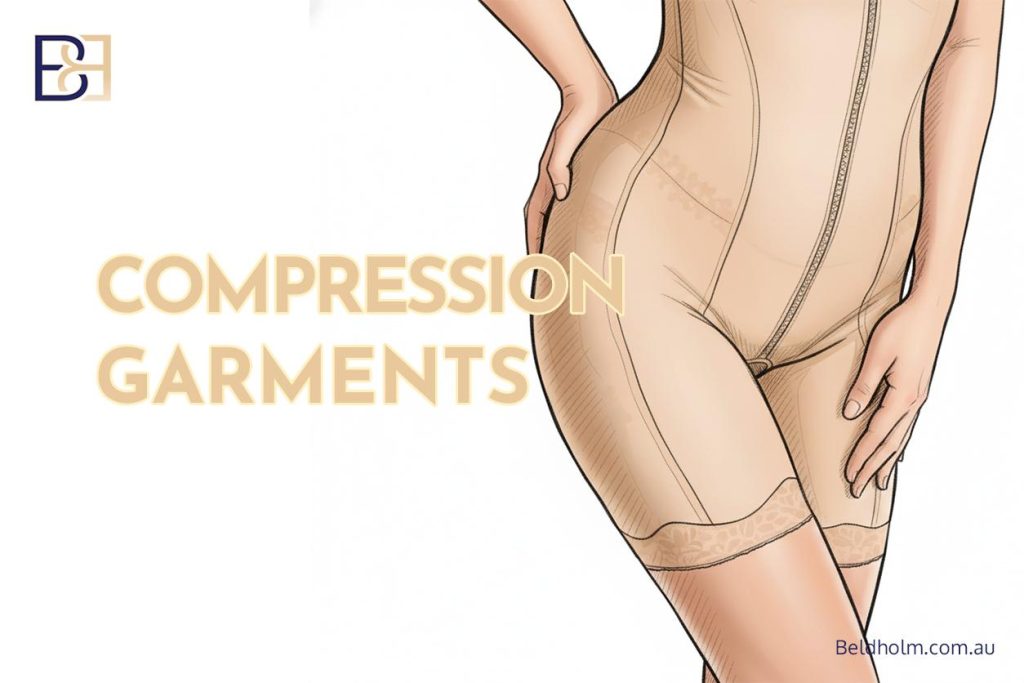
After surgery, the aim is to protect the wound while it heals and to keep tension off the scar as it matures.
- Dressings. I use a PICO dressing on the incision, a small negative-pressure dressing that supports healing in the first week. It changes around day 7, after which the incision is supported with tape (Hypafix).
- Compression garment. You wear a compression garment full-time for four weeks, then half-time for a further two weeks, with daytime wear prioritised in the second period. The garment supports the tissues, helps manage swelling and fluid, and takes the load off the healing wound.
- Smoking. If you smoke, stopping before surgery and staying off through healing is one of the most useful things you can do for the scar. Smoking narrows the small blood vessels the wound relies on, and the T-junction is the part that suffers first.
- Review. I review you at four weeks, three months, six months and twelve months, and the scar is part of every review. Once the wound has healed, scar measures such as taping, silicone and massage come in, which I cover in the next section.
Treating Established Scars
Some scars need help to settle, and the T-junction is the part of a Fleur-de-Lis scar most likely to. If a scar becomes thick, raised or widened, several measures can improve it. None remove a scar completely, and how well any of them works varies between patients.
The main options:
- Silicone. Silicone sheets or gel are the first-line measure for thick or raised scars and are well supported by evidence (5).
- Pressure and taping. Ongoing support over the scar can help it flatten and prevent it from widening as it matures.
- Massage. Once the wound is fully healed, scar massage can soften and flatten the tissue.
- Corticosteroid injections. For hypertrophic or keloid scars, steroid injections can reduce thickness.
- Laser therapy. Lasers can improve the colour and texture of a settled scar.
- Revision surgery. If a scar heals poorly despite these measures, a minor revision can be done once the scar has fully matured, usually no earlier than a year after surgery.
I assess the scar at each review and start the simplest effective measures early. The detail on how each treatment works, and which suits which scar, is in the main abdominoplasty scarring article.
Realistic Expectations About FDL Scars

The honest position on Fleur-de-Lis scars:
- The scars are permanent. The horizontal scar, the vertical scar and the T-junction do not go away. They fade and settle, but they stay visible on close inspection.
- They take time to mature. A scar is not finished at six weeks. It can stay firm, raised or pink for many months, and it continues to change for a year or more. Judging a scar too early gives a misleading picture.
- The vertical scar is a real trade. Fleur-de-Lis removes loose skin in two directions, and the vertical scar is the cost of that. For a patient with significant skin laxity, this is usually an acceptable exchange, but it is a decision to make with full understanding beforehand, not after the fact.
- Outcomes differ. How your scar settles depends on your skin type, genetics, nutrition, healing and whether any complications occur. Two patients having the same operation can heal differently. Results vary, and I cannot promise a particular scar outcome.
My aim is a scar that sits low, settles well and can usually be covered by clothing. What I can commit to is careful planning, sound technique and close follow-up. The rest depends on how your body heals, which is why I am frank about this before surgery rather than after.
When to Contact Me After Surgery

Most healing runs to plan, but you should know what to watch for and who to call. Contact me or the hospital if you notice:
- Increasing redness, heat or swelling around the incision
- Discharge or an unpleasant smell from the wound
- A part of the wound opening, most often at the T-junction
- Fever or feeling generally unwell
- Bleeding, or a firm and growing swelling under the skin
- Pain getting worse rather than better, or pain not controlled by your medication
Early problems are better to manage early, and catching a wound issue quickly can make the difference to how the scar ends up. Do not wait to see if something settles on its own.
How to reach the right help:
- After hours, call Maitland Private Hospital. The nursing staff provide phone triage and will direct you.
- If something needs to be examined in person and the hospital advises it, go to your local emergency department. Maitland Private is not an emergency department.
- For anything life-threatening, such as chest pain, difficulty breathing or heavy bleeding, call 000.
During business hours you can reach my rooms directly. I would rather hear about a concern early than have you sit on it.
References
- Friedman T, O’Brien Coon D, Michaels V J, Purnell C, Hur S, Harris DN, Rubin JP. Fleur-de-Lis abdominoplasty: a safe alternative to traditional abdominoplasty for the massive weight loss patient. Plast Reconstr Surg. 2010;125(5):1525-1535.
- Dawson-Amoah K, Kelecy M, Szymanski KD. Abdominoplasty. In: StatPearls [Internet]. Treasure Island (FL): StatPearls Publishing; 2026.
- Chambers A. Management of Scarring Following Aesthetic Surgery. In: Teot L, Mustoe TA, Middelkoop E, et al., editors. Textbook on Scar Management: State of the Art Management and Emerging Technologies [Internet]. Cham (CH): Springer; 2020. Chapter 45.
- Costa-Ferreira A, Rebelo M, Silva A, Vasconez LO, Amarante J. Scarpa fascia preservation during abdominoplasty: randomized clinical study of efficacy and safety. Plast Reconstr Surg. 2013;131(3):644-651.
- Mustoe TA, Cooter RD, Gold MH, Hobbs FDR, Ramelet AA, Shakespeare PG, et al. International clinical recommendations on scar management. Plast Reconstr Surg. 2002;110(2):560-571.