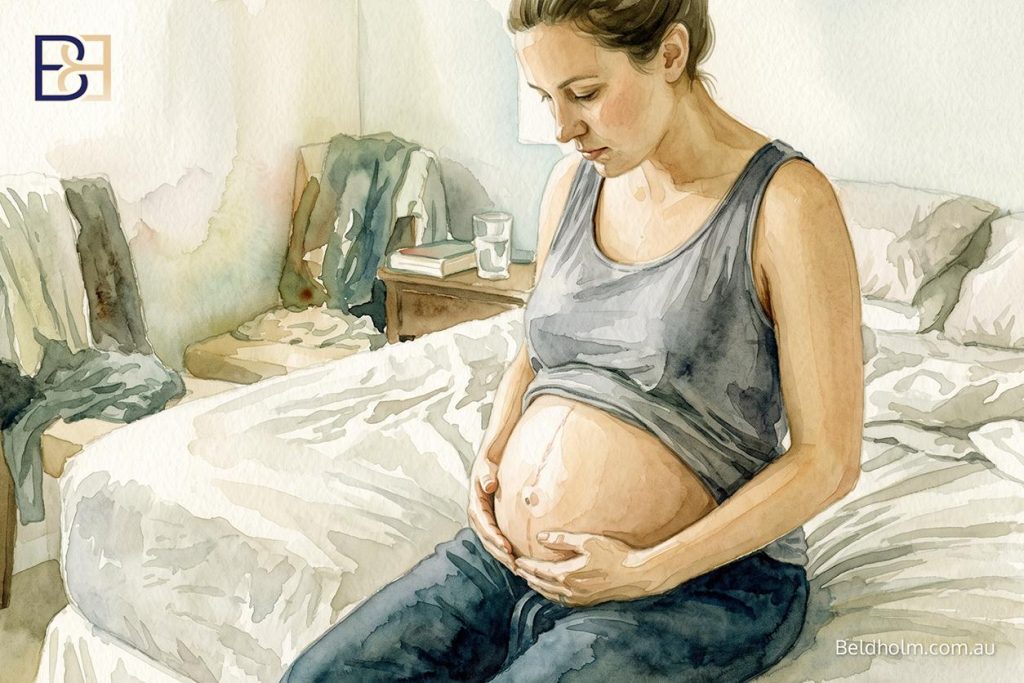
Pregnancy stretches the abdominal skin and can separate the abdominal muscles down the midline. It can also change the position and shape of the belly button (umbilicus). These are normal changes after having children, and many women settle back close to how they were before. In others, some of the change stays.
Abdominoplasty (tummy tuck) after pregnancy is a large part of my practice, and the belly button is one of the things patients ask me about most. This article explains what the umbilicus is, how pregnancy can change it, and how I manage it when I perform an abdominoplasty after pregnancy.
One note on timing first, because it applies to everything below. I plan this surgery once your family is complete and breastfeeding has finished, and usually around 12 months after your most recent pregnancy as a general guide only. The right time is different for every woman and is assessed at consultation.
What the belly button (umbilicus) is
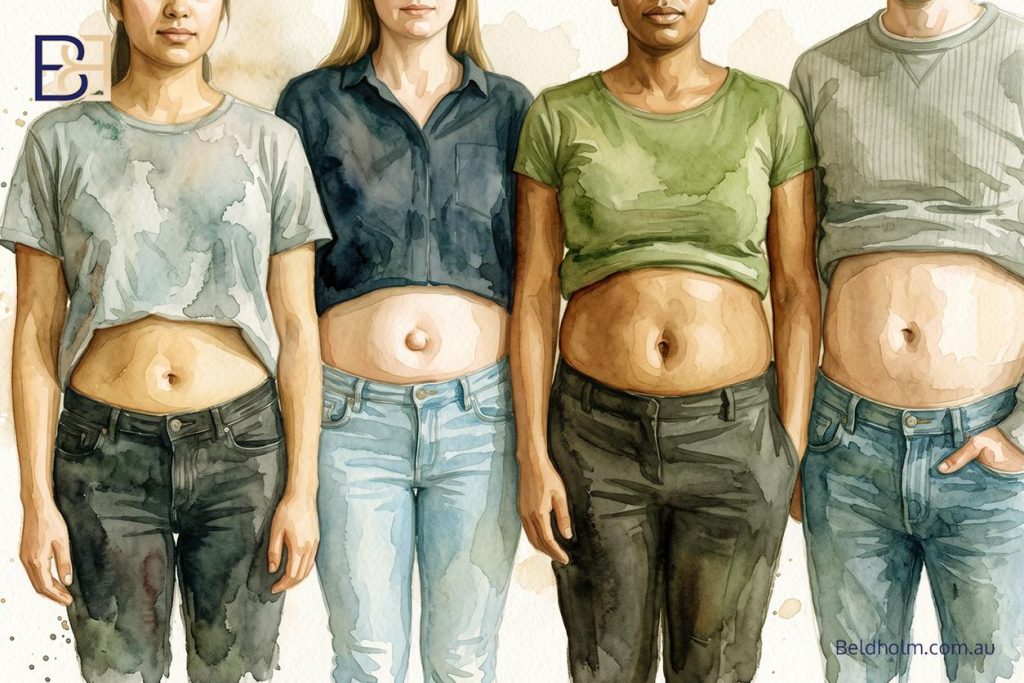
The belly button (umbilicus) is the scar left behind where the umbilical cord attached before you were born. In that sense it is everyone’s first scar. It sits in the midline of the abdomen, and beneath the surface it is tethered to the abdominal wall by a short stalk of tissue. That tether matters during surgery, and I will come back to it.
The shape of the umbilicus varies from one person to the next. Common patterns include:
- An inward belly button (an “innie”), which is the most common
- An outward belly button (an “outie”)
- A round, oval, or more vertical opening
None of these is more correct than another. They are normal individual variations, in the same way the shape of a nose or the colour of the eyes varies between people.
The umbilicus can also change over the course of life, including during and after pregnancy. Pregnancy is one of the more common reasons it changes.
How pregnancy can change the umbilicus and abdominal wall
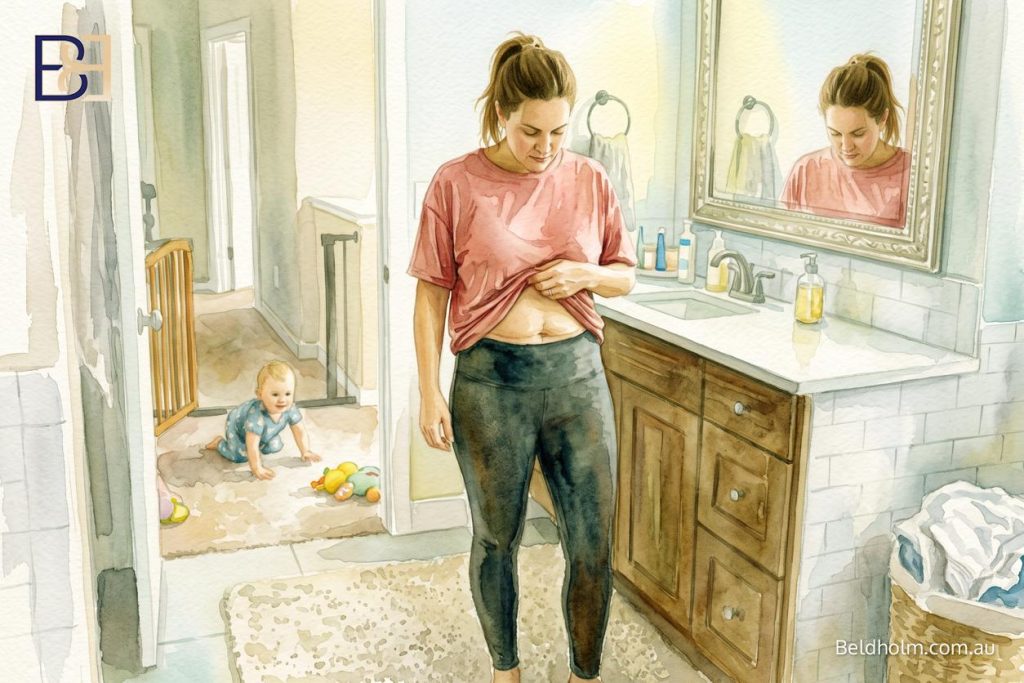
Carrying a pregnancy places the abdominal wall under steady stretch for months. Several changes are common afterwards, and they often involve the belly button, either directly or through the tissues around it.
The skin
The skin of the lower abdomen stretches as the uterus grows. After delivery it usually contracts again, though it does not always return fully. Where stretched skin stays loose, it can sit over or partly cover the umbilicus.
The abdominal muscles (diastasis recti)
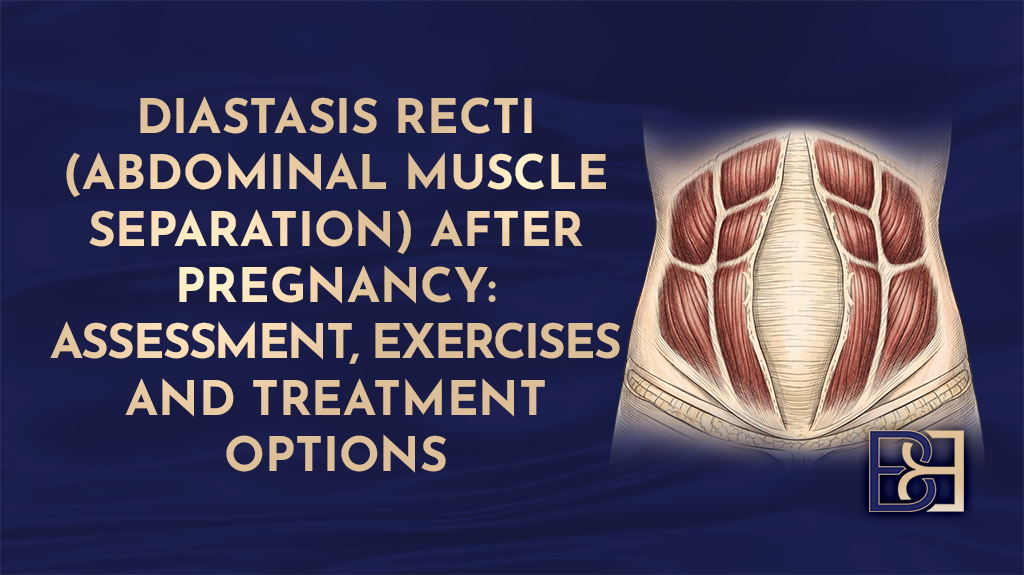
Down the midline of the abdomen, the 2 long rectus muscles are joined by a band of connective tissue called the linea alba. During pregnancy this band stretches and widens so the muscles can separate and make room for the baby. This separation is called diastasis recti (muscle separation), and it is a stretching of the linea alba, not torn muscle. It is very common in late pregnancy and often narrows again in the months after birth, though in some women it stays wider than before (1).
The belly button itself
As the abdominal wall stretches and the midline widens, the umbilicus can be pulled on, flattened, or shifted slightly in position. Some women notice their belly button pushes outward during pregnancy and then settles again afterwards. Part of the reason I look closely at the umbilicus at consultation is that its stalk connects to this same midline tissue.
Umbilical hernia
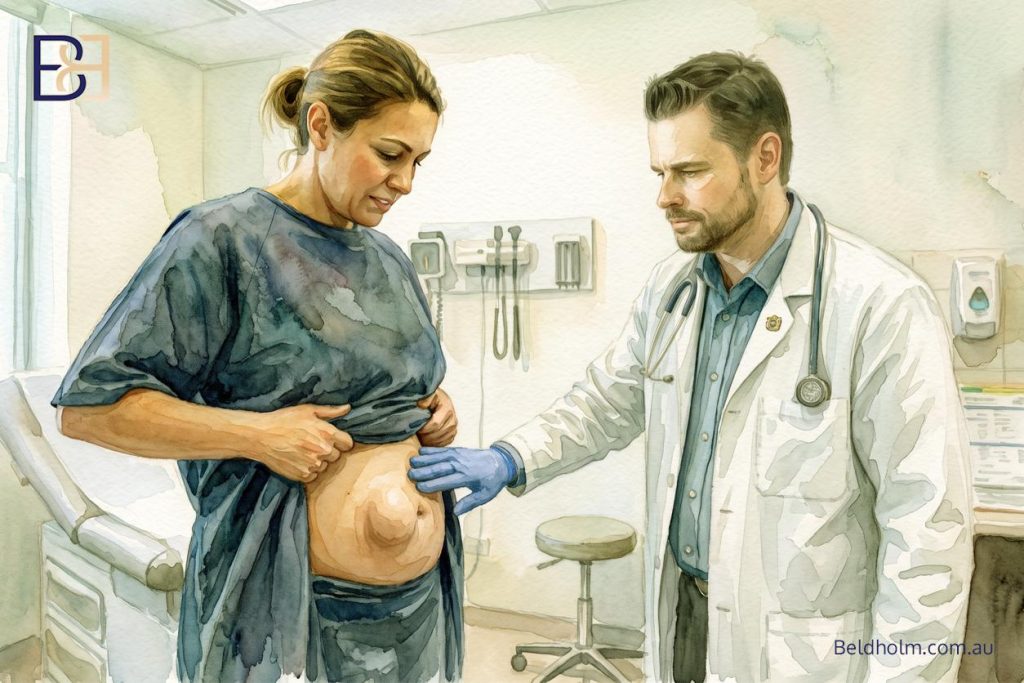
Pregnancy can also bring out an umbilical hernia, which is a small gap in the abdominal wall at the belly button that a little abdominal tissue can push through. Sometimes it settles after birth and sometimes it does not. Where one is present, it can often be repaired during the abdominoplasty itself.
Caesarean or vaginal birth
The belly button itself is not changed by how you deliver. Skin stretch and muscle separation can follow both vaginal and caesarean birth. A caesarean leaves a low scar on the abdomen, which I plan the abdominoplasty incision around, but that scar sits well below the umbilicus and is a separate consideration.
How I manage the umbilicus during abdominoplasty after pregnancy
How the belly button is handled depends on the type of abdominoplasty, which in turn depends on how much loose abdominal skin you have and where your abdominal muscle separation sits. Here is what happens in each case.
Full and extended abdominoplasty
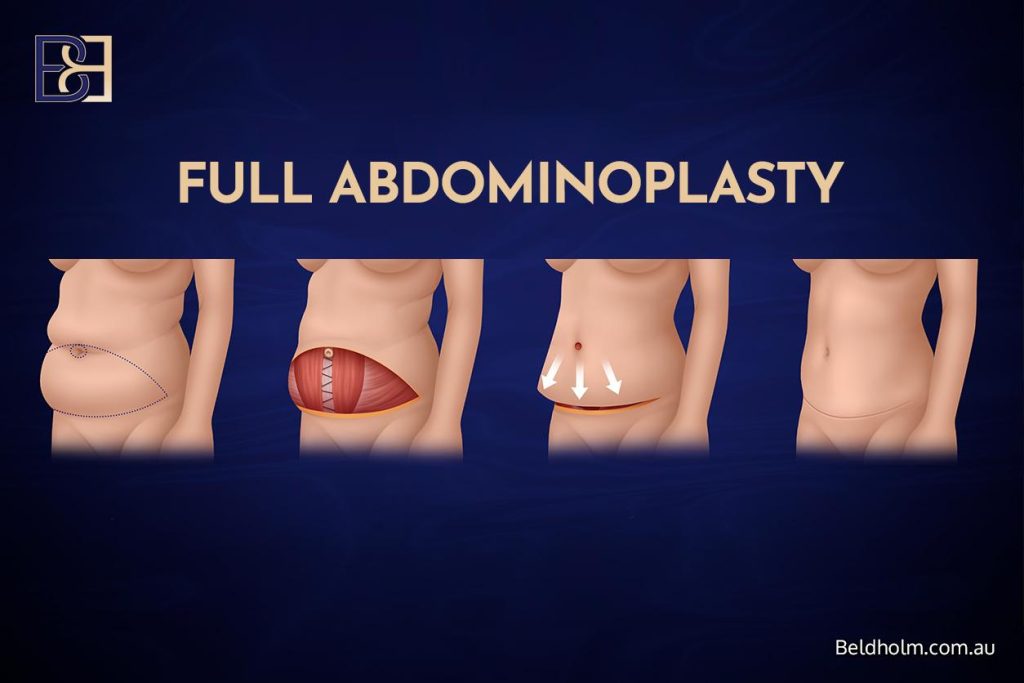
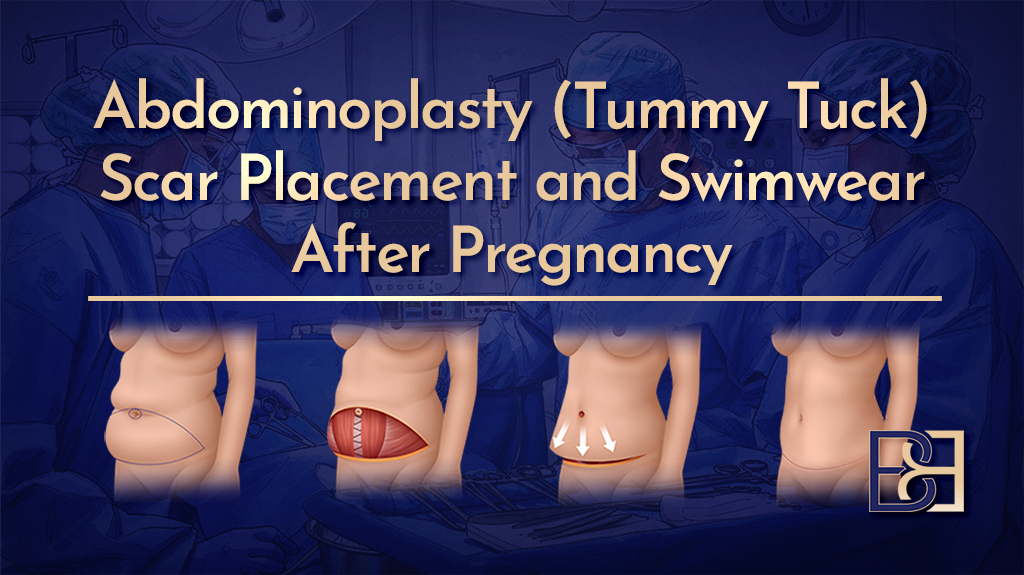
In a full abdominoplasty I make a low incision from hip to hip and lift the skin and fat of the lower abdomen up off the muscle. The belly button (umbilicus) cannot travel up with that skin, because its stalk holds it to the abdominal wall underneath.
So I cut carefully around the umbilicus and leave it attached to the abdominal wall on its stalk while the skin around it is freed and slides down. The belly button stays exactly where it belongs on the abdominal wall. Once the loose skin has been drawn down and the excess skin and fat removed, I make a new opening in the skin at the point that sits over the umbilicus, bring it through, and stitch it into position. This step is called umbilical transposition.
It is your own belly button. It is repositioned, not replaced. The process leaves a fine scar in a ring around the umbilicus.
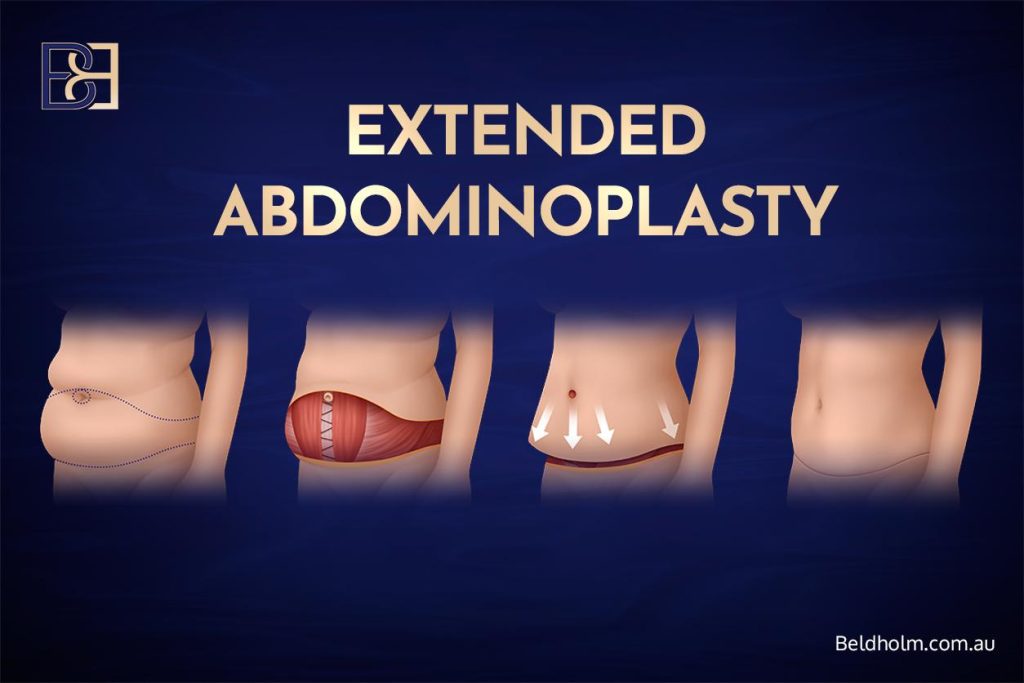
For some post pregnancy patients the loose skin extends around toward the hips. In that situation the incision continues past the hip bones, which is an extended abdominoplasty. The belly button is managed in the same way.
Diastasis recti repair and where the belly button sits
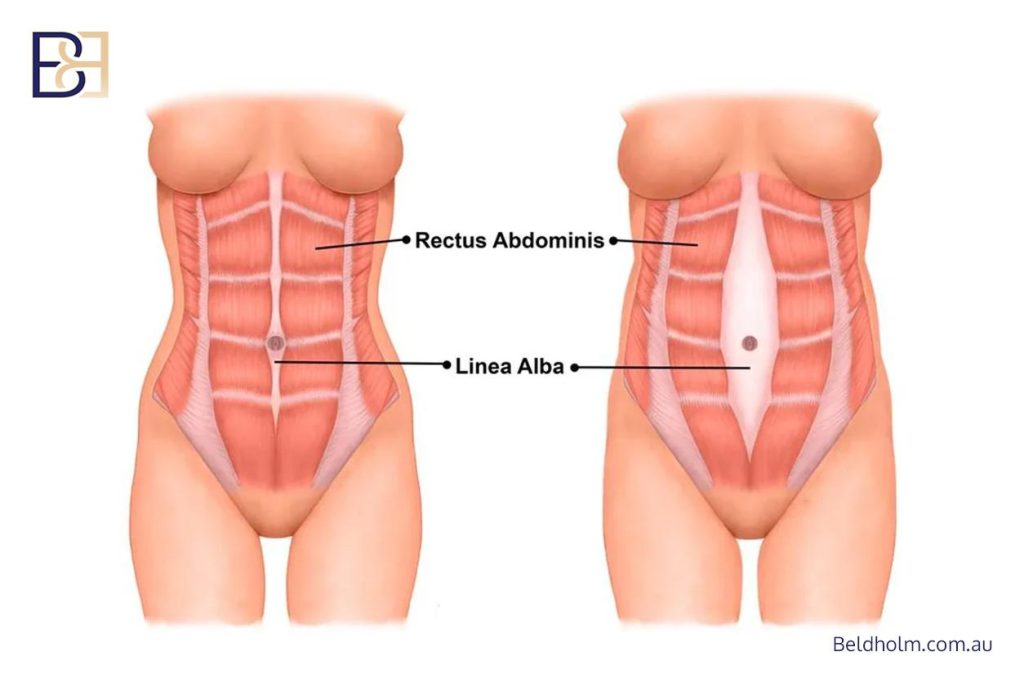
Most post pregnancy patients have some muscle separation, and I repair it during the same operation. To do this I bring the 2 rectus muscles back toward the midline and stitch the stretched linea alba, which narrows the midline of the abdominal wall.
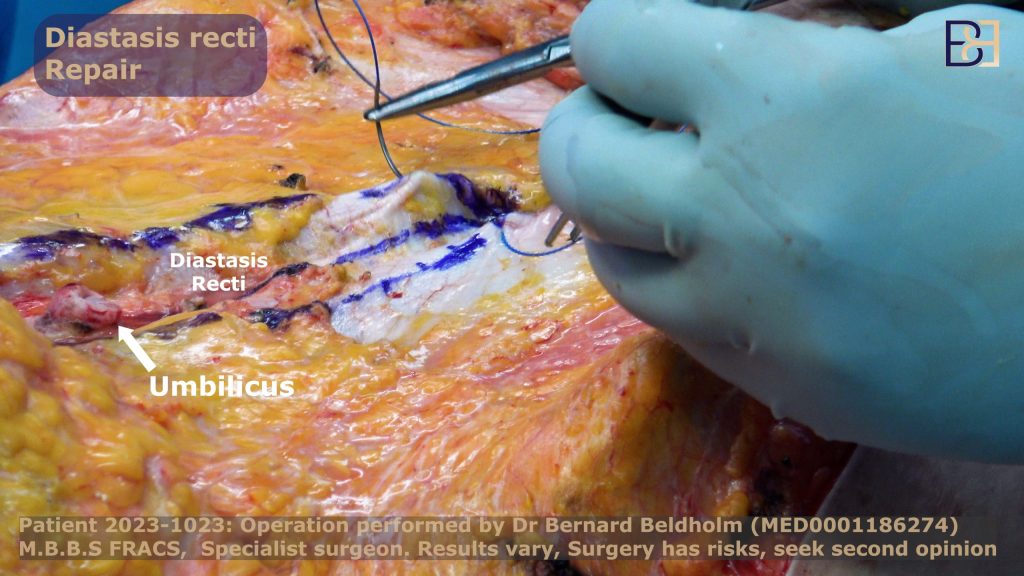
Because the umbilical stalk attaches to this midline tissue, narrowing the midline can shift where the belly button sits. This is why I plan and cut the new umbilical opening after the muscle repair is done, not before, so the belly button ends up centred and level once everything underneath has been brought back together.
Limited abdominoplasty
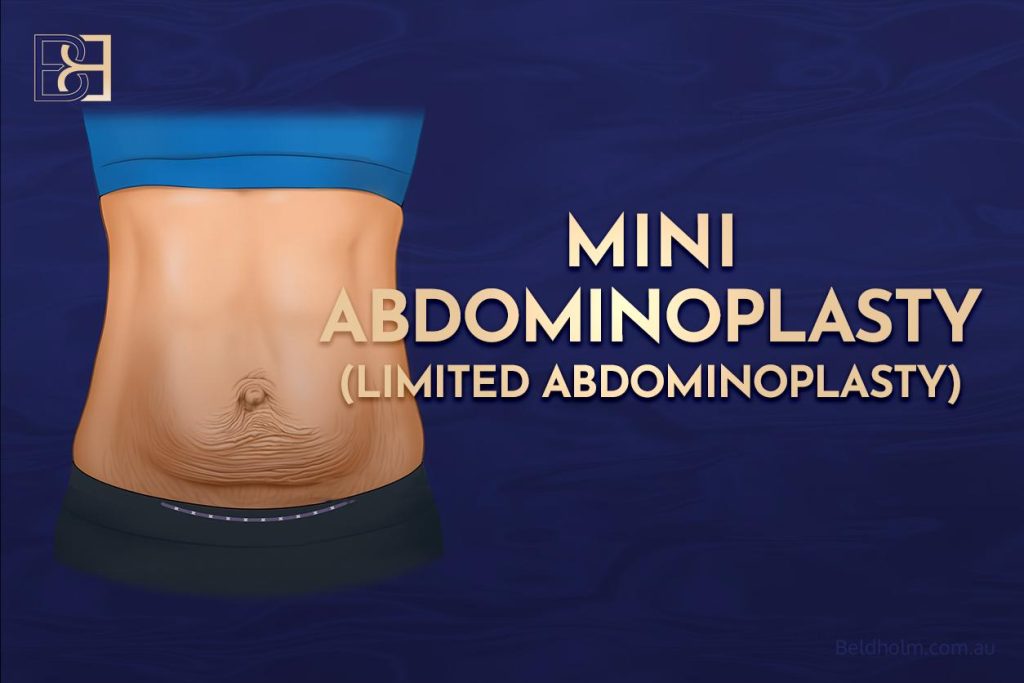
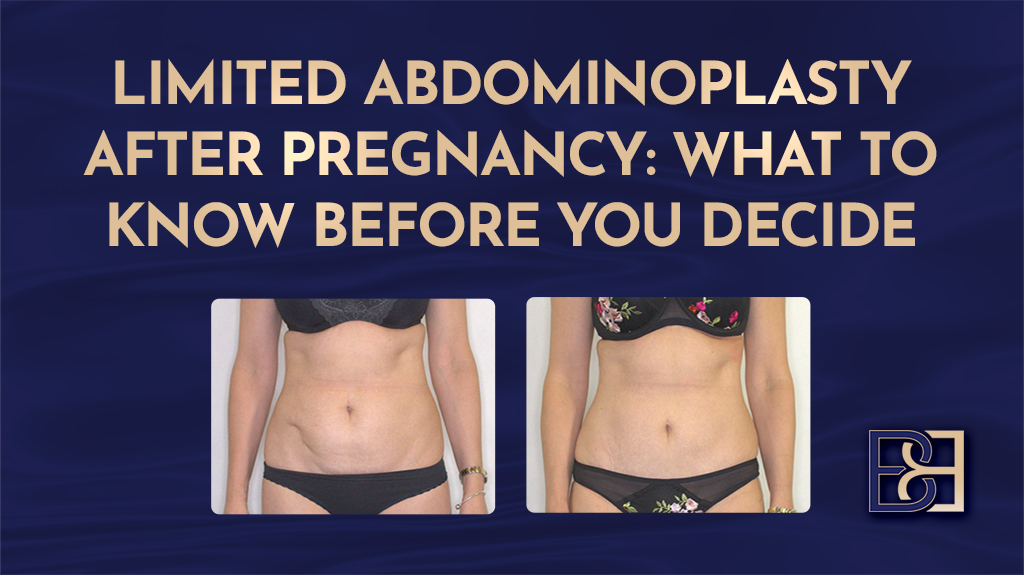
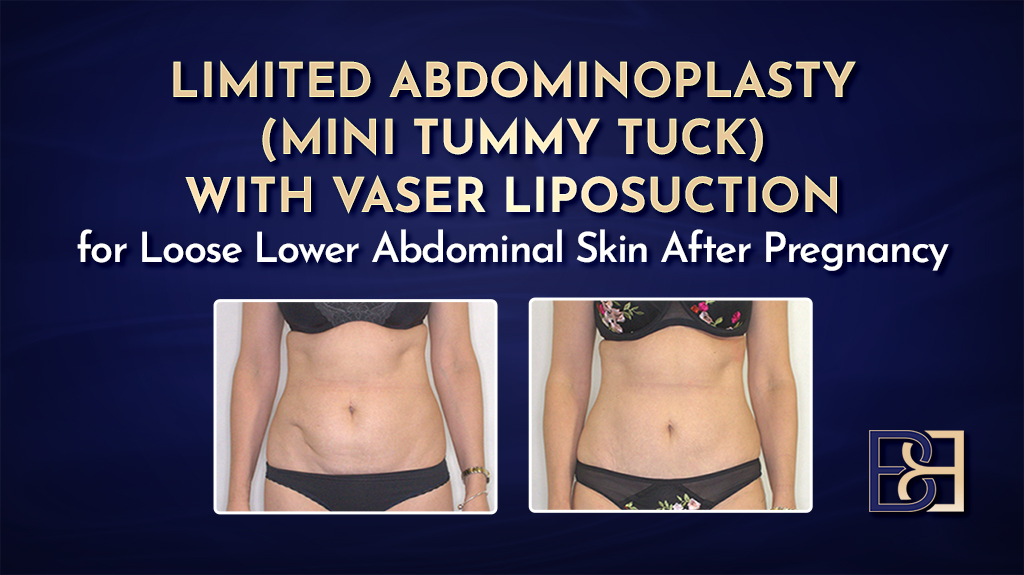
A limited abdominoplasty (mini tummy tuck) removes a smaller amount of excess skin from the lower abdomen only, below the belly button. Because the skin removed sits below the umbilicus, the belly button usually does not need to be moved at all. It stays on its own stalk, and there is usually no ring scar around it.
In some cases, where a little more downward movement is wanted, I use an umbilical float. Here the stalk is released a small amount so the belly button settles slightly lower, without a full transposition.
Whether a limited abdominoplasty suits you depends on how much loose skin you have and whether your muscle separation extends into the upper abdomen above the belly button. Many post pregnancy patients have separation in the upper abdomen, which a limited procedure cannot reach, so this is assessed carefully at consultation.
Where liposuction is used alongside any of these operations, I use ultrasound-assisted suction lipectomy (VASER liposuction) to refine the abdominal contour. This does not change how the belly button itself is handled.
Umbilical hernia found at the time of surgery
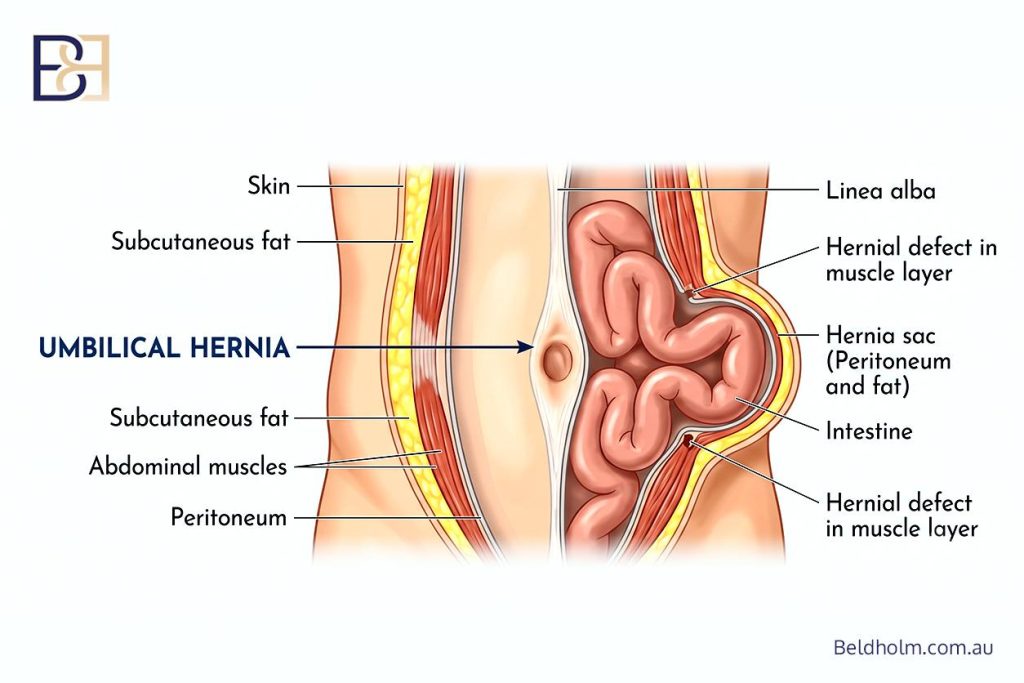
Some women develop a small umbilical hernia during or after pregnancy. It is a small gap in the abdominal wall at the belly button that lets a little tissue push through, and it can show up as the belly button turning outward or feeling soft. It does not always settle after birth.
I check for a hernia at consultation and again during the operation. If a small umbilical hernia is present, I can usually repair it during the same abdominoplasty, because I am already working on the abdominal wall in that area. The repair closes the gap so the tissue no longer pushes through.
There is one point I take particular care with. The belly button gets part of its blood supply through its stalk, from the abdominal wall. When a hernia repair and umbilical transposition are both needed, I plan the repair to preserve that blood supply, so the belly button heals well in its new position.
Not everyone has a hernia, and the ones I see vary in size. A larger or more complex hernia may need a different plan, which I would discuss with you before surgery. Whether a repair is needed, and how it is done, is decided for each patient individually.
Standalone umbilicoplasty (belly button reshaping)
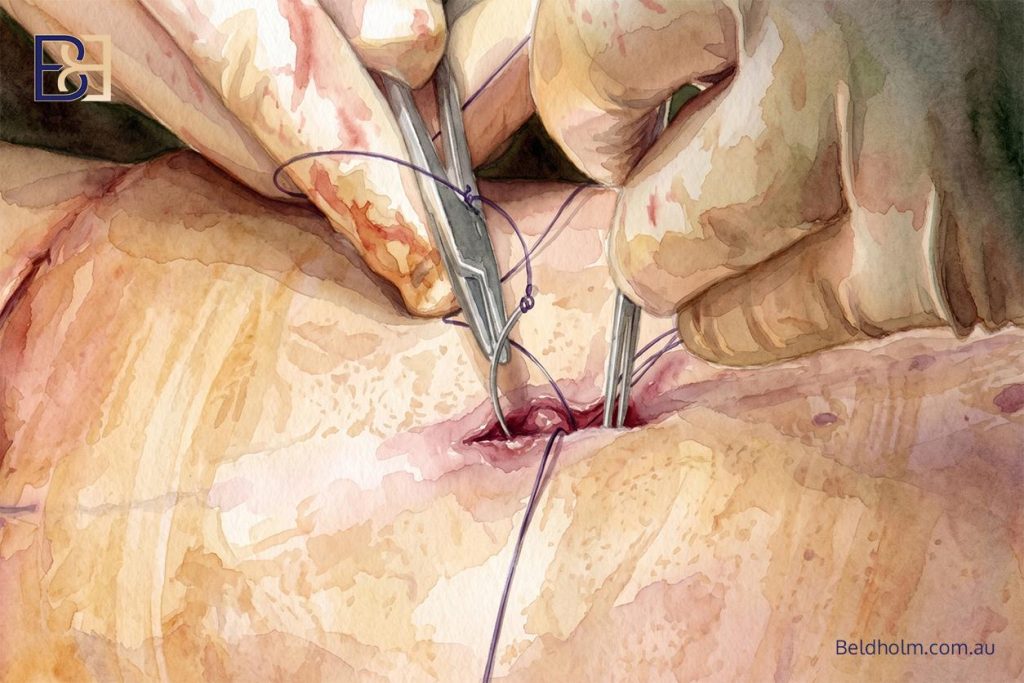
Occasionally the belly button is the only concern, with little loose skin and no muscle separation that would call for an abdominoplasty. In that situation, umbilicoplasty (belly button reshaping) is a smaller, separate option.
Umbilicoplasty is a smaller surgical procedure that reshapes the umbilicus on its own, without removing abdominal skin or repairing the muscle layer. It is done through small incisions in and around the belly button, and can reshape a stretched or outward-pointing umbilicus. Where a small umbilical hernia is contributing to the umbilical shape, that is repaired at the same time.
In practice, most women who come to me after pregnancy have some loose skin, muscle separation, or both. For them, the belly button is dealt with as part of the abdominoplasty rather than on its own, because that is the operation that suits the wider changes. Standalone umbilicoplasty is therefore uncommon in my post pregnancy practice.
Whether umbilicoplasty on its own, or as part of an abdominoplasty, is the right option is assessed at consultation.
Scars and healing around the umbilicus
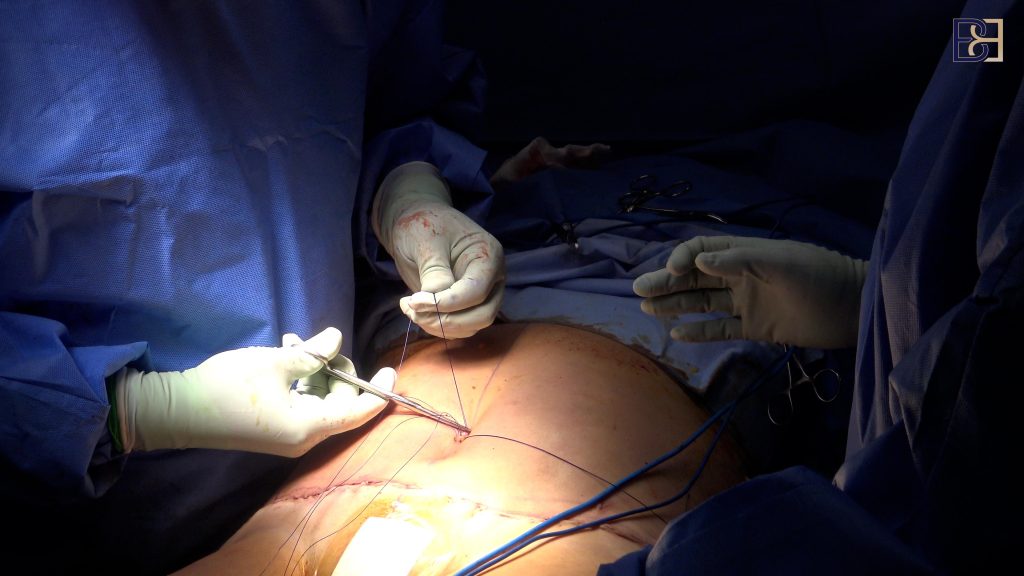
Any operation that moves the belly button leaves a scar, and a scar is permanent even when it settles well.
When I transpose the umbilicus during a full or extended abdominoplasty, the umbilical scar sits in a ring around the belly button (umbilicus). This scar is separate from the main abdominoplasty scar, which runs low across the abdomen.
In a limited abdominoplasty where the belly button is not moved, there is usually no scar around it at all.
Scars change over time. In the early months a scar is firm and pink or red. It then softens and fades, and most of that settling happens over the first 12 to 18 months, though a scar can keep maturing for up to 2 years. The healing process varies from person to person and is influenced by skin type and genetics.
Smoking is the single factor most within your control. Smoking reduces blood supply to healing tissue, and this matters around the belly button in particular, because it depends on the blood supply running through its stalk (2). I ask patients to stop smoking well before surgery for this reason.
I review your scars at each follow-up visit and give you scar care advice after surgery. If a scar thickens more than expected, which happens in a small number of people, we discuss the options at review.
Book your appointment online now
Risks specific to the belly button
Every operation carries risk, and moving or reshaping the belly button has a few of its own. I go through all of these with you before surgery. The umbilical ones are:
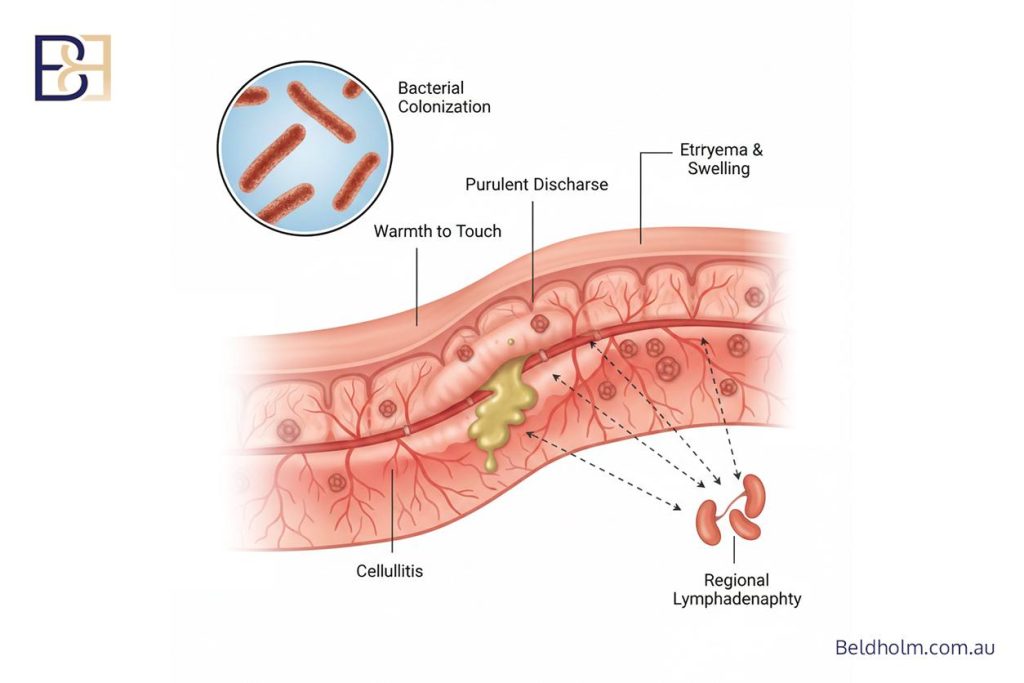
- Delayed healing at the belly button. The edge of the umbilical wound can be slow to heal or separate a little. This is usually managed with dressings and settles with time.
- Altered sensation. The skin around the belly button can feel numb or different after surgery. This commonly resolves over the months that follow, though a small area of altered feeling can persist.
- Position or shape not turning out even. The belly button can end up slightly off-centre, higher or lower than planned, or a little uneven in shape. Where this is noticeable, a minor revision under local anaesthetic can be considered once everything has healed.
- Narrowing of the opening. The umbilical opening can tighten as it heals, which is called stenosis. It is uncommon and, if it happens, can be released.
- Infection. The belly button holds bacteria, so it is kept clean before and after surgery. Infection is uncommon but possible and is treated if it occurs.
- Partial or complete loss of the belly button. This is the most serious umbilical risk, and it is rare. It happens if the blood supply through the umbilical stalk is compromised and the tissue does not survive (3). The risk is higher in people who smoke, and when a hernia repair and transposition are done together. This is why I take particular care with the blood supply, and why stopping smoking before surgery matters.
These are the risks tied to the belly button itself. The associated risks of an abdominoplasty are broader, and include bleeding, infection, fluid collection, blood clots, and problems with wound healing. I discuss all of these in full at consultation so you can weigh them before deciding.
Recovery, including caring for young children
Because moving the belly button is part of a full abdominoplasty, recovery around the umbilicus follows the recovery from that operation. It is not a minor, few-day recovery, and it helps to plan for that in advance.
In the first week or 2, the belly button is swollen, bruised, and tender, and it can look quite different from how it will end up. There are stitches around it, usually under a small dressing, and I ask you to keep the area clean and dry as directed. The unusual early appearance settles gradually as the swelling goes down, and the final shape becomes clear over the following months as the scar matures.
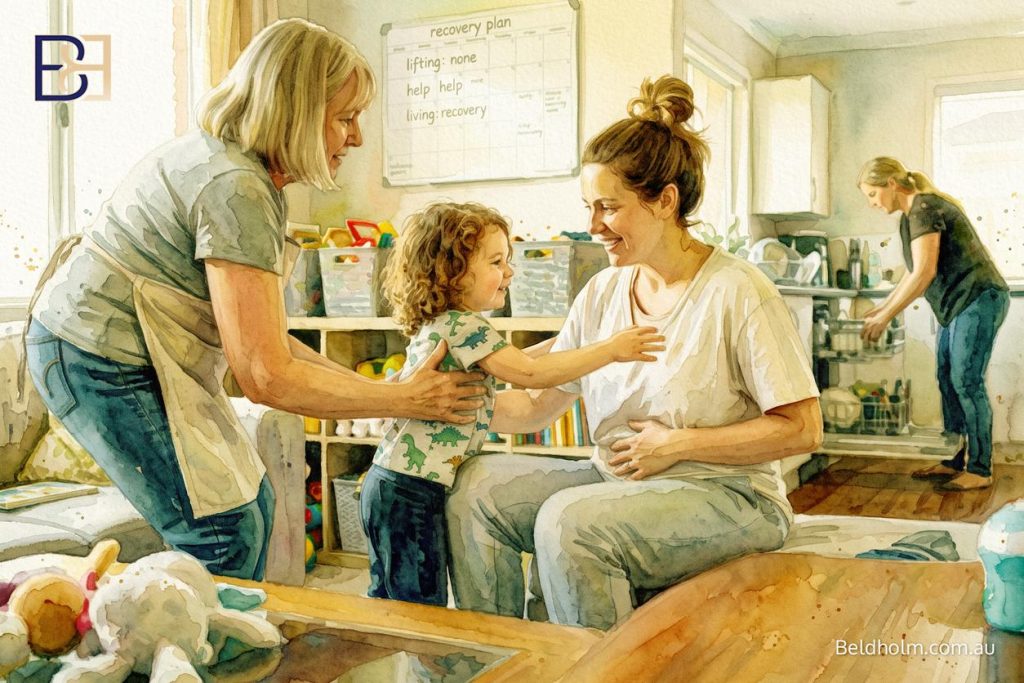
Lifting is the part that matters most for mothers. I limit heavy lifting for 4 to 6 weeks after surgery, and that includes lifting toddlers and young children. This is not caution for its own sake. The muscle repair and the healing belly button both need time before they are loaded. For this reason I ask patients to organise help at home before surgery, whether from a partner, family, or a paid arrangement, so that you are not lifting children when you should be healing.
I review your healing at scheduled visits over the first year after surgery, and I check the belly button at each of them. If anything is not settling as expected, it is picked up and managed early.
If you are planning more children
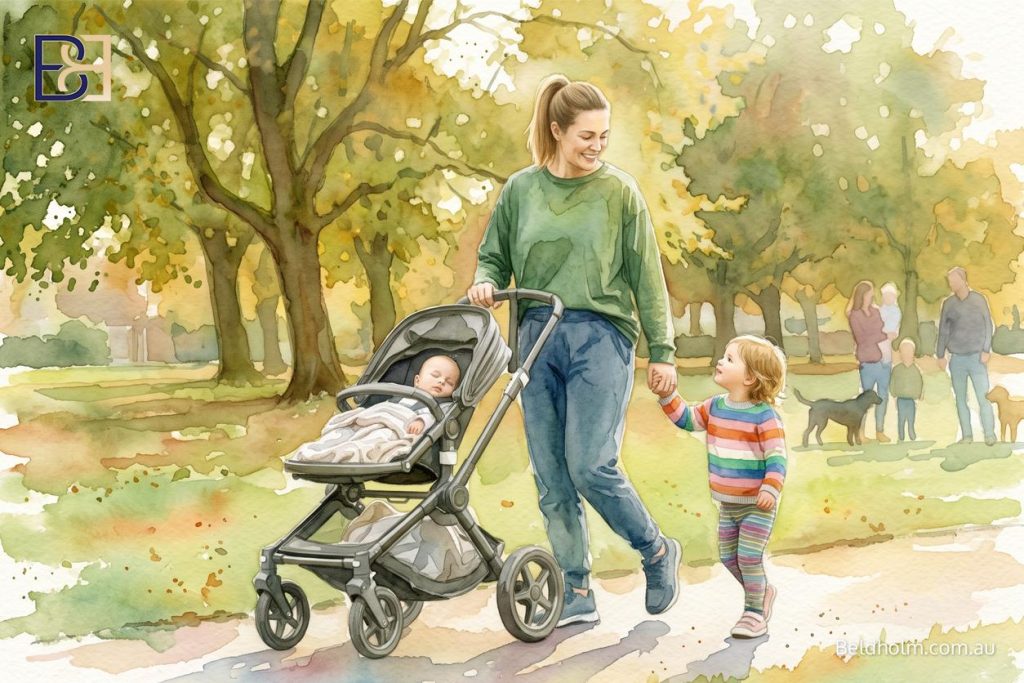
If you are planning future pregnancies, or thinking about having more children, it is usually better to wait before having this surgery. This is a general position rather than a strict rule.
An abdominoplasty tightens the abdominal skin and repairs the muscle separation, and a later pregnancy stretches both again. That can undo part of the result, including around the belly button, where the transposition and its scar can be stretched a second time. Having surgery once your family is complete gives the result the best chance of lasting.
If you are unsure of your plans, mention it at consultation. The decision about timing is made with you, based on your circumstances.
References
- Sperstad JB, Tennfjord MK, Hilde G, Ellström-Engh M, Bø K. Diastasis recti abdominis during pregnancy and 12 months after childbirth: prevalence, risk factors and report of lumbopelvic pain. Br J Sports Med. 2016;50(17):1092-1096.
- Sørensen LT. Wound healing and infection in surgery: the clinical impact of smoking and smoking cessation: a systematic review and meta-analysis. Arch Surg. 2012;147(4):373-383.
- Sisti A, Huayllani MT, Boczar D, Restrepo DJ, Cinotto G, Lu X, et al. Umbilical reconstruction techniques: a literature review. Aesthet Plast Surg. 2021;45(3):1078-1096.+