


Recovery happens in stages. The early days are about rest, comfort and wound care. The following weeks are about gradually returning to work, driving and activity. The final result takes longer again, as swelling settles and the implants settle into position over several months.
Breast augmentation (augmentation mammoplasty) is a surgical procedure. Like any surgical or invasive procedure it carries risks, and the healing process takes time and cannot be rushed.
No two recoveries look the same. Healing rates differ, pain thresholds differ, and the same operation can feel quite different from one person to the next. The timeframes in this article are a general guide, not a fixed schedule. Your own recovery is assessed at your follow-up visits, and results vary between patients.
In my practice, breast augmentation (augmentation mammoplasty) is usually a day procedure. Most patients are admitted, have their surgery under general anaesthetic, and go home the same day. You will need someone to drive you home and to stay with you for the first night.
Here is what this article covers:
The day of your surgery
Book your appointment online now
You are admitted to Maitland Private Hospital on the morning of your surgery. Most anaesthetic assessments are done by phone beforehand, so on the day the anaesthetist reviews you in person, checks your airway, and confirms you are ready for a general anaesthetic. Breast augmentation (augmentation mammoplasty) is performed under general anaesthetic, so you are asleep for the whole operation.
Waking up
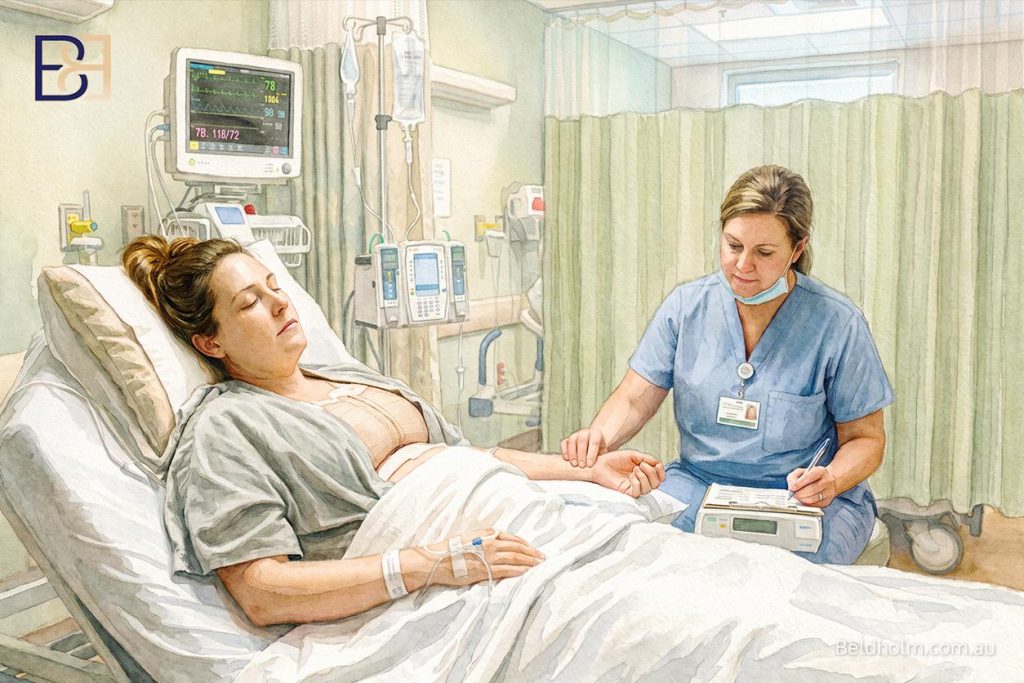
You wake in the recovery area with nursing staff monitoring you. It is normal to feel groggy from the anaesthetic for a few hours. Most patients notice tightness across the chest and a deep soreness in the breast area. This tends to feel stronger when the implants sit under the muscle. You will also have some swelling.
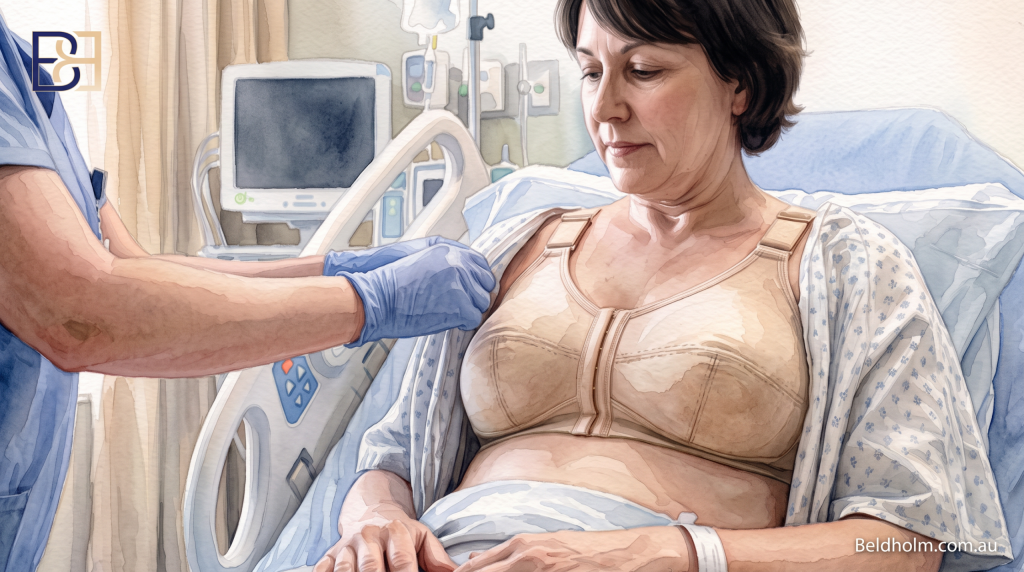
A post-surgical support bra is placed on you before you leave theatre, and you wear it over your dressings. I use Comfeel dressings over the incisions at the surgical sites. I do not routinely use drains for breast augmentation (augmentation mammoplasty). If a drain is needed in your case, I explain why and how it is looked after.
Going home the same day
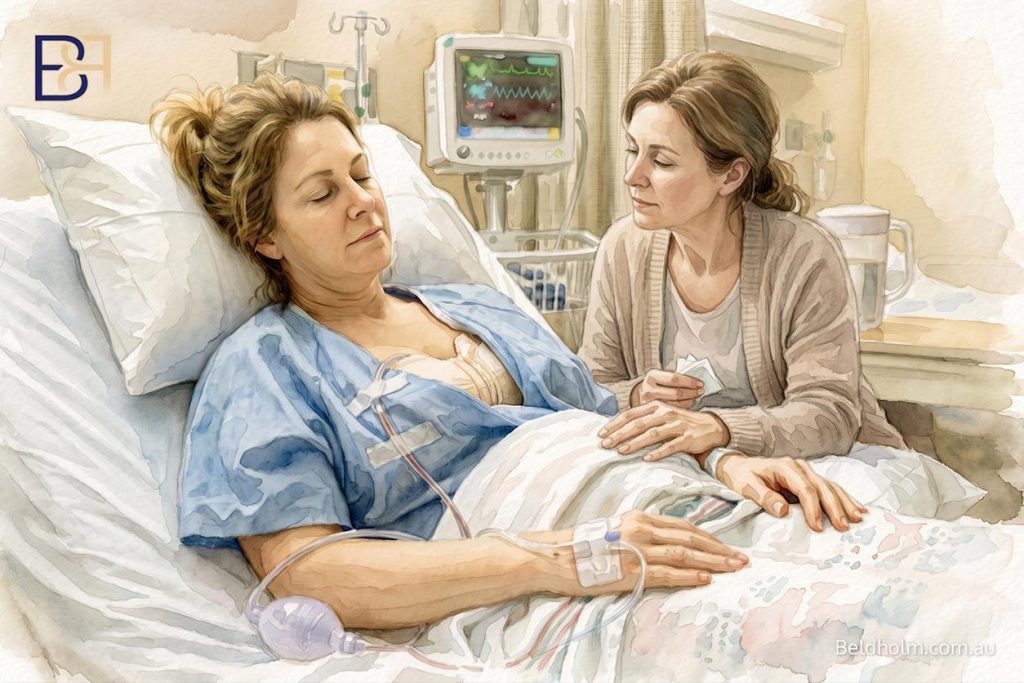
In my practice, breast augmentation (augmentation mammoplasty) is a day procedure, so you go home once you have recovered from the anaesthetic and the nursing staff are satisfied you are comfortable and stable. You cannot drive yourself. Arrange for someone to collect you and to stay with you overnight.
Before you leave, you are given your pain relief, wound care instructions, and details for reaching us if you have any concerns at home. I encourage you to move about, such as walking around the house, from the first day. This helps your circulation and lowers the risk of a blood clot in the leg.
The first few days at home
The first two or three days ask the most of you. Plan to rest and to have help on hand. Most patients find this the busiest part of recovery for swelling and discomfort, and it settles from there.
What you will feel
- Swelling and bruising, which usually peak around two to three days after surgery and then start to ease
- Tightness across the chest and soreness in the breasts, often stronger when the implants sit under the muscle
- Tiredness for a day or two as the anaesthetic clears, and sometimes mild nausea on the first day
- Breasts that sit high and feel firm at this stage. This is expected early on, and the shape changes over the weeks that follow
Rest and help at home

- Arrange for someone to help with meals, children and household tasks for the first few days
- Do not lift anything heavy, and avoid reaching overhead
- Keep taking short walks around the house from day one to help your circulation
- Drink plenty of water and eat normally when your appetite returns
Looking after your wounds
- Your Comfeel dressings stay in place and need to be kept dry. Do not remove them yourself
- Your first review is within the first week, and my nursing team check your wounds and change dressings for you
- If you notice increasing pain, heavy swelling on one side, redness spreading around a wound, or a temperature, contact us
Managing pain and discomfort
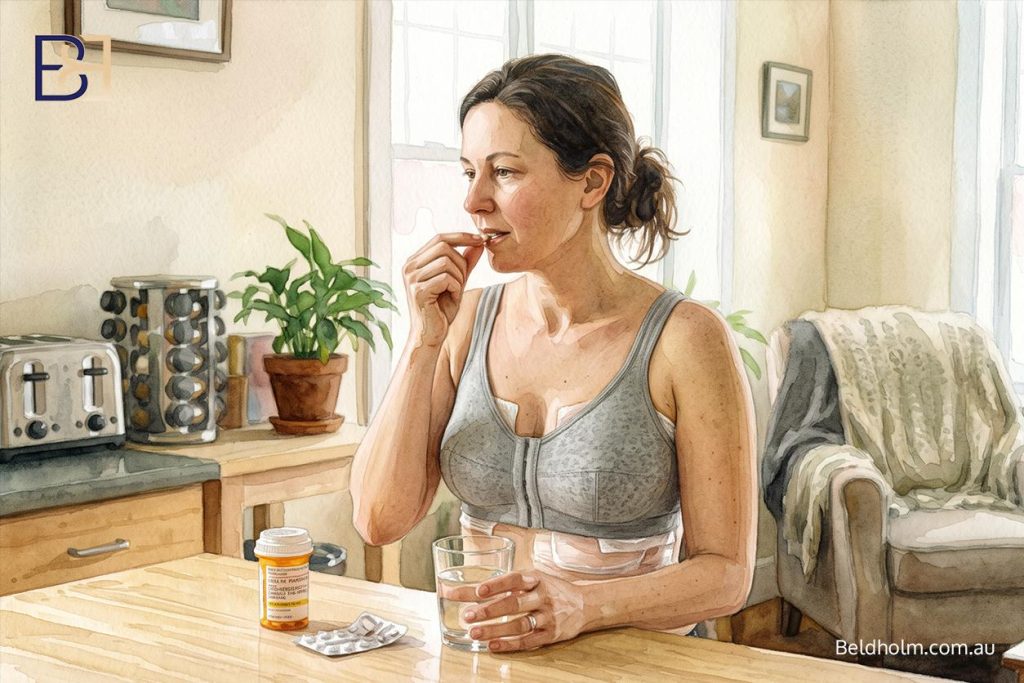
Some discomfort is expected after breast augmentation (augmentation mammoplasty). It is usually at its most noticeable in the first few days and eases over the following one to two weeks. How much you feel, and for how long, varies from patient to patient.
What it feels like
- A deep, aching soreness and a tight feeling across the chest, rather than a sharp pain
- Discomfort that is often stronger when the implants sit under the muscle, because the muscle has been lifted to hold the implant (1).
- Muscle spasms across the chest for some patients, again more common with under-the-muscle placement
- Tightness when you move your arms or upper body early on
Pain relief

- You are given pain relief before you go home, and I talk you through how to take it
- I usually prescribe regular paracetamol together with a stronger tablet for the first days, stepping down as your pain improves
- Take your pain relief regularly in the early days rather than waiting for discomfort to build.
- Depending on your case, I may add an anti-inflammatory or a medication to settle muscle spasm
- Do not drink alcohol while you are taking prescription pain relief
Blood thinners
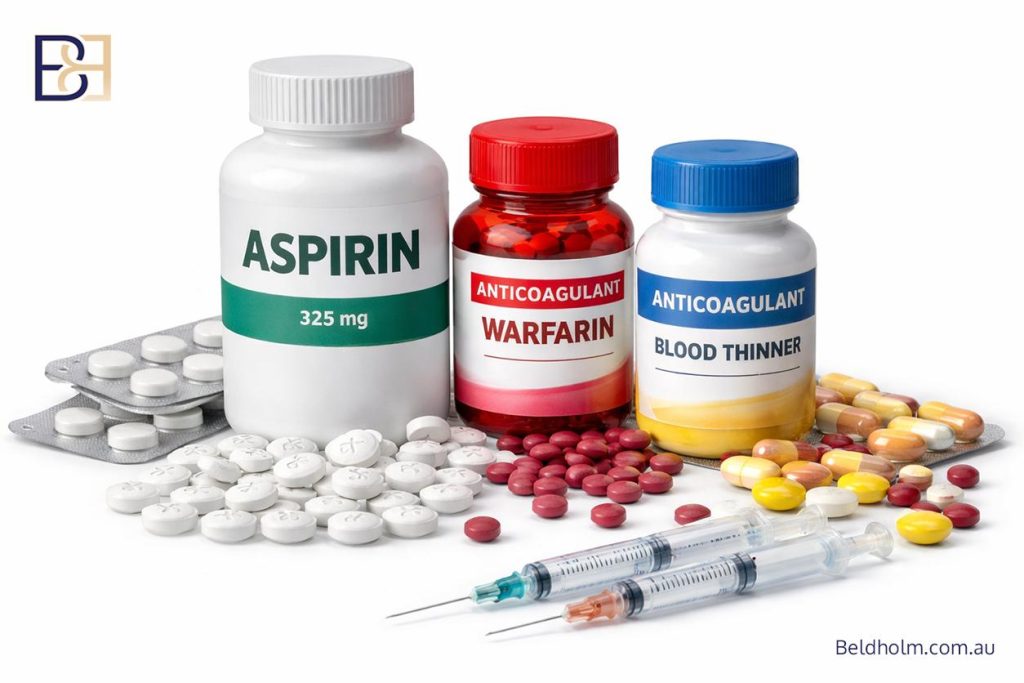
If you take aspirin or another blood thinner, I manage this around your surgery. These are usually paused about a week before and restarted on my advice. Do not stop or restart any blood thinner on your own.
When discomfort is not expected
Discomfort should ease as the days pass. Contact us if your pain increases rather than settles after the first few days, or if one breast becomes much more swollen, tight or painful than the other. These are things I want to review rather than have you wait out at home.
Sleeping, showering and your support bra
Sleeping
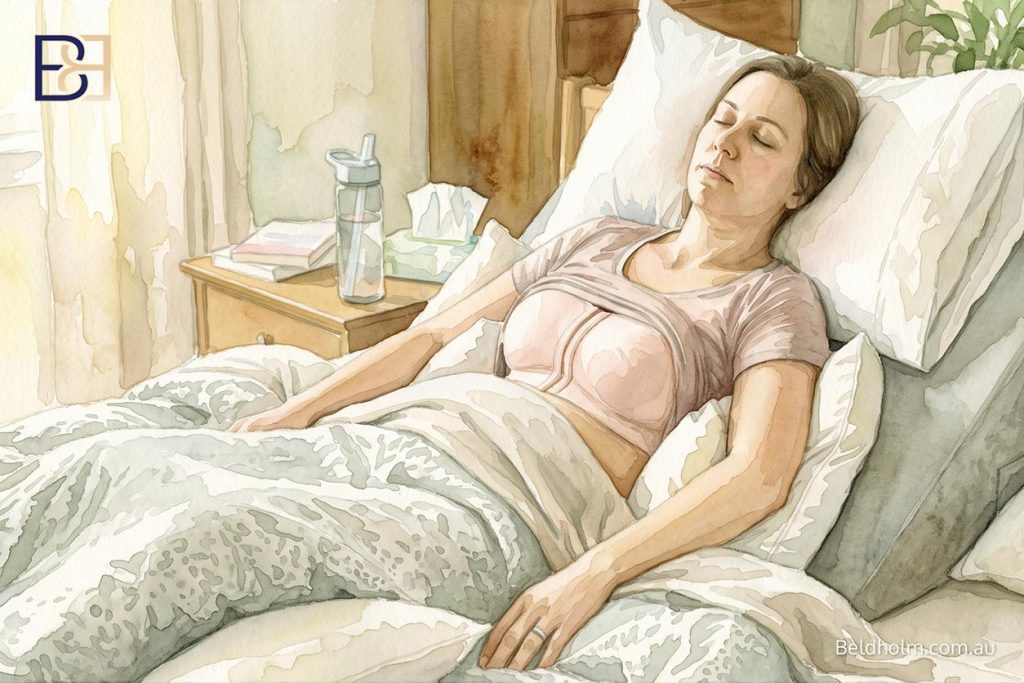
For the first few weeks, sleep on your back with your upper body elevated and propped up on pillows. This keeps pressure off your breasts and is more comfortable while the tightness settles. Some patients find a recliner easier than a bed in the early days.
Try not to sleep on your front or your side at first. You can return to those positions once you are more comfortable and I have reviewed you.
Showering and wound care
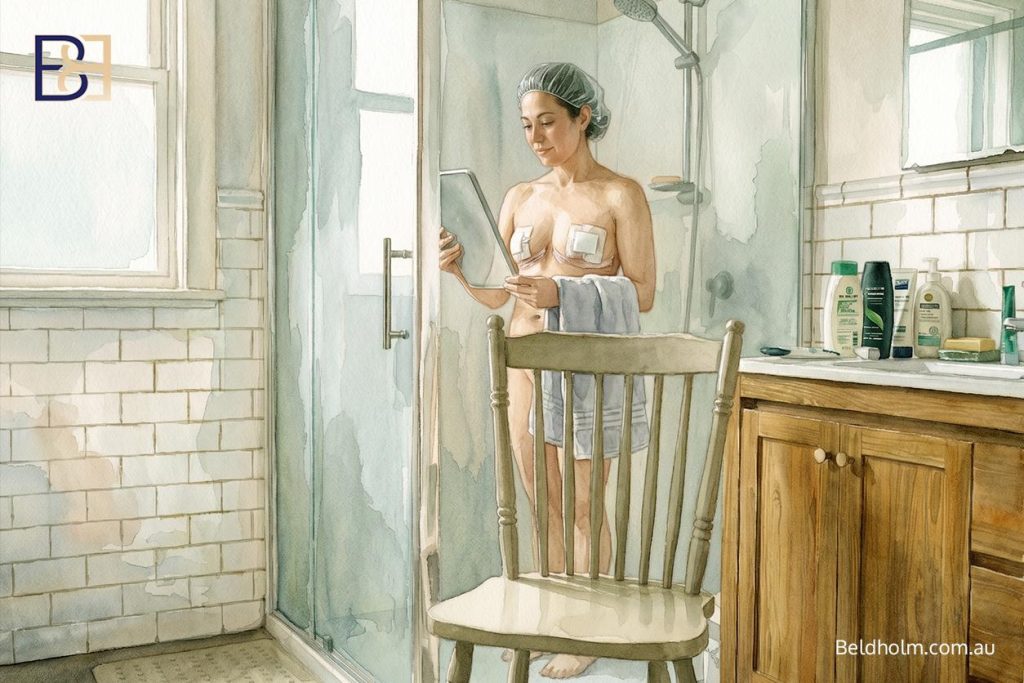
- Your Comfeel dressings are water-resistant, so you can shower from the day after surgery
- Let the water run over the area, then pat yourself dry. Do not rub or scrub the incisions
- Keep the dressings in place. My nursing team change them for you at your reviews
- Your sutures are absorbable and sit under the skin, so there is nothing to be removed
- Avoid baths, spas, hot tubs, swimming pools and the ocean until your wounds have healed and I have cleared you
Your support bra
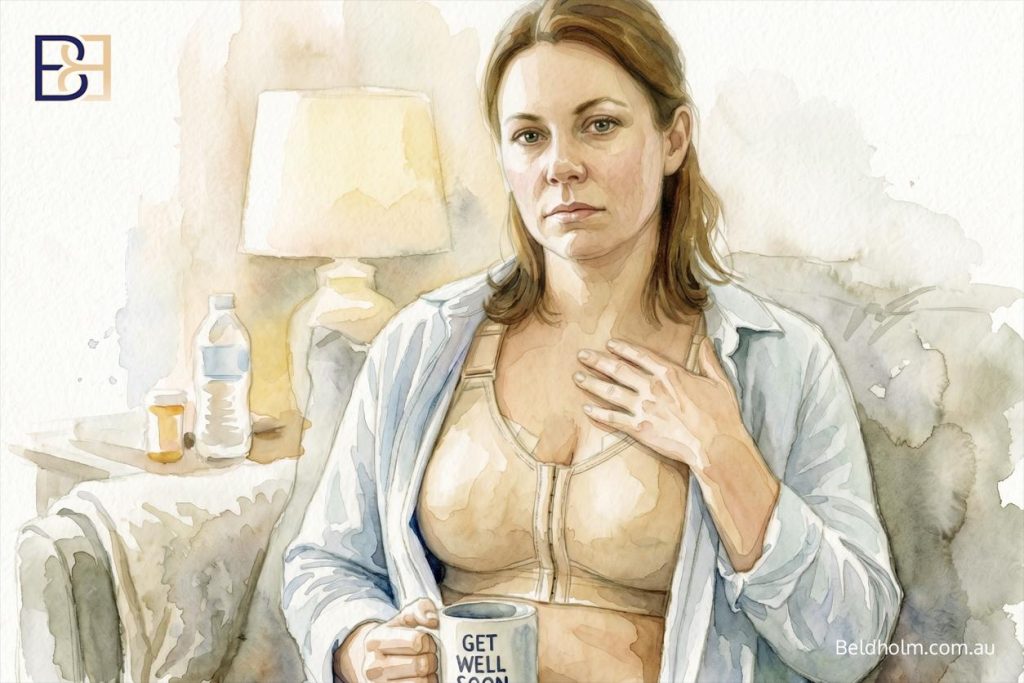
You are fitted with a post-surgical support bra before you leave hospital. In my practice, you wear it as follows:
- Day and night for the first four weeks
- Then during the day only for a further two weeks
- No underwire during this period. You can return to underwire bras after that
The bra supports your breasts and helps your comfort while everything settles. Choose a soft, supportive bra without an underwire for this time, and avoid anything tight or restrictive over the incisions.
Returning to work, driving and everyday activity
How soon you return to your usual routine depends on your job, how you are healing, and how you feel. The timeframes below are a general guide, and I confirm what is right for you at your follow-up appointments.
Work

- Most patients in desk or office roles return to work around one week after surgery, once they are off the stronger pain relief
- If your work is physical, involves manual handling, or means reaching and lifting, you will need longer. We plan this together at your reviews rather than setting a single date
Driving

You can usually drive again about one week after surgery, once you are off the stronger pain medication and can move your arms freely, brake, and react without hesitation. Do not drive while you are still taking strong pain relief, and do not drive if you cannot comfortably control the car.
Lifting and reaching
- Avoid heavy lifting for the first few weeks while your wounds heal and the implants settle
- Expect limited arm movement early on, and take care with reaching overhead, as it pulls on the chest
- If you have small children, arrange help so you are not lifting them in the early weeks
Everyday activity
You can do light tasks around the house from early in your recovery and build up your physical activity gradually. Avoid anything that strains your chest and upper body until I have cleared you to step activity back up. Let how you feel guide you, and stop if something pulls or aches.
Getting back to exercise
Exercise comes back in stages. The aim is to keep moving early for your circulation, then build up slowly, leaving anything that strains the chest or bounces the breasts until last. I confirm each step at your reviews, so treat the timeframes below as a guide rather than a fixed plan.
Early weeks
- Light walking from day one, starting short and building up your distance
- Light, low-impact activity such as a stationary bike after the first couple of weeks, as long as it does not pull on your chest
- No running, jumping, strenuous exercise, or anything that bounces the breasts yet
Around four to six weeks
- Most patients build back towards their usual cardio over this period
- Once I have cleared you for impact, wear a supportive sports bra
- Keep chest and upper-body work, such as push-ups, chest presses and heavier weights, until last. These usually wait until around six weeks and only once I have reviewed you
Listen to your body
Do not rush the upper body. The chest muscles and the implant pocket need time to settle, and returning to vigorous exercise, weights or impact too early can set your recovery back. Build up gradually, and stop if something pulls, aches or swells. If you are unsure whether an activity is ready for you, ask at your review and I will guide you.
Swelling, settling and how your breasts change over time
Your breasts change a good deal over the first few months. What you see in the early weeks is not your final result, so try not to judge the outcome too soon. Results vary between patients.
Swelling
Swelling is at its most noticeable in the first days and eases over the following weeks. To help reduce swelling, keep wearing your support bra and avoid overdoing things early. Some subtle swelling can linger for a few months, and it is common for one side to settle a little faster than the other.
How the implants settle
Early on, the implants tend to sit high and feel firm, and the breasts can look fuller up top than they will later. Over the following weeks to months, the tissues relax and the implants settle into a lower, softer position. For most patients the breasts reach their final position and the shape settles over roughly three to six months, though this varies, and your final results take time (2).
Changes in sensation
Numbness, tingling or heightened sensitivity in the nipple or breast skin is common after surgery. For most patients this settles over the weeks and months that follow. For some, a change in sensation lasts longer or is permanent. This is a genuine risk of the operation, not something I can promise will resolve.
Scars
Your scars are raised, firm and pink at first. They soften and fade over about twelve to eighteen months, but they do not disappear completely, and everyone scars differently. I review your healing and advise on scar care at your follow-up visits.
Living with breast implants
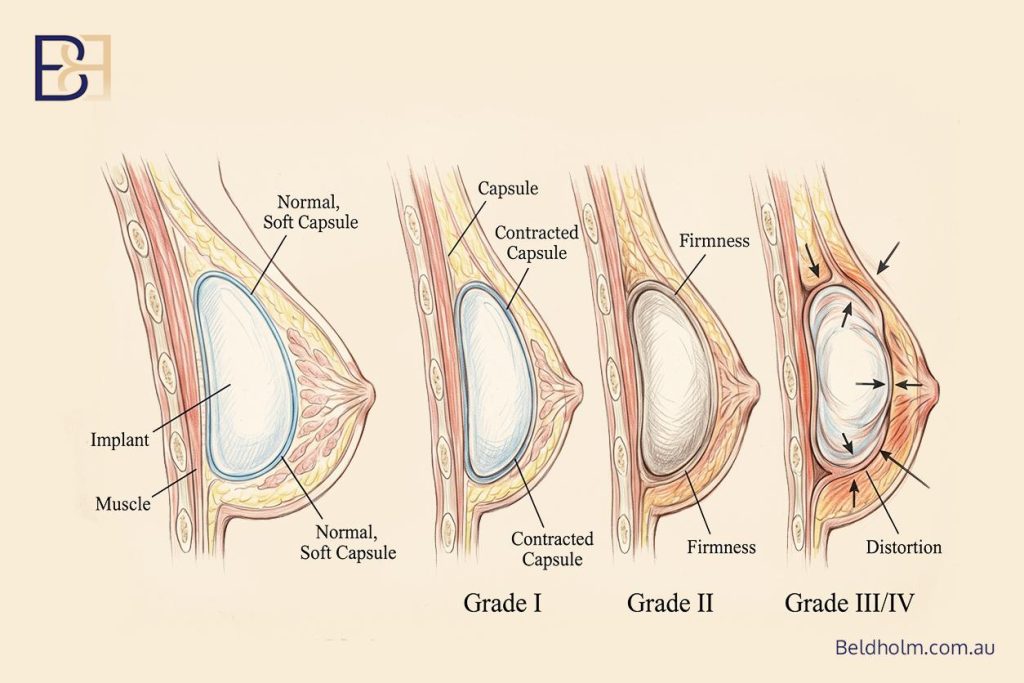
Breast implants are long-term medical devices rather than lifetime devices (3). I check them at the follow-up appointments after your breast implant surgery. Over the years, some patients develop capsular contracture, where the scar tissue that forms around a breast implant tightens and firms the breast (4). Implant rupture can also happen over time (5). Whether your breast implants are silicone gel or saline, these are things I review, and routine breast cancer screening continues as your GP recommends.
Over the longer term
Future pregnancy, breastfeeding and weight change can all affect your breasts after surgery. If any of these are ahead for you, it is worth discussing at consultation, as they can change your result over time.
My follow-up schedule and aftercare
You are looked after closely, particularly in the early weeks when most of the healing happens.
The first two weeks
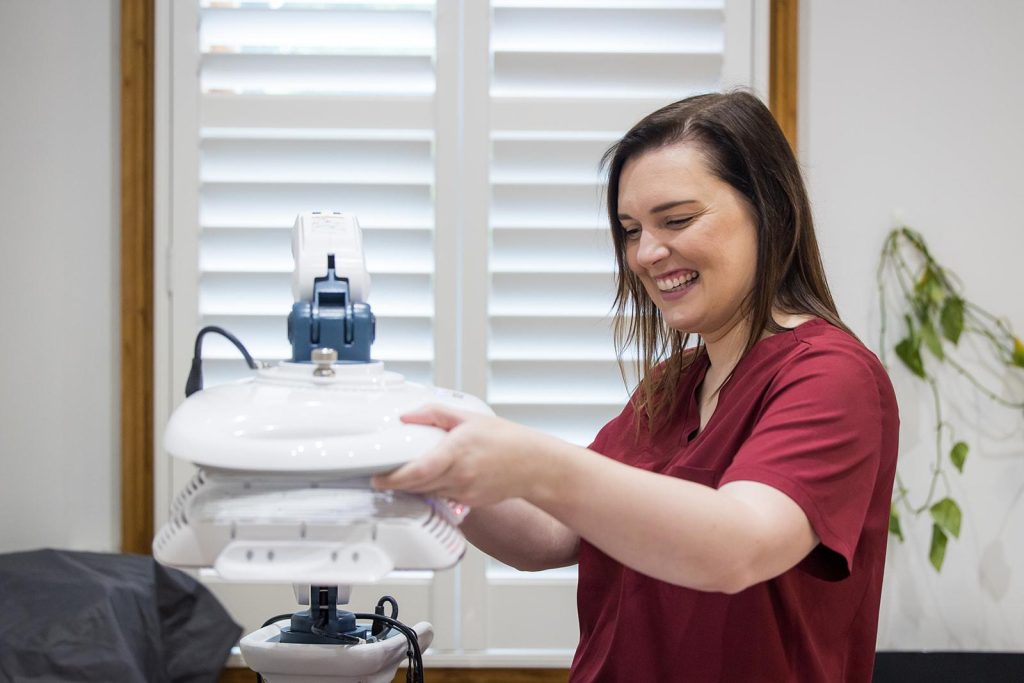
- I see you often in the first fortnight, usually two to three visits a week, with both nurse and surgeon reviews
- Your wounds are checked and your Comfeel dressings are changed for you
- I use Healite II LED light therapy as part of these visits
These frequent early reviews mean anything that needs attention is picked up promptly rather than left to wait.
Ongoing reviews
After the first fortnight, I review you at follow-up appointments at four weeks, three months, six months and twelve months. Your GP is kept informed throughout and takes over your long-term care, with a formal handover around your four-week visit.
Reaching us if you have a concern
- During office hours, call the rooms
- After hours, call Maitland Private Hospital, where nurse-led phone triage can advise you
- If you need a physical assessment, go to your local emergency department
- For anything life-threatening, call 000
Maitland Private Hospital is not an emergency department, so please use your local ED for urgent physical assessment and 000 for emergencies.
Warning signs to watch for
Most recoveries move along without a problem. Certain risks and potential complications can still arise, so it helps to know what needs attention. Trust your instincts. If something does not seem right, it is better to call and ask than to wait it out at home.
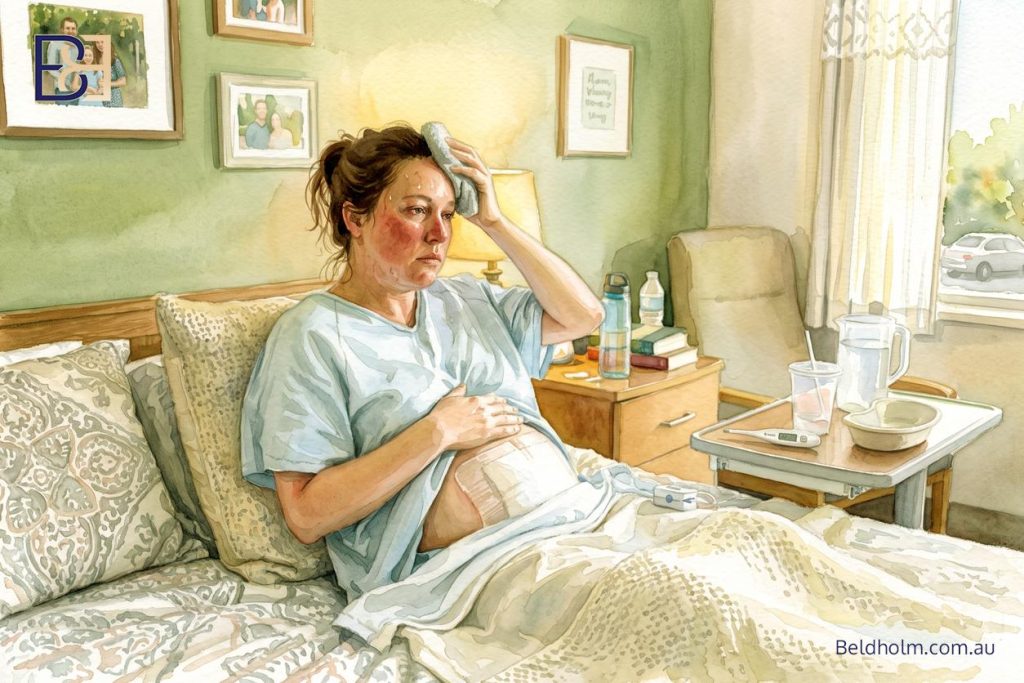
Contact us promptly if you notice
Book your appointment online now
- Sudden or increasing swelling, usually on one side, with rising pain and tightness. This can be a sign of bleeding and needs urgent review
- Redness spreading around a wound, warmth, increasing pain, discharge from a wound, or a fever. These can be signs of infection
- A wound that opens or does not stay closed
- One breast that becomes much more swollen, firm or painful than the other
- Nausea or vomiting that stops you keeping fluids or medication down
Signs of a blood clot
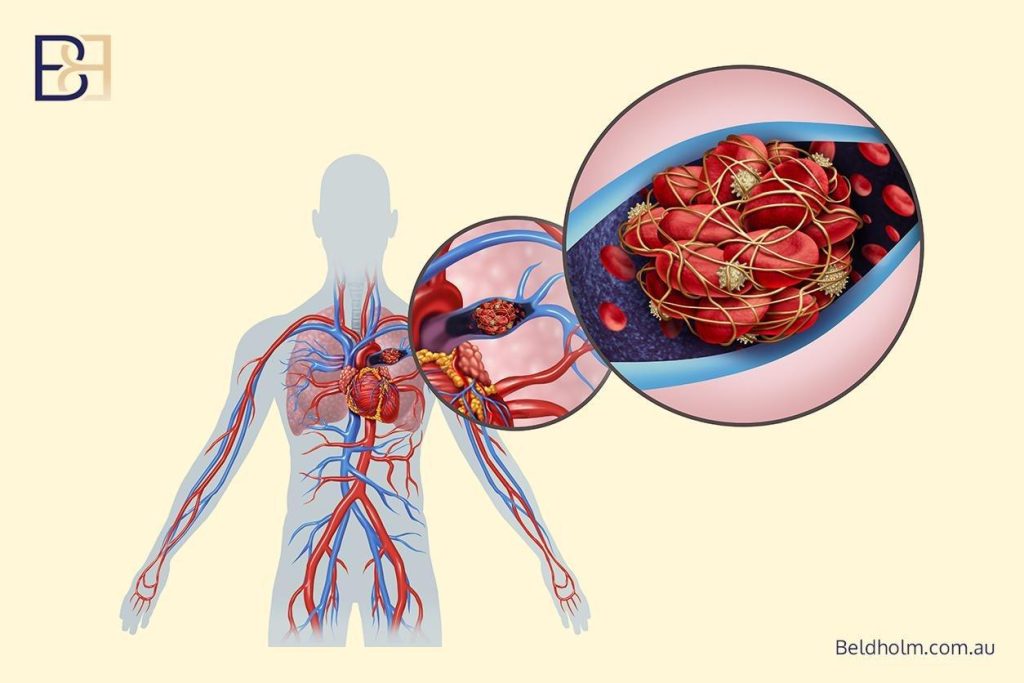
- Pain, swelling, warmth or redness in one calf or leg can be a sign of a clot in the leg. Contact us promptly
- Sudden shortness of breath, chest pain, or coughing can mean a clot has travelled to the lung. Call 000 immediately. This is an emergency
Trust your judgement
You know your own body. If you are worried about pain, swelling, a wound, or how you feel in yourself, get in touch. For anything life-threatening, call 000.
What affects your recovery and how to prepare
What affects how you recover
A number of factors influence how you recover.
- Implant placement. Implants placed under the muscle tend to be more sore in the early days than those placed over the muscle, because the muscle has been lifted to hold them (1).
- Implant size. Larger implants place more stretch on the breast tissue, which can affect your early comfort and how your scars settle
- Your general health. How well you heal is influenced by your overall health and by how closely you follow the aftercare
- Smoking. Smoking reduces the blood supply to healing tissues, so I ask patients to stop before and after surgery to support wound healing
How to prepare

- Arrange time off work and some help at home for the first week or so
- Set up a comfortable spot to rest, with pillows to prop yourself up
- Have soft, supportive bras without underwire ready, along with loose, front-opening tops
- Fill your prescriptions and stock some meals that need little preparation before the day of surgery
- Organise a driver for the day, and someone to stay with you the first night
- If you take a blood thinner, follow my instructions on when to stop and restart it. Do not adjust it yourself
- Following your post-operative instructions and taking proper care of your surgical sites supports healing after breast surgery
References
- Tebbetts JW. Dual plane breast augmentation: optimizing implant-soft-tissue relationships in a wide range of breast types. Plast Reconstr Surg. 2001;107(5):1255-1272.
- Weniger FG, Barrero CE, Weidman AA, Amarillo SM. Factors affecting lower-pole stretch after breast augmentation. Plast Reconstr Surg Glob Open. 2021;9(11):e3865.
- Coroneos CJ, Selber JC, Offodile AC 2nd, Butler CE, Clemens MW. US FDA breast implant postapproval studies: long-term outcomes in 99,993 patients. Ann Surg. 2019;269(1):30-36.
- Headon H, Kasem A, Mokbel K. Capsular contracture after breast augmentation: an update for clinical practice. Arch Plast Surg. 2015;42(5):532-543.
- Handel N, Garcia ME, Wixtrom R. Breast implant rupture: causes, incidence, clinical impact, and management. Plast Reconstr Surg. 2013;132(5):1128-1137.