Why loose skin develops on the abdomen and back after weight loss
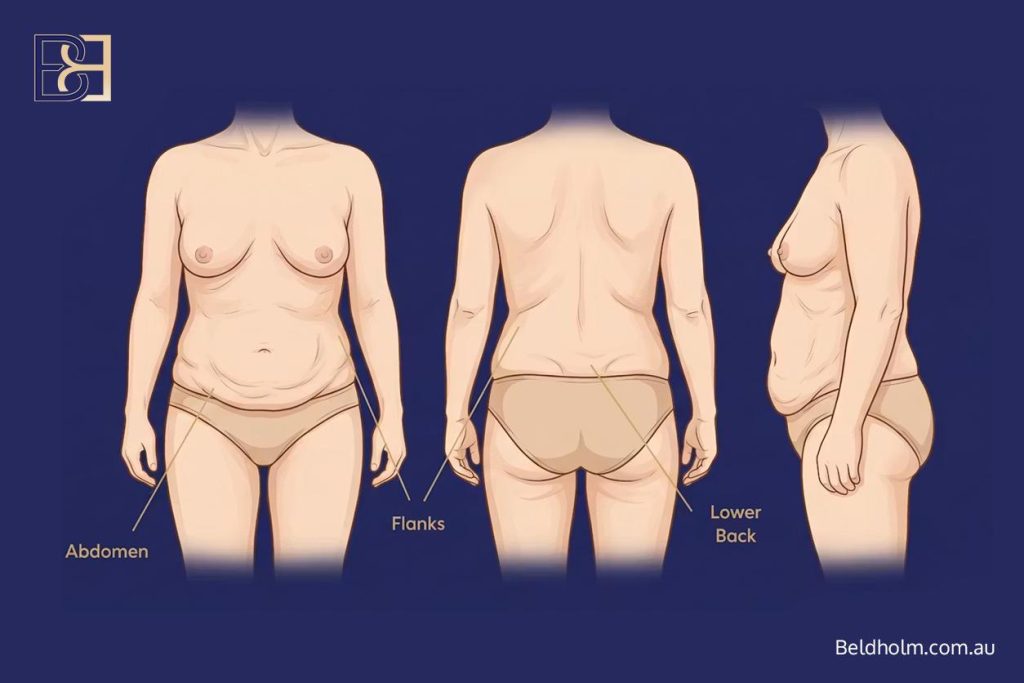
When you lose a large amount of weight, the skin that was stretched over your abdomen and back for years often does not shrink back to fit your new shape. The skin has lost some of its elasticity and ability to recoil. This happens whether the weight came off through weight loss surgery such as bariatric surgery, weight loss medications, or diet and exercise. In my clinic, I see this pattern in patients from all three groups.
Several things influence how much loose skin you are left with.
How much weight you lost, and how quickly

The more weight you carried and then lost, the more your skin was stretched and the less likely it is to retract on its own. The more excess weight you carried and then lost, the greater the weight reduction your skin must cope with. Patients who have had massive weight loss, more than 40 to 50 kg, tend to have the most significant loose skin on the abdomen and flanks.
Your skin quality and genetics
Skin thickness, collagen and elastin content are largely inherited. Patients with thinner skin generally retract less than those with thicker, more elastic skin. This difference in skin elasticity and skin laxity is one of the factors I assess at consultation, because it affects what surgery can and cannot achieve.
Age
Collagen and elastin production falls as we age. Older skin recoils less and tends to heal more slowly, so loose skin is usually more pronounced in older patients.
Nicotine
Nicotine reduces collagen and elastin production and constricts the small blood vessels that supply the skin. Smokers tend to develop more loose skin, and nicotine also raises the risk of wound healing problems after surgery. I ask all patients to stop nicotine well before any operation.
Medical and connective tissue factors
Some medical conditions affect collagen and the skin’s ability to recoil. These are uncommon, but they form part of the assessment because they influence both the loose skin itself and how the skin heals after surgery.
A note on BMI
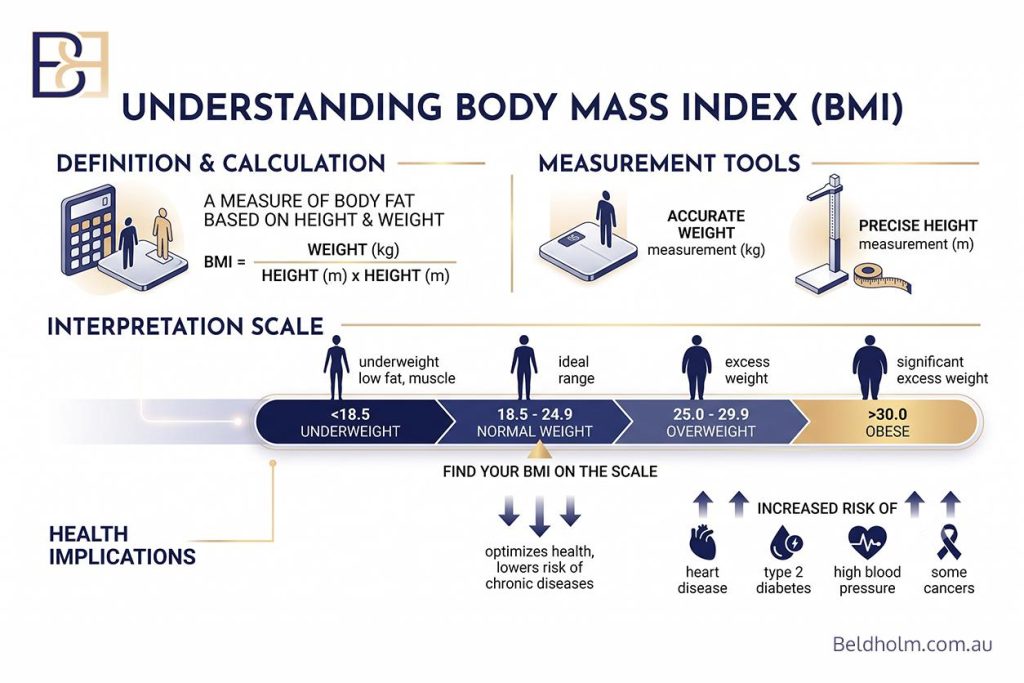
Body mass index is a rough guide only, not a hard cut-off. What matters more is the pattern and amount of loose skin, your general health, your nutritional status, and whether your weight has been stable. I assess candidacy on the whole clinical picture, not on a single number, and I do not use routine DEXA scans for this.
Where it shows, and why it matters
On the abdomen, loose skin usually forms an overhanging apron of skin and fat at the lower abdomen. Around the back and flanks it forms rolls and skin folds that continue around the waistline. Beyond the appearance, these skin folds can trap moisture and cause practical problems:
- Skin irritation, rashes and recurrent infection in the folds, particularly where skin sits on skin
- Difficulty with hygiene in the affected areas
- Trouble fitting clothing
- Discomfort or restriction with movement and exercise
When loose skin is causing these kinds of physical problems, surgery to remove it becomes a functional consideration, not only a contour one. I cover candidacy in more detail further down this article.
Why non-surgical measures do not remove established loose skin
Many patients come to my clinic having already tried creams, garments and various clinic treatments, hoping to avoid an operation. Here is what these measures can and cannot do, so you are not spending money and time on something that will not give you the result you are after.
Once skin has been stretched by significant weight and then lost its ability to recoil, no cream, garment or energy device will remove it. Removing established excess skin requires surgery. The measures below still have a place, though, and I will explain where.
Diet, exercise and hydration

Lifestyle changes like eating well and staying active matter for your general health, your skin quality and your recovery if you do go on to have surgery. Good nutrition and hydration support the skin you have. What they will not do is make a hanging apron of loose skin on the abdomen retract once it has formed. Exercise can build the muscle underneath, improve muscle tone and reduce any remaining body fat, but it does not tighten skin that has lost its elasticity.
Compression garments
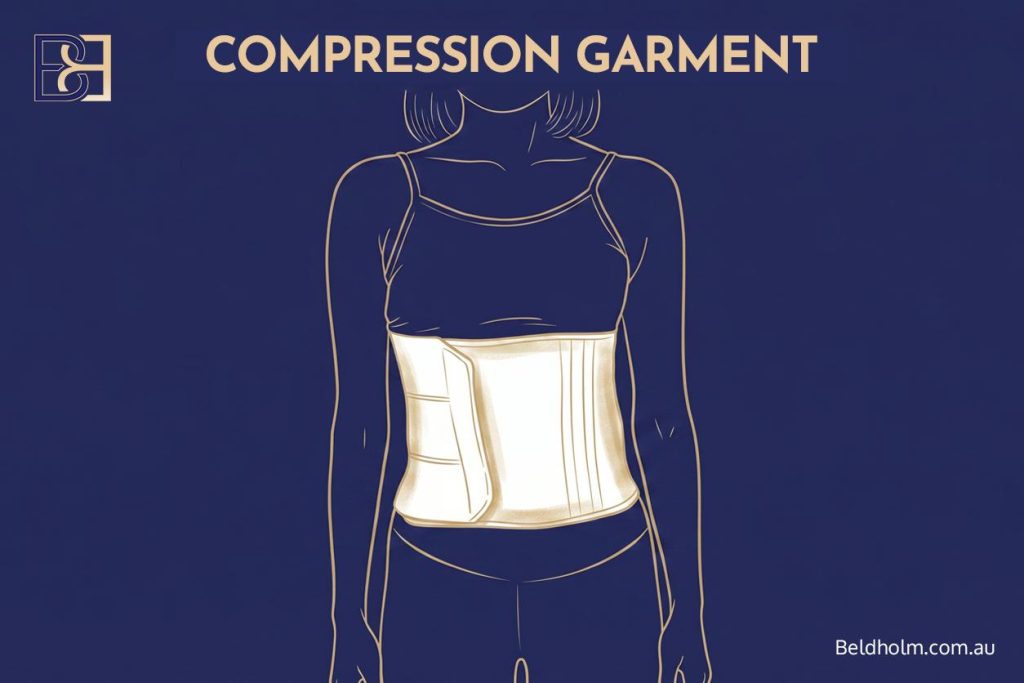
Compression garments can make loose skin feel more supported day to day and may reduce some swelling. They do not shrink or remove excess skin. Their main role in my practice is after surgery, as part of recovery, not as a treatment for the loose skin itself.
Topical creams and collagen products
Moisturising creams keep the skin surface in good condition, and some patients find them comfortable to use. There is no good evidence that topical or collagen-based products meaningfully tighten or remove loose skin after major weight loss. I would not want you to rely on them for that purpose.
Energy-based and device treatments
A number of clinic devices are marketed for skin tightening and fat reduction. For the kind of excess skin left after significant weight loss, their effect is limited:
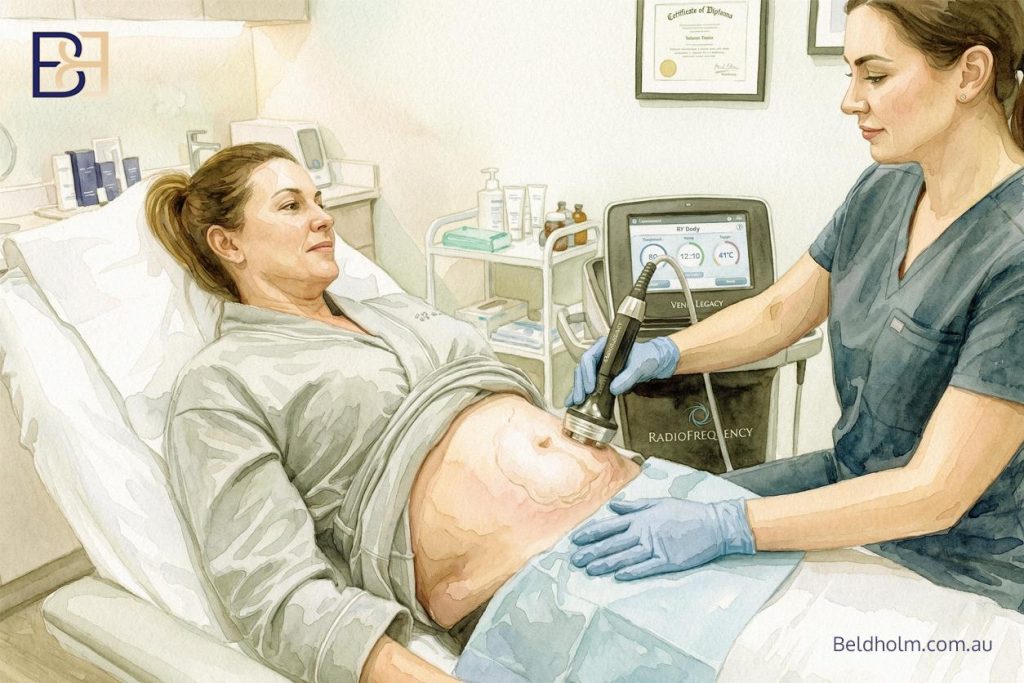
Radiofrequency skin tightening uses controlled heat to stimulate collagen. It may have a modest effect on mild laxity, but it does not remove the established loose skin seen after major weight loss.
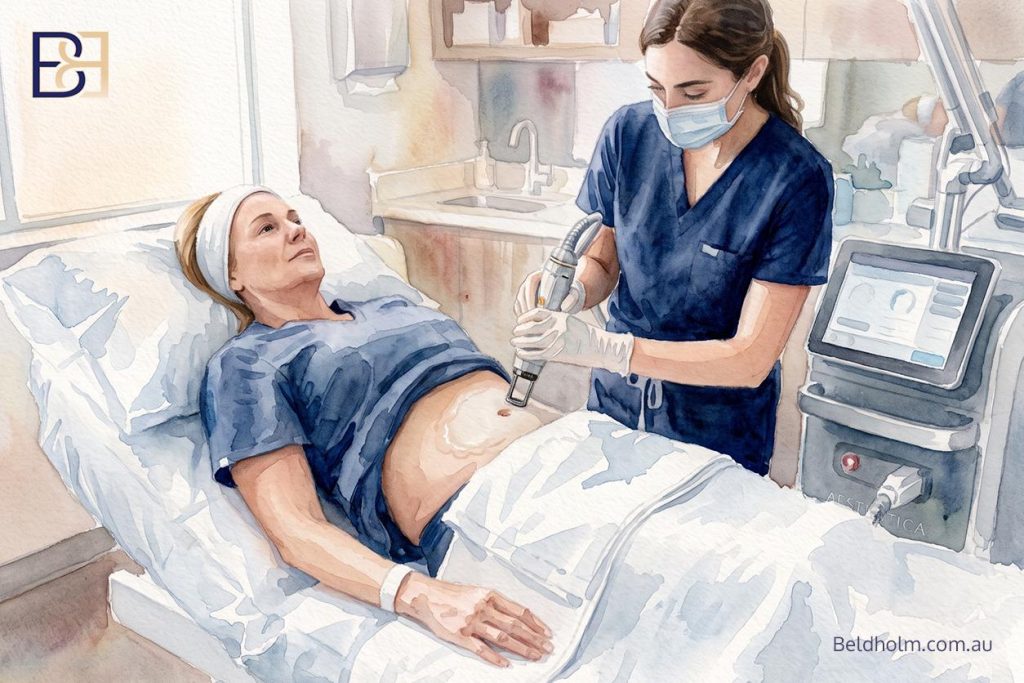
Laser skin tightening is promoted for this purpose, but the evidence that it tightens loose skin in this setting is weak.
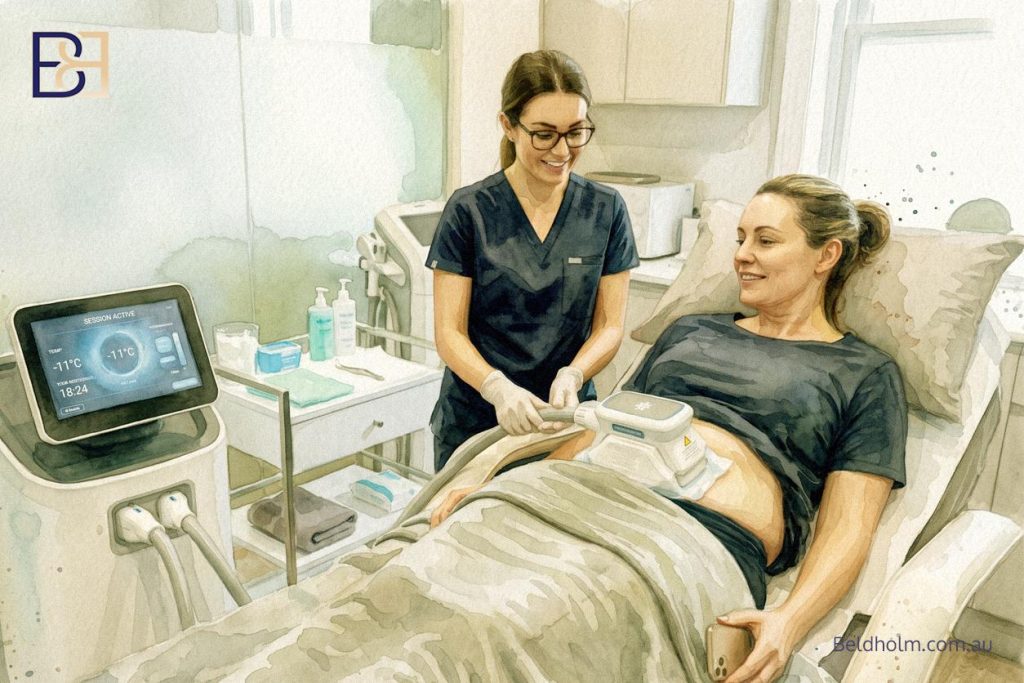
Cryolipolysis (fat freezing) reduces small pockets of fat. It does nothing for loose skin, and in some cases reducing fat under loose skin can make the skin appear looser.
Where this leaves you
If your loose skin is mild, it is reasonable to focus on weight stability, nutrition and general skin care first. If you have a significant amount of loose skin on the abdomen and back after major weight loss, and especially if it is causing the practical problems described earlier, surgery is the only measure that will remove it. The rest of this article sets out the surgical options and what each one involves.
Preparing for surgery: nutrition and pre-operative assessment
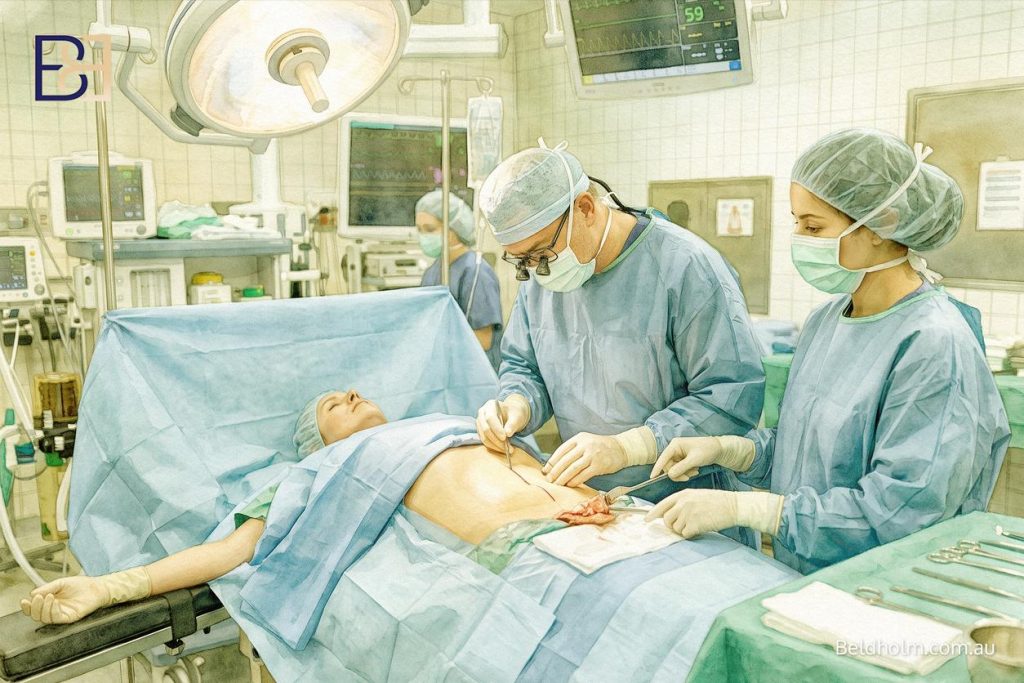
Surgery to remove loose skin on the abdomen and back is a larger physiological event than many patients expect, and preparation matters. Most patients who have lost a significant amount of weight, whether through bariatric surgery, weight loss medications or diet, carry nutritional gaps that developed during the weight loss itself. Protein, iron, and several vitamins and minerals are commonly low. These gaps matter because the body needs those building blocks to heal a long surgical wound. Correcting them before surgery is one of the most useful things we can do to support your recovery.
Because of this, I order a full pre-operative blood panel for every post weight loss body contouring patient. It checks your full blood count, iron studies, protein status, vitamins and minerals (including vitamin D, B12, folate, zinc and others), thyroid function, blood sugar control, clotting, and screening tests. Your GP is copied in on the results. If anything needs correcting, we start that work well before your operation date rather than discovering a problem on the day.

Nutrition is a shared effort. I handle the pre-operative assessment and optimisation, a dietitian is available at Maitland Private to review you if any issues come up during your admission rather than as a routine, and your GP manages your longer-term nutrition. I do not reproduce a full supplement plan here, because it should be guided by your own blood results rather than a generic list. I have written separately about protein, iron, vitamin D and the other nutrients that matter most for post weight loss patients, and about the deficiencies that are common in this group.
If you are taking weight loss medications, do not stop or adjust them on your own before surgery. Current Australian guidance does not call for routinely stopping these medications before an operation, and any decision about them is made as part of your peri-operative planning, not by self-adjusting. The same applies to blood thinners and aspirin, which I will give you specific instructions about.
Surgical options for the abdomen and back
There is no single operation that suits everyone after major weight loss. The right one depends on where your loose skin sits, how much there is, whether it runs horizontally, vertically or all the way around your trunk, and on your general health and nutritional status. I work this out with you at consultation. Below is a plain explanation of the body contouring procedures and surgical techniques I use for post weight loss patients, ordered roughly from the least to the most extensive.
One thing to understand from the start: muscle separation (diastasis recti) is mainly a finding after pregnancy. In post weight loss patients it is not a given. If the underlying abdominal muscles have separated, I repair these underlying muscles at the same time, but I assess that individually rather than assuming it.
Apronectomy
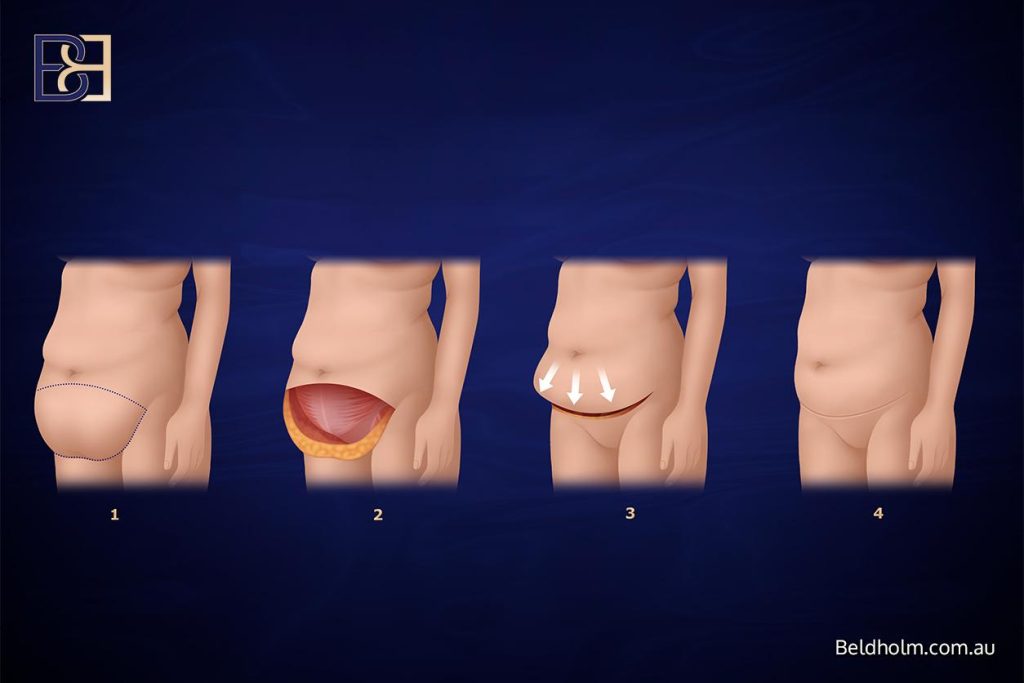
An apronectomy removes the overhanging apron of skin and fat at the lower abdomen and little else. It does not tighten the upper abdomen, reposition the belly button (umbilicus) or treat the flanks. It is a more limited operation, and I consider it mainly for patients where the apron is the specific problem and a larger operation is not appropriate, for example because of medical factors. For most post weight loss patients with widespread loose skin, it does not do enough on its own.
Full abdominoplasty (tummy tuck)
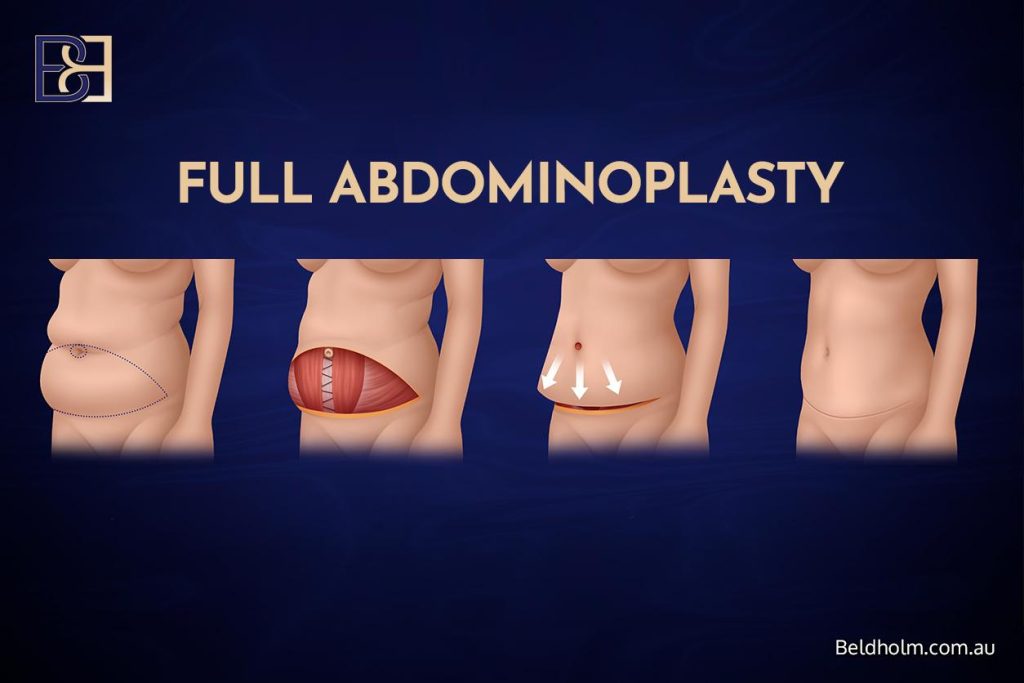
A full abdominoplasty (tummy tuck) removes excess abdominal skin from below the belly button (umbilicus) down to the lower abdomen, tightens the remaining skin and underlying tissues, and repositions the belly button. The scar runs low across the abdomen from hip to hip. This operation suits patients whose loose skin is mainly on the lower and central abdomen and does not extend far around the sides. After major weight loss, loose skin usually extends further than this, which is why a full abdominoplasty alone is often not enough for this group.
Extended abdominoplasty
An extended abdominoplasty is the operation I use most often for post weight loss patients. It does everything a full abdominoplasty does, and the incision is carried further around each hip to remove loose skin from the flanks as well as the front. This treats the way post weight loss skin tends to hang around the sides, not just across the front. The trade-off is a longer scar that extends around the hips.
Fleur de Lis abdominoplasty

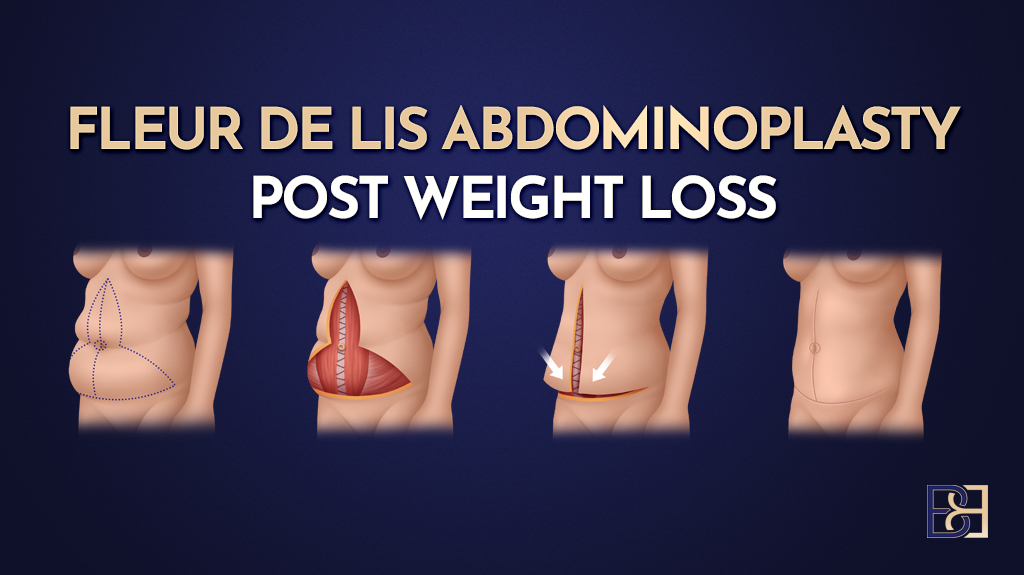
After significant weight loss, many patients have horizontal looseness as well as vertical, meaning the abdomen is loose from side to side, not only top to bottom. A Fleur de Lis abdominoplasty removes skin in both directions. It combines the usual low horizontal incision with a vertical incision up the midline of the abdomen, which lets me take in the width. This gives a flatter, narrower waistline result for the right patient. The cost is an additional vertical scar up the centre of the abdomen, which I discuss carefully with every patient considering it.
Dual vector abdominoplasty
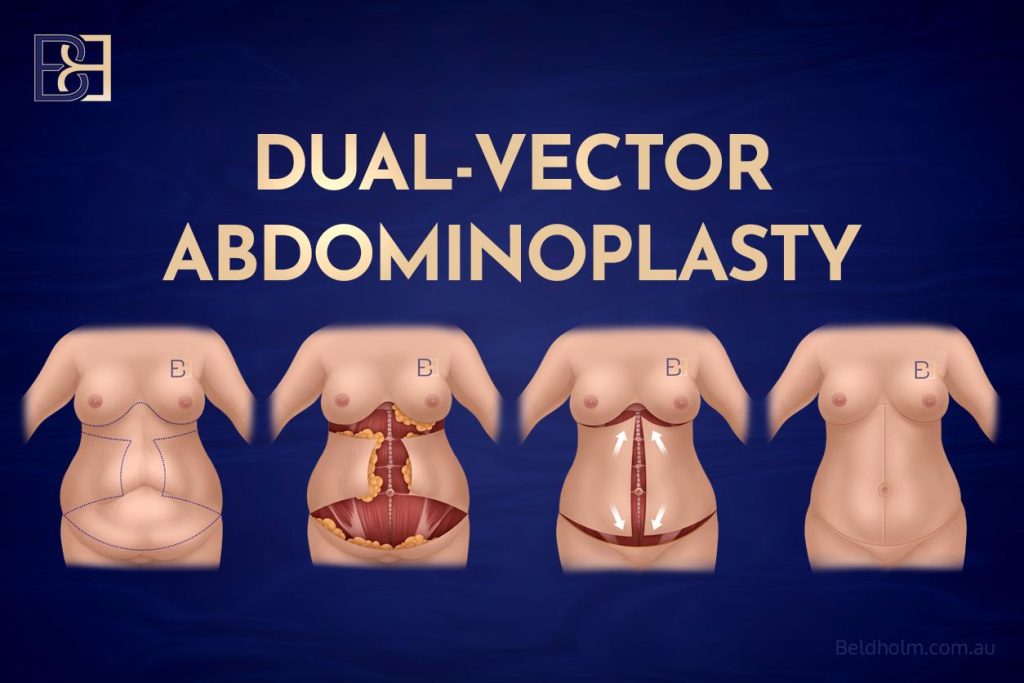
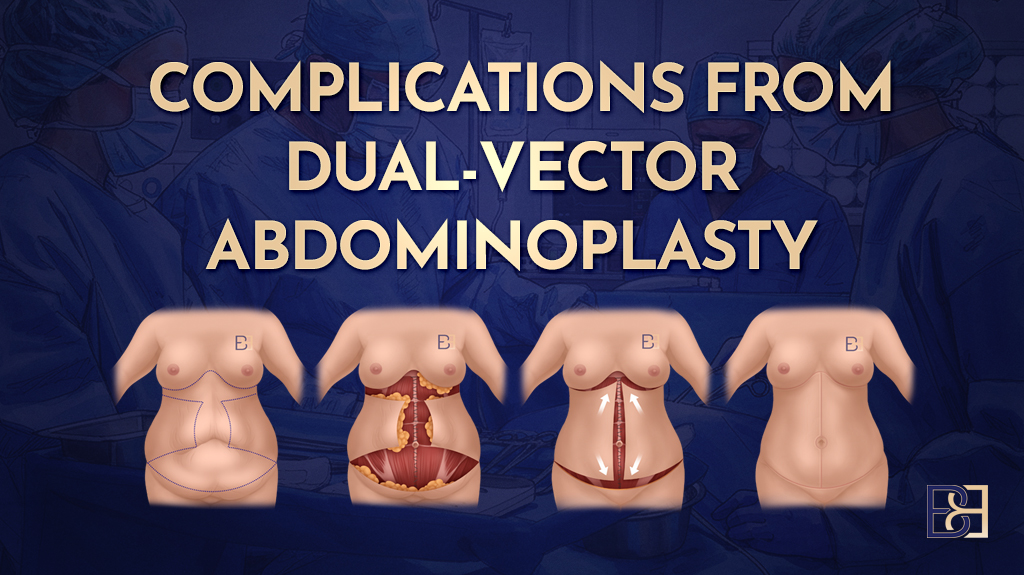
A dual vector abdominoplasty builds on the Fleur de Lis approach. It combines the Fleur de Lis with removal of loose skin from the upper abdomen as well, so skin is taken in from several directions at once. I consider it for patients who have significant looseness in multiple directions, including the upper abdomen, that a Fleur de Lis alone would not fully take in. It is a more extensive operation with more scarring, and it is only appropriate for selected patients.
Body lift (belt lipectomy)
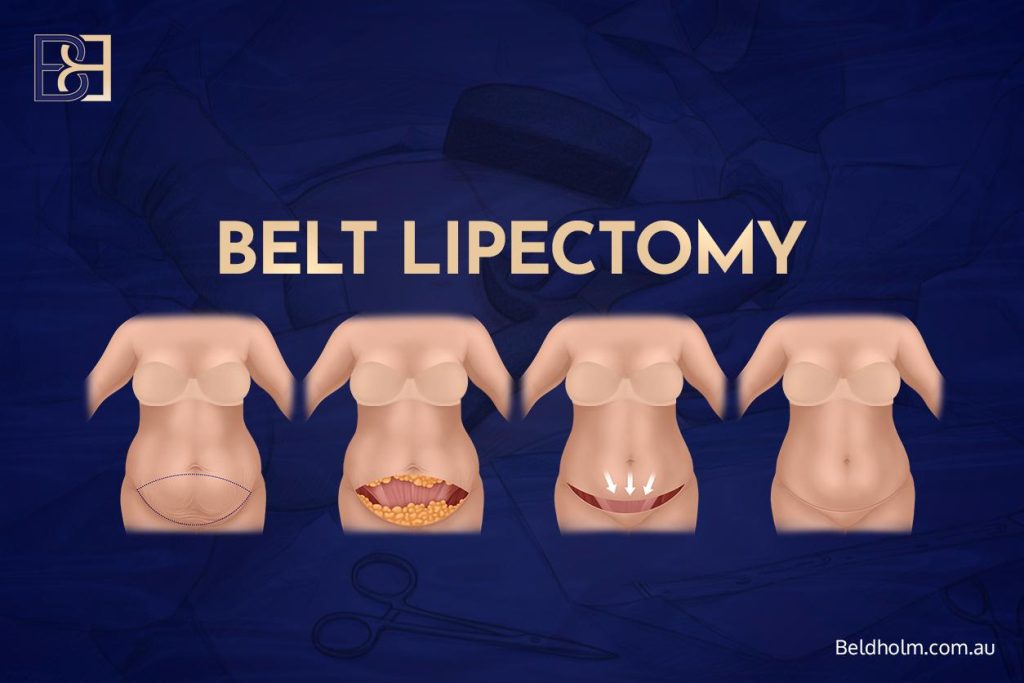
A body lift (belt lipectomy) treats loose skin all the way around the trunk in one operation. The incision runs right around the waistline like a belt, which is where the name comes from. As well as the front of the abdomen, it removes loose skin from the back and flanks and lifts the buttocks and outer thighs through the back part of the excision. This is the operation for patients whose loose skin is genuinely circumferential, which is common after very large weight loss. A body lift (belt lipectomy) and a circumferential abdominoplasty are the same operation. It is one of the more extensive procedures I perform, with a longer recovery and a scar that continues around the body.
Circumferential hybrid abdominoplasty
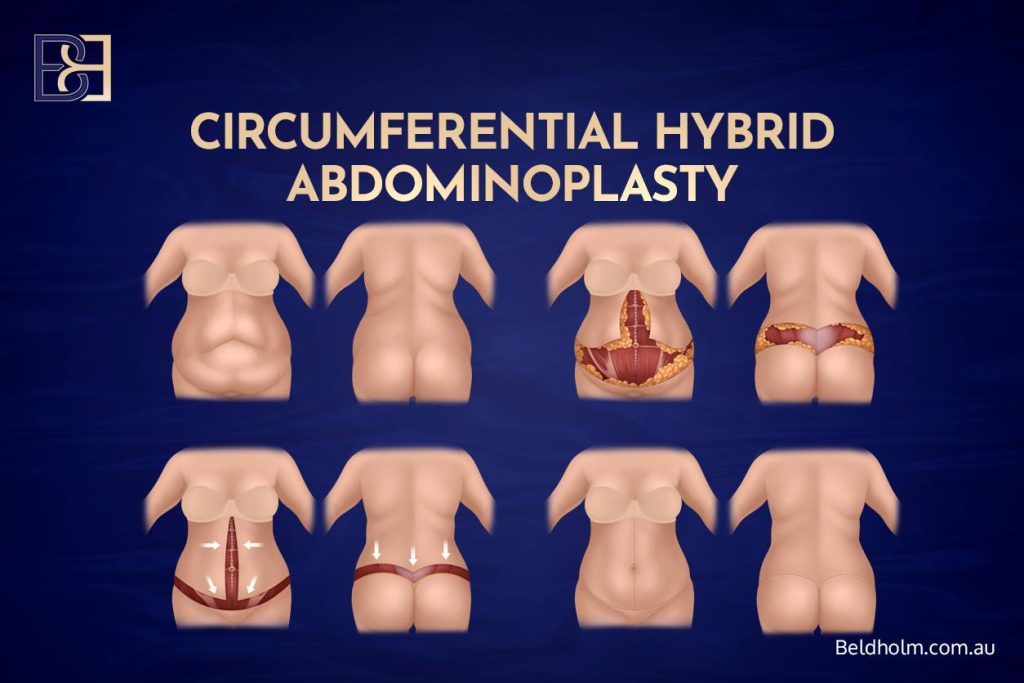
A circumferential hybrid abdominoplasty combines a full body lift (belt lipectomy) with an additional vertical incision on the front of the abdomen. It is not a bigger version of a belt lipectomy. It is a belt lipectomy with the vertical component added, so that horizontal looseness on the front can be taken in at the same time as the circumferential skin. As with the belt lipectomy, the back part of the operation also lifts the buttocks and outer thighs. I consider it for patients who have both circumferential loose skin and significant horizontal looseness on the front. It is among the most extensive operations in this group, and the scarring and recovery reflect that.
Liposuction (suction assisted lipectomy) as an adjunct
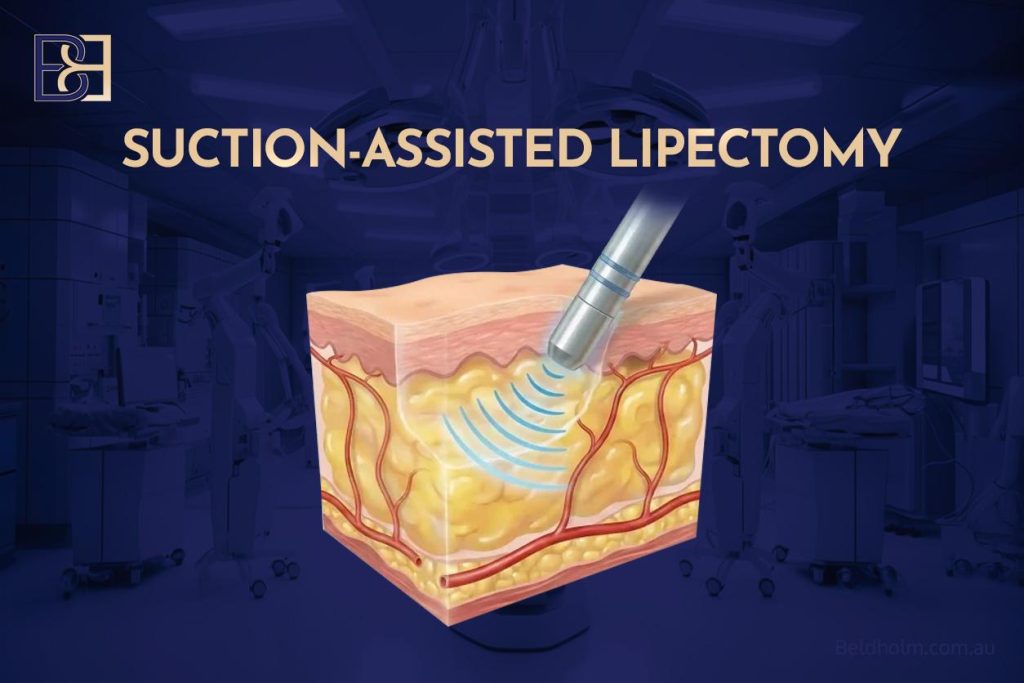
Liposuction (suction assisted lipectomy) is not a treatment for loose skin on its own. Removing fat from under loose skin without removing the skin tends to leave the skin looser, not tighter. Where it is useful is as an adjunct during one of the operations above, to refine areas of stubborn fat, for example at the flanks, while the loose skin is being removed. I use it selectively as part of the procedure, not as a standalone solution for post weight loss skin.
How the right operation is chosen
You do not need to work out which of these you need before you see me. That is the purpose of the consultation. I examine the pattern and amount of your loose skin, take your medical history and nutritional status into account, and talk through what each suitable option for excess skin removal would involve, including the scars. Any excess skin removal surgery here is planned around your individual pattern of laxity.
One operation or several: single-stage versus staged surgery
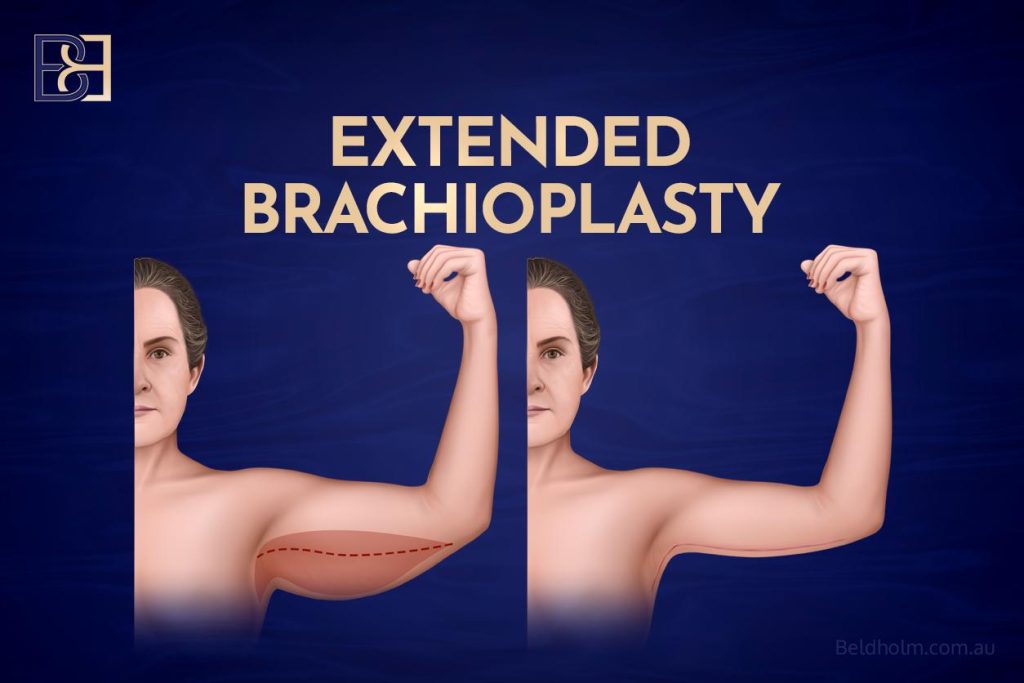
Because loose skin after major weight loss often affects the abdomen, back, and sometimes other areas as well, such as the arms (brachioplasty, arm lift) and thighs (thighplasty, thigh lift), a question that comes up often is whether to deal with it in one larger operation or across more than one surgery, in two or more separate stages. There is no single right answer. It depends on the patient.
Single-stage is my general preference, where a patient is suited to it

Where a patient is medically suited to it, I prefer to remove their loose skin in a single comprehensive operation rather than dividing the work across several procedures. The reasoning is practical. One operation means one anaesthetic, one hospital admission, and one recovery period to work through, rather than repeating each of those steps two or three times.
This is a preference, not a rule, and it is never a reason to do more surgery than you came for. It only applies where a single operation genuinely reduces the total burden for that individual.
The trade-off is real
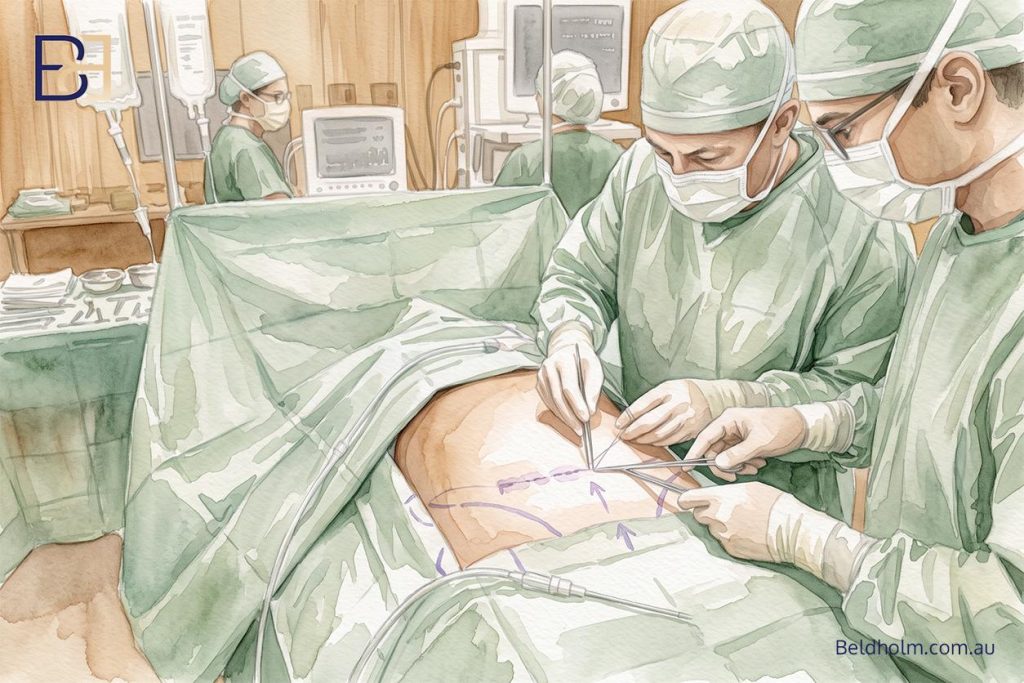
A larger single operation is a bigger physiological event than a smaller one. More extensive surgery, with a longer time under anaesthesia and a larger area of operating, places more demand on your body, and recovery should not be underestimated. That is the trade-off, and it is exactly why preparation matters more, not less, when a single comprehensive operation is planned. Getting your nutrition and general health right beforehand is part of making a larger operation an appropriate choice in the first place.
When a single operation may be appropriate
A single comprehensive operation may suit you when:
- The pattern of your loose skin can be properly removed in one operating time
- Your general health and nutritional status support a longer procedure
- Consolidating the work genuinely reduces the total burden of anaesthesia, admission, and recovery for you
When staging may be the better path

For some patients, doing everything at once asks more of the body than is sensible. In that situation, spreading the work across separate operations is the more appropriate and lower-risk choice. Staging may be the better path when:
- The combined operation would place more demand on your body than is appropriate
- Medical factors mean the work should be spread out
- The extent of the work cannot be completed well in a single operating time
Staging is a legitimate clinical decision, not a second-best option or a fallback. For the patients it suits, it is the right approach, and I recommend it openly when that is the case.
How the decision is made
Whether one operation or staged surgery suits you is a clinical judgement made for you as an individual. It follows assessment of your medical history, your nutritional status, the pattern and extent of your loose skin, and what can be done well in a single operating time. It is discussed and decided together at consultation, not before I have examined you.
Book your appointment online now
Recovery: what to expect
Recovery is longer and more involved the more extensive your operation. A patient having an apronectomy will recover more faster than a patient having a circumferential hybrid abdominoplasty. The general picture below applies across these operations, with the timeline stretching for the larger ones.
In hospital
Most patients stay in hospital for 2 to 4 nights. The exact length is a clinical decision I make on daily review, based on how you are progressing, not something set in advance or left to preference. While you are in, the nursing team helps you get up and moving early, which matters for your circulation and recovery.
Drains

I use two closed suction drains for these operations, which exit at the lateral hip. They remove fluid that would otherwise collect under the skin. I take them out once the output drops below a set threshold, usually somewhere between 2 and 7 days. For some patients one or both drains come out before you go home, for others they stay in a little longer.
Dressings and compression garments
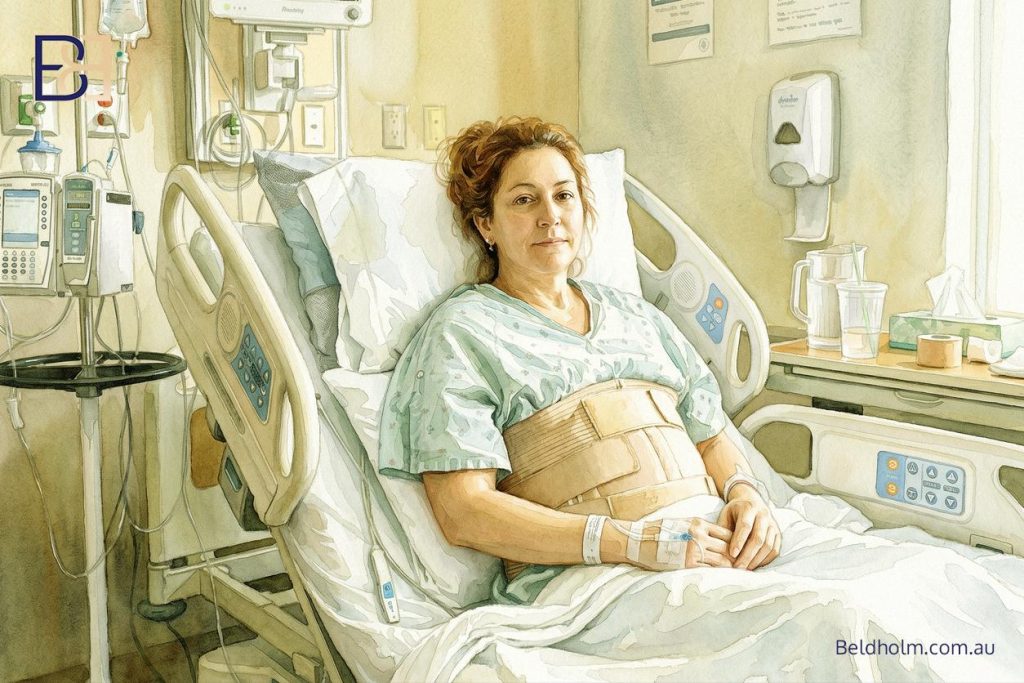
Your wound is covered with a dressing for the first week, after which we move to a taped dressing. You will also wear compression. We measure and order your garment through the rooms. You start in a binder straight after surgery, then move into a fitted compression garment at around two to three weeks. The general pattern is full-time wear for about four weeks, then part-time for a further two weeks. Compression supports the area and helps reduce swelling as everything settles.
Pain and early weeks

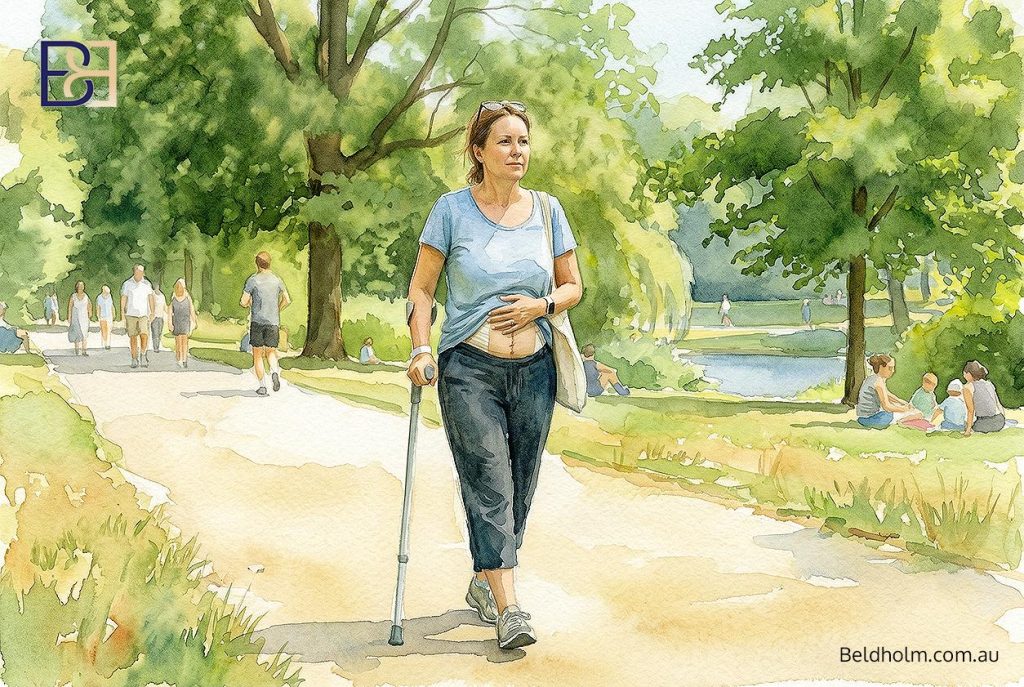
There is physical discomfort in the first week or two, which we manage with pain relief. You will be moving carefully and stooped forward a little at first, particularly after an abdominoplasty, and you straighten up over the following weeks. Swelling and bruising are expected and settle gradually over weeks to months.
Getting back to activity
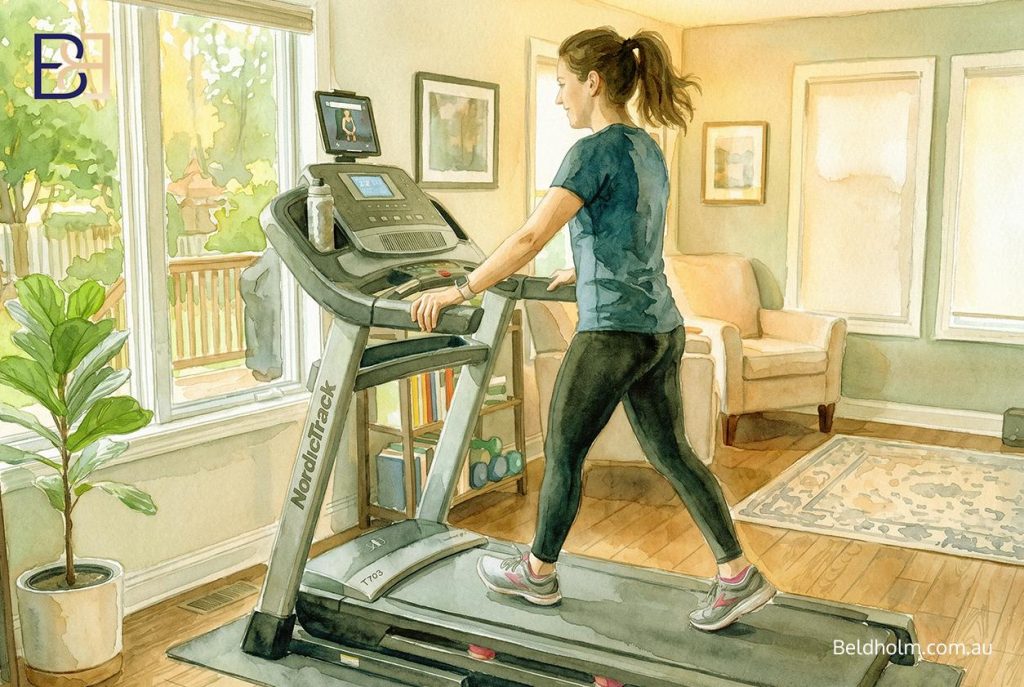
Some general guides, which I tailor to your operation and progress:
- Keep below a 10 kg lifting limit in the early weeks
- Desk or sedentary work is usually possible at around four weeks
- Manual or physical work usually needs six to eight weeks
- If your operation involved repair of separated muscles, core exercises wait until at least eight weeks. If your operation was skin and fat removal without muscle repair, lighter core work and squats can usually start from around four weeks
Do not rush these milestones. Pushing too early risks wound healing problems and a poorer result.
Follow-up
I follow my post weight loss patients closely. The first two weeks are the most intensive, with several visits to the nurse and to me. After that, I review you at milestones: four weeks, three months, six months, and twelve months. Your GP takes over your general care with a formal handover at the four-week visit.
If something is not right after hours

You will always have a way to reach someone:
- During clinic hours, call the rooms
- After hours, call Maitland Private Hospital, where a nurse will triage your call by phone
- If you need to be physically examined after hours, for example for severe pain, a fever or a wound problem, go to your local emergency department, as Maitland Private is not an emergency department
- For anything life-threatening, call 000
Risks and complications
Removing loose skin from the abdomen and back is major surgery, and it carries risks. Larger and circumferential operations carry more risk than smaller ones, because they involve longer operating time and a bigger wound. I go through all of this with you in detail before you decide on anything. The list below is not exhaustive, but it covers what matters most.
Bleeding and haematoma

Any operation can bleed. A haematoma is a collection of blood under the skin that sometimes needs a return to theatre to drain it. Stopping nicotine and managing blood thinners properly beforehand reduces this risk.
Fluid collection (seroma)
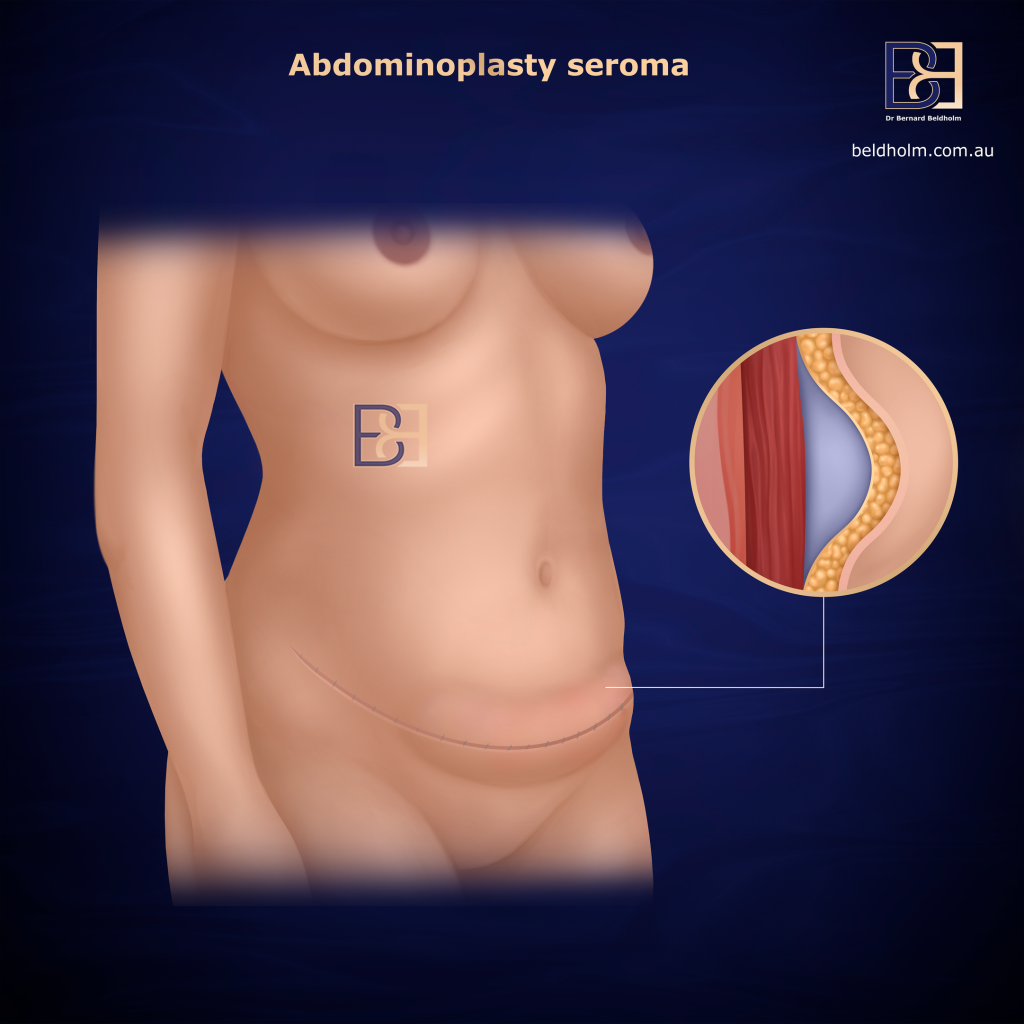
Fluid can collect under the skin after the drains come out. This is called a seroma. Small ones often settle on their own. Larger ones may need to be drained with a needle in the rooms, sometimes more than once.
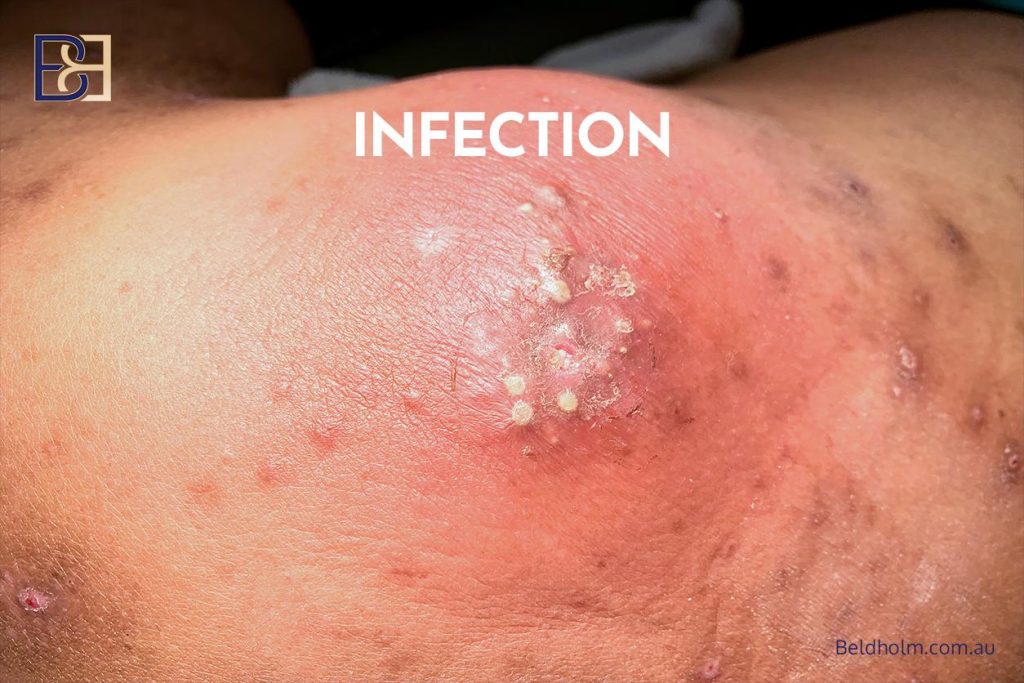
Infection
Wound infection can happen and is usually managed with antibiotics. More significant infections are less common but can need further treatment.
Blood clots (DVT and pulmonary embolism)
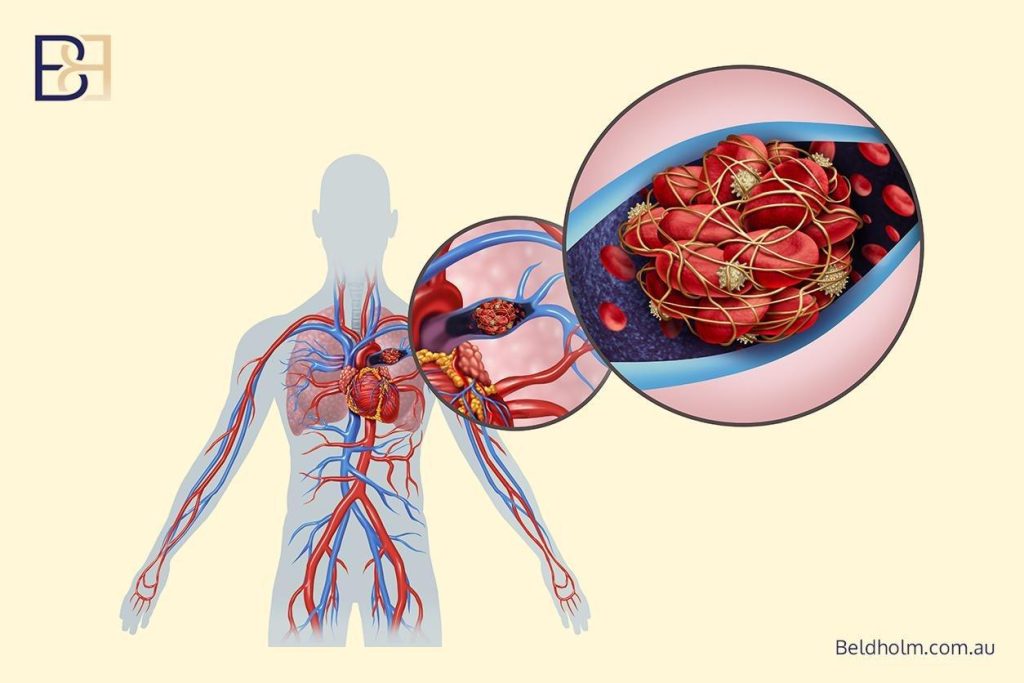
Clots in the legs (deep vein thrombosis) can form after this kind of surgery, and rarely can travel to the lungs (pulmonary embolism), which is a serious event. This risk is one I take seriously. I assess your individual clot risk myself and decide on the clot-prevention plan, rather than leaving it to others. Early movement after surgery, compression, and in some cases blood-thinning medication all play a part. You should never start or stop blood thinners on your own around your surgery.
Wound healing problems

Wounds can be slow to heal, and parts of a wound can separate, particularly at points of tension and where incisions meet, such as the junction in a Fleur de Lis. Post-weight-loss patients are more prone to healing problems if nutrition is not corrected first, which is why I put so much weight on preparation. Most wound healing issues are managed with dressings and time, but some need further surgery.
Reduced blood supply to the skin (necrosis)
In some cases the blood supply to an area of skin is not enough and that skin does not survive, which is called necrosis. It is more likely in smokers, in patients with diabetes, and at the edges of larger operations. It can leave a wound that takes a long time to heal and may need further surgery.
Scarring
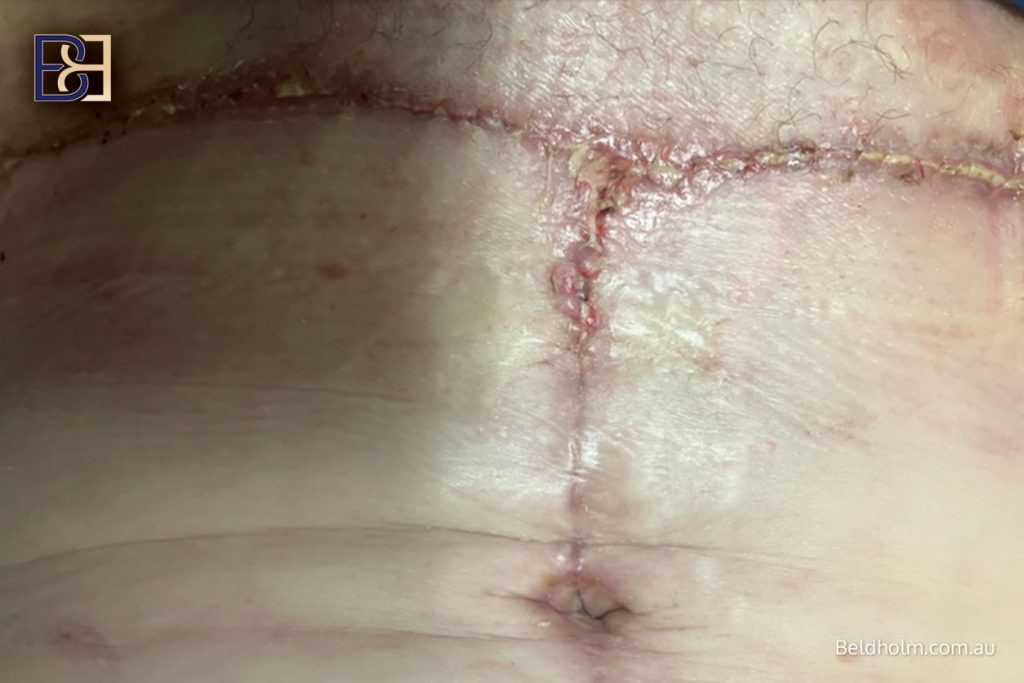
These operations leave permanent scars, and the more extensive the operation, the more scarring there is. Scars fade and settle over twelve months or more, but they do not disappear. Some patients form thickened or widened scars. Scar revision is sometimes possible later, but it cannot remove a scar altogether.
Altered sensation
Numbness over part of the abdomen is normal after these operations and usually improves over months, though some areas of altered sensation can be permanent.
Contour problems and revision
You can be left with asymmetry, small folds of skin at the ends of an incision, or other contour irregularities. Sometimes a further operation is needed to revise these. Revision surgery is its own procedure with its own recovery and risks.
Other risks
There are risks that come with any major operation under general anaesthesia, including reactions to the anaesthetic and chest or other infections. Your anaesthetist and I discuss these with you. Fat necrosis, where an area of fat hardens and may need treatment, can also occur.
I would rather a patient understands these risks fully and decides not to proceed than goes ahead without a clear picture. We talk through all of them, and how they apply to you specifically, before any decision is made.
Realistic expectations
Be clear about what this surgery can and cannot do before you decide to go ahead.
What the surgery does
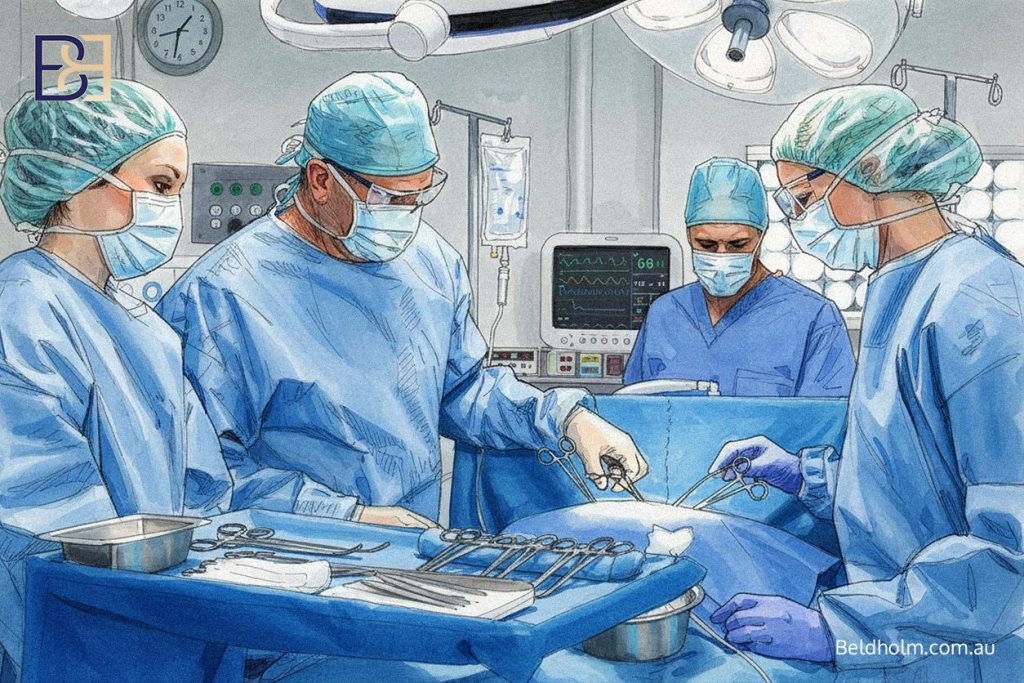
These operations remove loose, excess skin and tighten what remains. It takes away the practical problems that loose skin causes, such as rashes in the folds and difficulty with clothing. For many post weight loss patients, that is a meaningful change.
The trade-off
Removing the skin means accepting permanent scars in exchange. The amount of scarring depends on the operation. This is the central trade-off of body contouring surgery, and it is worth sitting with before you commit. I show you where the scars will be and how long they are for whichever operation suits you.
Results vary
Results vary from patient to patient. The outcome depends on how much skin is removed, the quality of your skin, your body shape underneath, and how you heal. Two patients having the same operation can end up looking different. I cannot promise a particular look, and I am cautious of anyone who does.
It takes time to see the result
The final result is not what you see in the first weeks. Swelling settles over months, and scars take twelve months or more to fade and soften. Judging the outcome too early will not give you a fair picture.
Weight stability matters
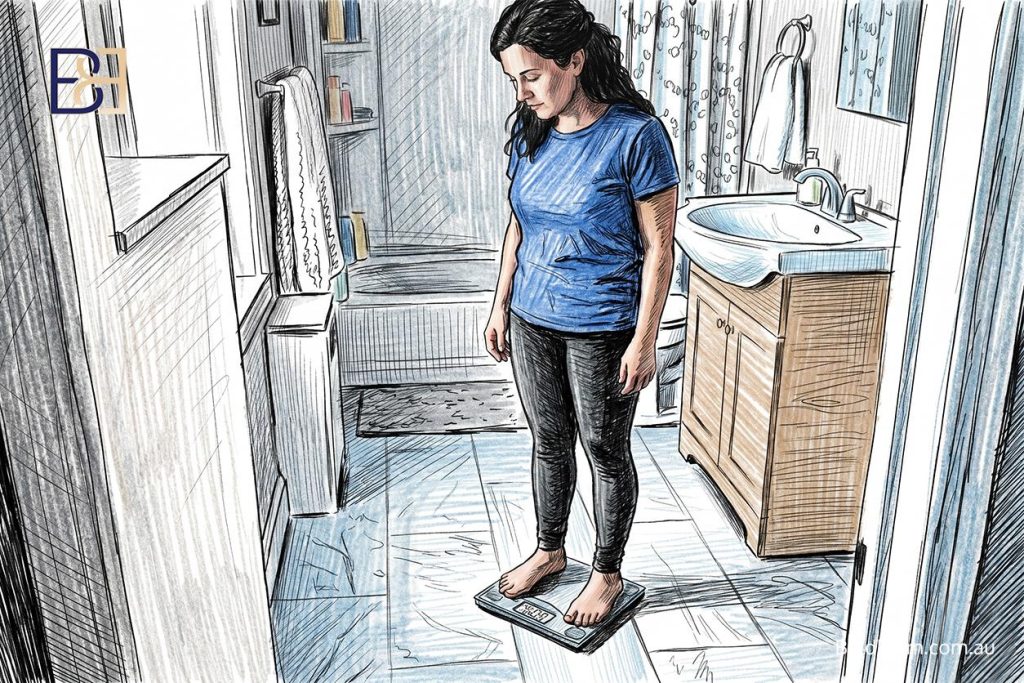
Your result holds best when your weight is stable. Significant weight gain or further large weight loss after surgery can change the contour and stretch or loosen skin again, and large weight fluctuations work against a lasting result. For patients who may still lose more weight, or who are considering pregnancy, it is often better to wait until things are settled before operating. I talk this through with you as part of timing the surgery.
Some patients need a further procedure

Even with a good result, some patients want or need a revision later, for example to adjust a small area or improve a scar. This is part of the picture for some people and not a sign that something went wrong.
Common questions
Am I a candidate for surgery?
The patients I most often operate on have had substantial weight loss, have reached a stable weight at or near their goal weight, are in reasonable general health, and have loose or extra skin that bothers them or causes practical problems. Weight stability matters because operating during active weight loss means operating during a period of nutritional deficit, which works against healing. Whether surgery suits you is assessed at consultation, after a referral from your GP.
How long do the results last?
The skin I remove is gone for good, so the change to your contour is lasting. What can alter it over time is significant weight change and the normal effects of ageing, which continue for everyone. Keeping your weight stable gives the result the best chance of holding.
When can I have surgery after losing weight?
Generally once you have reached a healthy weight that has been stable for a period and your nutrition is in good shape. A gradual weight loss that has settled, supported by a healthy lifestyle, gives the most reliable base to operate on. If you are still losing weight, or expect to lose more, it is usually better to wait. I work out the right timing with you individually.
Will Medicare or private health insurance help with the cost?
Some post weight loss skin removal surgery may attract a Medicare item number when specific medical criteria are met, for example documented skin problems from the excess skin and excess tissue. This is assessed individually and not everyone qualifies. If you have private hospital cover, whether your policy contributes depends on your level of cover and your fund’s rules. I would suggest checking directly with your health fund, and we can give you the relevant item numbers to ask about once we know which operation suits you.
One operation or several?
This depends on the pattern and extent of your loose skin and on your general health. Where a patient is suited to it, dealing with everything in a single operation can mean one anaesthetic and one recovery. For others, staging the work across separate operations is more appropriate. It is decided individually at consultation.
How long is the recovery?
Recovery varies depending on the operation, from a few weeks for a smaller procedure to longer for the more extensive ones. Most patients are back to desk work at around four weeks and physical work at six to eight weeks, with swelling and scars settling over the following months. Removing skin after weight loss is a staged journey, and I support you through each milestone.