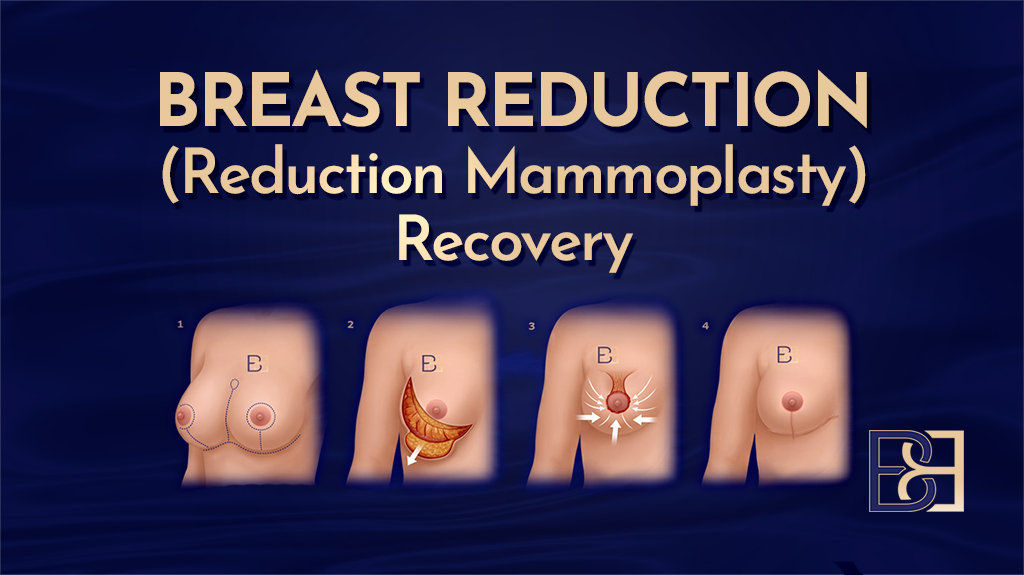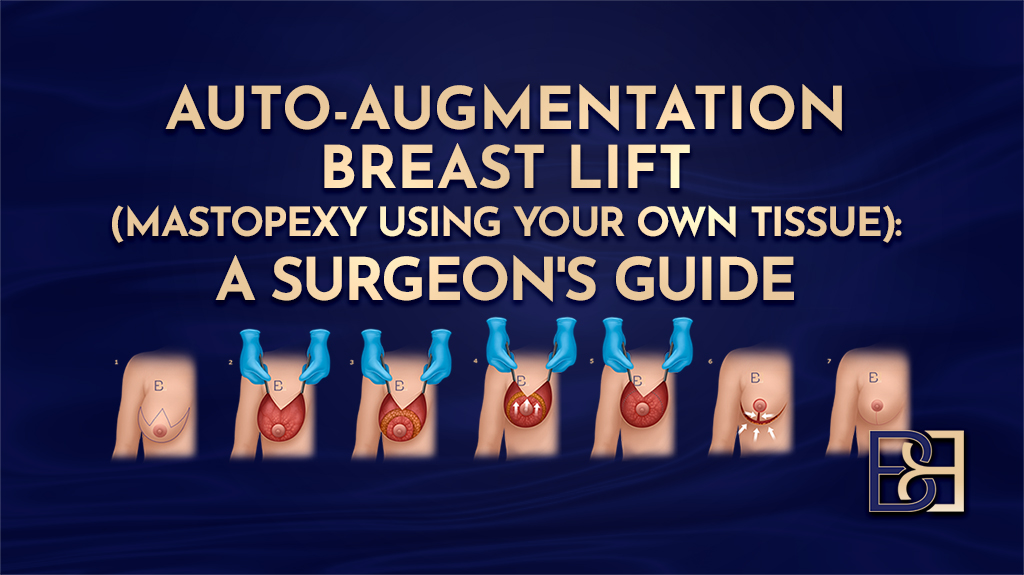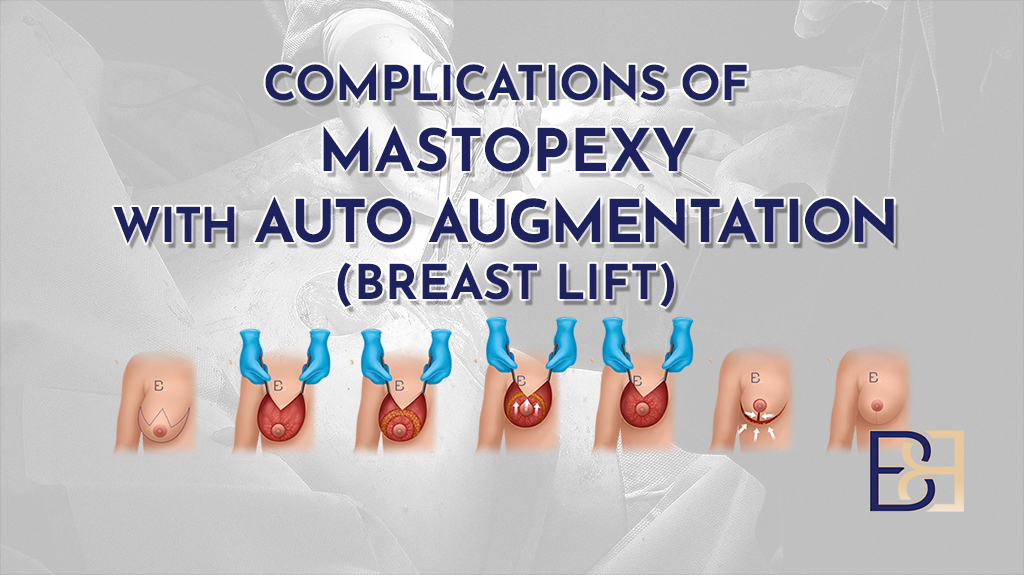
A breast lift (mastopexy) is a surgical procedure that repositions the nipple, reshapes the breast, and removes excess skin to lift the breast on the chest. It is invasive surgery. Breast lift (mastopexy) surgery involves an anaesthetic, incisions through breast skin and tissue, permanent scars, and a recovery period that takes a few weeks to work through.
Every operation carries risks, and a mastopexy is no exception. On this page I set out the general surgical risks, the breast lift risks specific to this operation, and what happens if something is not healing as it should. I also cover the steps that lower your risk before surgery. My aim is to give you a clear picture so you can weigh up the operation properly.
A few points apply throughout. Results vary from patient to patient, because breast tissue quality, skin laxity, healing, and anatomy differ. A GP referral is required before any consultation, and whether a mastopexy is appropriate for you is decided at that consultation after assessment. This page covers a breast lift (mastopexy) on its own. A lift combined with breast implants (a breast augmentation), sometimes described as an augmentation mastopexy, has a different risk and revision profile, and I cover that operation separately.
Scarring
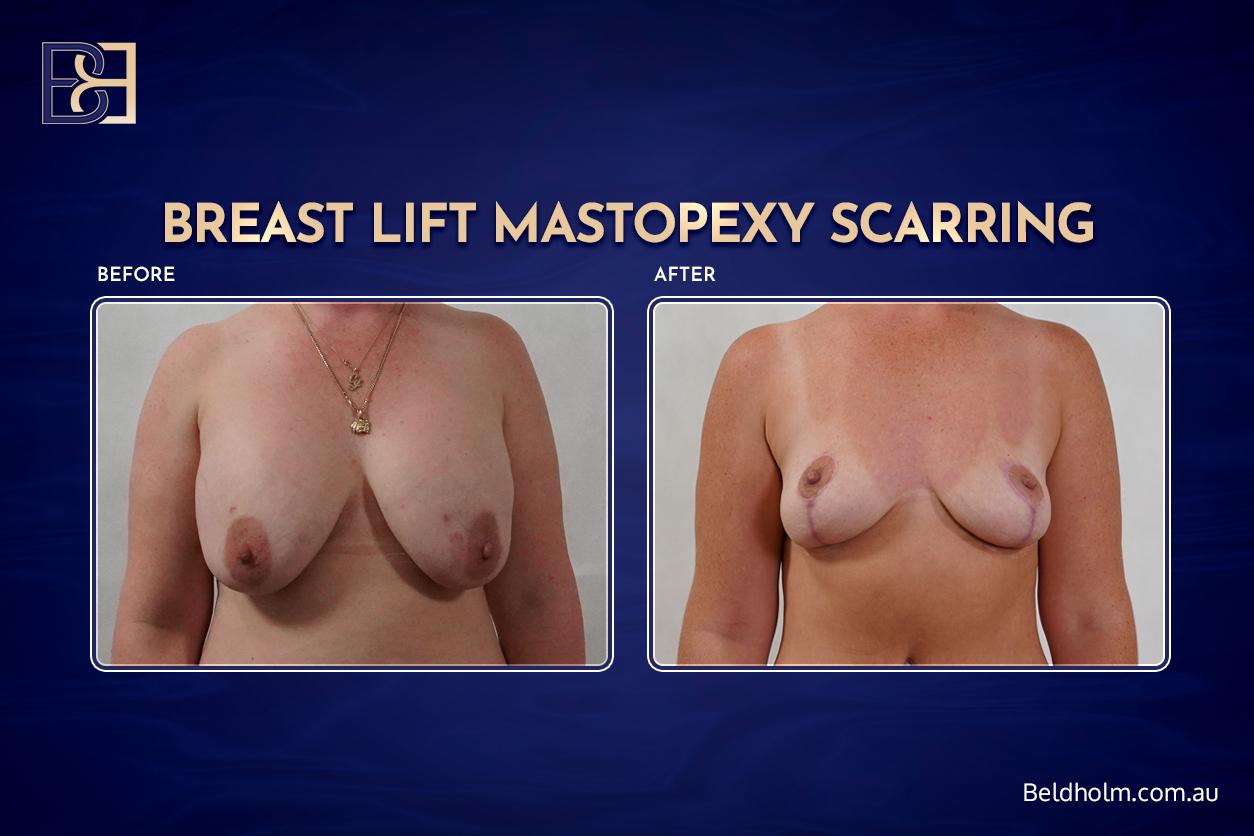
Disclaimer: Results vary, surgery has risks, seek a second opinion. Operation performed by Dr Bernard Beldholm
Every breast lift (mastopexy) leaves permanent scars. This is the single most important thing to understand before you commit, because there is no version of a lift that avoids them.
The scar pattern depends on the technique and how much skin has to be removed. A lift usually leaves a scar around the areola and a vertical scar running down to the breast crease, together often called a lollipop scar. Where more skin needs to come out, a horizontal scar along the breast crease is added, making an anchor pattern. The more skin removed to reshape the breast, the longer the scars tend to be.
How scars change over time. Fresh scars look red or pink and raised. Over the following months they gradually flatten and fade, and the colour settles. A scar can take up to 2 years to reach its final appearance. It is normal for a scar to look worse before it looks better.
Scar appearance varies from person to person. How a scar settles is not fully within anyone’s control. Some fade to a fine line, others stay more visible. Some patients choose minor scar refinement later on, and that is a normal part of the process rather than a sign that something has gone wrong. What matters is going in with realistic expectations of what the scars will look like and where they will sit.
Scars that behave differently. Some people form thickened, raised scars (hypertrophic scars), and some form scars that spread beyond the original incision (keloid scars). These are more likely if you have scarred this way before. Where a scar heals poorly, a scar revision can be considered later, though a revision creates a new scar of its own and is not guaranteed to improve things.
During consultation I assess your skin, ask about your scarring history, and show you where the scars will sit for the technique I would use. Scar position and length are part of the trade-off you are weighing up, not a detail to leave until after surgery.
General surgical risks
These come with most operations done under a general anaesthetic, and a breast lift (mastopexy) shares them.
- Anaesthetic risks. A general anaesthetic carries its own small risks, including an allergic reaction to medications and, rarely, more serious complications. You are assessed for fitness beforehand. In my practice the anaesthetic consultation is usually done by phone, and the physical airway examination happens on the day of surgery.
- Bleeding and haematoma. Some bleeding comes with any surgery. Occasionally blood collects under the skin as a haematoma and needs draining, sometimes in a return to theatre. A fluid collection (seroma) can also form, though in the mastopexy and breast reduction data drawn on here it was uncommon, affecting under 1% of patients (1).
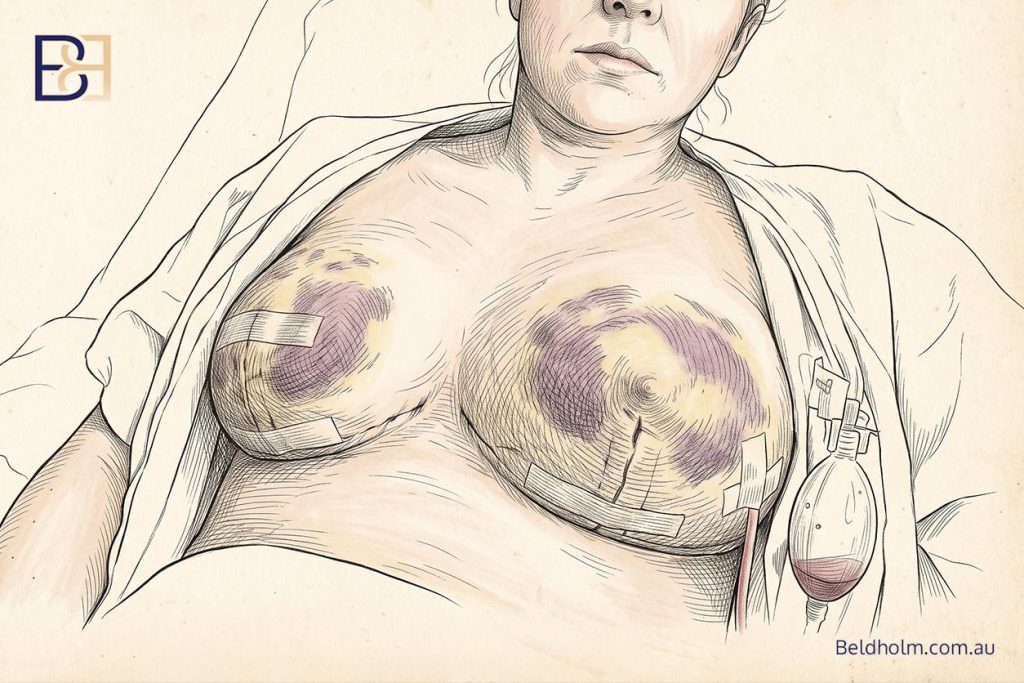
- Infection. Any incision can become infected. Most wound infections settle with antibiotics, while a deeper infection is less common and can need more involved treatment.
- Blood clots (DVT and VTE). A clot can form in a leg vein (deep vein thrombosis) and, rarely, travel to the lungs (venous thromboembolism). Breast surgery is generally lower risk for clots than abdominal contouring.
- Nerve injury. The nerves supplying the breast skin and nipple run through the tissue that is lifted and reshaped, so feeling can change. This is one of the more common things to be aware of with a lift, and I go through it in detail next.
- Delayed wound healing. Wounds can be slow to heal, and occasionally a wound edge breaks down, particularly where the skin has been tightened. Smoking is the biggest contributor, and I come back to how to lower that risk before surgery.
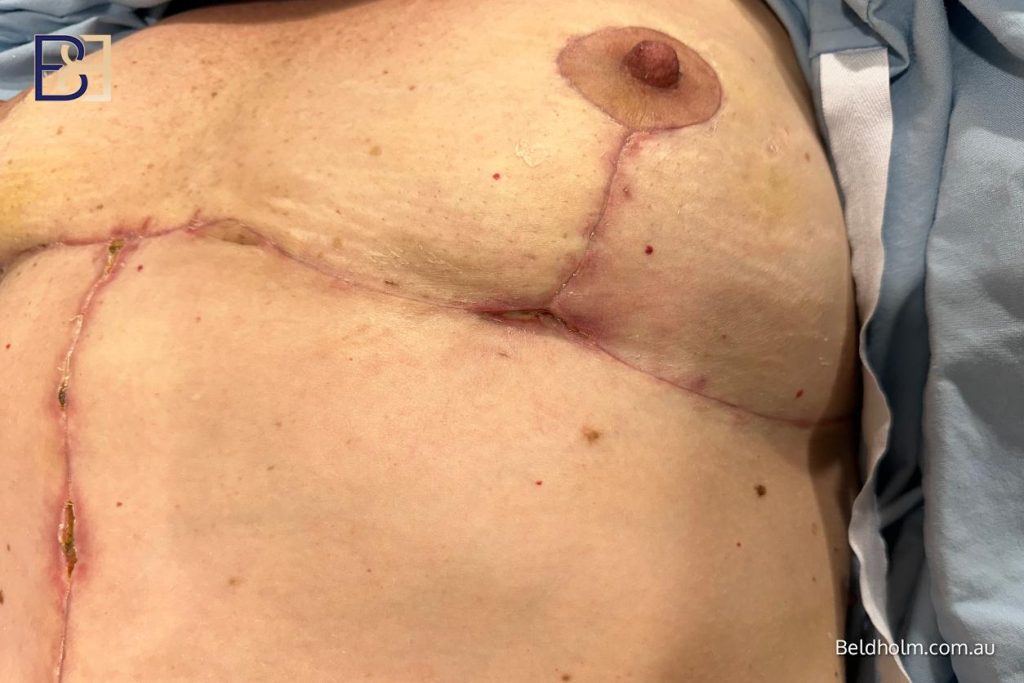
- Reaction to sutures or dressings. Some patients react to deep sutures, tapes, or dressings, with localised irritation or inflammation.
Risks specific to a breast lift (mastopexy)
Some possible complications relate directly to what a lift does: moving the nipple, reshaping the breast, and tightening the skin.
Change in nipple and skin sensation. The nerves that supply the nipple and breast skin run through the tissue that is lifted and reshaped, so sensation can change. Nipple sensation and breast sensation can be reduced, numb, or heightened, affecting the nipple, the skin, or both, and the change can be temporary or permanent. How likely it is depends on the technique and on how far the nipple is repositioned. Sensation often recovers over months, but I cannot promise it will return fully.
Nipple and areola blood supply. The nipple stays attached to the breast on a bridge of tissue (a pedicle) that carries its blood supply. If those blood vessels are compromised, part of the nipple or areola skin can be lost.
Persistent or returning ptosis. A lift repositions the breast, but tissue and skin keep responding to gravity, weight change, and time, so the breast can settle lower again. Persistent ptosis was the most common reason for further surgery in the mastopexy and breast reduction data, affecting about one in ten patients (1). It is more likely with heavier breasts, where skin elasticity is reduced, and when too little of the lower breast tissue is removed. A lift does not stop the breast from changing in the future.
Asymmetry. Some asymmetry is normal, and no two breasts are an exact match before or after surgery. Differences in breast size and shape, nipple position, or scar can remain or appear after a lift. Minor breast asymmetry is common and does not always warrant further surgery.
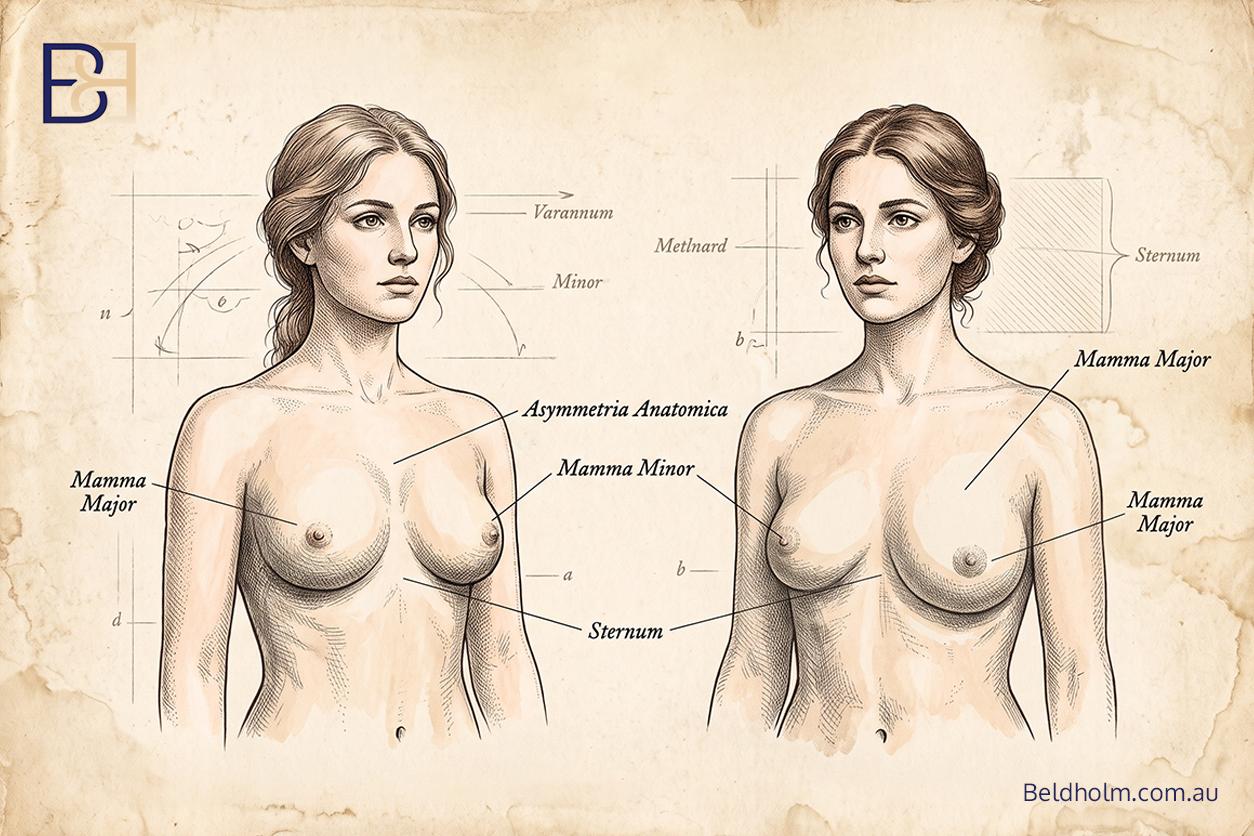
Contour irregularities. The reshaped breast can heal with small irregularities, puckering, or fullness at the incision sites (dog ears). Some settle as swelling resolves, and some may need minor revision.
Fat necrosis. An area of breast fat can lose its blood supply and form a firm lump as it heals. This can be tender, can feel alarming, and sometimes needs imaging or a procedure to sort out.
Firmness from internal scar tissue. Scar tissue forms inside the breast as part of the healing process, which can make areas feel firm. This usually softens with time.
Wound healing problems. Beyond general slow healing, the skin at the point of most tension can occasionally break down or heal slowly, particularly in smokers and where the skin has been tightened significantly.
Need for revision surgery. Some patients need revisional surgery, a second and smaller operation, to treat scars, contour, or symmetry. This is not a sign that anything has gone wrong, but it is a realistic possibility, and it carries its own costs, recovery, and risks.
Breastfeeding and future pregnancy

A breast lift (mastopexy) involves the tissue around the nipple, where the milk ducts and the nerves that trigger milk release sit. Depending on the technique and how much the nipple is repositioned, a lift can affect your ability to breastfeed in the future. Some people breastfeed without difficulty after a lift, and some find their supply is reduced. I cannot predict your individual outcome in advance.
Future pregnancy and breastfeeding can also change your result. The breast enlarges during pregnancy and changes again as it settles afterwards, and breast volume and skin can shift, which can alter the breast shape a lift has produced. For this reason, where it is relevant to you, surgery is generally planned once your family is complete, breastfeeding has finished, and the breasts have settled. This is a timing judgement made with you at consultation, not a fixed rule that applies to everyone.
If breastfeeding in the future matters to you, tell me at consultation. It is part of how I assess timing and technique for you as an individual.
Breast imaging and cancer screening
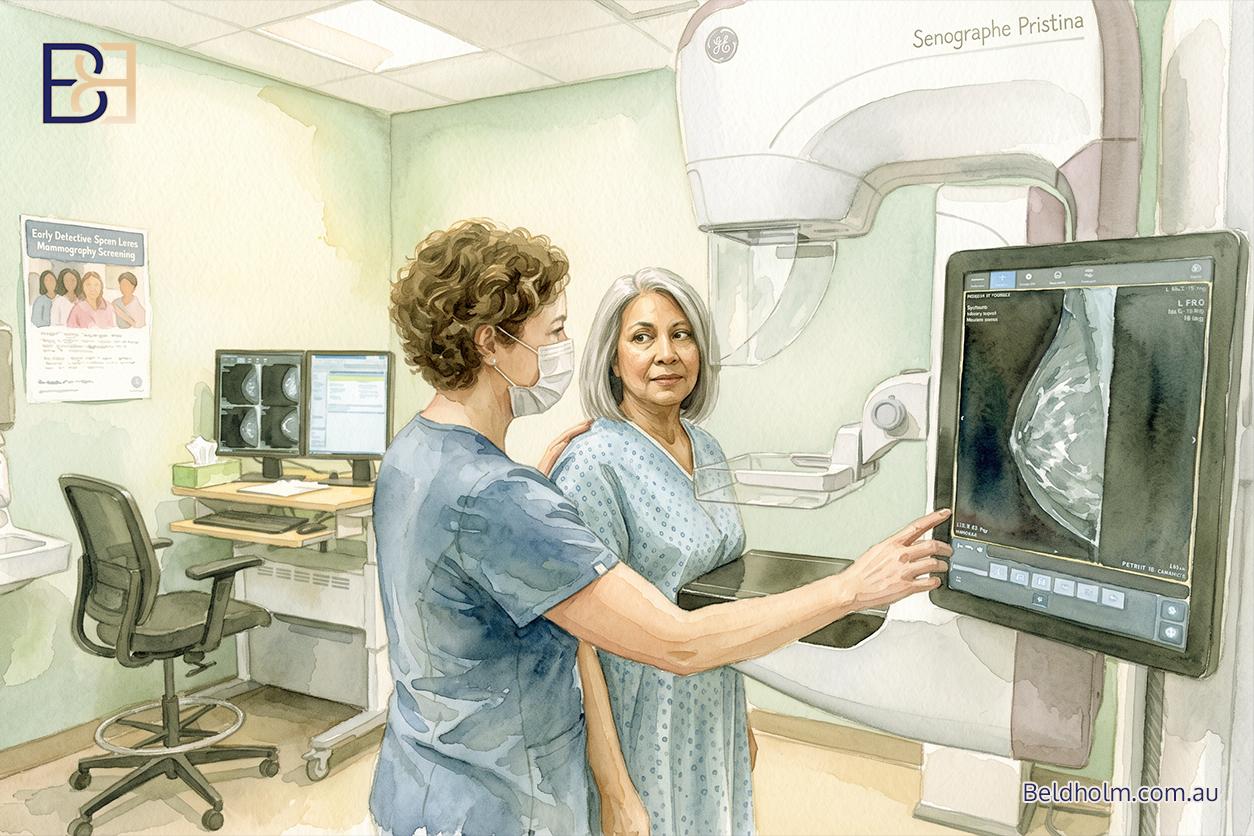
Any surgery that goes through breast tissue can leave changes that show up on future imaging. Scar tissue and areas of fat necrosis can appear on a mammogram or ultrasound and, at times, can look like something that needs further checking. This does not mean a breast lift (mastopexy) causes breast cancer. It means whoever reads your scans needs to know you have had breast surgery so they can interpret the images correctly.
Two practical points follow. First, tell your radiographer and your doctor about your surgery whenever you have breast imaging, so any breast changes are read in context. Second, keep up with breast screening as recommended for your age and personal risk. A lift does not remove the need for ongoing screening, and it does not replace it.
If you are due for routine breast imaging around the time you are planning surgery, I will go through the timing with you at consultation.
Pain and recovery realities

Recovery from a breast lift (mastopexy) takes time, and it varies from person to person. You will have pain and discomfort in the first days, and you will need support at home while you get going again.
Pain is usually managed with prescribed pain relief. It settles over the first week or so for most patients, though how much you feel and how long it lasts depends on your healing and how physical your daily life is.
Expect swelling and bruising, and a change in how the breast looks and feels, for several weeks. You will wear a surgical bra, limit heavy lifting and vigorous activity, and need time away from work and away from exercise. The scars, the shape, and the sensation all keep changing for many months, so the breast you see at two weeks is not the breast you will have at a year.
I go through recovery in detail on a separate page, including activity and lifting restrictions and the follow-up schedule. Do not underestimate this part. Planning your recovery properly matters.
Reducing your risk before surgery

Some of the risks above are influenced by things we can work on before your operation. This is where preparation matters.
Stop smoking and vaping. Smoking is the single biggest modifiable risk for wound healing problems and nipple or skin loss after a breast lift (mastopexy). Nicotine reduces blood flow to the skin and the nipple at exactly the time healing depends on it. I will ask you to stop well before surgery and stay off it through your recovery.
Blood-thinning medications. Aspirin and other blood thinners are usually stopped about a week before surgery to reduce bleeding, and some herbal supplements that increase bleeding are stopped as well. Some patients need to continue their medication through surgery, which is planned well in advance. Do not stop or change any medication on your own. I will give you clear instructions based on your medical history.

Pre-operative bloods. All my breast surgery patients have a standard set of pre-operative blood tests:
- Full blood count
- Kidney and liver function
- Coagulation (clotting) screen
- Hepatitis B, hepatitis C and HIV screening
- Pregnancy test where appropriate.
These confirm you are fit for surgery and flag anything that needs sorting beforehand.
Warning signs and after-hours contact

Book your appointment online now
You need to know the warning signs after a breast lift (mastopexy) and what to do if you notice them.
Contact us if you notice any of the following:
- Severe pain, or pain that is not settling with your prescribed pain relief
- Spreading redness, heat, or swelling of the breast
- A fever or feeling generally unwell

- A wound at the surgical site that is opening, leaking fluid, or has an offensive smell
- A rapidly enlarging, tense, or bruising area on the breast, which can point to bleeding
- A colour change in the nipple or areola skin, particularly darkening
- A hot, swollen, or painful calf, or any chest pain or shortness of breath
How to get the right help after hours. Call Maitland Private Hospital. The phone triage is nurse-led and will guide you on what to do next. If your problem needs a physical assessment, you may be directed to your local emergency department, because Maitland Private is not an emergency department. For anything life-threatening, such as chest pain or difficulty breathing, call 000 straight away.

If you are unsure whether something is serious, make the call.
Deciding whether a breast lift (mastopexy) is right for you
As with any cosmetic surgery, a breast lift (mastopexy) can reshape the breast and reposition the nipple, but it remains a serious operation with permanent scars and a genuine list of risks. It is not the only option for everyone, and it is not a decision to rush.

Whether a mastopexy suits you, and which technique fits your anatomy, is worked out at consultation, after I assess your breast tissue, skin, and nipple position and go through your medical history. A GP referral is required before that consultation. Breast lift (mastopexy) results vary between patients, because tissue quality, skin laxity, healing, and starting anatomy all differ. Significant weight gain, or losing weight, after surgery can also change your result, so a stable weight beforehand is preferable.
The recovery page sets out what the weeks after surgery involve, and is worth reading alongside this one.
References
- Swanson E. Evidence-Based Cosmetic Breast Surgery. Cham: Springer International Publishing; 2017.