


If you are looking into a breast lift (mastopexy) but would rather not have an implant, you have probably come across the term “auto-augmentation.” It sounds like the operation adds size using your own tissue. In my practice I want to be clear from the outset about what this operation does and what it does not do, because the online picture and the published evidence do not always line up.
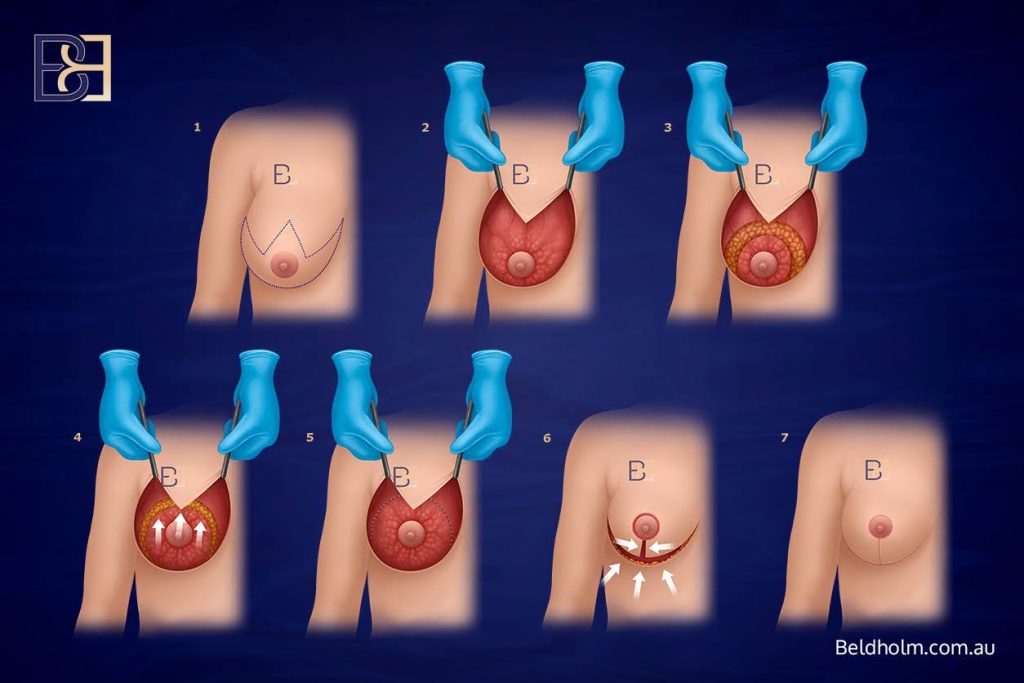
An auto-augmentation breast lift (mastopexy) is a lift that rearranges your own breast tissue rather than discarding the lower-pole tissue a standard lift would remove. During the operation I reposition that tissue higher on the chest wall and hold it with internal sutures, then remove excess skin and lift the nipple and areola to a higher position. No implant is used.
What the operation actually does
The word “auto-augmentation” implies added volume. In reality, moving tissue from one part of the breast to another does not create a net increase in breast volume. Published photometric research, which measures standardised before-and-after photographs rather than relying on visual impression, has found that tissue-rearrangement techniques produce only modest changes in projection and do not reliably fill the upper pole the way an implant does (1). A more accurate way to describe this operation is that it redistributes and reshapes your existing tissue. It changes breast shape and position. It does not add size.
I set that out because it matters for your decision. If your goal is a lift, with the tissue you have repositioned and supported internally, this operation can do that without an implant. If your goal is genuinely more volume or more fullness in the upper part of the breast, an implant is the reliable way to achieve that, and I would talk you through that option at consultation.
Who this guide is for
This guide walks through how an auto-augmentation breast lift (mastopexy) compares with a standard breast lift (mastopexy) and with a lift combined with an implant, who tends to be suited to it, how the operation is done, what recovery involves, the scars, and the risks. Throughout, I have kept the focus on what the procedure does rather than on any assumption about why you are considering it.
Whether this operation, a different lift, or a lift with an implant suits you is a clinical decision I make with you at consultation, after examining your breast tissue, skin laxity and breast position. You will need a GP referral before that appointment, and results differ from one patient to the next.
How it differs from a standard breast lift (mastopexy) and a lift with implants
People often ask me how an auto-augmentation breast lift (mastopexy) differs from a standard lift, and where implants fit in. The three operations share the same foundation. They differ mainly in what happens to your breast tissue and whether volume is added.
A standard breast lift (mastopexy)
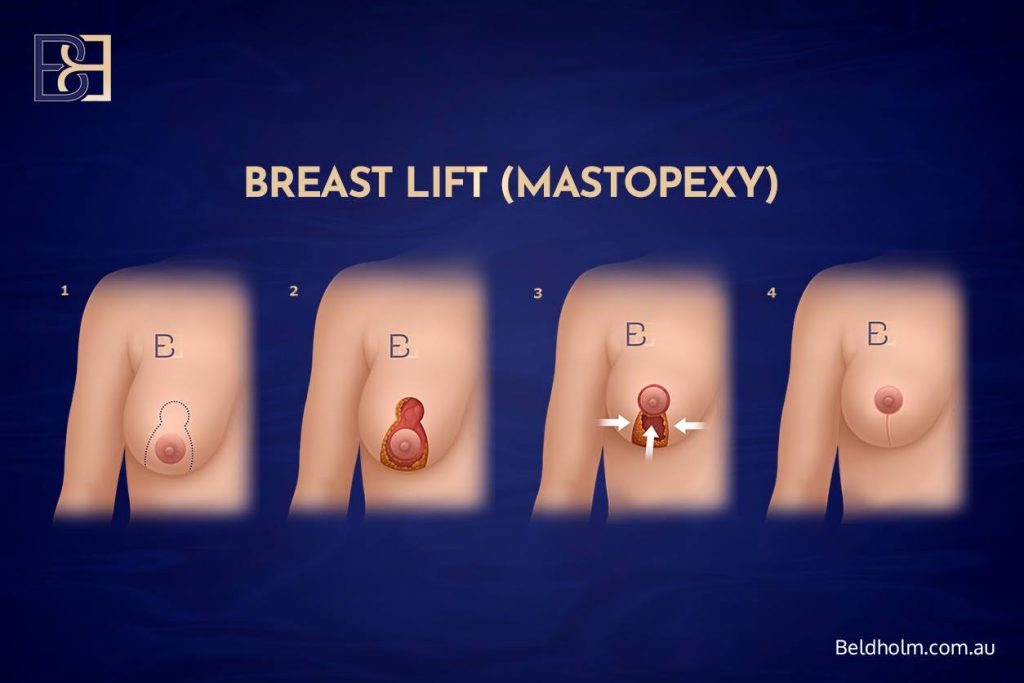
A standard breast lift (mastopexy) raises the breast by removing excess skin, tightening the skin envelope, and moving the nipple and areola to a higher position. Tissue from the lower part of the breast that is surplus to the lift is usually removed. The operation changes breast position and shape. It does not add volume, and it does not fill the upper part of the breast the way an implant would.
An auto-augmentation breast lift (mastopexy)
An auto-augmentation breast lift (mastopexy) is the same lift, with one difference. Instead of removing that lower-pole tissue, I keep it, move it higher on the chest wall, and secure it with internal sutures to support the breast from the inside. You keep more of your own tissue, and it is used for internal support and shape rather than discarded. As with a standard lift, no implant is used and there is no net gain in breast volume. Moving tissue around the breast reshapes it; it does not create extra size.
A breast lift with implants (mastopexy with implants)
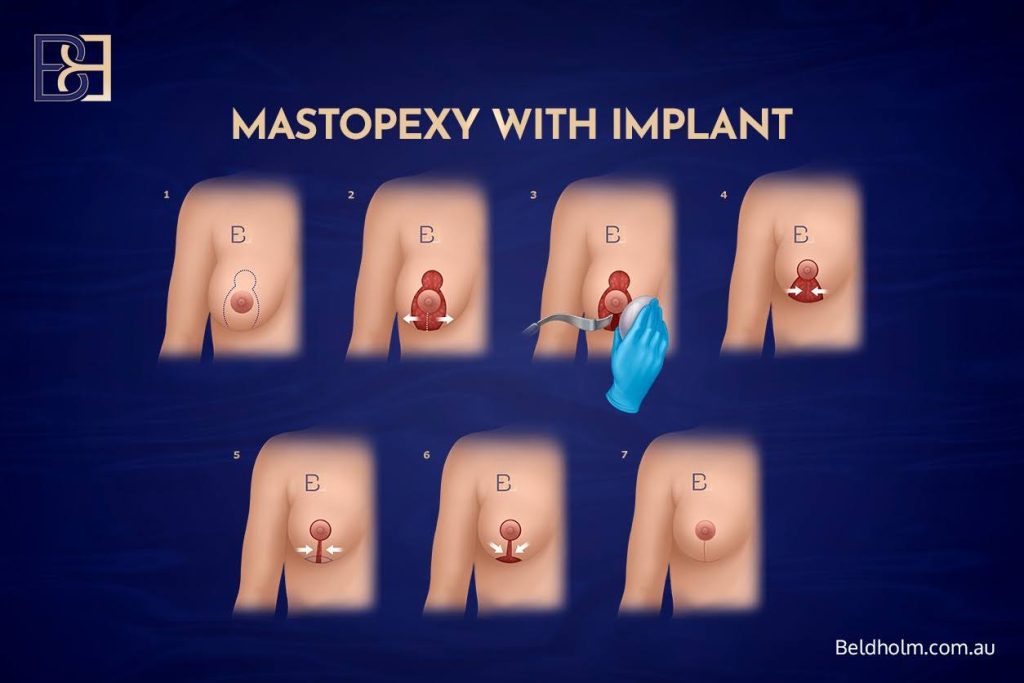
A breast lift with implants (mastopexy with implants) combines the lift with a breast implant. The lift repositions the breast, and the implant adds volume, including reliable fullness in the upper part of the breast that tissue rearrangement alone does not achieve (1). This is a larger and more complex operation than a lift alone, with a different risk and revision profile. It is a different operation from the one this guide covers, and I write about it separately.
The key difference
The practical question is usually about volume. A standard lift and an auto-augmentation lift both reshape and reposition what you already have, without adding size. If you want the breast lifted and are content with your current volume, one of those two is likely the direction. If you want added volume or fuller upper poles, that comes from an implant. Which of the three suits you depends on your tissue and your goals, and is decided at consultation.
| Standard lift | Auto-augmentation lift | Lift with implants | |
|---|---|---|---|
| Lifts the breast | Yes | Yes | Yes |
| Uses an implant | No | No | Yes |
| Adds breast volume | No | No | Yes |
| Fullness in the upper pole | Minimal | Minimal | Reliable |
| Lower-pole tissue | Removed | Kept and repositioned | Adjusted around the implant |
What an auto-augmentation breast lift (mastopexy) can and cannot do
Being clear about this is the most useful thing I can do for anyone weighing up this operation. The name promises more than the tissue can deliver, so here is what the procedure does well and where its limits are.
What it can do
- Reshape and reposition the breast, lifting it higher on the chest wall.
- Move the nipple and areola to a higher position and reduce a stretched areola.
- Keep your own tissue and use it for internal support, rather than removing it and using an implant.
- Provide a modest increase in projection through the way the tissue is rearranged.
Measurements of these operations show that the lift comes from rearranging the lower pole of the breast, with little change to the upper breast border (2). In other words, the change is in shape and position.
What it cannot do
- Add breast volume. Moving tissue from one part of the breast to another does not create extra size.
- Reliably fill the upper part of the breast. Standardised photographic measurements across many published techniques show that tissue rearrangement, fascial sutures and internal mesh produce only modest changes in projection and do not create the upper pole fullness that patients often expect (1).
- Make you a cup size larger. If that is the goal, this is not the operation for it.
I go into this because the online material around auto-augmentation often shows before-and-after images that suggest an implant-like result without an implant. When those photographs are measured on a standardised basis, the gain in upper pole projection is small (1). Setting a realistic expectation here saves disappointment later.
Where an implant is the reliable option
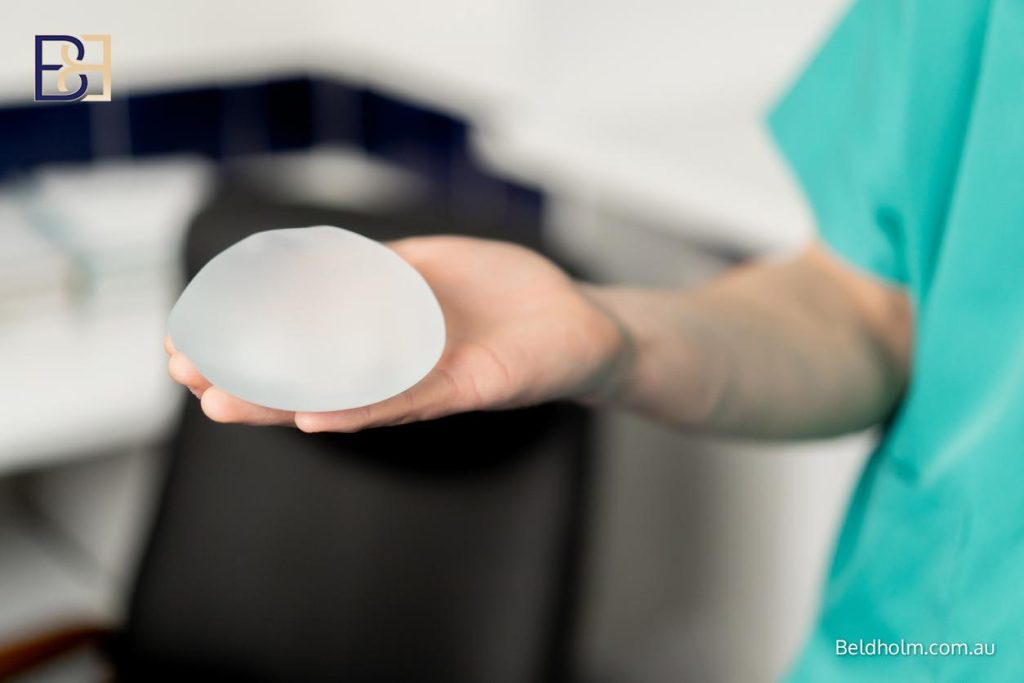
If your goal is genuinely more volume, or fuller upper poles, a breast implant is what reliably provides it, and I would discuss a breast lift with implants (mastopexy with implants) as the option that matches that goal. Which operation fits your goals and your tissue is assessed at consultation.
How long the shape holds
The internal support holds the repositioned tissue in its lifted position. It does not stop your breasts changing over time. Weight change, future pregnancy, ageing and gravity continue to affect breast shape and position after any lift, and results vary from patient to patient. I would rather set that out now than imply a result that stays fixed.
Is an auto-augmentation breast lift (mastopexy) right for you?
Whether this operation suits you is an individual decision I make with you after examining your breasts. There is no single type of patient it is right for. What matters is your breast tissue, your skin, your breast position, and what you want the operation to change. Here is what I weigh up.
What I assess at consultation
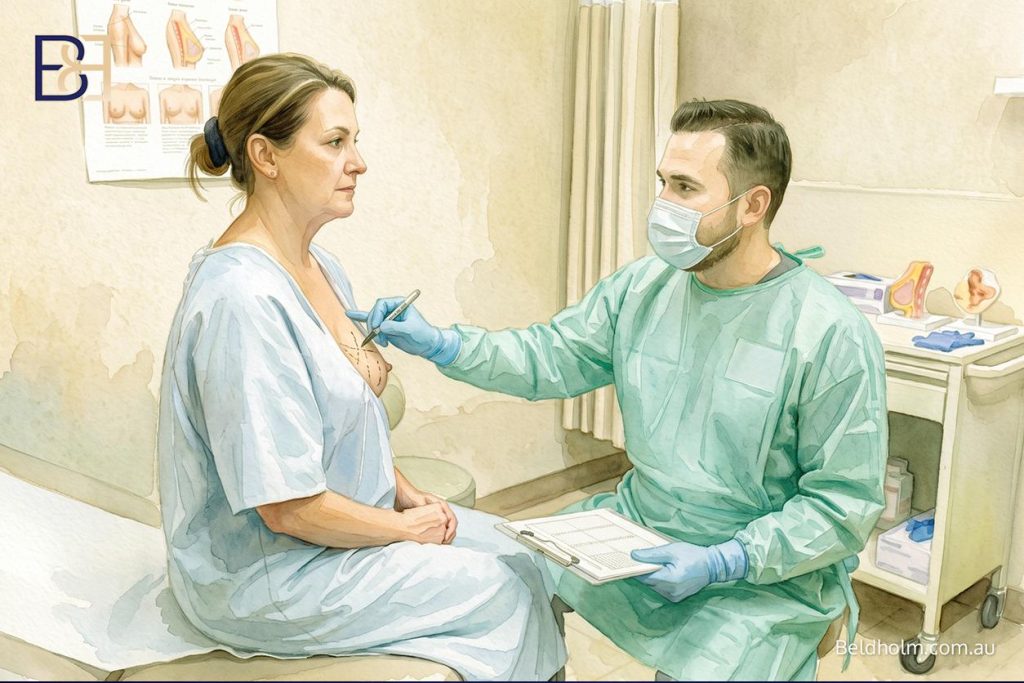
- Breast position and skin laxity. How far the breast and the nipple sit relative to the fold under the breast, and how much loose skin there is. This tells me how much of a lift is needed.
- Breast tissue volume and quality. This operation reshapes and repositions your own tissue, so the amount and quality of tissue available to work with matters.
- Nipple and areola position. Where the nipple sits, and whether the areola has stretched.
- Symmetry. Differences in size, shape or position between the two breasts, which are common and which I plan for.
Who tends to be suited to it
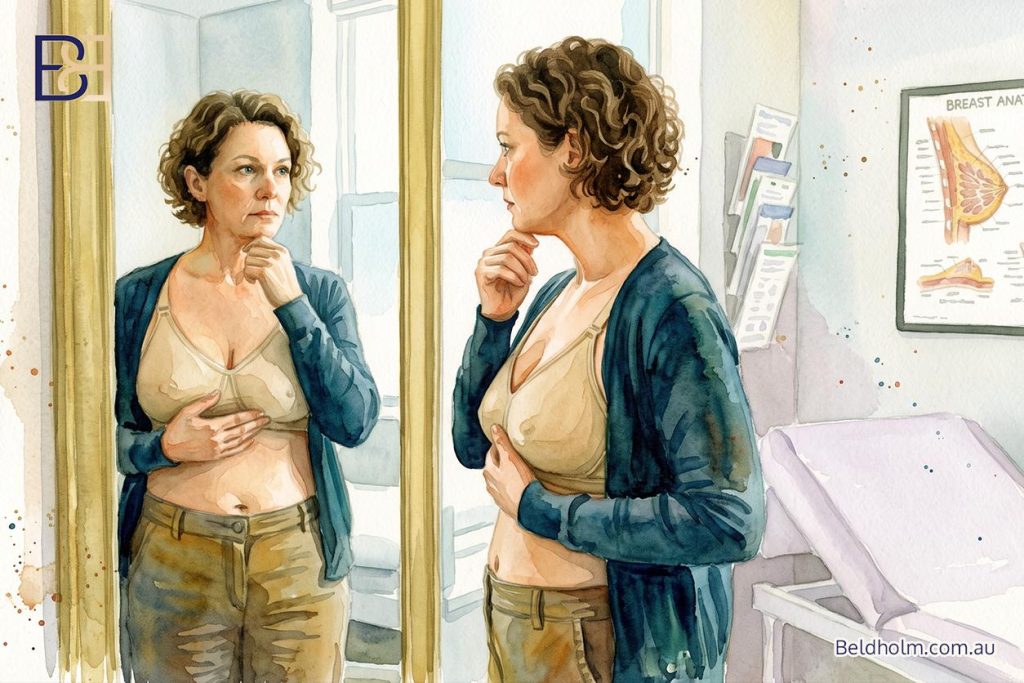
An auto-augmentation breast lift (mastopexy) tends to suit someone who wants their breast lifted and reshaped, is content with their current breast volume, and would prefer to keep their own tissue rather than have an implant. Because the operation relies on rearranging your own tissue for internal support, there needs to be enough tissue of reasonable quality to work with.
Who might be better suited to a different operation
- If you want more volume, or fuller upper poles, tissue rearrangement will not deliver that, and a breast lift with implants (mastopexy with implants) is the option that matches that goal.
- If there is limited breast tissue to rearrange, the reshaping effect is more limited, and I would talk you through the alternatives at consultation.
- If your breasts are large and heavy and causing physical symptoms, a breast reduction (reduction mammoplasty) may be the more suitable operation.
General health and expectations

Your general health influences how well you heal, so I review your medical history and any conditions that affect healing as part of deciding whether surgery is appropriate for you. I also want you to have a clear and realistic picture of what the operation does. It lifts and reshapes the breast using your own tissue. It does not add size. Going in with that expectation is part of being well suited to it.
The operation
Here is what an auto-augmentation breast lift (mastopexy) involves, from the anaesthetic to how the breast is reshaped.
Anaesthetic and setting

The operation is done under a general anaesthetic. In most cases it is day-stay surgery at Maitland Private Hospital, so you come in and go home the same day. An overnight stay is occasionally preferable depending on the extent of your surgery and your own preference. Your anaesthetic assessment is usually done by phone beforehand, and the anaesthetist examines you, including your airway, on the day of surgery.
Markings
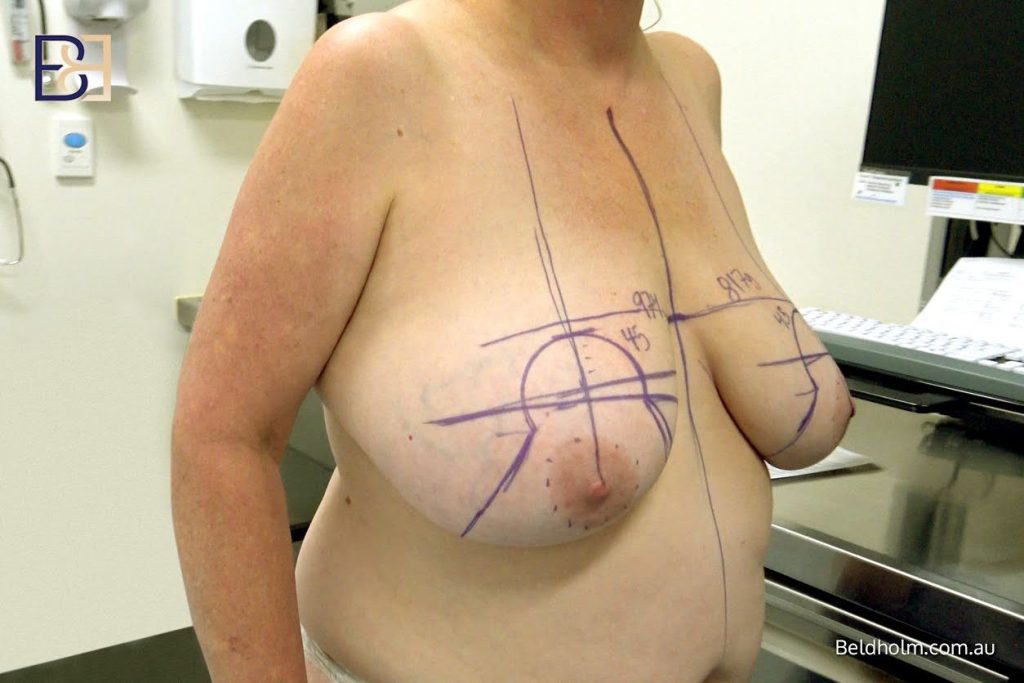
Before you go to sleep, I mark your breasts while you are sitting upright. These markings plan the new position for your nipple and areola and the skin that will be removed. Marking with you upright matters, because that is the position the result needs to look right in.
Lifting and reshaping the breast
The lift itself uses one of two scar patterns. A vertical pattern runs around the areola and straight down to the fold under the breast, sometimes described as a lollipop shape. Where more skin needs to be removed, I add a short horizontal component along the fold, giving an inverted-T or anchor pattern. Which one I use depends on how much skin needs to come out.
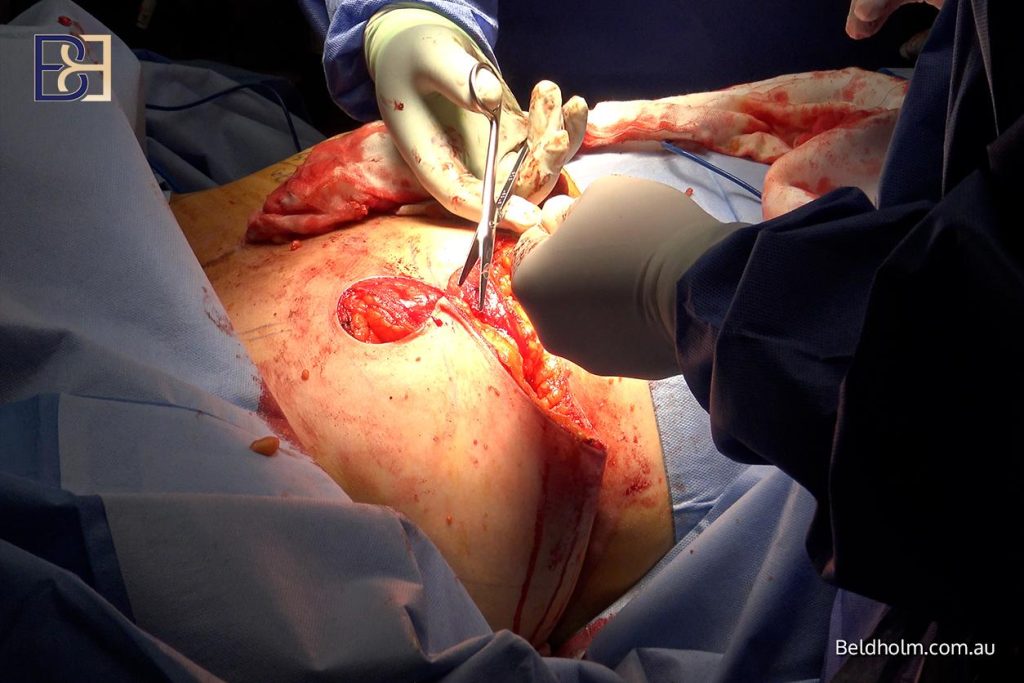
I raise the nipple and areola on an inferior pedicle, a tongue of tissue from the lower part of the breast that keeps the nipple attached to its blood supply and much of its nerve supply as it moves to a higher position. This helps maintain blood flow to the nipple and gives the best chance of preserving sensation, though sensation change is still a possible outcome.
That same lower-pole tissue is the key to the auto-augmentation. In a standard lift I would remove the surplus tissue from the lower part of the breast. Here, instead of removing it, I keep it, move it higher on the chest wall, and hold it there with internal sutures so it supports the breast from the inside. I then remove the excess skin, reshape the breast, and close.
Operating time and drains
An auto-augmentation breast lift (mastopexy) usually takes around two to three hours, depending on how much lifting and reshaping is involved. I sometimes use drains to let fluid escape while you heal, though not everyone needs them.
Reducing the risk of blood clots
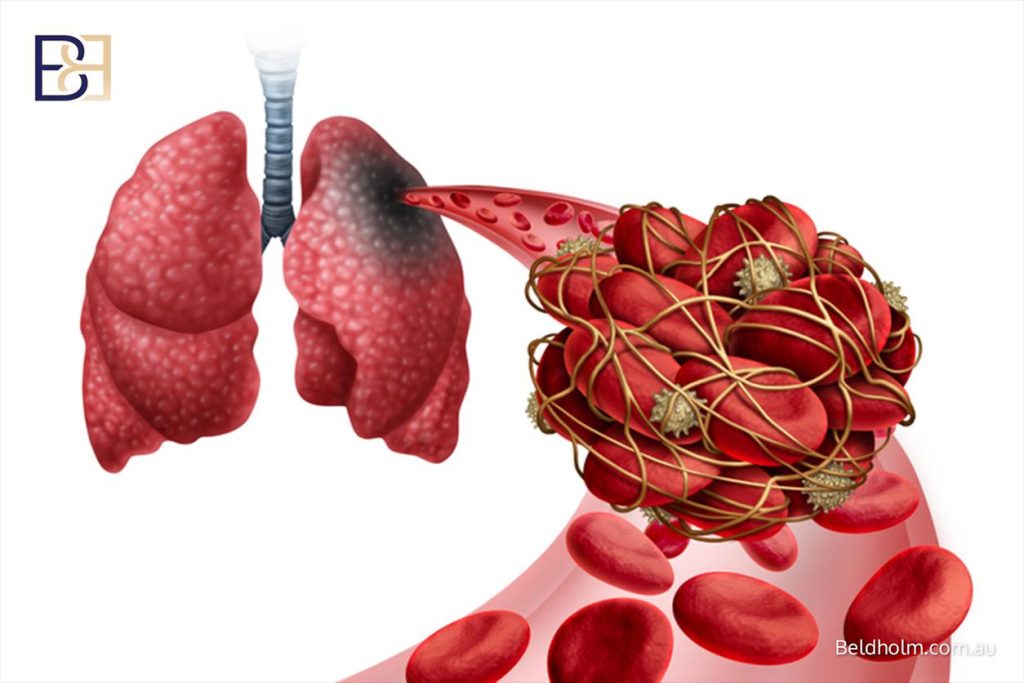
Any operation under a general anaesthetic carries some risk of a blood clot forming in a leg vein, known as a deep vein thrombosis. Breast surgery generally carries a lower risk of this than abdominal surgery, but I assess your individual risk before your operation and take measures to lower it, including compression on your legs during surgery and getting you up and moving soon afterwards. I go through how I assess and manage this risk in my separate guide to blood clots and breast surgery.
Recovery
Recovery from an auto-augmentation breast lift (mastopexy) is steady rather than dramatic, but it does ask something of you, particularly in the first couple of weeks. Here is what to expect and what I ask of you.
The first day or two
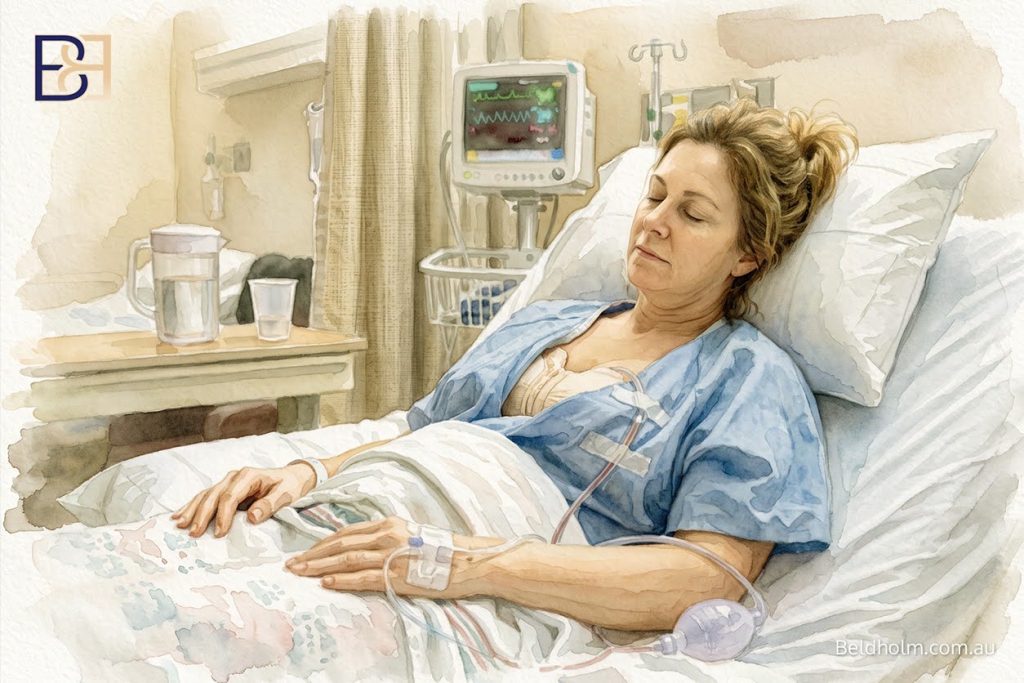
In most cases you go home the same day. You will have some discomfort, tightness and swelling, which is managed with pain relief. Your dressings are water-resistant Comfeel dressings, so you can shower the day after surgery. You will need someone to drive you home and, ideally, to stay with you for the first night.
Dressings and drains
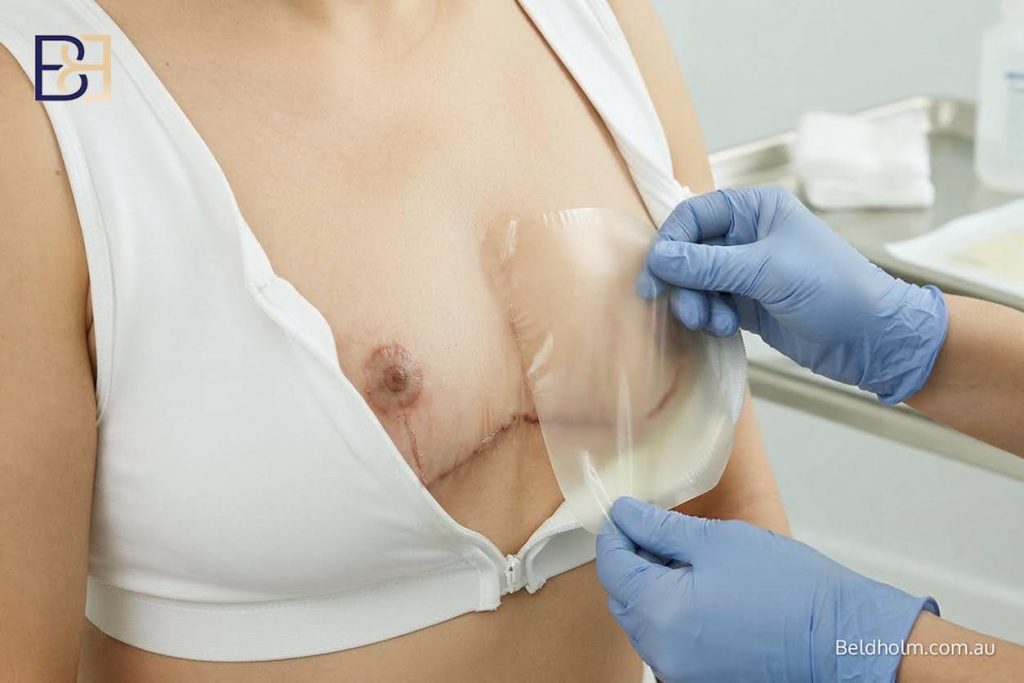
The Comfeel dressings stay in place and are checked at your early visits. I sometimes use drains, which are thin tubes that let fluid drain away as you heal. When I do, they come out once the fluid draining over a full day drops below 20 mL, which is usually within the first few days.
Your support bra
A support bra does a lot of the work in the early weeks. I ask you to wear it full-time, day and night, for the first four weeks, then during the day only for a further two weeks. You can move to an underwire bra from six weeks. The bra supports the tissue while the internal sutures and your own healing settle the shape.
Follow-up
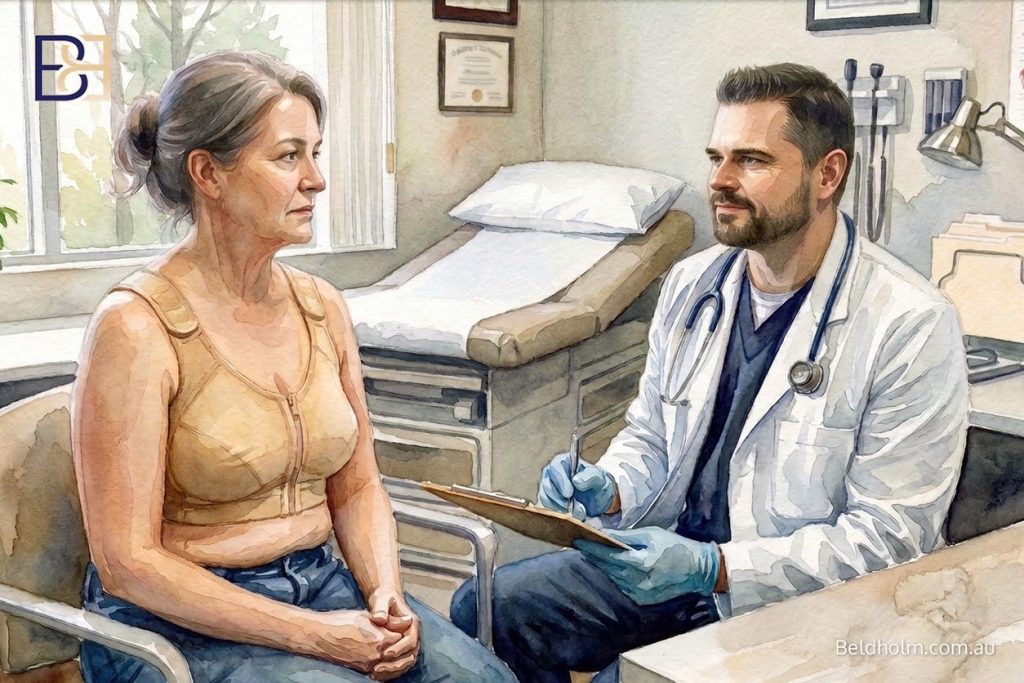
The first two weeks are the intensive part. You will see me and my nursing team several times a week during that period, and this includes Healite II LED light therapy, which we use to support wound healing. After that, I review you at four weeks, three months, six months, and twelve months. Your GP is brought back into your care with a formal handover at the four-week visit.
Activity and lifting

You can be up and taking short walks from the day of surgery, and most people manage light activities and desk-based work within one to two weeks. I ask you to avoid heavy lifting, straining and strenuous exercise for around six weeks, and to build back up guided by how you are healing at your reviews. Pushing too hard too soon puts tension on the healing tissue and the scars.
Smoking and wound healing
Because this operation relies on your own tissue healing well, smoking matters here more than most people expect. Smoking reduces blood flow to the skin and tissue and raises the risk of wound-healing problems. I ask patients to stop smoking for six weeks before and six weeks after surgery.
If you have concerns
During clinic hours, call my rooms. After hours, call Maitland Private Hospital, where a nurse-led triage service will guide you. If you have a problem that needs to be physically examined, your local emergency department can assess you, and for anything life-threatening call 000. Maitland Private is not an emergency department.
Scars
An auto-augmentation breast lift (mastopexy) leaves permanent scars. There is no version of this operation without them, so it is worth understanding where they sit and how they change over time before you decide.
Where the scars sit
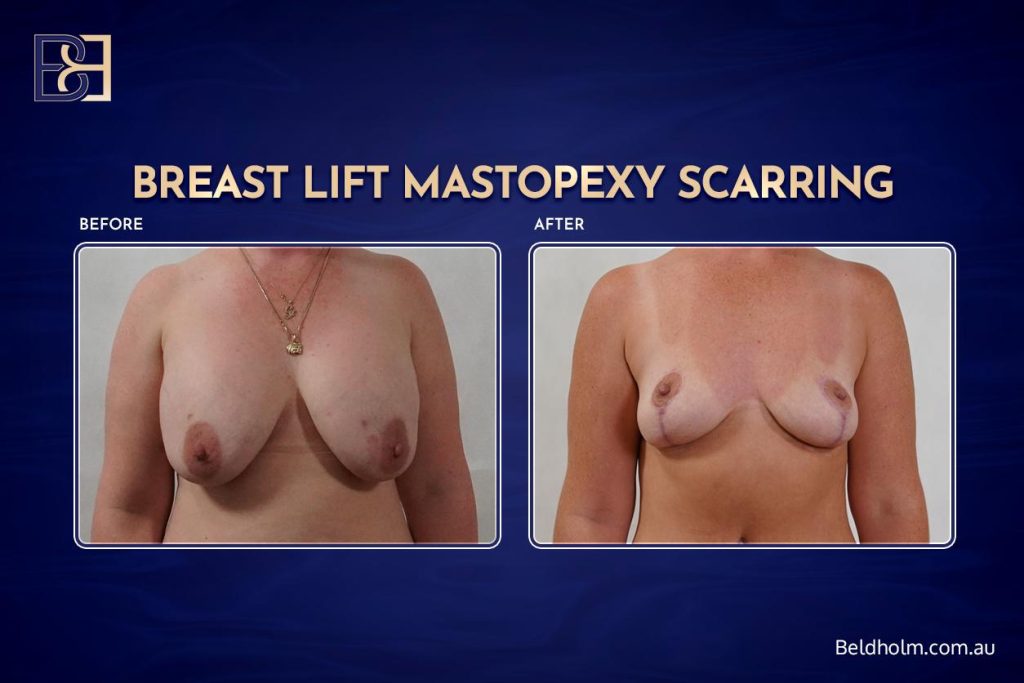
Disclaimer: Results vary, surgery has risks, seek second opinion. Operation performed by Dr Beldholm.
The scar pattern follows the lift pattern I use.
- A vertical pattern leaves a scar around the edge of the areola and a vertical line running down to the fold under the breast. This is the lollipop shape.
- An inverted-T pattern adds a horizontal scar along the fold under the breast, giving the anchor shape. I use this where more skin needs to be removed.
Both patterns include a scar around the areola. I plan the scars to sit where a bra or a bikini top will usually cover them, though that is about position, not making them disappear.
How scars change over time
Fresh scars are raised, firm and pink or red. Over the following months they soften, flatten and fade. Most of that change happens over about twelve months, and in some people it takes longer. How a scar finally looks varies from person to person and is influenced by your skin type and your genetics, which are things neither of us fully controls.
Looking after your scars
I review your scars at your follow-up visits and guide you on caring for them. In the early period this includes the Healite II LED light therapy used during your intensive follow-up. Keeping the scars out of the sun while they mature makes a difference, because a fresh scar exposed to sun can darken permanently. If a scar is not settling the way I would like, there are treatments I can talk you through.
Thicker or raised scars
Some people are prone to thickened, raised scars, called hypertrophic scars, or to keloid scars that extend beyond the original wound. The tendency is higher in some skin types and can run in families. If you know you scar this way, tell me at consultation, because it affects the discussion. Where these scars develop, they can be managed, though it takes time.
The trade-off
Scars are the trade-off for the lift. You are exchanging a permanent scar for a change in breast position and shape. For most people considering this operation that trade is worth it, but you should go in clear-eyed that the scars are permanent and that their final appearance cannot be promised in advance.
Book your appointment online now
Risks and complications
Every operation carries risks, and an auto-augmentation breast lift (mastopexy) is no exception. I go through all of these with you at consultation as part of informed consent, so that you are deciding with a full picture. Here are the ones that matter for this operation.
General surgical risks
- Bleeding. A collection of blood under the skin, called a haematoma, occasionally needs a return to theatre to clear it.
- Infection. Uncommon, and usually managed with antibiotics, but occasionally needing further treatment.
- Anaesthetic reactions. Your anaesthetist discusses these with you separately.
- Blood clots. A clot in a leg vein or the lungs is a recognised risk of any operation under general anaesthetic, which I assess and take measures against, and which I cover in my separate guide to blood clots and breast surgery.
Wound healing problems
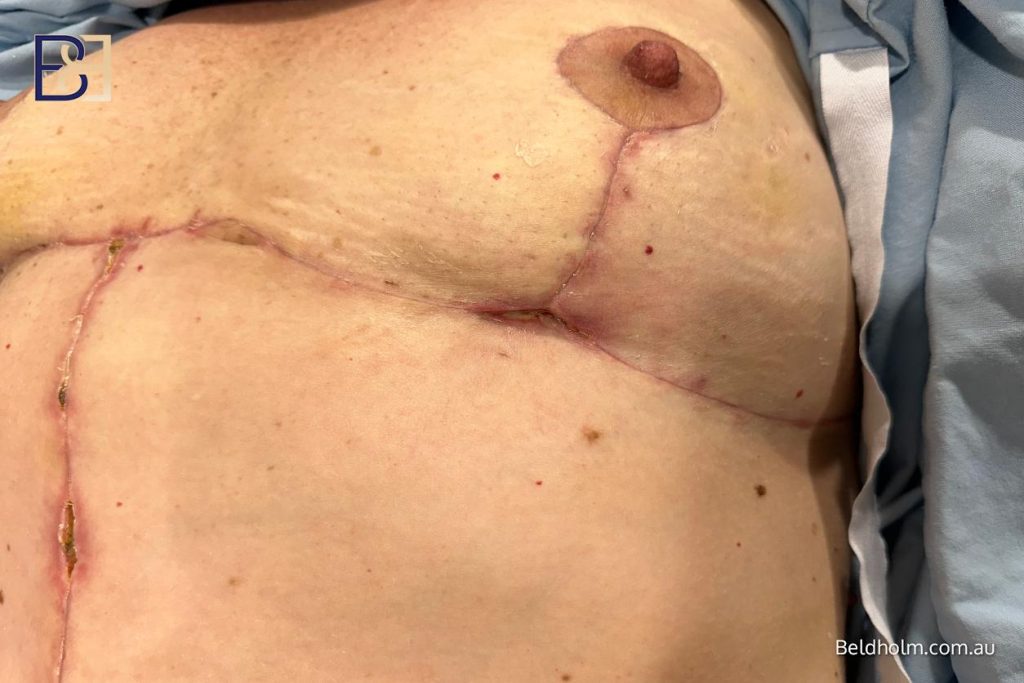
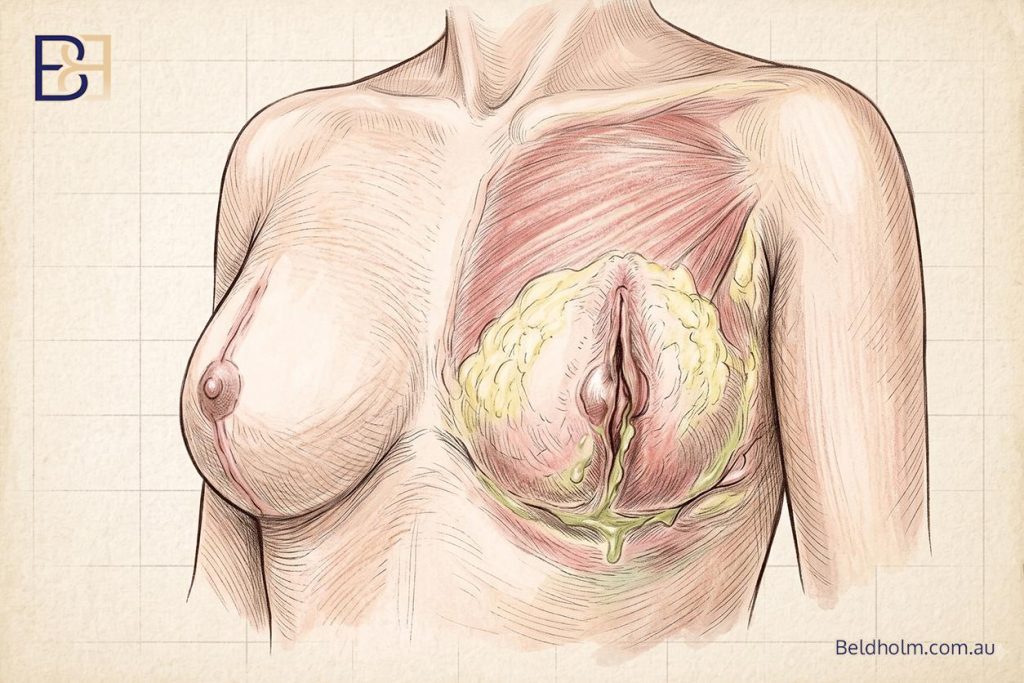
Wounds can be slow to heal or can partly separate, most often where the scars meet at the base of the breast in an inverted-T pattern. Smoking is the single biggest factor you control here, because it reduces blood flow to the skin and healing tissue, which is why I ask you to stop before and after surgery.
Changes to nipple sensation
Sensation in the nipple and areola can change after this operation. It may be reduced, increased, or altered, and while it usually recovers over the following months, the change can be permanent. Rarely, the blood supply to the nipple is compromised, which can lead to partial or, very rarely, complete loss of the nipple or areola. Raising the nipple on an inferior pedicle is done specifically to protect that blood supply.
Fat necrosis
Because this operation repositions your own tissue, an area of that tissue can occasionally lose enough blood supply to become firm, forming what is called fat necrosis. It can feel like a lump. This sometimes settles on its own, sometimes needs imaging to tell it apart from other causes of a breast lump, and occasionally needs a minor procedure.
Asymmetry and changes in shape
Some difference between the two breasts is normal and expected, and I aim to reduce it rather than promise it away. Over time, the breast can settle, the lower pole can stretch, and some of the lift can be lost, particularly with larger breasts, weight change or future pregnancy. Any of these can prompt a discussion about revision surgery.
Seroma
A collection of fluid, called a seroma, can build up as you heal. Small ones settle on their own; larger ones may need to be drained.
Scarring
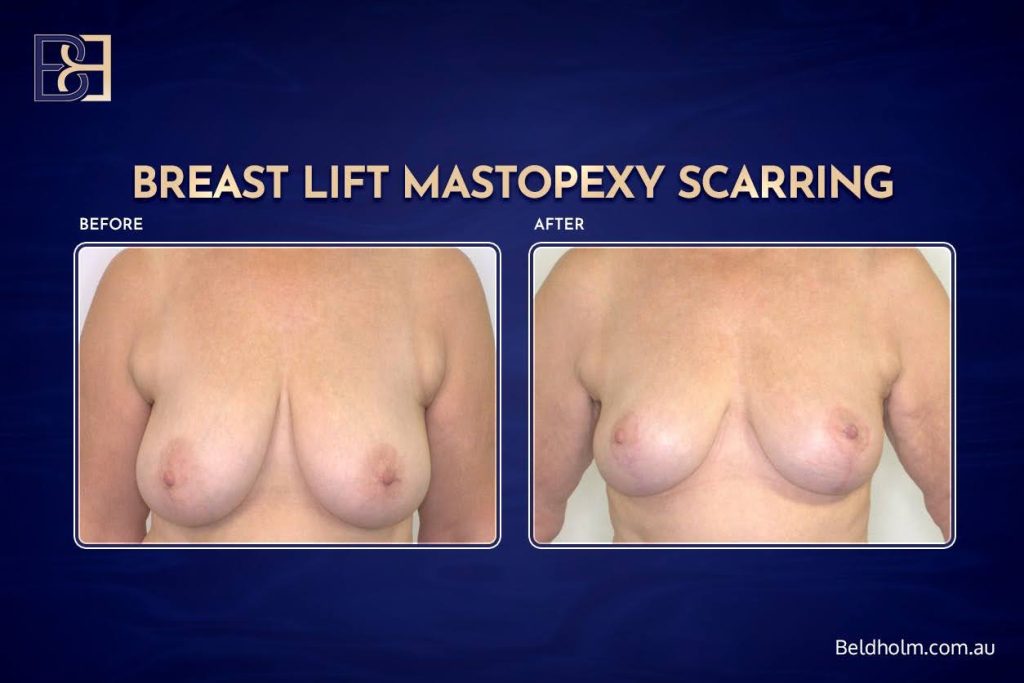
Disclaimer: Results vary, surgery has risks, seek second opinion. Operation performed by Dr Beldholm.
As covered above, the scars are permanent, and a minority of people form thickened or keloid scars.
Effect on breast screening
Scars and repositioned tissue can show up on a mammogram. This does not stop you having breast screening, but you should tell the radiographer you have had breast surgery so your images are read correctly.
Revision surgery
Some patients need a further operation at some point, whether to adjust shape or symmetry, revise a scar, or lift again after later changes. I would rather you knew that going in than assumed one operation is always the end of it.
Breastfeeding and future pregnancy

Two questions come up often enough to cover here: whether you can breastfeed after this operation, and what a future pregnancy does to the result. Both are assessed for you as an individual, and neither answer assumes anything about your history.
Breastfeeding after an auto-augmentation breast lift (mastopexy)

In this operation the nipple stays attached to the breast on an inferior pedicle, which keeps most of the ducts and nerves that supply it intact. Because of that, many people are able to breastfeed after an auto-augmentation breast lift (mastopexy). It cannot be guaranteed, though. Any surgery that involves the breast and nipple carries some risk to future breastfeeding, and how much milk any individual can produce is variable even without surgery. If breastfeeding in the future matters to you, tell me at consultation, because it is part of the discussion about whether and when to operate.
If you might have children in the future

Pregnancy and breastfeeding change the breast. It enlarges during pregnancy and lactation and then settles afterwards, and that cycle can stretch the tissue and skin and alter the position achieved by a lift. In practical terms, a pregnancy after this operation can undo some of the result.
For that reason, where it is relevant to you, I generally suggest planning a lift for once you have finished having children and breastfeeding, and the breasts have settled. This is a suggestion based on protecting your result, not an assumption that you want or have children, and it is discussed individually.
Timing if you have recently been pregnant or breastfeeding
If you have recently been pregnant or breastfeeding, I plan surgery for once breastfeeding has finished and the breasts have settled after the most recent pregnancy. That is clinical timing worked out with you at consultation, not a fixed number of months that applies to everyone.
Preparing for surgery
A little preparation makes the operation and the recovery go more smoothly. Here is what happens between deciding to go ahead and the day of surgery.
Your pre-operative blood tests
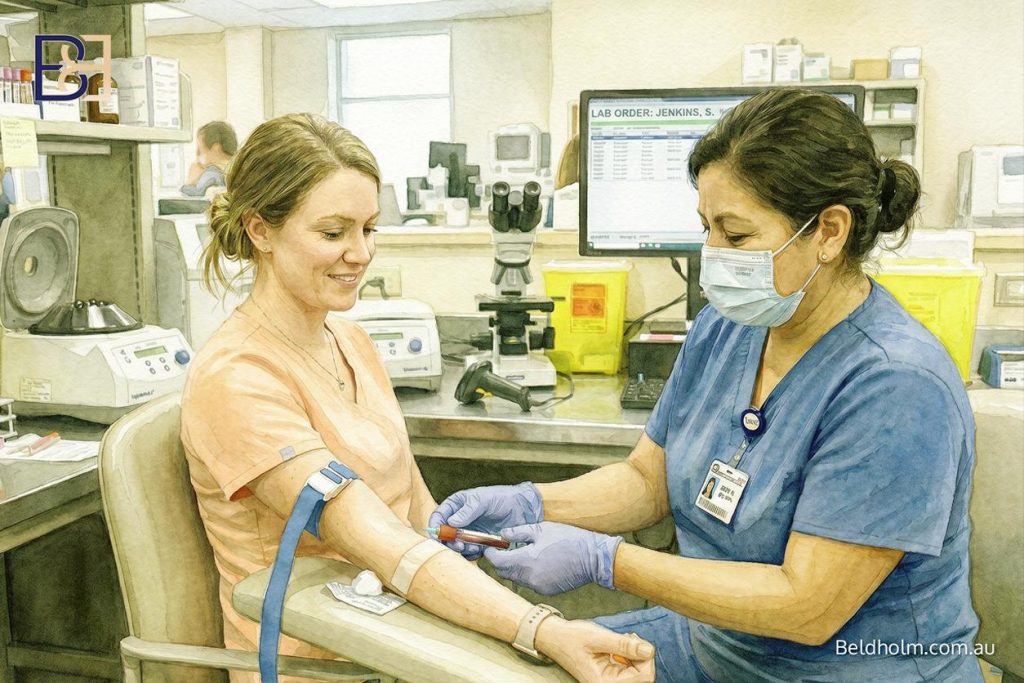
Before surgery I arrange a set of standard blood tests. These are a full blood count, kidney function (UEC), liver function (LFT), a clotting (coagulation) screen, and screening for hepatitis B, hepatitis C and HIV. For women of childbearing age, I include a pregnancy test where it applies. These tests confirm you are fit for the anaesthetic and the operation and flag anything worth managing beforehand. Your GP is copied in on the results. You can read more about what each test is for in my guide to pre-operative blood tests.
Medications and blood thinners

Tell me about every medication and supplement you take, because some affect surgery and healing. If you take aspirin or a blood-thinning (anticoagulant) medication, these are usually stopped about a week before your operation. Some patients need to stay on them through surgery, and where that is the case it is planned well in advance. The important point is that you must never stop or start these medications on your own. Any change is planned with me.
Getting ready at home
It helps to sort out the practical side before your surgery date. Arrange time off work, keeping in mind that most people manage desk-based work within one to two weeks. Organise help at home for the first several days, fill any prescriptions in advance, and have loose, front-opening tops ready, as reaching over your head is uncomfortable early on. Your support bra is arranged as part of your surgery, and my rooms will make sure you have it.
Your anaesthetic assessment

Your anaesthetist usually reviews you by phone before the day of surgery and completes the physical examination, including your airway, on the day itself. This is routine and does not usually require a separate in-person visit beforehand.
Common questions
Does an auto-augmentation breast lift (mastopexy) make my breasts bigger?
No. It reshapes and repositions the tissue you already have. Moving tissue around the breast does not add volume, so you should not expect to go up a cup size. If added size is your goal, that comes from an implant, which is a different operation.
How long do the results last?
The internal support holds the repositioned tissue in its lifted position, but no lift stops your breasts changing over time. Later weight change, a future pregnancy and the ordinary effects of ageing can all alter the result. There is no fixed number of years, and how long it holds varies from person to person.
Can I have an implant added later?
This operation does not use an implant. If, down the track, you decide you would like more volume, an implant can be considered as a separate operation at that time. Nothing about having this lift now prevents that later.
What are the scars like?
You will have a scar around the areola and a vertical scar down to the fold under the breast, and sometimes a horizontal scar along the fold as well. The scars are permanent. They are raised and pink at first and soften and fade over about twelve months, though the final appearance varies.
How long is recovery?
Most people manage desk-based work within one to two weeks and return to heavier activity and exercise at around six weeks. You wear a support bra full-time for four weeks, then during the day for two more. Recovery asks something of you in the first fortnight in particular, and I would not describe it as effortless.
Can I have this operation if I want to avoid implants?
Yes, this is the operation for someone who wants their breast lifted and reshaped without an implant, using their own tissue. It relies on there being enough tissue of reasonable quality to rearrange, which is one of the things I assess at consultation.
Will it affect breastfeeding?
Because the nipple stays attached on an inferior pedicle, most of the ducts and nerves are preserved, and many people are able to breastfeed afterwards. It cannot be guaranteed, so if breastfeeding in the future matters to you, raise it at consultation.
Deciding whether this operation is right for you
An auto-augmentation breast lift (mastopexy) lifts and reshapes the breast using your own tissue, without an implant. It changes breast position and shape. It does not add volume, and it will not fill the upper pole the way an implant does. If you have read this far and that trade sounds like what you are after, it may be worth a conversation.
That conversation is a consultation, and it needs a referral from your GP. At that appointment I examine your breasts, assess your skin, tissue and breast position, and talk through whether this operation, a different type of lift, or another approach altogether best fits what you want to achieve. Some people who come in asking about auto-augmentation leave having decided a standard lift, or a lift with an implant, suits them better, and that is exactly what the consultation is for.
Outcomes vary from one person to the next, and I would always rather give you a realistic picture than an appealing one. If you decide to go ahead, the preparation, the operation and the recovery are all things we work through together, step by step.
References
- Swanson E. Evidence-Based Cosmetic Breast Surgery. Cham: Springer International Publishing; 2017.
- Bolletta E, McGoldrick C, Hall-Findlay EJ. Aesthetic Breast Surgery: What Do the Measurements Reveal? A Practical Visual Application of the Results. Aesthet Surg J. 2023;43(11):NP866-NP877.