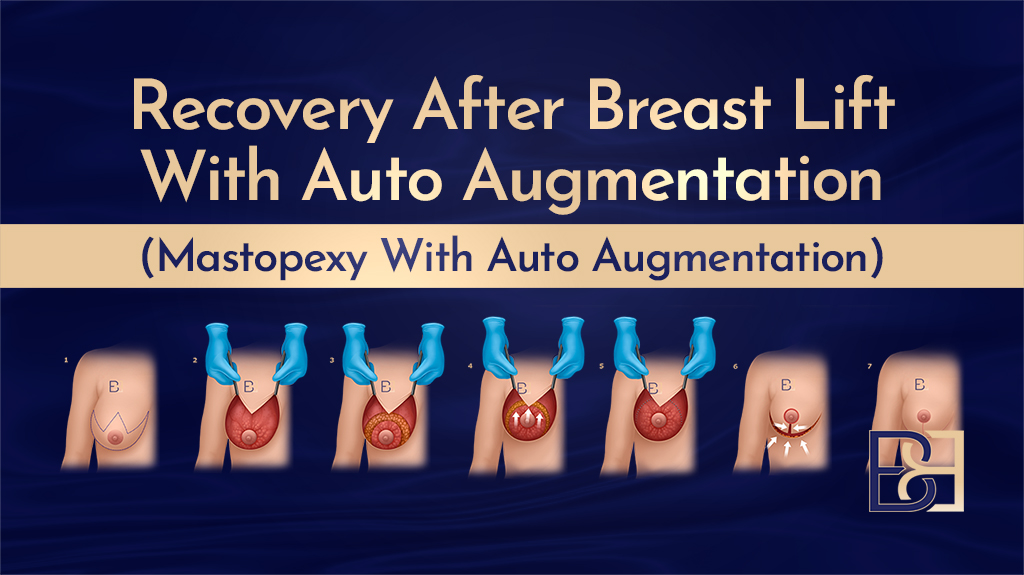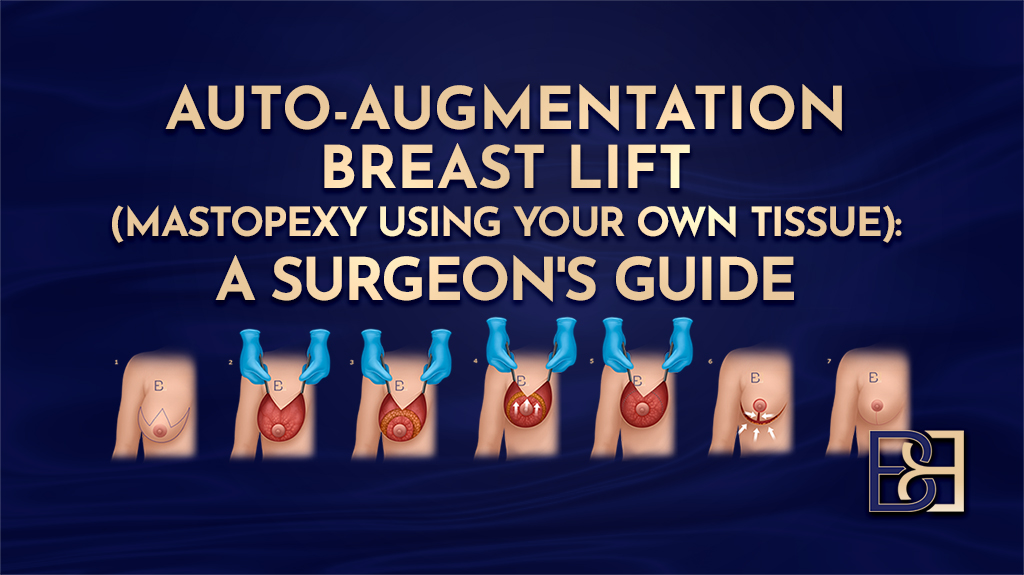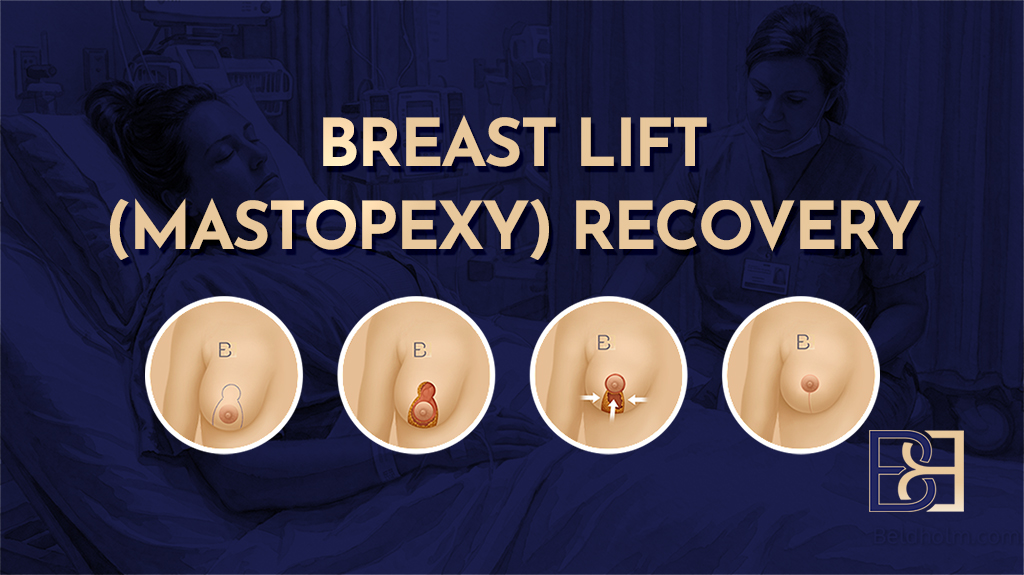
A breast lift with auto augmentation (mastopexy with auto augmentation) does two jobs in one operation. It lifts the breast and repositions the nipple to a higher position, and it repositions your existing breast tissue, moved and secured as a flap, to add volume and upper pole fullness (1,2). Lower pole breast tissue is moved up into the upper pole of the breast mound, so the volume comes from your own breast tissue rather than a breast implant.
This is different from a breast augmentation (augmentation Mammoplasty), where a breast implant provides the volume. Because auto augmentation uses your own tissue, there is no implant, and you avoid the implant-related risks that come with an implant-based breast lift (Mastopexy), such as implant rupture and capsular contracture. The same surgical technique can also be used when existing breast implants are removed, to keep some volume without putting a new implant back in, and it is sometimes combined with fat transfer (fat grafting) to add further volume.
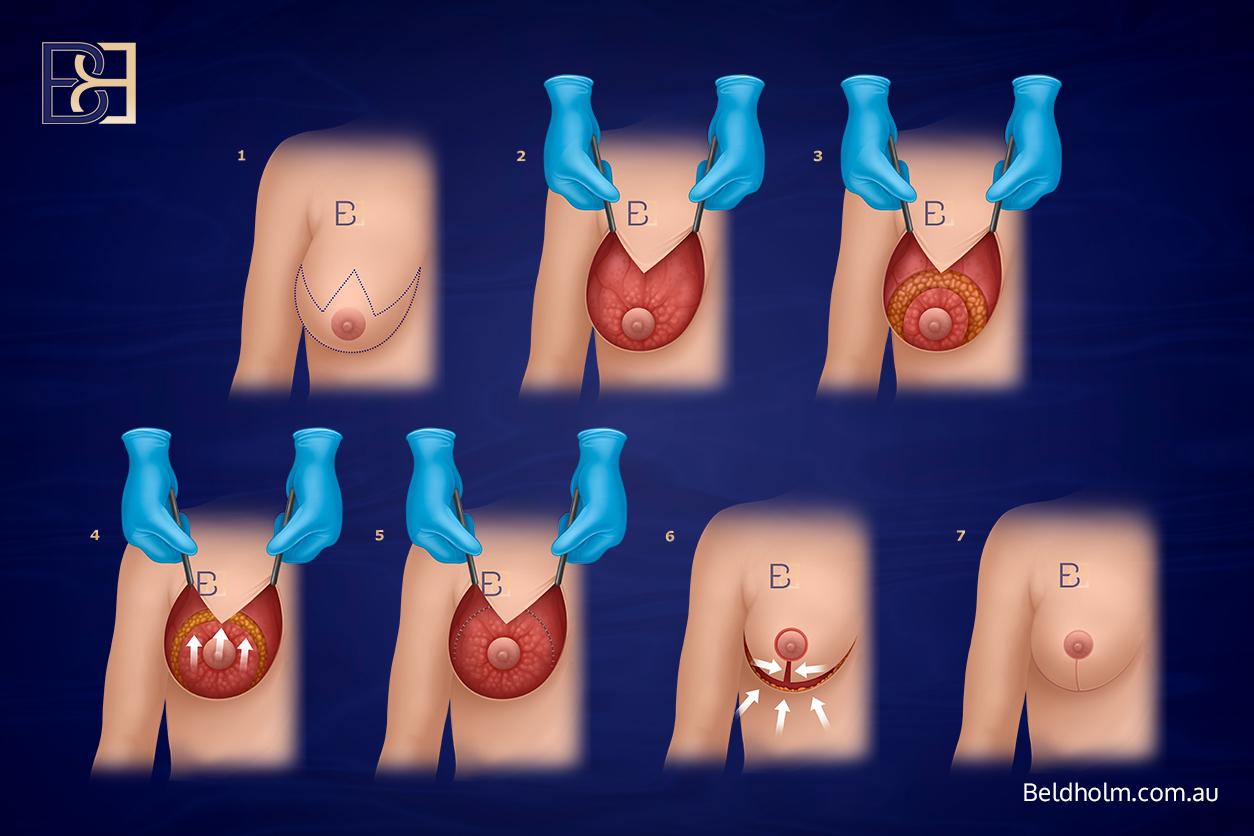
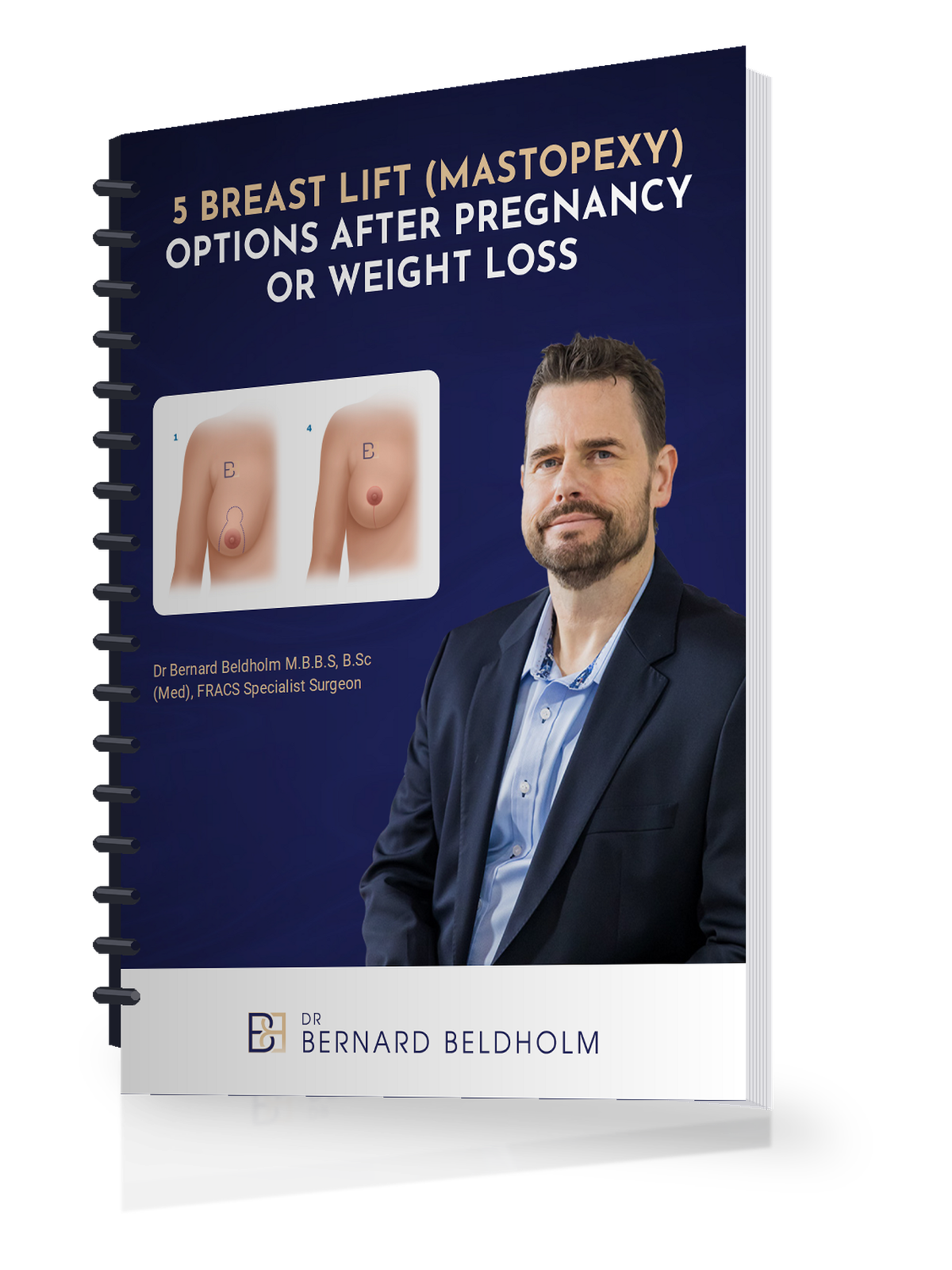
Patients come to this operation from different starting points. Some have had massive weight loss, some are post-pregnancy, some have developmental changes in breast shape or position, and some have none of these. What they share is enough existing breast tissue in the lower pole to reposition into the upper pole, along with some degree of lower breast position, known medically as breast ptosis.
Because the operation reshapes the breast from the inside as well as lifting it, recovery asks more of your body than a traditional breast lift (mastopexy) on its own. It is a larger operation, and the recovery reflects that. Knowing what the days and weeks afterwards actually involve helps you plan for them properly.
What this article covers
I cover the risks and complications of this operation separately, in detail, in its own article. Here I keep that to a short section on what to watch for and when to make contact, so you can focus on the recovery itself.
Recovery is an individual process
Every patient heals at their own pace. The timelines below are a general guide, not a fixed schedule. How your recovery goes depends on your tissue, your general health, the extent of the work done, and how closely you follow the aftercare.
A GP referral is required before any consultation, and whether a breast lift (mastopexy) with auto augmentation suits you depends on your medical history and individual anatomy, and is assessed individually when we meet. Results vary between patients.
The first 24 to 48 hours
I perform a breast lift (mastopexy) with auto augmentation at Maitland Private Hospital, and most patients go home the same day. Some stay overnight, usually when a drain is in place or when it suits the individual. If you do stay, I round on you before you leave.
Waking up after surgery
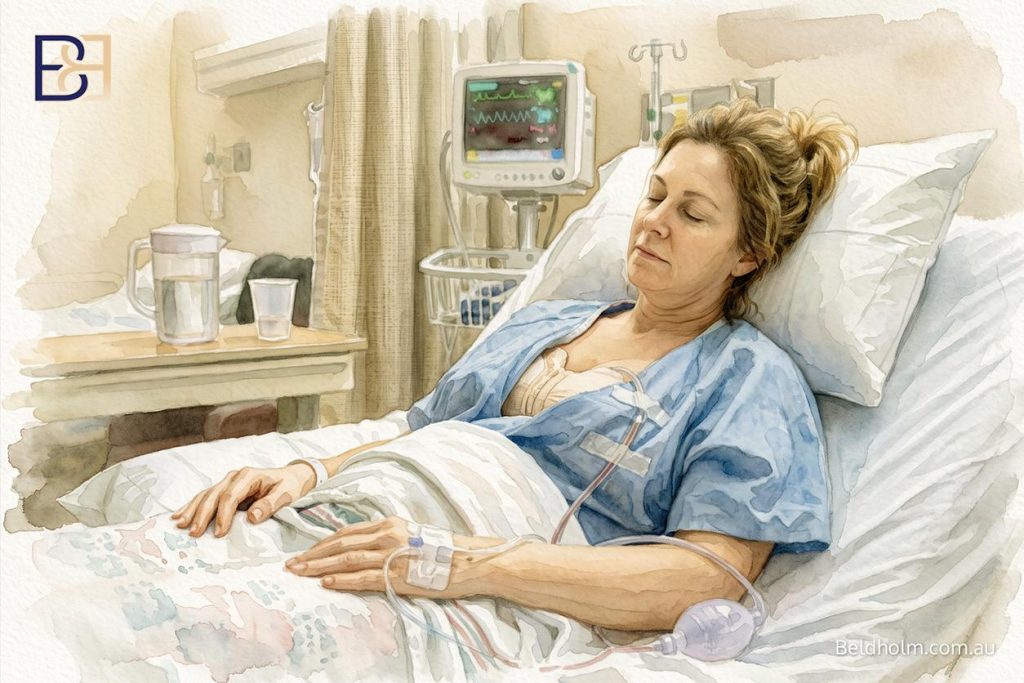
When you wake, you will already be in a surgical bra, a firm post-operative support bra, with dressings underneath. I use Comfeel dressings over the wounds. Expect some swelling and bruising, and a tight, heavy feeling across the chest as the tissue settles into its new position. Tiredness is normal after a general anaesthetic, and some patients feel nauseated for a few hours. The nursing team manages this before you go home.
Drains, if you have them
Whether you have drains depends on the surgery and on you. When I use them, a fine drain sits in the lower or outer part of the breast to clear fluid. I remove a drain once it is draining less than 20 mL over 24 hours. If you go home with a drain, the team shows you how to manage it, and we remove it at your first review.
Pain and how it is managed

You go home with a plan for pain relief and clear instructions on how to take it. The first two days are usually the most uncomfortable, with tightness and soreness rather than sharp pain for most patients. Staying on top of the medication in the early days keeps you more comfortable and lets you move about, which matters for your circulation.
Getting moving and getting home

I want you up and walking within the first day. Short, frequent walks around the house keep the blood moving and lower the risk of blood clots in the legs. We discuss your individual clot-prevention plan before surgery, so you know what applies to you.
For the first day or two:
- Arrange for someone to drive you home and stay with you the first night. You cannot drive yourself after an anaesthetic.
- Keep your arms low and avoid reaching overhead or lifting.
- Sleep propped up on your back, not on your side or front.
- Keep the dressings dry and leave them alone.
- Eat lightly, drink plenty of water, and rest.
You go home with written instructions and the numbers to call if you need us. What counts as normal in these first days, and the signs that mean you should make contact, are covered later in this article and in more detail in the complications article.
The first two weeks: close review and LED light therapy
The first two weeks are the period I watch most closely. I see you often in these early days so we can stay ahead of anything and keep your recovery on track.
What happens at your early reviews
In the first two weeks you come in to see me and the nursing team two to three times a week. At each visit we:
- check and change your dressings, using Comfeel over the wounds
- look at how the skin and the nipple are healing and confirm the tissue has a good blood supply, which matters because the volume in your upper pole comes from your own breast tissue moved as a flap
- remove any drain once it is draining less than 20 mL over 24 hours
- give you LED light therapy
These visits also let you ask questions as they come up, which most patients find reassuring in the first fortnight.
Healite II LED light therapy
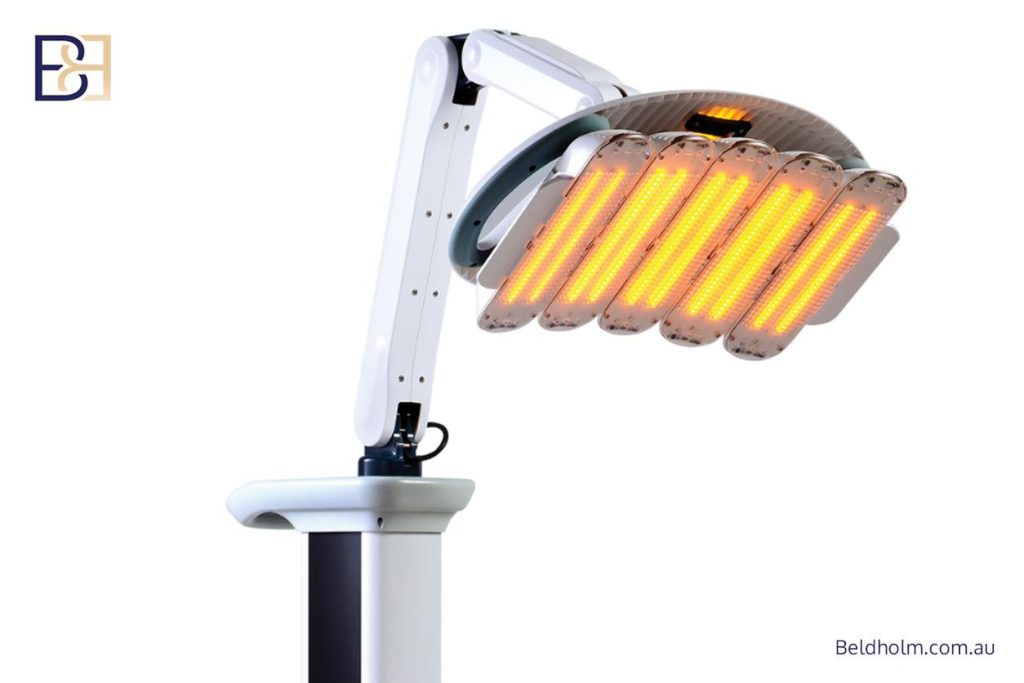
At these early reviews I use Healite II LED light therapy. It applies low-level LED light to the skin over the treated area. I use it to support wound healing and to help settle swelling in the days after surgery. It is painless. You feel a little warmth, and it takes only a few minutes as part of your review.
Looking after your wounds between visits
Between reviews, your job is mostly to leave things alone and let them heal.
- Keep the dressings in place and dry. The nursing team tells you when you can shower and how to keep the area right until then.
- Do not disturb or peel back the dressings yourself.
- Wear your surgical support bra day and night.
Living day to day in the first fortnight
Swelling, bruising, and a tight, firm feeling across the chest are all normal in these two weeks and settle gradually. Many patients feel tired and low on energy in the first week or so. That is expected after an operation of this size, and rest is part of the recovery.
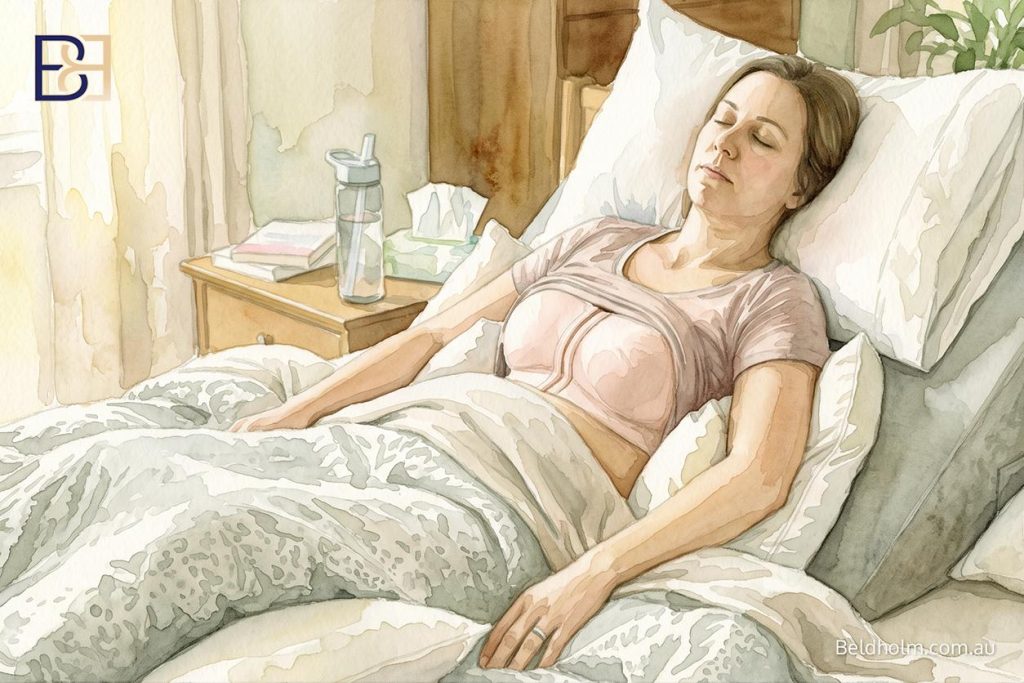
Through this time:
- keep sleeping propped up on your back
- keep taking short, slow walks to help your circulation
- do not lift, carry, or reach overhead
- hold off on any exercise or strenuous activity until I clear you
I tell you at each review how you are tracking and when you can start easing back into normal activity, which is where the next stage of recovery begins.
Weeks two to six
By the two-week mark, the most intensive part of your recovery is behind you and the focus shifts to easing back into normal life at a sensible pace. I guide that pace at your reviews, because how soon you build back up depends on how you are healing.
Your support bra
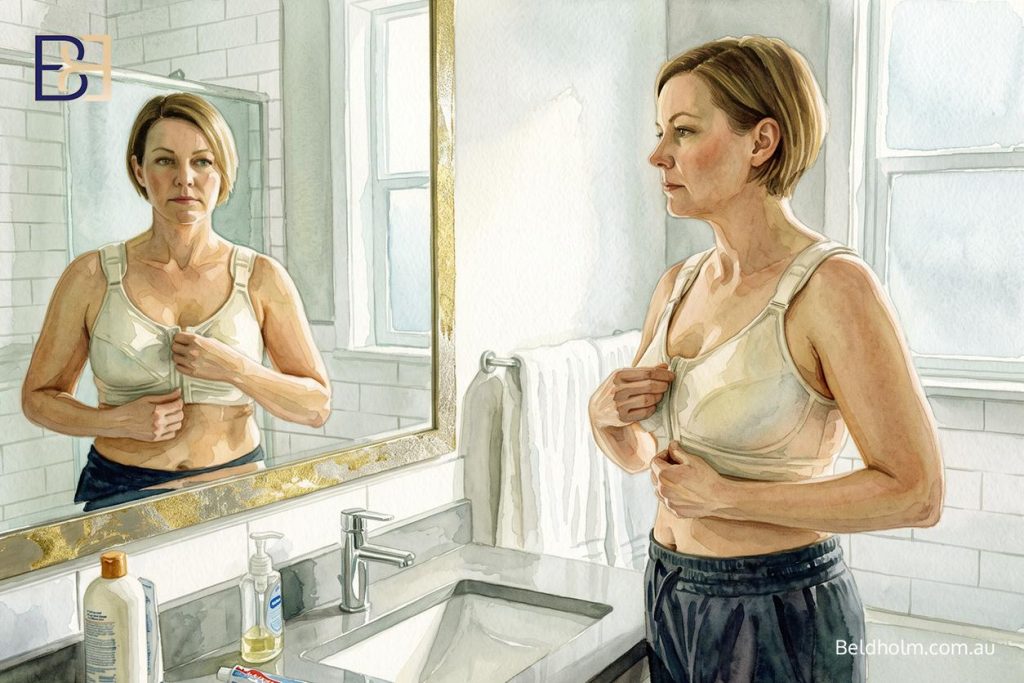
The support bra does a lot of work in these weeks. It holds the tissue steady while it settles into its new position. My protocol is:
- weeks one to four: wear it full-time, day and night
- weeks four to six: wear it during the day, and you can leave it off at night
- from six weeks: you can go back to an underwire bra
Avoid underwire before the six-week mark, as it can press on healing tissue and scars.
Easing back into activity
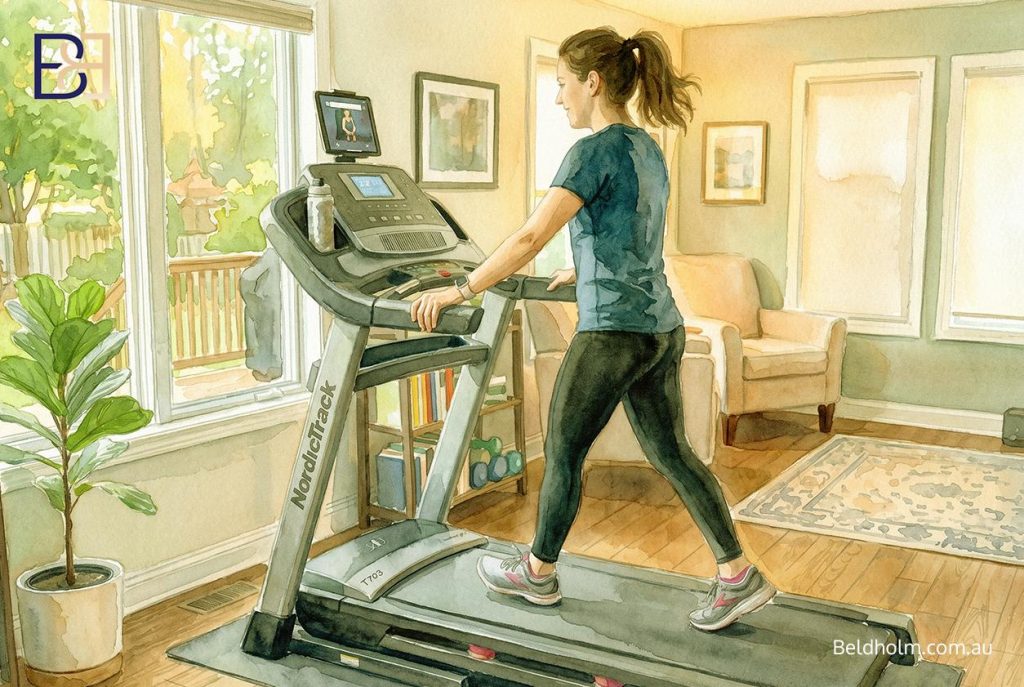
Activity builds up gradually through this period rather than all at once.
- keep up your walking, and let it get longer and brisker as you feel able
- avoid heavy lifting, carrying, or reaching overhead until I clear you, usually around six weeks
- hold off on chest and upper-body exercise and anything high-impact until I clear you
- move from sleeping on your back to your side once it is comfortable, which is usually a few weeks in
Most patients build back to full exercise around the six-week mark, with chest and upper-body work the last thing to return.
Getting back to work and driving

When you go back to work depends on what your work involves.
- desk-based or light work: many patients manage this at around two weeks
- physical or manual work: longer, and I will guide you on timing at your reviews
For driving, wait until you are off the stronger pain medication, can move and brake without hesitating, and are comfortable with a seatbelt across your chest. For most patients that is around the two-week mark. Check you are ready before you drive.
How the breast looks and feels through these weeks
Swelling keeps settling and bruising fades over these weeks. Early on, the upper pole can feel firm and sit high. That softens and settles over the following weeks and months, so what you see in these early weeks will keep changing. Tightness continues to ease. Some numbness or altered feeling in the skin or nipple is common at this stage, which I cover further on.
Your follow-up through to twelve months
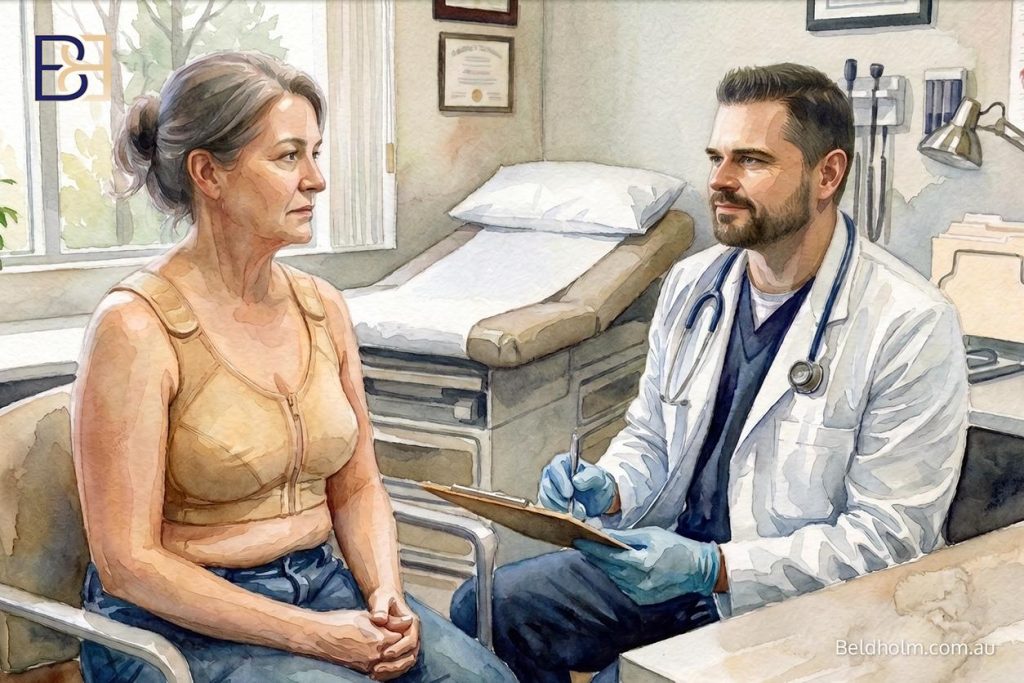
After the close reviews of the first two weeks, I keep seeing you across the first year. Recovery does not finish at six weeks. Your tissue keeps settling, swelling keeps resolving, and your scars keep maturing over months, so following you through the year lets me track how things settle and pick up anything early.
Your review schedule
Once the early fortnight is behind you, I review you at set milestones:
- four weeks
- three months
- six months
- twelve months
At each visit I check how the wounds and scars are healing, how the breast shape is settling, and how you are feeling in yourself, and you have the chance to raise anything that is on your mind.
Handover to your GP
At your four-week visit I formally hand your ongoing care over to your GP, who looks after you long term. Your GP is kept in the loop throughout, and I remain available for anything related to your surgery. This shared-care arrangement means you always have someone to turn to, both close to the operation and well after it.
Why the first year matters
The breast keeps changing shape for months after this operation, not weeks. The upper fullness softens, the tissue relaxes into position, and the scars fade and flatten on their own timeline. Reviewing you out to twelve months means I can see that settling through to its endpoint, rather than judging your result while everything is still changing. It also means that if something needs attention along the way, we catch it at a review rather than letting it run.
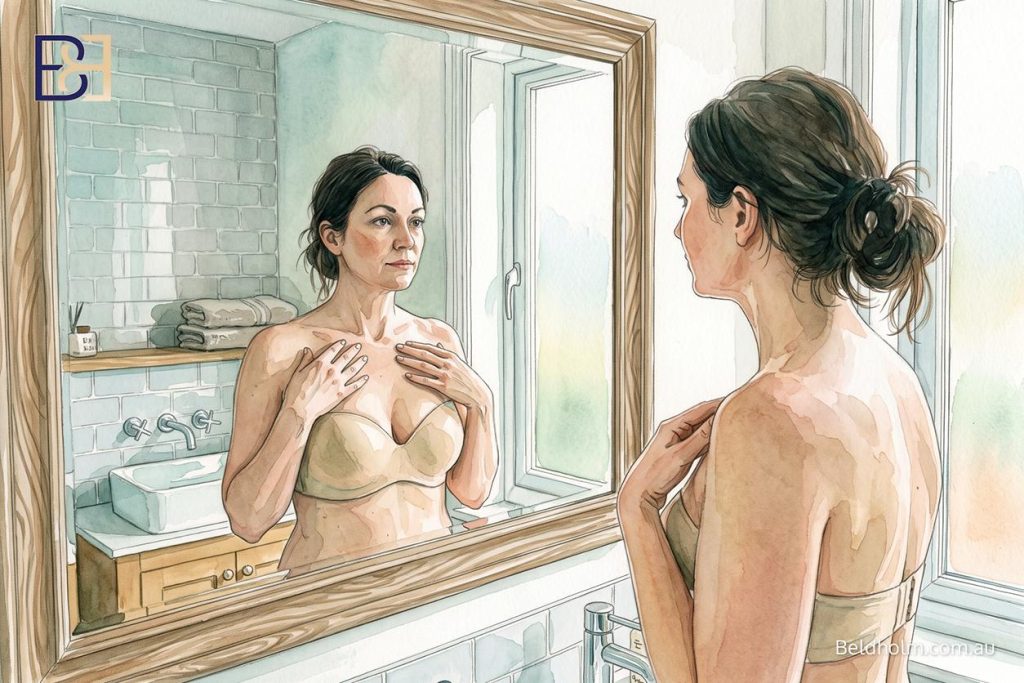
Scars and how they settle
A breast lift (mastopexy) with auto augmentation leaves permanent scars. That is the trade-off for lifting the breast and reshaping it, and it is something to weigh up before you decide on surgery. What I can tell you is where the scars sit and how they change over time.
Where the scars sit
The scars follow the standard breast lift (mastopexy) pattern:
- around the edge of the areola
- a vertical line running from the areola down to the crease beneath the breast
- for some patients, a horizontal scar along the breast crease as well, giving an inverted-T shape
Whether you have the horizontal scar depends on how much loose or excess skin needs to be removed to lift the breast. The tissue that adds fullness to your upper breast is moved internally through these same incisions, so the auto augmentation does not add separate scars of its own.
How scars change over time
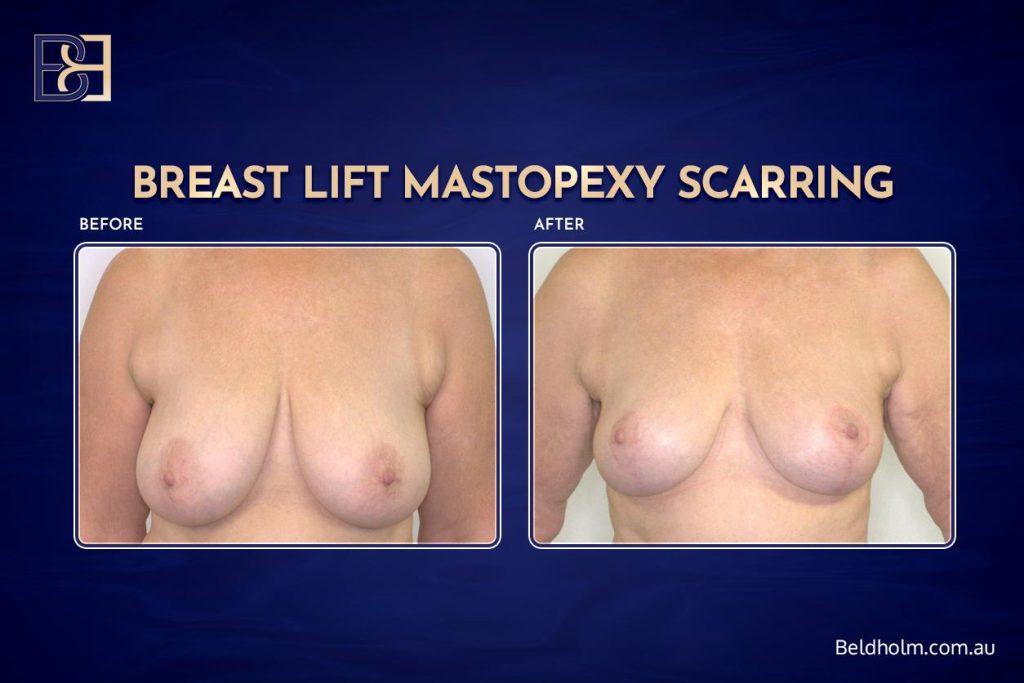
Disclaimer: Results Vary, Surgery has risks, seek a 2nd consultation. Operation performed by Dr Beldholm.
Scars are permanent, but they do not stay looking the way they do at the start.
- early on they are raised, firm, and pink or red
- over the following months they soften, flatten, and fade towards a paler line
- most of that change happens over the first year, and scars can keep changing up to 2 years post surgery.
The point where the vertical and horizontal scars meet, under the breast, is the slowest area to heal and the one I watch most closely at your reviews.
Helping your scars settle
Scar care starts once the wounds have healed, and I guide it at your reviews.
- keep the scars out of the sun and cover them or use sun protection for the first year, as UV darkens a healing scar
- once the wounds are fully healed, I usually advise silicone tape or gel and light massage
- avoid stretching or straining the scars while they are still healing, which is part of why the early activity limits matter
Scars vary from person to person
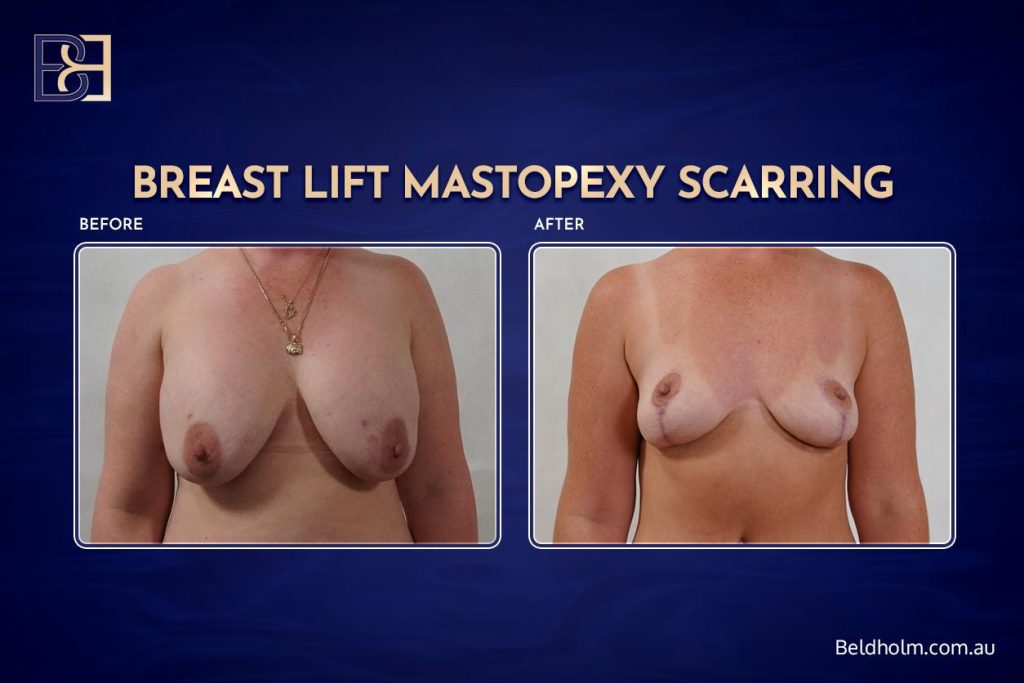
Disclaimer: Results Vary, Surgery has risks, seek a 2nd consultation. Operation performed by Dr Beldholm.
How a scar matures comes down to your skin, your skin elasticity, and the way your body heals, and it differs between people. Some people form thicker, raised scars, known as hypertrophic scars, despite good care. I check how your scars are settling at each review and guide treatment, occasionally including a minor revision, if a scar is not maturing the way it should.
Book your appointment online now
Nipple sensation and breastfeeding
This operation repositions the nipple and moves breast tissue, which can affect nipple sensation and future breastfeeding.
Changes to nipple sensation
A change in nipple sensation after surgery is common. In the weeks after your operation you may notice numbness, tingling, an altered feeling, or heightened sensitivity in one or both nipples. This happens because the small nerves that supply the nipple can be affected when the nipple is moved and the tissue is reshaped.
- for most patients, sensation recovers over the following weeks and months as the nerves settle
- for some patients, a change in sensation is lasting, and it can go either way, reduced or more sensitive than before
Throughout this, the nipple keeps its blood supply through the pedicle of tissue it stays attached to, which is what keeps it healthy while everything heals (1).
Breastfeeding after this operation

If you think you may want to breastfeed in future, tell me at your consultation so I can factor it in.
This operation moves breast tissue and repositions the nipple. The nipple and some of its underlying connections stay attached on the pedicle, but the surgery can still affect your ability to breastfeed later. I cannot promise either way that you will be able to breastfeed after this operation, and plenty of factors outside surgery affect breastfeeding as well. This is assessed and discussed individually.
Future pregnancy and your result

Pregnancy and breastfeeding change breast volume, shape, and position. A pregnancy after this operation can change the result of your surgery.
For that reason, where it is relevant to you, I generally plan this operation for once your family is complete and breastfeeding has finished and the breasts have settled. This is clinical timing worked out with you at consultation, not a fixed interval that applies to everyone.
What to watch for and when to contact us
All surgery carries risks, and breast surgery is no exception. I cover the risks and complications of this operation fully in a separate article. This section is the short version: what to keep an eye on, and who to call.
Normal parts of healing
- swelling, bruising, and a tight or firm feeling across the chest
- soreness that eases over the first couple of weeks
- tiredness in the first week or so
- some numbness or altered feeling in the skin or nipple
These settle over the weeks that follow.
Signs you should contact us
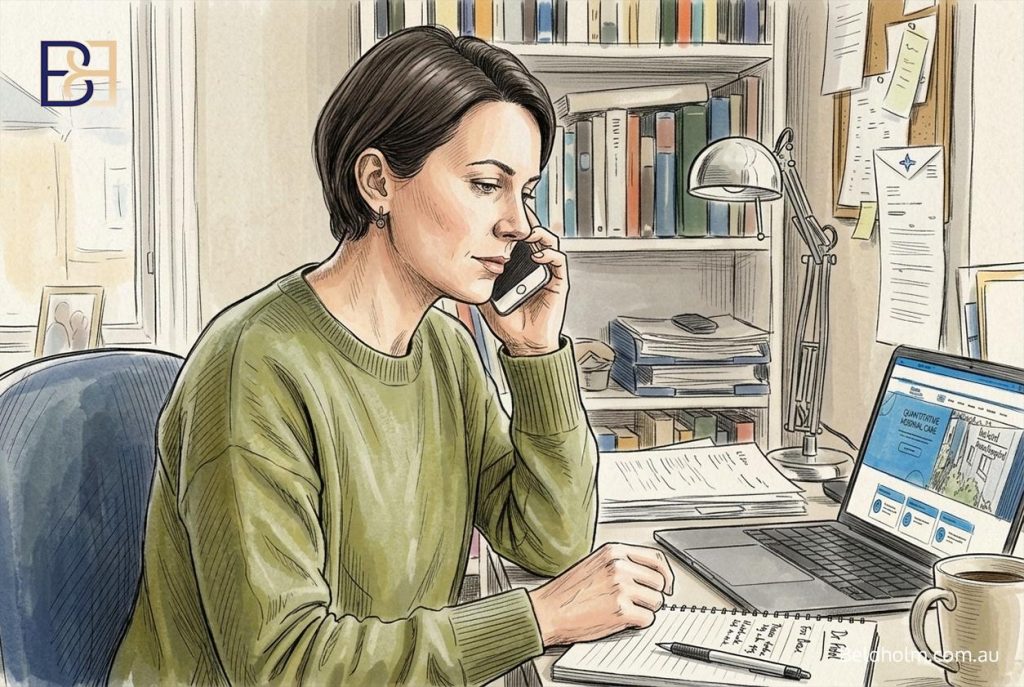
Get in touch promptly if you notice:
- pain that is getting worse rather than better, or is not controlled by your medication
- redness, heat, or spreading firmness around a wound
- a wound opening up, or discharge or fluid coming from it
- one breast suddenly becoming larger, harder, or more painful than the other
- a fever or feeling generally unwell
- a change in the colour of the nipple or the skin of the breast
Seek urgent help, or call 000, if you have pain, swelling, redness, or warmth in a calf, or shortness of breath or chest pain. These can point to a blood clot and need attention straight away.
Who to contact

- During clinic hours: call my rooms and the team will manage it
- After hours: contact Maitland Private Hospital, where nurse-led phone triage will guide you
- If you need to be physically examined: go to your local emergency department
- In a life-threatening emergency: call 000
Maitland Private Hospital is not an emergency department, so anything that needs hands-on assessment is best seen at your local ED.
The longer-term result
The recovery period after this operation runs over months, not weeks, and the result you end up with takes time to show itself. Here is what to expect as things settle, and what helps the result hold over the longer term.
When the shape settles
Over the first year the breast keeps changing. The upper pole fullness softens, the tissue relaxes into its position, the last of the swelling resolves, and the scars mature. As a rough guide, you are looking at your settled shape somewhere between six and twelve months, with the scars continuing to improve beyond that. The shape you see at a few weeks is not your final result, so try not to judge things too early.
How the result holds over time
The aim of moving your own tissue into the upper pole is to give a result that holds well, and repositioning the tissue as a flap is designed to support that upper pole fullness over time (1,3).
No operation stops the normal changes that continue with age and gravity, though.
- Some gradual change in breast position over the years is normal and happens to everyone, operated on or not
- Weight change can alter your breast size, volume, and shape
- A future pregnancy can change your result, as covered earlier
Helping your result last
A few things are within your control:
- keep your weight stable
- wear a supportive bra, particularly for exercise
- protect your scars from the sun while they are still maturing
- do not smoke, which supports both your skin and your healing
What to expect overall
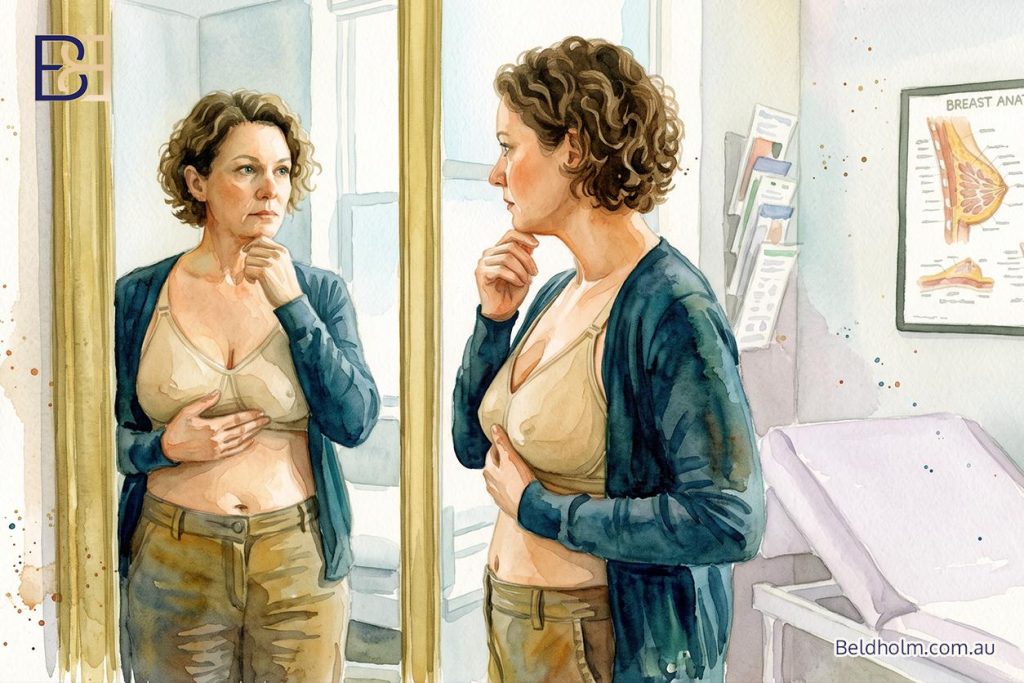
Recovery from a breast lift (mastopexy) with auto augmentation is a process that plays out over months. You go through an intensive early fortnight, a gradual return to normal activity, and a longer settling of shape and scars across the first year, with me following you the whole way.
Recovery is individual, and results vary from one patient to the next. Whether this operation is right for you, and how best to approach it, is something we decide together at consultation, which a GP referral is needed to arrange.
References
- Van Boeckel V, Nizet C, Nizet JL, Nelissen X. Retrospective multicenter review of mastopexy using the “mushroom” auto-augmentation flap technique. Plast Reconstr Surg Glob Open. 2026;14:e7774.
- Kirwan L, Wazir U, Mokbel K. Breast auto-augmentation: a versatile method of breast rehabilitation. A retrospective series of 107 procedures. Arch Plast Surg. 2015;42(4):438-445.
- Rubin JP, Khachi G. Mastopexy after massive weight loss: dermal suspension and selective auto-augmentation. Clin Plast Surg. 2008;35(1):123-129.