One of the most common questions I hear from women after having children is how soon they can have abdominoplasty (tummy tuck) surgery. It is a fair question, and the answer is that there is no single number that fits everyone.
Timing is a clinical decision. It depends on your body, your medical history, whether you are still breastfeeding, and whether your family is complete. It is worked out individually rather than set by a calendar.
As a general guide, I usually suggest waiting until around 12 months after your most recent pregnancy. That figure is a starting point for the conversation, not a fixed rule. Some women are ready around that mark. For others it is sooner or later.
In this article I explain what settles in the months after pregnancy, how breastfeeding and future pregnancy plans affect timing, what I assess before surgery, the abdominoplasty options I use after pregnancy, and what preparation, recovery and risks realistically involve.
Why timing matters after pregnancy

Pregnancy changes the abdominal wall over many months, and those changes keep evolving for a while after birth. Giving your body time to settle means that when I assess you, I am looking at where things have actually landed rather than a picture that is still shifting.
Several things are still changing in the months after you give birth:
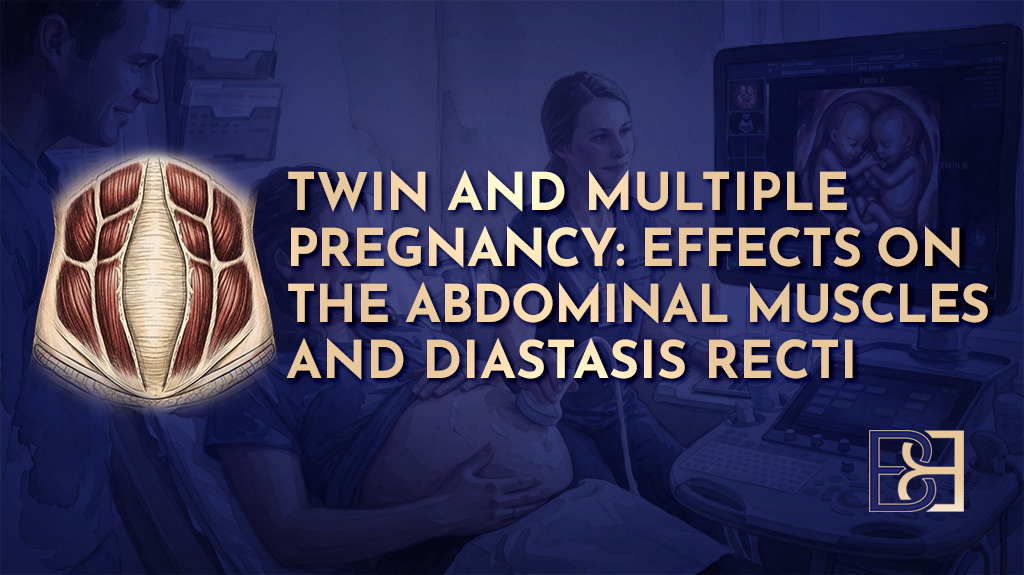
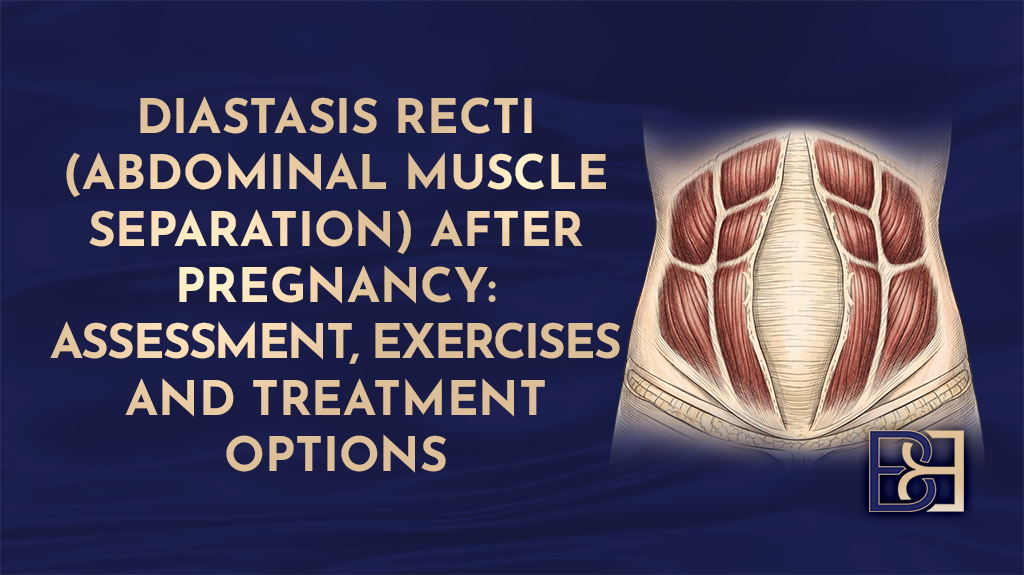
- The abdominal muscles. During pregnancy the two rectus abdominis muscles that run down the midline commonly separate to make room for the growing baby. This is called diastasis recti, or abdominal muscle separation, and it leaves the abdominal muscles weakened along the midline. It is common after pregnancy and is a normal change (1). In the first several months after birth, some of that separation narrows on its own. What remains after that point is a clearer indication of what an operation would need to deal with.
- The skin. Skin that stretched during pregnancy needs time to contract as much as it is going to. How much it recedes depends on your skin elasticity and varies from person to person, so the degree of skin laxity and any excess skin cannot be judged reliably in the early weeks.
- Your weight. Weight commonly keeps shifting through the first year, particularly while you are breastfeeding and gradually building activity back up. A reasonably stable weight gives a more reliable basis for planning surgery.
- Hormones. Hormone levels take time to settle after pregnancy and breastfeeding, and they influence both the soft tissue and how your body holds fluid.
Assessing too early usually means assessing a body that is still in the middle of these changes. Waiting until they have largely settled is what makes the general 12 month guide a sensible starting point rather than an arbitrary wait.
Breastfeeding and timing

I plan abdominoplasty for after you have finished breastfeeding. There are a few reasons for this.
Breastfeeding mostly affects the breasts rather than the abdominal wall. While you are feeding, breast volume and position change, and they keep changing for some months after you wean. The abdomen is not driven by breastfeeding in the same way. The hormones involved in lactation do, however, influence soft tissue and how your body holds fluid across the whole torso.
Weight and body composition also tend to keep moving while you are breastfeeding. A reasonably stable weight gives a more reliable basis for planning surgery, and that is usually easier to reach once feeding has finished.
There are practical reasons too. Surgery involves an anaesthetic and medications, and scheduling it for after breastfeeding avoids having to plan around feeding.
None of this is a fixed waiting period tied to a set number of weeks or months. It is about letting breastfeeding finish and the changes that go with it settle before I assess you.
A general guide, not a fixed rule
The 12 month figure is a guide, not a deadline. It reflects roughly how long the abdominal wall, skin and weight take to settle for many women after pregnancy, so it is a reasonable point to open the conversation. It is not a rule that applies to everyone.
For some women the right time comes earlier, once things have clearly settled. For others it is later. What decides it is individual assessment, not a number on a calendar.
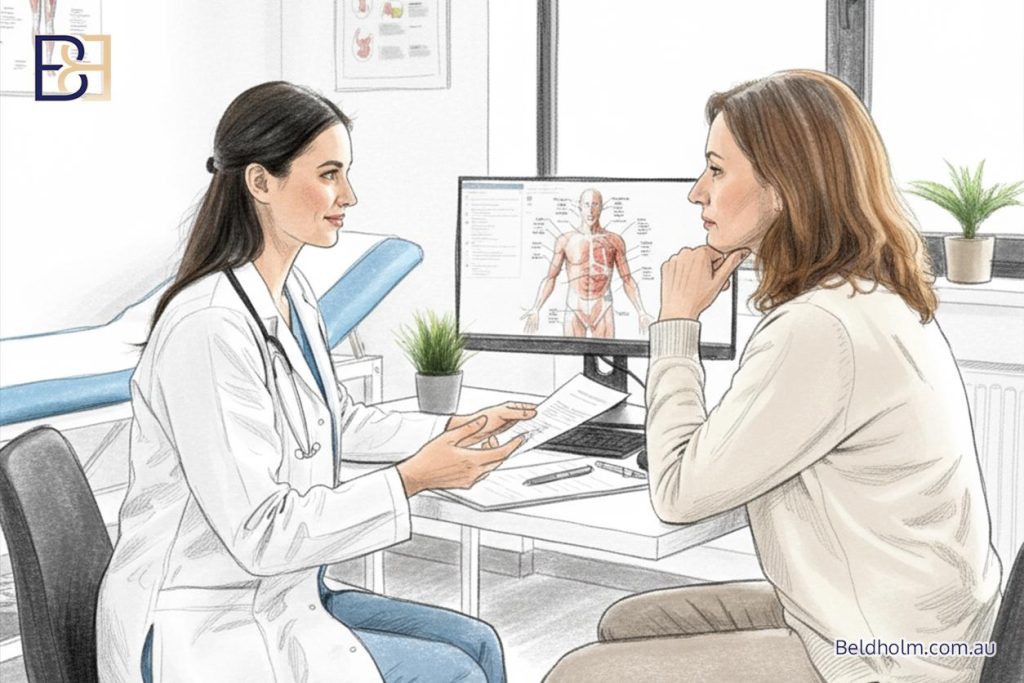
The pathway to surgery also has a few set steps that apply to all cosmetic surgery in Australia:
- A GP referral is required before your initial consultation with me.
- You have at least 2 consultations before any surgery, and at least 1 of these is in person.
- There is a cooling-off period of at least 7 days after your consultations and informed consent, before surgery is booked.
These steps exist to give you time and information rather than to rush a decision. Timing, in the end, is worked out together based on where your body has settled and what suits your circumstances.
Considering future pregnancies
I generally plan abdominoplasty for once your family is complete, because a pregnancy after the operation can change the result.
A tummy tuck (abdominoplasty) repairs the separated abdominal muscles and removes stretched and excess skin. A later pregnancy stretches the abdominal wall and skin again, and it can loosen the muscle repair. If that happens, the abdominoplasty results may be affected, and revision surgery could be needed to deal with it.
For that reason, if you are planning more children, or your future pregnancy plans are not yet settled, it usually makes sense to wait until your family is complete. This matters most for women considering multiple pregnancies. The operation is then done once, on an abdomen that will not be stretched again by a future pregnancy.
If you are unsure about future children, that is something to talk through at consultation rather than ruling surgery in or out in advance. Some women decide to proceed knowing a later pregnancy might change things. Others prefer to wait. It depends on your circumstances.
What I assess before surgery
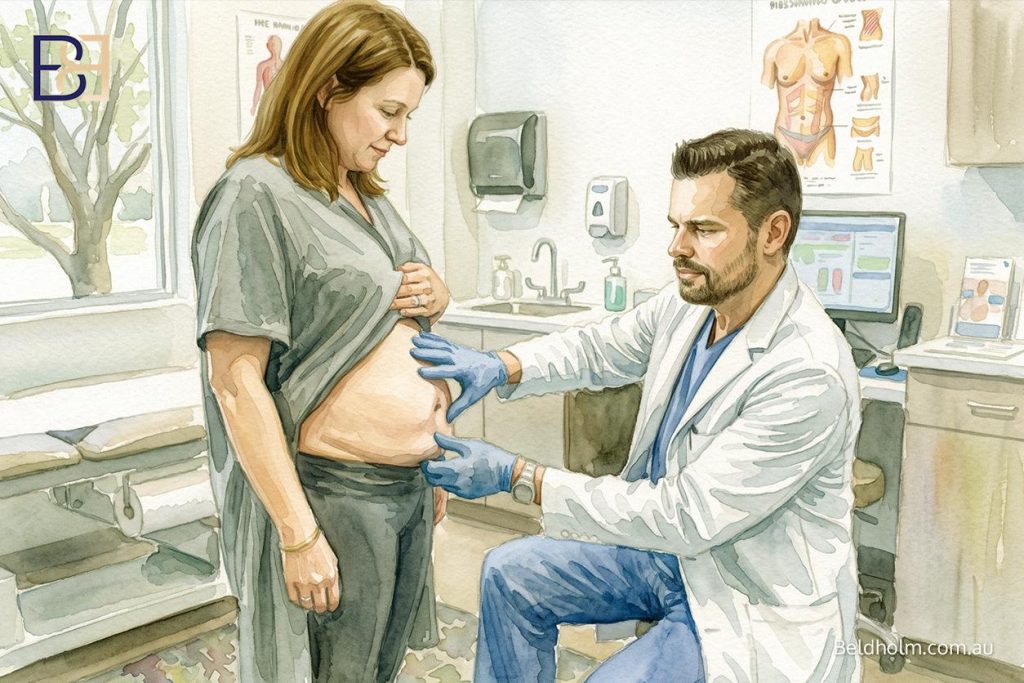
The right time for abdominoplasty depends on what I find when I examine you, not just on how long it has been since the birth. At consultation I go through several things.
- Your medical history. Past pregnancies and deliveries, including whether you had a caesarean, any previous abdominal or other surgery, your general health, and any conditions or medications that affect surgery and healing.
- The abdominal muscles. I check for diastasis recti, the separation of the midline muscles that commonly follows pregnancy, and how wide it is. Weakened abdominal muscles are a large part of what a post pregnancy abdominoplasty deals with.
- The skin. I assess the degree of skin laxity, how much loose or excess skin there is and where it sits, including around any caesarean scar. How much stretched skin remains once the body has settled varies between women.
- Weight stability. I look at whether your weight has been reasonably steady. Planning surgery around a stable weight gives a more reliable basis for the operation.
- Nutritional status. After pregnancy and breastfeeding, iron and folate in particular can run low. I check these along with routine bloods before surgery, because being in good nutritional shape supports healing.
Putting all of this together is what tells me whether the timing is right for you, and which abdominoplasty approach suits your situation.
Abdominoplasty options I use after pregnancy
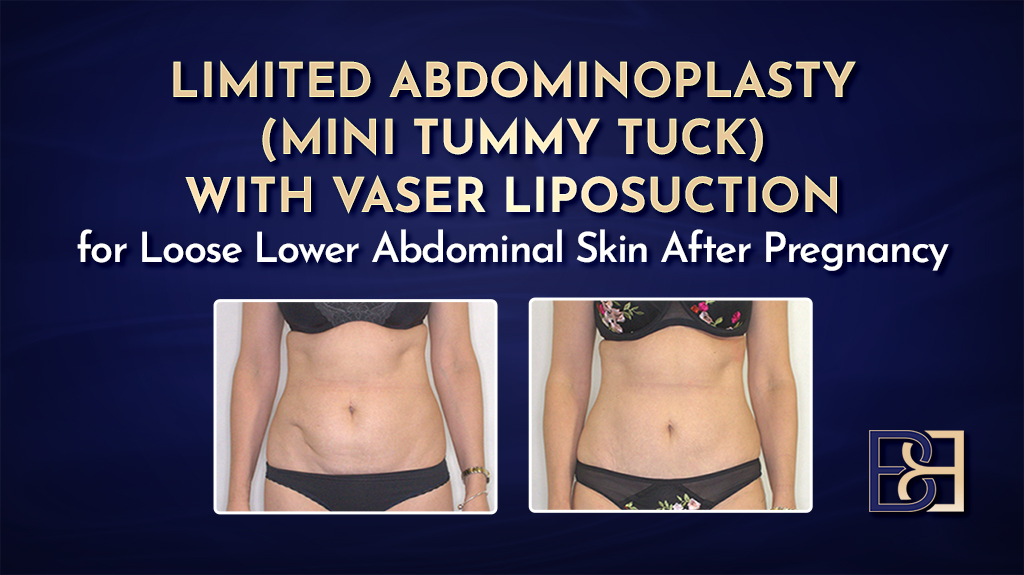
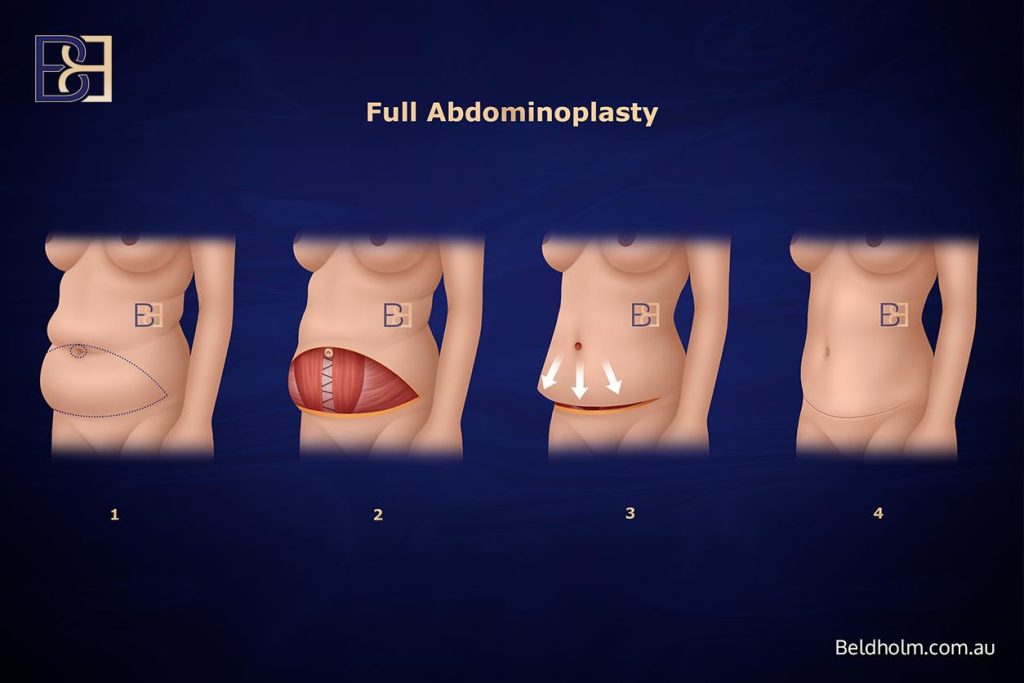
After pregnancy I mainly use two forms of abdominoplasty (tummy tuck): a full abdominoplasty and an extended abdominoplasty. They deal with the same things, stretched skin and separated muscle, and differ mainly in how far the incision runs to remove loose skin at the sides. Which one suits you is decided by examination, not picked from a list.
I do not use the more extensive abdominoplasty techniques designed for major weight loss in this setting. Those are built for a different situation.
Full abdominoplasty
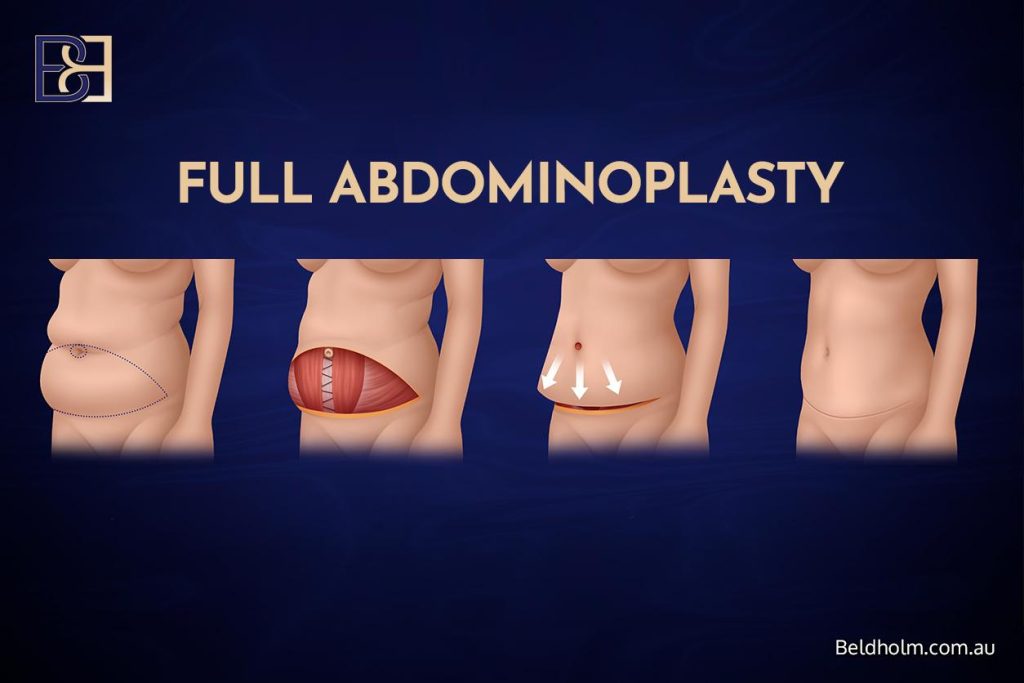
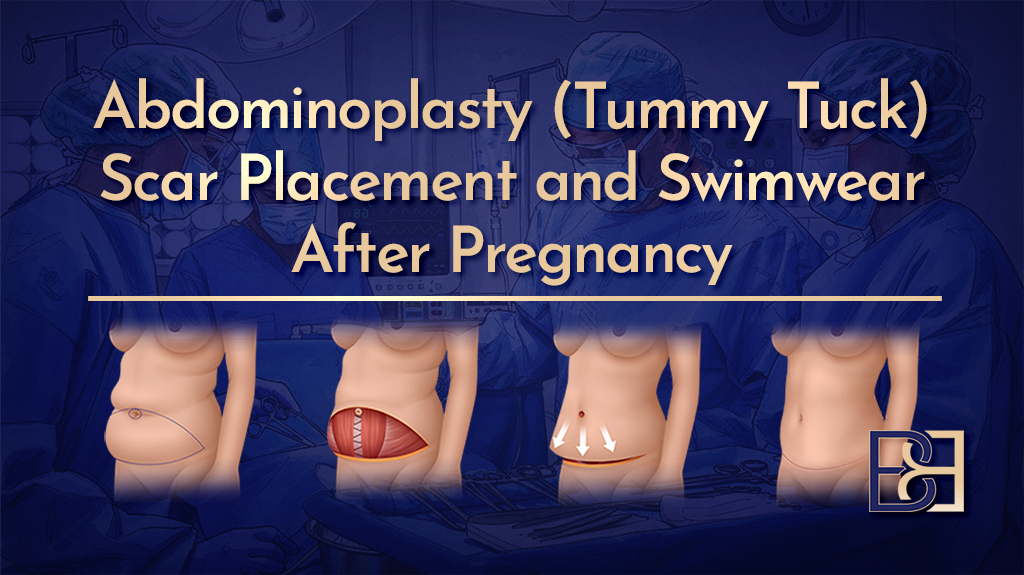
A full abdominoplasty uses a low horizontal incision running across the lower abdomen from hip to hip, sitting just above the pubic hairline. Through it I remove the stretched and excess skin of the lower abdomen and, where the muscles have separated, repair them. The belly button stays on its stalk and is brought out through the tightened skin.
Extended abdominoplasty
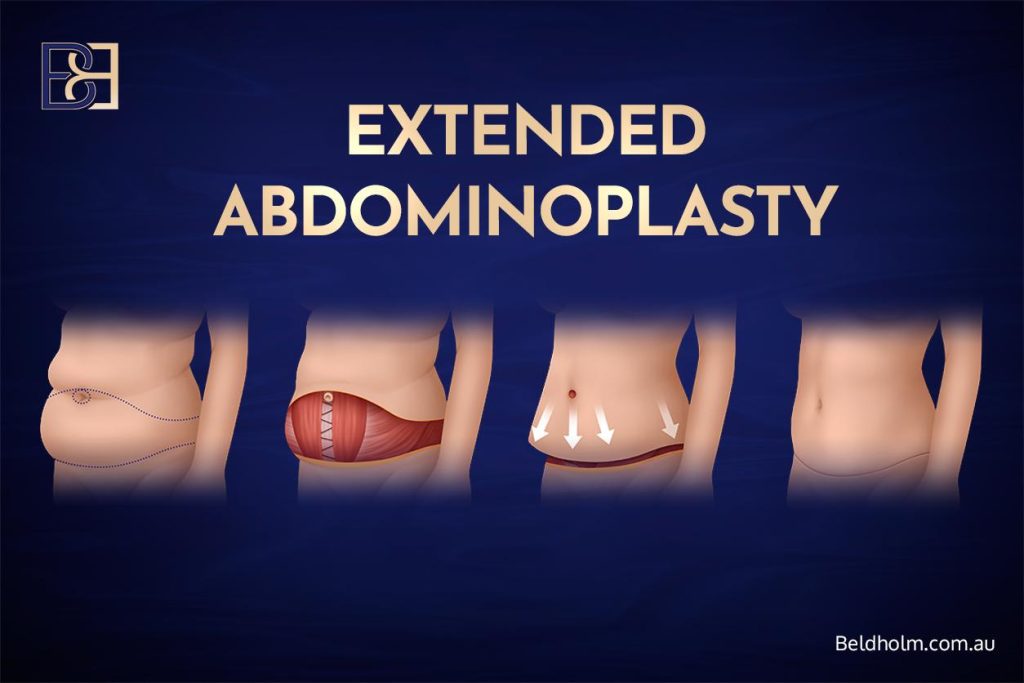
An extended abdominoplasty is the same operation with the incision continuing a little further past the hip bones towards the sides. This lets me remove loose skin that carries around to the flanks.
Most women after pregnancy have some loose skin reaching the sides, so many technically fall into this category. The amount is usually modest compared with after major weight loss, which is why I often still describe the operation as a full abdominoplasty. It can frequently be done without drains.
What both involve
- Muscle repair. Not everyone has diastasis recti, but most women who come to me after pregnancy do. Where it is present, repairing the separated midline muscles is a core part of the operation.
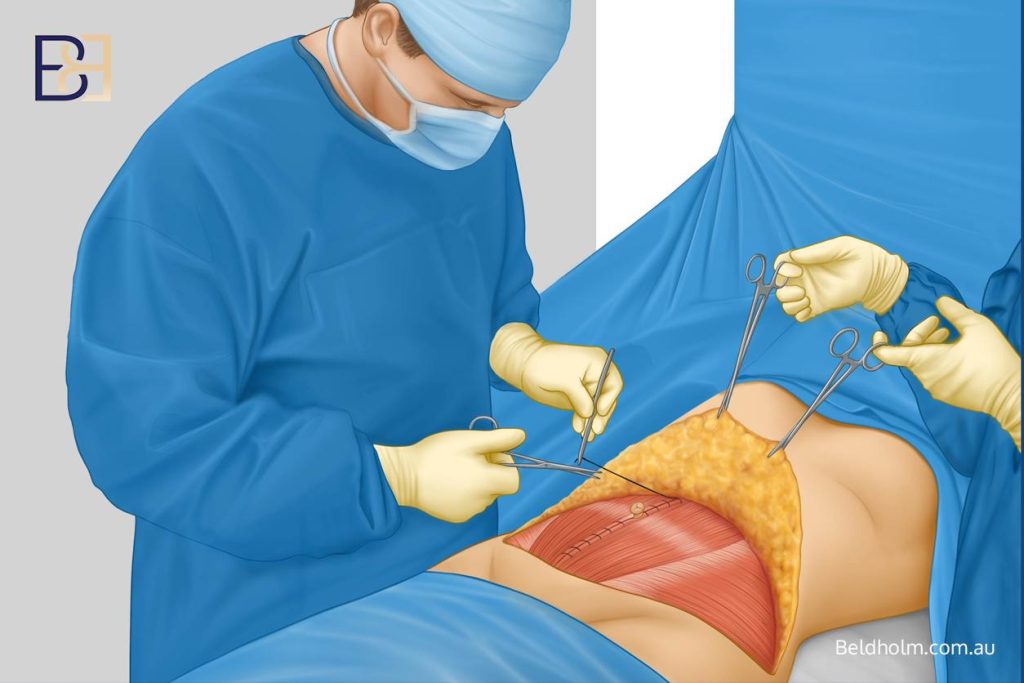
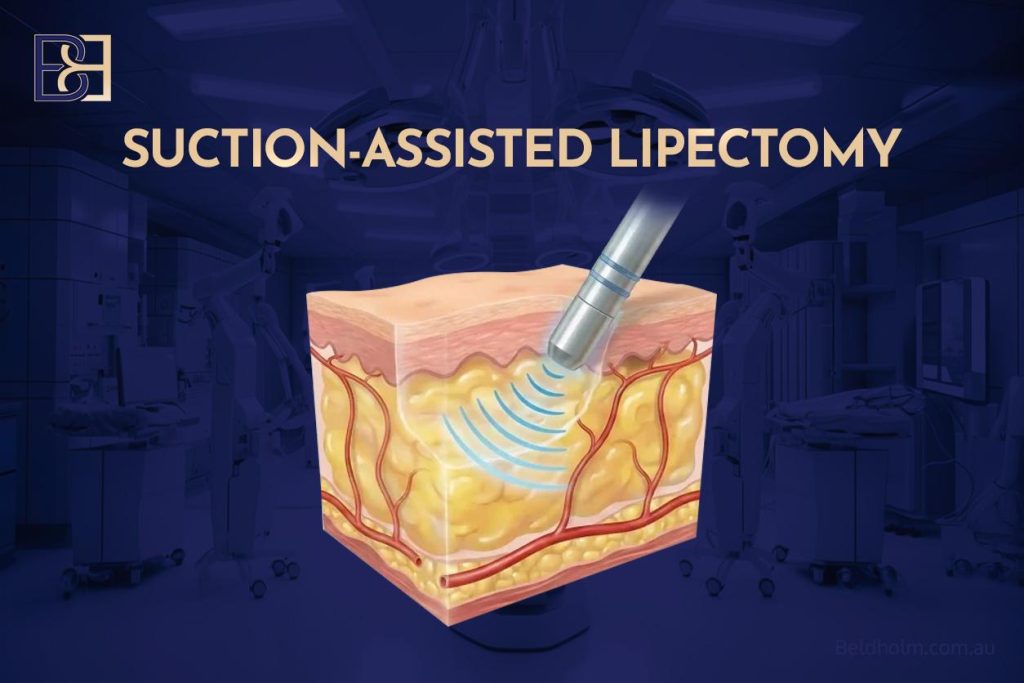
- Ultrasound-assisted suction lipectomy (VASER liposuction). In most cases I use this alongside the skin and muscle work to refine the contour.
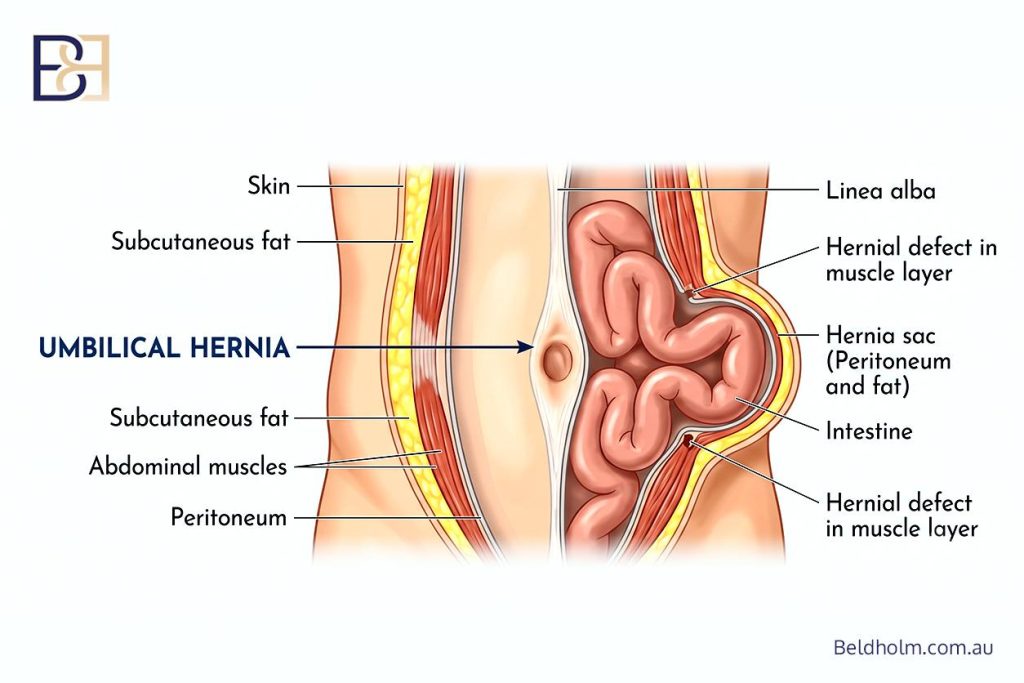
- Umbilical hernia. If an umbilical hernia is present, which can accompany muscle separation, I repair it during the same operation.
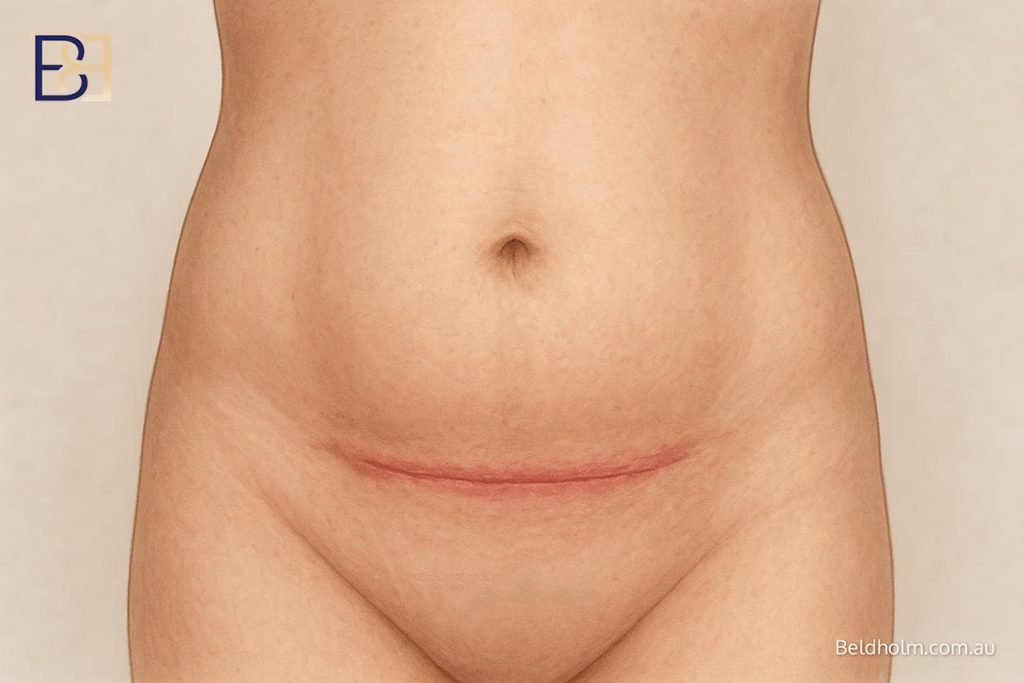
- Caesarean scar. If you have a caesarean scar, it is removed as part of the skin excision, and the new abdominoplasty scar sits along the same low line.
- Drains. Many post pregnancy abdominoplasties are done without drains. Drains are used where there is more extensive loose skin.
Preparing for surgery
Once we have decided on timing and your surgery is booked, there are a few things I ask you to work on beforehand. Good preparation supports healing.
Blood tests
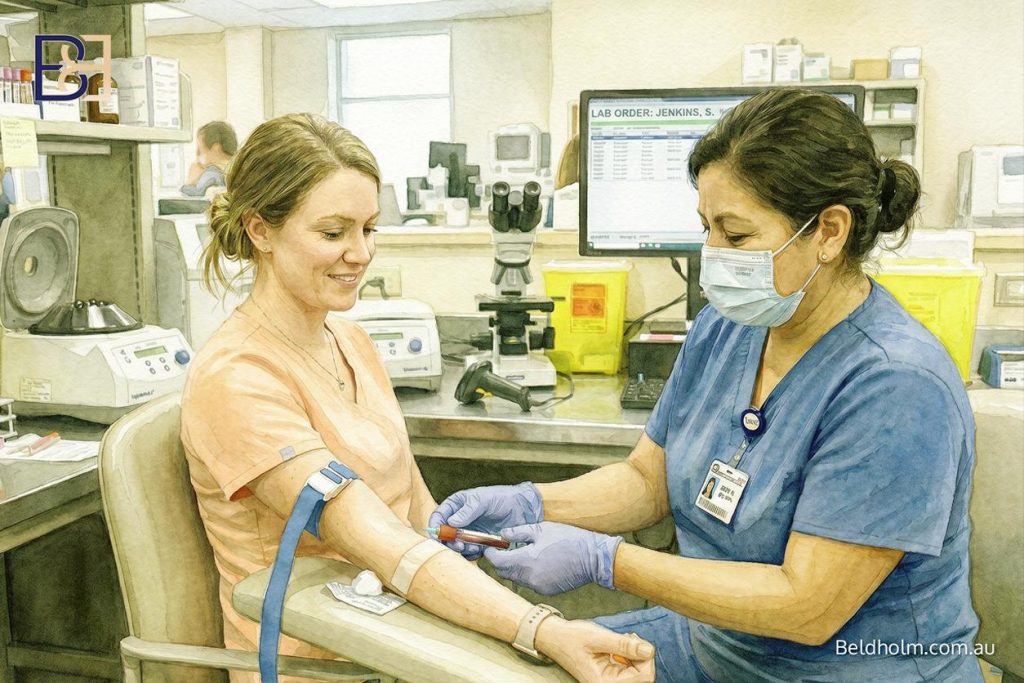
Before surgery you have a set of routine blood tests: a full blood count, kidney function and electrolytes, liver function, coagulation studies, and Hep B, Hep C and HIV. After pregnancy and breastfeeding, I pay particular attention to iron studies and folate, as these can run low. Your GP is copied in on the results.
Nutrition

You do not need a special regimen. A balanced diet with enough protein, along with staying hydrated, supports the healing process. If your iron or folate is low, I correct that before surgery.
Smoking

If you smoke, stopping well before surgery matters. Smoking interferes with wound healing and raises the risk of complications, so I ask you to stop in the lead-up to your operation.
Medications

I review your medications before surgery. Some, such as aspirin and blood thinners, are usually stopped about a week beforehand, but only on my instruction. Do not stop any prescribed medication on your own. If you take a blood thinner, I plan how to manage it well in advance.
The anaesthetic

The anaesthetist reviews you before surgery, and for most patients this is done by phone. The physical check, including your airway, happens on the day of surgery.
Book your appointment online now
What recovery is realistically like
Abdominoplasty is major surgery, and recovery takes real planning, particularly when you have young children at home.
In hospital
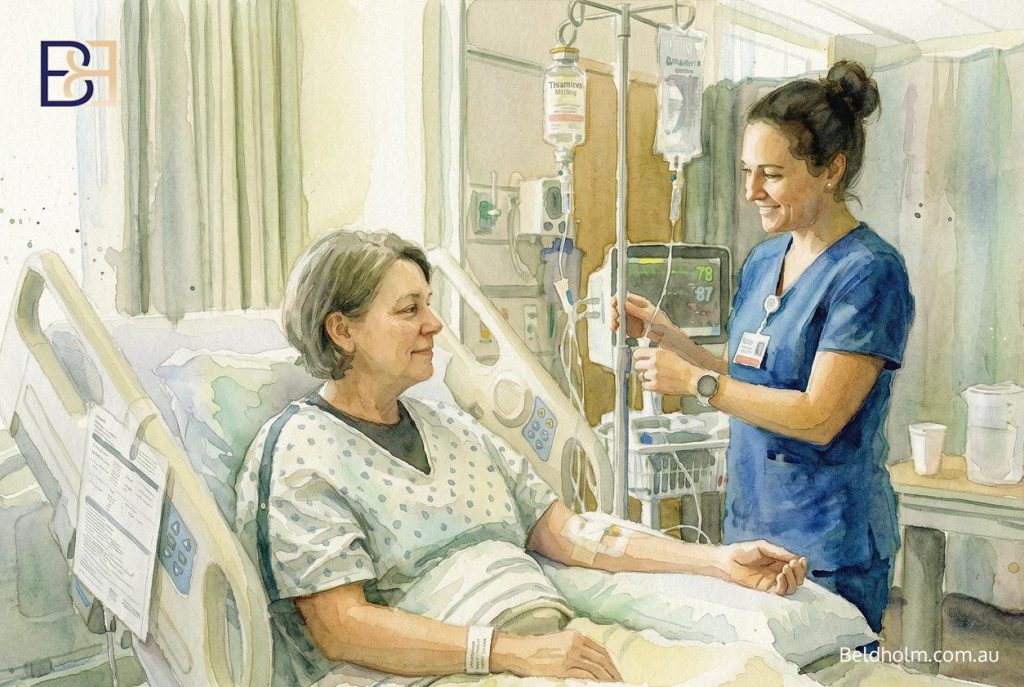
Most women stay in hospital for 1 to 2 days. I see you on daily rounds while you are admitted.
The first few weeks
Compression garments support the abdomen and help manage swelling, and you wear one for several weeks. In the early days you will feel tight across the abdomen and will stand and walk slightly bent forward at first, which protects the muscle repair. Getting up and moving a little early on is encouraged, because it helps circulation and lowers the risk of clots.
Pain and discomfort are part of this stage. Everyone experiences it differently, and how long recovery takes varies from person to person.
Lifting and children

This is the part that matters most with a young family. You need to avoid heavy lifting for around 6 weeks, and that includes lifting small children. Picking up a toddler pulls directly on the healing muscle repair. Plan for help at home so you are not doing that lifting yourself in the early weeks. Sort this out before your surgery date rather than after.
Getting back to activity
Strenuous activity and exercise are held off for about 6 weeks, then built back up gradually. Most women take some time away from work, depending on the job. The abdominoplasty scar continues to settle and fade over about 18 months to 2 years.
Follow-up
I follow you up at 1, 3, 6 and 12 months after surgery, and that care is included in the procedure fee.
Risks and complications
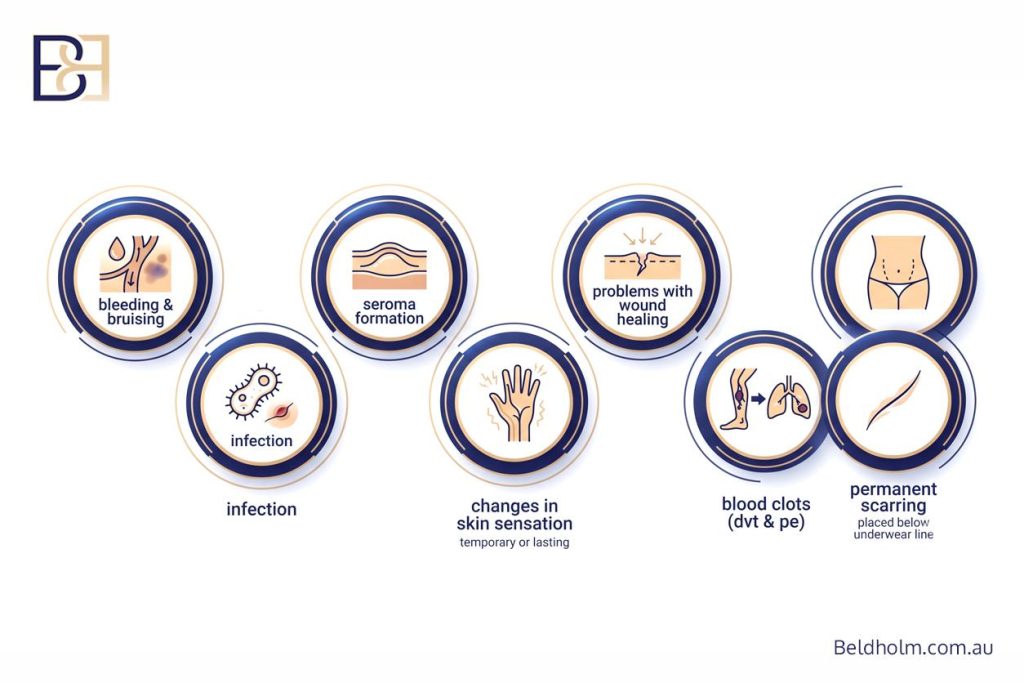
Every operation carries risk, and abdominoplasty is no exception. I go through all of this with you in detail before surgery as part of informed consent. These are the main ones to be aware of.
- Bleeding. A collection of blood under the skin (haematoma) can occur and occasionally needs a return to theatre.
- Infection. Wound infection can happen and may need antibiotics or further treatment.
- Seroma. Fluid can collect under the skin after surgery and sometimes needs draining.
- Wound healing problems. The wound can heal slowly or partly break down, particularly in smokers, and this can lengthen recovery.
- Scarring. Abdominoplasty leaves a permanent abdominoplasty scar across the lower abdomen. Most settle over 18 months to 2 years, but some people form thicker or more noticeable scars.
- Changes in sensation. Numbness of the lower abdominal skin is common early on and usually changes, though some altered sensation can be lasting.
- Blood clots. Clots can form in the legs (deep vein thrombosis) and, rarely, travel to the lungs, which is serious. I assess your clot risk and plan how to lower it, and early movement after surgery helps.
- Anaesthetic risks. A general anaesthetic carries its own risks, which the anaesthetist discusses with you.
- Contour irregularities and asymmetry. The result may not be fully even, and occasionally revision surgery is needed to adjust it.
This is not a complete list, and how you heal is individual. The reason I go through risks properly before surgery is so that your decision is an informed one.
Final comments

Abdominoplasty after pregnancy is a considered decision, and timing is a real part of it. For most women the sensible window opens somewhere around 12 months after the most recent pregnancy, once breastfeeding has finished, weight has settled and the family is complete. That is a guide rather than a rule, and the right time for you comes down to examination, not the calendar.
Timing is one of the first things to sort out with any post pregnancy surgery. If it is something you are thinking about, the first step is a GP referral and an initial consultation, where I can assess your situation and talk through whether abdominoplasty surgery is appropriate and, if so, when.
Frequently asked questions
How long after giving birth should I wait for tummy tuck(abdominoplasty) surgery?
As a general guide, around 12 months after your most recent pregnancy. That gives the abdominal wall, skin and weight time to settle. It is a starting point rather than a fixed rule, and the right timing is worked out individually.
Can I have abdominoplasty if I might have more children?
If you are planning more children, it usually makes sense to wait until your family is complete. A later pregnancy stretches the abdominal wall and skin again and can loosen the muscle repair, which may change the result of an earlier operation.
Should I wait until I have finished breastfeeding?
Yes. I plan abdominoplasty for after breastfeeding has finished. Breastfeeding mainly affects the breasts rather than the abdominal wall, and letting it finish allows the changes that go with it to settle before I assess you.
What is the difference between a full and an extended abdominoplasty?
Both remove excess skin and, where needed, repair the separated abdominal muscles. A full abdominoplasty uses an incision running from hip to hip. An extended abdominoplasty carries the incision a little further towards the sides to remove loose skin that reaches the flanks. Which one suits you is decided by examination.
How do I prepare for abdominoplasty?
You have routine blood tests beforehand, and after pregnancy and breastfeeding I check iron and folate in particular. A balanced diet with enough protein and good hydration supports healing. If you smoke, stopping well before surgery matters. I also review your medications, and some are paused before surgery on my instruction.
What are the main risks of tummy tuck (abdominoplasty) surgery?
Abdominoplasty is major surgery and carries risks including bleeding, infection, fluid collection (seroma), wound healing problems, permanent scarring, changes in skin sensation, and blood clots. I go through these with you in full before surgery as part of informed consent.
References
- Du Y, Huang M, Wang S, Yang L, Lin Y, Yu W, et al. Diastasis recti abdominis: a comprehensive review. Hernia. 2025;29:222.