After significant weight loss, the surgery I perform removes excess skin and reshapes the abdomen, trunk and limbs. Body contouring procedures such as abdominoplasty (tummy tuck), body lift (belt lipectomy), brachioplasty (arm lift), and thighplasty (thigh lift) all require you to wear a compression garment afterwards. One of the most common questions I get in the weeks after surgery is about that garment. Why do I have to wear it? How long for? And what do I do when it starts to feel like hard work?
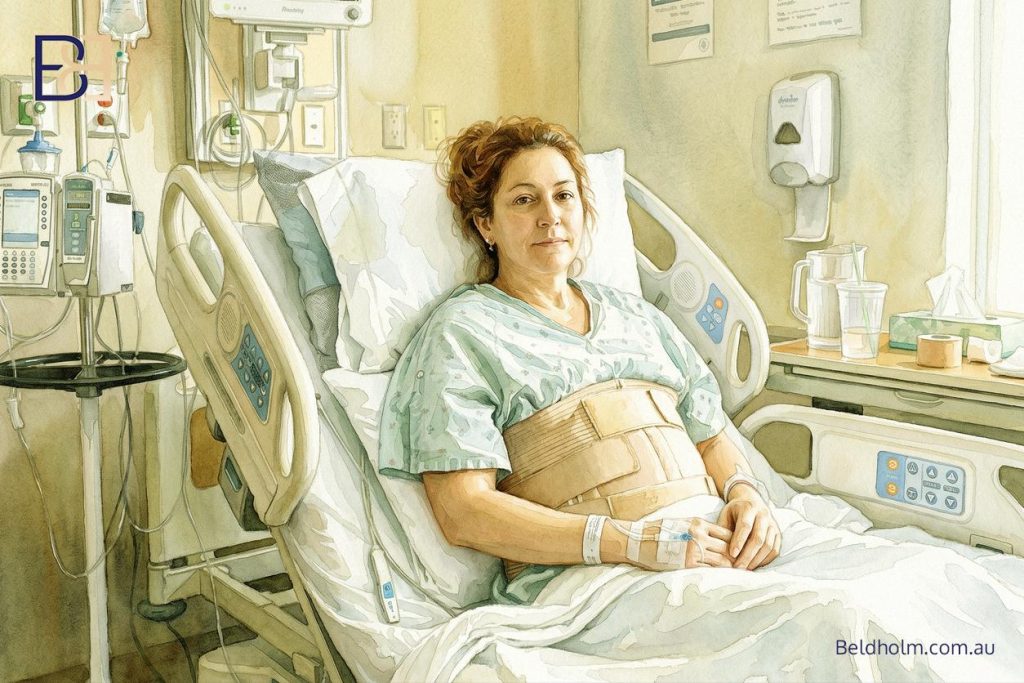
This guide pulls together the questions my post weight loss patients ask most often. It covers what the garment does while you heal, how it works alongside your drains and dressings, how long I ask you to wear it, and how to tell whether it fits as it should. Recovery is different for everyone, and the timeline below is a guide rather than a promise. Your own plan is set at consultation and adjusted as you heal.
Why compression matters after post weight loss body contouring
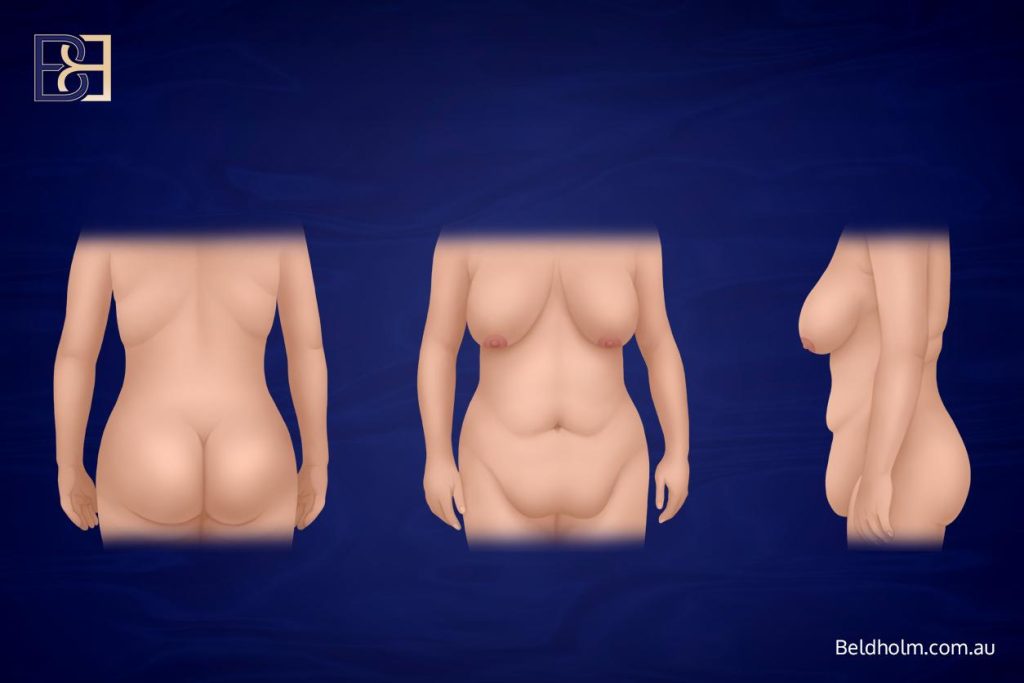
When I lift skin and fat off the abdominal wall during an abdominoplasty (tummy tuck), or off the trunk during a body lift (belt lipectomy), I create a space between the skin layer and the tissue underneath. The same thing happens in the arm during a brachioplasty (arm lift) and the thigh during a thighplasty (thigh lift). That space is normal and expected. The goal of the early recovery period is to get those layers to settle back down and sit together in the right position.
Post weight loss patients tend to have more of this work done in one operation than other patients. There is usually a larger area of loose skin to remove; the skin itself often has less recoil, with limited skin retraction after major weight loss, and the surface being treated is bigger. All of that means a larger raw surface inside, and more fluid the body needs to clear as it heals. Your drains handle much of that fluid, and the compression garment is part of the aftercare that supports you as everything settles.
The clearest benefit of steady, even pressure is the support it provides. Most patients find the garment makes standing up, walking, and turning over more manageable in the first weeks, and research on compression and support after abdominal surgery points to reduced pain and better movement (1). It is also traditionally used to help hold the skin layer against the tissue underneath and to manage the feeling of swelling while it is at its worst.
The evidence that a garment prevents fluid collections or measurably reduces swelling is limited and not clear-cut (2,3). I use it for the support and comfort it gives and because it is part of sensible standard aftercare, not because it forces a particular outcome.
What I am after is firm, constant pressure, not a tight garment.
What a compression garment does
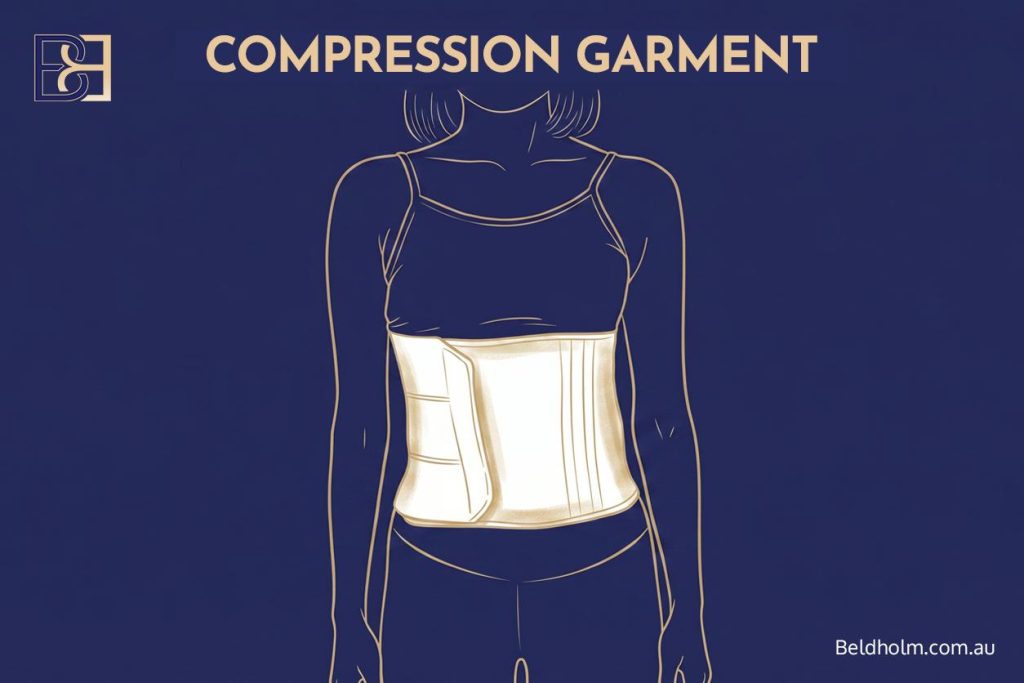
A compression garment is not doing one single job. I want to be clear about what its benefits are and what the evidence actually shows.
- It supports you and helps with comfort. This is the clearest benefit. Most patients find the steady support makes standing, walking and turning over more manageable in the first weeks, and the research on compression and support after abdominal surgery points to less pain and better movement (1). The garment holds everything steady, so moving feels less precarious.
- It helps manage the feeling of swelling. Swelling (oedema) builds up after any major operation, and post-weight-loss procedures involve a large surface area. Compression is traditionally used to help with this, and many patients feel more comfortable with the support while the swelling is at its peak.
- It holds the tissue layers steady. By holding the skin layer against the tissue underneath, the garment is meant to help the layers settle as they heal. This is the long-standing reason garments are used after this surgery.
The evidence that a compression garment prevents fluid collections such as seroma (blood or fluid pooling in the space created during surgery), or measurably reduces swelling, is limited and mixed, and good-quality trials have not shown a clear benefit for those specific outcomes (2,3). I use compression for the support and comfort it provides and because it is part of sensible standard aftercare, not because it guarantees anything.
How much any individual notices will vary. The garment is one part of a larger plan that includes your drains, dressings, activity limits and follow-up, and it is not a substitute for resting and following your activity restrictions in the early weeks post surgery.
Abdominal binder and compression garment
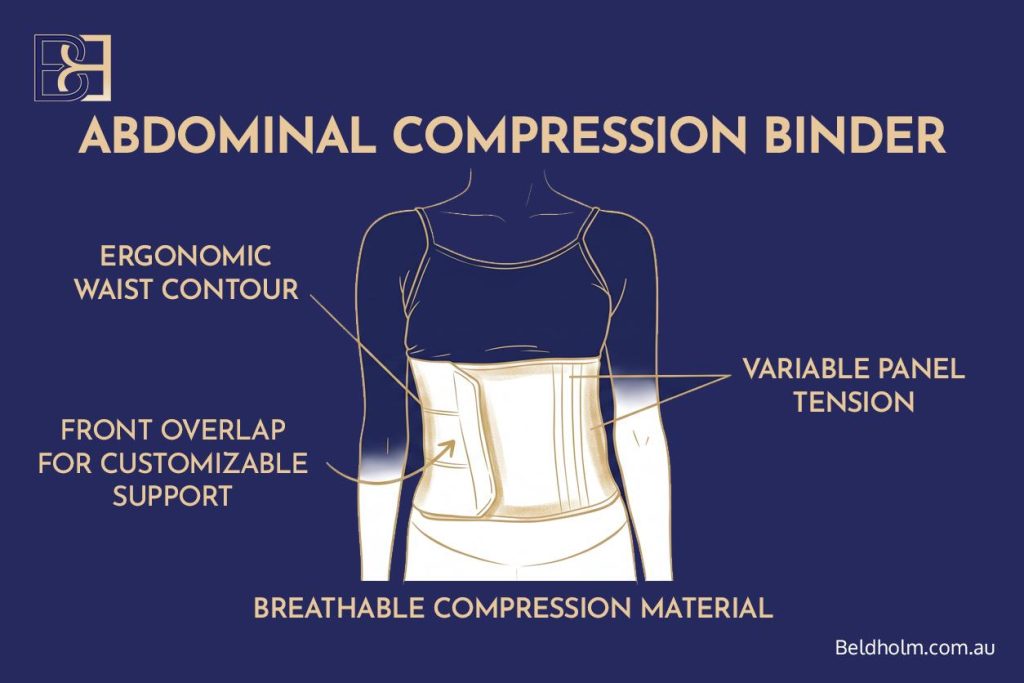
Patients often ask about the difference between a wide elastic binder and a fitted compression garment. They do the same job. Both apply steady, even pressure to support the area while it heals. The real difference is which stage of recovery you are in, and which operation you have had.
Most abdominoplasty (tummy tuck) and circumferential abdominoplasty patients start in an abdominal binder. It is a wide elastic band that fastens with Velcro, so you can put it on and adjust it without much effort in the first days after surgery, when you are sore and moving is hard work. That makes it well suited to the early stage.
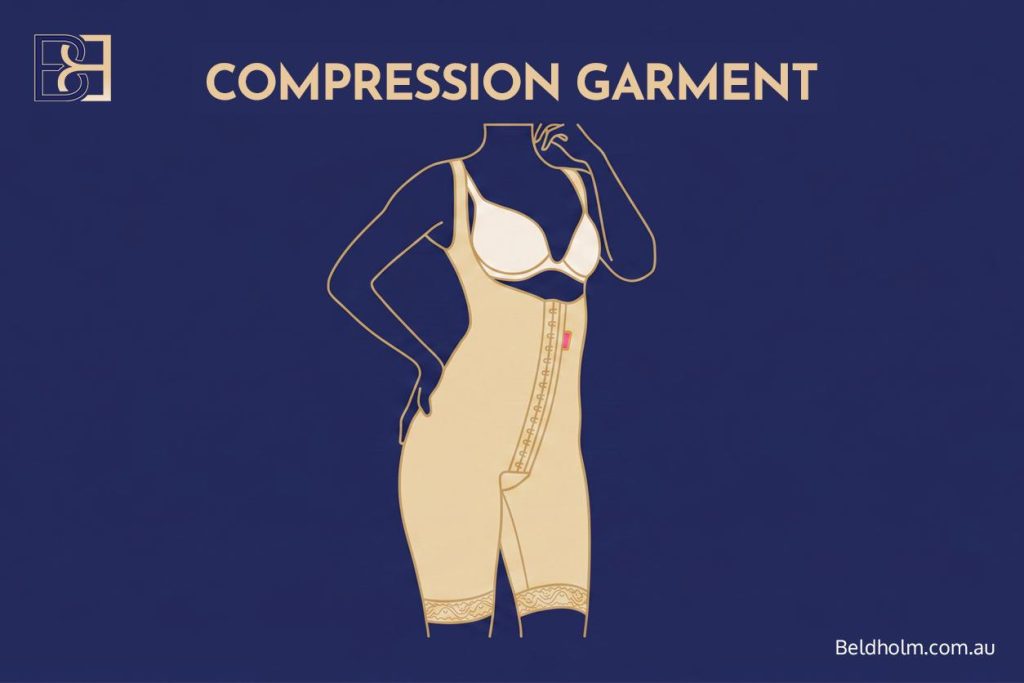
Around two to three weeks on, I usually move patients into a fitted compression garment. By then, the initial swelling has begun to settle, you have more mobility, and many patients find the shaped garment more comfortable to wear during the longer recovery phase. It also sits more evenly across the whole area than a binder does.
What was done also decides which garment you wear. A binder only covers the abdomen. If you have had combined work, for example, breast and abdomen, or abdomen and thighs, a single fitted garment can be more practical, because it covers those areas together rather than needing separate pieces.
I will tell you which garment to wear and when at your follow-up. It depends on your procedure and how you are healing.
How the garment works with your drains and dressings

In post weight loss surgery there is usually more than just a garment under your clothes in the first week. You will often have drains and dressings in place as well, and the garment has to work around them. Here is how it fits together.
Your drains
For most post weight loss abdominal work I use two closed suction drains, one on each side, brought out through a small exit point near the hip. They clear the fluid that collects in the space created during surgery, which is part of how I manage the larger raw surface these procedures leave behind. The drains usually come out somewhere between two and seven days, depending on how much they are draining.
The garment or binder is applied in theatre while you are still asleep, and it goes on over the drains. The drain tubes and bottles sit outside the garment so they can keep working and so the nursing staff can measure the output. It is normal to go home with the drains still in. If that happens, I will show you how to manage them, and the garment stays on around them.
Your dressings
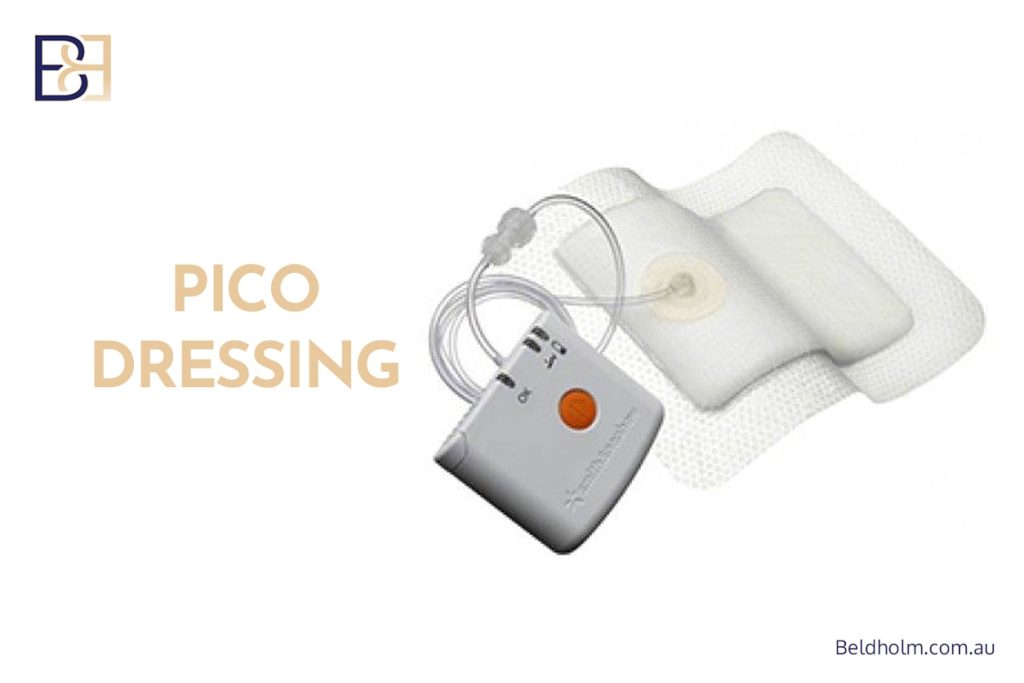
Over the incision itself you will have a dressing rather than the wound being left open under the garment. For the first week I use a PICO dressing, which is a sealed dressing that stays in place to around day seven. After that we change to Hypafix, a soft adhesive tape dressing that is more comfortable for the longer healing period.
The garment goes on over whichever dressing you have. You do not need to take the dressing off to wear the garment, and you should not be peeling dressings back to look underneath unless I or the nursing staff have asked you to. The layers work together: dressing against the wound, garment over the top holding everything steady.
If a dressing lifts, leaks or comes away, or a drain stops working or pulls out, that is something to call the hospital about rather than sort out yourself.
How long I ask you to wear it
The timeline below is what I use for most post weight loss patients. It is a guide. Your own plan can vary depending on your procedure, how much swelling you have, and how you are healing, and I will adjust it at your follow-up visits.
The first four weeks: full time

I ask you to wear the garment full time for the first four weeks. That means day and night, including while you sleep, and taking it off only to shower or to wash the garment itself. This is the stretch where the tissue layers are settling back together and swelling is at its peak, so steady pressure through the whole day and night is what helps most.
Weeks five and six: daytime
After four weeks I usually move patients to wearing the garment during the day only, and leaving it off overnight. The reason is practical. Swelling tends to be worse through the day, when you are upright and moving around, and it eases when you lie flat at night. So daytime wear is where the garment earns its keep at this stage, and you get a break from it while you sleep.
After six weeks
By around six weeks, most patients are finished with the garment. Some choose to keep wearing it during the day for a while longer if it feels supportive, and that is fine. There is no harm in it. But it is no longer something I require past this point for most people.
If you have had a mastopexy (breast lift)
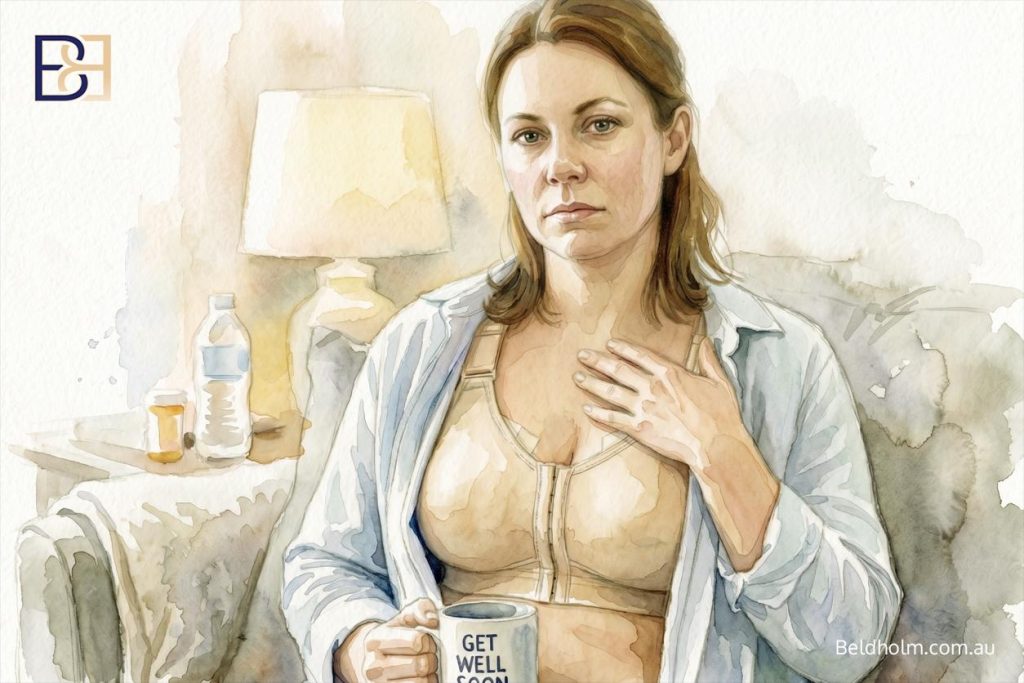
If your surgery included a mastopexy (breast lift), you will be in a surgical support bra rather than an abdominal garment for that area, usually for around the first four weeks. If you have had breast and abdominal work together, you may be managing both. I will go through exactly what you wear and for how long before you leave hospital.
A note on all of the above. The point of the garment is to support healing, not to rush it. Wearing it longer does not speed anything up, and taking it off too early in the first four weeks is the thing I would ask you not to do.
Showering and taking the garment off

The garment is meant to stay on almost all the time in the first four weeks, but there are two reasons to take it off: to shower, and to wash the garment. Both are fine and expected.
Showering and bathing
When you can shower or bathe depends on your dressings and whether your drains are still in, so I will give you clear instructions before you go home rather than a single rule for everyone. As a general pattern, once you are cleared to shower, you take the garment off, shower with your dressing left in place unless told otherwise, then pat the area dry and put the garment back on. Keep showers short and warm rather than hot in the early weeks, as heat adds to swelling.
If you still have drains in, you will be shown how to manage them while you shower. Do not let the garment sit damp against your skin, and do not put it back on over a wet dressing.
Taking it off to wash it
You will need to wash the garment, which is the other time it comes off. This is easier if you have a second garment, so you can wear one while the other dries. More on laundering and second garments further down.
Putting it back on
Getting the garment back on in the first week takes a bit of effort, because you are sore and you cannot bend or twist freely. Take your time, do it sitting or with support, and ask for help if you need it rather than straining. It gets easier each week as the swelling settles and you move more freely.
The main thing is that the garment goes back on after you shower or change it. Long stretches without it in the first four weeks are what I would ask you to avoid.
What makes a good compression garment
You do not have to work this out on your own. Our patient coordinator orders an appropriate garment for your surgery, and we put it on for you in hospital while you are still asleep. We use good-quality garments suited to the procedure you are having, and we update our supplier from time to time so we keep using ones that do the job well. If you need additional garments during your recovery, we order those for you through the rooms.
It still helps to understand what a good garment looks like, so here is what matters.
- Medical-grade compression. The garment should provide firm, even pressure designed for post-surgical use, not the light-shaping pressure of everyday control underwear. The two are not the same thing.
- Breathable materials. You are wearing it almost constantly for weeks, often under clothes, so it needs breathable, moisture-wicking materials that let your skin breathe and move moisture away. This helps keep the skin underneath comfortable.
- Flat or covered seams. Bulky seams sitting against a healing wound cause pressure marks and irritation. Flat seams sit better and are less likely to dig in.
- Adjustable closures. Hook-and-eye panels or similar adjustments let the garment be taken in as your swelling settles, so it keeps giving even pressure rather than going loose.
- An opening for the toilet. A garment with a practical opening saves you from having to take the whole thing off and wrestle it back on every time, which matters a lot in the first few weeks.
- The right coverage for your procedure. The garment needs to cover the treated areas. For trunk and combined work, that often means a longer or higher-cut garment, not just an abdominal piece.
A good fit matters more than anything else on this list, so the next section covers how to tell whether yours fits as it should. It is worth having a second garment of the same type, so you always have a clean, dry one to put on while the other is washed. We can order that for you through the rooms.
Book your appointment online now
Getting the fit right
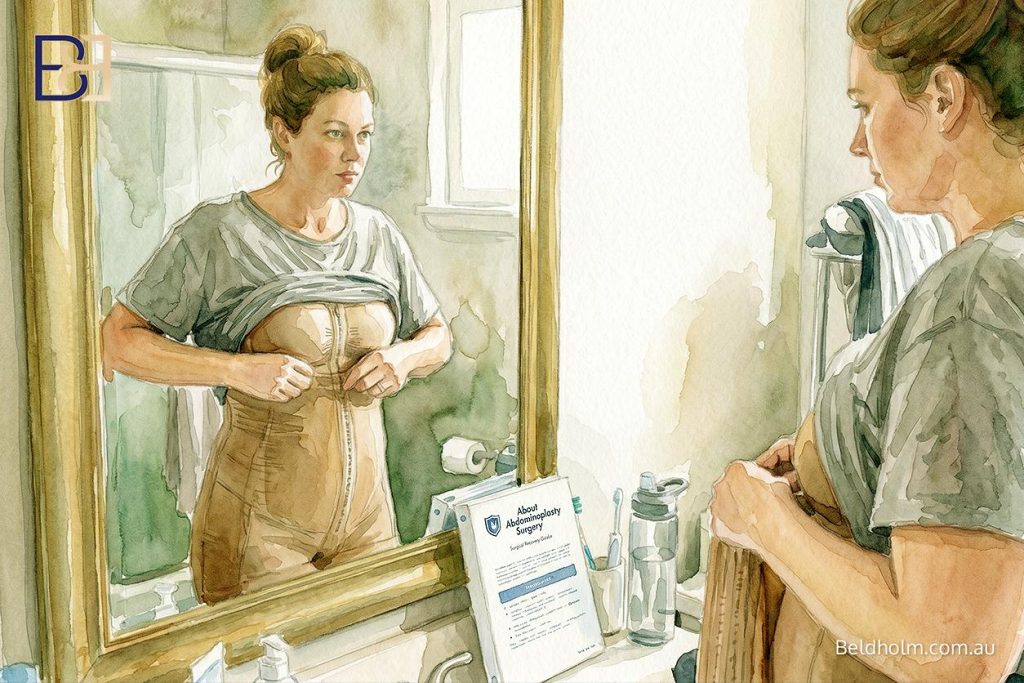
The fit is the part patients most often get wrong, usually because they assume tighter is better. It is not. The garment should be firm and supportive, not constricting. Both too tight and too loose are problems. I measure every patient and order the right compression garment to fit, so you start in the right size.
How it should feel
A well-fitting garment should fit snugly against you and give steady, even pressure across the whole area, with no gaps and no parts that dig in. One way to check is to slide a flat hand under the edge of the garment with a bit of resistance. If you cannot get your hand under at all, it is too tight. If it slides in with no resistance, it is too loose.
It should not leave deep red welts, pinch, or make the area throb or go numb. Some snug pressure is normal and expected. Pain is not.
Too tight
A garment worn too tight does more harm than good. Excess pressure can dig into the skin, cause pressure marks, indentations and surface irregularities, and in a healing wound, that is the last thing you want. Over-tight compression can also restrict circulation to skin that is already recovering from surgery, which works against healing rather than helping it. If your garment leaves deep marks, makes the skin look dusky or feel numb, or is uncomfortable to breathe in, it is too tight and needs adjusting.
Too loose
A loose garment is more comfortable, which is exactly why people drift towards it, but it is not doing the job. If it has gone loose because your swelling has settled, that is a good sign, and it usually means it is time to take the garment in using its closures or move to the next size down. A garment that no longer gives even pressure is not supporting the area.
When the fit changes
Your shape changes as the swelling comes down over the first weeks, so a garment that fits on day one will often feel looser by week three. That is normal. This is where adjustable closures earn their place, and it is part of why I check the garment at your follow-up. Sometimes the swelling changes the fit enough that adjusting the closures is not enough, and we will then order you another garment in the right size. If yours stops fitting well, let the rooms know.
Living with your garment day to day
Wearing a garment more or less constantly for six weeks takes some getting used to. A few practical habits make it much easier.
Washing it
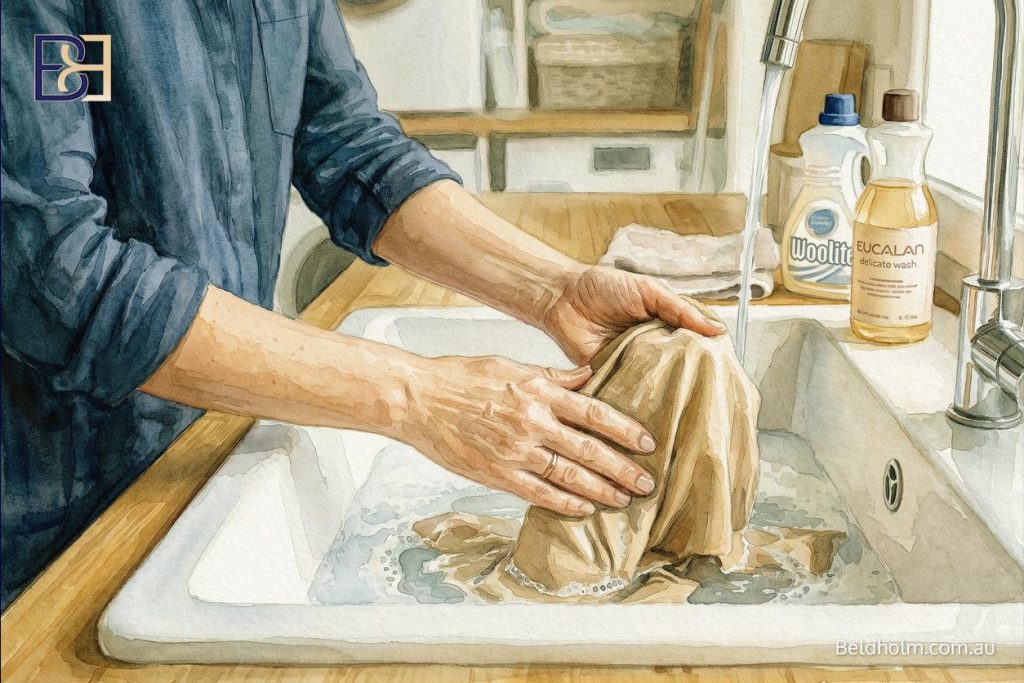
- Wash the garment by hand or on a delicate cycle in cold or warm water with a mild detergent. Hot water and harsh detergents break down the elastic that gives the compression.
- Air dry it flat or on a line. Do not put it in the tumble dryer, as the heat damages the fabric and it loses its pressure.
- This is where a second garment matters. With two, you wear one while the other is washed and dried, so you are never left without compression in the first four weeks.
Wearing it under clothes
- The garment is designed to be worn under your normal clothing and is more discreet than people expect. Loose, comfortable clothes sit over it and are more comfortable on a healing abdomen anyway.
- Darker and looser tops and bottoms hide the lines of the garment well if you would rather it was not noticeable.
- Avoid waistbands and belts that press a hard edge into the treated area in the early weeks.
Comfort through the day
- If a seam or edge rubs in one spot, a thin cotton singlet worn under the garment can take the friction off the skin. Make sure it lies flat so it does not create its own pressure ridge.
- Keep the skin under the garment clean and dry. Damp fabric against the skin for long periods can cause irritation.
Work and daily activity
When you go back to work depends on your job and how you are healing, not on the garment itself. Most people wear the garment under their clothes by the time they return. Desk-based work tends to be possible earlier than physical or manual work. I cover return-to-work timing separately because it is driven by your activity limits, not the garment.
If your garment is uncomfortable
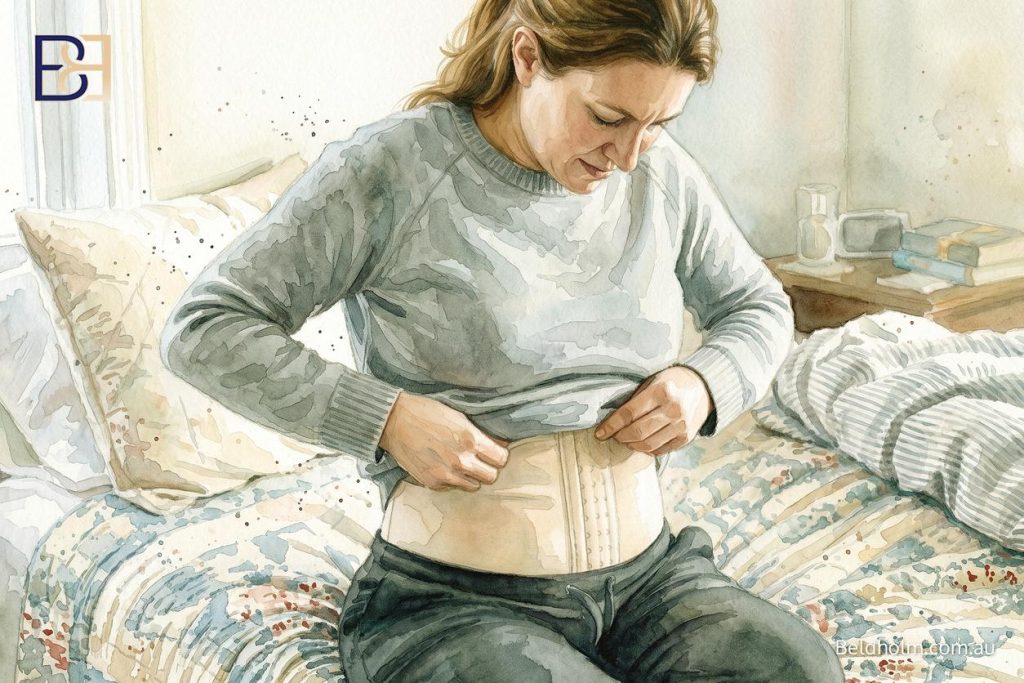
Some discomfort from the garment is normal, particularly in the first week when everything is sore and swollen. Snug pressure, an awareness of the garment, and a bit of a struggle getting it on and off are all expected. That settles as you heal.
There is a difference, though, between the garment being a nuisance and the garment being a problem. The short version: if it is uncomfortable, try adjusting it first. If something is wrong, get in touch.
Things you can sort out yourself
- If it feels too tight, loosen the closures a notch and see if that settles it.
- If a seam is rubbing, try a thin cotton layer underneath.
- If it has gone loose as your swelling has settled, take it in with the closures or move to the next size.
Things to get checked
Contact us rather than pushing through if you notice any of these:
- Skin under the garment that looks dusky, pale or discoloured, or feels numb.
- Pain that is increasing rather than easing, or pain that the garment seems to be causing.
- Pressure marks that break the skin, blistering, or a rash that is spreading.
- The garment feeling tight in a way that makes it hard to breathe comfortably.
- Any redness, heat, swelling or discharge around the wound, or feeling generally unwell, which can be signs of infection and are not about the garment alone.
Who to contact

During clinic hours, call the rooms. After hours, call Maitland Private Hospital, where the nursing staff handle phone triage and will tell you what to do next. If something needs to be physically looked at and it is after hours, you may be directed to your local emergency department, as Maitland Private is not an emergency department. If you ever have chest pain, difficulty breathing, or any other emergency, call 000.
What if I do not wear it
Patients sometimes ask whether the garment is really necessary or what happens if they leave it off. It is a fair question, so here is how I think about it.
For post weight loss body contouring, compression is part of my standard recovery plan. These procedures leave a large area of healing tissue, and steady support is part of how I help you through the early weeks. That is why I ask you to stick with it, particularly through the first four weeks.

Leaving the garment off when it should be on is not an immediate disaster, but you lose what the garment is there to give you. The clearest things you lose are support and comfort, and most people feel less stable and find moving harder without them. You may also feel more swollen. As I said earlier, I am not going to claim the garment prevents specific complications, because the evidence for that is limited. I recommend it for the support it provides during a demanding recovery and because it is a sensible standard aftercare; that is reason enough to stick with it through the early weeks.
There are situations where I adjust the plan, for example, if the skin is not tolerating the garment well or a particular area needs to be managed differently. That is a decision I make with you, based on how you are healing.
If the garment is the problem, the answer is to tell me so we can adjust the fit or the garment, not to abandon the compression altogether.
Risks, recovery realities and what to expect
The garment is a supportive part of recovery, not a shortcut through it, and I want to be straight about what it can and cannot do.
The garment has its own minor risks
Compression is low-risk, but it is not risk-free. The issues I see relate mostly to fit and skin:
- Skin irritation, rubbing or a rash where a seam or edge sits.
- Pressure marks or indentations from a garment worn too tight.
- Restricted blood flow to healing skin if the compression is excessive.
These are the reasons the fit matters and the reasons I check the garment at follow-up. Almost all of them are sorted out by adjusting or changing the garment.
Recovery takes time
Post weight loss body contouring is a large surgical procedure and a significant physiological event. Swelling and bruising are part of it, and they do not disappear in a week. The garment supports you while the swelling is at its worst, but the area continues to change and settle over months, not days. Most patients are wearing compression garments for around six weeks, take several weeks off their usual activity, and see swelling come and go well beyond that. The garment supports the healing process; it does not compress the time it takes.
Results vary
How you heal, how your swelling behaves, how your skin responds, and your final results all vary from person to person. Two patients having the same operation can have different recoveries. Nothing in this guide is a promise of a particular outcome, and the garment is one supportive element among many, including your drains, activity limits, nutrition, and follow-up care.
The full risks and recovery details for your specific procedure are covered in the article for that operation, and we go through them with you at consultation before you decide on surgery.
Where the garment fits in your recovery
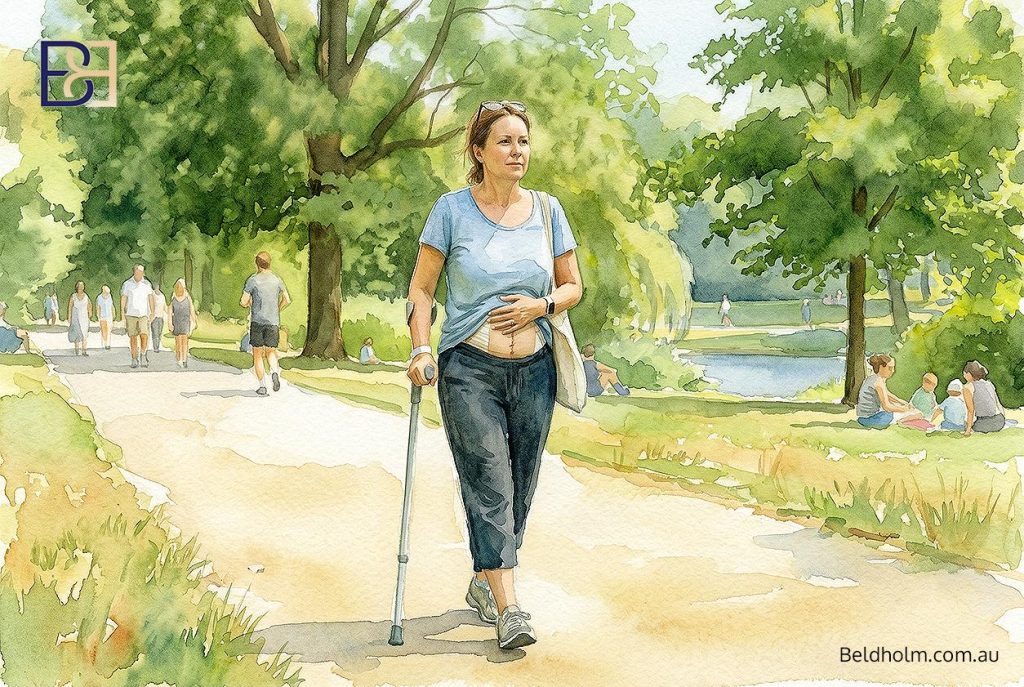
The compression garment is one piece of a larger recovery process, and it works alongside everything else I ask you to do in the weeks after surgery. It helps to see where it sits.
In the first days, the garment works together with your drains and dressings to manage fluid and support the wound. Early walking and light movement matter just as much, both for your recovery and for lowering the risk of clots in the legs, which is something I plan for and manage specifically in post weight loss surgery. The garment supports you while you move, but it is not a substitute for getting up and walking.
Over the following weeks, your activity limits, scar care, and gradual return to work and exercise all run in parallel with wearing the garment. Each of these has its own timeline, and I cover them in their own articles so you can read about the part you need.
Preparation before surgery is an important part of this, too. Most post weight loss patients have nutritional gaps that built up during weight loss, and correcting those before a large operation supports healing afterwards. I check this with a full set of pre-operative bloods and work with you to get your nutrition right before the day. Because this is a bigger operation for the body to recover from, that preparation matters more, not less.
If you want to read further, these articles cover the rest of the recovery picture:
- Recovery after post weight loss body contouring
- Scar care after abdominoplasty
- Returning to work after abdominoplasty
- Exercise after abdominoplasty
- Preventing blood clots after body contouring surgery
- Nutrition and preparation before surgery
References
- Rothman JP, Gunnarsson U, Bisgaard T. Abdominal binders may reduce pain and improve physical function after major abdominal surgery: a systematic review. Dan Med J. 2014;61(11):A4941.
- Arkoubi AY. Effect of compression garments on post-abdominoplasty outcomes: a systematic review of the current evidence. JPRAS Open. 2024;41:128-137.
- Ormseth BH, Livermore NR, Schoenbrunner AR, Janis JE. The use of postoperative compression garments in plastic surgery: necessary or not? A practical review. Plast Reconstr Surg Glob Open. 2023;11(9):e5293.