One of the questions I am asked most often by women after pregnancy is whether Medicare will contribute to the cost of an abdominoplasty (tummy tuck). The answer comes down to one specific Medicare item, MBS item 30175, and whether a patient meets the criteria attached to it.
This article explains what that item covers, who is eligible, and what the assessment involves. I have written it for women considering abdominoplasty (tummy tuck) with diastasis recti (abdominal muscle separation) repair after pregnancy, and for the GPs who refer them.
MBS item 30175 is the Medicare item number for a post pregnancy abdominoplasty: a radical abdominoplasty with repair of diastasis recti following pregnancy. It is a reconstructive item, not a cosmetic one. Medicare does not pay a benefit for abdominoplasty performed to change appearance. The item exists for patients whose abdominal muscle separation is causing documented functional symptoms and who meet a defined set of conditions, which I work through below.
Two points are worth being clear about from the start.
First, this item applies to a specific group of patients. Pregnancy commonly changes the abdominal wall, and diastasis recti (abdominal muscle separation) is a normal finding after pregnancy. Having a separation, a caesarean scar, or loose abdominal skin does not on its own qualify a patient for a Medicare benefit. The qualifying factor is a muscle separation (diastasis recti) of a defined size, measured on imaging, that is causing documented symptoms and has not responded to conservative treatment that includes physiotherapy.
Second, meeting the criteria for item 30175 is not the same as the surgery being free. The item sets a schedule fee and a Medicare benefit. It does not cover the full cost of surgery. I explain how the rebate works, and where out-of-pocket costs come from, further on.
Abdominoplasty is a major operation. It carries risks and a recovery period that should not be underestimated, particularly for someone caring for young children. I cover the risks and the recovery realities in this article too, because the financial pathway is only one part of a serious decision.
Whether surgery is appropriate for you, and whether you meet the criteria for item 30175, is assessed individually at consultation. A GP referral is required, and results vary from patient to patient.
What MBS item 30175 covers

MBS item 30175 defines a specific operation and the circumstances under which Medicare will pay a benefit for it. It is worth understanding exactly what the item describes, because the wording is precise and it explains why not every abdominoplasty qualifies.
The operation
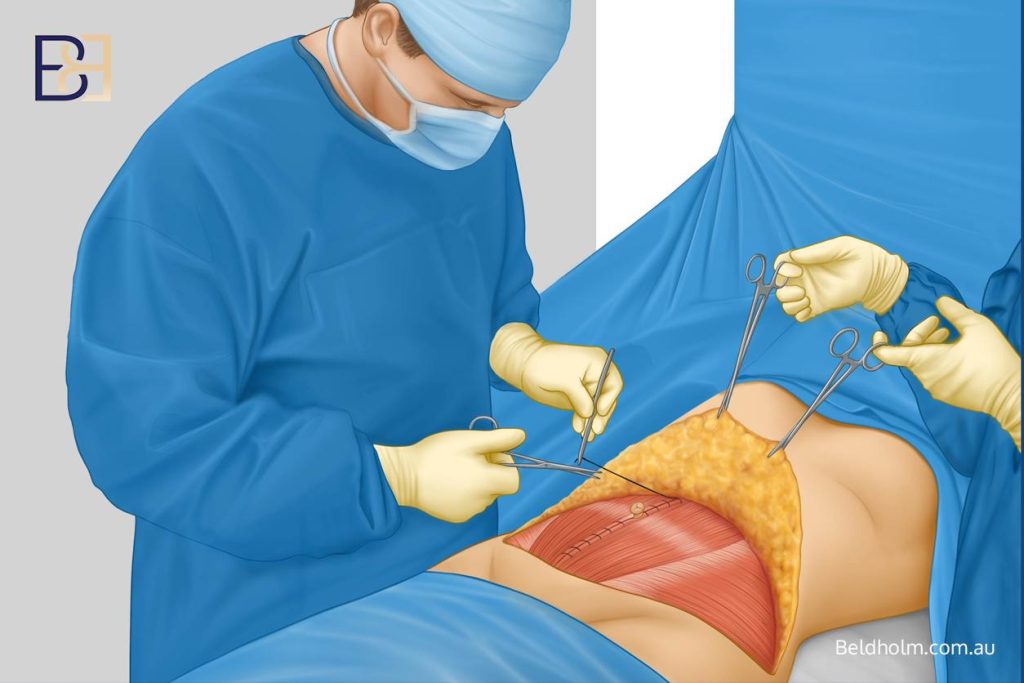
The item describes a “radical abdominoplasty, with repair of rectus diastasis, excision of skin and subcutaneous tissue, and transposition of umbilicus, not being a laparoscopic procedure” (1).
In practical terms, that means a full abdominoplasty (tummy tuck) made up of four elements:
- Repair of the diastasis recti (abdominal muscle separation). The separated abdominal muscles are brought back together and stitched in the midline.
- Removal of excess skin and fatty tissue from the lower abdomen.
- Repositioning of the umbilicus (navel). Because skin is removed and tightened, the navel is brought out through a new opening in its correct position.
- An open operation, not keyhole. The item specifically excludes laparoscopic procedures.
This is a full abdominoplasty, not a limited abdominoplasty (mini tummy tuck). The item does not cover skin-only procedures or smaller variations.
The item also requires that the abdominal wall change has arisen “as a consequence of pregnancy” (1). The separation has to be pregnancy related, not from another cause.
Reconstructive, not cosmetic
This is the distinction that matters most. Medicare does not pay a benefit for abdominoplasty performed for cosmetic reasons (1). Item 30175 sits in the Medicare Benefits Schedule as a reconstructive item, for patients whose abdominal muscle separation is causing documented functional problems. This is reconstructive surgery, not cosmetic surgery.
An abdominoplasty done to change the appearance of the abdomen, without the functional criteria being met, is a cosmetic operation and attracts no Medicare benefit. Loose skin or a changed abdominal contour after pregnancy is not, on its own, a basis for a rebate. I go through the specific criteria next.
Why the criteria are so specific
The eligibility rules attached to item 30175 are deliberately strict, and there is a history behind that. A Medicare item for this operation existed previously, was removed in 2016 after concerns it was being claimed for cosmetic cases, and was reinstated on 1 July 2022 following review and a successful funding application (2). The criteria are written tightly so that the benefit goes to patients with a genuine functional, reconstructive need. That is the lens I apply when I assess whether a patient is likely to be eligible.
Who is eligible: the criteria for item 30175
For Medicare to pay a benefit under item 30175, every one of the following eligibility criteria has to be met. This is not a checklist where one or two will do. All of them must apply, and the relevant findings must be documented in your medical records by the surgeon providing the service (1). At consultation I work through each criterion, because if a single one is not met, the operation does not qualify for the rebate even when surgery is otherwise reasonable.
1. The separation is a consequence of pregnancy
The item requires an abdominal wall change that has arisen “as a consequence of pregnancy” (1). The diastasis recti (abdominal muscle separation) has to be pregnancy related. A separation from another cause does not meet this criterion.
2. A separation of at least 3 cm, measured on imaging
There must be a diastasis recti of “at least 3cm measured by diagnostic imaging prior to this service” (1). Two points matter here:
- The 3 cm minimum is measured, not estimated. It has to be shown on diagnostic imaging, usually an ultrasound performed by a radiology provider. A clinical impression or a photograph does not satisfy this.
- The imaging has to be done before the operation. A measurement taken during surgery cannot be used to qualify after the fact.
3. Documented functional symptoms
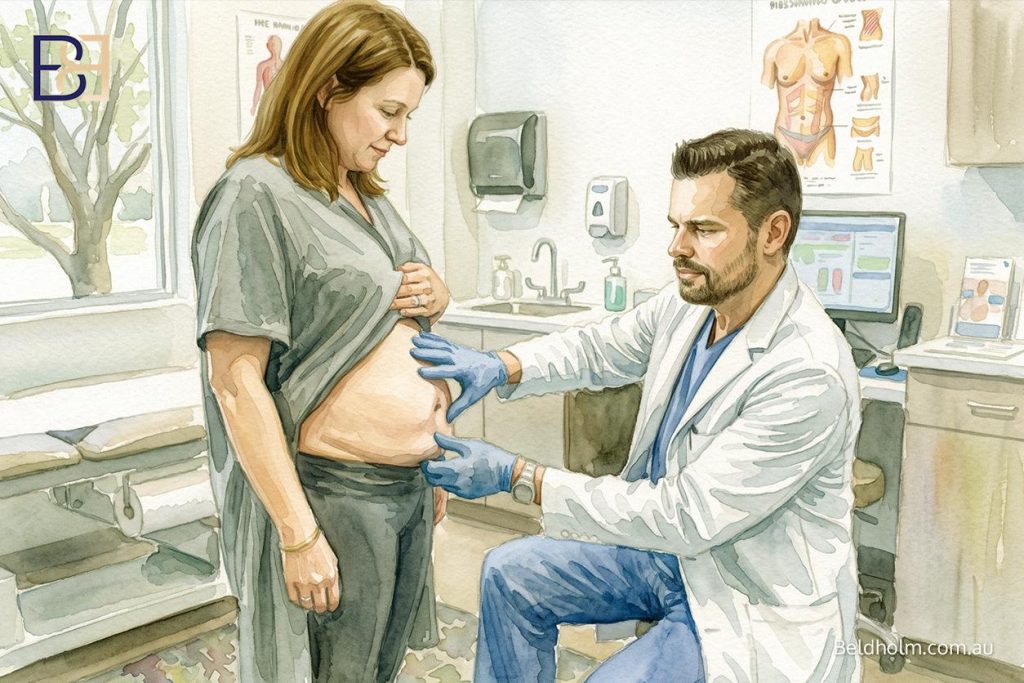
The separation has to be causing symptoms. The item requires “either or both” of the following, documented in your records (1):
- At least moderately severe pain or discomfort at the site of the separation during functional use. That means pain in the midline of the abdominal wall when you are active, for example lifting, exercising, or moving in ways that load the abdominal muscles.
- Low back pain or urinary symptoms likely due to the separation. These are recognised consequences of a weakened abdominal wall and can qualify on their own.
You do not need both. One of these, properly documented, satisfies this limb. What you do need is a record of the symptom made by the practitioner, not a description offered on the day of surgery.
4. Conservative treatment has been tried and has not worked

The item requires that you have “failed to respond to non-surgical conservative treatment, that must have included physiotherapy” (1). This is one of the most misunderstood criteria:
- Physiotherapy is mandatory. It is named specifically in the item. A course of physiotherapy directed at the abdominal wall and core has to have been tried.
- Other measures may support the case but do not replace physiotherapy. Examples include pain medication, lower back support, and lifestyle changes such as activity modification.
- “Failed to respond” means the symptoms persisted despite genuine conservative treatment. Surgery sits at the end of that pathway, not the start.
I usually recommend a letter from the treating physiotherapist confirming the treatment and its outcome, kept alongside the imaging report and the GP referral.
5. Not pregnant in the last 12 months
The item requires that you “has not been pregnant in the last 12 months” (1). The abdominal wall keeps changing in the months after pregnancy, and a separation measured too early may not reflect the settled position. Timing beyond this 12-month rule is a clinical judgement, assessed individually rather than set to a fixed number.
Meeting all five criteria is what makes the operation eligible for a Medicare benefit. Whether surgery is the right choice for you is a separate question, one I assess on its own, and I come back to it further on.
Diastasis recti and the symptoms it can cause
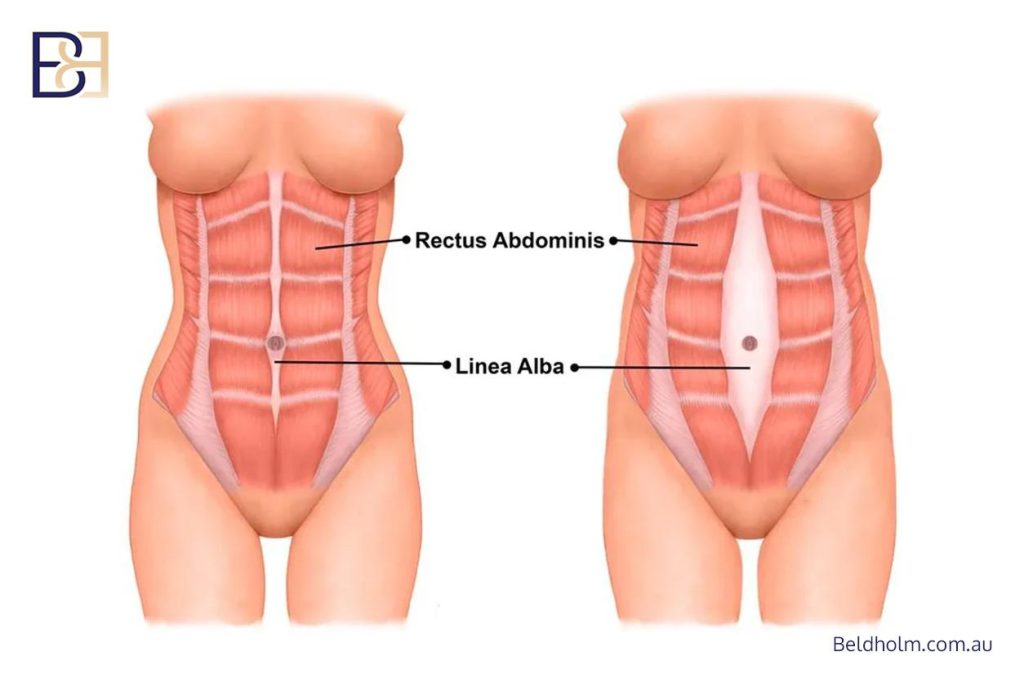
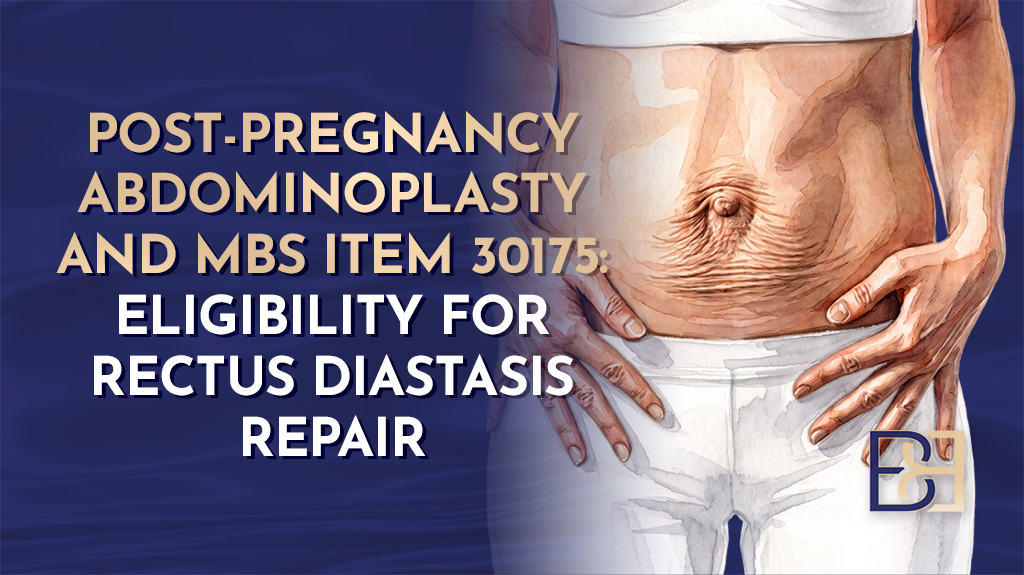
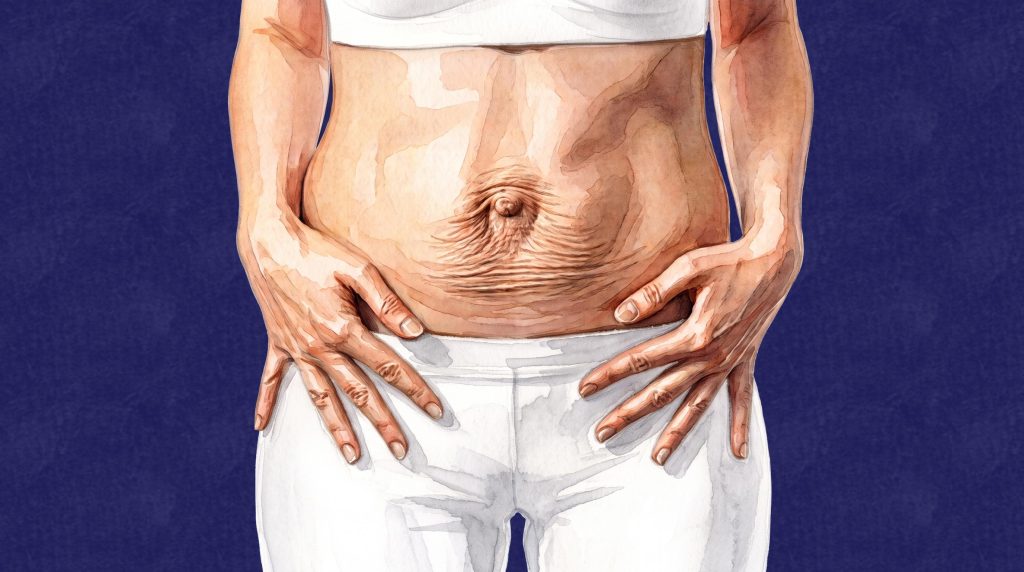
Diastasis recti (abdominal muscle separation) is the widening of the gap between the two halves of the rectus abdominis muscles, along the midline of the abdomen (3). It happens as the growing uterus stretches the abdominal wall during pregnancy. Some degree of separation during pregnancy is very common, and it is a normal change.
How common it is
A separation is common in the months after birth. Across the published research, diastasis recti is reported in roughly 21% to nearly 30% of women after pregnancy (3). It is most common in the early postpartum period and often narrows on its own as the abdominal wall recovers over the following months. For many women it settles without any treatment. For some, the separation persists.
A persistent separation is not, in itself, something that has to be treated. Whether anything needs to be done depends on symptoms, and that is the part that matters for item 30175.
The symptoms that can occur
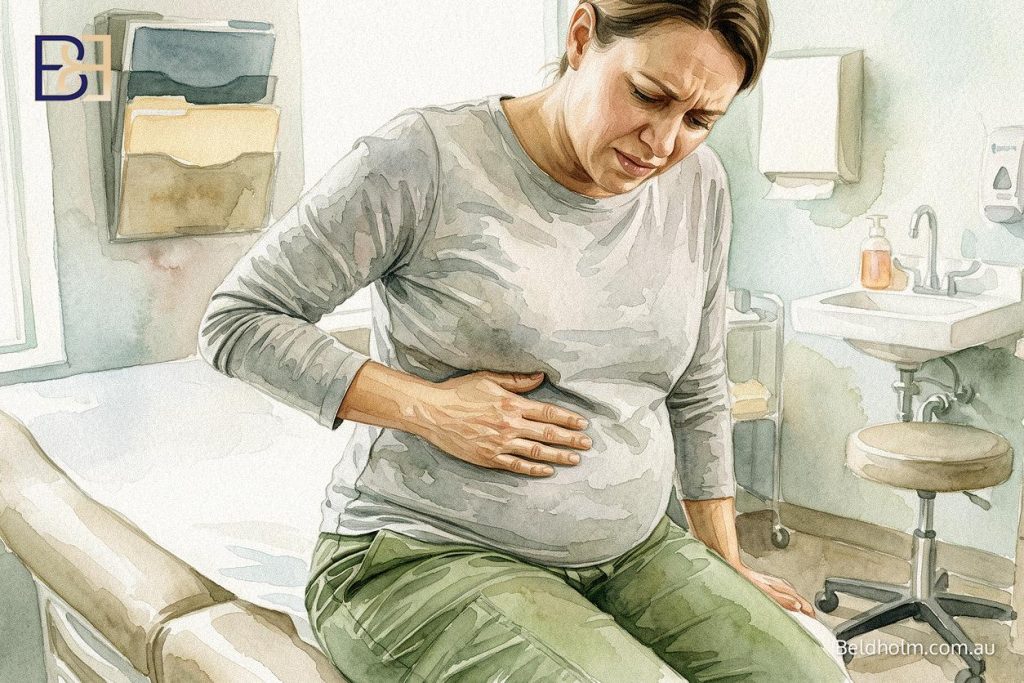
When a separation does cause symptoms, they tend to be about how the abdominal wall functions rather than how it looks. Research into the symptoms women report with diastasis recti points to a few recurring themes (4):
- Abdominal discomfort. The systematic review evidence found higher levels of abdominal pain, often experienced as discomfort or bloating.
- Reduced trunk support and core weakness. A separation can reduce the support the abdominal wall gives the trunk, which can contribute to core weakness and make lifting and some everyday tasks harder.
- An effect on physical functioning. Diastasis recti was linked most consistently to measures of physical health and day-to-day functioning.
Low back pain and urinary symptoms
The MBS criteria also recognise lower back pain and urinary symptoms as possible consequences of a separation. The abdominal and pelvic floor muscles work together to support the trunk and pelvis, so a weakened abdominal wall plausibly contributes to both.
The link between diastasis recti and these particular symptoms is biologically plausible, but the published evidence is mixed. Some systematic review evidence has not found a clear correlation between a separation and low back pain or urinary symptoms specifically (4). That is one reason the item requires these symptoms to be documented and assessed individually, rather than assumed from the presence of a separation alone.
It is also why item 30175 is built around documented functional symptoms, not appearance. The question is not whether a separation is present. It is whether the separation is causing problems that have not responded to conservative treatment.
Documentation and imaging
Eligibility for item 30175 is decided on documented evidence, and most of that evidence has to be gathered before surgery. Each of the criteria I set out earlier needs to be supported in your records. In practice, three pieces of documentation do most of the work: a diagnostic imaging report, evidence of failed conservative treatment that included physiotherapy, and a GP referral (2).
Diagnostic imaging

The separation has to be measured on diagnostic imaging before the operation (1). A few practical points:
- Ultrasound is the usual test. The measurement is taken by a radiology provider and reported formally. The item is satisfied by diagnostic imaging, not by a clinical estimate at the bedside (2).
- The report needs to show at least 3 cm. The inter-recti distance is measured and documented. If it is under 3 cm, the item is not met, regardless of symptoms.
- A photograph does not count. Photographic measurement is too variable to rely on, and it is not accepted for this item (2).
- An intra-operative measurement cannot be used. The imaging has to be done beforehand. A separation found during surgery cannot be used to qualify after the event (1).
Documenting your symptoms
The functional symptoms have to be recorded in your medical records by the practitioner providing the service (1). The most useful record is one made over time, by your GP, physiotherapist, or specialist. Whichever symptom applies, pain at the separation during functional use, or low back pain or urinary symptoms, it needs to be written down and dated.
Documenting conservative treatment
Physiotherapy is the part the item names specifically, so the clearest evidence is a letter from your treating physiotherapist setting out the treatment you had and how your symptoms responded (2). If you also tried other measures, such as pain relief, back support, or changes to activity, those can be noted alongside it. What the records need to show is that conservative treatment was genuinely tried and that symptoms persisted.
The GP referral
A GP referral is required before a specialist consultation. Your GP is well placed to start the documentation: arranging the ultrasound, referring you for physiotherapy, and recording your symptoms over time. By the time you see me, having the imaging report, the physiotherapy letter, and the referral together makes it much easier to assess whether the criteria are met. I keep your GP informed throughout, and they remain involved in your longer-term care.
The role of conservative treatment
Surgery is the last step in this pathway, not the first. The item makes that explicit: a benefit is only payable once non-surgical conservative treatment, including physiotherapy, has been tried and symptoms have persisted (1). There are good clinical reasons for that order, beyond the Medicare rules.
Why conservative treatment comes first
For many women, a separation improves over the first year after birth, and targeted exercise can help. In a randomised controlled trial of postpartum women, a supervised six-week abdominal exercise program reduced the inter-rectus distance (5). Physiotherapy is the part the item names specifically, and for good reason. It can improve the separation and the symptoms that come with it, and for some women it means surgery is not needed at all.
The evidence on which specific exercises help is still developing, and not every abdominal exercise affects the separation the same way (6). That is why I prefer conservative treatment to be guided by a physiotherapist experienced in the postnatal abdominal wall, rather than a generic core routine.
What “failed to respond” means
For item 30175, conservative treatment has to have been genuinely tried, and the symptoms have to have persisted despite it. A few weeks of occasional exercises is not what the item has in mind. In practice that means a proper course of physiotherapy, given time to work, with the outcome documented.
If symptoms settle with conservative treatment, that is a good result, and surgery is not the answer. Surgery is for the patients whose functional symptoms remain after that pathway has been worked through. I would rather a patient complete a genuine course of physiotherapy and avoid an operation than move to surgery too early.
What the evidence shows on symptom outcomes
A fair question at consultation is whether surgery actually helps the symptoms. The published research does point towards functional improvement for carefully selected patients, but it has real limitations, and I will set out both.
Back pain
An Australian multicentre prospective study followed 214 women having abdominoplasty with muscle repair, most of them after pregnancy (7). Before surgery, the great majority had some back pain. Only 8.8% had none. Using the Oswestry Disability Index, a validated back-pain disability score, the mean score improved from 21.6% before surgery to 3.2% at six months, a statistically significant change (7).
Urinary symptoms
The same study used a validated urinary incontinence questionnaire, where a lower score means fewer symptoms. The mean score fell from 6.5 before surgery to 1.6 at six months (7).
A later prospective study looked specifically at stress urinary incontinence in women having abdominoplasty with diastasis recti correction (9). Stress incontinence symptoms improved significantly one year after surgery in most patients. The authors noted that the rise in abdominal pressure after this operation, which might be expected to make stress incontinence worse, did not do so in their patients (9).
One note of balance. In a separate cohort study, while many women reported fewer urinary symptoms after surgery, a minority reported more, 13% on one urinary measure and 8% on another (8). Not everyone improves.
Core function and quality of life
That cohort study followed 60 postpartum women with training-resistant symptoms who had a diastasis recti repair (8). Self-reported abdominal trunk function improved in 98% of them, with a mean improvement of 79.1%, and 76% performed better on physiological tests of trunk function than before surgery. Scores across all subscales of a general quality-of-life questionnaire improved, and there was no recurrence of the separation at one year (8).
How strong is the evidence

A literature review brought together 10 studies covering 780 patients (10). Across those studies, functional improvements were reported regardless of the surgical method used, in areas including core stability, back pain, abdominal pain, posture, urinary incontinence and quality of life (10).
The same review was clear about the limits, and so am I. Most of this research is observational rather than randomised, the studies use different outcome measures, which makes them hard to compare, and better outcome instruments are needed to confirm the benefit (10). The evidence points in a consistent direction for the right patients, but it is not high-level proof, and it cannot tell any individual woman what her own result will be. That is exactly why careful selection, documented symptoms, and a proper trial of conservative treatment matter so much.
Risks, recovery and realistic expectations
Whether Medicare contributes is only one part of the decision. Abdominoplasty surgery is a major operation, and it deserves the same careful thought you would give any major surgery. This part is about what the operation involves, what can go wrong, and what recovery is realistically like.
A major operation
A radical abdominoplasty repairs the separated muscles and removes redundant skin and fatty tissue from the lower abdomen. It is done under general anaesthetic and it is a significant physiological event. The fact that it can be a reconstructive, Medicare-eligible procedure does not make it a small one.
Risks

Every operation carries risk, and I go through these in detail at consultation as part of informed consent. The recognised risks of abdominoplasty include:
- Bleeding, including a collection of blood under the skin (haematoma).
- Seroma, a collection of fluid under the skin. This is one of the more common issues after this operation and sometimes needs draining.
- Infection, which may need antibiotics and, occasionally, a return to theatre.
- Wound healing problems, including delayed healing or separation of the wound edges. The risk is higher in people who smoke, which is why I ask patients to stop well before surgery.
- Blood clots in the legs (deep vein thrombosis) or lungs (pulmonary embolism). This is a serious risk with any longer operation. I assess each patient’s clot risk and plan how it is managed.
- Scarring. The scar is permanent. It usually sits low on the abdomen, but it is long, and how it matures varies from person to person.
- Changes in skin sensation across the lower abdomen, often temporary but sometimes lasting.
- Asymmetry or contour irregularity.
- Problems with the repositioned navel, including healing issues.
- Recurrence of the muscle separation over time.
- The need for further surgery to revise a scar or correct a problem.
- The risks of general anaesthesia.
This is not a complete list, and the relevance of each risk depends on your health and circumstances. The point is that this is surgery with real risks, and they have to be weighed against the symptoms you are dealing with.
Recovery
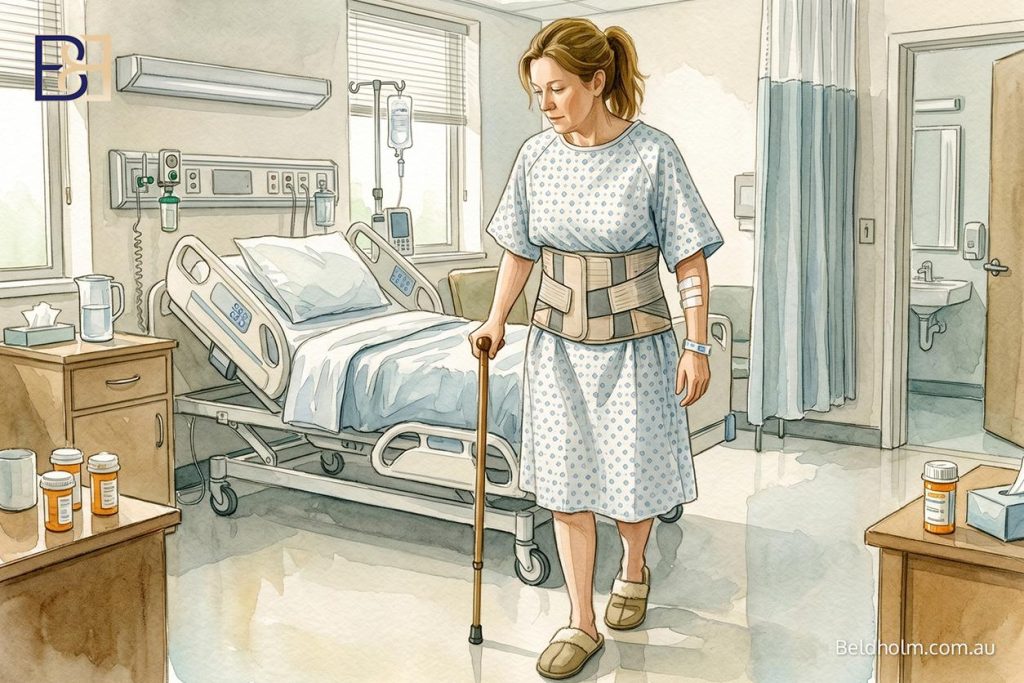
Recovery takes time, and it helps to plan for that.
- Hospital stay is usually one to two days.
- The first week or two are the hardest. You will be sore, you will move slowly, and you will need to rest.
- Heavier activity and lifting are restricted for around six weeks while the muscle repair heals. Returning too early can put the repair at risk.
- A compression garment is usually worn for several weeks.
- Wound care and dressings are explained before you are discharged.
- Time off work depends on your job. Most people need a few weeks, and longer for physical work.
- Swelling and numbness settle gradually over months. The final result takes time to show.
Recovering while caring for young children

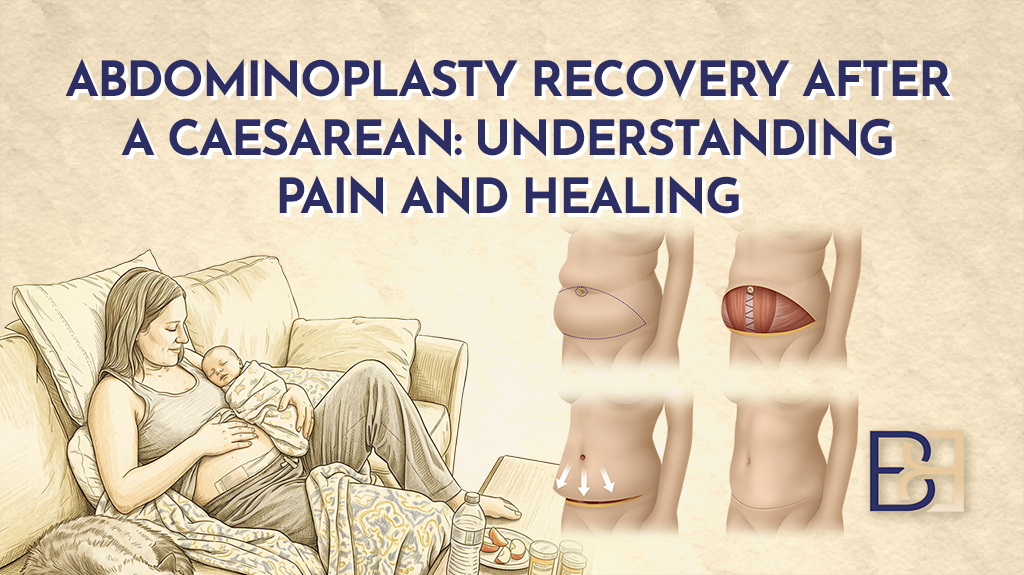
For most of my post pregnancy patients, this is the practical reality that matters most. After this operation you cannot lift small children for a period, and you cannot count on carrying on as usual at home. This is worth planning for before surgery, not after. Arranging help at home, with childcare and with lifting, makes a real difference to recovery. It is one of the reasons sensible timing matters.
Realistic expectations
The evidence discussed earlier points towards functional improvement for well-selected patients, but it cannot promise a particular result for you. Some symptoms improve, some improve partly, and a minority do not improve. The scar is permanent. A future pregnancy can undo the muscle repair, which is why surgery is generally planned once your family is complete. Results vary between patients. The reality is that this operation can help the right patient, while carrying genuine risk and a real recovery.
Cost and the Medicare rebate
Meeting the criteria for item 30175 is not the same as the surgery being free. The item reduces the cost. It does not remove it. Because the actual amounts change every year, I will explain how the rebate works rather than quote figures, and point you to where the current numbers live.
How the Medicare benefit is worked out

Every MBS item has a “schedule fee”, which is a benchmark amount set by the government. This fee is indexed on 1 July each year, so it changes annually. For the current schedule fee for item 30175, MBS Online is the place to check.
For an in-hospital item like this one, Medicare pays a benefit of 75% of the schedule fee (1).
Where private health insurance comes in
If you are treated as a private patient in hospital, your private health fund is required to cover at least the remaining 25% of the schedule fee (11). Put together, the Medicare benefit of 75% and the fund’s minimum of 25% come to at least 100% of the schedule fee. Many funds pay more than that minimum under gap-cover arrangements (11).
To use this, you need an appropriate level of private hospital cover, and private health insurance waiting periods apply, commonly up to 12 months (2). It is worth checking your own policy and the waiting period that applies to you.
Why there can still be an out-of-pocket cost
This is the part patients most often misunderstand. The schedule fee is a benchmark, not the surgeon’s actual fee. A surgeon is free to charge more than the schedule fee, and the difference, known as the gap, is paid by you unless a gap-cover arrangement applies (11).
There are also separate fees for the anaesthetist, the surgical assistant and the hospital, each with their own arrangements. So even when you qualify for item 30175 and hold the right cover, there is usually still some out-of-pocket cost.
GST

There is one more cost difference between a reconstructive and a cosmetic abdominoplasty. In Australia, GST is a tax of 10% on most goods and services.
If your operation qualifies under item 30175, a Medicare benefit is payable and the service is GST-free (12). If an abdominoplasty is performed for cosmetic reasons and no Medicare benefit is payable, it is treated as a cosmetic procedure and GST of 10% applies to the fee (12).
So qualifying under item 30175 affects the cost in two ways. It brings in the Medicare benefit and the private health insurance contribution, and it makes the surgical fee GST-free. Whether a particular operation is GST-free depends on the facts of your case, so confirm the position as part of your written estimate.
Two points about claiming
- Once per lifetime. Item 30175 can be claimed only once in your lifetime (1).
- It cannot be combined with certain other procedures. The item cannot be claimed together with a number of other listed abdominal and lipectomy procedures (1). If other surgery is being considered, this needs to be sorted out in advance.
Getting the figures in writing

You will not need to chase these costs yourself. My patient coordinator obtains the hospital and anaesthetist estimates, and you receive written informed financial consent setting out the fees before any decision to proceed. That is the reliable way to know your own out-of-pocket cost, rather than working from a schedule figure. For the current schedule fee and Medicare benefit, MBS Online is the source, and it is updated when the figures change.
Book your appointment online now
How eligibility is determined
Eligibility for item 30175 is not decided by a website, and it is not decided in advance. It is determined at the initial consultation, after a GP referral, by a formal assessment against the criteria and working out whether surgery is appropriate for you.
A GP referral comes first
A GP referral is required before a specialist consultation. Your GP also begins the documentation the item requires, so by the time we meet much of the evidence can already be in place.
What happens at consultation

At the consultation I take a full history, examine you, and review the imaging report, the physiotherapy records and your documented symptoms. From there I assess two separate things:
- Medicare eligibility. Whether the criteria for item 30175 are met, so that a Medicare benefit is payable.
- Suitability. Whether a major operation is clinically appropriate for you as an individual, taking your health, medical history and circumstances into account.
Both have to line up. It is possible to meet the MBS criteria and still not be a suitable candidate for a major operation at this time. If that is the case, I will tell you, and we will talk through it.
It is assessed individually
This decision is made for you, at consultation, not from a website and not before I have assessed you. Results vary between patients, and I will not tell you that surgery is right for you until I have examined you and reviewed your records.
If you are eligible and suitable

If we decide to proceed, preparation for surgery follows. That includes a standard pre-operative blood panel and attention to the nutritional needs that are common after pregnancy and breastfeeding, such as iron, folate, vitamin B12, vitamin D and calcium. Correcting any gaps before surgery supports healing.
Timing is planned individually. As a general guide, surgery is arranged once your family is complete and breastfeeding has finished, because a future pregnancy can affect the result of the muscle repair.
My perspective

I see many women who are unsure whether their post pregnancy symptoms are enough to warrant surgery, or whether Medicare will help with the cost. My aim with this article is to make the pathway clear, so you can understand where you stand.
A few points are worth holding onto.
Item 30175 is a reconstructive item for a specific group of patients: women with a measured muscle separation of at least 3 cm that is causing documented functional symptoms, and that has not settled with physiotherapy. It is not a rebate for changing the appearance of the abdomen, and a separation on its own, without symptoms, does not qualify.
Surgery is the last step, not the first. For many women, physiotherapy improves the separation and the symptoms, and an operation is not needed. I would always rather see that happen than operate too early.
When surgery is the right choice, it is a major operation with real risks and a recovery that takes time, particularly while caring for young children. The evidence points towards functional improvement for well-selected patients, but it cannot promise a result, and results vary.
Whether you are eligible, and whether surgery is appropriate for you, is something I assess individually at consultation, after a GP referral. If you are considering this, the first step is to talk to your GP, who can begin the documentation and refer you on.
Frequently asked questions
Does Medicare cover a tummy tuck (abdominoplasty) after pregnancy?
Only in specific circumstances. Item 30175 is the Medicare item number that provides a benefit for a post pregnancy abdominoplasty (tummy tuck) with diastasis recti (abdominal muscle separation) repair when the reconstructive criteria are met. An abdominoplasty done to change the appearance of the abdomen is cosmetic, and Medicare does not contribute to it.
How big does the separation need to be?
At least 3 cm, measured on diagnostic imaging before surgery (1). This is usually an ultrasound reported by a radiology provider. A clinical estimate or a photograph does not meet the requirement.
Do I have to try physiotherapy first?
Yes. The item requires that conservative treatment, which must include physiotherapy, has been tried and that your symptoms have persisted despite it (1). Physiotherapy is named specifically, so it is not optional.
How common is muscle separation (Diastasis recti) after pregnancy?
It is common. Across the published research, diastasis recti is reported in roughly 21% to nearly 30% of women after pregnancy (3). It is most common in the early months after birth and often narrows on its own as the abdominal wall recovers.
If I qualify, is the surgery free?
No. The item reduces the cost but does not remove it. Medicare pays 75% of the schedule fee, and with appropriate private hospital cover your fund pays at least the remaining 25% (1, 11). Because a surgeon’s fee can be higher than the schedule fee, there is usually still an out-of-pocket cost. If the operation qualifies under item 30175 it is also GST-free, whereas a cosmetic abdominoplasty attracts 10% GST (12).
Can I claim it more than once?
No. Item 30175 can be claimed once per lifetime (1).
Can I have surgery while I am still breastfeeding?
The item requires that you have not been pregnant in the last 12 months (1). Beyond that, timing is a clinical decision made individually. As a general guide, surgery is planned once your family is complete and breastfeeding has finished, because a future pregnancy can affect the result.
Will surgery resolve my back pain or urinary symptoms?
It may help. The research points towards improvement in functional symptoms for well-selected patients (7, 9), but the evidence is mixed for back pain and urinary symptoms specifically, and a minority of women do not improve (8). No result can be guaranteed, and results vary.
Do I need a referral?
Yes. A GP referral is required before a specialist consultation.
References
- Australian Government Department of Health and Aged Care. Medicare Benefits Schedule (MBS) item 30175. MBS Online. Available from: http://www.mbsonline.gov.au
- Australasian Society of Aesthetic Plastic Surgeons. Abdominoplasty MBS item number 30175: frequently asked questions for providers. ASAPS; 2022.
- Du Y, Huang M, Wang S, Yang L, Lin Y, Yu W, et al. Diastasis recti abdominis: a comprehensive review. Hernia. 2025;29:222.
- Fuentes Aparicio L, Rejano-Campo M, Donnelly GM, Vicente-Campos V. Self-reported symptoms in women with diastasis rectus abdominis: a systematic review. J Gynecol Obstet Hum Reprod. 2021;50(7):101995.
- Soto-Gonzalez M, Da Cuna-Carrera I, Lantaron-Caeiro EM, Gil Pascoal A. Effect of hypopressive and conventional abdominal exercises on postpartum diastasis recti: a randomized controlled trial. PLoS One. 2024;19(12):e0314274.
- Theodorsen NM, Moe-Nilssen R, Bo K, Haukenes I. Effect of exercise on the inter-rectus distance in pregnant women with diastasis recti abdominis: an experimental longitudinal study. Physiotherapy. 2023;121:13-20.
- Taylor DA, Merten SL, Sandercoe GD, Gahankari D, Ingram SB, Moncrieff NJ, et al. Abdominoplasty improves low back pain and urinary incontinence. Plast Reconstr Surg. 2018;141(3):637-645.
- Olsson A, Kiwanuka O, Wilhelmsson S, Sandblom G, Stackelberg O. Cohort study of the effect of surgical repair of symptomatic diastasis recti abdominis on abdominal trunk function and quality of life. BJS Open. 2019;3(6):750-758.
- Toto V, Faiola A, Pazzaglia M, de Donato F, Persichetti P. Could abdominoplasty with diastasis recti abdominis correction improve stress urinary symptoms? A 1-year follow-up prospective study. Aesthetic Plast Surg. 2024;48:3929-3935.
- Olsson A, Kiwanuka O, Sandblom G, Stackelberg O. Evaluation of functional outcomes following rectus diastasis repair: an up-to-date literature review. Hernia. 2021;25:905-914.
- Australian Government Services Australia. Medicare and private health insurance for in-hospital medical services. Services Australia. Available from: https://www.servicesaustralia.gov.au
- Australian Taxation Office. GST and health: medical services and cosmetic procedures. A New Tax System (Goods and Services Tax) Act 1999, section 38-7. ATO. Available from: https://www.ato.gov.au