Thigh lift surgery (thighplasty) removes excess skin and, where needed, excess fat from the thigh after significant weight loss. In my practice this is planned as a reconstructive operation, not a purely cosmetic one. The focus is on treating loose skin that causes chafing, rashes, hygiene problems and difficulty with clothing, particularly along the inner thigh.
Most post weight loss patients have loose skin in more than one direction, so the thigh lift procedure I recommend most often is a full thigh lift (thighplasty) that treats both the circumferential excess and the hanging skin in the upper inner thigh. Where a patient is suited to it, I prefer to treat the full laxity pattern in one operation rather than leaving residual loose skin that needs a second procedure. Whether that is appropriate for you is assessed at consultation.
This article covers the types of thigh lift (thighplasty) surgery I perform, how I decide which technique fits which skin pattern, what the published evidence shows about complication rates, and how the operation is planned and carried out. Thighplasty carries higher complication rates than most other body contouring procedures, and I set that out in full in the sections below.
If you are reading this after surgery has been booked, the practical detail you need is in the recovery article: recovering after thigh lift (thighplasty) surgery.
Why Excess Skin Develops in the Thighs After Weight Loss
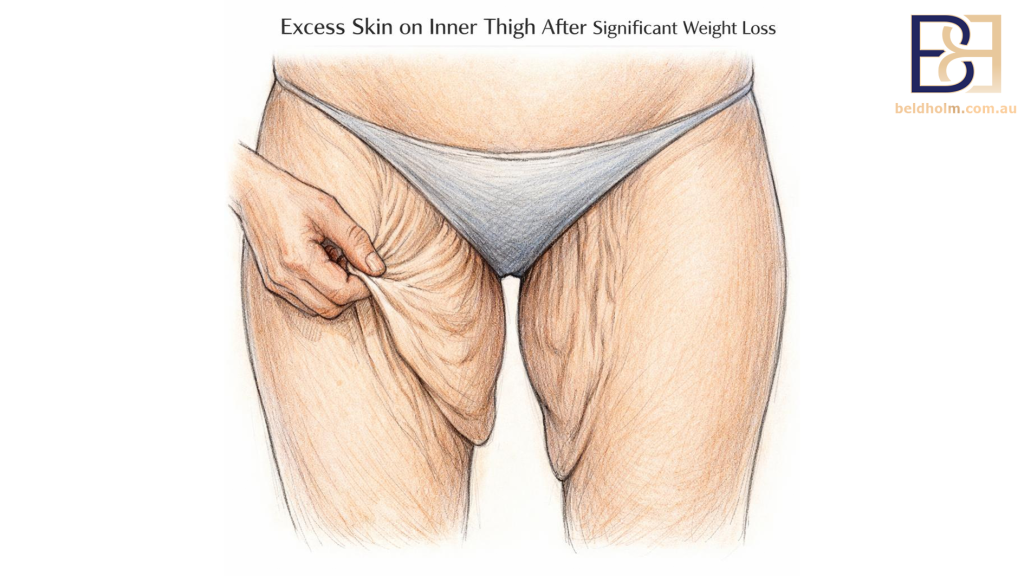
The thigh is a large, 3-dimensional part of the lower body. When a significant amount of weight is lost, whether through bariatric surgery, medication or lifestyle change, the skin and the tissue beneath it often cannot retract to match the new body shape. The skin has been stretched for years, its elastic fibres have been damaged, and no amount of exercise will make it shrink back.
The result is loose thigh skin along the inner thigh, the outer thigh, or across the upper legs extending down toward the knee. Of the thigh regions, the inner thigh is the area that most often brings patients to consultation, although for most post weight loss patients the abdomen remains the most common problem area overall.
Common problems I see at consultation include:
- Chafing between the inner thighs when walking
- Recurrent rashes and skin irritation in the skin folds
- Hygiene difficulties around the inner part of the thigh and groin
- Discomfort during exercise or with prolonged sitting
- Difficulty fitting clothing over the thigh when the rest of the body has changed size
These problems persist even after weight has been stable for years. They are physical, functional issues caused by excess tissue, and removing that tissue surgically is the only reliable treatment. This is why I plan thighplasty as a reconstructive operation for patients whose loose skin interferes with daily life, rather than as a purely cosmetic procedure.
Understanding the Pattern of Loose Skin and Why It Dictates the Operation
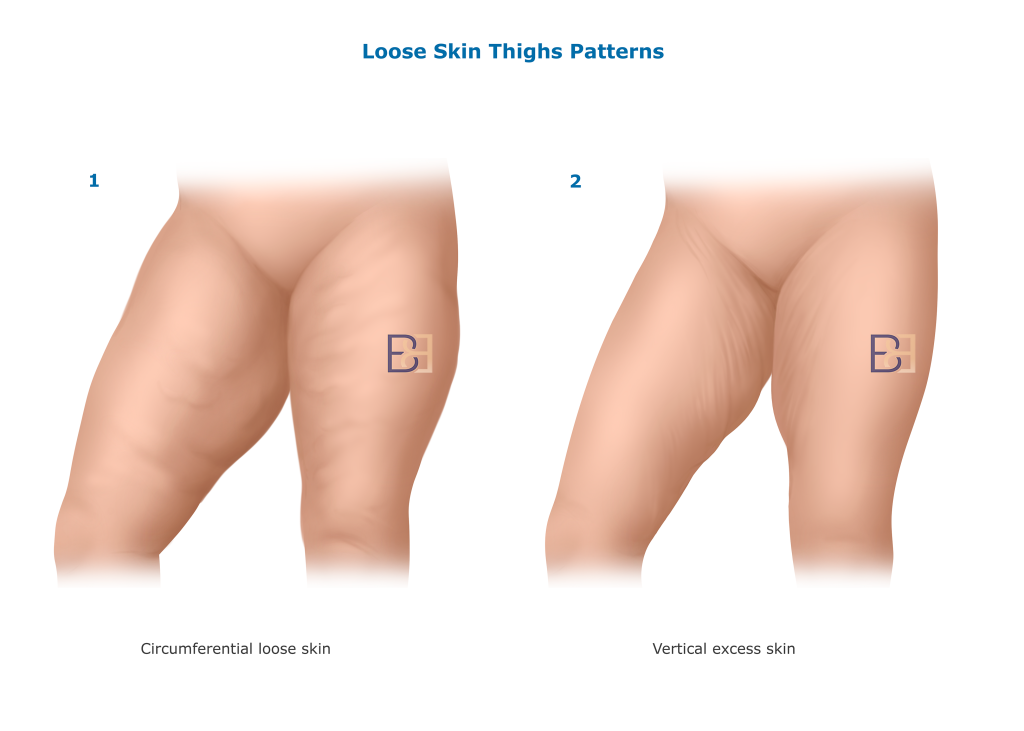
The single most important step in planning a thigh lift (thighplasty) is working out which direction the skin excess runs. Get this wrong and the operation leaves loose skin behind.
In post weight loss patients, thigh laxity typically involves 2 distinct patterns, and most patients have both:
- Circumferential excess. The skin is loose around the girth of the thigh, side to side. Because the direction of excess is perpendicular to the excision that treats it, circumferential excess requires a vertical excision running along the inner thigh. This removes a wedge of skin and reduces the circumference of the thigh.
- Vertical excess. The skin hangs downward, most obviously in the upper inner thigh near the groin. This up and down excess requires a horizontal excision placed in the groin crease, with the tissues lifted and supported into the groin region.
A limited procedure that treats only one direction of laxity often leaves residual loose skin in the other direction. That is not a technical failure. It is the predictable result of matching a one-direction operation to a two-direction problem, and it may mean further surgery later.
This is why the choice of thigh lift (thighplasty) technique is dictated by the pattern and severity of your skin excess, not by preference for a shorter scar. At consultation I map out where your excess runs, in which directions, and how severe it is in each zone from groin to knee. That map determines the surgical plan, and the operation is matched to it.
Types of Thigh Lift (Thighplasty) Surgery
There are 4 main surgical options I discuss with post weight loss patients. In the international literature you will also see these described as medial or inner thigh lift techniques, the combined approaches as T-shaped or L-shaped patterns, and extended versions that continue around the buttock crease as a spiral thigh lift. The names matter less than what each operation treats.
Limited Thighplasty (Mini Thigh Lift)
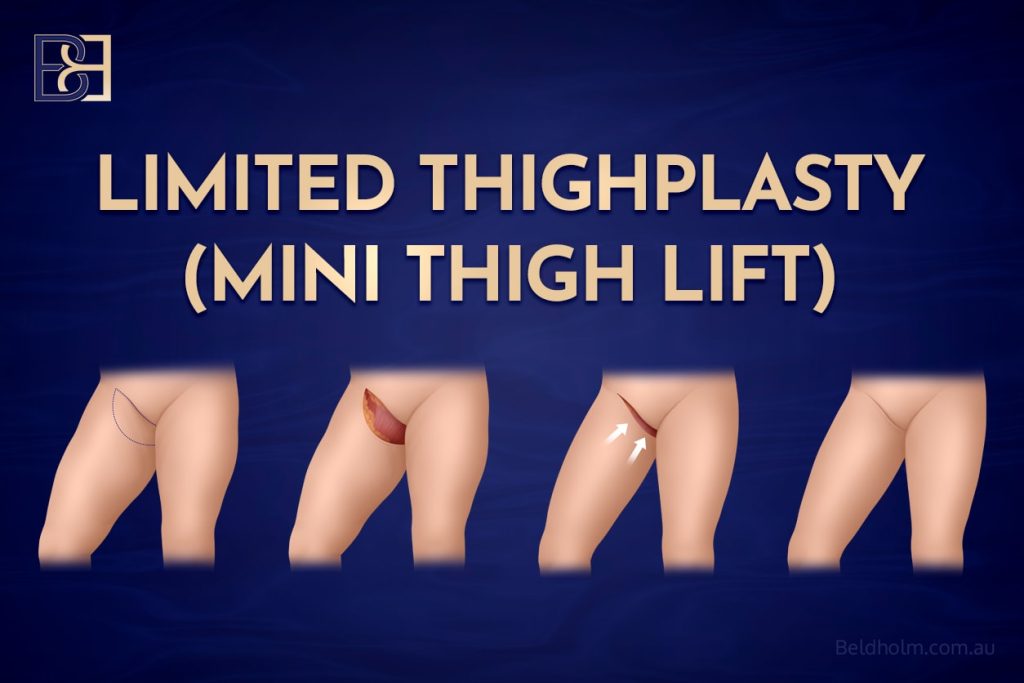
A limited thighplasty, sometimes described as an inner thigh lift with a groin-only scar, uses a horizontal incision hidden within the groin crease. It treats vertical excess only: the hanging skin of the upper inner thigh is lifted and supported into the groin.
This suits patients with:
- A small amount of loose skin confined to the upper inner thigh
- Minimal circumferential excess
- Reasonable skin quality and elasticity
- A relatively small amount of weight lost
Its limitations are significant in post weight loss patients. It does not treat circumferential laxity, does not treat excess extending toward the knee, and is frequently insufficient after major weight loss. In published series, the least extensive horizontal thighplasty still carried a complication rate of 43% (1). Only a small proportion of post weight loss patients are genuinely suited to this operation.
Vertical Thighplasty
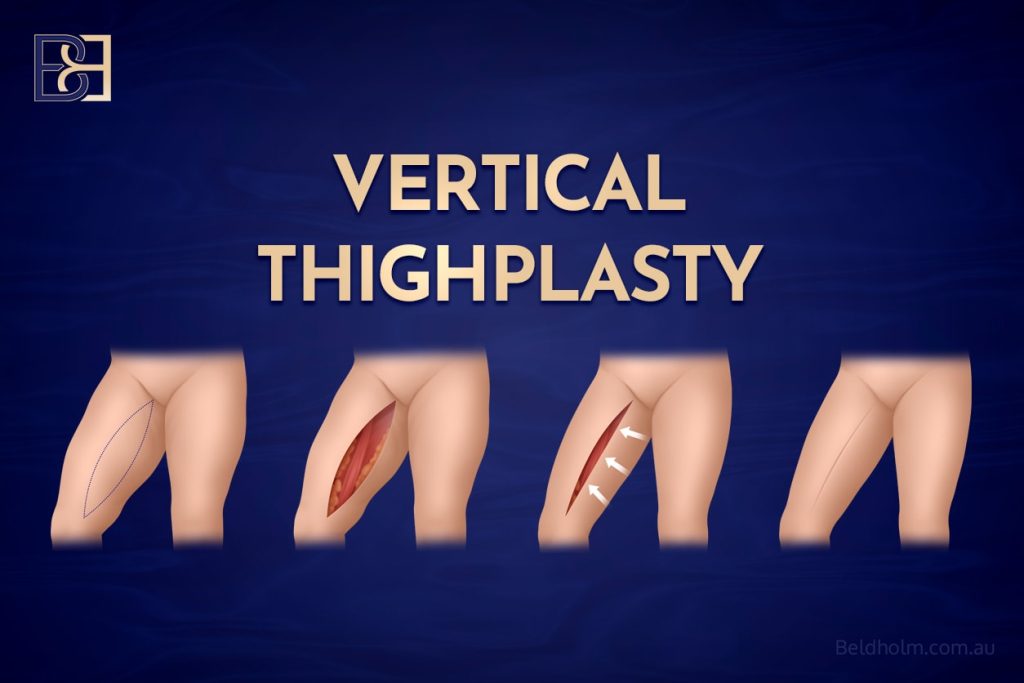
A vertical thighplasty places the incision along the inner thigh, typically running from the groin toward the knee. It treats circumferential excess by removing excess skin and fat as a vertical wedge, working as a thigh reduction that brings the girth of the thigh down.
It is most effective when the dominant problem is circumferential laxity of the mid and lower thigh. Its weakness in post weight loss patients is the reverse of the limited procedure: without a horizontal groin component, hanging skin in the upper inner thigh is not treated, and residual laxity there is common.
Published complication rates for full-length vertical thighplasty reach 74%, mostly minor wound healing problems (1). Prolonged swelling of the lower thigh and leg is also more common with full-length vertical incisions.
Full Thigh Lift Thighplasty: Vertical and Horizontal Components Combined

A full thigh lift (thighplasty) combines the horizontal groin incision with the vertical inner thigh incision. It is the only variation that treats both directions of excess, and it is the operation I perform most often in post weight loss patients, because their skin excess is usually severe and multi-directional.
Key points:
- Treats both circumferential and vertical excess in a single operation
- Removes the largest amount of loose skin
- Carries the highest complication rate of the thighplasty variations, with published overall rates of 67% to 74% for the more extensive patterns (1)
- Wound breakdown at the junction of the 2 incisions in the groin is the most common problem
I discuss the wound healing reality of this operation in the risks section below, and in detail in the complications article. In short: wound breakdown along the groin and vertical incision lines is common, most cases are managed in my rooms with dressings over 6 to 8 weeks, and in selected cases surgical debridement and secondary closure is considered around 4 weeks after the initial operation.
Despite the higher complication rate, this is often the appropriate operation in post weight loss patients, because lesser procedures frequently leave residual loose skin and lead to further surgery later. How the single operation versus staged surgery decision is made is covered in the candidacy discussion below.
J Thigh Lift Thighplasty
The J thigh lift (thighplasty) combines a vertical inner thigh incision with a shorter horizontal component in the groin, forming a J-shaped configuration rather than a full T-junction. In the literature this is described as an L-shaped pattern.
The aim is to reduce tension at the groin crease, the most common site of wound healing problems. By avoiding a full T-shaped junction, the J pattern may reduce the risk of scar migration and wound breakdown in the groin.
Best suited for:
- Moderate circumferential excess
- Vertical excess less severe than in patients needing a full thigh lift (thighplasty)
- Situations where reducing groin tension is a priority
It removes less skin than a full thigh lift (thighplasty) and may leave residual laxity in severe multi-directional cases. It remains a useful option in carefully selected patients.
The Role of VASER Liposuction (Suction Assisted Lipectomy) in Thighplasty
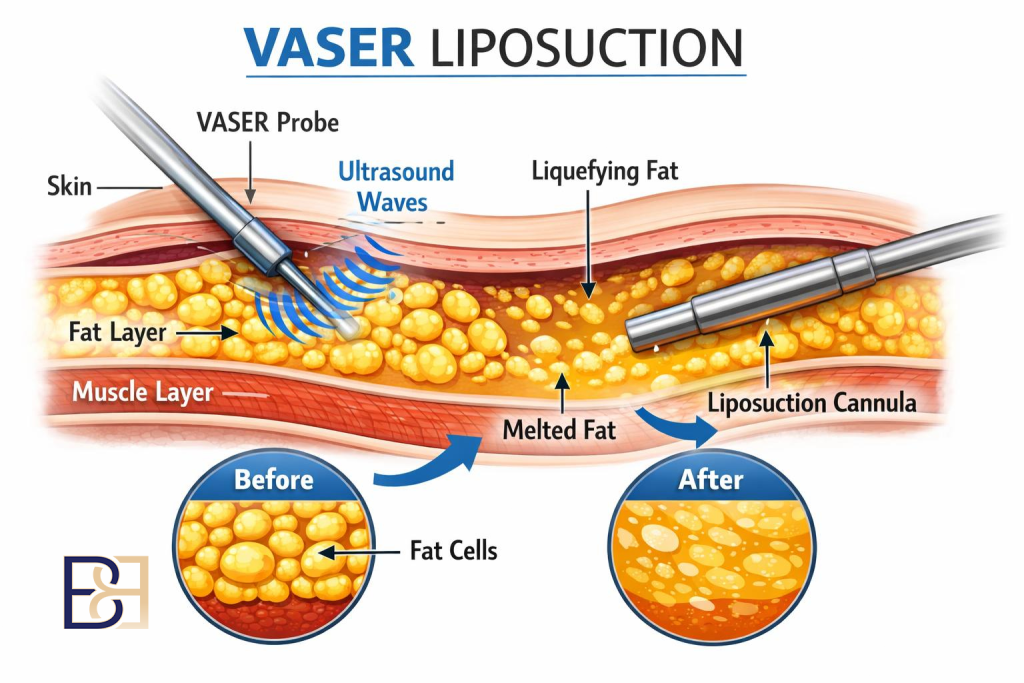
Most of my thighplasty patients have a combination of excess skin and excess fat. Excising skin without treating the underlying fat increases tension at the incision lines, and tension is the enemy of wound healing in the groin and inner thigh.
For this reason, VASER liposuction (ultrasound assisted lipectomy) forms part of most thigh lift (thighplasty) procedures I perform. It serves 3 purposes:
- Reduces the fat volume of the inner thigh, so the skin envelope can be brought together with less tension
- Separates the skin from the deeper tissues while preserving the lymphatic channels and blood vessels that run through the thigh
- Allows a more selective removal of skin, rather than cutting through all tissue layers as a block
What the Evidence Shows
The published data on liposuction-assisted thighplasty is consistent. A retrospective comparative study of vertical medial thighplasty in massive weight loss patients reported an overall complication rate of 59% with excision-only technique against 13% in the liposuction-assisted group, with significant reductions in seroma and wound infection (2). The proposed reason is anatomical: liposuction preserves the lymphatic and vascular structures that block excision divides, so fluid accumulation and wound problems are less frequent.
A 2025 systematic review of 19 studies covering more than 1,100 patients reached the same conclusion: incorporating liposuction reduced the pooled overall complication rate from 70.7% to 36.8%, with lower rates of infection and haematoma (3).
Liposuction alone, without skin excision, is not a substitute for thighplasty in post weight loss patients. Removing excess fat from a thigh with poor skin elasticity leaves the loose skin behind and can make the laxity look worse. The 2 techniques do different jobs, and in most of my post weight loss patients they are combined in the same operation.
Who Is a Candidate for Thigh Lift (Thighplasty) Surgery
Thighplasty is major surgery with a high complication rate, so patient selection matters more here than in most body contouring operations. The factors I weigh at consultation:
Weight stability. Your weight should be stable for at least 6 months before surgery. Further significant weight loss after thighplasty can produce new laxity, and weight gain stretches the repair. This applies whether your weight loss came through bariatric surgery, medication or lifestyle change.
BMI. I use BMI as a rough guide only, not a hard cut-off. Clinical context determines candidacy: the pattern of your skin excess, your overall health, and what the operation needs to achieve matter more than a single number.
Nutritional status. Most post weight loss patients have nutritional gaps that developed during their weight loss. Protein, iron, vitamin D and other deficiencies contribute directly to poor wound healing, and in an operation where wound problems are the main complication, going in depleted stacks the odds against you. This is assessed with blood tests and corrected before surgery. More on this in the preparation section below.
General health. Diabetes control, smoking status, and medical conditions that affect healing or anaesthetic risk are all reviewed. Smoking in particular is a problem for thigh wounds and needs to stop well before surgery.
Functional impact. The strongest candidates are patients whose loose skin causes genuine daily problems: chafing, rashes, hygiene difficulty, restricted activity. This is what makes the operation reconstructive.
One Operation or Staged Surgery
Many post weight loss patients need work on more than one area. Where a patient is suited to it, my preference is to treat loose skin in a single comprehensive operation rather than dividing it across several procedures: one anaesthetic, one hospital admission, one recovery. Thighplasty can sometimes be combined with other lower body procedures on that basis, such as a body lift (belt lipectomy) or buttock lift where the laxity pattern involves the whole lower trunk.
A larger single operation is a bigger physiological event than a smaller one. That is the trade-off, and it is why pre-operative preparation matters more, not less, when a combined operation is planned. For some patients, doing everything at once carries more physiological demand than is sensible, and staging the work across separate operations is the more appropriate path. Staging is a legitimate clinical choice, not a fallback.
Whether one operation or staged surgery suits you depends on your medical history, nutritional status and the extent of your skin laxity.
How I Plan Thighplasty at Consultation

Consultation starts with a GP referral, and beyond the Medicare requirement your GP’s involvement matters because they hold your full medical history and remain part of your care after surgery.
The consultation itself runs about an hour. What happens in that time:
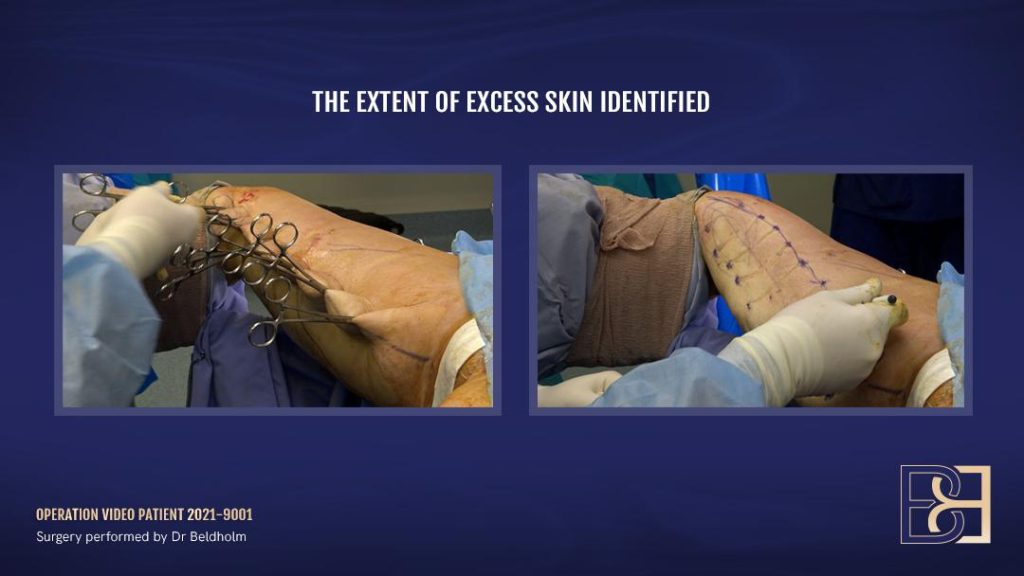
- Skin pattern mapping. I examine the thigh from groin to knee and work out which directions the excess runs, how severe it is in each zone, and how much of the problem is skin versus fat. This examination determines which thighplasty variation fits your anatomy.
- Medical and weight history. How the weight was lost, how long it has been stable, current medications, and any conditions affecting healing or anaesthetic risk.
- The technique discussion. I explain which operation your pattern calls for, what it treats, what it does not treat, and what the scar will look like. If a lesser procedure would leave residual laxity, I say so before surgery rather than after.
- The conversation about potential risks and complications. Thighplasty has the highest wound complication rate of the body contouring operations I perform. You will hear the numbers at consultation, not discover them afterwards.
- Blood tests. The pre-operative panel is ordered, with results reviewed and any deficiencies corrected before a surgery date is confirmed.
I offer a second consultation at no cost. For an operation with this risk profile, most patients have questions that only surface after the first visit, and I would rather answer them before surgery. Telehealth consultations are available for the initial discussion for regional patients, although the physical examination that determines your technique must happen in person.
Photographs are taken for your medical record and for planning. Surgery is never booked at a first consultation on the spot; you take the information away, and the decision is yours.
What Thigh Lift (Thighplasty) Surgery Involves
All my thighplasty surgery is performed at Maitland Private Hospital under general anaesthetic, with 24-hour medical cover and an on-site ICU.
The anaesthetic consultation. For most patients this happens by phone before surgery, with the physical examination, including airway assessment, done on the day of surgery. An in-person pre-operative anaesthetic review is arranged only where your medical history calls for it.
Operative sequence. In a typical full thigh lift (thighplasty):
- VASER liposuction (ultrasound assisted lipectomy) of the inner thigh is performed first, reducing fat volume and separating the skin from the deeper structures
- The planned skin excess is then excised along the marked pattern
- The tissues are lifted, supported and closed in layers, with the deeper layers anchored to reduce tension on the skin closure
- Both thighs are treated in the same operation
Operative time. Operative times vary depending on the technique and whether both a vertical and horizontal component are needed, but surgery takes around 2 to 4 hours. Longer operative time is one of the factors in DVT risk, which brings me to the next point.
DVT prevention. I stratify every patient’s risk of blood clots (DVT) and determine the thromboprophylaxis plan myself before surgery. This typically includes calf compression devices during the operation, blood thinning medication where indicated, and early mobilisation afterwards.
Hospital stay. Most thighplasty patients stay 1 to 2 nights. You are walking, carefully, on the first day. The on-ward dietitian reviews your protein intake during your stay.
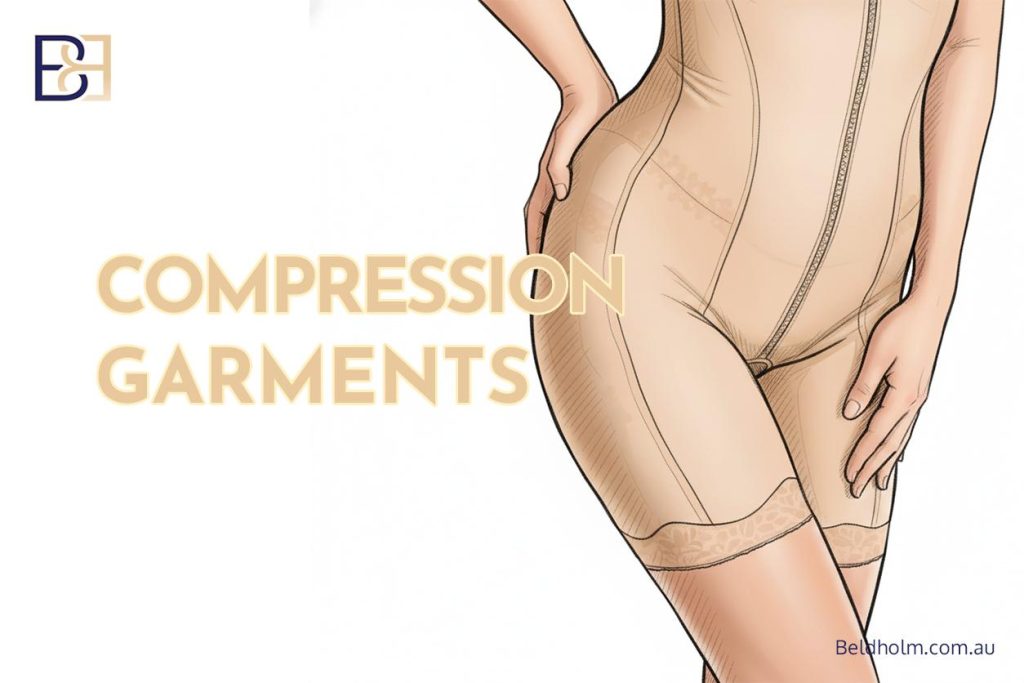
Drains and garments. Drains are usually not needed. Where the extent of surgery calls for them, they are removed before you go home or at an early rooms visit. Compression garments are fitted in theatre and worn continuously for the first few weeks to reduce swelling and support the incision sites. The details of garment wear and week-by-week milestones are in the recovery article: recovering after thigh lift (thighplasty) surgery.
Book your appointment online now
Preparing for Thigh Lift (Thighplasty) Surgery
Given the wound healing demands of this operation, preparation is not an optional extra. It is part of what makes the surgery an appropriate choice in the first place.
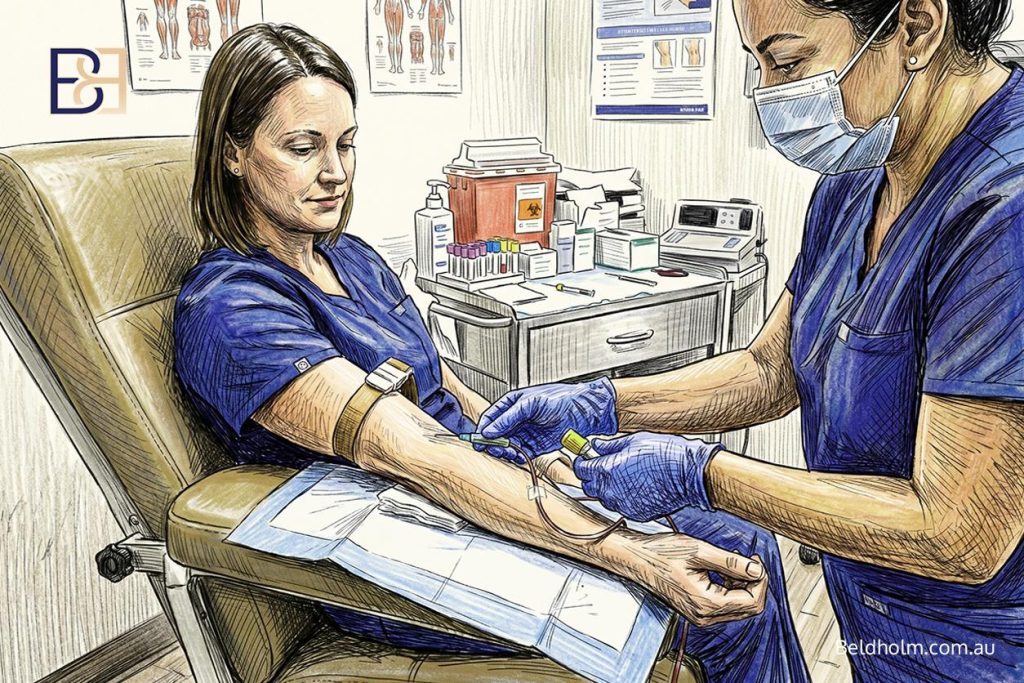
Blood tests. Every post weight loss patient in my practice has a comprehensive pre-operative blood panel: full blood count, coagulation screen, liver function, electrolytes, glucose and HbA1c, iron studies, thyroid function, viral screening, and a detailed nutritional panel covering vitamins A, B1, B6, B12, folate, vitamin D, vitamin E, zinc and selenium, with albumin as the protein marker. Your GP is copied into the results. The full rationale for each test is covered in the pre-operative blood tests article: pre-operative blood tests before body contouring surgery.

Correcting deficiencies. Weight loss, particularly rapid weight loss, commonly leaves gaps in protein, iron, vitamin D, zinc and B vitamins. Each of these plays a direct role in wound healing, and thighplasty is an operation where wound healing is the whole game. Deficiencies found on your panel are corrected before a surgery date is confirmed, guided by the results rather than guesswork. How to build protein intake and which supplements matter is covered in the nutrition series: nutrition after weight loss surgery.
Weight loss medications. If you take weight loss medications, do not stop or adjust them before surgery on your own. Current Australian guidelines do not recommend routine cessation before surgery. Where protein targets cannot be met, a temporary dose reduction may be discussed as part of your pre-operative plan.
Smoking. Stops well before surgery, completely. Nicotine constricts the blood vessels that thigh wounds depend on to heal.
Practical planning. Arrange time off work, help at home for the first week or 2 to support recovery, and loose clothing that does not rub the incision lines. The full checklist is in the recovery article.
Recovery: A Brief Overview
The recovery process after thigh lift surgery is slower and more demanding than most patients expect, because the incisions sit in an area that moves and bears friction with every step. The short version:
- First 2 weeks: rest with the legs supported, short walks around the house, dressings managed, no driving
- Weeks 2 to 6: gradually increasing activity, no heavy lifting, wear compression garments continuously, desk-based work often possible from around 2 to 3 weeks depending on the operation
- Weeks 6 to 12: return to most normal activity, graduated return to exercise and strenuous activity, swelling continuing to settle
- Beyond 3 months: scars maturing, swelling of the lower thigh and leg resolving slowly, particularly after full-length vertical incisions
Recovery varies between patients. You go home with detailed instructions, and you are reviewed intensively in my rooms for the first 2 weeks after surgery, with follow up appointments at 4 weeks, 3 months, 6 months and 12 months, all included in the surgical fee.
The full week-by-week guide, including garment wear, showering, driving, sleep positions and return-to-work timing, is in the dedicated article: recovering after thigh lift (thighplasty) surgery.
Risks and Complications: What the Numbers Show
Thighplasty has the highest complication rate of the body contouring operations I perform, and I would rather you read that here than hear it for the first time at consultation.
Published series report overall complication rates of 43% for the limited horizontal technique, rising to 67% to 74% for the more extensive vertical and combined patterns (1). Most of these are minor wound healing problems managed without another operation, but the numbers are high and they are real.
The complications that matter most in this operation:
- Wound breakdown, most often at the junction of the incisions in the groin area, and the main driver of a slower healing process. Most cases are managed in my rooms with dressings over 6 to 8 weeks. In selected cases, surgical debridement and secondary closure is considered around 4 weeks after the initial operation.
- Seroma, a collection of fluid under the skin, which may need drainage in the rooms.
- Visible scarring, scar migration and widening. Every thighplasty leaves permanent scars, and with the horizontal groin incision, tension can pull the scar downward over time.
- Prolonged swelling of the lower thigh and leg, more common after full-length vertical incisions, sometimes taking months to settle.
- Altered skin sensation, including numbness along the inner thigh near the incision lines, which usually resolves over months but can persist.
- Infection, bleeding and blood clots (DVT), as with any major surgery. My approach to clot prevention is covered in the surgery section above.
Two things reduce, but do not remove, these risks: technique choices that lower tension and preserve lymphatics, including VASER liposuction (ultrasound assisted lipectomy) as covered earlier, and thorough pre-operative preparation, particularly nutritional correction. Results vary between patients, and a proportion of patients will need a revision procedure to deal with residual laxity or scar problems.
The full breakdown of each complication, how often it happens, how I manage it and the warning signs to watch for at home is in the dedicated article: thigh lift (thighplasty) complications and how they are managed.
Cost and Medicare

Thigh lift surgery (thighplasty) may attract a Medicare rebate and private health fund contribution under MBS item 30169, which covers excision of redundant non-abdominal skin and fat after significant weight loss. The criteria generally require a weight loss of at least 5 BMI units, weight stable for at least 6 months, and skin problems such as intertrigo that have not settled with at least 3 months of conservative treatment, or skin redundancy that interferes with daily living. Whether you qualify, and what the out-of-pocket position looks like, is confirmed with a written quote after consultation. The full breakdown of surgical fees, hospital and anaesthetic costs, Medicare item requirements and health fund considerations is in the dedicated article: thigh lift (thighplasty) cost and Medicare in Australia.
References
- Gusenoff JA, Coon D, Nayar H, Kling RE, Rubin JP. Medial thigh lift in the massive weight loss population: outcomes and complications. Plast Reconstr Surg. 2015;135(1):98-106.
- Schmidt M, Pollhammer MS, Januszyk M, Duscher D, Huemer GM. Concomitant Liposuction Reduces Complications of Vertical Medial Thigh Lift in Massive Weight Loss Patients. Plast Reconstr Surg. 2016;137(6):1748-1757.
- Albanese R, Blessent CGF, Tomaselli F, De Santis G, Pinto V, Pinelli M, et al. A Comprehensive Review of Medial Thighplasty: The Role of Liposuction in Reducing Complications and Optimizing Patient Outcomes. J Clin Med. 2025;14(7):2426.