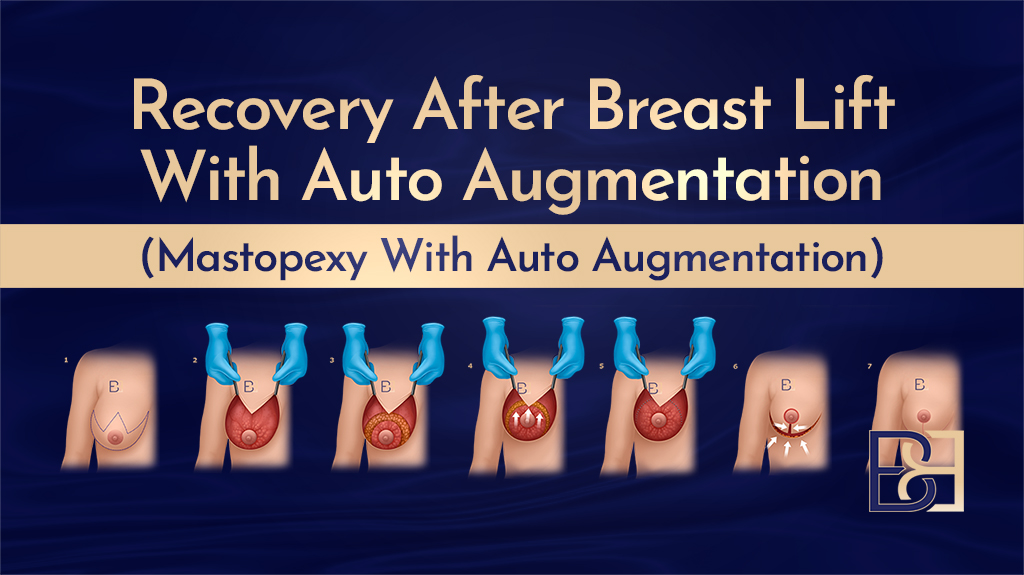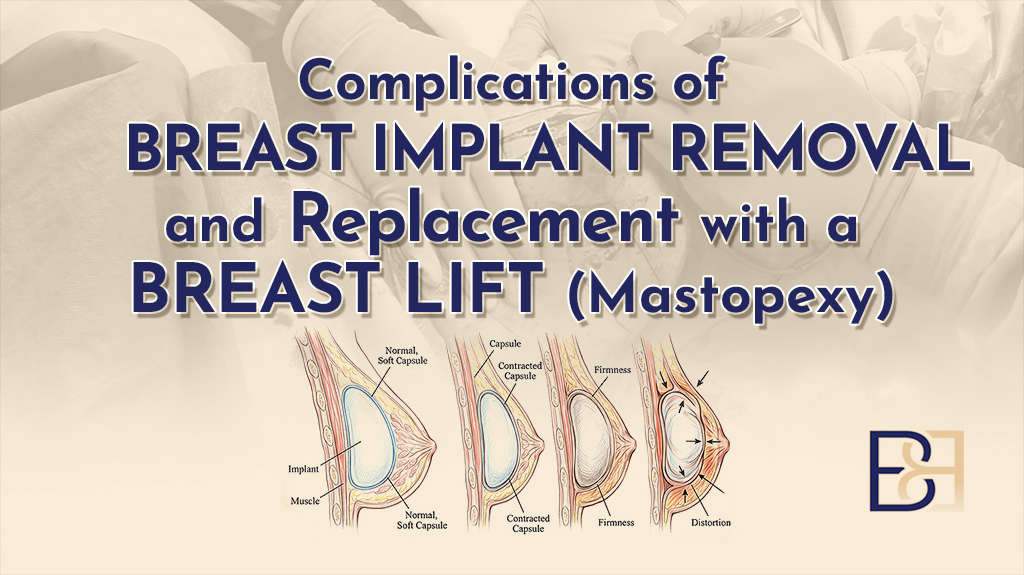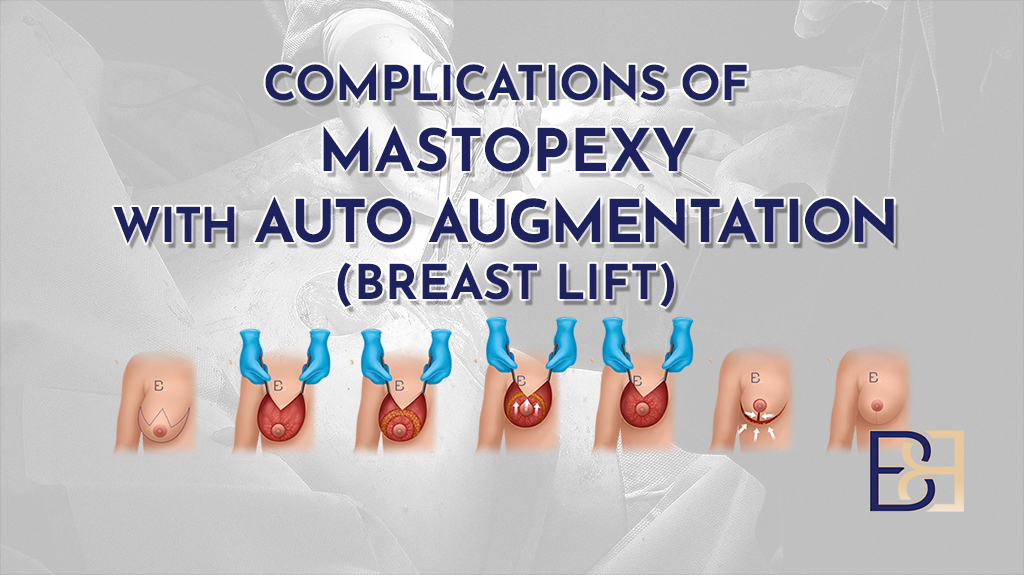
A breast lift, or mastopexy, is a surgical procedure that repositions the breast tissue and nipple and removes excess skin so the breast sits higher on the chest wall. It changes breast position and shape. It does not add volume, which is why some patients choose a breast lift with implants (mastopexy with implants), a separate operation I cover elsewhere.
Recovery is the part patients ask me about most.
- How much time off work?
- When can I drive?
- When can I lift and carry again?
- When can I get back to the gym?
- When will the swelling settle?
This article walks through what recovery after breast lift (Mastopexy) surgery actually involves, from the day of your surgery through to the months that follow.
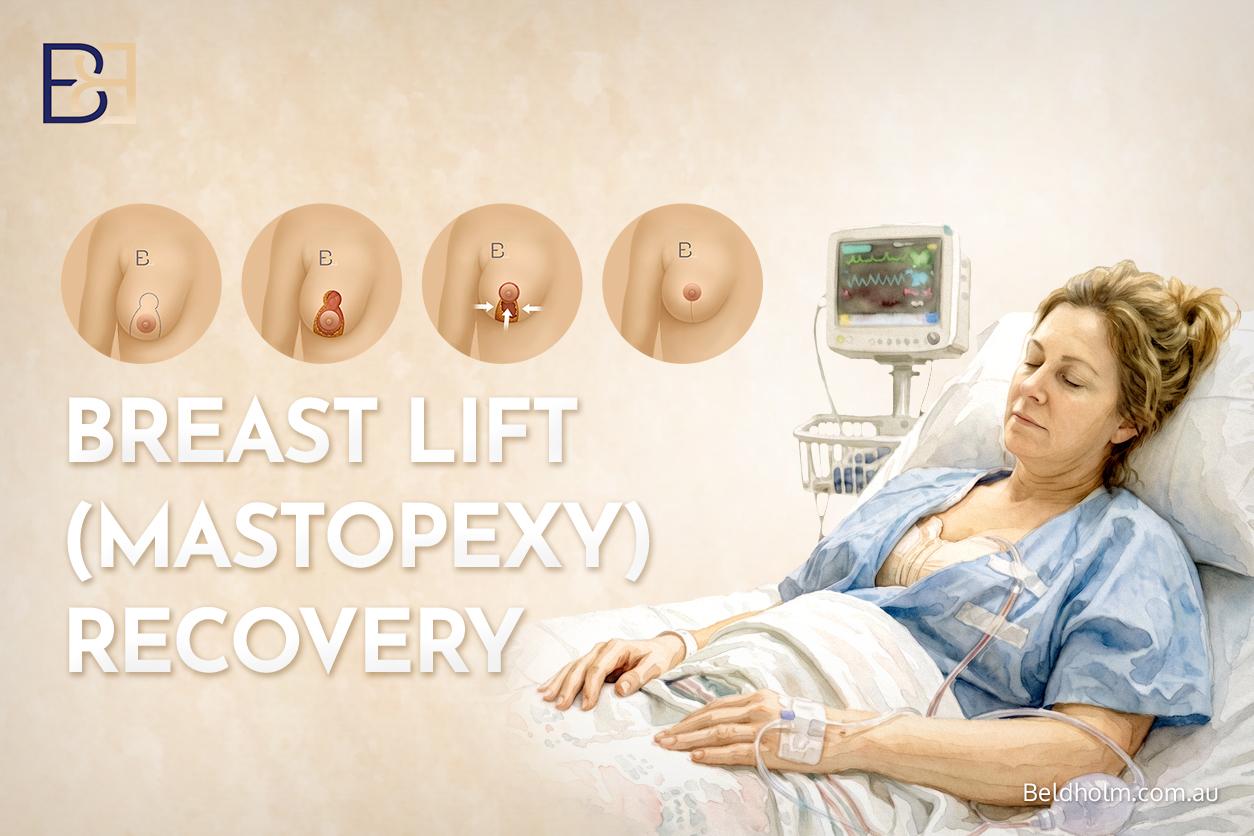
Every recovery is individual. The timeframes here are a general guide from my practice, not a promise. Your own recovery depends on the extent of your surgery, your general health, and how your body heals, and the healing process is different for everyone. I review you closely throughout, and the plan we set at your consultation always takes priority over anything you read online.
What to expect straight after surgery
Your mastopexy is done under general anaesthetic, so you are asleep for the whole operation. When you wake up in recovery you will feel drowsy, and your chest area will feel tight and sore. A nurse looks after you until you are settled, then you move to the ward.
Hospital stay
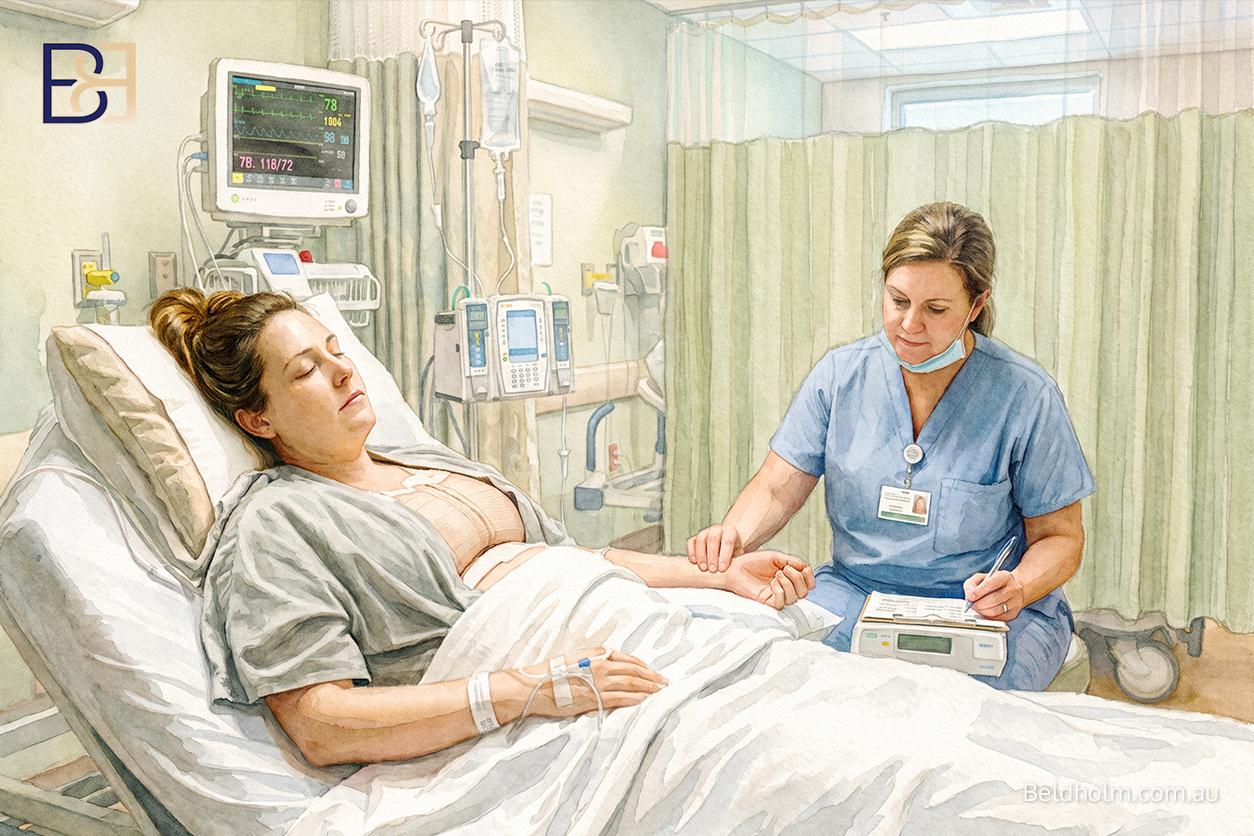
Most patients go home the same day. An overnight stay is uncommon and depends on the extent of your surgery and how you feel afterwards. Either way, you cannot drive yourself home after a general anaesthetic. Arrange for an adult to collect you and, ideally, to stay with you for the first night.
Dressings and drains
Your incisions are covered with dressings at the end of the operation. In my practice I use Comfeel dressings, which stay in place over the first part of your recovery period. My surgical team and I check and change them at your early review visits.
Drains are not always needed for a mastopexy. If you do have one, it collects a small amount of fluid and is usually removed within the first day or two. You also go home in a surgical support bra, which supports your breasts and helps reduce swelling.
Pain and how it feels
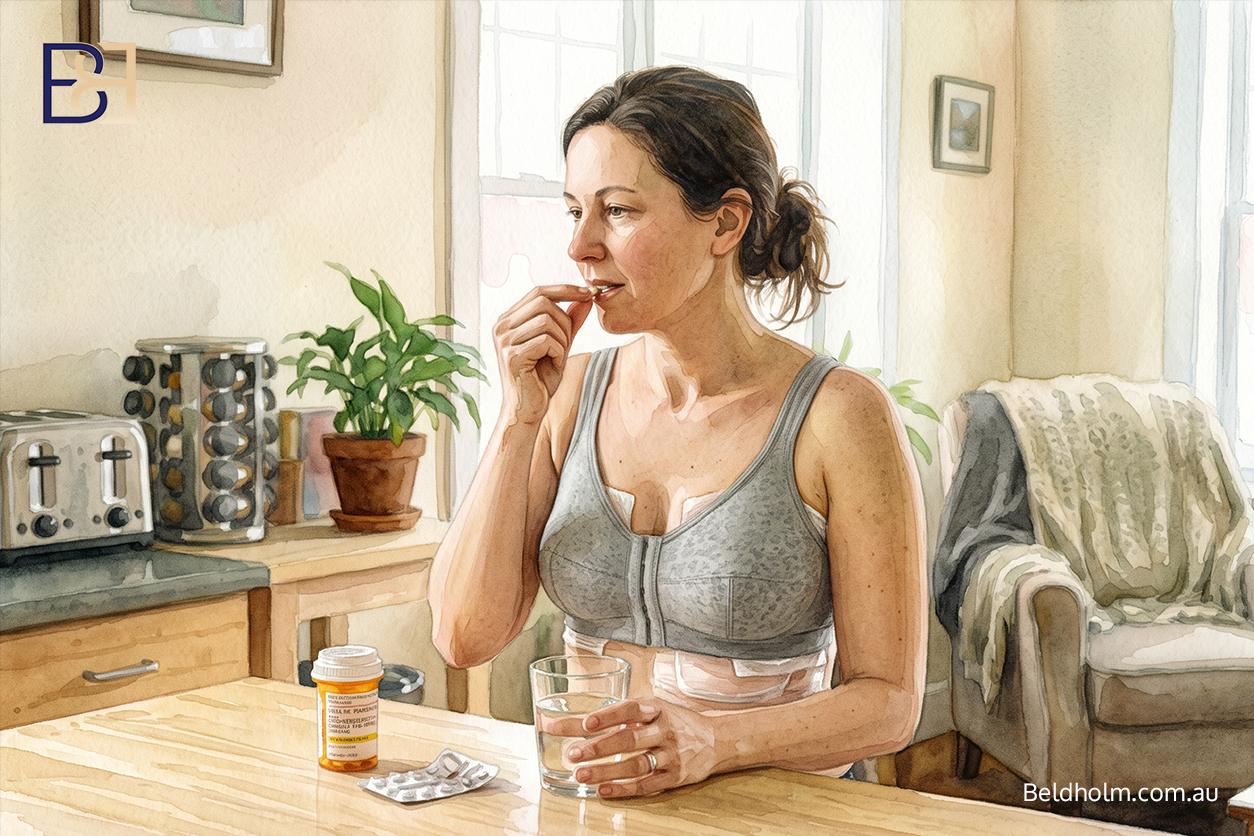
Most patients describe the first few days as tightness, soreness and a heavy feeling, rather than sharp pain. It is usually most noticeable in the first 48 to 72 hours and eases from there. You go home with pain relief and clear aftercare instructions on how to take it, and it is fine to start with light meals as the anaesthetic wears off. Staying on top of your pain relief in the early days makes moving around more comfortable.
If your pain climbs rather than settles, or one breast becomes much more swollen, painful or hot than the other, contact us. I set out the warning signs to watch for later in this article.
Your recovery timeline
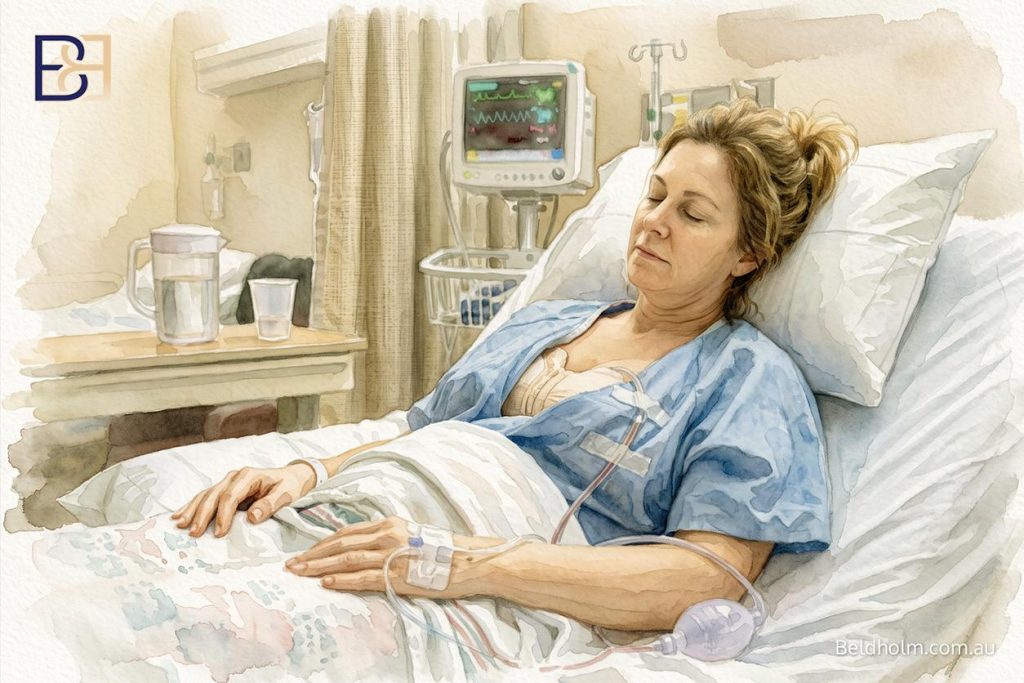
A breast lift (mastopexy) is generally a smaller operation than many other breast procedures. Here is a general guide to the recovery process for most patients after a breast lift (mastopexy) procedure. Your own timeline may differ, and I give you personalised advice at each review.
The first few days

Most patients go home the same day. An overnight stay is uncommon. The first few days are the most uncomfortable, with tightness across the chest, swelling, bruising and a heavy feeling. Take your pain relief as directed and rest, keeping your arms low. Light walking around the house from day one helps promote circulation. For most patients the discomfort settles over these first few days.
The first two weeks

As the pain eases, most patients are off the strong pain medication within about a week. Many go back to desk-based or light work around that point, once they are no longer taking pain relief that affects them. You will see my team often during this fortnight for your early reviews. Driving is usually possible around 5 to 7 days, once you are off strong pain relief and can steer, check your blind spots and perform an emergency stop without hesitating.
From two weeks
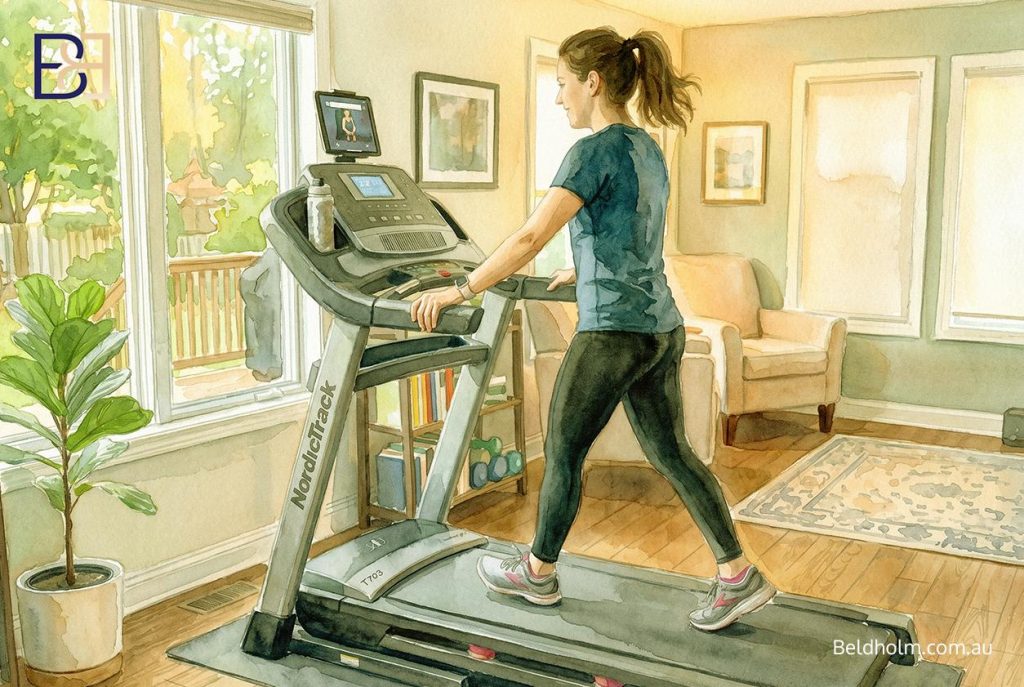
From around two weeks, most patients can start easing back into physical activity and build up over the following weeks. Begin with lighter activity, then add heavier lifting and more strenuous exercises as I clear you at your review. Your breasts will still be swollen and sitting higher than their final position at this stage.
Beyond
Your body continues to heal over the following months. Swelling keeps settling, breast shape and position continue to refine, and scars mature and fade over roughly the next twelve to eighteen months. What you see in the first few weeks is not your final result. Reaching full recovery is a gradual process, and most patients fully recover over the months that follow.
Wound care, dressings and stitches
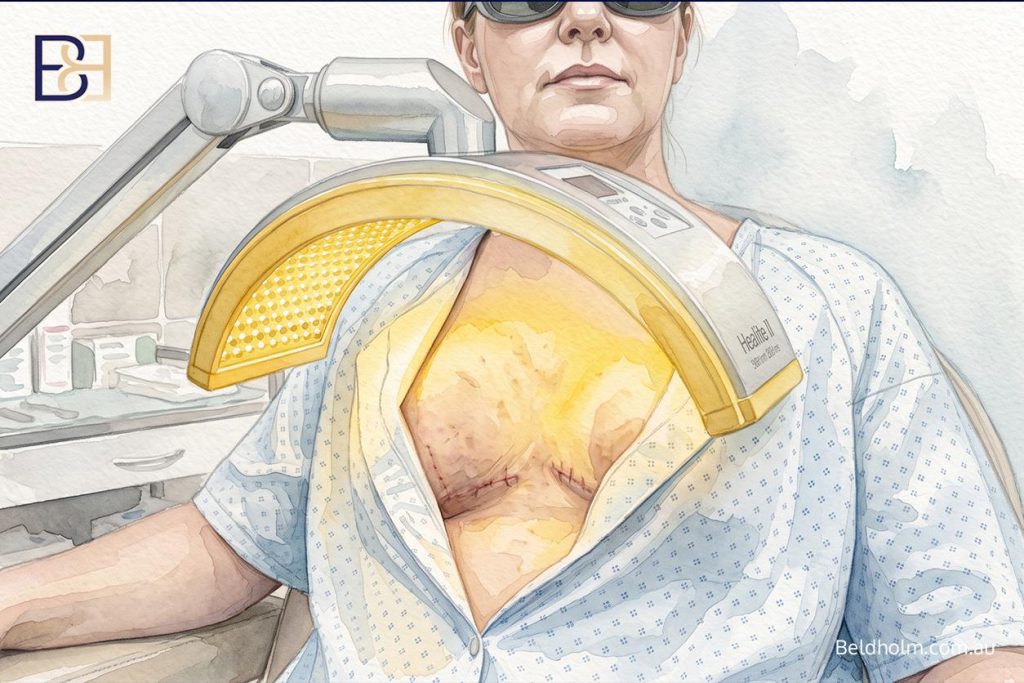
Looking after the surgical site well in the early weeks helps your incisions heal and gives your scars the best chance.
- Dressings. Keep your dressings intact and clean around the incision sites until I or my team change them. As mentioned, your Comfeel dressings stay on over the early part of your recovery, and I change them at your reviews. I tell you when and how you can shower.
- Stitches. I usually use dissolving sutures placed under the skin, so there is often nothing to remove. Where a stitch does need removing, we do it at one of your reviews.
- Scar care. Once your wounds have fully healed, I talk you through scar care, which may include silicone tape or gel and protecting the scars from sun exposure. Your scars begin firm and pink at this early stage, then soften and fade over many months. Depending on your surgery, your scars follow a lollipop lift or anchor lift pattern. They are permanent, and how they settle varies from person to person.
- Smoking. If you smoke, it slows wound healing and raises the risk of wound and healing problems. I ask patients to stop well before surgery and to stay off cigarettes through recovery.
If a wound at the surgical site opens, weeps, becomes increasingly red or hot, or you develop a fever, contact us. I list the warning signs to watch for further down.
Your surgical bra
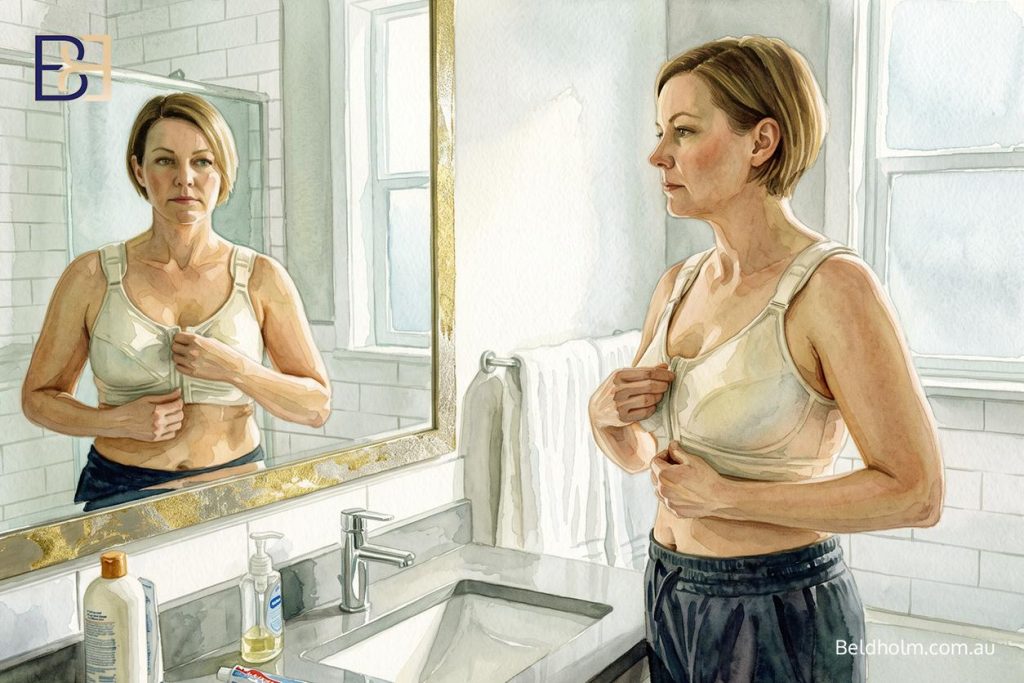
You go home in a surgical support bra, and wearing it as directed is one of the more important parts of your early recovery.
Wear the surgical bra full time, day and night, for the first four weeks. After that, wear it during the day for a further two weeks. From around six weeks you can move back to a regular bra, including underwire, and wear whichever styles you like.
The bra supports the healing tissues, helps limit swelling, and holds everything in position while your result settles. Wear the surgical bra rather than a normal bra during this period, and avoid underwire until the six-week mark, as it can press on healing tissue and scars.
Your bra size will change as swelling goes down over the first weeks and months, so the bra that fits in week one may feel loose later. I check the fit at your reviews and let you know when you can make the switch.
Sleeping, showering and daily activities
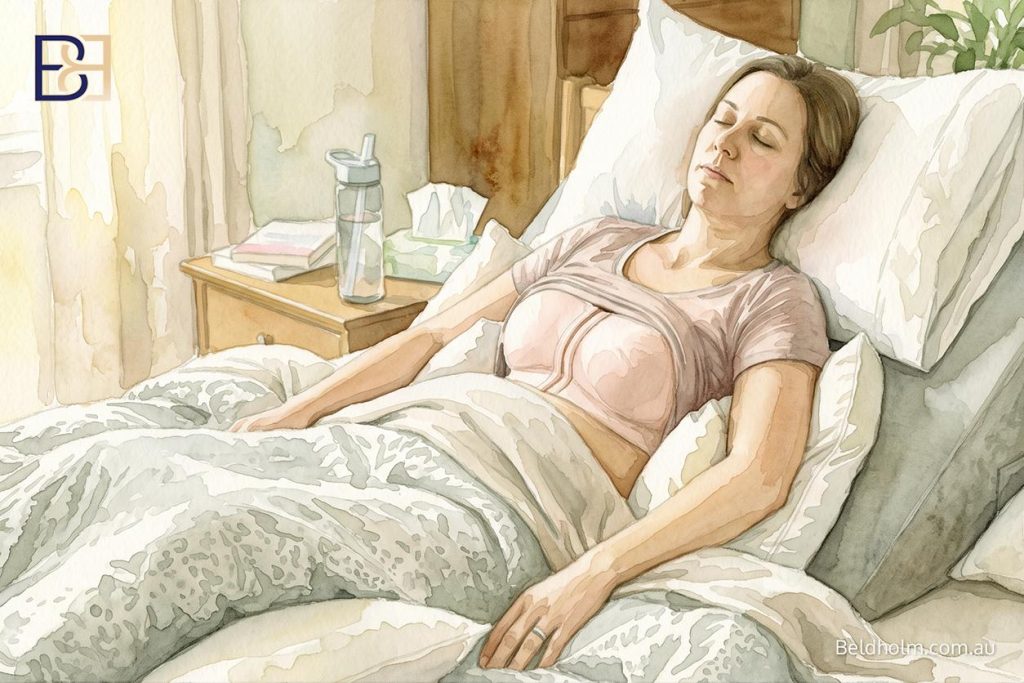
Sleeping. Sleep on your back with your upper body slightly elevated for the first few weeks. This elevated position keeps pressure off your breasts and helps reduce swelling. Avoid sleeping on your side or front until I tell you it is fine, which is usually once healing is well under way. A few pillows or a wedge under your upper body makes this more comfortable.
Showering. Your Comfeel dressings are water resistant, so you can shower when you feel comfortable, usually the day after surgery. Avoid baths, swimming pools, spas and the ocean until your wounds have fully healed and I have cleared you, to help prevent infection.
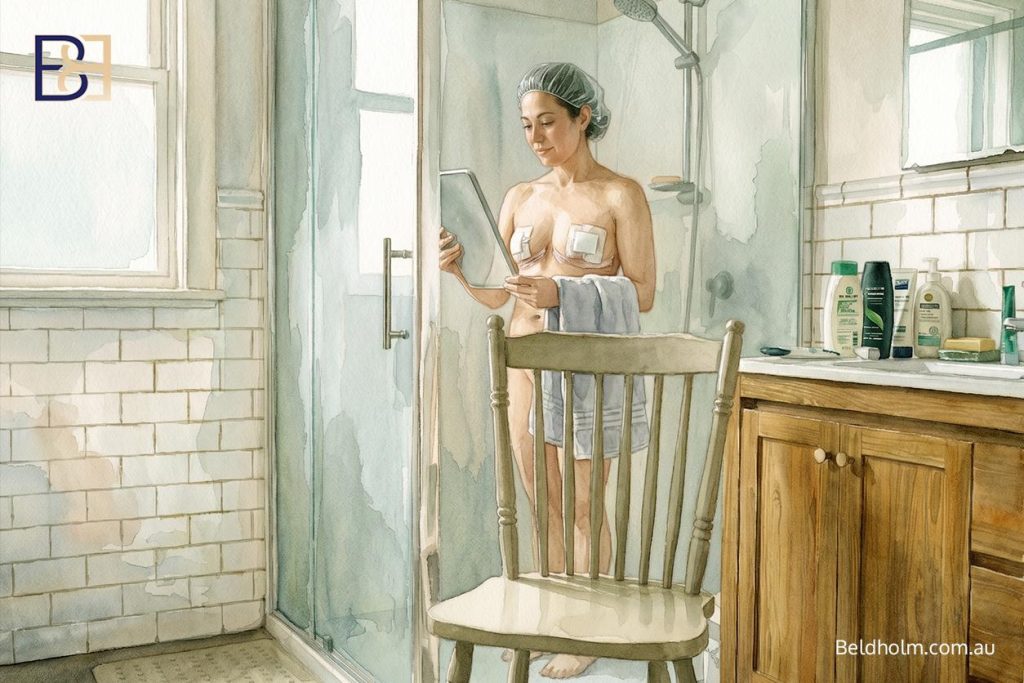
Around the house. For the first few weeks, avoid reaching overhead, lifting anything heavy, and pushing, pulling or straining with your upper body. Keep things you use often within reach so you are not stretching up for them. Set up your recovery space before your surgery so daily tasks are low effort while you heal, and ease back into your normal routines as you feel able.
Driving and returning to work
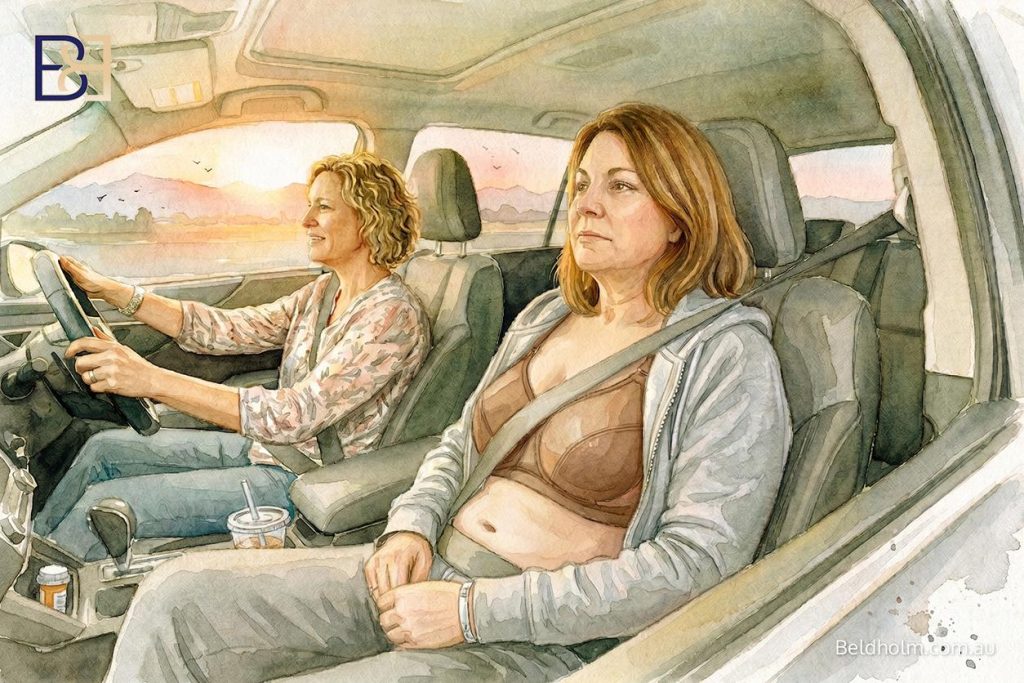
Driving. Most patients are back to driving around 5 to 7 days after a breast lift (mastopexy). Do not drive while you are still taking pain relief that makes you drowsy, and not until you can sit comfortably, check your blind spots, and perform an emergency stop without hesitating. If you cannot brace your arms or turn the wheel quickly because of discomfort, you are not ready.
Returning to work. Most patients return to work around one week, once they are off the stronger pain relief. When you go back depends on your job and how you feel.
- Desk-based or light work: often around a week in, sometimes with a phased start.
- Work involving heavy lifting, reaching overhead or more physically demanding roles: you may need a little longer, and I advise you individually. Usually around 2 weeks.
Tell me about your work at consultation and I will give you advice for your situation. If you can ease back with lighter duties or shorter days at first, that often helps.
Exercise and lifting restrictions

Getting back to physical exercise the right way protects your healing and your scars. Build back up in stages, and let me guide the timing.
- From day one: short walks around the house to keep your circulation moving.
- First two weeks: keep walking and gradually increase how far you go. Avoid heavier lifting, strenuous upper body work, running and bouncing during this period.
- From around two weeks: most patients can start easing back into exercise, beginning with lighter physical activity and lower body work.
- After that: build up to running, upper body and chest exercises, and heavier lifting over the following weeks, once I have cleared you.
Everyone progresses at a different pace. The timings above are a guide, not a fixed schedule, and I set your restrictions and recovery instructions at each review based on how you are healing.
Changes you may notice during recovery
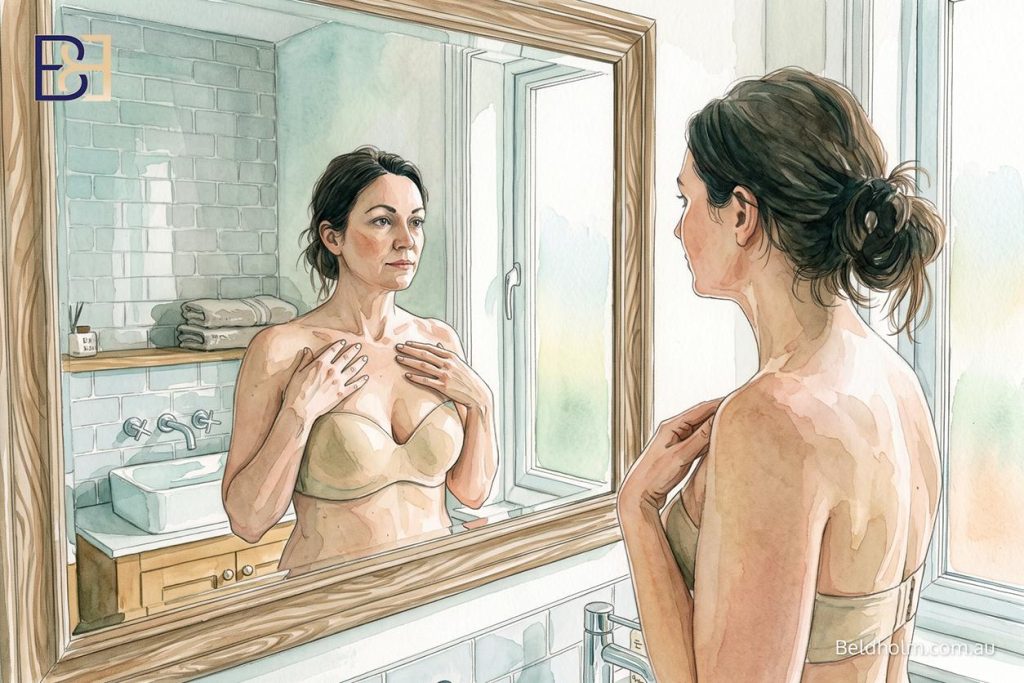
Some changes during healing surprise patients if they are not expecting them. Most settle with time.
- Swelling and bruising. You will experience swelling and bruising in the early weeks, and it comes down gradually. Swelling can fluctuate through the day and around your menstrual cycle.
- Sensation changes. Changes in nipple or breast sensation are common after a mastopexy. Areas may feel numb, tingly or oversensitive. For most patients this changes over weeks to months as nerves recover, though in some cases a change in sensation can be lasting.
- Uneven healing. Your two breasts may swell and settle at slightly different rates, so some unevenness during recovery is normal. Breasts are rarely identical, and I assess healing and the final position once everything has settled.
- Firmness and lumps. Healing tissue can feel firm or lumpy under the skin at first. This usually softens over the following months.
- Feeling flat. Some patients feel low or tired in the first weeks after surgery. This is a common part of recovery from an operation. If low mood persists, speak with me or your GP.
Future pregnancy and breastfeeding can change your breasts again, including breast size and shape, and affect your result, and a mastopexy can affect your ability to breastfeed later. If you are planning a pregnancy, it is worth discussing timing at consultation.
Moving early to lower your clot risk
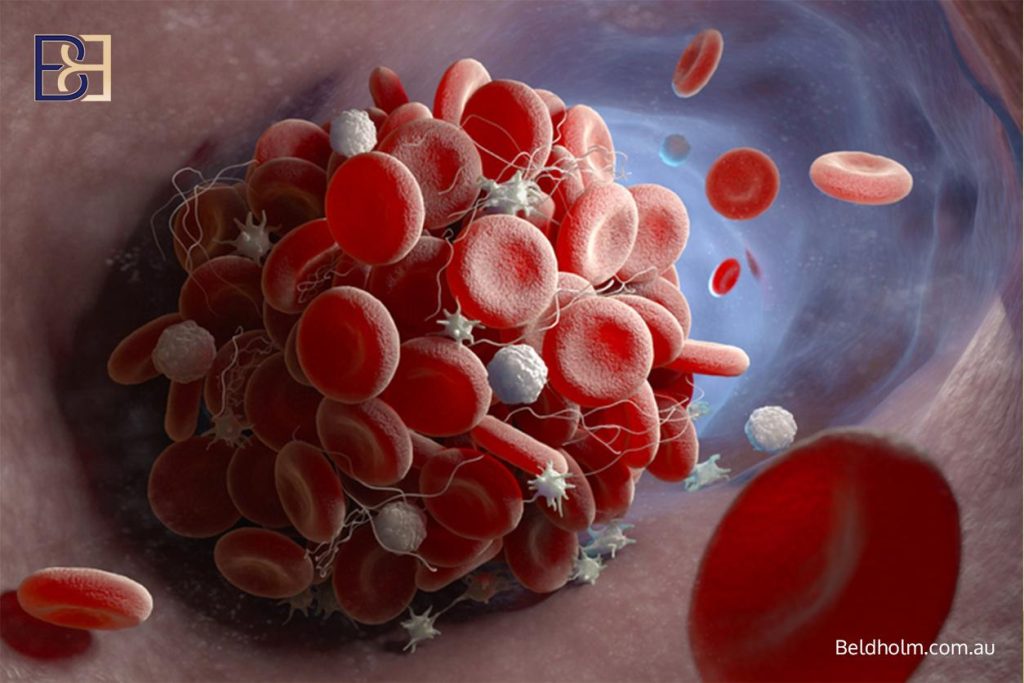
Any surgery under general anaesthetic carries some risk of a blood clot forming in the leg, called a deep vein thrombosis, which can travel to the lungs. Breast surgery is generally lower risk.
Before your operation I assess your individual clot risk and set your plan, including whether you need any blood-thinning measures. I also decide how any blood thinners or aspirin you already take are managed around surgery. Do not stop or change these medications yourself. We plan this together well ahead of time.
You can lower your own risk during your recovery period by:
- getting up and walking little and often from day one rather than staying in bed
- moving your ankles and feet regularly while resting
- drinking enough water and not smoking
Get medical help straight away if you notice pain, swelling, redness or warmth in a calf, or if you become short of breath or develop chest pain. Chest pain or breathlessness needs emergency care. I cover how to get help in the next section, and there is more detail in my article on blood clots after surgery.
Supporting your recovery before surgery
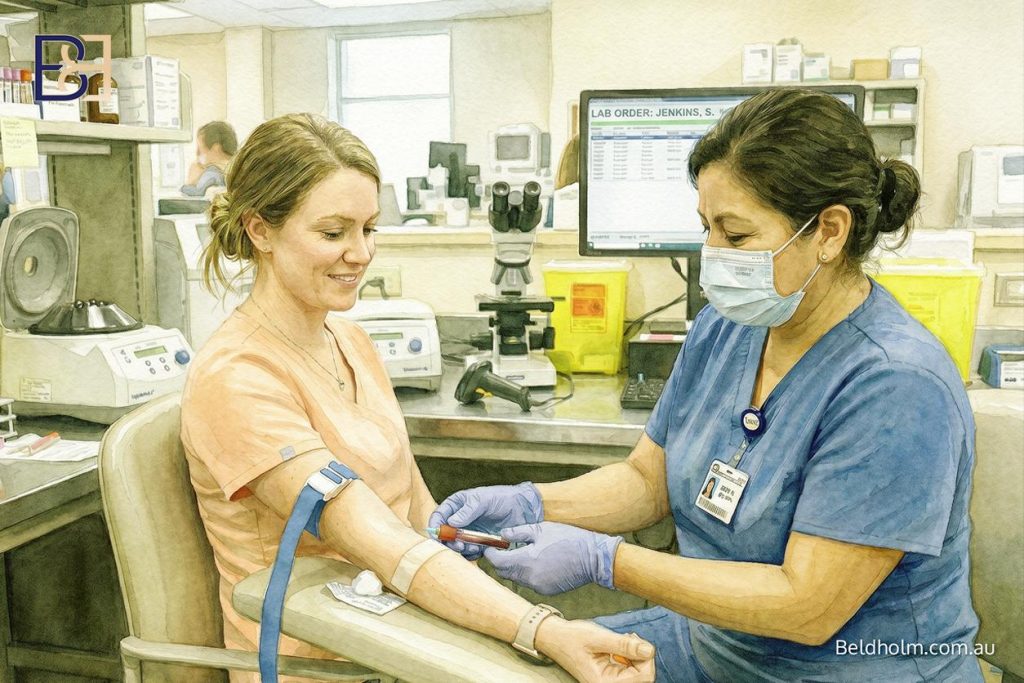
Recovery starts before your operation. A little preparation helps the early weeks go more smoothly.
- Pre-operative blood tests. Before surgery I arrange a standard set of blood tests. This usually includes a full blood count, kidney and liver function, a clotting (coagulation) screen, and hepatitis B, hepatitis C and HIV. For women of childbearing age, a pregnancy test is done where appropriate. You can read more in my overview of pre-operative blood tests.
- Stop smoking. If you smoke, stopping well before surgery matters, because it slows wound healing and raises the risk of healing problems. Stay off cigarettes through your recovery.
- Alcohol. Keep alcohol down in the lead-up to surgery.
- Your medications. I review your medical history and regular medications at consultation, including any blood thinners or aspirin, and tell you what to stop and when. Do not stop prescription medications on your own.
- Support at home. Arrange for someone to help for the first few days, and set up your recovery space before you come in, with the things you use often within reach.
I go through your health and your preparation in detail at consultation.
Follow-up appointments with me
I follow you closely after a mastopexy, and this care is part of your surgery.
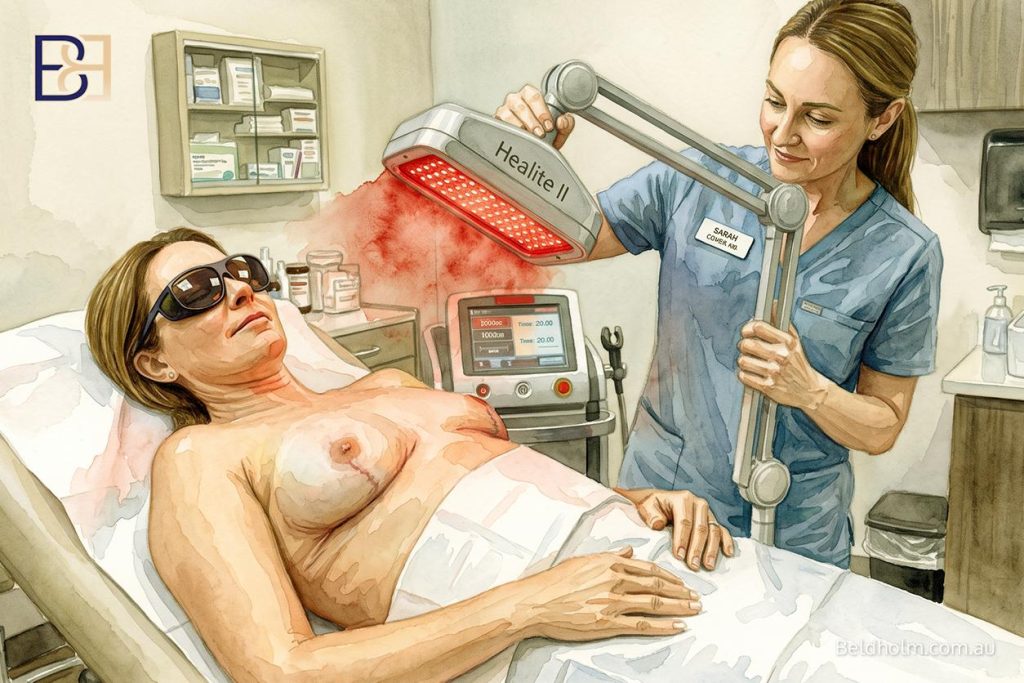
In the first two weeks the reviews are frequent. Most patients come in two to three times a week during this period so my team and I can check your wounds, change your dressings, review your healing and provide LED light therapy. This close early contact means anything that needs attention is picked up promptly.
Book your appointment online now
After the intensive early phase, your follow up appointments continue at around four weeks, then three months, six months and twelve months. These visits let me track how your breasts are settling and your scars are maturing over the first year. At your four-week visit I also hand your ongoing care back to your GP, who has been kept in the loop throughout.
If you live a distance from Maitland, I recommend staying locally for the first week or so for these early reviews, and we can coordinate some of your later follow-up with your GP and by telehealth. We sort out a plan that works for you before your surgery.
When to get in touch

Most recoveries run without a problem, but you should know what is not normal and how to get help.
Contact us if you notice any of the following:
- severe pain, or pain that gets worse rather than better and is not controlled by your pain relief
- one breast rapidly becoming much more swollen, firm, painful or bruised than the other, which can signal bleeding under the skin
- a fever, or a wound that becomes increasingly red, hot, or starts to weep or open
- spreading redness of the breast skin
- calf pain, swelling, redness or warmth
Call 000 or go to your nearest emergency department straight away if you have chest pain, difficulty breathing, or feel faint, as these can be signs of a serious problem.
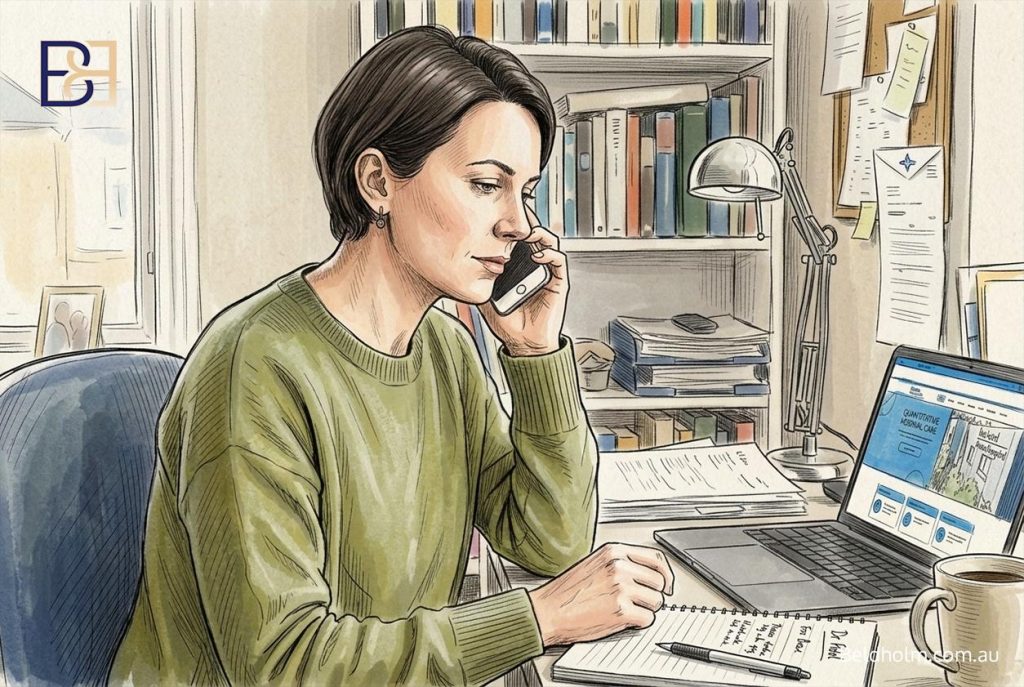
During office hours, call my clinic and my team will sort things out. For anything after hours that is not an emergency, phone Maitland Private Hospital and ask to speak with the nurses, who triage your call and involve me if needed. If you need a physical assessment, they may direct you to your nearest emergency department. Maitland Private is not an emergency department. When in doubt, make the call rather than wait it out.
Risks and realistic expectations
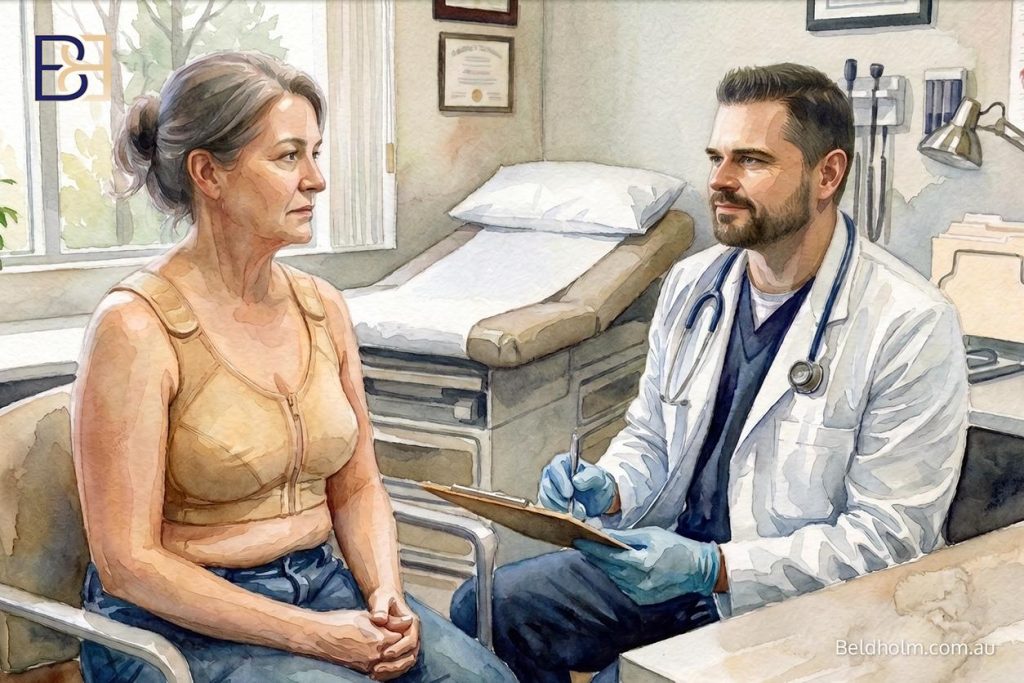
A breast lift (mastopexy) is surgery, and like all surgery it carries risks. You should weigh these up as part of your decision. They include bleeding, infection, wound healing problems, changes in nipple or breast sensation, scars that heal differently from expected, changes in nipple position, unevenness between the two sides, and, less commonly, healing problems affecting the blood supply to the nipple or skin. Some patients need a further operation to adjust the result. I go through the risks that apply to you at consultation, and there is fuller detail in my article on the risks of a breast lift.
It helps to be realistic about what a mastopexy does. It repositions the breast and nipple and removes excess skin; the medical term for a lowered breast position is ptosis. It does not add volume or fullness in the upper breast. Some patients who want more volume as well consider a breast lift with implants (mastopexy with implants), which is a larger and more complex operation with its own recovery and risks. For some patients that combined operation is appropriate in one stage, and for others it is more appropriate to do the lift and the implant as two separate operations. Which suits you is a clinical decision I make with you at consultation, not something to settle in advance.
Results vary from patient to patient. Your scars are permanent, your breasts will keep changing over your lifetime, and some breast ptosis, meaning a lowering of breast position, can return as tissues age, with future pregnancy and weight change also altering your result.