


Breast implants are among the most common devices used in surgery. One of those risks is a rare cancer called breast implant associated anaplastic large cell lymphoma, usually shortened to BIA-ALCL. It is uncommon, it is linked mainly to breast implants that have a textured surface, and for most patients it is treated successfully when it is found early and dealt with promptly (5).
Book your appointment online now
What BIA-ALCL is, and what it is not
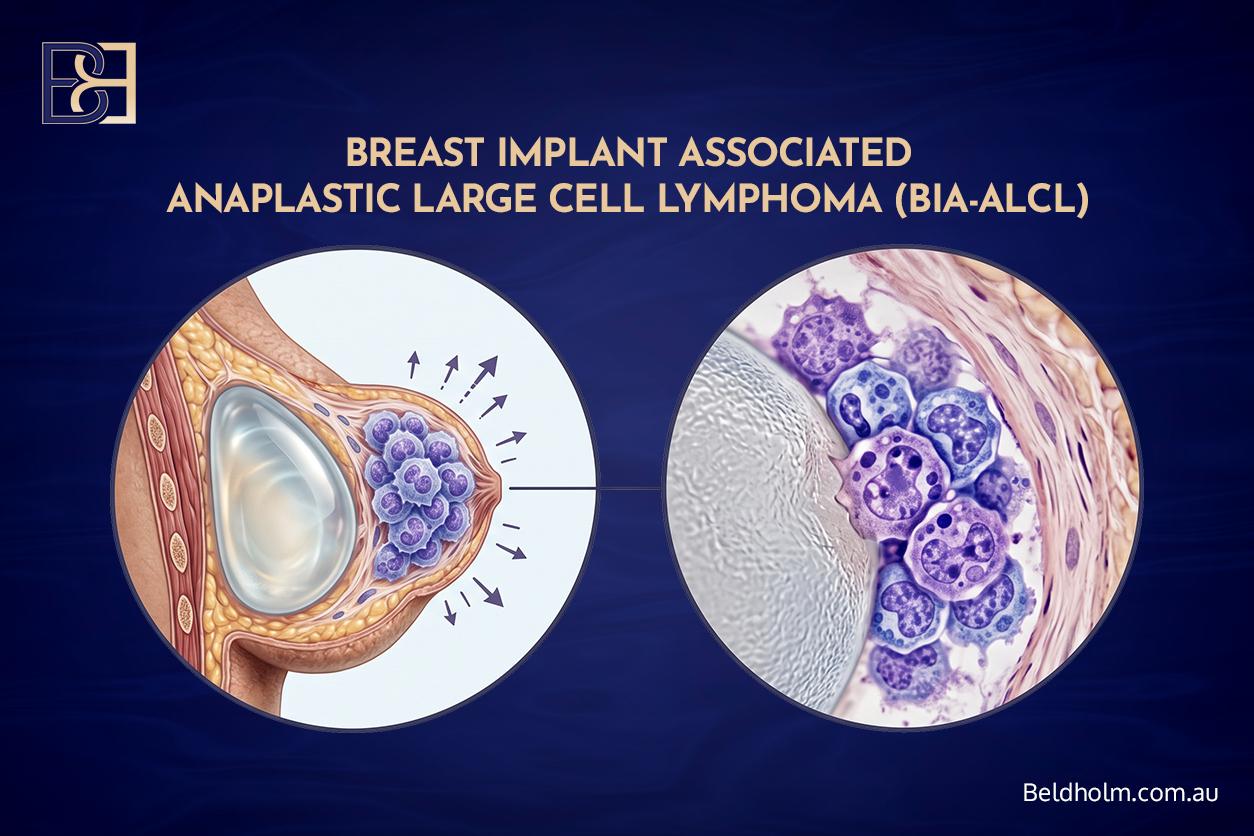
BIA-ALCL is a rare form of non-Hodgkin lymphoma, which is a cancer of the immune system’s white blood cells. This is an important point to understand up front: it is not breast cancer. It does not start in the breast tissue or the milk ducts. Instead, it develops in the surrounding scar tissue, known as the fibrous capsule, and in the scar tissue that the body forms around a breast implant.
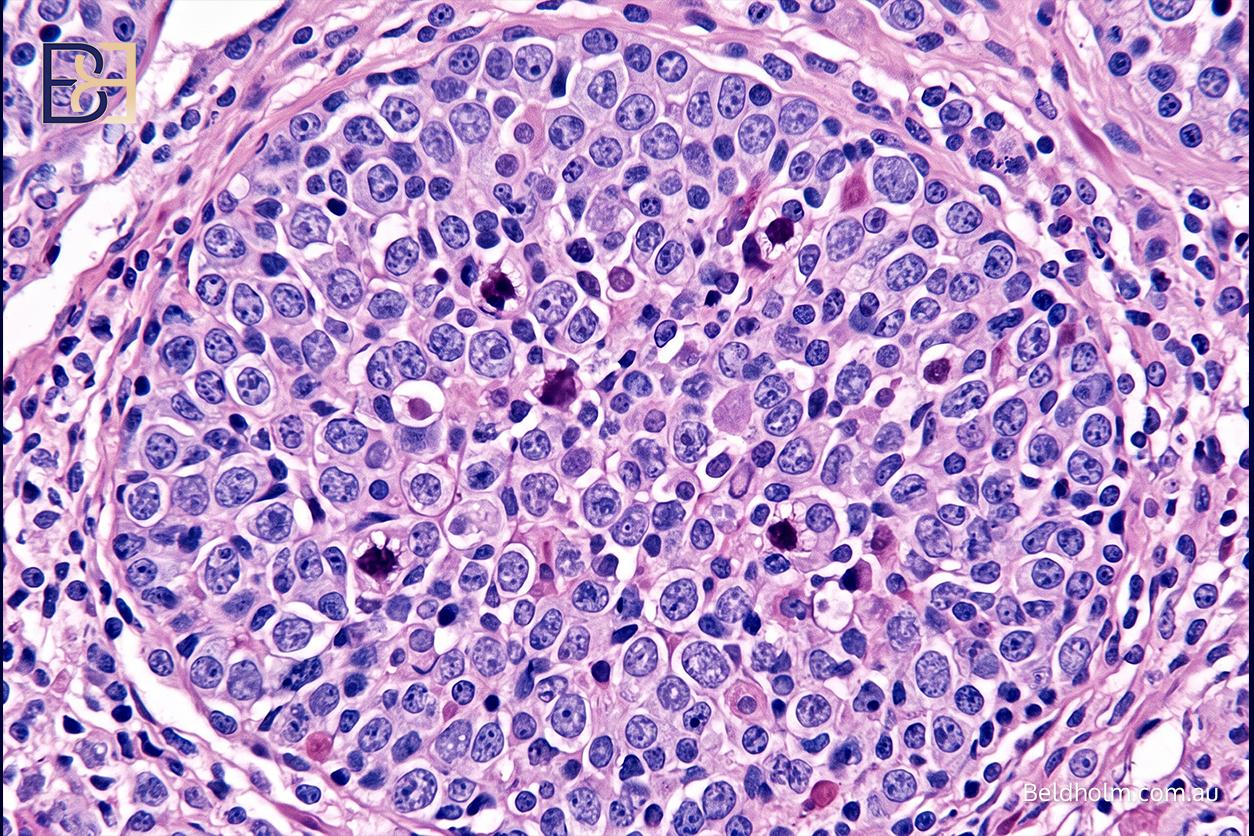
Under the microscope, the cells involved are a T-cell type. They carry a marker called CD30 and lack a marker called ALK, and pathologists use these features to make the diagnosis.
A few things follow from where this disease sits:
- Because it develops in the capsule around the implant rather than deep in the breast, most cases are localised and are found at an early stage.
- The World Health Organization first recognised BIA-ALCL as a distinct disease in 2016, and the 2022 World Health Organization classification confirmed it as a definite, separate entity (1,4).
- It is different from other conditions that have been reported around implants, and it is different again from the general symptoms some people describe under the term breast implant illness, which is a separate topic.
How common is it

BIA-ALCL is rare. The risk is closely tied to the surface of the implant and rises with the degree of texturing, so textured breast implants carry more of this risk than smooth ones. The association is with the implant surface, not with what the implant is filled with, which means saline implants and silicone implants are considered on the basis of their surface rather than their fill.
A review of cases reported to Australia’s Therapeutic Goods Administration (TGA), up to the end of 2021, gives the following estimated risk by implant type (1):
- Polyurethane-coated implants: about 1 in 1,800
- Macro-textured implants: about 1 in 2,400
- Micro-textured implants: about 1 in 18,000
- Smooth implants: no confirmed cases in Australia in people who have only ever had smooth implants
Australian and New Zealand research has looked at this in detail by matching confirmed cases against implant sales data. That work found the risk was many times higher for implants with a high-surface-area textured shell than for implants with a lighter texture (2,3). In other words, the more heavily textured the implant surface, the higher the estimated risk.
These figures need context. Even for the higher-risk textured surfaces, the great majority of people who received them never develop BIA-ALCL. The figures matter because they explain why implant surface has become such an important part of the conversation, and why the higher-texture implants are no longer available in Australia.
Why it is thought to happen
The exact cause of BIA-ALCL is not fully understood, and the expert view is that several risk factors work together rather than any single one acting alone (1). The factors that have been proposed include:
- Implant surface texture and surface area. This is the strongest and most consistent association. A rougher, higher-surface-area shell is linked to higher risk than a smoother one.
- Bacterial contamination and biofilm. A low-grade film of bacteria can settle on an implant surface at the time of surgery and drive long-term, low-level inflammation in the capsule. A textured surface has more area for this to take hold. This ongoing inflammation is thought to be part of how the disease develops.
- Individual genetic factors. Some people appear more susceptible than others, and research into the genetic changes seen in the cancer cells is ongoing.
The link with bacterial contamination is directly relevant to how surgery is performed. It is one of the reasons I pay close attention to reducing contamination of the implant during the operation, which I cover further down.
The Australian regulatory picture
Breast implants are regulated in Australia as medical devices, and the TGA has been monitoring and updating information on BIA-ALCL for well over a decade.
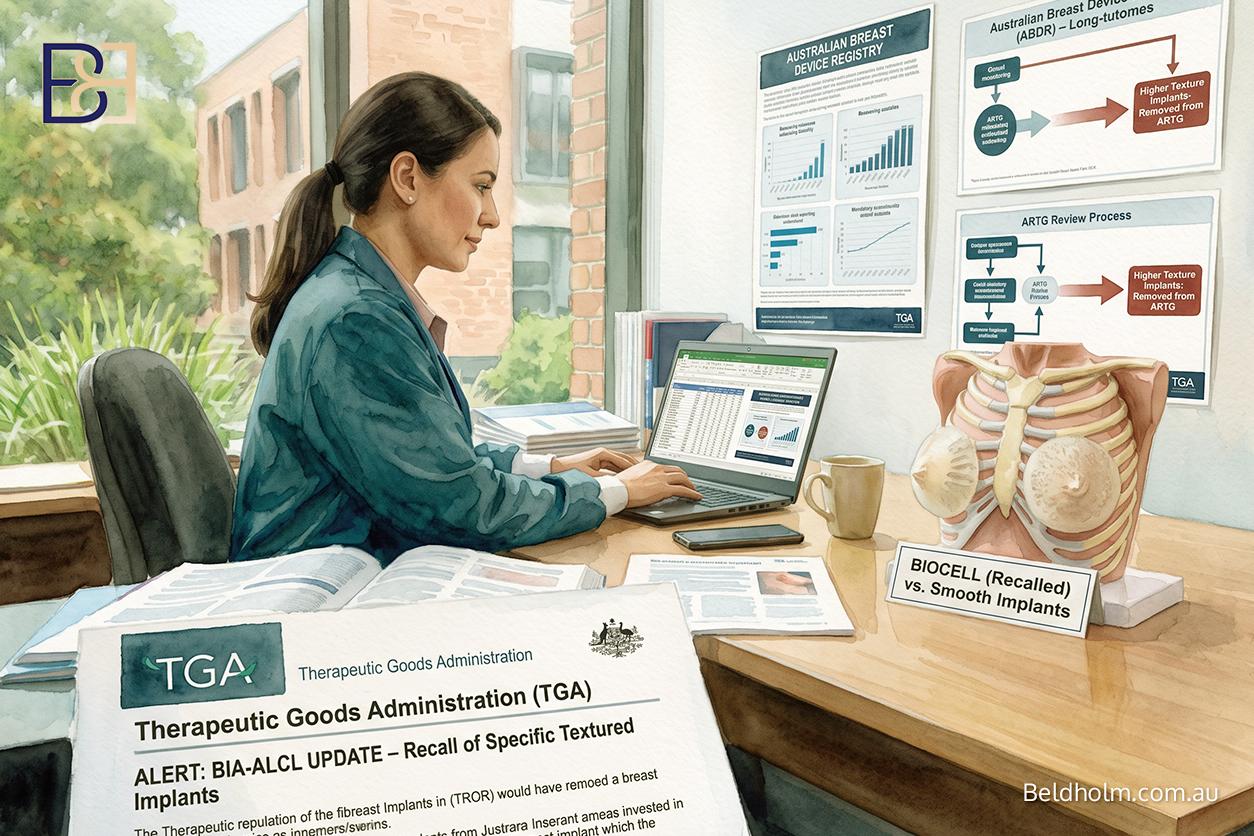
In 2019, following a worldwide review, the device manufacturer Allergan recalled its Biocell implants and tissue expanders, a range of macro-textured breast implants, because of the BIA-ALCL risk. The TGA carried out its own post-market review and laboratory assessment of textured implants on the Australian market. As a result, the higher-texture implants were suspended and then removed from the Australian Register of Therapeutic Goods (ARTG), which is the official list of devices approved for supply here (6).
Two points often cause confusion, so I want to be clear about them:
- Being removed from the register affects what can be supplied to new patients. It does not mean those implants were taken out of people who already had them. Some people still have these implants in place.
- The TGA advises that routine removal of textured implants in people who have no symptoms is not recommended (1). Having a textured implant is not, on its own, a reason for surgery.
Australia also runs the Australian Breast Device Registry, which records breast implant surgery and helps track outcomes, including BIA-ALCL cases, over time (1). This kind of monitoring is part of why the Australian picture of this disease is comparatively well understood.
Signs and symptoms to be aware of
The most common symptom of BIA-ALCL is swelling of the breast, sometimes quite noticeable, caused by a fluid collection around the implant. This is known as a late seroma, meaning fluid that appears well after the surgery and the initial healing period rather than in the first few weeks.
Less commonly, other symptoms can appear:
- A solid lump in the breast, or swollen lymph nodes in the armpit
- Firmness or a change in the shape of one breast
- A skin rash or another change in the breast skin
Timing is a useful guide. Most cases develop between three and fourteen years after the implant was placed, with a median of around eight years, although the reported range is wider than that (1).
In practice, if you have breast implants and you notice new swelling, a lump, or a persistent change in one breast, have it checked. The great majority of these changes are not cancer and turn out to be something else, but they should be assessed properly rather than ignored.
How BIA-ALCL is diagnosed
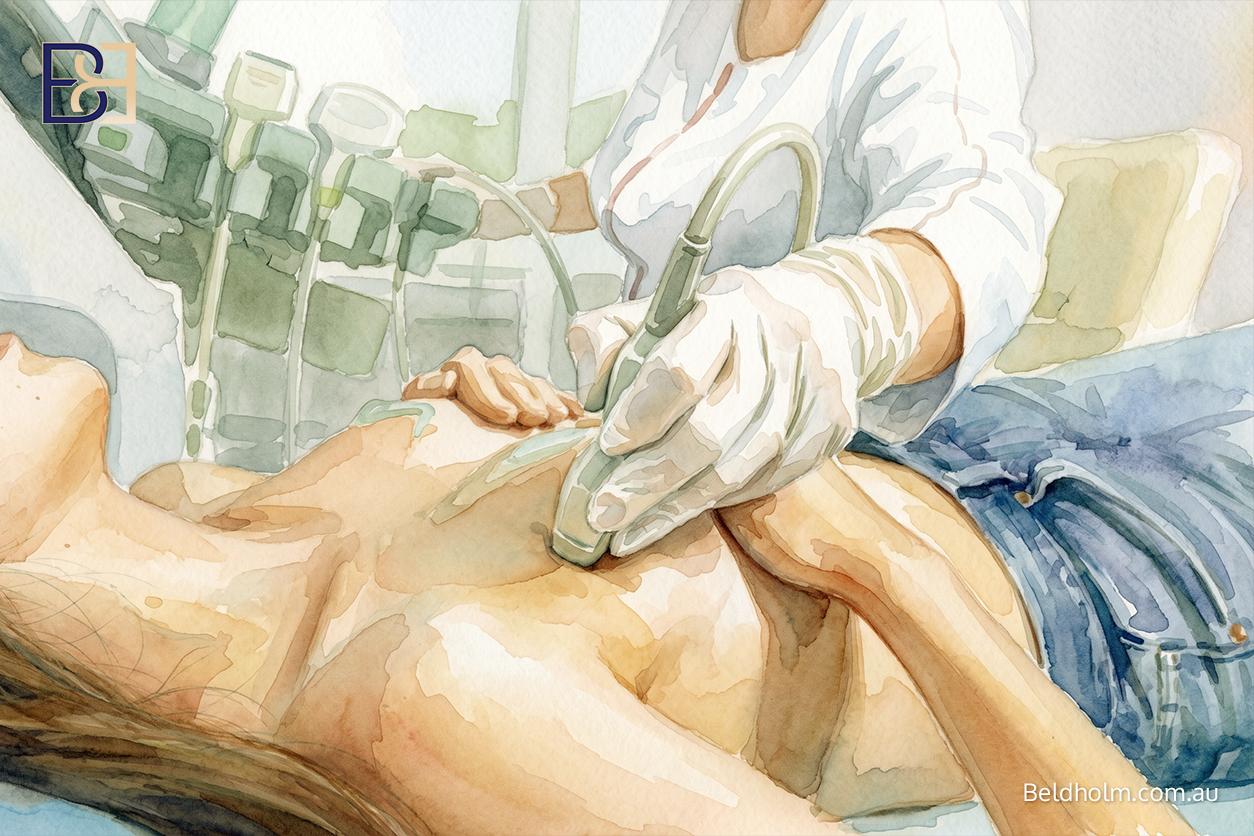
Diagnosis starts with a physical examination and imaging tests, beginning with a breast ultrasound. Ultrasound is good at showing whether there is fluid surrounding the implant, which is the finding that most often prompts further testing.
If fluid is present, the next step is to draw off a sample with a fine needle, usually guided by ultrasound. That fluid is then sent for specialised laboratory testing. This includes looking at the cells themselves, testing for the CD30 marker, and flow cytometry, which examines the cells in more detail. These tests together are how BIA-ALCL is confirmed or ruled out (1,5).
If the diagnosis is confirmed, further imaging tests such as a PET-CT scan are used to assess whether the disease is confined to the capsule or has spread to the lymph nodes, and to stage it (5). Staging matters because it guides how the disease is treated.
The point of this pathway is to catch the condition while it is most treatable, which in the majority of cases is while it is still contained around the implant.
How it is treated
The mainstay of treatment is surgery. This means removing the implant together with the surrounding capsule, ideally in one piece. Removing the whole capsule rather than part of it is important, and this complete removal is what treatment guidelines recommend (5).
When BIA-ALCL is confined to the capsule and is fully removed, published outcomes are generally very good, and most patients are treated by surgery alone without needing further therapy (5). This is the central reason that awareness and early assessment matter so much.
In more advanced cases, where it has spread beyond the capsule, additional treatment may be needed, such as chemotherapy, radiation therapy, or in some cases a stem cell transplant. Here a treatment plan is set with a lymphoma specialist and a wider cancer team, and treatment is tailored to the individual (5).
Early detection followed by complete surgical removal is what drives the good results seen in most cases. Outcomes vary from person to person, and advanced cases are more serious, which is exactly why a new symptom should be assessed rather than left.
If you already have breast implants
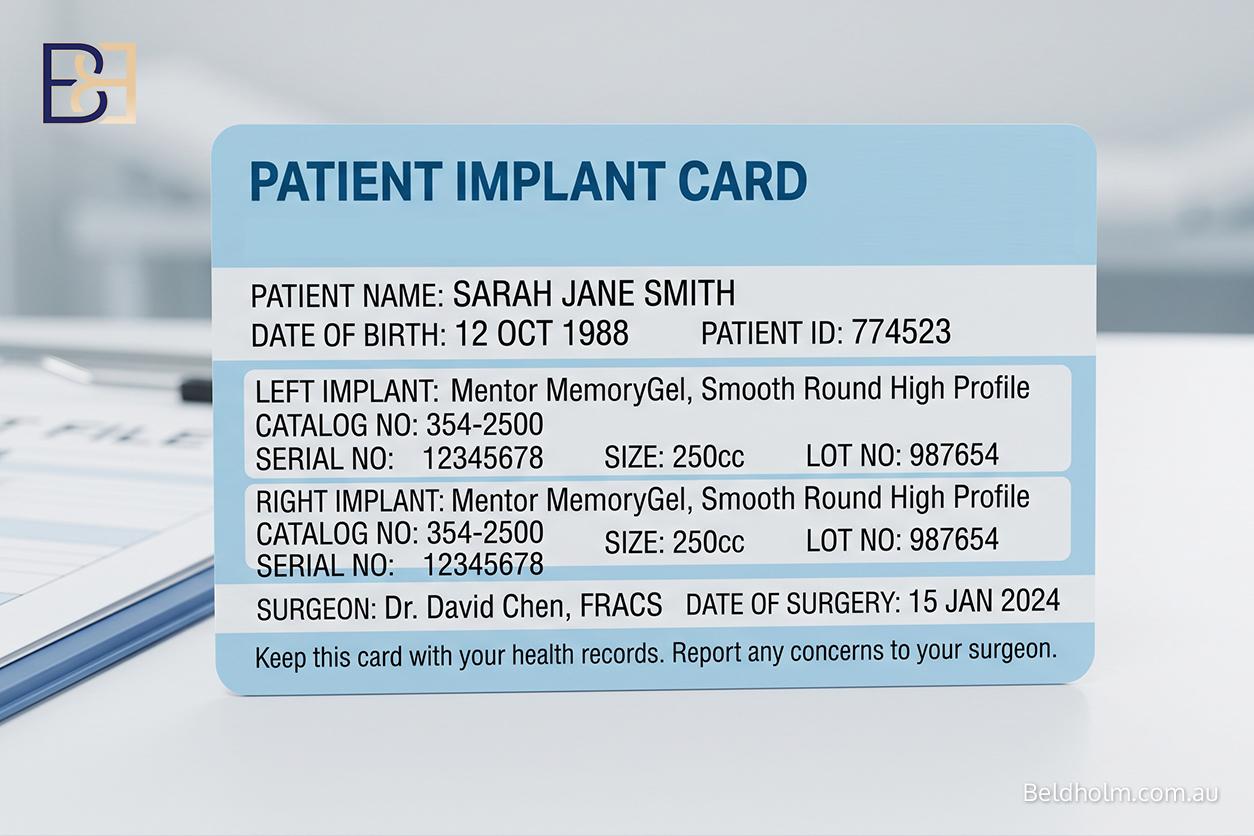
If you already have implants, the first thing to say is that BIA-ALCL is rare, and having implants is not a reason to be alarmed. There are some sensible steps worth taking.
- Know your device. You should have a patient implant card that records the make, model and surface type of your implants. This tells you and your doctors exactly what you have. If you are not sure what type you have, your surgeon can help, and the Australian Breast Device Registry holds records of implant surgery (1).
- Stay aware of changes. New swelling, a lump, or a lasting change in one breast is worth having reviewed. You do not need to check constantly; a clear, lasting change is what warrants review.
- You do not need routine removal. If you have textured implants and no symptoms, the TGA does not recommend removing them just because of their surface (1). Surgery to remove implants carries its own risks and is a decision made for the individual.
How and when the breasts are monitored, including imaging with implants in place, is a separate subject that is assessed individually. If you have specific concerns about your own implants, the right step is a review with your GP and a referral for assessment.
How I approach implant choice and technique in my practice
Book your appointment online now
The link between implant surface texture and BIA-ALCL shapes how I approach breast augmentation (breast enlargement) and implant surgery.
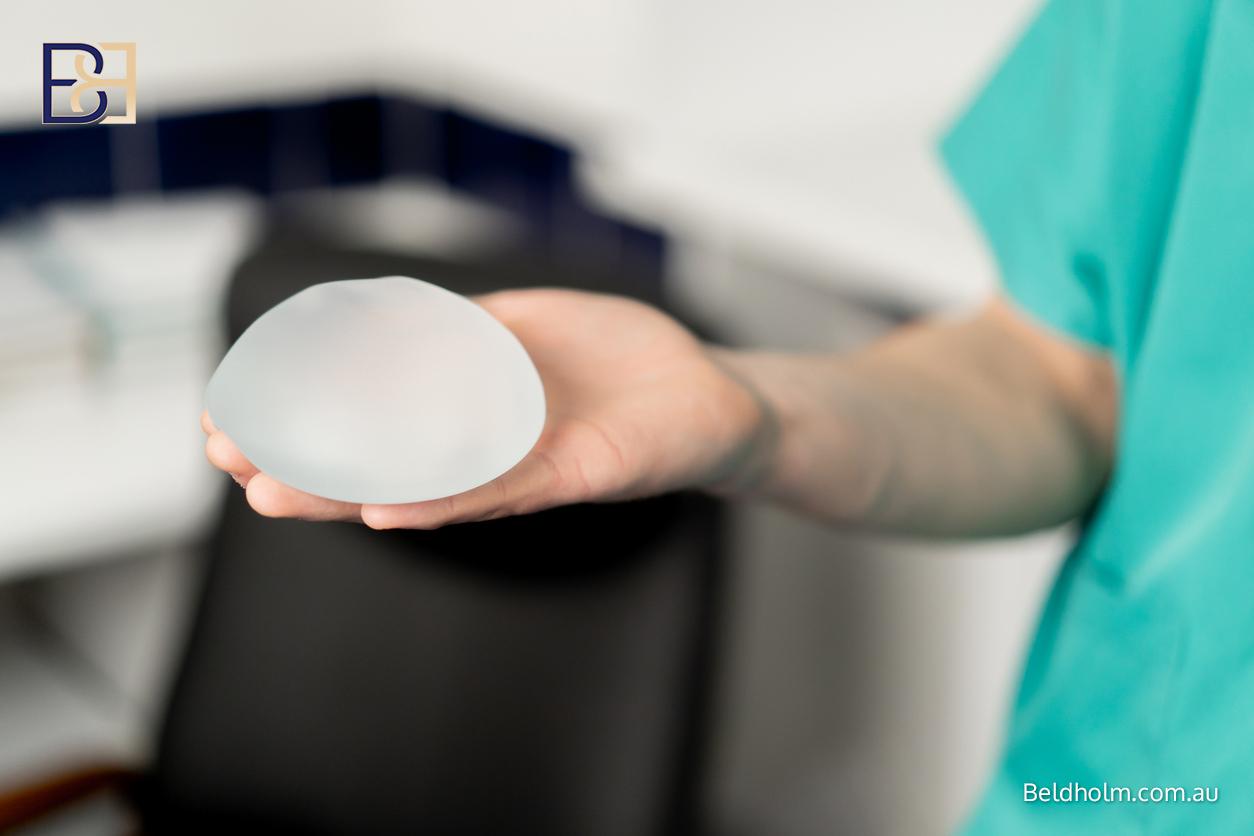
- Implant surface. Choosing an implant surface means weighing more than one factor. In my practice I mainly use micro-textured implants. Smooth implants carry the lowest association with BIA-ALCL, but they adhere less to the surrounding tissue and are more prone to moving out of position (displacement) and to settling too low over time (bottoming out). Micro-textured implants sit at the low end of the texture-associated risk, around 1 in 18,000 in the Australian data (1), and the light surface texture encourages tissue adherence that helps the implant hold its position. I talk this trade-off through with every patient who is considering implants, weighing the difference in BIA-ALCL risk against implant position and stability, so the choice is made with the full picture in front of them.
- Reducing contamination during surgery. Because bacterial contamination of the implant at the time of surgery is one of the factors linked to BIA-ALCL, I use a structured, step-by-step no-touch technique. This includes using a Keller Funnel to deliver the implant, which reduces handling and contact with the skin during insertion.
- Informed consent. As part of the consent process I take you through the risks associated with implants, including BIA-ALCL. In line with TGA requirements, you are given the approved patient information leaflet for the device before surgery, and a patient implant card afterwards that records exactly what was used.
A GP referral is required before a consultation. Whether implants are appropriate for you, and if so which type, is assessed individually at that consultation. Individual results vary between patients.

Key points
- BIA-ALCL is a rare cancer of the immune system that develops in the capsule around a breast implant. It is not a form of breast cancer.
- The risk is very low and rises with the degree of implant surface texturing. In Australia there are no confirmed cases in people who have only ever had smooth implants (1).
- The higher-texture implants linked to greater risk have been removed from the Australian register and are no longer supplied here (6).
- It usually appears as swelling of the breast years after surgery. Any new swelling, lump or lasting change in one breast should be checked.
- When it is found early and treated with complete surgical removal of the implant and capsule, the outlook is generally very good (5).
- If you already have textured implants and no symptoms, removal is not routinely recommended. Stay aware of any changes and keep your patient implant card (1).
References
- Therapeutic Goods Administration. Breast implant associated cancer: information for health professionals. Canberra: Australian Government, Department of Health and Aged Care.
- Loch-Wilkinson A, Beath KJ, Knight RJW, et al. Breast implant-associated anaplastic large cell lymphoma in Australia and New Zealand: high-surface-area textured implants are associated with increased risk. Plast Reconstr Surg. 2017;140(4):645-654.
- Magnusson M, Beath K, Cooter R, et al. The epidemiology of breast implant-associated anaplastic large cell lymphoma in Australia and New Zealand confirms the highest risk for grade 4 surface breast implants. Plast Reconstr Surg. 2019;143(5):1285-1292.
- Alaggio R, Amador C, Anagnostopoulos I, et al. The 5th edition of the World Health Organization Classification of Haematolymphoid Tumours: Lymphoid Neoplasms. Leukemia. 2022;36(7):1720-1748.
- Clemens MW, Horwitz SM. NCCN consensus guidelines for the diagnosis and management of breast implant-associated anaplastic large cell lymphoma. Aesthet Surg J. 2017;37(3):285-289.
- Therapeutic Goods Administration. Breast implants and anaplastic large cell lymphoma: s*fety information and recall actions. Canberra: Australian Government, Department of Health and Aged Care.