Diastasis recti (abdominal muscle separation) is one of the most common changes I see in women after pregnancy. It is a normal response to carrying a baby, not a sign that something has gone wrong.
There is a common belief that the muscles have “torn”. They have not. During pregnancy the band of connective tissue running down the midline of your abdomen, called the linea alba, stretches to make room for the growing baby. As it stretches, the left and right sides of the rectus abdominis muscle sit further apart. That widening is what we call diastasis recti.
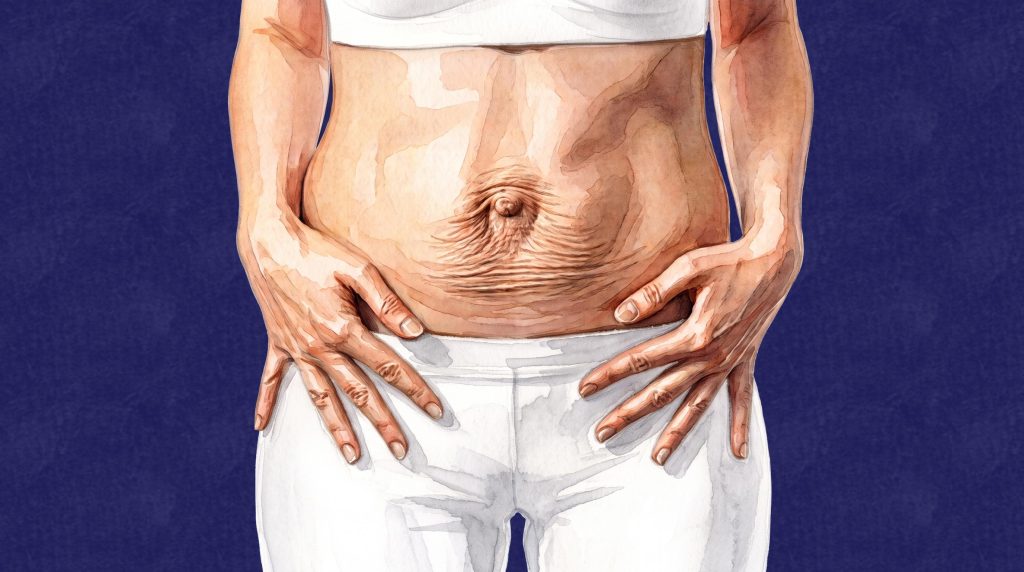
In my practice, women often come in unsure whether they have muscle separation (diastasis recti), whether it will settle on its own, and what can be done if it does not. In this article I explain what diastasis recti is, the signs you might notice, a check you can do at home, and how I assess and repair it when surgery is appropriate.
What diastasis recti (abdominal muscle separation) is
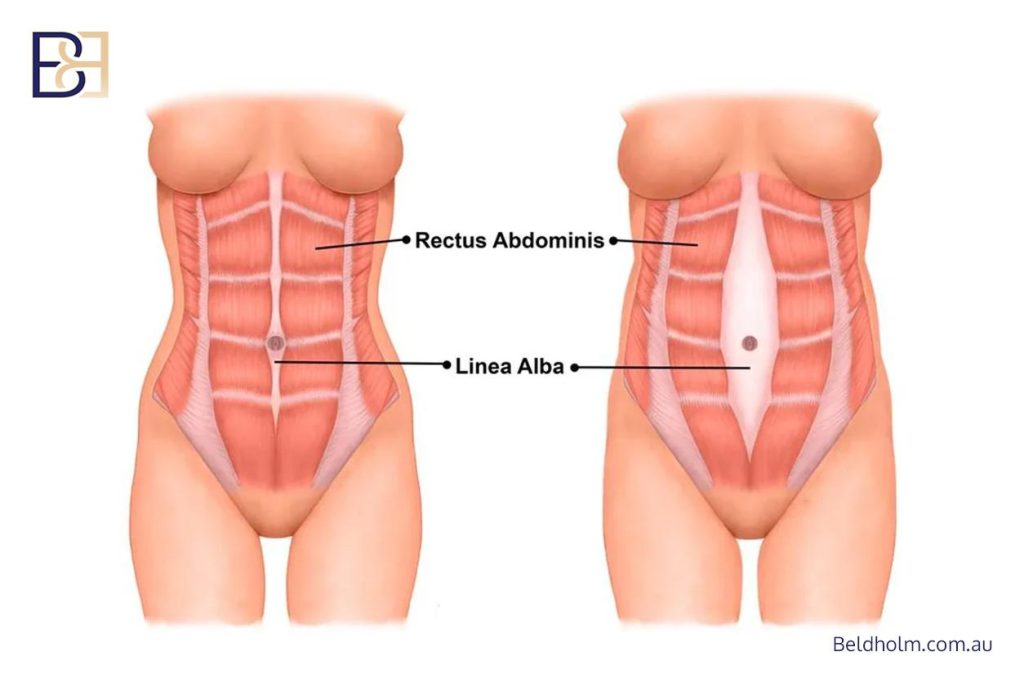
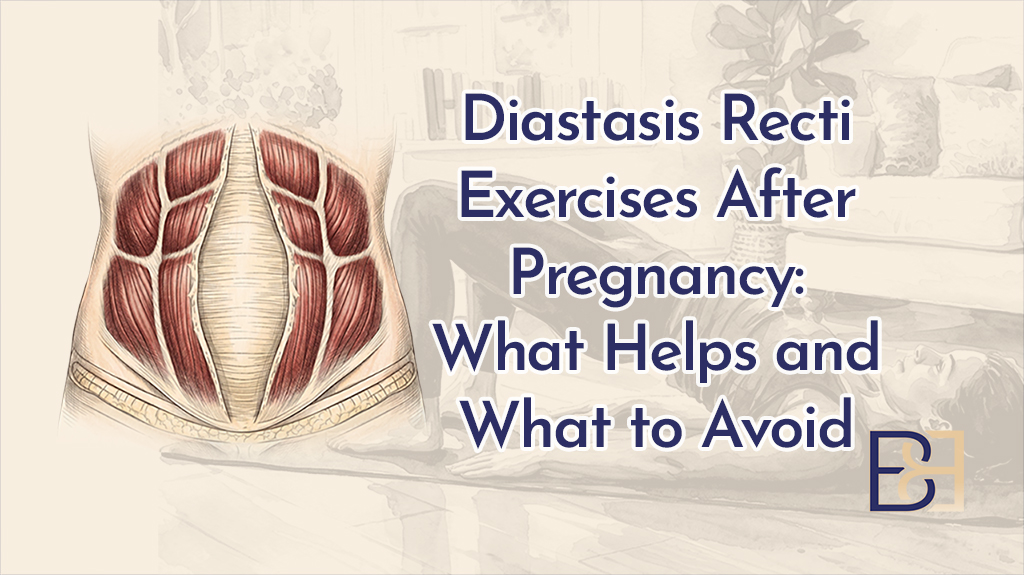
Your abdominal wall is made up of several muscle layers. The pair most people picture as the “six-pack” are the rectus abdominis muscles, which run vertically down the front of your abdomen. Joining its left and right sides down the midline is a band of connective tissue called the linea alba.
During pregnancy, your growing uterus pushes forward against the abdominal wall. At the same time, hormones such as relaxin soften the connective tissue so your body can make room for the baby. The linea alba stretches and thins, and the left and right sides of the rectus abdominis muscles gradually move apart. This widening between them, an abdominal separation, is diastasis recti, known in full as diastasis recti abdominis (1).
The muscles themselves are not damaged. It is the connective tissue between them that has stretched, which is why the left and right sides sit further apart than before pregnancy. In most women this is a normal part of how the body adapts to pregnancy.
How it differs from a hernia
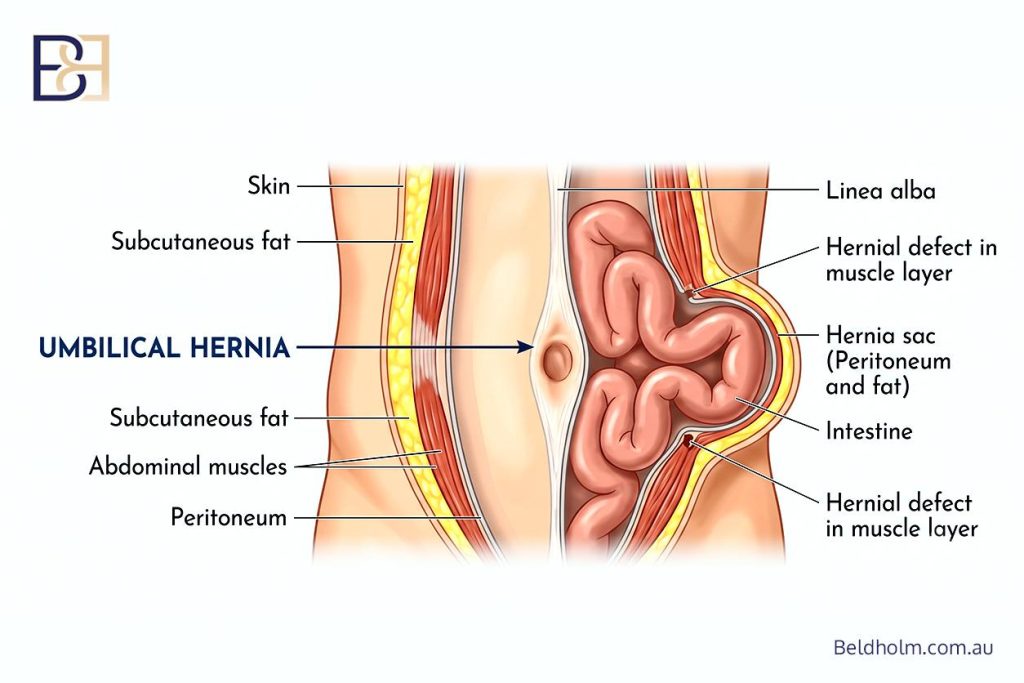
Diastasis recti (muscle separation) and a hernia are not the same thing, although they can look similar from the outside.
- With diastasis recti, the linea alba is stretched and thinned but still intact. There is no hole in the abdominal wall.
- With a hernia, there is an actual gap or defect in the wall, and tissue such as fat or bowel can push through it.
The two can occur together, and a hernia may need separate treatment. Part of what I check at consultation is whether a true hernia is present alongside the muscle separation (diastasis recti), because that changes how I plan the operation.
How common diastasis recti is after pregnancy
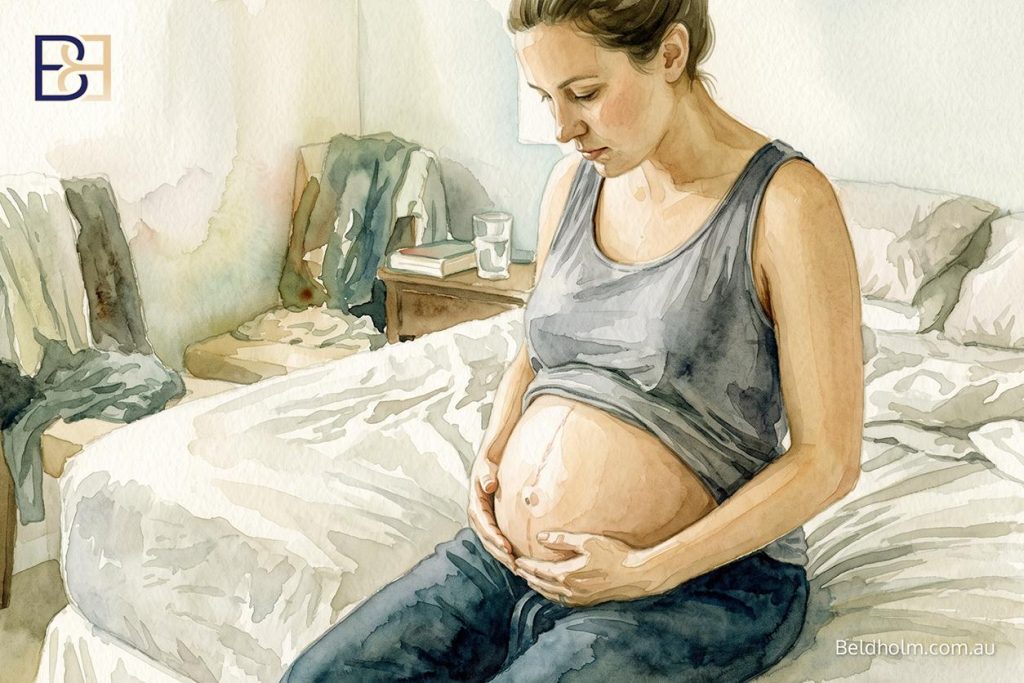
Diastasis recti is very common. By late pregnancy the great majority of pregnant women have some degree of muscle separation (diastasis recti), because that is what happens as the abdomen expands to make room for a full-term baby.
How many women still have it once the body has recovered is harder to pin down, because studies measure it in different ways and at different times. Reported rates in the year after birth range widely, from around a fifth of women to more than half, depending on how and when the separation is measured (1).
What is consistent is the pattern over time. In the early months after birth the gap often narrows on its own, helped by the hormonal changes that follow pregnancy. For many women it keeps settling across the first year. For some it persists, and these are the women who tend to notice ongoing changes in the shape of the abdomen or in core strength.
Having more pregnancies, carrying twins or more, and greater weight gain during pregnancy can all make persistent separation more likely, although it is not possible to predict exactly who will be affected. I check for it in every woman I see after pregnancy. It is a normal variation, not a reflection of anything you did or did not do.
Signs you might notice
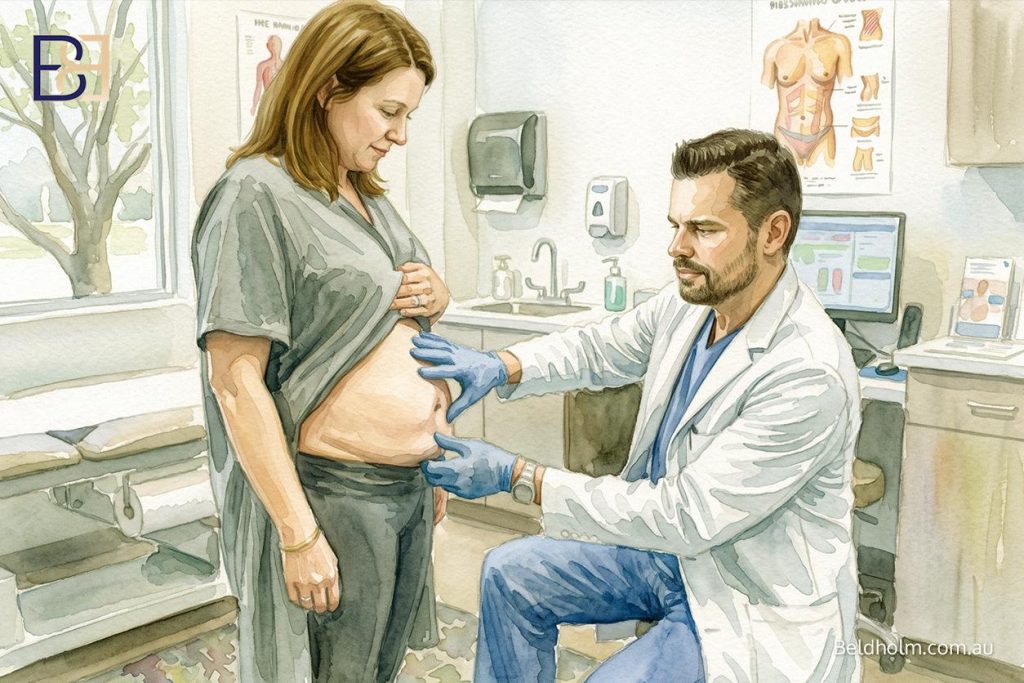
Many women with diastasis recti have no symptoms at all, and the separation is only picked up when they go looking for it or when I examine them at consultation. Others notice one or more changes in how the abdomen looks or feels. Everyone is different, so treat the following as things some women notice, not a checklist that all apply.
Changes in the shape of the abdomen
The most common sign is a ridge or doming that appears down the middle of the abdomen when you sit up or strain. You might see it when getting out of bed, lifting a toddler, or doing a sit-up. At rest, the abdomen can look soft or full through the middle, even in women who are otherwise lean, because the muscles are no longer holding the midline as firmly as they did before pregnancy.
A gap you can feel
Some women can feel a soft valley running down the midline between the muscles, particularly just above or below the belly button. That abdominal gap is the separation itself.
Core weakness and related symptoms
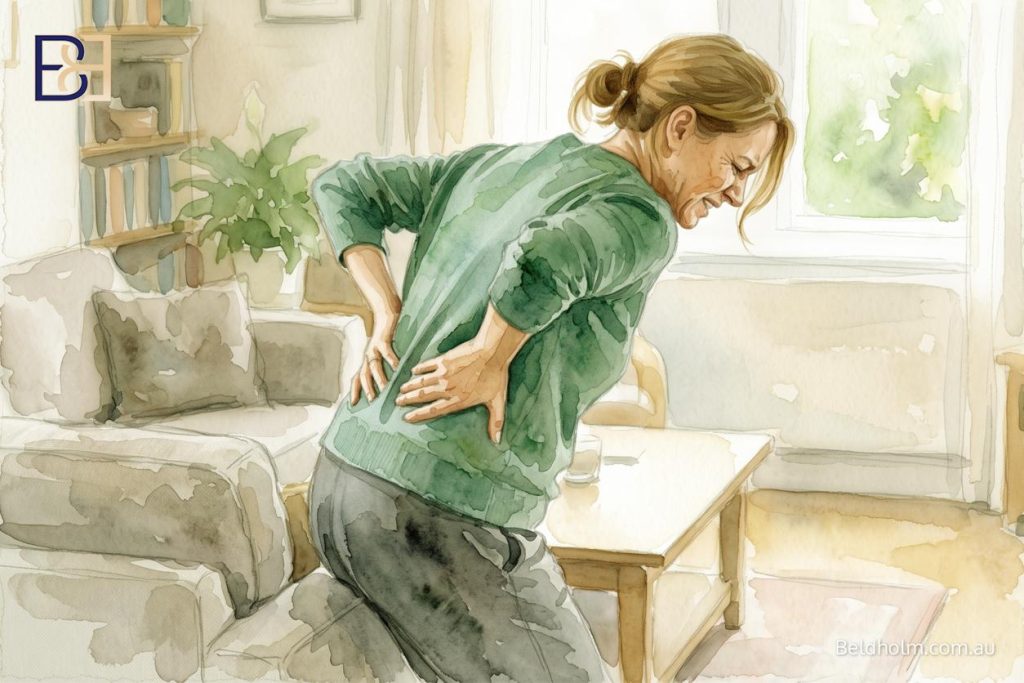
Because the abdominal and core muscles work together with the back and the pelvic floor, a persistent separation can go along with:
- A weaker core and less trunk stability, so tasks like lifting feel harder than they used to
- Lower back pain
- Pelvic or hip discomfort
- Pelvic floor dysfunction, such as leaking urine with coughing, sneezing, or exercise (stress urinary incontinence)
- A sense that posture has changed
These links are supported by published research, but they are associations, not certainties (2,3,4). Plenty of women with diastasis recti have none of them, and each of these symptoms can have other causes.
How to check for diastasis recti at home
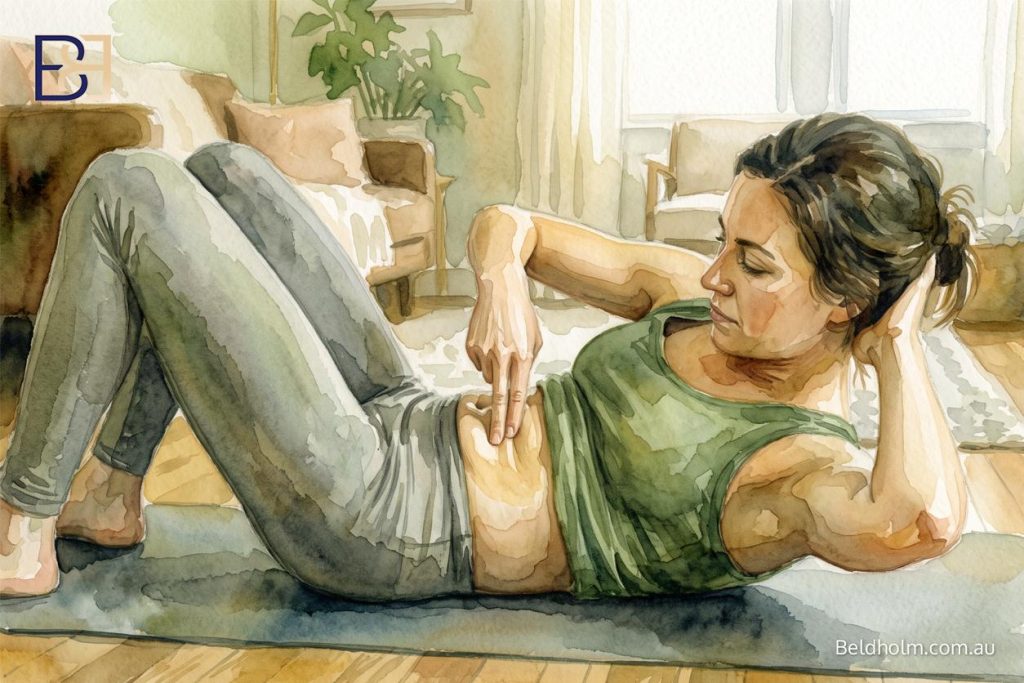
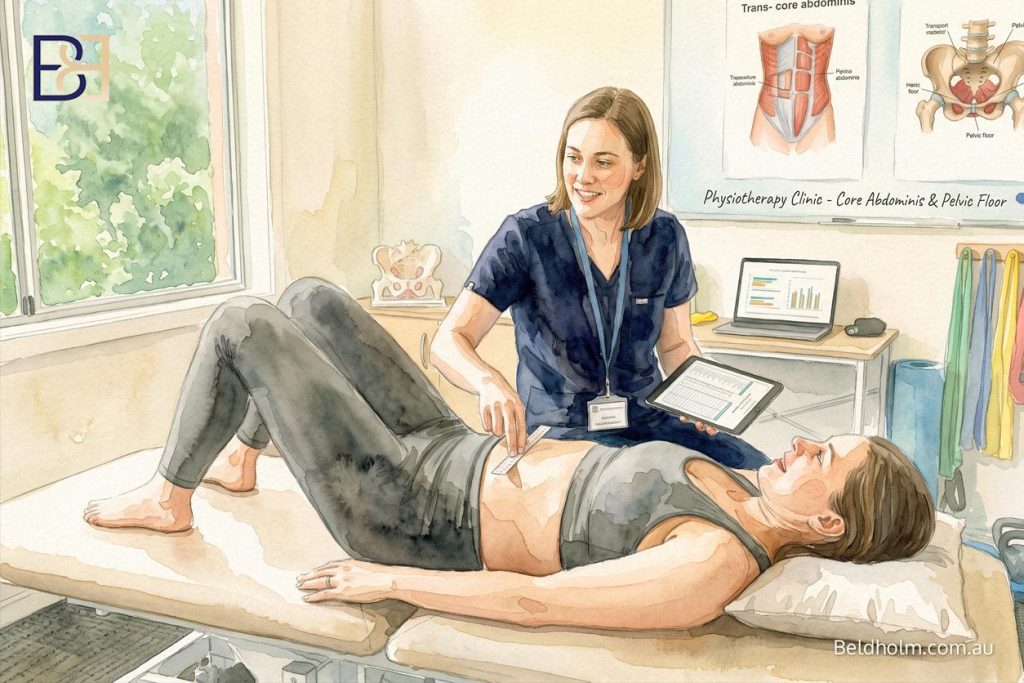
There is a check you can do at home, sometimes called a diastasis recti test, that gives a rough idea of whether you have muscle separation (diastasis recti) and how wide it is. Treat it as a guide only. It is not a diagnosis, and the result varies depending on how you press and where you measure.
Here is how to do it:
- Lie on your back with your knees bent and your feet flat on the floor.
- Place your fingertips along the midline of your abdomen, just above or below the belly button, with your fingers pointing down towards your feet.
- Let your abdomen relax, then slowly lift your head and shoulders, bringing your shoulder blades just off the floor, as if starting a small curl-up.
- As the muscles tighten, feel for the abdominal gap between the firm bands of muscle on either side of the midline. Notice how many fingers fit into the gap, and whether the middle of your abdomen domes upwards.
Check at a few points along the midline, because the gap is often widest around the belly button and narrower above and below it.
What the result means
As a rough guide, a gap of about 2 fingerwidths (roughly 2 cm) or more, especially with doming, suggests some degree of diastasis recti. A smaller gap sits within the usual range.
The width is only part of the picture. How much the tissue has thinned, how the gap behaves when you move, and your symptoms all matter, and none of those show up in a finger check.
What this check cannot tell you
This test estimates the width of the separation. It cannot tell you whether a hernia is also present, because a hernia is a different problem: a gap or defect in the abdominal wall rather than a stretched midline. A home check like this cannot diagnose diastasis recti on its own, measure the tissue accurately, or rule other causes in or out. That is what an examination is for, and sometimes an ultrasound, which is how I assess the separation properly at consultation.
When to check after giving birth

In the first weeks after birth, your abdomen is still changing. The uterus is gradually shrinking back to its usual size, fluid levels are settling, and the abdominal wall is recovering from months of stretching. Almost every woman has a wide gap in this early period, so checking straight after birth tells you very little.
I usually suggest leaving the home check until around 8 weeks after birth, once that early recovery has passed. Even then, the result is a snapshot rather than a final answer. The gap often continues to narrow over the first year, so what you feel at 8 weeks may be less at 6 or 12 months.
If the separation is still noticeable after about 12 months, or symptoms are bothering you before then, that is a reasonable point to see your GP and ask about a referral for assessment.
One note on breastfeeding: you can do the home check at any time as a rough guide, but if surgery is being considered, I plan the timing once breastfeeding has finished and the abdominal wall has settled after your most recent pregnancy. That timing is worked out individually at consultation.
Does diastasis recti resolve, and what helps without surgery
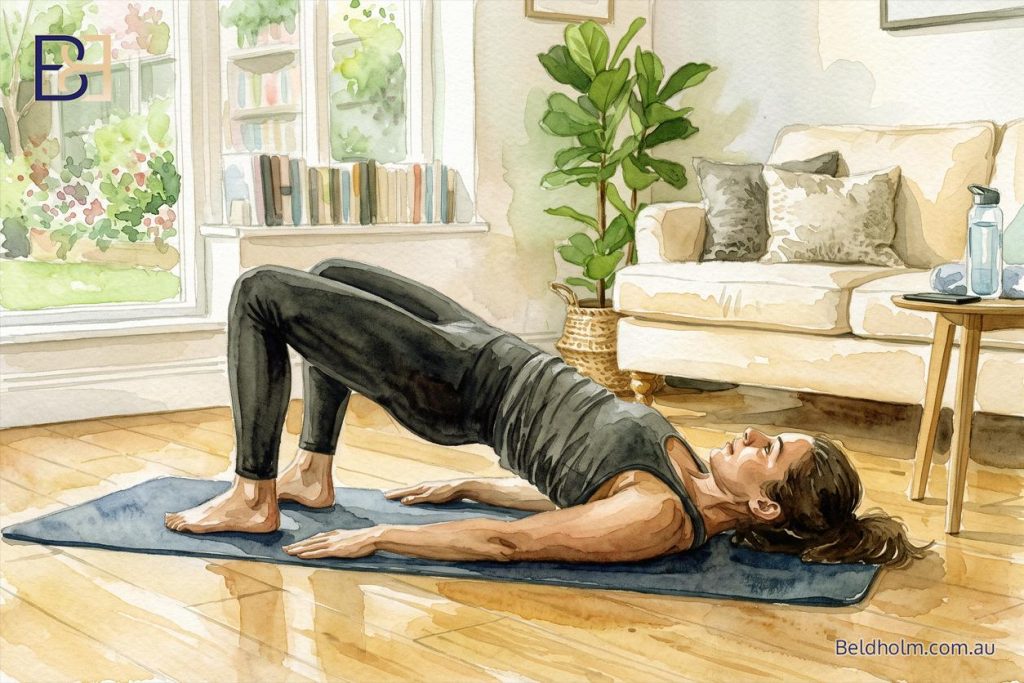
For many women, the gap narrows on its own over the first 6 to 12 months after birth as the tissues recover. That is why I do not rush any decision about surgery in the first year.
Where a separation is on the milder side, or is still settling, the first thing I recommend is guided core rehabilitation with a women’s health physiotherapist. The focus is on the deep core muscles and the pelvic floor, on deep breathing and control, and on retraining how you load the abdomen during everyday movements like lifting your baby. It can include targeted abdominal exercises such as pelvic tilts, and habits like learning to roll onto your side to get up rather than straining straight up from lying flat. A physiotherapist can also point out the movements that tend to make doming worse so you can adjust them.
I have a separate article that goes through diastasis recti exercises after pregnancy in detail.
What exercise can and cannot do
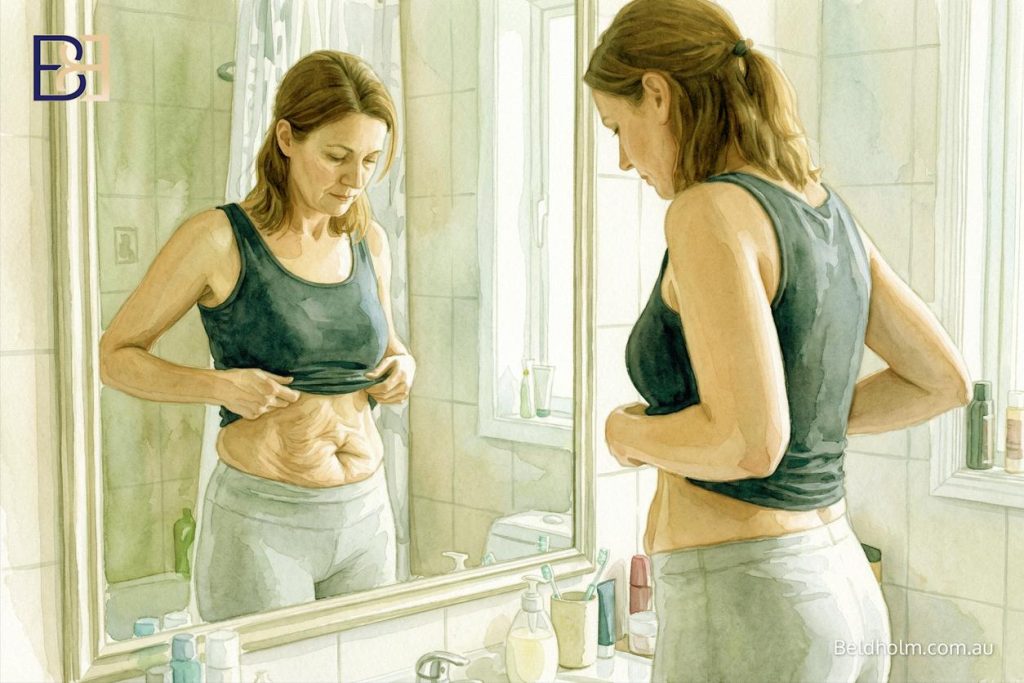
Published research shows that targeted exercise can reduce the width of the separation and improve core strength and symptoms for some women, although the results across studies are mixed and not everyone responds (1,5,6). Exercise is most useful for milder separation and for rebuilding function.
What exercise cannot do is tighten connective tissue that has stretched and stayed stretched, and it cannot remove loose skin. If the linea alba has thinned and widened significantly, core work will not bring the muscles back together, and pushing harder with crunches or sit-ups can sometimes make the doming more obvious.
For milder separation, then, physiotherapy is the sensible starting point and is often all that is needed. For a wider, persistent separation that is causing symptoms and has not responded to a proper trial of rehabilitation, surgical repair is the option to discuss.
How diastasis recti is assessed and repaired
Assessment at consultation
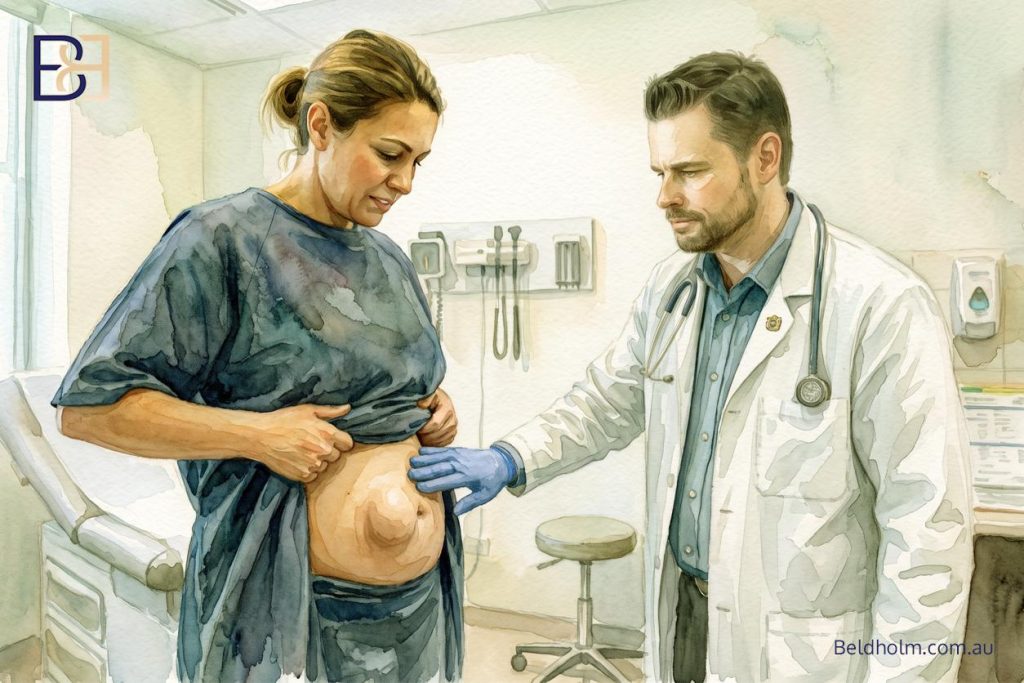
When I see you, I examine the abdomen and measure how wide and how long the separation is, feel the quality of the linea alba, and check whether a hernia is present. I also look at the skin and at any previous caesarean scar, and I go through your symptoms, your history, whether your family is complete, and whether you are still breastfeeding. Sometimes I arrange an ultrasound to measure the separation and confirm whether a hernia is there as well.
When surgery is worth considering
Surgery is not the first step. For milder separation, physiotherapy comes first. I consider surgical intervention when the separation is wider and persistent, when it is causing symptoms, when it has not settled with a proper trial of rehabilitation, and when your family is complete.
What the repair involves
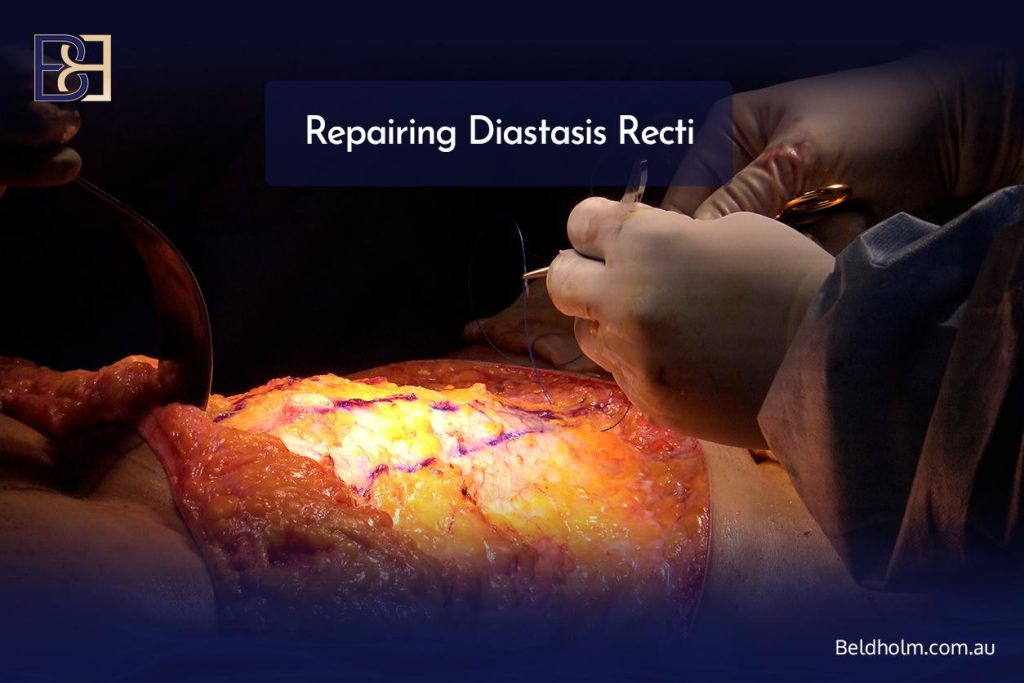
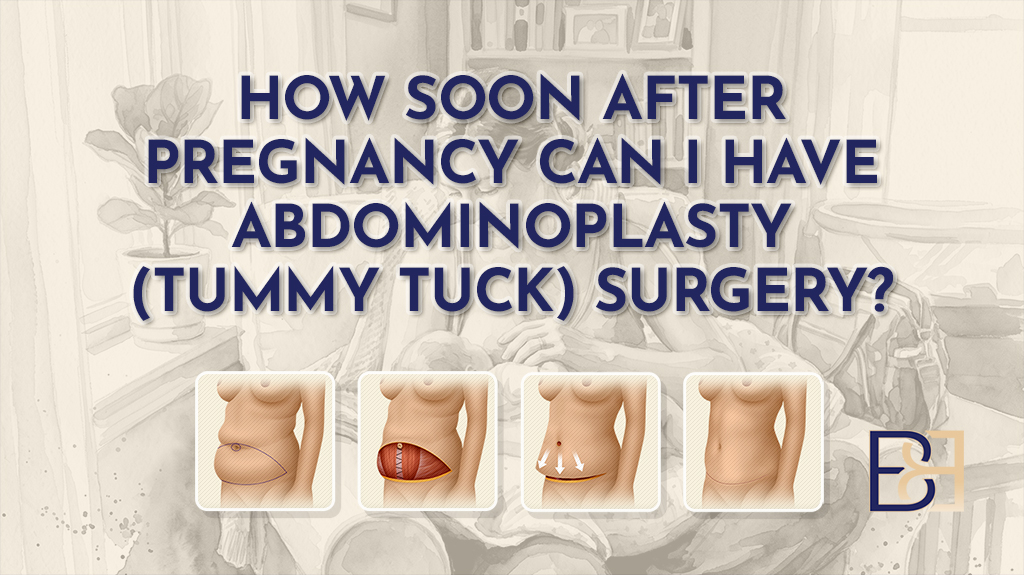
Diastasis recti is repaired during an abdominoplasty (tummy tuck). Working through the same incision, I bring the separated muscle edges back towards the midline by stitching the stretched linea alba together with internal sutures. This is called plication. It tightens the abdominal wall along the midline, and the stitches sit deep under the skin where they are not visible.
Where there is also loose skin left over from pregnancy, the same operation removes the excess skin low on the abdomen. If you have a scar from a caesarean birth, it is usually removed as part of this, and the new scar is planned to sit low across the lower abdomen. Where fatty tissue needs contouring at the same time, I may use ultrasound-assisted suction lipectomy (VASER liposuction) as part of the operation.
Recovery and what to weigh up
An abdominoplasty with muscle repair is a larger operation and a bigger physiological event than a home check or a course of physiotherapy. It involves a general anaesthetic and a hospital stay, and it takes several weeks before you are back to normal daily activity, and longer again before core exercise and heavy lifting. For most women that recovery happens while caring for young children, so having support at home is worth planning for.
Final thoughts

Diastasis recti is one of the most common changes after pregnancy, and it is a normal one. The muscles are not torn. The connective tissue down the midline has stretched, and in many women it narrows again over the first year. A home check gives you a rough idea of whether you have it, but it is a guide, not a diagnosis.
If your separation is on the milder side, guided physiotherapy is the sensible first step and is often all that is needed. Where the separation is wider, persistent, and causing symptoms, repair during an abdominoplasty (tummy tuck) is worth discussing.
References
- Du Y, Huang M, Wang S, Yang L, Lin Y, Yu W, et al. Diastasis recti abdominis: a comprehensive review. Hernia. 2025;29:222.
- Fuentes Aparicio L, Rejano-Campo M, Donnelly GM, Vicente-Campos V. Self-reported symptoms in women with diastasis rectus abdominis: a systematic review. J Gynecol Obstet Hum Reprod. 2021;50:101995.
- Taylor DA, Merten SL, Sandercoe GD, Gahankari D, Ingram SB, Moncrieff NJ, et al. Abdominoplasty improves low back pain and urinary incontinence. Plast Reconstr Surg. 2018;141:637.
- Toto V, Faiola A, Pazzaglia M, de Donato F, Persichetti P. Could abdominoplasty with diastasis recti abdominis correction improve stress urinary symptoms? A 1-year follow-up prospective study. Aesthetic Plast Surg. 2024;48:3929-3935.
- Theodorsen NM, Moe-Nilssen R, Bo K, Haukenes I. Effect of exercise on the inter-rectus distance in pregnant women with diastasis recti abdominis: an experimental longitudinal study. Physiotherapy. 2023;121:13-20.
- Soto-Gonzalez M, Da Cuna-Carrera I, Lantaron-Caeiro EM, Pascoal AG. Effect of hypopressive and conventional abdominal exercises on postpartum diastasis recti: a randomized controlled trial. PLoS One. 2024;19(12):e0314274.