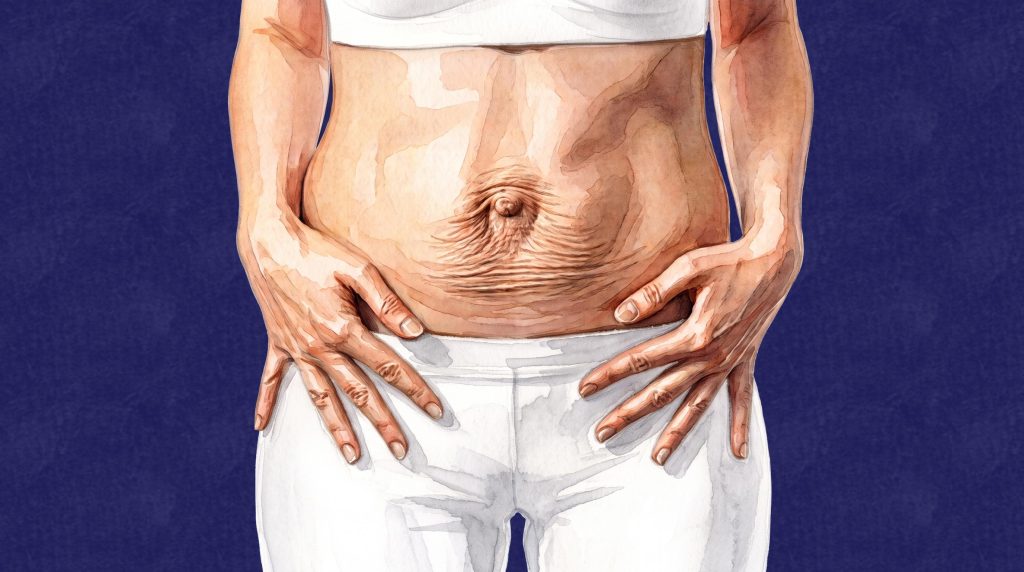
After pregnancy, the skin across the lower abdomen can stay stretched once the uterus has returned to its usual size. The 2 rectus abdominis muscles that run down the midline can also separate, a change called muscle separation (diastasis recti). Both are common after pregnancy and childbirth, and both are a normal part of how many women’s bodies change through this time (1).
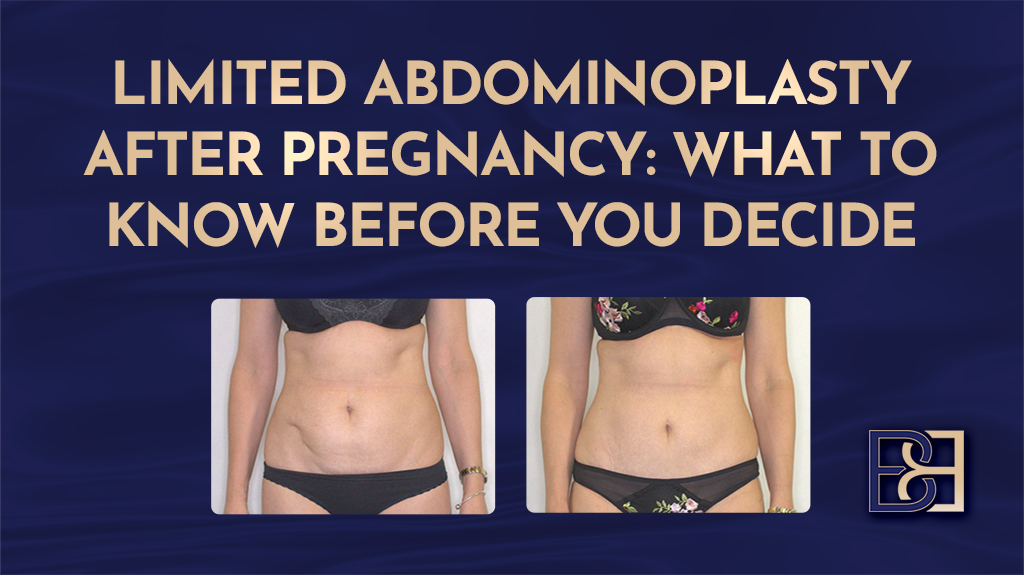
In my practice, I see women who have a limited amount of loose, excess skin sitting low on the abdomen, often over or around a caesarean scar, with the upper abdomen largely unchanged. For these patients a limited abdominoplasty (mini tummy tuck) may be an option. It is a smaller operation than a full abdominoplasty and works on the lower abdomen only.
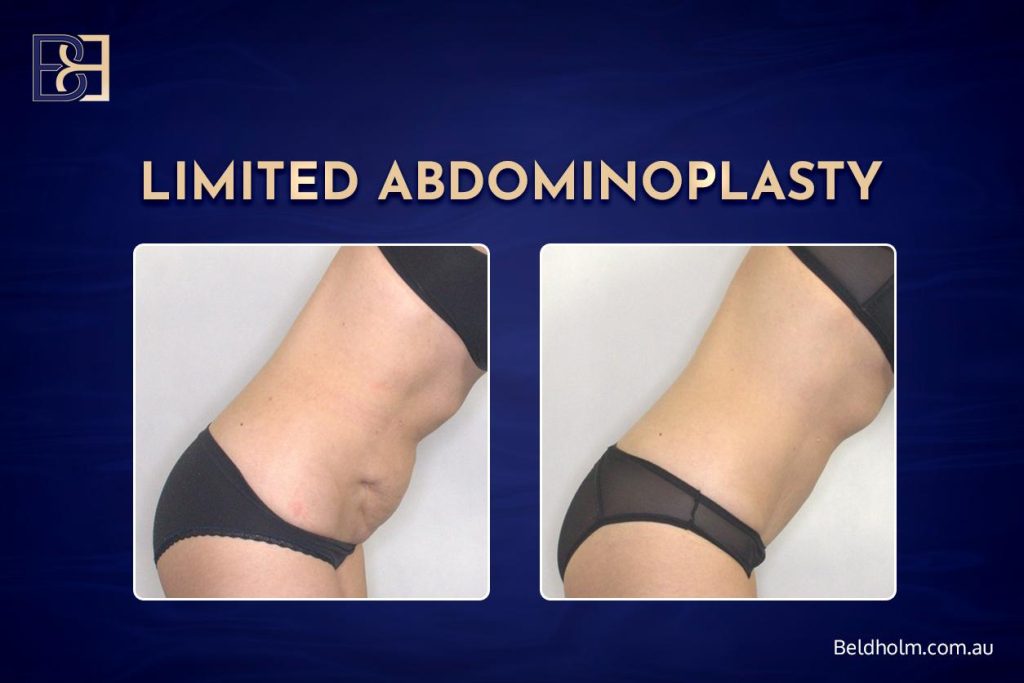
Disclaimer: Results Vary, Surgery has risks, Seek 2nd opinion. Operation performed by Dr Beldholm
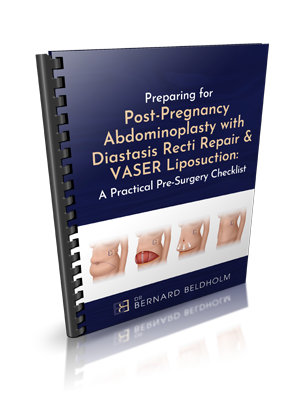
In most cases I combine it with VASER liposuction (ultrasound-assisted suction lipectomy), which uses ultrasound energy to loosen fat before it is removed by suction. Where there is muscle separation (diastasis recti) in the lower abdomen, I repair it during the same operation. Together, this removes the loose lower abdominal skin, reduces fat in the treated area, and repairs the muscle separation (diastasis recti) where it is present.
What a Limited Abdominoplasty With VASER Liposuction (Ultrasound-Assisted Suction Lipectomy) Involves
A limited abdominoplasty (mini tummy tuck) is a body contouring operation and one type of post pregnancy tummy tuck (abdominoplasty). It works on the lower abdomen only, below the belly button (6). Through a low horizontal incision, I remove the excess skin from the lower abdomen and, where there is abdominal muscle separation (diastasis recti) in that area, I repair it. Because the work stays below the belly button, the belly button itself is not moved, which is one of the main differences from a full abdominoplasty.
The incision sits low, in the same region as a caesarean scar, so it can be covered by underwear. Its length depends on how much loose skin is present. This is still an operation carried out under general anaesthetic, not a minor procedure.
The two forms I use
There are 2 versions of this operation, and which one suits you is decided at consultation.
Skin-only limited abdominoplasty. This removes the loose lower abdominal skin, and repairs lower muscle separation (diastasis recti) if it is present, without liposuction (suction-assisted lipectomy). It suits a small number of patients whose main change is loose skin with little excess fat.
Limited abdominoplasty with VASER liposuction (ultrasound-assisted suction lipectomy). This is what I use in most cases. Alongside removing the excess skin, I use VASER liposuction (ultrasound-assisted suction lipectomy) to remove excess fat across the treated area, so both the skin and the fat are dealt with in the one operation.
What VASER liposuction (ultrasound-assisted suction lipectomy) is
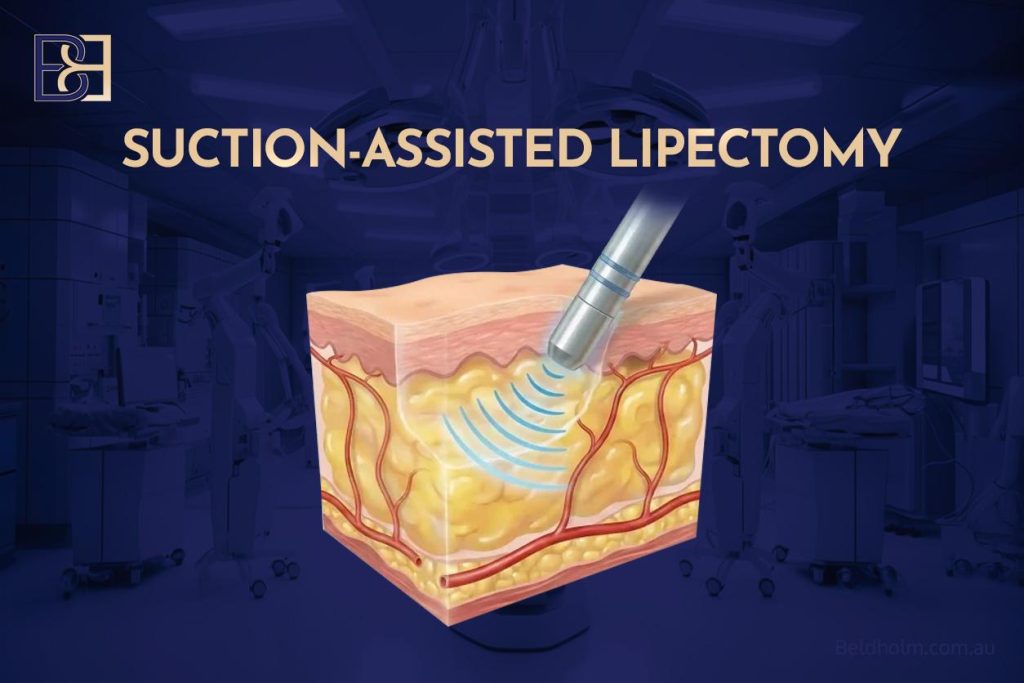
VASER liposuction (ultrasound-assisted suction lipectomy) uses ultrasound energy to loosen fat before it is removed by suction (4). This differs from standard suction-assisted lipectomy, which relies on suction and mechanical movement of the cannula alone (3).
Who Is Suitable for a Limited Abdominoplasty With VASER Liposuction (Ultrasound-Assisted Suction Lipectomy)
A limited abdominoplasty (mini tummy tuck) works on the lower abdomen only, so it suits a fairly specific pattern. In my practice, the women who are a good fit tend to have loose skin sitting mainly below the belly button, with the upper abdomen largely unchanged. Any muscle separation (diastasis recti) they have is confined to the lower abdomen rather than running the full length of the midline.
What I look for
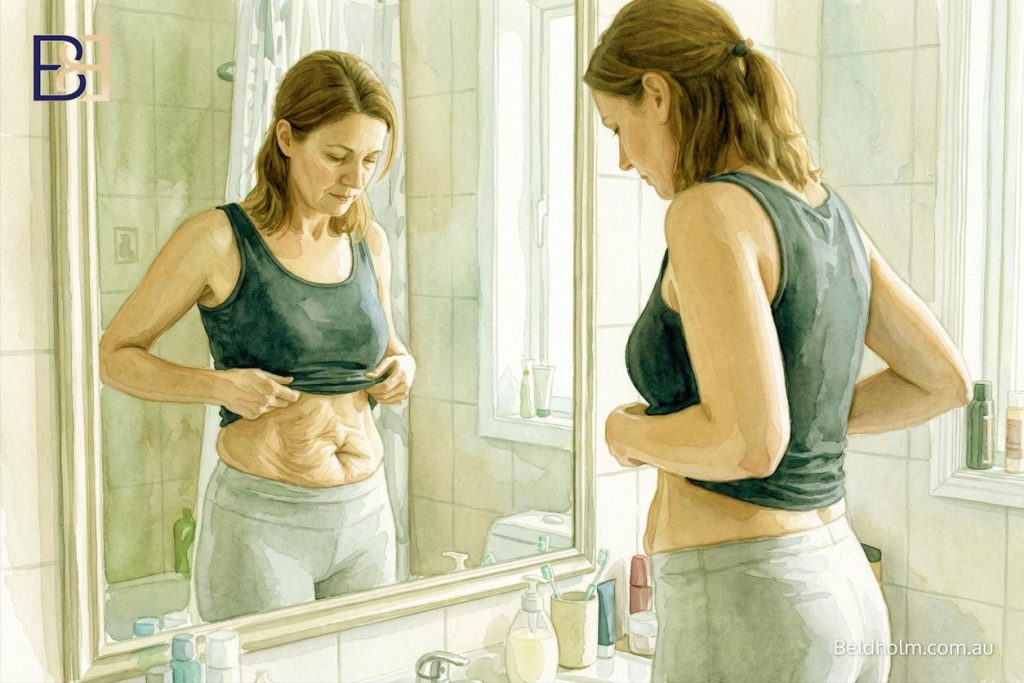
- Loose skin mainly on the lower abdomen, below the belly button, with little change to the upper abdomen
- Muscle separation (diastasis recti), if present, confined to the lower abdomen
- A stable weight you are comfortable maintaining
- Good general health
- A non-smoker, or willing to stop smoking for 6 weeks before and 6 weeks after surgery
- A clear understanding of the risks and of what the operation can and cannot do
- Your family is complete and breastfeeding has finished, since a future pregnancy can change the result
Why diet and exercise don’t remove loose skin or muscle separation (diastasis recti)

Loose skin and muscle separation (diastasis recti) are structural changes. The skin has been stretched and its elasticity reduced, and the linea alba, the band of connective tissue down the midline that joins the abdominal muscles, has widened (2). How much loose skin remains depends partly on your skin elasticity, which pregnancy can reduce. Neither is fat, and neither is about fitness, so they don’t resolve with a healthy diet or regular exercise, however consistent you are. This is not a shortfall on your part; it is the nature of the tissue change. VASER liposuction (ultrasound-assisted suction lipectomy) reduces fat in the area, but removing loose skin and repairing the separation needs abdominoplasty surgery.
When the lower abdomen isn’t the whole picture
If loose skin or muscle separation (diastasis recti) extends across the upper abdomen as well, a limited abdominoplasty won’t reach it. In that situation a full or extended abdominoplasty is the more appropriate operation. Which one fits your anatomy is something I work through with you at consultation.
Limited, Full, and Extended Abdominoplasty (Tummy Tuck): Which Operation Fits
Changes after pregnancy vary from woman to woman, so more than one type of abdominoplasty (tummy tuck) exists. The right one depends on where the loose skin sits and how far the abdominal muscle separation (diastasis recti) extends. Here is how they compare.
Limited abdominoplasty
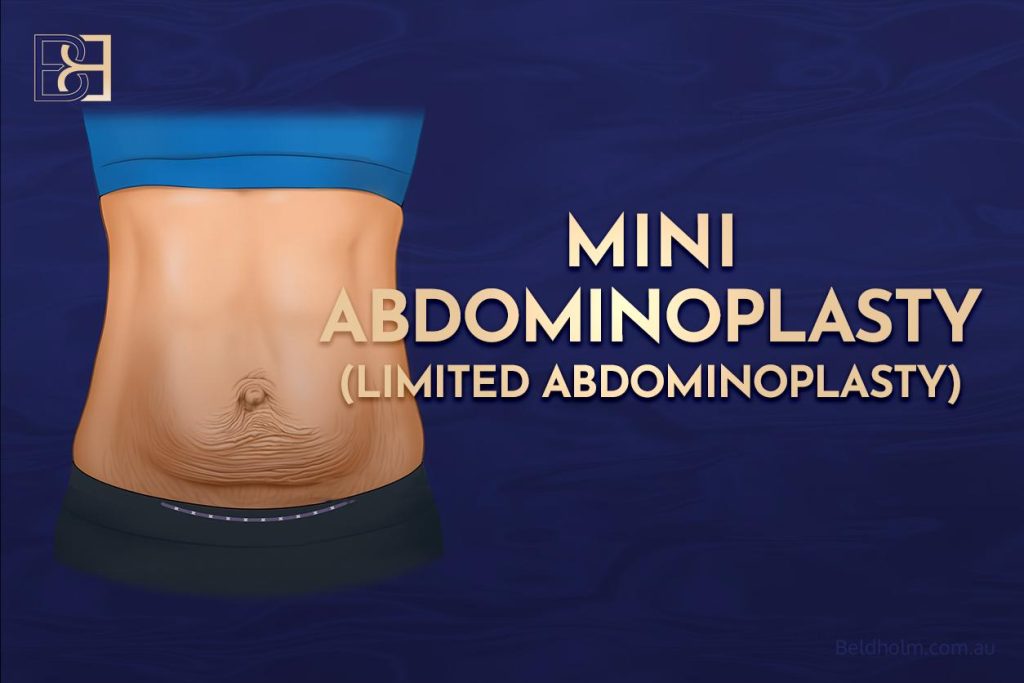
This works on the lower abdomen only, below the belly button. The incision is a single low horizontal line, kept short, in the region of a caesarean scar. The belly button is not moved. I repair muscle separation (diastasis recti) where it is present in the lower abdomen. It suits women whose loose skin and separation are confined to the lower abdomen.
Full abdominoplasty
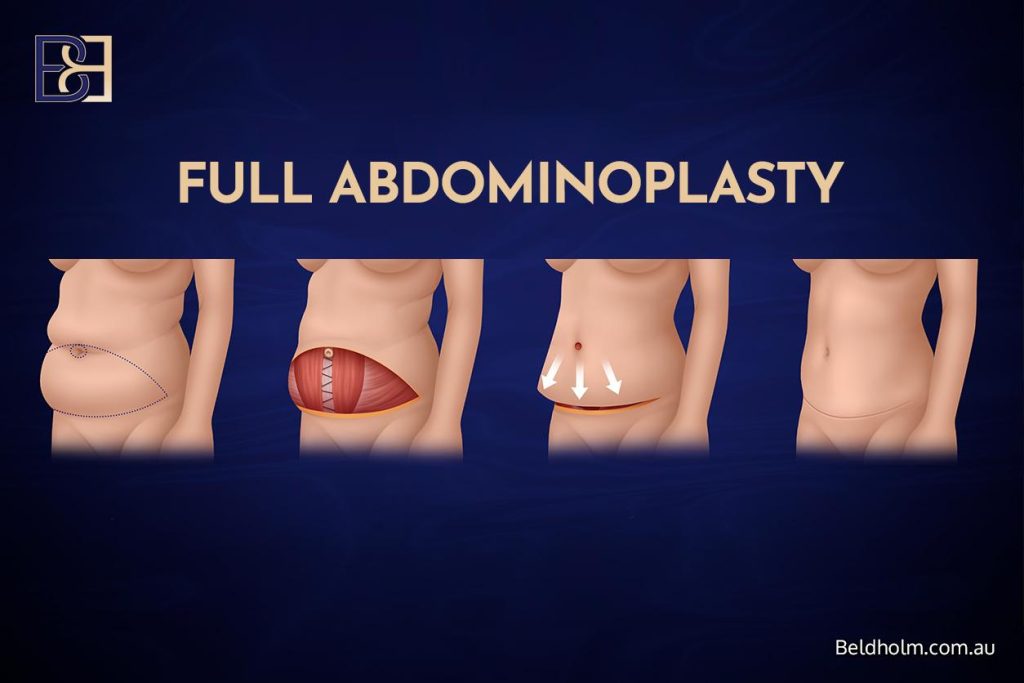
This treats the whole abdomen, upper and lower. The main incision runs from one hip bone to the other, and a second incision is made around the belly button so the skin above it can be drawn down. The belly button itself stays attached to the abdominal wall and sits through a new opening once the skin is redraped. I repair the muscle separation (diastasis recti) along the full length of the midline. This suits women whose loose skin and separation extend above the belly button.
Extended abdominoplasty
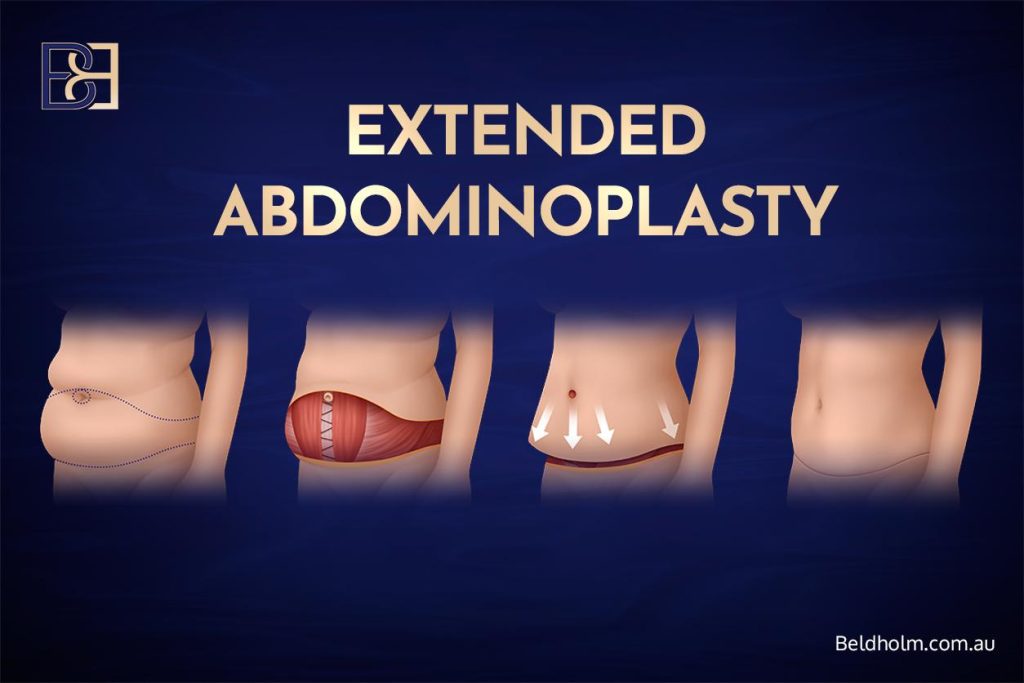
This is a full abdominoplasty with the incision carried further, past the hip bones and towards the sides, to remove loose skin that extends around to the flanks. After pregnancy, many women have a small amount of loose skin that reaches a little way around the sides, so in practice the operation I perform is often technically an extended abdominoplasty, even though the additional amount is modest. For simplicity I often still call it a full abdominoplasty.
When a limited abdominoplasty isn’t enough
A limited abdominoplasty only reaches the lower abdomen. If your loose skin or muscle separation (diastasis recti) involves the upper abdomen, or the separation runs the full length of the midline, a full abdominoplasty is the operation that will reach it. If the loose skin continues around to the flanks, an extended abdominoplasty may be needed. Which of these fits your anatomy is decided at consultation, after examination.
The Operation, Step by Step
A limited abdominoplasty with VASER liposuction (ultrasound-assisted suction lipectomy) is carried out under general anaesthetic, so you are fully asleep. It usually takes around 2 to 3 hours. Here is what happens during the operation.
Anaesthetic
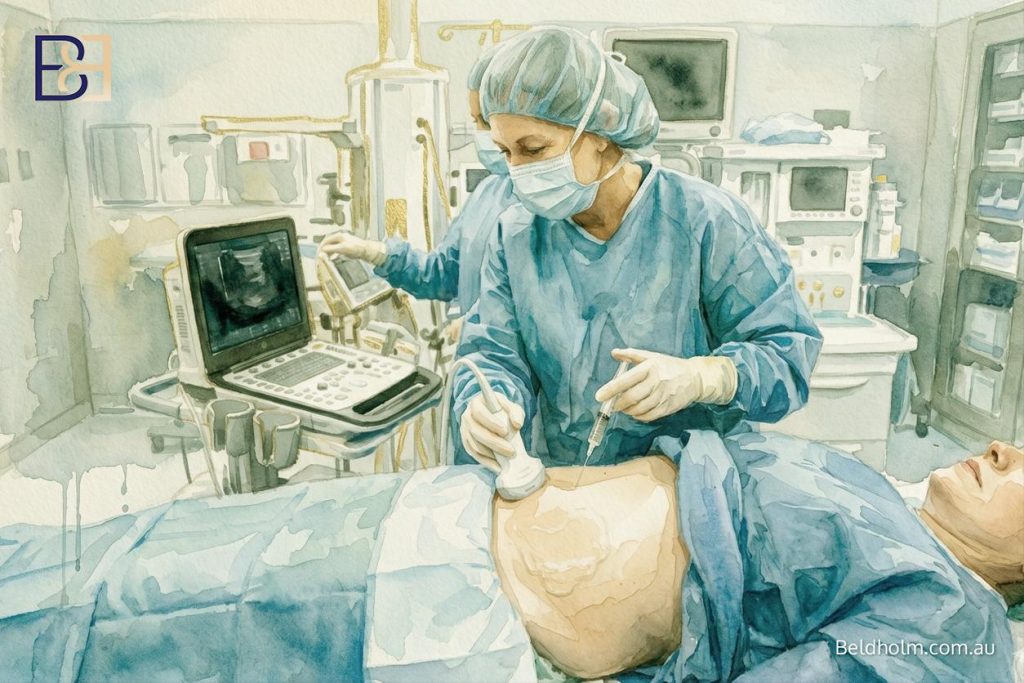
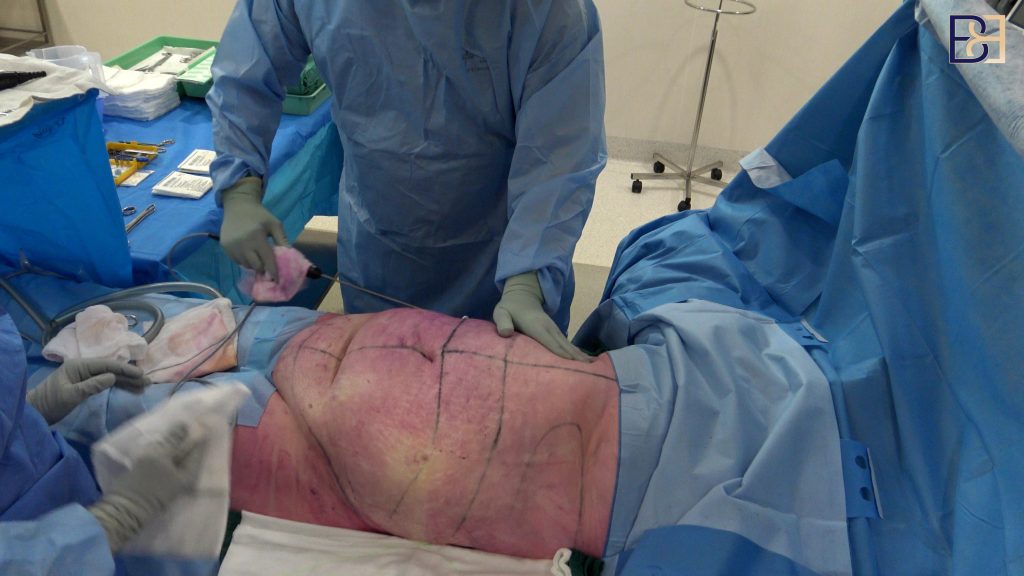
You are given a general anaesthetic by the anaesthetist in the operating theatre, and you stay asleep for the whole operation. Before you go to sleep, I mark the area to be treated and the position of the incision on your abdomen.
VASER liposuction (ultrasound-assisted suction lipectomy)
I usually begin with the VASER liposuction (ultrasound-assisted suction lipectomy). First I inject a wetting solution, also called tumescent solution, into the fatty layer through small openings. It contains sterile saline, local anaesthetic, and medication that narrows the blood vessels to reduce bleeding and bruising. I then pass a fine ultrasound probe through the openings. The ultrasound energy loosens the fat, and I remove it with a thin suction tube called a cannula.
The incision and lifting the skin
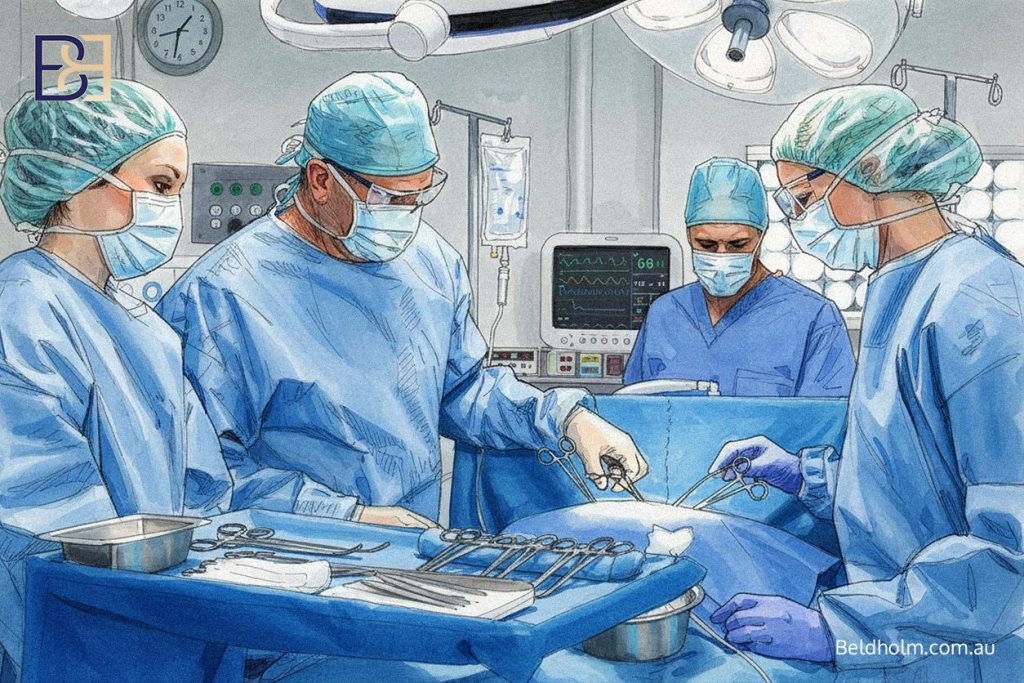
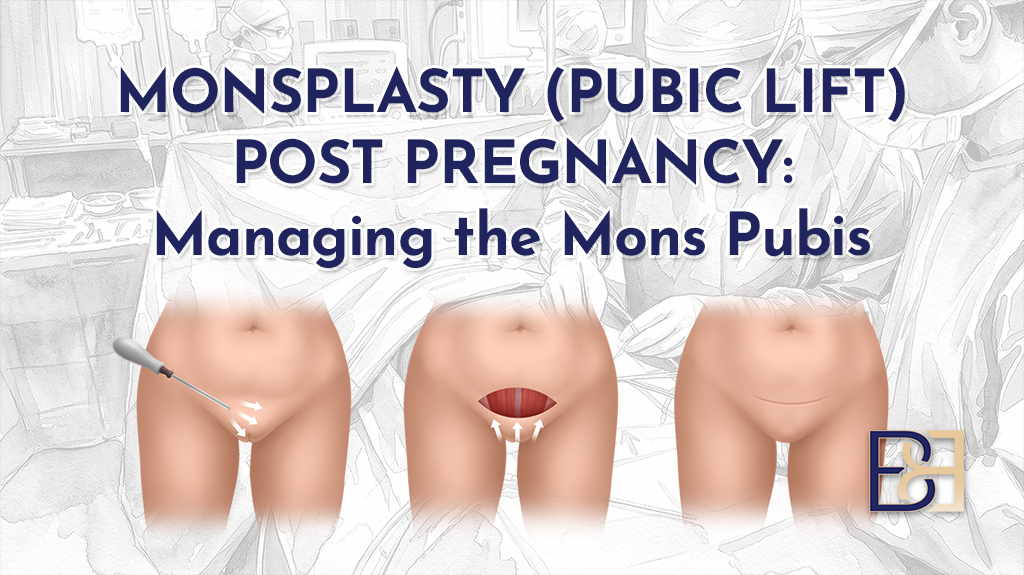
Next I make a low horizontal incision above the pubic area, along the line where a caesarean scar sits, so it can be covered by underwear. Its length depends on how much loose skin is present. I then lift the skin of the lower abdomen off the muscle underneath to reach the abdominal wall.
Repairing muscle separation (diastasis recti)
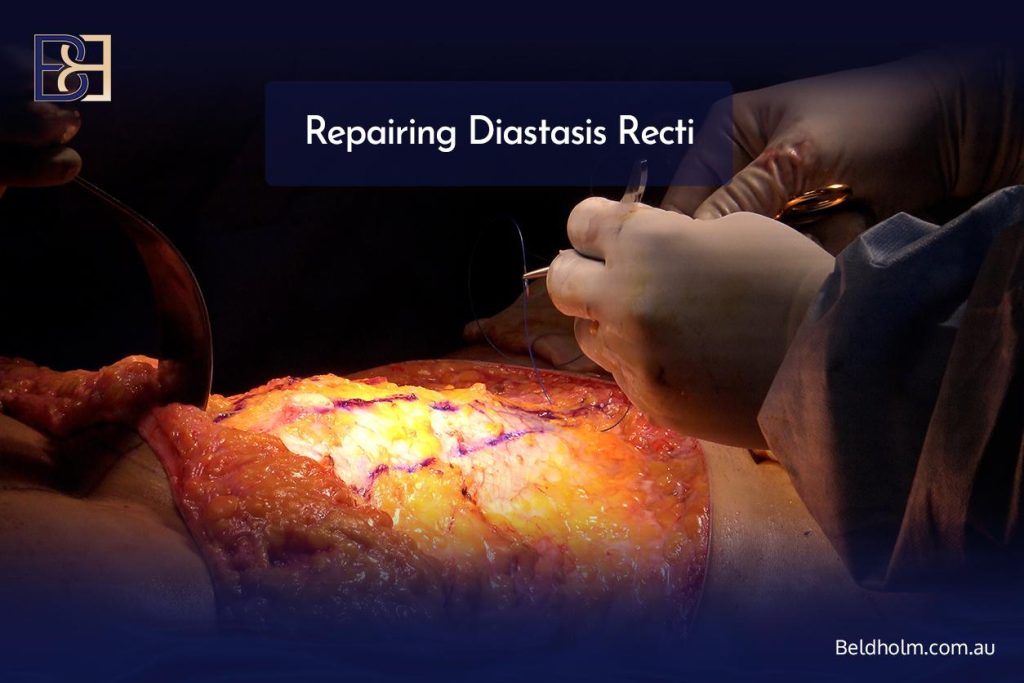
Where there is muscle separation (diastasis recti) in the lower abdomen, I repair it through the same incision. I stitch the separated abdominal muscles back together along the midline and hold them in place, which tightens the abdominal wall. In a limited abdominoplasty this repair is confined to the lower abdomen, below the belly button.
Removing the loose skin
I then remove the loose skin from the lower abdomen, below the belly button. Because the work stays below the belly button, the belly button itself does not need to be moved.
Closing
I close the incision in layers with dissolving stitches, and use adhesive surgical glue over the top. In many cases I can avoid using a drain, though not always, and that is decided during the operation.
Dressing and compression garment

I cover the incision with a PICO dressing, a small negative pressure dressing that supports healing in the early days. It usually stays on for about 7 days. I also fit a compression garment, which supports the tissues and helps with swelling. I ask you to wear it for at least 4 weeks.
The Caesarean Scar and Where the New Scar Sits
Most women who come to me after pregnancy have a caesarean scar, and a common question is what happens to it.
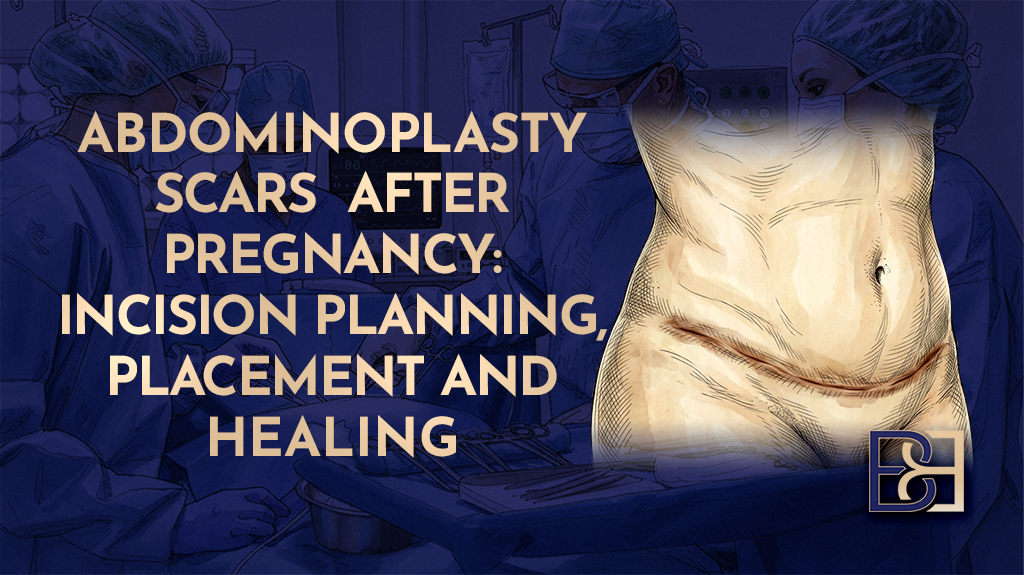
The incision for a limited abdominoplasty is a low horizontal line, placed below the caesarean scar so it can be covered by underwear. The old caesarean scar is removed along with the excess skin, so the previous scar is excised rather than left alongside the new incision.
I place the scar as low as I can and keep it horizontal, so that underwear and most swimwear cover it. Its length depends on how much loose skin is removed. Because a limited abdominoplasty treats the lower abdomen only, the scar is shorter than the scar from a full abdominoplasty.
A scar is permanent. It fades and flattens over the months that follow, but it does not disappear, and how a scar settles varies from person to person. I go through scar care with you after your surgery.
Timing: How Long After Pregnancy to Wait
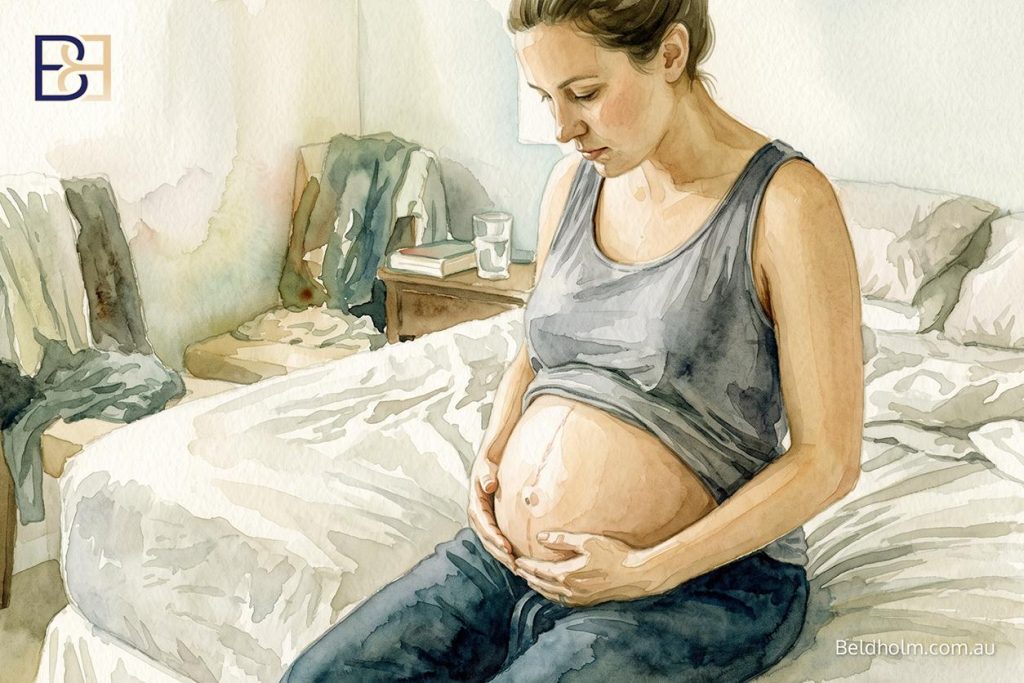
A common question from post pregnancy patients is how long to wait after having a baby. There is no single number that fits everyone. The right time depends on a few things settling, and I assess it with you at consultation.
Give your body time to settle
After pregnancy, the abdominal skin and muscles gradually change over the months that follow. Waiting until this has settled means I am operating on a stable starting point rather than tissue that is still recovering. Your weight is also more likely to be stable by then, which helps the repair hold.
Finish breastfeeding first

I plan surgery for once breastfeeding has finished. While you are breastfeeding, your weight and hormones are still adjusting, and a general anaesthetic and the medications used around surgery are better timed for afterwards. Breastfeeding itself affects the breasts rather than the abdominal wall, but waiting until it has finished gives a more stable overall picture.
When your family is complete
A future pregnancy can stretch the skin and cause muscle separation (diastasis recti) again, which can undo the repair. For that reason I recommend a limited abdominoplasty once you have decided your family is complete. If you are planning more children, it is usually worth waiting.
A caesarean is a separate operation
I do not perform an abdominoplasty at the same time as a caesarean. They are separate operations, and your body needs time to recover from the birth first. How long that takes is judged individually.
Recovery
The recovery process from limited abdominoplasty surgery takes weeks rather than days. It needs proper planning, particularly if you are caring for young children, because there are things you will not be able to do for a while.
Hospital and the first few days
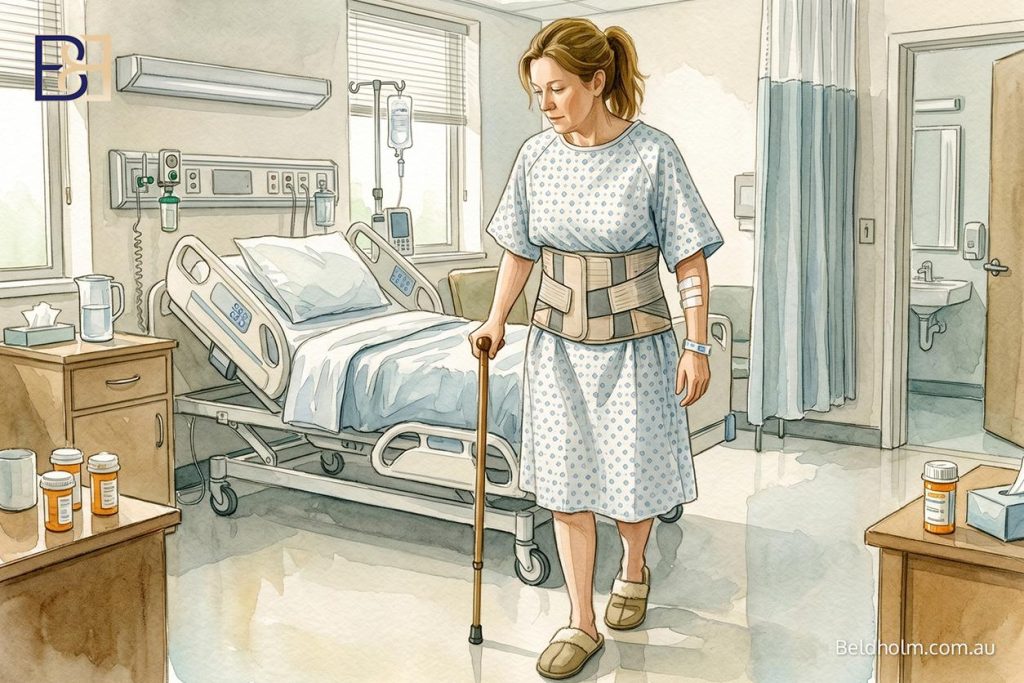
A limited abdominoplasty is usually a day procedure or a short overnight stay. You will need someone to drive you home and, ideally, to stay with you for the first day or so. In the first few days you can expect pain, swelling, bruising and soreness around the incision. I prescribe pain relief as part of your pain management, and I ask you to rest, sleep and keep your fluids up.
I also ask you to get up and take short, light walks around the house within the first few days. Moving early helps your circulation and lowers the risk of blood clots.
The first few weeks
The PICO dressing stays on for about 7 days. The compression garment is worn for at least 4 weeks. I ask you to avoid strenuous exercise for about 6 weeks, so the wound and any muscle repair have time to heal. Most women take around 2 weeks off work, and longer if the job is physical or involves lifting.
Caring for young children

How soon you can lift your children depends on your operation. If your muscle separation (diastasis recti) is repaired, the repair needs time to heal, so I ask you to avoid lifting for about 6 weeks. If you have a skin-only limited abdominoplasty with no muscle repair, you may be able to lift small children from around 2 weeks. This is the part of recovery that catches people out, so arrange help at home for the early weeks, whether that is a partner, family or a friend, so you are not lifting before you should.
Over the following months
Swelling settles gradually, and for most patients it is largely gone by 3 to 6 months, though it can take longer. The scar continues to fade and flatten over 12 to 18 months. The shape of the abdomen keeps changing as the swelling goes down, so what you see in the early weeks is not the final appearance.
Risks and Complications
Every operation carries risk, and a limited abdominoplasty with VASER liposuction (ultrasound-assisted suction lipectomy) is no exception (5). I go through these with you before you decide, so you can weigh them up properly.
General surgical risks
- Bleeding and bruising, and occasionally a collection of blood under the skin (haematoma)
- A collection of fluid under the skin (seroma)
- Infection
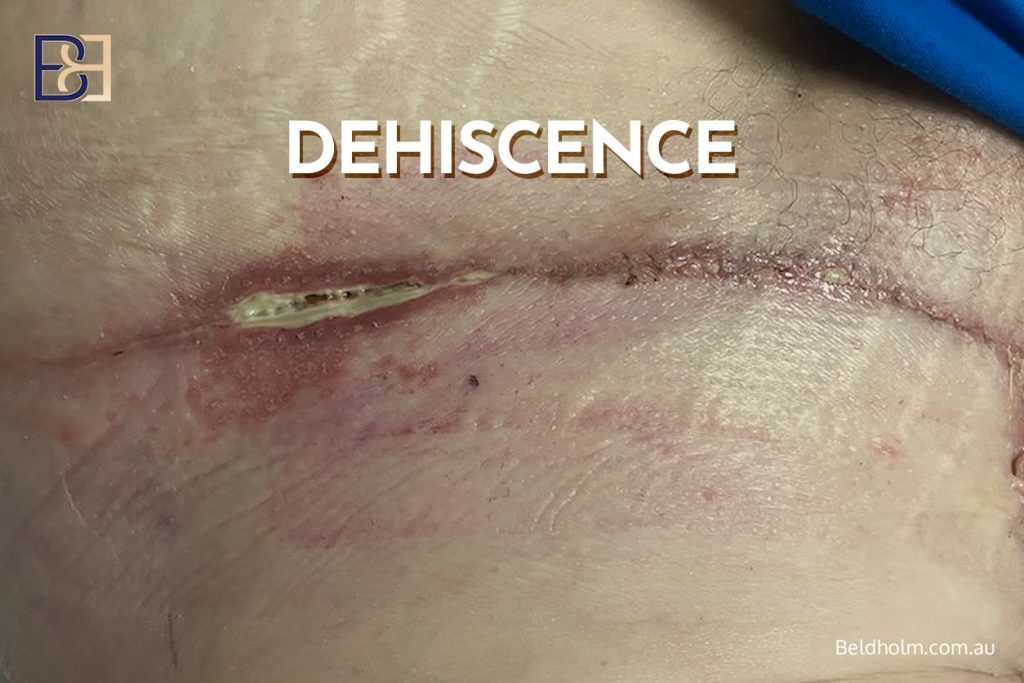
- Wound healing problems, including the wound partly reopening (dehiscence) and, less commonly, areas of skin that heal poorly or die (skin necrosis)
- Blood clots in the legs (deep vein thrombosis) that can travel to the lungs (pulmonary embolism). I assess your clot risk before surgery and use measures to lower it, and getting you walking early helps
- The risks of a general anaesthetic, which the anaesthetist goes through with you
Risks specific to this operation
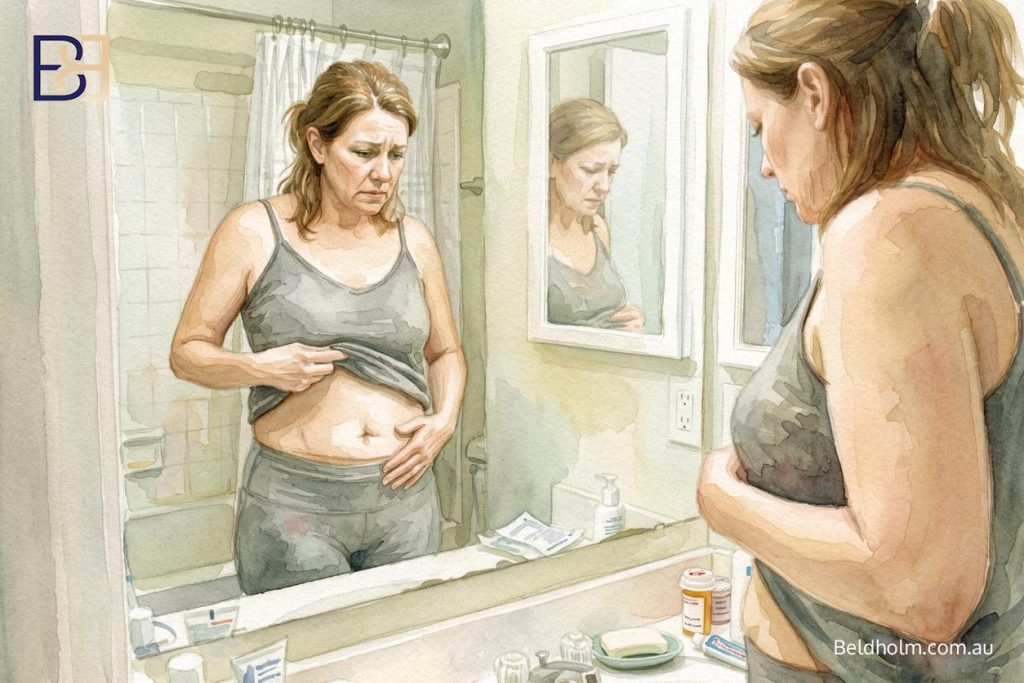
- Changes in the feeling of the skin over the lower abdomen and scar, often temporary but sometimes lasting
- Scarring that heals thickened, wide, or more visible than you had hoped. A scar is permanent
- Unevenness or contour irregularities in the area treated with VASER liposuction (ultrasound-assisted suction lipectomy)
- Asymmetry between the left and right sides
- Longer-lasting pain in a small number of women
- The result not matching what you had hoped for, which can sometimes mean further surgery
These are not the only things that can happen, and how likely any of them are depends on your health, your anatomy, and other factors. At consultation I go through the risks that apply to you.
Book your appointment online now
What Affects the Cost

The cost of a limited abdominoplasty with VASER liposuction (ultrasound-assisted suction lipectomy) is made up of several separate fees, and it varies with what your operation involves. My rooms give you a written quote before you commit to anything.
What makes up the cost
- The surgeon fee
- The anaesthetist fee
- The surgical assistant fee
- Hospital and theatre fees
- Your compression garment, dressings including the PICO dressing, and medications
- Whether VASER liposuction (ultrasound-assisted suction lipectomy) is included, and how much muscle separation (diastasis recti) repair is needed
A limited abdominoplasty is a smaller operation than a full abdominoplasty, with less time in theatre, and that is reflected in the cost. Your own cost depends on your assessment.
Medicare and private health insurance

Part of your operation may attract a Medicare benefit if you meet the criteria. Repair of muscle separation (diastasis recti) has its own Medicare item number, MBS item 30175, with specific eligibility rules that I assess at consultation. Where a Medicare item applies, your private health insurance may also contribute to the hospital costs, depending on your level of cover. Where there is no Medicare benefit, the operation is considered cosmetic.
MBS fees are updated each year on 1 July, so I do not quote fixed figures here. The current item details are on MBS Online.
GST

A cosmetic abdominoplasty with no Medicare benefit attracts GST at 10%. Where a procedure is Medicare-eligible and medically indicated, it is GST-free. Your quote sets out which applies to you.
Getting a quote
My patient coordinators prepare your quote, including the hospital and anaesthetist estimates, and you receive written financial consent before surgery. Costs are individual, so the quote is based on your own assessment.
Frequently Asked Questions
Does a limited abdominoplasty include VASER liposuction (ultrasound-assisted suction lipectomy)?
In most cases, yes. I usually combine the skin removal with VASER liposuction (ultrasound-assisted suction lipectomy) to reduce fat in the area at the same time. A smaller number of patients have the skin-only version. Which suits you is decided at consultation.
Will it repair my muscle separation (diastasis recti)?
A limited abdominoplasty repairs muscle separation (diastasis recti) in the lower abdomen. If your separation runs the full length of the midline, or reaches the upper abdomen, a full abdominoplasty is needed to repair all of it.
Will my caesarean scar be removed?
Where your caesarean scar sits within the skin being removed, it is taken away with that skin, and you are usually left with a single low scar.
Is any of it covered by Medicare?
The repair of muscle separation (diastasis recti) may attract a Medicare benefit under MBS item 30175 if you meet the criteria, which I assess at consultation. Where there is no Medicare benefit, the operation is cosmetic. MBS item details are on MBS Online.
How much time will I need off work?
Most women take around 2 weeks, and longer if the job is physical or involves lifting.
How soon can I lift my children?
It depends on your operation. If you have a skin-only limited abdominoplasty with no muscle separation (diastasis recti) repair, you may be able to lift small children from around 2 weeks. If your muscle separation (diastasis recti) is repaired, the repair needs longer to heal, so I ask you to avoid lifting for about 6 weeks. Either way, it helps to arrange support at home for the early weeks.
Should I wait if I want more children?
Yes. A future pregnancy can stretch the skin and cause muscle separation (diastasis recti) again, which can undo the repair. I recommend a limited abdominoplasty once your family is complete.
References
- Sperstad JB, Tennfjord MK, Hilde G, Ellström-Engh M, Bø K. Diastasis recti abdominis during pregnancy and 12 months after childbirth: prevalence, risk factors and report of lumbopelvic pain. Br J Sports Med. 2016;50(17):1092-6.
- Michalska A, Rokita W, Wolder D, Pogorzelska J, Kaczmarczyk K. Diastasis recti abdominis: a review of treatment methods. Ginekol Pol. 2018;89(2):97-101.
- Nagy MW, Vanek PF Jr. A multicenter, prospective, randomized, single-blind, controlled clinical trial comparing VASER-assisted lipoplasty and suction-assisted lipoplasty. Plast Reconstr Surg. 2012;129(4):681e-9e.
- Hoyos AE, Millard JA. VASER-assisted high-definition lipo. Aesthet Surg J. 2007;27(6):594-604.
- Winocour J, Gupta V, Ramirez JR, Shack RB, Grotting JC, Higdon KK. Abdominoplasty: risk factors, complication rates, and safety of combined procedures. Plast Reconstr Surg. 2015;136(5):597e-606e.
- Greminger RF. The mini-abdominoplasty. Plast Reconstr Surg. 1987;79(3):356-65.